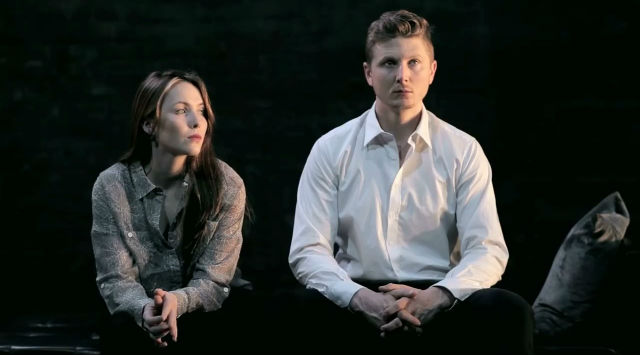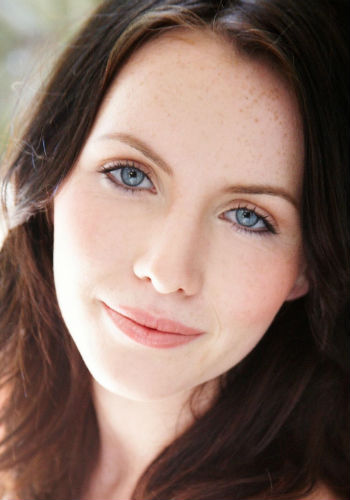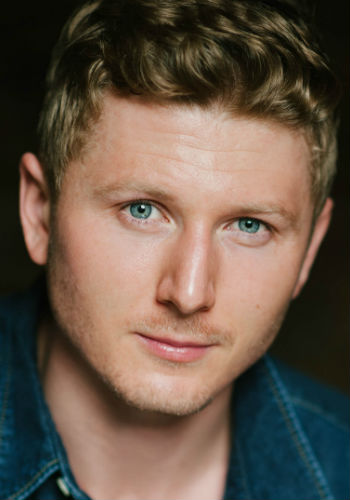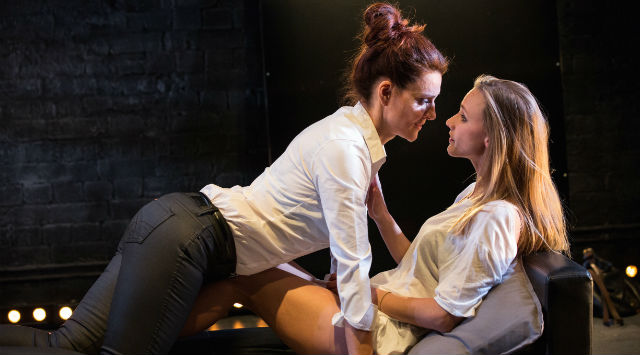
5 Questions with Charlotte Hazzard and Alastair Osment

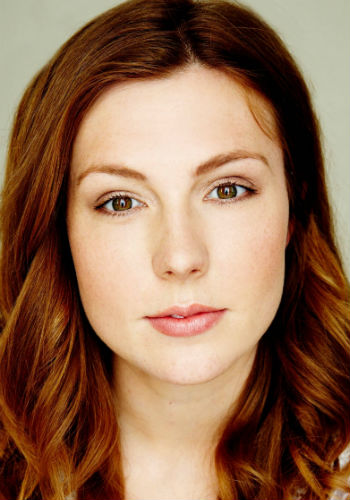
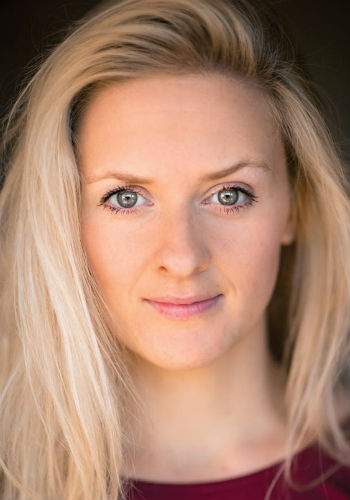
Charlotte Hazzard

Charlotte Hazzard

Alastair Osment: What do you think Sydney audiences will enjoy most about Sweet Phoebe?
Charlotte Hazzard: It’s hard to pinpoint exactly what Sydney audiences will enjoy most about Gow’s play. I think the fact that it is set in Sydney will resonate with audiences. He paints such an unexpected, unpredictable and genuine picture of the private homes of others that Helen and Frazer find themselves and I think that’s thrilling – what sits indoors. That’s hopefully just one of the many.

How would you describe your character Helen in five words.
Open. Willing. Bubbling. Observant. Fire.

What made you decide to be an actor?
I was very shy when I was younger and so my mother forced me to do speech and drama classes and it quickly turned into a real passion. I was also mentored by a wonderful actress through high school and she made me really believe that I could pursue this career path.

What is your favourite role you’ve played in your career to date.
Tough… I’m going to answer this without considering this play…

Last year I worked on Angela Betzien’s War Crimes and played a character called Jade. Was my favourite because of many things cast/crew/sisterhood/everything but also the character is a total badass. She’s 16 years old and has been through hell and back- but despite all that she is the ultimate warrior. Never the victim, relentless, full of strength, life and love. I was really inspired by her.

What has been your greatest challenge with the text so far.
This has been such a wonderfully challenging play. There is a lot of white space on the page and also in the lives of the characters- there a not a lot of answers in the script but instead a lot of clues of what this pair are dealing with. With how they deal with each, their language and how they evolve through the play. Excavating and discovering these characters and their relationship with the very little purposely given has been a welcomed challenge. Michael Gow has also written without punctuation and when I first picked up the text I was like wow! What a freeing gift! but one of the other challenges, because although there is no punctuation it has been quite purposefully composed and discovery is still ongoing.

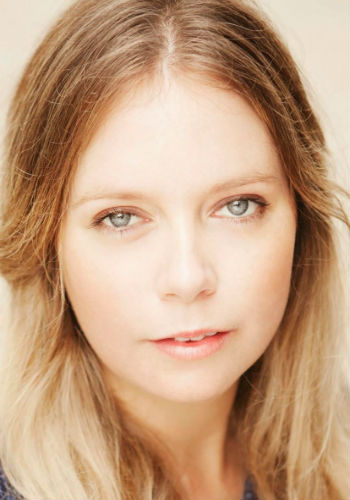
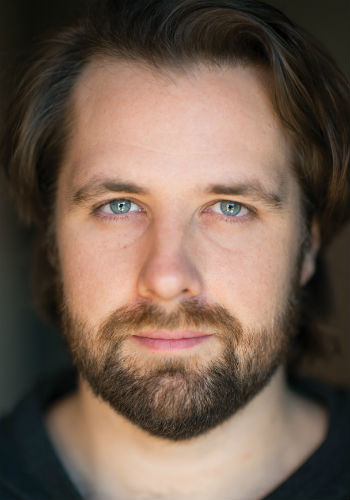
Alastair Osment

Alastair Osment

Charlotte Hazzard: Why did you decide to become an actor?
Alastair Osment: It’s the only thing I wanted to do when I left school… and to be honest it’s the only thing I was ever good at. My parents encouraged me to do a trade after high school . So after I completed my 4-year apprenticeship to become a qualified electrician I went off to WAAPA to study acting.

What has been the greatest challenge so far with this text?
This play was deliberately written without punctuation to allow the actors playing it to find the thoughts and syntax through discovery, rather than it being prescribed. That’s a great freedom… but also a massive challenge because I’ve found I’ve had to explore every ‘wrong’ way, to get to the ‘right’ way of delivery/sense.

Have you ever lost a dog?
A few times actually! Our childhood dog, Heidi, used to escape by slipping through the handrails on the upstairs veranda and jumping from the 1st floor!! Insane. We always found her again… but she kept on making those death-defying leaps.

What type of dog did you having growing up?
We had a Blue Heeler named Jude. And later we had a Fox Terrier named Heidi.

How would you describe your character Frazer in 5 words?
Passionate, Determined, Aspirational, Front-footed, Proactive.

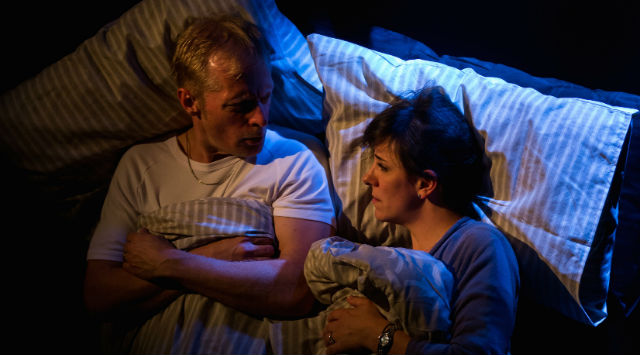
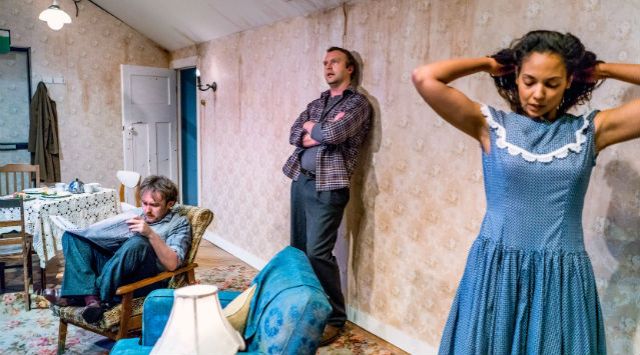
Charlotte Hazzard and Alastair Osment are appearing in Sweet Phoebe by Michael Gow.
Dates: 1 – 12 November, 2016
Venue: Old Fitz Theatre

Review: The Bitter Tears Of Petra Von Kant (Mophead Productions)

mopheadVenue: Old Fitzroy Theatre (Woolloomooloo NSW), Oct 11 – Nov 12, 2016
Playwright: Rainer Werner Fassbinder (translated by David Tushingam)
Director: Shane Bosher
Cast: Taylor Ferguson, Judith Gibson, Matilda Ridgway, Mia Rorris, Eloise Snape, Sara Wiseman
Image by Clare Hawley

Theatre review
In Fassbinder’s The Bitter Tears Of Petra Von Kant, we search for the meaning of love. Petra had just ended a marriage, but now finds herself enamoured with another. Through an examination on the nature of unrequited love, the play is an invitation to meditate on one of life’s biggest mysteries, by looking at the space between being in love, and being out of love. Petra has an object of desire, someone she obsesses over, who responds with nonchalance. Her devotion is both voluntary and involuntary, she gives of herself in hope of reciprocation, but continues to invest her all, even when the outcome is not as intended. She thinks only that her suffering bears a purpose of winning favour, but does not realise the masochistic pleasures that envelope the burning sensations of pain she thrives on.

The writing is phenomenally thrilling, and deeply important. Masochism is a pivotal part of our psyche, but we make little acknowledgement of it. In our human inability to be perfect, we all experience on a daily basis, the impulse to do what is not going to deliver the best results. Although we wish for a level of optimal performance in all the things we do, we are not machines, and we know that the instinctive tendencies to jeopardise are always strong. We are expected to be good, but really, we cannot stop from wanting to be bad. Our ethics prevent us from being destructive with the decisions we make at work, at home, in society, but when discussing the romantic and the carnal, destructiveness becomes personal and we have the right to choose how bad we wish to be. In his creation of Petra’s tragicomedy, Fassbinder reveals an honest aspect of humanity, and the inherent darkness of our existences. In our heroine’s pursuit of a very fiery love, she uncovers her true self, perfectly beautiful yet devastatingly vicious.

Sara Wiseman is resplendent in her warts and all portrayal of the title role. Operatic and visceral, it is a stunning performance of a woman in control, and out of control, overwhelmed by infatuation and lust, completely unhinged, motivated only by her own desires. Wiseman unleashes profound emotional and psychological accuracy that makes every debauched plot detail believable, along with a magnetic sensuality that has us entranced from beginning to end. Furthermore, it is not a narcissistic display that she puts on, but a thoroughly nuanced study of dynamics between Petra and the people around her, with the star manufacturing scintillating chemistry with every co-actor for a show that keeps us frothing at the edge of our seats. Also fabulous is Matilda Ridgway, sensational in an entirely speechless role but powerfully present at the periphery of every scene. Marlene is a controversial servant character, made even more confronting by Ridgway’s fierce dedication. It is a hugely impressive study of the only woman on stage who gets everything she wants.

The production looks sophisticated, severe and sexy. Georgia Hopkins’ set is executed with a confident minimalist edge, radiantly glamorous and intimidating in its strict glossy blackness. Shane Bosher’s direction breathes new, electrifying life into a play approaching its fiftieth year, proving that Fassbinder’s ageless legacy continues to be relevant and resonant, especially when it comes to issues of our libido. Bosher’s love of the strong female is magnificently showcased, with every woman bold and alluring in her uniqueness. His fetishistic depiction of Petra as Goddess, allows the show to bewitch and to inspire awe. The temptress and us, breathe the same air, but we are at her mercy, and anywhere she wishes to take us in the theatre, we must surrender, and revel in it.

www.mophead.com.au

5 Questions with Matilda Ridgway and Eloise Snape

Matilda Ridgway

Matilda Ridgway

Eloise Snape: If you could compare your character in The Bitter Tears Of Petra Von Kant, Marlene, to other wonderful women, fictional or non fictional, who would they be?
Matilda Ridgway: Mary Gaitskill’s characters in Bad Behaviour, Lee Holloway from Secretary, O from The Story of O, Lucia Atherton from The Night Porter.

Whats the most challenging thing about this play for you?
Not speaking is challenging. Subservience is challenging. Understanding Marlene’s relationship to these choices. How it affects her and her relationship.

If you had to be locked in a small confined space for 24 hours with one of the characters in the play (apart from Petra), who would you choose and why?
There is nobody apart from Petra.

Hypothetical. Would you rather have twigs for fingers or cheese toes? A hard cheese like a pecorino.
Hard cheese toes rather than twig fingers. I need my fingers for touching fruits and jellies and pink bits and babies. Twigs would pierce these soft things or break off into a million things.

If you bumped into Donald Trump and his hair in the street, what would you say to him? In one sentence only.
You’re fired!

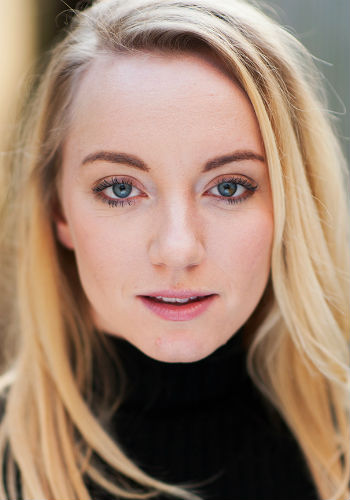
Eloise Snape

Eloise Snape

Matilda Ridgway: Hypothetical: would you rather have feet made of cottage cheese or have super magnetic hands?
Eloise Snape: Definitely super magnetic hands. Imagine all the stuff you could steal.

Can you tell people about when we first met?
Tilly and I met in high school at SCEGGS Darlinghurst. We did a production of Secret Bridesmaids Business together with a bunch of legends. Then I watched her in all the plays at Sydney Grammar and got super jealous.

Please play fuck, marry, kill with our cast and crew who do you choose and why?
Ok – entering dangerous territory. Can I pick the same person for all three? I say Alistair Wallace because I’ve known him for years and I don’t think he would bat an eyelid if I fucked him, married him and then killed him.

What is one thing you admire about your character Sidonie and one thing that makes you feel uncomfortable?
Sidonie is proud, intelligent, sticks to her guns and wears fluffy things. That’s cool. But her entire value system and approach to life makes me totally uncomfortable. And wearing high heels all the time is pushing the comfort zone.

If you could be one character in the play who would you be in real life?
Oooh defs Gaby I reckon. I wouldn’t mind being 14 again and figuring all that stuff out. Also she’s a designer’s daughter – there are major pros to that. Also cons but you have to see the play to know what they are.

Matilda Ridgway and Eloise Snape are appearing in The Bitter Tears Of Petra Von Kant by Rainer Werner Fassbinder.
Dates: 11 October – 12 November, 2016
Venue: Old Fitz Theatre

5 Questions with Zoe Jensen and Alex Malone

Zoe Jensen

Zoe Jensen

Alex Malone: Threnody is mostly written in verse. Why do you think Michael has written it like this?
Zoe Jensen: I can’t speak for Michael, but my thoughts on this are that it is primarily a story-telling device and one that he has always been particularly interested in. Verse mythologises the mundane by tricking the ear into false expectation, once you establish that push and pull of the play’s rhythm you can disrupt that effectively. It also speaks to an inherent pattern in our bodies, one that some of us suspect echoes in the universe. That’s what the play’s about anyway, a shared song through all people.

We all play different characters in the play. Who’s your favourite character to take on?
I love playing Robert Mason – a navy man out celebrating his daughters 13th birthday at a strip club – because I finally get to showcase my excellent ‘man voice’. Though I’ve harassed my dad, brothers, boyfriends, ex-boyfriends, male friends, male teachers etc over the years with this ‘man voice’, I have never been given the opportunity to do it on stage and I am absolutely thrilled.

If you could meet any woman dead or alive who would it be?
Awesome question! I’m going to answer both of these because it’s so good.

Dead: I would love to have a cup of tea with Ruth Park in her Norfolk Island home. Her novels were my saviour growing up, and they still are today. I would love to collaborate with her on turning her magical stories into films.

Alive: I would also love to PART-AY hard with Madonna! She is such an absolute Ledge, and the Queen (sorry Beyonce) and I adore every album she has ever released. We would be best friends and there would be so much champagne.

In the play, Virginia has her first drink. What was the first drink of alcohol you ever had?
Apart from the little sips of Drambuie my Mum forced on us at Xmas dinners, my first proper drink was some old red goon. I was fourteen and staying at a friends house and her parents went out for dinner leaving us alone for a few hours. We decided to try some of their red goon, had two cups each, pretended we were drunk and then got bored and went to bed. In the morning we both also tried to outdo each other with our hangovers. Obviously fake as well. Ahh those were the days.

This is the second time you have worked with Michael this year. How do the two shows relate or differ?
Though the two shows are quite different in style/genre (Bright Those Claws was a quick-paced farcical comedy, Threnody is a poetic tragedy), I think they are quite similar in regards to theme. In fact these same themes come up very often in Michael’s work! Both plays deal with a kind of dark spirituality and both ask a lot of religious questions, primarily to do with the ambivalence of God. Both of the lead characters are tragic romantic figures whose descent we witness throughout the course of the show. This figure is surrounded by characters who seem to have a story-telling compulsion, which infects us as performers! We are so excited to tell this story!
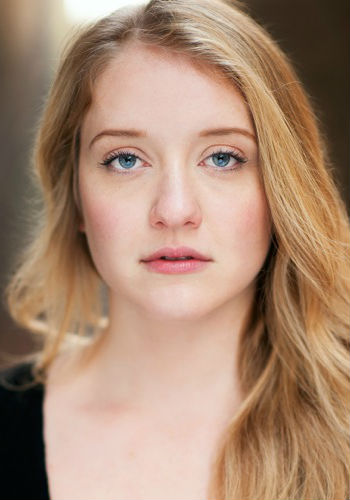
Alex Malone

Alex Malone

Zoe Jensen: What do you think Sydney audiences will enjoy the most about Threnody?
I think audiences will really enjoy this play because its sexy, rude, funny and written in verse. It’s not often, or ever really, that you see plays written in verse that aren’t classics. The language is clever, poetic and performed by six really great actresses. What’s not to like?

Why do you think our director has cast all-women when there are both male and female roles available?
The thing that’s most prevalent in Threnody is the female chorus. Five girls tell the story of a young girl, Virginia, and narrate her encounters as she leaves her house for the first time. Even though all of us transform into other characters (male and female) and interact with Virginia, the chorus of women propel the story. This provides a female insight into how she feels and why she makes the decisions she does, and most importantly, how she perceives the other people she comes into contact with.

One of your characters in Threnody is an old grumpy male bus driver, how do you relate to him?
I don’t! I’m not old, male, and I’ve never driven a bus but if you see me before my morning coffee I am grumpy! I’m having a lot of fun playing someone so different to me. I think I want to get my bus license now though…

When was the first time you went to party and what was your experience of it?
I can’t remember exactly what or when my first party was but I remember a New Years Eve party near the end of High School. I think it was Toga themed and little Seventeen year old Alex drank way too much vodka. We’ve all been drunk in a toga at some point…

How do you relate to the strong ‘loss of innocence’ theme in Threnody?
I think young kids today, especially girls, find themselves constantly under social pressure to grow up faster than kids in past generations. I know I definitely felt pressure to look and act a certain way when I was going through school, and that was with technology that was nowhere near as advanced as it is now. I think this play really highlights the loss of innocence as we follow Virginia’s first encounter with a man and with society. Threnody also focuses on the contrary opinion of keeping kids too sheltered and what that might do to their development. Threnody is paired on the Old Fitz stage with Four Minutes Twelve Seconds, which is also about kids growing up fast. I think this is a really important subject to be discussing and seeing on our stages.

Zoe Jensen and Alex Malone are appearing in Threnody by Michael McStay.
Dates: 27 September – 8 October, 2016
Venue: Old Fitz Theatre

Review: 4 Minutes 12 Seconds (Outhouse Theatre Co)

outhouseVenue: Old Fitzroy Theatre (Woolloomooloo NSW), Sep 13 – Oct 8, 2016

Playwright: James Fritz
Director: Craig Baldwin
Cast: Kate Cheel, Felix Johnson, Danielle King, Jeremy Waters
Image by Rupert Reid

Theatre review
There is a monster in the house, and we need to know where he has come from. Jack is seventeen and, to his parents, suddenly no longer a boy, but a strange being whose abhorrent behaviour towards his ex-girlfriend shocks the family to its very foundations. James Fritz’s 4 Minutes 12 Seconds is about the parenting of boys, the evolving nature of sex, and most of all, it is about misogyny; all examined against a backdrop of today’s advanced state of information technology. There are few things that can be definitively termed “new”, but the current proliferation of pornography is unprecedented. We have a level of access that permits anyone, children and teenagers included, unrestricted consumption, and unlike anything we had known before, an unimaginable ease in its production and distribution by any individual.

Jack is from a generation where sex education is derived almost entirely from the limitless abyss of our internet. Their personalities and sexualities are not shaped by anything considered or cautious, but the exact opposite. Where we used to rely on the constrictions of tradition and religion to help us navigate the always tricky process of teaching intimacy, the unpoliceable world wide web is now imposing itself on unsupervised youngsters, who open themselves up to every undeniable putridity that we have let free in cyberspace. Where a separation had existed between real sex and fantasy, is now a hazardous conflation indistinguishable to the young ones. What used to be titillating in the darkest recesses of our mind but never to be realised, is now thought of as normal. A culture of subjecting women to humiliation and violation is no longer containable in fictional pornography. What was once taboo and rigorously concealed is now part of the sexual DNA of young heterosexual men. If rape pornography is the only kind that can excite, what happens in real life between men and women can only be tragic.

Fritz’s play explains a problem that can appear in any aspirational middle-class home. Through nuanced and revelatory descriptions of how parents think and act in this modern world, we are able to make sense of the objectionable ways in which young adults behave. Each of Fritz’s characters, whether or not they appear on stage, are manifested with stunning detail, and the psychological accuracy of his work prohibits us from any possible denial of the sad state of affairs we are currently living through. The transformations we observe in Di and David, as they come to terms with their son’s actions, is absolute drama, powerful and compelling. The plot in 4 Minutes 12 Seconds is scintillating at every turn. Provocatively entertaining, but also relentless in its need to challenge and inform. It is a play of the now, and essential for all.

This production, helmed by director Craig Baldwin, is as engrossing as any work of theatre one could wish for. All its moments are replete with emotion and energy, keeping us deeply involved in both its sentimental and intellectual dimensions. Danielle King’s outstanding performance as Di insists that we invest completely in her conundrums. The actor’s incisive humour wins us over from her first line of dialogue, and sustains our empathy with unmitigated authenticity even when her struggles with morality become tenuous. Also wonderful is Jeremy Waters in the role of David, whose portrayals of both good and evil, resonate with such immense honesty and truth, that our humanity refuses to let us detach from his reality, even when the going gets very tough. Design aspects of the show are also remarkable. Baldwin’s own work on sound, Hugh O’Connor’s set and Christopher Page’s lights are dynamic, sophisticated and innovative.

There is a lot to love in 4 Minutes 12 Seconds, but its message is dark, dire, and desperate. We can easily say that parents need to do more to prevent our boys from growing up like Jack, but it is incontrovertibly true that the internet’s pervasiveness is a threat to young minds that no one has an impervious solution for. It has always been our duty to provide a shield from harm and corruption, but what we are currently facing is indomitable if our aim is to keep that danger under subjugation. Misinformation is inevitable, but it can be counteracted. Education is the perennial answer to a stronger future, and in this case, the only weapon we have against a force of sheer evil.

www.oldfitztheatre.com | www.outhousetheatre.org

5 Questions with Kate Cheel and Felix Johnson

Kate Cheel

Kate Cheel

Felix Johnson: What was your initial reaction to, and what piqued your interest most about the story of the play?
Kate Cheel: On first read of the play, I was immediately compelled by the way the play interrogates two particular things; the long-standing culture of victim blaming and slut-shaming with regard to crimes of sexual assault against women, and the immediacy and mass-audience reach of sharing content online. Where these two intersect is so dark and so dangerous – especially surrounding teenagers and the increasing pressure on young people to share intimate or nude photographs only to have their privacy violated on social media, and then be blamed for it!

What are your go-to methods for discovering a character? How do you like to work?
I’m not sure that I have any go-tos, every job requires something different. For this project it was really important to me that I sought out the stories and voices of survivors of sexual assault and how as a society we are dealing with these instances. If I’m going to be part of the conversation and any kind of decent representative for these women I need to be informed, thoughtful and active in my participation. In terms of discovering my character, the play takes place in Croydon, West London – a world away from Sydney, Australia and a completely different scene for young people. I found immersing myself in the music, fashion and pop culture of her world really useful in getting to know who this girl is and how she exists in the world.

To what extent do you think people have control over how they are perceived online and the images and information that is shared about them?
I’m just realising… we actually have NO control. Holy cheese balls! Thank you Felix, now I’m terrified. Any person can publish any thing about you. And you can request to have it taken down or you can take them to court, but to properly police all activity would be near impossible. The other end of the spectrum is of course the curated self via social media and self-produced content. You can shape how people perceive you online by essentially telling them who you are and what you think through the select imagery and info you choose to share. But there’s no total control.

Do you think revenge is ever justified?
I believe in retribution absolutely, but I don’t think revenge does any good. And it begs the question, what is justice and can it ever truly be served? To steal from someone far wiser than me, Mr Martin Luther King Jr, “The old law of ‘an eye for an eye’ leaves everybody blind.”

If you could know the answer to one of the world’s unsolved mysteries, what would you most like to know?
I’d like to know what happens after death. Are past lives a legit thing? Are ghosts real? Spirits? Angels? Reincarnation? Is there a puffy cloud somewhere up there with everyone I love looking over me? Do they have to wear what they died in for eternity? Eternity is ages. How would you not get bored? Where do plants and animals go when they die?

Felix Johnson

Felix Johnson

Kate Cheel: I’m stealing this question from you because it’s good. What was your initial reaction to, and what piqued your interest most about the story of the play?
To be honest, I’m just a fan of a good story. I loved the twists and turns that the play took me on when I first read it; bringing that to life and sharing it with an audience is the most exciting thing about being an actor for me. But then on top of that, the content of the play is so immediately relevant and relatable – I couldn’t help thinking how I and the people closest to me might behave if we ever found ourselves in a similar situation.

What’s one thing you’ve learned about working on this project and one thing that has surprised you?
I guess I’ve learned (again) to maintain a positive scepticism. People and situations aren’t always what they appear to be no matter how familiar we think we are with them. It’s important to consider everything to find out the truth. I got a surprise listening to Croydon slang… and now I’m wondering if I’d be peng or butters…

How did you work on your accent? It’s very good.
Well, that’s kind! Luckily I had a bit of background work on a London accent already, but had to adjust quite a lot in the end to get a Croydon accent that suited Nick. It took hours of listening to samples, emulating one sound, then another, finding my ‘way in’ to the accent with particular phrases, then being as picky as I could about making all the sounds and the rhythm as authentic as possible. It’s something totally new for me now and that’s always exciting.

Have you ever made an assumption about someone or a situation and been proved totally wrong? Explain. Please…
So many times I can’t even count. Which is terrible, but luckily I’m also constantly amazed at what people can and will do for each other. I don’t have a single great example, but suffice to say I try my best to keep an open mind and give everything a chance. Curiosity over judgement any day.

What was the last photo you took on your iPhone and did you share it with anyone?
The last one is a boring photo of a timetable… which no one wants except me. But before that I sent a selfie to my girlfriend of my new haircut. She was both fascinated and rueful.

Kate Cheel and Felix Johnson are appearing in 4 Minutes 12 Seconds by James Fritz.
Dates: 13 September – 8 October, 2016
Venue: Old Fitz Theatre

5 Questions with Giles Gartrell-Mills and Bishanyia Vincent

Giles Gartrell-Mills

Giles Gartrell-Mills

Bishanyia Vincent: What can Sydney audiences expect from you as a director?
Giles Gartrell-Mills: As much as possible I like to put story first. My favourite thing about theatre is that we ask the audience to endow the world they are seeing. We need them to create it for them-selves. I generally like to keep my production simple in terms of design and fit them to the space I’m working in. One of the best things about the late shows at the Old Fitz is that you need to work with what you have. It inspires creativity, which is why we do it in the first place.

What do you love most about Where Do Little Birds Go?
Cheesy as it sounds, I love Lucy! She’s a wonderful character. She sees the best in bad situations and manages to remain somewhat sweet through a very tough and brutal world. I think audiences will love her too.

I’ve heard you really love to know your stuff. Is Wikipedia your greatest addiction?
Possibly. Wikipedia, Jiu Jitsu and coffee are my greatest addictions. I love to learn and these days if I come across something I don’t know or a person I’ve not heard of from any field, I often jump on Wikipedia or Google to get any information I can about them. It’s not work… I just get interested in things I’ve never heard of.

What would you like to see change in the Sydney theatre scene and would you like to keep the same?
The scene in Sydney is great. If anything I would like to see a bit more confidence in it. Since moving here I’ve found everyone to be very open and welcoming. I think there is opportunity for more site specific work too. Last year I saw a show produced by the Kings Collective in an unused floor of a shopping centre. It creates new challenges and is a welcome change for a loyal theatre audience.

Ok so lastly and most importantly, how do you find directing your other half in a one woman show? Is she much of a diva?
Haha! Luckily enough because we trained at the same school we have a lot of common language when it comes to approaching the work. A one woman show is a big undertaking and a bit of that diva confidence can be very helpful sometimes too.

Bishanyia Vincent

Bishanyia Vincent

Giles Gartrell-Mills: As a relative newcomer to the Sydney theatre scene, what do you think makes it different to other cities you have visited?
Bishanyia Vincent: I think the biggest difference I have noticed between here and London is the sense of community within the independent theatre scene. London is such a big city and often you can feel like your tube stop is an island and there’s a giant gulf between you and your creative friends.. In Sydney you can bump into numerous creative souls on jaunts about town and feel a huge sense of belonging and support for one another. I feel very grateful to be a part of it.

What is the biggest difference preparing for a one woman show than preparing for a show with other performers?
Lines…SO MANY BLOODY LINES. Also creating the show with your own energy and sustaining that for an hour with the audience’s attention. We’ll see how that goes next week! Although I do have a lovely handsome pianist on stage with me playing so he’s definitely a reason to come along! *wink*

Who are your greatest influences as a performer and why?
The people around me everyday in my life who are battling the same demons and still get up and try again anyway. Life. Love. Stories. Human beings. People I bump into, happen across and experience in my day to day life. Because that’s where it all begins. Storytelling wouldn’t be storytelling without people and their stories.

Why do you think Sydney should meet Lucy Fuller (from Where Do Little Birds Go?)
Because it’s a true story. Because the real Lucy (Lisa Prescott) never got to share her story and Camilla Whitehill read a little bit about her in a novel about the Kray’s and took the time to write her story and give her a voice and that is a beautiful gift to give to the world.

If you could travel to any time in history when would it be and what would you want to do when you got there?
I can barely even decide what to choose on a dinner menu without getting FOMO when I order the wrong thing and someone else’s looks better and you ask me THIS? No comment. I plead the fifth.

God there are so many amazing time periods. I can only hope to be lucky enough throughout my career I get to experience ALL OF THEM in some capacity.

Giles Gartrell-Mills and Bishanyia Vincent are working on Where Do Little Birds Go by Camilla Whitehill.
Dates: 30 August – 10 September, 2016
Venue: Old Fitz Theatre

Review: Look Back In Anger (Red Line Productions)

redlineVenue: Old Fitzroy Theatre (Woolloomooloo NSW), Aug 16 – Sep 10, 2016 | Belvoir St Theatre (Surry Hills NSW), Sep 13 – 17, 2016
Playwright: John Osborne
Directors: Damien Ryan, Lizzie Schebesta
Cast: Robin Goldsworthy, Andrew Henry, Melissa Bonne, Chantelle Jamieson
Image by John Marmaras

Theatre review
Jimmy is a very angry young man, and in Look Back In Anger, we are subjected to a series of his incessant, long and very tedious rants that prove themselves to be ultimately ineffectual, and highly irritating. At one point, he insists “that voice that cries out doesn’t have to be a weakling’s does it?”

1956 it seems, was a completely different time. Today, a white man with youth and a university education, living in a Western society, is considered to be in possession of the greatest of privileges, and we have no patience for their complaints about their perceived (and possibly, imagined) injustices of life. Of course, residing in positions of advantage does not automatically absolve a person of angst and self-proclaimed victimhood. Jimmy’s grief with our troubled existence is valid, and it is his right to refuse to suck it up, grin and bear it, but like all the furious white male voices that rule the talk-back radio waves, we can choose to ignore their shrill babble. John Osborne’s play is well structured, but its themes and concerns could not be more dated, and for many feminists, not much is lost if Look Back In Anger, along with its overt misogyny, is left dead, buried and cremated.

From a technical perspective however, co-directors Damien Ryan and Lizzie Schebesta have revived the play with admirable accuracy and nuance, delivering powerful drama, especially to those more welcoming of its ethos. Also accomplished are its designers; Jonathan Hindmarsh’s set and Anna Gardiner’s costumes add meaningful, dynamic touches to the look of the piece, thoughtfully utilising the space’s intimacy to provide a vibrant immediacy to the experience.

The cast is uniformly strong, with each actor contributing impressive depth in their characterisations of less than inspiring personalities. Osborne’s dialogue is provocative (to say the least), and his lines are given tremendous fervour by an ensemble insistent on winning us over. Andrew Henry is at his bombastic best as Jimmy, with a portrayal so passionate and convincing that we struggle to detach our dislike for the character from what is actually an excellent performance by the leading man. Henry finds scintillating chemistry with each of his co-stars, and it must be said that every scene is captivating, but also undeniably excruciating for audiences less tolerant of its turgid drivel.

Like many works of art (good or bad) that cause exasperation, Look Back In Anger will spark discussion. In its time, the work was relevant for its interest in class consciousness and issues of poverty, but these ideas have evolved into something that is now inseparable from contexts of race and gender. In the past, audiences were able to understand the world from Jimmy’s perspective, but today, the world turns the tables and puts him under scrutiny. We are made to look at anxieties of the white man, but his anger scarcely raises a brow. Perhaps it is only himself who could possibly benefit from wallowing in that distorted and narcissistic reflection.

www.oldfitztheatre.com

5 Questions with Melissa Bonne and Robin Goldsworthy

Melissa Bonne

Melissa Bonne

Robin Goldsworthy: Cast your mind back…you’ve picked up Look Back In Anger for the very first time. You read it cover to cover and gently set it down beside your play reading chair. Walk us through your immediate gut reaction.
Melissa Bonne: Well, I actually read this play for the first time while I was studying acting at The Actor’s Pulse, but I was 17 so I don’t know if I was smart enough or open enough to truly take the story in. When I read it for the first time, since the first time, I actually just sat there (in my play reading chair), staring at the last page for a while, not only unsure of what to make of how the play ended, but also unsure of why it made me feel so uncomfortable. At the time I didn’t exactly know how to articulate why I was feeling that way but I knew that because of that, I had read something very special and that this play was probably going to be very important for me in some, if not many ways. It also didn’t feel like I had just read a play. It felt more like I was right there in that tiny room with these four people. I think that’s a pretty rare gift for anyone — artist or audience — that when it comes to a play or film or story, it feels almost too real to be something you are watching but more something that you are a part of, and I think maybe that is one of the things that is great about this play…it is so confronting and ruthless in everything that it is saying, that it’s almost impossible for audiences not to get pulled in and become so personally involved in the experiences of the characters.

What an amazingly complex character Alison is! A true gift for any actress to sink her teeth into. So my question is: If Alison were a sandwich, what type of sandwich would she be?
Hmm. Well, she would have to be the best bread made from the finest ingredients by maybe a French Chef or something. And I’d say her crusts would have to be gently sliced off. Her bread parts would also have to be right out of the oven so that she was still warm when served. Inside there would have to be something with bite, but tender, like a spicy piece of organic chicken. She would need a bit of razzle dazzle, so maybe something like a slice of avocado with a drizzle of olive oil and some broccoli sprouts. And she wouldn’t be complete without something sweet, so perhaps a thin slice of beetroot. When served, Alison would need to be gently sliced into triangles, as a triangle is her favourite shape.

Have you, yourself ever looked back in anger with regards to any moment in life thus far?
Oh dear. Well in regards to my own life, I’ve mainly looked back in anger at the not so great things that I myself have done or the great things that I had the opportunity to do but didn’t do… times in my life where I could have been kinder to people or paid more attention – like during a card game or something, where I would be in my own world and end up losing every time. One of the things that comes to mind that I would be angry looking back at, is growing up as a teenager and thinking I knew what was best for me. So silly. Should’ve listened to mum more. Grrr.

What is the best/worst thing about working with the prodigious acting talent of Robin Goldsworthy?
Haha, well it’s been delightful so far. I think you were perfectly cast and I am so glad because you’re a very authentic person to work with and you always make me laugh – which is so very important! Overall I feel very blessed to have you, Andrew and Chantelle to work with because you all make it very easy for me to believe you in every moment and believe you are the characters you are playing. So the best thing would totally be that you are completely believable as Cliff, but the worst thing would be that you have such a great, charming accent… which is, just so you know, quite the distraction. Oh and your jackets… I’m a big fan of how you dress to rehearsals. Very cool you are.

If John Osborne wrote Look Back In Anger today, how do you think the play would shift thematically?
If you think about what the themes possibly mean in the context of this story, I don’t think they would have to shift all that much to be relevant today or in other words, for audiences to relate to, especially when you simplify it all. For example, you have Alison and Jimmy — from two completely different backgrounds — who fall in love, only to find that their backgrounds are a constant obstacle in their relationship with each other and their lives together. I feel like there is always this human need for connection through understanding and you can see it in so many stories and it is such a dominant force in this play. When people come from different upbringings and backgrounds, it sometimes seems to cause conflict and that conflict eventually separates people from one another. That’s what happens throughout this play. But there is this truth that everyone can relate to on some level, and that is, through understanding all bridges are formed, but that understanding is only really possible when people are heard. I think that finding your voice and having your voice be heard is such an important part of this play and ultimately, every voice being just as relevant as the next, is a message that we are left with. Although Osborne may use a more modern way of delivering this story, I think using the same themes would be just as a gift now for people as they were in 1956.

Robin Goldsworthy

Robin Goldsworthy

Melissa Bonne: What would you like people to take away from this play, or in other words, what about this play would you like to stay with our audiences after they have seen it?
Robin Goldsworthy: Mainly how relevant this play still is. 2016 has been a pretty ugly year so far and there’s so much fire in the heart of this play that slots perfectly into our modern context. There’s a lot of anger and passion around the world at the moment, and this play’s got that in spades.

If you were alive and living in London in 1956 and still you — a wonderful person and actor — what do you think it would be like to play Cliff in the original production of Look Back In Anger?
Oh I think it would have been tremendous fun! There had never been a play like this on the London stage before… The institutions and ideas that are raged against in Look Back make it such an exciting and dangerous play. To do that for the first time, who wouldn’t love that?

Cliff’s upbringing and background is a bit of a mystery in this play. What story would you give him that could possibly change everything that we think about this man and his journey in the play?
Well we talked about Cliff’s sexuality in rehearsals for a while. There’s such a closeness and tenderness between him and Alison that’s totally non threatening to Jimmy (husband to young Alison) so yeah, we discussed the possibility of Cliff being gay. Would it change much? Not sure. In another production it would have been really fun finding out.

What has this play and/or Cliff taught you about yourself?
That Welsh is an incredibly hard accent to tame. At the moment I sound like Mrs Doubtfire’s gone to India. We’ll get there, hopefully.

What is the one question you would ask John Osborne?
I’d ask him if he were a sandwich, what kind of sandwich would he be? 😉

Melissa Bonne and Robin Goldsworthy can both be seen in Look Back In Anger by John Osborne.
Dates: 16 August – 10 September, 2016
Venue: Old Fitz Theatre

Review: Low Level Panic (Thread Entertainment)

threadentertainmentVenue: Old Fitzroy Theatre (Woolloomooloo NSW), Jul 12 – Aug 12, 2016
Playwright: Clare McIntyre
Director: Justin Martin
Cast: Geraldine Hakewill, Amy Ingram, Kate Skinner
Image by Julia Robertson

Theatre review
Three young women share a home, and in their interactions within the intimate setting of a shared bathroom, we come to understand their desires and insecurities, along with the obstacles they encounter in daily life that shape their respective sense of self. Jo, Mary and Celia are different in many ways, but they are all subject to the male gaze. Their heterosexuality locks them further into complicated entanglements with the opposite sex, and allows Claire McIntyre’s Low Level Panic to unpack issues of politics and misogyny for a look into the modern woman’s relationship with the world, and more particularly, with sex, and with her own body. The statements made in the play are nothing new; it is after all, close to three decades old, having first appeared in the late 80’s, but the experiences it portrays still feel accurate and its revelations remain raw.

Director Justin Martin’s production is innovative and exuberant, with bold staging devices that assist in making the play’s concepts more lucid and powerful. The introduction of social media as an instrument of oppression brings the story up to date, offering a frame of reference that we relate to readily. A team of seven men are positioned around the stage dressed like stagehands, but are in fact part of the show, always watching, and always insisting that their masculine presence not be dismissed. They purport to be invisible but are actually a menacing force that fuels the subtext of the women’s conversations. Martin’s theatrical embellishments are a pleasure; sensitive, intelligent and often witty, but being much more pronounced in the first half, later sequences feel suddenly stark, almost too plain to meet our heightened expectations.

Performances are passionately vivid. The marvellous Amy Ingram leaves a remarkable impression with her impeccable timing and disarming authenticity as Jo, a character with endearing vivacity who nonetheless suffers from the unfortunate, but all too common, obsession with her self-determined physical inadequacies. The actor brings a valuable dignity to a discussion that tends to present her role as a victim of circumstance, and her brilliant sense of humour is the spoonful of sugar that makes the caustic medicine go down. Geraldine Hakewill and Kate Skinner provide excellent support with contrasting portrayals of femininity that gives the text’s argument a complexity, by challenging our preconceptions of gender representation.

In Low Level Panic, we are witness not only to the fact of sexual objectification, but also the reinforcement of that prejudice against women, by the three housemates onto themselves. The Stockholm syndrome as applied to the reprehensible male gaze is a truth rarely spoken. Segregation and subjugation based on gender is one of the most entrenched foundations of patriarchy, even the enslaved is unable to recognise her own debasement. Bringing us to this realisation is where the play becomes radical, but how it leaves off is of great importance. In our individual and collective feminisms, the problem of the male gaze is addressed in divergent ways. None reigns supreme, but it is our very action of living feminist lives that is meaningful.

www.facebook.com/threadentertainment