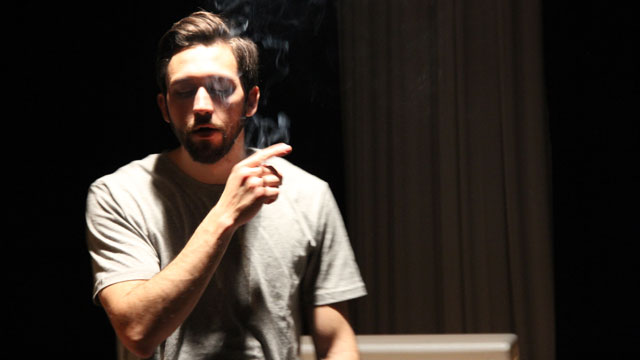
Review: Femme Fatale (Leftofcentre Theatre Co)

leftofcentreVenue: Old 505 Theatre @ 5 Eliza St (Newtown NSW), Jan 19 – 23, 2016
Playwright: Clare Hennessy
Director: Carissa Licciardello
Cast: Rebecca Day, Tiffany Hoy, Henriette Tkalec

Theatre review
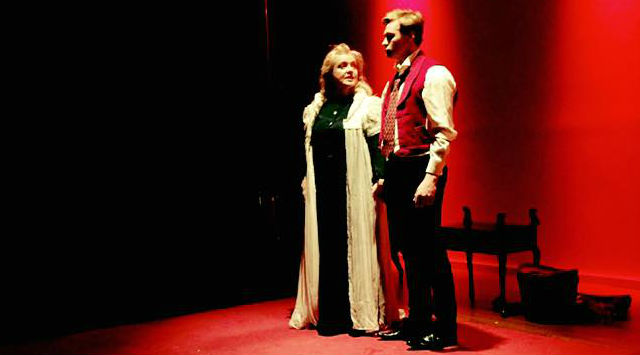
The femme fatale is a figure usually conjured up as a source of threat to the masculine of our species. She seems sexual, devious and powerful, but only exists in opposition, having no meaning independent of her male counterparts. In Clare Hennessy’s Femme Fatale, we look at humankind’s first three women according to Western mythology; Eve, Lilith and Pandora, and their conception as originators of evil and sin. Each were made responsible for releasing to the world a perpetuity of harm. Their myths have framed womanhood as initiator in the eradication of purity and goodness, and the feminine is forever tainted with malice.

The writing is unabashedly poetic, and although full of passion, its structure is insufficiently dramatic. Its abstraction has a deliberate and obscure beauty, but is of the sort that can be too alienating for emotional connection. The production’s atmosphere of foreboding is effectively orchestrated, although greater variation in style and tone between scenes could prove to be more rewarding. The cast is well-rehearsed and each actor shows excellent commitment, with Henriette Tkalec’s intense presence leaving the strongest impression.

It is not the most communicative of works, but its intentions are thoughtful and sincere. We can always rely on politics to give theatre its fire, and Femme Fatale is certainly spirited, buoyed by its many exciting, sometimes repetitious, ideas and inspirations. It makes an unambiguous feminist statement with what it attempts to say, but more so in how the show is put together. These young women have pooled their talents in collaboration for a piece that exists against all odds, in a landscape that is tenaciously patriarchal. No matter how we look at it, Australian theatre is still a boys’ club, but the bad girls are here to stay, and their ripple effect has begun.

/www.leftofcentreau.com

Review: Dot Dot Dot (The Old 505 Theatre)

old505theatreVenue: Old 505 Theatre @ 5 Eliza St (Newtown NSW), Nov 10 – 28, 2015
Playwright: Drew Fairley
Director: Gareth Boylan
Cast: Matt Bell-King, Gerard Carroll, Lucy Miller, Natalie Venettacci

Theatre review
Dot Dot Dot involves a Victorian era prostitute getting high, a psychic medium speaking with ghosts, a serial killer on the loose, and a newspaperman with dubious intentions. The ingredients are certainly spicy, but the concoction is not always an easy one to digest. In its efforts to provide both entertainment and social commentary, the play struggles with its balancing act, and falls short on both counts. There are interesting characters and fascinating scenarios to be found, but for a show in the mystery/suspense/thriller genre, its plot struggles to deliver the tension and intrigue it sets out to achieve.

The cast of four is not sufficiently cohesive, but actors are individually accomplished. Lucy Miller is captivating as Babette, with a solid and seductive presence that helps sustain our attention. There is a quality of natural and sultry darkness in the actor’s approach that gives the production its eerie, Gothic flavour. Equally appealing is Matt Abel-King, whose portrayal of young men in the late 19th century provides a sense of accuracy to the time and space his characters inhabit. Abel-King is a charming performer, with a whimsical edge that enlivens the stage.

The play talks about democracy today, and the impact upon it by the disparity in power and wealth of our classes. Our media landscape is being sequestered slowly but surely, by a rich few, and their insidious control over the information we receive has unquestionably changed the way we perceive and live our lives. Political decisions are made through a semblance of democracy, but what we believe to be true, and therefore the way we exercise our voting rights and consumer decisions, are largely doctored by the powers that be. It is a grim situation we find ourselves today, and there seems no solution in sight, except for a healthy dose of cynicism, and prudent vigilance.

www.venue505.com/theatre

Review: We, The Lost Company‏ (Clockfire Theatre Company)

clockfireVenue: Old 505 Theatre @ 5 Eliza St (Newtown NSW), Oct 13 – 31, 2015
Devisors: Emily Ayoub, Madeline Baghurst, Alicia González, Kate Worsley, Arisa Yura
Director: Emily Ayoub
Cast: Madeline Baghurst, Alicia González, Arisa Yura
Image by Geoff Magee Photography

Theatre review
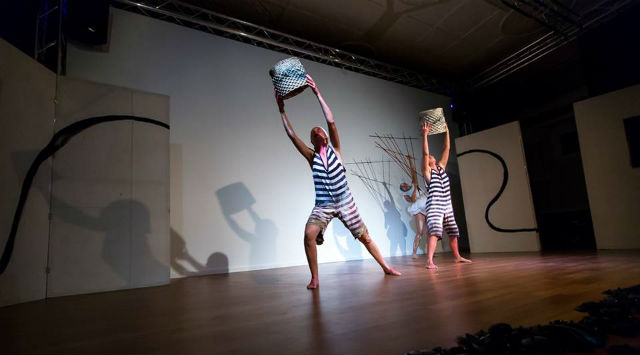
Since time immemorial, we have danced in honour of the gods that watch over us. It is an acknowledgement of our vulnerabilities and reflects our hopes for better days during this time on earth. We, The Lost Company is an intertextual exploration into our relationship with water, finding inspiration from the paintings of Brett Whiteley to create a work of physical theatre informed by the disciplines of mime and dance. It is gently humorous but wildly imaginative. It touches on subjects of migration, ecology, community and ageing, revelling in the beauty of abstraction but powerfully connecting with its audience, if not in terms of meaning, then certainly with the level of engagement it manages to instil into what is usually a challenging form of performance art.

Music and sound by Ben Pierpoint is complex, evocative and spirited. His work controls our imagination, and leads us to grand and eccentric spaces within our minds that provide a context for the three dancers on stage. Charming anecdotes about water obtained from interviews with mature members of Sydney communities are woven into the soundtrack to anchor the production with a warm authenticity that keeps our shared humanity firmly inside what is being developed.

The dancers’ weird and wonderful physical language is a thoroughly amusing one that sustains a sense of intrigue and holds our attention for its entire fifty-minute duration. Their poetry is whimsical but ruggedly sincere, allowing us to understand its intentions from a drastically unconventional kind of theatrical expression. Arisa Yura’s very memorable but very short monologue in Japanese about childhood, the forces of nature, ice cream and beach balls, extends the theme of memory from the audio recordings, and touches us unexpectedly with its dramatically emotive and nostalgic pseudo drama. The production is full of adventure and sensitive innovation, but its lighting feels inadequate within the extravagance of its multi-disciplinary articulations. The space requires greater depth and colour to achieve a stronger sense of visceral lift off that is always just within reach.

To know something, does not necessitate the ability to put it into words. Call it a feeling, intuition, or a soul thing, art is fundamentally about communication and the modes through which communication happens. We, The Lost Company has vocabularies of its own that are refreshing, unique and dare we say, original, but what it speaks can be understood by all, and like the themes that it is concerned with, we are all embroiled in this mysterious undertaking as one.

www.venue505.com/theatre | www.clockfiretheatre.com

Review: All The Difference (Subtlenuance Theatre)

subtlenuanceVenue: Old 505 Theatre (Surry Hills NSW), Sep 22 – 26, 2015
Playwright: Paul Gilchrist
Director: Paul Gilchrist
Cast: Kathryn Schuback

Theatre review
We go about our daily business making small decisions at every juncture, and every now and again, we come to key moments that require a choice be made that might alter the course of life significantly. In the Western world, we are accustomed to thinking that our own destinies lie within our own hands, that we are the masters of our own circumstances. In Paul Gilchrist’s All The Difference, we see Felicity (or Flick) before key events are about to occur, and participate in the thought and emotional processes that take place at those critical times. We examine the quality of chance, the extent of control, and the fallout of decision. Provocative questions are raised about the way we conceive of our part in the progression of time, the futility of our ego, and the sometimes unknowable relationship between choice and result. Gilchrist’s script is reminiscent of “choose your own adventure” books, with Flick asking her audience to vote yes or no, when difficult situations arise. Not every consequence is a profound one, but when helping to answer her major life questions, we certainly share the nervous thrill that Flick experiences.

Kathryn Schuback’s performance of the monologue is emotionally charged and often heavy with melancholy. There is an admirable fortitude that shines through when presenting the darker sides of the story, but the show needs greater exuberance, especially in its early sections, to match the playfulness of its format, and to guide us into familiarity with Flick. The work is tightly paced and holds our attention well, but more philosophical portions of the text requires stronger emphasis, so that our thoughts can process their complexity more satisfyingly.

There are two attitudes that can be taken when it comes to the idea of “choice”. If we think that “choice” is a fallacy, and that we are but a tiny speck in the scheme of things, a scheme that proceeds at its own will, then we can free ourselves of the infinite shackles that make life unbearable. If we think that “choice” is the most innate of our qualities in being human, then we are empowered to do good at every opportunity. Chances are that the truth vacillates in the spaces between.

www.subtlenuance.com

Review: All About Medea (Montague Basement)

montagueVenue: Old 505 Theatre (Surry Hills NSW), Sep 15 – 19, 2015
Playwright: Saro Lusty-Cavallari
Director: Saro Lusty-Cavallari
Cast: Christian Byers, Lulu Howes
Image by Patrick Morrow

Theatre review
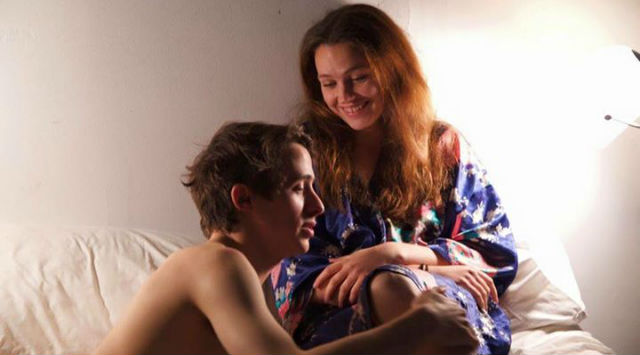
In Saro Lusty-Cavallari’s All About Medea, the ancient Greek mythological characters of Medea and Jason are transformed into generic versions of modern day “girl and boy”. We know little about them, except for their time together; their initial meeting, their pregnancy and marriage, and the eventual devastation that befalls their story. The breakdown of this relationship is the main focus of the play, but it occurs with little explanation. Jason is painted as the villain, but his infidelity is too convenient and his transformation to apathy unconvincing. It might appear that Lusty-Cavallari’s eagerness to portray Medea’s innocence in this sad state of affairs has guided him to a narrative that is far too simplistic.

Medea is an intriguing and dynamic character, but her legend’s value in feminist terms is debatable. It is doubtless that she possesses immense strength, but the sacrifice of her children is made, ultimately to punish the man who abandons her. Her vengeful obsession gives her her power, but in All About Medea, her implied purpose is to cause suffering to Jason, and then to win him back by her delusional attempt to turn back time. Her happiness depends squarely on the manipulations she can effect on her husband’s life.

Nevertheless, the production is an engaging one, with short and sharp scenes that manage to surprise within its purposefully conventional plot structure. Performances by Christian Byers and Lulu Howes are uneven, but the team’s easy and confident chemistry is an outstanding feature. There are some refreshing and subversive approaches to the portrayal of sexuality that will leave an impression, including its liberal amount of nudity at a particularly conservative time in our civilisation. Also, the play provides insightful commentary on youth culture in Australia, and on the trend for the formation of families at a significantly younger age than had been the norm in recent decades.

When imagining Medea as a modern woman, one would hope that society can afford her greater freedom to establish a life in accordance with her desires, but with much smaller reliance on her husband and children. The concluding moment of All About Medea is a controversial one that pushes its audience to reach for their own vision of alternatives that we wish for our heroine, and luckily, that task is not a difficult one.

www.montaguebasement.com

Review: Dark Vanilla Jungle (Mad March Hare Theatre Company)

madmarchVenue: Old 505 Theatre (Surry Hills NSW), Sep 1 -12, 2015
Playwright: Philip Ridley
Directors: Fiona Hallenan-Barker & Emma Louise
Cast: Claudia Barrie
Image by Daina Marie Photography

Theatre review
Finding a way to accurately articulate the problems that our societies face is never easy. We can come up with convenient sound bites that attempt to encapsulate what it is that we mean, but we risk trivialising issues through the abstractions that inevitably come with semantic abbreviations. Philip Ridley’s Dark Vanilla Jungle does the opposite. In his deeply harrowing one-woman play, teenager Andrea is the lightning rod at which our failures as a modern community converge. In its oppressive 90 minute duration, we are presented a life experienced through endless days of horror, none of which are due to any fault of Andrea’s own. Her innocence is the target of every evil that walks the planet, while all that is good lays comatose and unable to provide any protection. The story is about sexism, capitalism and poverty, the disintegration of community, and the dissolution of humanity that is occurring in our contemporary lives. It is raw, unflinchingly cruel, and devastating, but it is important.

Under the direction of Fiona Hallenan-Barker and Emma Louise, the production becomes an exercise in the depiction of pain. We are an audience numbed by the 24-hour news cycle, calloused by images of dead children appearing alongside idiot billionaires running for office. The need to communicate trauma is urgent in Dark Vanilla Jungle, and its persistence overwhelms our natural impulse to evade its barrage of very dark emotions. The long script is subtly broken up into sections presented with astute tonal variations that keep us engaged, and the gradual revelations in its narrative are handled with a finesse that provide just enough shock value so that their gravity is communicated without being unduly sensationalist or distracting. The use of a clear plastic curtain separating us from the action builds a sentimental and cerebral distance that may encourage more analysis in the viewing experience, but the sacrifice in terms of an opportunity for more emotional involvement is perhaps too great. The show is an undeniably intense one, but the plot structure requires greater care in its second half to sustain its power. After some unbelievably harsh details are divulged, the play falls into a disappointing slump, which it eventually does recover from, but the flaw is an apparent one in an otherwise extremely accomplished rendition of a very difficult text.

Claudia Barrie’s astounding performance as Andrea impresses with a savage depth that is rarely encountered. Her fearlessness in embodying such a degree of gruesome atrocity gives us nowhere to hide, and we can only respond with compassion. The earthly complexity she manufactures, together with the portrayal of her character’s fundamental pureness, gives Andrea a palpable authenticity that we connect closely and immediately with. We are angered by her torment and wish to protect her, and this instinct makes us examine stories like hers, and other injustices of our world, with renewed resolve and passion. Even in the darkest winters of the Antarctica, flowers are poised to bloom. Life is resilient beyond our conception, but our neglect of the disadvantaged is a transgression that needs to be rescinded at this moment.

www.madmarchtheatreco.com

5 Questions with Fiona Hallenan-Barker and Benjamin Brockman

Fiona Hallenan-Barker

Fiona Hallenan-Barker

Benjamin Brockman: Tell me a bit about yourself?
Fiona Hallenan-Barker: My name is Fiona and I’m a theatre-holic… I am a freelance theatre director, part-time theatre programmer, graduate of Theatre Nepean and Victorian College of Arts, dramaturg, producer, teacher, photographer, arts advocate, wife to a classical archaeologist and co-owner of a cavoodle named Kubrick.

How did you come to be here?
I had worked with Mad March Hare a couple of years ago on fantastic project at The Old 505 Theatre called Still by Jane Bodie. My co-director Emma Louise and I have worked together many times before; the latest was when I directed Philip Ridley’s Piranha Heights for the Spare Room. Ridley is a brilliant writer and a very generous artist. Meeting him in London, seeing his work there and talking about his aesthetic, I became an even bigger fan. He has a tremendous body of work: The Pitchfork Disney, The Fastest Clock in the Universe, Vincent River, Mercury Fur, Radiant Vermin, Shivered and so many more plays and films. His kids’ books are tremendous too. So, of course I jumped at the chance to come on-board this beautiful, one-woman show.

In every show that you have done is there a reoccurring item, why?
Oh, the bed thing. Yes, I always seem to work with beds – I also never work with black-outs or clocks on stage (for obvious reasons). Beds are fantastic to work with as they are so meaningful in a range of contexts from domestic, to clinical, to public anonymous spaces. Of the 20 or so productions I have directed, only one or two haven’t had a bed; in the laboratory with actors they provide a safe area for violent, physical exploration as well. When Emma and I started delving into Dark Vanilla Jungle, one of the first things we talked about was having a bed; so, yes, we can guarantee that it will feature in this production too.

If you could pick one song that would form the soundtrack of your life, what would it be, and why?
That’s a good one, like most theatre makers my soundtrack to life is very much about the music used in each show, so it’s a very eclectic mix. In Dark Vanilla Jungle Philip Ridley wrote the lyrics to a beautiful song by Dreamskin Candle called Ladybird Fist. It is a beautiful, gentle Laura Marling-esque type melody with some amazing lyrics that are pure Ridley:

My lovers hands hold me close at night.
….His warm embrace fills my dark with light.
…But I have seen his fist sometimes and that fist is speckled in red
For red is the colour of love he said
Now kiss my ladybird fist, sweet love…

Have a listen on iTunes. Or – even better – come along to the show.

On a scale of 1 to 10 (1 being the lowest 10 being the highest) how awesomely easy are you to work with?
Obviously a 10 out of 10, hang on, we haven’t even gone into tech week yet so maybe a 7 at this point. But my dog did eat your shoes in one of our design meetings so that’s at least an 8. Okay, how about 10 out of 10 for the overall project. You know Ben, we have the potential to go all the way to 11 if you will reconsider a revolve, live animals, and some pyro….

Benjamin Brockman

Benjamin Brockman

Fiona Hallenan-Barker: As one of Sydney’s most prolific designers, what have you been working on recently?
Benjamin Brockman: Prolific? Ha, in other words ‘a whore’! To answer this question I had to look at my website (www.benjaminbrockmandesigns.com shameless plug) and I counted that so far I have done 17 shows this year and so it is hard to remember what was when. But recently I lit Great Island at 107 Project on 24 hours’ notice; that was a blast (when in doubt add strobe lights). I then lit Detroit at Darlinghurst Theatre Company which I really enjoyed as I got to play with projection as a light source. Finally, Space Cats about a week ago was a showing of a new cabaret/musical about sexually depraved cats from outer space. Coming up I have The Aliens at the Old Fitz (August), Dark Vanilla Jungle and a tour of Vampire Lesbians Of Sodom to Melbourne.

What is your signature item (and no, it can’t be a gel colour)
What! I can’t pick a colour? Well if I could pick a colour it would be Lee 139 which is Primary Green. I am notorious for trying to sneak green into my shows whereever I can. But since I cannot pick a colour, I have to say I am a really big user and collector of gobos – which are a mixture of metal or glass discs that go in to lights to create texture or images with light. Not many can understand my love of gobos but they just add some much texture to light, giving a heightened sense of movement and a really easy way to give a sense of location. You have an outside scene? Just add cloud gobos!

How do you translate yours and the creative team’s vision of the play into the physical space in Philip Ridley’s world?
This is a hard one. When reading a play often I come up with one image that speaks to me the most and through discussion with other people it helps me to develop the ideas. We then settle on something after hours of arguing and scrunched up paper. I am much better when taking about ideas with others because it helps me to come up with new ones and I also like working with people and directors who are open to discussion from all departments rather than being dictated to on what someone wants. If you have more than one brilliant mind in the room – use them. That then leads to references and then it is just a case of starting to research and start sourcing materials to fill the design that we have come up with. Within budget, of course.

Favourite line from Dark Vanilla Jungle and why?
Page 15 “Where am I now?…The light is so bright. I… I am laying on something cold.” Basically this line inspired me to come up with the design we have created.

What is your Concert of Shame? (ie are you going to shock us all by revealing you have seen Justin Bieber live three times?)
I am a religious watcher of Dance Moms. Each week I tune in to watch little girls get yelled at by Abby Lee Miller – and I love it! I have no shame…

Fiona Hallenan-Barker and Benjamin Brockman’s next show is Dark Vanilla Jungle by Philip Ridley, presenting as part of Sydney Fringe 2015.
Dates: 1 – 12 Sep, 2015
Venue: The Old 505 Theatre
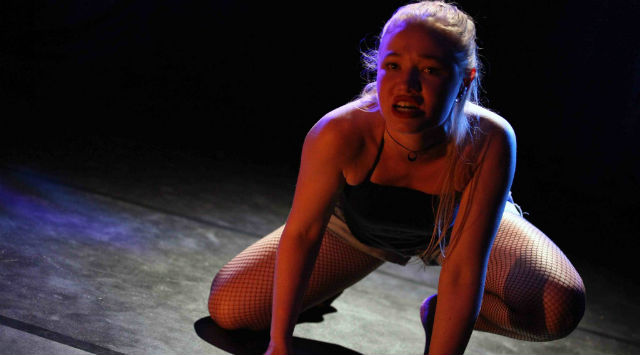
Review: Edmond (Two Peas)

twopeas1Venue: Old 505 Theatre (Surry Hills NSW), Jul 15 – 26, 2015
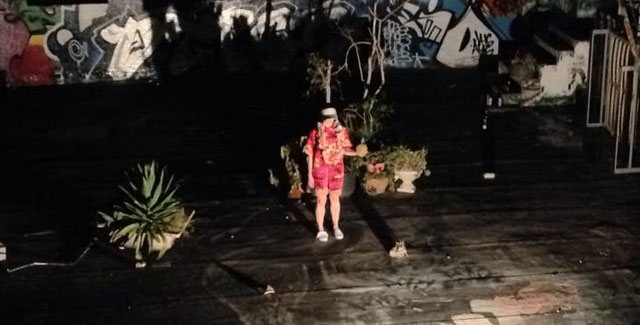
Playwright: David Mamet
Director: Glen Hamilton
Cast: Tara Clark, Cheyne Fynn, Naomi Livingstone, Oleg Pupovac

Theatre review
David Mamet’s Edmond is a despicable human being. All the worst qualities a person can have are found in one awful character, who happens to hate everything and everyone, including or maybe, especially, himself. It is a simple premise for a play but a confronting one. Mamet’s conceit is extreme, almost cartoonish in its approach, which is necessary for preventing the play from ever becoming realistic and hence, plainly unbelievable. There is a tendency for the work to portray Edmond as being an everyday person, and for us to be able to identify with characteristics that he displays, but it is arguable whether the context is too alienating for audiences to be able to connect in a meaningful way.

Direction of the production is slightly surreal, and also slightly quirky. It understands the fantastical quality of the text, but does not explore its concepts with enough theatricality to prevent the play from being weighed down by a conventional realism that struggles to provide drama and excitement that could elevate a script that is persistently bleak. The repetitiveness of the plot induces a numbness in our response, which the direction allows to take effect instead of finding ways to shock us with every subsequent scene as the writing intends. In the title role is Oleg Pupovac who shows good conviction and focus, but the decision to play Edmond as an essentially unassuming guy is questionable. One is reminded of Mary Harron’s 2000 film American Psycho, and the effectiveness of its flamboyant style in establishing a quality of enthrallment within the outlandish and disturbing environment being portrayed. Although uncomfortably mild, Pupovac’s interpretation does create an interesting juxtaposition between normalcy and atrocity that is quite remarkable. The rest of the cast is required to play a large assortment of undesirables, which paves the way for a very playful stage, and correspondingly, it is when performances are daring and wild that we become engaged. Naomi Livingstone’s versatility and vibrancy help her breathe life into her characters, and her animated expressiveness strikes a resonant balance with Mamet’s writing to deliver several memorable moments.

Edmond builds to a conclusion that attempts to make sense of its own overwhelming violence and insanity, but the production seems to deflate before that crucial point, and what should have been a significant revelation is lost in an air of ambiguity. Without a pointedly communicated moral, we are left to consult our own values to achieve an understanding of the preposterous situations that had been witnessed, which means that new perspectives are probably not gained by many. Audiences are willing to participate in stories that involve challenging content and ideas, but we expect a greater than usual pay off in their aftermath. There are lots of horrible people in Edmond, and it is undeniable that the same horrible behaviour exists in real life, but encountering them voluntarily at the theatre needs to be more purposeful than catching a glimpse of silver lining.

www.thetwopeas.com

Review: An Hour With Kay‏ (Kworks / The Old 505 Theatre)

kayarmstrongVenue: Old 505 Theatre (Surry Hills NSW), June 30 – July 5, 2015
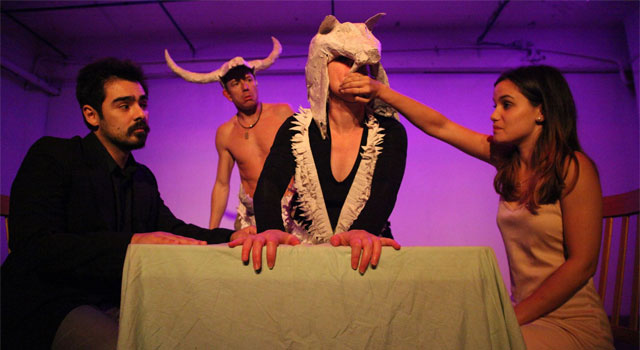
Playwright: Kay Armstrong
Director: Kay Armstrong
Cast: Kay Armstrong

Theatre review
Meanings can be found anywhere, and in anything, but it requires that the observer draws their own conclusions on what, if anything, is being said. An Hour With Kay is abstract and absurd. The fact that time itself is highlighted by its very inclusion within the title of the work, makes us consider how we value those 60 minutes, and whether the artist Kay Armstrong justifies her procurement of the audience’s presence. Indeed, our presence is an important factor in the piece, which is characterised by an unusual freedom in Armstrong’s eagerness in incorporating our bodies and minds into the creation of a kind of theatre that is on some level, about the subversion of passive viewership. A quality of democracy figures heavily in her art. Maybe we are not in control of the action at all times, but we are certainly the ones who have to decide what it is that we experience.

Armstrong is a strong performer with excellent conviction, but she is uninterested in manipulating the resolutions we may or may not attain from participating in her work. It is about the here and now, and those 60 minutes of activity and energy that we are involved with. What happens after, is entirely reliant on our own creativity. The work is fascinating and engaging, with tempo that changes regularly, so that it evades predictability. Armstrong’s ability to surprise at every juncture keeps us intrigued, and a gentle sense of instability demands that we are attentive to what she might unleash upon us next.

An Hour With Kay satisfies with its concoction of all that is weird and wonderful, yet it challenges us, both in terms of our notions of components and definitions theatre and art, and also of our expectations as public consumers of culture. Art has the privilege of being able to take any form, and to break any rule. It is however, required to reconstitute something new in place of what it seeks to dismantle. The new is never easily understandable, but we can hope for it to connect in some way, and Kay Armstrong’s show reacquaints us with joy and wonder, which seem to become increasingly scarce with each passing year.

www.venue505.com/theatre | www.kworks.co

Review: This Is Not Mills And Boon (Glorious Theatre Thing Co / Old 505 Theatre)

glorioustheatreVenue: Old 505 Theatre (Surry Hills NSW), Jun 23 – 28, 2015
Playwright: Erica J Brennan
Director: Richard Hilliar
Cast: Emma Chelsey, Cat Martin, Diego AR Melo, Dominic McDonald
Image by Liam O’Keefe

Theatre review
Sex is a difficult thing to talk about. It is deeply personal, and social etiquette dictates that we keep it hidden under wraps. What is proffered to be general and common knowledge are invariably narrow definitions of healthy sexual functioning and practice. Maturity is therefore almost always an awkward process that involves young people grappling with unexpected deviations from those preconceived notions of norms, and the turmoil that it precipitates can be quite agonising.

Erica J Brennan’s This Is Not Mills And Boon is about Abigail, a young woman trying to understand her sexual self, through the discovery of sexual diversity in erotic literature. The plot is devised with a creative vision, using well-considered anti-chronological timelines and the meaningful juxtaposition of fantasy with reality, but for what is clearly the most risqué of themes at its centre, Brennan’s approach is uncomfortably polite. The raunchy context requires a certain quality of bluntness, or perhaps a coarser sensibility, in order that its jokes may cut deeper, and its many libidinous situations resonate with greater danger and tension.

Director Richard Hilliar introduces a good amount of theatricality to the staging, with strong support by designers (Ash Bell’s costumes are especially noteworthy) to create a show that is effervescent and fast-paced, but it seems to shy away from the opportunity for an exploration into sex and its boundaries that goes beyond the surface. Occupying centre stage is Abigail’s tedious impassivity, which grows more and more pronounced with time, and its presence is allowed to take over the story without it ever being interesting enough. Emma Chelsey plays the lead with a convincing naiveté and an appearance that easily portrays both girl and woman, but her performance is too plain. Without a sense of complexity that intrigues or titillates, the exercise is one that ultimately feels puerile and overly cautious.

Brennan and her protagonist’s journey from girl to goddess might not be the most compelling tale, but it provides a universal parallel for those of us who have experimented and have found our individualistic inclinations in what could be life’s greatest joy. The revelations that come with the formation of confident sexualities are invariably profound, and it is that kind of poignancy that all work about sexual awakenings have to live up to.

www.venue505.com/theatre | gloriousthingtheatreco.wordpress.com