Review: Love And Death And An American Guitar (Highway Run Productions)

highwayrunVenue: Hayes Theatre Co (Potts Point NSW), Jun 4 – 6, 2014
Playwright: Toby Francis
Director: Neil Gooding
Musical Director: Andrew Worboys
Cast: Toby Francis, Noni McCallum, Andrew Worboys

Theatre review
Jim Steinman is a living American rock legend. Best known for power ballads made famous by the likes of Meatloaf, Bonnie Tyler, Air Supply and Celine Dion, his music is deeply ingrained into pop culture the world over. Like many song writers responsible for the most popular music ever recorded, his fame has never matched those who are centre stage. Toby Francis’ new script is mainly a monologue that incorporates the cabaret format. He performs it with an accompanist, along with a support vocalist who provides a female voice for several numbers. The story gives us some background into Steinman’s work and subsequent estrangement with Meatloaf, then goes on to an imagined depiction of Steinman pitching to us, an idea for a rock opera. Neverland was the precursor to Steinman’s seminal Bat Out Of Hell, but Francis’ vision is assembled like a concerto of greatest hits.

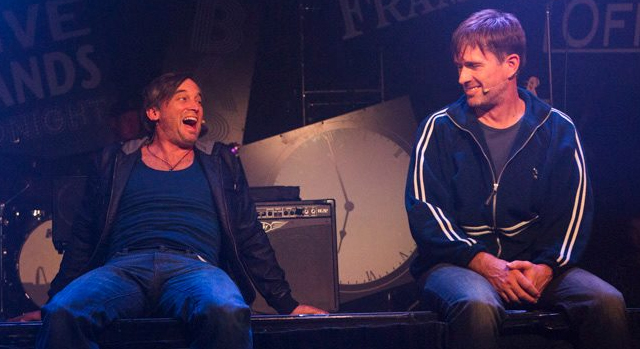
The song list is selected wisely, with many of Steinman’s crowd-pleasers included. Francis is on stage, dressed in denim, wielding a guitar and a microphone stand. On his right is musical director Andrew Worboys on a grand piano. It seems an awkward arrangement, but the rock cabaret works. The glam quality in Steinman’s songs provide a romantic flamboyance that makes sense for the context. Pre-programmed backing tracks give the songs their arena style volume, but all vocals are sung live. There is no doubt that the strongest element of Love And Death And An American Guitar is its standard of singing. The notes that emerge from Francis and his female counterpart Noni McCallum’s voices are astounding. One of the great joys of live performance is to be in the presence of superhuman talent, and these singers’ abilities are beyond what any combination of iPod and earphones can encapsulate. Also accomplished is Francis’ storytelling and the script he has prepared for the show. There is a beautiful lyricism to his writing, although the story does lack vividness at times. His skills as an actor are persuasive enough for the production, but the command over his physicality requires training.

Much as Steinman is one of the greatest song writers ever to surface, he does not have the makings of a rock god. Successful rock stars lend style, attitude and personality to the stage. They need to resonate sexuality, danger, confidence and power. In his show, Francis is positioned somewhere between cabaret, musical theatre and rock. He has a vulnerability that is alluring, but there is a politeness that belongs to the more formal world of musicals. The songs belong to stadiums that seat thousands, but Love And Death And An American Guitar translates them for a much smaller venue, and an entirely different genre of show. Francis sheds new light on these classic tunes, allowing their many fans to fall in love all over again. To borrow from the man himself, “it’s so hard to resist and it’s all coming back…”

www.hayestheatre.com.au | www.highwayrunproductions.com

Review: O.C. Diva (Hayes Theatre Co)

hilarycole1Venue: Hayes Theatre Co (Potts Point NSW), Jun 15 – 29, 2014
Directors: Hilary Cole, Jay James-Moody
Musical Director: Steven Kreamer
Cast: Hilary Cole

Theatre review
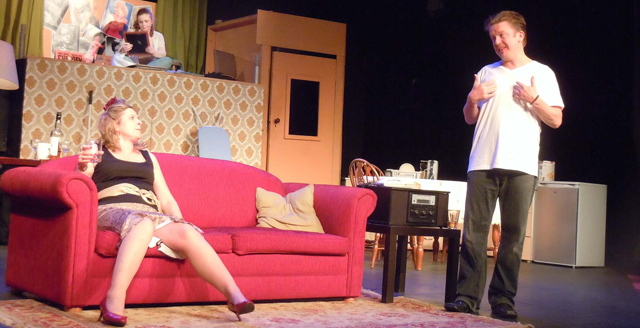
Hilary Cole’s cabaret show takes on the familiar structure of a singer with a microphone, and her musical director on piano. The format works well for Cole, whose voice is an absolute delight, and her ability to convey clear stories and emotions through song demonstrates real talent. As is customary, the song list is composed mostly of familiar standards, but unexpected twists are introduced for added dimension as well as comic effect. Blondie’s 1979 hit “One Way Or Another” gets a surprising mash up treatment with Andrew Lloyd Webber’s “Phanton Of The Opera”, delivering laughs as well as an impressive opportunity to showcase Cole’s musical flair and her musical director Steven Kreamer’s prowess as an accompanist. There is also a one-woman “duet” with Cole being joined by her own impersonation of Bernadette Peters, that illustrates her admiration for the Broadway superstar, and reveals an unexpected versatility.

Direction of Cole’s performance is effective in the comic sections. Her punchlines are subtle but defined, and the jokes are well written. The young performer’s level of confidence is still in teething stages, but she manages to connect well in the venue’s intimate setting. Cole does fidget and stroll around excessively, and her eyes often withdraw into an introspective downward glance, but her passion for the stage is vibrant and infectious. There is a significant portion of the show that looks back at Cole’s experience with obsessive compulsive disorder. The performance becomes vulnerable and truthful, but also overly dark and depressing. Balance is lost here, and one is reminded of the work of Sandra Bernhard and Liza Minnelli where melancholic humour is retained when dealing with bleaker subject matter. Sadness does have a place in the cabaret, but a greater sense of show needs to be applied.

Cole is a beautiful performer, both physically and vocally. She is also a quirky personality, which justifies the choice for a show that is slightly unorthodox in tone. Ultimately, O.C. Diva‘s most memorable moments involve Cole’s singing, which proves to be much closer to perfection than she believes it to be. After divulging her anxieties about personal deficiencies, the show ends at a point of catharsis where she confesses the need for trust. It is evident to all in the audience that she can certainly rely on her talents to take her very far indeed.

www.hayestheatre.com.au

Review: Truth, Beauty And A Picture Of You (Neil Gooding Productions)

hayestheatrecoVenue: Hayes Theatre Co (Potts Point NSW), May 9 – Jun 1, 2014
Book: Alex Broun, Tim Freedman
Music: Tim Freedman
Lyrics: Tim Freedman
Director: Neil Gooding
Musical Director: Andrew Worboys
Cast: Ian Stenlake, Scott Irwin, Erica Lovell, Toby Francis, Ross Chisari

Theatre review
Opera and the stage musical are theatre genres with their own defined song structures. Music is written in a specific way so that the genre works. Tim Freedman’s songs were written not for the stage, but for the world of pop and rock. This “juke box” musical is formed with highlights of his recording career with The Whitlams, and it is debatable how well the selection stands up against compositions tailored for the genre, but there is no question that this premier production of Truth, Beauty And A Picture Of You is effective on many levels.

Freedman and Alex Broun have built around the songs, a story replete with nostalgia and sentimentality, ensuring an emotional experience that audiences expect of the format. Characters and lines are thoughtfully crafted, with scenes between songs sometimes leaving a greater impression than the musical numbers themselves. Neil Gooding’s direction utilises space limitations of the Hayes Theatre to his advantage, evoking wistfully, the grunge of the 1990s and of Newtown, where the action is set, but it should be said that visual design could benefit from being a little more adventurous. The incorporation of live musicians within the space is charming. Gooding allows them to be within sight, but they are never intrusive. Above all, Gooding is a sensitive storyteller. The plot unfolds beautifully, with surprise, laughter and pathos always in the mix. His cast is a strong one, and the conviction of their performances is impressively engrossing.

Ian Stenlake, in the role of Anton, unleashes remarkable charisma. He is not a heroic protagonist, but his confident presence captivates us, and makes us care for all that he goes through. Stenlake’s ability to portray frivolity and an Australian casualness is wonderfully endearing, and his comic timing is a highlight of the show. Scott Irwin plays Charlie, buoyant and optimistic in 1994, but wearied and dejected in 2014. His unbelievable transformation between both eras bears an authenticity that is astonishing. Irwin’s work is subtle but powerful. His depiction of the character’s darker moments are devastating, and it is this gravity that gives the production its soul.

Younger members of the cast might be slightly less accomplished, but their talents are evident. Their vocal abilities in particular are outstanding, and they bring new life to many of the songs. It is unfortunate that the only obvious technical weakness of the production has to do with the way voices are mixed, as the band tends to drown out some of the singing in the bigger numbers. Erica Lovell as Beatrice is delightful and spirited. She is the strongest actor in the young bunch, and turns a somewhat inconsequential character into a memorable one.

Truth, Beauty And A Picture Of You is a moving show about love in its many guises. It tugs at our heartstrings and touches deeply. Like every great musical, it is affecting and entertaining, and it presents an opportunity to showcase some of our greatest talents, in whom we find great joy and sublime inspiration.

www.hayestheatre.com.au | www.goodingproductions.com

Review: The Rise And Fall Of Little Voice (Lane Cove Theatre Company)

lanecoveVenue: New Theatre (Newtown NSW), May 15 – 24, 2014
Playwright: Jim Cartwright
Director: Christine Firkin
Actors: Debbie Neilson, Wendy Morton, Michelle Bellamy, Nick Bolton, Luke Reeves, Kevin Weir, Mark Reiss
Image by Geoff Sirmai

Theatre review
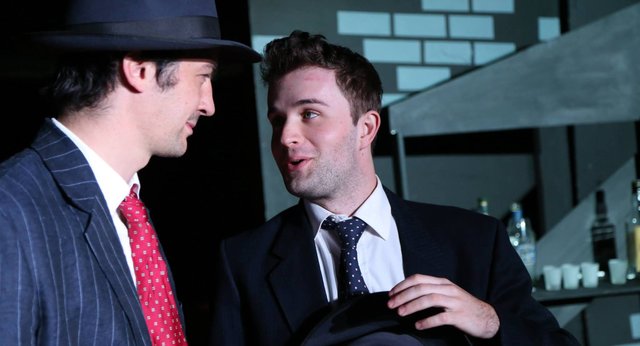
Northern England is a long distance away, with its own significant cultural and language affectations. The desire to stage a production from that region for a Sydney audience, demonstrates the universal appeal of Jim Cartwight’s script. The Rise And Fall Of Little Voice is a comedy that examines the darker side of family dynamics in a deceptively upbeat manner. It tackles dysfunction and neglect in the guise of a pseudo-musical, with ample measures of broad campy humour and a lot of singing.

Lane Cove Theatre’s production places emphasis on the play’s light-hearted elements. We see the drunken fumblings of a desperate middle-aged woman Mari Hoff, her daughter LV’s burgeoning and very innocent romance, and their neighbour’s kooky jesting. There is some effort at depicting Hoff’s love interest with some sinisterness, but by and large, the show lacks a gravity that would give meaning to its story and characters. Little Voice relies heavily on empathy and personal identification for its dramatics to be effective, but the narrative does not always connect sufficiently with its audience. An important aspect of the play is the loss of the family’s paternal figure that causes disharmony and grief, and it is the memory both women bear of the man that provides impetus for the plot, but his presence is unsatisfactorily sparse in this staging. He leaves a hole in their lives, but we are blissfully oblivious to it.

Wendy Morton is an energetic actor who provides Mari Hoff with an emotional neediness and instability that is uncomfortably believable. There is a sense of self-abandonment in Morton’s work that is entertaining and fitting, but the character she creates has too much warmth, and comes across overly endearing. The story needs a mother with a cruel and villainous edge to justify her appointed conclusion, and to help explain her daughter’s strangeness, but Morton lacks those malevolent qualities in her otherwise delightful portrayal. LV is played by Debbie Neilson who shines in musical sections where her talents as an impressionist take centre stage. She performs as Judy Garland, Lulu, Edith Piaf, Marlene Dietrich and Shirley Bassey, and is particularly memorable with her mimicry of Marilyn Monroe and Shirley Temple. It is clear that Neilson’s vocal ability contributes greatly to her part in the show, but the actor is not ideally cast. Neilson is a vibrant and gregarious performer who seems to be at odds with the timidness and melancholy that is fundamental to her character. In the role of her love interest Billy, is Luke Reeves who delivers the most consistent and convincing characterisation in the show. The script does not demand very much of the actor, but Reeves is clear of his contribution to the plot, and addresses each scene with charm and precision.

Little Voice is effervescent and colourful, but it is the exploration of the writing’s psychological and emotional depths that would give it a sense of authenticity. Death and mourning are themes that touch all our lives, and truthful theatrical renderings always resonate. Coming of age tales are appealing because they speak of hope, but they need the darkness before the light in order to hit home.

www.lanecovetheatrecompany.com

Review: The Detective’s Handbook (Sydney University Dramatic Society)

rsz_10344095_783993371619707_864135050788121539_oVenue: University of Sydney Studio B (Camperdown NSW), Apr 30 – May 10, 2014
Book and Lyrics: Ian Ferrington
Score: Olga Solar
Director: Ian Ferrington
Actors: Alessandro Tuniz, Matt Bartlett, Alexander Richmond, Natasha Vickery, Victoria Zerbst, Elliott Miller, Alice Birbara

Theatre review
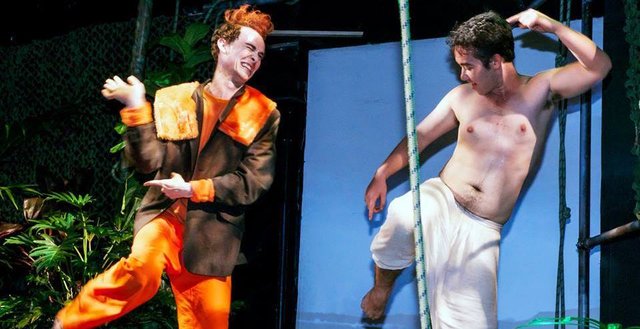
The Detective’s Handbook is a new musical written by Ian Ferrington, with score provided by Olga Solar. It is a satirical take on film noir, bringing to mind, films like Dead Men Don’t Wear Plaid (1982) and Who Framed Roger Rabbit (1988). It is persistently self-conscious, but it takes its parody seriously, placing as much focus on storytelling and its musical numbers, as it does on creating laughs.

Ferrington’s vision is ambitious and idiosyncratic. His work might not look original, but it bears a quirkiness that prevents it from feeling derivative. His writing is witty and charming, but his characters, although spirited, are too traditional. Ferrington’s direction is energetic, with an emphasis on rhythms, which keeps things buoyant and lively. There is however, a need for punchlines and plot twists to be cleaned up for clearer delivery. Olga Solar’s delightful music is beautifully woven into the narratives, and effectively provides characters with interest and complexion. There is a noticeable lack of melodies in most of the songs, with the team’s decision to adopt a “rap-infused 1950s showtune jazz” style. It is debatable whether that choice is a wise one, but the two most memorable numbers, “Too Much To Ask” and “Congratulations”, are both conventionally structured, hummable tunes.

Matt Bartlett has the strongest singing voice in the cast, and plays Detective Jimmy Hartman with great conviction, creating a character that stands out as the most believable of the group. The actor brings a warmth to his performance, and quickly establishes a good connection with the audience. Natasha Vickery plays her three characters with panache and levity. She embraces the show’s giddy style of comedy with good humour, and although required to play silly often, we remember her performance to be a polished one. Other players tend to have an oversimplified approach, with characterisations that do not develop far enough to sustain a show that’s considerably more substantial than a skit.

This is a musical with a lot of frivolity, but it also demonstrates impressive flair. Ferrington and Solar’s material contains great potential, with generous room for comedians to provide dynamic and creative interpretations. This production might be a little under-cooked with too many one trick ponies, but there is no doubt that if explored with greater depth, its future incarnation could well be The Big Noir Musical Hit.

www.sudsusyd.com

Review: The Jungle Book (Emu Productions / King St Theatre)

rsz_1620714_737788869599707_8034336185139306069_nVenue: King Street Theatre (Newtown NSW), Apr 14 – 26, 2014
Book and Lyrics: Markus Weber (based on the original by Rudyard Kipling)
Composer: Michael Summ
Director: Markus Weber
Actors: Maria De Marco, Badaidilaga Maftuh-Flynn, Mark Power, Mandy Fung, Bernard Wheatley, Brett O’Neill, Kyle Stephens
Image by Lorina Stacey Schwenke

Theatre review
Markus Weber and Michael Summ’s version of The Jungle Book is a beautifully-written musical derived from Rudyard Kipling’s famed writings. Familiar characters are retained, and even though these songs are less well-known, they are delightfully catchy and pleasantly melodic.

Markus Weber’s current production is fairly minimal, and relies on the strength of the songs and text to carry the show. Musical arrangements are joyful and effective for most of the material, but several numbers need an update from an unfortunate and uncomfortable 1990s pop/rock sound. Weber’s use of space is thoughtfully varied. The multi-tiered stage is designed well, and used cleverly to keep the attention of the audience. It is noteworthy that although a vast majority of the crowd is very young, the musical has enough content to entertain any adult companion.

There are moments however, where performances falter, and confusion emerges. Even though performances are spirited, calibre of players vary dramatically. The show is designed for children, but the roles are not simple, and it relies heavily on what the actors can bring to the production.

Maria De Marco’s singing voice is strongest in the cast, using it wonderfully to convey the story wonderfully despite not having assistance from microphones. She plays Bagheera, the black leopard who delivers several poignant moments that give the production a necessary shade of gravity. Badaidilaga Maftuh-Flynn plays Mowgli, the only human character. Maftuh-Flynn performs with conviction, and has the gift of being able to portray emotion with great clarity without appearing to be doing very much at all. Brett O’Neill is a vibrant King Louie, the amusingly deluded monkey who never fails to entertain. O’Neill’s energy is big and focused, and his keen sense of comic timing shows him to be the most polished actor on this stage, leaving an excellent impression, notwithstanding the brevity of his appearance.

The Jungle Book‘s message of ecological awareness is a critical one. The anthropomorphism of wildlife imparts to younger generations, values of conservationism that are noble and necessary. Providing children with an understanding that animals are not our slaves or property is a responsibility we must take, if only for our own survival.

www.kingstreettheatre.com.au

Review: Strictly Ballroom (Lyric Theatre)

Venue: Lyric Theatre (Sydney NSW), from Mar 25, 2014
Book: Baz Luhrmann, Craig Pearce
Original Score: Elliot Wheeler
Director: Baz Luhrmann
Choreographer: John O’Connell
Performers: Thomas Lacey, Phoebe Panaretos, Bob Baines, Drew Forsythe, Natalie Gamsu, Robert Grubb, Fernando Mira, Heather Mitchell, Mark Owen-Taylor, Sophia Katos

Theatre review (originally published at auditoriummag.com)
The transformation of Strictly Ballroom into a work for the musical stage is a logical progression. The themes and structure of the film obviously lend themselves to a rendering that would fit readily into the popular genre, and Baz Luhrmann’s penchant for ostentation, flamboyance, and musical numbers in his films makes him a marketer’s dream in this lucrative market.

As an internationally lauded luminary of film imagery, our expectations of production and costume design in his show are understandably high. Fresh from receiving her third and fourth Academy Awards just a month prior to opening night, long-time collaborator Catherine Martin’s work as set and costume designer is irrefutably stunning. Working with already outlandish costumes from the world of ballroom dancing, Martin’s creations take a giant leap forward, into a realm of fairy tales and pure fantasy. There is no requirement for restraint on this stage, and we are treated to the most gloriously colourful and glitzy wigs and costumes that had previously existed only in our dreams.

Martin’s sets are effective and dynamic. The scenes are not located anywhere exotic, but the several suburban venues depicted are created with flair and great imagination. There is very efficient use of space with mobile pieces that work independently, but are also combined for different perspectives. It is not a story that features pyramids, castles or helicopters, but this is a visually arresting stage, which exploits every depth and height that the space can afford, and which sparkles at every corner. There are sequins, paillettes, beads and crystals shimmering at all times, helping to establish an aesthetic that fits in perfectly with this fantastical realm.

Strictly Ballroom embraces wholeheartedly the kitsch value of musicals, and its visual elements are only the beginning. Although it does carefully cater to middle class family audiences, every aspect is expressed through a rejection of banal refinement and conventional good taste. Its story is highly romanticised, the emotions it portrays are brash, the songs are oversweet and obvious, and all performers approach their roles with a sense of unbridled and confident exaggeration. If there is ever a moment for a concoction with this much cheese to work, this would be it, but very unfortunately, the show misses its mark on several levels.

Humour is appropriately peppered throughout the plot. There is much to make fun of, with ridiculous characters and contexts all clearly bearing the promise to deliver laughs, but many of the jokes fall flat. Luhrmann’s direction seems to lack an emphasis on the comedy. Punchlines often do not work, and the atmosphere struggles to keep buoyant. An exception is the role of Liz, played by Sophia Katos, who is memorable as the most consistently funny member of the cast. A number of roles have been created chiefly for comic relief, and Katos’ execution is clearly the strongest.

Leading the cast is Thomas Lacey, an attractive man and a strong dancer, both qualities shared by his character Scott Hastings. Lacey is also an adequate singer, but the scale of the production requires a much more experienced voice that will stand its own amongst all the frenetic activity on stage. Weaker still is Lacey’s acting, which fails to connect him with his love interest, and renders their relationship completely uninteresting and unconvincing. Equally responsible is Phoebe Panaretos, who is admittedly more evenly skilled in the various disciplines of musical theatre, but her lack of charisma in the very central role of Fran is a key disappointment. Panaretos is not a weak performer, but it is evident that she is simply too inexperienced for the challenge bestowed upon her.

Better performances come from the likes of Heather Mitchell, who is endearing as Shirley Hastings, the male protagonist’s mother. Mitchell’s characterisation is vibrant and believable, and although not the strongest of singers, she brings a warmth to the production despite playing someone fairly unpleasant. Also in parental roles are Natalie Gamsu and Fernando Mira, who both impress as characters of Spanish heritage. Gamsu’s distinctive voice is outstanding in a production that seems to have cast performers according to dance ability and appearance, and Mira is a charismatic actor, whose talents as a flamenco dancer are showcased brilliantly, but needs to find greater confidence in his singing.

One of the themes in Strictly Ballroom is the tension between ethnic groups in Australia. This is expressed in the romantic relationship between Fran and Scott, and also in their dance. Their families are depicted in wildly different lights, but both are spirited, joyful and moving. Regretfully, this meaningful and dramatic subject matter is not explored in sufficient depth. The young leads seem too easily accepted by each others’ families, and the penultimate obstacle to their love takes form instead, in the young man’s dilemma about competition dance partners. The opportunity for a more emotive conclusion is sacrificed for one that is more vivacious, but also needlessly frivolous. Ultimately it is the production’s marvelous visual beauty that triumphs, but a three hour show requires more than pleasure for the eyes. It needs to do something for the soul, which discerns the difference between style and substance, and recognises all that glitters is not gold.

www.strictlyballroomthemusical.com

Review: The Drowsy Chaperone (Squabbalogic Independent Music Theatre)

drowsychaperoneVenue: Hayes Theatre Co (Potts Point NSW), Mar 14 – Apr 6, 2014
Book: Bob Martin, Don McKellar
Music and Lyrics: Lisa Lambert, Greg Morrison
Director: Jay James-Moody
Choreography: Monique Sallé
Musical Direction: Paul Geddes
Actors: Jay James-Moody, Gael Ballantyne, Chris Coleman, Emma Cooperthwaite, Anna Freeland, Hilary Cole, Brett O’Neill, Ross Chisari, Laurence Coy, Steven Kreamer, Richard Woodhouse, Jaimie Leigh Johnson, Tom Sharah, Monique Sallé, Michele Lansdown

Theatre review
The Drowsy Chaperone is a brilliantly written musical. It is also a hilarious comedy with intelligently sharp and sophisticated humour that does not underestimate its audience. The show’s concepts and structure are original. Considering the usually restrictive genre, the writers have been able to create something that feels refreshing, yet maintain a classic musical formula that is perennially appealing.

The cast is a fairly large one, but the undoubted star of the production is Jay James-Moody, who plays “Man in chair”, a narrator of sorts who functions as our sometimes tipsy chaperone, guiding us through his favourite musical. James-Moody is also director of the work, and does a good job assembling and crafting the many elements of his creation, but his achievement as performer here is outstanding. His humour is subtle and precise, with a very thorough grasp of the vacillations and nuances in the writing. His connection with the audience is impeccably strong. James-Moody addresses the audience directly and is required to take control of all our reactions to almost everything that unfolds on stage. It is a very tall order but he delivers at every point, and in unbelievably fabulous form.

Hilary Cole as Janet van de Graaf impresses with a beautiful and versatile singing voice. Her role is a demanding one, and she delivers on many fronts but some of the choreography exposes her shortcomings. Cole’s work is full of conviction, and she looks very much the part, but can sometimes introduce too much fragility into her characterisation. Her fiancé Robert Martin is played by Brett O’Neill who has created a character that seems to be magically transported from the 1920s. It is a performance that is authentic and meticulously studied. O’Neill is delightful in the genre, with a strong singing voice and confident execution of choreography. Ross Chisari is slight of frame and plays a smaller role, but leaves a substantial impression. He is by far the strongest dancer in the cast, and has a surprisingly strong voice that belts out some of the most powerful notes in the show. Chisari has many qualities that would see him thrive in the field for all the decades to come.

In its final moments, the show takes a swipe at blockbuster musicals like Cats and Les Misérables. Indeed, The Drowsy Chaperone is not for every Tom, Dick, Harry and their 8 year-old children. It doesn’t operate on a level of simple sentimentality and doesn’t rely on unthinking emotion to hit its mark. This is a supremely entertaining show that appeals with its clever humour, but may need its crowd to have some level of cultured awareness. It is also a show about our love of performance. “Man in chair” has an obsession for stage performers in his record collection, and this production gives us many reasons to be enthralled in our seats, amused and awestruck.

www.hayestheatre.com.au

www.squabbalogic.com.au

Review: The Vaudevillians (Strut & Fret Production House)

vaudevillians1Venue: The Vanguard (Newtown NSW), Feb 18 – Mar 2, 2014
Musical Director: Richard Andriessen (Major Scales)
Performers: Jerick Hoffer (Jinkx Monsoon), Richard Andriessen (Major Scales)

Theatre review
The premise is simple. Spouses Kitty Witless and Dan Von Dandy were accidentally frozen under a torrent of snow and cocaine in the 1920s, but were discovered and revived in our very recent times of global warming. Both happen to be brilliant performers, and have found their way to Sydney, just in time to present their show for the Mardi Gras season.

Cabaret is about performance. Stories are rarely important, but storytelling is everything. The Vaudevillians are played by Jinkx Monsoon and Major Scales, American artists who are truly of an “international standard”. Scales provides excellent support to his leading lady. He is superb on the piano, and the re-arrangements he has created are intelligent and delightful. The choice of familiar songs by the likes of Madonna, Daft Punk, Cyndi Lauper, M.I.A., and Britney Spears makes for a setlist that would appeal to most, but it is his extravagantly comical interpretations that make them all so thoroughly entertaining. Scales does falter a little in confidence when performing his solo number, but it is wonderfully refreshing to see a highly animated and energetic piano man.

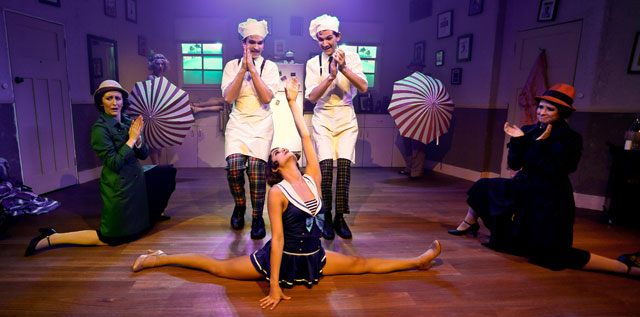
Jinkx Monsoon is a comic cabaret artist of the highest calibre. Clearly, The Vaudevillians is a work tailored to her specific talents and abilities, but the 80 minute show impresses and overflows with scintillating wit, belly laughs and stunning singing. Monsoon’s vocals are powerful, and she seems to have an infinite well of techniques for turning every line in every song into something that earns the audience’s laughter. A segment referencing Henrik Ibsen, “A Doll’s House 2: Electric Boogaloo” sees the leading lady attack Gloria Gaynor’s “I Will Survive” with the greatest amount of flamboyant drama one could ever wish to see. She is like a young Gloria Swanson, only louder and a whole lot sillier.

Combining disciplined training (you can hear it in her singing, and see it with her splits and headstands) and a sense of looseness that is unafraid of heckles and other chanced occurrences, Monsoon’s style is deceptively casual, and incredibly brave. It is live performance at its most thrilling, where the audience feels that anything could happen because the performers and the show’s structure allow, or even ask for it. There is danger in the air, the kind that is completely delicious and irresistible. The Vaudevillians is fun, entertaining theatre. Monsoon and Scales are silly as they come, but without a hint of stupidity, and their show is filled with genuine talent and quite genius creativity.

www.theofficialvaudevillians.com

Review: Privates On Parade (New Theatre)

rsz_1069838_594783037267230_490878940_nVenue: New Theatre (Newtown NSW), Feb 11 – Mar 8, 2014
Playwright: Peter Nichols
Music: Denis King
Director: Alice Livingstone
Choreographer: Trent Kidd
Actors: Matt Butcher, Jamie Collette, Peter Eyers, David Hooley, Morgan Junor-Larwood, James Lee, Henry Moss, David Ouch, Diana Perini, Martin Searles, Gerwin Widjaja
Image by Bob Seary

Theatre review
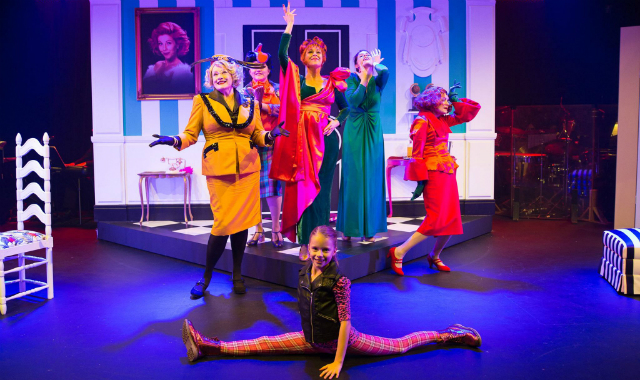
Written in 1977, this “play with music” appeared just two years before the inaugural Sydney Gay & Lesbian Mardi Gras parade. It contains some of the earliest progressive depictions of same sex relationships, and is an excellent choice for the New Theatre to present it in conjunction with the Mardi Gras festival this year. The work comes from a time before political correctness, and includes many references to ethnicity, gender and sexual preference that could make contemporary audiences cringe, but director Alice Livingstone is mindful of the change in context and deals with those awkward moments shrewdly and with sensitivity.

Livingstone’s decision to add a prologue featuring the “Boogie Woogie Bugle Boys” is a stroke of genius. Gerwin Widjaja, Henry Moss and David Ouch play a trio of drag queens in cheongsams inviting the audience to 1948 Singapore, and providing a side of the fictitious SADUSEA (Song And Dance Unit South East Asia) that is missing from Peter Nichols’ show. More importantly, it showcases the talents of Widjaja and Ouch, who would otherwise have been completely mute as the multiple “oriental men” in the original work.

The greatest strength of this production is its cast. Diana Perini in particular rises to the challenge, and does almost everything one could possibly ask of a performer. She plays comedy and tragedy, sings in ensemble and solo, dances en pointe and on tap heels, gets her top off, and does a mean Indian accent. Her role is not terribly interesting, but she sure makes a jaw-dropping one-woman tour de force out of it. James Lee plays Terri Dennis, the most flamboyant character imaginable. He masters all his song and dance routines, and endears himself as a crowd favourite from his very first appearance. Lee is also very effective in creating chemistry, always bringing out the best in his co-actors when appearing together. There is an effortless warmth to this man that most performers can only dream of. David Hooley is polished and disciplined as Steven Flowers. He seems slight in stature but his singing is big and confident, and his tap dancing is thoroughly impressive. His dreamy “Fred and Ginger” style sequence with Perini is most memorable.

Politics shift constantly, and ideologies evolve. Old works of art can be left behind and buried, but creativity can unearth and shine new light on them. We need not be afraid of mistakes past, if we learn to deal with them at every developed age. A 1977 comedy about British forces in 1948 Singapore, has crossed many borders, time and geographical, to reach this point. It is with refreshed enlightenment and a sense of progressiveness that should mark our approach to it today.

www.newtheatre.org.au