Review: This Boy’s In Love (Red Line Productions)

TBIL 1Venue: Old Fitzroy Theatre (Woolloomooloo NSW), May 26 – 31, 2015
Playwright: Adriano Cappelletta
Director: Johann Walraven
Cast: Adriano Cappelletta
Musical Director: Daryl Wallis

Theatre review
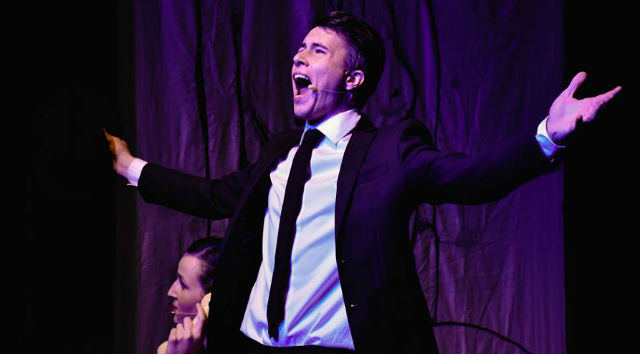
With any luck, Adriano Cappelletta’s This Boy’s In Love is going to be the last great play about gay life in Australia before same-sex marriage is made legal. Ado’s experiences and perspective as a gay man in Sydney are beautifully, and extremely honestly, documented in this one-man show reflecting life for thousands of individuals from a city in its final throes of inequality and bigotry. Ado is hungry for love like everyone else, but his desires face obstacles unique to metropolitan gay lives. Emerging from periods of oppression and persecution, Ado’s community suffers from dysfunctions, tragic and funny, many of which are fluently articulated in the work.

The piece breaks from conventional monologue formats to provide a theatre that is full of variety, in order to engage, entertain and indeed, educate. It takes frequent detours into sub-genres like cabaret, stand up and dance, and adopts hints of the absurd, so that its ninety minute duration never loses a moment of vibrancy. Director Johann Walraven identifies brilliantly, the many nuances in the text to create moments of surprising poignancy, and to make us fall for the protagonist more and more as the show progresses. As its performer, Cappelletta is generous in spirit, and unbelievably warm, striking a rapport with his crowd so solid, that we cannot help but be enthralled. The level of dynamism in his work is astounding at points, and we get completely absorbed into all his stories, silly or serious.

This Boy’s In Love is as perfect as a monologue can get for small theatre. The only way one can envision this production improved, is with greater investment and imagination into its design elements. Technical enhancements can make the show even stronger, but with what this team is able to assemble, it conveys its intentions perfectly. Love is hard to define. It can mean many different things, but starving anyone of it is cruel and certainly evil. For centuries, love has been defined in narrow heteronormative and religious forms, and in that process, many of us have suffered senselessly. Times have changed, and everyday, more are able to find emancipation. May the day come when sexual bigotry of all kinds in all places be eradicated.

www.oldfitztheatre.com

Review: Ali McGregor’s Alchemy (Hayes Theatre Co)

alimcgregorVenue: Hayes Theatre Co (Potts Point NSW), Apr 21 – 26, 2014
Musical Director: Sam Keevers
Cast: Ali McGregor

Theatre review
Ali McGregor has the kind of talent that we all wish to have. She is a singer who can sing anything across every genre, and she does them all incredibly well. In Alchemy, she showcases her frankly amazing ability at opera, rap, pop, rock, and all shades of jazz. There is nothing her voice is incapable of, and everything sounds authentic. Switching from musical theatre torch songs to hip hop à la Salt-N-Pepa is entirely effortless for McGregor. We never feel that the performer is more comfortable in one style than another, and the confidence she presents with each number is thoroughly enthralling and quite overwhelming.

When the diva sings, we are captivated and suspended in a timeless space; we lose ourselves and all our cares evaporate. McGregor says that Alchemy is about turning trash to treasure. The set list includes well known chart hits from the 80’s and 90’s, but rearranged to fit a jazz cabaret mode featuring Sam Keevers on the piano, Jonathan Zwartz on double bass and Tim Firth on drums. The programme is beautifully paced and constantly surprising, with an enjoyable juxtaposition of the familiar with the unexpected, providing amusement and delight. McGregor is a keen entertainer who engages her crowd with gestures and glances, and a lot of talking between songs. She is without question, a funny lady, and uses comedy well to create contexts for song choices, but unlike the music, her style and content of her chit-chat can become repetitive. She also shies away from more serious moments, frequently introducing a self-deprecating humour that is sometimes charming, but can also be disruptive. McGregor is capable of a lot of beauty with her presence and performance, and should allow more of her sublime qualities to resonate, instead of reverting to a persistent display of modesty and down-to-earthness.

It must be noted that lighting design for the show is inventive and very dynamic, transforming the simplest of stagings into something quite visually stunning. Sound however, does not show off McGregor’s range with enough effectiveness. The singer sounds impressive through the venue’s speakers for most of the duration but when she belts the bigger notes with her extraordinary power, the technical facilities seems to falter, losing dimension at these crucial points. Fortunately, the star’s determination and infallibility smooths over every flaw, and we cannot help but stay in love with her until the very end.

www.hayestheatre.com.au

Review: Rocky Horror Show (Lyric Theatre)

rockyhorrorVenue: Lyric Theatre (Sydney NSW), from Apr 11, 2015
Music, lyrics and book: Richard O’Brien
Director: Chris Luscombe
Choreographer: Nathan Wright
Cast: Angelique Cassimatis, Nicholas Christo, Brendan Irving, Kristian Lavercombe, Amy Lehpamer, Stephen Mahy, Craig McLachlan, Bert Newton, Jayde Westaby

Theatre review
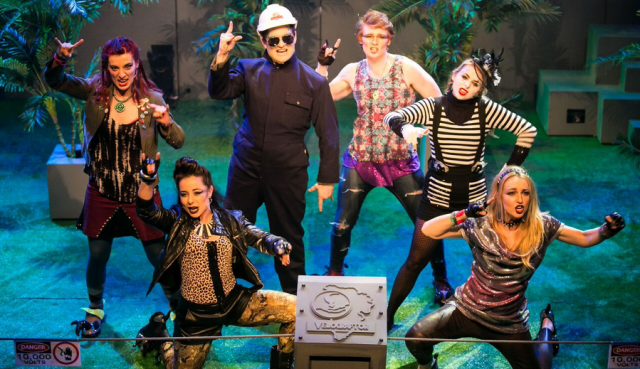
The Rocky Horror musical and its Australian star are icons within their own realms. They have their loyal followings, all coming with fixed expectations that have been cultivated from years of interaction and fandom. There is nothing at all that is unpredictable in this particular incarnation. Richard O’Brien’s material has dated and Craig McLachlan is no shinier a star than he was thirty years ago, but no ticket holder anticipates seeing anything out of the ordinary, other than a very well iterated version of the usual fare.

The production provides as much colour and fun as a dvd viewing of the 1975 film could deliver. Things feel old-fashioned but charming, and while we no longer respond to the show’s shock factor, its kitsch value is still unique and remarkable. The gender and sexual subversion that is fundamental to Rocky Horror‘s success is now passé and much too mild to resonate with the same sense of danger experienced four decades ago, but it provides context for very blue comedy, which this particular Dr. Frank N. Furter does not shy away from. McLachlan’s comic timing is not the key to his enduring popularity, but his determination and exceptional commitment to the stage carries an infectious joy that allows the two hour show to occur in the blink of an eye. The performer leads the cast with an exuberant and playful energy, but lacks the elegance of Tim Curry’s legendary rendition on celluloid. McLachlan’s singing is surprisingly strong, but the more memorable numbers are presented by Amy Lehpamer (Janet Weiss) and Kristian Lavercombe (Riff Raff), who impress with a kind of polish specific to stars of musical theatre, complete with piercing, unwavering vocals and irresistible pizzazz that entertains all from front row up to the nosebleeds.

Theatre, like life, needs occasional lashings of frivolity to provide some balance to the inevitable gloominess that afflicts everyone from time to time. Janet and Brad go through a profound metamorphosis in the story, having seen things that were previously unimaginable, and come away with lessons that are unfathomable to many. Some of us hope for that kind of poignancy every time we devote time and money to the arts, but others prefer to leave the auditorium with nothing more than a few laughs and several delightful song and dance sequences. Rocky Horror Show is lightweight but it does not pretend to be anything much more, and if Frank N Furter has lost his edge, we should probably be grateful that androgyny and gender fluidity is no longer an effective freak show centrepiece.

www.rockyhorror.com.au

Review: A Little Night Music (Sydney University Musical Theatre Ensemble)

muse2Venue: Seymour Centre (Chippendale NSW), Mar 25 – 28, 2015
Book: Hugh Wheeler
Music & Lyrics: Stephen Sondheim
Director: Alexander Andrews
Cast: Stuart Bryan, Emma Elsley, Owen Elsley, Harry Flitcroft, Louise Flynn, Sarah Gaul, Bronwyn Hicks, Christie New
Image by Wenray Wang

Theatre review
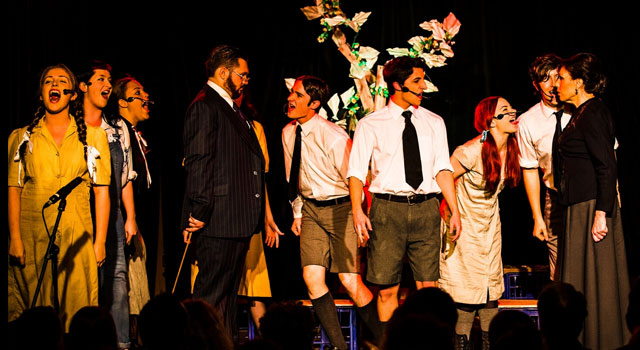
Desiree and Frederik are middle-aged but they are yet to find fulfilling relationships. Sondheim’s A Little Night Music is a very adult love story that contains more farce than it does romance, and speaks to a slightly jaded audience that understands the complexities and illusions of love. The text is an intelligent but mischievous one, offering interesting insight into the personal aspects of mature lives. The most popular song of Sondheim’s entire oeuvre, “Send In The Clowns” is a prominent feature that encapsulates the experience of longing and regret. The decision by MUSE (Sydney University Musical Theatre Ensemble) to stage the work is ambitious on many fronts, but the greatest challenge is for its very young team to convincingly portray the show’s main characters who are at least twice their age. The humour and pathos of the narrative, and its musical numbers, are heavily nuanced and demanding of any cast, but to expect those who have yet to taste all the flavours of life to interpret A Little Night Music with depth and poignancy is a very tall order indeed.

Director Alexander Andrews may not have the most seasoned performers at his disposal, but his flair for musical theatre is undeniable. Andrews is careful to keep the stage active with movement and surprise, so that we are visually engaged throughout the three hour production. Dramatic tension is not always present, and the piece often lacks exuberance, but sequences are paced quickly, with fresh events unfolding consistently to retain our attention. Stronger performers include Christie New, who creates a very funny Charlotte Malcolm, endearing us with sharp self-deprecation, and a knack for delivering powerful punchlines in both speech and song. Also memorable is Madame Armfeldt, the brilliantly zany matriarch presented by Sarah Gaul with gusto and flamboyance. Stuart Bryan cuts a fine figure as the show’s leading man, but his approach is too reserved, and his self-consciousness distracts from Frederik’s emotional journey. Quality of singing in the production is accomplished. Clare Richards’ powerful soprano is a standout, and Conrad Hamill’s work as Music Director, while being fairly rigid is delightfully detailed and precise.

Mr Sondheim’s work is quite literally second to none. He is an original and an undisputed genius, whose creations are ubiquitous and magnificent. Good productions of his body of work make for sublime nights of unparalleled theatrical pleasure, but lesser attempts can still be enjoyable by virtue of the sheer prowess of foundations already laid down years before. Musical theatre is rarely reinvented, and young practitioners of the genre subject themselves to emulating successes they had witnessed before. There is a sense of duplication that exists, whether effort is put into matching what had been great, or intentions are to supercede prior manifestations. It is a true conundrum, when one considers the true essence of art and the pursuit of all that is new.

www.museatusyd.com

Review: Man Of La Mancha (Squabbalogic Independent Music Theatre)

Venue: Seymour Centre (Sydney NSW), Feb 25 – Mar 21, 2015
Book: Dale Wasserman
Lyrics: Joe Darion
Music: Mitch Leigh
Director: Jay James-Moody
Cast: Stephen Anderson, Marika Aubrey, Hayden Barltrop, Reece Budin, Ross Chisari, Laurence Coy, Paul Geddes, Courtney Glass, Brendan Hay, Glenn Hill, Jay James-Moody, Rob Johnson, Shondelle Pratt, Kyle Sapsford, Tony Sheldon, Joanna Weinberg, Richard Woodhouse
Images by Michael Francis

Theatre review
Optimism and delusion can sometimes be different sides of the same coin. In an often dreadful world, having only a realistic mindset can be a debilitating existence. Hope is essential for moving forward, and at certain points in life, the only thing that we can cling to. The darker the days, the braver the dreams, and against the backdrop of the Spanish Inquisition, Man Of La Mancha features perhaps the most idealist of all literary characters, Don Quixote.

Jay James-Moody’s direction of the work is dark and desolate. The pessimism underlying the protagonist’s fantastical imaginings overwhelms the stage, and while melancholia can be a beautiful thing, it can also be oppressive. The production is polished and slick, and nothing much seems to be out of place, but the lack of a joyful energy makes for a show that feels monotonous, even though it bears a warm sincerity that can become very moving at crucial points.

Tony Sheldon’s rendition of the principal song “The Impossible Dream” is perfectly delivered, and he shows us what it is that makes a star. Sheldon’s performance is perhaps not sufficiently effervescent in earlier sequences, and the tone of the show is set too grave too early, but the depth that he brings to the role is more than anyone can hope to glean from a commercial musical, and his ability to create quiet moments of profundity is a thing to behold. In the role of Aldonza is Marika Aubrey who provides a much needed vibrancy to the music with her very bright timbre, but her acting does not reach the level of authenticity necessary for her narrative to engage. Much is made of Aldonza’s struggle for goodness, but we never quite believe that story.

More compelling is Ross Chisari whose impressive disciplines in voice and movement stand him in good stead, for a dependably charming performance as Don Quixote’s squire Sancho Panza. Chisari also serves as choreographer, and his work on that front is equally accomplished. The cast is moved around the stage with meaning and ease, and his efforts at creating colour from gestures and tableau are subtle but highly effective. The creatives do a solid job on the production, making this the best looking show from Squabbalogic thus far. Brendan Hay’s costumes, Simon Greer’s set and Benjamin Brockman’s lights are transportative and aesthetically sophisticated, and even though they are unable to inject greater buoyancy into the dramatics, they achieve great success with its visual imagery.

The dark is meaningless without light. Man Of La Mancha is lovingly crafted, but it does not communicate with enough fluency. It needs to be punchier, with greater dynamic range, so that our emotions can fluctuate with its story. The plot is written so that we come to a powerful conclusion, but what we feel does not match closely enough to what is seen unfolding on the stage. The artists here have dared to dream, and that is important, for as long as the brave lead the way, the rest can follow.

www.squabbalogic.com.au

Review: Guilty Pleasures (Blue Saint Productions)

bluesaintVenue: Hayes Theatre Co (Potts Point NSW), Dec 17 – 21, 2014
Book: Joshua Robson
Lyrics: Hugo Chiarella
Director: Joshua Robson
Music Director and Composer: Robert Tripolino
Cast: Angelique Cassimatis
Image by Mike Snow

Theatre review
Joshua Robson, Hugo Chiarella and Robert Tripolino’s Guilty Pleasures is a 45 minute musical with murderous women and their bad men. It is Chicago‘s “Cell Block H” expanded, and they’ve all had it coming. Comprising a series of independent stories about fatal romances, the short narratives are amusing, with compelling songs that add drama and a colourful sense of theatricality.

Performed by just one woman, the work demands that Angelique Cassimatis provides range and variety to each character, but the show does not have enough tonal shifts in performance or design, to create textural complexity from its string of tales. Robson’s direction blends each segment to form a cohesive whole, leaving behind the lively and fluctuating nature of the text. Cassimatis’s training and experience is evident, especially with her physical discipline and dance abilities, but her approach tends to be a technical one. Her talents in singing and acting seem to come less naturally, but the actor’s conviction is clear to see, and her energetic presence helps endear her to the crowd.

Burlesque touches in the production provide a sexy edge to the already risqué themes it covers. The writing has a dark humour that would appeal to those who seek a musical theatre experience that is less than “family-friendly”, but its execution might be a little subdued for some. Written and directed by three men, Guilty Pleasures is a feminine work with a queer sensibility and a charming cynicism about romantic relationships. The women in the show are determined to define themselves against the men in their lives, and all pay a hefty price at the end.

www.bluesaint.com.au

Review: Sweeney Todd (New Theatre)

Venue: New Theatre (Newtown NSW), Nov 18 – Dec 20, 2014
Music & Lyrics: Stephen Sondheim
Libretto: Hugh Wheeler
Director: Giles Gartrell–Mills
Cast: Josh Anderson, Erin Bogart, Briony Burnes, Jamie Collette, Justin Cotta, Daisy Cousens, Courtney Glass, Michael Jones, Jaimie Leigh Johnson, Lucy Miller, Carl Olsen, Joel Paszkowski, Steven Ritchie, Chelsea Taylor, Aimee Timmins, Simon Ward, Byron Watson
Photographs © Bob Seary

Theatre review
We all love a musical that has everything; humour, drama, talent, surprise and great music. All this is found in Giles Gartrell-Mills’ production of Sweeney Todd for the New Theatre, along with a good deal of ingenious low budget innovation, and a healthy dose of morbidity. It appears that Stephen Sondheim’s famous work can be staged without complex set designs and special effects, as long as gifted individuals are committed to presenting the best of their abilities, and an astute director is at the centre orchestrating an amalgamation that features all the strengths of each collaborator.

With Sweeney Todd, Gartrell-Mills shows that he is a man of excellent taste who has a brave approach to the theatrical arts. The emotions are big in his musical, as are the characters and their singing, but everything converges to tell a fascinating story that grips and entertains us, while making the many outrageous scenarios seem entirely believable. He has a wonderful team of seventeen performers at his disposal, and is careful to position each one in the most flattering light, so that the best singers can deliver breathtakingly powerful notes, and the strongest actors can impress with their delicious flair and intensity.

Justin Cotta plays the Demon Barber of Fleet Street with a grand and magnetic madness. The agility in his body and face, along with a professional awareness of how his character is perceived with every subtle shift in gesture and look, contribute to a performance that is precise, polished and very delightful. His voice is not perfectly suited to the material, but he sings it all with exuberance and accuracy. Similarly, Lucy Miller is not the best singer in the world for the role of Mrs Lovett, but the abundance of skills she displays, brings to life one of the stage’s most interesting and complex figures. Miller is charming, strong and instinctual. The several startling twists her character reveals are brilliantly performed, and her star quality shines brightly in the production. We cannot keep our eyes away from everything she presents, and she deserves every ovation awarded for her work in this production.

This review will not discuss every performer’s work but the entire support cast is truly fabulous. In the role of the Beggar Woman is Courtney Glass, who steals the show at each small appearance, with her sublime vocals and meticulous acting. Glass’ part is a smaller one, but she is flawless at every turn. Byron Watson does not have the right physicality for Judge Turpin but his voice is a highlight of the production. His deep and tremorous baritone brings an operatic sensibility to Sondheim’s music, and we lose ourselves in the beautiful baroque flavour of the compositions.

Liam Kemp’s achievement as musical director and pianist cannot be understated. He has condensed the score to an absolute minimum, with just himself, plus a violinist and a double bassist providing accompaniment for the whole show. The three-piece outfit pulls off an unbelievable feat, creating a soundscape that is dynamic, emotional and theatrical, culminating in a Bernard Herrmann inspired moment where Sweeney Todd meets Norman Bates, and the suspense becomes almost too much to bear. Also outstanding is the set design, comprised of three simple pieces in a hundred configurations, exposing Gartrell-Mills’ imagination to be wildly remarkable. His use of space is quite extraordinary, and one cannot resist imagining what he may be able to achieve with a more substantial design budget.

Musicals are best consumed sentimental, and Gartrell-Mills delivers this dark tale with a big emotional punch. Many of the characters are deplorable and nasty, yet we are seduced into connecting with them, and sometimes even identifying with them. They live in a world far removed from our realities, but we understand their desires and motivations, and we invest heavily into their stories of revenge and murder. We do not think of independent theatre as the best platform for the majestic, opulent musical, but on this occasion, David has emerged seemingly out of nowhere, to slash the throat of Goliath in awesome splendour.

www.newtheatre.org.au

Review: Once (The Gordon Frost Organisation / Melbourne Theatre Company)

Venue: Princess Theatre (Melbourne VIC), from Oct 1, 2014
Playwright: Enda Walsh (based on film by John Carney)
Music & Lyrics: Glen Hansard, Markéta Irglová
Director: John Tiffany
Cast: Tom Parsons, Madeleine Jones, Anton Berezin, Ben Brown, Gerard Carroll, Colin Dean, Brent Hill, Keegan Joyce, Amy Lehpamer, Jane Patterson, Greg Stone, Susan-ann Walker,
Images by Jeff Busby

Theatre review
Once is probably not the first musical that makes understatement its central intention, but it is certainly the most celebrated of the kind. Enda Walsh’s quietly sentimental work is not ambitious in a conventional sense. There are no stunning set changes or breathtaking costumes, nobody dies and no predictable resurrections occur. Instead, it is determined to find poignancy and emotional resonance through story, characters and songs. There is a distinct and appealing simplicity to Glen Hansard and Markéta Irglová’s musical compositions that make an impact in the absence of ostentatious spectacle, and Walsh’s ability to create affable yet colourful personalities make for a show that is powerfully endearing.

Direction by John Tiffany is sensitive to the melancholic sensibilities of the work, although the presentation of a large scale production in muted tones is sometimes clearly challenging, especially in the few, but important, scenes where music acquiesces to dialogue. An inordinate amount of versatility is required of the performers, including the ability to play instruments (accompaniment is provided by the cast itself) and in the case of leading man Tom Parsons who is a highly impressive vocalist, but a less compelling actor, several crucial sequences of emotional gravity tend to feel weaker when he communicates without the aid of music. His counterpart Madeleine Jones is more evenly talented, and she executes comedic aspects with an elegant flair. Tiffany handles lighthearted moments brilliantly, allowing an intimate connection with its audience that elevates the musical to something quite visceral, and spiritual.

The humorous role of Billy is played by Colin Dean who has the kind of eclipsing presence that wins our hearts with minimum effort. His authenticity is compelling to watch, and the confidence he displays gives his work an uplifting quality. Also memorable is Amy Lehpamer as the fiery Czech, Reza. Lehpamer is a quadruple threat who inspires with proficiencies in singing, dancing, acting and on the violin. Her comic timing is a marvel, and even though the supporting role is a small one, the vibrant performer finds opportunities to steal the limelight with delightful results.

The production is finely balanced, relying heavily on the shifting elements of live performance on each night to make the experience rewarding, leaving little room for complacency. The silences in the show mean that imperfections can become glaring, even if they are few and far between. Choreography by Steven Hoggett is effective and beautiful at times, but also awkward and overdone in certain numbers. The cast moves well, but when gestures become elaborate, the performers tend to appear uncomfortable. The story of Once talks about art and aspiration, dreams and conviction, and the way life can be designed by one’s own imagination. It swims against the tide with an unusual determinedness and audacity, to create something original, moving and thoroughly surprising.

www.oncemusical.com.au

Review: Anyone Can Whistle (Sydney University Musical Theatre Ensemble)

museVenue: King Street Theatre (Newtown NSW), Oct 15 – 25, 2014
Book: Arthurs Laurents
Music & Lyrics: Stephen Sondheim
Director: Olivia Aleksoski, Alexander Andrews
Cast: Dani El-Rassi, Sarah Gaul, Curtis Gooding, Jordan Shea, William Wally Allington
Image by nick&nick Photography

Theatre review
Stephen Sondheim’s 50 year-old musical still works. Its themes of corrupt governments and the gullibility of humankind remain relevant, and the farce constructed around those societal issues make for scenarios that are amusing yet meaningful. Sydney University Musical Theatre Ensemble’s production might be an amateur one, but it features the vibrancy and enthusiasm of its young members that impress despite inadequate training and an overall lack of sophistication. The five-piece band headed by Music Director Douglas Emery delivers scaled down but punchy accompaniment that delights us with a sparkling joyousness, even if accuracy and cohesion can be improved.

Choreography by the ambitious Louise Flynn is loud and exciting, with the cast’s varying levels of dance ability utilised intelligently. Flynn has a keenness for theatricality and a lot of fun, which manifests effectively on a stage that is consistently colourful and dynamic. India Cordony as Police Chief Magruder takes every opportunity to inject comedy into her dance, and the results are outrageously memorable. Aidan Kane’s physical discipline pays off with a polish and professionalism that helps him stand out from the chorus line.

Dani El-Rassi and Jordy Shea are fiercely committed in their roles, and both present moments of brilliance that will further improve with greater confidence. William Allington as Treasurer Cooley is also engaging, with an effortless charm that keeps his performance buoyant. The show’s biggest parts are demanding, and not satisfactorily created on this occasion. Their love story is a substantial piece of the plot but the desperate shortage of chemistry between actors is quite painful to watch.

The work is directed by Olivia Aleksoski and Alexander Andrews who have used their wonderful troop of stars cleverly. Each personality is given room to shine, and although the show’s plot is not always clear or affecting, the energy that bubbles on stage is always refreshing. The miracles that happen in the story might have been fabricated, but it should be remembered that most artists are also faking it… until they make it someday.

www.museatusyd.com

Review: Sondheim On Sondheim (Squabbalogic Independent Music Theatre)

squabbalogicVenue: Seymour Centre (Sydney NSW), Oct 1 – 18, 2014
Music & Lyrics: Stephen Sondheim
Conceived and Originally Directed by: James Lapine
Director: Jay James-Moody
Cast: Blake Erickson, Rob Johnson, Louise Kelly, Debora Krizak, Phillip Lowe, Monique Sallé, Christy Sullivan, Dean Vince
Image by Michael Francis

Theatre review
The second act of Stephen Sondheim’s musical about himself starts with the number, God. Written in 2010 for Sondheim On Sondheim, the song is obviously tongue-in-cheek, but it reflects the adoration, if not obsession, that many lovers of the genre have for him. Conceived and originally directed on Broadway by James Lapine, this biographical work juxtaposes live performance with a film composed almost entirely of Sondheim’s interview footage, old and new. We hear a little about his personal life, as well as vignettes about the origins of certain songs, but perhaps more interestingly, he provides insight into his artistic process. Interspersed with the master’s candid introspection is a cast of eight interpreting his creations, with songs from as far back as 1946 included in the programme. It feels a lot like a greatest hits compilation, except most audiences would probably only find half the selection familiar.

The show is a tribute, and tributes can involve a level of fanaticism. For musical theatre geeks, this is a gift from heaven, and for the rest of us, it is a variety show featuring magnificent singers. Director Jay James-Moody and choreographer Monique Sallé provide the cast with solid emotional and physical structures to navigate around, but focus is kept simple; we hear Sondheim speak, and we hear the cast sing his compositions. It is a challenge to prevent repetitiveness without surprise guest performers and big visual trickery, as variety shows are want to do, and on this occasion, the production does lose a little steam halfway through act two.

It is a tricky thing to perform musical theatre numbers out of context. Without a narrative, some of the more emotive sequences cannot help but feel trite and corny. At a running time of over two hours, there is a good chance that persistent levity would turn sour. Most scenes are not set up sufficiently for the songs to communicate at depth, but an exception is the segment featuring a medley from Sondheim’s 1994 work, Passion, which gives us background information for characters and circumstance, thus allowing us to connect with the tragic love story. Louise Kelly’s sensitive and powerful portrayal of the lovelorn Fosca is beautifully moving, and a reminder of the importance of story and empathy in any theatrical work.

Dynamic work by Mikey Rice on lighting design and Jessica James-Moody on sound, give the independent production a surprising polish. The set design is highly effective, although its resemblance to Brevity Theatre’s Wittenberg at the Old Fitzroy Theatre earlier this year must be noted. Costumes (uncredited) are a disappointment, with many unflattering and unimaginative pieces sabotaging an otherwise pleasant vista.

Sondheim On Sondheim can be thought of as being about heroes and vanity. We sit back and admire phenomenal work by the songwriter and turn green with envy at this excellent collection of voices. We can also think about great art as being a source of inspiration for all. The way we live our lives, and indeed the reasons for living, are infinitely diverse, but a commonality exists in our universal need for a vision of something greater. There is no doubt that greatness presides on this stage, and bearing witness to their extraordinary talent is almost necessary.

www.squabbalogic.com.au