Review: Fragments Of I Am: 18 Scenes & A Song (The Nest)

fragmentsVenue: The Nest (Alexandria NSW), Aug 7 – 9, 2014
Devisers: Ryan Carter, Jes Dalton, Hayley Sullivan, Sam Trotman
Cast: Ryan Carter, Jes Dalton, Hayley Sullivan, Sam Trotman

Theatre review
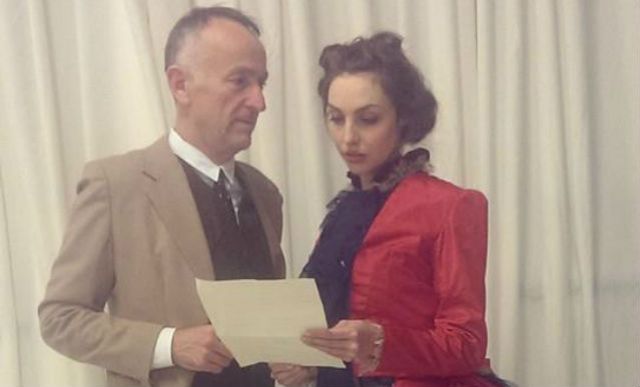
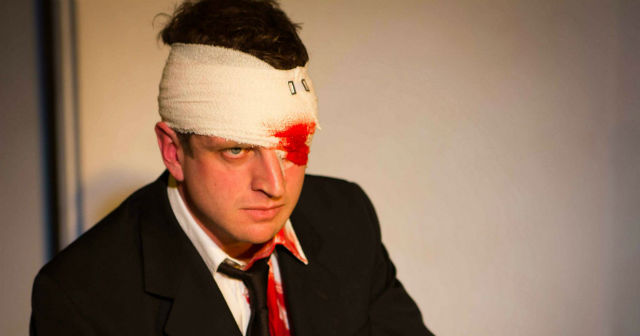
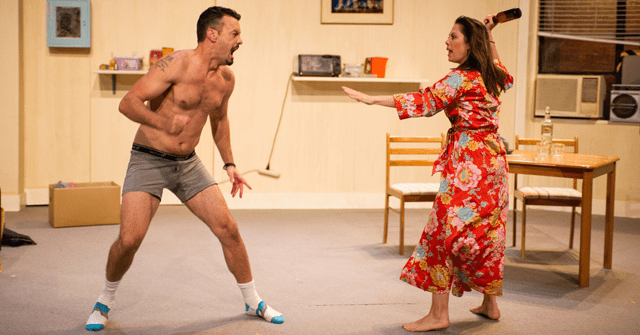
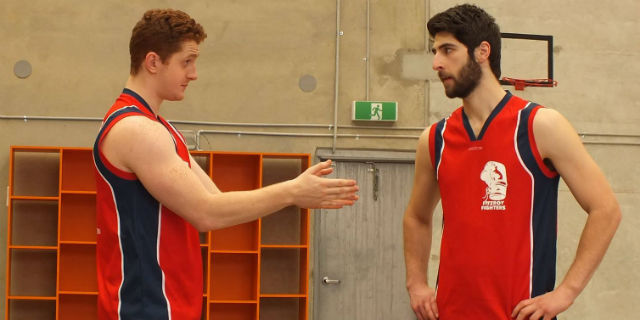
A narrative requires a sense of coherence, and coherence can in turn, be subjective. Fragments of I Am: 18 Scenes & A Song is an experimental work without a clear overarching story, but what its three performers portray over nineteen scenes can be construed as something that forms a persuasive whole. There is nothing to prevent us from interpreting each performer’s work as singular characters, but we can also think of them acting in altogether different roles at each appearance, considering the drastic transformations that can happen from one moment to another. On this experimental stage, we are free to choose how we read, and what we deem to be relevant would probably be based on personal judgments, although it is noteworthy that in the freedom of form explored here, nothing is wrong and everything is right, no matter what approach we choose.

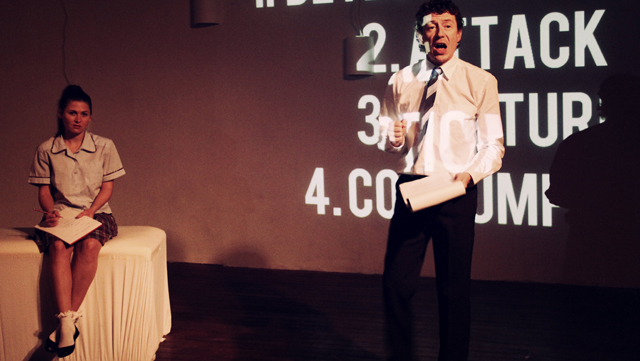
There is a lot of anxiety in the piece. The artists’ youthful need to explore meanings in life and art contains a sense of urgency and desperation that makes for thoughtful theatre as well as satisfying entertainment. Their interest in boundaries, confines and limits ensures an expression that feels fresh and creative, although the sense of transgression that one expects from such themes is slightly tame in this production. We anticipate something more in the vein of Gina Pane and Marina Abramović’s legacies but they never venture that far, perhaps this is where theatre and performance art diverge. We are impressed however, by the unorthodox warehouse-like venue they have chosen, and their barely-there wardrobe on the occasion of Sydney’s chilliest winter nights.

The cast’s execution of their own text and ideas is quietly accomplished. There is a sense of ease to the team’s presentation that results from having established clearly what they wish to achieve but their show feels strangely subdued. There is a wildness that feels too contained, although their depiction of mundanity is beautifully manipulated to look bizarre and alienated. The ordinariness of daily life is brought into question, and we are encouraged to examine our concepts of normality with a new distrust for things that are usually axiomatic.

The work is concerned with violence and human connection. Permeating all the action is a sense of loneliness that often results in brutality of some description. To make the statement that we are a species characterised by self-destruction is grim but honest. Asserting that our modern inhumanity comes from an inability to understand one another, is poignant and powerful.

www.ink361.com/thenestcreativespace

Review: Joan, Again (Subtlenuance / Sydney Independent Theatre Company)

Venue: Old Fitzroy Theatre (Woolloomooloo NSW), Aug 5 – 23, 2014
Playwright: Paul Gilchrist
Director: Paul Gilchrist
Cast: Kit Bennett, Jamie Collette, Ted Crosby, Kitty Hopwood, Lynden Jones, Sylvia Keays, Bonnie Kellett, David Kirkham, Helen Tonkin
Images by Katy Green Loughrey, Liam O’Keefe, Daniela Giorgi

Theatre review (originally published at Auditorium Magazine)
Paul Gilchrist’s new script is deeply philosophical. It asks many big questions, all of which affects our lives, but most do not come easily into daily discourse. These are themes that can be difficult to communicate, for despite their universality, the diversity in beliefs often means that unexpected conflict may result. Also, these concepts of truth, religion, spirituality, death, identity, gender, kinship, time, and so forth, are constantly shifting and elusive, and therefore impossible to resolve. Conversation without resolution or agreement is always a challenge in polite society, which means that many of these piquant parts of life are left to the likes of academics and artists to explore at depth. Indeed, it is a responsibility of art to think about these matters, and to present to us, perspectives that may challenge our own.

Through the landscape of war, and the appearance of a woman claiming to be Joan of Arc ten years after her famed execution, Gilchrist’s play asks political, social and personal questions and unpacks modern day attitudes about, well, everything. The script is always loaded with meaning, and while it might be difficult to discover the author’s own beliefs in every line, we are consistently provoked to react with our own judgment and ideology. Not much happens in the story, but our intellect is exhausted by its end. The strength of the writing is in its ability to expose the incoherence and injustices of our world, without obvious agenda or tiresome pontification. Gilchrist’s work has many delightfully sharp lines that need to be revisited if only to commit to memory, but more significantly, it is concentrated with analysis and poignancy that speak volumes of truth that its characters struggle to navigate.

Gilchrist’s direction creates a dynamic theatre with distinct and colourful personalities that keep us fascinated. Moments of comedy and drama are executed with precision, so that the show varies regularly in tone, and is kept at a comfortable pace. Acting as both playwright and director allows a very specific interpretation of the text, but it also raises issues for performance. There is a lack of organic energy in the piece, and chemistry between players is laboured. The cast does not always find a mode of articulation that feels genuine. When interpretations are reproduced from preconceived ideas instead of more fundamental and experiential processes, characters are less unconvincing and their stories can become difficult to decipher. Gilchrist’s direction also needs to have greater confidence and commitment in his comedy that is too often underplayed, which is a shame as there is potential for much bigger laughs in his writing. By the same token, the profundity of his script needs greater emphasis as they can be quite elaborate. A writer mulls over their work over long periods, and to condense that vision into two or three hours for an audience that arrives with only a blank slate, requires a very fresh pair of eyes. Gilchrist expresses himself marvelously but one wonders if an intermediary would provide more effective elucidation.

Kit Bennett plays Therese, a young woman of very few words who suffers from the indignity of being tagged the “village idiot”. Her performance is remembered for a level of authenticity that her colleagues do not manage. Bennett encourages intrigue and empathy, forming a connection with the audience that is strangely persistent. She speaks little but her presence is always strong and her reactions meticulous. One wonders if it is the lack of lines that provides her the freedom to create something that is more personal and with more truth as an actor. Gilchrist has crafted a brilliantly complex role with Therese. She is surprising, almost disarmingly so, but her contradictions actually feel very realistic.

Joan is central to much of the narrative, and Sylvia Keays brings to it an ambiguous zen-like quality that works interestingly on levels of narrative and philosophy but we are left craving for a deeper understanding of her character’s psychology and motivations. Keays is at her most compelling when soliloquising, showing an excellent affiliation with the writing and themes. There is a defiance that seems slightly mild but her lack of aggression makes for a more textured and unanticipated experience of the character. Also charming is Lynden Jones whose subtle yet biting portrayal of Cardinal Theobald grabs our attention at every appearance. The irony in his lines could be performed more extravagantly but the creepy hypocrisy that seeps through Jones’ every pore is sickeningly irresistible.

Helen Tonkin as Isabelle, delivers a memorable and moving speech about lives lost at war. The play’s antiwar sentiment is strong. It discusses the damage worn by societies as a result of combat, and the meanings we derive from manufacturing war heroes. In honouring the dead and those who return victorious, we face the inevitably of assigning glory to destruction, but responding with an antithetical passivity and apathy is unwise. The pursuit of peace may be the greatest vocation of humankind, and the quest for it may never appear within easy reach, but there simply is no responsibility more noble, and no undertaking more necessary than the attainment of justice and fairness for all.

www.sitco.net.au | www.subtlenuance.com

Review: Macbeth (Sydney Theatre Company)

stc
Venue: Sydney Theatre at Walsh Bay (Sydney NSW), Jul 21 – Sep 27, 2014
Playwright: William Shakespeare
Director: Kip Williams
Cast: Paula Arundell, Kate Box, Ivan Donato, Eden Falk, John Gaden, Melita Jurisic, Robert Menzies, Hugo Weaving
Images by Brett Boardman

Theatre review (originally published Auditorium Magazine Peace Issue 2014)
In the process of art-making, it is often the spirit of experimentation that elevates a work to heights of significance and esteem. Major theatre companies around the world with greater access to funding and other resources do not always prioritise innovation in their repertoire, often choosing instead to deliver entertainment that their patrons would readily embrace. The decision to stage a version of Shakespeare’s Macbeth with a prominent actor in the title role, exemplifies the kind of tension that exists where a show’s anticipated mass popularity and the expectations that come along with it, threatens the commitment to artistic risk, in the trepidation of alienating audiences or indeed, underestimating their ability to relate to unconventional interpretations.

Kip Williams’ direction of the piece reflects an awareness of the diversity in his audience’s tastes. Shakespeare is left untainted and the celebrity actor is given ample room to flex his dramatic muscles for his legions of fans, but the stage is thoroughly explored around those prerequisites. Williams gives the crowd what they have come for, but also offers up fresh concepts and unexpected flourishes that prevent the production from ever appearing unoriginal or unambitious. Williams’ vision does not rewrite the 400 year-old play, and neither does it add significantly to its themes and ideas, but he uses the text to explore the nature of the art form in all its physical and emotive possibilities. The audience’s early excitement is further amplified, when we discover upon stepping into the venue, that our tickets point to seats located on the stage itself, and we are positioned so that the auditorium come into full view and our more familiar chairs have become the backdrop. The meaning of this radical reversion is open and unexplained, but it seems the director wishes to keep us close to the action by placing us directly on stage with the performers.

The production begins as though we are observing a casual reading, with the only discernible element of set design being a simple table (that seems to find its way into every rehearsal space). The cast appears in nondescript clothing, looking more regular than average Joes on the streets of Sydney. None of the grandeur of fictitious kingdoms, or the formalities associated with Shakespeare are present. Disappointment in the production’s minimalism is soon dispelled when the first murder takes place, and a series of fantastical effects begins to unfold. Supernaturalism figures heavily in Shakespeare’s writing, and the depiction of a world that is half earth, half hell is a striking gesture from Williams’ directorial hand. His ghostly atmospherics are deftly created by production designer Alice Babidge’s ingenuity, together with the adventurous efforts of lighting designer Nick Schlieper and the insidious talents of Max Lyandvert, composer and sound designer. It comes as no surprise that Sydney Theatre Company delivers a technically proficient show, but the stage craft in their production of Macbeth, shows flair and intuition in addition to expertise.

Hugo Weaving as Macbeth is absolutely captivating, perhaps unsurprisingly so. The role is wildly imagined and Weaving’s impressive range is exposed dramatically. The actor’s control of voice and body is confident and skilled, and his thorough exploration of the text translates into a dynamic performance that keeps us delighted and entertained. Acting on this stage is professional and committed, but characters are distant. We watch their stories with fascination, but we are not always emotionally engaged. Performances are thoughtful and calculated, but they do not always resonate viscerally, and can sometimes lack an intuitive energy. Weaving’s work in the “dagger scene” is clear in its motivations, showing us the onset of the character’s descent into madness, but the impending consequences that befall him do not translate with enough power. We do not sense sufficiently the grave danger that awaits him, but when emotions of regret take hold later in the piece, Weaving’s mastery truly shines.

The other famed soliloquy, Lady Macbeth’s sleepwalking scene, is similarly underwhelming. Melita Jurisic plays her role with an alluring extravagance, but the heightened lunacy at her final scene feels almost too predictable after presenting a Lady Macbeth who had already seemed quite deranged from the start. Nevertheless, Jurisic’s intensity adds a sensational energy of avant-gardism that gives the production a sophisticated modern edge. Her anti-naturalist style fits beautifully with the show’s paranormal quality, and the toughness that she injects into the role keeps us mesmerised. Paula Arundell crosses gender and ethnic boundaries to play a compelling Banquo. Arundell’s work has a natural authenticity that helps create a character that is consistently believable, and her considerable stage presence gives Banquo an effortless palpability. Her star quality is pronounced even at the scene of the feast, where she plays an apparition, wordless and with little movement. There is an appealing stillness that she delivers, which our eyes very readily gravitate towards.

Williams’ use of space is a greater achievement than his use of Shakespeare’s script. His determination and love for theatrical experimentation is exhilarating to witness, and while his concepts might have been inspired by Macbeth, they can appear quite divorced from the text itself. Furthermore, the story and its characters often feel subsumed by the grandness of his aspirations. The narrative is a majestic one and it resists abatement. We want to be swept away by its drama and tragedy, but our indulgence in all the spectacle takes precedence and our senses struggle to form a meaningful reconciliation between form and content. This is a strong production with artistic merit emerging from all aspects and faculties, and although it connects more with our senses that it does with our emotions, what we see and hear is utterly breathtaking.

www.sydneytheatre.com.au

Review: Not About Heroes (RGP Promotions )

notaboutheroesVenue: Sydney Opera House (Sydney NSW), Aug 4 – 6, 2014
Playwright: Stephen MacDonald
Director: Carla Moore
Cast: Roger Gimblett, Patrick Magee

Theatre review

Stephen MacDonald’s Not About Heroes does not glorify war. It pays reverence instead to art, friendship and the loss of young lives. Siegfried Sassoon and Wilfred Owen were English soldiers in the first World War, remembered for their poetry about horrors they had faced while serving their nation. MacDonald’s play uses their work and other historical fragments to create a narrative out of the men’s extraordinarily intense and close friendship, which was forged out of their shared passion for poetry and the trauma they had both sustained from being caught in the middle of battlefield devastation. In each other, they had found a partner in life and art who was able to provide support and trust, with a unique understanding of the other’s inner world. MacDonald’s depiction of the relationship is vivid, emotional and grand, sometimes even romantic, and although their intimacy never extends into a physical one in his rendering, we feel a depth between the two that is no different from those of most marriages or families.

The play includes many passages by the poets, cleverly selected and contextualised to express the development of the characters, their relationship and their experience of the war. Direction by Carla Moore gives the production an emotional quality that is affecting and very sentimental. We feel the love between Sassoon and Owen, and even more so, we feel for all the soldiers who have been sent to war and the masses who have perished over the years. Moore is precise with what each scene is to achieve, and the show she creates is consistently clear in its plot trajectories and in the sentiments it wishes to convey at each juncture. Her control over performance ensures that the actors always provide appropriate nuances, with a noteworthy emphasis on speech that allows every powerful word to resonate for the audience. The use of a screen enhances the effect of sections in the play that delve into details of war, with sobering and impactful results.

Acting in the piece is sensitive and authentic. Both players show an enthusiasm for the material at hand, and their attachment to it is conveyed impressively. Roger Gimblett plays Sassoon with a stateliness that efficiently paints a picture of a man with stature and experience, giving credence to Owen’s very early admiration. Gimblett’s use of voice is outstanding, and diction is a crucial asset for a play that relies heavily on the legacy of poetry from the era. The boyish Owen is embodied by Patrick Magee who imbues beautiful spirit and purity to his work, and his understated vibrancy makes an important statement about wasted youth. Magee has excellent focus and presence that allows his role to remain in balance with his counterpart who performs with greater gravity.  Gimblett and Owen are lively entertainers who have successfully identified light and heavy sections of the play, and they deliver accordingly with performances that are captivating and surprisingly dynamic.

This review is written on the day that marks the centenary of the first World War. With the advent of information technology, we are more aware than ever, of atrocities that occur around the world, where communities are decimated in the name of religion, ethnicity, and honour. The “war to end all wars” has long been revealed to be a lie. Not About Heroes is a reminder that life in all forms is precious, and all sacrifice in war is tragic. Peace is hardest to achieve of all that is worthy, but the pursuit of it must never be surrendered.

www.sydneyoperahouse.com

Review: Four Places (Outhouse Theatre Co)

outhouseVenue: TAP Gallery (Darlinghurst NSW), Jul 29 – Aug 10, 2014
Writer: Joel Drake Johnson
Director: Nicholas Hope
Cast: Amanda Stephens Lee, Jeremy Waters, Kim Hillas, Briony Williams
Image by Richard Farland Photography

Theatre review
Death affects everyone, but how each of us relates to it differs. People have different expectations about how terminal illnesses should be managed, also which individuals are to be held responsible for the well-being of the dying, and certainly our ideas about the “afterlife” are informed by a wide range of religious and spiritual beliefs, or lack thereof. Joel Drake Johnson’s script explores life at its final stages for the average middle class person, with ruminations about fear, love, family and ideology.

Nicholas Hope’s direction keeps the action very subdued. Its naturalism is so thorough that we often feel like eavesdroppers, and the family that we observe are going about their business with as much mundanity as any other party of three at a casual dining spot. They talk about serious matters, but they rarely allow themselves to react too dramatically. These are not people very open with their feelings, even if one of them is a psychologist. They each have their own secrets, and they seem content with not knowing too much about each other’s. We see the mother character Peggy, wearing an over sized crucifix as a pendant, and we are tempted to associate the stifling oppressiveness with their religious and cultural background.

Peggy is played by Kim Hillas, who is believable and truthful in her interpretation of the script, but she is often too subtle. It is a rare joy to see a play with an older female as its lead character, but we long for greater drama and stronger comedy. The theatre can be a reflection of real life, but it is also storytelling, and we need embellishments in order that our empathy can be amplified and made meaningful. Amanda Stephens Lee has the unenviable task of playing Ellen, the psychologist daughter, who is also a widow still in mourning. The character is a repressed one, and the actor portrays effectively, the dread that is felt when having to manage one’s parents’ illnesses. The role of her brother is performed by Jeremy Waters, who does his best to prevent familial disquiet. We see the character’s frustrations even if his lines give little away, and Waters makes good use of each opportunity that allows some range to his work.

To connect with an audience, a story needs to locate its points of universality and give it emphasis. Four Places has themes that we can relate to, but its characters are not accessible to all. If we do not understand them, their problems become diminished. If they do not fascinate, we lose interest. Every person on a stage has a tale to share, but it is the artistic choices they make that determines how many will be able to hear them.

www.outhousetheatre.com

Review: Dark Voyager (Ensemble Theatre)

ensembleVenue: Ensemble Theatre (Kirribilli NSW), Jul 24 – Aug 30, 2014.
Playwright: John Misto
Director: Anna Crawford
Cast: Eric Beecroft, Jeanette Cronin, Belinda Giblin, Lizzie Mitchell, Kate Raison

Theatre review
More than a geographical location, Hollywood is a mystical place. It exists in the minds of many in different forms, whether glorified or castigated, and it refuses to be ignored. Its movies have touched people the world over, and its legends are at least as well known as the stories they tell. John Misto’s Dark Voyager is about screen sirens of the previous century. Their legacies may not appeal as widely as the personalities on today’s tabloids, but for those who share Misto’s fascination, the intensity of their resonances have not faded with time.

Dark Voyager is partly historical biography, and partly fiction. Through the famed rivalry between Bette Davis and Joan Crawford, Misto has created a new narrative that brings together figures from Hollywood, the U.S. government, the press and the mafia, culminating in the demise of the era’s biggest star, Marilyn Monroe. Misto’s script is funny, lively and bitchy, fashioned after the way Davis and Crawford had wished to be seen. There is a lot of glitz, glamour and joking frivolity, but the writing does surprise with moments of poignancy that emerge to offer some balance and gravitas. Monroe’s presence is artfully crafted so that the show’s comedy remains even while we witness her tragic destruction. It might be an exaggeration to label the work feminist, but it does offer its heroines strong multidimensional voices, and brings to the fore some of society’s appalling mistreatment of these women (and women in general). Ultimately, the greatest achievement of Misto’s writing is the profusion of one-liners that tickle, sting and amuse.

Anna Crawford’s intelligent direction brings out all that is joyous and dramatic in the script. Her acute awareness of character chemistry and hierarchy, as well as her flair for spacial usage, has created an enthralling production that addresses our appetite for laughter, nostalgia and flamboyant theatrics. Crawford’s efforts in creating characters that are larger than life, yet psychologically believable gives the play a seductive quality that combines a sense of idolatry with a less lofty verisimilitude. These women are both feared and revered.

The production is designed beautifully, with Anna Gardiner’s dazzling set converting the venue into a luxurious Californian home, with furniture and fixtures that are appropriate to the period and social status being explored. Everything looks exquisite, extravagant and fabulously expensive, and the greed of its inhabitants become palpable. Lighting by Matthew Marshall is suitably colourful and dynamic. Marshall’s work is sometimes sensitive and sometimes daring, but it is always just right. The tone of the show varies frequently, and the lights are crucial to these emotive and atmospheric transformations. It must also be noted that the show’s stage manager Erin Harvey does a beautiful job of keeping technical aspects flowing invisibly and without a hitch.

An undeniable strength of this production is the accuracy at which the movie stars are physically presented. Hair and makeup by Peggy Carter is not at all heavy handed, yet all three women are materialised before our eyes with astonishing results. It may be convenient to imagine that the actors are cast for their appearance, but their work dispels that notion comprehensively. Jeanette Cronin as Bette Davis is formidable. Her performance is spirited, hilarious and frightening. She is relied upon to move the plot in its various trajectories, and the clarity and precision at which she achieves this, shows impressive skill and intuition. The liveliness Cronin brings to this stage is combustible, and her light is blinding for the entire duration.

Joan Crawford is played by Kate Raison who leaves us dumbfounded by the incredible resemblance she manufactures. In fact, one is often caught gawking at Raison’s face, but her efforts are much more than surface. The Crawford we have here is complex and unexpectedly human. We catch intriguing glimpses into her private world that reveals interesting aspects to her sexuality, ambition, and cruelty that Raison portrays with delicious cunning. Marilyn Monroe is most remembered for her beauty and glamour, both qualities that Lizzie Mitchell replicates effortlessly, and her splendid comic timing wins over many of the audience’s biggest laughs. Imitations of Monroe’s idiosyncratic voice and gestures are commonplace, but Mitchell’s depiction of her hidden and inherent sadness is unexpected and completely heartbreaking. This is where the show finds its soul, and although fleeting and subtle, it adds a much needed dimension of gravity.

Also wonderful is Belinda Giblin who plays a despicable entertainment columnist. Giblin has the power required to represent a woman of great wealth and stature, as well as delightful comedy chops that keeps her endeared to her crowd. Eric Beecroft is visibly young, in appearance and experience, but has great conviction and exhibits a good understanding of the play’s humour. This is a captivating ensemble with polish and energy that has identified in a new script, all the opportunities for engaging storytelling and a whole lot of fun.

Misto’s writing has many references to homosexuality. In fact, it attributes the success of the film What Ever Happened To Baby Jane? (and therefore, ongoing stardom of Crawford and Davis) to its gay audience. Indeed, this is a production with distinct queer sensibilities. Its comedy and pathos comes out of the realm of gay culture, and its longstanding adoration for strong and independent women, but it is not only for gay audiences. Dark Voyager is simply a play that will speak to bold and liberated women everywhere, and of course, to the people who love them.

www.ensemble.com.au

Review: Three Sisters (Sydney University Dramatic Society)

sudsVenue: University of Sydney Studio B (Camperdown NSW), Jul 30 – Aug 9, 2014
Director: Saro Lusty-Cavallari
Playwright: Anton Chekhov (translated by Laurence Senelick)
Cast: Alex Magowan, Chenier Moore, Henriette Tkalec, Honey Abbott, Maree Raad, Zach Beavon-Collin, Victoria Zerbst, Adam Waldman, Brendan Colnan, Ruby Brown, Christian Byers, Meg McLellan, Georgia Coverdale

Theatre review
It is hard to imagine a life without hopes and dreams. The nature of being human has so much to do with our expectations of tomorrow. Most of us think of our days on earth as a linear string of hours, and much as we are bound to the here and now, it is often the moments that follow, that propels us. Chekhov’s Three Sisters is about a dissatisfaction with the present, and the longing for a different time and place.

Saro Lusty-Cavallari’s direction finds beauty in the solemn and the bleak. He handles the optimism of Chekhov’s writing with youthful skepticism, and articulates it through a vision that is gentle and cool. Lusty-Cavallari enjoys conceptual expression, and the conflict between his fondness for abstraction and the writer’s realism creates interesting tensions. The narratives are not relayed with great clarity, but the manipulation of mood and atmosphere is successful. His cast is large, with thirteen young actors of varying abilities, but he features them well. There is no question that Lusty-Cavallari’s first production with professional performers will deliver impressive results; the amount of potential hastening to rupture is unmistakable.

Stronger performers of the group include Chenier Moore who plays a character more than twice his age. Moore’s connection with the script and with his cohorts feels genuine, which allows him to deliver the most engaging and polished characterisation in the production. Henriette Tkalec plays Irina with fascinating results. Tkalec is a young actor with excellent presence, and fierce conviction. Her focus gives energy to scenes, even when textual interpretations are slightly indistinct. There are several delightfully quirky characters in the production, but Adam Waldman’s is most memorable. The actor shows a real passion for the stage, and his enjoyment is infectious. The wide-eyed innocence of his portrayal is endearing, but Waldman’s work would benefit from an amplification of his character’s transformation as the plot develops.

The production is faithful to Chekhov’s artistic legacy. There are no great subversions or unnecessary deconstructions, but the manufacturing of realism is never easy. Training and skill is required of all collaborative elements in order for something that looks like daily life can become effective theatre. This production is not lacking in spirit and diligence, but its participants need more time, which they fortunately have in abundance.

www.sudsusyd.com

Review: A View Of Concrete (G.bod Theatre)

gbodtheatreVenue: King Street Theatre (Newtown NSW), Jul 22 – Aug 2, 2014
Playwright: Gareth Ellis
Director: Peter Mountford
Cast: Taryn Brine, Tim Dashwood, Matt Longman, Rebecca Martin

Theatre review
There is a side to life and human nature that is dangerous and destructive. Many of us are fortunate enough not to have to dwell too deeply, physically and mentally, inside those spaces of terror. They are on the periphery and we battle constantly and unconsciously to keep them at bay, to protect ourselves from those dark sides, believing the unthinkable to be too unbearable for our fragile and feeble existences. In A View Of Concrete, Gareth Ellis writes about that darkness, featuring four characters each with quirks so offbeat and intense, that one might prefer to term them obsessions. Their shared experiences through illicit drug use proffer a view into their compulsive indulgences, and into our own fears about impulses we might secretly harbour and repress. Ellis’ script is an energetic one, with interesting personalities that are outrageous yet realistic.

Peter Mountford’s direction of the piece introduces considerable dynamism to the stage. There is a prominent choreographic aspect to his work that aims to engage us visually, which also demands of his cast, a level of exertion to keep energies high and sustained. Actor Tim Dashwood’s proficiency with the work’s physical requirements sets him apart, delivering a performance that combines seamlessly, speech with movement, for a theatrical form that is delightfully poetic. The fluency Dashwood displays with his actorly capacities is richly entertaining and impressive.

Also captivating is Taryn Brine, brimming with sensitivity in the role of Billie. Brine’s presence is raw and palpable like an open wound, contributing effectively to the production’s aura of decrepitude. Rebecca Martin plays the treble notes in the group, using her naturally vibrant demeanour to provide volume and power to the show. Matt Longman is subdued by comparison, but like others in the cast, he is genuine on stage and the focus and commitment to his part is clear to see.

This is a team keen on experimentation, and their creative approach to performance has conceived a show that is surprising and fresh. It does not make strong emotional connections, but it is thought-provoking nonetheless. The play is rigorous in its efforts at originality, but it feels distant, even clinical at times. A View Of Concrete reveals some of modern life’s difficulties, and shows us the insidious pain that exists. Its concepts are seductive, but the form it takes is slightly alienating. We want to feel the tragedy that we see before our eyes, but that indulgence is kept elusive.

www.facebook.com/Gbodtheatre

Review: Sherlock Holmes: The Final Adventure (The Genesian Theatre)

genesianVenue: The Genesian Theatre (Sydney NSW), Jul 5 – Aug 9, 2014
Playwright: Steven Dietz (based on the original by William Gillette and Arthur Conan Doyle)
Director: Michael Heming
Cast: John Willis-Richards, John Grinston, Emma Medbury, Mark Nagle, Marty O’Neill, Tom Atkins, Rebecca Piplica, Marley Erueti

Theatre review
Steven Dietz’s 2006 adaptation has elements of intrigue, suspense, comedy, and like many retellings of iconic literary figures, ample amounts of self-references. It obviously holds greater appeal for fans of Sherlock Holmes, but it is by no means a prerequisite for its enjoyment. The plot is classically structured, with characters that are distinctly conceived, and vibrant dialogue designed to entertain and amuse.

John Willis-Richards plays Holmes with delightful campness. He brings an effervescence that keeps the show lively, but needs to take time with wordier speeches so that nuances are uncovered more clearly. Mark Nagle’s very animated King of Bohemia is completely farcical. He delivers many laughs with his confident physicality and ridiculous German accent. Marley Erueti plays several supporting roles, but has an excellent stage presence that consistently draws our attention. He performs his parts with excellent conviction and wins us over with his charisma.

The production features a great deal of hammy acting, which can be a problem when it gets in the way of the narrative. There are moments when posturing and vocal embellishment obfuscate the story, leading to some degree of confusion. Design elements help immensely, especially Martin Searles’ work for costumes. His pieces contribute efficiently to the portrayals of personalities, time and space, and his attention to detail gives the production a very polished look. Searles’ talent with colour, shape and texture is a star of the show.

This might be touted as Holmes’ “final adventure”, but his popularity will no doubt see him reincarnated, revived and re-adapted for all manner of media. The mystery and wit that characterises his stories can be found in some of this production, and enthusiasts in particular would find it a charming effort.

www.genesiantheatre.com.au

Review: Phaedra (Lies, Lies And Propaganda)

liesliesVenue: TAP Gallery (Surry Hills NSW), Jul 17 – 26, 2014
Playwright: Euripides (based on Hippolytus)
Director: Michael Dean
Cast: Danielle Baynes, Melissa Brownlow, Sinead Curry, Cheyne Fynn, Richard Hilliar, Katrina Rautenberg, Nathaniel Scotcher, Jennifer White
Image by Sasha Cohen

Theatre review
The art of making theatre requires the consideration of space and time. It needs to set itself apart from literature and recorded media like film and music. The audience’s immersive experience is not parenthetical or supplementary, it is central to the appreciation of a work. Michael Dean’s Phaedra uses space and bodies not only to tell stories, but also to enthrall, delight and fascinate our senses. By extensively exploring the possibilities of holding a captive audience, it does what no other art form can. Along with Catherine Steele’s design and Christopher Page’s lighting, we find ourselves inside a blood-soaked painting that is at once romantic and abhorrent. The four fabulous actors who make up the chorus are relentless in acknowledging our gaze, and the seductive power they wield, pulls us further into a world where tears are shed, blood is let and everyone loses their mind.

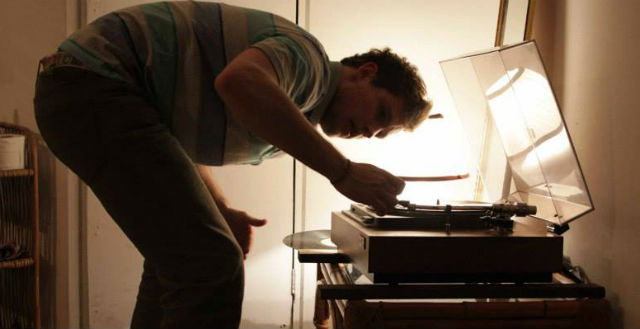
Phaedra’s story is about desire, its origins, its moralities, and its effects. She falls in love with her stepson, and all hell breaks loose. Phaedra struggles with her thoughts and emotions, and we examine the meanings of our own relationships with love and sex. The production’s director is part of the action, positioned behind two turntables, underscoring performances with old vinyl records that he distorts and scratches. The soundtrack is often discordant, attempting to place distance between us and the characters. We see Euripides’ universe, but we are also reminded of our realities; the two are pitched playfully against each other.

Danielle Baynes as Phaedra, exemplifies sensuality and beauty. She portrays longing and pain with a quiet authenticity, and executes stage directions elegantly. Baynes’ voice and physicality are disciplined and the actor is eminently watchable, but the show wants more intensity from her. Drama is the order of the day, and there is no limit to how much ostentation an actor can bring to the role. Hipploytus is played by the equally beautiful Richard Hilliar, whose presence almost overwhelms the tiny venue. The feminist subversion of his role gives him much to play with, and his choices are shrewd. His lines are flamboyant and powerful, but also primitive and offensive by today’s conventions. The need to be restrained in delivery is appropriate, and Hilliar finds a good balance, constantly shifting between subtlety and theatricality. Theseus is performed with strong emotional commitment by Katrina Rautenberg. It is interesting that her interpretation of the role does not obviously deviate from its inherent masculinity. There seems a missed opportunity for greater commentary on gender, but Rautenberg playing things straight displays effectively, her impressive focus and precision.

The queer aesthetic extends beyond the casting of Theseus. It informs many of the production’s creative decisions and the result is something that feels original and daring. Dean’s show is memorable and exciting, and adds to our cultural landscape, a voice that is not sufficiently represented. It espouses a different way of doing things, one that is thoughtful, spirited, and full of flair. It is irreverent and mischievous, but also dark and heavy. It is why we need the theatre.

www.liesliesandpropaganda.com