Review: Tartuffe (Nine Years Theatre)

nineyearsVenue: National Museum of Singapore (Singapore), Feb 4 – 8, 2015
Playwright: Molière (Mandarin translation by Nelson Chia)
Director: Nelson Chia
Cast: Mia Chee, Jalyn Han, Hang Qian Chou, Koh Wan Ching, Neo Haibin, Darius Tan, Jean Toh
Image by Bernie Ng

Theatre review (first published at Auditorium Magazine)

The most noble function of humour, is that it allows for difficult things to be said. Taboo subjects are suddenly open for discussion under the guise of laughter, and with a pretence of jest and banter, sensitive issues can be dealt with in a manner so that the likelihood of causing offence is minimalised (and self preservation for the comic is usually secured). Where there is a sore spot, there inevitably lies an area of contention that represents fertile ground for artists to investigate. In the theatre, in particular, comedy is often used on surface levels to entertain, while it advocates socio-political perspectives that may be less effectively rendered within other contexts, or in fact, completely inappropriate to articulate in the absence of comedic devices.

Molière’s Tartuffe was first performed in 1664. but its resonances persist, and productions continue to appear all over the world in wildly different incarnations. Its themes of religion and hypocrisy, along with the miscarriages of justice in relation to patriarchal forms of economic organisation, are more than familiar; in societies everywhere, these are problems that people grapple with veritably. Singapore is one of the more advanced Asian countries, without the chronic wealth disparity that neighbouring places face, but its history of secrecy and scandal pertaining to the upper echelons in governmental, business and religious bodies, connects firmly with the acerbity of Molière’s play. It remains a problem that men in high places often wield their power in self-interested and misguided ways, behind our backs and to the detriment of communities within their influence, so the relevance and importance of Tartuffe as a timeless farce cannot be understated.

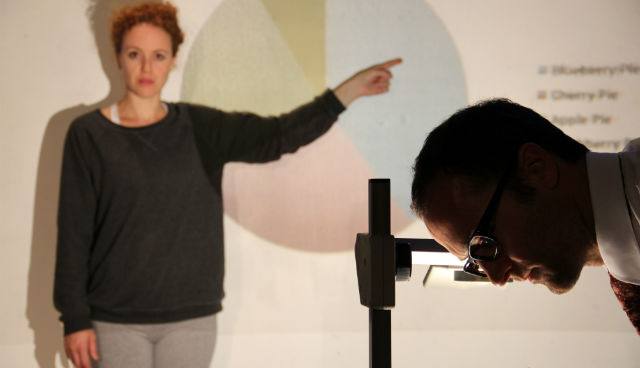
Nelson Chia’s direction places emphasis on the poignancy of the narrative’s themes and stories. The sociological implications of the title character’s villainy as well as the instances of aristocratic ignorance are clearly demonstrated, so that the moral of the parable is resolute and prominent. Chia’s own adaptation draws a beautiful parallel between Tartuffe’s behaviour and contemporary concerns with religious extremism, but his text is also compassionate to personal practices of faith, mindful that religion per se is not the enemy, but the corruption of our spiritual lives is what we are to be wary of. This Chinese language version introduces an alternate ending, replacing the original’s somewhat frothy wedding sequence with a surprisingly dark but authentic reading of consequences that was perhaps previously absent. Also meaningful is the way gender is presented in the production. Orgon’s misogyny and cruelty in forcing his daughter to abandon the man she loves in order to marry another of her father’s choice, and Marianne’s own obedience are obviously problematic by our standards, but Chia depicts that injustice with sensitivity, and a necessary gravity that reveals the repugnance of that situation. It is noteworthy that the voice of reason, Cléante is played by female actor Koh Wan Ching, whose work adds an unusual dimension that encourages a distinctly gendered interpretation of the text. It can be seen that a dichotomy is formed, with wisdom only ever emerging from the feminine, and all male characters straying far from the heroic. Traditional patriarchy is a problem, and we see it exemplified here.

Less successful however, is the play’s comedy. Molière’s unmistakeable absurdity is watered down and portrayed with a disappointing naturalism. Without sufficient laughs, the work is left with scenes that seem too didactic, and the shortage of irony in performances makes the script’s frequent sarcasm seem awkward. The abundance of earnestness in the company’s approach is comforting to observe, but also a mismatch for the writing’s raucous tone. There is to be sure, a sense of humour at work, but one that is not always appropriately gauged. Hang Qian Chou is entirely miscast as Tartuffe. The role requires a flamboyance and cutting satirical edge that the actor struggles to locate, and although his creation feels genuine, the lack of theatricality in his work is a substantial flaw. Theatre is always a collaborative endeavour, where individual talents merge to produce something that encompasses diverse skills and perspectives. Chia’s Tartuffe seems to be of a singular vision, and it is to his credit that the production is a cohesive one, but many in his cast appear stifled and are able to express only within regimented frameworks.

Exceptions include Darius Tan who shows excellent conviction and professional focus in the role of Orgon, head of the house. With Tan’s youthful energy, impact is slightly lost of a man desperate to find salvation beyond death, and the familial connotations of wills and property one leaves behind are also diminished, but his sense for timing and dramatic tension is a considerable asset to the production. Tan has a good sense of plot dynamics, and he conveys relationships and personality transitions with charm and clarity. It is not unusual that those who play the sprightly housemaid character Dorine would make an impression, but Jalyn Han is exceptional on this stage. Her vibrant energy contributes an aliveness to scenes, with impulses that feel spontaneous and fresh, a contrast to several other moments in the show that come across too arduously rehearsed. Han’s confident and entertaining presence is a breath of fresh air in an atmosphere that can tend toward being slightly rigid, and her intuitive creativity keeps us engaged and amused while maintaining a simultaneously coherent sense of storytelling.

Design elements are deliberately basic, but they reference the era of Louis XIV appropriately. The set consists of just three doorways and two pieces of furniture, with wings and crossover completely exposed, indicating a minimalist spirit that values the distilled essences of things over ornamentation, and an attentiveness toward the craft of performance above all else. The production is not the prettiest or the most extravagant, but it is certainly and thoroughly honest. All we have before our eyes are actors with their craft, and no apologies are made for this. The entertainment value of this Tartuffe is not wholly gratifying, and if we had laughed harder, the emotional impact of Molière’s classic would have been more affecting. Nevertheless, the story is well told, and its valuable lessons are imparted with salience. We leave knowing exactly what is being communicated, if only we are able to feel it too.

www.nineyearstheatre.com

Review: Between Us (ATYP)

atypVenue: ATYP (Walsh Bay NSW), Feb 4 – 21, 2015
Director: Sarah Parsons
Playwrights: Joel Burrows, Tahlee Fereday, Sharni McDermott, Tom Mesker, Julia Patey, Kathleen Quere, Callan Purcell, Caitlin Richardson, Fiona Spitzkowsky, Amanda Yeo.
Cast: Katy Avery, Christian Charisiou, Jordan Cowan, Patrick Cullen, Rebecca Cuttance, Airlie Dodds, Kelly Huynh, Lucia May, Dominic Roebuck, Gemma Scoble, Michael Smith
Image by Tracey Schramm

Theatre review (of preview performance)
The ten short pieces in Between Us are connected by the idea of secrets. These young Australian stories range from the deep and dark to the wonderfully inspired, all with a personal and revelatory perspective that aim to divulge something truthful. Nine are monologues, perhaps a reflection on the introspective nature of early adulthood. We do not get fervent commentary on our society and politics, but we are certainly witness to a fierce interrogation into human behaviour and its nature.

Direction by Sarah Parsons is adventurous and quite masterful. Her courageous use of space gives emotional and spacial dimension to each piece, respecting their individually distinct voices, and allowing their individual idiosyncrasies to take shape on stage. Transitions are sensitively and creatively manoeuvred so that the experience is fluid and cohesive as an integrated entity, while each writer’s own colour is staunchly retained. Parsons’ work with actors is wildly impressive in Between Us. Every segment is performed with surprising depth and sophistication, so that characters are meaningful beyond their ten minutes of showtime. We are drawn into these bite sized moments, sometimes seeing with astonishing clarity what is being expressed, and sometimes seduced into a sense of intrigue that leaves us hungry for more.

Fiona Spitzkowsky’s Accidents Happen is a remarkably funny yet brutal piece about parenting and ambition. Her blend of the macabre with a casual, almost unassuming everyday humour is a thrill to experience. Performed by Rebecca Cuttance with impeccable timing and focus, this is a programme highlight that exemplifies the intelligence and talent that is being showcased at ATYP. Pink Hair by Amanda Yeo is written with beautiful structure and shrewd acumen. It is technically accomplished, but also visceral and engaging. Kelly Huynh’s interpretation gives a magnetism and moving humanity to the play’s protagonist, and we are enthralled by her thorough authenticity and precision, without the actor having to move a limb more than once or twice during the segment’s entire duration. Also noteworthy are the production’s three male players, Christian Charisiou, Patrick Cullen and Michael Smith, all memorable for their refreshing and solid presences, and conspicuous, burgeoning star quality.

There is so much to like about Between Us, including its design aspects and technical proficiencies. Melanie Liertz’s set and Alexander Berlage’s lights are outstanding, and stage management is executed to perfection by Olivia Benson and her crew. It is almost unbelievable that these short plays can conspire to deliver something so substantial and rewarding, but it does. It is no secret that the Australian Theatre for Young People is a crucial element in the continuing progress of our artistic landscape, but on this occasion, the stepping stone has itself become a thing to celebrate.

www.atyp.com.au

Review: The Credeaux Canvas (Lambert House Enterprises)

lamberthouseVenue: Seymour Centre (Chippendale NSW), Jan 29 – Feb 14, 2015
Playwright: Keith Bunin
Director: Ross McGregor
Cast: Emilie Cocquerel, Carmen Duncan, Felix Johnson, James Wright

Theatre review
In Keith Bunin’s The Credeaux Canvas, the commodification of art and youthful ambition are explored through the intertwined lives of three young Americans in 2001 New York City. This is a story of broken dreams and deceit, as well as the often underplayed hardships of growing up. On the surface, Bunin’s characters have everything in the world going for them, each with talent, intelligence and social access, but they make choices that are doomed from the start, and all have to pay the price for their mistakes. The play delves into relationships and events, but leaves us to question the ways humans err, and to investigate what it is that likens us to the moth that gets burned by a flame.

This is a handsome production, beautifully and thoughtfully designed to evoke an accurate sense of time, space, and drama. Emma Vine’s set of a dilapidated apartment is executed with sophistication and flair, and lighting by Liam O’Keefe adds variety and nuance to scenes with careful subtlety. A highlight of the show is music by Christopher Gordon, who takes charge of scene transitions with great imagination and impressive elegance.

Ross McGregor directs the show with a passionate sensibility. He tries to keep scenes active and lively, but is restricted by individual abilities of his cast. Leading lady Emilie Coquerel is polished and energetic, but her character never feels believable enough, although it must be said that her transformations are depicted with good clarity. The key role of Winston is played by James Wright, who brings a natural naiveté to the painter’s wide-eyed entrance into adulthood. Both Coquerel and Wright can be overly self-conscious, most notably in a nude scene where the actors engage uncomfortably in a long conversation, revealing not much more than their bodies.

Felix Johnson is a dynamic performer who shows great commitment in his supporting part of Jamie, with an endearing emotional volatility that allows us to identify and engage with his narrative. Veteran actor Carmen Duncan appears in just one scene, but blinds the audience with her formidable talent and skill. She plays art collector Tess with sensational presence and brilliant humour, captivating the crowd in a way that only extensive experience and that enviable star quality can.

Death is mentioned several times in The Credeaux Canvas, and indeed, life is short, and although we only have one chance at it, mistakes are made so that they can be rectified, and through regret, we can grow. There is a darkness to the play’s conclusion with its characters finding themselves at a juncture where they can either continue on roads of destruction, or make a change for the better. It is a significant point in time for them, but their story gives us the knowledge that every moment is an opportunity to move, from the dark to the light.

www.facebook.com/credeauxcanvas

Review: The Winslow Boy (The Genesian Theatre)

genesianVenue: The Genesian Theatre (Sydney NSW), Jan 17 – Feb 14, 2015
Playwright: Terence Rattigan
Director: Nanette Frew
Cast: Matthew Balkus, Meg Mooney, Lois Marsh, David Stewart-Hunter, Sonya Kerr, Lachlan McNab, David Prickett, Tom Massey, Jane Thorpe, Mehran Mortezaei, Roger Gimblett

Theatre review
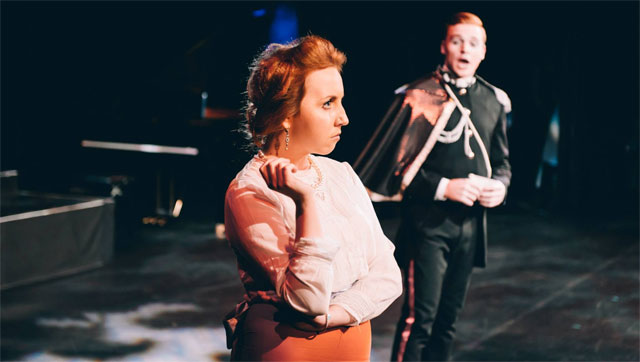
Terence Rattigan’s 1946 work The Winslow Boy centres around the theme, “let right be done”, and its distinction from the concept of attaining justice. Not a great deal is made of this intellectual dissection in Nanette Frew’s direction, but in place of philosophical depth is quaint nostalgia and lighthearted entertainment. The interpretation is anti-naturalistic, with more than a hint of stylistic emulation of English theatre and life in the 1910s, resulting in a production that is staid and distant to begin with, but slowly warms up to something that is ultimately quite delightful.

There are good performances in the piece, including Sonya Kerr who plays Catherine Winslow, a suffragette finding her way through a changing world for women. Kerr is vibrant and playful, bringing a fun liveliness to the space. Her enthusiasm is not always matched by colleagues, but her persistence pays off and she creates the most engaging character of the show. In the role of Sir Robert Morton is Roger Gimblett whose chemistry with Kerr is a highlight. Gimblett is a dynamic actor who delivers effective drama, but would benefit with greater familiarity with his lines. The master of the house Arthur Winslow is performed with elegant gravity by David Stewart-Hunter who is a convincing patriarch, if a little oversubtle in approach.

Many audiences love a period piece, and Genesian’s The Winslow Boy satisfies on some levels. Cosmetically, it is well put together (especially Sandra Bass’ hats and Sharon Case’s wigs), but much of the execution feels surface, with characterisations and storytelling requiring further development. The production gives its creators much to be pleased about, but bars can always be raised higher in artistic expression, even when tackling a century old tale.

www.genesiantheatre.com.au

Review: Short+Sweet Theatre 2015 Top 80 Week 2 (Short+Sweet)

shortsweetVenue: New Theatre (Newtown NSW), Jan 14 – 18, 2015
Festival Director: Pete Malicki
Image by Sylvi Soe

Theatre review
Week two of 2015 Short+Sweet Theatre features a wealth of talent. There is exciting writing, clever direction, inspired acting, and sharp costuming to be found peppered through the night. Although no single work is able to be outstanding in every creative capacity, memorable moments are many, and the event continues to be an important one for Sydney artists and audiences alike.

Robert Renshaw’s Chat To Death teeters on the precipice of pornography, but the dangerous eroticism he explores is thrilling and beautiful, although quite explicit. The context he builds is not perfectly resolved, but his use of language more than satisfies. In Ryan Pemberton’s Business Meeting, a macabre and very quirky take on what happens in corporate boardrooms is beautifully directed by Pemberton whose sense of humour is odd, unique and very appealing. Direction is also a highlight in Rachel Welch’s So Says The Sea. James Hartley finds nuance in a deceptively simple script, and portrays surprising depth in just ten minutes. His cast is a strong one, especially Petrie Porter and Aleks Mikic who both impress with committed and meaningful interpretations of what could have been quite plain characters.

Other fabulous performances include Matthew Friedman, whose own piece The Least Impossible Thing That Happened This Evening opens the programme with vibrant energy and genuine enthusiasm. Equally buoyant is Jo Ford’s Chance You Can Dance, whose outrageously camp actors Hilary Park and Drew Holmes deliver irresistible laugh out loud sequences with their charming references to familiar cultural archetypes. Gavin Vance’s Screamers! The Wizard Of Aussie! Aussie! Aussie! (pictured above) stars the unforgettable Joseph Chetty who plays an Australian version of Dorothy Gale, blending drag comedy with a bawdy cabaret approach to present a scathing critique of the Abbott government, culminating in a live rendition of ‘Somewhere Over The Rainbow’ that is thoroughly and utterly electrifying. Dorothy’s call for a better national leader is a convincing one, and for a quick minute, she makes us believe in the pot of gold that lies at the end.

www.shortandsweet.org

Review: Radiance (Belvoir St Theatre)

belvoirVenue: Belvoir St Theatre (Surry Hills NSW), Jan 3 – Feb 8, 2015
Playwright: Louis Nowra
Director: Leah Purcell
Cast: Leah Purcell, Shari Sebbens, Miranda Tapsell
Image by Brett Boardman

Theatre review
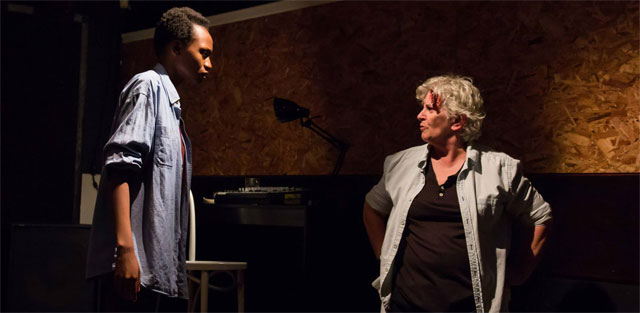
Our relationships with parents may not all be bad, but they are certainly complex. Louis Nowra’s Radiance offers a look at the way one woman’s human errors reverberate for generations after, and accordingly, we observe the inevitable karmic inheritance from predecessors. Cressy, Mae and Nona are three sisters who have reunited in North Queensland for their mother’s funeral. Their personalities are vastly different, and there is no shortage of friction as they navigate their rare time together in the old house where they had grown up. Nowra’s script is dramatic and sensual, with an aggressive but beautiful energy that surprises in a milieu that is frequently dark and plagued with anxiety.

Leah Purcell’s direction suffers from her additional responsibilities as actor in the role of Cressy. The play is uneven, with group dynamics feeling lacklustre even though the portrayal of closeness between the women is successful. Their interchanges are believable but come across oddly tame, notwithstanding some quite sensational themes. There is an understated elegance to the piece, but it is needlessly subdued, with many missed opportunities for bigger laughs and more heightened drama. It is noteworthy however, that Purcell is able to find authenticity in the writing, and the emotions of the text are adequately played out so that we feel in touch with the essence of the narrative, despite the scarcity of a sense of theatricality.

As actor, Purcell is never convincing as an opera diva who has found success overseas, and her overly restrained interpretation not only does little to embody class, it also detracts from some of the more flamboyant sections of the play. Fortunately, Purcell’s ability to deliver gravity in key revelatory moments holds our attention, and she gives the plot an enjoyable coherence. Middle child Mae is played by Shari Sebbens whose presence is noticeably weaker than her counterparts’. Her work is focused and strong, but her depiction of seriousness can read a little dreary, and consequently, her character becomes too distant. On the other hand, the youngest role of Nona is engagingly and empathetically performed by Miranda Tapsell, who connects with us from her very first entrance. The vibrancy she introduces to her scenes is remarkable, if only that energy is sustained by the other players. Tapsell has an easy confidence that keeps us on her side, and the compassion she brings to her character allows us to believe the extraordinary circumstances we witness unfolding.

Sound design by Brendan O’Brien is thorough and thoughtful, adding a dimension to the show that facilitates the articulation of a complicated and deep emotional universe. Dale Ferguson’s set is sophisticatedly beautiful, but his design forces a substantial portion of the play to be performed quite far upstage, prohibiting us from getting more involved.

Louis Nowra’s script is undeniably rich and seductive. It deals with familiar difficulties of real life, but the world it inhabits is almost exotic. Radiance uncovers a wildness that exists in our own homes, one that hides in plain sight yet begs to be examined. Secrets are associated with shame, but it is the abandonment of shame that will ultimately set us free.

www.belvoir.com.au

Review: Short+Sweet Theatre 2015 Top 80 Week 1 (Short+Sweet)

shortsweetVenue: New Theatre (Newtown NSW), Jan 7 – 11, 2015
Festival Director: Pete Malicki
Image by Sylvi Soe

Theatre review
Sydney’s Short+Sweet Theatre festival features around 160 different 10-minute plays over 8 weeks. It is an excellent opportunity for talents of all experience levels to experiment, and a way for a myriad Australian stories to be told. The festival takes the form of a competition, with winners selected by judges and audiences, to be announced in March. The contest environment might encourage participants to only create crowd-pleasing works, but the event is actually quite varied in style and substance. On each night, ten plays are presented by a wildly diverse group of artists with no discernible unifying theme, which means that the likelihood of any audience member enjoying every piece in the program is slim, but discovering a couple of works that would appeal is certainly not difficult.

Short plays are challenging to performers who need to provide depth to characters who appear only fleetingly. They have less scripted pages to rely on, so ingenuity becomes central to their process. Ally Morgan plays Stephanie Tamara Anderson, a terminally ill teenager in Bokkie Robertson’s Wish (pictured above). Morgan’s confidence and conviction is a joy to watch, and the playful enthusiasm she brings to the stage is thoroughly captivating. In Jeffrey Hampson’s Wherefore Art Thou Oh Writing Inspiration, Hampson plays the role of William Shakespeare in an imagined struggle to create a new play, tentatively titled ‘Juliet and Romeo’. His performance finds focus after a shaky start, and endears to the crowd with a humorous take on the creative process.

Choose by Sam Jenkins is an intelligent work that entertains and amuses its audience, with a daring and fresh approach to theatre-making. Jenkins’ creation seems to be partly improvisational and partly scripted, but there is no way to tell for sure. The only person we see is a volunteer who reacts to Jenkins’ voice which provides prompts and narration. There is an element of Choose Your Own Adventure to its structure, and it relies heavily on Jenkins’ brilliant sense of humour and lightning fast responses to keep us excitedly engaged. A great strength of the piece is its unpredictability, and its success is evident in how much we wish to see it again, with a different unsuspecting subject steering Jenkins in different directions.

The Short+Sweet brand has expanded across the globe, and is now “the biggest little play festival in the world”. It provides excellent context for community involvement and unparalleled exposure, and is a crucial part of the Australian theatrical landscape that unearths impressive talent and inventive ideas. An event of this scale will have moments of disappointment, and patience will be tested, but with the bad, comes the good, and when the good shines through, all else is forgotten.

www.shortandsweet.org

Review: The Age Of Entitlement (Mongrel Mouth)

mongrelmouthVenue: Merchants House (Sydney NSW), Dec 3 – 20, 2014
Playwright: Saman Shad
Director: Duncan Maurice
Cast: Adam Connelly, Ali Crew, Amelia Tranter, Aston Campbell, Charlie Upton, Christina Sankari, Danny Gubbay, Eli King, Ezequiel Martinez, Guilia Clemente, Julia Landrey, Latisha Owens, Mark Williamson, Moreblessing Maturure, Paloma Alma, Rowan McDonald, Sage Godrei, Sharon Zeeman, Tess Marshall

Theatre review
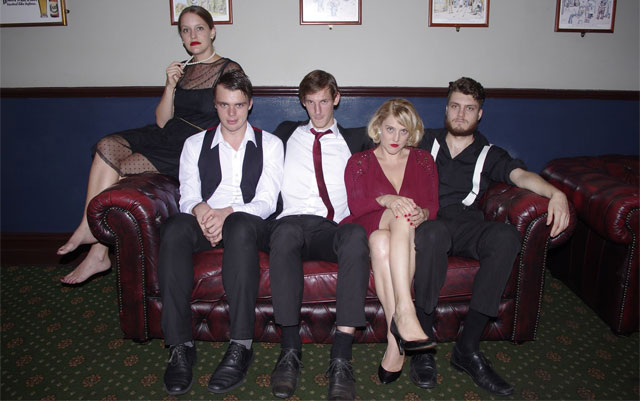
Nineteen actors in a beautifully preserved old building present a simple story about politics. We navigate our way through rooms and characters, observing and speaking with these mysterious people, trying to piece together narratives, and to find an understanding of each personality’s agenda, and also what the artists are attempting to convey. The action centres around Lara, who is presented on the ground floor as a student leader of the left, and in a different room upstairs, she is an older politician raising funds to become the head of her right-wing party.

There is a certain amount of chaos from the immersive experiment that keeps us on our toes. It is challenging work that does not let its audience feel comfortable at any point, and director Duncan Maurice is determined for his work to be intriguing and thought-provoking. Placing his actors at such close proximity, we are forced to engage and interpret. Maurice leaves us no room to hide, and we are pressured into taking a stand. The performance feels slightly longer than its eighty minutes. The unusual format leaves us to compose a cohesive tale from many disparate fragments, but unravelling the riddles does not take much time. We are then left to loiter around the hallways waiting for a conclusion of some description to occur, which fortunately, does eventuate, and in quite spectacular style.

Julia Landrey plays X, a member of the student union who proves to be more radical than her peers. X is often positioned alone, so that when we encounter her, she is free to express hidden beliefs that might be too controversial for her comrades. The nature of the work requires a good amount of thick-skinned daring from its cast, and Landrey’s strength ensures that she connects well, even though the role’s presence is an intimidating one. Her impressive improvisational skills allow for brilliant conversations to unfold, and we find ourselves becoming more involved than ever anticipated.

Some of the group is less effective, but they all contribute to the unusual carnival flavour that the production will be remembered for. There are instances where characters seem narrow in scope, which often lead to a shallow sense of plot and oversimplification of ideas. A substantial part of the discussion The Age Of Entitlement aims to inspire, is the tension between the left and right of politics, and the way Australian society shapes its attitudes according to convenient alliances.

The production is well designed. Alex PF Jackson’s work for makeup, hair and costumes especially, are noteworthy. Set and lights are slightly less polished, but spaces are adequately dressed to evoke a sense of fantasy and transportative theatricality.

Political theatre gives voice to causes and groups, and on occasion, it changes minds. This show does not tell us what to think, but it espouses the importance of holding beliefs and standing up for them. Almost contradictory is the way it interrogates our practice of identifying with political sides, but that conflict gives the work a meaningful complexity that feels resonant with our lived experiences. Maybe a few people will begin to think differently of their political attitudes from attending Entitlement, but more likely is its effect on how we think of theatre’s relationship with the public and its modes of expression. There is so much to be explored when artists and audience meet, especially when all the old rules are broken.

www.mongrelmouth.com

Review: Guilty Pleasures (Blue Saint Productions)

bluesaintVenue: Hayes Theatre Co (Potts Point NSW), Dec 17 – 21, 2014
Book: Joshua Robson
Lyrics: Hugo Chiarella
Director: Joshua Robson
Music Director and Composer: Robert Tripolino
Cast: Angelique Cassimatis
Image by Mike Snow

Theatre review
Joshua Robson, Hugo Chiarella and Robert Tripolino’s Guilty Pleasures is a 45 minute musical with murderous women and their bad men. It is Chicago‘s “Cell Block H” expanded, and they’ve all had it coming. Comprising a series of independent stories about fatal romances, the short narratives are amusing, with compelling songs that add drama and a colourful sense of theatricality.

Performed by just one woman, the work demands that Angelique Cassimatis provides range and variety to each character, but the show does not have enough tonal shifts in performance or design, to create textural complexity from its string of tales. Robson’s direction blends each segment to form a cohesive whole, leaving behind the lively and fluctuating nature of the text. Cassimatis’s training and experience is evident, especially with her physical discipline and dance abilities, but her approach tends to be a technical one. Her talents in singing and acting seem to come less naturally, but the actor’s conviction is clear to see, and her energetic presence helps endear her to the crowd.

Burlesque touches in the production provide a sexy edge to the already risqué themes it covers. The writing has a dark humour that would appeal to those who seek a musical theatre experience that is less than “family-friendly”, but its execution might be a little subdued for some. Written and directed by three men, Guilty Pleasures is a feminine work with a queer sensibility and a charming cynicism about romantic relationships. The women in the show are determined to define themselves against the men in their lives, and all pay a hefty price at the end.

www.bluesaint.com.au

Review: Tell Me Again (Eye Of The Storm / The Old 505 Theatre)

old505Venue: Old 505 Theatre (Surry Hills NSW), Dec 3 – 21, 2014
Playwright: Jeanette Cronin
Director: Michael Pigott
Cast: Jeanette Cronin, James Lugton

Theatre review
The stage is a sacred space. It has endless possibilities, and many have occupied and used it for different purposes, to achieve every imaginable effect and result. Jeanette Cronin’s Tell Me Again shows a love and respect for the theatrical form and its audience, aiming to provide a moment in time with something deeply emotional, perhaps making us feel things in a way that our real daily lives are too fragile or restless to permit. Cronin’s play invites us to encounter what is truest of the human experience, by instigating a series of raw and naked visceral responses by removing the protection of narrative and logic. It is poetry in motion that encourages us to get in touch with the the spirit within that compels us toward every action, yet that internal essence seldom seeks to be the centre of attention. For these 80 minutes, we come face to face with it, and it is sublime.

Direction and design of the work by Michael Pigott creates an inviting beauty that lets us connect with the work in a place that story usually resides. He engages our curiosity and we begin to apply our own stories to what he lets us experience. Where there is emotion, there is a human need to explain and understand its origin, and it is the spectator’s own creativity that is summoned in Tell Me Again. Pigott’s work is extremely tender and sensitive, but there is also an uninhibitedness that prevents things from becoming predictable. There are instances however, where the show seems to drift away from our consciousness, as we indulge in the ideas it inspires, but it invariably pulls us back with touches of drama and passion.

Flawless performances by Cronin and James Lugton produce a couple of characters palpable in their authenticity, and stunning with chemistry. Lugton’s minimal approach strips away layers of affectation so that only the very essential is left, and exposed like fresh wounds. It is a physical manifestation of the concept of love, not always immediate and recognisable, but incredibly moving and profound at the end. Cronin is intense but quiet, with a wild and devastating power barely hidden, explosive secrets brimming under the surface. The role she plays is strange but not a stranger. In fact, the complexities Cronin displays are familiar, feeling like private flashbacks unfolding before our eyes despite the peculiarity of the play’s eccentric plot.

We cannot live in a constant state of elevated sentimentality, but leaving emotions concealed is on one hand damaging and on the other, an unfortunate deprivation. Feelings are scary things, but Tell Me Again turns them seductive and irresistible. The indulgence in sadness and melancholy is an occasional necessity, and art is its friendly abettor, but in this production, escapism is not to be found, and the pain that remains, is naked.

www.venue505.com/theatre