Review: Morgan Stern (Company Of Rogues)

companyofroguesVenue: Blood Moon Theatre (Potts Point NSW), Nov 23 – Dec 3, 2016
Playwright: Gina Schien
Director: Goldele Rayment
Cast: Graeme Rhodes
Image by Chrissie Ianssen

Theatre review
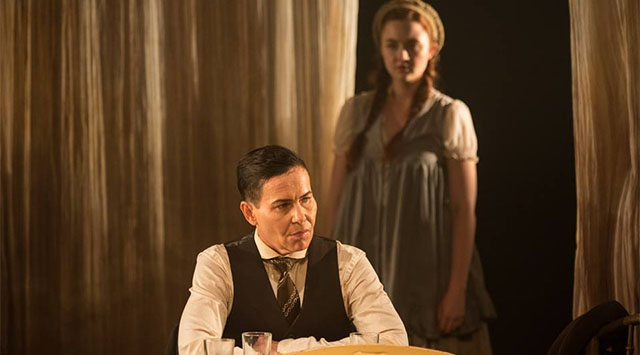
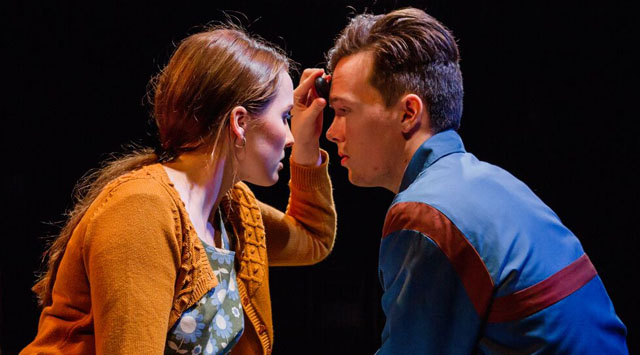
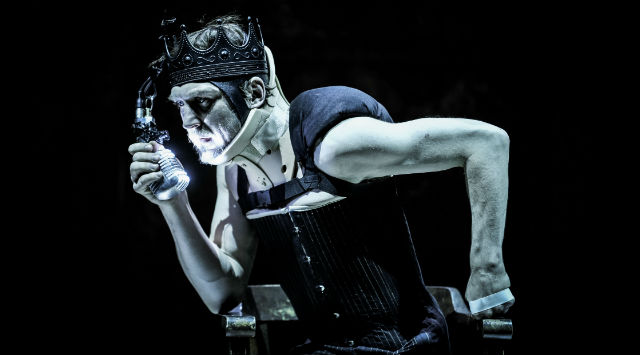
The Gent awakes in 1972 after a deep slumber. The Edwardian era is now long gone, but there is unfinished business still to be taken care of. He returns to this mortal coil, to find resolution, as a ghost and as guardian angel to a certain Morgan Stern, who faces a set of problems not unlike the ones our Gent had had to deal with, when taking care of his own daughter, back in those less than halcyon days. It was early 19th Century when he last found himself in these challenging circumstances, and it appears very little has changed after two hundred years.

Complex and incredibly rich, Gina Schien’s imaginative writing offers extraordinary insight into the human condition and the glitches in our lives that so often surprise and derail. The language is beautiful, with sensitive attention paid to rhythms and imagery that makes the play an involving one. Dramatic tension can sometimes be lost in its poetic approach, but director Goldele Rayment’s manipulations of atmosphere and spacial configurations are cleverly calibrated, with only one actor and one swivel chair sustaining our concentration. Tegan Nicholls’ work on sound and Roderick van Gelder’s lights are both noteworthy in their efforts to transform and transport our consciousness through the production’s mystical qualities.

Graeme Rhodes delivers an astonishing performance for the one man show, completely captivating with a presence full of conviction and a mental focus impressive with its precision. His voice and physicality are both commanding, both exactingly channelled in each of the play’s sequences, to impart meaning and enthralment. We are amazed by the way his memory is able to contain so much text, seemingly effortlessly, but more importantly, his airtight authority over the material’s depths and expanses, and his ability to exercise inventiveness along with elucidating the writing’s trickier ideas, have us flummoxed, in awe.

When art talks about reality, it does so differently from science. Morgan Stern is about contradictory realities, and how it is necessary for us to be able to encompass things that are not subjectively logical into existence. The world is infinite, in scale and in possibilities, and much as we think that the stuff we know is all there is, art will tell us that the opposite is true. The stuff we know, and the stuff that is knowable, will always and forever be infinitesimal, and every life must count, however inconvenient the other may be.

www.companyofrogues.com

Review: iDNA (PACT Centre for Emerging Artists)

pactVenue: PACT Centre for Emerging Artists (Erskineville NSW), Nov 16 – 26, 2016
Created & performed by: Bonnie Cowan, Emily Dash, Alison Eaton, Alex Ford, Cheryn Frost, Jorjia Gillis, Cath McNamara, Keila Terencio, Anna Thomsen, Sam Wang, Natalie Wilson
Directors: Fred Copperwaite, Katrina Douglas

Theatre review
Whether cyclical, linear or however else we wish to conceive of time, being human will always require that we look at the past in order to achieve an understanding of the phenomenon that ensnares us today. The investigation into who we are, will always be deemed necessary. Being human is a constant process of philosophical reflection, and art is one of its best manifestations.

iDNA is a series of meditations on identity, as inspired by the very contemporary interest in DNA. The science of DNA promises to reveal things about us that we yearn to know. It might be thought of as a kind of religious text that we access, a form of knowledge that seems to exist outside of our bodies, that informs on our very corporeality. Science and religion is how we talk about ourselves, by reaching out, if only for a moment, to discover what it is that feels like truth.

There are eleven performers in the piece, each with a distinct personality, each given space to articulate something personal about identity. The resultant work struggles to find cohesion, but its fractured nature communicates an important notion of diversity, that although our instincts wish for us to see the self in everybody else, we must come to an acceptance that each creature who walks the planet is an individual, and our survival depends upon an understanding, that much as we wish, difference will never be obliterated from our essence. We have to live together somehow, flora and fauna, water and earth. The science shows us unequivocally, that we exist means that we are all connected, but how we prevent destruction inside and outside of our species, is the key to a good life, natural as that annihilation may seem.

www.pact.net.au

Review: Mack & Mabel (Working Management)

workingmanagementVenue: Hayes Theatre Co (Potts Point NSW), Nov 18 – Dec 18, 2016
Book: Michael Stewart (based on an idea by Leonard Speigelgass)
Music: Jerry Herman
Director: Trevor Ashley
Choreographer: Cameron Mitchell
Cast: Angelique Cassimatis, Shay Debney, Adam Di Martino, Sally Hare, Scott Irwin, Caroline Kaspar, Shaun Rennie, Kuki Tipoki, Stephen Valeri, Jessica Voivenel, Zachary Webster, Mikayla Williams, Deone Zanotto
Image by Lightbox Photography

Theatre review
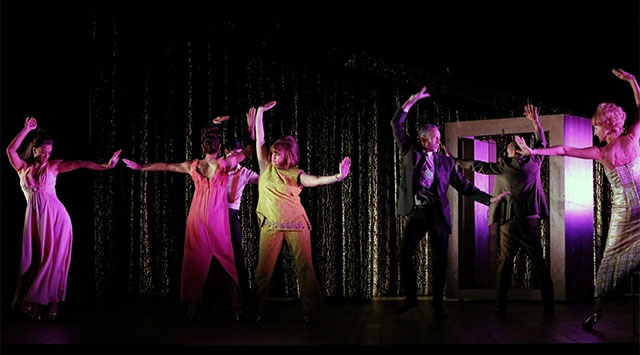
Set against a backdrop of early Hollywood, Mack & Mabel is about a love that never happened, a romantic tale that is more “coulda woulda shoulda” than happily ever after. Created in 1974, the musical is in essence a damsel in distress story, where the girl is not strong enough to get what she wants, and in this case, the guy never quite gets his act together to rescue her. The songs are fun and perky, but mostly unmemorable. Every imaginable cliché of the genre is enlisted for a show that works hard to entertain, and although it is never able to surprise, the experience it delivers is nonetheless an enjoyable one.

Directed by Trevor Ashley, with choreography by Cameron Mitchell, the show is highly animated, and relentless with its pizzazz. Every song is staged with great detail and deliberation, but while there is no shortage of energy and action, its comedy is not always effective, and its pathos is insufficiently potent. It is a diverse cast with varying levels of competencies, but their conviction keeps us attentive to every sequence being presented. Leading lady Angelique Cassimatis charms us with indefatigable flamboyance, and her male counterpart Scott Irwin provides grounding with a melancholic sincerity. Deone Zanotto is outstanding as Lottie, a secondary character called upon to bring all the bells and whistles needed to spice things up. Zanotto’s physical discipline and vocal agility are a joy to witness. Also noteworthy is Neil McLean’s sound design achieving excellent dynamism and clarity with how we hear music, lyrics and dialogue in the production.

There is little in Mack & Mabel that we can relate to, but it is a good excuse for some exhilarating song and dance. There is a frustration in seeing Mabel’s life presented as a failure due to her fruitless dedication to Mack. What might have been a kind of beautiful resignation and saccharine sentimentality in the past, is now just far-fetched, and tedious, whether or not one reads the musical from a consciously feminist perspective. The drama relies on our submission to its dated sensibilities about romance, and thankfully, many of us have progressed far beyond that.

www.hayestheatre.com.au

Review: The Screwtape Letters (Clock & Spiel Productions)

clockspielVenue: Seymour Centre (Chippendale NSW), Nov 22 – Dec 10, 2016
Playwright: C.S. Lewis (adapted by Hailey McQueen)
Director: Hailey McQueen
Cast: Yannick Lawry, George Zhao
Image by John Leung

Theatre review
Based on the novel by C.S. Lewis, The Screwtape Letters follows the correspondences of senior demon, Screwtape, as he mentors his nephew Wormwood, who is learning the ropes of the devil’s business from his evil uncle. There is a “patient” in question, a case study if you will, and the heat is on, to lead him to temptation, and away from God. Contrary to popular belief that immorality is easy, the troublemakers have a difficult time, and we are challenged by notions of good and evil as they relate to our impulses and tendencies.

Having been adapted directly from Lewis’ writing, the play demonstrates that the efficacy of words is reliant on the context within which they are presented. At the theatre, we are not able to glance back at previous sentences, or look away to let meanings merge with imagination at a pace of the reader’s choosing. Words that had been designed for one purpose, might not necessarily translate conveniently for another, and in The Screwtape Letters, the challenge of adapting a novel for the stage, is bravely taken on by Hailey McQueen who also doubles as director. Although unable to repurpose the text entirely satisfactorily, McQueen delivers a charming show that holds appeal for those of us with a wicked streak .

It is a beautifully designed production, with Isabella Andronos’ set and costumes providing appropriate sharpness of style to Screwtape’s world of decadent luxury. Chris Page’s elegant lighting helps us move through scene transitions effectively, and his careful calibration of mood changes keeps us visually fascinated. Music and sound design by Adam Jones is very impressive. Much of how the audience responds and what it feels for The Screwtape Letters is controlled by Jones, who significantly elevates this theatrical experience with admirable precision and creativity. Actors Yannick Lawry and George Zhao are a well-rehearsed duo that puts on a presentation with professional polish. Zhao’s comic physical inventiveness is especially memorable. The two men are warm, likeable personalities, but we wish to see something much darker and menacing. We want the fiction to take us to a place unthinkably taboo, somewhere so close to hell that we can only react with the extremities of either being frightened away or helplessly seduced in, but Screwtape seems too much of a gentleman to afford us that pleasure.

www.clockandspielproductions.com

Review: Summer Rain (New Theatre)

newtheatreVenue: New Theatre (Newtown NSW), Nov 15 – Dec 17, 2016
Book & Lyrics: Nick Enright
Music: Terence Clarke
Director: Trent Kidd
Cast: Rebecca Burchett, Daisy Cousens, Laurence Coy, Anna Freeland, Catty Hamilton, Tom Handley, David Hooley, Nat Jobe, Jaimie Leigh Johnson, Michele Lansdown, Joy Miller, Jacqui Rae Moloney, Clare Ellen O’Connor, Brett O’Neill, Steven Ritchie, Andrew Sharp, Chris Wilcox
Photography © Chris Lundie

Theatre review
In Nick Enright’s wonderful Summer Rain, we are transported back to 1945 Turnaround Creek, a sleepy town in the Australian outback. A show troop arrives Christmas time hoping to make a quick buck, and to reconnect with a place they had visited 15 years ago. The “showies” are received warmly by the township, buoyed by the promise of a jubilant reprieve from their daily humdrum, but patriarch of the Doyle family responds with hostility, indicating a hidden history that can only reveal itself in dramatic fashion.

The genius of this collaboration between Enright and composer Terence Clarke, is evidenced by how unmistakably moving Summer Rain is. Some of it is thoroughly conventional, and some of it is completely unexpected of the genre, but what results is full of heart. Trent Kidd does an extraordinary job of telling the melancholic yet whimsical story, as both director and choreographer of the production, delivering a theatrical experience that engages our emotions and captivates all our senses. It is a remarkably good looking show, highly detailed with its visual presentations. Mason Browne’s work on sets and costumes, along with Juz McGuire’s lights, are impressive elements that contribute to the overall sophistication and power of this staging.

A very large cast of 17 performers lend their talents to the show, with some very strong portrayals adding high polish and wow factor. Most notable is Anna Freeland, who plays Peggy with charm, conviction and a sensitive authenticity. Freeland’s voice is a highlight, confident and rich in its accurate depiction of Peggy’s inner world. Catty Hamilton is similarly likeable, and comparably beautiful a singer, additionally memorable for her dance sequences with Nat Jobe, both entertainers accomplished and delightful in their Fred & Ginger style offerings. Andrew Sharp anchors the show as troop leader Harold with gentle humour and excellent chemistry with every colleague, but it is Laurence Coy’s Barry who produces the most poignant moment of the show with “The Eyes of Nancy Keegan” a song of loss and yearning.

The halcyon days in Summer Rain give us more than nostalgia. It speaks to our sentimentality not only through various romantic touches, but more importantly, it depicts human connection in ways that are perhaps deeper than its familiar contexts would initially lead us to imagine. Each of its little narratives begin from ordinary points of departure, but Enright’s musical takes us to conclusions that are not about happily ever after, but about hope. The people we meet have not yet landed in a place of complete and fantastical resolution, but we see them embarking on a trip that looks to be brighter, and merrier, than before.

www.newtheatre.org.au

Review: The Shadow Box (Red Line Productions)

Venue: Old Fitzroy Theatre (Woolloomooloo NSW), Nov 15 – Dec 10, 2016
Playwright: Michael Cristofer
Director: Kim Hardwick
Cast: Jackson Blair-West, Jeanette Cronin, Anthony Gooley, Mark Lee, Tim McGarry, Fiona Press, Ella Prince, Kate Raison, Simon Thomson
Image by Robert Catto

Theatre review
Three terminal patients in a hospital are waiting for the inevitable, but in the meantime, they try to experience life in an ambiguous space of transience, acutely conscious of their imminent fate. Michael Cristofer’s The Shadow Box is a meditation on death, which in its distillation of life’s essence, leaves us with a play that talks a lot about love and hope.

We think about existence as being conditional on the future, letting what we do today rely on our imagination of what is to come tomorrow. When tomorrow becomes increasingly uncertain, how we experience the now transforms into something that is thoroughly disquieting. Rattled and agonised, the characters in The Shadow Box, ill and otherwise, negotiate a strange state of being that feels like a constant struggle of trying to say goodbye.

Kim Hardwick’s direction honours the depth of Cristofer’s writing with an elegant and quiet approach. Its starkness is designed in order that thoughts and emotions may erupt with immediacy, but results are mixed. Not all of its scenes are able to engage meaningfully. Even though the show works hard to demonstrate the melancholic sentimentality that each personality endures, it can often feel too distant in its coolness. Considering the weight of its themes, the production is surprisingly, more cerebral than it is emotional, leaving us craving for an experience perhaps slightly more conventionally dramatic in style.

The actors are individually robust with what they bring to their respective roles, each one shiny with conviction and professional polish. Kate Raison steals our hearts, playing up her role Beverly’s dogged optimism and blistering self-deprecation, and Jeanette Cronin’s final moments of sorrow are as devastating as they are satisfying. Performances are well-rehearsed, but chemistry is not always present, in a production that does not necessarily wish to represent any unified or rigid philosophical positions.

To love is not to possess or to shackle, but for anyone to be able to love and let go, is harder said than done. A fundamental expression of love is to be present for the other, and in The Shadow Box, we observe the ultimate in selflessness that is required for loving the dying. Sitting with the ill gives the assurance of a life valued and valid, but helping them cross over is an act of great benevolence that the ones left behind will often find themselves unequipped to administer.

www.oldfitztheatre.com

Review: Speed-The-Plow (Sydney Theatre Company)

stcVenue: Roslyn Packer Theatre at Walsh Bay (Sydney NSW), Nov 8 – Dec 17, 2016
Playwright: David Mamet
Director: Andrew Upton
Cast: Rose Byrne, Damon Herriman, Lachy Hulme
Images by Lisa Tomasetti

Theatre review
It is the simple story of a man caught between good and evil, one that never seems to get old. It is the eternal experience of us all, no matter where or when in the annals of history we find ourselves. Bob is a Hollywood executive who has to choose between art and commerce, and in David Mamet’s Speed-The-Plow, that relationship is a strictly dichotomous one. Art is good, commerce is bad, and like the devil and angel who take up traditional residence on either sides of our minds, Bob finds himself caught in a tug-of-war between Karen and Charlie, each one neatly representing each side of the argument.

This basic premise is stretched out to fill a 90-minute play, but it feels deficient, lacking in depth despite its thorough expositions on money, work and benevolence. Andrew Upton’s direction gives the show an engaging sense of momentum, but Mamet’s words are only occasionally resonant, almost as if philosophy is sacrificed in the effervescence and tempo of the presentation. We enjoy the dynamics between characters, and are titillated by the suspicious duplicity that may or may not colour their intentions, but ultimately, the audience is left with nothing fresh or inspiring, even though a barrage of noisy ideas seem to be thrown about on stage ad nauseam. Design by David Fleischer does well in providing a visual focus ensuring that the small play does not get lost on a very large stage, but the overly minimal set in Act Two seems awkward for both players and slightly confusing for the audience.

Damon Herriman has a powerful start in the role of Bob, every bit the eighties corporate monster and womaniser, but is unable to sustain our interest as the character transforms. The play allows the secondary personalities to overwhelm Bob, while keeping narrative focus on his predicament. Even though the actor’s conviction is clear to see, it seems that there is little in the text that lets our leading man remain arresting after Act One. Karen is played by Rose Byrne, who brings surprising complexity, along with excellent comic timing and intellectual acuity to the production. Her interpretation of the ingénue is by far the most exciting element of the show, requiring us to pay close attention to all her purposeful nuances, while challenging prejudices as they pertain to female ambition, in this world of cutthroat business wretchedness. Charlie is a stereotypical entertainment desperado, performed by the imposing Lachy Hulme, who luxuriates in every opportunity for heightened tough guy drama.

Mamet’s writing has no room for grey areas. Our protagonist can only choose between good and evil, art and power. Their inability to recognise the realistic possibilities of negotiating between polarities, detracts from how we are able to identify with the story. We all live between black and white, having to make decisions that are never completely ideal, but most of us are able to find points of balance that are at least momentarily satisfactory. We all want our cake and eat it too, but it is this constant shifting of circumstances and choices that gives each day its corporeal vibrancy.

www.sydneytheatre.com.au

Review: Flood (Old 505 Theatre)

lamberthouseVenue: Old 505 Theatre @ 5 Eliza St (Newtown NSW), Nov 8 – 19, 2016
Playwright: Chris Isaacs
Director: Charles Sanders
Cast: Chandel Brandimarti, Caitlin Burley, Olivia Jubb, Aaron Lucas, David Thomas, Jackson Williams, James Wright
Image by Alexandra Nell

Theatre review
6 young adults, all white, embark on a road trip into the Western Australia bush land. A dramatic transgression occurs involving Aboriginality, and the story attempts to move itself into high gear, except no black person ever shows up on stage to provide balance to the ideas being explored.

Chris Isaacs’ Flood is a well-meaning work about race relations and colonisation, but is woefully oblivious to the fact that it is entirely concerned with the guilt and hurt of white people, when the tragedy at the centre of its narrative strikes only Aboriginal people. It is a shocking and deeply disappointing indiscretion that should no longer surface in public storytelling, but its existence is reflective of the ignorance and insensitivity that remains commonplace in Australian society.

It must be said however, that the production is carried out well. Design elements are simple but elegantly implemented, and direction by Charles Sanders tunes rhythms and emotion levels appropriately for the narrative to make sense. All performers present a good amount of proficiency with their roles, and the relationships they cultivate are subtly but effectively conveyed. The pain and struggle these white kids experience might bear authenticity, but their side of the story pales in significance, and is frankly, tedious to witness.

We can acknowledge and thank the First Nations all we want, for the use of their land at every social occasion, but when talking about their place in our historical and contemporary lives, we must no longer usurp space that is rightfully theirs. The failure to engage Aboriginal voices (the programme lists Indigenous content consultants but the text does not present Aboriginal voices), and then for the colonialists to exclusively occupy an Australian stage, when attempting to address issues of regret and reconciliation, is hardly acceptable. Flood is earnest navel-gazing, but in its frustrating and empty introspective search for answers, it has forgotten to ask those who matter most.

www.old505theatre.com

Review: The Angelica Complex (Kings Cross Theatre)

siren1Venue: Kings Cross Theatre (Kings Cross NSW), Nov 5 – 27, 2016
Playwright: Sunny Grace
Director: Priscilla Jackman
Cast: Naomi Livingstone, Lucia May, Kym Vercoe
Image by Phil Erbacher

Theatre review
Angelica is under tremendous pressure, having recently given birth to her first baby. The responsibilities of caring for a newborn, and the accompanying social expectations of being a perfect mother, are more than she can bear. Sunny Grace’s The Angelica Complex is about a woman’s painful struggle to cope with the idea of perfection, derived from the prevalence of social media and unrealistic parenting advice. We witness Angelica trying hard to get things under control, but she thinks herself a failure, putting blame on herself, her baby, and society. The entire play has her working through a process of internalised guilt and anger, while ignoring the fact that her husband is almost completely omitted from the narrative.

Angelica blames herself for believing in the myth that “women can have it all” but strangely, and frustratingly, forgets to take the baby’s father to task. While he is out doing whatever that is more important than taking care of his family, absolving himself of paternal duties, Angelica absorbs everything at home, drowning under self-hate and paranoia. She spends her time resenting the yummy mummies on Instagram who make things look a breeze, but accepts her spouse’s abandonment.

Angelica is played by Kym Vercoe, an actor full of energy, magnetism and acuity. Under Priscilla Jackman’s direction, Vercoe delivers an astonishing performance rich with insight and emotion, giving us the opportunity to understand and to feel, what it is like to be in those circumstances. The show’s rhythms shift dynamically and beautifully through the duration, even though the character’s state of mind remains fairly static. Sophisticated video projections by Velinda Wardell are introduced judiciously to add texture, and to inspire our imaginations. It is an involving production that speaks carefully and clearly to its audience, although its arguments are not always poignant.

Angelica does not tell us why she had wanted to have a baby in the first place. It is of course, much too late for her to change her mind, now that she discovers that the truth of parenthood is too overwhelming to cope on her own. The Angelica Complex asks several questions but one of its most potent, is the often unexplained desire to bring new life to the universe. The root of Angelica’s problems may well be the misogynistic manner in which women are told how they should look and act, but the play’s inability to address a rational person’s need to give birth is symptomatic of how our society can take the issue too lightly. Whenever the answer is “just because” or “it’s always been this way”, an opportunity for radical investigation emerges.

www.sirentheatreco.com

Review: My Father’s Left Testicle (Mustard Seed Productions)

mustardseedVenue: The Depot Theatre (Marrickville NSW), Nov 2 – 12, 2016
Playwright: Murray Lambert
Director: Murray Lambert
Cast: Robert Carne, Matt Lausch, Emily McGowan, Nick O’Regan, Kristelle Zibara
Image by Clare Hawley

Theatre review
Australia may be far away from a lot of the world, but we cannot help but obsess over the idea that savages from places we know little about, are coming to overwhelm and steal everything we own. Of course, this is exactly what has been happening to Aboriginal peoples for two-and-a-half centuries, but these days, it seems the aggressors have somehow convinced themselves that the tables have turned, and foreigners are busy plotting to swamp this land illegitimately.

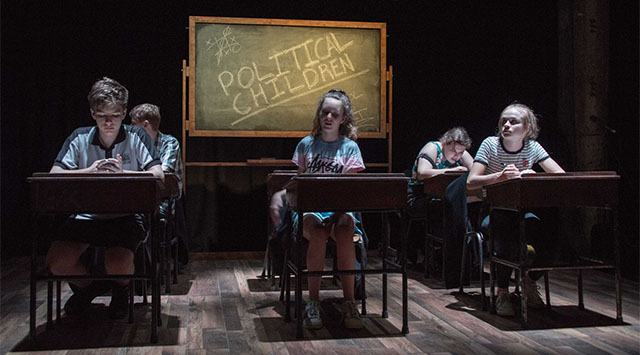
A substantial part of our daily political discourse involves the perceived threat of refugees, and how harshly our political leaders are willing to treat asylum seekers who dare brave our shores. Murray Lambert’s My Father’s Left Testicle talks about the offshore immigration detention centres that are constantly on the news, presenting absurd renditions of horrific stories reported over the last few years.

We may have heard it all before, but this is information that bears repeating. The atrocities never seem to cease, and even though our society is at a loss as to what can actually be done to alleviate the situation and achieve a humane result, we must not stop discussing these issues, repetitive as they might be, and risk forgetting the disaster occurring at our doorstep.

Lambert frames the stories within a context of very black comedy, some sequences of which are genuinely funny and others proving to be very uncomfortable viewing, although undeniably powerful. Often imaginative and passionate, the script includes clever dialogue that make up for where it lacks structural sophistication. The production suffers slightly from inelegant scene transitions, but charming work on set design by John Alan Sullivan is a highlight.

The work is performed confidently by a spirited ensemble of five. The meatiest roles are taken on by Nick O’Regan, who attacks with gusto and a sincerity that helps us connect with the play’s assertions. Also memorable is Robert Carne’s ability to convey authenticity, notwithstanding the production’s surreal and mischievous tone.

The show’s evocative title and its tagline “My Father’s Left Testicle… Go Back To Where You Came From!” suggests a desire to see a world without boundaries, where land is shared and where things that separate people are dissolved. The notion is idealistic, and naive, but it is not hard to recognise the truths that it contains. We might wish to preserve the inequalities of the world so that those at the top of food chains will remain dominant, but there is no need for our greed to exist without compassion. Even when we are determined to have more than others, it is clear that there is enough for everyone, but it seems that we can only think of things in terms of all or nothing, and will continue to wield cruelty where we can.

www.facebook.com/mustardseedproductionshome