Review: The Father (Sydney Theatre Company)

Venue: Wharf 1 Sydney Theatre Company (Walsh Bay NSW), Aug 19 – Oct 21, 2017
Playwright: Florian Zeller (translated by Christopher Hampton)
Director: Damien Ryan
Cast: Faustina Agolley, John Bell, Marco Chiappi, Glenn Hazeldine, Anita Hegh, Natasha Herbert
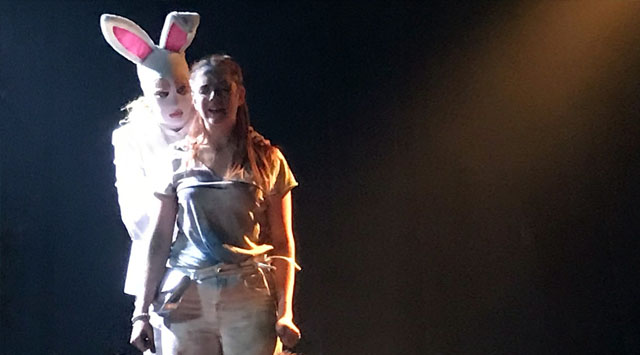
Image by Philip Erbacher

Theatre review
André is getting on in years. He remains in good physical condition, but his mind is failing. The protagonist’s disintegrating memory in Florian Zeller’s The Father brings us through a narrative that vacillates in its reliability. We are constantly disoriented, like its subject, confused by the incoherence of people, place and time. Without any dependable means to decipher and interact with the world, André struggles to maintain a cogent sense of self; if the external cannot be appropriately explained, so too will the internal begin to lose meaning.

Zeller’s depiction of that mental decline, in its theatrical form, offers a valuable opportunity for the condition to be better understood. What could only be an abstract concept, that hitherto relied only on our emphatic imagination, becomes a much more powerful appreciation of an unfortunate state of being. Damien Ryan’s direction makes us feel as though we experience it firsthand. The 90-minute play however, has little new to say besides. After early scenes of quite thrilling revelations, things get old quickly. The show dissolves into predictability and repetitiveness, and when we arrive at what should be an emotional zenith, a surprising placidity is encountered instead.

The roles are performed well, each one lucid and believable. John Bell’s star quality keeps us firmly engaged with André’s plight. It is a robust portrayal, with an emphasis on the character’s dignity at a time of hardship, although a greater sense of vulnerability would make for more poignant drama. Daughter Anne, is played with an admirable realism by Anita Hegh, but the writing seems to restrict the actor to a slightly monotonous interpretation of her role. In the absence of a congruous timeline, characters are prevented from developing very dynamically. They appear in fragments, and the players are accordingly concise.

The production is simple and elegant, with Alicia Clements’ set design placing us confidently, in an upper class existence, where carers and nursing homes are matters of remorse rather than cost. André and Anne have the financial means to ease the pain of fading health, so we are protected from real catastrophe in The Father. Age and death however, will come to all, and as we watch a good man deteriorate, it should only be with resignation and acquiescence that we regard the closing scene, yet we resist, instinctively rejecting the truth of our mortality.

www.sydneytheatre.com.au

Review: 4:48 Psychosis (Workhorse Theatre Company)

Venue: Old Fitzroy Theatre (Woolloomooloo NSW), Aug 16 – Sep 9, 2017
Playwright: Sarah Kane
Director: Anthony Skuse
Cast: Ella Prince, Lucy Heffernan, Zoe Trilsbach
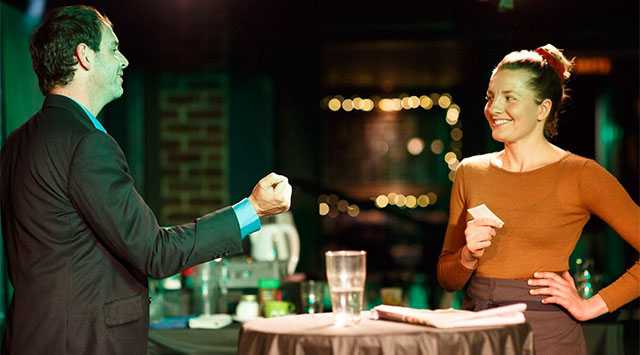
Image by Andre Vasquez

Theatre review
A large mirror forms the backdrop, and for much of the show, we watch the actors through their reflections. It is a peculiar sensation, to look into the mirror over a prolonged period and not be familiar with the person therein. In Sarah Kane’s world of mental illness, 4:48 Psychosis is often incoherent, but undeniably truthful. The characters speak, not always for the purpose of communication with an external presence, but to achieve a kind of sentience, or to find a way for things to make subjective sense.

Charged with emotion and an abundance of hopeless desperation, it is the rock-bottom of a dark existence that we encounter, a place where we are able to think of death as salvation. The work is difficult because of the deeply fragile omnipresence of a person’s impending suicide. Director Anthony Skuse is right to steer the show away from any sense of sensationalism or pleasure, so that we remain in the regretful bleakness of a fellow human being’s agony.

There is little that should be enjoyable of the work, but we discover that annihilation is seductive, and that poetry is beautiful, even (or especially) when tortured. It is a polished production, sensual and intense, with memorable design work by an excellent team of creatives. Benjamin Freeman’s music is heard for the entire duration, striking in its exacting sensitivity.

A cast of three women present an extraordinary study of a diseased mind. Thoroughly complex and remarkably focused, what they bring to the stage is replete with authenticity, but also unabashedly dramatic. The extremely well-rehearsed group, Ella Prince, Lucy Heffernan and Zoe Trilsbach are individually captivating, whilst maintaining an impressive cohesiveness that secures our attention, come hell or high water. We may not understand much of what they have to go through, but they are nonetheless demanding, of our concentration, our validation, our empathy.

Public discourse requires that we talk of suicide as fundamentally unacceptable. Forbidden by law and religion, the thing that is most unequivocally owned by the self, is one’s life, yet the decision to end it, is thought of as repugnant. In our refusal to condone suicide, we declare human life to be sacred. It is a social contract, that all must be given care. As Sarah Kane asks repeatedly in the play, “what do you offer your friends to make them so supportive?” the question becomes increasingly irrelevant. For any person to be given support, a currency of exchange is not needed. By the same token however, one can think of being, as essentially personal, and no debt will be owed, when extinguished.

www.workhorsetheatreco.com

Review: Melba (Hayes Theatre)

Venue: Hayes Theatre Co (Potts Point NSW), Aug 11 – Sep 9, 2017
Book & Lyrics: Nicholas Christo
Music: Johannes Luebbers
Director: Wayne Harrison
Cast: Annie Aitken, Michael Beckley, Caitlin Berry, Andrew Cutcliffe, Blake Erickson, Genevieve Lemon, Emma Matthews, Adam Rennie, Samuel Skuthorp
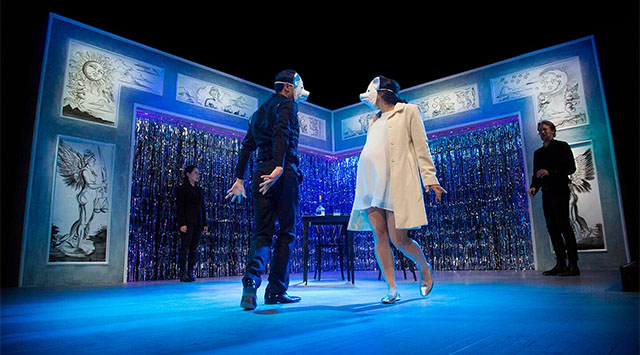
Image by Clare Hawley

Theatre review
Nellie Melba was the first Australian musician to have achieved international stardom, a legendary figure whose story provides inspiration not only to artists who dream of making it big, but also for women everywhere who know how it is to be told to tame their ambitions. She became wife and mother early in life, as was de rigueur in late nineteenth century, and in the musical Melba, we see her struggle to acquire the independence necessary for professional success. A fabulous selection of classical arias are inserted into a new work of musical theatre, with book and lyrics by Nicholas Christo, and music by Johannes Luebbers.

The original material is delightful, with scandalous details in Melba’s story providing an unexpected sense of titillation to proceedings. Director Wayne Harrison keeps us invested in the show’s characters and narratives, for a production that captivates at every point. Design elements however, are generally underwhelming, with set and costumes requiring greater imagination and boldness, for a more accurate approximation of our fantasies, of the diva and her circles.

Performers Annie Aitken and Emma Matthews share the eponymous role, each bringing to the stage, their phenomenal talents and abilities. It is a strong concept, to have disparate disciplines, opera and musical theatre, represented in this quite unique format for Melba, but it is not always a seamless blend in its efforts to accommodate two physical manifestations of the same personality. Nonetheless, the magnificent quality of singing in the show is sufficient to remedy most of its shortcomings. Also noteworthy is Andrew Cutcliffe who successfully turns us against the forsaken husband Charlie. His creation of a persuasive villain for the piece, is efficacious, and impressive.

In its efforts to keep the memory of our heroine, dignified and noble, Melba can often feel compromising in how it portrays her humanity. The picture it delivers is unbelievably pristine, and the drama is subsequently more gently rendered than is perhaps desired. We need people to look up to, especially trailblazers who show us that the impossible can be done, but it is important that we understand that flaws and foibles are what we have in common, especially when the magic they possess can seem so unattainable to mere mortals.

www.hayestheatre.com.au

Review: Dignity Of Risk (ATYP / Shopfront Arts)

Venue: ATYP (Walsh Bay NSW), Aug 9 – 26, 2017
Dramaturg: Jennifer Medway
Director: Natalie Rose
Cast: Mathew Coslovi, Holly Craig, Teneile English, Caspar Hardaker, Riana Shakirra Head-Toussaint, Steve Konstantopoulos, Wendi Lanham, Brianna Lowe, Sharleen Ndlovu, Jake Pafumi, Dinda Timperon
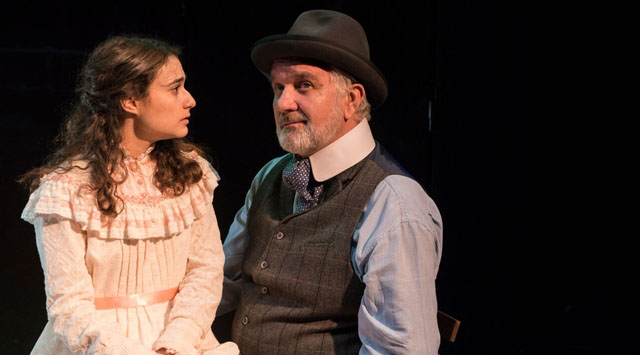
Image by Tracey Schramm

Theatre review
11 performers take to the stage, each with intimate revelations, for a discussion about the personal versus the social, from a perspective of individual lack and disadvantage. Not all of the cast is disabled, but Dignity Of Risk requires that human inadequacies are laid bare, for an examination of how each person navigates the world, with their own sets of imperfections. Through a display of weakness, it is the image of strength, previously imperceptible, that persists. The human spirit is everywhere, but it can only be brought to view by the expression of vulnerability.

The production takes a gentle tone, but it speaks with great power and a sublime beauty. The nonchalant delivery of lines, coupled with the unassailable authenticity the personalities invariably portray, initiates a slow burn that eventually, and surprisingly, overwhelms. Natalie Rose’s direction and Jennifer Medway’s dramaturgy, are consciously resistant of a sensationalist approach. They build poignancy through sensitivity and nuance, without a reliance on conventional narrative structures, and their trust in a universal benevolence pays off. A highlight is Holly Craig’s solo dance sequence, incredibly elegant and sensual, made even more moving later in the piece, when she explains the meanings that dancing holds for her, as a person with vision impairment.

In a show that talks a lot about our bodies, Margot Politis’ choreography plays a significant role, and what she does with movement, gesture and positioning, is nothing short of inspiring. Set to the wonderfully rousing electronic music of James Brown, the many non-verbal sequences of Dignity Of Risk are masterfully manufactured for our visceral response, involuntary yet hugely enjoyable. The production is visually sumptuous, with Melanie Liertz’s set and Fausto Brusamolino’s lights offering a range of ethereal dimensions that juxtapose delightfully against the very earthy, corporeal concerns of its players.

All of us have shortcomings but not everyone has the privilege of being able to hide them. For some, identity is intrinsically linked with their deficiencies, while others are allowed to be known only for their successes. No matter the faults we have, as defined by society or by the self, we all wish to be regarded with respect, and we all deserve to be seen for our capacity to contribute, as people who share in the earth.

www.atyp.com.au | www.shopfront.org.au

Review: After The Dance (New Theatre)

Venue: New Theatre (Newtown NSW), Aug 9 – Sep 9, 2017
Playwright: Terence Rattigan
Director: Giles Gartrell-Mills
Cast: Tom Aldous, Callum Alexander, Lloyd Allison-Young, George Banders, John Michael Burdon, Sandra Campbell, Rowan Davie, Peter Flett, Matt Ford, Valentin Lang, Lauren Lloyd Williams, Amelia Robertson-Cuninghame, Alyssan Russell, Claudia Ware
Image © Bob Seary

Theatre review
It is England in the 1930s. David is fabulously wealthy, and dreadfully miserable, living a life with no aim and purpose. Terence Rattigan’s play is about a writer who has everything, including two women vying for his affections, but who remains obstinately unfulfilled. Time has not been kind to After The Dance, which feels sorely irrelevant, with its archaic, although honest, worldview. We no longer despise work, and we no longer tolerate the representation of women as accessories for the libido and vanity of men. We have thankfully moved beyond Rattigan’s depiction of a failed existence, as exemplified by his protagonist’s persistent disquiet.

Director Giles Gartrell-Mills shows us the emptiness of David’s days, through the inconsequential and foolish ways personalities in his household spend their time. There is a worthwhile discussion to be had about the overindulgence of alcohol that is perhaps the only thing in the show that retains some resonance, but we are never able to really empathise with those who appear onstage. When we see Helen and Joan fighting over David, we question his appeal, having seen only evidence of his shortcomings, and the narrative’s persuasiveness begins to suffer.

Actor George Banders faces the grim task of making David a likeable figure, and even though his attempts are doubtlessly confident, the battle seems to be ill-fated from the start. More impressive is Amelia Robertson-Cuninghame as Joan, the vivacious wife who, although rudimentarily written, is memorable for the performer’s conviction at delivering surprising complexity, and a refreshing sense of panache. Also noteworthy are Brodie Simpson’s costumes for the show’s female characters, each outfit beautifully fitted and thoughtfully assembled.

David connects with nothing, and finds himself in a painful abyss of solitude. Loneliness is universal, but as we discover in After The Dance, how we talk about it changes with time and space. We can invent endless concealments so that the plague of loneliness can be diminished, but finding true release from it, requires that the self must go through the most genuine of reflections, and the most brutal interrogation. David suffers from writer’s block, unable to find expression for what he knows to reside within, yet he looks only outward, hoping for respite to come from others. A large mirror sits in the drawing room where all the action takes place, but in spite of his vanity, David takes not one look into his own eyes.

www.newtheatre.org.au

Review: One Flew Over The Cuckoo’s Nest (Sport For Jove Theatre)

Venue: Seymour Centre (Chippendale NSW), Aug 3 – 19, 2017
Playwright: Dale Wasserman (adapted from novel by Ken Kesey)
Director: Kim Hardwick
Cast: Matilda Brodie, Laurence Coy, Patrick Cullen, Anthony Gooley, Travis Jeffery, Felicity Jurd, Stephen Madsen, Wayne McDaniel, Joshua McElroy, Tony Poli, Nick Rowe, Di Smith, Wendy Strehlow, Bishanyia Vincent, Johann Walraven
Image by Marnya Rothe

Theatre review
The action takes place inside a male psych ward, except of course, the allegory is in reference to the mad world that all of us inhabit. In Ken Kesey’s One Flew Over The Cuckoo’s Nest, McMurphy (made famous by Jack Nicholson in the film version) represents the wild man that we have to tame. He turns up full of life, impressing upon us that he is not in fact insane, but a product of nature in its splendid rawness, and is clearly out of place in this environment of medicated placidity. It is probably no surprise that in this 1962 work, it is a woman who is charged with the business of suppressing that sublime nature.

Nurse Ratched has successfully emasculated everyone we see, and McMurphy must find a way to escape her wicked depravity. Man’s authenticity is upheld as desirable and esteemed, even if all the women who cross McMurphy’s path are debased and humiliated. The rebel’s story is always a powerful one, and it is no different here, whether or not we warm to its central character. It is after all, a battle for dignity and innocence, and we will only be allowed to side with the righteous hero.

Anthony Gooley’s charisma serves him well in the role of McMurphy. Dynamic and intuitive, and effortlessly captivating, it is a pleasure to watch the actor fill the stage with his brand of robust theatricality. Simultaneously portraying qualities that are menacing and vulnerable, the character that he presents is complex, considered and hence, convincing. Ratched is a surprisingly human manifestation, under Di Smith’s interpretation. Hints of warmth and kindness make her a believable personality, but an impotent villain. In the absence of a formidable opponent, McMurphy looks to be a rebel without a cause, and dramatic tension is significantly compromised.

Director Kim Hardwick’s approach is a contemplative one, and although never lacking in verisimilitude, sections that deal with aggression and chaos, can seem too gently manufactured. Individual patients in the show are fascinating, often beautifully performed, but they feel strangely distant. Without a threatening presence, the group misses an opportunity to have us more viscerally engaged. The production however, boasts accomplished design work, especially noteworthy are Martin Kinnane’s lights; compelling when subtly rendered, and utterly remarkable when his creativity turns bold or extravagant.

We play by the rules, thinking them necessary for self-preservation, even when we judge them unsound. When one’s own sanity comes into question, it is invariably societal expectations that provide the measure at which behaviour must be gauged and contained, whether or not conditions of that acceptance are based in logic. McMurphy’s radical disobedience involves him acting from unmitigated impulse, alone, and the consequences he has to face are dire. It is true, that much of what we endure, is unfair. It is also true, that rules are made to be broken, and when the lunatics take over the asylum, redress can be achieved, if unity, and solidarity, can be found.

www.sportforjove.com.au

Review: Technicolor Life (The Depot Theatre)

Venue: The Depot Theatre (Marrickville NSW), Jul 26 – Aug 12, 2017
Playwright: Jami Brandli
Director: Julie Baz
Cast: Amy Victoria Brooks, Nyssa Hamilton, Michael Harrs, James Martin, Tasha O’Brien, Cherilyn Price, Emily Sulzberger, Cherrie Whalen-David
Image by Katy Green Loughey

Theatre review
Maxine is a gregarious 14-year-old with a lot to deal with. Her sister has returned from the war in Iraq, having lost her left hand along with much of her will to live, while their grandmother decides to move in to enjoy her last days, before having to succumb to cancer. Jami Brandli’s Technicolor Life is an entertaining exploration into the notion of joie de vivre, where tragic circumstances are filtered through a youthful optimism and resilience, as represented by the very innocent, but very wise, Maxine. People lose limbs and lives everyday, yet somehow we must move on, and resist being submerged by the inevitable accumulation of damage over time.

Director Julie Baz ensures that characters are colourful, with consistently vibrant interactions. Pathos is perhaps too mild under Baz’s interpretation, but we nonetheless find ourselves deeply involved. Nyssa Hamilton does fabulous work in the role of Maxine, particularly memorable for her voice, which seems to be endlessly malleable and powerful. The actor is a delightfully inviting presence, and she keeps us firmly engaged with the conundrums that surround her. Amy Victoria Brooks and Emily Sulzberger play Maxine’s fairy godmothers, who introduce a thrilling effervescence with each entrance, through their mimicry of Marilyn Monroe and Jane Russell in Gentlemen Prefer Blondes, after our protagonist discovers the 1953 classic.

Necessity compels us to take action, but inspiration is the most blissful way to achieve motivation. Having lost herself inside the glittering falsity of old Hollywood, Maxine delves into dreamland searching for answers to problems in her real world. We are often caught up in the gruelling demands of daily existence, and our minds are made to be increasingly restrained by the need to act with practicality, prudence and pragmatism, leaving us to reject that which is the most beautiful and sublime. Asking for divine intervention is usually the last resort, but what could result from the consultation of higher planes, must never be underestimated.

www.thedepottheatre.com

Review: Kindertransport (Darlinghurst Theatre Company)

Venue: Eternity Playhouse (Darlinghurst NSW), Jul 28 – Aug 20, 2017
Playwright: Diane Samuels
Director: Sandra Eldridge
Cast: Camilla Ah Kin, Annie Byron, Harriet Gordon-Anderson, Sarah Greenwood, Emma Palmer, Christopher Tomkinson
Image by Philip Erbacher

Theatre review
In 1938, an estimated ten thousand Jewish children from families in Germany, Austria and Czechoslovakia, were moved to safety in the United Kingdom, before the commencement of the second World War. Diane Samuels’ Kindertransport is the fictional story of one such child, nine-year-old Eva who finds herself sent away from Hamburg. She ends up in Manchester, north of England, eventually changing her name to Evelyn. Decades later, we discover that she has all but forgotten her life as a Jewish child. To leave the past behind, Evelyn’s survival instincts have created a kind of amnesia, in order that she may make the most out of her present circumstances. The play is about the relationship between yesteryear and today, and how our histories are constantly under threat of obliteration.

There are many theatrical works about Jewish experiences during the Nazi era, and Kindertransport can often feel generic in its approach to telling its story. It is a narrative that has to be reinforced, because there are wounds yet to be healed, and antisemitic threats have yet to disappear. There may be nothing particularly unpredictable about the show, but its capacity for the expression of genuine emotions, is nonetheless valuable, in the ongoing process of catharsis for many who continue to be affected by events of the war.

Sandra Eldridge’s direction introduces a gentle touch, working on the tenderness between characters rather than on exploiting the more sentimental elements of the play. Sections can feel underwhelming, with dramatic tensions kept subdued, but a highlight occurs in a fantasy sequence where Evelyn confronts her mother, both speaking as adults, putting to words their respective struggles. Actors Camilla Ah Kin and Emma Palmer find remarkable chemistry in this moment, and the stage becomes briefly incandescent. Also noteworthy is set design by Imogen Ross, with a backdrop composed of open cardboard boxes, symbolising the movement of peoples and cultures, as well as the human need to bring illumination to our darker inner selves.

There is much to be sad about what Evelyn has had to endure, but it is her ability to emerge strong and flourished that should be celebrated. None of us should hope to reach our graves unscathed by the ravages of mortality, if we are to seek a life well lived. It may be considered unfortunate that some of us have had to abandon religion, tradition and culture in order to find a way forward, but survival is key, and we must attain it however possible.

www.darlinghursttheatre.com

Review: Dry Land (Mad March Hare / Outhouse Theatre Co)

Venue: Kings Cross Theatre (Kings Cross NSW), Jul 28 – Aug 19, 2017
Playwright: Ruby Rae Spiegel
Director: Claudia Barrie
Cast: Sarah Meacham, Michelle Ny, Patricia Pemberton, Julian Ramundi, Charles Upton
Image by Marnya Rothe

Theatre review
Teenage years are but a flash in any lifetime, yet they are the most formative, and in many cases, offer the most exciting of experiences and memories. Before we are tamed into adults, and before we understand the price to be paid for every decision, the teen is a new person unleashed from childhood, ready to explore all that had been previously prohibited. In Dry Land, Ruby Rae Spiegel writes about the locker room at a girls’ swim squad, except where we expect banter, we discover some very hard truths being learned. Amy and Ester are in the process of figuring out the women they want to be, and with the bravery and fortitude they had gained from training in elite sport, they put themselves through the most brutal loss of innocence.

These fearless characters see the immensity of the world and rush head-on to devour its every promise, limited only by that same flesh and blood that is determined to keep each of us contained. It is a story about the spirit of youth, and how every person has to come to terms with their own corporeal limitations, as well as those psychological and social. Ester is fighting tooth and nail to excel in her swimming, while Amy exploits every resource to obtain an abortion without parental consent. They know what is best for them, regardless of our judgements, and Spiegel’s ruthless need to put on display every explicit detail of their confronting endeavours, makes Dry Land an extremely edgy work of theatre that challenges our personal and collective values.

It interrogates notions of youth and gender, and seeks to dismantle bourgeois constructs that dominate discourse in Western art. Claudia Barrie, as director of the piece, demonstrates a real passion for those subversive and feminist ideals, in her creation of a work that is absolutely uncompromising and forceful with what it has to say about our realities, and their accompanying structures of artifice, pretence and hypocrisy. Collaborative outcomes with designers are perhaps slightly predictable, but their efforts are undeniably effective in the production’s ability to manufacture atmosphere and pace, keeping us completely engaged with its narrative.

Barrie’s strength as guiding light for actors, shines brilliantly in Dry Land. All performances, including Julian Ramundi’s very small part as the apathetic Janitor who has seen it all before, are deeply evocative and resonant. No stage moment is allowed to go to waste, and we are thus enthralled. Sarah Meacham’s explorations as the ambitious Ester are as exhaustive as they are delightful. A character study that feels utterly intelligent and inventive, Meacham elevates the show from one that can easily be monotonously dark and serious, to something that is unexpectedly very funny, and overwhelming with compassion. Her comedy sits mischievously under every expression of trauma, giving Dry Land a unique quality of tragicomedy that brings perverse joy to those who can stomach it. Amy is played by Patricia Pemberton, whose resolute refusal to portray a simplistic victimhood, compels us to interpret her grievous circumstances beyond its instance of desperation. It is an extraordinarily rich and defiant personality that Pemberton presents, one who demands admiration over pity, and who reinforces the female as gloriously sovereign and interminably powerful.

When we look back at the salad days of one’s youth, it is with contradictory feelings of pride and embarrassment, exhilaration and regret. No matter how we choose to regard the past, there is no denying that the tougher the lessons, the greater we are today in every aspect of being. We have to try always to protect our young, but allowing them to face difficulty in every mishap and blunder will, as they say, build character. The young women we encounter in Dry Land are caught in a snapshot of suffering and struggle, but their futures are not diminished, only emboldened and bright.

www.madmarchtheatreco.com | www.outhousetheatre.org

Review: The Verbatim Project (Canberra Youth Theatre)

Venue: ATYP (Walsh Bay NSW), Jul 19 – 22, 2017
Director: Katie Cawthorne
Cast: Jean Bennett, Jasper Kilby, Denise Druitt, Jack Hubner, Katie Hubner, Merilyn Jenkins, Carol Mackay, Charlotte Palmer, Sao Hom Palu, Yarno Rohling, Diana Sandeman, Kate Sherren, Elektra Spencer, Ted Stewart, David Turbayne, Quinten Van Rooy

Theatre review
The cast is comprised of ten young Canberrans, from 14 to 16 of age, and six seniors, 65 to 80 years old. The Verbatim Project is a conversation across generations, offering an opportunity to look at how we contrast, and how we are consistent, within this unusual juxtaposition of peoples.

In their show, we hear thoughts about things that matter to Australians today, political, social and personal, through a wide variety of theatrical devices that help keep things interesting. Sound and video recordings, accompany the live physicality of its performers, consciously presented in movement and installation; using a multi-faceted approach to speak, without the use of a conventional narrative.

Director Katie Cawthorne and lighting designer Brynn Somerville, have structured a show that reveals the best of its cast. It is not a professional troupe, but all their strong suits are sensitively emphasised, with no distractions permitted to shift us away from a tightly assembled production. The text can sometimes be refreshing, but is generally predictable, with nothing controversial ever finding itself in the mix. It is a middle class look at middle class Australia, polite and well-meaning, and very civilised indeed.

There is a rigidity in The Verbatim Project that prevents anything from going wrong, but because nothing is left to chance, we are rarely able to discern the genuine connections between the personalities we meet. They are all too busy following instructions to let us in, on something more impulsive or spontaneous. Behind smoke and mirrors, we never really discover if the chasm of half a century can be bridged. Age can be made irrelevant, or it can mean everything.

www.cytc.net