Review: The Deep Blue Sea (Sydney Theatre Company)

Venue: Roslyn Packer Theatre at Walsh Bay (Sydney NSW), Feb 4 – Mar 7, 2020
Playwright: Terrence Rattigan
Director: Paige Rattray
Cast: Fayssal Bazzi, Paul Capsis, Matt Day, Vanessa Downing, Marta Dusseldorp, Charlie Garber, Brandon McClelland, Contessa Treffone
Images by Daniel Boud

Theatre review
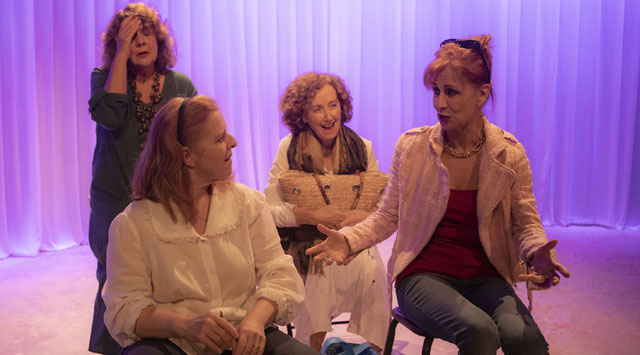
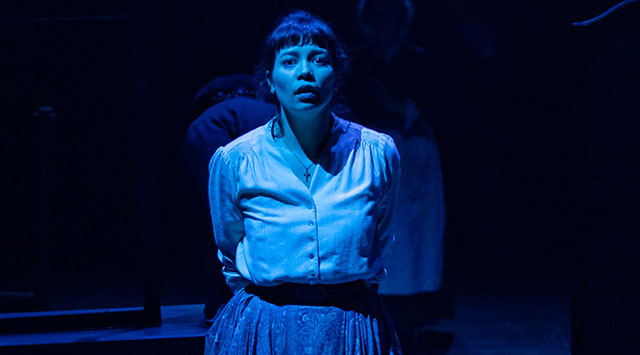
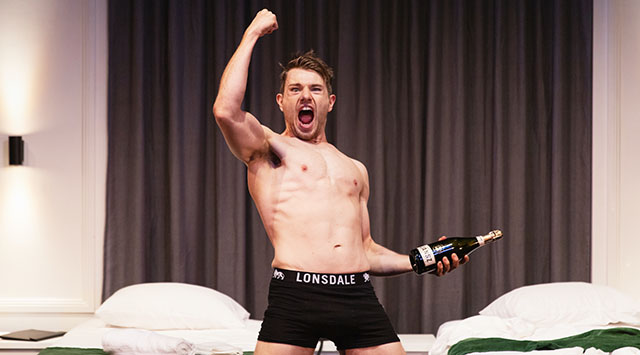
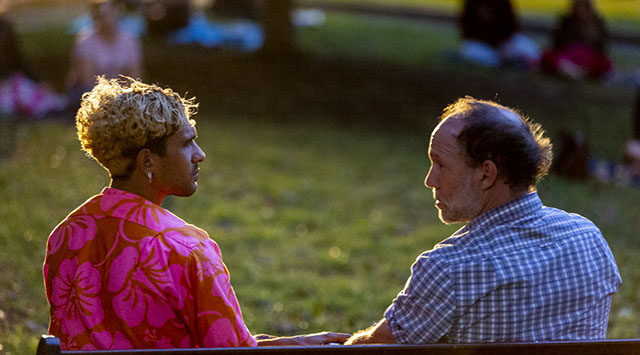
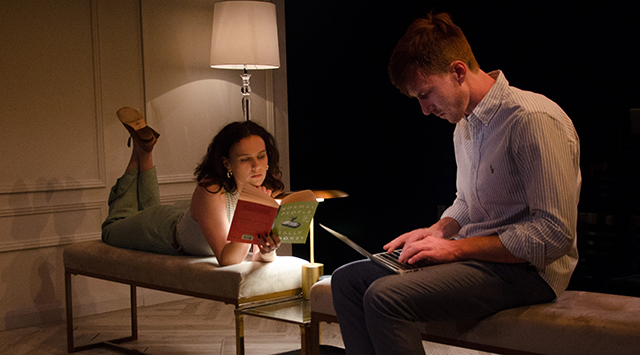
Hester Collyer is having such a miserable time, that when we first meet her, we catch her in the process of attempting suicide. It is the 50’s in Terrence Rattigan’s The Deep Blue Sea, and therefore not surprising to find a woman unfulfilled and depressed. She may have two men vying for her attention, but no amount of romance and love, can mollify her agony. Although a natural artist, having picked up painting at a tender age, she is steered away from her talents, being a clergyman’s daughter, to focus instead on becoming a wife and mother.

We watch our protagonist invest heavily into her lover Freddie, but the relationship is unrewarding no matter how hard each party tries. Her husband William too, works hard for a reconciliation, but Hester is simply unable to find satisfaction in all his acquiescence. Director Paige Rattray understands that Hester has placed all her eggs in the wrong basket, and as we watch the story unfold, it is Rattray’s understanding of events that truly resonate, even as poor Hester herself remains in the dark about her own situation.

Rattray’s feminist intervention is represented by a clever set design by David Fleischer, which gives us alternate views of the same small apartment containing, and constraining, Hester’s tiny world; we are given two perspectives of the narrative, as though a reminder that there are parallel interpretations taking place, feminist and anti-feminist, at each step of the plot trajectory. Other design elements too are noteworthy, with Nick Schlieper’s lights surreptitious but persuasive at all times, and James Brown’s work on sound, restrained but sublime in its dramatic effect.

Actor Marta Dusseldorp gives a thrilling performance in the lead role, endlessly inventive, and courageous with each of her artistic choices. It is a spellbinding depiction of female suffering, powerful in its authenticity, but more importantly, astute with the meanings that she conveys, almost behind Hester’s back. The show is surprisingly comedic, as a result of its modern sensibility. The cast uses Rattigan’s old-fashioned melodrama to put on a show that oscillates between laughter and melancholy, a subtly camp approach that proves highly entertaining.

Paul Capsis is unforgettable as Miller, an uncompromisingly queer presence that functions as a beacon of wisdom, for Hester and for the audience. Fayssal Bazzi and Matt Day are convincing love interests, both helping to make perfect sense of the conundrum at hand. We see that it matters not, whether they are good or bad men, they simply have no bearing on a grown woman’s happiness. Also memorable is Brandon McClelland, whose straightlaced irony as Phillip Welch proves deeply amusing. Confident and perfectly pitched, McClelland delivers some of the show’s best laughs.

The Deep Blue Sea is an excellent example of how the world can destroy a person, when she plays by prescribed rules. At the end of her story, we wonder if Hester is ever going to discard those external expectations, and find a way to carve out a self-determined existence. Women are broken every day, but one wonders how many are able to resist returning to square one, even in the twenty-first century, at each attempt of revival. Bravery is not often found on the well-trodden path, and glory is reserved only for those who dare.

www.sydneytheatre.com.au

Review: Jesus Wants Me For A Sunbeam (Belvoir St Theatre)

Venue: Belvoir St Theatre (Surry Hills NSW), Feb 6 – Mar 8, 2020
Playwright: Steve Rodgers (based on a novella by Peter Goldsworthy)
Director: Darren Yap
Cast: Valerie Bader, Emma Jackson, Mark Lee, Liam Nunan, Grace Truman, Matthew Whittet
Images by Brett Boardman

Theatre review
Linda and Rick are a young couple in love, full of hope for the future, and like many who had come before, they decide to have children. In Peter Goldsworthy’s Jesus Wants Me For A Sunbeam (adapted for the stage by Steve Rodgers), it is that collision of optimism and the inevitable harshness of real life that comes to the fore, when a happy family of four is met with the curse of a terminal illness.

The play is predictably emotional, with Darren Yap’s direction making no apologies for the extremely sentimental tone that his production takes. Death however, may seem a more vacillating topic than the show might suggest. As we watch the Pollards go through turmoil, finding ways to deal with the impending passing of a beloved, Jesus Wants Me For A Sunbeam exposes the surprisingly disparate attitudes we may hold, for a completely universal experience. It becomes obvious that because we so rarely talk about death, that we almost never have opportunities to create consensus, so it only makes sense that personal beliefs can vary greatly in relation to the topic.

Characters inhabit a relentlessly dark space, and the trauma being presented feels authentic, even if one does not share in the Pollards’ persuasions about the afterlife. The cast is uniformly strong, impressive with the chemistry they harness as an ensemble, able to give a sense of elevation to some very simple personalities. Actors Liam Nunan and Grace Truman are memorable as the children, passionate and intense with their portrayals of interrupted innocence. Emma Jackson and Matthew Whittet are their parents, both full of conviction, and remarkably elegant in their approaches for this unabashedly stirring work. Valerie Bader and Mark Lee take on a range of senior roles, precise and marvellously deliberate with what they bring to the stage.

Also noteworthy is Emma Vine’s set design, offering considerable versatility and easy scene transitions, whilst remaining pleasing to the eye. Verity Hampson’s lights, along with music and sound by Max Lambert and Sean Peter, ensure that the audience is drawn into the tragedy, through tenacious engagement of our senses.

Death can be thought of as more than a mournful occurrence. In fact, some think of it as a welcome end to suffering. In the lightness of romance, Linda and Rick create new life, unafraid of all the hardship that is sure to come. In sickness, one is made to confront mortality, with fear and sadness invariably becoming part of that process. Along with having to say a long goodbye to loved ones, it is perhaps the uncertainty about what happens thereafter, that causes the greatest despair. We may differ in how we regard the nature of death, but the beauty of life that we have all witnessed, does not have to end when the lights are turned off for the last time.

www.belvoir.com.au | www.riversideparramatta.com.au/NTofP

Review: Pomona (Kings Cross Theatre)

Venue: Kings Cross Theatre (Kings Cross NSW), Jan 24 – Feb 8, 2020
Playwright: Alistair McDowell
Director: Anthony Skuse
Cast: Jane Angharad, Kevin Batliwala, Amanda McGregor, Lauren Richardson, Monica Sayers, James Smithers, Dorje Swallow
Images by Clare Hawley

Theatre review
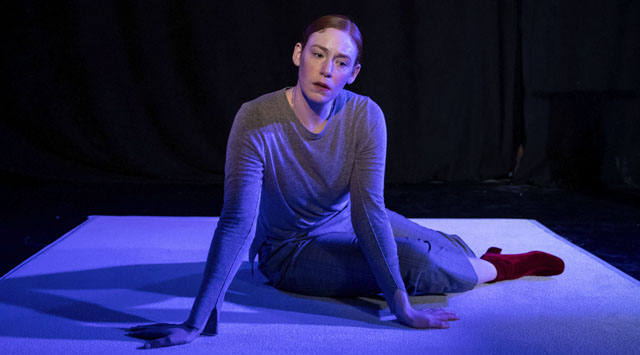
A concrete plot of barren land sitting in the middle of the city, can only raise suspicion. It is simply unbelievable that what appears to be prime real estate is left to languish, as though millions of dollars are left unclaimed, right in front of our eyes. In Alistair McDowell’s Pomona, we are taken underground. In the absence of visible buildings, our cynicism goes into overdrive, as we watch the worst of our capitalistic impulses emerge, through a series of horrific criminal scenarios. The play imagines the most nefarious commercial activities taking place in hidden bunkers, behind closed doors. If business dealings dare be depraved in broad daylight, what more the shady dealings that happen in secret.

Pomona‘s drama involves missing persons, snuff films and more. It is not an exploitative work by any means, but that very tendency of ours to exploit, is placed under scrutiny. Director Anthony Skuse prompts questions about nature and nurture, and the origins of corruption, as we observe characters carrying out unspeakable acts. People seem to be either good or bad, but there is no denying the conditions we all have to operate under, that are in most cases, beyond repair. Lighting design by Veronique Benett is suitably gloomy, for the irrevocably pessimistic world being explored. Music by Nate Edmondson, commanding and tenacious, keeps tensions unrelenting for this foreboding representation of our dangerous lives.

The production is an engaging one, with powerful concepts and a cleverly fractured plot, conspiring to hold our attention. Actors Amanda McGregor and James Smithers depict some very big and genuine emotions, both wonderfully mesmerising with the focus they bring to the stage. Also memorable is Lauren Richardson, who has the unenviable task of inhabiting and portraying the unceasing terror of a woman escaping violence. Moments of innocence by the charming Kevin Batilwala are a delightful reprieve, while Jane Angharad, Monica Sayers and Dorje Swallow play some seriously dubious types who make us confront our own sense of morality.

In a dog eat dog world, good guys finish last. In Pomona, we may want to get rid of the baddies, but there is nothing to stop their positions being usurped by more of the same. Evil runs so much of the world, because of the way things are structured. The way we revere money and power, has allowed bad things to happen again and again. We can no longer afford to imagine that simply placing good people in harmful institutions will fix our problems. We have to move emphasis away from undesirable individuals, to a better understanding of the systems that govern our lives, and begin destroying them, as a first step to improving things for all.

www.secrethouse.com.au

Review: The Visitors (Moogahlin Performing Arts)

Venue: Carriageworks (Eveleigh NSW), Jan 22 – 26, 2020
Playwright: Jane Harrison
Director: Frederick Copperwaite
Cast: John Blair, Damion Hunter, Colin Kinchela, Nathan Leslie, Leroy Parsons, Glenn Shea, Kerri Simpson
Images by Jamie James

Theatre review
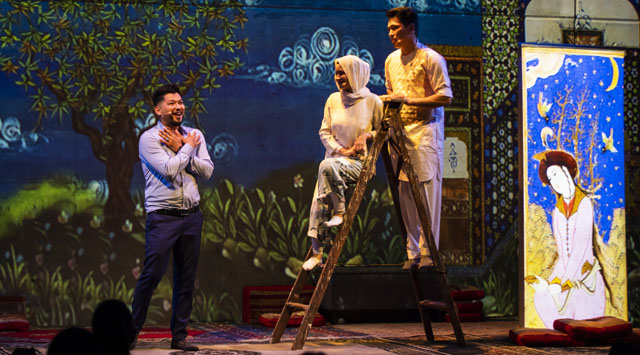
Seven men gather on the shore of Gadigal land, debating whether to welcome or to repel those arriving on ships from overseas. It is 1788, but in Jane Harrison’s The Visitors, these Aboriginal leaders are dressed in three-piece suits, and they speak an English that sounds more like characters from Reginald Rose’s Twelve Angry Men, than even any of us would today. Indeed, Harrison’s writing assumes not only the style of classic white theatre, its narrative structure is modelled after the conceit of that 1954 play, involving a council being disrupted by the doubts of a single cautiously deliberative soul.

As though purposefully addressing a Western audience, The Visitors pulls out all the stops so that there is no mistaking the Aboriginal work’s intent to question and to confront. With both content and form shaped in a way that is unequivocally understandable to colonisers, we watch these Indigenous characters painstakingly discuss an appropriate response for what they had imagined to be temporary entrants. Their compassionate struggle with the matter is only made more moving, by the enormity of the fallout that remains unbeknownst to them, that is to become the daily lived experience of all their descendants.

Directed by Frederick Copperwaite, the staging is as polished as it is passionate, with important arguments delivered in ways that are precise and affecting. Visually satisfying, with Lisa Mimmochi’s exacting set and costumes, along with Chloe Ogilvie’s elegant lights, providing a sense of sophisticated dynamism to the story. Sound design by Phil Downing, with additional music by Tim Gray, too are instrumental in transporting us deep into the psyche of rightful land owners past and present.

The ensemble is marvellously cohesive, unwavering in their dedication to this powerful tale. John Blair and Glenn Shea are particularly memorable for their exquisite timing, both performers turning on the charm, having us absolutely captivated by their effortless humour. An impressive gravity is contributed by Leroy Parsons, very convincing and engrossing as Walter, the brave one who dares go against the tide. The show is brought to an intense conclusion by Damion Hunter’s disarming soliloquy as Gordon, who in the crucial moment reveals emotions that are just as raw today as they were at the dawn of this catastrophe.

It may seem that our Indigenous are always meeting us halfway. In The Visitors, they dress and speak like their oppressors, almost like a last-ditch attempt to get people hearing. Characters in the play fail to understand why the whites feel the need to steal; that basic question so many continue to evade today. Colonisation in Australia has been a ruthless project ongoing for over two centuries, and its pace only ever gets more ferocious. One of the men in the play expresses bewilderment at the felling of just one tree in the hands of the whites. Little did he know the true depth of destruction that was to come.

www.moogahlin.org

Review: Anthem (Roslyn Packer Theatre)

Venue: Roslyn Packer Theatre (Sydney NSW), Jan 15 – 19, 2020
Playwrights: Andrew Bovell, Patricia Cornelius, Melissa Reeves, Christos Tsiolkas, Irine Vela
Director: Susie Dee
Cast: Maude Davey, Reef Ireland, Ruci Kaisila, Thuso Lekwape, Amanda Ma, Maria Mercedes, Tony Nikolakopoulos, Eryn Jean Norvill, Sahil Saluja, Osamah Sami, Eva Seymour, Carly Sheppard, Jenny M. Thomas, Dan Witton
Images by Victor Frankovski

Theatre review
Much of the action takes place in train carriages around the Greater Melbourne area, where more than anywhere else, an accurate cross section can be obtained of who Australians are today. Rich and poor have to sit together, as do black, brown and white, along with young and old. When extricated from our respective communities, classes and silos, we are forced to look at the real differences that define us, probably more so than the similarities that we like to imagine give meaning to our national identity. In Anthem, it is the very nature of discrepancies, of wealth, power and all that might constitute a person’s cultural capital, that are exposed and very powerfully discussed.

On a land that remains unceded by its Indigenous who make up only an estimated 3.3% of the current population, it is absurd that the rest of us should experience privilege of any description. Director Susie Dee does a splendid job of articulating, not only that injustice, but also the harmful collective delusion driving this nation, that some of us deserve more than others. Anthem makes it clear that no one here can legitimately possess more than others; for as long as Indigenous peoples are marginalised and unable to exercise rights of ownership, the rest of us can only ever be holders of dubious property and position.

The politics of the piece is made saliently resonant by Dee, who imbues every vignette of Anthem with accuracy and urgency, accompanied by a strident level of realism that defies us to ignore the problems residing in the very foundation of our Australian existences. An extraordinary cast keeps us mesmerised for the entirety of these 150 passionate minutes. Tremendously well-rehearsed and unbelievably cohesive, their performance represents some of the most gripping theatre one could ever hope to see. Actor Carly Sheppard is unforgettable, giving voice to Black Australia, able to portray humour alongside a virtuous fury, to make an important and conclusive statement about Indigenous rights.

Ruci Kaisila, Jenny M. Thomas and Dan Witton provide live music over the duration, sensational in their manipulation of atmosphere and emotions, through the very accomplished works of composer and sound designer Irine Vela. Set and costumes by Marg Horwell are intelligently executed, able to convey a sense of veracity for characters and situations, whilst offering theatrical dynamism to our experience of the show. Paul Jackson’s lights too, bring animation to the stage, and is valuable in establishing tone for every nuanced moment of this sensitively rendered play.

As Australians, we have grown accustomed to tolerating inequalities in our social order. It has become acceptable that the rich get richer, at the expense of the poor, who can obviously only get poorer as a result. Marginalised communities, most notably Indigenous peoples, are routinely subjugated and muzzled, as our structures continue to privilege voices that adhere to conditions stipulated by white patriarchy. We have learned to think of the downtrodden as deserving of their lack of position in society. Even when we find ourselves oppressed by those with money and power, we take on the blame in accordance with the conditioning enforced by those at the top. It is no wonder then that James Baldwin’s The Fire Next Time is invoked in both the prologue and epilogue of Anthem. The only solution is a revolution, if only enough of us can see beyond the lies.

www.performinglines.org.au

Review: Lady Tabouli (National Theatre of Parramatta)

Venue: Riverside Theatres (Parramatta NSW), Jan 9 – 18, 2020
Playwright: James Elazzi
Director: Dino Dimitriadis
Cast: Nisrine Amine, Deborah Galanos, Antony Makhlouf, Johnny Nasser
Images by Robert Catto

Theatre review
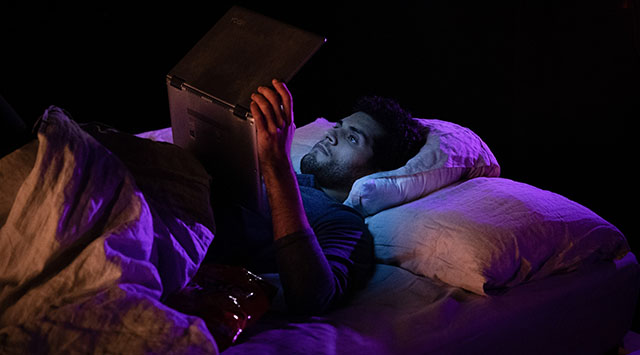
Danny is compliant and cheerful, as he lends a hand to his sister Josephine, who is causing a frenzy at home, preparing for her son’s christening. They are modern day Lebanese-Australians, very much a part of mainstream contemporary life, but not without their own traditions, as is common amongst minority groups. In James Elazzi’s Lady Tabouli, we celebrate the uniqueness of that cultural heritage, but together with everything good that contributes to the diverse tapestry defining our experience of identity on this land, comes a regressiveness determined to oppress the same people who wish to preserve those values.

As the hour draws close for the big event, in the midst of a lot of spirited hullabaloo, Danny decides to come out of the closet. The incongruity of sensibilities in Lady Tabouli, of a man revealing his true self whilst his family attempts to enact the most symbolic of ceremonies, forces us to acknowledge the complexities of our multiculturalism, especially in terms of LGBTQI issues, and how Australia must look beyond legislation to address the prejudice inherent in so much of our cultural practice. Gayness may no longer be illegal, but in so much of Australian society, gay people continue to be shunned.

Elazzi’s writing is powerful and passionate. Its incisive honesty provides an urgency that grips us, having us invested in the family’s story, regardless of where we stand in relation to its arguments. An abrupt conclusion however, suggests that more could be explored, even if we do appreciate the ambiguity pertaining to Danny’s subsequent developments. Directed by Dino Dimitriadis, the work is mesmerising when emotions run high. Early scenes are appropriately manic, but its humour never really takes flight. When things turn serious is when the magic happens. There is a depth to the way its characters and narrative are presented that absolutely captivates, alongside a sorrow that sings with disarming authenticity, of rejection and of loss.

That melancholy is exhaustively manufactured by the formidable partnership of Benjamin Brockman’s lights and Ben Pierpoint’s sounds, both elements hellbent on having our emotions respond with intense empathy. The show begins in the kitchen, depicted by production designer Jonathan Hindmarsh with middle class respectability, prosperous but ordinary, that transforms into the proverbial good room, where a more idiosyncratic notion of selfhood can be expressed.

Actor Antony Makhlouf is a compelling Danny, accurate in his portrayal of frustrated despondency, for a young man caught between two worlds. His mother is played by Deborah Galanos, a big presence bringing resonance to themes of piety and control, in a story about emancipation and freedom. Josephine the overbearing sister, is made scintillating by an exuberant Nisrine Amine, and Johnny Nasser is wonderfully nuanced in dual roles, adding intriguing texture to the show.

We have always tried to exercise control over nature, whether using commerce as a form of logic to plunder earthly resources, or to obliterate the most beautiful of human connections in the name of religion. We constantly position ourselves above, interpreting our variety of intelligence as solution for what we deem to be chaos in the world. More than ever before, we can see clearly that rather than being able to achieve order, what we do best is destruction. In pessimistic times, it is hard to talk about growth and progress, but our capacity for evil becomes painfully comprehensible.

www.riversideparramatta.com.au/NTofP

Review: Blue Christmas (New Ghosts Theatre Company)


Venue: Kings Cross Theatre (Kings Cross NSW), Dec 11 – 22, 2019
Images by Clare Hawley

Good People
Playwright: Katy Warner
Director: Lucy Clements
Cast: Clementine Anderson, Laura Djanegara, Sasha Dyer, Chika Ikogwe, Jane Watt, Emma Wright

Shandy’s Corner
Playwright: Gretel Vella
Director: Lucy Clements
Cast: Clementine Anderson, Meg Clarke, Laura Djanegara, Harriet Gordon-Anderson, Zoe Jensen, Vaishnavi Suryaprakash

Theatre review
It is Christmas time, when things come to a boiling point for two groups of women. In Katy Warner’s Good People, old friends have their holiday in Indonesia cut short by a state of emergency, as violence breaks out and tourists are corralled and confined to an airport. These Australians have witnessed the true face of poverty, and are now confronting the brutal implications of their privileged first world lives. Shandy’s Corner by Gretel Vella takes place in a women’s shelter, in first world Australia, where the consequences of our patriarchal systems are on full display, with broken individuals trying to regain their agency and a sense of dignity.

Both hour-long works are sensitively written and immensely contemplative, offering valuable perspectives on the kinds of lives we currently inhabit. Directed by Lucy Clements, the double-bill presentation grips from start to end. Good People is provocative, able to instigate meaningful conversations, while Shandy’s Corner is fabulously entertaining, with a dark humour that proves deeply satisfying. Clements injects an infectious passion into every scene, for a theatre that communicates with efficacious power.

An excellent impression is left by a very strong and cohesive cast, remarkably engaging in their delivery of two ensemble pieces, with not a single weak link. Clementine Anderson and Laura Djanegara perform in both stories, taking the opportunity to demonstrate versatility, but are especially memorable in Shandy’s Corner for their compelling portrayals of women overcoming adversity in wildly different ways. Harriet Gordon-Anderson and Emma Wright bring complex characterisations and excellent drama to the staging, intense with the emotions they convey. Funny ladies Meg Clarke and Zoe Jensen are thoroughly enjoyable in comedic roles, each actor with approaches as bold as their imaginations.

It is appropriate that the Christmas message here relates to the inherent injustices of our way of life. To respond to these plays, we can do no better than to think, “what would Jesus do?” in the face of these man-made tragedies. Christianity proclaims to be about caring for the poor and the oppressed, as it preaches in Proverbs 31:8-9, to “speak up for those who cannot speak for themselves, for the rights of all who are destitute. Speak up and judge fairly; defend the rights of the poor and needy.” When we look around us, there is little that can be construed as holy, but good art remains, and it is eternally sacred.

www.newghoststheatre.com

Review: The Split (The Old 505 Theatre)

Venue: The Old 505 Theatre (Newtown NSW), Dec 3 – 14, 2019
Playwright: Sarah Hamilton
Director: Charley Sanders
Cast: Amy Victoria Brooks, Max Garcia-Underwood

Theatre review
We are with Jules and Tom are on a small boat, where for several days and nights, they have isolated themselves to sort out an unspeakable problem. It must be a difficult one because we see them evading the issue, indulging instead in a lot of mundane chat and frivolous activity, leaving their purpose ignored in the background.

Sarah Hamilton’s The Split demonstrates what it is like, when things are too hard to deal with, especially if they relate to matters of the heart. The work is keenly observed, although its unrelenting sense of wistfulness can prove a challenge for the 90-minute duration. The couple is in a state of fragility, and we watch them unable to access anything that might fracture their emotional equilibrium, resulting in a play that stays too much in a delicate space, refusing to deliver a more obvious drama, or comedy, that would sustain our interest.

Performers in The Split are beautifully focused, very confident and precise with their respective portrayals. Amy Victoria Brooks and Max Garcia-Underwood may not deliver convincing sizzle as lovers, but both actors bring a valuable depth to their characters, able to convey authenticity for every scene. Director Charley Sanders’ storytelling is honest, but the production is too subdued in approach, and as a consequence, insufficiently engaging. Lights and video projections by Kobe Donaldson contribute some visual appeal to the staging, although atmosphere could be further enhanced to complement the writing’s sensual melancholy.

Life is hard; all we can do is to give it our best shot. As we watch Jules and Tom fail at what they had set out to achieve, we examine the way people deal with painful situations, in the understanding that it is the very nature of pain, that makes us run away from what we acknowledge needs to be addressed. The two take it slow, waiting for the ache to subside, so that they can finally arrive at a moment of confrontation that both know to be necessary. Not everything can be ripped off like a band aid. We learn that some things deserve the luxury of time, even if everything in this moment, does feel like a real state of emergency.

www.houseofsand.org

Review: Krapp’s Last Tape (Red Line Productions)

Venue: Old Fitzroy Theatre (Woolloomooloo NSW), Nov 26 – Dec 14, 2019
Playwright: Samuel Beckett
Director: Gale Edwards
Cast: Jonathan Biggins
Images by John Marmaras

Theatre review
Another grumpy old man takes to the stage in Samuel Beckett’s Krapp’s Last Tape. He brings along a sense of confusion, perhaps disillusioned and defeated by a world that never lived up to its promises. A wall of filing cabinets containing a lifetime of voice recordings that he has made, an ongoing project representing a memoir that is both self-important, and self derisive. Indeed, it charts the man’s ageing process, from idealistic to despondent, as we find him in a state of decrepitude.

Most of the show involves Krapp listening to his tape machine, playing a collection of narrations that could only ever mean more to him than to anyone else. We observe past and present converge as he sits attentive to his personal oral history. Directed by Gale Edwards, the staging bears an affecting melancholy, with Veronique Benett’s lights and Brian Thomson’s set design providing just the right ennui. Actor Jonathan Biggins is confident and a sturdy presence, able to convey degrees of regret for a role that seems to be about little besides. He provides a charming wistfulness that translates as a sort of gentle comedy, more likely to elicit empathy than it would laughter.

Krapp looks back in anger and in pain, making us wonder about the way we regard the past, as it relates to today and tomorrow. On the occasion of his 69th birthday, he demonstrates that the older we get, the less we are able to be buoyed by the future. The anguish he experiences, as he hits playback on the tape, is a result of poor choices and bad luck. Decisions can be made every which way; right, wrong, indeterminate, bearing in mind that regret is valuable only as a concept for future use.

www.redlineproductions.com.au

Review: Coram Boy (Kings Cross Theatre)

Venue: Kings Cross Theatre (Kings Cross NSW), Nov 22 – Dec 7, 2019
Playwright: Helen Edmundson (adapted from the novel by Jamila Gavin)
Directors: Michael Dean, John Harrison
Cast: Rebecca Abdel-Messih, Lloyd Allison-Young, Violette Ayad, Andrew Den, Ryan Hodson, Joshua McElroy, Tinashe Mangwana, Suz Mawer, Emma O’Sullivan, Gideon Payten-Griffiths, Ariadne Sgouros, Annie Stafford, Amanda Stephens-Lee, Petronella Van Tienen, Joshua Wiseman
Images by Clare Hawley

Theatre review
The story revolves around the “Coram Hospital for Deserted Children” in 18th century London. Babies are abandoned, with some subsequently rescued and many others allowed to die, in Jamila Gavin’s novel Coram Boy, adapted for the stage by Helen Edmundson. The epic features unfeeling landowners, ruthless criminals, desperate mothers, music prodigies and George Frideric Handel, all woven into a very big play with narratives that all concern themselves with the welfare of children.

Wonderfully imaginative and often very touching, Coram Boy is written almost like a screenplay, with short scenes taking place in a myriad different places. Directors Michael Dean and John Harrison orchestrate the action marvellously, adventurous in their efforts to help us suspend disbelief inside a small black auditorium, allowing us to see in our mind’s eye, old streets, stately homes and the deep blue ocean. Lighting design by Benjamin Brockman is instrumental in manufacturing these impossible visions, extravagant and evocative with everything he presents. Similarly rhapsodic is Nate Edmondson’s sound design, an unbelievably rich aspect of the show, thoroughly assembled to cover all bases for a luscious rendering of this period drama.

Fifteen passionate members of cast bring soulful life to a huge roster of personalities, all of them imbued a sense of authenticity under the strict supervision of Dean and Harrison. The powerful Lloyd Allison-Young is captivating with the flamboyance he brings to the baddie Otis Gardiner, as is Gideon Payen-Griffiths who plays Handel, and other roles, with a delicious sense of theatrical ostentation. Annie Stafford takes care to introduce valuable nuance to the ingenue Melissa Milcote, while Joshua Wiseman impresses with musical talents that measure up beautifully to his considerable acting abilities.

Ariadne Sgouros is unforgettable with the emotional intensity she provides Mrs Lynch, a complex character with severely conflicting qualities that the actor makes truthful. Equally genuine in presence is Violette Ayad as Isobel Ashbrook, whose subtleties never fail to catch our attention, even in a sea of persistent cacophony. The noteworthy Emma O’Sullivan takes on a range of smaller parts with gusto, remarkably persuasive with all of them.

The greatest inspiration one would take from Coram Boy relates to the immense ambition on display. A grander project could not be envisioned for a smaller space, yet all three hours of the experience is entrancing, satisfying and fruitful. The rich people in the story have every resource to do good, but they do only bad. It may not be true that money will only bring forth evil, but it is clear that on this occasion, necessity has become the mother of invention. Endless shows have been put on costing more, but have delivered far less. When we feel as though in the gutter, looking at starry affairs of the wealthy, it is important to remember that the problems that money can solve for our individual lives, are not often as exhaustive as they seem to promise. When a lot is done with very little, is when we know that something truly great has been achieved.

www.kingsxtheatre.com