Review: Masterclass (Old Fitz Theatre / Red Line Productions)

redlineVenue: Old Fitzroy Theatre (Woolloomooloo NSW), Jan 14 – 31, 2015
Playwrights: Gareth Davies, Charlie Garber
Directors: Gareth Davies, Charlie Garber
Cast: Gareth Davies, Charlie Garber
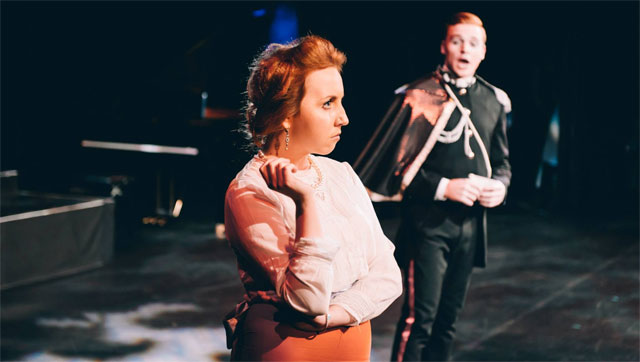
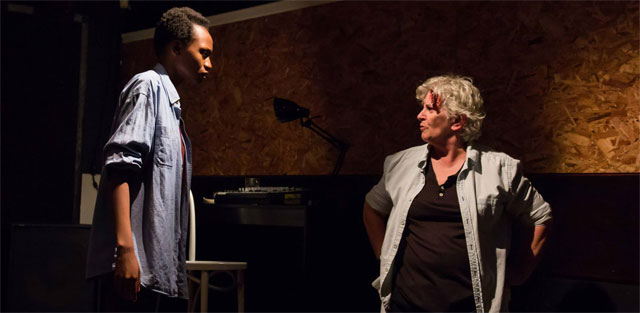
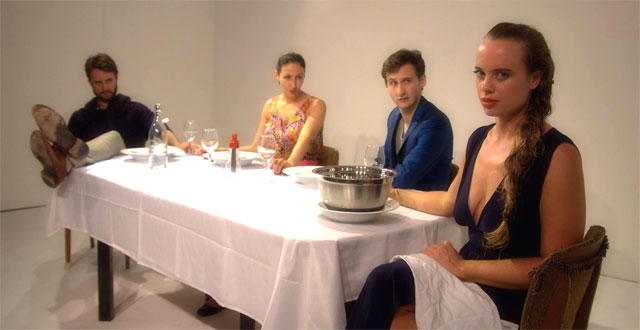
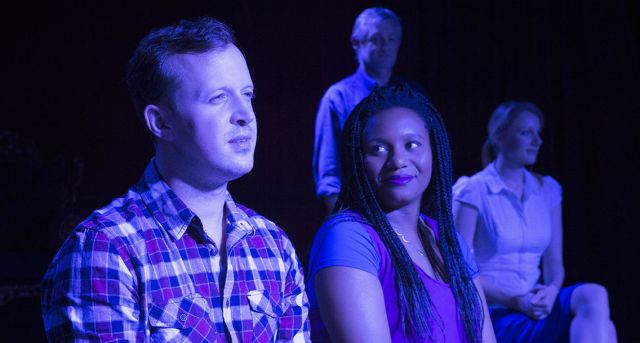
Image by Marnya Rothe

Theatre review
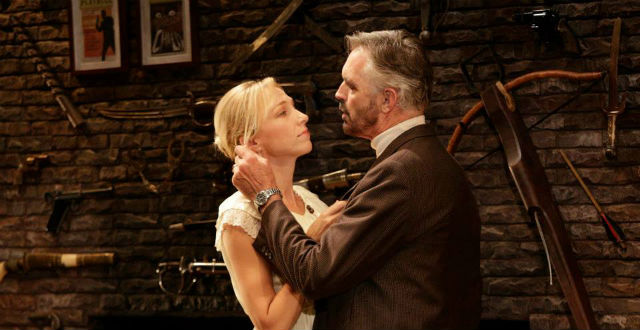
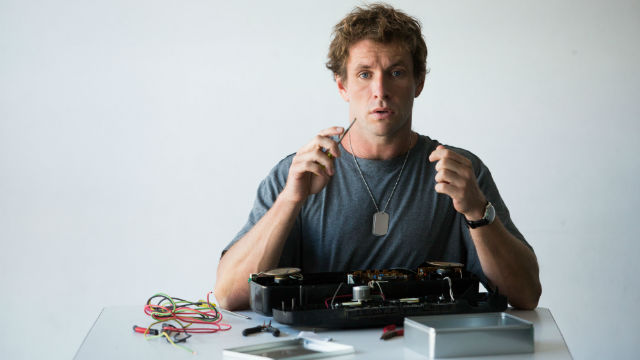
Two actors collaborate on a work for the stage, talking about what they know best. Gareth Davies and Charlie Garber’s Masterclass is about the craft and experience of acting, and all the anxieties associated with it. They take the art of self-mockery to great heights by depicting versions of themselves that are flamboyantly theatrical and deeply cynical, to interrogate the nature of their creative beast. An extreme self-consciousness manifests itself in a persistent need to make light of their art form, which delivers gales of laughter effectively, but its attempts to demystify and deconstruct the psychology and process of the actor takes irreverence to a sometimes uncomfortable place, and one begins to question the exasperating disquiet that Davies and Garber seem to feel about their profession. We see their resistance against taking any of their craft seriously, but we see them exploring this iconoclasm, with impressive commitment and skill.

There is a distinct, almost stubborn sense of humour at play, but the pair manipulates pace, rhythm, and plot dynamics to give the work variations in tone that keep us engaged, despite its very simple premise. Garber has a quiet confidence that allows him to portray the wild comedy of Masterclass with relative restraint. His style is often deadpan, but the clarity of intent he brings to every moment gives a surprising coherence to his unorthodox part, and a convincing strength to his punchlines. Davies’ approach is wider in range, and his comedic choices are decidedly riskier. The man’s energy is the foundation of the piece, and his control over spatial atmosphere and his audience’s responses is quite marvellous. We do not necessarily empathise with every idea Davies expresses, but there is certainly a lot to be admired of his ability to entertain, while conveying concepts that can be quite obscure.

Technical design is a crucial element to the structure and timing of this comedy production. Uncredited work on sound and Benjamin Brockman’s lights add much needed sophistication to an otherwise aesthetically challenged show. The play’s context allows for imaginative use of sets, props and costumes, but no investment is placed on those areas, and Brockman is called upon to provide all visual embellishment in the black box to admittedly satisfying results. Also noteworthy is stage manager Nick Foustellis’ precise and elegant execution of cues and changes.

The play concludes with a hint of poignancy that arrives after a long wait. The two young men prove themselves to be brilliant at light entertainment, but they seem to shy away from the inevitable gravitas that any theatrical piece requires. Not every story needs to give you something to think about, but when careless, jokes can leave you feeling empty. The sweet taste of success is for delighting in, and young talent should learn to embrace their gifts, even in the land of tall poppies.

www.oldfitztheatre.com

Review: Short+Sweet Theatre 2015 Top 80 Week 1 (Short+Sweet)

shortsweetVenue: New Theatre (Newtown NSW), Jan 7 – 11, 2015
Festival Director: Pete Malicki
Image by Sylvi Soe

Theatre review
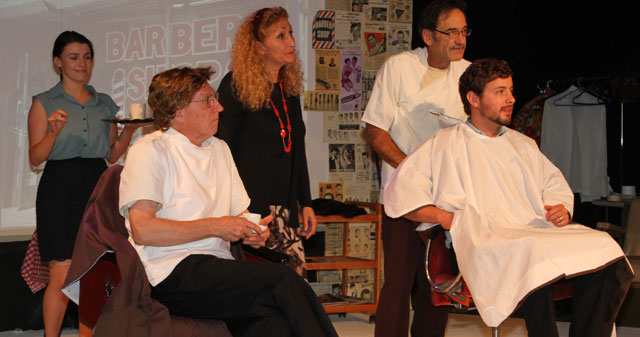
Sydney’s Short+Sweet Theatre festival features around 160 different 10-minute plays over 8 weeks. It is an excellent opportunity for talents of all experience levels to experiment, and a way for a myriad Australian stories to be told. The festival takes the form of a competition, with winners selected by judges and audiences, to be announced in March. The contest environment might encourage participants to only create crowd-pleasing works, but the event is actually quite varied in style and substance. On each night, ten plays are presented by a wildly diverse group of artists with no discernible unifying theme, which means that the likelihood of any audience member enjoying every piece in the program is slim, but discovering a couple of works that would appeal is certainly not difficult.

Short plays are challenging to performers who need to provide depth to characters who appear only fleetingly. They have less scripted pages to rely on, so ingenuity becomes central to their process. Ally Morgan plays Stephanie Tamara Anderson, a terminally ill teenager in Bokkie Robertson’s Wish (pictured above). Morgan’s confidence and conviction is a joy to watch, and the playful enthusiasm she brings to the stage is thoroughly captivating. In Jeffrey Hampson’s Wherefore Art Thou Oh Writing Inspiration, Hampson plays the role of William Shakespeare in an imagined struggle to create a new play, tentatively titled ‘Juliet and Romeo’. His performance finds focus after a shaky start, and endears to the crowd with a humorous take on the creative process.

Choose by Sam Jenkins is an intelligent work that entertains and amuses its audience, with a daring and fresh approach to theatre-making. Jenkins’ creation seems to be partly improvisational and partly scripted, but there is no way to tell for sure. The only person we see is a volunteer who reacts to Jenkins’ voice which provides prompts and narration. There is an element of Choose Your Own Adventure to its structure, and it relies heavily on Jenkins’ brilliant sense of humour and lightning fast responses to keep us excitedly engaged. A great strength of the piece is its unpredictability, and its success is evident in how much we wish to see it again, with a different unsuspecting subject steering Jenkins in different directions.

The Short+Sweet brand has expanded across the globe, and is now “the biggest little play festival in the world”. It provides excellent context for community involvement and unparalleled exposure, and is a crucial part of the Australian theatrical landscape that unearths impressive talent and inventive ideas. An event of this scale will have moments of disappointment, and patience will be tested, but with the bad, comes the good, and when the good shines through, all else is forgotten.

www.shortandsweet.org

Review: Guilty Pleasures (Blue Saint Productions)

bluesaintVenue: Hayes Theatre Co (Potts Point NSW), Dec 17 – 21, 2014
Book: Joshua Robson
Lyrics: Hugo Chiarella
Director: Joshua Robson
Music Director and Composer: Robert Tripolino
Cast: Angelique Cassimatis
Image by Mike Snow

Theatre review
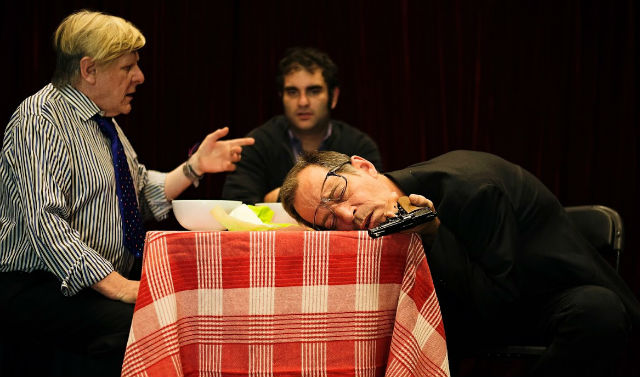
Joshua Robson, Hugo Chiarella and Robert Tripolino’s Guilty Pleasures is a 45 minute musical with murderous women and their bad men. It is Chicago‘s “Cell Block H” expanded, and they’ve all had it coming. Comprising a series of independent stories about fatal romances, the short narratives are amusing, with compelling songs that add drama and a colourful sense of theatricality.

Performed by just one woman, the work demands that Angelique Cassimatis provides range and variety to each character, but the show does not have enough tonal shifts in performance or design, to create textural complexity from its string of tales. Robson’s direction blends each segment to form a cohesive whole, leaving behind the lively and fluctuating nature of the text. Cassimatis’s training and experience is evident, especially with her physical discipline and dance abilities, but her approach tends to be a technical one. Her talents in singing and acting seem to come less naturally, but the actor’s conviction is clear to see, and her energetic presence helps endear her to the crowd.

Burlesque touches in the production provide a sexy edge to the already risqué themes it covers. The writing has a dark humour that would appeal to those who seek a musical theatre experience that is less than “family-friendly”, but its execution might be a little subdued for some. Written and directed by three men, Guilty Pleasures is a feminine work with a queer sensibility and a charming cynicism about romantic relationships. The women in the show are determined to define themselves against the men in their lives, and all pay a hefty price at the end.

www.bluesaint.com.au

Review: Rupert (Stage Mogul / Theatre Royal)

rupertVenue: Theatre Royal (Sydney NSW), Nov 25 – Dec 20, 2014
Playwright: David Williamson
Director: Lee Lewis
Actors: James Cromwell, Jane Turner, Guy Edmonds, Scott Sheridan, Hai Ha Le, Bert LaBonte, John Leary, Jane Phegan, Ben Wood, Glenn Hazeldine, Danielle Cormack

Theatre review
Biographies of fascinating people appeal to our inquisitive nature. We want to know how people tick, to discover reason behind behaviour, and to uncover secrets of the rich and famous. Rupert Murdoch is one of the world’s most well-known business people, with a personal and professional history that is documented ubiquitously in the public domain. David Williamson’s script is a chronological rehash of Murdoch’s many milestones, but does not provide analysis or insight that might offer a fresh perspective of the prominent figure. The plot reads like a Wikipedia entry, with one key event after another, none of which is surprising and everything is predictable.

Director Lee Lewis does an admirable job of creating a dynamic and colourful show from the plain script. The show feels like a Broadway musical with bells and whistles in every scene taking focus away from the lack of story and drama. Lewis does her best to add excitement with well paced and energetic sequences, but at over two hours, our attention struggles to stay interested in the deficient narrative. The production is designed successfully, with composer Kelly Ryall and lighting designer Niklas Pajanti both adding flair and inventiveness to the proceedings, and Stephen Curtis’ set and audio-visual elements giving the large performance space focus, shape and texture. Murdoch’s tabloid format takes to the stage, giving us cosmetic lavishness, and distraction from the real issues.

There are two Ruperts in the show. James Cromwell is presented as Murdoch as he is today (complete with Twitter account) telling us his side of the story like a narrator to the piece. Cromwell’s energy is oddly placid, but the actor’s sturdy presence helps him portray the allure of power and wealth convincingly. Guy Edmonds is outstanding as Murdoch in the flashbacks. He is astute, charming and sprightly, with a clarity that engages his audience, and a vibrancy that entertains. Edmonds does all the heavy lifting in the show, and his talent is a real highlight. Jane Turner’s comic abilities deliver a memorable, absurdist version of Margaret Thatcher, and Glenn Hazeldine impresses with a range of characters showcasing his amazing skills at mimicry and farcical exuberance.

So much of Rupert is strong and accomplished, but all the accoutrements in the world will not create a great story with a script as dry as this. All the interesting questions one might ask Murdoch in a personal encounter are not addressed. We leave not learning anything new, not understanding the man behind the madness, and completely unsatisfied.

www.rupertonstage.com

Review: Absent Friends (Ensemble Theatre)

Venue: Ensemble Theatre (Kirribilli NSW), Dec 4, 2014 – Jan 24, 2015.
Playwright: Alan Ayckbourn
Director: Mark Kilmurry
Cast: Michelle Doake, Darren Gilshenan, Brian Meegan, Jessica Sullivan, Richard Sydenham, Queenie Van De Zandt
Images by Katy Green Loughrey

Theatre review
Theatre is much more than storytelling, but the allure of a captivating narrative is hard to resist. In Alan Ayckbourn’s 1974 play Absent Friends, a vague context is set up as a springboard for innovative use of time and space, and in the case of director Mark Kilmurry’s efforts, to deliver an unusual and unexpected form of comedy that challenges our notions of performance and entertainment. Diana is throwing a tea party for an old friend who is mourning the death of his fiancée. The group comprises six distinct and diverse personalities, each independently fascinating but unified by a mode of presentation clearly established by Kilmurry.

The show is often absurd and slapstick in tone, and we find ourselves laughing at inane moments that have little to do with the story, but it strives for something that is ultimately quite precise and polished. The enjoyment of the work lies in the way human traits and behaviour are exaggerated so that we recognise parts of life that are usually too subtle to grip our attention. Small things matter, and the production moves focus away from key plot points to emphasise minute interchanges that occur between friends. It encourages us to appreciate friendship not for the impact they may have on major life events, but for the unadulterated bliss derived from physical company and emotional closeness. Kilmurry’s direction is brave, but not always effective. The work depends heavily on the cast’s chemistry with its audience and achieving that familiarity was hit and miss on opening night.

Darren Gilshenan plays Colin, the recently bereaved, with effervescent irony and a mischievous presence. The actor’s sense of humour is a perfect match for the farce that unfolds. We believe the tragedy that Colin experiences, but are also persuaded by Gilshenan’s comic charms and impeccable timing. In the role of Marge is Queenie Van De Zandt, whose considered and dynamic approach provides some of the show’s biggest laughs. Her work is enchanting, exacting and hilarious, with an edginess that provides a vibrant energy whenever she takes centre stage. Michelle Doake and Richard Sydenham both perform outrageously memorable scenes, but are less consistent with their level of engagement with viewers.

We all need to laugh, but what people consider funny is a mystery, and attempts at locating keys to that mystery requires constant reinvention. Absent Friends has an experimental spirit that lights up the theatre. It takes many risks, and while they may not all pay off, the work impresses with its exhilarating and original take on live performance. The play may be forty years-old, but the jokes it presents are fresh as a daisy.

www.ensemble.com.au

Review: Cinderella (Belvoir St Theatre)

Venue: Belvoir St Theatre (Surry Hills NSW), Nov 13 – Dec 14, 2014
Playwright: Matthew Whittet (based on an original concept by Anthea Williams)
Director: Anthea Williams
Cast: Mandy McElhinney, Matthew Whittet
Images by Brett Boardman

Theatre review
Fairy tales appeal to our basic desires. They address our need to be acknowledged and exalted, which is probably why they so often take the form of love stories. Matthew Whittet and Anthea Williams’s Cinderella is about our need for love, but it seeks to transform the fantasies and lies of Disney world, relocating it to a space of truth, lived experience, and disappointment. Its characters Ashley and Ash, are thoroughly familiar beings who remind us of ourselves and of people we meet everyday. They are strangers in the night who reach out to each other, hoping for a connection, and it is that possibility of a soul finding its other half that touches and engages us.

When both Ashleys meet, their accidental encounter is an awkward one. They are not brassy personalities, and their attempts at stretching beyond their individual comfort zones in the act of seduction becomes the comedic core of the production. The actors are brilliant comics who deliver laughs with precision, but the plot feels repetitive in its emphasis on creating jokes from that incessant awkwardness that subsumes the otherwise interesting development of character and relationship that takes place under the surface. A major tonal shift finally occurs in the last quarter of the show, bringing a breath of fresh air along with immense poignancy. The conclusion is beautifully crafted, although the depth that is eventually exposed feels sadly momentary.

The charismatic Whittet plays Ash with an attractive ease, consistently amusing his audience with a quirky instinctual approach. The actor has a slight physique and his countenance is plain, but the magnetic presence he adds to the stage assertively demands our attention, determined to entertain at every opportunity. Also enjoyable is Mandy McElhinney, who presents herself as a committed comedian, always sensitive to punchlines and timing. Her enthusiasm for creating laughter is infectious, but it also alienates us from the emotional arc of her character’s journey. We wish to dive into Ashley’s experience, but often find ourselves pushed out to observe only the funny side of scenarios. It is noteworthy that McElhinney and Whittet perform the final dark scenes with excellent and surprising intensity, leaving us wishing for more of their serious sides.

This Cinderella is an accurate and timely representation of romance in the digital age. Technology and commerce have penetrated every aspect of our lives, yet some of our notions of love and relationships are adamantly traditional and wholesome. The show looks at how we survive loneliness, and the meaning of sex and relationships in the era of dating apps and casual hook ups. The reality is unbearably grim, but it is human to shield our vulnerability with dreams. In affairs of the heart, delusions and hope are two sides of the same coin, and only the ones looking at the stars will stand a chance of fleeing the gutter.

www.belvoir.com.au

Review: Belle Of The Cross (Harlos Productions / Sydney Independent Theatre Company)

sitco2Venue: Old Fitzroy Theatre (Woolloomooloo NSW), Nov 18 – 29, 2014
Playwright: Angelika Fremd
Director: David Ritchie
Cast: Gertraud Ingeborg, Colleen Cook
Image by Katy Green Loughrey

Theatre review
Sydney’s Kings Cross is completely unique. Always controversial, vibrant and newsworthy, the area is a tiny geographical spot, but its infamy reaches far and wide. Residents of the precinct range from the very wealthy to the impoverished, including the homeless who often gravitate towards its parks and colourful alleyways. Angelika Fremd’s Belle Of The Cross is not biographical, but Belle is a composite, created from Fremd’s observations of “streeties” in the neighbourhood during her eight years at the Cross. The play is poetic, atmospheric and emotional, with only a light narrative thread holding scenes together. The writer depicts the extraordinary community with affection and dignity, rejecting contexts of mental illness that might cause a reductive reading of her subject matter.

Direction of the work by David Ritchie is sensitive to the considerations of the script, and he builds a sense of grace into the production, but its unrelenting gentleness prevents sufficient dramatic tension from taking hold. Scene changes tend to be overly subtle, with indistinct shifts in time and mood. Gertraud Ingeborg’s performance in the title role personifies warmth and sincerity. Her focus is impressive, and even though the stillness in her presence gives weight to the show, a lack of tonal variation results in a character that does not seem to develop adequately. Belle is an interesting personality that we have a lot of curiosity about, but the play needs to provide more insight to satisfy our desire to know her.

We all have times of loneliness, but Belle’s struggle is to do with isolation and aloneness. Although she is quite content with her own company, we must question our capacity and willingness as neighbours and community to furnish an environment that is safe and nourishing. Homelessness is a complex issue, one that crosses paths with a society’s stance on human rights and its economic ideologies. Belle Of The Cross gives a voice to the often seen but rarely heard, and is therefore essential and important, if we believe ourselves to be civilised.

www.sitco.net.au

Review: The Les Robinson Story (Type Faster Productions / Sydney Independent Theatre Company)

sitco1Venue: Old Fitzroy Theatre (Woolloomooloo NSW), Nov 18 – 29, 2014
Playwright: Kieran Carroll
Director: Ron Hadley
Cast: Martin Portus, Matt Thomson
Image by Katy Green Loughrey

Theatre review
When a person commits their life to the arts, it is often a conscious decision to go against many societal expectations, and therefore, to become resolutely anti-conformist. Many struggle to make ends meet, and few achieve great critical success, yet there are those who persist through hardship, believing that it is their devotion to their art that provides the greatest meaning. Les Robinson was a Sydney writer who had had only one book published, The Giraffe’s Uncle, in 1933. Between the 1920s and 1960s, the eccentric figure lived a one-man bohemia in shacks and caves around the Sydney harbour, listening to records, fishing and of course, writing.

Kieran Carroll’s lovingly crafted play immortalises a forgotten soul, one whose stories provide us with insight into an unusual life, and a fresh perspective of the city that we love. Carroll’s work is deeply melancholic, but it is also wonderfully inspiring. We hear about iconic artists everyday, but to learn about one of the others, is unexpectedly comforting. The Les Robinson Story could easily be a depressing one, but Ron Hadley’s direction takes care to serve up the joy with the sorrow, always leading us to the light at the end of each dark tunnel. The depiction of time’s passage however, could be made clearer, in order for us to gain a more detailed impression of the character’s evolution.

Martin Portus is not a neglected writer living under a bridge, but the actor certainly makes us believe that he and Robinson are one and the same. The level of authenticity he achieves is the great beauty of this staging. Portus’ presence is strong and sturdy, and his eagerness to share this buried tale is quite moving. As with all great storytellers, we often find ourselves suspended in time with the performer, losing awareness of before and after, completely captivated by right now.

The Les Robinson Story might be about disappointments, loss and regret, but it will be remembered for the man’s spiritedness and his tenacity at living a life of truth and honesty. Robinson never pretended to be anything but his genuine self, and that alone trumps everything else.

www.sitco.net.au

Review: River (The Old 505 Theatre)

old505Venue: Old 505 Theatre (Surry Hills NSW), Nov 18 – 23, 2014
Playwright: Claire Lovering
Cast: Claire Lovering
Workshopping and Dramaturgy: Sarah Giles
Image by Gez Xavier Mansfield

Theatre review
River is a monologue about an unassuming woman. Her life is ordinary and her stories are pedestrian, but the poignancy of Claire Lovering’s work as writer and performer, forces us to look past the subject’s plainness, and relate to River as one human being should another, with empathy and a sense of generosity. Lovering’s gentle approach means that the show’s themes are kept vague, allowing the audience to find meaning however it chooses. Her truthful revelations find resonance, even though her experiences are highly idiosyncratic. We understand and identify with the humanity that is put on display, and Lovering’s thorough exploration into her character’s quirks and desires results in something individualistic finding a universality in the theatrical space.

Performance of the work is confident and very compelling. Lovering’s will to connect with the audience ensures that all the text’s nuances are delivered with clarity, and that we always feel close to the character. There is a warm openness to the actor’s presence that sustains our attention, and we find ourselves interested in every minute detail that River is keen to share. Lovering’s talent is clear to see, but the work sits a little too comfortably within her range of abilities. Finding greater challenges for the actor would provide a unique tension that only live theatre can offer.

The very subtle work by composer and sound designer Nate Edmondson and lighting designer Benjamin Brockman might be easy to overlook, but their efficacy at controlling ambience is quite perfect. Within the understated aesthetic requirements of the production, they have found creative space to demonstrate innovation and sensitive flair.

Loneliness is a strange creature. It torments, but it is also the instigator of change, and success. River travels through life with no great plan or destination, but she stops to smell all the roses, and welcomes the gifts that she stumbles upon. The cosmos does not adhere to any individual’s demands, but it holds great promise for anyone who is willing to receive its riches.

www.venue505.com/theatre

Review: Sweeney Todd (New Theatre)

Venue: New Theatre (Newtown NSW), Nov 18 – Dec 20, 2014
Music & Lyrics: Stephen Sondheim
Libretto: Hugh Wheeler
Director: Giles Gartrell–Mills
Cast: Josh Anderson, Erin Bogart, Briony Burnes, Jamie Collette, Justin Cotta, Daisy Cousens, Courtney Glass, Michael Jones, Jaimie Leigh Johnson, Lucy Miller, Carl Olsen, Joel Paszkowski, Steven Ritchie, Chelsea Taylor, Aimee Timmins, Simon Ward, Byron Watson
Photographs © Bob Seary

Theatre review
We all love a musical that has everything; humour, drama, talent, surprise and great music. All this is found in Giles Gartrell-Mills’ production of Sweeney Todd for the New Theatre, along with a good deal of ingenious low budget innovation, and a healthy dose of morbidity. It appears that Stephen Sondheim’s famous work can be staged without complex set designs and special effects, as long as gifted individuals are committed to presenting the best of their abilities, and an astute director is at the centre orchestrating an amalgamation that features all the strengths of each collaborator.

With Sweeney Todd, Gartrell-Mills shows that he is a man of excellent taste who has a brave approach to the theatrical arts. The emotions are big in his musical, as are the characters and their singing, but everything converges to tell a fascinating story that grips and entertains us, while making the many outrageous scenarios seem entirely believable. He has a wonderful team of seventeen performers at his disposal, and is careful to position each one in the most flattering light, so that the best singers can deliver breathtakingly powerful notes, and the strongest actors can impress with their delicious flair and intensity.

Justin Cotta plays the Demon Barber of Fleet Street with a grand and magnetic madness. The agility in his body and face, along with a professional awareness of how his character is perceived with every subtle shift in gesture and look, contribute to a performance that is precise, polished and very delightful. His voice is not perfectly suited to the material, but he sings it all with exuberance and accuracy. Similarly, Lucy Miller is not the best singer in the world for the role of Mrs Lovett, but the abundance of skills she displays, brings to life one of the stage’s most interesting and complex figures. Miller is charming, strong and instinctual. The several startling twists her character reveals are brilliantly performed, and her star quality shines brightly in the production. We cannot keep our eyes away from everything she presents, and she deserves every ovation awarded for her work in this production.

This review will not discuss every performer’s work but the entire support cast is truly fabulous. In the role of the Beggar Woman is Courtney Glass, who steals the show at each small appearance, with her sublime vocals and meticulous acting. Glass’ part is a smaller one, but she is flawless at every turn. Byron Watson does not have the right physicality for Judge Turpin but his voice is a highlight of the production. His deep and tremorous baritone brings an operatic sensibility to Sondheim’s music, and we lose ourselves in the beautiful baroque flavour of the compositions.

Liam Kemp’s achievement as musical director and pianist cannot be understated. He has condensed the score to an absolute minimum, with just himself, plus a violinist and a double bassist providing accompaniment for the whole show. The three-piece outfit pulls off an unbelievable feat, creating a soundscape that is dynamic, emotional and theatrical, culminating in a Bernard Herrmann inspired moment where Sweeney Todd meets Norman Bates, and the suspense becomes almost too much to bear. Also outstanding is the set design, comprised of three simple pieces in a hundred configurations, exposing Gartrell-Mills’ imagination to be wildly remarkable. His use of space is quite extraordinary, and one cannot resist imagining what he may be able to achieve with a more substantial design budget.

Musicals are best consumed sentimental, and Gartrell-Mills delivers this dark tale with a big emotional punch. Many of the characters are deplorable and nasty, yet we are seduced into connecting with them, and sometimes even identifying with them. They live in a world far removed from our realities, but we understand their desires and motivations, and we invest heavily into their stories of revenge and murder. We do not think of independent theatre as the best platform for the majestic, opulent musical, but on this occasion, David has emerged seemingly out of nowhere, to slash the throat of Goliath in awesome splendour.

www.newtheatre.org.au