Review: 7 Days In The Life Of Simon Labrosse (Théâtre Excentrique)

theatrerexcentriqueVenue: Creative Space 99 (Darlinghurst NSW), May 18 – 29, 2016
Playwright: Carole Fréchette (translated by Kris Shalvey)
Director: Anna Jahjah
Cast: Cassady Maddox, Steve McGrath, Gerry Sont
Image by Emma Lois

Theatre review
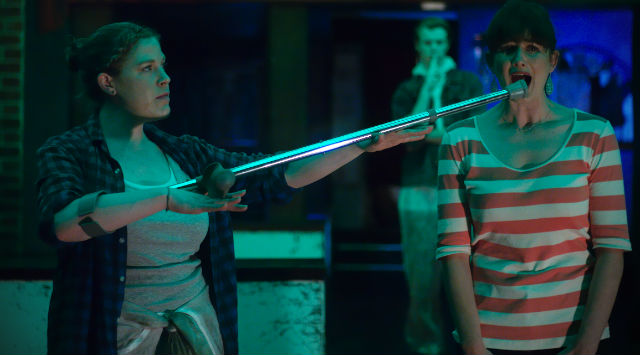
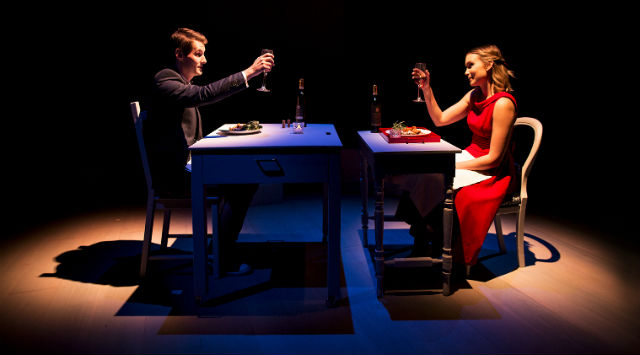
Simon Labrosse is a talented man, but he has trouble making a living out of his many skills. He tries hard to market himself, giving out samples of the services he can provide, and although he convinces everyone of his abilities, none are willing to pay for his expertise. Labrosse is an artist of sorts; what he does is not strictly scientific, mathematical or easily commodifiable, but he has much to contribute to society. The economy, however, does not recognise his unquantifiable efforts and rejects him, judging him worthless and a burden. Carole Fréchette’s play is about the problems we face as communities of modern capitalism, unable to embrace parts of our humanity that cannot be monetised.

The production is beautifully designed, with the audience situated inside Labrosse’s home. His bed is in the middle of the space, and action takes place all around us. Our view can get obstructed at times, but the constant relocation of activity is exciting and an effective mechanism for maintaining high energy levels. Anna Jahjah’s direction is free and humorous, delivering a work that feels unrestrained and exhilarating. The short scenes are punchy and surprising, full of whimsy with lively characters each appealing in their own way. It is a tightly rehearsed cast, cohesive in style and delightfully engaging. Gerry Sont plays Labrosse, wistful but optimistic, with a pleasing vibrancy that elicits our curiosity and empathy. A greater dose of melancholy would probably give the show a little necessary gravity to have its themes resonate stronger, and for its ideas to stay in our minds longer. Supporting players Cassady Maddox and Steve McGrath create a range of eccentric personalities that make the show unpredictable and give it a consistent buoyancy, while in the process leaving excellent impressions for their versatility and comic timing.

7 Days In The Life Of Simon Labrosse is a light-hearted take of a sad situation. The privatisation of everything in Australia seems boundless, with every annual budget revealing less and less support for those of us whose talents are incongruous with the reductive demands of capitalism. Simon Labrosse shows us all that he is capable of, but he is situated inside an economy that wants him to be simpler and more ordinary so that they can provide a place for him just like everybody else’s. It is the job of capitalism to turn everything and every person into a measurable and sellable unit, and in the process, risk the removal of everything that we know to be the best of human nature. In the seven days that we meet our protagonist, he keeps on trying but does not give up his true essence; we see him fail repeatedly and wonder how he can make things work. We have a collective part to play in allowing his potentials to blossom, but we wonder if what he can give in return will cost too much.

www.theatrexcentrique.com

Review: Xanadu (Matthew Management / Hayes Theatre)

xanaduVenue: Hayes Theatre Co (Potts Point NSW), May 12 – Jun 12, 2016
Book: Douglas Carter Beane
Music & Lyrics: John Farrar, Jeff Lynne
Director: Nathan M. Wright
Choreography: Leah Howard, Nathan M. Wright
Musical Direction: Andrew Bevis
Cast: Dion Bilios, Francine Cain, Catty Hamilton, Kat Hoyos, Jaime Hadwen, James Maxfield, Ainsley Melham, Josh Quong Tart, Jayde Westaby
Image by Frank Farrugia

Theatre review
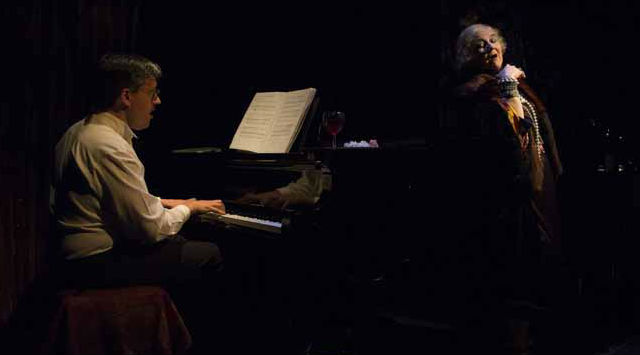
1980 is not exactly a great many lifetimes ago, but we have certainly lost a considerable measure of innocence since then. The Xanadu stage musical is a recent incarnation of the now cult classic film that materialised at the very dawn of the 80’s, and judging by the thoroughly farcical approach now taken, twenty-first century life seems to be very cynical indeed. Gone are all the naive idealism and whimsical romance that had accompanied Electric Light Orchestra’s bubblegum pop for the original, replaced by post-modern campery so sardonic, Liberace and Mae West are blushing in their respective graves (maybe with jealousy, but hard to know for sure).

The Xanadu film was never well regarded by critics, and its box office takings were disappointing, but it retains a significant place in pop culture history chiefly for the hugely successful music that it features. It makes sense that Douglas Carter Beane would re-write the piece exposing all the silliness of the story so that we can laugh with his version, instead of laughing at it as was often the case with its predecessor, but there is a compromise to the substantial presence of the original songs that does not always find harmony. Beane can subvert everything in the book, but shoehorning his comedy into the perfectly constructed pop masterpieces often feels antipodal and frankly, a waste of opportunity. Instead of improving the storytelling around the euphoric compositions of passion, he tries to re-engineer them for his comedic purposes with mixed results. Nonetheless, the show is by and large, a very funny one, in the style of a “children’s show for 40 year-old gay people” as one of its character states.

Director Nathan M. Wright rises to the challenge of bringing a tenacious and flamboyant vibrancy to the work, never missing a beat with his show’s unrelenting hammy humour. Always engaging and always in jest, every weakness of the 1980 film is turned into a knowing joke, as are the few effective poignancies from the original. The love story takes a back seat, making way for amusing and frivolous characterisations taking centre stage, performed almost vaudevillian in style, by an impressive cast that seems to have no limits to their abilities. It is not every day that we see people singing, dancing, acting and making us laugh, all at once, and on roller-skates no less. Jaime Hadwen is perfect for the role of Kira, sent from the heavens to raise Xanadu from its ashes. Hadwen’s comedic skills win us over from her first appearance, and while the tender warmth that she is able to inject surreptitiously, is easily overlooked in a mélange of frenzy, it is that quality of sweetness that keeps us endeared and quite miraculously, invested in. Her singing is exuberant and accomplished, but more creative sound design is required to live up to Olivia Newton-John’s legendary recordings. Xanadu may not be perfectly conceived, but its execution is top-notch, especially by the performers who give it their all on stage.

Kira discovers that the reason for humans striving hard for art, is linked inextricably to our mortality. As daughter of Zeus, her life is eternal, but the only way for us to live beyond the last breath is to establish legacy. The fact that Xanadu has endured against all odds through the decades, serves as inspiration to all of us who suffer from lapses of confidence in our work and indeed, other parts of life. We may not always receive affirmation and recognition for the things we do, but it is important to realise the ripple effect of even the smallest of our efforts. We cannot see every tomorrow, but the ones we touch will carry something of us into the days ahead, like “where Alph, the sacred river, ran / Through caverns measureless to man /
Down to a sunless sea.” (Kubla Khan by Samuel Taylor Coleridge)

www.hayestheatre.com.au

Review: Oh My God I Have Been Kidnapped & I Hate What I Am Wearing (The Old 505 Theatre)

old505Venue: Old 505 Theatre @ 5 Eliza St (Newtown NSW), May 10 – 28, 2016
Playwright: Drew Fairley
Songs: Mikey Lira
Director: Liesel Badorrek
Cast: Drew Fairley, Kate Smith
Image by Michael Bourchier

Theatre review
It is a comedy show with generous doses of cabaret, burlesque and musical theatre elements added to the mix. Completely frivolous and silly, Drew Fairley’s Kidnapped is pure entertainment that avoids serious themes and poignant emotional narratives, but impresses with the quality of talent that it showcases. Sugar is the aspiring artist at the centre of our attention, but it is the artists involved in telling her story that are remarkable.

Mikey Lira’s songs are charming and surprising, each with a strong sense of character that enriches the scenes in which they appear. Sound quality in the auditorium requires improvement (as does lighting design), but musical numbers in the show are a joy nonetheless. Choreography and other physical aspects of performance are cleverly devised, utilising every muscle of its actors to fill the space with movement and lively presence.

Formidable leading lady Kate Smith struts her stuff from head to toe, delivering comedy of the highest calibre, immense in its dexterity and inventiveness. Hilarious throughout, and deeply endearing, she has us in the palm of her hand and we find ourselves swept away into waves of laughter with her supreme, indomitable confidence. We never stop wanting more and she never ceases to amaze. Not content with being playwright, producer and musical director, Drew Fairley appears on stage with Smith, with similarly gleeful results. Fairley keeps the limelight squarely and appropriately on his co-star, but is himself more than a capable supporting actor. His work is full of sharp humour and extravagant flourishes, informed by a kooky sensibility that gives the show its irresistibly unique flavour. Chemistry between the two is flawless and stands as the key ingredient to Kidnapped‘s success.

There are few shows as funny as this, because convergence of talents are rarely as perfect as on this occasion. From its writing, to performance, to Liesel Badorrek’s very brave and instinctual direction, a beautiful harmony is established for a small but very special theatrical moment. It delights us, having us grin from ear to ear and cackle with joy, and it inspires us by showing us what artists can do when given the opportunity to demonstrate the best of their abilities. We have trouble giving artists what they are due in Australia, and although Kidnapped has today materialised gloriously in our fragile artistic landscape, we must think of other missed opportunities, and consider our priorities and responsibilities as a society, and we must decide to spend that investment on a little thing we call our soul.

www.venue505.com/theatre

Review: Rosencrantz And Guildenstern Are Dead (Furies Theatre)

furiesVenue: Blood Moon Theatre (Potts Point NSW), May 10 – 21, 2016
Playwright: Tom Stoppard
Director: Chris McKay
Cast: Amy Victoria Books, Emily Burke, Lauren Crew, Krystiann Dingas, Emilia Stubbs Grigoriou, Leofric Kingsford-Smith, Amanda Maple-Brown, Logan McArthur, David McLaughlin, Sarah Plummer
Image by Stephen Godfrey

Theatre review
There is a lot of truth in what Tom Stoppard has to say in Rosencrantz And Guildenstern Are Dead. His existential angst may not be shared by all, but his ruminations about the nature of life are as real as they are fascinating. Through a long narrative in which nothing much happens, ideas about time, memory and volition are explored at great depth, not necessarily to provide enlightenment, but for the sheer pleasure of intensive introspection. The genius of Stoppard’s writing is in the very words collated to express abstractions that exist in our minds, making matter out of ephemeral concepts by having dialogue occupy the space of theatre.

Direction by Chris McKay brings to the stage an articulate and thoughtful representation of the text’s meanings. Relying on little more than his actors’ bodies and voices (design is kept minimal, although costumes by Zjarie Paige-Butterworth are very accomplished), the poetic and philosophical qualities of the play are given resonance from beginning to end, reflecting a thorough appreciation of the material by its very able cast. Krystiann Dingas and Emilia Stubbs Grigoriou are Rosencrantz and Guildenstern, both passionate and expressive, help us distil one of the densest theatrical masterpieces, to achieve a level of immersion and comprehension that is admittedly rare in iterations of Stoppard’s work. Both actors are confident, dynamic and very likeable, which is a relief considering the two-and-a-half hour duration. Also remarkable is Amanda Maple-Brown as the Player. Flamboyant and exuberant, yet astutely nuanced, her work is resolutely entertaining, with a delightful and exhilarating presence that leaves a strong impression.

Every significant male character is performed by a female actor in this rendition of Rosencrantz And Guildenstern Are Dead. How that decision affects our spectatorship is entirely subjective, but it does bring to focus the quality of parts and opportunities available to women in theatre. Plays have certainly emerged from feminist ideologies, but none have attained the reverence that titles such as this inspire in all our Western societies. To combat the persistence of the theatrical canon and the misogyny therein, gender reversal is a subversive device that serves a purpose greater than experimentation. Finding a way to exorcise patriarchy from all the old and usual suspects that refuse to go away is critical to the development of art in every civilisation. We may not be able to remove masculinity from Michelangelo’s Creation Of Adam, but we can disrupt the hegemony imposed upon us on every screen and stage.

www.facebook.com/FuriesTheatre

Review: Edward Gant’s Amazing Feats of Loneliness (Polyamorous Productions)

polyamorousVenue: PACT Centre for Emerging Artists (Erskineville NSW), May 4 – 7, 2016
Playwright: Anthony Neilson
Director: Natasha Pesce
Cast: Ralph Andrews, Will Hickey, Jonathan Lagudi, Nicole Wineberg
Image by Liam O’Keefe

Theatre review
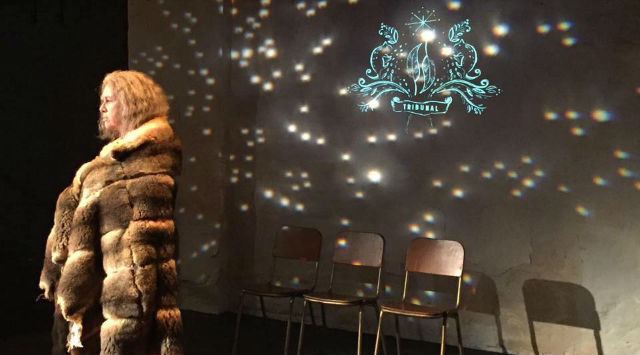
Edward Gant runs a vaudeville specialising in tall tales of loneliness. Even though the theme is one of sadness, his show is full of rambunctious fun, designed to elicit squeals of pleasure with outrageous and flamboyant sequences featuring his troupe of three mad performers. Edward Gant’s Amazing Feats of Loneliness is Anthony Neilson’s take on the “show within a show” format, brilliantly scripted to deliver extraordinary spectacle accompanied by disarming humour and an unrelenting melancholy. It is the most sophisticated of writing, traversing the basest of human experience to the most profound of our emotional landscapes. Subtly philosophical yet undeniably poignant, the audience is offered a plethora of ways to access its meanings, at whichever level of depth we choose to receive its wisdom.

The wild stories are brought to life by Natasha Pesce’s exuberant direction. Her style is exciting, bold and very funny, particularly effective in the production’s first half where the text presents greater opportunities for ostentatious tomfoolery. Pesce’s eye for beauty is reflected in charming design details that provide a visual splendour, delightful for our senses while helping to convey story and sentiments. Four dedicated actors form a tight ensemble, boundless in mischievous energy and unified in what they convey. Nicole Wineberg is a perfect blend of slapstick, nuance and sexual allure for her demanding role. The actor is captivating in all her guises, whether coy, gruesome, rugged, or ludicrously vivacious in a bear suit, Wineberg is completely engrossing and very entertaining indeed. Equally madcap in approach is Ralph Andrews, memorable for his confident frivolity and distinctly wanton sense of comedy. His work is not the most physically disciplined, but the presence he brings to the stage is replete with an enthusiastic whimsy that appeals to our need for something more tender.

In loneliness, longing is the ringmaster who takes centre stage, controlling thoughts, decisions and behaviour. It is a driving force that can lead one to many possibilities, but its motive is self-obliteration. Longing may replace loneliness with some other sensation, but desire will always remain albeit in a different form, for life simply cannot be without desire. Edward Gant faces a dilemma with the eradication of his own loneliness and the show that must go on. Joy can take the place of pain, but it only exists in relation to its dark other. The pursuit of a happy life is meaningless without sadness, and the resolve of its existence is to be ignored at our own peril.

www.edwardgant.com

Review: Dirty People (Doonbrae Productions / Jackrabbit Theatre)

depotVenue: The Depot Theatre (Marrickville NSW), May 4 – 8, 2016
Playwright: Charlie Falkner
Director: Michael Abercromby
Cast: Charlotte Devenport, Sam Delich, Charlie Falkner, Sam Davenport, Zoe Jensen
Image by Tom Cramond

Theatre review
Charlie Falkner’s Dirty People is a delightful romp about the selfie generation. Its dialogue is clever and idiosyncratic, with hints of originality that gives the work remarkable character. There are moments of self-conscious social commentary that attempt to add a sense of gravity, but Michael Abercromby’s direction is more memorable for astutely delivering every nuance of comedy discoverable in the script. Abercromby’s style is vibrant and adventurous, with an infectious sense of humour that ensures an enjoyable time in the theatre for all concerned.

Although slightly rough around the edges, the youthful ensemble performs the work with excellent conviction. Their presentation is well-rehearsed, and chemistry is strong in every scene. They craft distinct personalities that convey the plot effectively, each one bringing their own charm to the stage. As an actor, Falkner demonstrates good timing and creates a rich interpretation of his part using a wealth of unexpected subtleties. Sam Delich brings a broader approach to get the laughs, and proves himself to be an endearing presence in both his roles. There is a good sense of cohesion in the cast, which is a pleasant surprise considering the diverse comedic tones they each embody.

Although Dirty People misses the opportunity for a more critical take on the state of the world today, it offers effervescent entertainment that is often silly but never stupid. Its satire is fun-loving, and even though thoughtfully conceived, it does not burden us with the disappointments of real life that are its inspiration. The nature of people is full of dirt, but how we aspire to find grace and decency is the key to an enlightened existence.

www.facebook.com/JackRabbitTheatre

Review: We Will Rock You (Sydney Lyric Theatre)

wewillrockyouVenue: Sydney Lyric Theatre (Sydney NSW), Apr 20 – Jun 26, 2016
Music & Lyrics: Queen
Story & Script: Ben ELton
Director: Ben Elton
Cast: Erin Clare, Casey Donovan, Jaz Flowers, Gareth Keegan, Brian Mannix, Thern Reynolds, Simon Russell
Image by Jeff Busby

Theatre review
There is a scene in which the Bohemians declare that they do not know what rock and roll is. Ben Elton, writer and director of We Will Rock You evidently suffers from that same predicament. The production showcases some of the greatest rock tunes ever written, but in the interest of the musical theatre genre, builds characters and a narrative around them that unfortunately serve no real purpose except to dilute and dumb down the genius of Freddie Mercury and his Queen legacy.

Elton’s show features an endless series of dad jokes, and a tenuous context of anti-establishment that reads more like anti-progress and narrow minded, greying conservatism. It attempts to make jokes of pop culture icons such as Australian Idol, without acknowledging the fact that the strongest performer in its cast had been a prominent winner of that very franchise. It uses names like Britney Spears and Katy Perry as punchlines, as though we would all share its appetite in humiliating those women and obliterating their undeniable achievements. The show finds it energy from the music it is authorised to use, but unlike the musicians it attempts to pay tribute to, We Will Rock You is spiritless and banal.

The story is yet another take on the messianic allegory. Like Jesus from the Bible or Neo from The Matrix, Galileo is sent from the heavens to save us all. Whether or not one is concerned with the political incorrectness, and tastelessness, of creating opportunities for another white man to deliver us from evil, the trope is frankly, very desperately tired. As though its format is not already archaic enough, a female “lead character” is included for no discernible reason except to provide Galileo with a love interest, presumably to assure us of his hetero-masculinity in case, god forbid, Freddie Mercury’s gayness would befall him by association.

It is a well-performed show nonetheless, with an excellent band, and a strong cast that traverses the rock and musical genres effortlessly. The aforementioned Idol winner Casey Donovan steals the show as the villainous Killer Queen, winning us over to the dark side where everything is much more appealing and infinitely more rock and roll; very ironic indeed. Brian Mannix, frontman of 1980s rock bad Uncanny X-Men, is also on hand to bring hints of authentic flavour to a stage that is ostensibly tailored for a “family-friendly” type crowd. They may all be stars that we see having their glitzy moment in We Will Rock You, but it is certainly not rock heaven that they have taken us.

wwww.wewillrockyou.com.au

Review: The Maids (Phable Productions)

phableVenue: The Depot Theatre (Marrickville NSW), Apr 27 – 30, 2016
Playwright: Jean Genet (translated by Bernard Frechtman)
Director: Angelo Samolis
Cast: Jessica Saras, Chantelle Von Appen, Louise Harding

Theatre review
The women are suffering an acute case of cabin fever. They are maids who live and work in their employer’s home, cut off from the world, with only bitter resentment as company. Fuelling each other’s appetite for destruction, they go about their days imagining scenarios of retribution towards their Madame, a lady of leisure whose narcissism makes her increasingly unbearable to the weird sisters.

Jean Genet’s ideas in The Maids are provocative, but Bernard Frechtman’s translation, although poetic is not particularly theatrical. The language’s floridness does not lend itself easily as dialogue, and even though director Angelo Samolis ensures that meaning is conveyed in a broad sense, it is a challenge trying to find nuance in the text. We follow the plot, but are unable to explore its controversial concepts at much depth. The three actors are energetic and focussed, with an adventurous approach to physicality that provides buoyancy to the production. Design aspects are simple but thoughtful, with an appealing visual aesthetic achieved through a fairly minimal touch.

There is good work in how the show conveys emotions, but we receive little in terms of psychology. The women go on outlandish rambles without providing sufficient insight to hold our interest. The maids do not appear to have a hard life, but their jealousy has become overwhelming. Without resources or ability to withdraw themselves from their predicament, their journey becomes a downward spiral into disaster. People can create lemonade out of lemons, but we can also make the worst out of any situation. We observe the characters in the play make poor decisions, but also wonder how else they could have lived.

www.facebook.com/PhableProductions

Review: There’s No One New Around You: A Tinder Musical (Sydney Comedy Festival)

tindermusicalVenue: The Factory Theatre (Marrickville NSW), Apr 27 – 29, 2016
Book: Keira Daley, Mark Simpson
Music and Lyrics: Keira Daley, Steven Kreamer, and Mark Simpson
Director: Beth Daly
Cast: Keira Daley, Mark Simpson
Image by Gina Jenkins

Theatre review
Online dating is a modern phenomenon, and Tinder is the current leader of a very saturated app market. With reports suggesting 50 million users, its increasing presence in our storytelling is not at all surprising. There’s No One New Around You by Keira Daley and Mark Simpson is probably the first musical to be staged that is entirely about Tinder, compiling anecdotes, impressions, inventions and humour, relevant to the uniquely contemporary experience. Its songs and jokes may not always be fresh or edgy, but there are many moments of cutting social commentary that keeps us excitable and engaged. In the show’s efforts to find verisimilitude, the audience is offered realistic reflections of our attitudes towards romance, sex and loneliness that can be powerful, perhaps embarrassingly so, in its accuracy. The characters we see are very silly, but they are unquestionably real, and whether or not one is familiar with the phone app in question, their thoughts and behaviour bear a closeness to modern life that cannot be denied.

The production is assembled with minimal fuss, and our attention is placed squarely on the two performers playing out stand-alone scenes that make light of all the absurdities associated with dating in the digital era. Daley and Simpson are perfectly exuberant, and very well-rehearsed, hitting every mark they have set in a playfully conceived but ultimately simple vehicle of entertainment. Adding an extra dimension of comedy is a film element crucial to the show’s effectiveness, cleverly edited by Simpson and seamlessly integrated with the live action. There’s No One New Around You is about clichés, and although there is nothing new in what it says, its observations are thoroughly amusing.

Humans cannot go without food, but our voracious appetite for love and affection reveals what it is that truly provides sustenance. Science tells us that eating and drinking keep us alive, but we know that life cannot be without intimacy and connection. We worry about technology keeping people apart, and lament the disintegration of community at the hands of accelerating capitalism, but the need to reach out and find affirmation refuses to be dampened by increasingly utilitarian ways of thinking about life. Even as electronics and money continue their never-ending encroachment into our persons, we will not abandon love and lust, but they will morph into new forms appropriate for the times. There is clearly no elegance in courtship Tinder style, but whether it can deliver any old fashioned romance, is anybody’s guess.

/www.tindermusical.com

Review: Blink (Mercury Theatre)

mercuryVenue: 107 Projects (Redfern NSW), Apr 20 – 24, 2016
Playwright: Phil Porter
Director: Oleg Pupovac
Cast: Jane Angharad, James Smithers
Image by Jade Jackson

Theatre review
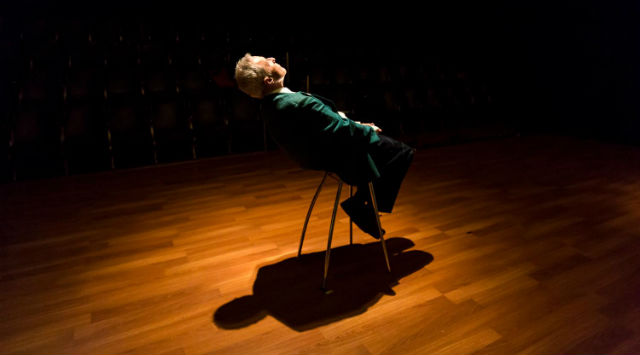
It is a love story about two unusual people. In truth, each person walking the earth is a unique creature, yet we often think of romance as a singular invariable experience. Sophie and Jonah’s relationship in Phil Porter’s Blink feels like a strange union, but only because we have come to expect little from depictions of intimacy. When taking time to observe the way people are and how we connect, we come to realise the infinite permutations of the human bond. The play feels theatrical and dramatised, but we perceive an unmistakeable honesty in its unconventional narrative. The characters are damaged, as we all are, so of course they are going to conduct their lives in slightly obscure ways. This is no Barbie and Ken fairytale, but a realistic representation of our freedom to love, and an insightful expression of how we should apply our own rules to our own intimacies.

The work is fast-paced, almost frantic in its energy, which although entertaining, can detract from more meaningful lines that require time to reverberate. Director Oleg Pupovac creates an endearing connection between the two on stage, affectionate yet distant at the same time. There is inventive use of physicality that engages us visually but more detailed work on light and sound design would enhance the presentation further. Performers are charming and enthusiastic, with strong presences that hold attention. Jane Angharad’s emotional restraint gives a sophistication to Sophie, and the gentleness with which she approaches her work translates into an effortless believability. James Smithers’ is the more vibrant of the pair, endearing with a very quirky edge to his constitution. There is an adventurous spirit to the way he explores the text that keeps us drawn into Jonah’s way of looking at the world.

There is little that can be cherished of a lonely life. Romance may not be available to all, but the need for human contact is undeniable. Sophie and Jonah find ways to make sense of their union, and although strange from the outside, their continuous redefinition of the form that their relationship takes, demonstrates the way organic beings must strike a balance as things change. Love means a myriad different things, probably because of the infinitely different needs of each individual. We may all breathe the same air, but what fills our heart is as varied as wavelengths in a spectrum of visible light.

www.facebook.com/…