Review: The Turquoise Elephant (Griffin Theatre Company)

griffinVenue: SBW Stables Theatre (Kings Cross NSW), Oct 14 – Nov 26, 2016
Playwright: Stephen Carleton
Director: Gale Edwards
Cast: Catherine Davies, Maggie Dence, Julian Garner, Belinda Giblin, iOTA (pre-recorded), Olivia Rose
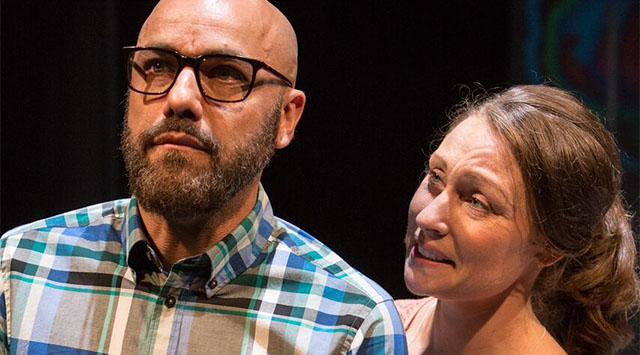
Image by Brett Boardman

Theatre review
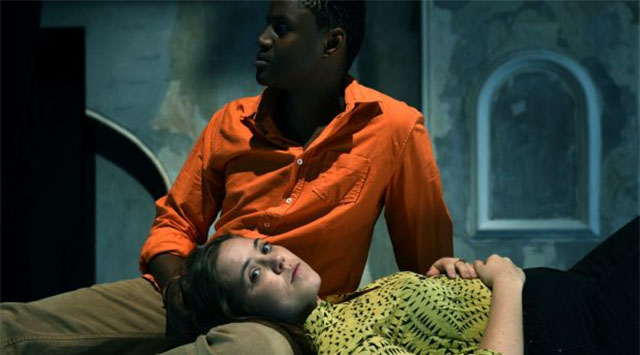
The Turquoise Elephant takes place some time in the not so distant future. Temperatures in Sydney have gone up to 48 degrees, and people are still squabbling about how to, and whether to, fix climate change. The right and left wings of politics have gone completely extreme with their demands, allowing nothing to be achieved, and all the common person can do is either to take to the streets in inconsequential protest, or wallow in non-action.

Stephen Carleton’s writing is pessimistic, but also very funny. Madcap characters and outrageous dialogue make the play drip with irony, as it shows us ugly amplified visions of how we are today, as we fail at addressing environmental problems that are already prevalent. The plot is a simple one, by nature of its characters’ stagnation and inability to do anything useful, The Turquoise Elephant does not develop very far story-wise. Director Gale Edwards does spectacular work with her show’s comedy, highly effective in its flamboyant commedia dell’arte influenced approach, but scenes begin to feel repetitious toward the bitter end. The gravity of the play’s core message does not take hold with great vigour, although that could well be a result of the undeniable apathy that we are being accused of.

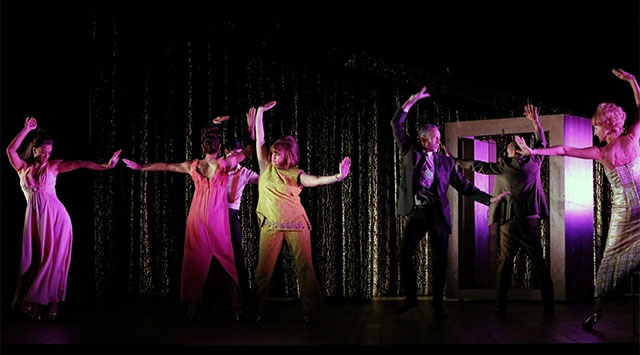
Actor Belinda Giblin is remarkably vivid in her portrayal of Olympia, the disaster tourist who takes perverse pleasure in witnessing the annihilation of our planet. Giblin is tenaciously larger than life, enthralling even when her character is asleep, making us laugh whether the material is broad or obscure. The cast is hugely charismatic, and uniformly enjoyable. Also remarkable is the production’s visual elements. Emma Vine’s wonderfully wild costumes inject a vibrant, deliciously sinister edge, while Brian Thomson’s set and Verity Hampson’s lights effectively depict decadent wealth with fantastic imagination and marvellous ingenuity.

Our climate calamity is news to no one. If the play says anything useful at all, it is that our habitual social divisiveness can be as destructive as the weather we fight about. As communities become increasingly accepting of class conflicts that come with drastically unequal wealth distribution and fanatical political polarities, we will be less and less likely to know how to solve problems. A lack of social cohesion may not be as dramatic an idea as glaciers melting or islands disappearing under water, but the danger it poses is no less serious.

www.griffintheatre.com.au

Review: The Days Are As Grass (Resource Performance Workshops / Stories About Humans)

depotVenue: The Depot Theatre (Marrickville NSW), Oct 19 – 29, 2016
Playwright: Carol Hall
Director: Jane Edwina Seymour
Cast: Richard Cotter, Christine Greenough, Susan M Kennedy, Kimball Knuckey, Sarah Plummer, Felicity Steel
Image by Clare Hawley

Theatre review
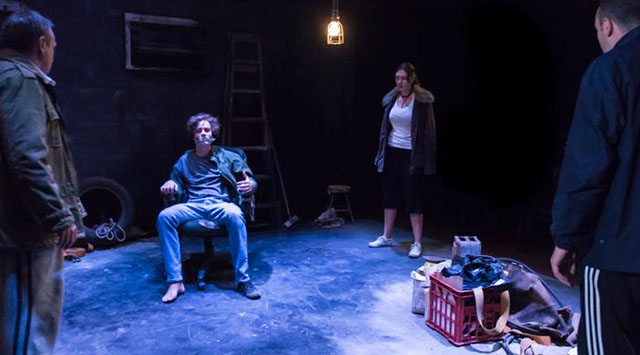
Eight short plays about life as older people, make up the anthology in The Days Are As Grass, covering a range of experiences, from the funny and frivolous, to the more sobering moments of our humanity. Carol Hall writes with humour, wisdom and extraordinary sensitivity, giving voice to Australian seniors, in a style that speaks to audiences of all ages. Its characters are vivid, and their stories refreshing. This collection of short plays is often surprising, yet their subjects always feel authentic (except, it must be noted, for the very unfortunate inclusion of only one person of colour, who ends up a thief).

Director Jane Edwina Seymour keeps the show visually basic, placing emphasis instead on the personalities and relationships that occupy centre stage with excellent conviction. Seymour’s flair for nuance ensures that we engage with the production meaningfully, and that we are charmed by her persuasive cast. Actors Kimball Knuckey and Felicity Steel are especially captivating, playing three roles each, vibrant and movingly vulnerable in every segment. Knuckey consistently delivers poignancy with the most subtle of approaches, while Steel impresses with her physical dynamism and intelligent comedy.

There is no better way to celebrate life, than to celebrate the process of ageing. A linear passage of time ensures that we can always learn from the mature constituents of our communities, if only we take the opportunity to listen. We often dream about foretelling the future, unable to realise that much of our tomorrow already exists in our parents and grandparents. In The Days Are As Grass, it is clear that there are willing participants in the all-important inter-generational dialogue, but those who stand to benefit most, need to pay attention.

www.rpworkshops.com.au | www.facebook.com/storiesabouthumans

Review: E-baby (Ensemble Theatre)

ensembleVenue: Ensemble Theatre (Kirribilli NSW), Oct 13 – Nov 13, 2016
Playwright: Jane Cafarella
Director: Nadia Tass
Cast: Danielle Carter, Gabrielle Scawthorne
Image by Clare Hawley

Theatre review
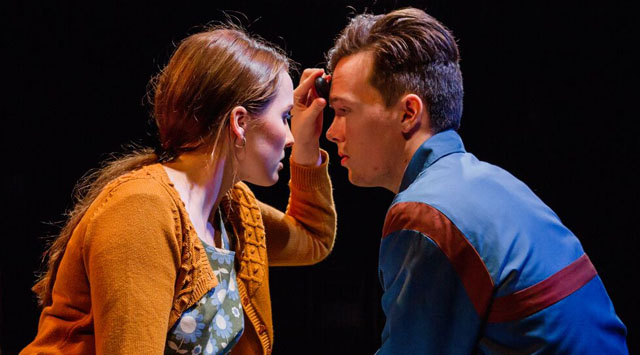
It is 2015, London-based attorney Catherine travels to Massachusetts and meets her pregnancy surrogate, Nellie. Jane Cafarella’s E-baby takes place over a period of 16 months, during which the two women communicate via the internet and phones. 30 years have passed since the first cases of surrogacy, and controversy around assisted reproductive technology has diminished considerably. We are no longer surprised to hear about people conceiving with medical help, and consequently, the play raises no eyebrows.

There are promising elements in the story, but it insists on shying away from a more explosive sense of drama. Both women’s personality flaws are clearly demonstrated, yet neither are allowed to turn into villains, in a play that tries too hard to always be nice. In its attempts to be fair and compassionate to both mothers, we experience little and learn even less. Catherine is self-absorbed and humourless, while Nellie is naively content within her ignorant and fervent religiosity. The show lets us recognise what motivates them, but struggles to help us care.

Humans do ridiculous things, and often, in our failure to explain why we do what we do, we risk feeling misunderstood and alienated. Catherine is unable to justify her unrelenting desire to procreate, and Nellie’s family is unconvinced that her actions are righteous. There are times in life when we are left isolated, with only personal desires as companion. What drives us, is a great many things, infinitely variable, but all valid, and when we choose whether or not to act accordingly, the consequences that follow must never be neglected. Catherine and Nellie believe that they come from a place of generosity but society will question their decisions in bringing innocent life to the world. We may remain unpersuaded, but there is no doubt that their perseverance is admirable. As we become increasingly cynical, it is important that we appreciate optimism and hope when we encounter it, because good things can sometimes be that needle in a haystack, and life is meaningless if we give up looking.

www.ensemble.com.au

Review: The Bitter Tears Of Petra Von Kant (Mophead Productions)

mopheadVenue: Old Fitzroy Theatre (Woolloomooloo NSW), Oct 11 – Nov 12, 2016
Playwright: Rainer Werner Fassbinder (translated by David Tushingam)
Director: Shane Bosher
Cast: Taylor Ferguson, Judith Gibson, Matilda Ridgway, Mia Rorris, Eloise Snape, Sara Wiseman
Image by Clare Hawley

Theatre review
In Fassbinder’s The Bitter Tears Of Petra Von Kant, we search for the meaning of love. Petra had just ended a marriage, but now finds herself enamoured with another. Through an examination on the nature of unrequited love, the play is an invitation to meditate on one of life’s biggest mysteries, by looking at the space between being in love, and being out of love. Petra has an object of desire, someone she obsesses over, who responds with nonchalance. Her devotion is both voluntary and involuntary, she gives of herself in hope of reciprocation, but continues to invest her all, even when the outcome is not as intended. She thinks only that her suffering bears a purpose of winning favour, but does not realise the masochistic pleasures that envelope the burning sensations of pain she thrives on.

The writing is phenomenally thrilling, and deeply important. Masochism is a pivotal part of our psyche, but we make little acknowledgement of it. In our human inability to be perfect, we all experience on a daily basis, the impulse to do what is not going to deliver the best results. Although we wish for a level of optimal performance in all the things we do, we are not machines, and we know that the instinctive tendencies to jeopardise are always strong. We are expected to be good, but really, we cannot stop from wanting to be bad. Our ethics prevent us from being destructive with the decisions we make at work, at home, in society, but when discussing the romantic and the carnal, destructiveness becomes personal and we have the right to choose how bad we wish to be. In his creation of Petra’s tragicomedy, Fassbinder reveals an honest aspect of humanity, and the inherent darkness of our existences. In our heroine’s pursuit of a very fiery love, she uncovers her true self, perfectly beautiful yet devastatingly vicious.

Sara Wiseman is resplendent in her warts and all portrayal of the title role. Operatic and visceral, it is a stunning performance of a woman in control, and out of control, overwhelmed by infatuation and lust, completely unhinged, motivated only by her own desires. Wiseman unleashes profound emotional and psychological accuracy that makes every debauched plot detail believable, along with a magnetic sensuality that has us entranced from beginning to end. Furthermore, it is not a narcissistic display that she puts on, but a thoroughly nuanced study of dynamics between Petra and the people around her, with the star manufacturing scintillating chemistry with every co-actor for a show that keeps us frothing at the edge of our seats. Also fabulous is Matilda Ridgway, sensational in an entirely speechless role but powerfully present at the periphery of every scene. Marlene is a controversial servant character, made even more confronting by Ridgway’s fierce dedication. It is a hugely impressive study of the only woman on stage who gets everything she wants.

The production looks sophisticated, severe and sexy. Georgia Hopkins’ set is executed with a confident minimalist edge, radiantly glamorous and intimidating in its strict glossy blackness. Shane Bosher’s direction breathes new, electrifying life into a play approaching its fiftieth year, proving that Fassbinder’s ageless legacy continues to be relevant and resonant, especially when it comes to issues of our libido. Bosher’s love of the strong female is magnificently showcased, with every woman bold and alluring in her uniqueness. His fetishistic depiction of Petra as Goddess, allows the show to bewitch and to inspire awe. The temptress and us, breathe the same air, but we are at her mercy, and anywhere she wishes to take us in the theatre, we must surrender, and revel in it.

www.mophead.com.au

Review: Hitchcock’s Birds (Edgeware Forum)

edgewareforumVenue: Erskineville Town Hall (Erskineville NSW), Sep 27 – 30, 2016
Playwright: Laura Johnston
Director: Laura Johnston
Cast: Laura Johnston

Theatre review
Even though Alfred Hitchcock’s films were usually about male protagonists, it is his leading ladies that remain unforgettable. In Hitchcock’s Birds, Laura Johnston presents a compilation of anecdotes, ranging from the cautiously dubious to the downright objectionable, by a series of legendary blonde bombshells who had worked with the master of suspense. Misogyny in Hitchcock’s films is a common topic of discussion, so the insight that Johnston’s one-woman show wishes to provide, will not be new to many. It is however, wonderfully nostalgic, with characters and a performance style that harks back to the golden age of 1950’s Hollywood, and because “they don’t make them like they used to,” this is a production that will appeal to many who continue to hunger for that old world glamour.

As actor, Johnston is most effective in sultrier and heavier sections. At home in the skin of the femme fatale, she brings excellent theatricality to the likes of Tippi Hedren, Grace Kelly and Kim Novak. Zanier personalities like Doris Day and Janet Leigh on the other hand, can seem less confident, and slightly laboured. Even though Johnston does well in creating different voices and mannerisms for her various roles, it is clear that Hitchcock’s penchant for archetype does not make it easy for a greater sense of differentiation between each woman, and the use of slide projections is required to help us identify the stars being depicted. Hitchcock’s Birds is a strong concept and there is good work to be found in the way mood is manufactured for this staging, but its duration is too brief for our emotions to engage at a gratifying level of intensity.

Hitchcock’s is a man’s world, and the women in it must play by its rules or risk condemnation. When workplaces are patriarchal, as so many continue to be, its women must choose whether to obey, withdraw or defy. Whichever option is selected, it is uncommon that power imbalances are ever subverted or given redress. Film in Hollywood and everywhere else, is still dominated by men, but theatre is an alternative to the art form that is currently experiencing a vigorous progression towards gender equity. It is only when we tell our stories, on our own terms, that empowerment for our sisterhood can truly begin to materialise.

www.edgewareforum.com

Review: Late: A Cowboy Song (Ladylike Theatre Collective)

ladylikeVenue: Erskineville Town Hall (Erskineville NSW), Sep 27 – Oct 1, 2016
Playwright: Sarah Ruhl
Director: Sarah Dunn
Cast: Andreas Lohmeyer, Annabel Mathieson, Eliza Oliver

Theatre review
The simpler the story, the deeper we can delve into the nature of being human. We have a tendency, in life and in art, for complication. Believing in the more the merrier, we cloud up our transient existences with illusory fixations that distract from the truth. Sarah Ruhl’s Late: A Cowboy Song takes the shortest distance between two points, and in the process, deconstructs some of the biggest myths that govern our every day. It questions the meaning of things like marriage, reproduction, money and work, central tenets that dictate how we live from minute to minute. We see Mary fall pregnant and marry Crick, who goes to get a job to provide for the family. It all happens without thought and passion, completely automatic. Their lives take shape as though controlled by an external entity, until they chance upon something else that truly moves them.

It is a funny play, though not always overt with its humour. Delightfully sarcastic, with a distinctly queer sensibility that informs its representations of gender, sexuality and relationships, Sarah Dunn’s work as director is very charming indeed. Mary is played by Eliza Oliver who brings nuance and poignancy to the piece, through an understated style that encourages understanding of her character’s peculiarities. Less quiet with his presentations is Andreas Lohmeyer whose eccentric approach provides great amusement, along with an intriguing but bizarre aura appropriate to the subversive material being explored. The eponymous cowboy is a mysterious figure, with Annabel Mathieson cast against type to bring focus to the text’s interest in exploring issues of identity and conformity.

Who we think we are, may not always be an accurate estimation of the person who walks the earth, but that self-perception must always be allowed to change. To know oneself can be a difficult process, but what is infinitely harder, is to pretend to be someone else. Mary and Crick try to come to terms with their own desires, but arriving at that state of honesty proves to be an elusive privilege. The cowboy is completely out of place, but what they experience, is a serenity and fulfilment that many others fail to attain. It is human to want to fit in, but it takes courage to stake one’s claim for a share of the world, without playing by all the stupid rules.

www.facebook.com/ladyliketheatrecollective

Review: Pedal & Castles (House Of Sand)

houseofsandVenue: The Old 505 Theatre (Newtown NSW), Sep 20 – 24, 2016
Creator: Eliza Sanders
Director: Charles Sanders
Cast: Eliza Sanders

Theatre review
Pedal and Castles are a pairing of individual pieces that demonstrate the genius talent of Eliza Sanders, whose boundless exploration into performance and theatre creation that deliver experiences that are full of joy, surprise and wonder. Amalgamating the clichéd triple threat of singing, dancing and acting, Sanders redefines the stage artist into a singular agent with capacities limited only by imagination. Her multi-disciplinary skills are showcased perfectly in both works, along with the most inventive approach to writing and choreography for a style of show that is striking for its effortless originality and distinctive sense of beauty.

These are not simply stories, but abstract expressions that find a purpose in time without the reliance on logic and narrative. In tandem with brother Charles Sanders’ direction, the siblings’ ability to move us, to cease our attention and connect with our emotions, without the use of anything remotely formulaic or conventional, is evidence that a purity of intention and an instinctive acuity are at play here.

Eliza Sanders’ physical presence is that of a dancer’s, all discipline and agility, but her personality refuses to be subservient, the combination of which results in a powerful state of being that puts on stage, the very vibrancy of life itself. Without the distraction of reason, we are in direct contact with a living, breathing and in this case, enthralling, organism, whose various representations of our complex existence, draw us into a state of sharing, listening and acknowledgement, that seems to make life that much more meaningful. Observing Sanders is to be at one with nature, and the resonance she provides, is akin to the excitement one receives when enraptured in the vision of early spring’s blossoming flowers.

Where there is no need to ask why, we abandon the past and the future, to stay firmly in the now. Eliza and Charles Sanders are important artists who give us an alternate view of the world. Knowledge and experience are limitless, and in art, we can find catalysts to help us grow. The language in Pedal and Castles is not a translatable version of the familiar, but a different course of communication for arriving at somewhere new. The danger of becoming small and narrow is ever-present, but when art does its job well, we are shown the way to emancipation, and we must take every step that leads us there.

www.houseofsand.org

Review: Crocodile Tears (Brevity Theatre)

brevityVenue: Tatler Sydney (Darlinghurst NSW), Sep 21 & 28, 2016
Playwright: Olivia O’Flynn
Director: Alexander Butt
Cast: Olivia O’Flynn

Theatre review
Tilly Devine was a legendary personality of the Sydney underworld. Violent and ruthless, the Darlinghurst madam is brought back to life in Olivia O’Flynn’s short play Crocodile Tears, which cashes in on the glamorous mystique of clandestine criminality. It is an archetypal bad girl story that appeals to our curiosity and thirst for sordid details on things we never dare experience first-hand. Although severely condensed, the play is a powerful representation of Devine’s heyday that offers glimpses into her notorious exploits, and the impulses behind them. For a monologue, O’Flynn makes the right decision to keep the work brief, but its drama prompts many questions that leave us wanting more.

O’Flynn’s own vibrant interpretation of the role builds a strong and satisfying narrative, but there is a significant distance between the actor’s youthful qualities and Devine’s much darker, seedy existence that never really gets breached. We hear amazing tales that inspire wild imaginary visions, but the activity we actually see on stage is subdued by comparison. Nevertheless, the production is an entertaining one that delivers energy and amusement in abundance.

Only a narrow scope of historical figures is ever remembered. Myths are perpetuated to serve dominant ideologies, and subversive types are conveniently forgotten. Modern Australia is built, uniquely, on the backs of many indecorous women and men, and much as we try to wipe away our ignoble past, its presence can never be denied. Tilly Devine may have left us a long time ago, and the memory of her legacy continues to fade away, but human nature will continue its replication of experience, warts and all, generation after generation.

www.brevitytheatre.com.au

Review: Bathhouse: The Musical (New Theatre)

newtheatreVenue: New Theatre (Newtown NSW), Sep 19 – 23, 2016
Music & Lyrics: Esther Daack, Tim Evanicki
Director: Alex Robson
Cast: Valentino Arico, Marcus Rivera, Alex Robson, Dyan Tai, Lucas Thomson
Image by Priya Prakash

Theatre review
In Esther Daack and Tim Evanicki’s Bathhouse: The Musical, we discover all the goings on in that longstanding institution of the gay experience. Of course, providing a venue for sexual activity is its primary purpose, but where a community exists, a distinct culture can be found, and in this case, a very funny slew of shenanigans is brought to light for both the uninitiated, and the veterans. Its bawdy humour is charming, sharp and surprisingly refreshing, and although deeply conventional, its music is nonetheless enjoyable.

Billy is a smalltown young man in the process of coming out. We follow him as he navigates the dark, mysterious world of the bathhouse, trying to find companions, and more importantly his own sense of self. Performed by Lucas Thomson, the innocent and naive qualities of our protagonist are splendidly conveyed, and through his eyes, an unusual microcosm of human behaviour begins to make sense. The cast begins with unmissable tentativeness, but slowly gain confidence as the show progresses. The production can often feel under-rehearsed, and its performers do seem inexperienced in the specific requirements of the musical’s form and genre, but a vibrant accompanist (Antonio Fernandez on piano) ensures that the show is kept cohesive and jaunty. Alex Robson provides some clever ideas with his direction, but it is his work with live voice over that is truly endearing.

Daack and Evanicki’s creation is ten years old, but the advent of smart phones over this short period, is a factor that plays in our minds through the piece. Life is change, but the need for human connection is an uncompromising constant. Billy went to the baths looking for other souls who may make him feel less alone, but if he had begun his journey today, it is likely that the phone is where he goes most, ironically, to escape solitude. Technology can give us plenty, but flesh is unlikely to be replicated or replaced. The touch of another person, stranger or friend, can at times seem a lot to ask, but life without sex is not an existence anyone of any sexuality, should endure.

www.newtheatre.org.au

Review: Transience (Leftofcentre Theatre Co)

leftofcentreVenue: Kings Cross Theatre (Kings Cross NSW), Sep 13 – 18, 2016
Playwright: Clare Hennessy
Director: Clemence Williams
Cast: Julia Christensen, Kate Pimblett, Eve Shepherdson Beck
Image by Charlie O’Grady

Theatre review
Gender has always been a means of policing behaviour. We look at one’s genitals at birth and assign a whole universe of expectations that have nothing to do with the individual’s own nature and desires. The world is split in two halves, male and female, and any deviation that threatens to transgress that dichotomy is traditionally prohibited.

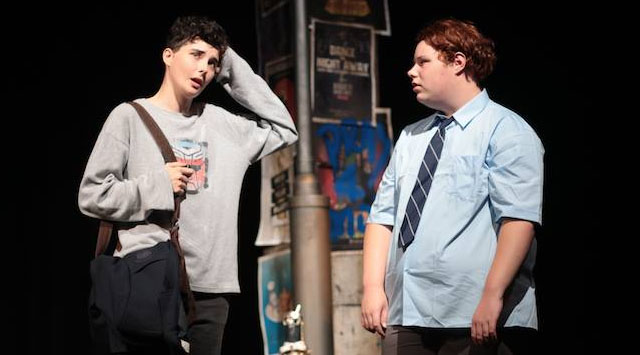
In Clare Hennessy’s pseudo sci-fi Transience, society continues to monitor us through gender expression, but this time only one mode of existence is permitted. The script is rich with modern ideas, and memorable for its progressive and discerning attitude. Although its concepts are deeply contemplated and well articulated, its plot does not develop far enough to create a stronger sense of narrative. A quirky comedy is effectively manufactured throughout, but its character’s emotions are depicted too gently to elicit a more empathetic response.

An accomplished cast of youthful actors is impressively connected with the material at hand. Passionate and accurate with the play’s messages, their portrayals convey an inspiring and firm sense of purpose. There are issues however, with conversational rhythms causing the show’s pace to feel excessively ambling, but proficient work from lighting designer Liam O’Keefe and composer Nick Turton offer valuable variance to the production’s mood that helps retain our attention.

Transience is concerned not only with gender. It is also a discussion on matters of free speech and social cohesion. With the advent of information technology and social media, democracy has evolved into a new beast that demands a constant evaluation on how our voices are heard. As individuals gain ever-increasing access to platforms for their unitary thoughts and politics, it is tempting to see humankind as being fractured and divided. Our egos want to feel special and we want always to be recognised as different from the rest, but in fact, our humanity is only, if ever, slightly divergent. Unity of life is an ultimate truth, but our minds do not easily come to terms with it.

www.leftofcentreau.com