Review: Scenes From An Execution (Tooth And Sinew Theatre)

toothsinewVenue: Old Fitzroy Theatre (Woolloomooloo NSW), May 13 – 31, 2014
Playwright: Howard Barker
Director: Richard Hilliar
Actors: Lucy Miller, Jeremy Waters, Mark Lee, Katherine Shearer, Nicole Wineberg, Peter Maple, Brendan Miles, Lynden Jones
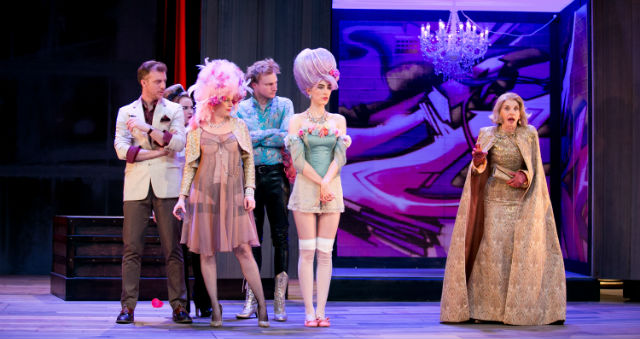
Image by Katy Green Loughrey

Theatre review
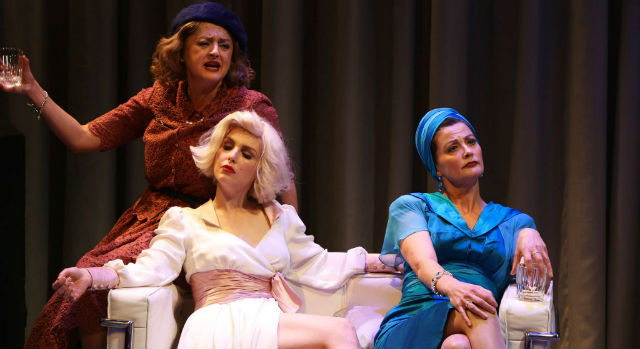
There are many pleasures to be found at the theatre but what we seek essentially, is to be fascinated by the unusual talents of live performers, and to satisfy the craving we have for stories that are engaging and meaningful. Howard Barker’s Scenes From An Execution is strangely hypnotic. His tale unfolds slowly, taking unconventional and sometimes uncomfortable diversions, but the promise of a substantial imminence is always palpable, and the conclusion is certainly gratifying. Barker’s writing is poetically beautiful, and his ideas are inspiringly radical. His varied themes include love, war, art, religion, politics and propaganda, covering with depth, many of the big questions that are as relevant today as they had been in Venice 1571, where the play is situated.

A remarkable feature of the work is its extraordinary protagonist Galactia, a painter of note, and a woman with a liberated and unorthodox lifestyle. Our own values are examined through her resolute belief in an artist’s responsibility to uphold truths, even in the face of great adversity and sacrifice. Barker’s heroine is powerful and awe-inspiring. She is a feminist ideal, and sadly, a manifestation that rarely figures in the narratives of our cultures. Galactia’s fearless determination and assertive wisdom is realised on the Sydney stage magnificently by actor Lucy Miller. Miller is convincing, compelling and electrifying. She approaches the character with raging imagination and delivers a performance completely arresting in its meticulousness and unpredictability. Even in scenes lit so dim we can barely see, Miller is riveting, and her creation is a woman on a pedestal that we all must aspire to.

Supporting Miller is an exceptional cast. It is a rare gathering (especially in independent theatre) with all actors displaying astounding talent and impressive experience. It is truly a joy to watch these artists work their magic, all performing with gusto as well as nuance, each carving out many memorable moments for themselves. Mark Lee as Urgentino is energetic and full of passion. Sharply ironic, and fabulously witty, Lee’s command of the script ensures that his scenes are consistently entertaining, and politically cutting. Jeremy Waters brings a complexity to his role of Carpeta that keeps us intrigued and enthralled. His love affair with Galactia is surprisingly dimensioned, and his depiction of an artist under the control of money and power is simultaneously funny and heartbreaking. Waters is an intense and intelligent actor, whose unmissable performance in the closing moments of Act 1 leaves us breathless.

Director Richard Hillier’s obvious talent is his thorough understanding of the craft of acting. He has created all the circumstances required for the cast to unleash their best upon us. Hillier’s sensitivity for spaces, whether mental, emotional or physical, allows him to facilitate all the action that happens between actors, and the connection between stage and audience. Hillier indulges in abstractions, but is careful to provide points of focus to always keep us reeled in. His affinity with the the play’s core message is a strong one, and the authentic clarity at which he voices it is full of flair, and indeed, admirable.

Death and taxes are said to be the only certainties in life. In Scenes From An Execution, a deconstruction of war and of our political leaders gives us an opportunity to gain insight into our part as mere mortals and pawns in a world of deceit and manipulation, rife with the glorification of needless deaths. Hogwash is ubiquitous but where great art exists, we find the eternal and the truth, and we rediscover the divine within.

www.facebook.com/toothandsinew

Review: The Rise And Fall Of Little Voice (Lane Cove Theatre Company)

lanecoveVenue: New Theatre (Newtown NSW), May 15 – 24, 2014
Playwright: Jim Cartwright
Director: Christine Firkin
Actors: Debbie Neilson, Wendy Morton, Michelle Bellamy, Nick Bolton, Luke Reeves, Kevin Weir, Mark Reiss
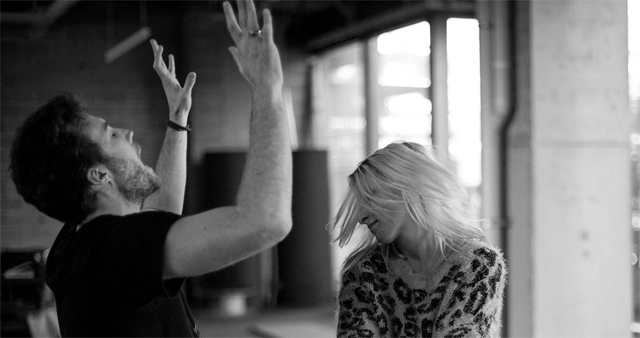
Image by Geoff Sirmai

Theatre review
Northern England is a long distance away, with its own significant cultural and language affectations. The desire to stage a production from that region for a Sydney audience, demonstrates the universal appeal of Jim Cartwight’s script. The Rise And Fall Of Little Voice is a comedy that examines the darker side of family dynamics in a deceptively upbeat manner. It tackles dysfunction and neglect in the guise of a pseudo-musical, with ample measures of broad campy humour and a lot of singing.

Lane Cove Theatre’s production places emphasis on the play’s light-hearted elements. We see the drunken fumblings of a desperate middle-aged woman Mari Hoff, her daughter LV’s burgeoning and very innocent romance, and their neighbour’s kooky jesting. There is some effort at depicting Hoff’s love interest with some sinisterness, but by and large, the show lacks a gravity that would give meaning to its story and characters. Little Voice relies heavily on empathy and personal identification for its dramatics to be effective, but the narrative does not always connect sufficiently with its audience. An important aspect of the play is the loss of the family’s paternal figure that causes disharmony and grief, and it is the memory both women bear of the man that provides impetus for the plot, but his presence is unsatisfactorily sparse in this staging. He leaves a hole in their lives, but we are blissfully oblivious to it.

Wendy Morton is an energetic actor who provides Mari Hoff with an emotional neediness and instability that is uncomfortably believable. There is a sense of self-abandonment in Morton’s work that is entertaining and fitting, but the character she creates has too much warmth, and comes across overly endearing. The story needs a mother with a cruel and villainous edge to justify her appointed conclusion, and to help explain her daughter’s strangeness, but Morton lacks those malevolent qualities in her otherwise delightful portrayal. LV is played by Debbie Neilson who shines in musical sections where her talents as an impressionist take centre stage. She performs as Judy Garland, Lulu, Edith Piaf, Marlene Dietrich and Shirley Bassey, and is particularly memorable with her mimicry of Marilyn Monroe and Shirley Temple. It is clear that Neilson’s vocal ability contributes greatly to her part in the show, but the actor is not ideally cast. Neilson is a vibrant and gregarious performer who seems to be at odds with the timidness and melancholy that is fundamental to her character. In the role of her love interest Billy, is Luke Reeves who delivers the most consistent and convincing characterisation in the show. The script does not demand very much of the actor, but Reeves is clear of his contribution to the plot, and addresses each scene with charm and precision.

Little Voice is effervescent and colourful, but it is the exploration of the writing’s psychological and emotional depths that would give it a sense of authenticity. Death and mourning are themes that touch all our lives, and truthful theatrical renderings always resonate. Coming of age tales are appealing because they speak of hope, but they need the darkness before the light in order to hit home.

www.lanecovetheatrecompany.com

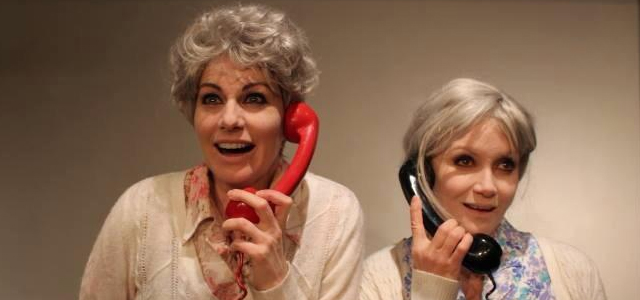
Review: Something To Be Done (Gabatwa Studios)

rsz_10259032_782336098466784_8926997888061039248_oVenue: TAP Gallery (Darlinghurst NSW), May 13 – Jun 1, 2014
Writer: Gabriel McCarthy
Performer: Gabriel McCarthy

Theatre review
Reminiscent of work by Buster Keaton, Charlie Chaplin and Rowan Atkinson, Gabriel McCarthy’s one-man show communicates without words, relying instead on the actor’s ability to create meaning with his body and face. The story is vague, but its themes are clear. McCarthy’s show is about innocence, mortality, love, and art. There is also a sense of burgeoning manhood being explored by the performer who discovers the universe around him, but within an independence that he manufactures, almost to stake his claim on a personal and self-determined identity.

The show is 75 minutes long, and while it does switch gears often and there is plenty of variety to prevent any hint of self-indulgence, its scenes are not always engaging. The format of the production is challenging, as it requires of its audience, a mode of watching that is acutely different from what is conventional and mainstream. It does what it wants, with admirable eccentricity and idiosyncrasy, but we need something more. Many great works have touched audiences without the use of words, and it is the artist’s responsibility to locate that point of connection.

Erin Harvey is stage manager, and does a splendid job with the minimal technical facilities at hand. The show looks and feels refined, with a set by Christie Kay Bennett that is basic but considered and restrained. The show’s innumerable sound cues are a key feature, and Harvey’s faultless execution is noteworthy. A thorough understanding of the show and its performer is necessary, and the chemistry between tech and talent for this production is beautifully harmonious.

McCarthy is a performer with great skill and presence. He is phenomenally agile and energetic, and his ability to convey concepts and to express intention is remarkable. There are many memorable moments of vigorous gesturing and lively leaping, but the actor is equally effective in significant pauses, unafraid of a more silent approach. There is a sincerity to the man that is endearing, but his story is less captivating. Even though it is not difficult to follow, it is too abstract. We want to connect, but it is too distant. The tale seems personal, but it is also shrouded, and maybe a little elusive with its message.

www.facebook.com/gabatwastudios

Review: Amanda (Old Monk Productions)

oldmonkVenue: TAP Gallery (Darlinghurst NSW), May 13 – 18, 2014
Playwright: Mark Langham
Director: Mark Langham
Actors: Amylea Griffin, Paul Armstrong, Elizabeth Macgregor

Theatre review
Amanda is a new play that asks questions the way an inquisitive small child would. Its persistent wonderment inspires thoughts and ideas that range from the familiar and enduring, to fresh and complex ones that we rarely encounter outside of the world of art. Mark Langham is a brave writer who dares to explore deep and dark recesses of the human condition, even when there is no guaranteed satisfaction or indeed, conclusion. Langham’s approach is philosophical, but his creativity for the stage is savvy and accomplished. Amanda is an intriguing work, with interesting characters that hold our attention. Their provocative lives are richly imagined, and thoroughly engaging.

The protagonist Amanda is a childlike woman, played by Amylea Griffin who brings a necessary gravity to a performance that is intense and energetic. It is noteworthy that the character is not portrayed with weakness even though her story is one of victimhood and injustice. Griffin’s sense of defiance is an important and beautiful ingredient to her work, but there is a lack of levity to her delivery that could have helped craft a more dimensioned characterisation. Paul Armstrong takes on a trio of personalities with good variation and conviction. The actor’s relaxed nature contrasts well with his co-players’ sense of severity, but is also able to inject power and dynamism when required. Elizabeth Macgregor’s characters are colourful and deliciously odd, but her interpretations tend to be fairly subdued. Although missing the opportunity to create something quite eccentric, Macgregor’s portrayals are effective, and sensitive to the plot’s progression.

Langham’s direction does not shy away from expressive dramatics that create a sumptuous texture in the moody script, but the performers’ inconsistent group chemistry is an issue. Virtually every scene involves the actors in collaboration, but they are not always in tune. Early scenes seem to work better, but as complexities accrue, the work starts to lose its persuasiveness. The plot evolves into greater abstraction, with actors seeming to proffer incongruous perspectives of the text, and decipherment becomes difficult.

Amanda might be challenging, but it is not without pleasures. The play is full of intellectual stimulants, and the writer’s lines are pointedly witty. Directing one’s own script is a tall order. Langham tends to place too much trust on the autonomy of his words, but he does an admirable job of materialising his concepts and presenting a show that communicates on emotional and cerebral levels.

www.oldmonkproductions.com.au

Review: The Detective’s Handbook (Sydney University Dramatic Society)

rsz_10344095_783993371619707_864135050788121539_oVenue: University of Sydney Studio B (Camperdown NSW), Apr 30 – May 10, 2014
Book and Lyrics: Ian Ferrington
Score: Olga Solar
Director: Ian Ferrington
Actors: Alessandro Tuniz, Matt Bartlett, Alexander Richmond, Natasha Vickery, Victoria Zerbst, Elliott Miller, Alice Birbara

Theatre review
The Detective’s Handbook is a new musical written by Ian Ferrington, with score provided by Olga Solar. It is a satirical take on film noir, bringing to mind, films like Dead Men Don’t Wear Plaid (1982) and Who Framed Roger Rabbit (1988). It is persistently self-conscious, but it takes its parody seriously, placing as much focus on storytelling and its musical numbers, as it does on creating laughs.

Ferrington’s vision is ambitious and idiosyncratic. His work might not look original, but it bears a quirkiness that prevents it from feeling derivative. His writing is witty and charming, but his characters, although spirited, are too traditional. Ferrington’s direction is energetic, with an emphasis on rhythms, which keeps things buoyant and lively. There is however, a need for punchlines and plot twists to be cleaned up for clearer delivery. Olga Solar’s delightful music is beautifully woven into the narratives, and effectively provides characters with interest and complexion. There is a noticeable lack of melodies in most of the songs, with the team’s decision to adopt a “rap-infused 1950s showtune jazz” style. It is debatable whether that choice is a wise one, but the two most memorable numbers, “Too Much To Ask” and “Congratulations”, are both conventionally structured, hummable tunes.

Matt Bartlett has the strongest singing voice in the cast, and plays Detective Jimmy Hartman with great conviction, creating a character that stands out as the most believable of the group. The actor brings a warmth to his performance, and quickly establishes a good connection with the audience. Natasha Vickery plays her three characters with panache and levity. She embraces the show’s giddy style of comedy with good humour, and although required to play silly often, we remember her performance to be a polished one. Other players tend to have an oversimplified approach, with characterisations that do not develop far enough to sustain a show that’s considerably more substantial than a skit.

This is a musical with a lot of frivolity, but it also demonstrates impressive flair. Ferrington and Solar’s material contains great potential, with generous room for comedians to provide dynamic and creative interpretations. This production might be a little under-cooked with too many one trick ponies, but there is no doubt that if explored with greater depth, its future incarnation could well be The Big Noir Musical Hit.

www.sudsusyd.com

Review: Trainspotting (Black Box Theatre)

trainspottingVenue: King Street Theatre (Newtown NSW), May 8 – 24, 2014
Playwright: Harry Gibson (based on the novel by Irvine Welsh)
Director: Luke Berman
Actors: Damien Carr, Taylor Beadle-Williams, Brendon Taylor, Leigh Scully

Theatre review
Irvine Welsh’s Trainspotting is one of the defining cultural landmarks of the 1990s. From novel, to play, and eventually to the blockbusting hit film, its immense popularity and pervasiveness in landscapes the world over is testament not only to the quality of work by artists involved, but also to the way its story has resonated and subsequently appropriated as a sign of the times.

Black Box Theatre’s staging of the 1994 Harry Gibson adaptation seems, on the surface, to be an exercise in nostalgia. It is entirely too predictable to have a group of Gen-Y enthusiasts take on a cult classic that pushes the boundaries of decency, but what they have created is a work that is surprisingly relevant, and very well crafted indeed. Luke Berman’s direction is exciting, colourful and crisp. Scenes move along quickly but clearly, as though injected with adrenaline. The action is heightened and dynamic, but sentiments are always elucidated. Berman has a sensitivity that ensures the text’s many controversial elements are handled circumspectly, with just the right amount of restraint that keeps bad taste from turning unacceptable.

Berman’s cast is truly impressive. They are a fearless and captivating foursome, whose love for the art of performance is absolutely evident. By taking on multiple roles, they all receive significant stage time and are able to showcase creative versatility, but we are not always able to identify the characters being played, although it must be said, that this does not seem to alter the enjoyment of the work. Damien Carr plays Mark, the protagonist and narrator of the piece. The duality of simultaneously narrating the story and performing the scenes being described is fascinating, and Carr does a stellar job of it. He is on stage for virtually the entire duration, and is able to provide a consistently focused energy that keeps us engaged and involved. Taylor Beadle-Williams is magnificent in her roles. There is often a baroque exuberance in her work that articulates perfectly the aesthetic of Welsh’s hallucinatory world, but at the core of her performance is a fixation on truth, which gives all her characters a beautiful empathy that is irresistible.

Drug abuse and the “junkie” subculture is sadly, not a relic of the past. Trainspotting‘s articulation of that underworld satisfies our curiosity, telling us about the fringe dwellers who reside on our peripheries. We are reminded that the world is a shared one, and our beliefs about life are often fundamentally the same. Even when our values diverge, and our judgemental minds divide us, it is our common humanity that allows us to look into the experience of others, drawing parallels where they exist, and discovering through these diversities what is enduring, and what actually matters.

www.blackboxtheatre.org

Review: Thom Pain – Based On Nothing (Sydney Independent Theatre Company)

Auditorium_American-issue_TVenue: Old Fitzroy Theatre (Woolloomooloo NSW), May 5 – 10, 2014
Playwright: Will Eno
Director: Julie Baz
Actor: David Jeffrey

Theatre review (originally published at auditoriummag.com)
Thom Pain (Based On Nothing) is about fear, loss and loneliness. Will Eno depicts a state of sadness that is genuine in its erratic complexity, but also joyful and humorous in its profound observations. Thom Pain is a man who has experienced disappointments, and he knows what betrayal and injustice feels like. Eno’s script expresses the process that one needs to go through in order to emerge renewed and strengthened, but Pain has not yet found that enlightenment.

His struggle is the flesh and blood of this work, and a representation of a condition of being that is too easily forgotten. The human capacity to leave pain behind after it subsides, makes this a valuable piece of rumination. We get over things and move on, but Pain’s very presence demonstrates some of the intricacies of our coping mechanisms, and watching them in action is fascinating. The writing has a rambling incoherence that seems theatrical, but also poignantly realistic. We are rarely clear of mind at troubled times, and Eno utilises that natural inability to make sense of things, to great dramatic effect. Everything is strange yet familiar. The audience observes the peculiarity of Pain’s behaviour, while feeling a close affinity to the character.

Thom Pain (Based On Nothing) is a work of art that cuts deeply and meaningfully, revealing an image of our own humanity through a mirror that is rarely uncovered. It is also a work of excellent entertainment, with performer David Jeffrey providing the one-man show considerable pathos and a very charming whimsy. In spite of his considerable actorly talents, Jeffrey brings a quality of diffidence to the stage that gives his character an authenticity that we not only warm to, but almost feel protective towards. The text’s unconventional structure risks alienating its audience, but we care for the man Jeffrey creates, and he makes us sit and listen intently.

He is very funny, and very wry. He wallows, but he is also self-effacing. He plays with our emotions, taking them on an unpredictable and haphazard journey, to all the spaces we messily label “mixed emotions”. Jeffrey’s achievement however, goes further than succeeding in making us laugh and cry. The actor’s portrayal of melancholy is so charged with vulnerability, it reminds us of feelings we bury deep within. The same ones we can sense in our bodies almost everyday but are rarely allowed to surface. Jeffrey makes that pain emerge with a quiet wonder, and in the safety of the theatre, we encounter the closest friend of all, our own broken hearts.

Melancholia is the overriding tone, and perhaps theme, of the show. Director Julie Baz creates an atmosphere thick with moody pensiveness, and it is seductive. The evocative and beautiful underscoring music is a selection of pieces from Sergey Akhunov’s Big Elegy To John Cage, which contribute greatly to the production’s introspective texture. Melancholy visits us all and people relate to it in different ways, ranging from repulsion to pleasure. Accordingly, the production’s appeal would vary according to tastes, but the liberal amount of comedy intelligently added to Baz’s weighty microcosm, ensures that the work speaks to many.

It is often too easy to overindulge in lengthy well-written passages, putting too much trust on the words to work their own magic. Baz is conscious of the pitfalls of extended monologues and wisely encourages the actor to embellish with movement, both exaggerated and subtle, resulting in a performance that is energetic and optically dynamic. The use of space is similarly active, but stage design is overly minimal due to Eno’s specifications. He believes that “there is a humility about theatre and life in the script; it should be there in the production, too.” This is a persuasive argument, but it is also true that the script could benefit from greater visual flourish and imagination. Pain talks about magic, and there are moments where our eyes wish for something slightly fantastical to materialise.

The view inside Pain’s mind is bittersweet, truthful, and scarred, and therefore beautiful. His story is hopeful, yet he seems oblivious to the good around him, and inside of himself. Blinded by fear and dejection, he is a whirling dervish in search of salvation. For us, his magnificent dance is a spiritual lift, and we desire only the best for him, in the trust that a new dawn is always on the approach.

www.sitco.net.au

Review: Cruise Control (Ensemble Theatre)

ensembleVenue: Ensemble Theatre (Kirribilli NSW), Apr 26 – Jun 14, 2014
Playwright: David Williamson
Director: David Williamson
Actors: Helen Dallimore, Michelle Doake, Kate Fitzpatrick, Kenneth Moraleda, Peter Phelps, Henri Szeps, Felix Williamson
Image by Clare Hawley

Theatre review
This review will discuss several key plot details that are controversial and problematic, including the play’s conclusion, which is extremely contentious. If you do not wish to discover specifics of the show, it is advisable that you return to this review after attending the performance.

Cruise Control features 3 married couples on a cruise liner, and their service attendant. The travellers are differentiated by nationality, but they are all of Caucasian appearance. All are wealthy, but the show goes to great lengths to demonstrate their individually distinct characteristics, using the most old fashioned stereotypes to set up dynamics. The posh British, the laid-back Australians, and the elderly Jewish New Yorkers.

Felix Williamson plays British writer Richard Manton, the most outrageously offensive character imaginable. He is pompous, insulting, self-absorbed, and slaps his wife in the face. The man has no redeeming features, but the actor’s work is marvellous, providing scene after scene of tension and frisson. Fiona Manton is played by Michelle Doake who does a good job of providing some dignity to a woman who inexplicably remains in love with an awful man who abuses her. She is successful in her career and owns everything in the Manton household, but bizarrely persists with her dysfunctional marriage. At the end of the voyage, we catch a glimpse of her emancipation due to the sudden death of her husband, only to discover that she is plunging immediately into another relationship with a co-worker who has declared his love via the internet. Doake is a strong actor, but not even Meryl Streep can make this turn of events digestible.

Imogen Brodie is an Australian woman, with no vocation or discernible talent. Played by Helen Dallimore who has excellent presence and timing, Mrs Brodie is an attractive wife, who swans around complaining about her husband and flirting with Richard Manton, and eventually serves as the unwitting seductress who causes the death of Manton. The charismatic Peter Phelps takes on the role of dinky di larrikin Darren Brodie. He is irreverent, spends too much time working on his surf wear business, and is more than a little rough around the edges. He might be covered in tattoos and a “Bra Boy”, but because he tells Manton to stop hitting his wife, gives bottles of expensive champagne to service staff, and refuses to wear a dinner suit, he is depicted as the Aussie with a heart of gold. Phelps might be extremely likeable, but having him commit murder at the very end of the play, and inviting applause for it is completely preposterous.

The Wassermans are played by stage and screen veterans Kate Pitzpatrick and Henri Szeps. Aside from inconsistencies in their New York accents, both put on charming performances and provide all the humour that is required of their characters. Szeps shines in his supporting role, with a brilliant playfulness that makes his character endearing and enjoyable. Fitzpatrick is strong in her role, but she does not escape the uniformly poor representation of females in this outing. Silky Wasserman issues several threats to her cowering husband, constantly talking about divorce only to reveal that her menace is empty and frivolous.

It is arguable whether the explicit identification of the Wasserman’s Jewish heritage is necessary, but there is no question that the inclusion of Filipino cruise attendant Charlie, is problematic. Played by Kenneth Moraleda, Charlie seems to exist purely to show some kind of strange altruistic awareness that there are less fortunate people in the world. He does not participate in the main narratives, except to serve alcohol to the main players. We do however, hear about his struggles at making ends meet, which is totally irrelevant to the stories unfolding. Worse still, the guests make a big gesture of a generous gratuity payment when saying goodbye, further humiliating Charlie’s position of servitude. Also inappropriate is Phelps mimicking a Chinese language when on the phone for business dealings. Many in the opening night crowd did find it funny, but it is clearly nothing more than an archaic stunt that is terribly ill judged.

David Williamson’s writing is loved by many, but this latest work does not live up to that adulation. Several flaws in his directing ability are also exposed, most notably with the inelegant use of space, and frequently awkward handling of scene transitions. There is however, good chemistry between all actors, and the plot does communicate clearly at every point. This is a production that is technically accomplished, with every element of design and performance coming across polished and professional, which makes this lost opportunity even more lamentable.

www.ensemble.com.au

Review: Shakespeare’s Reservoir Dogs (The Vanguard)

reservoirdogsVenue: The Vanguard (Newtown NSW), Apr 29 – May 2, 2014
Playright: Steven Hopley (based on the screenplay by Roger Avary and Quentin Tarantino)
Director: Steven Hopley
Actors: Chris Miller, Richard Hilliar, Diego AR Melo, Lukasz Embart, Jerry Retford, Patrick Magee, Leof Kingsford-Smith, Anthony Campanella, Dominic Santangelo

Theatre review
Quentin Tarantino’s 1992 film debut, Reservoir Dogs established him early on as a popular new auteur. Combining violence, humour, popular culture references and non-linear narratives, Tarantino’s distinctive and refreshing style captured the attention of many, and the film has now garnered cult classic status. Steven Hopley’s new adaptation is a faithful yet radical retelling, keeping characters and events intact, but transposing all the “colourful” language of the original into the style of William Shakespeare.

Shakespeare’s Reservoir Dogs script is a thorough rejuvenation that shows an unusual flair and love for the Bard. Hopley’s direction of his own writing is mindful of audiences that might find the new text challenging, taking great care to utilise all his actors’ capacities to stage a show that is surprisingly accessible. This staging understandably features less of the film’s memorable ultra-violence, but its elements of humour are played up considerably to great effect. Hopley does not shy away from opportunities to make light of this “self-parody”. Management of the unconventional timeline is slightly flawed, but the constant referencing of Tarantino’s film is handled with remarkable sophistication, and for fans of the original in particular, this new staging is tremendous fun.

The cast amassed by Hopley and producer Russall S. Beattie is an impressive one. Full of passion and commitment, the men are individually strong performers who have managed to find excellent chemistry within their group. Chris Miller’s playfully flamboyant performance as Sir White provides a firm anchor for the production. He shows a genuine affinity for the material at hand, and is wonderfully entertaining in his enthusiasm. Richard Hilliar, in the role of Sir Orange, has a presence that is consistently dynamic. The actor has an engaging charm and an understated approach to comedy that is delightfully amusing. Anthony Campanella has a memorable soliloquy that he executes with outlandish gusto. His ability to communicate meaning with his Shakespearean lines is second to none. A crowd favourite is the show’s troubadour, played by Dominic Santangelo. He has a license to play the fool, and is clearly not afraid to use it.

Also noteworthy is Tristan Coumbe’s work as costume designer. Tribute is paid to the film’s unforgettable imagery, of characters in black suits and white shirts. Coumbe’s Tudor style interpretations using modern fabrics, including black leather, contribute not only to the players’ believability, they also convey an interesting sense of time and space in the absence of set pieces. The costumes’ contemporary, sexy edge is a good reflection of the show’s boisterous irreverence.

Familiarity with the film is not necessary, but it would certainly help with enjoyment of this “update”. Many in attendance on opening night responded buoyantly to recreations of classic scenes and celebrated lines. Nostalgia in the air was evident. For those less au fait with Tarantino’s work, the quality of performance by this exceptional ensemble is more than adequate to please any discerning theatregoer.

www.thevanguard.com.au

Review: Pride And Prejudice (The Genesian Theatre)

genesianVenue: The Genesian Theatre (Sydney NSW), Apr 26 – Jun 7, 2014
Playwright: Simon Reade (based on the novel by Jane Austen)
Director: Owen Gimblett
Actors: Jena Napoletano, Chris James, Timothy Bennett, Shane Bates, Christopher Butel, Camilla Vernon

Theatre review
Simon Reade’s recent update of the Austen classic is a witty, swiftly-paced adaptation that caters to today’s impatient audiences and our short attention spans. Scenes are short, and humour is planted at every opportunity with just enough subtlety. The Bennett parents especially, are written with an upbeat playfulness that could provide enough comedy for any viewer who might be less inclined towards old fashioned romance.

Timothy Bennett plays Mr Bennett to excellent effect. He is funny, warm and charming, with a confident demeanour that establishes him as the most proficient performer on stage. Bennett’s comic timing is strongest in the cast, and his every appearance is keenly anticipated. Jena Napoletano shows good commitment as Elizabeth Bennett. She gives her role a delightful presence, and works well with other members of the cast who generally suffer from a lack of experience. It is unfortunate that more roles are not taken up by stronger actors, as the script clearly shows great promise.

Notwithstanding the amateur standard of some character portrayals, the Genesian’s Pride And Prejudice is blithesome and enjoyable. It may not live up to our own imagined versions of the much-loved novel, but it is certainly able to give more than a little enchanting reminder of our endearment for sweet Elizabeth and her Mr Darcy.

www.genesiantheatre.com.au