Review: The Violent Outburst That Drew Me To You (Siren Theatre Co / Griffin Theatre Company)

griffinVenue: SBW Stables Theatre (Kings Cross NSW), Jun 18 – Jul 12, 2014
Playwright: Finegan Kruckemeyer
Director: Kate Gaul
Cast: Emily Ayoub, Renee Heys, Michael Cutrupi, Natalia Ladyko, Anthony Weir

Theatre review
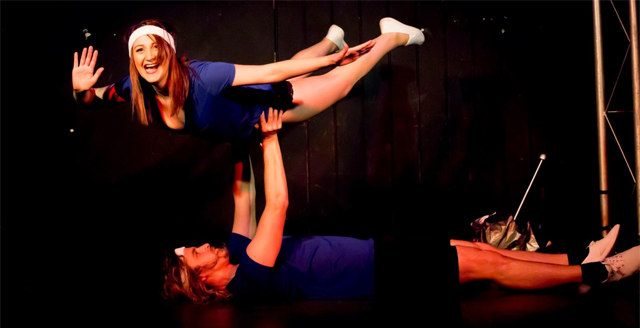
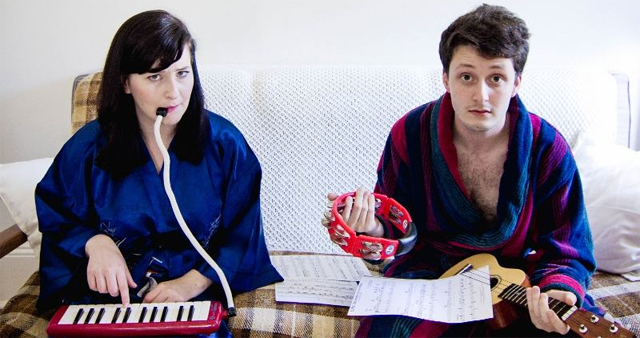
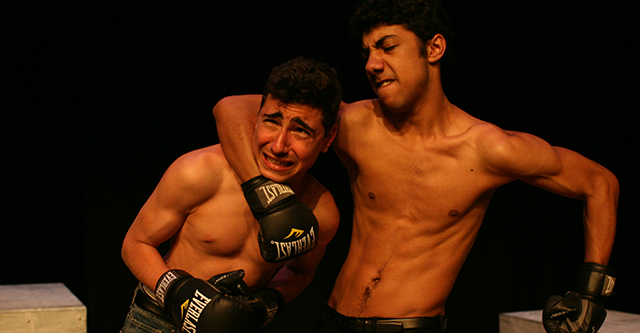
Teenage life is difficult. In The Violent Outburst That Drew Me To You, we observe that adults are really just teenagers covered in calluses. The essence of things do not change, but we lose our innocence, choosing to cope with the world by growing thicker skin wherever possible, and also to turn a blind eye whenever required. Connor and Lotte are younger and purer versions of us. They are old enough to detect and to call bullshit on offending circumstances, and young enough to remain unconvinced that evils are ever necessary. Their idealism is rarely a match for machines of the establishment, and Finegan Kruckmeyer’s writing invites us to lament the brevity of youth and to reflect upon the many years we live in states of compromise and imperfection, that we thoughtlessly term “growing up”.

Kate Gaul’s direction is a celebration of youth. Her creation is energetic, mischievous and very vibrant. Borrowing elements from children’s television and theatre, the production is joyfully buoyed by big characters, song and dance numbers, and colourful costumes. There is even shadow play, with the stage turning into an over-sized zoetrope on several occasions. Jasmine Christie’s production design and Daryl Wallis’ sound design help transform script into action. The show arrests our senses, providing an immersive experience that makes adventurous use of the theatrical form. We have lots to see and hear beyond the writer’s words. The spirit of collaboration is alive under Gaul’s stewardship.

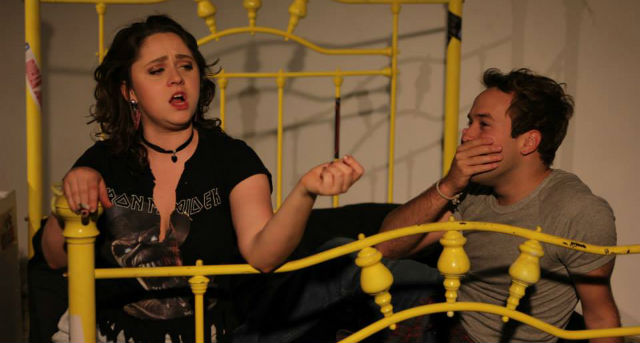
Connor is played by Michael Cutrupi, whose portrayal of the teen spirit is amusing yet genuine. His sense of rebellious wonder is deeply appealing. We relate easily to his character, who bears qualities that are universally familiar. Anthony Weir is memorable for a host of personalities, all whacky and wonderful. Weir is able to make every line tickle, especially in song. His vocal abilities are limited, but his commitment as a comedic actor is outstanding. Renee Heys brings extraordinary passion and presence to her roles. She is a versatile actor who is effective, quiet or raucous, and her talents are showcased remarkably well in this production. Not every role gives much room for showing off, but every performer on this stage is focused, precise and strong.

The work ends abruptly. The narrative quickly turns serious, and the tonal transformation happens faster than we are able to adapt. It suddenly loses connection at the end, but the message can still be heard. The flaw is small but the opportunity for greater poignancy seems to have been missed. Regardless, Kruckemeyer’s writing concludes wisely and we are served up substantial food for thought. The play is meaningful for young and old, perhaps in different ways, but it contains truths that will resonate with every open heart.

www.sirentheatreco.comwww.griffintheatre.com.au

Review: O.C. Diva (Hayes Theatre Co)

hilarycole1Venue: Hayes Theatre Co (Potts Point NSW), Jun 15 – 29, 2014
Directors: Hilary Cole, Jay James-Moody
Musical Director: Steven Kreamer
Cast: Hilary Cole

Theatre review
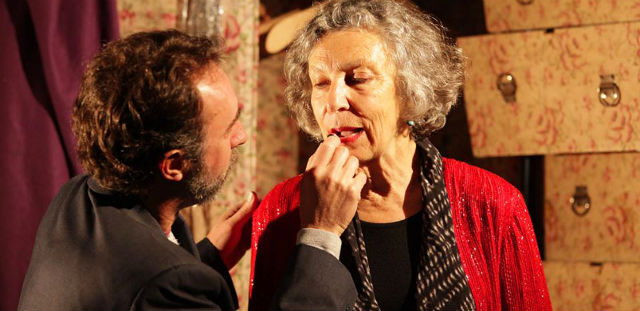
Hilary Cole’s cabaret show takes on the familiar structure of a singer with a microphone, and her musical director on piano. The format works well for Cole, whose voice is an absolute delight, and her ability to convey clear stories and emotions through song demonstrates real talent. As is customary, the song list is composed mostly of familiar standards, but unexpected twists are introduced for added dimension as well as comic effect. Blondie’s 1979 hit “One Way Or Another” gets a surprising mash up treatment with Andrew Lloyd Webber’s “Phanton Of The Opera”, delivering laughs as well as an impressive opportunity to showcase Cole’s musical flair and her musical director Steven Kreamer’s prowess as an accompanist. There is also a one-woman “duet” with Cole being joined by her own impersonation of Bernadette Peters, that illustrates her admiration for the Broadway superstar, and reveals an unexpected versatility.

Direction of Cole’s performance is effective in the comic sections. Her punchlines are subtle but defined, and the jokes are well written. The young performer’s level of confidence is still in teething stages, but she manages to connect well in the venue’s intimate setting. Cole does fidget and stroll around excessively, and her eyes often withdraw into an introspective downward glance, but her passion for the stage is vibrant and infectious. There is a significant portion of the show that looks back at Cole’s experience with obsessive compulsive disorder. The performance becomes vulnerable and truthful, but also overly dark and depressing. Balance is lost here, and one is reminded of the work of Sandra Bernhard and Liza Minnelli where melancholic humour is retained when dealing with bleaker subject matter. Sadness does have a place in the cabaret, but a greater sense of show needs to be applied.

Cole is a beautiful performer, both physically and vocally. She is also a quirky personality, which justifies the choice for a show that is slightly unorthodox in tone. Ultimately, O.C. Diva‘s most memorable moments involve Cole’s singing, which proves to be much closer to perfection than she believes it to be. After divulging her anxieties about personal deficiencies, the show ends at a point of catharsis where she confesses the need for trust. It is evident to all in the audience that she can certainly rely on her talents to take her very far indeed.

www.hayestheatre.com.au

Review: The Boat People (Rock Surfers Theatre Company / The Hayloft Project)

hayloftVenue: Bondi Pavilion Theatre (Bondi NSW), May 29 – Jun 21, 2014
Playwright: Benedict Hardie
Director: Benedict Hardie
Actors: Susie Youssef / William Erimya / Emily Rose Brennan / Luke Joseph Ryan
Image by Zakarij Kaczmarek

Theatre review
One of the exciting facets of theatre is the way it is able to deal with social issues. The stage provides a membrane of safety, where artists can venture into dangerous territory, and say things that are controversial, or even, fictional. In this unique space of expression, the audience is able to examine ideas with their own free will, and perhaps have opinions swayed, or maybe come to new realisations about the world.

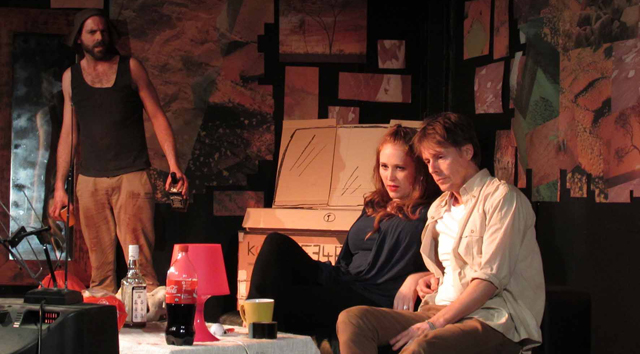
Benedict Hardie’s The Boat People is a script that we desperately need. It tackles subjects that are prominent in news and politics, but approaches it from an artistic perspective. What results is a discussion about themes that we care passionately about, but unpacked in an unconventional way. Its story and characters present to us a refreshing way at looking at Australia’s obsession with asylum seekers and our ever-changing stance on immigration policies. It is neither journalistic reportage nor realistic documentary. It is imaginative, and in its “what ifs”, we are able to observe and judge our personal responses to some of the ideas brought up by the work. Hardie’s writing is sardonic and sophisticated. There are surprises everywhere, and its characters connect deeply with the way we look at ourselves today. Hardie’s direction however, is slightly lacking. The pace of the piece misses a certain fluidity. There are many gear changes that occur from constant shifts in comic tone, which is conceptually exciting, but experientially, a little awkward. Our emotions and attention are prevented from becoming more deeply invested, which might be intellectually interesting, but in reality, quite frustrating. We like the characters and want to feel more for them.

Susie Youssef’s performance as Sarah is extraordinarily centred and strong. Playing a character that is unable to anchor herself morally, Youssef is surprisingly authentic. She presents a truth that we relate to, one that appeals to our humanity; the part of us that lives in shades of grey, and where life forces us to move within these shades, refusing to let us hold on to black or white regardless of our desire for certainty and convenient truths. The level of conviction in Youssef’s work is impressive. The confidence she brings to a role that is characterised by its power and wealth is very persuasive indeed.

Karl is played by William Erimya, who is memorable for his immense affability. Karl is absolutely adorable, and Erimya’s performance is hilarious, but his final scene attempts to shock, only to leave us bewildered and unconvinced. Melanie is another role who goes through a confusing transition, but Emily Rose Brennan’s performance is engaging and enjoyable. Brennan’s work is precise, with an exquisite polish, and she brings an intense energy that is deceptively subtle. Luke Joseph Ryan is the live wire of the group. He is outlandish, buoyant and effervescent, giving us a lot of silliness that contrasts effectively with the gravity of the work. He does seem to be slightly detached from the ensemble who are comparatively subdued, but we do catch glimpses of great chemistry when situations are conducive.

The production is designed intelligently and efficiently. Michael Hankin’s set is simple but arresting. His construction of “windows” is a stroke of genius. Sound designer and composer Benny Davis makes us laugh with pop music made “ethnic”. Costumes by Elizabeth Gadsby helps tell the story well, and her work for Karl and Melanie are particularly attractive but Sarah’s stature requires further finesse.

The complexity of The Boat People is unapologetic and essential. Hardie’s writing resists simplification, so we are forced to grapple with the difficulty of issues at hand. Art is not always about truths, but this show hits the nail on the head. The accuracy at which it portrays contemporary Australian beliefs is staggering, and the results are not always easy to digest. Theatre must not always be a walk in the park, and on this occasion, the ride is bumpy, for good and bad.

www.rocksurfers.org | www.hayloftproject.com

Review: Love Song (Gamut Theatre Co)

gamut1Venue: TAP Gallery (Darlinghurst NSW), Jun 11 – 22, 2014
Writer: John Kolvenbach
Director: Glen Hamilton
Cast: Melinda Hyde, Ford Sarhan, Ben Scales, Romney Stanton
Image by Farland Photography

Theatre review
John Kolvenbach’s Love Song is beautifully written. Witty and thoughtful lines, colourful characters, imaginative scenarios with humour and poignancy, and surprising plot trajectories, all make for a play that is irresistibly charming, and rich with potential for creative interpretation. Kolvenbach’s script about relationships and eccentricity is crafted with intelligence. It has a refreshing originality, but it also bears a universality that ensures a wide appeal.

Direction by Glen Hamilton is elegant but fairly subdued. There is some attention placed on lighting effects, especially during scene transitions, but Hamilton focuses almost entirely on working with his actors to form interesting and dynamic personalities. The four main characters are distinct and memorable, each with their own rhythms and quirks. Ford Sarhan plays Beane, the young protagonist, and he is completely delightful. Sarhan is charismatic, understated, and tremendously funny. His comic timing is a highlight of the production, often delivering big gleeful laughs at unsuspecting moments. Ben Scales’ work as Harry is sensitively considered yet playful. He has a thorough connection with the text, and his articulation of the writer’s ideas is clear and powerful. This is a cast with good presence and buoyant energy, and their performances have created a show that is entertaining and consistently engaging.

Love Song does talk a little about romance, but that is not the whole of its message. It is interested in the way people’s lives are nourished through relationships, and through love. The concept of love is explored at depth. We watch how it affects us comprehensively, and how we transform in its presence. Most significantly, we learn how it (love) is essential for life to flourish, no matter what form it may take, and no matter how much effort is required for it to materialise.

gamuttheatreco.wordpress.com

Review: Why Torture Is Wrong, And The People Who Love Them (New Theatre)

newtheatreVenue: New Theatre (Newtown NSW), Jun 3 – 28, 2014
Playwright: Christopher Durang
Director: Melita Rowston
Actors: Peter Astridge, Romy Bartz, Ryan Gibson, Terry Karabelas, Alice Livingstone, Ainslie McGlynn, Annie Schofield
Photograph © Bob Seary

Theatre review
With a title as provocative and powerful as this, the play’s central concept hangs over everything that unfolds. We evaluate every situation, trying to decide what our personal definitions of “torture” might be, in relation to the statements that the writer makes. It is not a passive experience, sitting in the darkness of this theatre. The script seeks to involve and implicate us in its world. We look at its characters and wonder how we fit in, or indeed how the stories fit into our lives.

The production however, struggles to connect with us. The players are in their own world, always at a distance, and while there is a consistent semblance of poignancy and performances are all polished and precise, there is an uncomfortable inaccessibility that makes engagement difficult. Melita Rowston’s direction is wonderfully heightened and outlandish, but its strict structure seems to restrict her actors from playing with audience reactions and from using our presence as extensively as a comedy of this nature should. Nevertheless, Rowston’s work is suitably subversive in vision, and the courage at which she tackles the play’s difficult subjects is noteworthy.

Set design by Sasha Perri and Clarisse Ambroselli is imaginative and efficient. The action takes place in almost ten different places, and great lengths are taken to make every setting convincing and evocative. The play goes through many scene changes, and each transition is managed with elegance. From a production values perspective, the show scores very well.

Standouts in the cast include Peter Astridge, who plays Leonard, an extreme right winger of the nutty and violent variety. Astridge’s confident absurdity is refreshing and seductive. The caricatured roles are not written with much range or variance, but Astridge manages to find nuances to create a sense of dimension and unpredictability. Romy Bartz as Hildegarde plays up to the wildness in Christopher Durang’s comedy and delivers several big laughs. There are no weak performances in the show, and all roles are cast well. The script seems to require its players to portray the duality of character and actor, and although some effort is put into creating a sense of “metatheatricality”, a more conventional approach is usually chosen. Immersed within their roles, they miss opportunities for a more post-modern style of commentary on the situations being depicted.

A play that examines our moral compasses with torture and terror, should never leave us cool, or cosy. Its elements of controversy and iconoclasm should take precedence, and their disruptive nature should spawn discomfort, or disquiet. The play shows itself thinking things through; it is concerned with the use of intelligence, and it wishes to be challenging. The edge of the envelope can be pushed further.

www.newtheatre.org.au

Review: Beauty! Glamour! Fame! (The Cafe Debris Company / Merrill Pye Productions)

brentthorpe

Venue: The Imperial Hotel (Erskineville NSW), Thursdays Jun 5 – Jul 3, 2014
Playwright: Brent Thorpe
Director: Brent Thorpe
Cast: Brent Thorpe, Zan Cross
Image by Brett Boardman

Theatre review
Saying that Brenda Trollope is larger than life is an understatement. She is rambunctious to the extreme and fervently demented, with a penchant for sharing too much, and at too much detail. She is a creation of Brent Thorpe, who is a performer with a keen sense of subversive humour, and an even keener urge to entertain.

In Beauty! Glamour! Fame!, Trollope addresses her audience directly, divulging tales of debauchery, and enacting outrageous highlights from her colourful existence. References to Australian culture of the last forty years abound. There is no question that the lady has been around the block more than once or twice. Thorpe’s performance is energetic and frenzied, owing more to vaudeville than to Stanislavski. His approach focuses on timing and presence, without letting the idea of emotional truth get in the way of a good tall tale. There is one scene, however, where Thorpe speaks on a “talkback radio” program as a secondary character Deirdre Flick, and an authenticity in his convictions shines through. In the space of several minutes, he encapsulates all that is disturbing about Australian media and politics today. Deirdre needs her own show.

Zac Cross plays various male characters, providing sturdy support as the reliable sidekick. Thorpe’s nerves can at times be apparent, but Cross seems to take everything in his stride. They are an odd coupling, but nothing in the show is averse to strangeness. It is an eccentric work about an eccentric mind. Trollope is not interested in the deep and meaningful, but she enjoys herself. She does not invest in poignancy, but pulls out all the stops for laughter. There may not be very much love or compassion here, but Trollope’s valour is certainly a thing to behold.

www.theimperialhotel.com.au

Review: Mojo (Sydney Theatre Company)

mojoVenue: Wharf 1 Sydney Theatre Company (Walsh Bay NSW), May 17 – Jul 5, 2014
Playwright: Jez Butterworth
Director: Iain Sinclair
Cast: Tony Martin, Lindsay Farris, Eamon Farren, Ben O’Toole, Josh McConville
Images by Brett Boardman

Theatre review (originally published at auditoriummag.com)
When boys grow up and begin to find their feet in the adult world as men of stature, the acquisition of masculinity often becomes critically important. The characters in Jez Butterworth’s Mojo seem to spend all their waking moments satisfying that overwhelming and insatiable need to be seen and treated as men of worth, and in the London underground gangland of the late 1950s, this involves unthinkable violence, and outrageous criminality. Butterworth’s daring and extravagantly brutal 1995 script illustrates a world of sex, drugs and rock and roll, where sons are raped, fathers are murdered, and honour is maleficently displaced.

Butterworth’s work starts up in high gear. He gets to the mayhem quickly without setting up thorough introductions for its story. There is a disorientation that occurs in the beginning, and the viewer is required to be alert, in order to decipher manic events while keeping up with the fantastically rich dialogue. Iain Sinclair’s direction in the initial scenes emphasises speed and energy, which can be a challenge for the plot, but a hyper-reality is firmly established for the play’s time and space. We are transported to a past that fits our imagination in part, but also controversial. The play’s rampant drug taking and extreme profanity is a far cry from the innocence of Grease, and the sophistication of Orson Welles’ Touch Of Evil. Sinclair’s work owes more to David Lynch’s 1986 masterpiece Blue Velvet in its handling of ultraviolence and surreal personalities. An air of menace sets in quickly and the pressure it exerts is unrelenting. The production has a magnetic quality in spite of its obscure otherness. It plays like a riddle, glutted with suspense and eccentricity, and we are seduced at every step, desperate to peek around every impending corner.

Indeed, the production succeeds as a piece of narrative-driven entertainment. It is engrossing, amusing and thrilling, with a good amount of shock value thrown in for a sense of gangster authenticity that also gives the show a cool edge. Its themes are not immediately evident, but they resonate afterward. The show does not ask questions directly, but it certainly encourages us to question what had been seen. Sinclair might be comfortable with dramatics that strike like a sledgehammer, but his ability to probe our conscience about bigger issues is as accomplished as it is subtle.

Also displaying excellence is Sinclair’s design team. Visual aspects, including lighting, costumes and sets are adventurously creative and intelligent. Nicholas Rayment’s lights are exhaustively explored, fulfilling functional and aesthetic requirements equally brilliantly. There are moments of beauty that look to be inspired by film noir, and also memorable incidences of dread that are as sinister as a dank lane way in any cosmopolitan city at 3am. Pip Runciman’s set design ingeniously creates spaces out of the usually nondescript Wharf Theatre stage. Levels and doorways are introduced to great effect, and the representation of a nightclub that is attractive in front, and dilapidated behind, is efficiently managed.

Percussionist Alon Ilsar’s work is perhaps the most inventive. He provides accompaniment for most of the scenes, underscoring action by amplifying mood and manufacturing tension. Ilsar’s background sounds are noticeable but not intrusive. When it does come to the fore, it is in the style of experimental jazz, which adds considerable sophistication to the production.

Chemistry in the cast is strong, and mesmerising. The actors are perfectly in tune, and together, they present a microcosm that we find believable in spite of its irrationality, and irresistible even though it is deeply repulsive. Josh McConville is comically frantic as the amphetamine fuelled Potts. His consistent buoyancy gives the play a propelling energy, and prevents the darker sections from becoming too melancholic. There is an enjoyable vibrancy to his performance that keeps an important sense of youth and juvenility in the story. Together with Ben O’Toole’s slightly more innocent Sweet, they portray a couple of young men keen to prove themselves, and to make a mark in their sordid world. Lindsay Farris is enigmatic as Baby, a deranged personality who is central to the play’s interest in maturity and manhood. Farris takes the opportunity to depict his unorthodox character with a liberal measure of offbeat artistic choices, and carves out a fascinating performance that is simultaneously alluring and poignant.

The young men in Mojo are in a state of confusion. We see them exercise the impulse to impress, to emulate, and to succeed, but their role models are severely impaired. Masculinity is highly valued, and in many of our lives, it is through acquiring masculinity that men achieve social acceptance and establish status. The definition of masculinity is then a matter of great concern. Greed, violence, destruction, deception, betrayal and criminality are all inextricably linked with notions of success and fulfillment in Mojo. It is a bleak picture painted of the past, but it seems that the proposition made here is that evolution is illusory, and that boys will be boys.

www.sydneytheatre.com.au

Review: Truth, Beauty And A Picture Of You (Neil Gooding Productions)

hayestheatrecoVenue: Hayes Theatre Co (Potts Point NSW), May 9 – Jun 1, 2014
Book: Alex Broun, Tim Freedman
Music: Tim Freedman
Lyrics: Tim Freedman
Director: Neil Gooding
Musical Director: Andrew Worboys
Cast: Ian Stenlake, Scott Irwin, Erica Lovell, Toby Francis, Ross Chisari

Theatre review
Opera and the stage musical are theatre genres with their own defined song structures. Music is written in a specific way so that the genre works. Tim Freedman’s songs were written not for the stage, but for the world of pop and rock. This “juke box” musical is formed with highlights of his recording career with The Whitlams, and it is debatable how well the selection stands up against compositions tailored for the genre, but there is no question that this premier production of Truth, Beauty And A Picture Of You is effective on many levels.

Freedman and Alex Broun have built around the songs, a story replete with nostalgia and sentimentality, ensuring an emotional experience that audiences expect of the format. Characters and lines are thoughtfully crafted, with scenes between songs sometimes leaving a greater impression than the musical numbers themselves. Neil Gooding’s direction utilises space limitations of the Hayes Theatre to his advantage, evoking wistfully, the grunge of the 1990s and of Newtown, where the action is set, but it should be said that visual design could benefit from being a little more adventurous. The incorporation of live musicians within the space is charming. Gooding allows them to be within sight, but they are never intrusive. Above all, Gooding is a sensitive storyteller. The plot unfolds beautifully, with surprise, laughter and pathos always in the mix. His cast is a strong one, and the conviction of their performances is impressively engrossing.

Ian Stenlake, in the role of Anton, unleashes remarkable charisma. He is not a heroic protagonist, but his confident presence captivates us, and makes us care for all that he goes through. Stenlake’s ability to portray frivolity and an Australian casualness is wonderfully endearing, and his comic timing is a highlight of the show. Scott Irwin plays Charlie, buoyant and optimistic in 1994, but wearied and dejected in 2014. His unbelievable transformation between both eras bears an authenticity that is astonishing. Irwin’s work is subtle but powerful. His depiction of the character’s darker moments are devastating, and it is this gravity that gives the production its soul.

Younger members of the cast might be slightly less accomplished, but their talents are evident. Their vocal abilities in particular are outstanding, and they bring new life to many of the songs. It is unfortunate that the only obvious technical weakness of the production has to do with the way voices are mixed, as the band tends to drown out some of the singing in the bigger numbers. Erica Lovell as Beatrice is delightful and spirited. She is the strongest actor in the young bunch, and turns a somewhat inconsequential character into a memorable one.

Truth, Beauty And A Picture Of You is a moving show about love in its many guises. It tugs at our heartstrings and touches deeply. Like every great musical, it is affecting and entertaining, and it presents an opportunity to showcase some of our greatest talents, in whom we find great joy and sublime inspiration.

www.hayestheatre.com.au | www.goodingproductions.com

Review: #Three Jerks (Sweatshop)

rsz_sweatshopVenue: Wharf 2 Sydney Theatre Company (Walsh Bay NSW), May 24, 2014
Playwrights: Michael Mohammed Ahmad, Peter Polites, Luke Carman
Director: Roslyn Oades
Performers: Michael Mohammed Ahmad, Peter Polites, Luke Carman
Image from ABC TV

Theatre review
The show takes the form of a rehearsed spoken word presentation. Three authors are positioned with scripts on music stands, and a projection screen behind them bearing the image of an Australian map with the words “Under New Managment (sic)” scribbled across. The men read their own stories, and chime in with the others’ for dramatic emphasis when required. There is very minimal movement involved, and there are no costumes. This production is not in any way elaborate, but the writers work thoroughly with their voices to communicate their vivid and powerful writing.

The script is essentially composed of three soliloquies, interestingly combined, and there is potential for a more conventional theatrical rendering. #Three Jerks is fresh, original, and gutsy, with characters that many will find intriguing. It is a frank representation of young men and teenagers from Western Sydney, and providing them a voice in our cultural landscape is of great importance. The writing is colourful and dynamic, and works well in its current state, but even though the authors’ readings are surprisingly vibrant, the text calls out desperately for actors to memorise the lines, and to deliver them not just verbally but also physically. The liveliness of the stories and the power of its vernacular will provide the right theatrical practitioners with an opportunity for a work that contemporary Australian art has been hankering for.

#Three Jerks offers insight into a slice of Sydney life that seems to exist for mainstream society only in our news media. Self-assertion is necessary to correct misrepresentations of one’s own identity. Dominant cultures will always be in positions of power that uphold systems, whether intentionally or otherwise, that attempt to subjugate minority groups into persistent positions of disadvantage, and it is up to the disadvantaged to effect revolutions, and here is a solid early step.

www.sweatshop.ws

Review: The Young Tycoons (Spooky Duck Productions / Darlinghurst Theatre Company)

darlinghursttheatreVenue: Eternity Playhouse (Darlinghurst NSW), May 16 – Jun 15, 2014
Playwright: CJ Johnson
Director: Michael Pigott
Actors: Briallen Clarke, Laurence Coy, Andrew Cutcliffe, Paige Gardiner, Edmund Lembke-Hogan, James Lugton, Gabrielle Scawthorn, Terry Serio, John Turnbull
Image by Noni Carroll

Theatre review
Australia’s media moguls are a source of constant fascination for the general public. We are intrigued by their wealth and power, their influence on politics and public policy, and their control over our daily discourse through news and information that they disseminate. They are part of a celebrity culture that feeds an insatiable appetite for inconsequential gossip, with their public lives exposed to public scrutiny. Our interest in the Murodchs and Packers of the world is usually nothing more than a petty fixation, but keeping an eye on the powers that be is clearly necessary, as leaving them completely to their own devices would very likely result in calamity.

CJ Johnson’s writing does not create direct links between the actions of The Young Tycoons and our own lives. They are objects presented for our examination and entertainment. It is arguable whether the characters are intrinsically interesting, but in Darlinghurst Theatre’s 2014 production, it seems that it is the actors’ work that determines how the story connects. Edmund Lembke-Hogan is spirited and comical as Kim Vogler, one of the play’s two third-generation billionaires. His performance focuses on delivering robust comedy, and it works. Equally effective is Laurence Coy’s Ted Vogler, Kim’s father, whose coarse demeanour is irresistible and an obvious favourite of the audience.

Women play second fiddle in the show, but they shine brightly in their own right. Paige Gardiner elevates a somewhat amoral personality by attributing to her character Sally Kilmarten, a believable complexity and affable warmth. Gabrielle Scawthorn has the thankless task of playing the severest role in quite a boisterous comedy, but she attacks her scenes with conviction and a surprising dignity that prevents Sherilyn Moss from turning into an unfortunate caricature.

The play is composed of successive short scenes. This allows for its pace to be fast and exhilarating, but scene transitions are not always managed smoothly. Director Michael Pigott adds an understated stylistic flair, but having every scene detached and standing alone can sometimes be disruptive to the narrative flow and feels too literally interpreted. Sound design does help on several occasions, but can itself be distracting at certain points. The Young Tycoons is a funny show about people of a certain echelon. Its appeal might not be general, but it will no doubt speak to many who cannot escape the seductive and scintillating cult of celebrity.

www.darlinghursttheatre.com