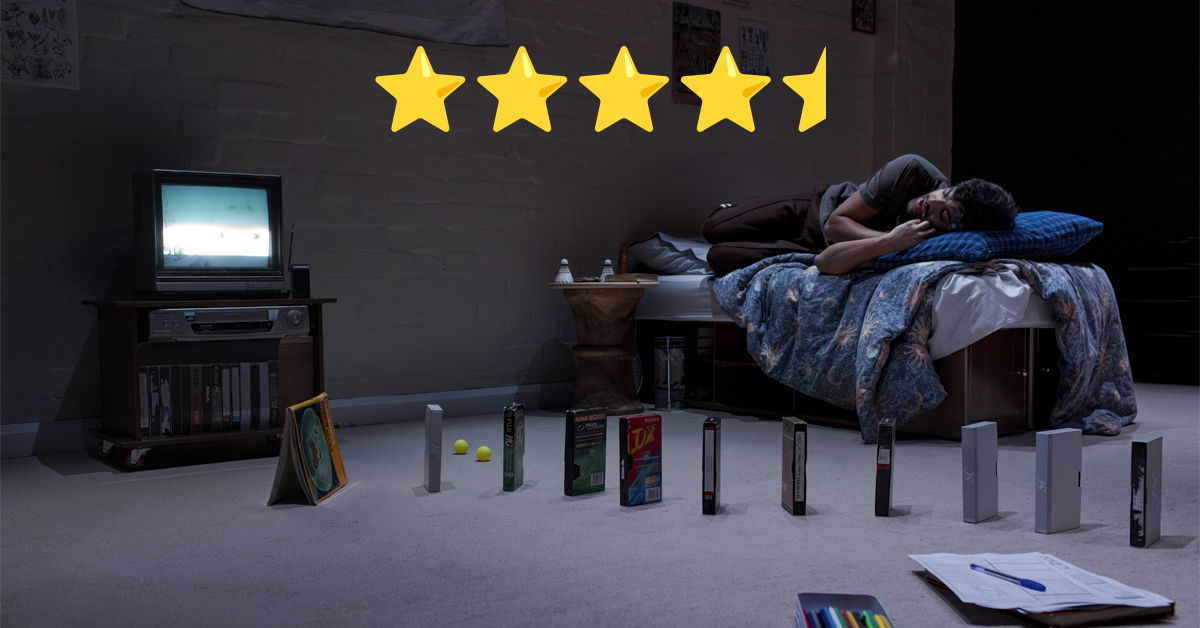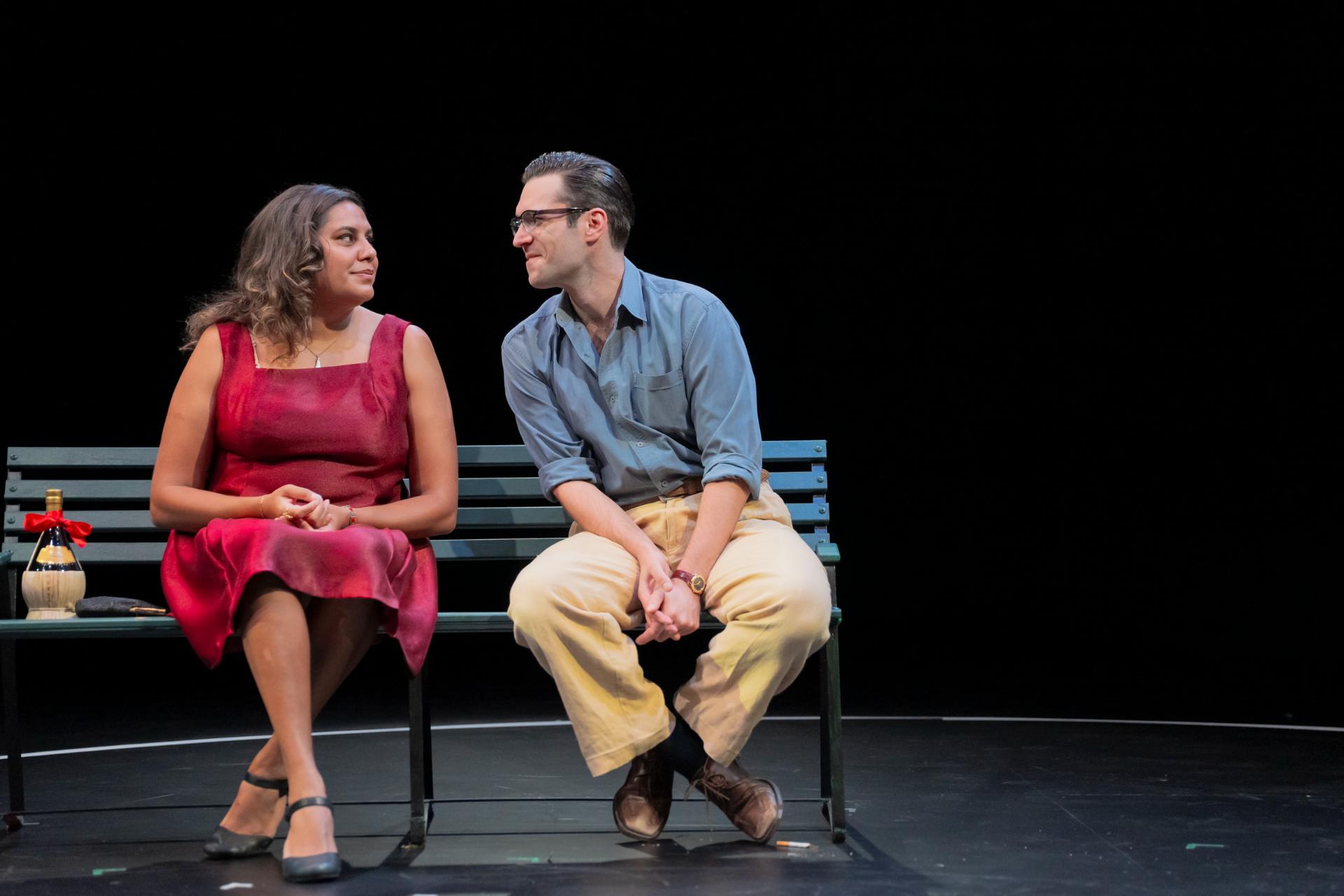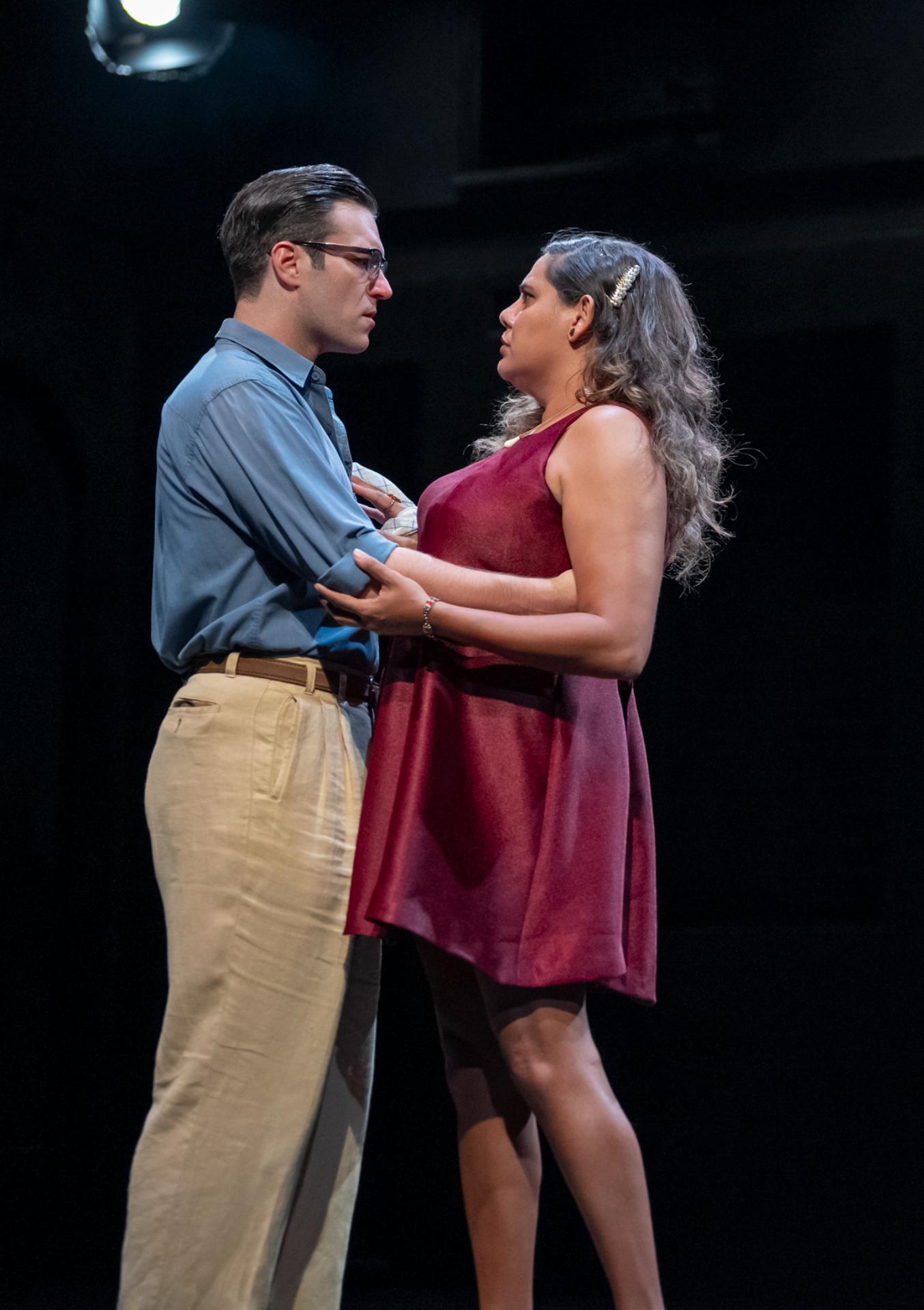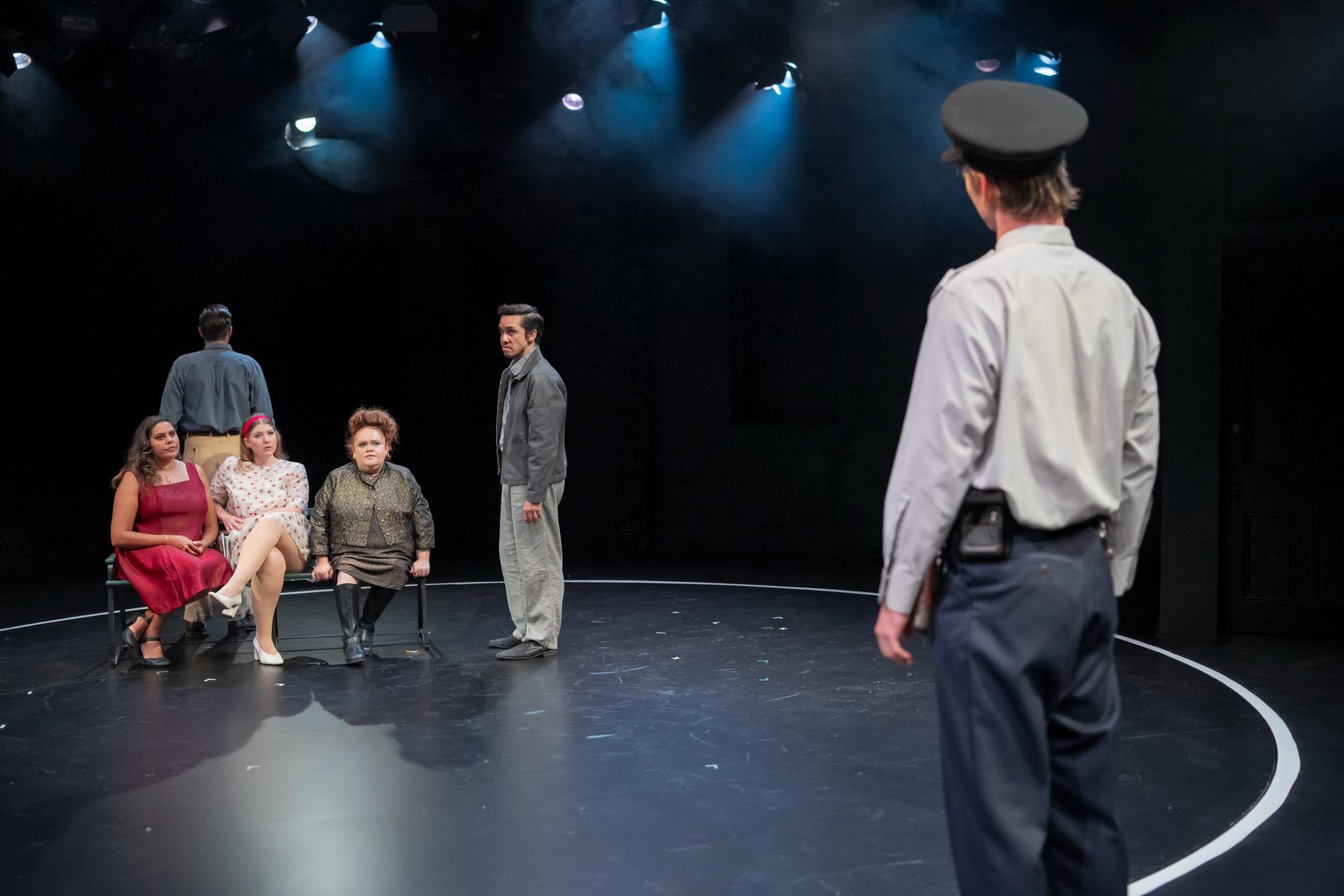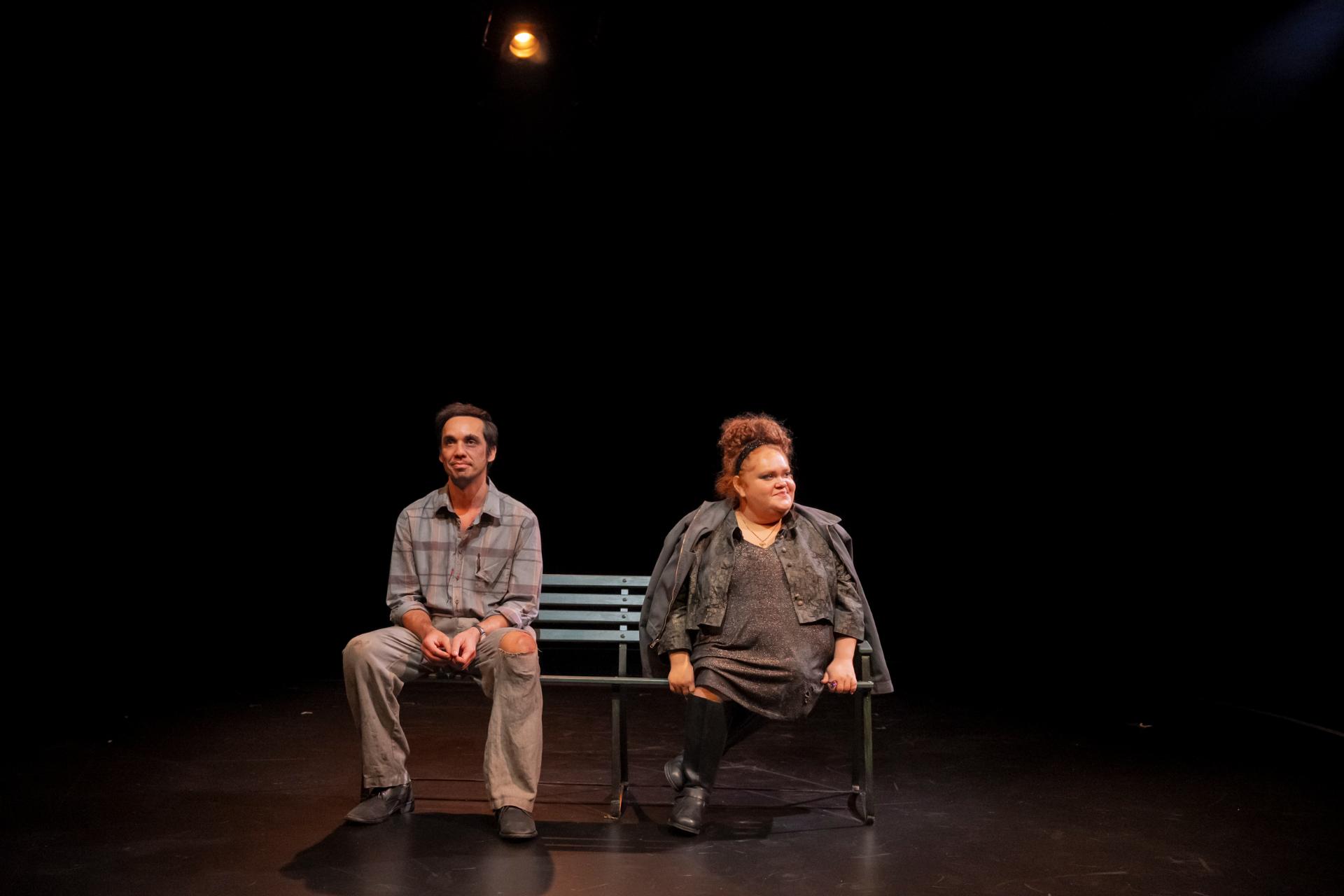
Review: The Edit (25A Belvoir)

Venue: Belvoir St Theatre (Surry Hills NSW), Oct 7 – 26, 2025
Playwright: Gabrielle Scawthorn
Director: Gabrielle Scawthorn
Cast: Iolanthe, Matilda Ridgway
Images by Robert Catto

Theatre review
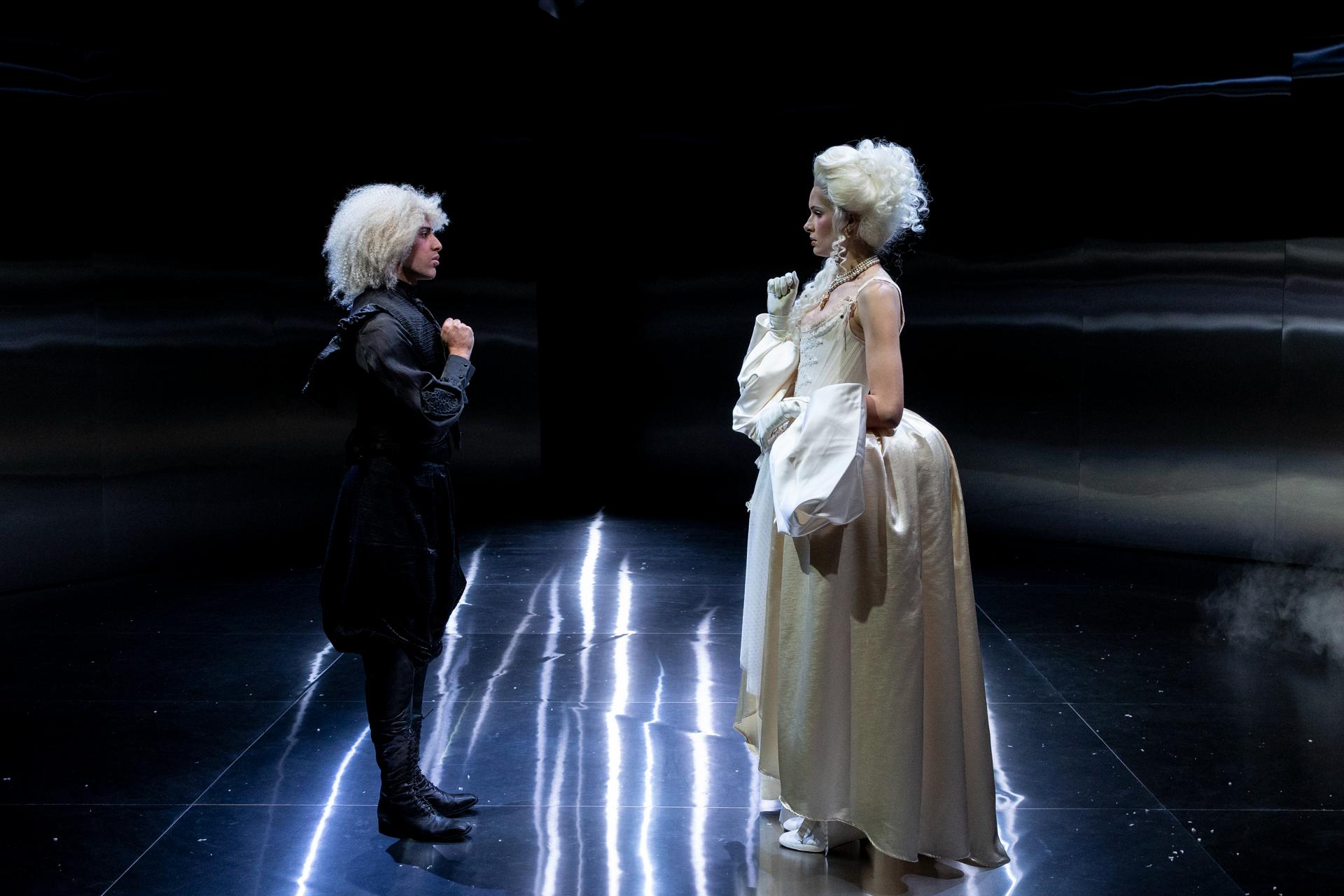
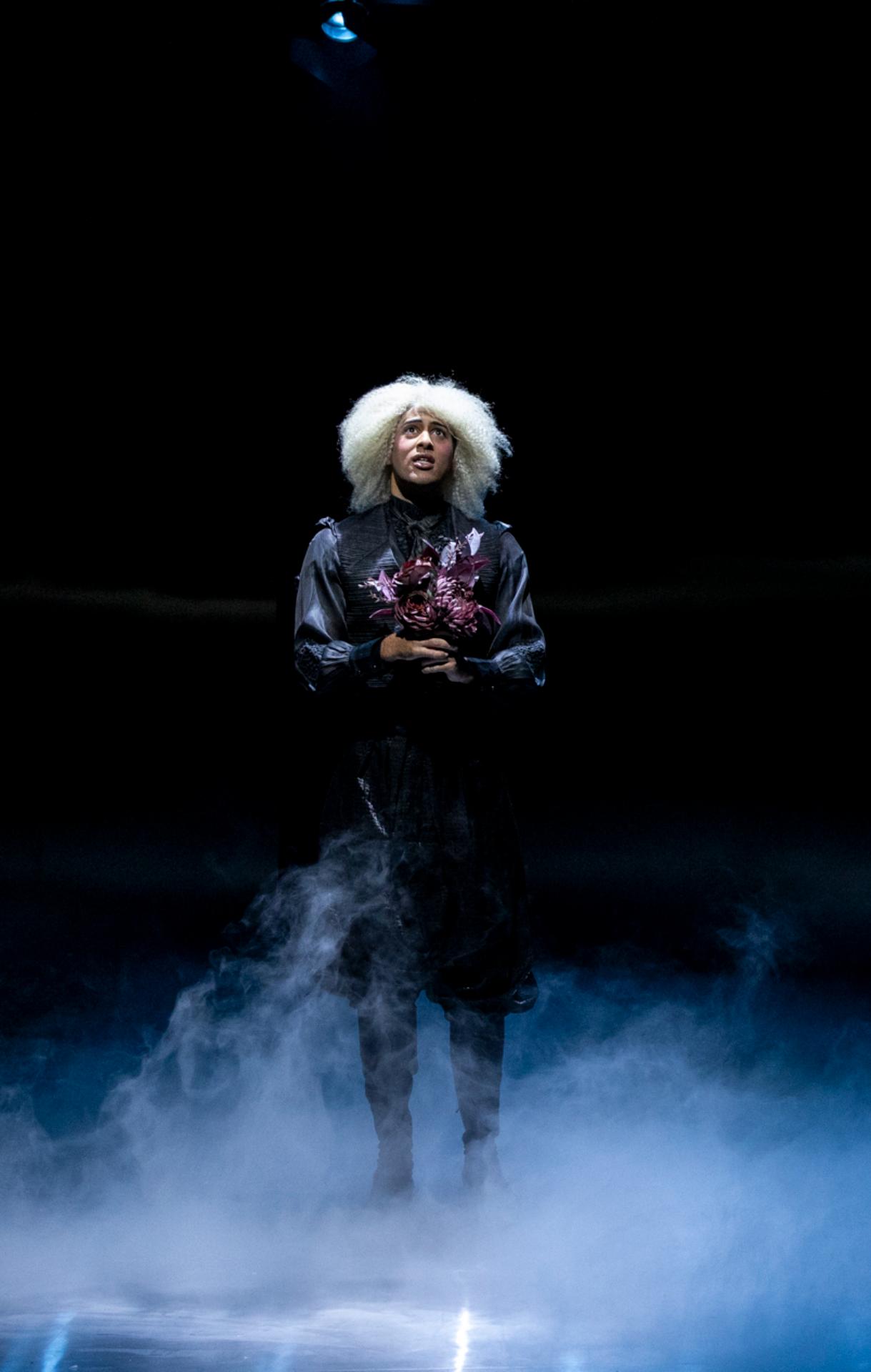
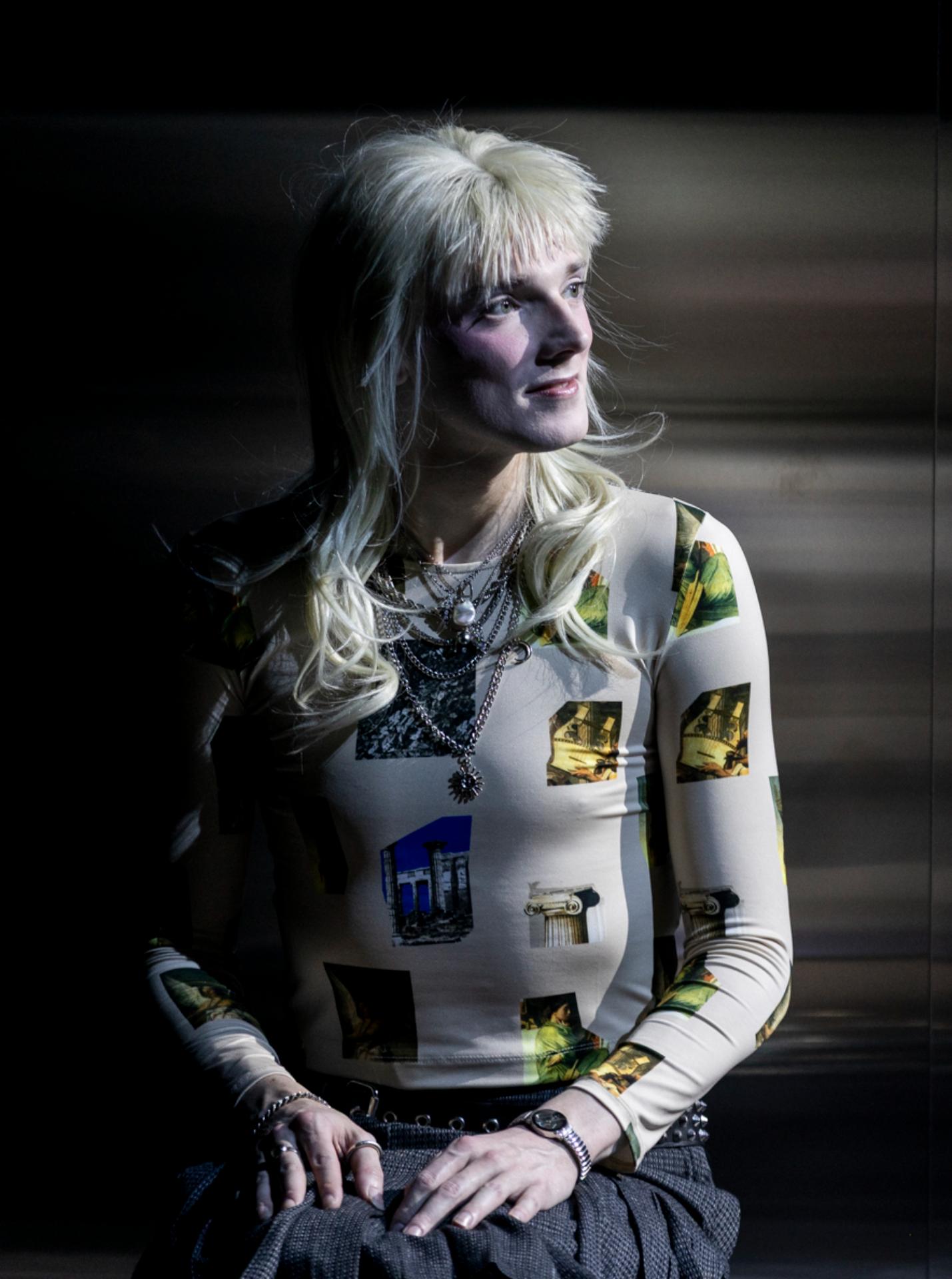
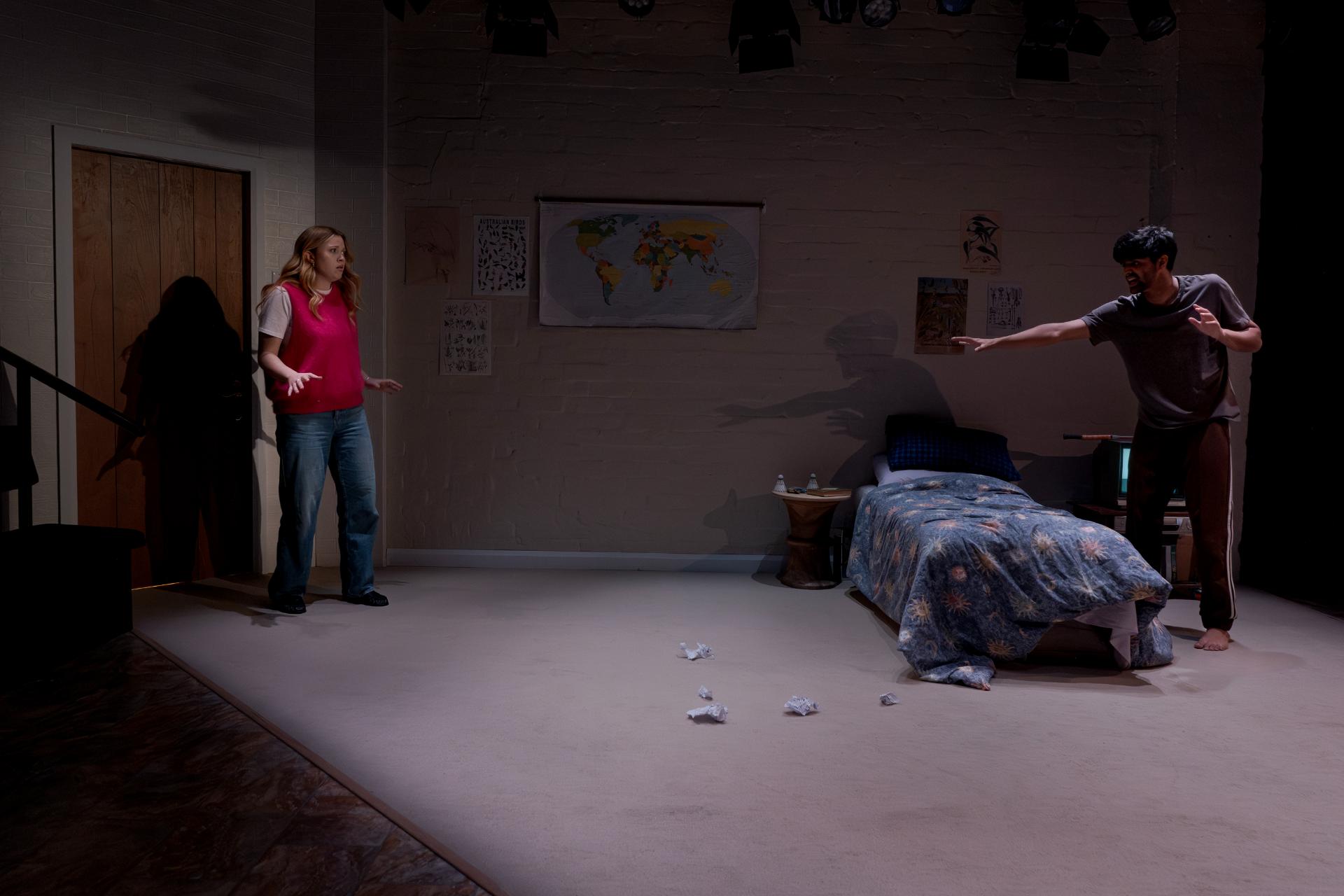
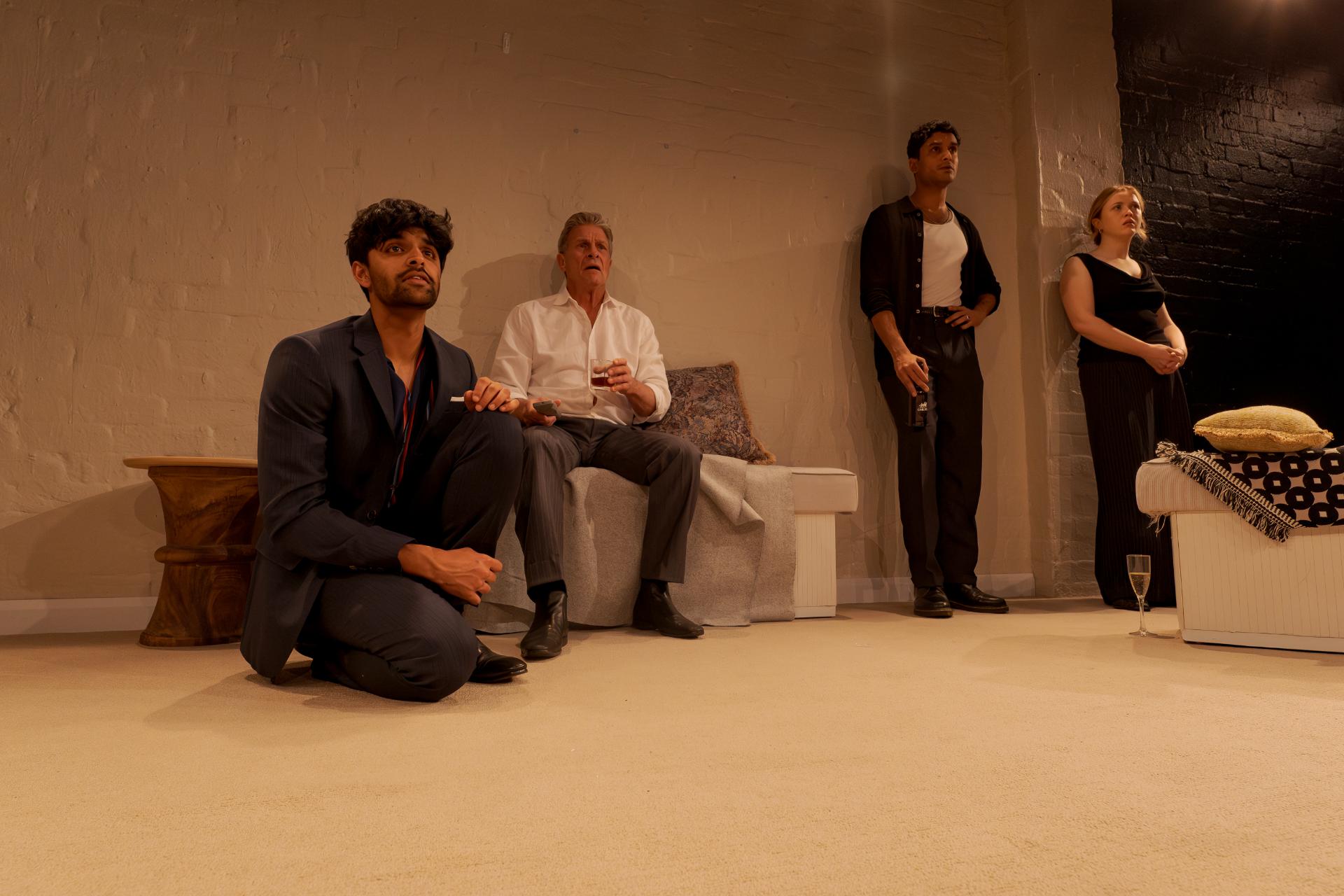
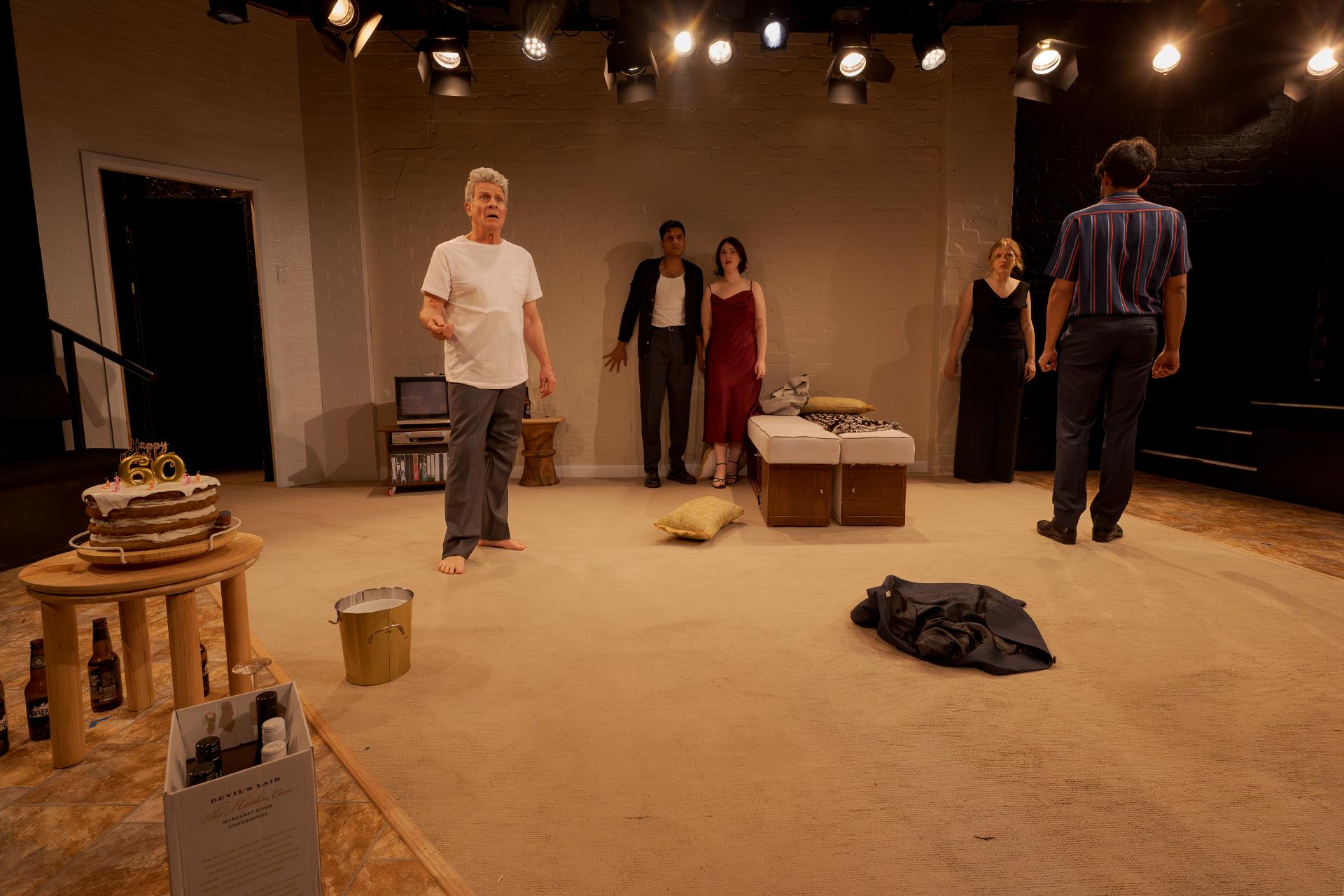
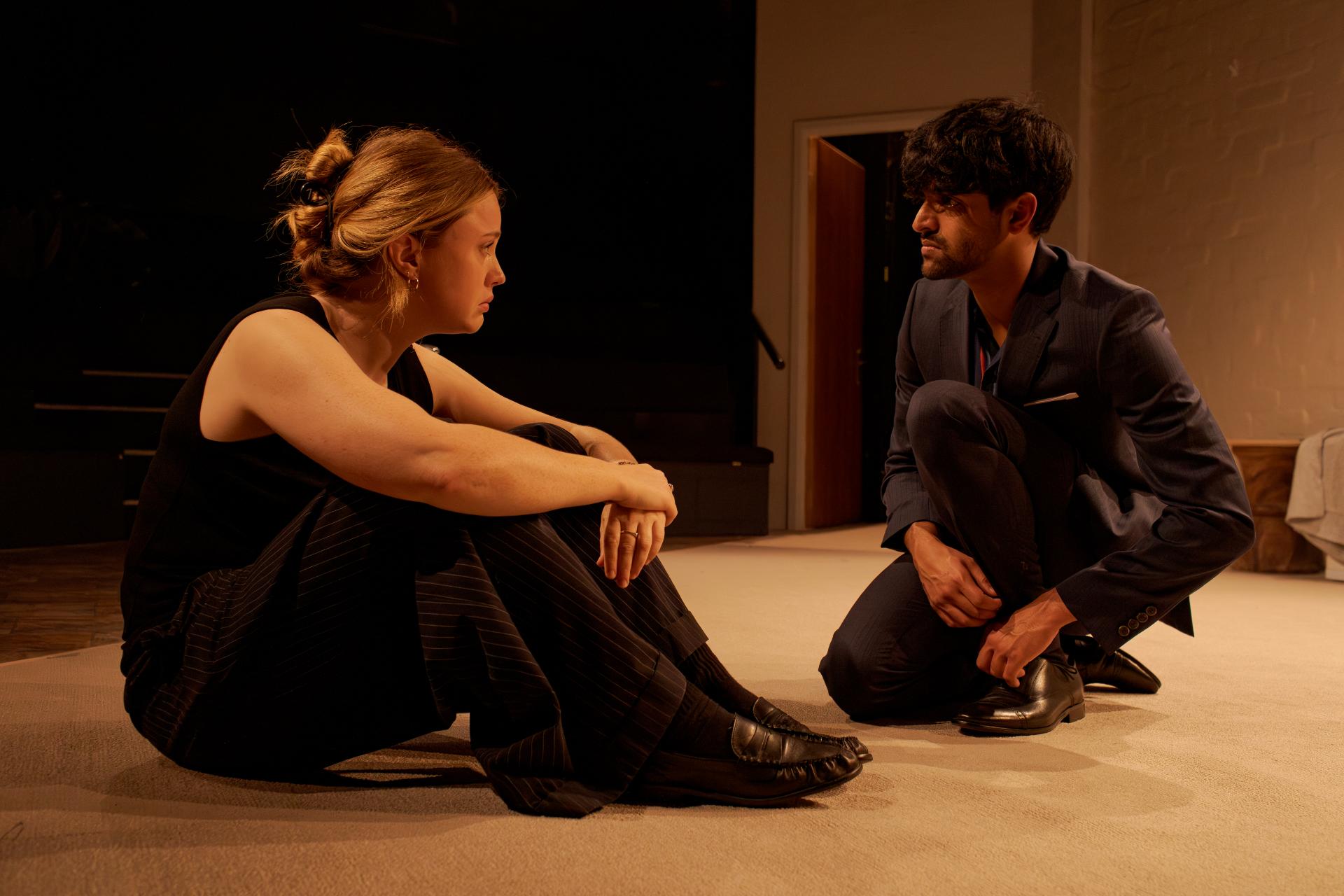
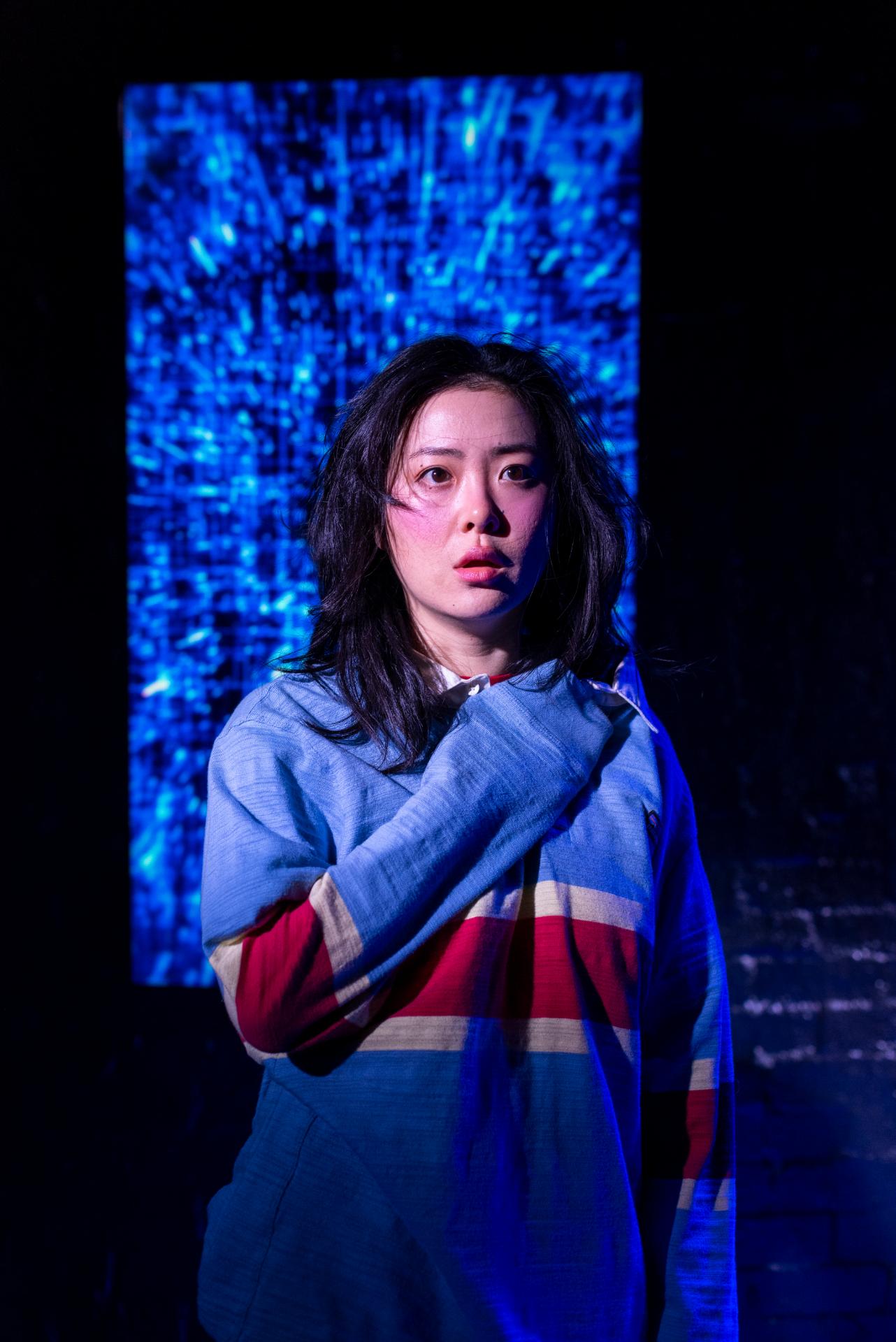
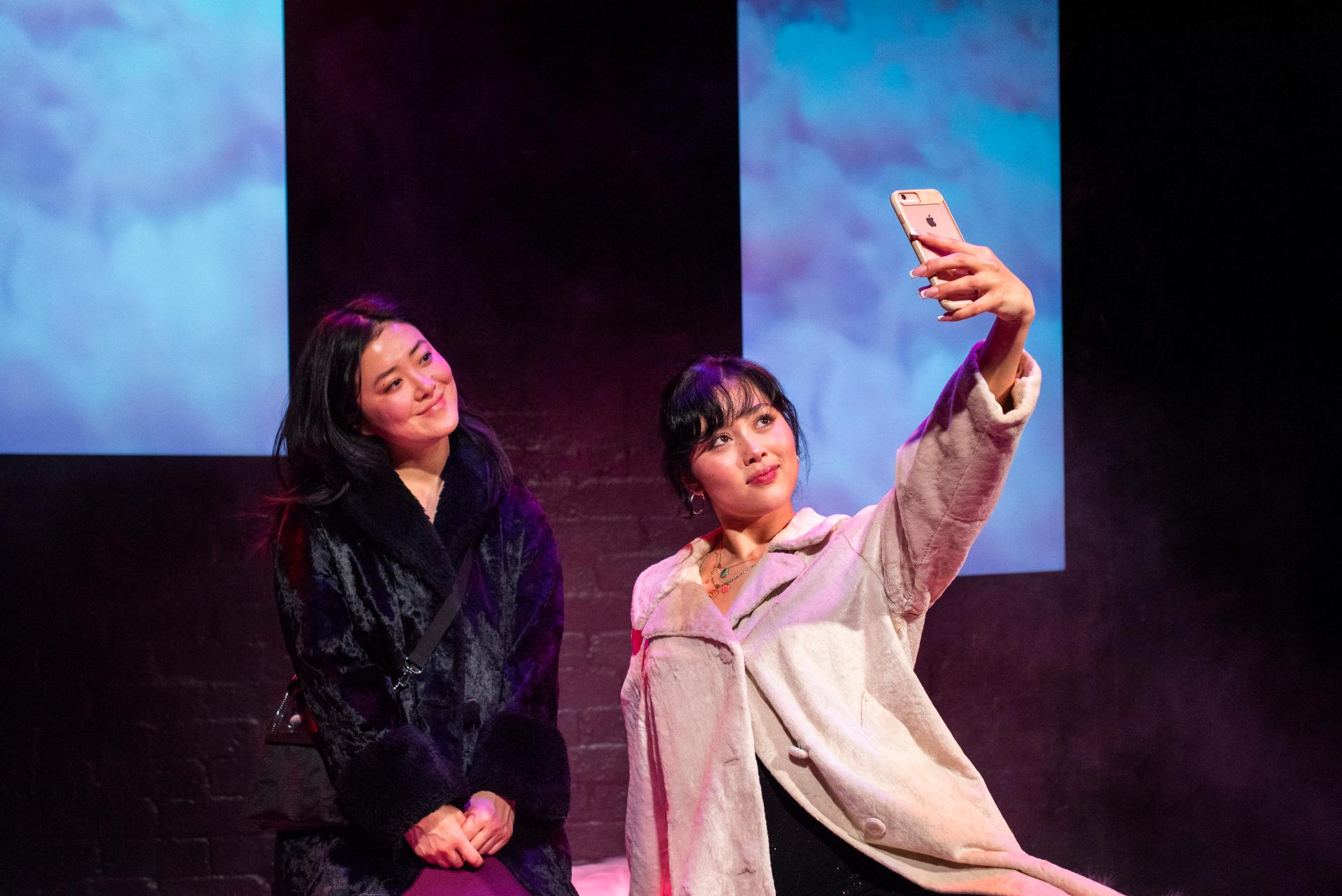
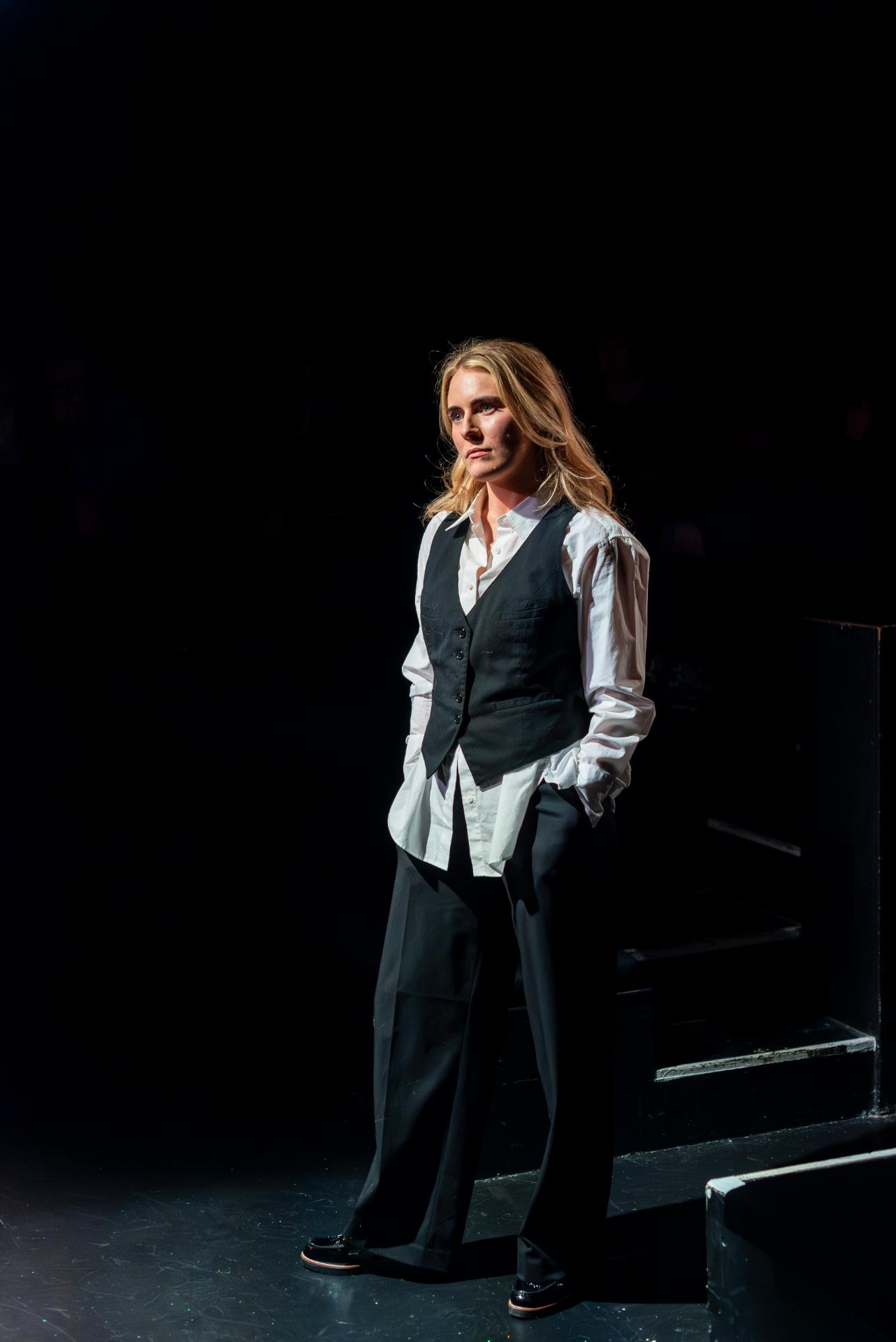
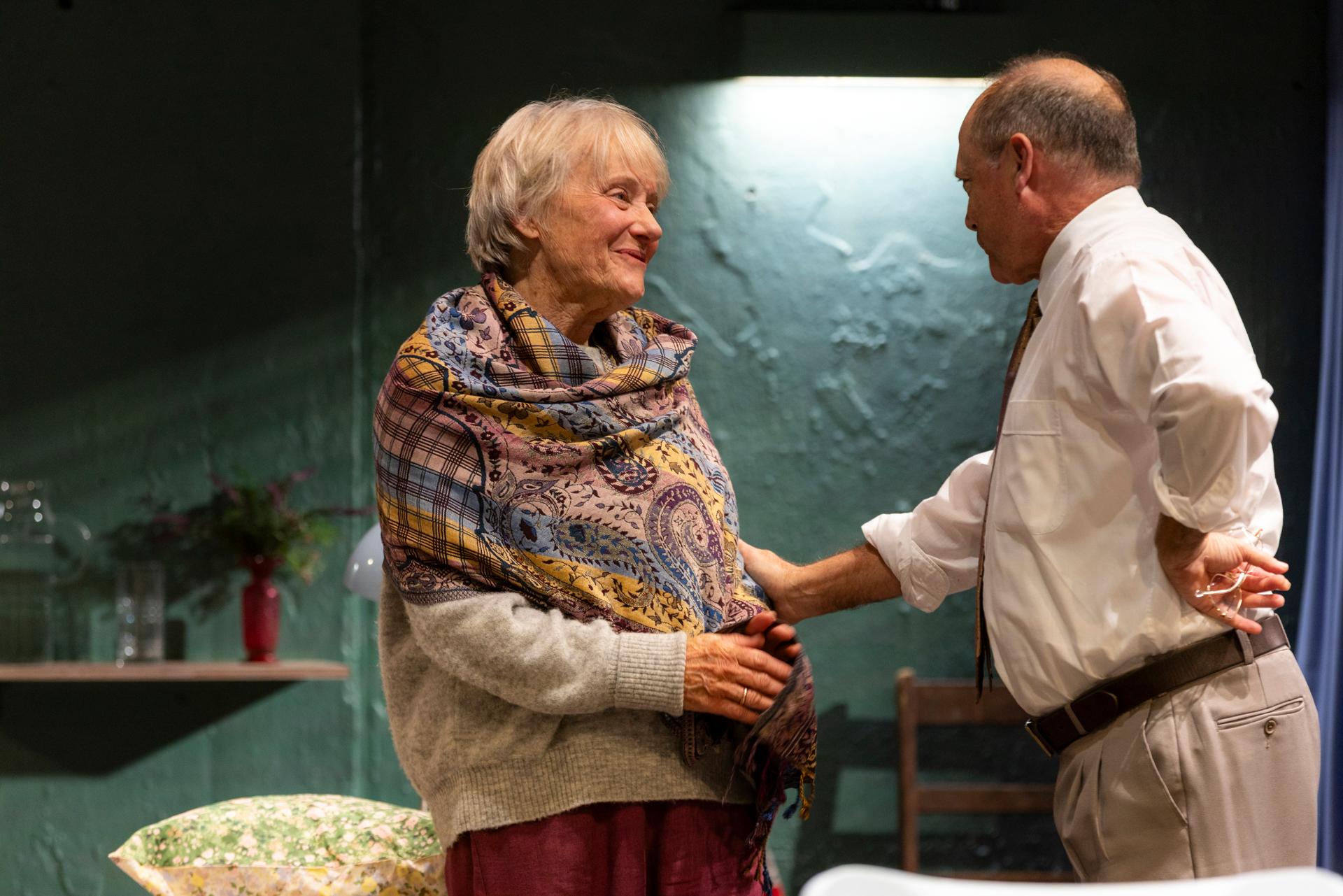
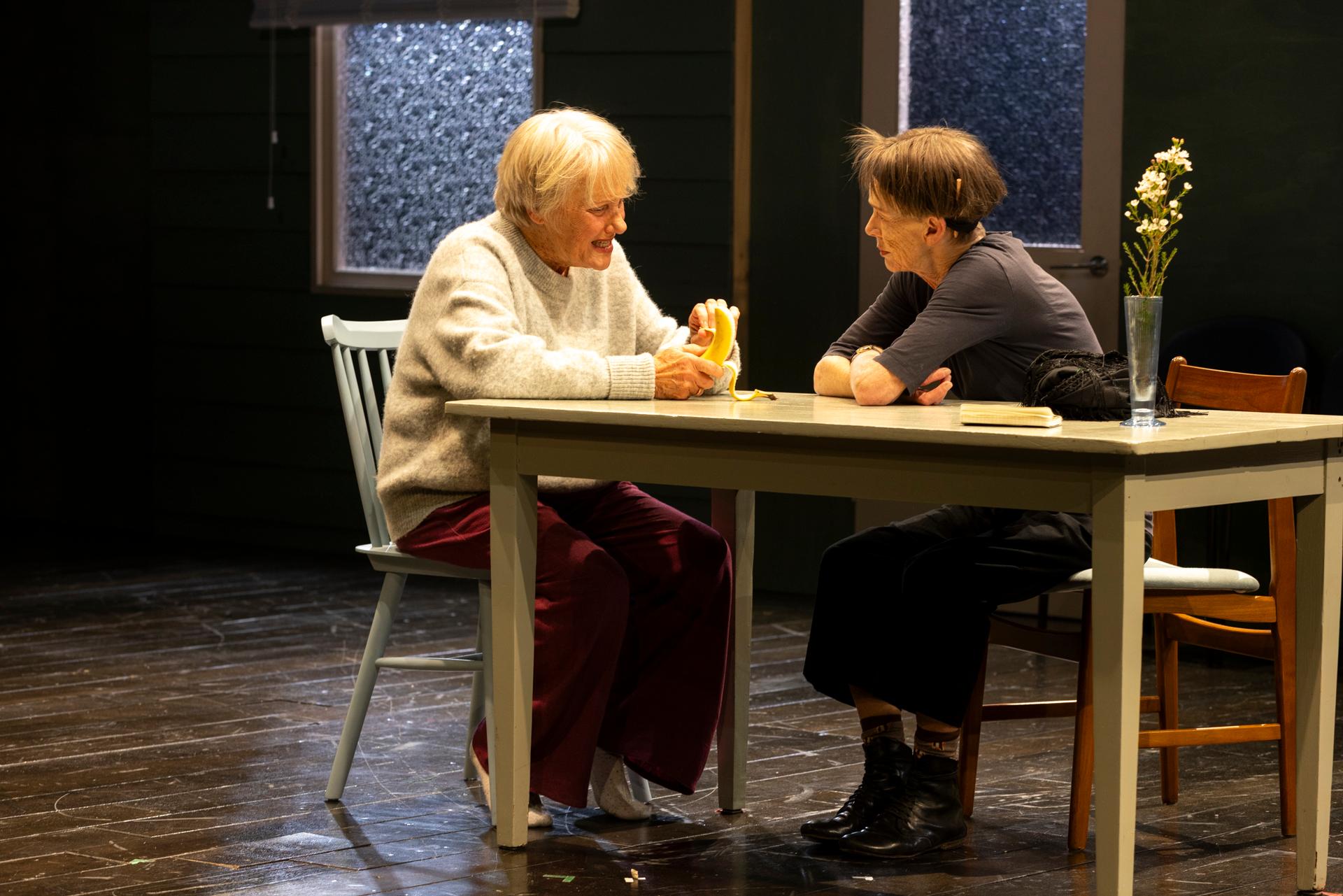
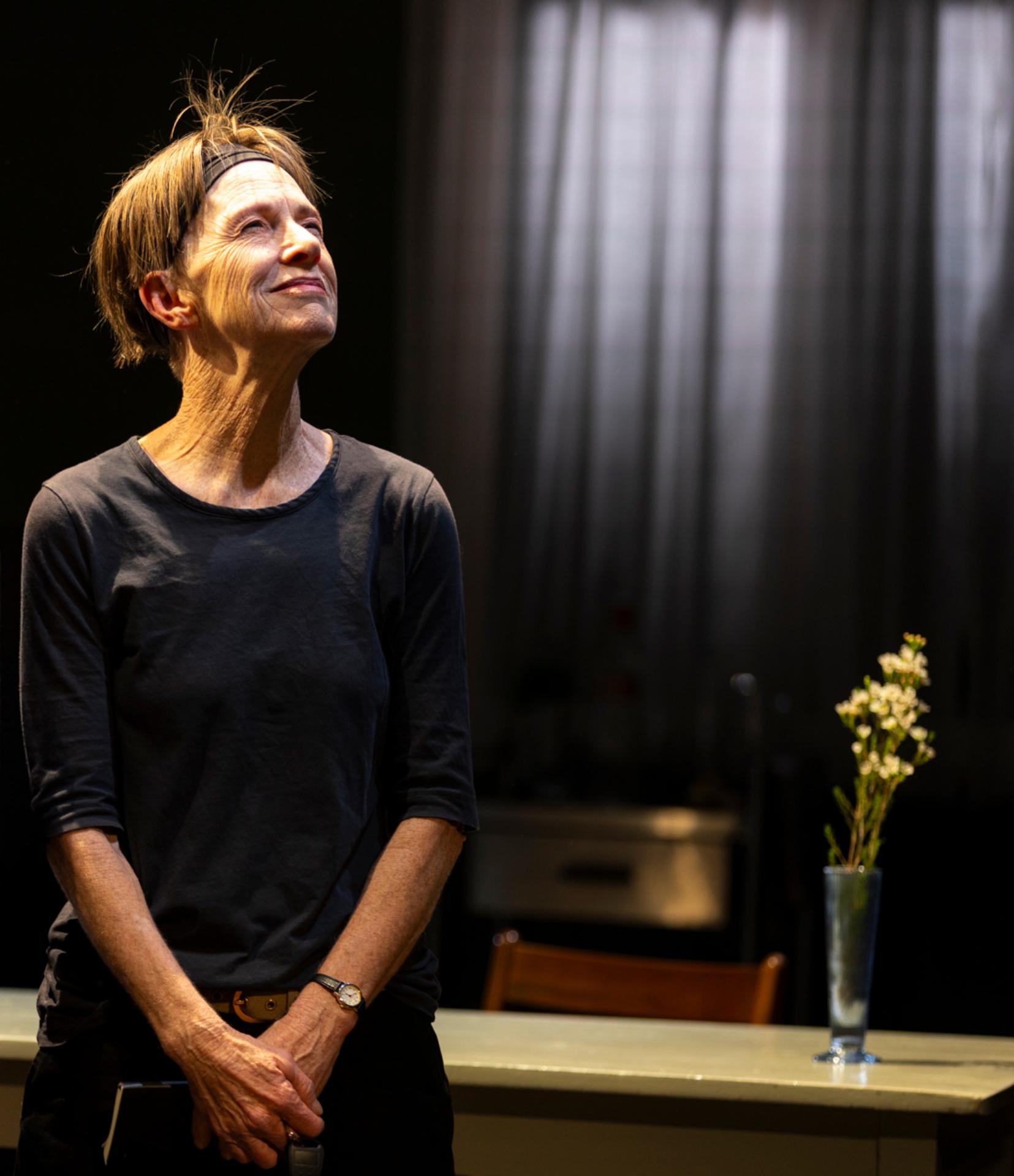
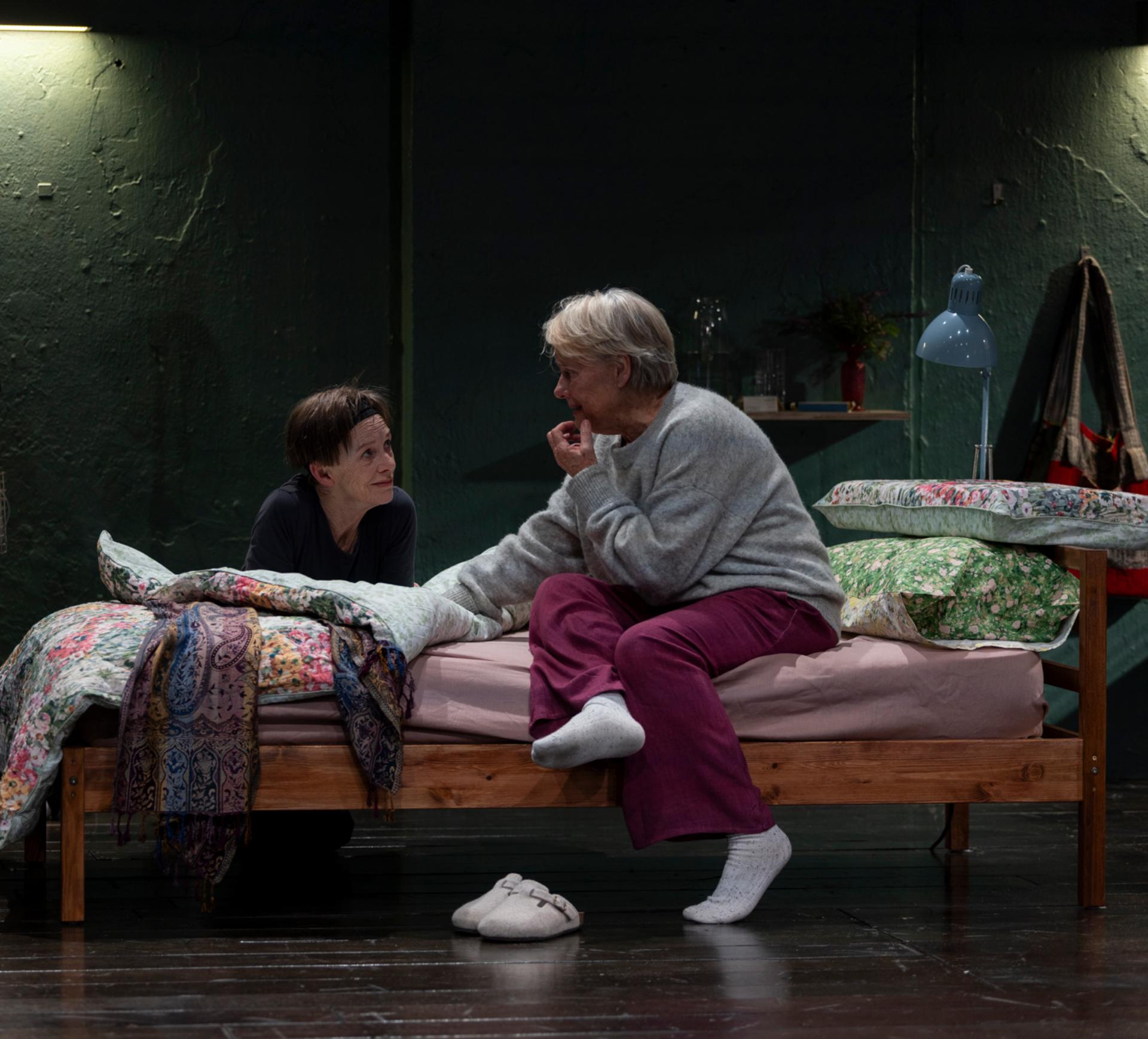
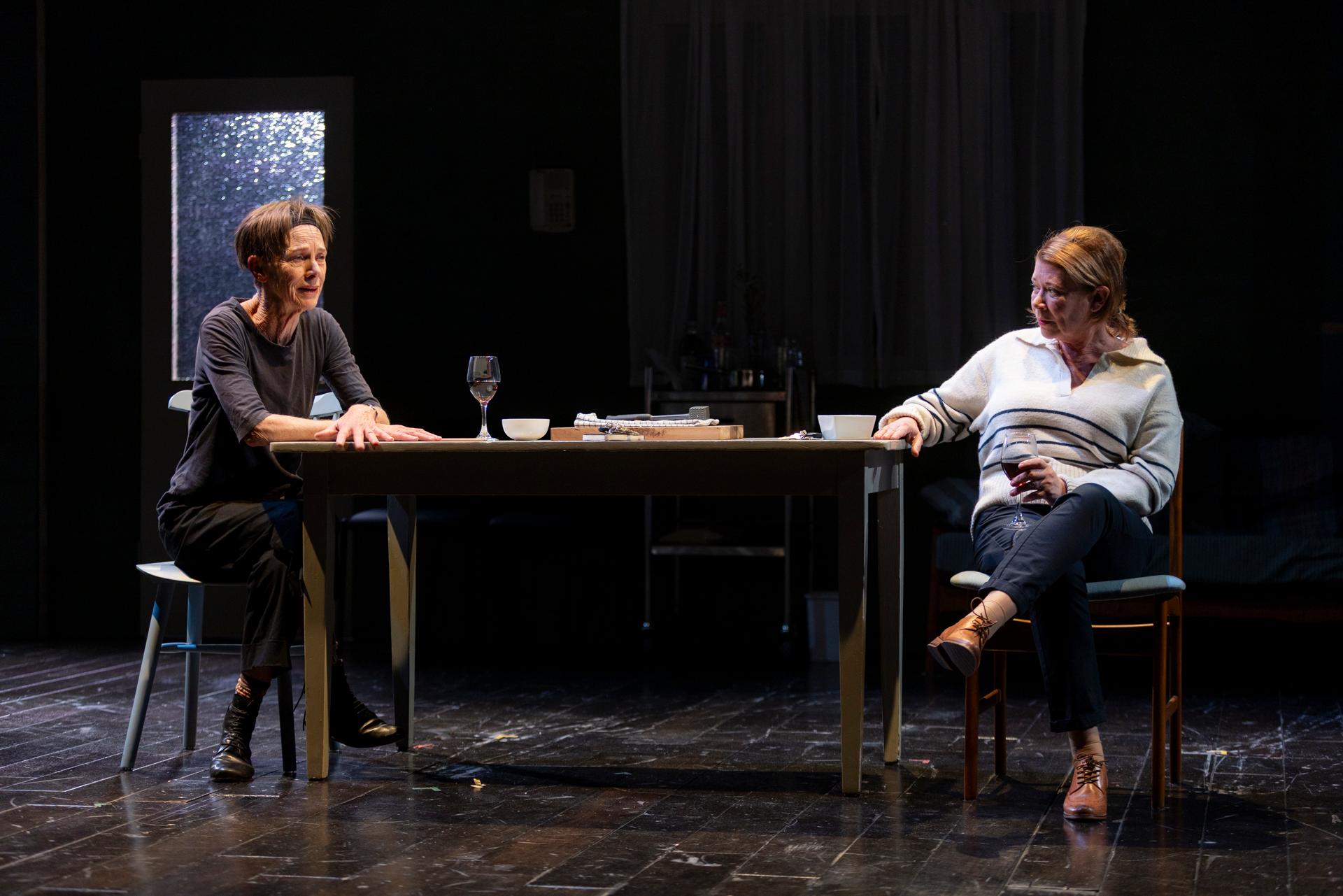
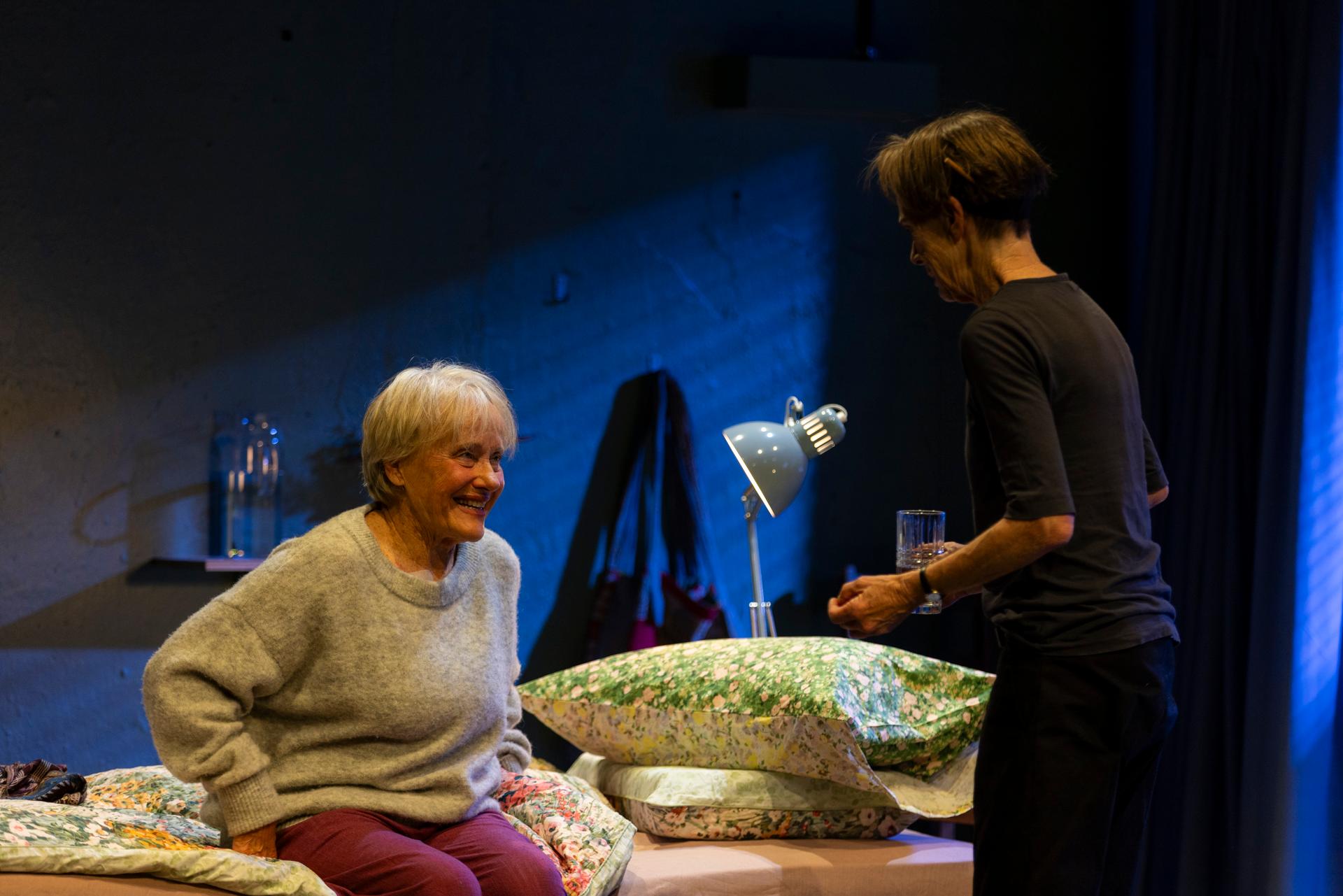
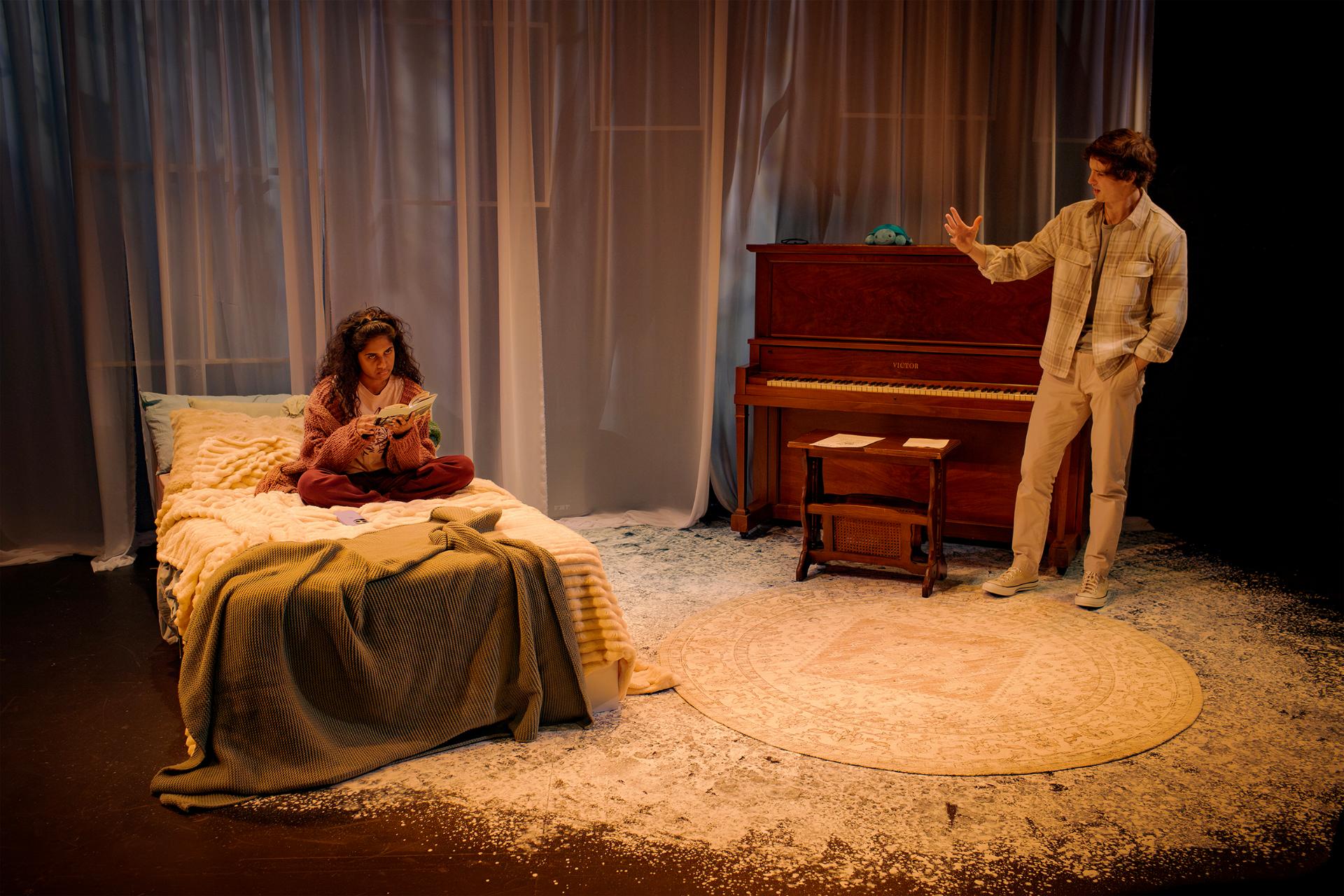
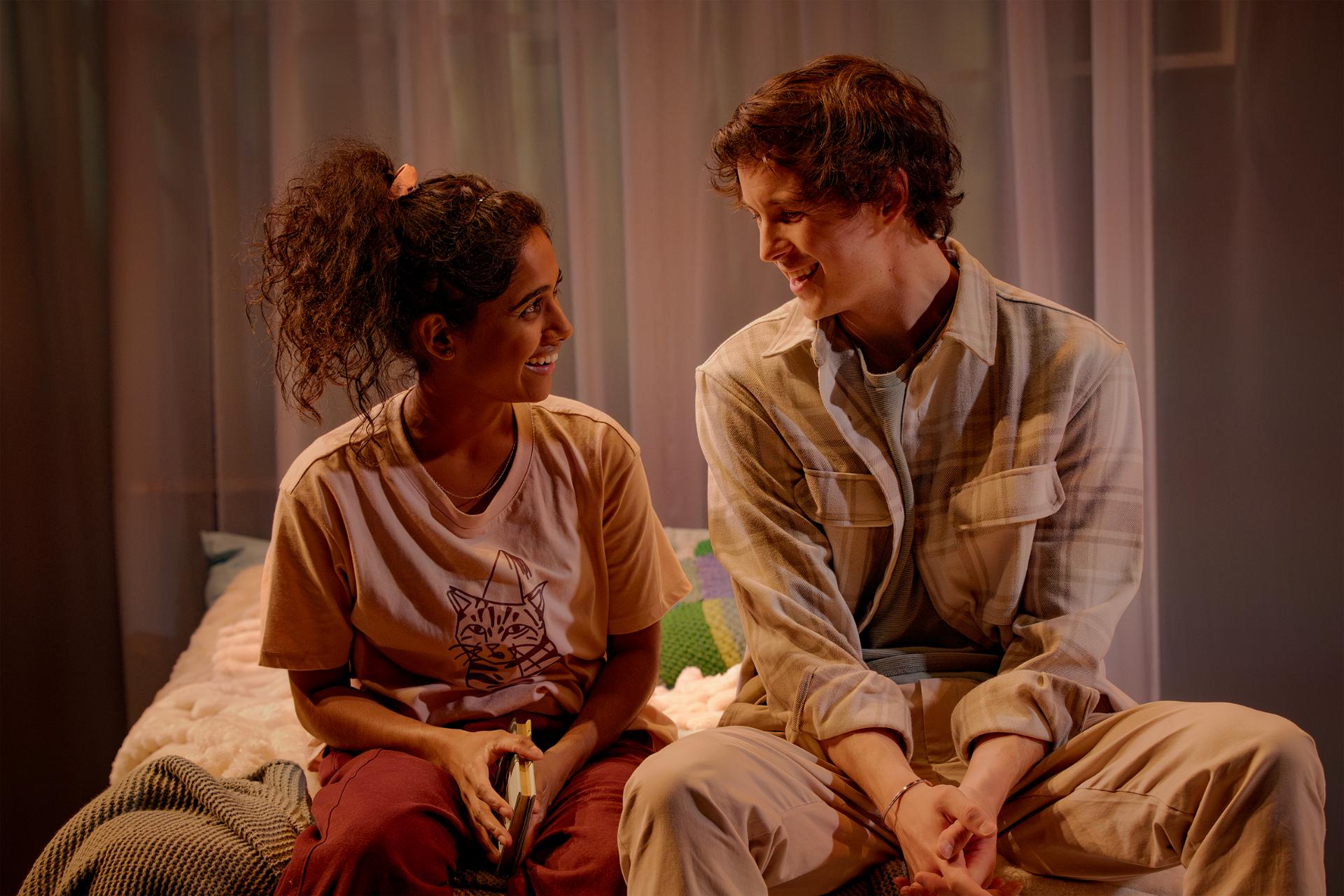
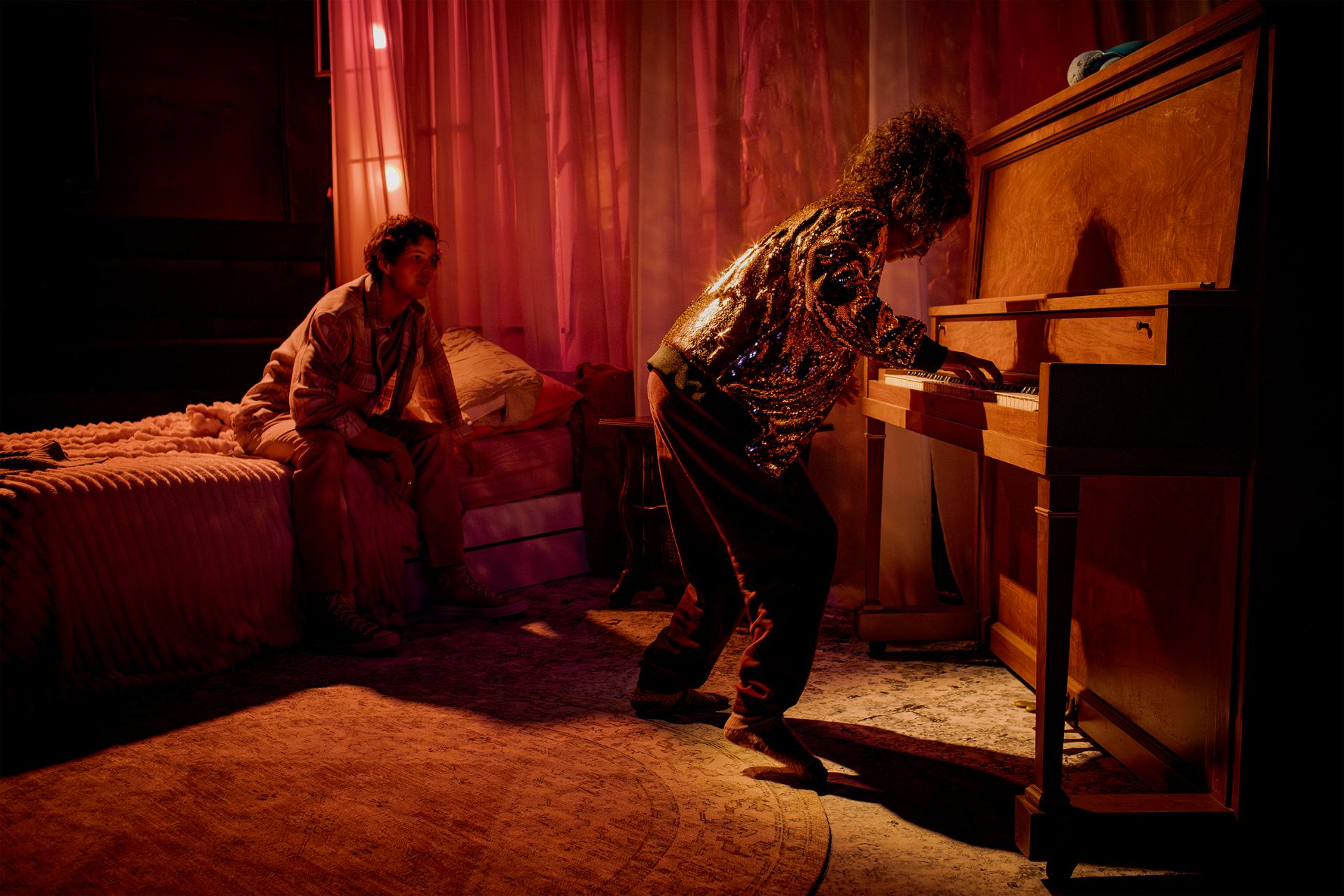
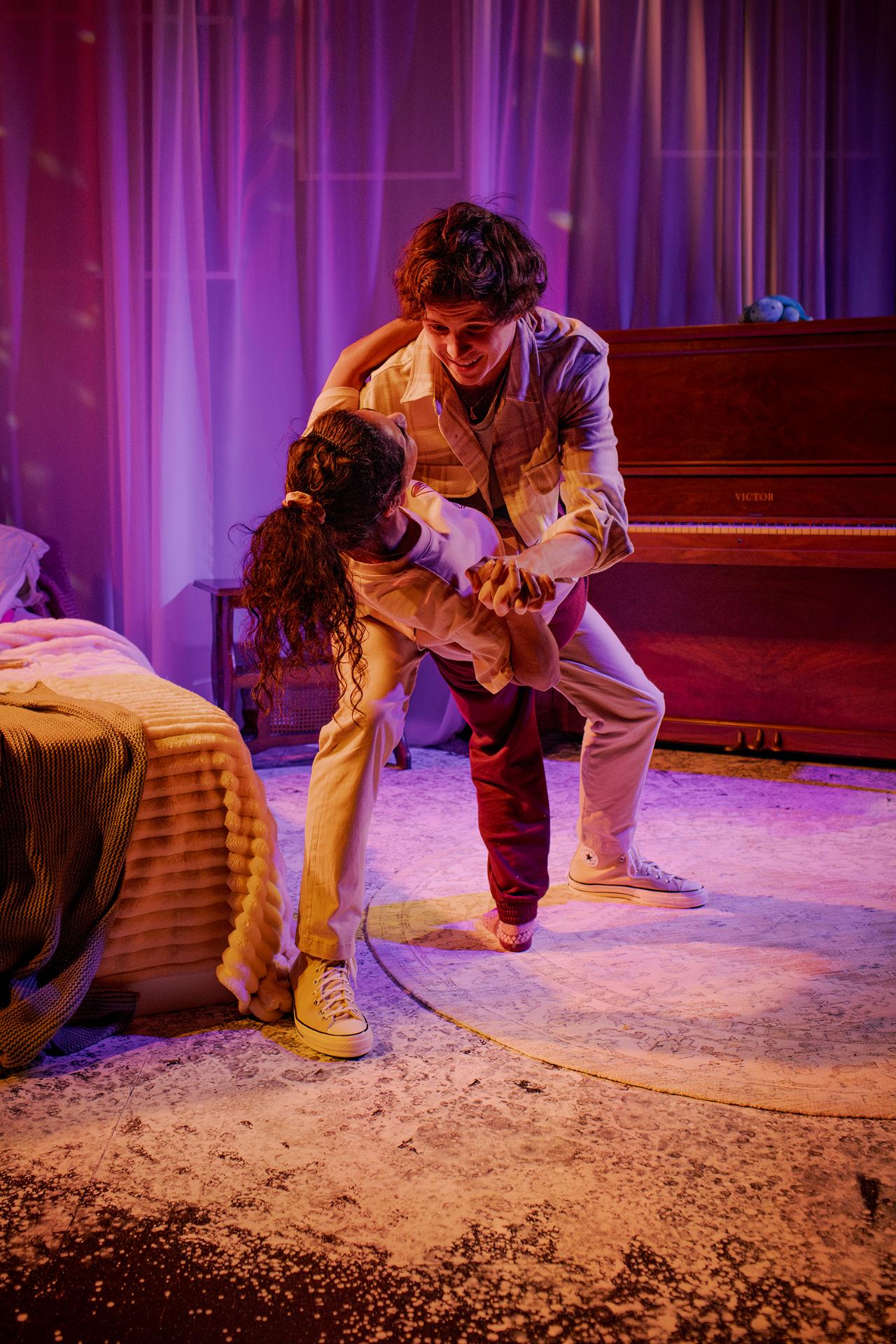
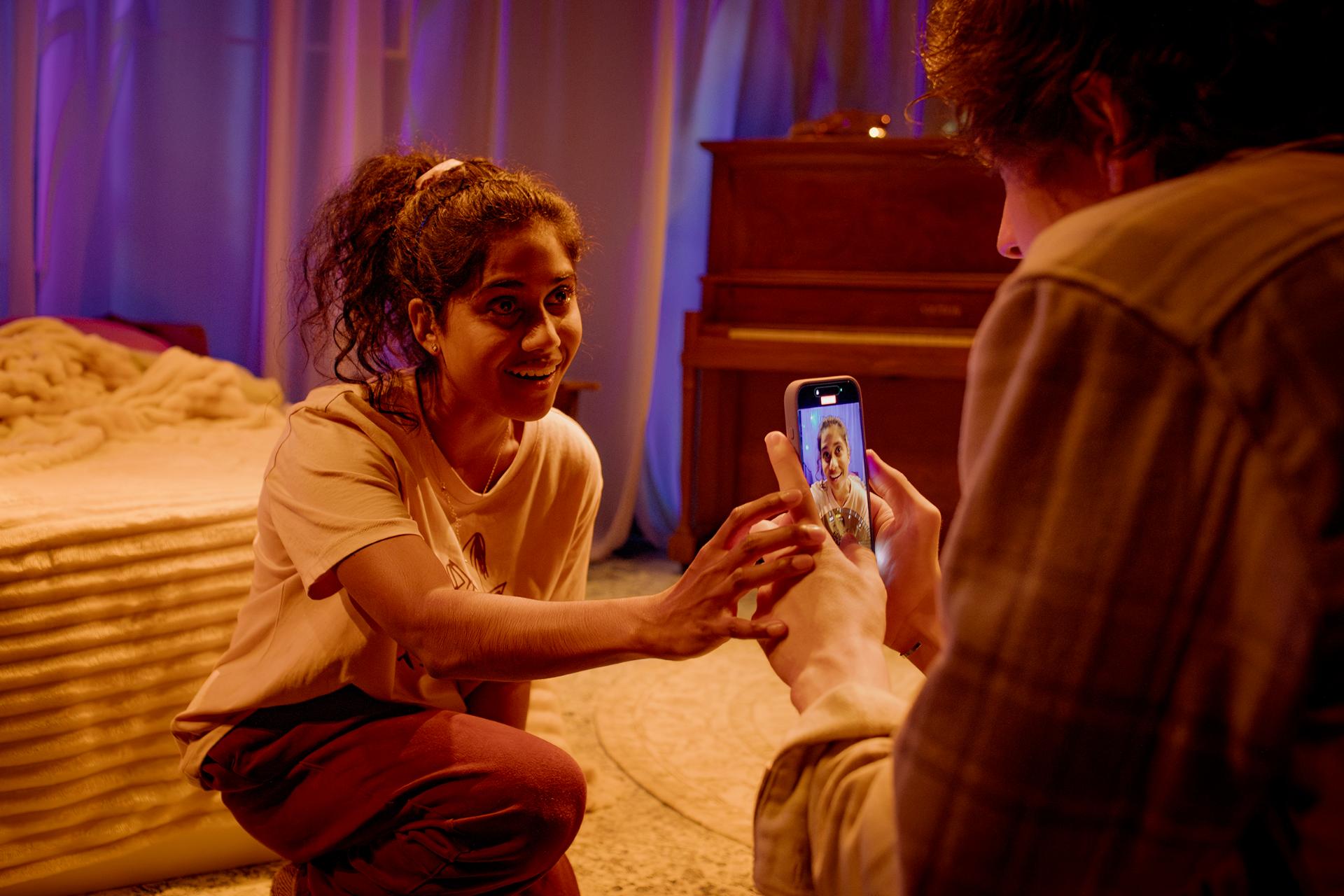
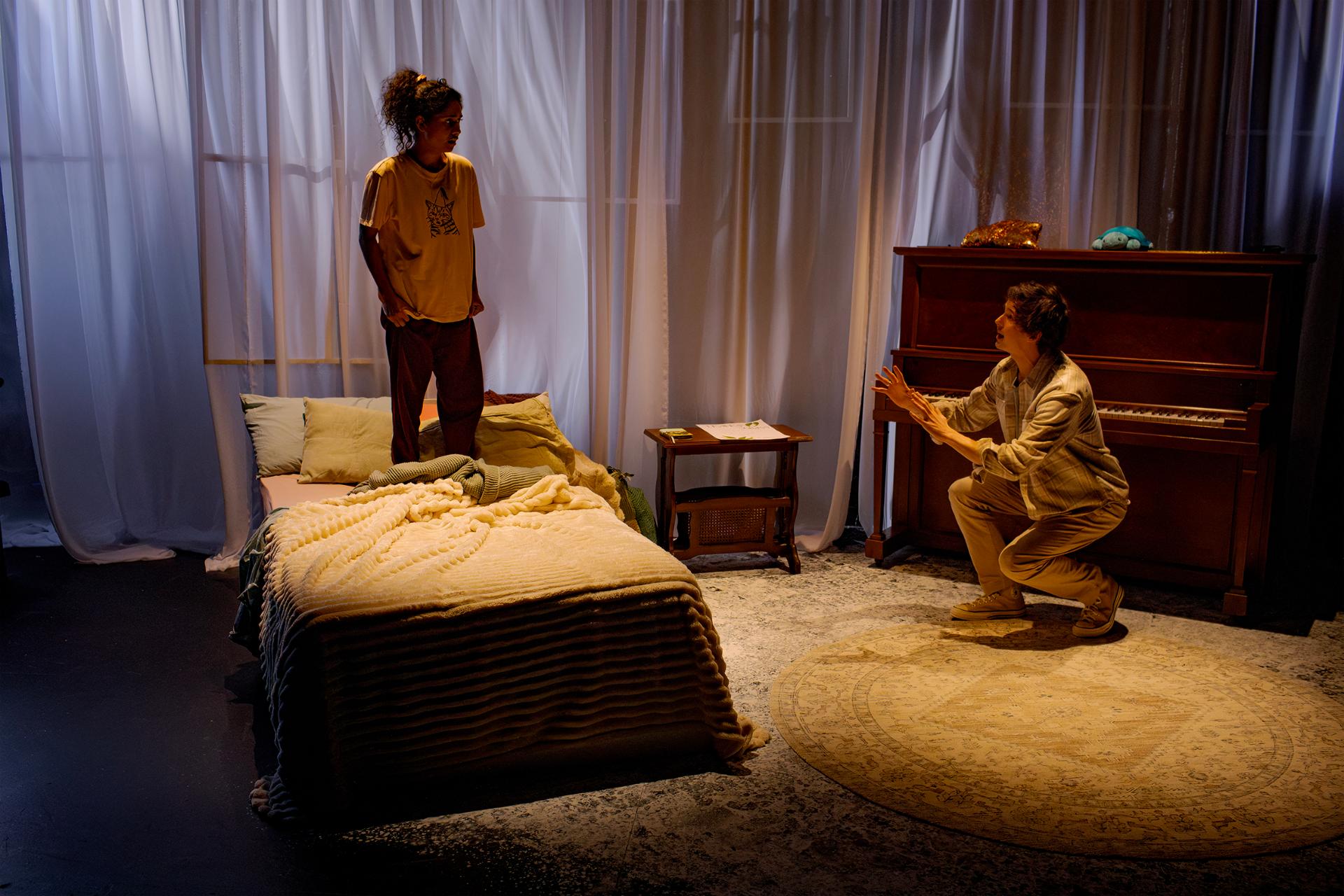
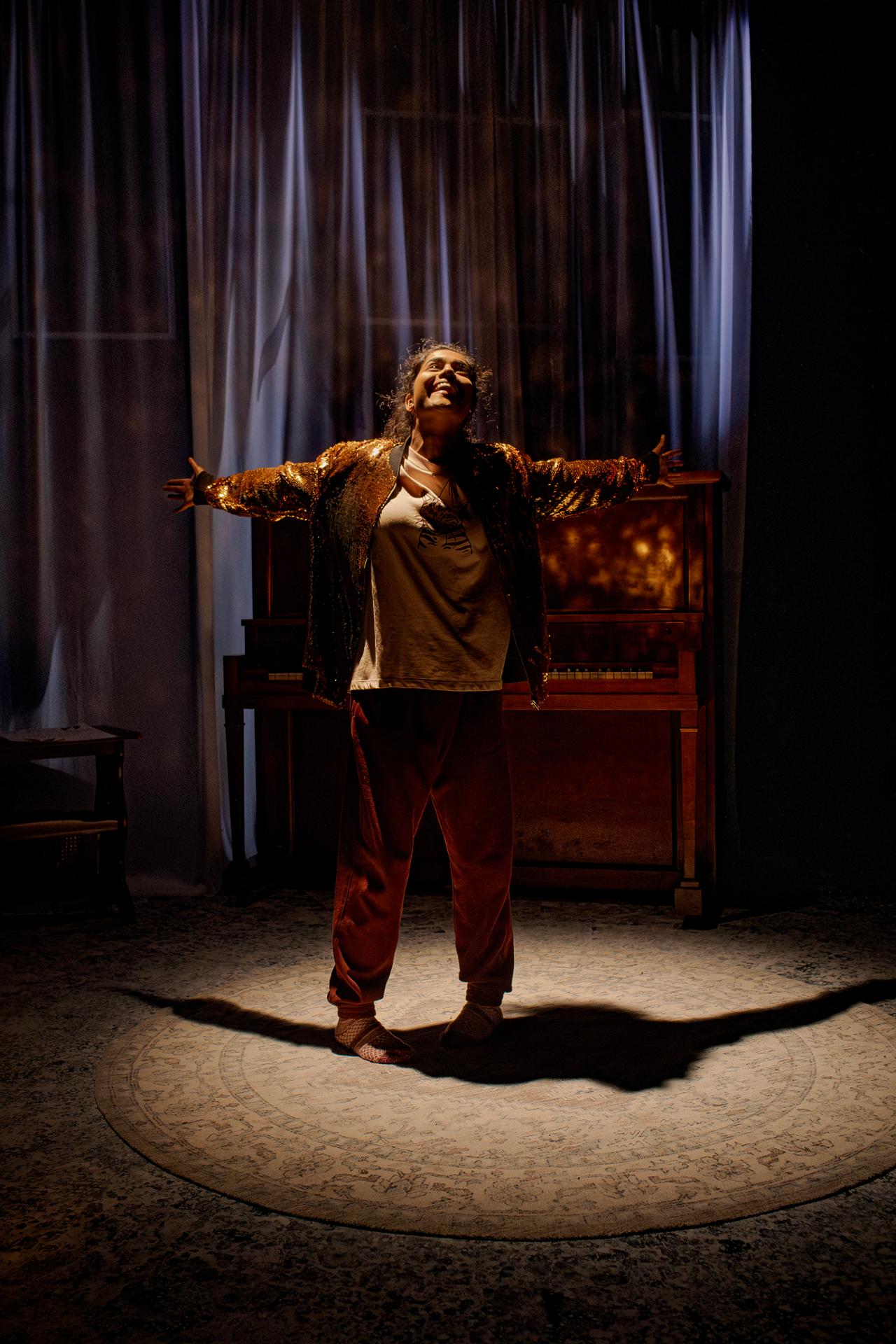
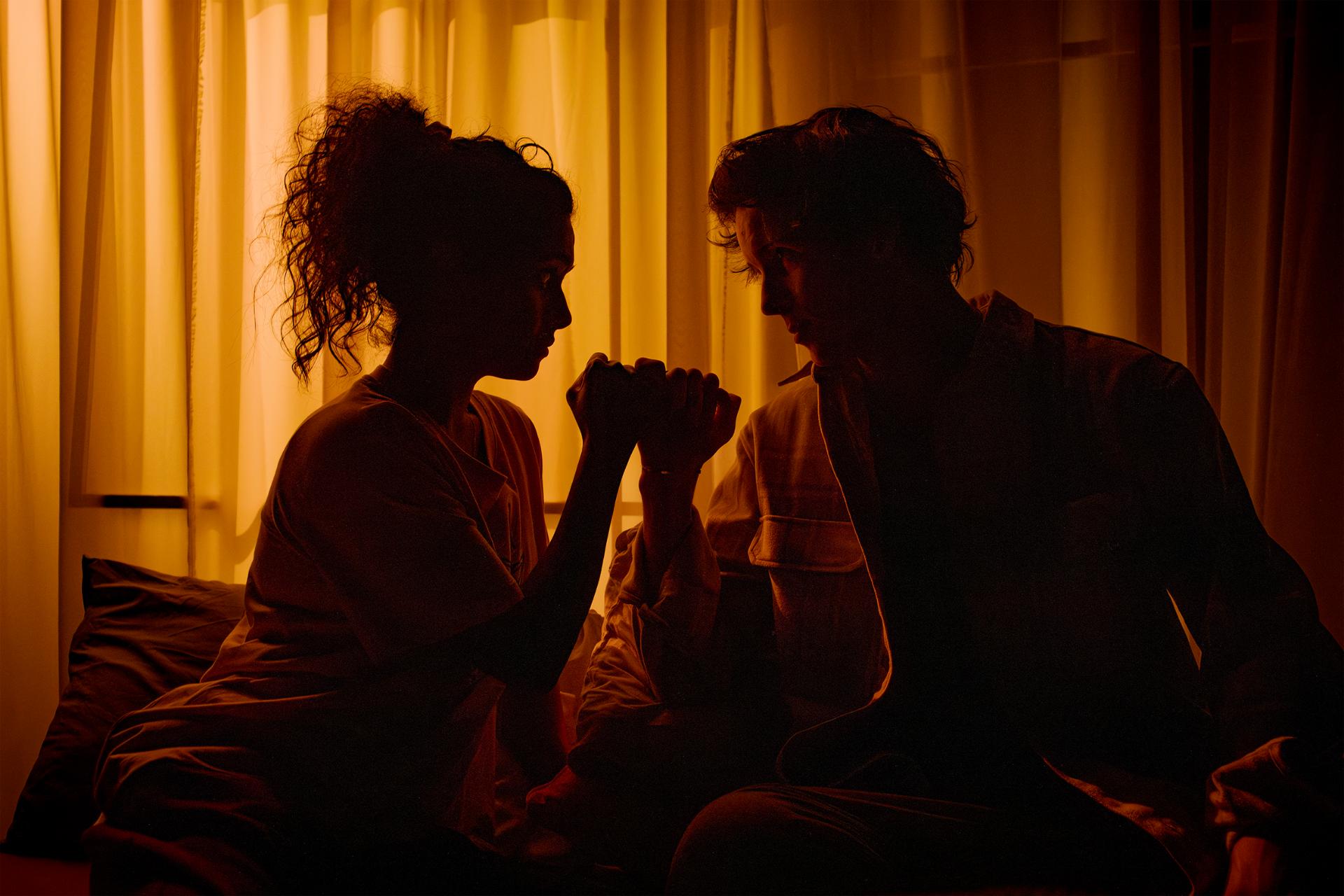
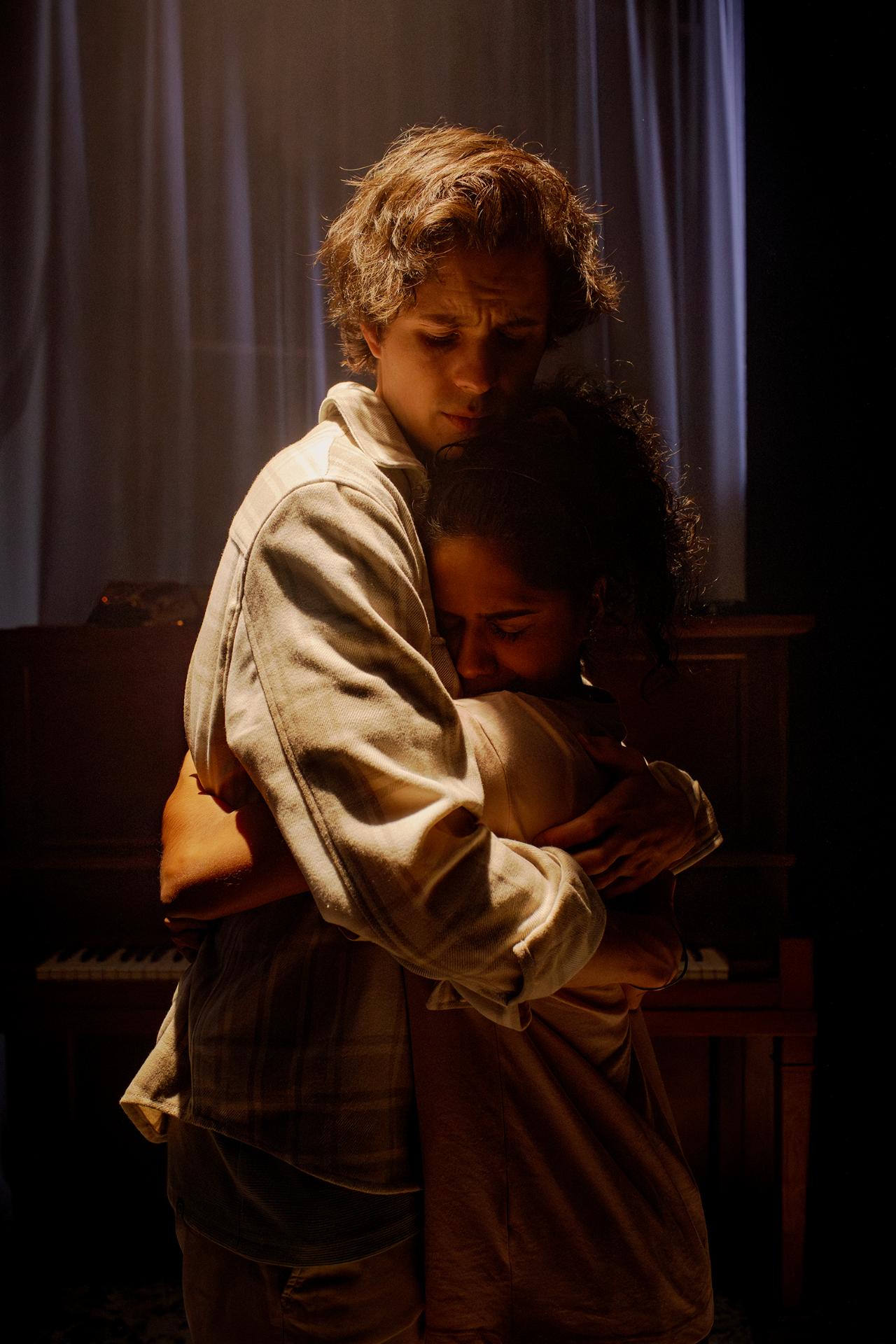
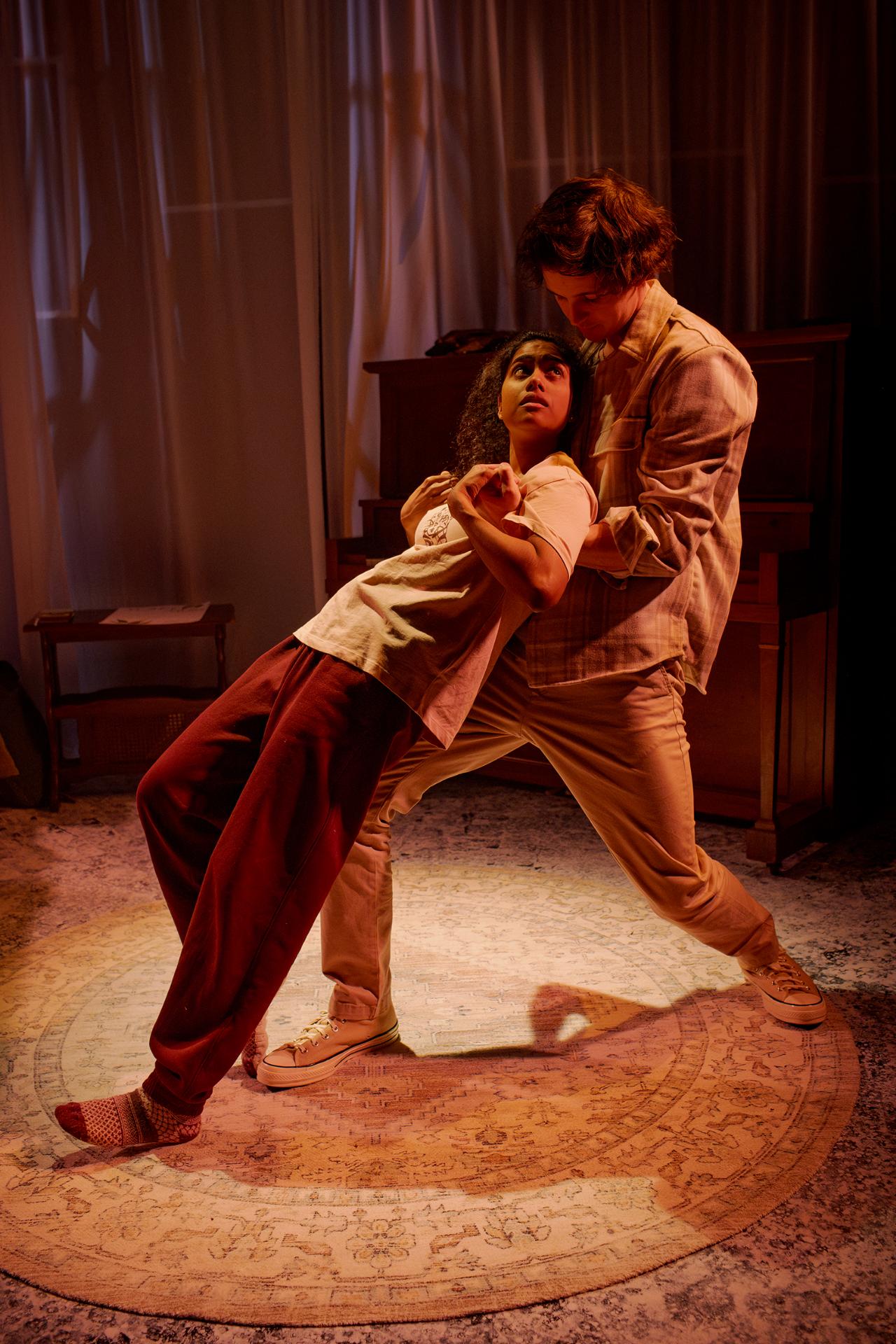
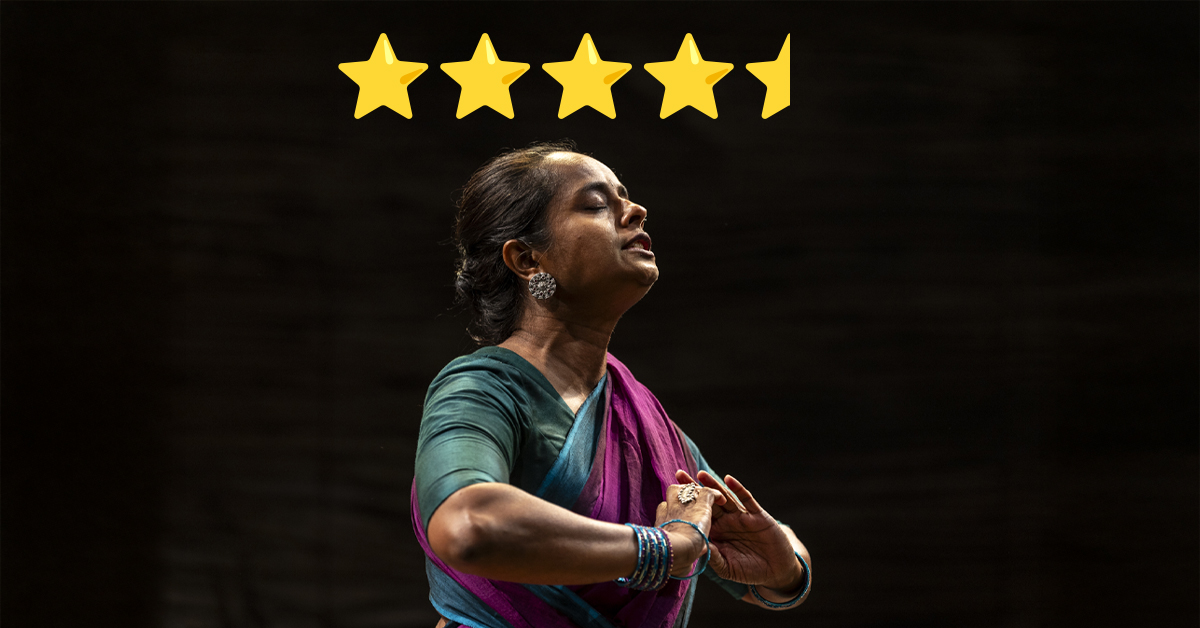
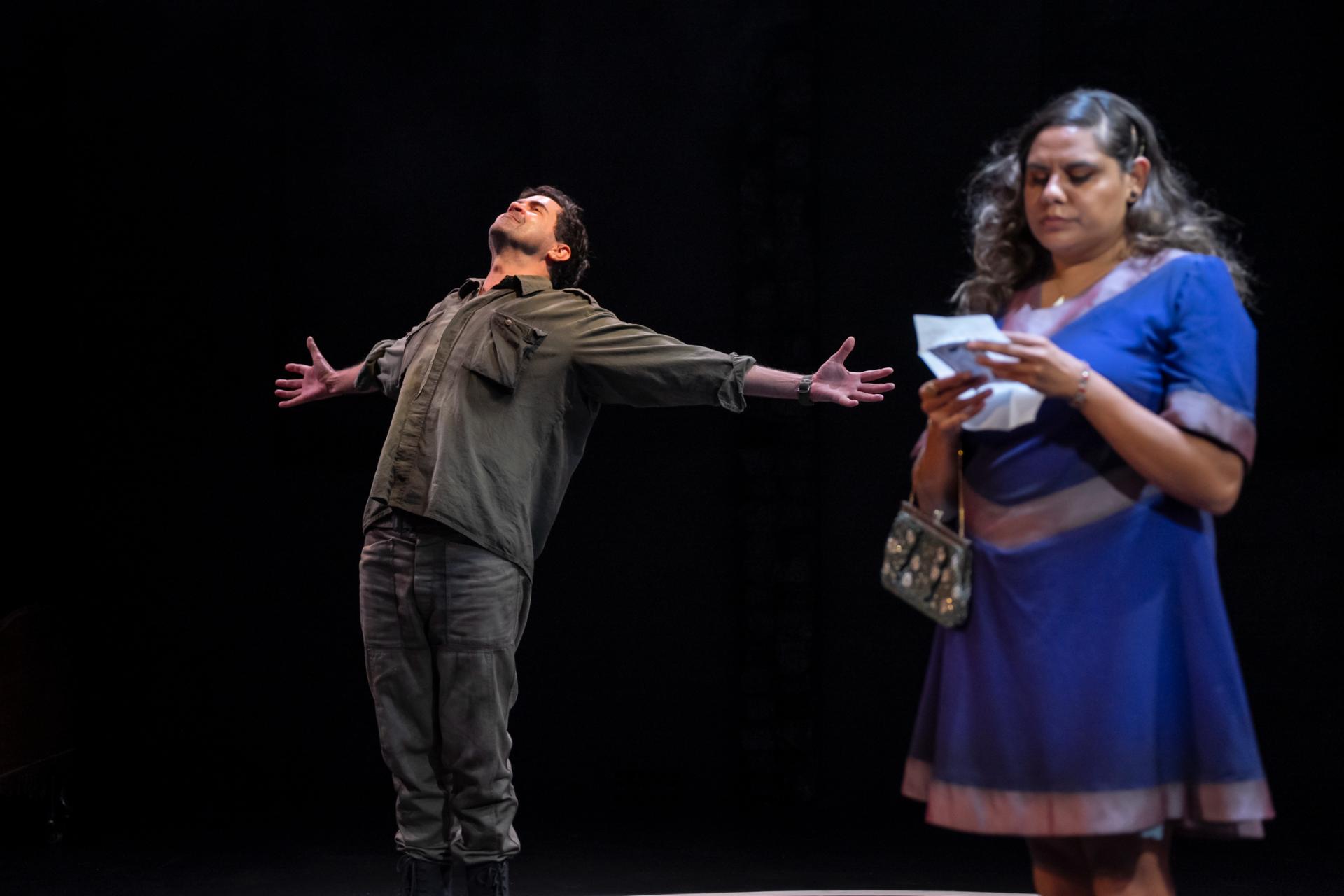
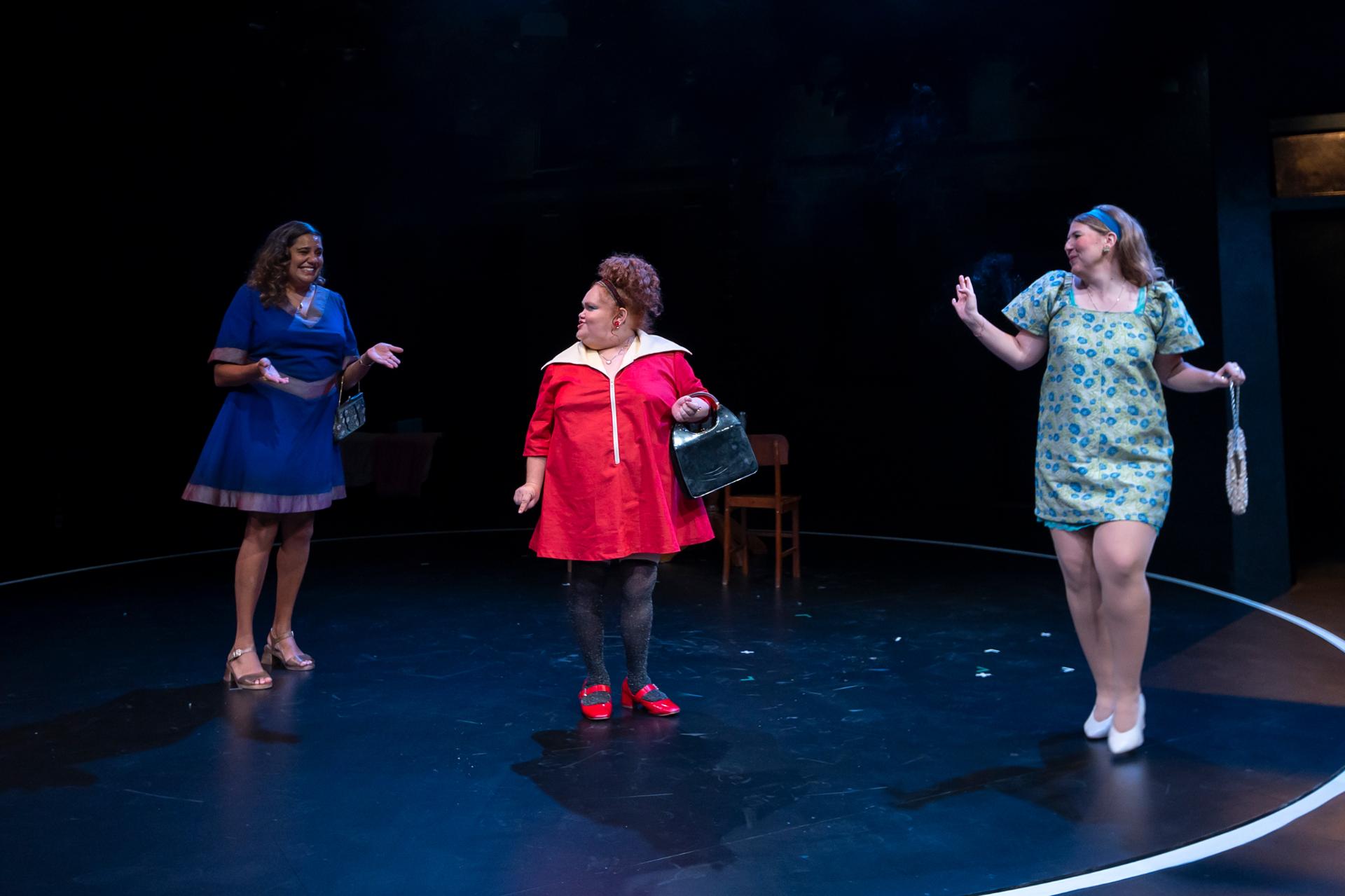
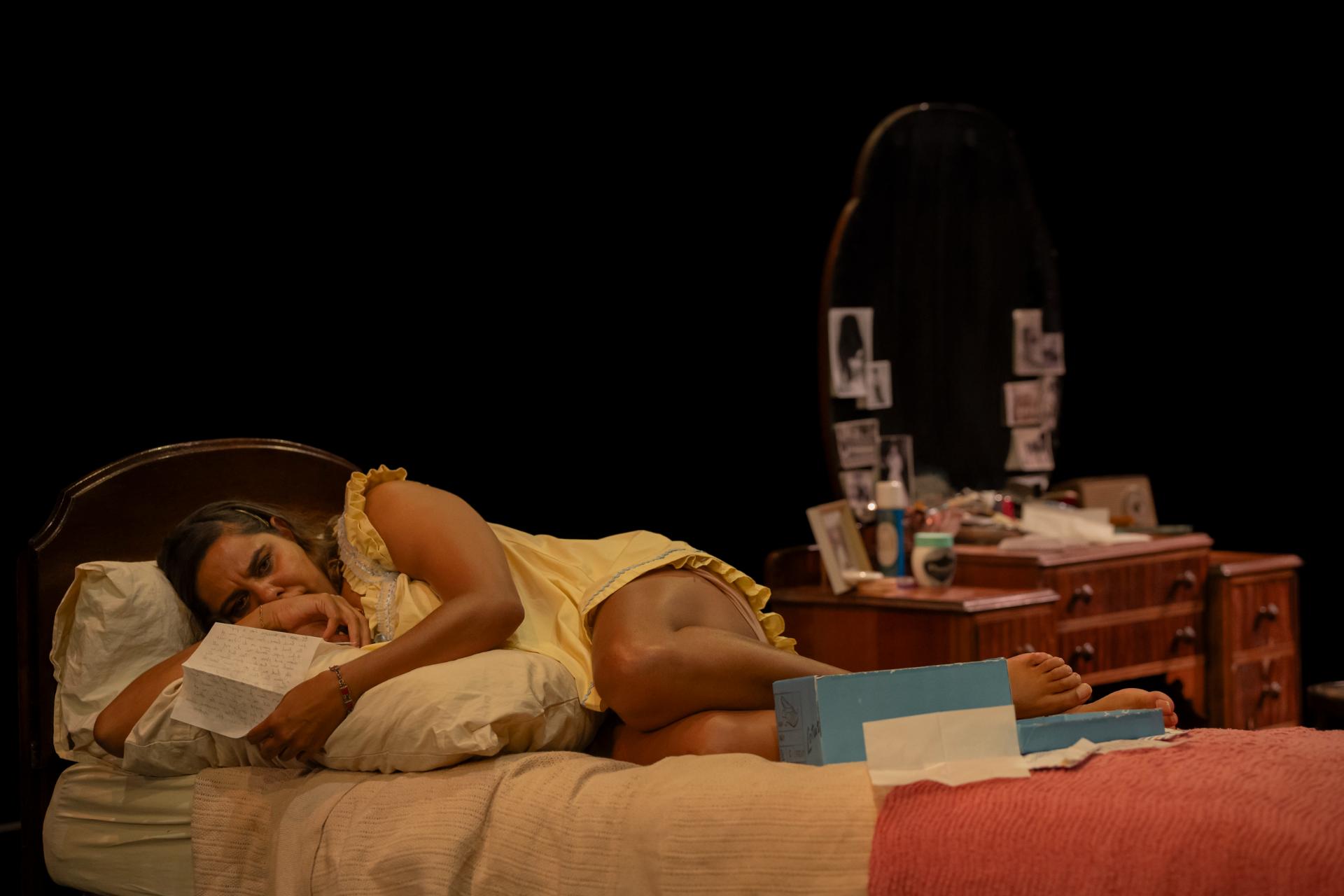
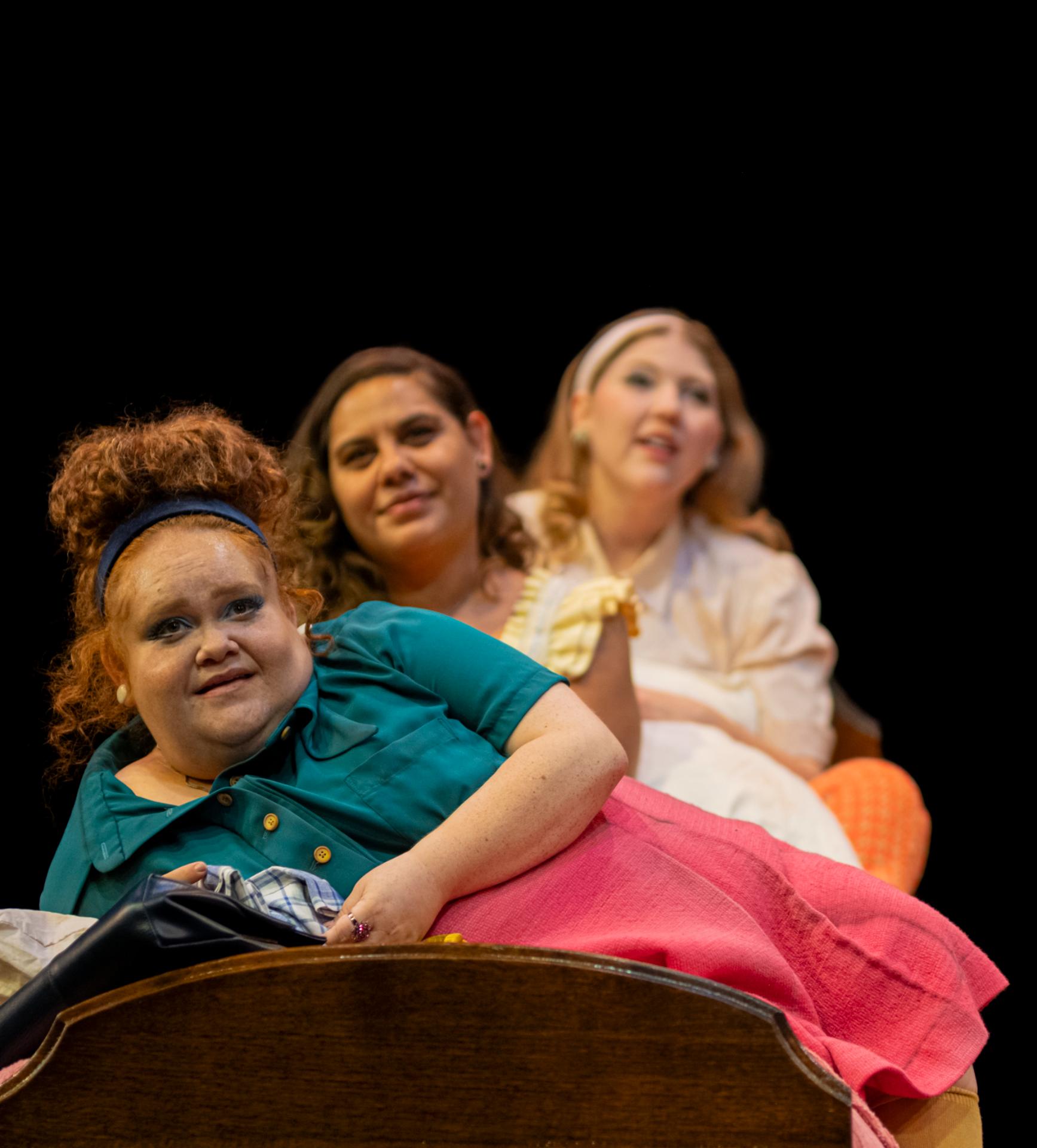
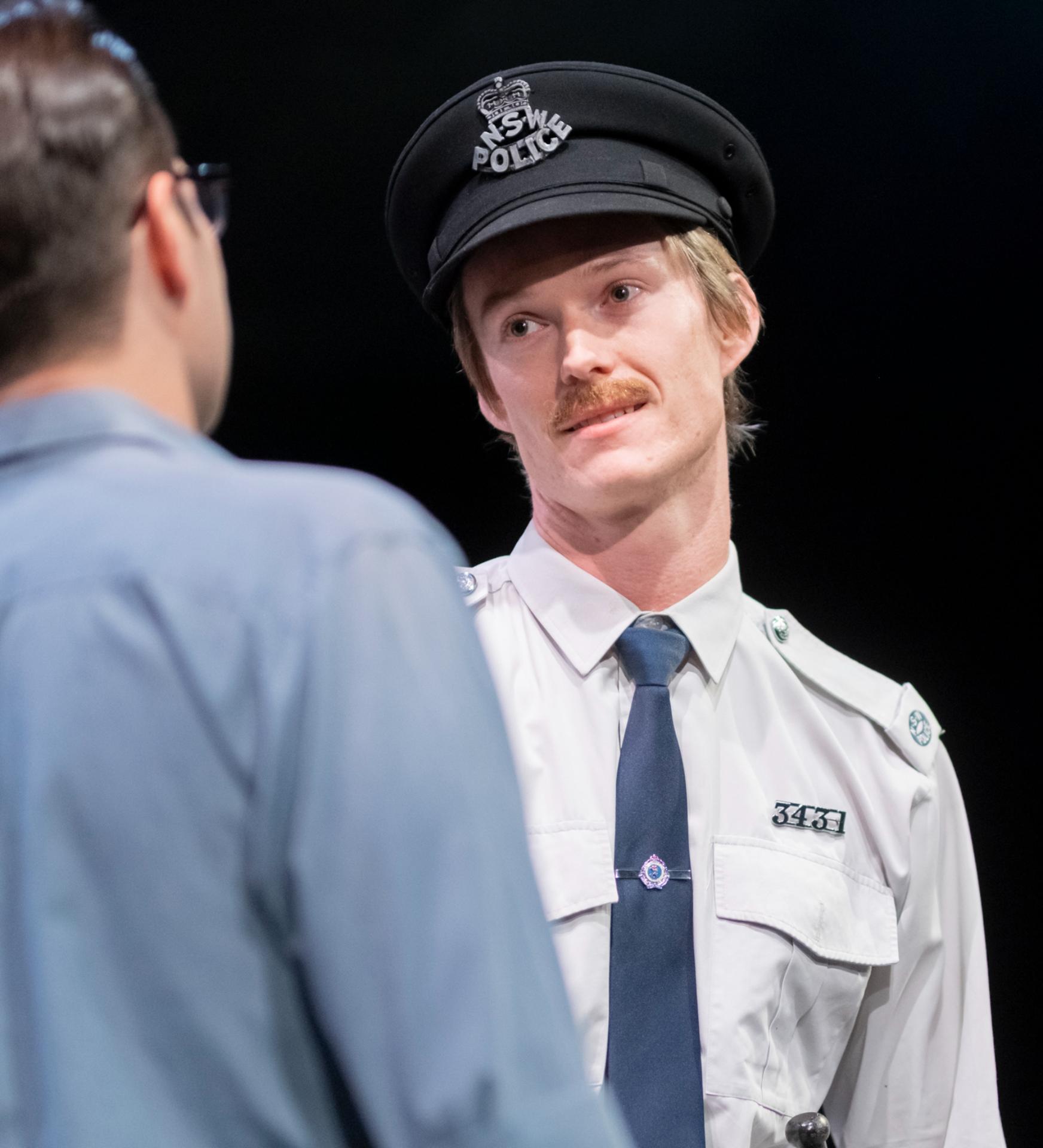
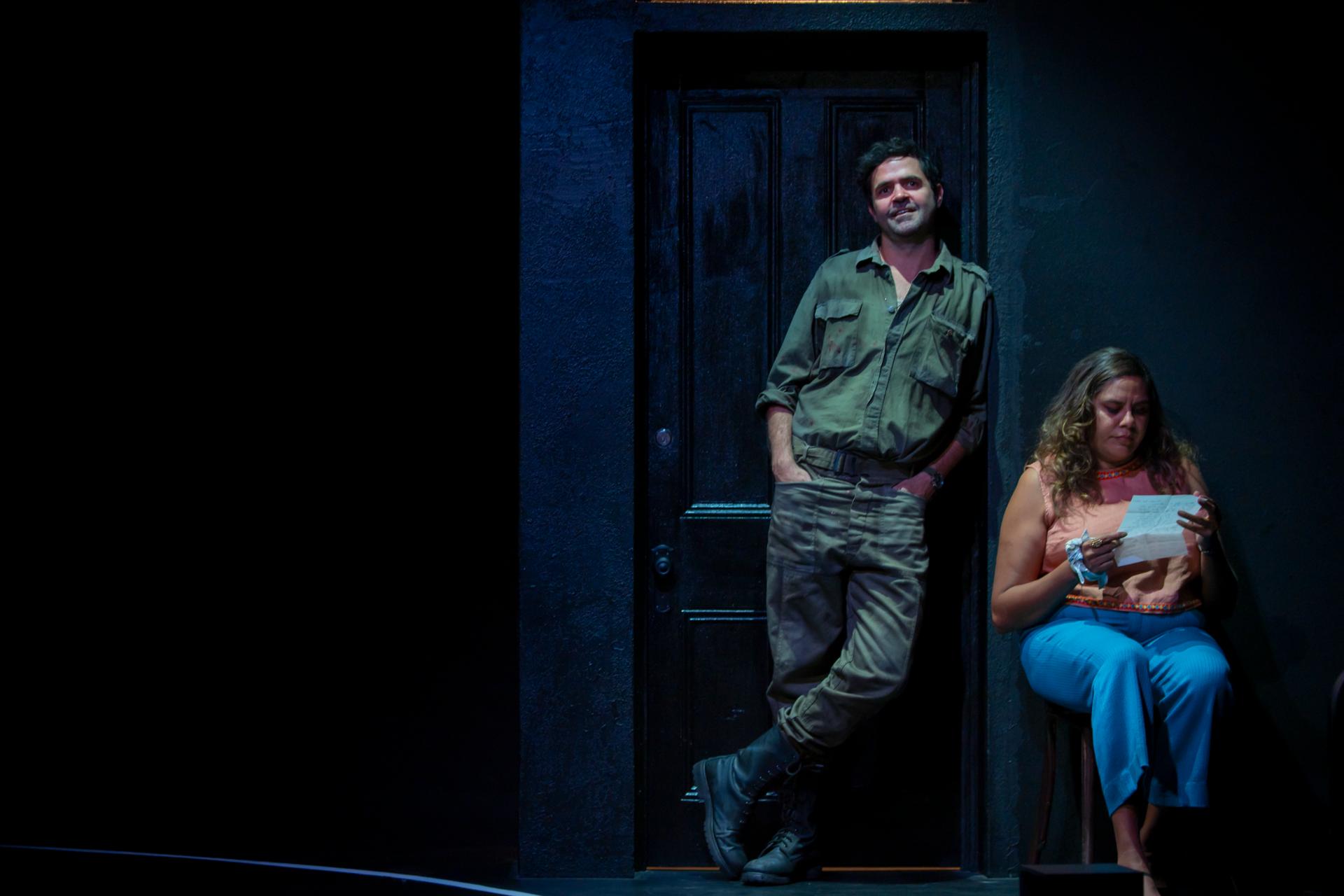
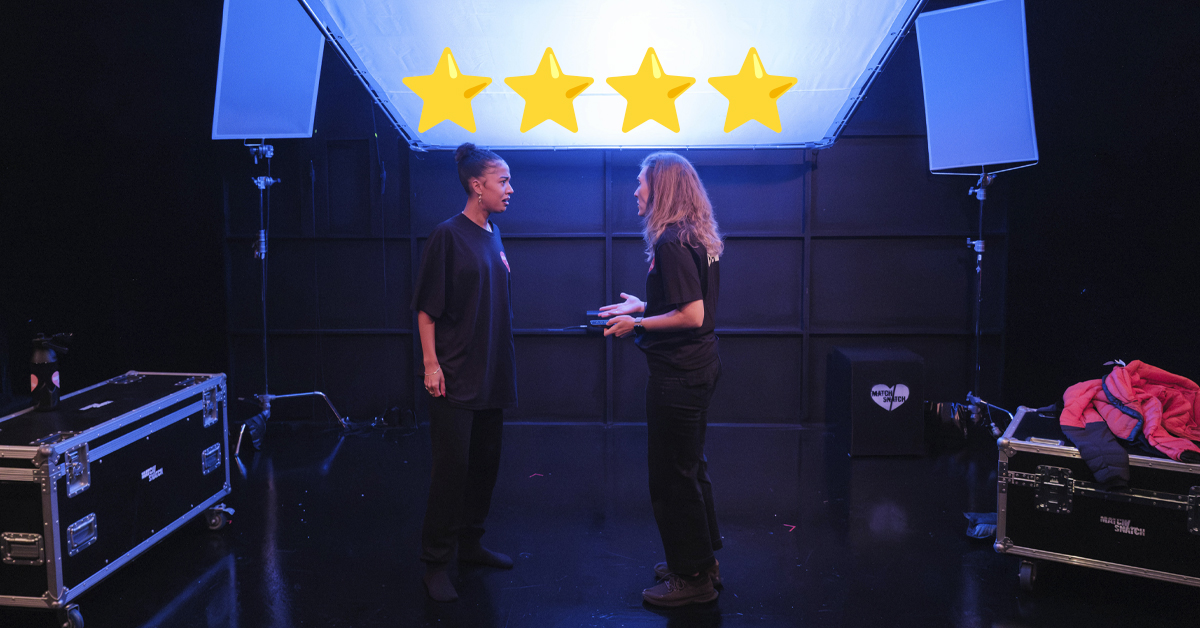
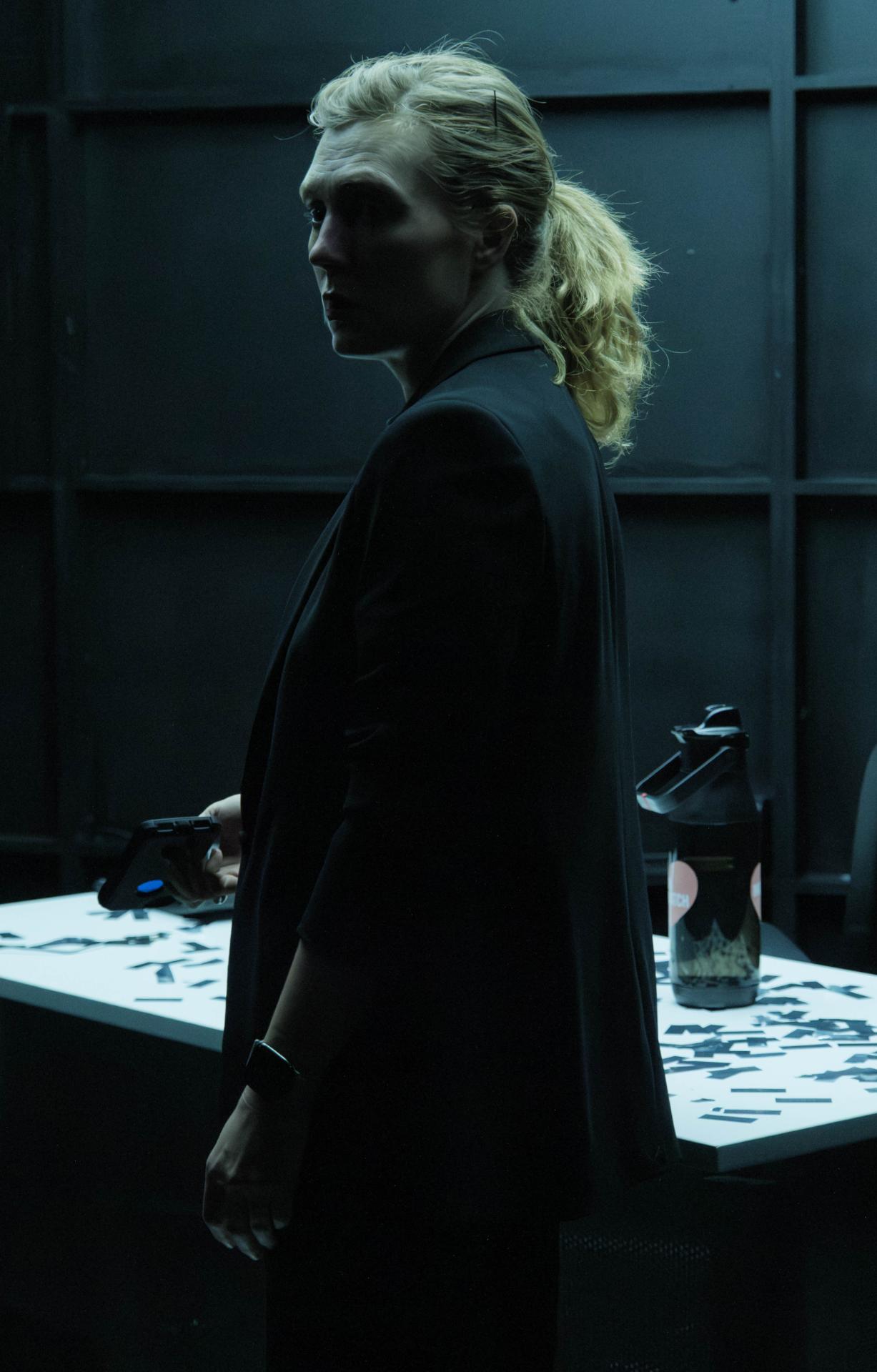
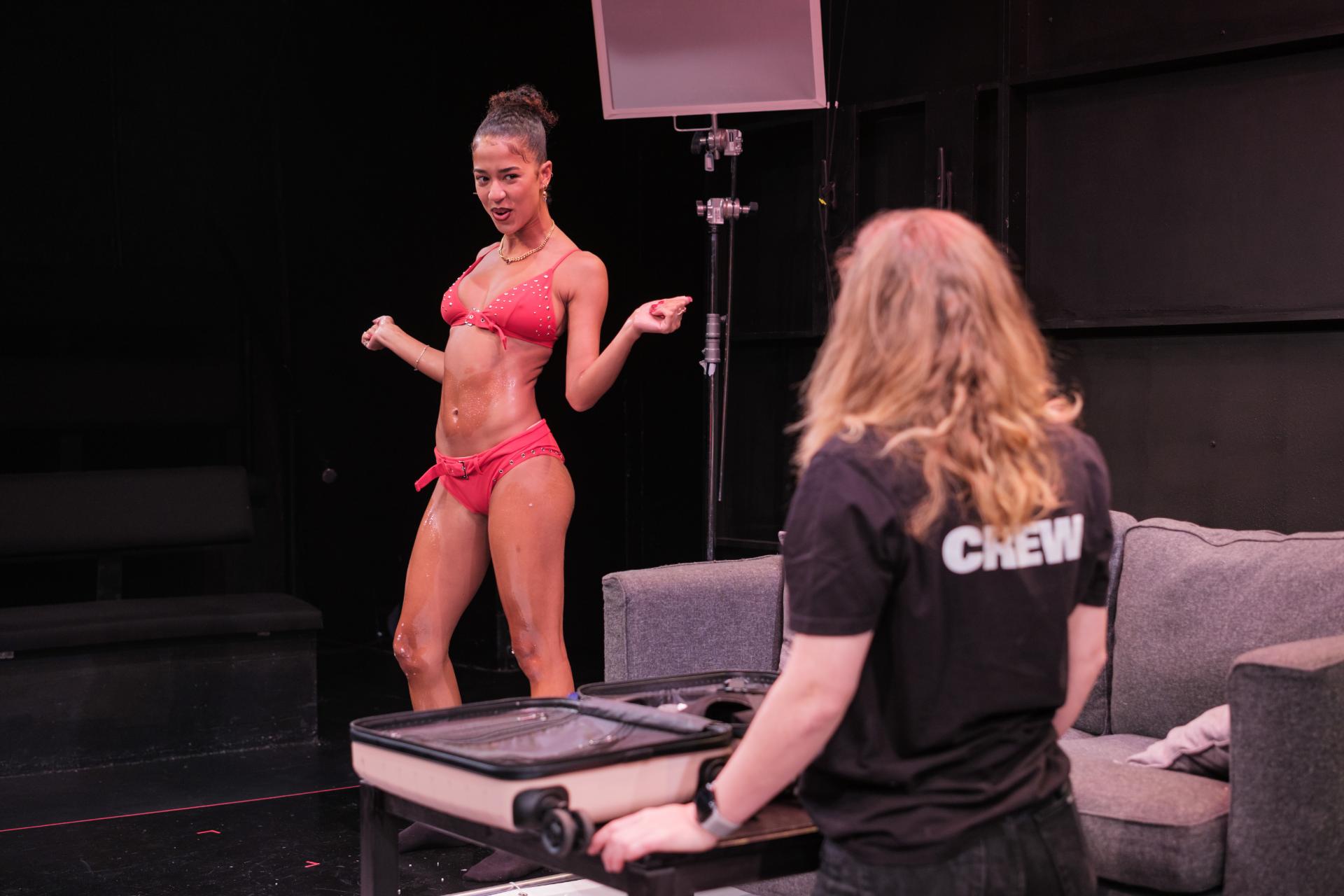
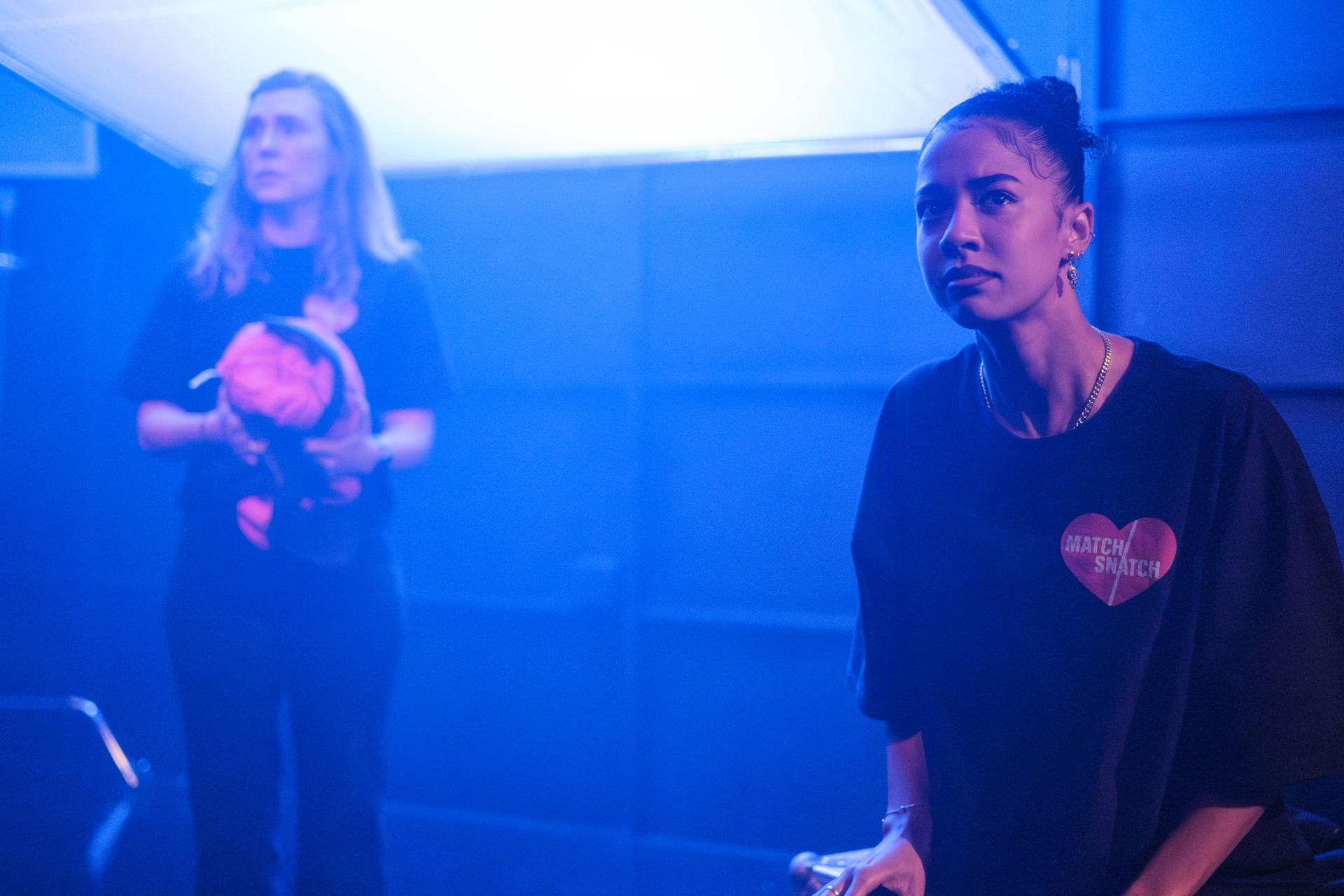
Nia signs up for a reality dating show, while producer Jess hovers nearby to ensure the illusion of love unfolds without a hitch. But when the pair are caught up in a devastating incident, what surfaces isn’t the expected solidarity between women, but a betrayal so stark it throws everything into question. Gabrielle Scawthorn’s The Edit is a piercing look at the stranglehold of late capitalism on contemporary womanhood — and how easily we can slip into exploiting one another in pursuit of success. Rather than rallying against the forces that divide and commodify, we too often become willing participants in our own undoing.

Scawthorn’s writing is incisive and richly layered, full of surprising twists and morally complex characters that keep us alert and uneasy. As director, she delivers the work with unrelenting intensity and passion, sustaining a charged atmosphere from start to finish. The Edit is intellectually rigorous and emotionally fraught, most rewarding when it allows us fleeting glimpses into who these women truly are beneath the spectacle.

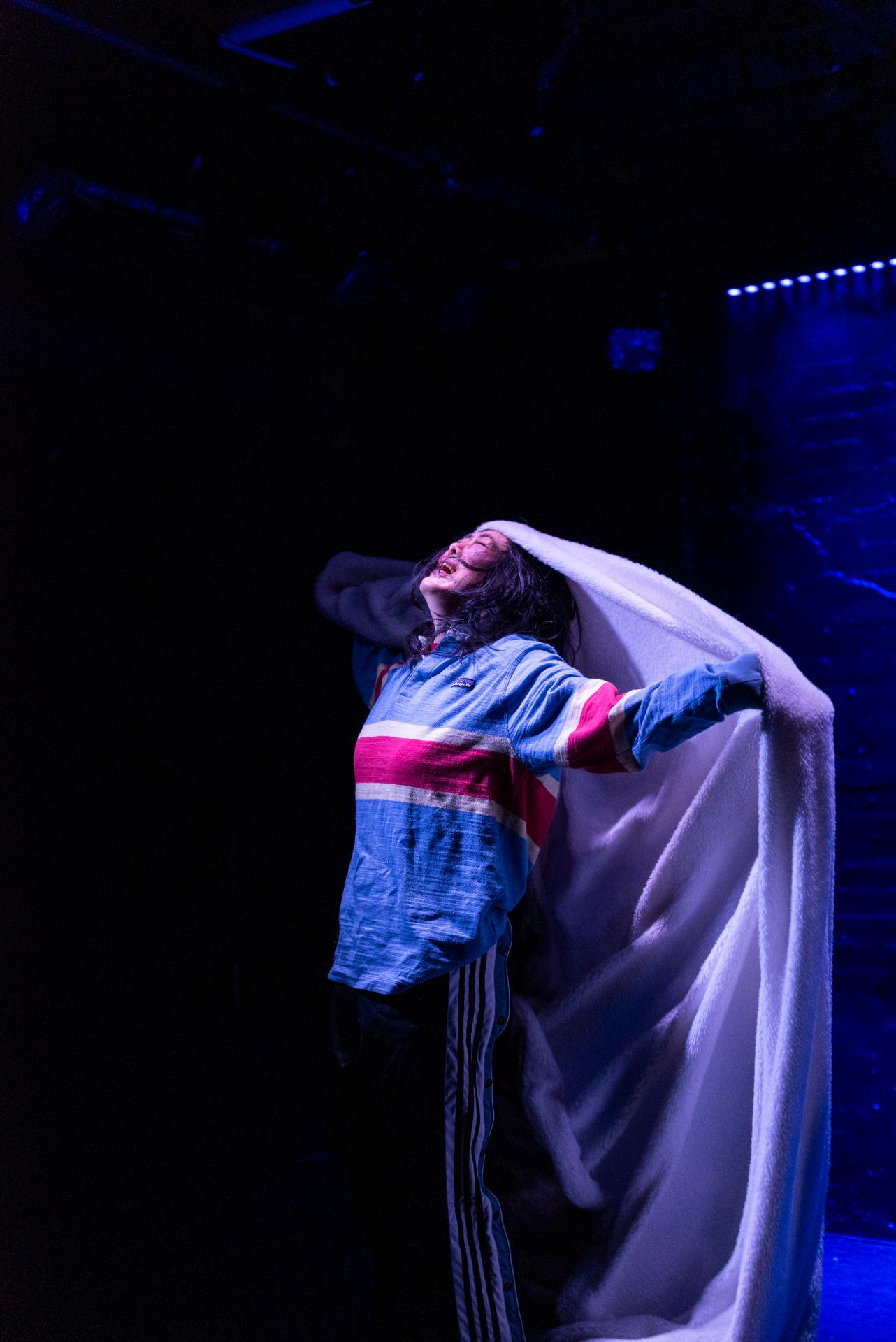
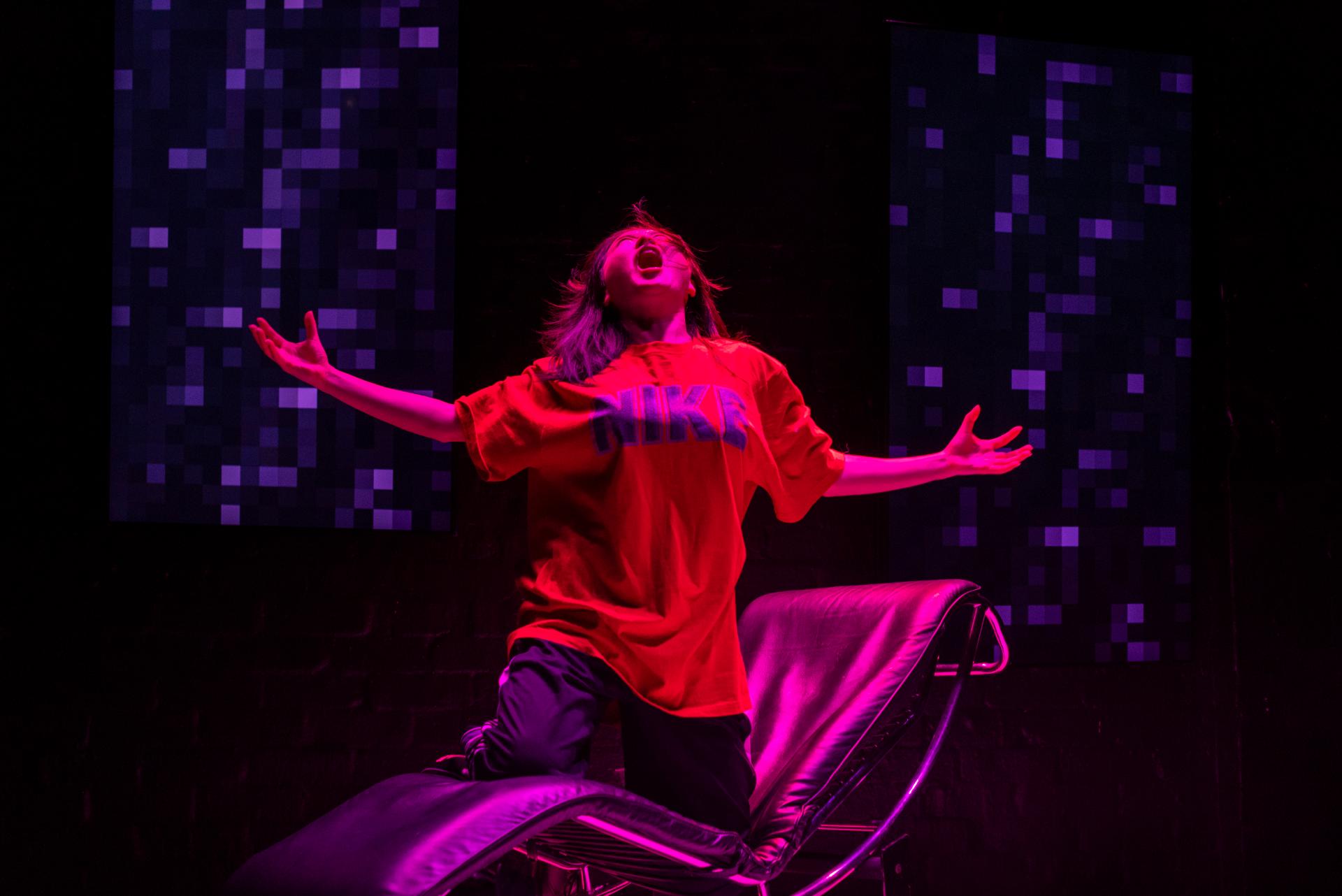
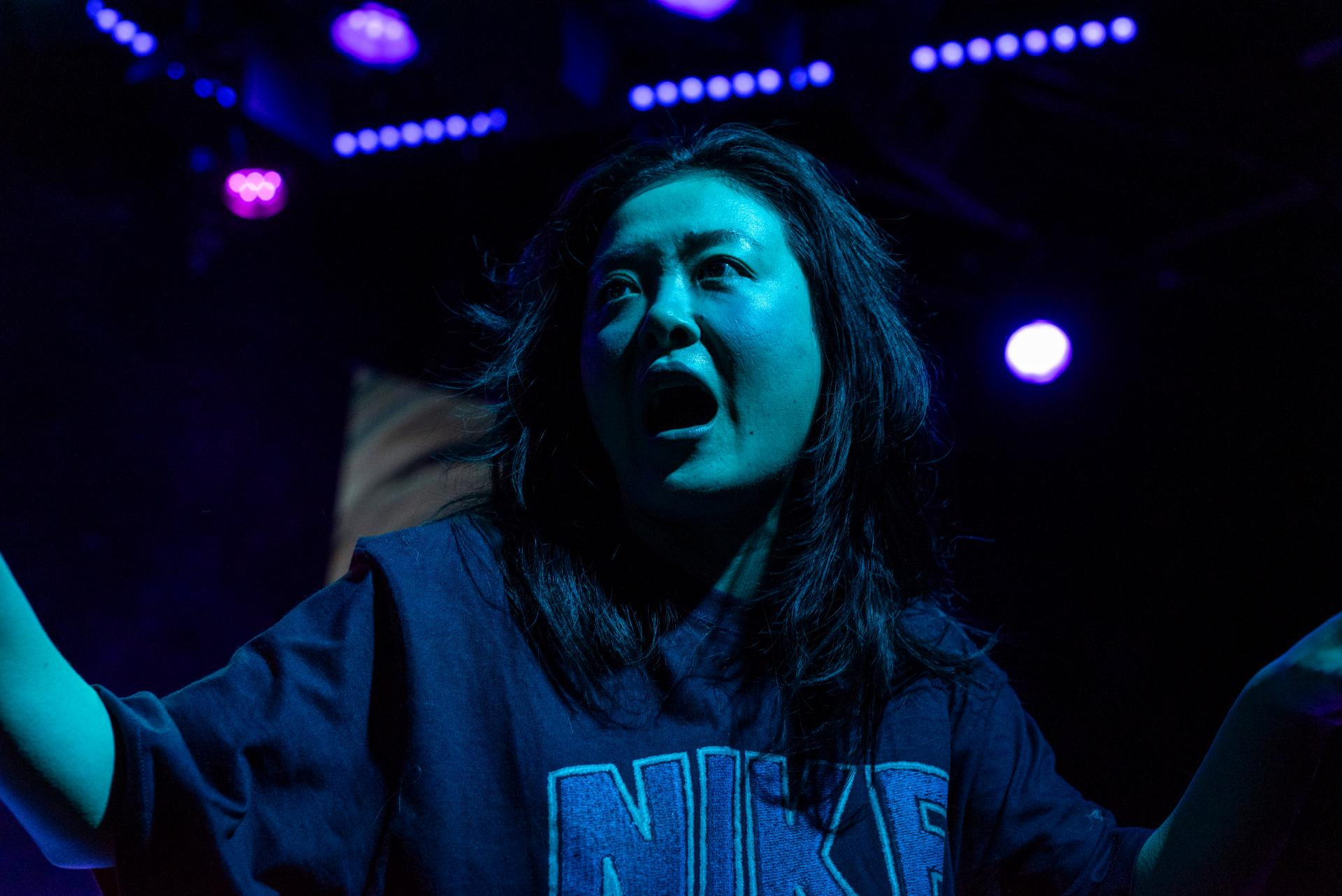
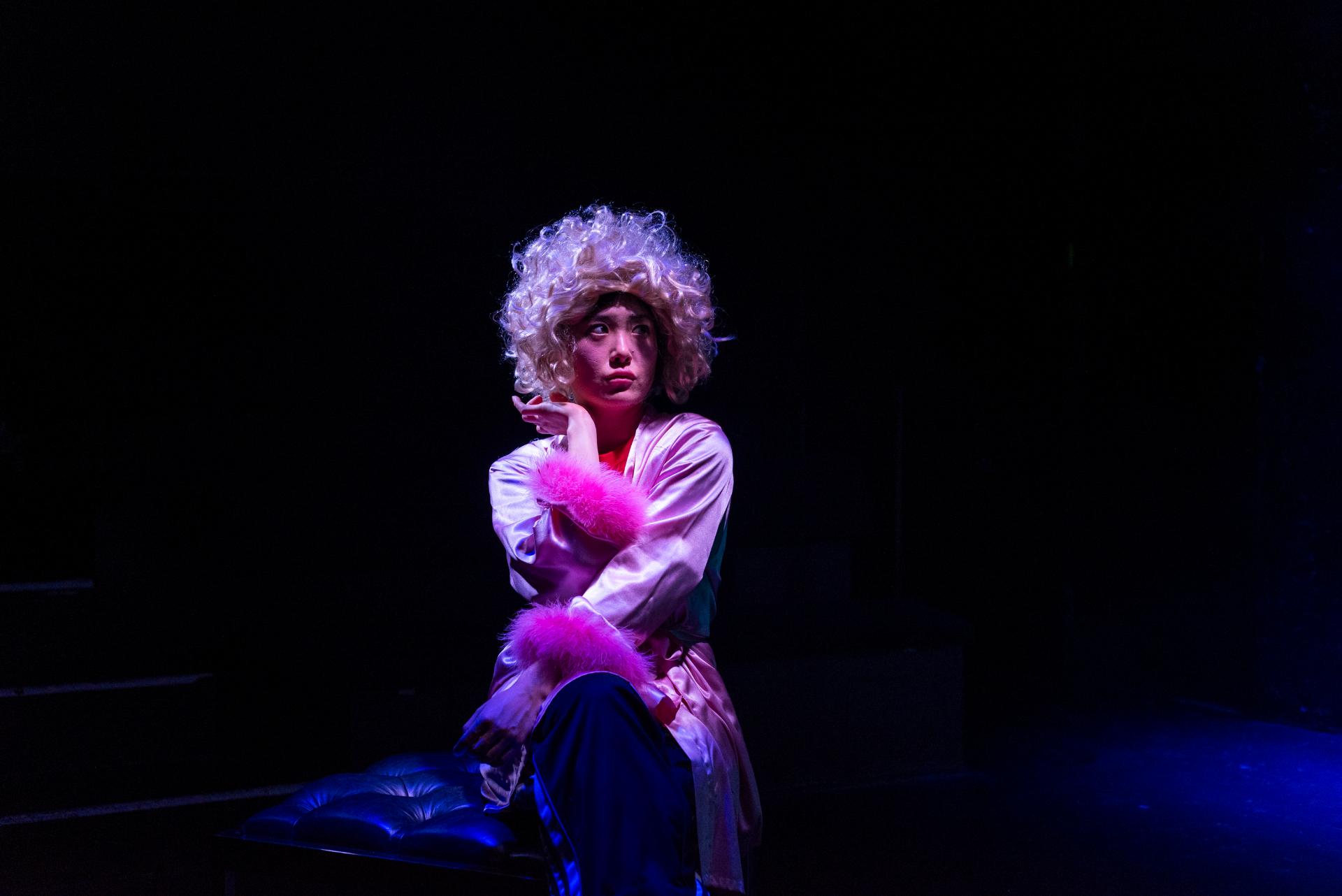
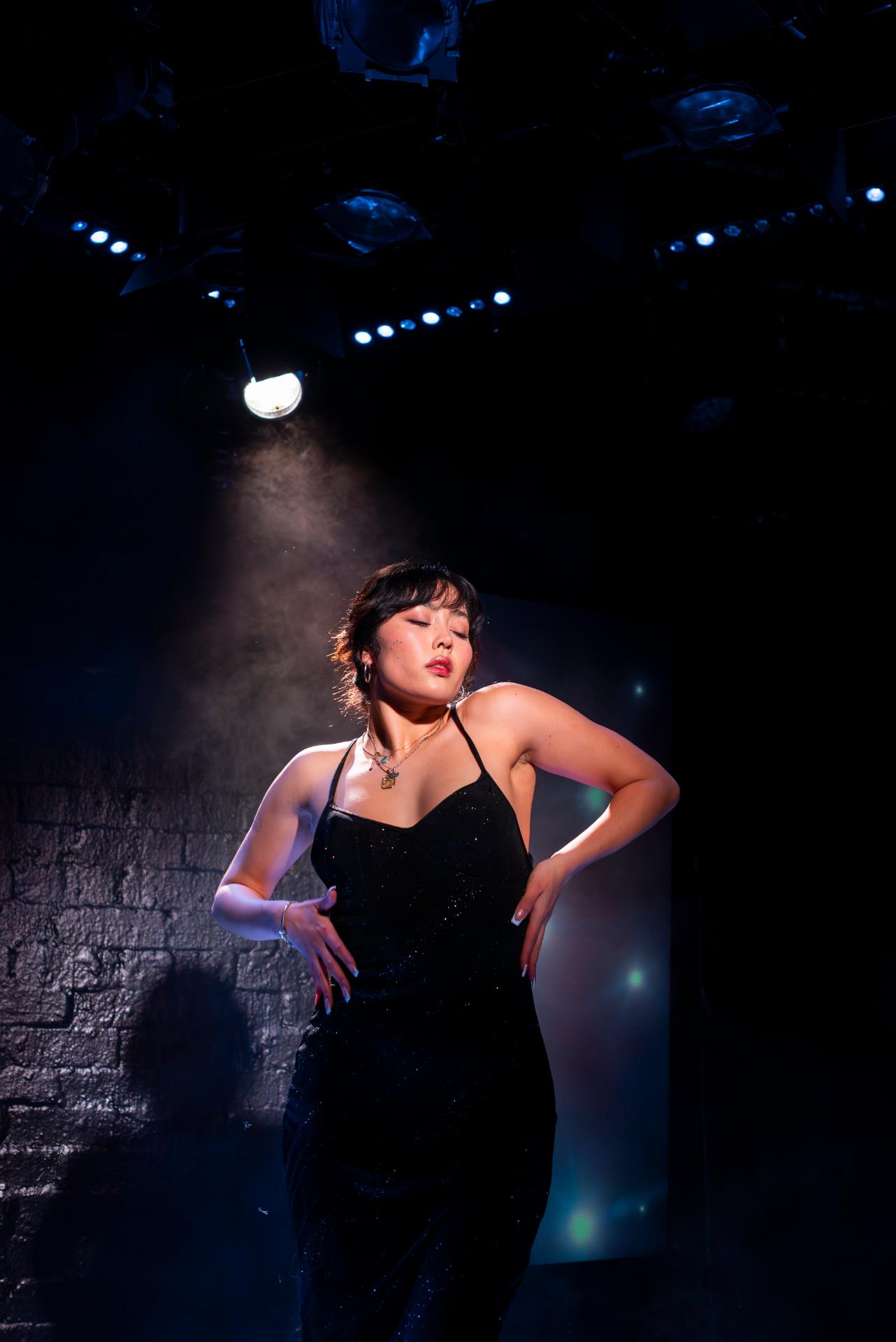
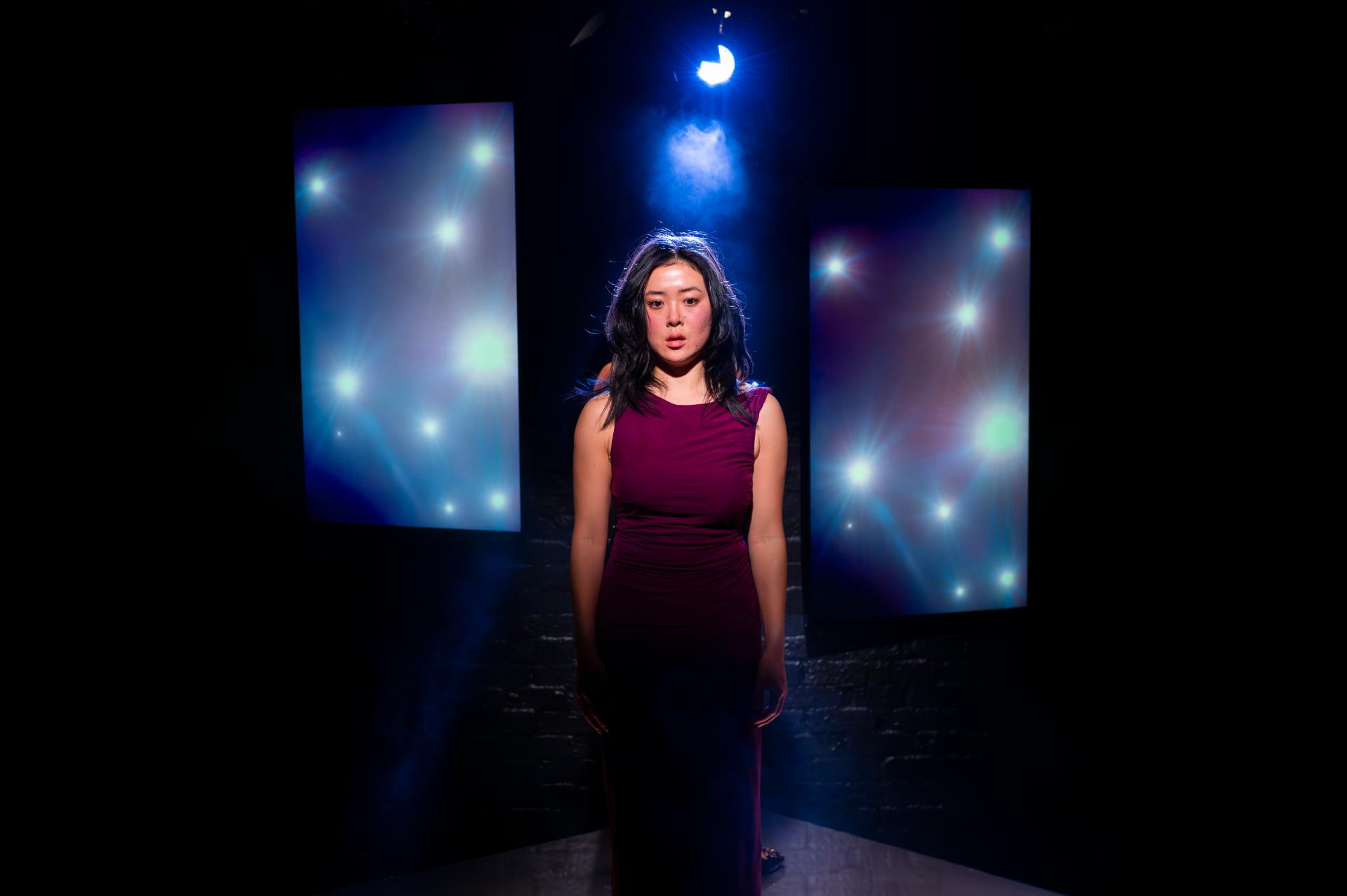
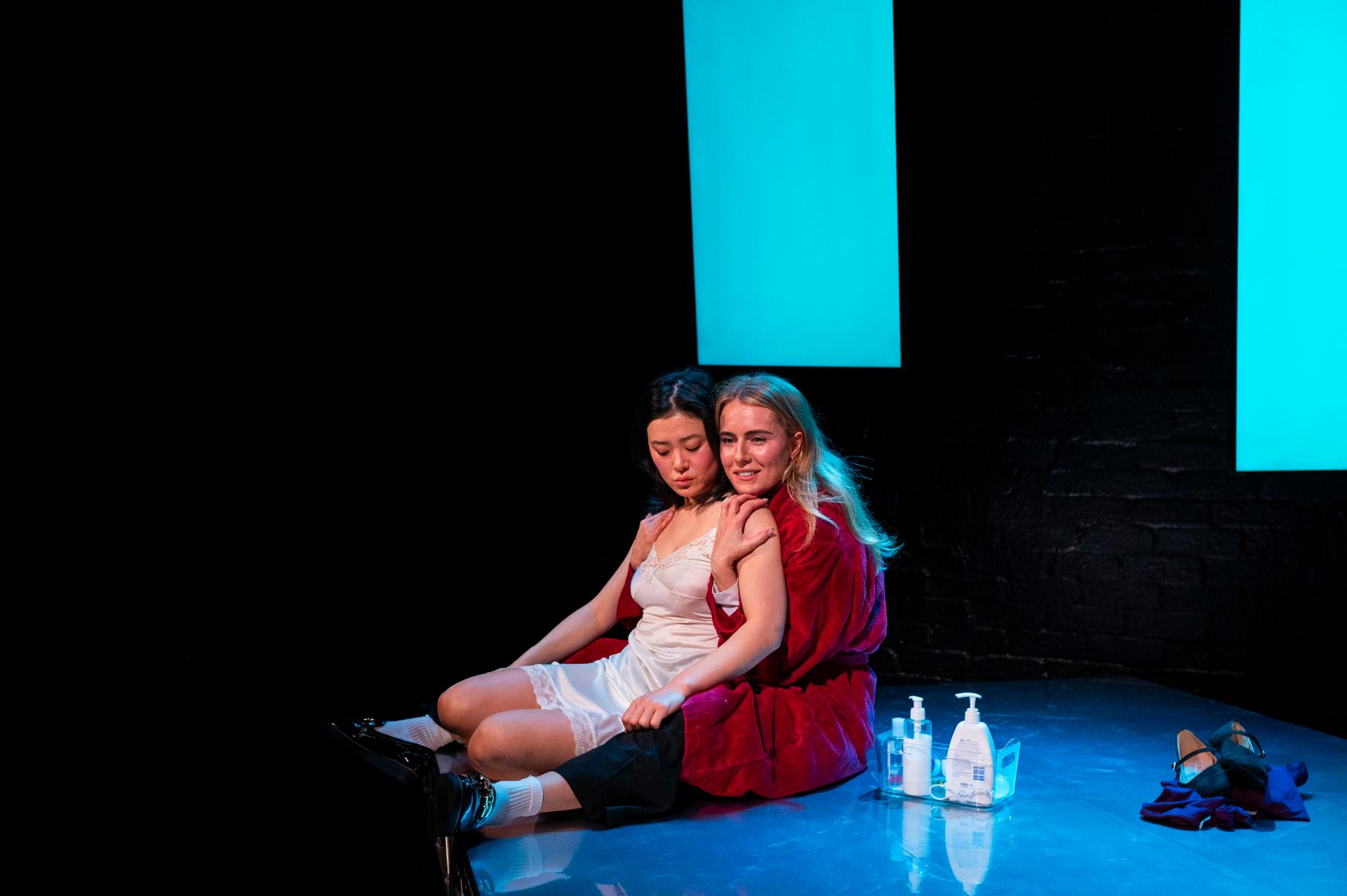
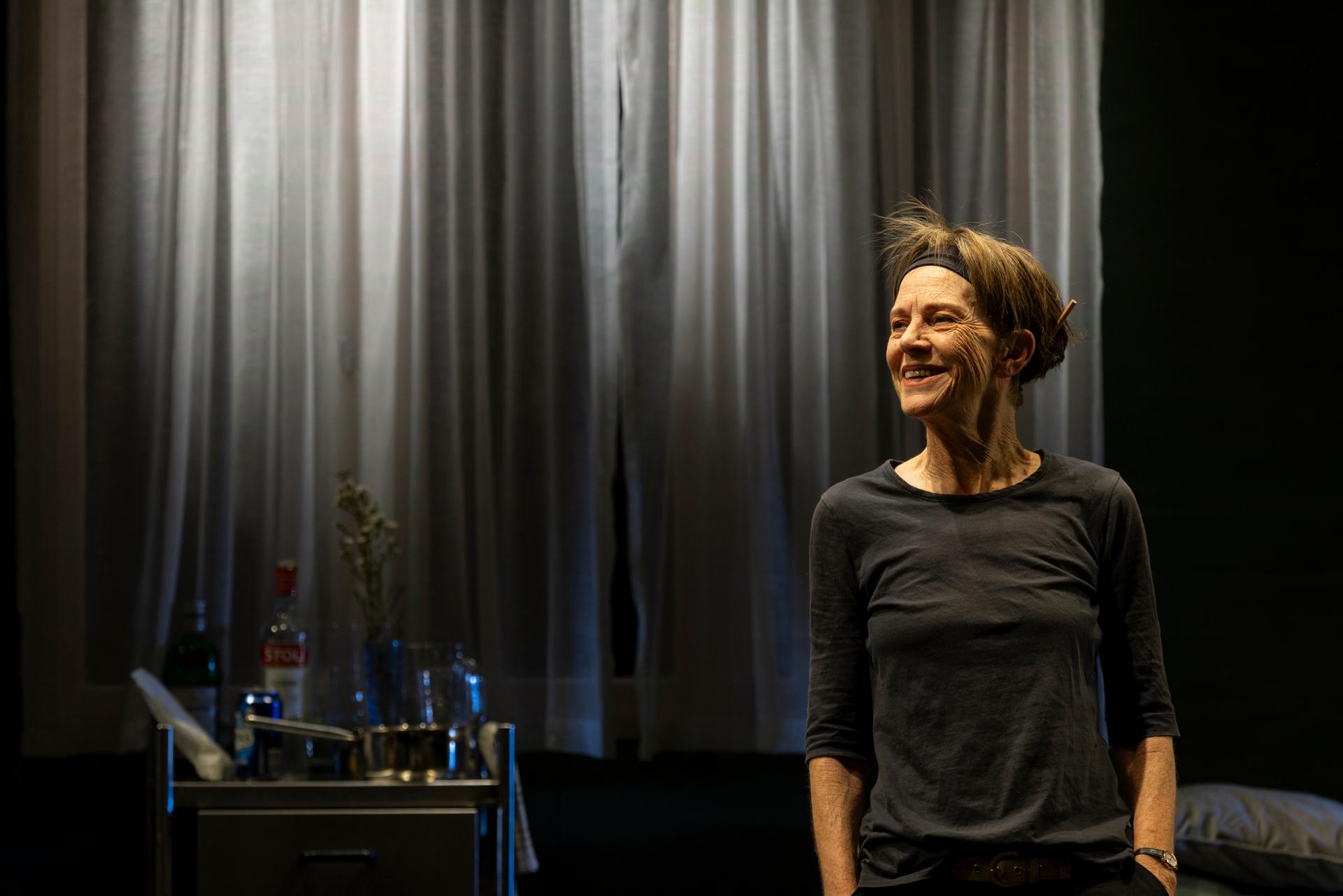
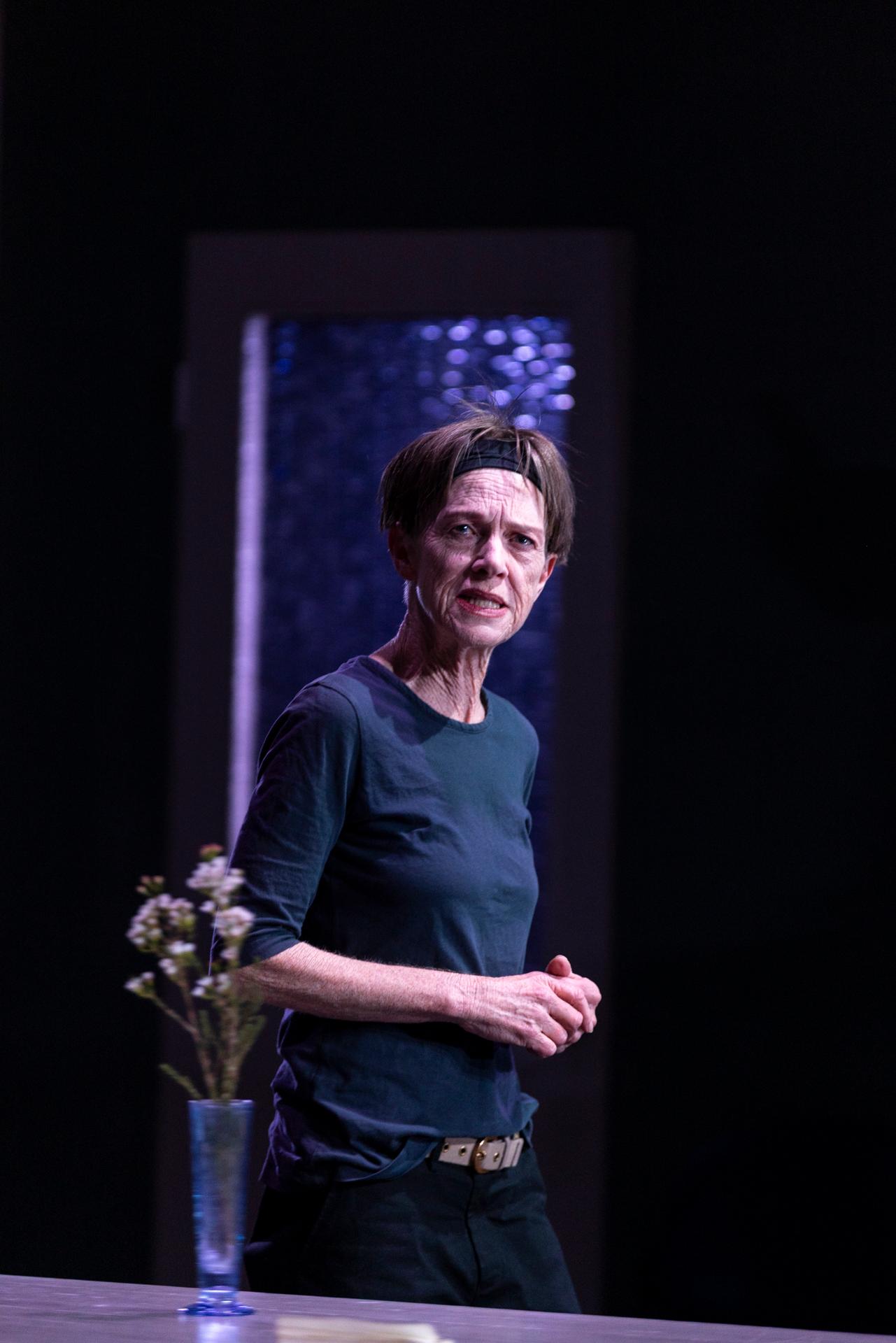
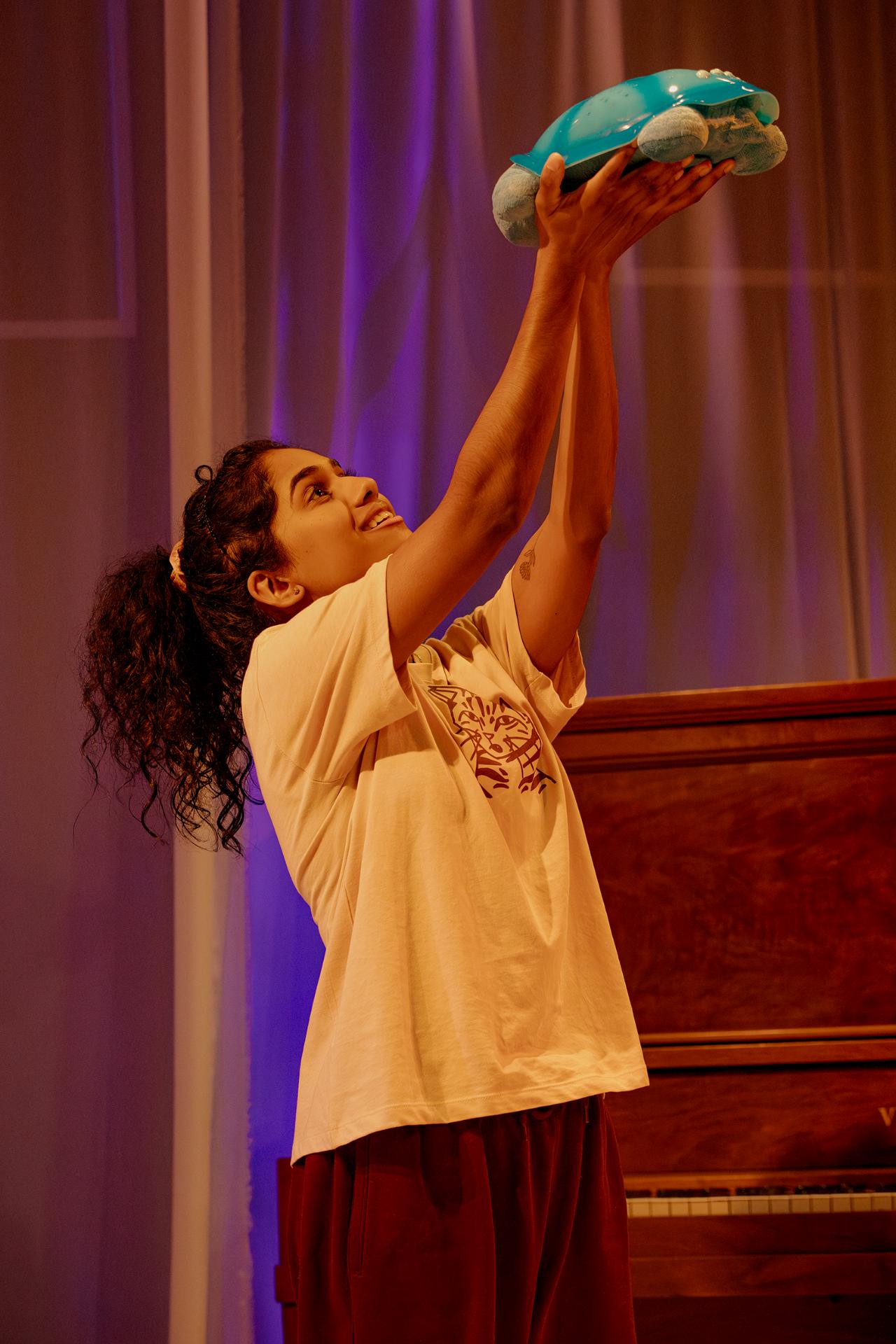
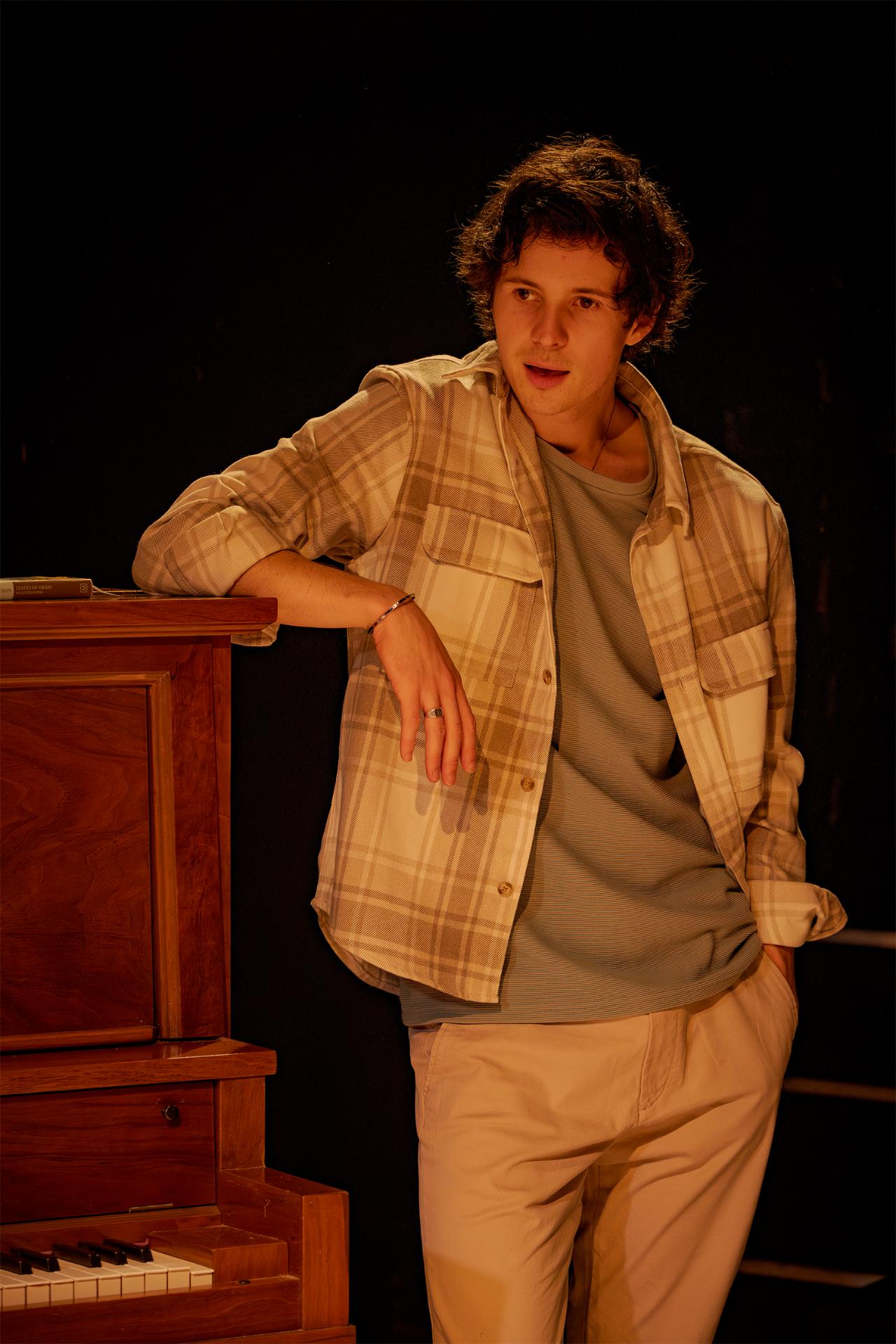
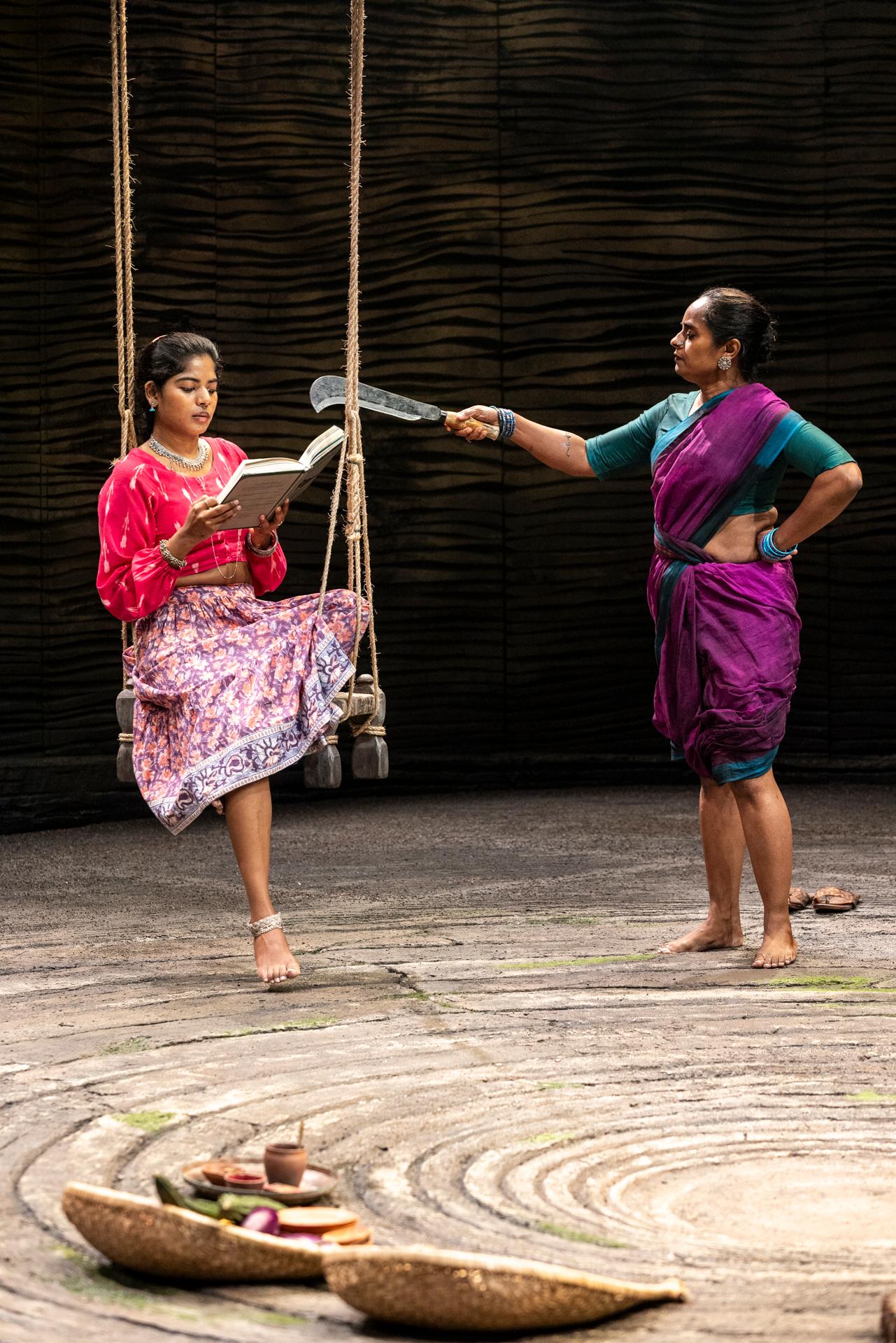
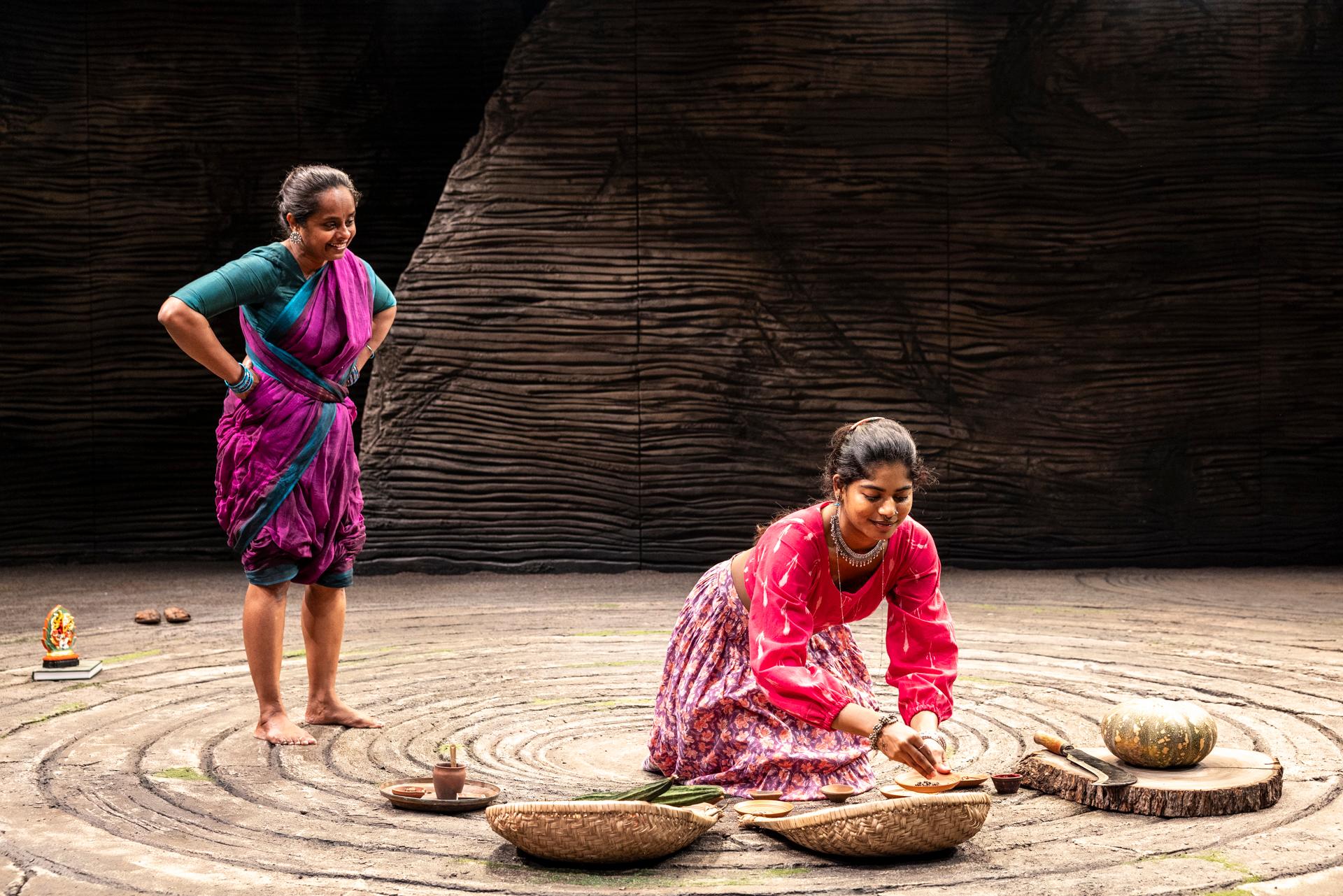
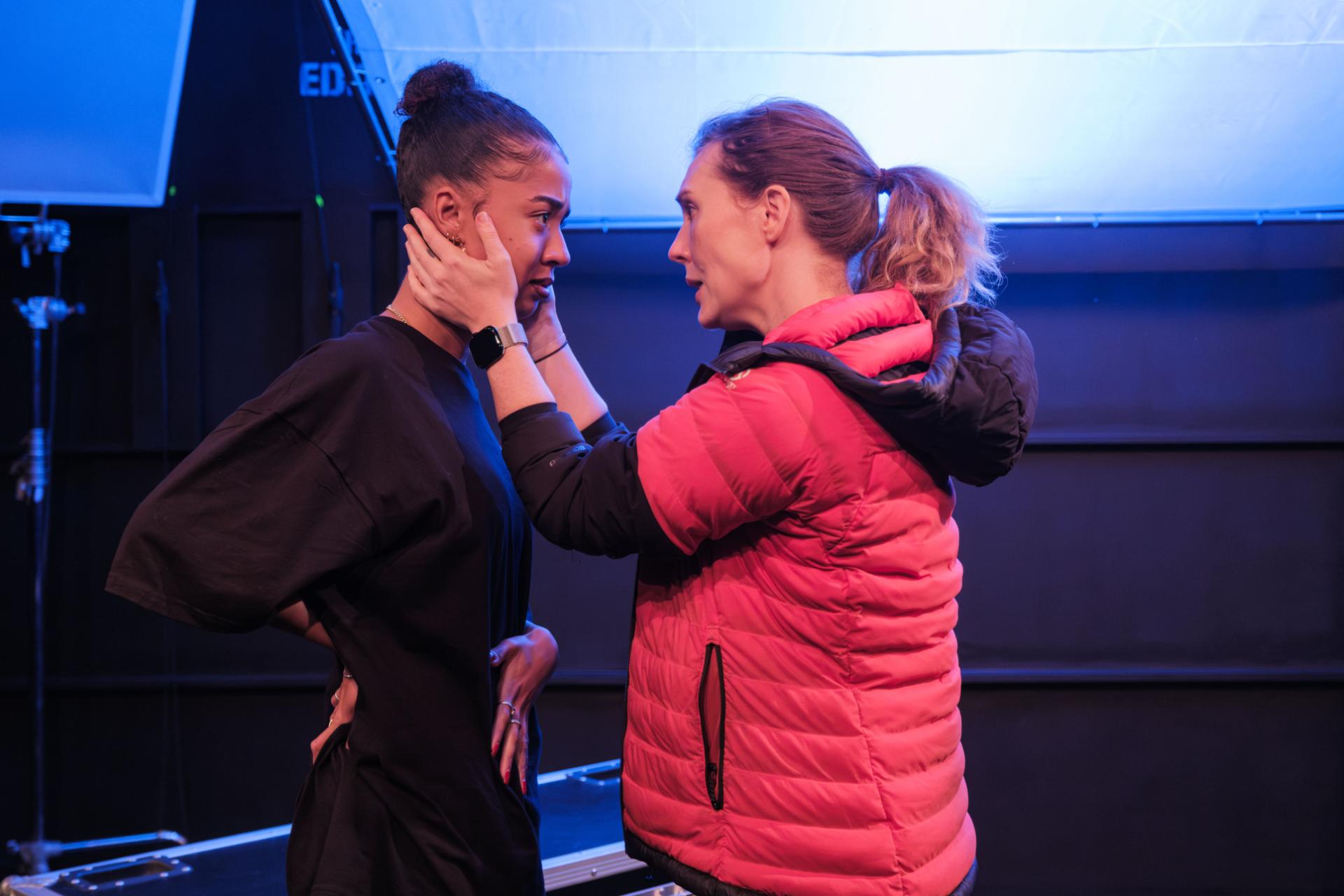
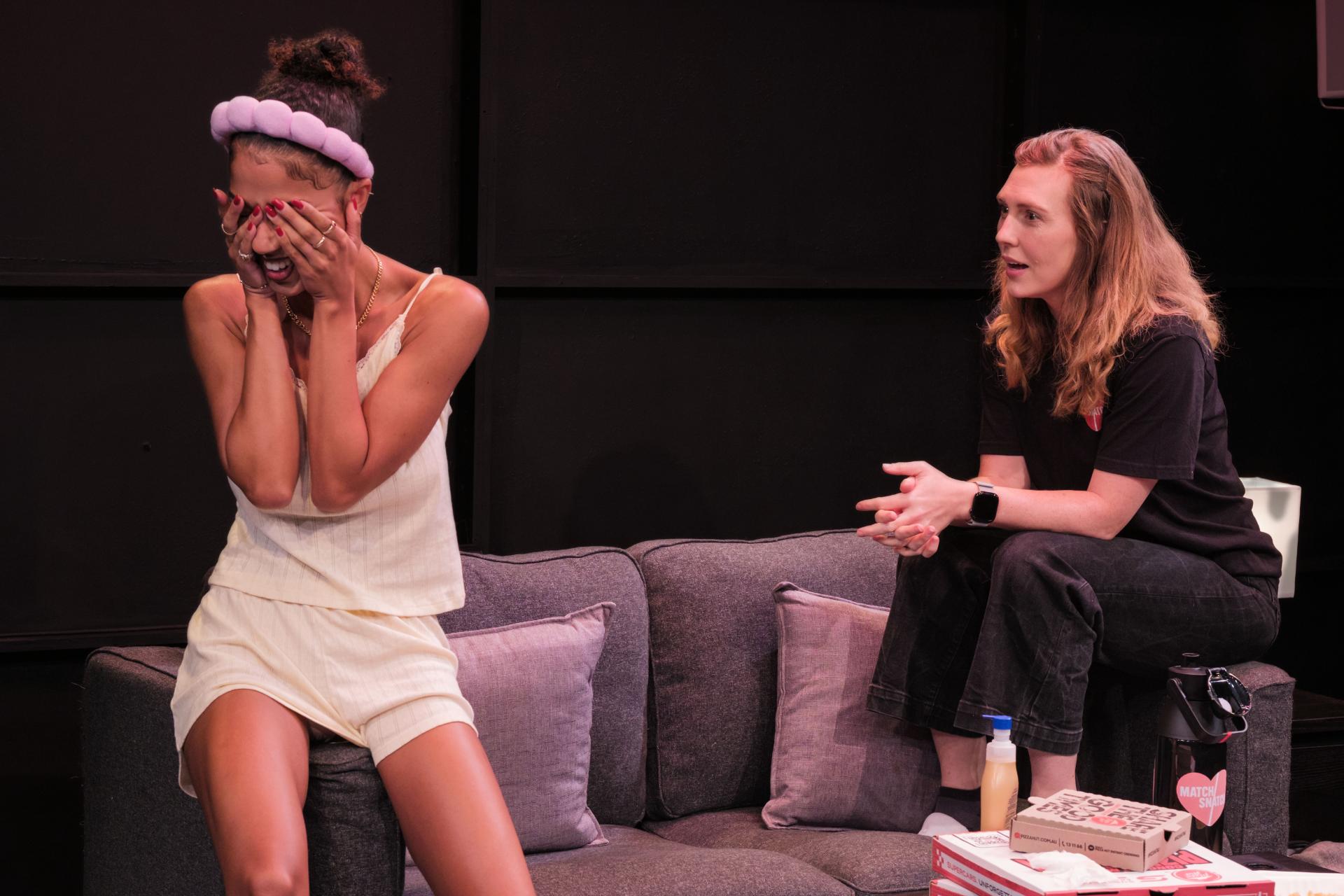
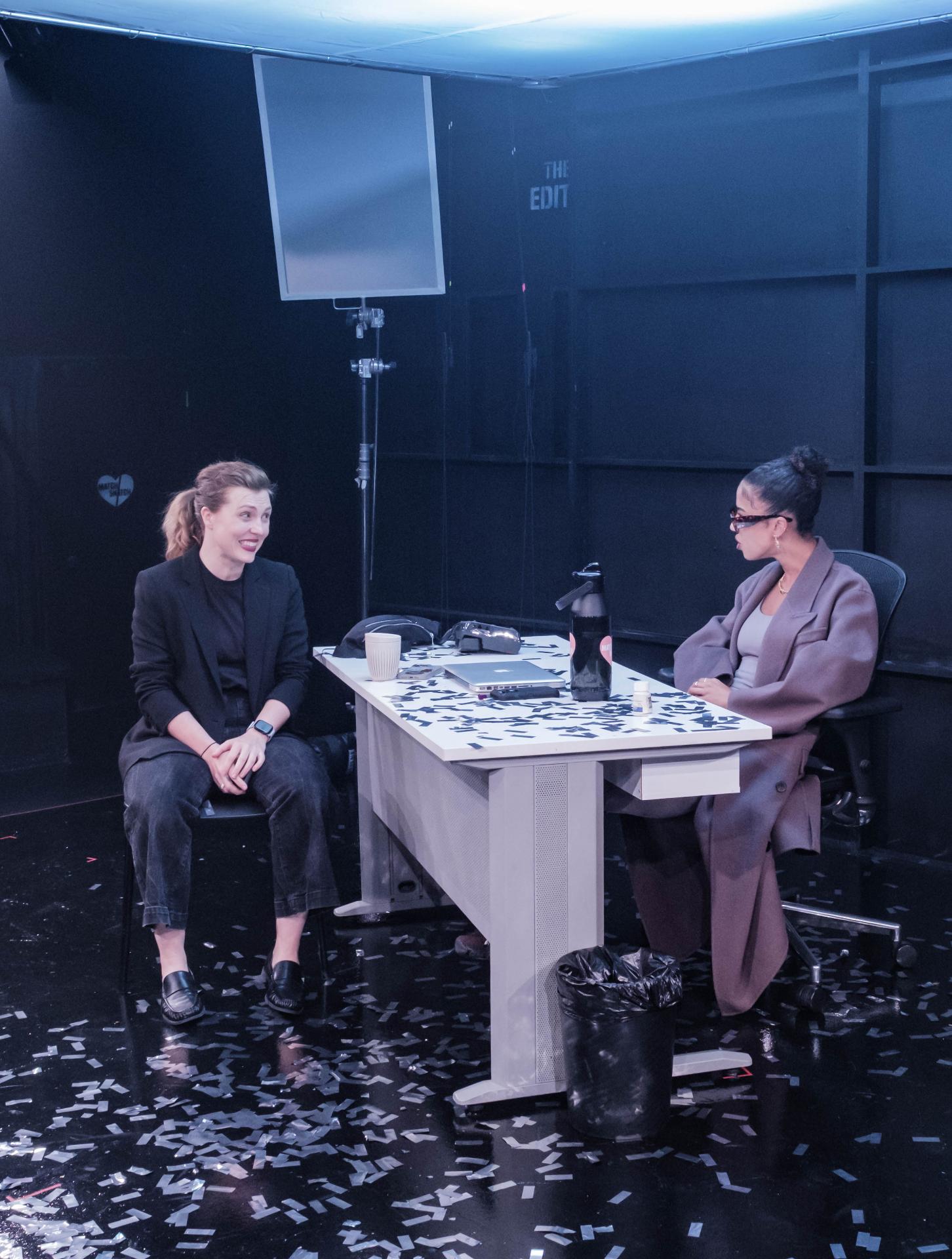
As Nia, Iolanthe offers an intriguing study of ambition under late capitalism, portraying with disarming authenticity the moral dissonance required for success. Her performance captures a young woman’s conviction that intelligence and charm can transcend systemic exploitation, a belief that we observe to be both seductive and self-defeating. Matilda Ridgway’s interpretation of Jess is marked by remarkable psychological acuity; her disingenuousness feels neither exaggerated nor opaque, but grounded in a credible logic of survival. As the play unfolds, Jess becomes increasingly reprehensible, yet Ridgway’s depictions remain resolutely authentic, allowing us to perceive the structural and emotional pressures that shape such behaviour.

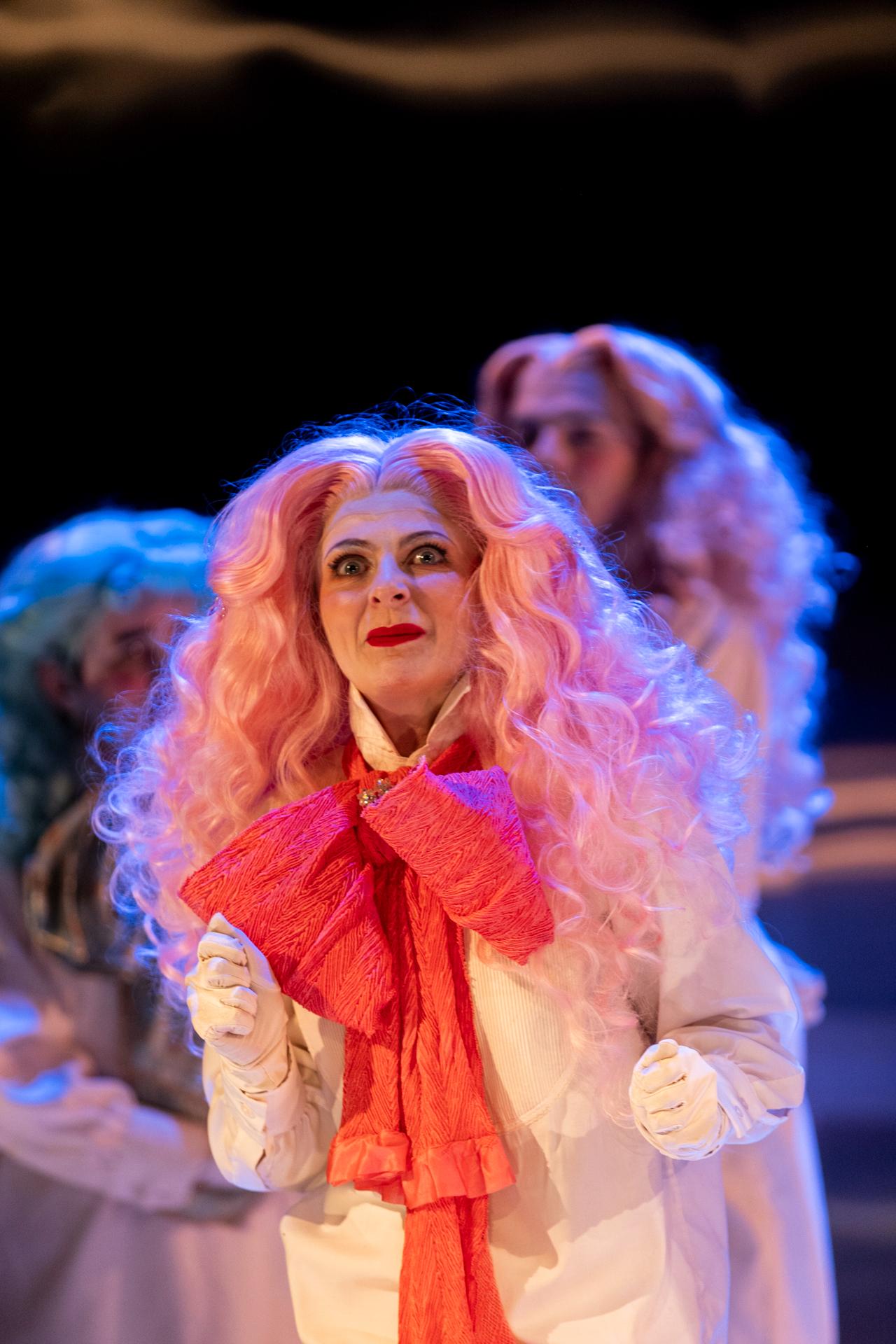
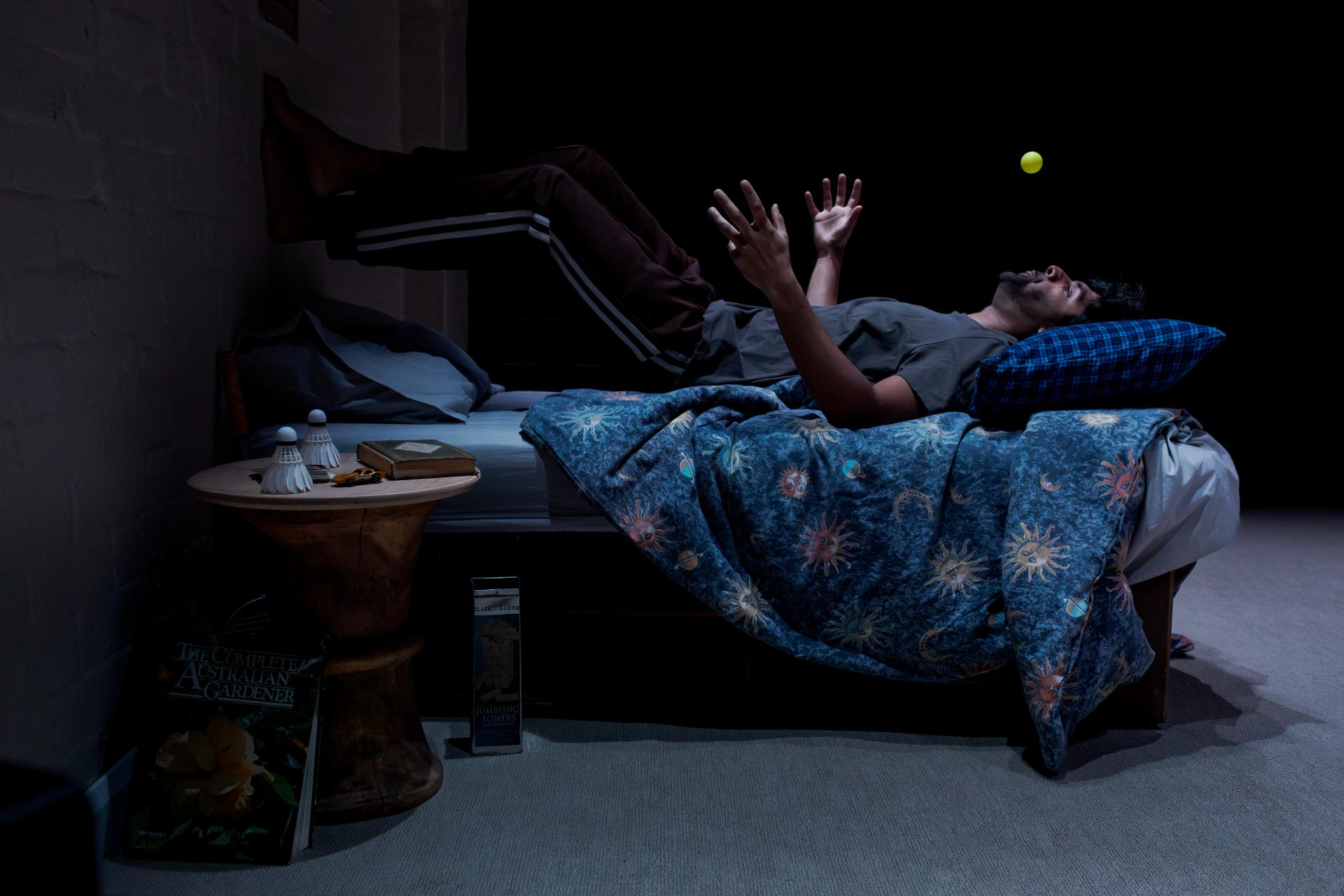
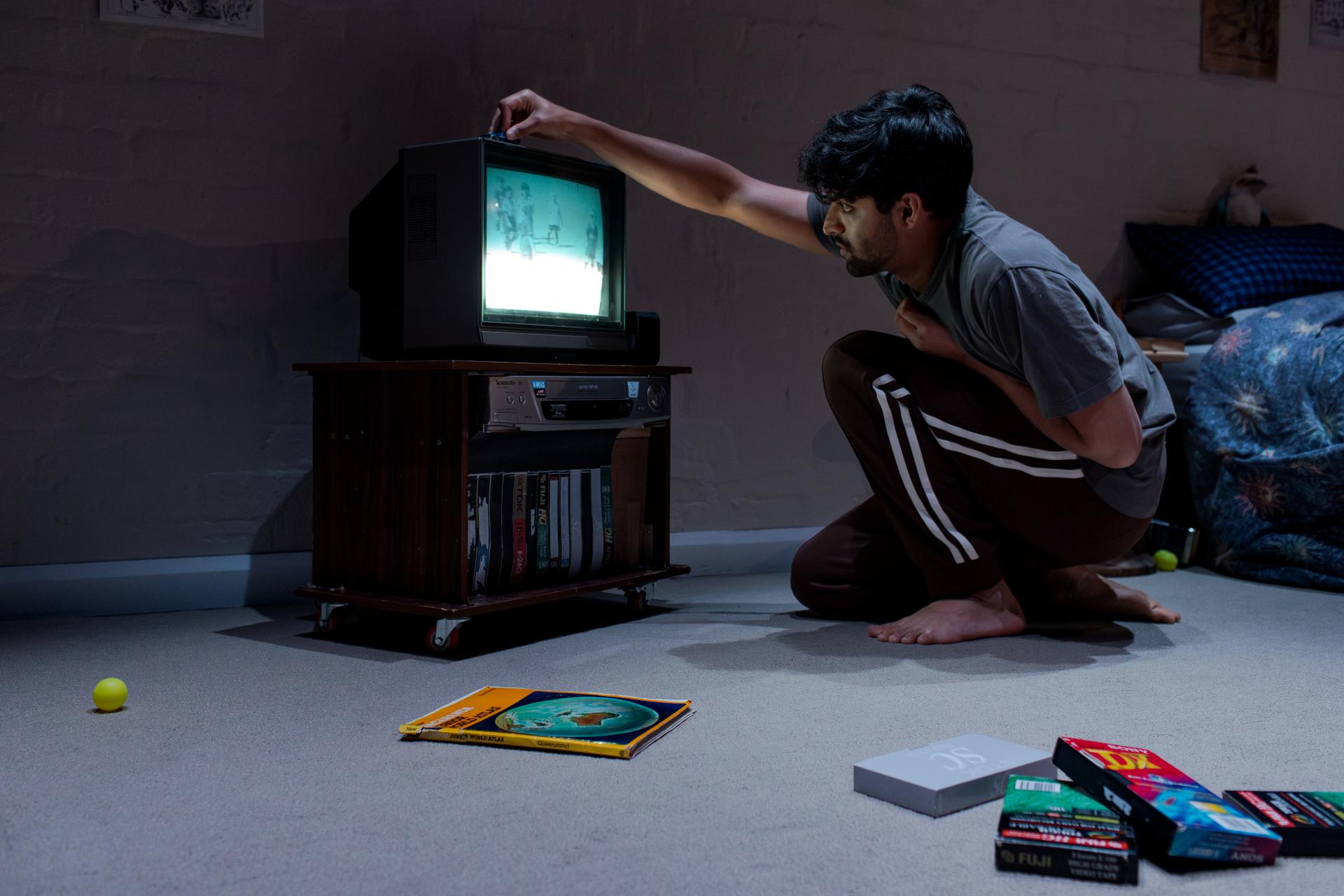
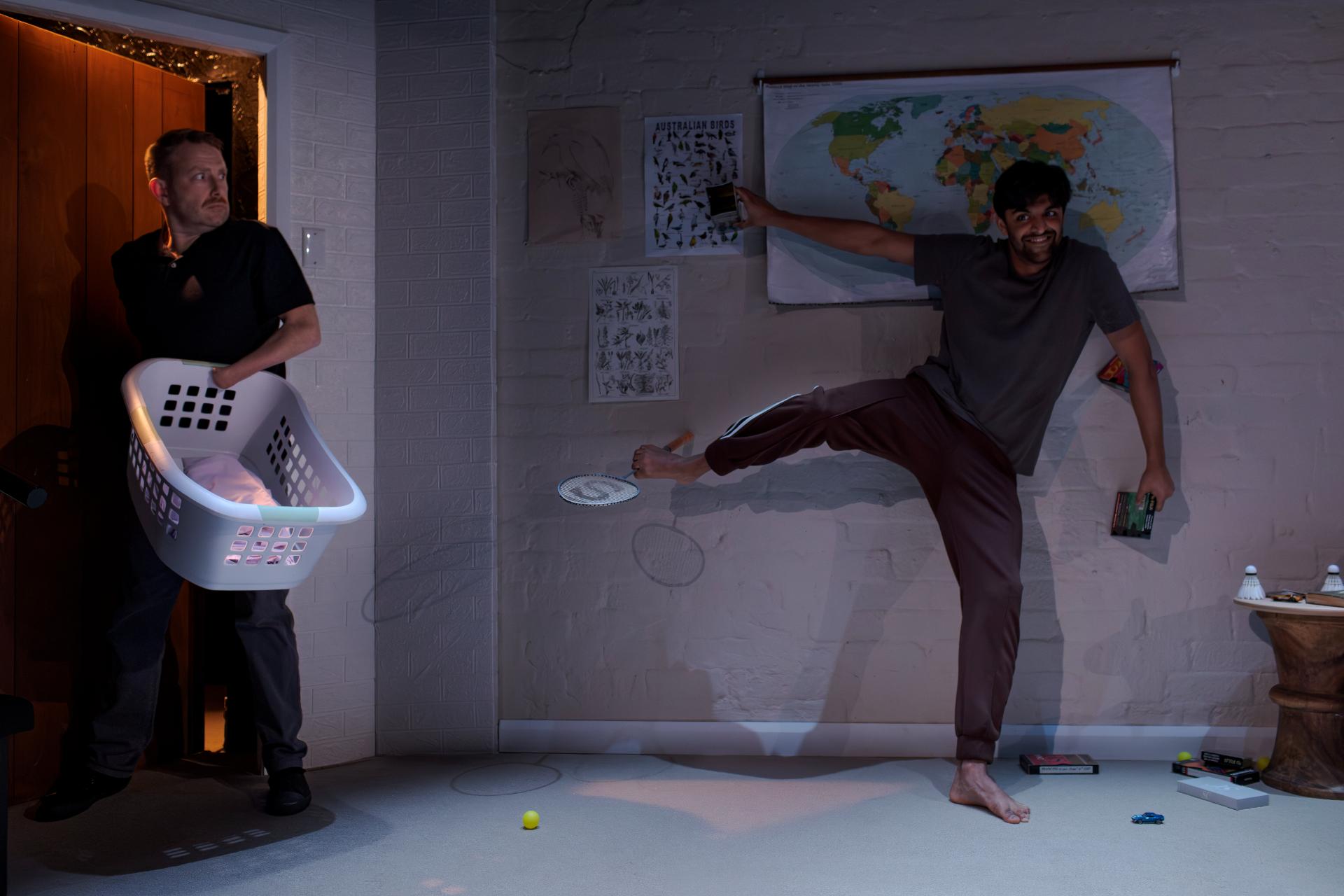
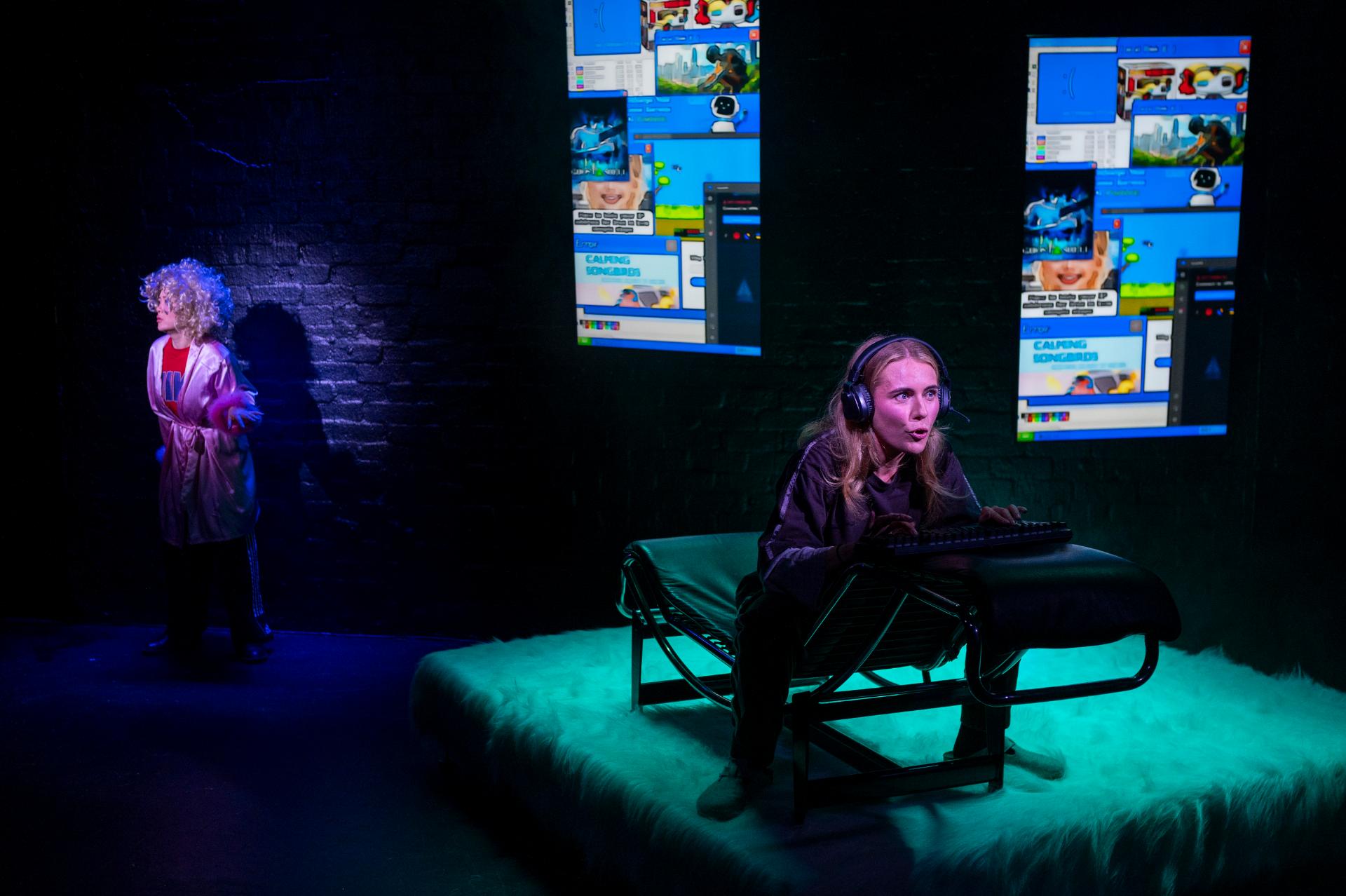
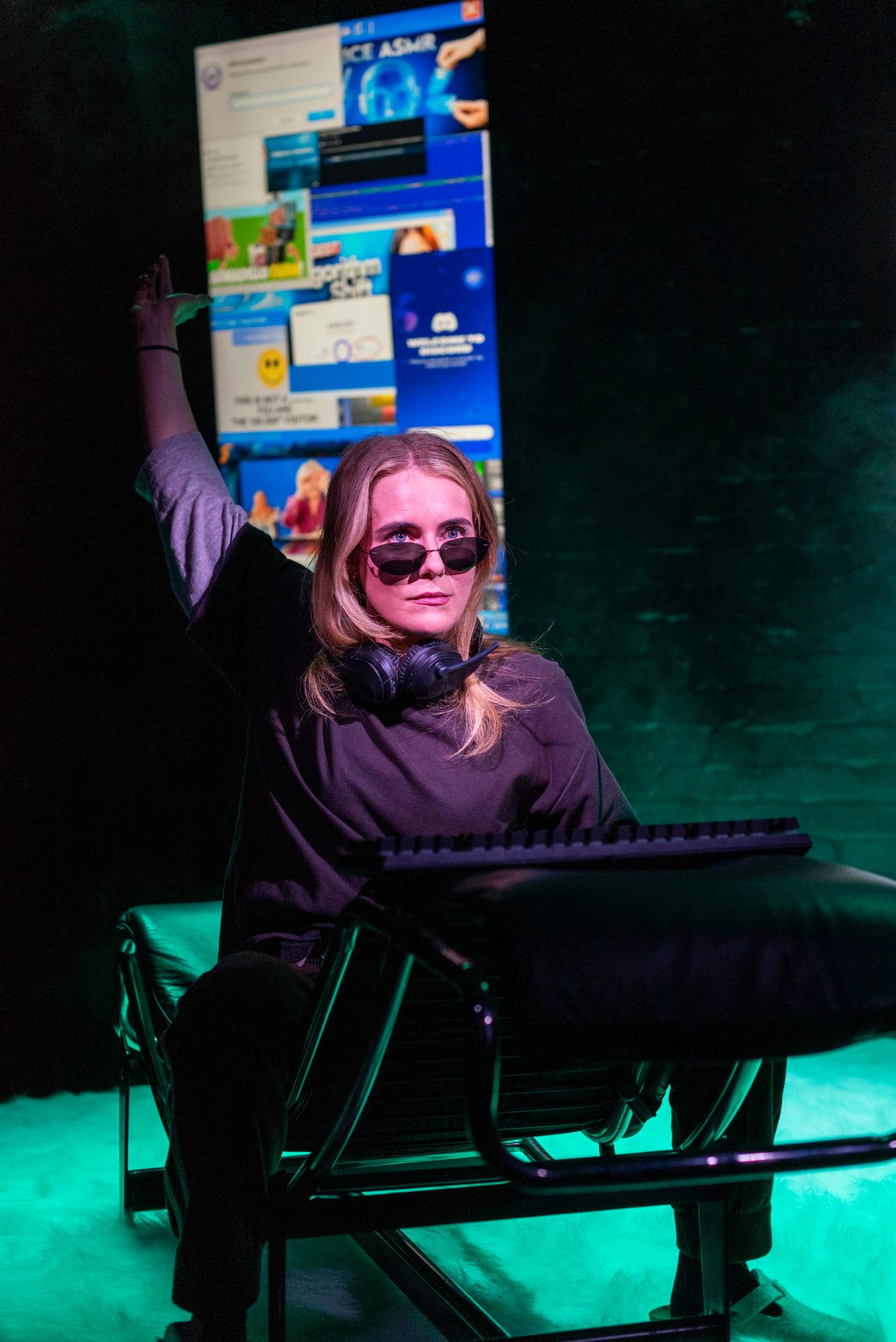
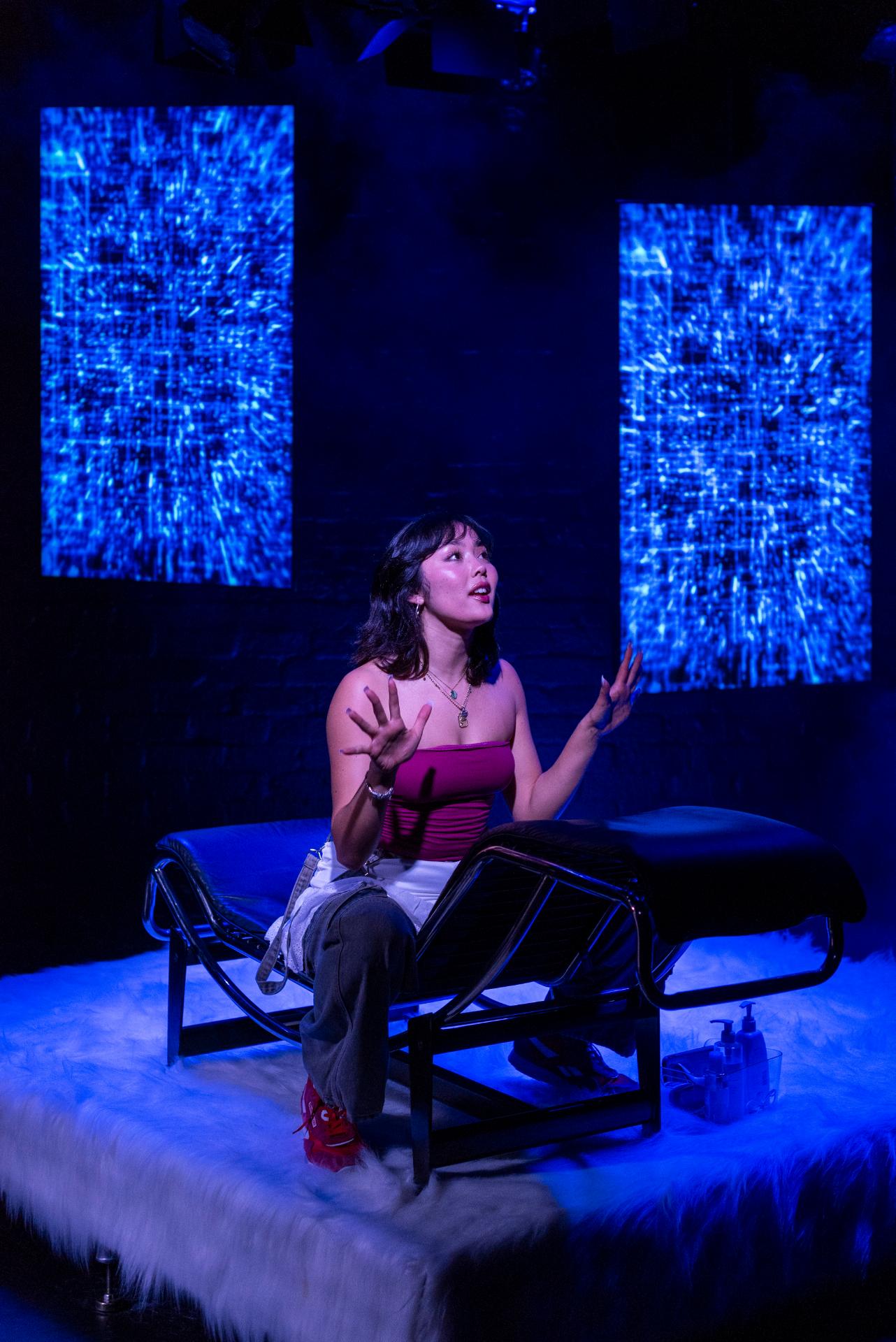
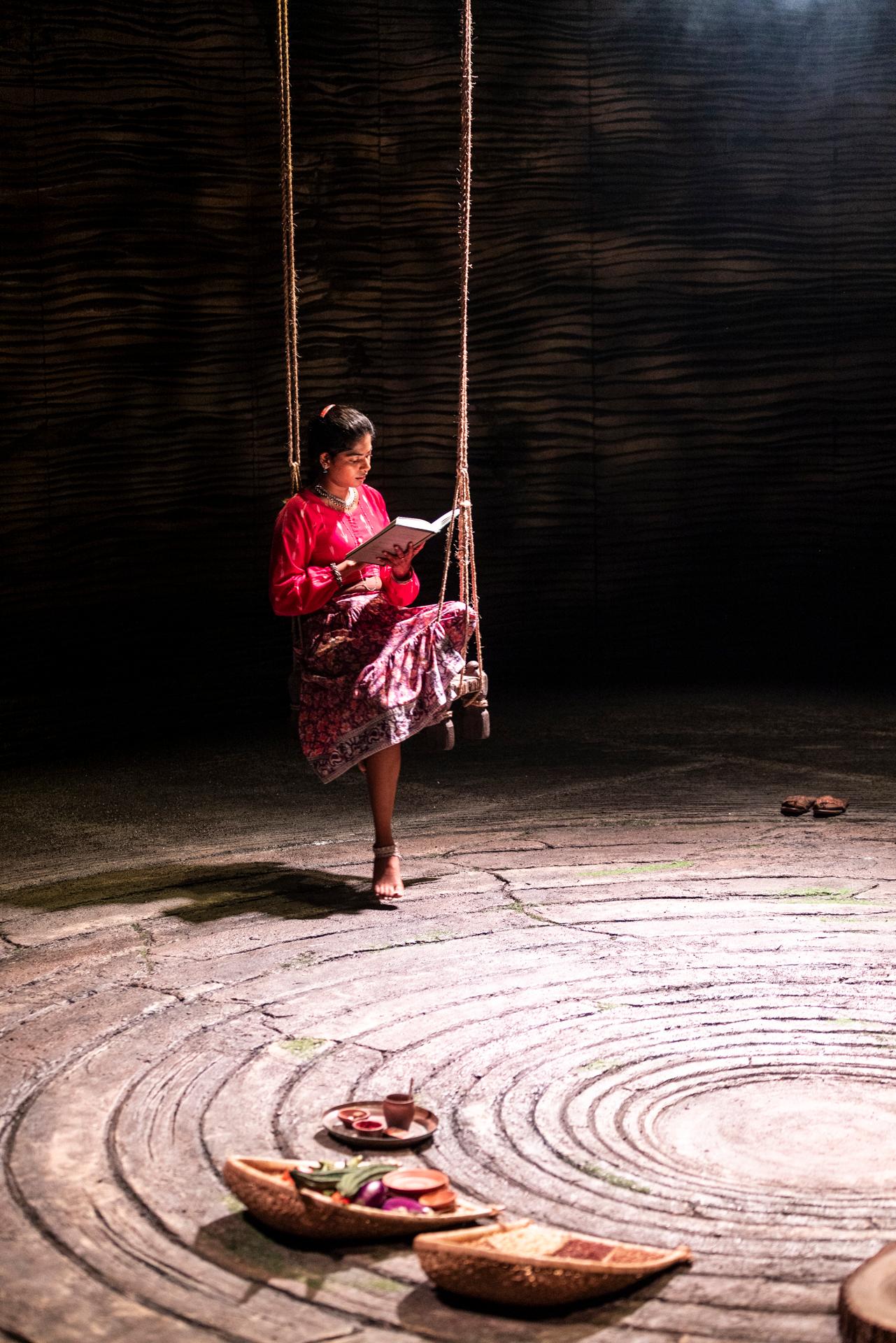
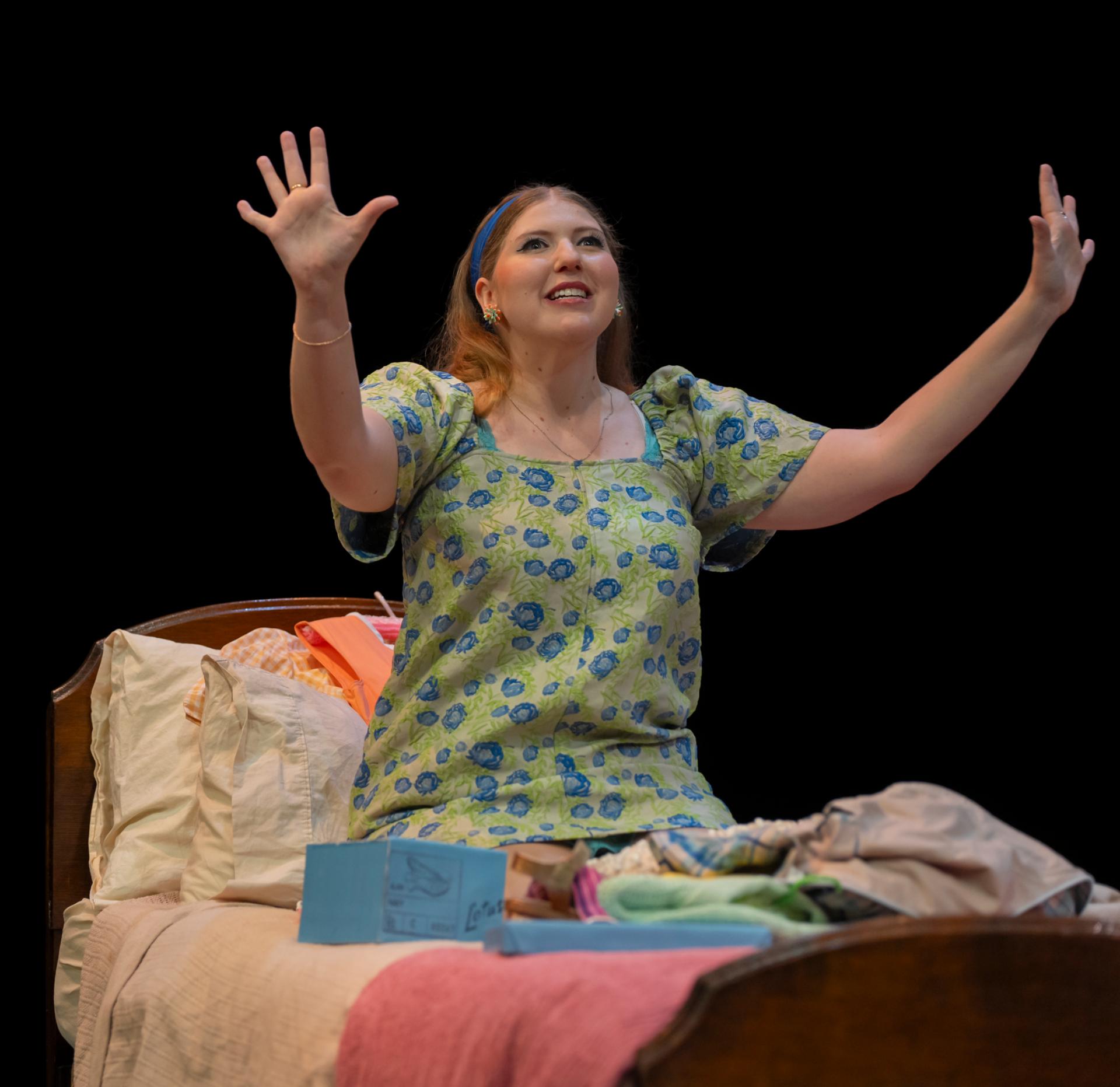
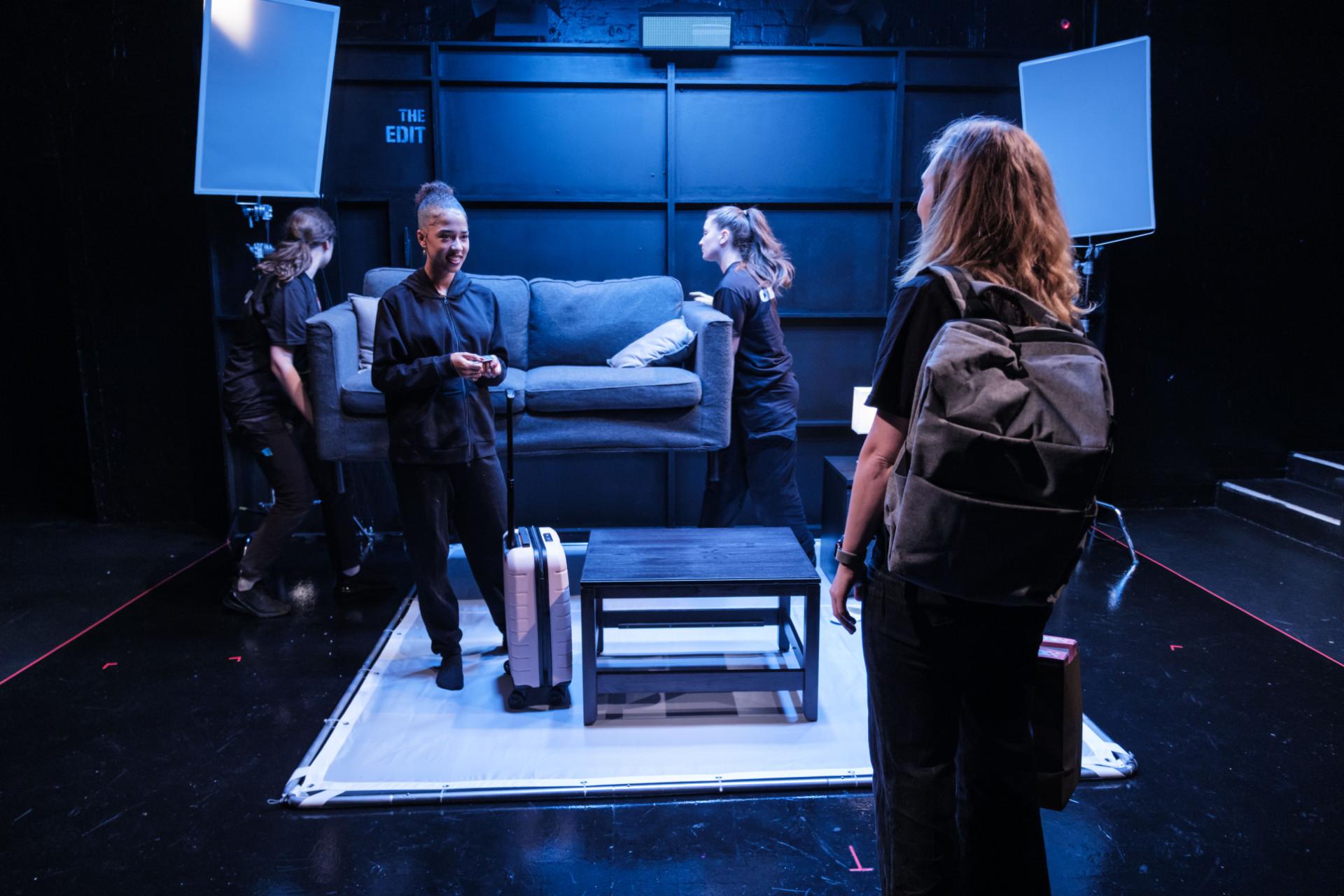
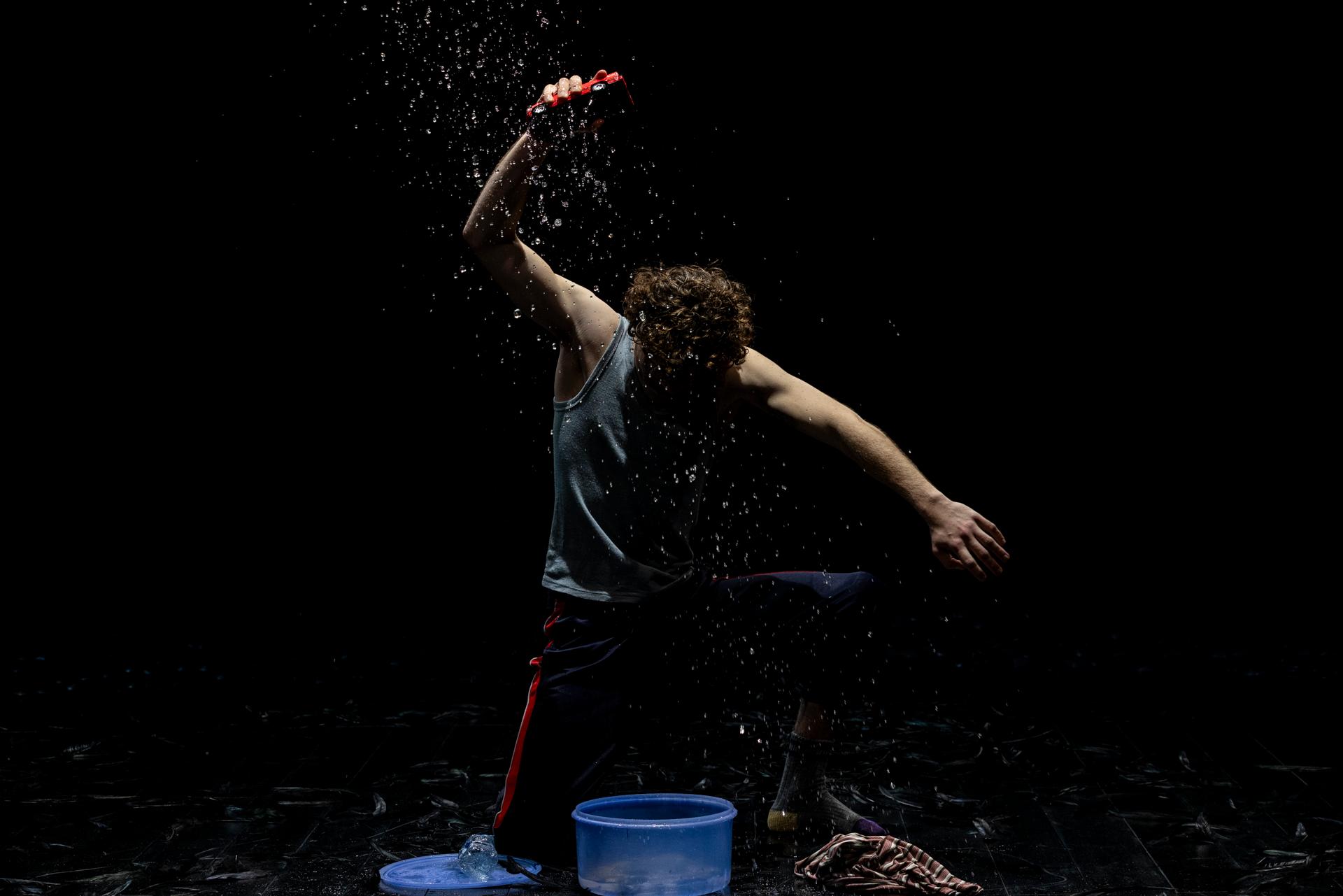
Set design by Ruby Jenkins cleverly frames the action with visual cues that expose the hidden machinery of television production, and the layers of deceit that sustain its manufactured fantasies. The stage becomes both a workplace and a trap — a reminder that behind every glossy image lies manipulation at work. Phoebe Pilcher’s lighting design is striking in its chill and precision, evoking the emotional coldness that governs human behaviour in a system built on economic cannibalism. Music and sound by Alyx Dennison heighten the drama with an organic subtlety; their contributions are seamlessly integrated yet undeniably potent in shaping the production’s tension and mood.

The pursuit of success feels almost instinctive, a shared ambition ingrained from an early age, yet its meaning remains troublingly mutable. What we come to define as “success” is so often shaped by external forces, by market logics and cultural expectations that reward ambition only when it conforms to the existing order. For the young, particularly those taking their first tentative steps into professional life, this pursuit can be both intoxicating and perilous. The world teaches its lessons harshly, and every triumph seems to come at the expense of something quietly vital.

We are endlessly seduced by the shimmer of promise, by images of prosperity, relevance, and acclaim, and in our hunger, we mistake the surface for substance. The capitalist dream markets itself as empowerment, yet its currency is exploitation. Still, we continue to invest in the system, not solely out of necessity but from an almost devotional belief that perseverance will one day grant transcendence. The tragedy, of course, is that such faith is misplaced. The machine does not elevate; it consumes. It extracts our labour, our time, our spirit, and gives back only a fleeting sense of validation before demanding more. In the end, the system does not nurture our aspirations; it feeds on them, leaving us diminished, yet still reaching, still convinced that the next victory will finally make us whole.

www.belvoir.com.au | www.legittheatreco.com | www.unlikelyproductions.co.uk
Review: Orlando (Belvoir St Theatre)

Venue: Belvoir St Theatre (Surry Hills NSW), Sep 6 – 28, 2025
Playwrights: Carissa Licciardello, Elsie Yager (from the novel by Virginia Woolf)
Director: Carissa Licciardello
Cast: Janet Anderson, Nyx Calder, Emily Havea, Amber McMahon, Nic Prior, Shannen Alyce Quan, Zarif
Images by Brett Boardman

Theatre review
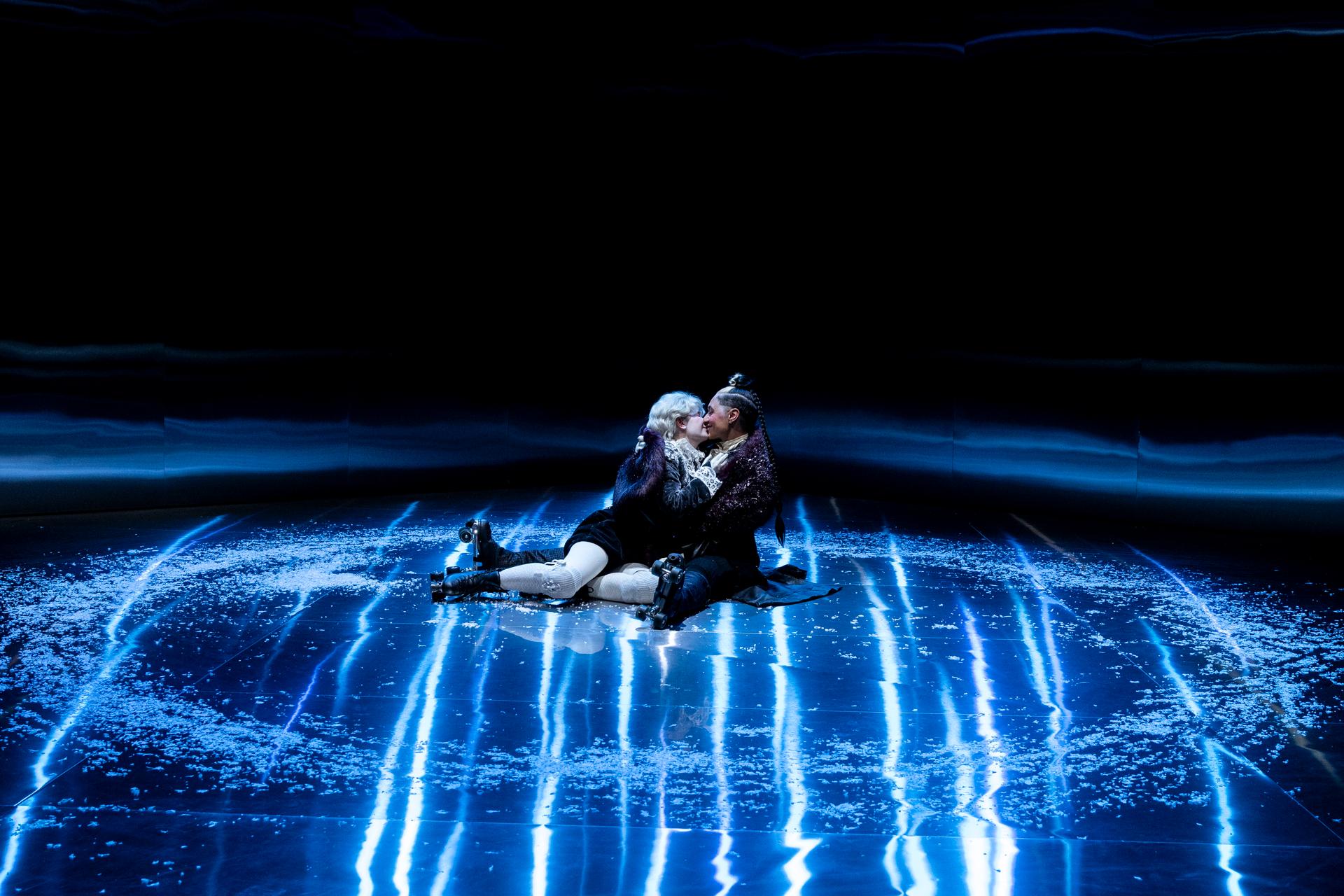
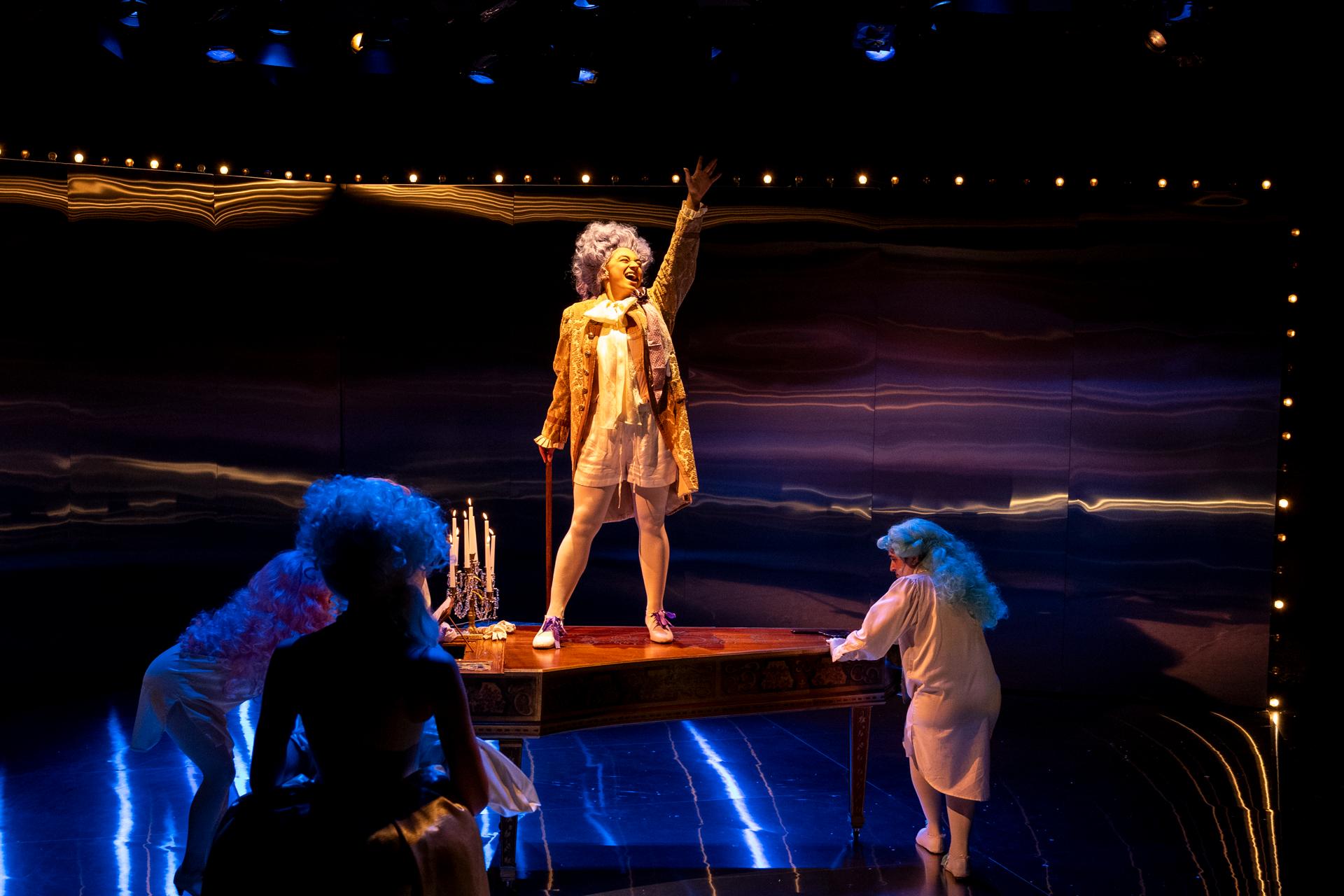
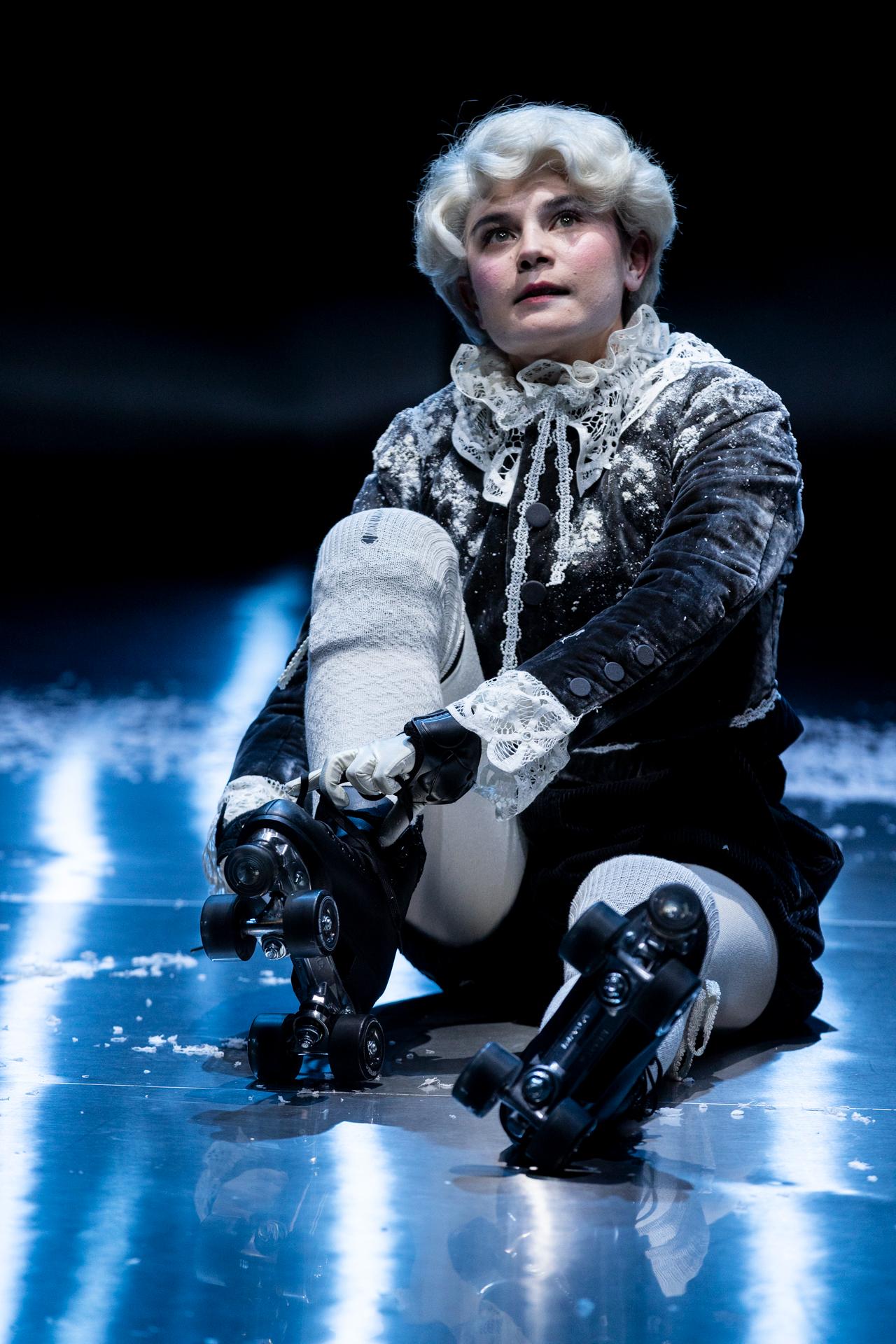
At a pivotal moment in the production, Lord Orlando becomes Lady Orlando, and with this transformation, questions of gender and identity are revealed as the very axis of Carissa Licciardello and Elsie Yager’s adaptation of Virginia Woolf’s 1928 novel Orlando: A Biography. Shortened simply to Orlando, the work preserves the fantastical spirit and poetic sweep of Woolf’s novel, though some of its intellectual density seems to have dissipated in translation to the stage.
Its inquiries into sexism, while sincere, often feel suspended in the past, unable to reproduce the startling contemporaneity of Woolf’s text. At times, gender is rendered too simplistically in Licciardello’s direction. Yet the injustices faced by Lady Orlando—most notably the loss of property and wealth on account of her sex—remain a compelling anchor, ensuring the adaptation retains a measure of significance.

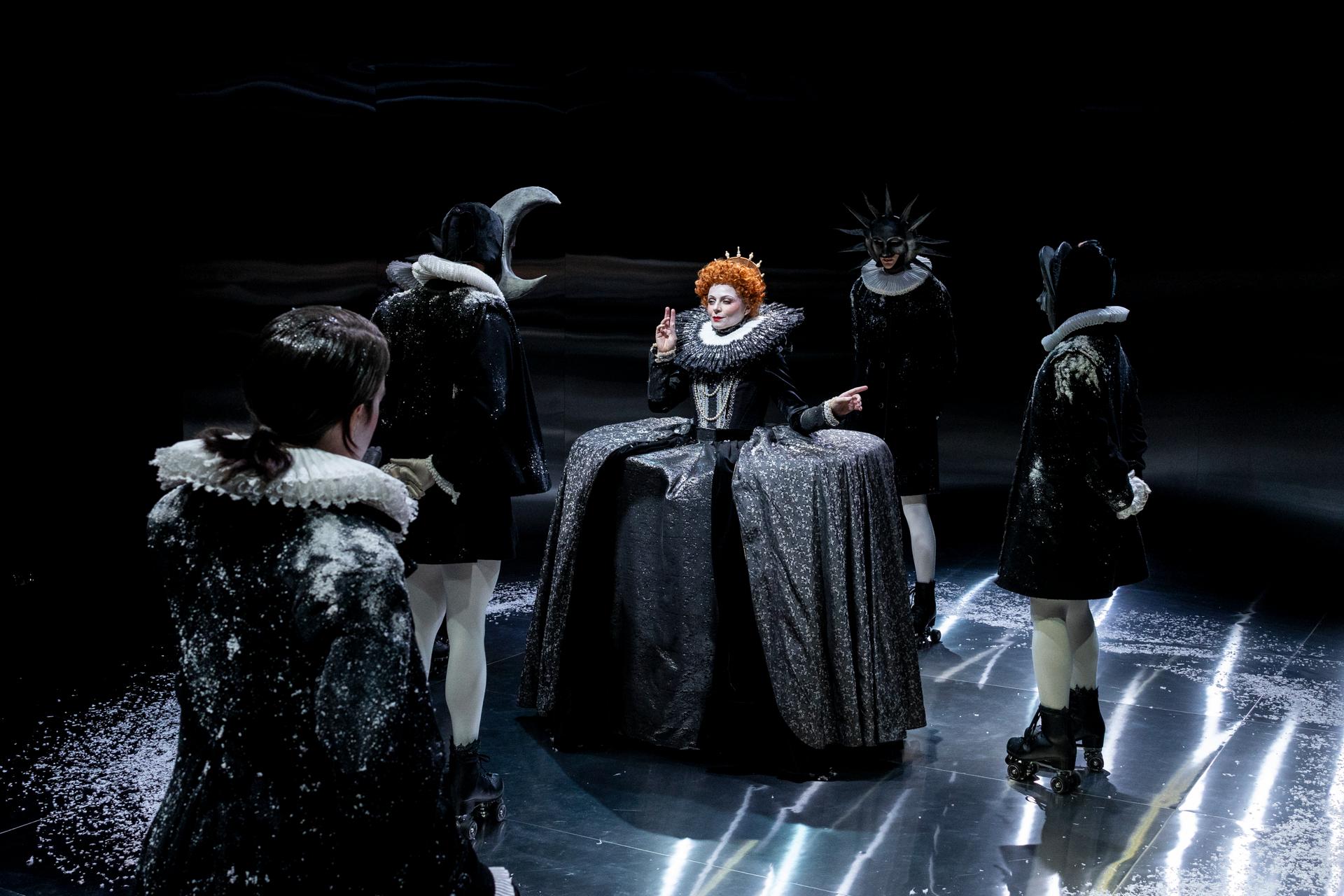
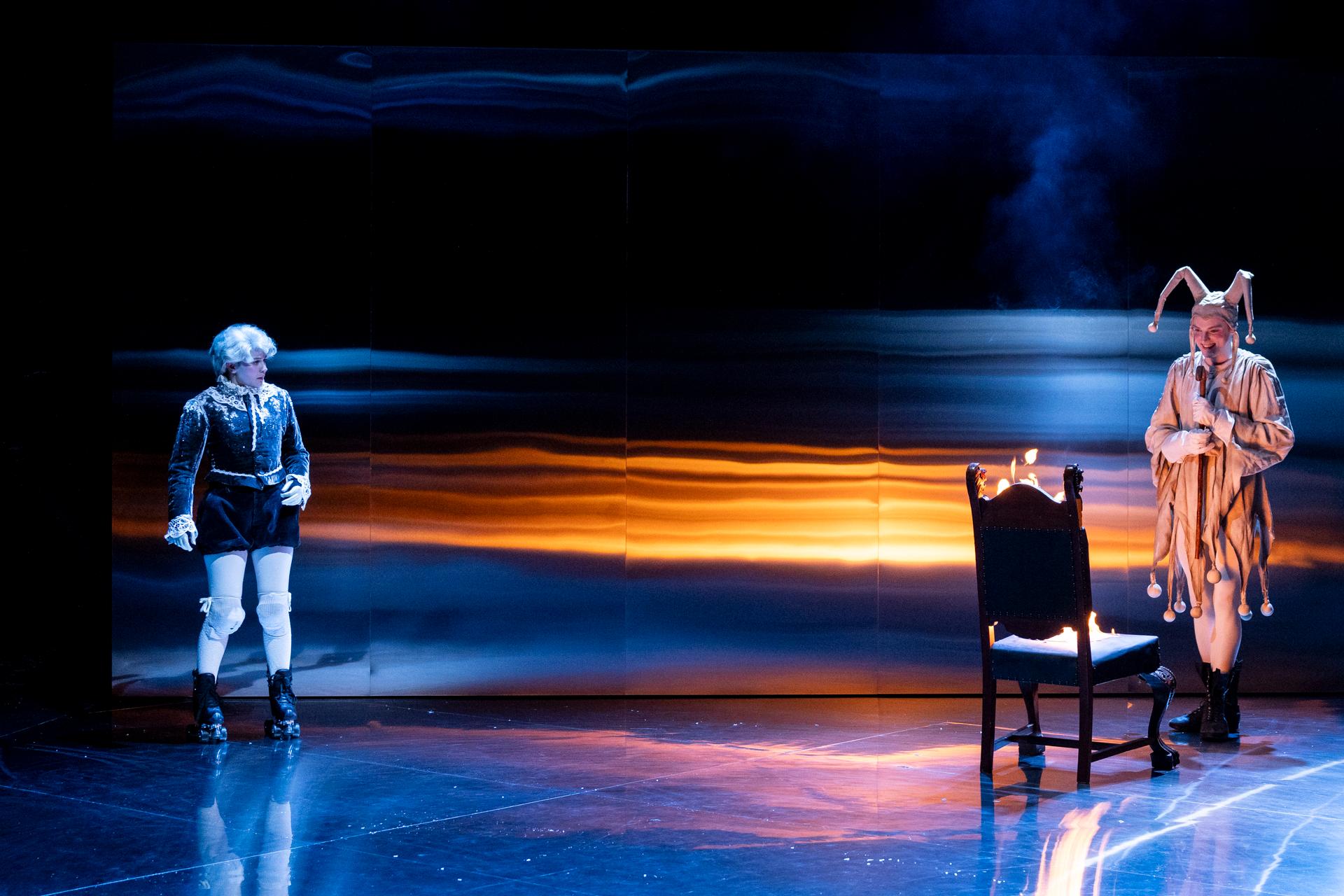
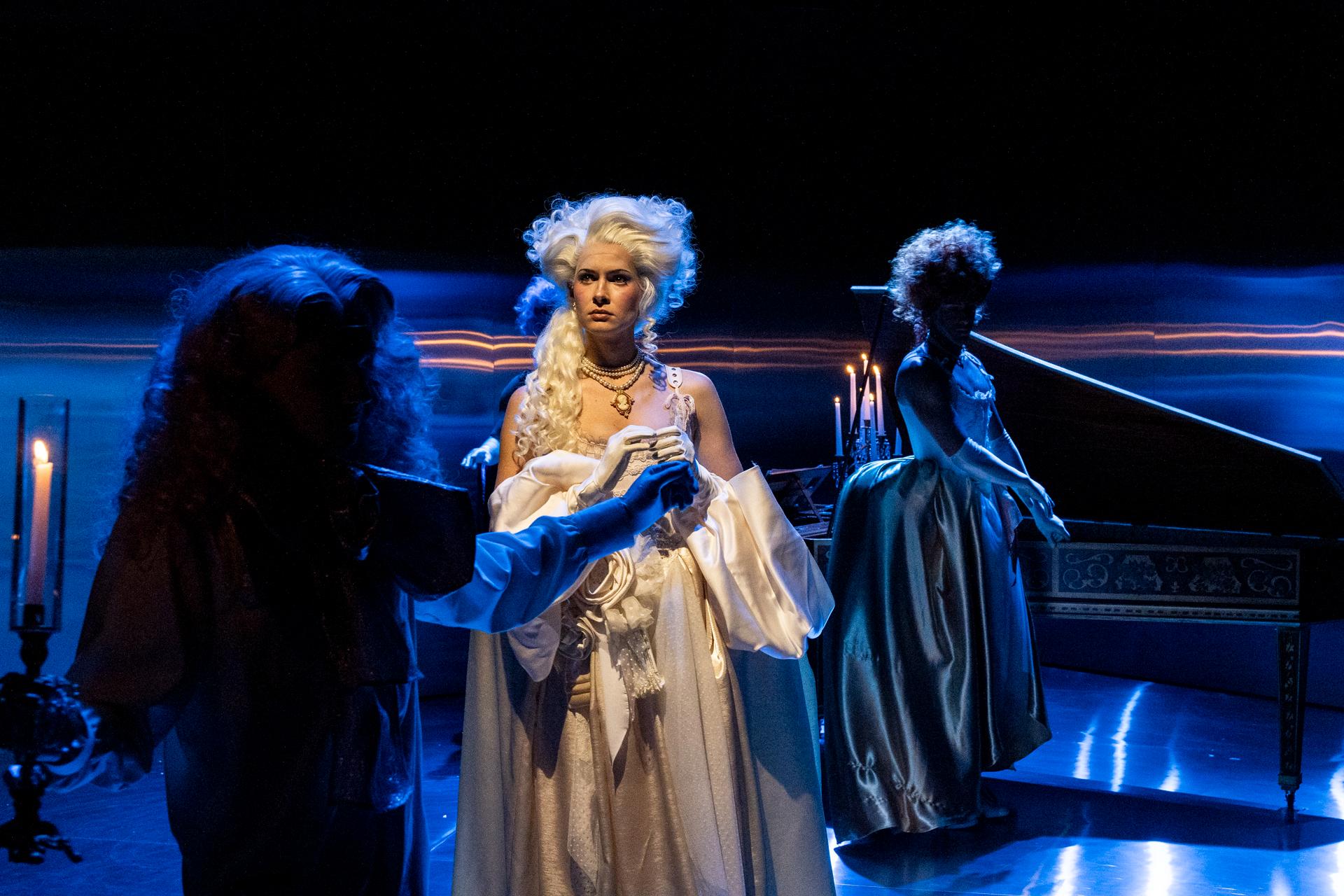
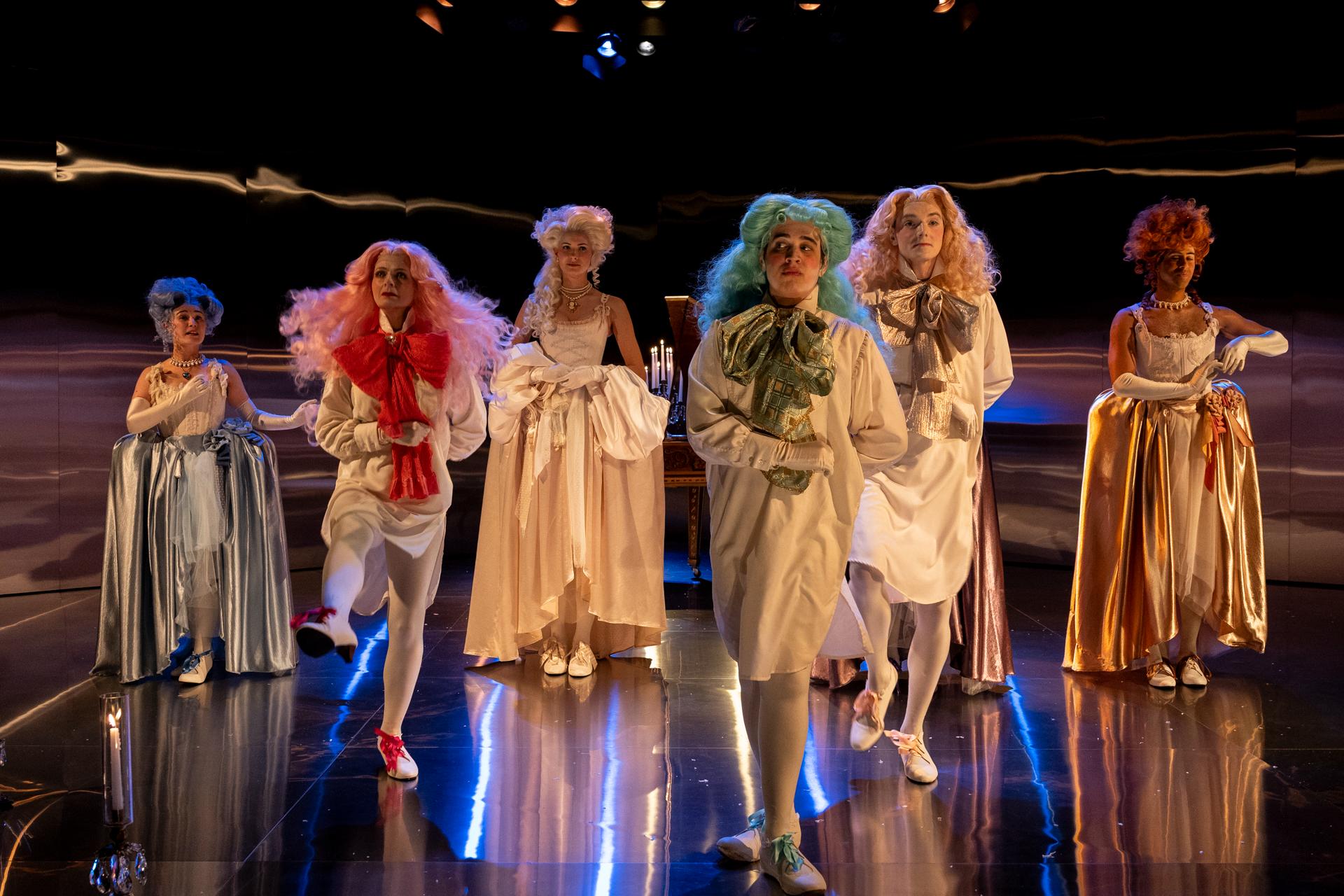
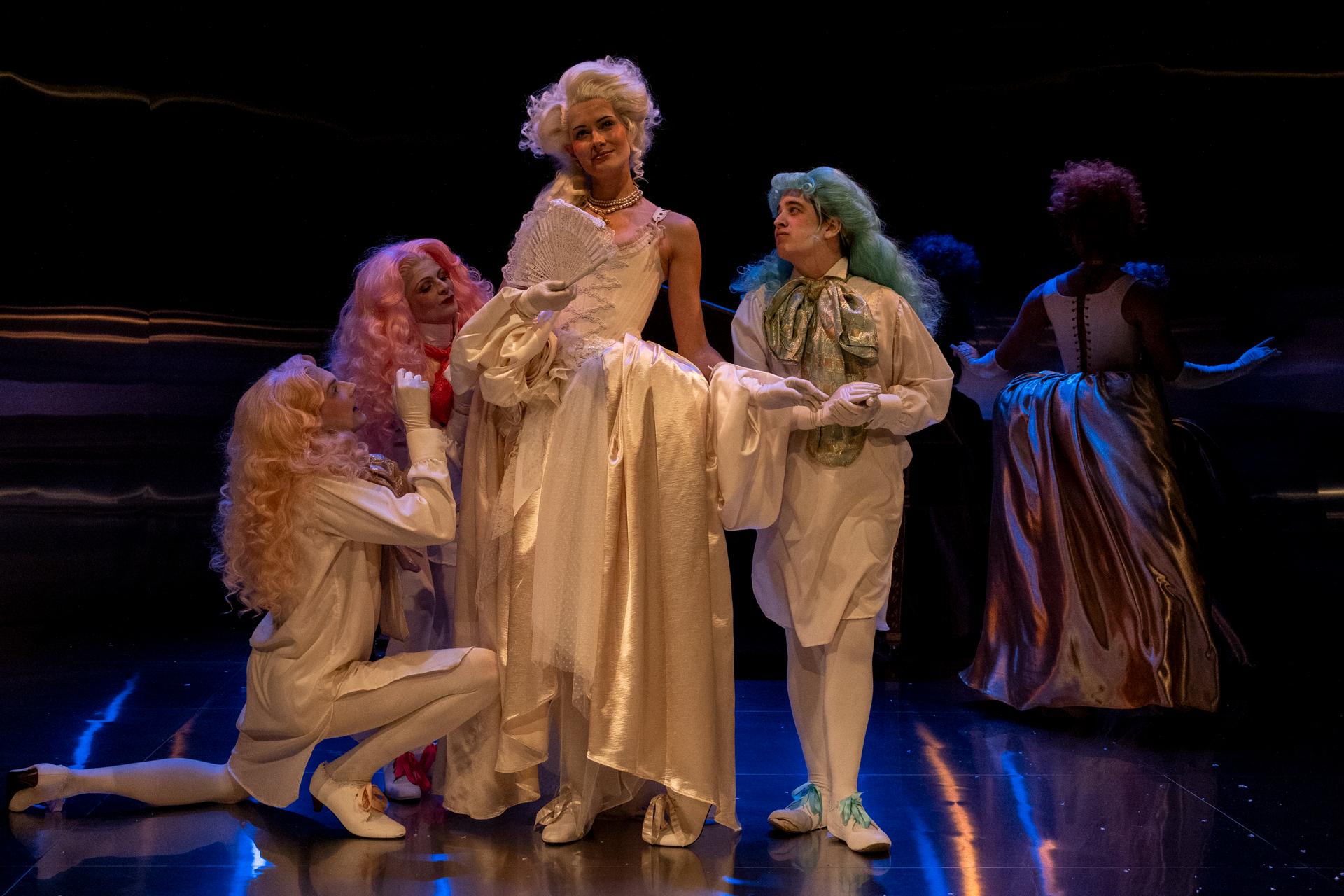
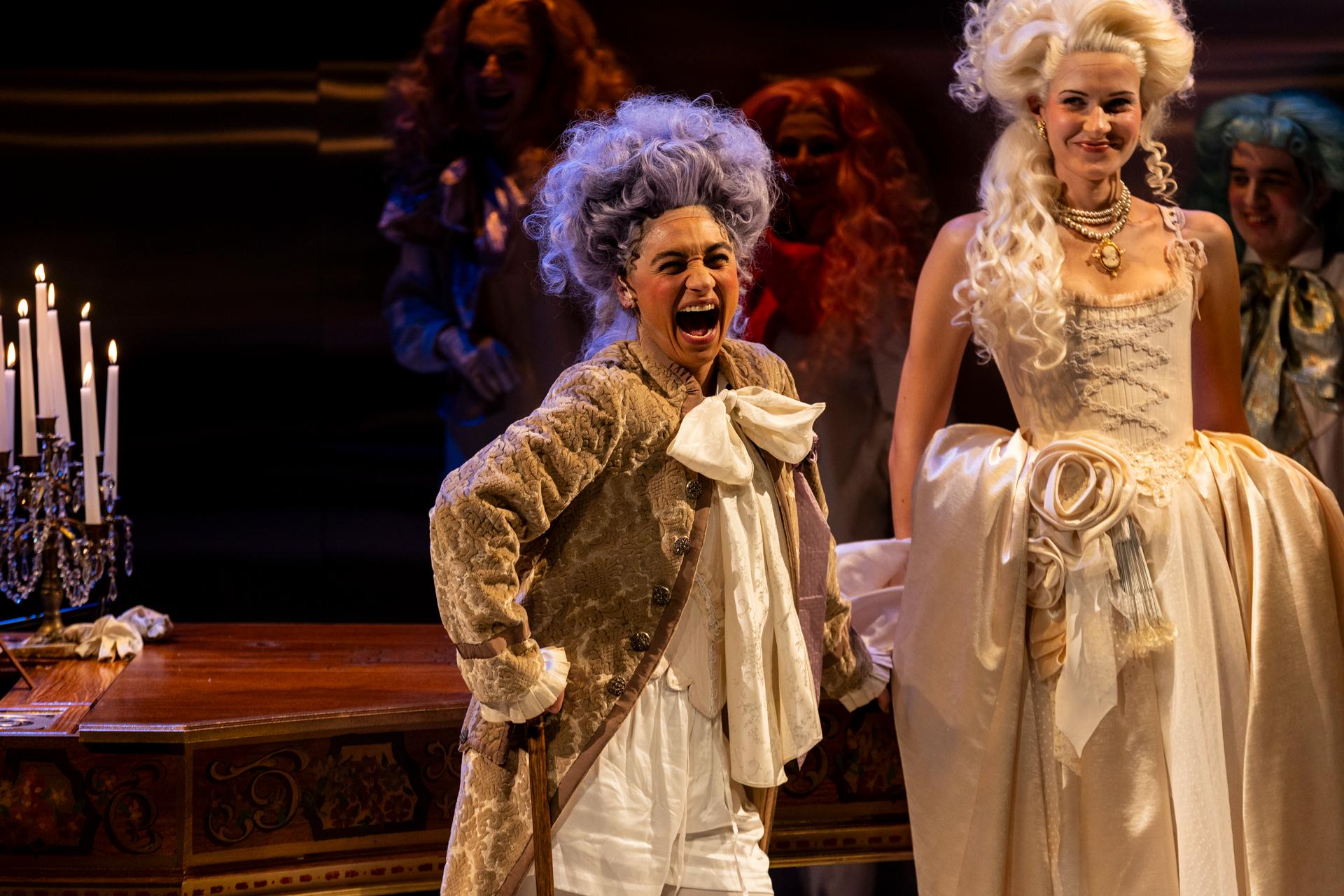
Given the scale of wealth under examination, the staging never quite achieves the level of opulence one might anticipate. David Fleischer’s set design is restrained yet elegant, while Nick Schlieper’s lighting adds welcome layers of drama. It is Ella Butler’s costumes, however, that most vividly conjure the dreamlike luxury of Orlando’s world, complete with outrageous wigs that deliver a sense of theatrical extravagance.
A delightful ensemble of seven performers leads us through this centuries-spanning odyssey. Remarkably, four different actors step into the role of Orlando at various stages of the story. Shannen Alyce Quan lends the character a quiet intensity, infusing Woolf’s poetic language with luminous clarity. Janet Anderson brings striking beauty to Orlando’s first feminine incarnation, and later proves irresistibly funny in a string of smaller roles. Equally memorable is Amber McMahon, regal and commanding as Queen Elizabeth, then deliciously camp as a seventeenth-century suitor.

The impermanence of identity underscores the endlessly shifting nature of what we call reality. This is not to say that categories like gender and sex lack meaning—on the contrary, they are among the most powerful forces shaping how we move through the world. Their paradox is that they remain fluid and insubstantial, yet exert a power that orders our very existence. It is precisely this tension, between mutability and determinism, that compels us to always return to them in endless questioning.

www.belvoir.com.au

Review: Life Is A Dream (25A Belvoir)

Venue: Belvoir St Theatre (Surry Hills NSW), Sep 2 – 21, 2025
Playwright: Claudia Osborne (after Pedro Calderón de la Barca)
Directors: Claudia Osborne, Solomon Thomas
Cast: Thomas Campbell, Mark Lee, Shiv Palekar, Essie Randles, Shikara Ringdahl, Ariadne Sgouros, Ariyan Sharma
Images by Phil Erbacher

Theatre review
For his entire life, 22-year-old Segismundo has been confined to a room, conditioned by Astolfo’s daily refrain that he is “dangerous and destructive, but not in this room.” Claudia Osborne’s Life is a Dream, inspired by Pedro Calderón de la Barca’s 1636 masterpiece, reimagines this tale of captivity and destiny for a contemporary audience. The production balances quirky charm and moments of playful wonder with a grounded exploration of the human condition. Osborne’s version points to the enduring dictum that our choices carry consequences, and that, ultimately, we reap what we sow.

Under the direction of Osborne and Solomon Thomas, Life is a Dream achieves a rare balance. Its offbeat humour keeps the work buoyant and unpredictable, while its underlying seriousness lends the production weight and resonance. The staging stands out for its distinctive style and inventive sensibility, which not only sustain engagement but also encourage the audience to grapple with its themes while remaining open to curiosity.

Ariyan Sharma shines as Segismundo, capturing a sheltered innocence that feels wholly authentic while subtly conveying the hidden truths his character has yet to grasp. He is a thoroughly endearing presence, remarkable for an artistry that combines keen intellect with expressive physicality. Thomas Campbell’s Astolfo brings tension and intrigue, his clever rendering of ambiguity opening up a world of imagined backstories that lead to this extraordinary moment. The rest of the cast add layers of psychological complexity and emotional richness, and together their chemistry transforms Life is a Dream into a fully immersive and enthralling theatrical experience.

Set and costume design by Cris Baldwin evokes a contemporary space, grounded in a sense of normalcy that keeps the audience connected to the action. Kelsey Lee’s lighting and Madeleine Picard’s sound design weave the atmosphere with quiet finesse, lending the production an elegant rhythm that draws us deeper into the story and the emotional lives of its characters.

This updated Life is a Dream resonates as a warning: when we withhold kindness from those over whom we hold power, it is our own cruelty that breeds further cruelty. Amidst all the political turmoil of 2025, we are compelled to approach this centuries-old tale not with innocence, but with clear eyes, aware of the dangers we continue to create, and the responsibility we bear to break these tragic cycles.

www.belvoir.com.au | www.fervour.net.au | www.regroupperformancecollective.org

Review: Werkaholics (25A Belvoir)

Venue: Belvoir St Theatre (Surry Hills NSW), Jul 29 – Aug 17, 2025
Playwright: Vivian Nguyen
Director: Nicole Pingon
Cast: Ruby Duncan, Georgia Oom, Shirong Wu
Images by Lucy Parakhina

Theatre review
As an influencer, Lilian is bombarded with conflicting signals about her worth. Each piece of digital content that earns her praise also draws criticism for perceived narcissism. In contrast, Jillian, a struggling actor, endures relentless rejection and financial hardship, yet is considered to be leading a life of apparent integrity. Capitalism is the problem, in Vivian Nguyen’s Werkaholics, a play about two Asian-Australian women who can do nothing right. We watch Lilian and Jillian try to attain success, by following various prescribed methods, only to find the rulebook turning against them.

Werkaholics is a clever and exuberant piece of writing that although tends too often to turn convoluted, offers a thoughtful meditation on modern economics in an era defined by digitised social life and the unprecedented commodification of the personal. Direction by Nicole Pingon is memorable for a charming and irreverent playfulness, that allows us to regard the feminist message in a commensurately subversive, and distinctly queer, manner. The show is one that practises what it preaches.

Set and costumes by Ruby Jenkins are rendered with a simplicity that foregrounds the female bodies that tell a story about worth and exploitation. Video projections by Harrison Hall and Daniel Herten offer seamless enticements into realms of artifice, while lights by Frankie Clarke convey emotional complexity. Music and sound by Christine Pan imbue a charged atmosphere, heightening tension in both its comedic and dramatic turns.

Georgia Oom as Lilian and Shirong Wu as Jillian form a compelling duo, drawing us into a sharp interrogation of social structures marked by deep-rooted injustices along lines of gender and race. Each performer radiates infectious energy, leaving a lasting impression with the bold effervescence they bring to the stage. Ruby Duncan is effective as Sage, a duplicitous character who personifies the sinister hypocrisy of those intent on preserving entrenched institutions that profit from marginalisation and exclusion.

Many of us participate in systems that ultimately work against our own interests, simply because they often represent the only means we know to survive. Indeed, their stratagem involves projecting a sense of inevitability, as it conceals the subterfuge of deplorable injustices. Some believe that we can alter its machinations while operating within it. Others argue that history shows how little meaningful change is effected without radical tactics. In any case, we need to be unafraid of disruption and continue finding new ways to create change, believing that every impact, big or small, will contribute to a consequential resistance that moves us toward something better.

www.belvoir.com.au | www.purpletapeproductions.com

Review: Grief Is The Thing With Feathers (Belvoir St Theatre)

Venue: Belvoir St Theatre (Surry Hills NSW), Jul 26 – Aug 29, 2025
Playwrights: Simon Phillips, Nick Schlieper, Toby Schmitz (from the novel by Max Porter)
Director: Simon Phillips
Cast: Philip Lynch, Fraser Morrison, Toby Schmitz
Images by Brett Boardman

Theatre review
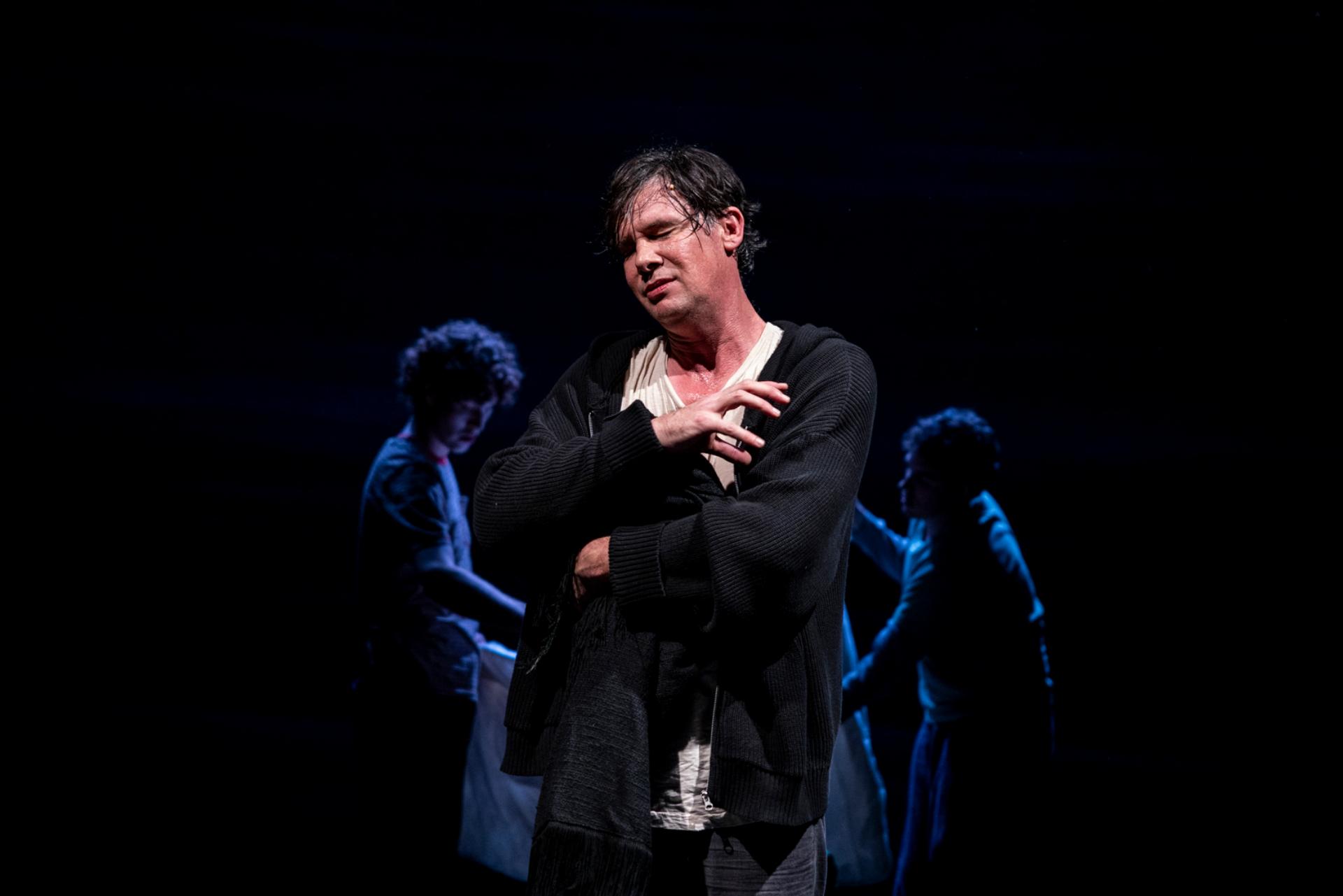
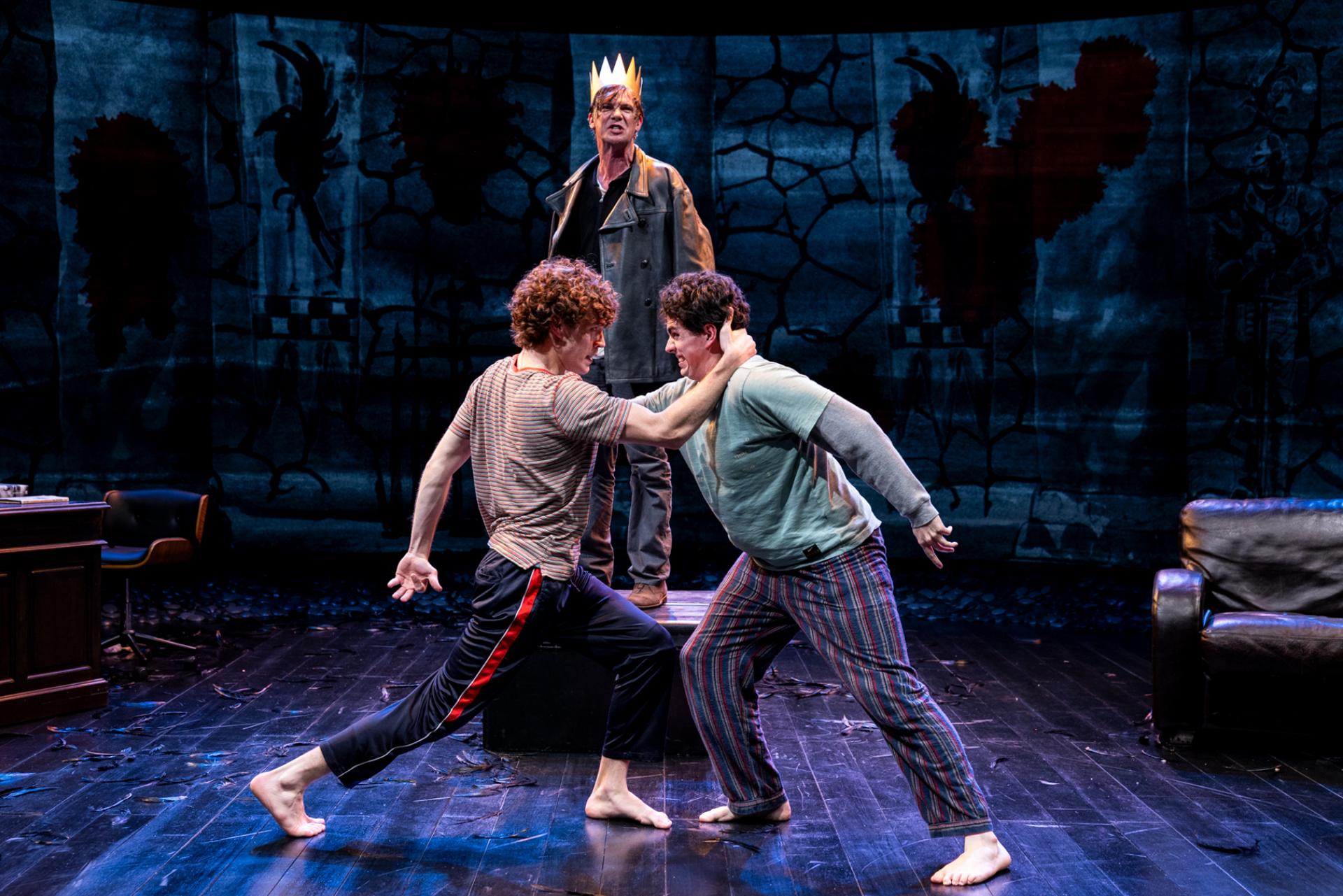
Recently widowed, a scholar finds himself utterly lost, adrift in grief. As a specialist in the work of Ted Hughes, it is perhaps inevitable that a crow—the most iconic figure in Hughes’ oeuvre—should appear, inserting itself into his life as companion and surrogate. Based on the novel by Max Porter, Grief Is the Thing with Feathers captures with striking authenticity both the frustrating stasis and the slow, almost imperceptible progress that inevitably accompanies bereavement.

Adapted for the stage by Simon Phillips, Nick Schlieper, and Toby Schmitz, this transposition pulses with an aggressive rhythm and a tonal grandeur that echoes both the literary references and the visceral experience of sorrow and despair. There is a regrettable emotional distance in its delivery, yet the sheer theatrical ambition of this reimagining of Porter’s novel remains undeniably impressive.

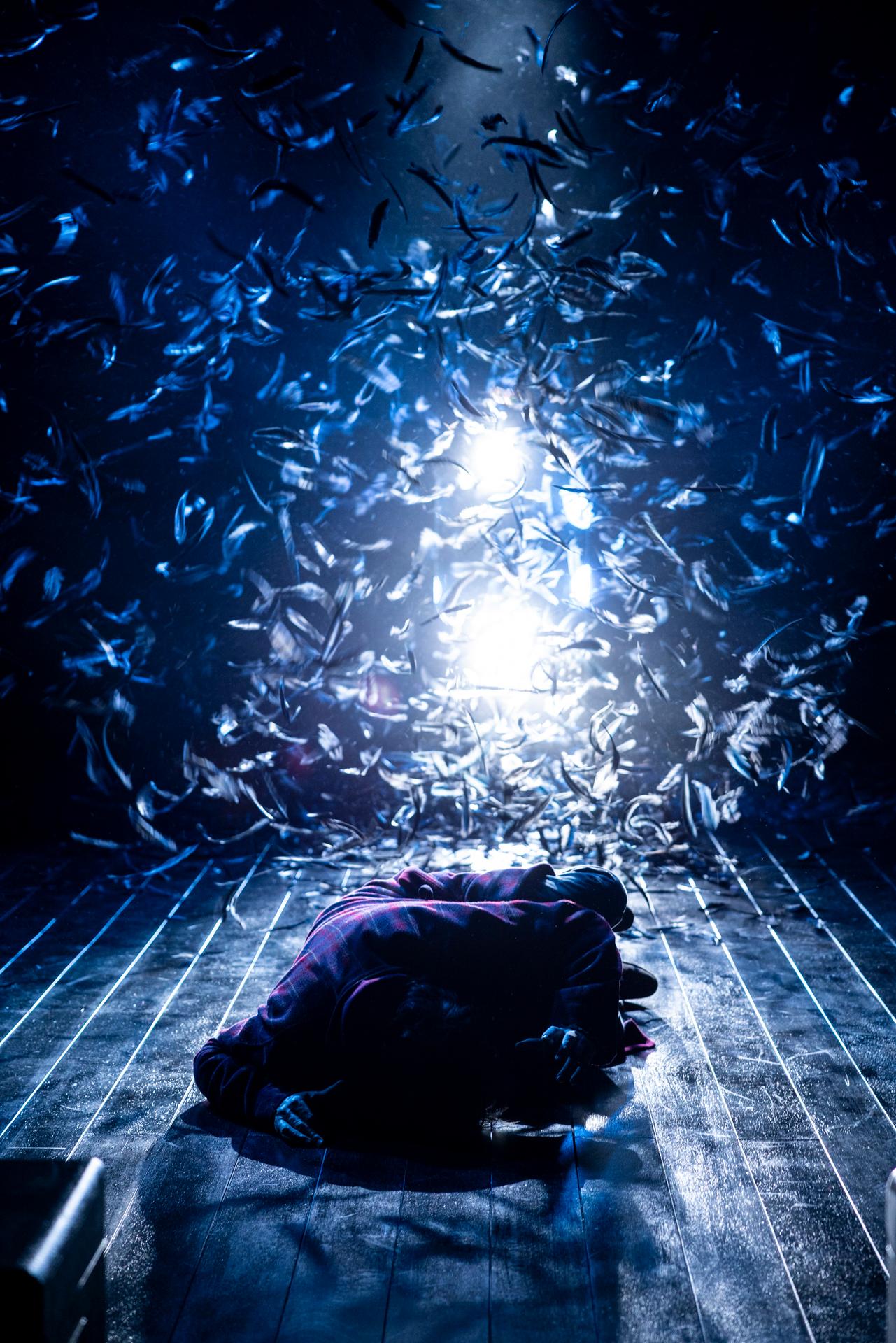
Phillips’ direction is boldly imaginative, capturing the poetic chaos of the widower’s interactions with the crow in a production that is truly dazzling for the senses. Video design by Craig Wilkinson, along with illustrations by Jon Weber, form a highly evocative element of the staging, especially useful in bringing to life its supernatural dimensions. Schlieper’s lighting is endlessly creative and exquisitely beautiful, masterfully evoking a universe of shifting realms. Sound by Daniel Hertern and music by Freya Schack-Arnott add immeasurable power, in their dynamic auditory renderings of this surrealist presentation. 

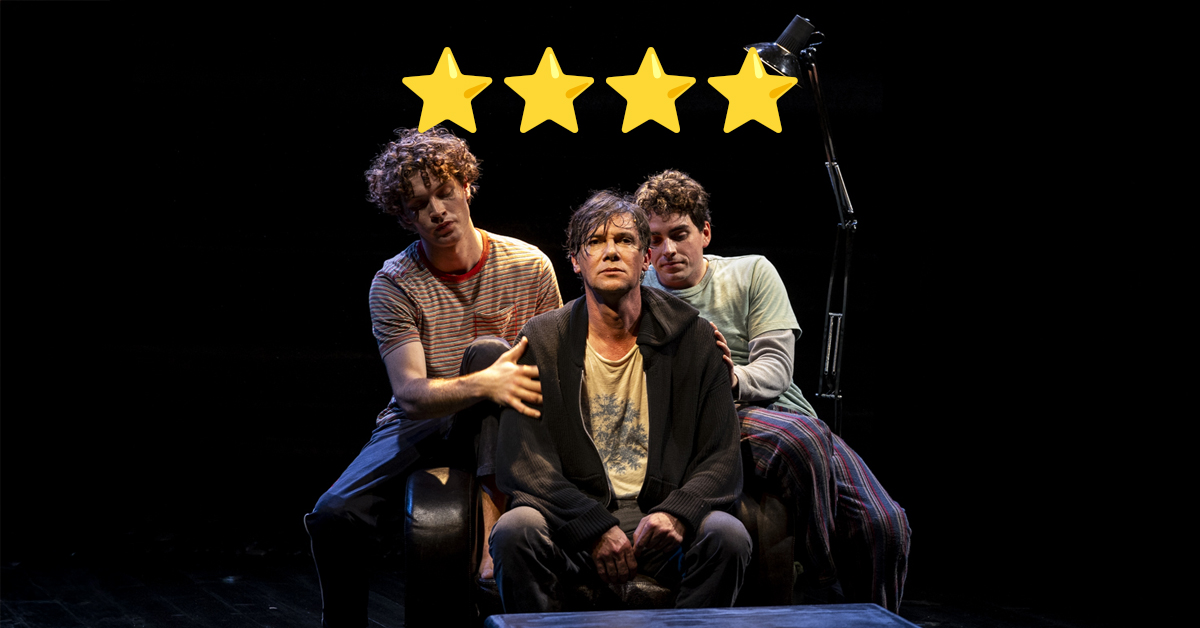
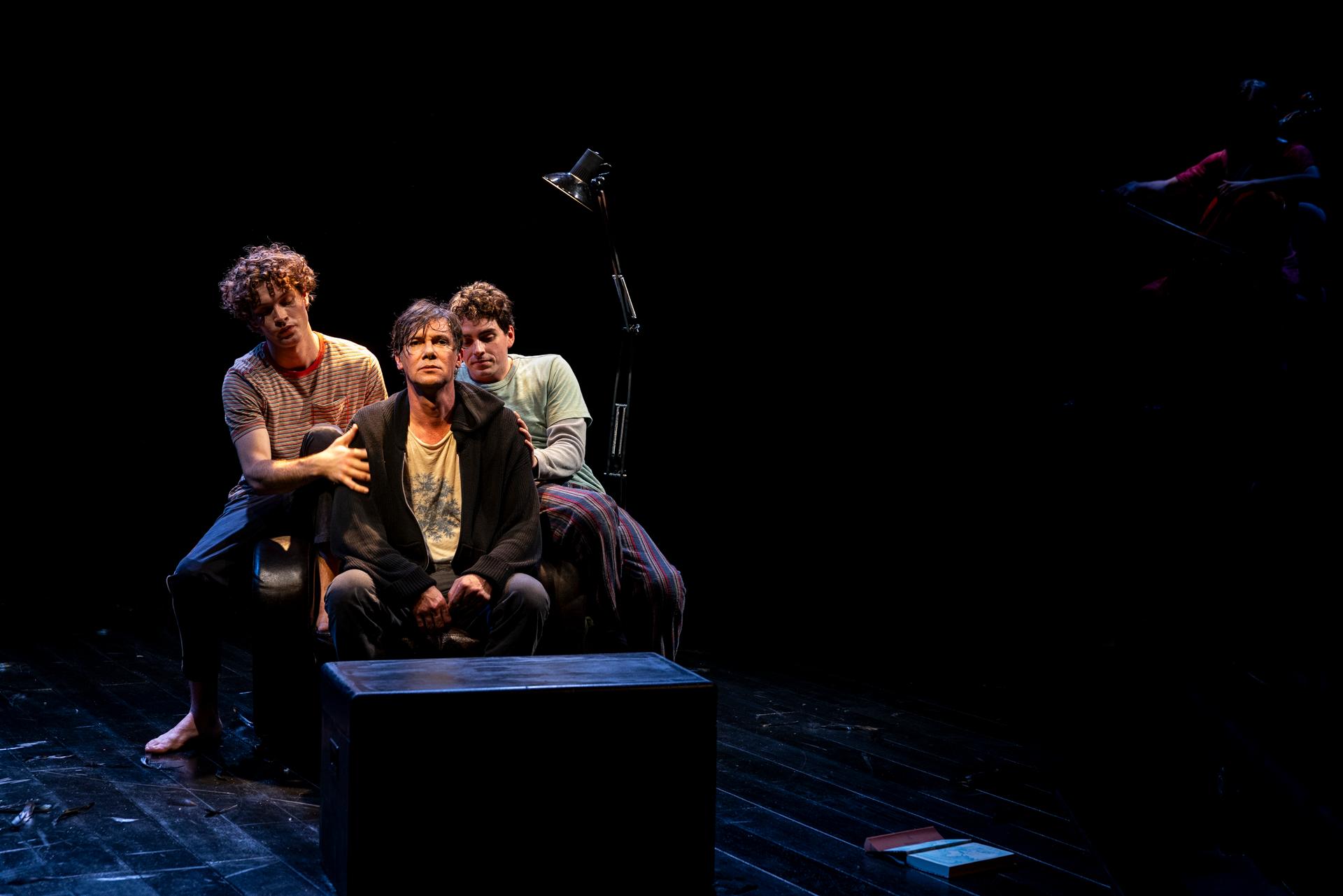
The widower is played by Schmitz who proves himself a commanding leading man, and a detailed artist who encourages us to regard the work with curiosity and discernment. As his young sons, Philip Lynch and Fraser Morrison deliver wonderfully spirited performances, injecting a vital effervescence into a production that might otherwise risk becoming overly sombre.

Grief is rarely a constant emotional state, but it can leave a lasting imprint, reshaping a person’s disposition into something permanently shadowed. While there are steps one might take to prevent such a descent, the most enduring strategy is often to weather the storm, trusting that its force will eventually subside. It can be a sad thought that those we have lost might one day be forgotten, but there comes a time when their memory must be gently placed in the recesses of the mind, to make room for living.

www.belvoir.com.au | www.andrewhenrypresents.com

Review: The Spare Room (Belvoir St Theatre)

Venue: Belvoir St Theatre (Surry Hills NSW), Jun 7 – Jul 13, 2025
Playwright: Eamon Flack (from the novel by Helen Garner)
Director: Eamon Flack
Cast: Elizabeth Alexander, Judy Davis, Emma Diaz, Alan Dukes, Hannah Waterman
Images by Brett Boardman

Theatre review
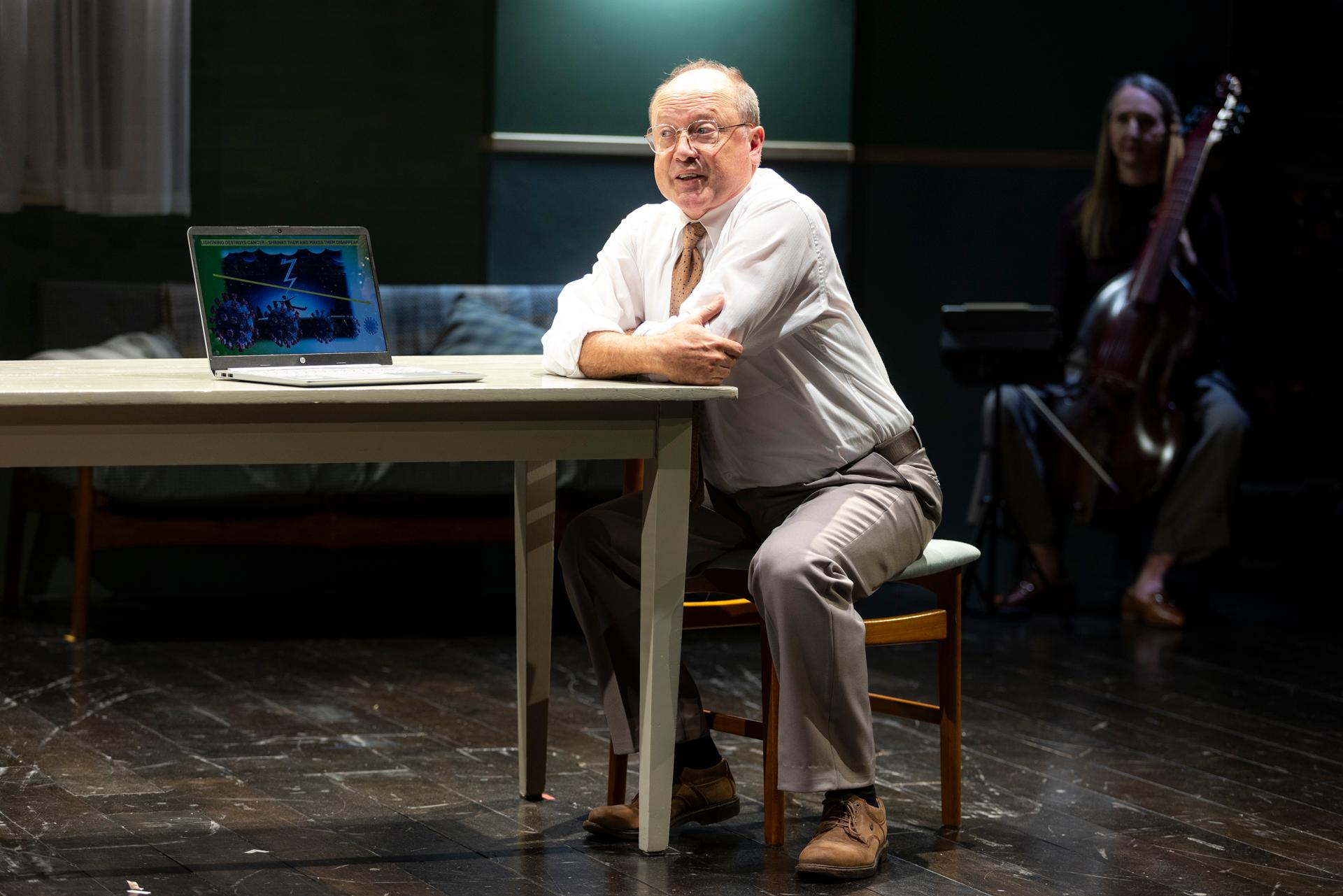
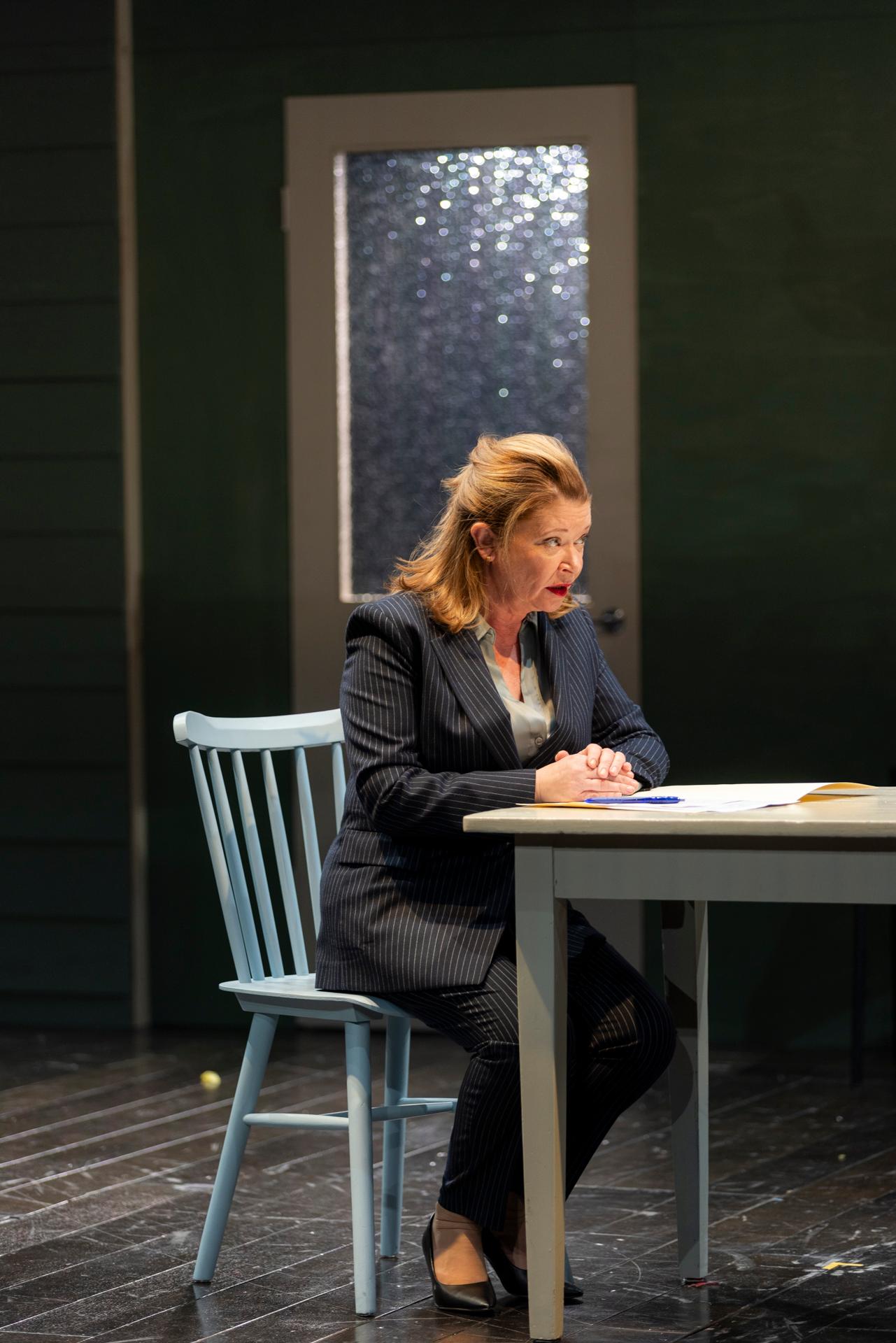
Nicola is spending a few weeks in Melbourne, as she undergoes “alternative cancer treatment”. Helen has volunteered as carer through the ordeal, completely unconvinced by the bogus claims of the expensive but unsubstantiated therapies. Helen Garner’s 2008 novel The Spare Room deals with sickness and death, from the perspectives of those who are terminally ill, and those close to them.

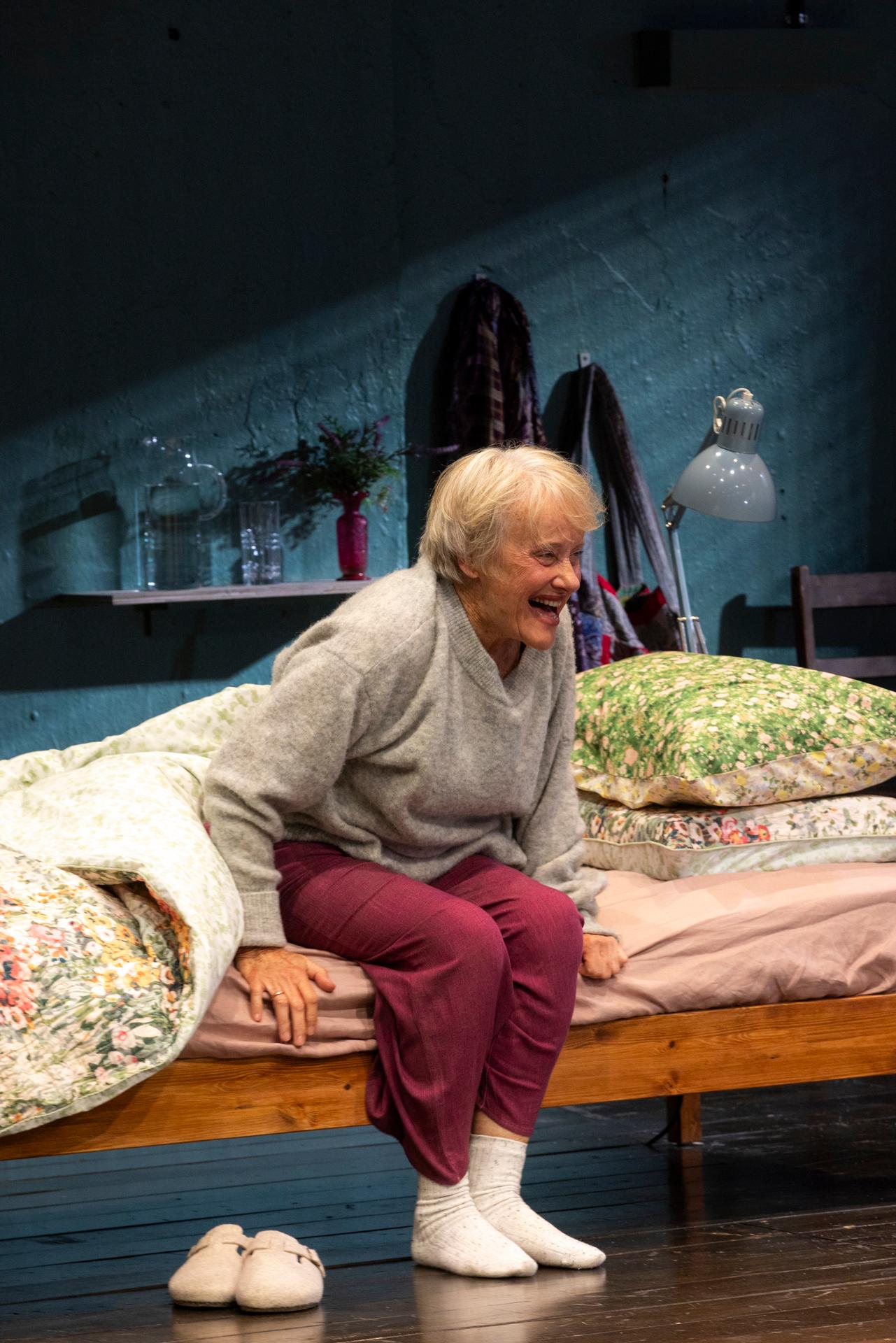
Adapted by Eamon Flack, this theatrical version is thankfully humorous in tone, even if it does delve deep into difficult subject matter. What it discusses is certainly worthwhile, considering its universality, and its somewhat taboo nature only makes the experience more meaningful. The show is mostly an engaging one, even if performers seem consistently under-rehearsed. Judy Davis as Helen has a tendency for physical exaggeration, while Elizabeth Alexander as Nicola is overly trepidatious, but notwithstanding these imperfections, both are able to tell the story convincingly.

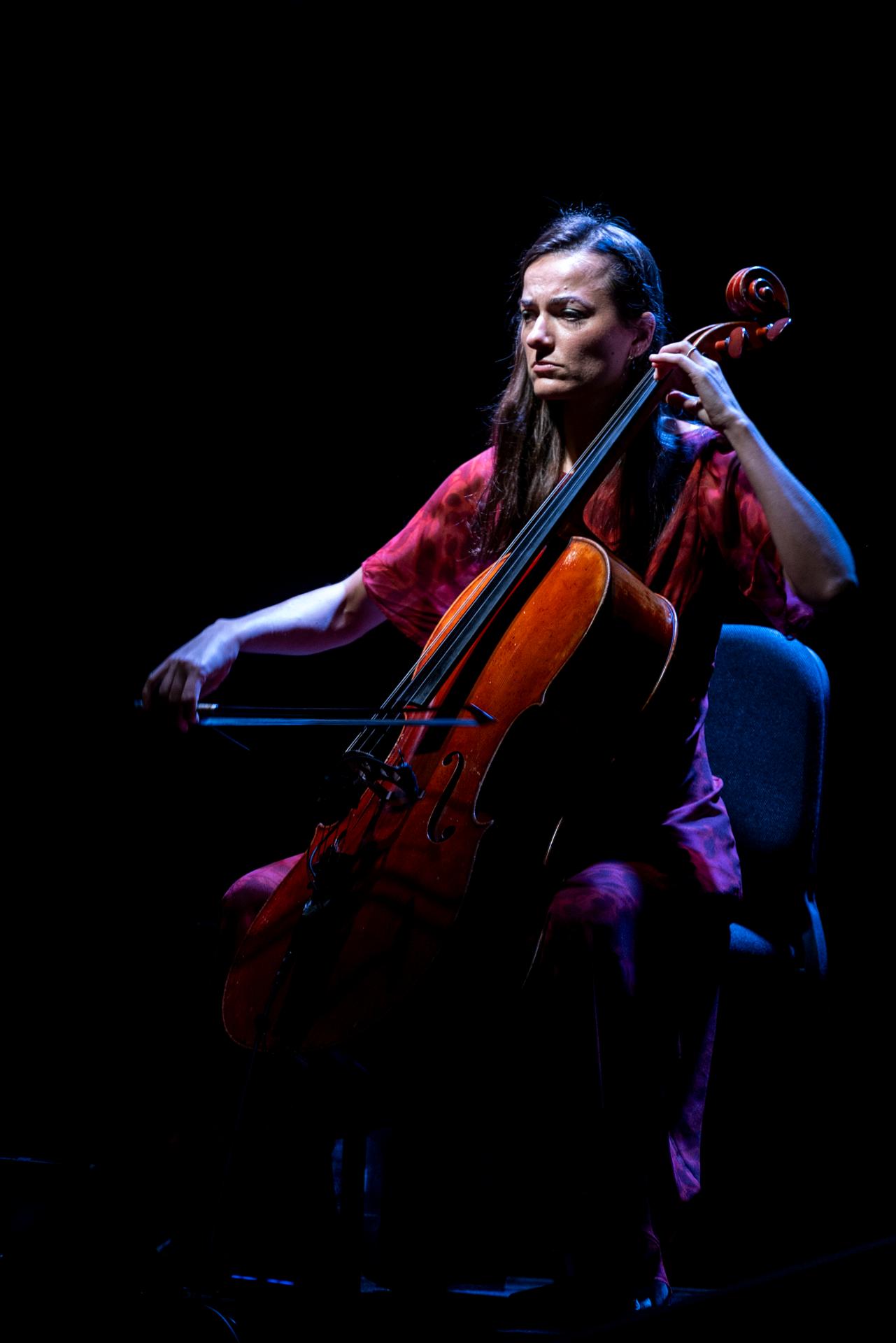
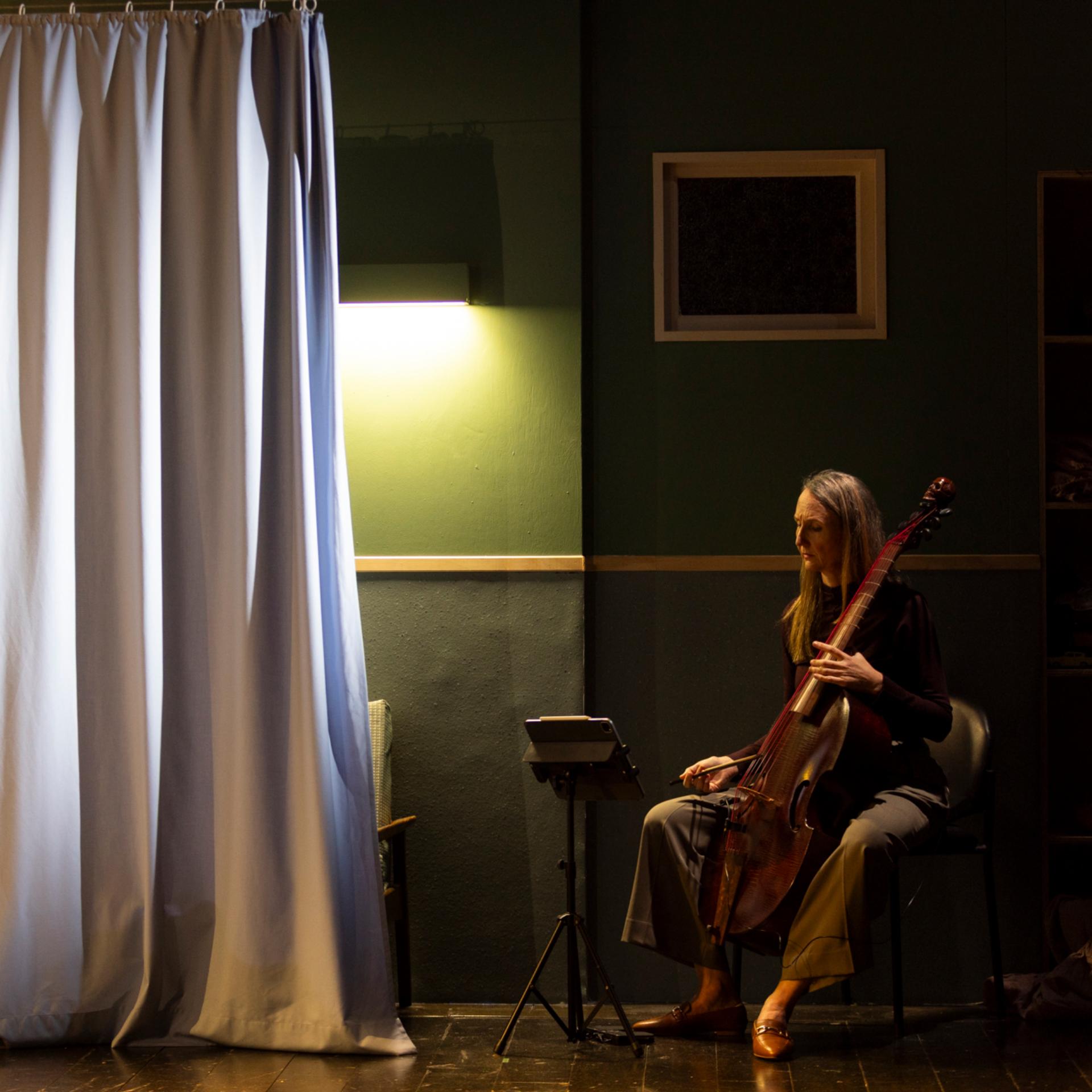
To address the practical requirements of the text, set design by Mel Page incorporates elements that are disparately homely and clinical, leaving the space to languish in an awkward intermediary, never really conveying any believable locale. Paul Jackson’s lights offer intricate atmospheric enhancements, as does music by Steve Francis, notable for being performed live by a very attentive Anthea Cottee on her trusty cello.

At her time of need, Nicola becomes hugely demanding of her friends and family. Her friends and family in turn discover, that there are no burdens more special than those of a loved one, in their final moments. 

www.belvoir.com.au

Review: I & You (25A Belvoir)

Venue: Belvoir St Theatre (Surry Hills NSW), May 6 – 18, 2025
Playwright: Lauren Gunderson
Director: Claudia Barrie
Cast: Josh Hammond, Alyssa Peters
Images by Phil Erbacher

Theatre review
Caroline is confined to her home due to a chronic illness. When Anthony drops by from school to work on an assignment, they become fast friends, bonding over the artistic legacies of Walt Whitman, John Coltrane and Jerry Lee Lewis. In the play I & You by Lauren Gunderson, we not only observe the burgeoning relationship between two teens, but also meditate on the nature and meaning of death, in the presence of someone who has to grapple with mortality every day.

Gunderson’s writing is relentlessly optimistic, allowing director Claudia Barrie to place emphasis on comedic elements for an effervescent experience, that should prove particularly resonant for younger audiences. Performed by a highly endearing team of two, Josh Hammond and Alyssa Peters make their magical world sparkle with believability and tangibility. Their cohesiveness is a joy to witness, both actors keeping us completely at ease with the authenticity they so effortlessly bring to the stage.

Also noteworthy are lights by Saint Clair, that always feel considered in their approach, whether subtly modulating or dramatically embellishing. The set is designed by Saint Clair along with Masone Browne, to provide an elegant solution for specific requirements of the text. Emily Brayshaw’s costumes portray with accuracy, the style of regular teens who could reside either in Australia or America, whilst maintaining a flattering appearance for the cast.

There is real beauty in the fundamental truth of death, yet we try so hard to deny its existence.  The fact that time is limited, from the perspective of each individual perishable organism, should mean that moments big and small must be cherished, but all humans seem to do, is to imagine new ways to defy the inevitable. Life is already eternal, we only need to be appreciative of the infinite tiny encounters that materialise, from simply being here.

www.belvoir.com.au | www.madmarchtheatreco.com

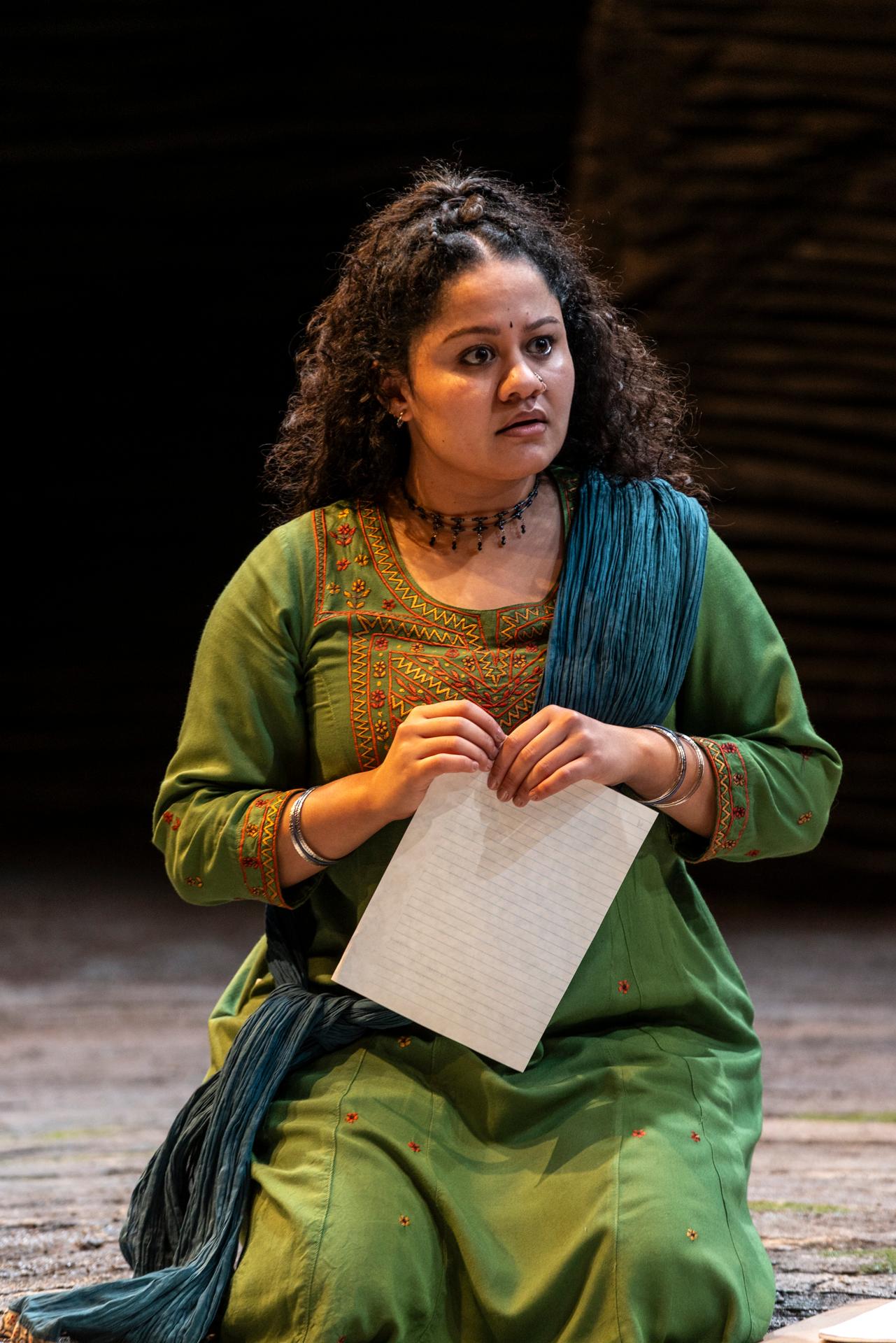
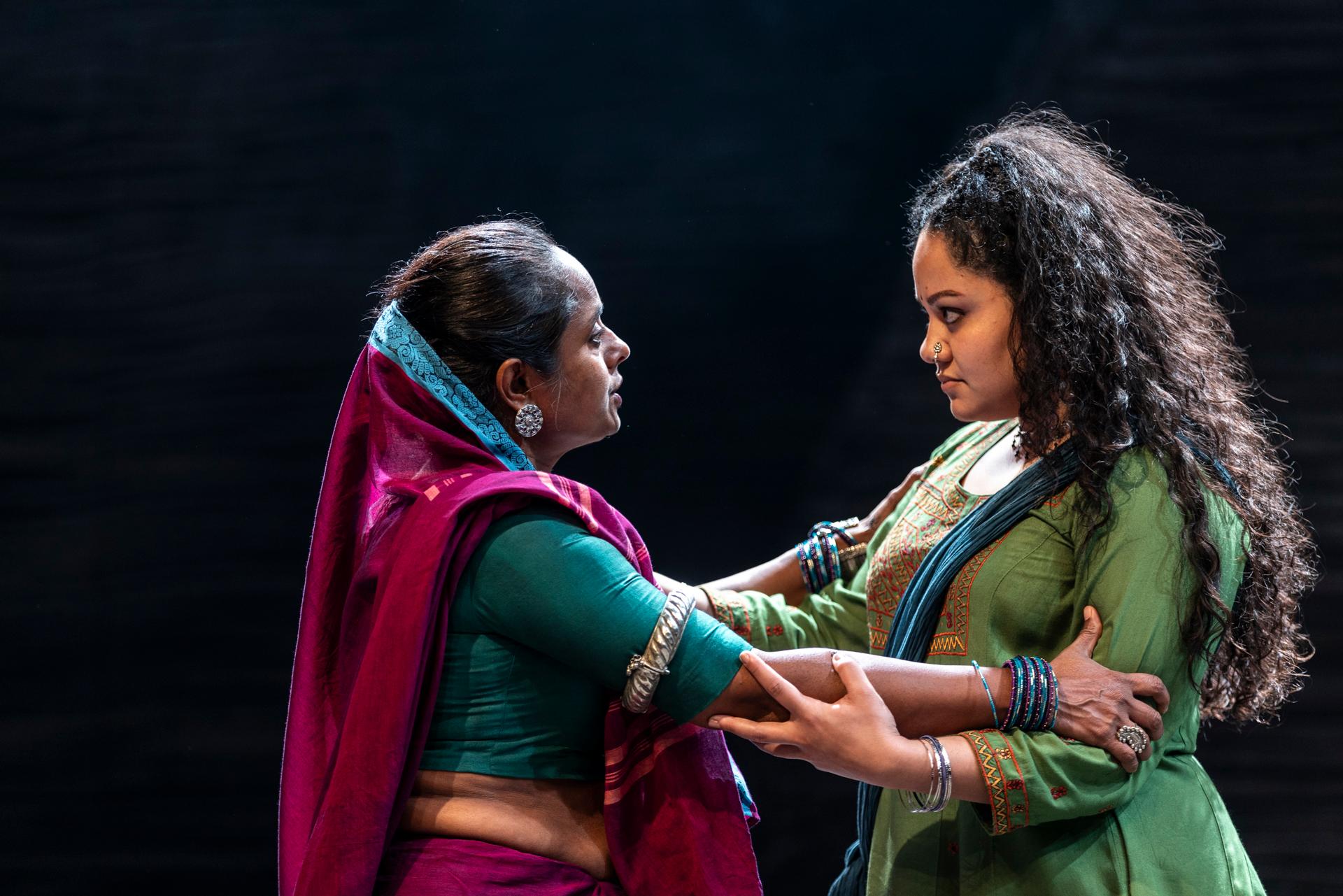
Review: The Wrong Gods (Belvoir St Theatre)

Venue: Belvoir St Theatre (Surry Hills NSW), May 3 – Jun 1, 2025
Playwright: S. Shakthidharan
Director: Hannah Goodwin, S. Shakthidharan
Cast: Manali Datar, Nadie Kammallaweera, Radhika Mudaliyar, Vaishnavi Suryaprakash
Images by Brett Boardman

Theatre review
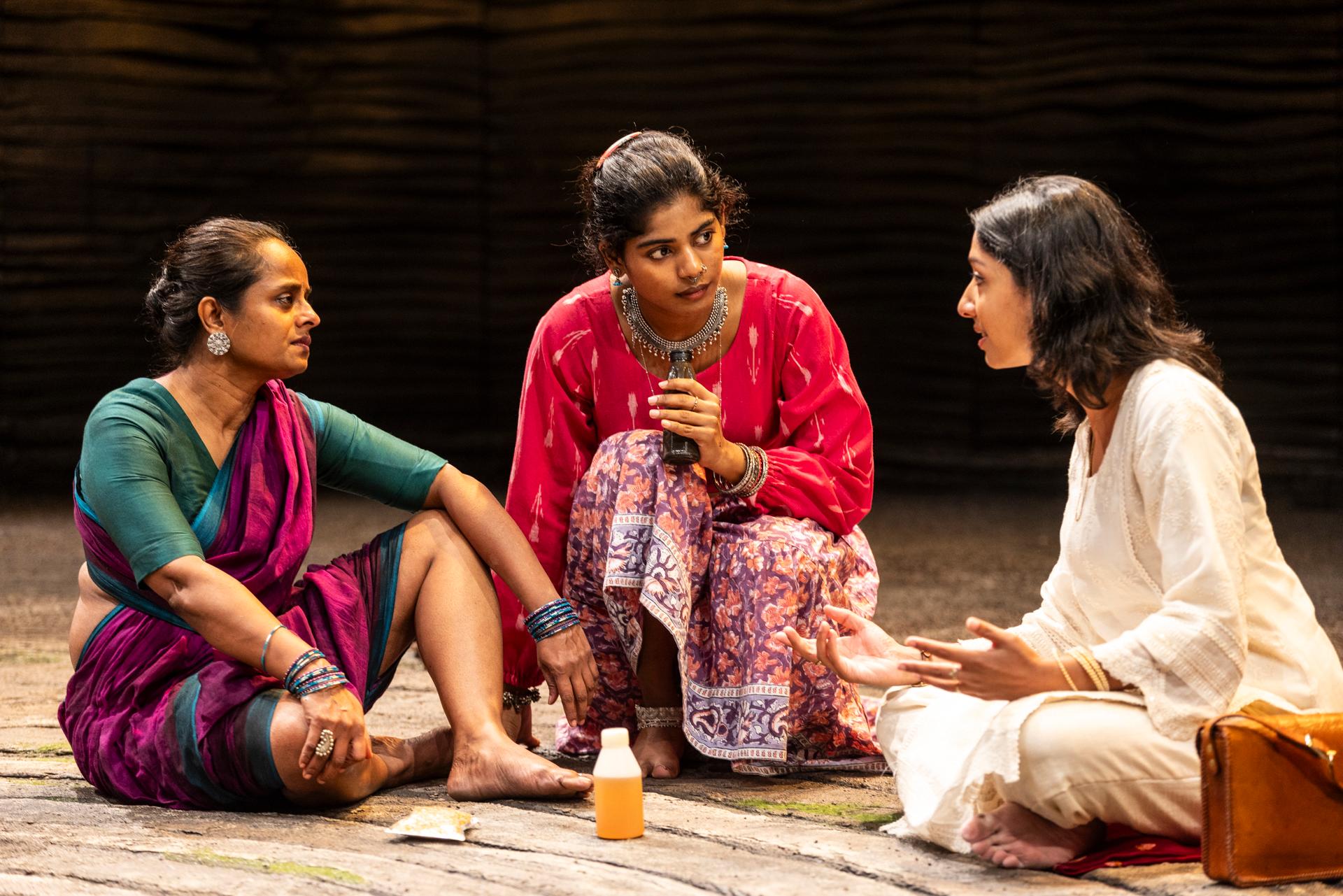
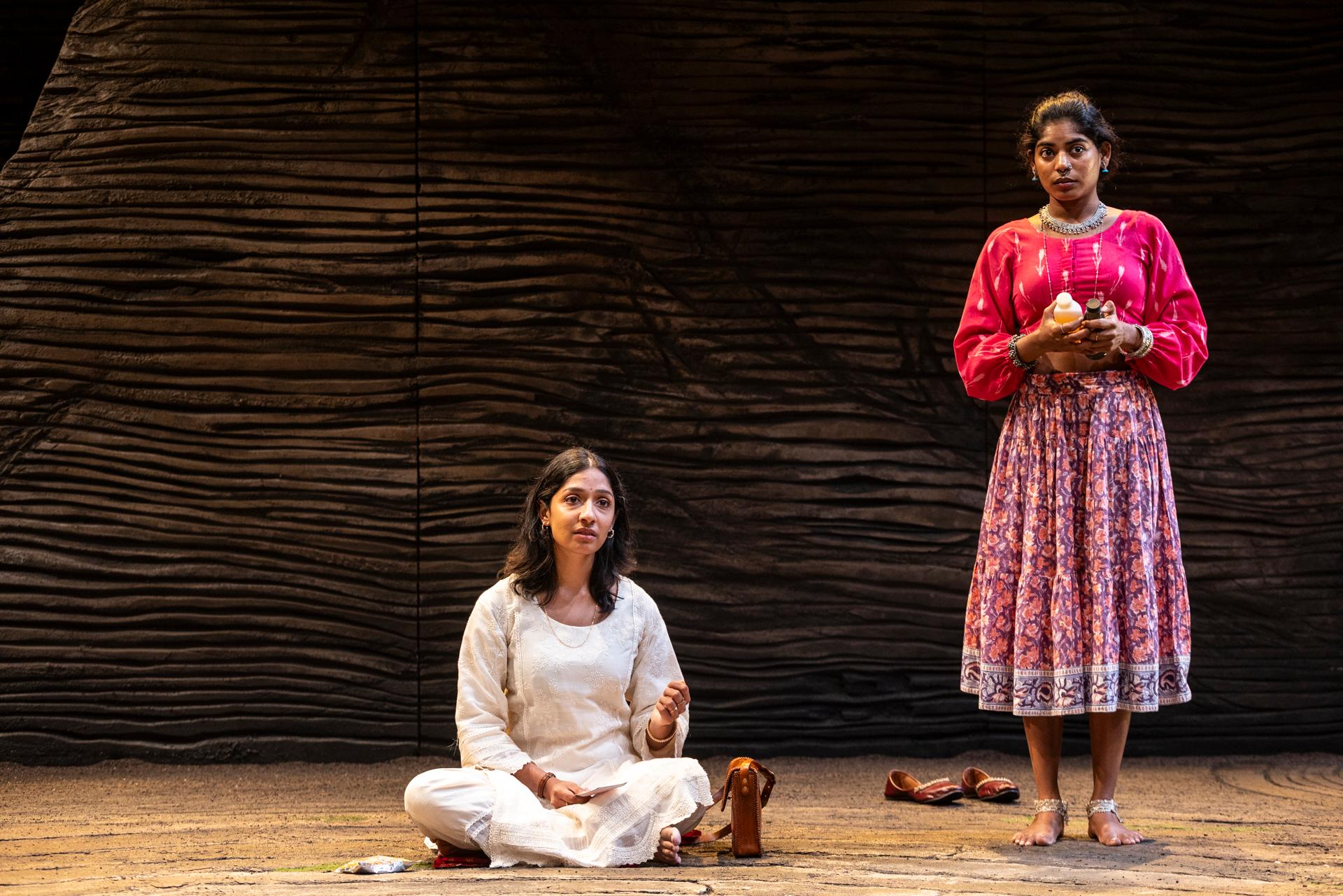
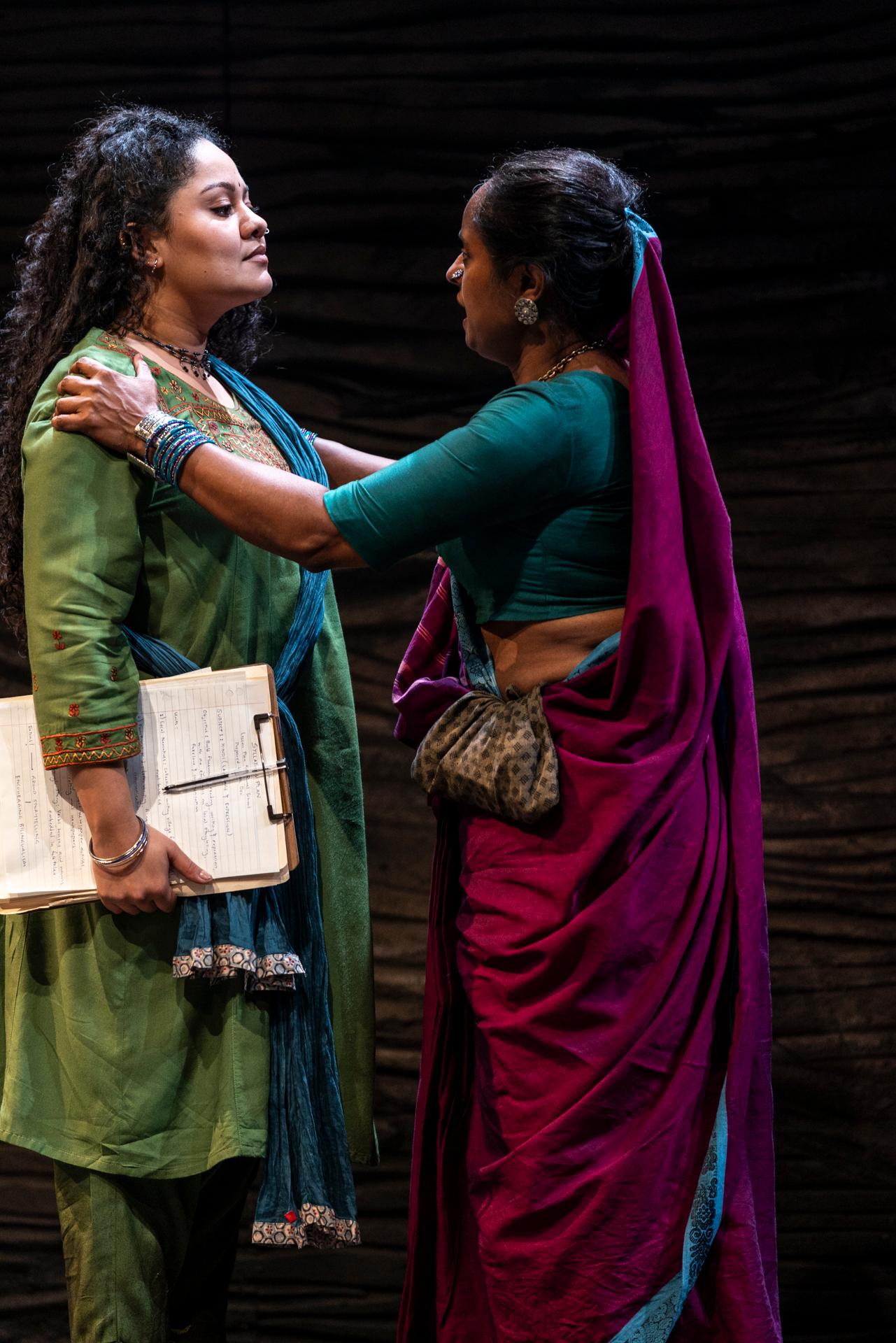
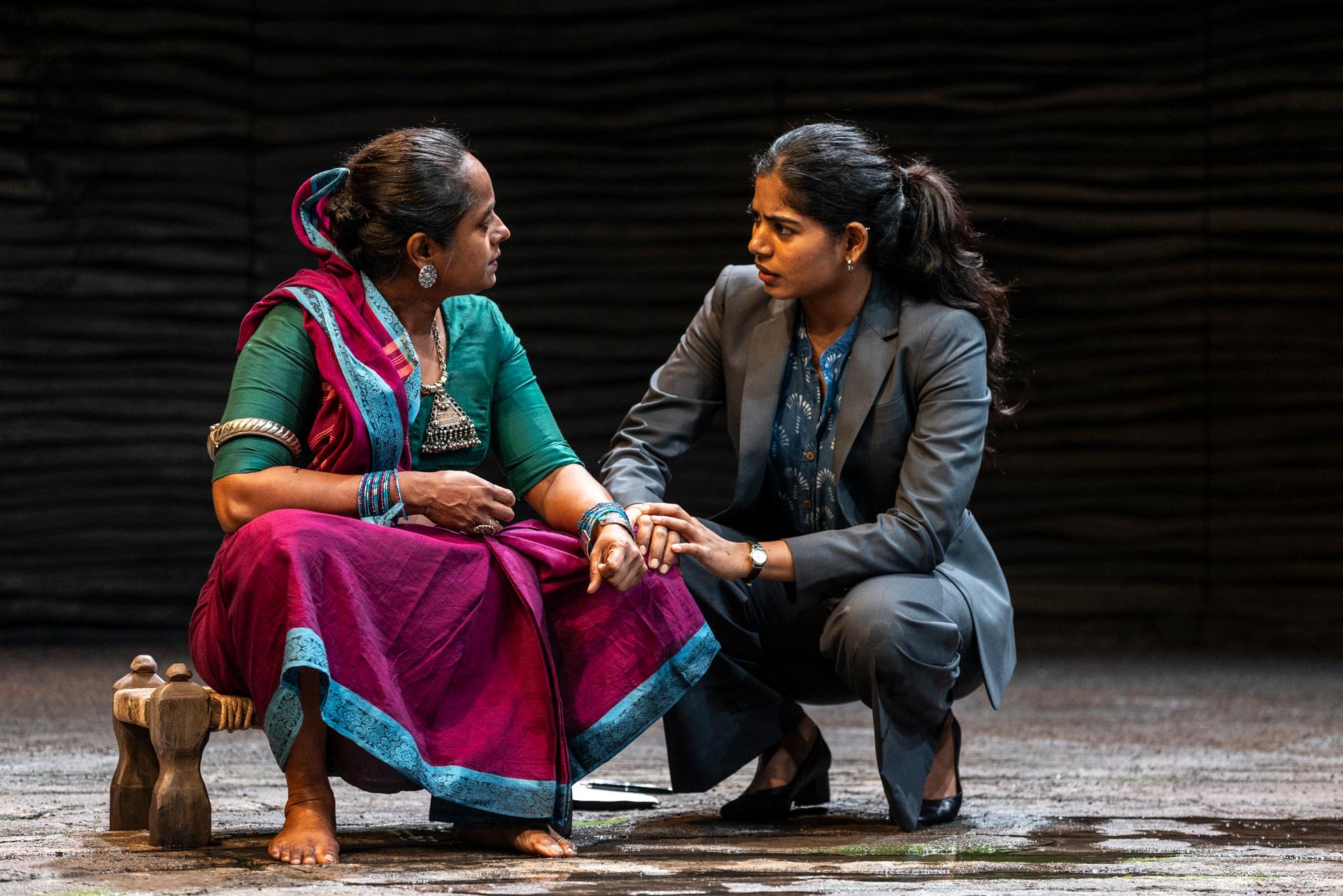
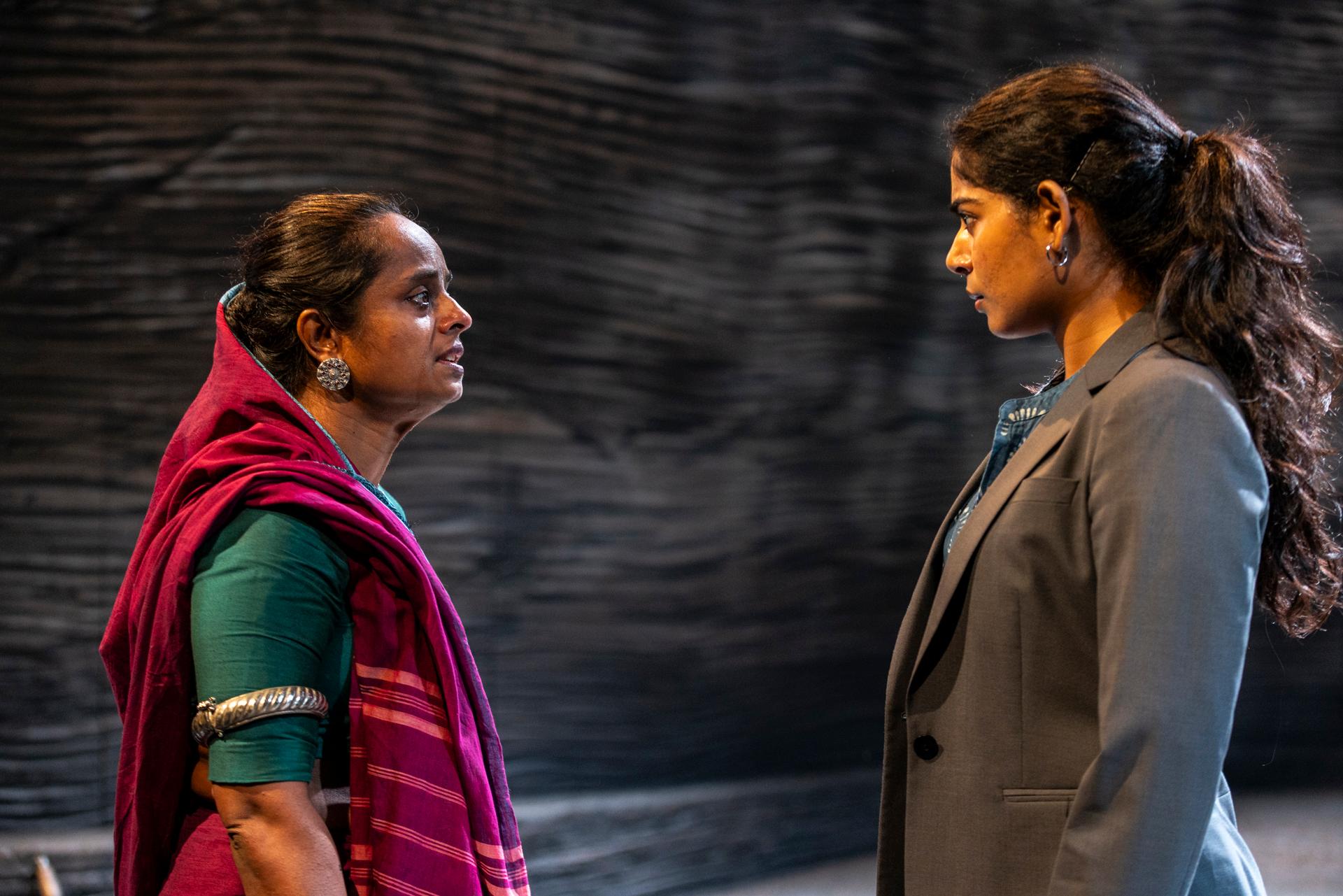
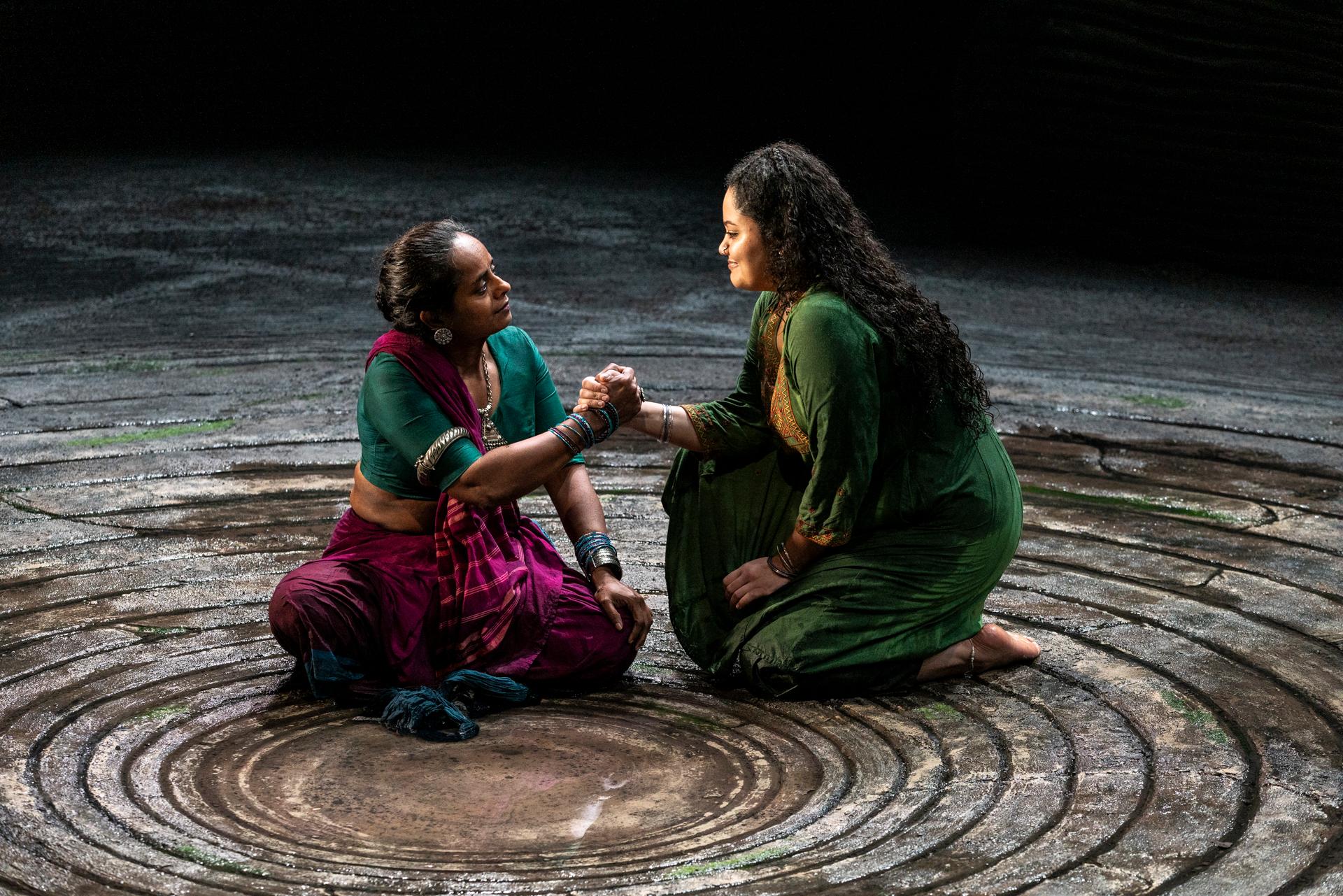
Isha is a schoolgirl exhibiting great promise, with a brilliant mind and a passion for science that have attracted attention, from American industry entering rural India. Her mother Nirmala wants the best for Isha, but making decisions about an uncertain future is difficult, even if the gods seem so resolute with what they stand for. Provocative ideas are presented in The Wrong Gods by S. Shakthidharan through scintillating conversations, between characters who are thoroughly authentic, and interminably sympathetic.

It explores notions of progress, technology, capitalism and colonisation, from perspectives realistic rather than ideological, based on interviews conducted with those of relevant lived experience. The tremendous poignancy of Shakthidharan’s writing may be derived from a specific story originating in an Indian village, but its resonances are universal. As an Australian work, The Wrong Gods seems often to reflect on Indigenous dispossession and displacement, allowing us to further relate to the themes and ethos of this deeply affecting creation.

Co-direction by Shakthidharan and Hannah Goodwin delivers emotional intensity, for a highly consequential examination of our very times and values. Complexities of thought are conveyed with astonishing salience, for a show that is as intellectually stimulating as it is moving. Music composition by Sabyasachi (Rahul) Bhattacharya, along with sound design by Steve Francis, are a marvellous concoction that proves stirring even if its expressions are always delicate.

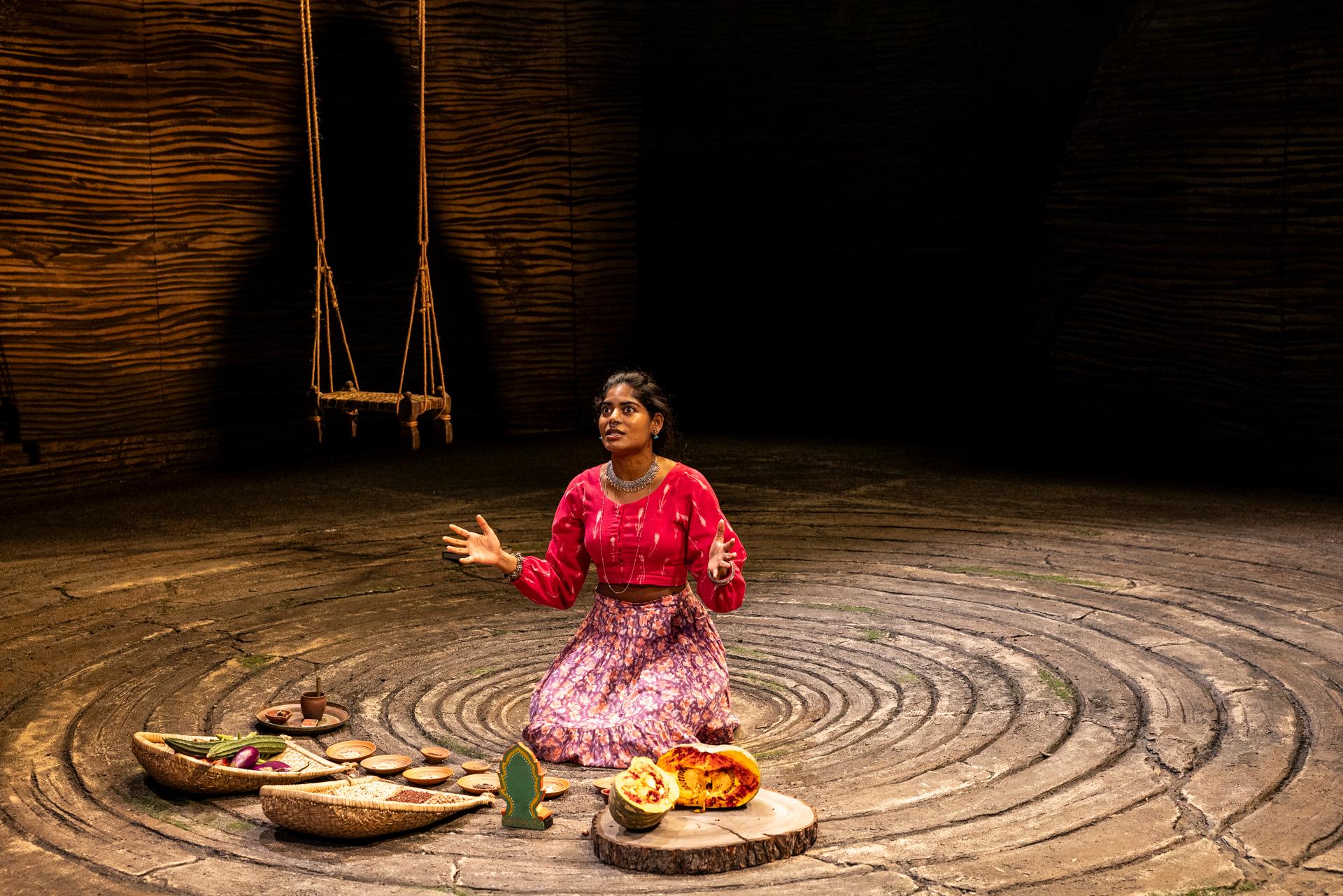
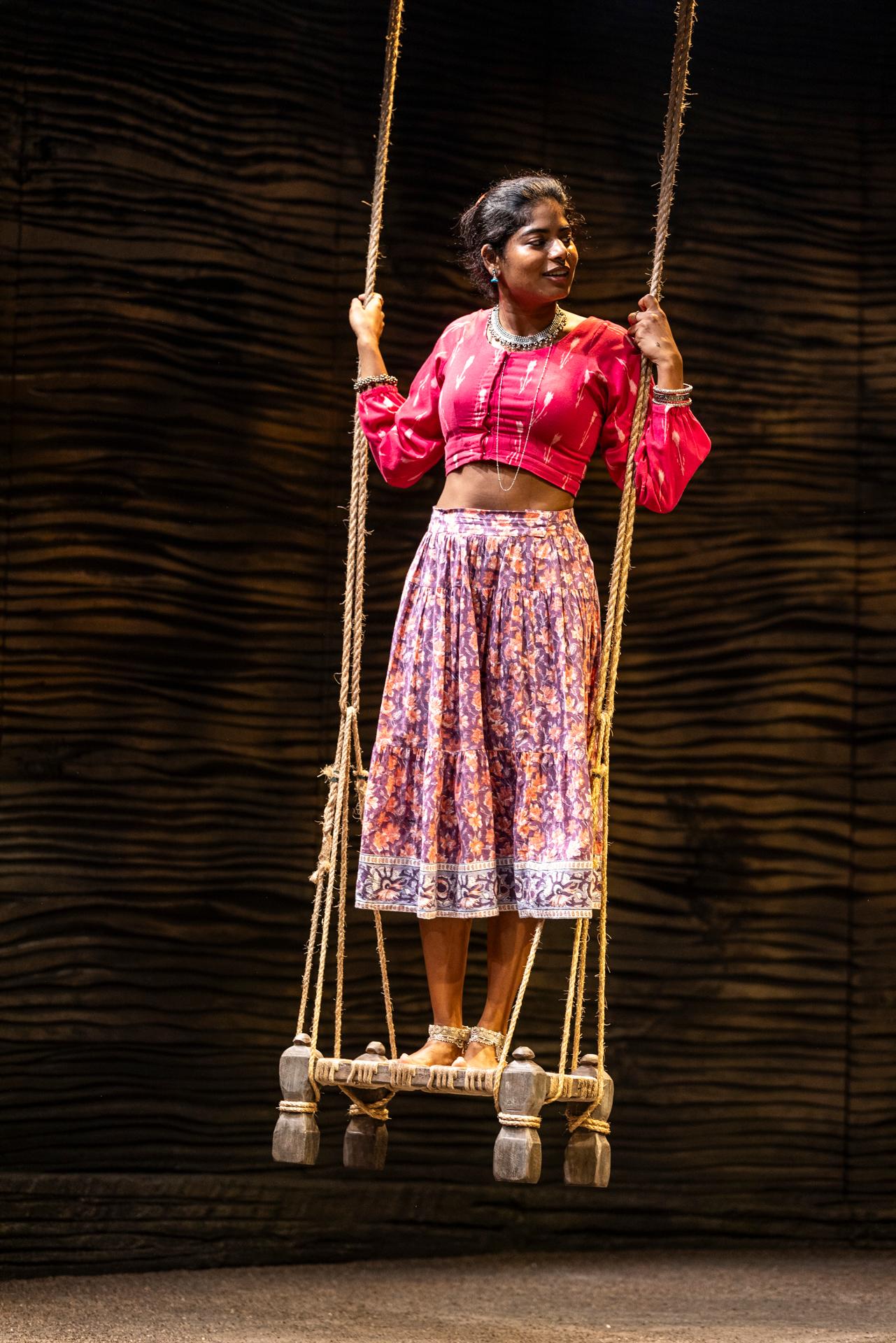
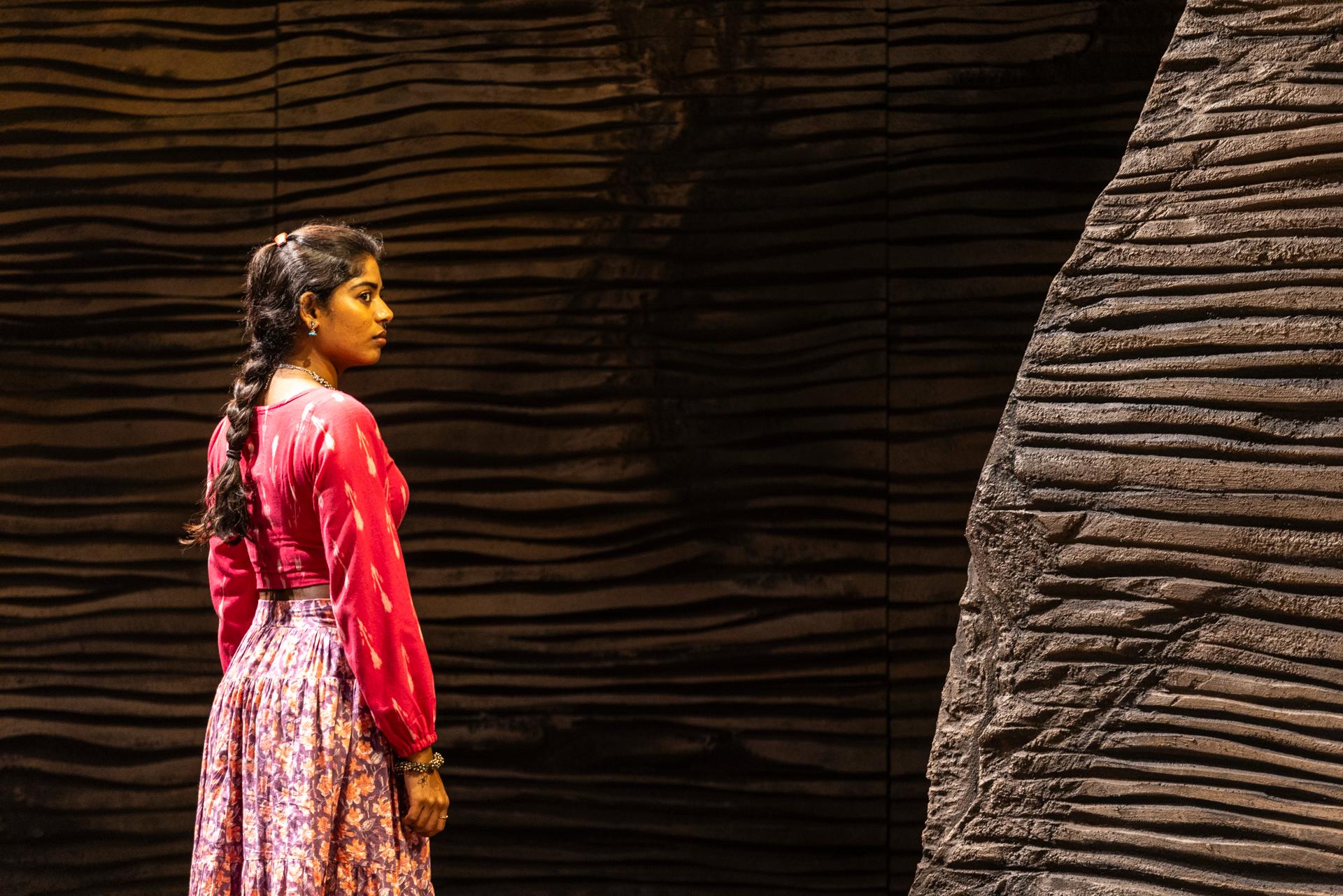
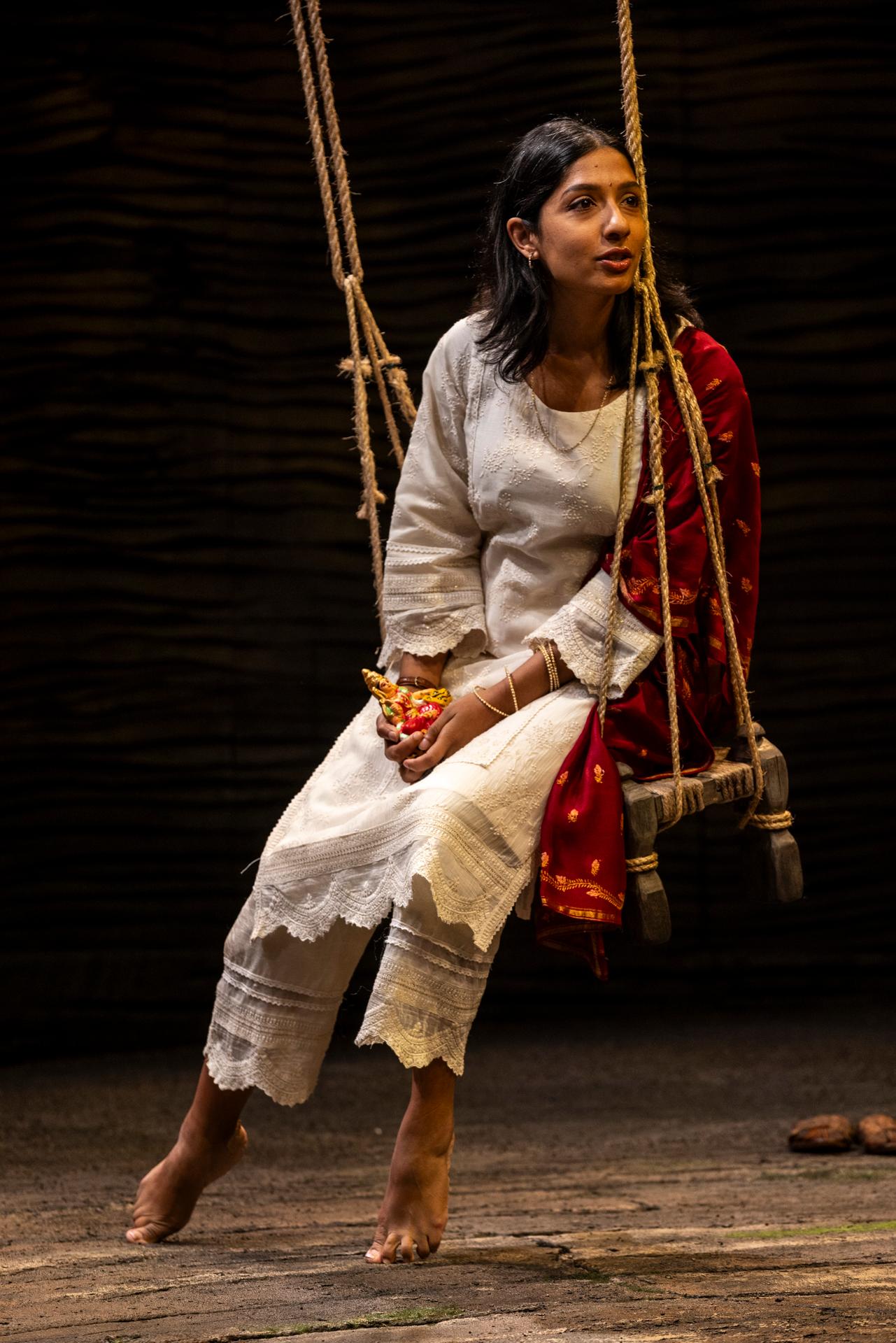
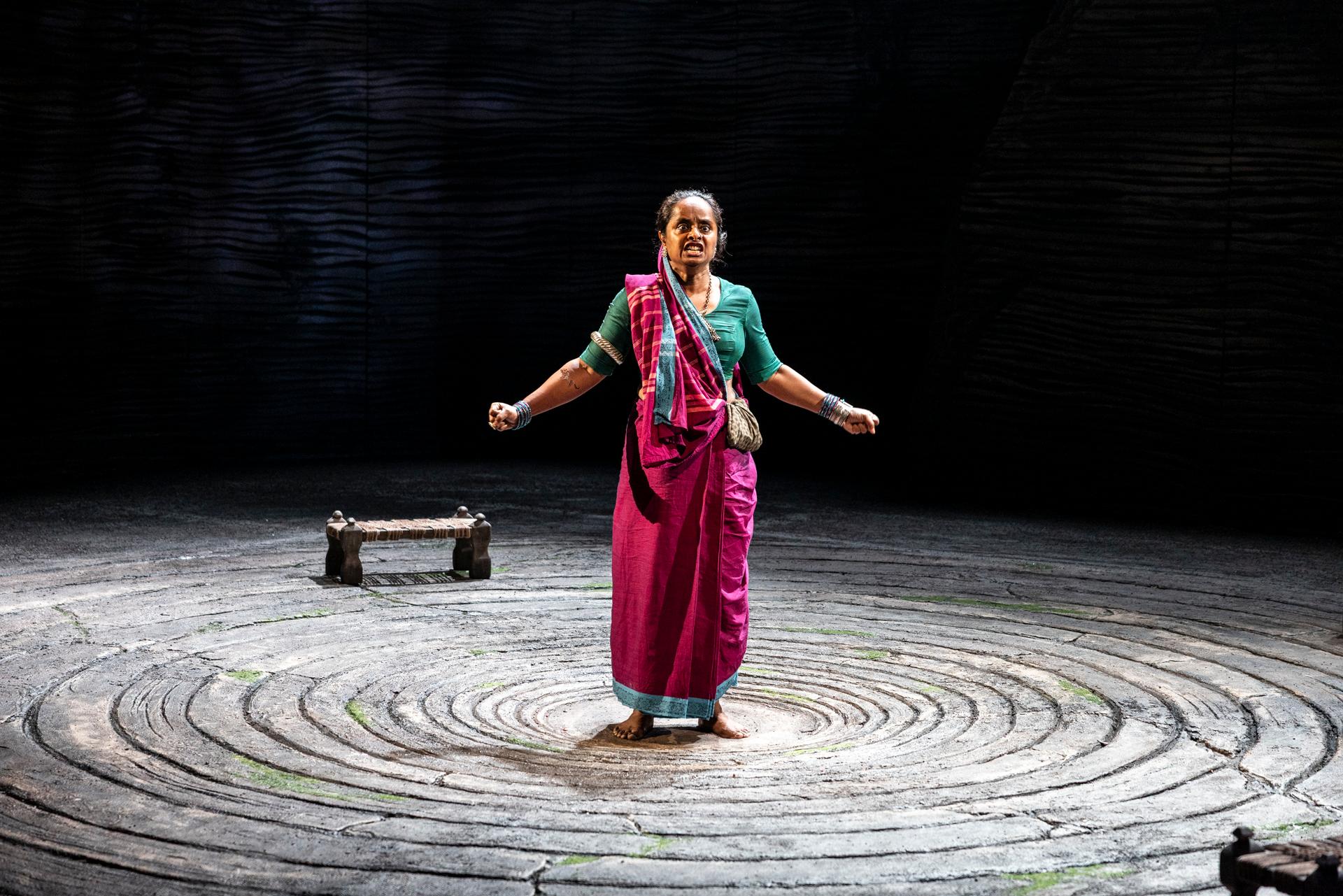
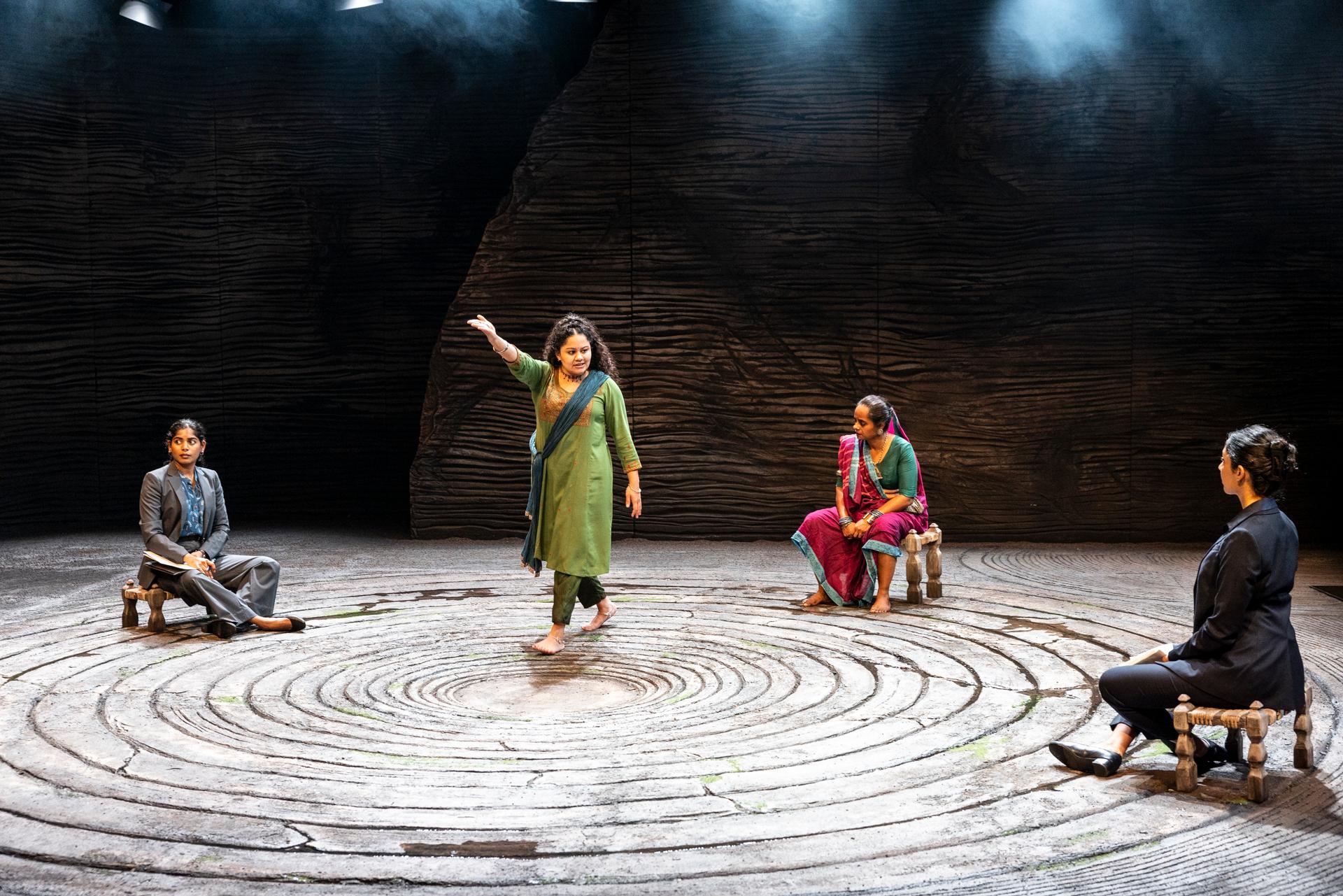
Inspired by farmlands of South Asia, set design by Keerthi Subramanyam is a beautiful evocation of our relationship with nature, making a statement about human activity in conjunction with notions of the organic. Lights by Amelia Lever-Davidson are elegantly rendered, adding subtle enhancements to aid dramatic tension, for a tale that is consistently escalating.

Actor Nadie Kammallaweera as farmer Nirmala brings to the stage gravity and power, leaving a lasting impression with her exacting physicality and commanding voice. Isha is played by the charismatic Radhika Mudaliyar whose persuasive naturalism has us hopelessly invested in a narrative about the conundrum of modernisation. Vaishnavi Suryaprakash is a compelling presence, and wonderfully nuanced, as Lakshmi the local representative of foreign interests. Manali Datar is appropriately spirited as Devi, an activist working for the resistance against deleterious commercialisation.

We know progress to be inevitable, but it is imperative that its momentum is always kept in check. Having seen the many devastations that have resulted from greed in the guise of advancements, it is shocking that those who control technology should be allowed to act wantonly. We cannot stop time from moving forward, but we must always be able to raise caution, be able to slow things down, and not be deceived by those who characterise our collective gain, as a race.

www.belvoir.com.au

Review: Snakeface (25A Belvoir)

Venue: Belvoir St Theatre (Surry Hills NSW), Apr 8 – 27, 2025
Playwright: Aliyah Knight
Director: Bernadette Fam
Cast: Aliyah Knight
Images by Abraham de Souza

Theatre review
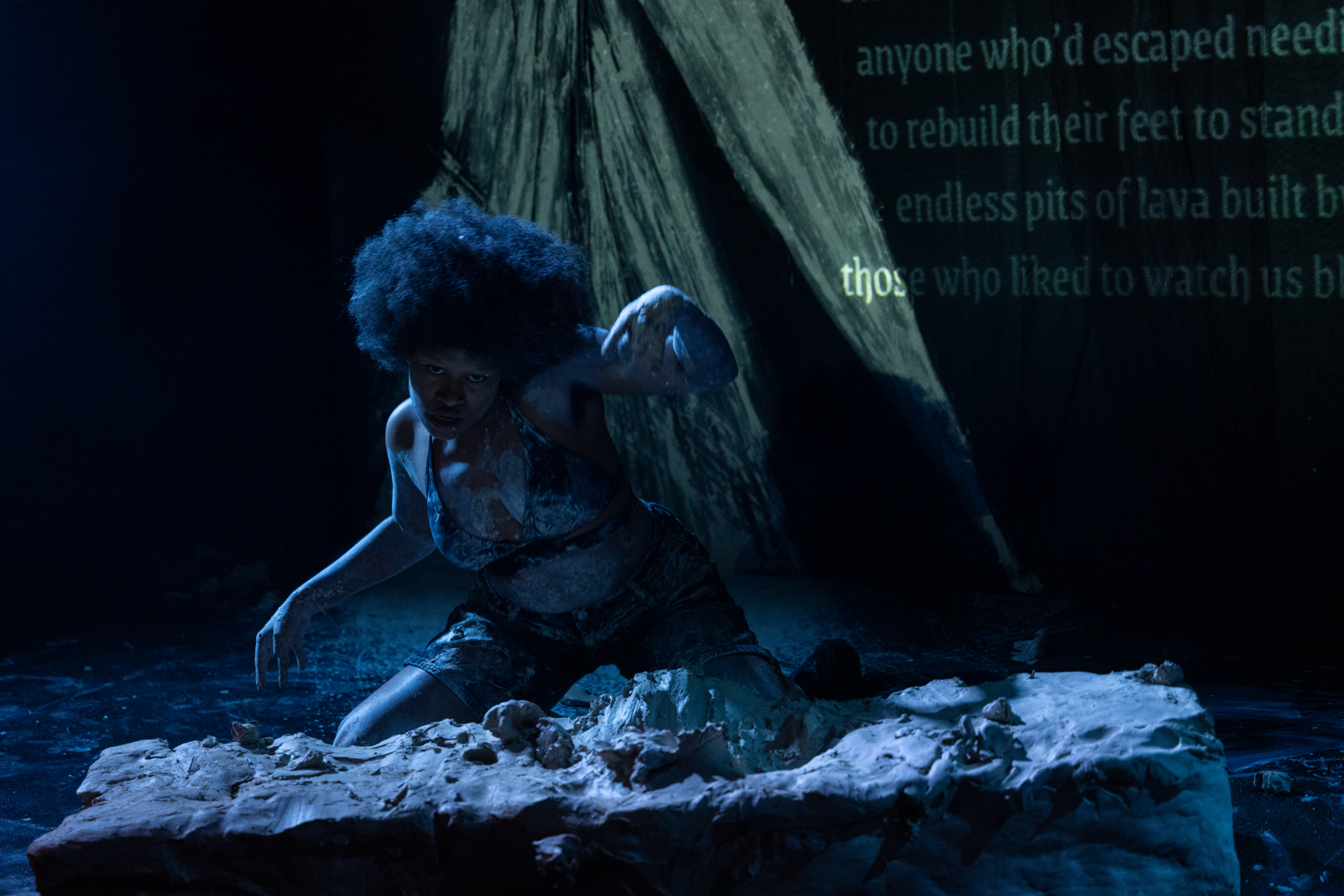
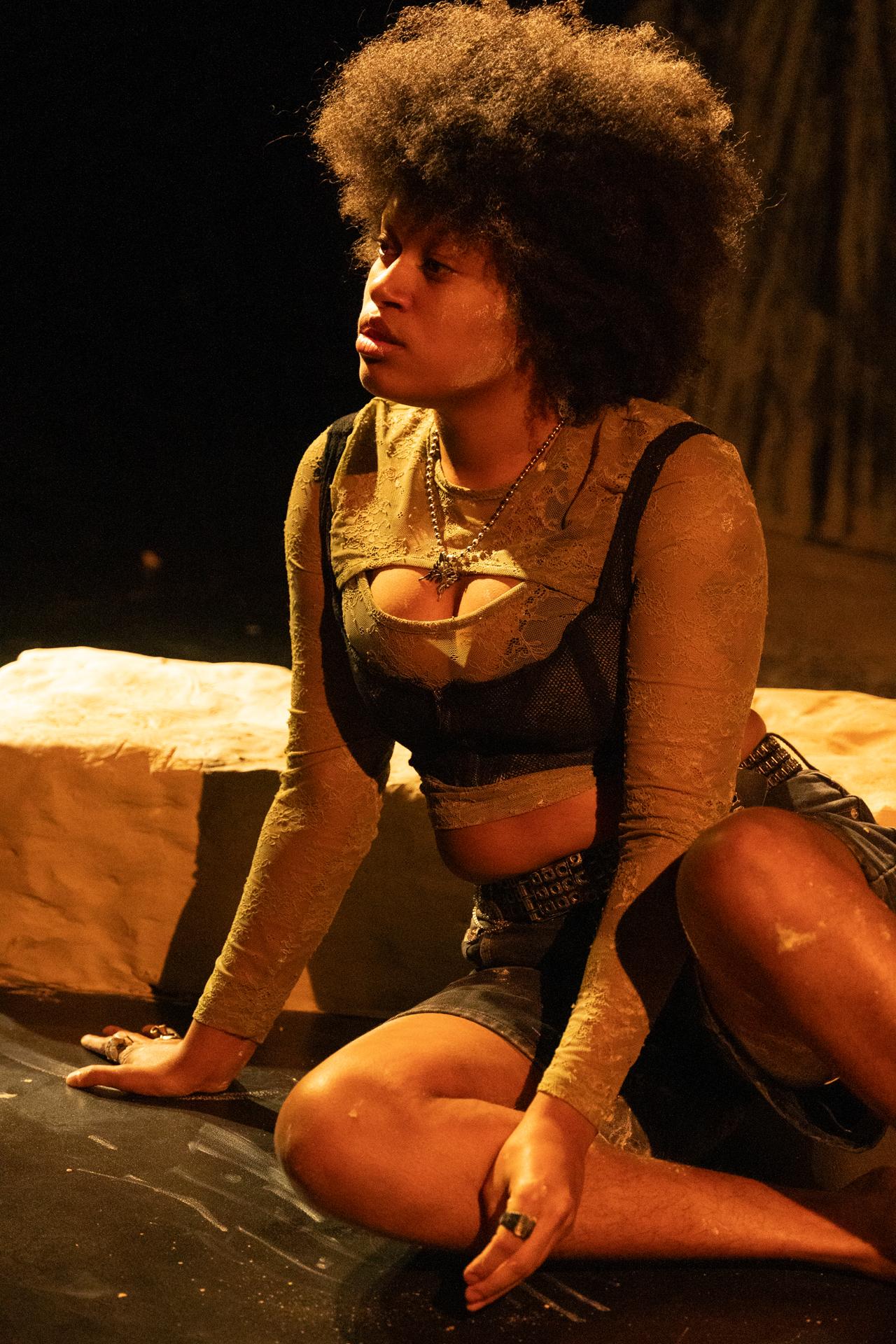
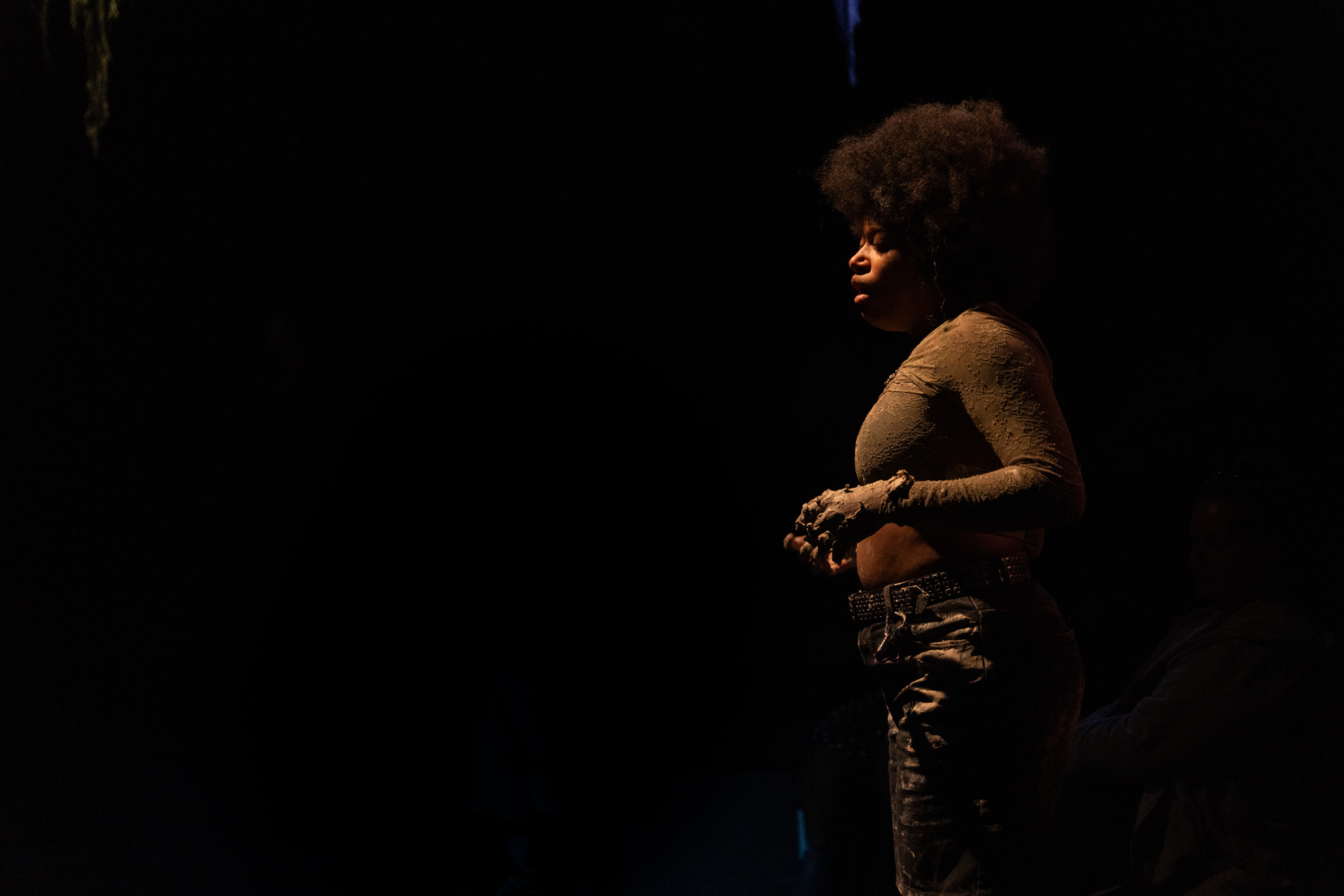
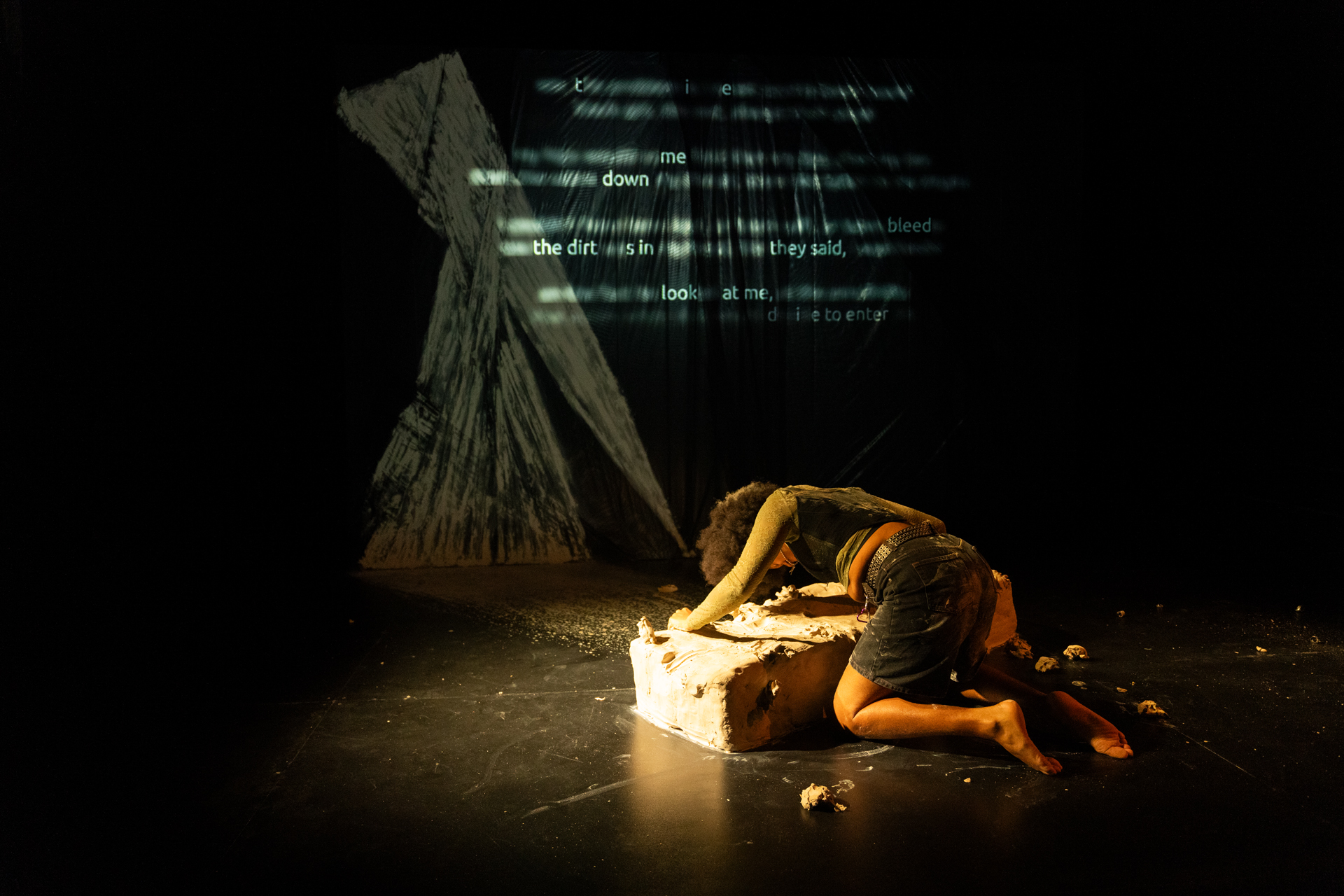
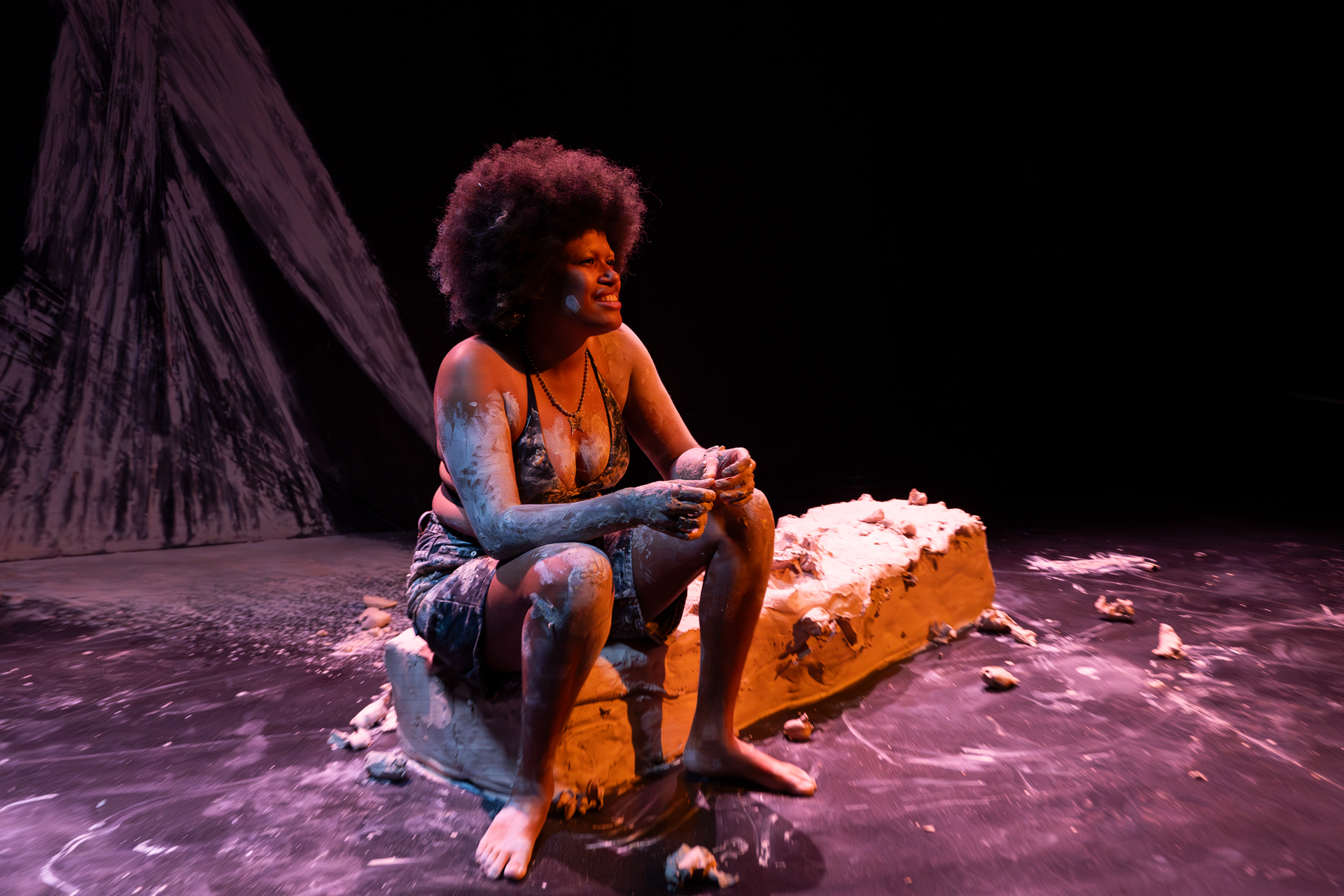
Inspired by the legend of Medusa, Aliyah Knight’s Snakeface deals with themes of abuse and assault, through a modern feminist lens. The writing is unrelentingly poetic and sometimes obtuse, with an undeniable beauty to its language that leaves an impression. Within a theatrical context, work of this nature can feel disorienting, but the resolve of its vision and ambition helps sustain our attention.

Rigorous direction by Bernadette Fam creates distinct and imaginative segmentations at every step of the show’s progression, for a staging that fascinates our senses, even when we share in the discombobulation of its central figure. Bold choreography by Fetu Taku adds meaningfully to the visceral power of the solo piece, which Knight performs with admirable focus and confidence.

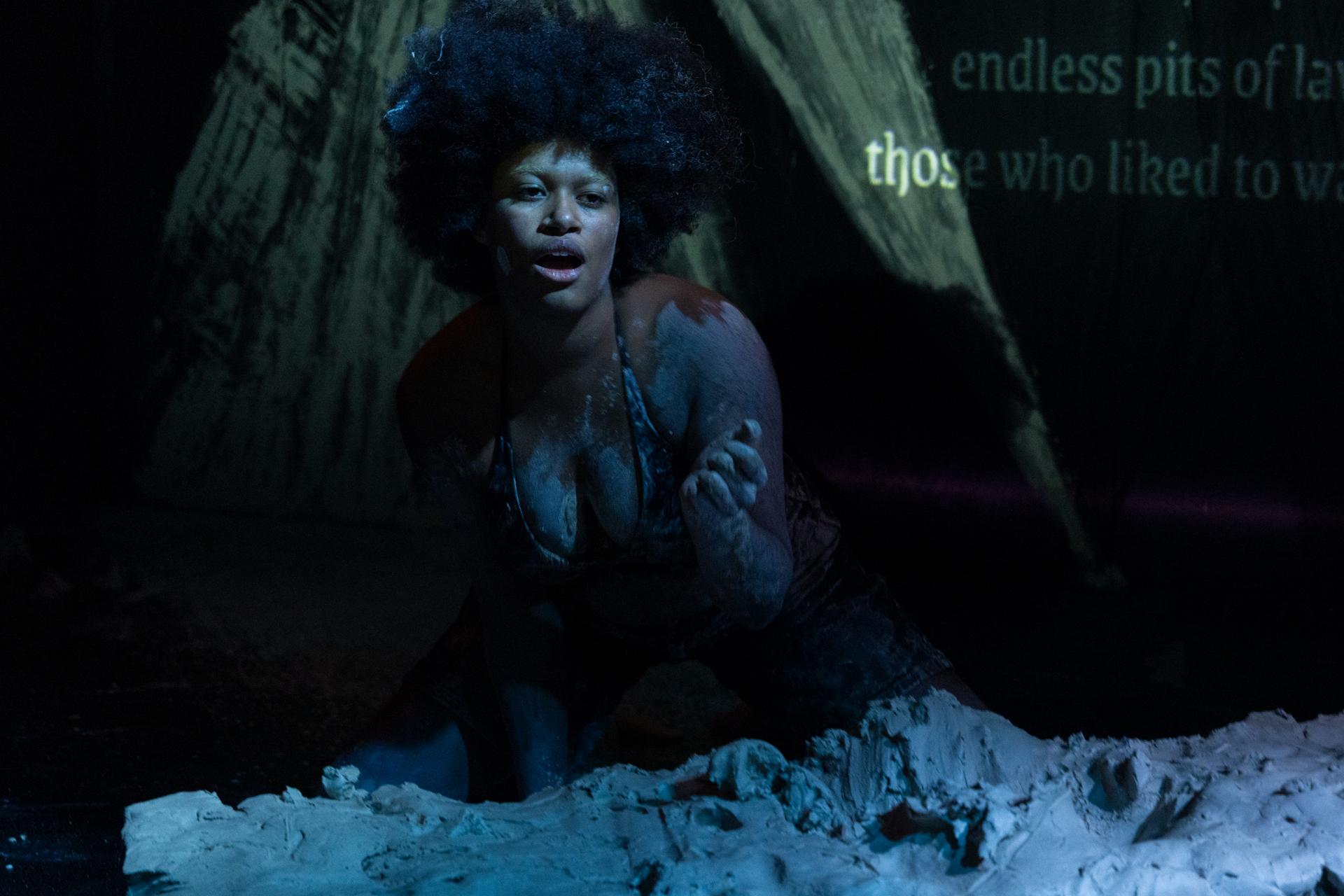
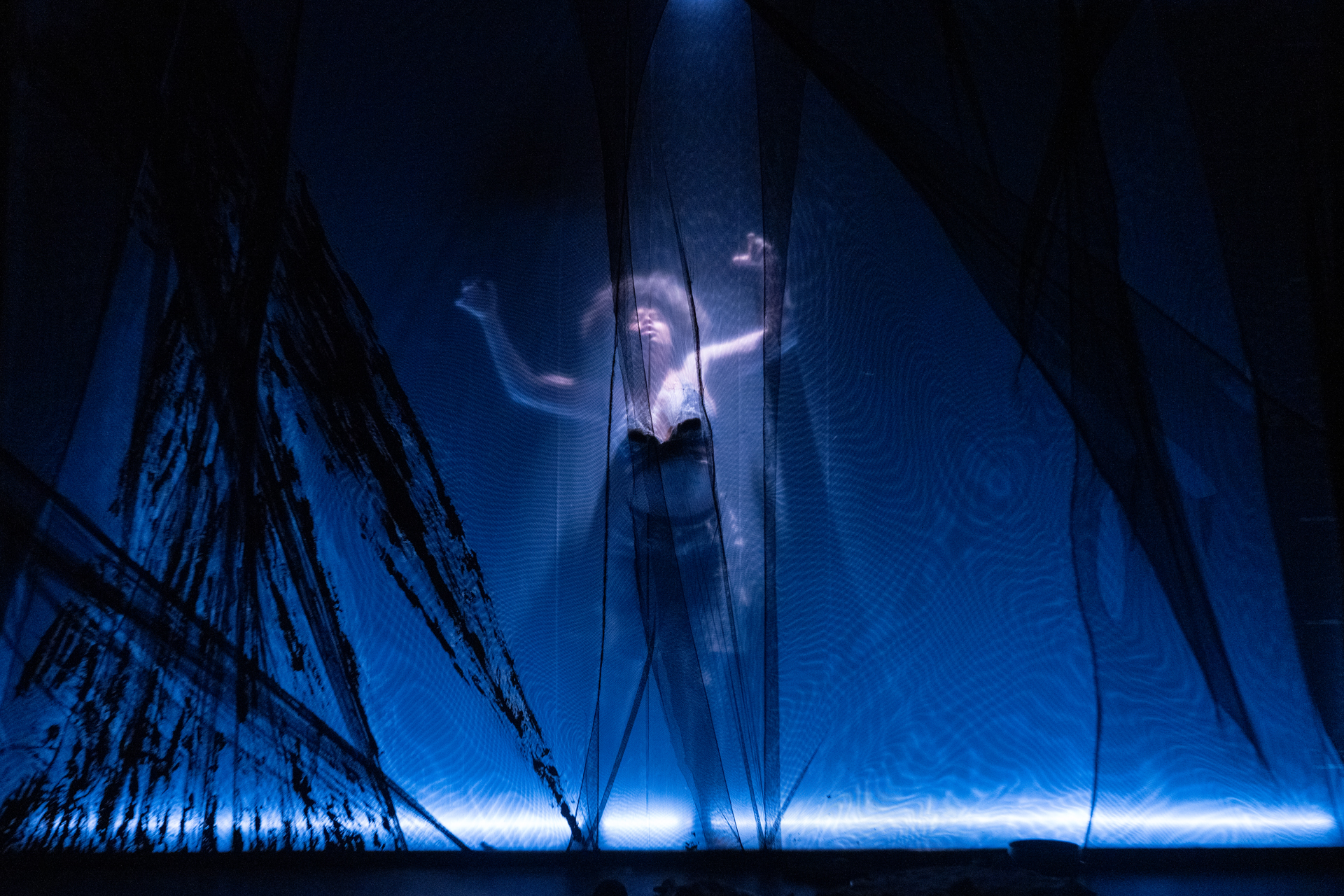
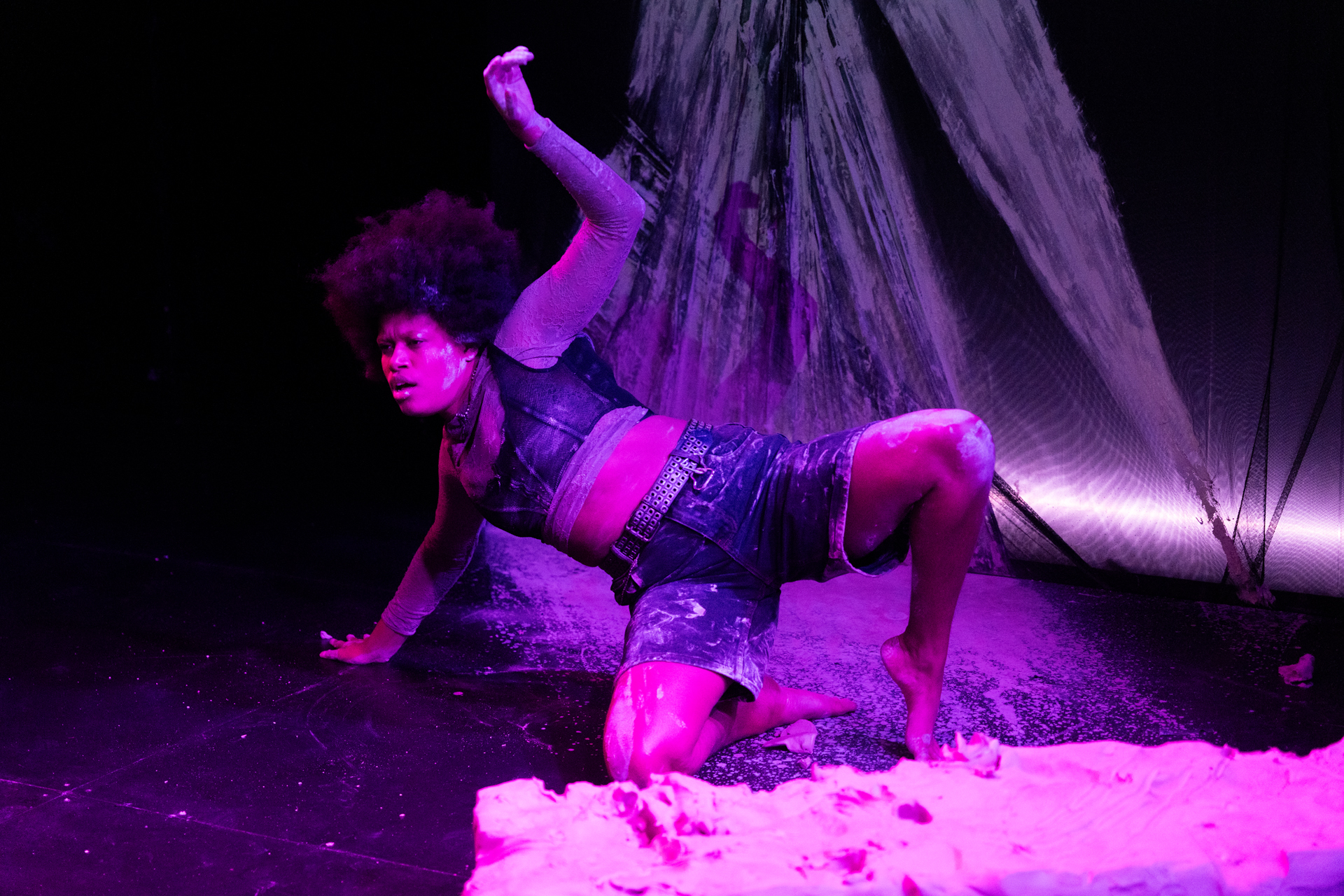
Set design by Keerthi Subramanyam is intricately considered, with the inclusion of a clay slab proving an evocative touch. Similarly entrancing are Wendy Yu’s video projections, that fuse seamlessly with the overall visual scheme.

Costuming by Wanyika Mshila bridges the gap with the past, whilst allowing us to perceive the character’s full sexual agency. Rachel Lee’s lights tell a sensual yet violent tale, and alongside stirring sound design by Marco Cher-Gibard, the production is an unequivocal sensorial delight.

www.belvoir.com.au | www.fruitboxtheatre.com.au

Review: Big Girls Don’t Cry (Belvoir St Theatre)

Venue: Belvoir St Theatre (Surry Hills NSW), Apr 5 – 27, 2025
Playwright: Dalara Williams
Director: Ian Michael
Cast: Bryn Chapman Parish, Mathew Cooper, Nic English, Guy Simon, Stephanie Somerville, Megan Wilding, Dalara Williams
Images by Stephen Wilson Barker

Theatre review
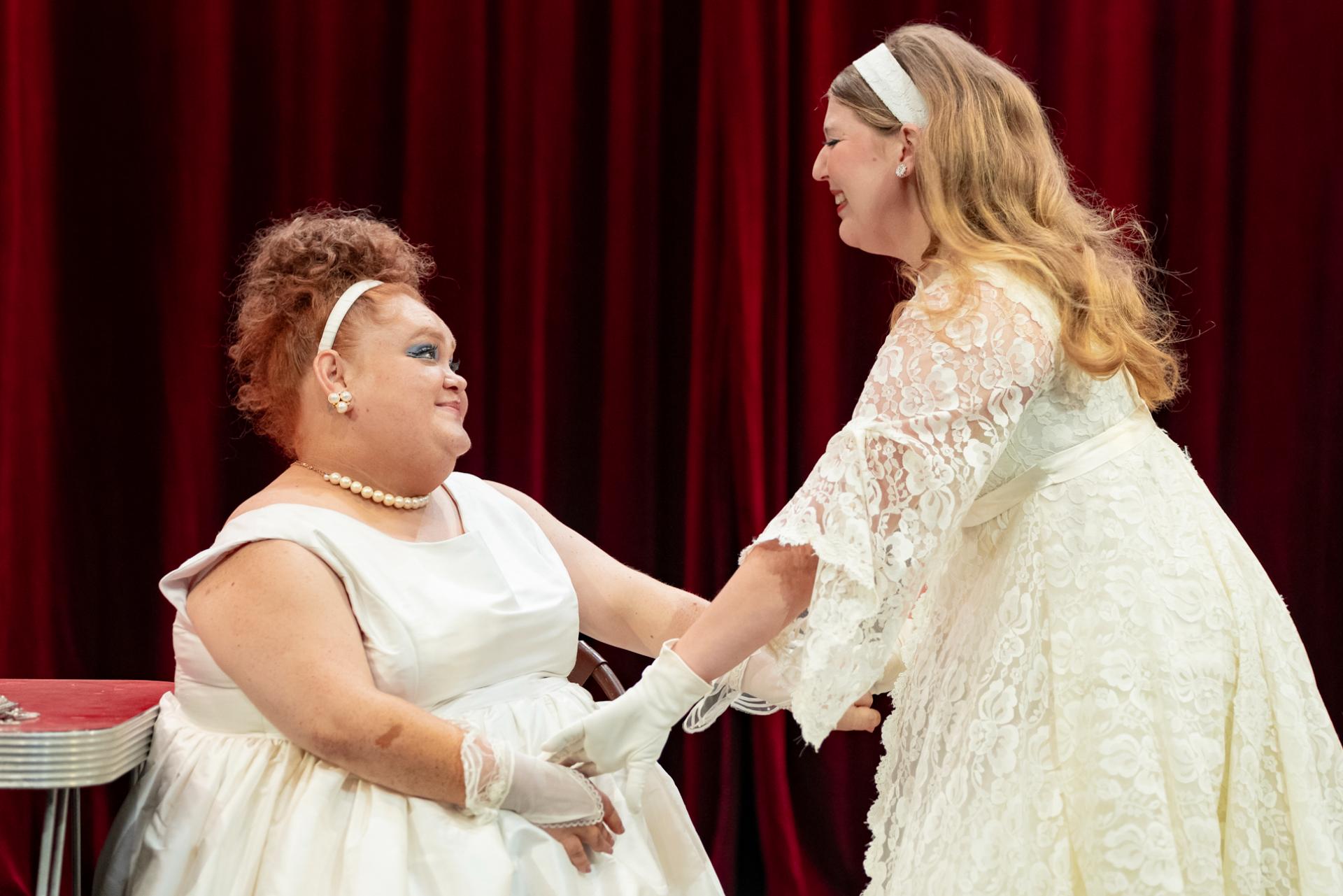
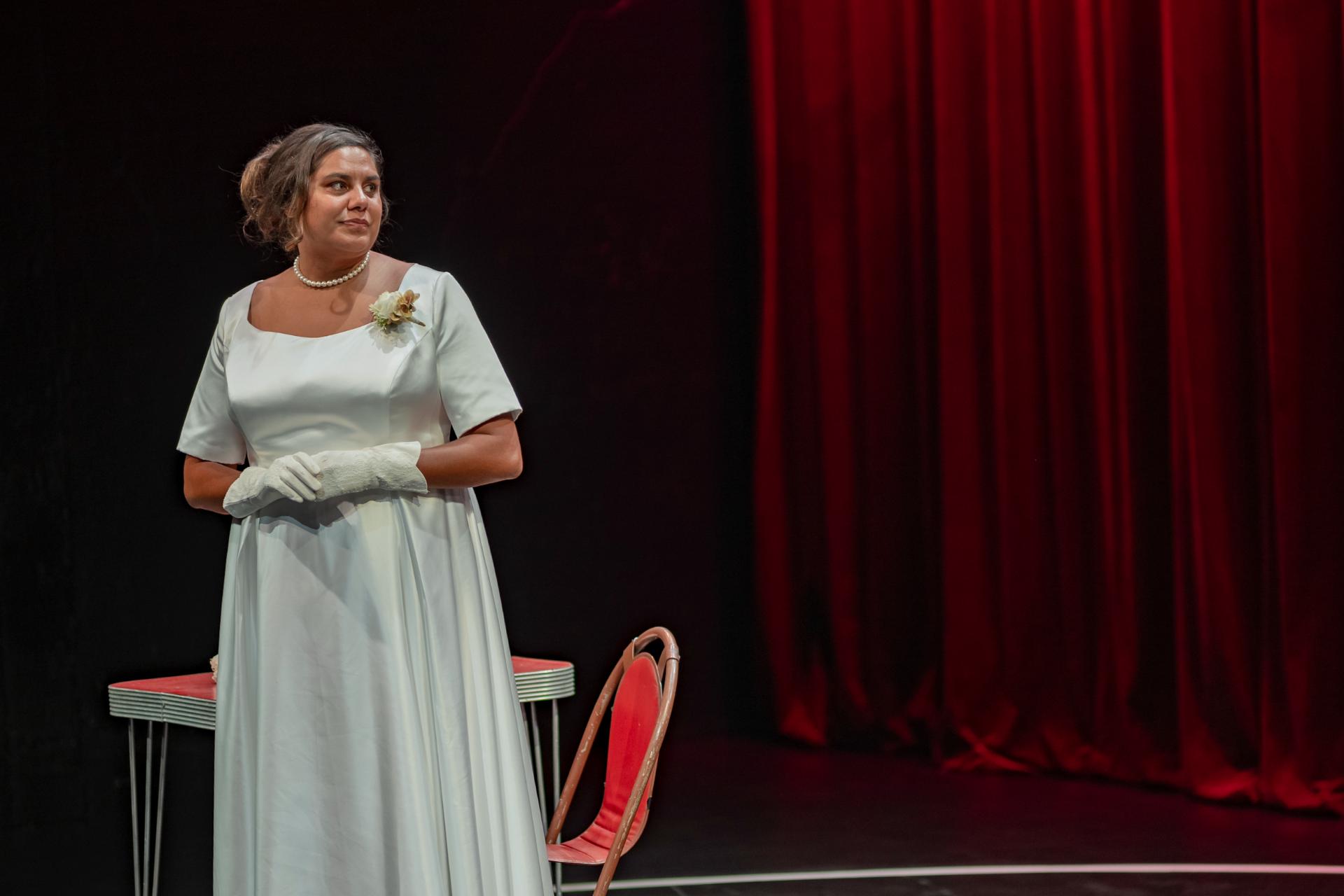
Cheryl, Lulu and Queenie have so much to look forward to, not least of which is the first Aboriginal debutante ball in Sydney. It may be 1966 and the marginalisation of Indigenous peoples is still atrocious to say the least, but nothing can keep these young women down. Big Girls Don’t Cry by Dalara Williams is at once political, philosophical and romantic; a dramedy that portrays the fullness of these friends’ lives, with all that makes them rich as a collective and as individuals, contained in one charming play.

Direction by Ian Michael suffuses the work with a palpable warmth, keeping us completely endeared to these characters and attentive to the many ebbs and flows that form their circumstances, as Black women finding happiness in a colonised city.

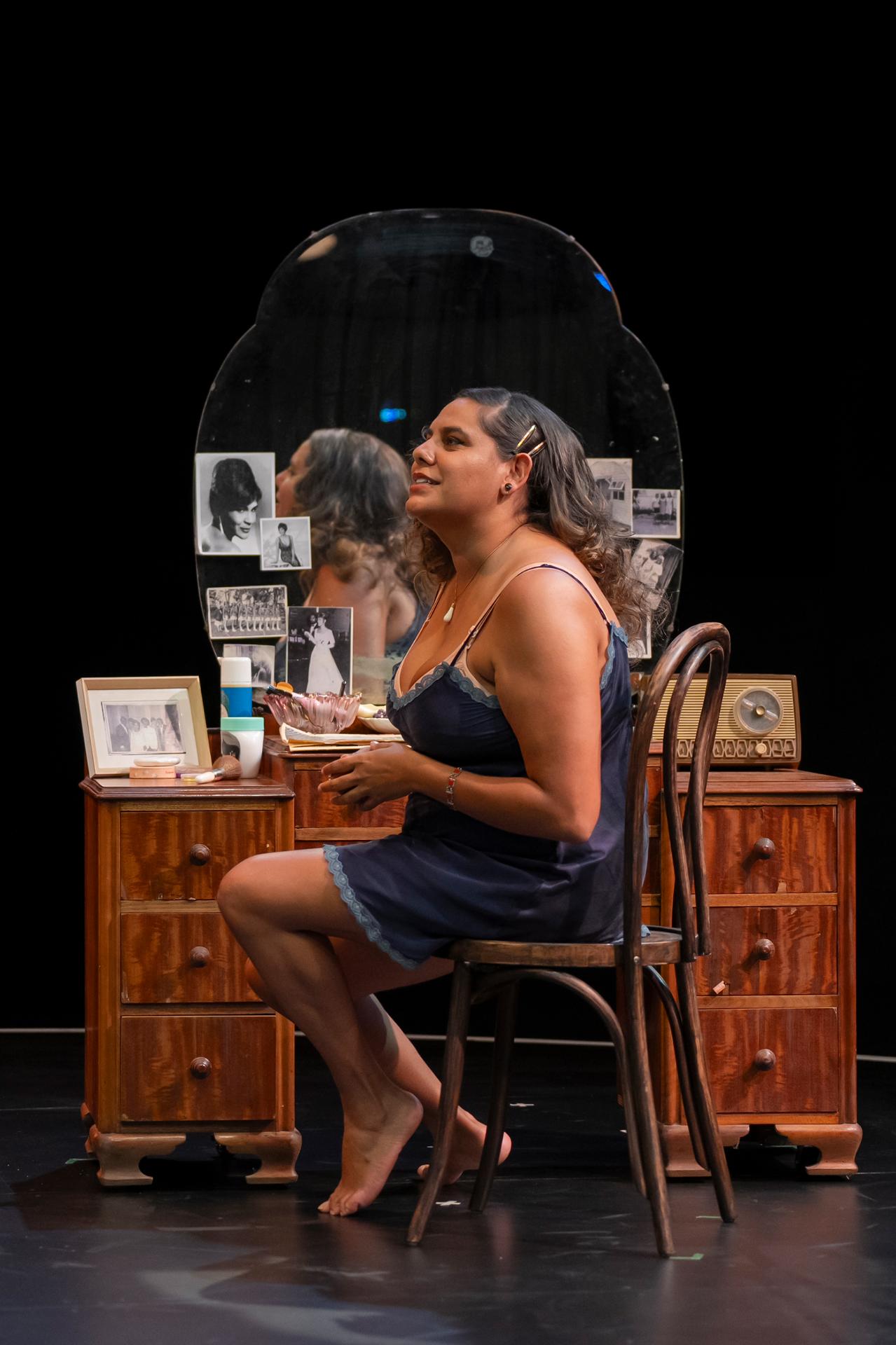
Set design by Stephen Curtis features a revolve that provides every scene with a sense of movement and urgency. Costumes by Emma White ensure that we know exactly the epoch being depicted, while creating flattering silhouettes for each of the bodies we encounter. Kelsey Lee’s lights manufacture a tenderness that stays with us for the duration, so that we can connect with the  sentimentality of the piece, and sounds by Brendon Boney offer nostalgic allure as they guide us through oscillations between pathos and laughter.

Cheryl is played by aforementioned writer Dalara Williams, with a commendable subtlety that establishes a beautiful poignancy, for a story that only becomes increasingly meaningful, with every subsequent scene. Megan Wilding plays Queenie, who along with Guy Simon’s Earnie, form an extraordinarily charming pair, memorable for the wonderful humour they inject into the presentation.

Stephanie Somerville brings a valuable sweetness to the role of Lulu, almost as a constant reminder not only of the resilience that is being celebrated in Black women, but also of the very quality of femininity that is often neglected in discussions about survival and triumph. No less noteworthy are Bryn Chapman Parish, Mathew Cooper and Nic English, who are as measured as they are passionate, in contributing to this charming yarn, about the incredible women who continue to teach us how to make things better for future generations.

Big Girls Don’t Cry is about the giants on whose shoulders we stand. It is about the examples they have set that we must follow, and their legacies which although entrenched, can easily be forgotten in many of our frenzied metropolitan lives. Cheryl, Lulu and Queenie demonstrate different ways to resist. They also show us how we can offer support and love, in the face of forces that wish to have us become more like them, cold and hardened.

www.belvoir.com.au