Review: Jess & Joe Forever (Sugary Rum Productions / 25A Belvoir)

Venue: Belvoir St Theatre (Surry Hills NSW), Mar 13 – 30, 2019
Playwright: Zoe Cooper
Director: Shaun Rennie
Cast: Nyx Calder, Julia Robertson
Images by Kate Williams

Theatre review
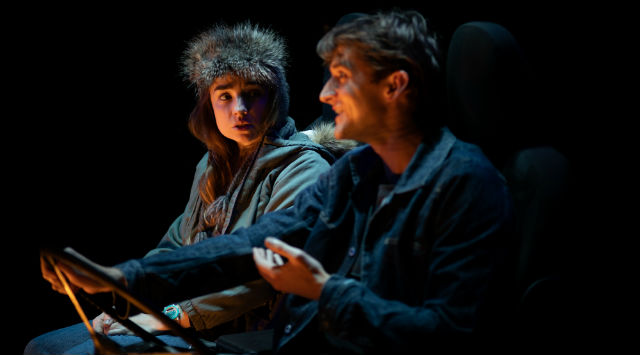
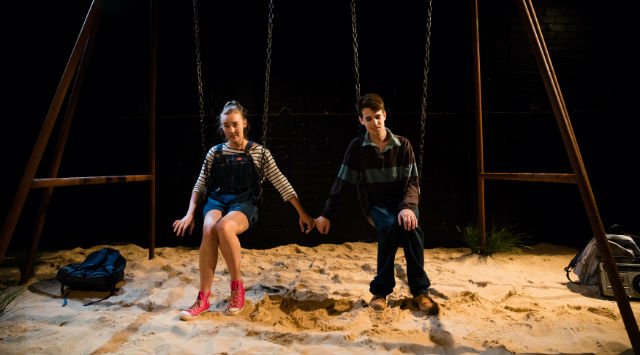
The children are on a mission to tell their story. It takes place in Joe’s hometown of Norfolk, where Jess had begun spending her summer holidays at 9 years-old. The two become fast friends, and go through thick and thin together. In Zoe Cooper’s Jess & Joe Forever, they find a way to recount seminal events of their young lives, like an informal kind of psychotherapy, not because there is anything wrong with them per se, but because the world seems intent on inflicting a very hard time on them both. Cooper’s writing is extraordinarily tender, beautifully authentic in the way these young voices are rendered. Its structure is suspenseful and intriguing, for a narrative that does much more than entertain.

Director Shaun Rennie takes great care to manufacture a sensitive atmosphere in which we can only receive Jess and Joe with hearts wide open, and in the process, come to an intimate understanding of how children respond to the bigger world, and all the the difficult things we cannot shield them from. The emotional crescendo Rennie is able to build into the plot of Jess & Joe Forever, is representative of theatre at its most captivating.

It is a wonderfully designed production. Isabel Hudson’s playground is perfectly proportioned for the small auditorium, with quaint illustrations along the backdrop reflecting an innocence so crucial to the play. Lights by Benjamin Brockman help to amplify the emotions of both characters and audience, so that none of the sentimentality escapes us. Ben Pierpoint’s work on sound provides for the mind’s eye, an evocative picture of what that small English seaside town must look like, and his music gives the show a sense of elevation, with its unmistakable sophistication.

We fall in love right away with the very excellent cast, both actors adorable and completely believable as our little hosts. As Jess, Julia Robertson brings to the role a strength and defiance that absolutely charms. Her effervescence is infectious, and even though her penchant for machine gun speed recitation of lines can sometimes be a challenge, the precision of her approach is unequivocally affecting. Nyx Calder is perfect as Joe, disarmingly poignant but also effortless and delightful in their depiction of youthful purity. The extraordinary vulnerability that Calder is able to convey, fills the gaps purposefully left behind by the playwright, impeccably addressing parts of Joe’s story where words can prove inadequate.

Watching these kids, we feel compelled to protect them, but we also know that their struggles will make them into resilient and wise adults. It is true that there is much sadness in the world. The societies we manufacture often seem to be endlessly flawed, and the thought that those who have done no harm, would still be subject to injustice and inequity, is devastating. Some of us will respond with resignation, but some will fight for things to be better. Jess & Joe Forever is bittersweet, because its anguish is palpable, but it also provides inspiration, so that we can know to always do the right thing.

www.facebook.com/sugaryrumproductions | www.belvoir.com.au

Review: Russian Transport (Darlinghurst Theatre Company)

Venue: Eternity Playhouse (Darlinghurst NSW), Mar 9 – 31, 2019
Playwright: Erika Sheffer
Director: Joseph Uchitel
Cast: Ryan Carter, Rebecca Rocheford Davies, Nathan Sapsford, Hayley Sullivan, Berynn Schwerdt
Images by Jeremy Ghali, Nino Tamburri

Theatre review
The lives of a Russian family in Brooklyn are turned upside down, when a relative comes to stay. Ex-crim Boris’ arrival leads us to question if turning a new leaf can ever be a simple proposition, for those who have spent all their lives exposed to immorality. Erika Sheffer’s Russian Transport is a slow burn, with drama that starts to engage late in the piece. Its themes are intriguing, but the promise of philosophical resonance is subsumed by a narrative that can feel somewhat hesitant, with perspectives that are inadequately critical. The characters we encounter are fiery, but the play is oddly short of passion.

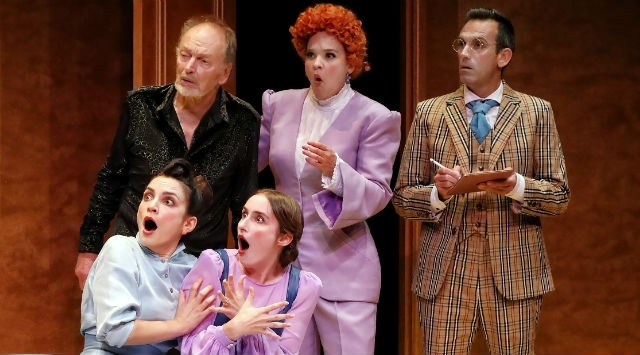
Designed by Anna Gardiner, the production bears a striking appearance, with a robustness that keeps our eyes active and involved. Joseph Uchitel’s direction ensures an energetic, quite raucous stage, but struggles to achieve meaningful cohesion between his actors for their story to really captivate. Rebecca Rocheford Davies and Berynn Schwerdt play mother and father, both actors imposing and dynamic, but are ultimately insufficiently convincing with their portrayals of two very complex personalities. Troublemaker Boris is on the other hand, a more obvious role, given appropriate vigour by Nathan Sapsford. The show is stolen by Ryan Carter and Hayley Sullivan, who bring life to teenage parts in Russian Transport. Sullivan’s ability to inject nuance into her 14 year-old Mira is commendable, and Carter’s exceptional fastidiousness and intensity as Alex, is responsible for the show’s most powerful moments.

The loss of innocence is eternally fascinating. In migrant families, that process of a teenager having to emerge into adulthood is additionally complicated, with influences and expectations coming from disparate sources, all simultaneously insisting on adherence. Alex and Mira are American kids, but Russia is in their blood. The play allows us to see the extent to which cultural heritage can dominate the development of our young. Even when we have the privilege of choosing where to raise your children, it seems inevitable that the baggage we had intended to leave behind, can so easily return to materially affect future generations. We have ghosts that are both good and bad. The challenge is our own ability to discern, before having them unleashed on our nearest and dearest.

www.fishyproductions.com | www.darlinghursttheatre.com

Review: Every Brilliant Thing (Belvoir St Theatre)

Venue: Belvoir St Theatre (Surry Hills NSW), Mar 8 – 31, 2019
Playwrights: Duncan Macmillan, with Jonny Donahoe
Directors: Kate Champion, Steve Rodgers
Cast: Kate Mulvany
Images by Brett Boardman

Theatre review
The narrator began compiling a list of brilliant things, when her mother first attempted suicide. In trying to understand why one should go to such extremes, the narrator, at the time a seven year-old child, focused her thoughts instead on all that is good about the world, whether they be ice cream, things with stripes, opening presents, or watching things grow. The list is then used as a vehicle for communication with her mother, who continues to struggle with depression, in the narrator’s efforts to connect, and to heal. Initially intended to be itemised at a thousand, the number keeps growing as our narrator herself grows up. We witness the list assume a bigger life, as it transforms into a basis on which the narrator deals with her own life.

Duncan Macmillan and Jonny Donahoe’s Every Brilliant Thing is full of sincerity, in its discussions about suicide, and the inter-generational effects of depression in families. The piece feels authentic with its explorations, and offers a theatrical intimacy for its sensitive subject matter. There is little however, that is unexpected, and it alternates frequently between poignancy and banality, in its attempts at informing and entertaining its audience. The themes are extremely delicate, and as such, we approach them sensibly, for a play that never turns very dramatic.

House lights are on for the entirety, during which performer Kate Mulvany addresses us directly. Many members of audience are given cards denoting an item from the narrator’s list, and are invited to read them out loud when asked. More extensive interactions are required of luckier attendees, who take to the stage briefly to play several small roles in the story. Mulvany’s charm proves boundless, as she opens herself up to a swarm of unpredictability in this theatre-in-the-round configuration. Her confidence and preparedness is thoroughly impressive, but pacing of the production can suffer in moments when she has more to manage than to simply tell a story. The show runs very long on opening night. Even though there is much to enjoy in watching live theatre do its magic, we do experience the disruption of plot tension, for better or for worse, at many points.

In the production and consumption of theatre, we form communities that must hold each other in mutual care. Sat face to face, Every Brilliant Thing gives us the opportunity to look at each other, and learn to look after each other. It reinforces the understanding that parts of us are frail, that we all have weaknesses behind our smiling faces. There may be a million wonderful things to encounter, but there is no denying that life is hard. The only way we can make it through, is to do it together.

www.belvoir.com.au

Review: Monty Python’s Spamalot (One Eyed Man Productions)

Venue: Hayes Theatre Co (Potts Point NSW), Mar 6 – Apr 13, 2019
Book & Lyrics: Eric Idle (based on the film Monty Python And The Holy Grail)
Music: John Du Prez, Eric Idle
Director: Richard Carroll
Cast: Marty Alix, Blake Appelqvist, Cramer Cain, Rob Johnson, Josie Lane, Aaron Tsindos, Bishanyia Vincent, Jane Watt
Images by John McRae

Theatre review
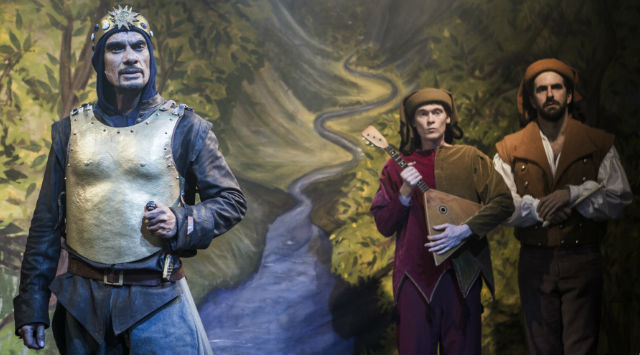
Hard to believe that it has been half a century, since Monty Python began its influence on British comedy and entertainment. Since first appearing in 1969, their distinct style of irreverent humour has helped define laughter for generations, all over the globe. With a particular interest in lampooning figures of authority, the Monty Python brand has been a force in counter-culture, allowing us to use its absurdity to investigate what is considered polite and normal in many of our societies. Monty Python’s Spamalot is a characteristically iconoclastic and rambunctious take on musical theatre, adapted from their now legendary Monty Python And The Holy Grail, the 1975 film centring on the misadventures of King Arthur and his knights.

Under Richard Carroll’s direction, these old jokes prove to be funny as ever, with liberal updates making the show feel unexpectedly immediate. The production appeals to fanatics, but also caters to a general contemporary audience. We are all there for a good time, and the laughter it delivers is fast and furious. Performer Cramer Cain is solid as King Arthur, with an effortless strength to his presence that keeps our attention on the lead role, in the middle of a lot of hullabaloo. Josie Lane is a tremendous delight as Lady of the Lake, an unrelenting diva who refuses to let her audience forget who the real star should be. Her sensational combination of self-effacing hilarity and vocal prowess, is truly remarkable. The brilliant ensemble is tirelessly goofy, and highly inventive. It is a group completely dedicated to creating a high-octane electrifying experience, determined to pull us out of the mundane, for two hours of unbridled lunatic pleasure.

The written word will gather dust, with many having faded away with time, forgotten and forever buried. The nature of theatre compels us to make everything new again. No matter the origins of a text, those who take it upon themselves to bring the past onto the stage, must find ways to connect the old with the here and now, so that art can do its job and not be a meaningless relic. The spirit of Monty Python is shown here to be eternal. For as long as we believe in venerating kings and gods, its humour will cut them down to size, to offer a reality check that can only be healthy. Laughter eases pain, and by helping us see through the nonsense, Monty Python is able to make real life that little bit more bearable.

www.oneeyedmanproductions.com | www.hayestheatre.com.au

Review: Seed Bomb (Subtlenuance / The Old 505 Theatre)

Venue: The Old 505 Theatre (Newtown NSW), Mar 5 – 9, 2019
Playwright: Daniela Giorgi
Director: Paul Gilchrist
Cast: Matthew Abotomey, Kate Bookallil, Lindsey Chapman, Sonya Kerr, Julian Ramundi
Image by Matthew Abotomey

Theatre review
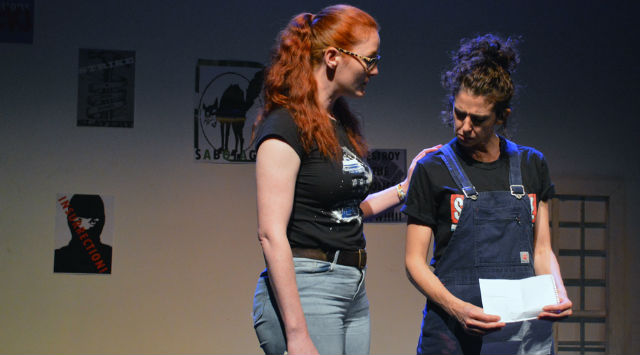
Kat dreams of moving out to the country, so that she can escape the ugly rat race of city life. Upon meeting guerrilla gardeners Gridlock and Pax however, her mind changes, as she begins involvement in a political movement that helps her feel an integral part of community. Daniela Giorgi’s Seed Bomb talks about the responsibility of individuals, in an environment where the power to influence our own destinies, is routinely made to feel diminished. Kat discovers that she is not helpless in her home, and to leave it for greener pastures is in some ways a selfish act.

Giorgi’s benevolent writing is idealistic but not naive. Although its didacticism has a tendency to turn obvious, the immediacy of its concerns bear a pertinence that keeps us engaged, with Kat’s awakening bringing a sense of hope to our humdrum passivity. Directed by Paul Gilchrist, the show is tender and earnest, insufficiently dynamic but certainly authentic with its representations. Actor Sonya Kerr is particularly genuine in her convincing portrayal of Kat, our mild-mannered protagonist who learns to carve her own niche in micro activism.

Other cast members are similarly accomplished. Matthew Abotomey and Kate Bookallil bring conviction to their roles as provocateurs of the piece, both distinct and specific with their respective interpretations of the modern social justice warrior. Excellent comedy by a very cheeky Lindsey Chapman, who plays an ignorant financial adviser, leaves a lasting impression. The frustrations of Kat’s partner Toby are conveyed persuasively by Julian Ramundi, whose depiction of the one left behind, serves as caution against political apathy.

Whether we like it or not, to exist is to be political. We can choose either to participate or withdraw, but there is never neutrality in any of our decisions. Everything we say and do, causes reverberations, like dominoes toppling in all directions. Kat does not become radical, but her new awareness of things beneath the surface, has sparked a fundamental shift in how she behaves. We can never be sure if knowledge will necessarily improve lives; after all, ignorance is bliss. There is however, no possibility for reversal, once the truth is out. This is only the beginning of Kat’s story, what is to follow is a test of our optimism and faith.

www.subtlenuance.com

Review: Exit The King (Théâtre Excentrique)

Venue: Chippen Street Theatre (Chippendale NSW), Mar 7 – 16, 2019
Playwright: Eugène Ionesco (translated by Anna Jahjah, Kris Shalvey)
Director: Anna Jahjah
Cast: Clay Cruighton, Kirsty Jordan, Leof Kingsford-Smith, Josef Schneider, Gerry Sont, Alison Windsor
Images by Mansoor Noor

Theatre review
The king is informed that he is to die by the time the play ends. It is absurd that we are shocked by this notion, as death remains one of our only certainties. In Eugène Ionesco’s Exit The King, the protagonist is given 90 minutes to reflect on what he leaves behind, and what he is about to encounter. An exploration of existential angst, it attempts to anatomise the meaning of life, by looking closely at impending death.

Apart from Ionesco’s intentions, an alternate reading could be applied to Exit The King, whereby the monarchy is being taken down by those determined to have him vanquished. We see him being told repeatedly that his death is inevitable, and that he is no longer needed. The play has a new pertinence in our Time’s Up era, able to resonate with our thirst for stories featuring the demolition of traditional hierarchies.

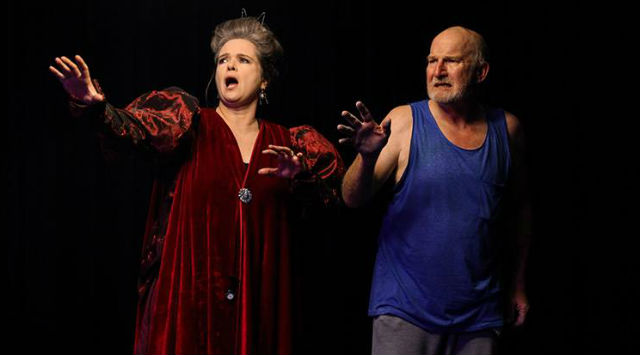
Actor Kirsty Jordan plays Queen Marguerite, a strong almost ruthless personality who leads the charge in guiding the king to his demise. It is a robust performance, of great conviction, that provokes us into the formulation of hidden narratives that would make her story a more politically enticing one. Leof Kingsford-Smith is an excellent King Berenger, powerful with the vulnerability he introduces, an energetic presence capable of sustaining our interest through the production’s thick and thin. Ionesco’s densely surreal dialogue requires more detailed attention for the show to speak incisively, but director Anna Jahjah does good work with atmosphere and tone, allowing us access to poetic dimensions that appeal to parts of ourselves that are perhaps more visceral than logical.

None is immortal, yet we often carry on as though life is forever. We leave loose ends unattended at the end of every day, and we postpone pleasures to the future, believing that there will always be tomorrow. The old saying, “never go to bed angry” seems to imply that resolutions, permanent or temporary, must be reached, because there is every chance that slumber can turn eternal. If we understand that life is short, it would mean making the most of our days, and also to make the best of all our potentials, right here and right now.

www.theatrexcentrique.com

Review: The Miser (Bell Shakespeare)

Venue: Sydney Opera House (Sydney NSW), Mar 2 – Apr 6, 2019
Playwright: Molière (a new version by Justin Fleming)
Director: Peter Evans
Cast: John Bell, Michelle Doake, Harriet Gordon-Anderson, Elizabeth Nabben, Sean O’Shea, Jamie Oxenbould, Russell Smith, Damien Strouthos, Jessica Tovey
Images by Prudence Upton

Theatre review
Harpagon is the most miserly man you can imagine. He wants to marry off his daughter to a rich noble who has offered to waive the customary dowry, and is himself eager to marry a young woman who seems likely to be a frugal wife. Justin Fleming’s new version of Molière’s The Miser is a faithful adaptation that inflicts little disruption on the 350 year-old work, but the application of contemporary Australian lexicon refreshes it for a newly immediate experience. That we remain accustom to patriarchal structures, with mediocre men still ruling the roost in much of our daily lives, means that the very old play retains resonance. We relate to Molière’s iconoclastic spirit, but a sense of resignation pervades the play, for which our modern sensibilities should not be content with.

Designer Anna Tregloan offers a simple setting that conveys both Harpagon’s wealth and meanness, but it is her costumes that really impress. Flamboyant, colourful and unexpectedly trendy, every character is attired with an admirable level of taste and irony, perfectly coordinated to create a memorable visual vibrancy. Music by Max Lyandvert is charming, able to lure us into the story with a seductive power not unlike the irresistible magnetism of money. Peter Evans’ direction of the piece is less fanciful, with a straightforward approach that relies heavily on what each performer brings to the table.

John Bell is a convincing Harpagon, effortless in his portrayal of a very unlikable personality. More energetic members of cast leave a stronger impression, with Michelle Doake delivering the biggest laughs as Frosine, a matchmaker of sorts, demonstrating extraordinary aptitude for the classic farce genre. Damien Strouthos plays the son Cléante, deftly transforming the powerless offspring into a force of comedy, through bold physical explorations that delight, by virtue of their inventive quirkiness.

The problem with misers is that nobody seems to benefit from their obsession with hoarding. Those guilty are themselves constantly miserable, overwhelmed with an anxiety that accompanies the belief that nothing is ever enough. Everybody else is subsequently deprived of resources that are withdrawn from productivity, unable to gain necessary access for the general advancement of society. Harpagon puts his money in a cash box, allowing no one to do anything with it. What was once highly valued, is converted into dead objects. To have money means being able to do what the heart desires and what the brain can conceive. It can buy meaningless things, but it can also facilitate the betterment of countless lives. Misunderstanding the nature of money and the mismanagement of it, is responsible for so much of our ills and those who have lots of it have so much to answer for.

www.bellshakespeare.com.au

Review: Angels In America (Apocalypse Theatre Company)

Venue: Old Fitzroy Theatre (Woolloomooloo NSW), Feb 15 – Mar 16, 2019
Playwright: Tony Kushner
Director: Dino Dimitriadis
Cast: Joseph Althouse, Catherine Davies, Maggie Dence, Ben Gerrard, Jude Gibson, Ashley Lyons, Gus Murray, Timothy Wardell
Images by Robert Catto

Theatre review
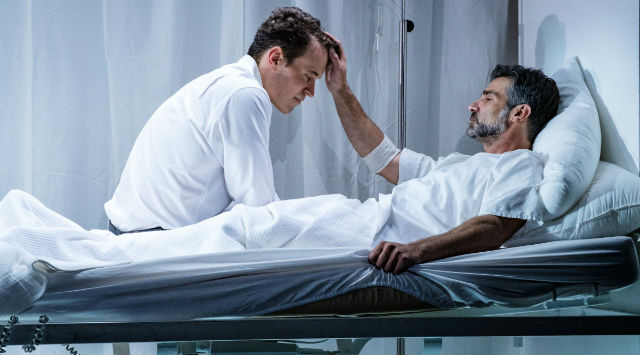
At the centre of Tony Kushner’s Angels In America, are the breakdown of two relationships, from two different worlds. We might like to term those seemingly separate existences the left and the right, as we are want to do in so much of our political conversations. In the middle of catastrophe however, when the devastation of human frailty becomes palpable, categories dissipate as they prove increasingly impotent and therefore meaningless. Set in the middle of the 1980s AIDS crisis, Angels In America is an ode to desperation, that condition for which the face of humanity has to reveal its truest nature.

In their hopelessness, characters in the story are met with divine intervention. Ghosts, angels and other apparitions descend upon their consciousness, not always as a form of salvation or even reprieve, but as a refusal of the finitude to which we regard life, especially during sickness and disease. Kushner summons the vastness of our mental capacities; call it belief, imagination, or fantasy, to render a theatrical representation of being, that extends our conception of sentience to include metaphysical dimensions.

Not that our bodies are unimportant. In fact, in this deep interrogation of material versus immaterial, we are consumed more than ever, by our very corporeality. Flesh and blood are never far from the centre of our attention, functioning as literal concerns and as symbols, reiterating time and again, that we are immovably both vessel and soul. Heaven and earth are inextricably linked at the location where skin breathes, making us simultaneously, painfully so, sacred and profane.

This transcendental drama is communicated through director Dino Dimitriades’ pursuit of the sublime. The aesthetic world that he manufactures as vehicle for Kushner’s words, is heavy yet delicate, a sentimental embrace of past sacrifices, and a benediction that regards our future, as LGBTQI communities, with caution. At over seven hours long, it is probably inevitable that the journey would feel uneven, with certain portions coming across less powerful than others. It is a massive undertaking, and the considerable confidence with which the epic is approached, sets our expectations very high, and we struggle to overlook moments win which our awe is allowed to falter.

Jeremy Allen’s set design is carefully proportioned and elegantly conceived, but the minimalism of its style is unforgiving of construction imperfections. The colour palette of costumes is thoughtfully calibrated by Maya Keys, who perhaps exercises too much restraint in her visual representation of personalities and their physicality. Lights by Benjamin Brockman are memorable for their dark sensuality, moving us between spaces of despair with an artistic finesse reminiscent of Rembrandt and Caravaggio. Ben Pierpoint is tasked the impossible challenge of providing original music for the endurance piece, understandably deficient in its thoroughness, but sensational at each key juncture of the plot.

The show boasts some extraordinary acting by its indefatigable cast. Mormon wife Harper is played with luxuriant and interminable nuance by Catherine Davies, whose disarming authenticity brings invaluable poignancy to the entire operation. Her husband Joe is interpreted with unexpected tenderness by Gus Murray, tremendously convincing in the complex duplicity that he is charged to portray. The dynamic Ben Gerrard offers up a depiction of a dying man at all his extremes. As Prior, he is more provocative than he is moving, successful at engaging our minds for an intellectual understanding of the story. Ashley Lyons plays another AIDS patient Roy, admirable for the energy and colour that he brings to the stage.

As Belize and Mr. Lies, Joseph Althouse is a scintillating presence, with a marvellous, precise use of voice and gesture that gently steals all of his scenes. Timothy Wardell goes on an emotional roller coaster, able to convey Louis’ passions with aplomb but insufficiently lucid with the role’s philosophical attributes. The Angel is given the Maggie Dence treatment and proves quite the phenomenon, appropriately strong and otherworldly. Jude Gibson impresses in a variety of roles, particularly memorable as Mormon mother Hannah and as Dr. Henry, intricate and humorous with everything she presents.

When we reach for the esoteric, it is a greater truth that we seek, but being mortal, we can only understand its messages within our ultimately insurmountable limits. What we receive will always bear a reflection of ourselves, no matter how much bigger a version we can perceive. Angels In America suggests however, that we can move beyond good and bad, right and wrong, past and present. We are encouraged, through this spiritual fable, to think and act radically, to turn boundaries into starting points, for where we know things to end, is but the beginning of mystery. Much as we are essentially flawed and addicted to destruction, it is in our nature to imagine a higher power, and be able to conjure a notion of purity. The choice whether to follow that celestial magnificence, determines how we paint the destiny of each breath, in all our days.

www.apocalypsetheatrecompany.com

Review: Art V Garbage (Dumpster Divas / Jackrabbit Theatre)

Venue: Kings Cross Theatre (Kings Cross NSW), Feb 26 – Mar 1, 2019
Creators and Cast: Salem Barrett-Brown, Danni Paradiso, Rory Nolan
Images by Clare Hawley

Theatre review
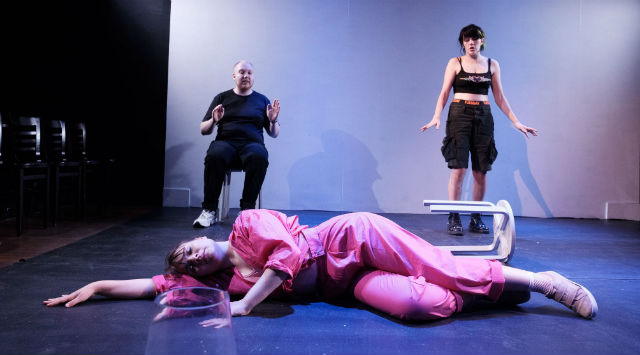
The Dumpster Divas have a very passionate social conscience. Like many of their generation, these young Australians have a certitude about what is right, the people we need to become, and how things should be run. They are idealistic, and in their 45-minute production, convincing with their perspective of the world that we share. Comprised of short sketches, Art V Garbage is variously themed, but each segment is united by a distinct queer sensibility, all flamboyantly conceptualised and slightly anarchic in approach.

The exuberant humour of Art V Garbage is thoroughly enjoyable, with the trio proving themselves to be as adept in the art of comedic performance, as they are in writing and directing their own material. Creative and clever, the work encompasses virtually all that is resonating within our immediate zeitgeist, effectively shaping itself into a condensed representation of our life and times, as things stand at the moment. Its absurdist style allows us to take its meanings beyond the obvious. We are able to look at art, politics, society and economics from new angles, maybe not to reach completely unexpected conclusions, but its refreshing take on important issues are definitely provocative.

From sanctimonious single mothers to the Prime Minister, the iconoclastic trio cuts them down to size, in a spirited exercise that re-focuses our mores through an improved, more equitable lens. The gay rights movement feels to have past its prime in Australia, but the queer principles and values we have engendered through the last forty or so years, continue to serve in the unending expansion of democracy in our ways of life. Queer refuses hierarchies, and is always quick to disseminate power. It protects the weak, and insists on challenging every convention. Salem Barrett-Brown, Danni Paradiso and Rory Nolan demonstrate in their sketches, the virtues of the new Australian; more egalitarian than before, more intelligent, more caring. They work for the good of everyone, even when we think of them as outsiders.

www.jackrabbittheatre.com

Review: Dead Cat Bounce (Griffin Theatre Company)

Venue: SBW Stables Theatre (Kings Cross NSW), Feb 22 – Apr 6, 2019
Playwright: Mary Rachel Brown
Director: Mitchell Butel
Cast: Kate Cheel, Lucia Mastrantone, Johnny Nasser, Josh Quong Tart
Images by Brett Boardman

Theatre review
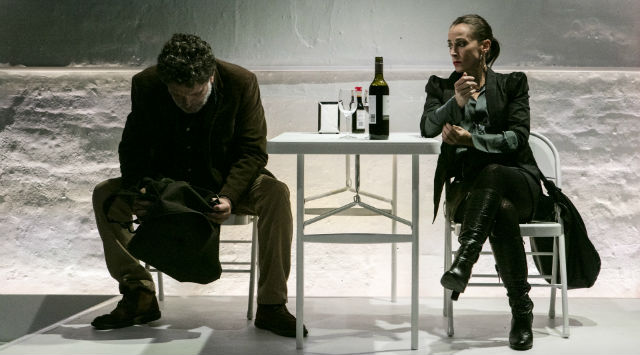
In Mary Rachel Brown’s Dead Cat Bounce, Gabriel is a moderately successful novelist, a middle aged alcoholic, and also it seems, quite the ladykiller. Two women are madly in love with him, in this story of addiction and redemption, but we spend most of the duration trying instead to figure out his appeal, wondering what it is that his current and ex beaus are actually drawn to. This of course, is not a wholly uncommon experience, for those of us who have watched our friends (and ourselves) fall for the wrong people, bewildered by the things a human heart is capable of making us do. In this play however, those dynamics are unconvincing, and worse, neither its narrative nor characters are capable of keeping us meaningfully engaged.

Little of the comedy manages to be truly amusing, and where we hope for poignancy, or at least some valuable depth to its observations of quite serious themes, we find only cliché and banality. People are often stupid, that is unassailable, but our storytelling must bring insightful illumination to our nature, even if it is idiocy that is placed under scrutiny. The production is fortunately, a fairly polished one, with Alexander Berlage’s lights and Nate Edmondson’s music providing a great deal of elevation, even if only on a cosmetic level.

Although lacking in substance, the show is undoubtedly energetic, with director Mitchell Butel maintaining a bold pitch in performances, insisting that we pay attention. Josh Quong Tart is accurate in his portrayal of the unremarkable Gabriel, intentionally unlikable but clearly committed to the part. His young lover Matilda is played by Kate Cheel, who demonstrates great inventiveness in her efforts to find creative dimensions within this unenviable task. Lucia Mastrantone takes every opportunity to bring the drama, for which we are grateful, even if her character Angela’s choices prove to be relentlessly frustrating. Equally intense is Johnny Nasser, whose personal charisma almost compensates for the flimsiness of Tony, a ridiculously whiny and small man, rendered with too much unnecessary kindness.

The women in Dead Cat Bounce are suckers for punishment, but it is not hard to figure out why they stand firm on playing the fool. Girls are taught that they are worthless without children and a husband. Society seems obsessed with instilling a sense of inadequacy in us, always finding ways to say that we are not good enough, and we seem never to be able to entirely escape from these systems of control. Matilda is smart enough to read Tolstoy and Dostoevsky, but somehow finds herself happily planning to raise a family with a drunk twice her age. Angela is a powerful woman in the publishing business, but is addicted to toxic men and all their unreasonable demands. From our vantage point, we can only conclude that they should simply have walked away, and learned to be unafraid of independence. If one should think that this is easier said than done, then that is indication of where much of the problem lies.

www.griffintheatre.com.au