Review: Atlantis (Subtlenuance Theatre)

subtlenuanceVenue: Kings Cross Theatre Kings Cross NSW), Sep 6 – 10, 2016
Playwright: Paul Gilchrist
Director: Kit Bennett
Cast: Sylvia Keays, Antony Talia, Madeleine Withington

Theatre review
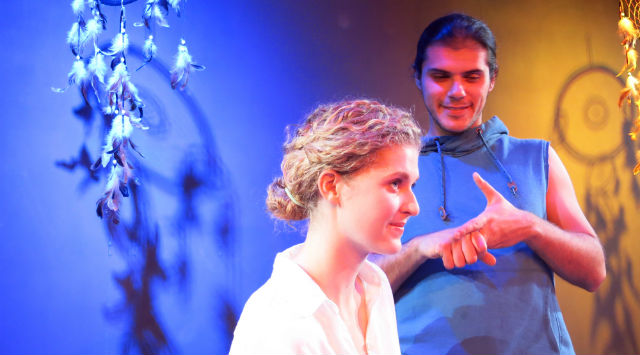
A meaningful existence can only ever be understood from a position of subjective experience. In Paul Gilchrist’s Atlantis, things may contain inherent value, but it is up to us to bring interpretation to them, and we have a choice in how we read the world and how we immerse ourselves in the inevitable living of it. We all rely on tall tales to get us through each day and night, calling them mythologies, religion, science or mathematics, for it is intrinsically human to want to make sense of things. Our consciousness must be shaped, but what form it may take is subject to the mind’s plasticity, and in Atlanits, Gilchrist demonstrates a kind of self-determining fate that results from the stories we create for ourselves.

Of course, the play’s events can only happen in a place like Australia where a vast majority of us are rich and free. It is Gilchrist’s point, to make the best of our privilege. We are in a position to dream big, and to disregard cultural restrictions and social fears, so that we can have better lives, and do good for the world, in ways that are perhaps original and trailblazing. If we followed every rule, our evolution will never take momentous leaps forward. Anomalous advancements require people who dare be radical; whether Mahatma Gandhi or Elizabeth I, it is always the maverick who establishes a legacy.

Atlanits is a soulful work, full of spirit, but with its feet planted firmly on the ground. Its words take hold of our imagination, and argue convincingly for perspectives that are only optimistic and inspiring. Actor Antony Talia does a splendid job of helping us navigate between reality and idealism, with his remarkably engaging presence and an impressive commitment to authenticity. There is excellent humour written into early sections of the play, but they are unfortunately lost in the production’s overly square focus on the deeper lessons, that could probably be left until later in the piece.

The work is staged with poignancy in mind, but more adventurous exploration of physicality would drive its message more effectively. Attention is placed on Gilchrist’s beautiful words, but our other senses need to be manipulated more for a richer theatre, as we commune to share space and ideas. It might be an exaggeration to say that “if you build it, they will come,” but magic must start somewhere, and it never comes from fear.
www.subtlenuance.com

Review: The Giant Worm Show (Melita Rowston’s Shit Tourism)

melitaVenue: The Old 505 Theatre (Newtown NSW), Sep 6 – 10, 2016
Playwright: Melita Rowston
Director: Melita Rowston
Cast: Benito Di Fonzo, Melita Rowston

Theatre review
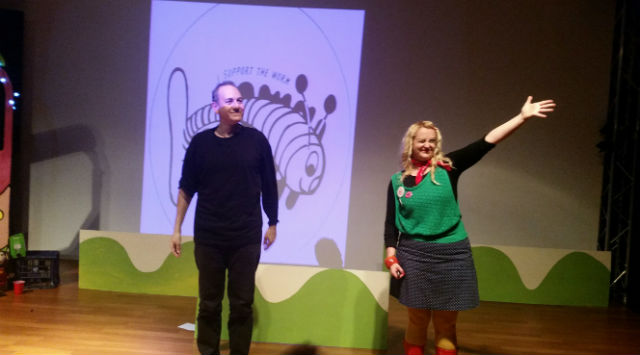
Melita Rowston remembers a giant pink worm she had once seen in a parade, and goes on a wild goose chase to recover memories from her childhood. In the process, nostalgic tales of a small country town are brought to light, along with quirky personalities who steal our hearts, through strange anecdotes that are as surprising as they are moving. Rowston’s production is a charming one, unabashedly sweet but also revelatory in its portrayal of country people, their challenges, and their passions.

Presented in the form of a parody of a faux children’s tv programme from Saturday nights of a bygone era, Rowston is joined on stage by 2 puppets, confidently operated by Benito Di Fonzo. It is a basic and completely unpretentious setup, but its humour is effective, with a palpable quality of sincerity that is key to The Giant Worm Show‘s poignancy. There is an unmistakable melancholy that comes with Rowston’s regard for a time and place she had left behind, inconspicuous but powerfully resonant for city folk with tendencies of romanticising rural life.

When the going gets rough, we hark back to days of innocence, longing for the peaceful and secure existence of infants; wrapped up in cotton wool, merry and oblivious to all troubles of the world. Life is never perfect, but we often access the past through a kind of psychological filter that only allows the best to return. The pleasure of nostalgia is delusive, but also necessary. We need to know the sensation of peace and optimism in order to forge ahead, in search of an ideal future, informed by imagined pasts.

www.melitarowston.com

Review: Letters To Lindy (Seymour Centre)

merrigongVenue: Seymour Centre (Chippendale NSW), Sep 2 – 10, 2016
Playwright: Alana Valentine
Director: Darren Yap
Cast: Jeanette Cronin, Glenn Hazeldine, Phillip Hinton, Jane Phegan
Image by Lisa Tomasetti

Theatre review
There was always something impenetrable about Lindy Chamberlain. Without performing appropriately the role of a distraught mother losing her child, many Australians found her coolness disarming. Alana Valentine’s Letters To Lindy too, does not reveal enough of the protagonist’s inner world. A substantial portion of the show is absorbed in recounting events that are already familiar, and although it does provide glimpses into Chamberlain’s deeper thoughts, the play’s structure although earnest, does not quite deliver a poignancy that lives up to its central, harrowing incident. The mother retains a sense of detachment from her public, and we once again struggle to connect.

Jeanette Cronin is star of the show, impressively dynamic in her approach, with surprising interpretations that prevent Chamberlain’s story from turning cliché. Director Darren Yap pitches the performance at a level suitable to the vast auditorium, encouraging actors to bring a vigour to the stage that keeps us attentive. Of the supporting cast, Glenn Hazeldine is particularly charming in a wide ranging suite of personalities, colourfully portraying each character with a delightful, and thoughtful, sensitivity.

We have no right to demand that Lindy Chamberlain acts out a part to fit a narrative that pleases us. In fact, she is to be commended for going against the grain of stereotype, especially in this new era of pervasive and obsessive media scrutiny, to insist on presenting a face of authenticity. As a theatrical work however, Letters To Lindy needs to fulfil our need for something more engaging, and more moving, in its drama.

The cruelty that societies are so ready to dispense on individuals, especially those in the public eye, have to be kept in check, yet we keep creating opportunities for those injustices to be amplified. It seems our need to witch hunt does not cease, even when we already know better.

www.merrigong.com.auwww.seymourcentre.com

Review: Gloria (Griffin Theatre Company)

griffinVenue: SBW Stables Theatre (Kings Cross NSW), Aug 26 – Oct 8, 2016
Playwright: Benedict Andrews
Director: Lee Lewis
Cast: Kristy Best, Chloe Bayliss, Marta Dusseldorp, Louis Fontaine, Huw Higginson, Meyne Wyatt, Pierce Wilcox
Image by Brett Boardman

Theatre review
Gloria is a mother and a wife, but to everyone around her and to herself, she is first and foremost, a star of the stage. Having spent her life playing many legendary tragic heroines, Gloria knows more about the fictional women of Western theatre than she does the actor who portrays them. Benedict Andrew’s script is stylised and abstract, an imaginative creation that parallels Gloria’s struggle for coherence. The leading lady’s existence is one of disorientation and tumult, and Andrew’s writing relishes in that chaos for a work striking in its originality and remarkable boldness.

Equally audacious is director Lee Lewis’ resolve to reach the truth in the enigmatic world of Gloria, where obfuscation and secrets are given their due, while a foundation of instinctive authenticity is established with absolute imperviousness. Every artistic and mysterious flourish, no matter how flamboyant (including Steve Toulmin’s extraordinary music), is anchored in startling emotional precision and intensity, conveyed through a captivating combination of deep understanding and steely determination.

The actors provide an unforgettable experience, visceral and immediate, persistently surprising and colourful, with a baroque sensibility that elevates the theatrical form to a rare level of infectious excitement. Marta Dusseldorp is devastating as Gloria. In a state of constant distress and confusion, Dusseldorp’s embodiment of Gloria is tenacious, powerful and very, very dark.

The play is intentionally coy about Gloria’s problems, therefore even though emotions are almost always at a fever pitch, its moments of melodrama are few. The audience is then free to find an interpretation of her narrative, so we rely on our own faculties to impose upon Gloria, a reading of her story that will only ever be partially accurate. The actor wishes to step onto the stage with nothing of herself, and everything of the person she represents. An emptiness resides in her, and because the soul is constantly morphing for another, it forgets itself.

www.griffintheatre.com.au

Review: Barefoot In The Park (Ensemble Theatre)

ensembleVenue: Ensemble Theatre (Kirribilli NSW), Aug 25 – Oct 8, 2016
Playwright: Neil Simon
Director: Mark Kilmurry
Cast: Mia Lethbridge, Daniel Mitchell, Jamie Oxenbould, Georgie Parker, Jake Speer
Image by Clare Hawley

Theatre review
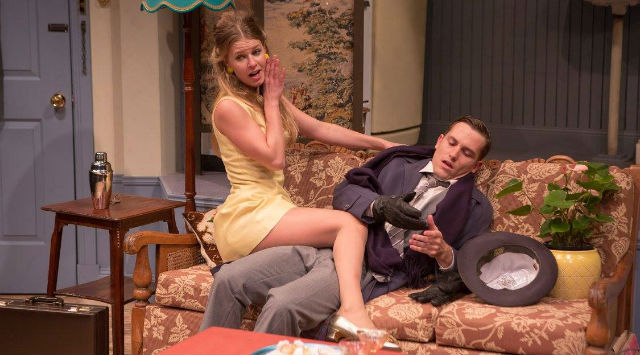
It is the 1960s. Corie and Paul are moving into their tiny New York apartment, about to begin life together as newlyweds. After 6 days of honeymoon bliss cooped up in a hotel room, they emerge to meet us just as the reality of mundanity begins to sink in. Divorce was a topic much more controversial at that time, and the threat of a marriage breakup in Neil Simon’s Barefoot In The Park has lost considerable effect in terms of the dramatic tension it is able to create, but as a frothy comedy, its structure and dialogue retain a classic charm that many will find irresistible.

Mia Lethbridge leads a cast of actors, memorable for their bubbly playfulness and congenial warmth. As Corie, Lethbridge’s perky portrayal of naivety is consistently delightful and surprisingly persuasive, with an energetic presence that holds the show together, along with all its relentless frivolities. Director Mark Kilmurry does an excellent job of the comedy, establishing a brilliant sense of timing for the production’s entirety that ensures top entertainment value, but the development of character conflicts require greater nuance for Simon’s plot to be more believable.

When two people get together and form an intense bond, the pleasures that materialise are almost always coupled with challenges, big and small. In Barefoot In The Park, we want the lovebirds to find a way to sort out their differences. We invest in their romance, because loneliness is an abominable monster that must be vanquished at all cost. Times change, but the fear of being alone is perennial. Without each other, Corie and Paul must find meaning only within themselves but in Neil Simon’s quaint fantasy, they only have to indulge in a mutual infatuation, so that their days may be filled with joy, to have and to hold, till death do they part.

www.ensemble.com.au

Review: Alex & Eve – The Complete Story (Bulldog Theatre Company)

bulldogVenue: Factory Theatre (Marrickville NSW), Aug 25 – 28, 2016
Playwright: Alex Lykos
Director: Alex Lykos
Cast: Chris Argirousis, Anne Marie Cavaco, Sylvia Dritsakis, Michael Kazonis, Janette La Kiss, Alex Lykos, Paul Miskimmon, Jadah Quinn, Kate Ryerson, Sal Sharah

Theatre review
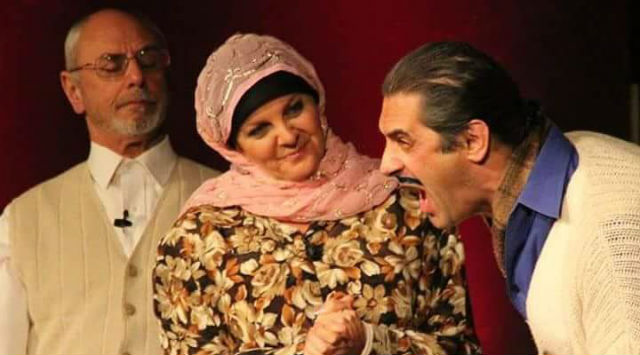
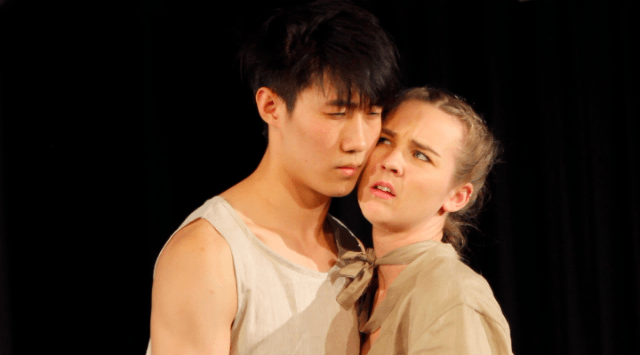
There are many among us who are conservative and traditional, but in multicultural places like Australia, their tendency to be inflexible with visions of how we live together can be problematic. Salwa is Lebanese Muslim, and George is Greek Orthodox, both insular and intolerant of other cultures, refusing to accept the validity of other ways of life, until their offspring force them into a confrontation of wills through the classic contrivance of a mixed marriage. Alex Lykos’ Alex & Eve: The Complete Story combines three episodic plays to tell the couple’s story from their first meeting to the birth of their first child. Its duration is inevitably long, but the script is a tight concoction of high jinks and social commentary that although entirely predictable, is endlessly amusing with its host of vibrant, irresistible archetypes.

The production is a visually basic one that would benefit greatly from more ambitious efforts in set and costume design, but Lykos’ own direction of the work is effectively comedic and fast-paced. There is no attempt at a naturalistic mode of presentation, which can make for an excessively farcical show, but its slapstick is unquestionably charming and proves very appealing to its target audience. Janette La Kiss as Salwa and Michael Kazonis as George are both strikingly present, with flamboyant approaches to performance that captivate and entertain. Both are able to find nuance with their roles, thereby delivering more than stereotypical interpretations of minority elders.

Not being dominant cultures in Australia, the Greek and Lebanese characters have a greater freedom to portray the nature of prejudice in our communities. Some of what they say is objectionable, but their statements are tempered with good humour, and those who speak indiscreetly are exposed for their ignorance. Not one person can be excluded from the world’s politics, but how individuals participate in it, is infinitely variable. Alex & Eve does not talk about terrorism or immigration, but its feuding families are involved in a war that serves to remind us of how we must value peace, no matter how big or small a perspective we may have of the world.

www.bulldogtheatre.com

Review: Before The Water Gets Cold (Smoking Gum Theatre)

smokinggumVenue: Sydney Theatre School (Chippendale NSW), Aug 23 – 27, 2016
Playwright: Charles O’Grady
Director: Lucinda Vitek
Cast: Samuel Beazley, Robin Chen, Julia Robertson, Amy Zhang

Theatre review
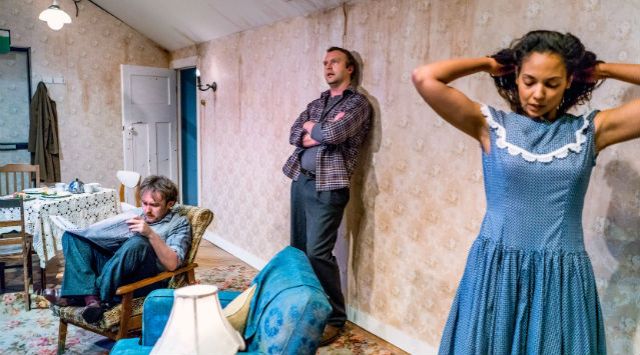
Part poetry, part dance and part play, Before The Water Gets Cold is a multidisciplinary exploration into the nature of artistic expression. With themes of love and loneliness providing its main threads of inspiration, what we see on stage are four performers inhabiting a range of personalities, not to convey a narrative, but to evoke sensations and emotions that we are all familiar with.

The work is guided by an innovative spirit, and is often a refreshing experience, although significant portions can seem clichéd, due to its inability to transcend the derivative. Writing, direction and choreography exhibit moments of beauty through their various modes of experimentation, but a greater sense of originality, or perhaps boldness, is missing in the production.

Performer Julia Robertson is memorable for her captivating presence, and a surprising authenticity that she brings, even to the more absurdist sequences of the show. Her work with Robin Chen in a montage composed of romantic movie quotations is particularly delightful. Composer Josephine Gibson and sound designer Jeaux Pfeffer contribute proficiently to this collaboration, both sensitive and understated in style, for a delicate air that envelopes the auditorium.

Before The Water Gets Cold wishes to marry logic with something more ephemeral, but a greater trust in the visceral instance would allow us to dive in deeper into its artistry. The mind gets in the way of much of life’s pleasures, and at the theatre, an opportunity for us to be in touch with the magic of the here and now is always present, if only we resist the temptation to analyse everything even before it begins to happen.

www.smokinggumtheatre.com

Review: Look Back In Anger (Red Line Productions)

redlineVenue: Old Fitzroy Theatre (Woolloomooloo NSW), Aug 16 – Sep 10, 2016 | Belvoir St Theatre (Surry Hills NSW), Sep 13 – 17, 2016
Playwright: John Osborne
Directors: Damien Ryan, Lizzie Schebesta
Cast: Robin Goldsworthy, Andrew Henry, Melissa Bonne, Chantelle Jamieson
Image by John Marmaras

Theatre review
Jimmy is a very angry young man, and in Look Back In Anger, we are subjected to a series of his incessant, long and very tedious rants that prove themselves to be ultimately ineffectual, and highly irritating. At one point, he insists “that voice that cries out doesn’t have to be a weakling’s does it?”

1956 it seems, was a completely different time. Today, a white man with youth and a university education, living in a Western society, is considered to be in possession of the greatest of privileges, and we have no patience for their complaints about their perceived (and possibly, imagined) injustices of life. Of course, residing in positions of advantage does not automatically absolve a person of angst and self-proclaimed victimhood. Jimmy’s grief with our troubled existence is valid, and it is his right to refuse to suck it up, grin and bear it, but like all the furious white male voices that rule the talk-back radio waves, we can choose to ignore their shrill babble. John Osborne’s play is well structured, but its themes and concerns could not be more dated, and for many feminists, not much is lost if Look Back In Anger, along with its overt misogyny, is left dead, buried and cremated.

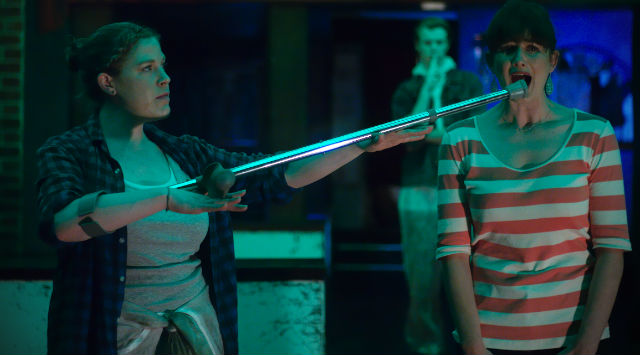
From a technical perspective however, co-directors Damien Ryan and Lizzie Schebesta have revived the play with admirable accuracy and nuance, delivering powerful drama, especially to those more welcoming of its ethos. Also accomplished are its designers; Jonathan Hindmarsh’s set and Anna Gardiner’s costumes add meaningful, dynamic touches to the look of the piece, thoughtfully utilising the space’s intimacy to provide a vibrant immediacy to the experience.

The cast is uniformly strong, with each actor contributing impressive depth in their characterisations of less than inspiring personalities. Osborne’s dialogue is provocative (to say the least), and his lines are given tremendous fervour by an ensemble insistent on winning us over. Andrew Henry is at his bombastic best as Jimmy, with a portrayal so passionate and convincing that we struggle to detach our dislike for the character from what is actually an excellent performance by the leading man. Henry finds scintillating chemistry with each of his co-stars, and it must be said that every scene is captivating, but also undeniably excruciating for audiences less tolerant of its turgid drivel.

Like many works of art (good or bad) that cause exasperation, Look Back In Anger will spark discussion. In its time, the work was relevant for its interest in class consciousness and issues of poverty, but these ideas have evolved into something that is now inseparable from contexts of race and gender. In the past, audiences were able to understand the world from Jimmy’s perspective, but today, the world turns the tables and puts him under scrutiny. We are made to look at anxieties of the white man, but his anger scarcely raises a brow. Perhaps it is only himself who could possibly benefit from wallowing in that distorted and narcissistic reflection.

www.oldfitztheatre.com

Review: Orpheus (Lies, Lies And Propaganda / Suspicious Woman Productions)

liesliesVenue: Blood Moon Theatre (Potts Point NSW), Aug 18 – 27, 2016
Director: Michael Dean
Dramaturg: Jasper Garner Gore
Cast: Dymphna Carew, Curly Fernandez, Victoria Greiner, Lana Kershaw, Daniel Monks, Bodelle de Ronde, Michael Yore
Image by Sasha Cohen

Theatre review
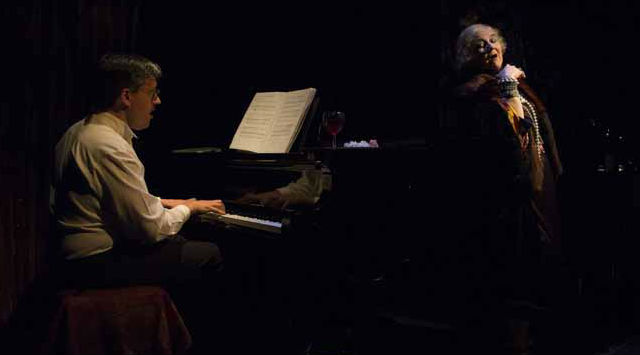
Orpheus’ story is often told with emphasis on a husband’s drudgery in trying to rescue his wife from the mouths of danger, but in Michael Dean’s revision, we explore the possibility of Eurydice being a more provocative character, whose own desires are more complicated and less convenient for her husband’s legend. Hell is an Australian outback hick town, from which Eurydice finds herself unable to leave, but Orpheus is determined to bring her back to their life in the city, where a previously shared reality seems to be fading with the passage of time.

Similarities with David Lynch’s surrealism where “this whole world is wild at heart and weird on top” can be observed in Dean’s portrayal of an ugly yet seductive foreboding, set within a seedy bar where the drawing of raffle tickets is “the moment we’ve all been waiting for.” Michael Yore’s music and Liam O’Keefe’s lights provide splendid transportative atmospherics for an operatic expression of an ancient mystery suited to contemporary times, and Rachel Weiner’s illuminative choreography, although excessively demanding at certain points, demonstrates a healthy instinct for space as a fundamental device of communication.

With little in terms of dialogue that could be employed, the depiction of characters relies heavily on movement and presence, which the cast accomplishes with dexterity, but there is a gentleness to the overall approach that contradicts some of the darker elements in the piece. A greater sense of gravity and perhaps bigger personalities would generate a more sinister edge to fortify its enigmatic tone. Daniel Monks leaves a strong impression in the title role, authentic and captivating with his ability to meaningfully embody Orpheus’ sentimental qualities. The actor’s unequivocal focus and connection with all who are on and off stage, is the basis on which the production addresses its emotional dimensions.

Michael Dean’s vision of theatre as a dynamic and unpredictable art form is marvellously realised in Orpheus. Adventurous, playful and iconoclastic, Dean’s presentation is a surprising and delightful show that challenges not only notions of storytelling, but also conventions of our cultural endeavours. It is a virtuous exercise, made even more wonderful by sheer, undeniable talent and exquisite taste. There is exceptional work to be found here, the kind that makes us want more of the same from every stage, but it is the utter unorthodoxy and subversive nature of its appeal that provides its avant-garde lustre.

www.liesliesandpropaganda.com | www.suspiciouswomanproductions.com

Review: Bijou (Smallshows / The Depot Theatre)

smallshowsVenue: The Depot Theatre (Marrickville NSW), Aug 17 – 27, 2016
Playwright: Chrissie Shaw
Director: Susan Pilbeam
Cast: Alan Hicks, Chrissie Shaw
Image by Lyndel Arnett

Theatre review
Bijou has lived through a lot. Now in her autumn years, she looks back and recounts stories, with the aide of abounding song and dance, to share her experiences as a woman on the fringes of Parisian society. Chrissie Shaw’s script is charming, with surprising revelations that are guaranteed to delight, and even though it shies away from a stronger sense of drama that could deliver greater poignancy, it is certainly not afraid to touch on the raunchier aspects of Bijou’s past.

As performer, Shaw’s vocal abilities are her greatest asset. Interpretations of yesteryear songs are consistently enchanting, and the sharp focus she maintains in her one-woman show format is thoroughly impressive. Alan Hicks is on the piano providing accompaniment, with tremendous style and effortless flair. His voice and humour make only brief appearances, but they are very memorable indeed.

The elders of every community are truly the most valuable in terms of the wisdom they can offer, yet we relegate them to minor roles, often forgetting to include them in our ways of life. In Bijou, we are shown that many of the answers we seek, have already been found by those who had come before us. The seniors are ignored at our own peril, and the beauty of Bijou’s story, and of Shaw’s work, demonstrates how much there is to lose, if we persist with that ignorance. We can learn from going through firsthand, every high and low of life, but we must also listen to those who had taken the hard road, so that we may explore newer, more peaceful ones.

www.bijoucabaret.com