Daisy Pulls It Off (The Genesian Theatre)

daisypullsitoffVenue: The Genesian Theatre (Sydney NSW), Oct 18 – Nov 16, 2013
Playwright: Denise Deegan
Director: Mark Langham
Actors: Anna Hitchings, Amylea Griffin, Bianca Bradey, Laura Genders, Anita Donovan, Monica Smithers

Theatre review
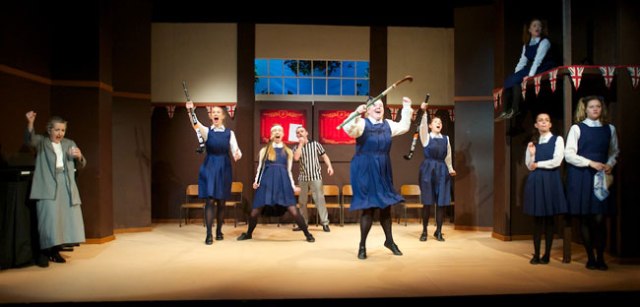
Originally staged in the 1980s, Denise Deegan’s Daisy Pulls It Off is a modern parody of adventure stories from the early twentieth century about English boarding schools. With the passage of time, Genesian’s production has the difficult task of referencing those old adventures that have all but faded from our memories. On the bright side, director Mark Langham and his cast have crafted a crisp and well-rehearsed piece of light entertainment that accommodates audiences aged 8 to 80.

Amylea Griffin’s performance as Trixie Martin is by far most memorable. Her portrayal of an adorable and playful youngster is vibrant and extraordinarily effervescent. She brings a great sense of fun to the proceedings, and keeps the show lively whenever she appears. Laura Genders is one of the funnier actors in the show, who performs the postmodern elements of the comedy most effectively. She demonstrates that realism has very little place in Deegan’s writing, and it is in the madcap and absurd, that her humour is found.

Langham is very strong with his details in the construction of the play, and even though the laughs are not always riotous, Daisy Pulls It Off is filled with wonderment and good old-fashioned cheer, which are of course the hallmarks of the great Genesian Theatre.
www.genesiantheatre.com.au

Hamlet (Belvoir St Theatre)

hamletVenue: Belvoir St Theatre (Surry Hills NSW), Oct 12 – Dec 1, 2013
Playwright: William Shakespeare
Director: Simon Stone
Actors: Toby Schmitz, Emily Barclay, Luke Byrne, Thomas Campbell, John Gaden, Nathan Lovejoy, Robyn Nevin, Anthony Phelan, Maximilian Riebl, Greg Stone

Theatre review
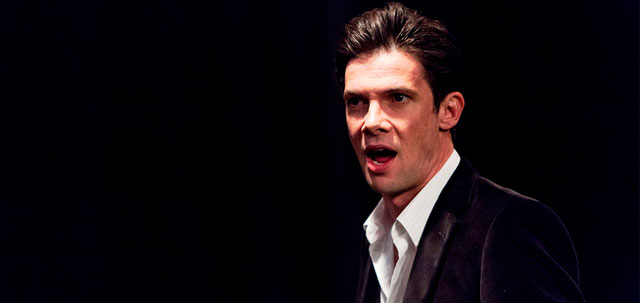
Shakespeare’s tragedies are vehicles for artists to express the extremities of human emotion and inconceivable psychological torment. When created well, a staging of plays like Hamlet will allow for the most outlandish and ostentatious of acting styles. In Belvoir’s production, Toby Schmitz pushes his portrayal of Hamlet over the edge of sanity, giving us one of the year’s most memorable theatrical performances.

Taking the brave decision to remove the ambiguity of the protagonist’s insanity, director Simon Stone’s version of events presents a Hamlet that is as much about mental disorders as it is about death and betrayal. Consequently, Schmitz’s choices are liberated, and he explores states of grief and madness with great intensity and high-octane drama. It is a delicious performance and the actor is magnetically powerful, while being controlled and considered. Schmitz is as intelligent as he is artistic, and the combination is lethal.

Greg Stone plays Polonius with great flair and confidence. This is an actor who loves Shakespeare’s words and knows how to use them. His performance is a real delight. Robyn Nevin’s role is less substantial, but she delivers what we have come to expect of her. Loads of gravitas and focus, and incredible elegance.

Many liberties are taken in Stone’s work, including a very clever take on the “play within a play” scene in which Lord Hamlet’s death is re-enacted, and some of the best use of incidental music in a long while. Stone displays not just originality and ingenuity, but also a keen sense of playfulness. His Hamlet is surprising, intriguing and taut. It runs slightly over two hours, and every moment is imbued with wonder and tension. This is exhilarating theatre. Stone’s show has a dangerous flirtation with abstraction which adds to its intrigue and seductive quality, but unfortunately becomes overwhelming in the final scenes. The play closes strongly but the journey at the end is slightly rocky. Nevertheless, this slightly abridged Hamlet is a courageous and accomplished work, one that showcases some of the best theatre practitioners and their dedication to, and faith in the art form.

www.belvoir.com.au

Grease (Lyric Theatre)

grease1Venue: Lyric Theatre (Sydney NSW), from Oct 13, 2013
Based on the original by: Jim Jacobs, Warren Casey
Performers: Rob Mills, Gretel Scarlett, Stephen Mahy, Lucy Maunder, Todd McKenney, Bert Newton, Anthony Callea

Theatre review
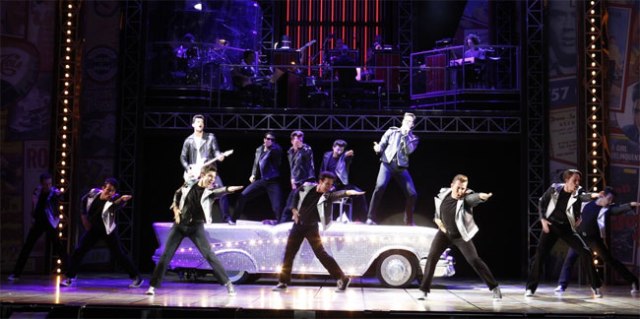
Grease (1978) is one of Australia’s most loved films of all time. Our relationship with its songs and characters is an intimately familiar one, and this familiarity ensures that the staging of its musical version for Australian audiences is a safe bet. This theatrical presentation is a faithful adaptation of the cinematic version, and aims at providing entertainment and nostalgia, both of which are delivered in dazzling abundance.

Danny Zuko is played by Rob Mills, who has carved a career out of incredible charisma, and an impressive, consistent improvement in his stage craft. Now ten years in the public eye, Mills’ performance in Grease is a turning point in his career. The leading man’s voice is today at its most vibrant and versatile, and while not always known to be a great dancer, he attacks all choreography with gusto and flair, proving himself once and for all to be a formidable player in the musical arena.

Todd McKenney is Teen Angel (the fairy godfather), and steals the show with his only appearance in the eminently memorable “Beauty School Dropout” sequence. McKenney shows himself to be the proverbial Mr Showbiz, all sparkling toothy smiles and nifty footwork. The way his physical prowess owns the stage is mesmerising, and he absolutely exemplifies all we love about musical theatre. Also a stand out is Stephen Mahy who elevates Kenickie from a run-of-the-mill bad boy to one with impressive showmanship and great comic timing. He also happens to be dashingly handsome.

The Sandy in this production is, however, miscast. Gretel Scarlett has a stunning singing voice, but lacks the pop sensibility that is associated with Olivia Newton-John’s legendary recordings. Scarlett is a statuesque beauty and the perfect visual match with her leading man, but her interpretation of the wholesome girl from down under comes across slightly bland. It is bewildering also, that her two key moments (her solo, and her penultimate transformation) are not supported by stronger stage effects for greater dramatics.

The overall excellent cast, along with the brilliant band, and big budget set and costume design, all conspire to materialise a “real life” version of a celluloid dream we have all cherished through the years. The joy Grease represents and all the memories it evokes is invaluable, and much more than what we have come to expect of commercial musical theatre.

www.greaseistheword.com.au

The Vehicle Failed To Stop (Version 1.0)

vehiclefailed1Venue: Carriageworks (Eveleigh NSW), Oct 15 – 26, 2013
Devisors: Sean Bacon, Irving Gregory, Jane Phegan, Paul Prestipino, Kym Vercoe, Olivia Stambouliah
Actors: Irving Gregory, Jane Phegan, Olivia Stambouliah

Theatre review
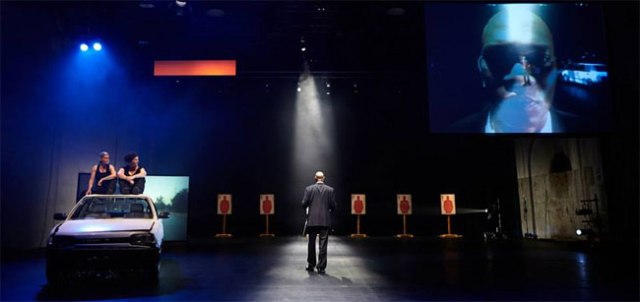
The subject is a heavy one, and the themes are serious. We are shown a side to the Iraq war that is little known, and the evidence provided is scandalous and outrageous. The tone of the production is suitably sombre, but it is a lively show that comprises quick and sharp scenes, holding its audience’s attention from start to end.

Exploration of theatrical techniques and devices are a key interest of this group (the exploding car is wonderful). Using the war story as a backdrop for a wide range of experimentation with sounds, visuals, and all the possibilities of an empty space, this is a highly creative work that is centred on form as much as it emphasises its content. Indeed, both form and content are interesting and thoroughly delved into, but on occasion, they seem to diverge and distract from one another. There are points in the performance where what is being shown on stage is so complex and enthralling, that the story seems to fall by the wayside. The originality of Version 1.0’s theatrical craft is accomplished and important, and so is the message of the story. Fortunately, both manage to get their days in the sun, although not always at the same time.

Aside from three actors, we see on side stage (in this multimedia production), a team of two musicians and a video artist. Their work alternates between providing background effects and featuring heavily at the foreground, but always married perfectly with the stage action. This genre of performance is still unconventional and not always practised successfully, but The Vehicle Failed To Stop is an example of how close collaborative efforts can give birth to something authentic and deliver theatre that is intriguing and unique.

www.versiononepointzero.com

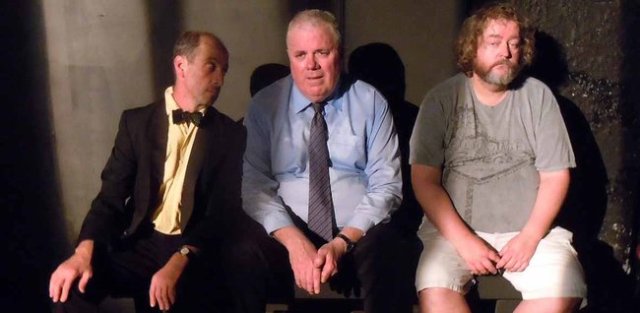
The Good, The Bad & The Lawyer (Big Splash Productions)

rsz_gbl_40_-_geoff_mark_marcVenue: TAP Gallery (Surry Hills NSW), Oct 10 – 27, 2013
Playwright: Tony Laumberg
Director: Richard Cotter
Actors: Mark McCann, Tricia Youlden, Brigid O’Sullivan, Geoff Sirmai, Marc Kay

Theatre review
This is Tony Laumberg’s fifth script with his Crowley characters. Henry is a conservative Sydney lawyer, and his wife Margaret is a headstrong left-leaning “home maker” who likes nothing more than to challenge her husband’s belief system. In this installment, Margaret decides to welcome an asylum seeker from Iran in their home much to Henry’s chagrin, but the real conflict begins when Henry’s cousin Mickey arrives from Queensland, with a lot of baggage.

Performances in this comedy are consistently exuberant. Geoff Sirmai’s portrayal of Ahmed (the Iranian) should be noted for avoiding gross stereotyping, and also for being the most surprising character in the show. The actors all have different individual strengths that are used to their maximum potential, but some moments could benefit from a little curbing of enthusiasm. Their madcap frenetic energy is effective to a point, but too much of a good thing ends up a little repetitious in this 2 hour production.

The play’s structure is a classic one, and Laumberg is adept at writing jokes and clever punch lines. A bit of editing would perhaps tighten the second half the show, but The Good, The Bad & The Lawyer delivers a night of entertainment with plenty of good, clean laughs.

www.tapgallery.org.au

Hay Fever (New Theatre)

hayfever1Venue: New Theatre (Newtown NSW), Oct 8 – Nov 2, 2013
Playwright: Noël Coward
Director: Rosane McNamara
Actors: Alice Livingstone, Jorja Brain, James Bean, David Halgren
Image by Bob Seary

Theatre review
Noël Coward’s work has an irreverent and subversive sensibility that stands the test of time. Hay Fever is about a family that is characterised by early 20th century notions of decadence and the bohemian, and Rosane McNamara’s vision has created an interpretation that speaks to modern audiences, while retaining all the robust and wicked humour that Coward is best known for.

Judith Bliss is the matriarch of the household, and a middle-aged star of the theatre who seems unable to live life without manufactured drama and exaggerated affectations. Played with flair and excellent humour by Alice Livingstone, the role is front and centre of the show, and absolutely crucial to the success of this production. Livingstone’s firm Cowardian grasp of flamboyance and wit is marvellous. Her skills in high camp delivers barrels of laughter, and she carves out a character that is perversely alluring despite her hideous indulgences. Livingstone’s counterparts do not quite match up to her comedic excellence, but all have created distinct and memorable personalities that move the plot along with clarity and sharpness.

Another star of the show is production design; all visual elements are impressive. Set and lighting design are effective, and their take on 1920s Art Deco is graceful and charming. Costumes are superb and detailed, and in the case of the character Myra especially, hair and makeup are simply stunning.

New Theatre’s Hay Fever is a bold and wonderful achievement. Noël Coward’s characters and wittiness are not the simplest to portray, and even though this production does not hit every punchline perfectly (most notably when the leading lady is off-stage), it is remarkable that his story is brought to life so vividly. With the passage of time, its century-old aesthetics might look to be outmoded, but Rosane McNamara’s direction fleshes out everything that is exceptional and unconventional in Coward’s writing that is rarely, if ever, replicated.

www.newtheatre.org.au

Roberto Zucco (Sydney Independent Theatre Company / Le Théâtre des Assassins)

robertozuccoVenue: Old Fitzroy Theatre (Woolloomooloo NSW), Oct 1 – 19, 2013
Playwright: Bernard-Marie Koltès (translated by Martin Crimp)
Director: Anna Jahjah
Actors: Tim Cole, Lyn Pierse, Gemma Scoble, Sam Dugmore, Adrian Barnes, Neil Modra
Image by Katy Green Loughrey

Theatre review
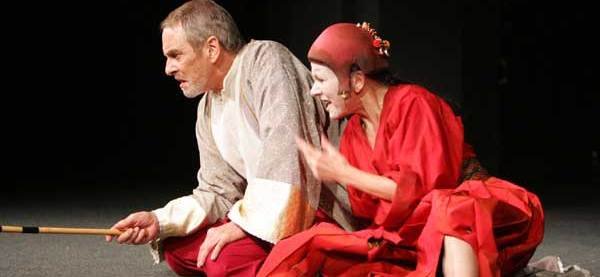
Subtitled “the journey of a beautiful murderer”, Roberto Zucco is based on events and crimes committed by Roberto Succo in Italy and France in the 1980s. Bernard-Marie Koltès’ script (his final one, written in 1988) has shades of absurdism, but it is thankfully a coherent one that director Anna Jahjah is able to materialise on stage with humour and logic. This is a funny show with solid performances from some of the cast, and it is indeed the comic actors who leave the greatest impression.

Lyn Pierse plays 3 whimsical roles, and she is the consummate scene stealer. The younger players try hard to match up to her abilities, but Pierse owns the stage, and the audience hungers for her every gag and punch line. Neil Modra and Sam Dugmore are a delightful duo, with brilliant comic timing and chemistry. The personalities they create together, and individually, are whacky and wonderful, and both show a level of confidence and pizzazz that works perfectly for the tone of this production. Adrian Barnes takes on the older male characters, and applies wildly different approaches to each of them. He is a delightful presence but it is his performance as the tender, playful and charming “Old Gentleman” that is most interesting.

Design aspects though not particularly appealing, are effective. The construction of two levels on the Old Fitzroy stage adds a visual complexity to the play, and helps the actors emphasise the physicality of their performances. Jahjah’s work demands that her performers are agile and expressive with their bodies and faces, keeping her show consistently fast-paced and fun. Roberto Zucco fascinates with interesting characters and talented players, but ends up being overly light even though murder and rape are central themes. Nevertheless, this is a show that will entertain and amuse, even if the bigger questions are not thoroughly explored.

www.sitco.net.au
www.letheatredesassassins.com

King Lear (Harlos Productions)

rsz_lear0622Venue: Old 505 Theatre (Surry Hills NSW), Oct 2 – 13, 2013
Playwright: William Shakespeare
Director: Scarlett Ritchie
Actors: Gertraud Ingeborg, David Ritchie
Image above from 2006 production

Theatre review
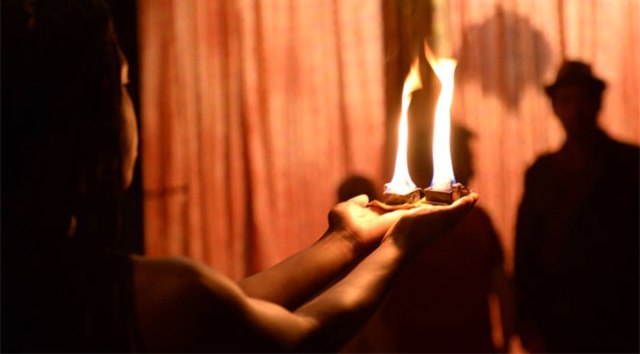
Harlos Productions’ abridged 60-minute version of King Lear comprises key scenes from the play, joined by a narrator’s summary of events in between. The abbreviation of the plot obviously removes a lot of its development of tension and emotional involvement from the original experience, but what is created with just two players, is a theatrical entity that focuses squarely on the art of performance and storytelling. In the hands of Gertraud Ingeborg and David Ritchie, it is clear that the art form in question is a noble one.

Borrowing from Japanese and Chinese performance styles, both actors articulate their parts distinctly, almost operatically. Their stylistic gestures connect them to the audience, as they guide our eyes into the trajectories of the story. They often speak their lines directly into the fourth wall as though in the form of a narrator, inviting us to admire the beauty in their every movement and enunciation. Indeed, Ingeborg and Ritchie present to us, a craft that is effortless, confident, and thoroughly accomplished. Ingeborg in particular is manifestly comfortable and lively in all her roles, taking on each part with enthusiastic ease, and delighting us with a presence that can only be described as riveting.

Scarlett Ritchie’s direction brings out the best in both actors. We are shown the full range of their impressive skill, which gives the show an exciting feel of constant variation, and that variation is elemental in engaging the audience’s emotions. Props and costumes are minimal, but all items are utilised effectively. The director makes us read those inanimate objects in a specific way, and uses them to accurately shape our perspectives.

Even though the end of the piece is emotionally powerful, and Shakespeare’s epic story is ultimately told successfully, it is the art of theatre creation that triumphs in this production. In one hour, we see clearly the meaning of art, and realise the reverence that we must have for serious art makers.

www.venue505.com/theatre

Family Voices (The Cannoli Mob)

familyvoices1Venue: University of Notre Dame (Sydney NSW), Oct 2 – 6, 2013
Playwright: Harold Pinter (adapted by Vivian Tselios)
Director: Vivian Tselios
Actors: Adriano Cianfarani, Frances Attard, Nicola Said, Simon Boileau, Susan M Kennedy

Theatre review
In The Cannoli Mob’s Family Voices, production design plays a big part in conveying a sense of stifling and oppressive gloom. These are characters that exemplify English restraint, and the set, while good-looking, effectively communicates that sense of formality and austerity. It is also provides versatility, giving the play a surprising multi-dimensionality in spite of the small stage.

Vivian Tselios’ direction retains the abstraction in Pinter’s words, which gives the show a slightly surreal quality that is alluring and strangely enjoyable. The actors successfully depict an intriguing universe, even though their individual abilities do vary. Adriano Cianfarani plays the lead role, and brings an interesting “narrator” sensibility as though he is never quite present in his own world, which adds to the surreal feel of the show. Although the play does not seem to explicitly discuss locality, Cianfarani’s accent is distracting, and contradicts with the Englishness of Pinter’s writing. Simon Boileau’s appearance is a gift to the aesthetics of the production. On a visual level, he adds a lot to the sophistication of the work, and his acting is also most accomplished of the group. He has a daring and mischievousness that connects well with the audience.

This is a sensitive work that is quiet and thoughtful. The theme of miscommunication in the play is challenging at times, but it has an unusual visceral kind of beauty that envelopes the theatre while its audience listens in and ponders the nature of relationships and parenthood.

www.facebook.com/thecannolimob

Penelope (Siren Theatre Co)

penelope1Venue: TAP Gallery (Darlinghurst NSW), Sep 12 – Oct 6, 2013
Playwright: Enda Walsh
Director: Kate Gaul
Actors: Nicholas Hope, Thomas Campbell, Arky Michael, Philip Dodd, Branden Christine

Theatre review
Attending a work by independent theatre companies in Australia is unpredictable. We hope for the best, and expect the worst. Resources are limited, and it is a challenge for semi-professional groups catering to audiences who are accustom to productions by dominant, well-funded companies. Siren Theatre Co rises to that challenge with a formidable cast and crew that have come together successfully and exceed expectations. Penelope showcases excellent work by all its actors, designers and technicians, with Kate Gaul at the helm, directing, producing, and proving herself to be a woman of exceptional ability and a brilliant visionary.

The show is at once intelligent, funny, emotional, audacious and confounding. Artistic licences are de rigueur, and no moment is spared of theatricality. The actors, all equally impressive, constantly negotiate the spaces between narrative and extravagance in their performances. There is a strong element of vaudeville in their work, and it is their commitment to the creation of a distinct style that gives the production a specific and memorable voice. Nicholas Hope shows himself to be quite the force of nature, playing the role of Quinn with extraordinary focus and strength. His no-holds-barred mode of performance is disarming and wonderfully mesmerising. Arky Michael’s Dunne is an amalgamation of rock star and Norma Desmond, an outlandish and madcap portrayal that is absolutely joyful.

Production design features prominently. It services the plot perfectly, transforming the relatively small space into one that is full of possibilities for the actors, while carving out an aesthetic for the production that is vibrant and innovative. Indeed, this is a show characterised by its vibrancy and innovation. This company has created something that overflows with ideas and enthralment, and because Enda Walsh’s script is not a simple one, one is compelled to revisit Penelope to experience her more deeply. The femme fatale beckons.

www.sirentheatreco.com