Review: Bliss (Belvoir St Theatre)

Venue: Belvoir St Theatre (Surry Hills NSW), Jun 9 – Jul 15, 2018
Playwright: Peter Carey (adapted for the stage by Tom Wright)
Director: Matthew Lutton
Cast: Marco Chiappi, Mark Coles Smith, Will McDonald, Amber McMahon, Charlotte Nicdao, Susan Prior, Anna Samson, Toby Truslove
Images by Pia Johnson

Theatre review
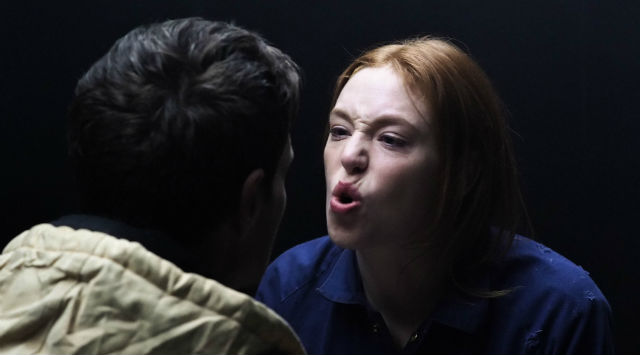
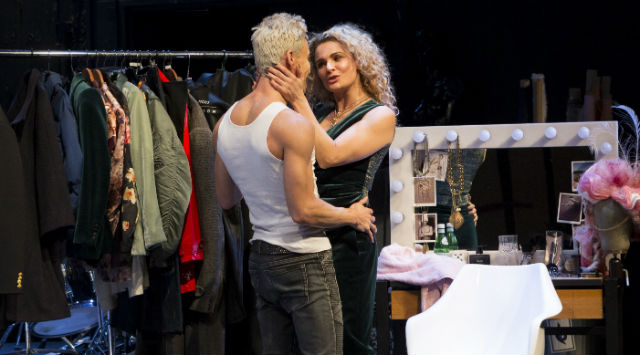
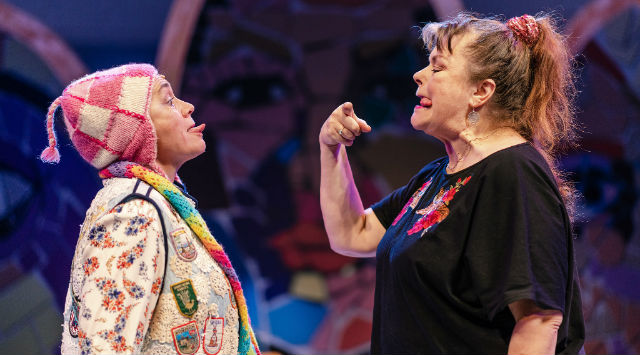
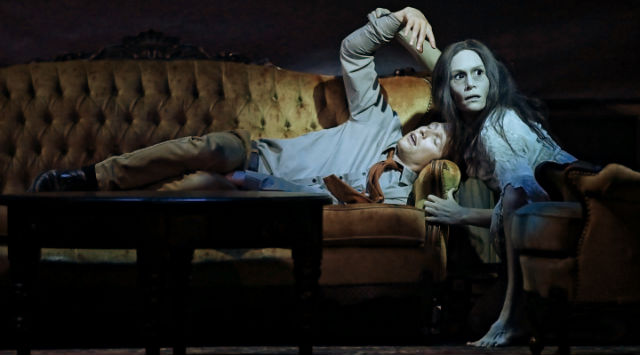
Harry Joy escapes a narrow death, but in the return to consciousness, he is no longer the same. Peter Carey’s 1981 novel Bliss is the story of an archetypal ad man, exemplary only in the mediocrity that he embodies, coming to the realisation that the hell he endures is in fact present in the here and now, and not a figment about a foreboded afterlife. Tom Wright’s adaptation for the stage is appropriately surreal, as Joy begins to see the absurdity of the world that he inhabits. Scenes are whimsically comedic, with a flamboyant sense of neurosis that makes for amusing theatre, but its tale of redemption feels surprisingly distant. The central concerns in Bliss remain relevant, but 37 years is a long while for us to retain meaningful identification with its plot and people.

Although little of the content has been updated for our times, director Matthew Lutton’s stylistic choices are undeniably au courant, inventive and imaginative. Sprightly, with a little acerbity, it is an energetic production, spouting clever ideas at every turn. The moral of its story can seem too basic, and obvious, but the show’s structural complexities keep us attentive. Marg Horwell’s set is a simple concept that proves highly effective in shifting dimensions, thereby conveying time and space in a dynamic manner. Paul Jackson’s big, blunt lighting transformations give us lots of delicious drama, and Stefan Gregory’s music has a quirky edge that is delightfully unpredictable.

Actor Toby Truslove is a credible leading man, especially persuasive in moments of melancholy. His quiet but confident interpretation of the play’s humour, brings a subtlety that offers refreshing juxtaposition against a lot of theatrical commotion. As Bettina Joy, Amber McMahon’s rigorous elucidations are as illuminating as they are entertaining. The performer is to be admired for the integrity she is able to introduce, to a character who is destroyed for daring to follow her bliss. Marco Chiappi and Susan Prior are memorable for the boldness of their satire, both personalities radiant and irresistibly funny on this stage.

There can never be enough stories warning us about the single-minded pursuit of money. The seductive powers of materialism seem to grow ever so exponentially, no matter how much we are told of its dangers. The all-or-nothing propositions of Bliss however, give it a quality of the parable, the kind that conclude with unrealistic resolutions that will struggle to deliver inspiration. It is easy to say that the root of all evil is money, but much harder to find an alternate undertaking, when one is deeply entrenched in the deceptive glory of gold.

www.belvoir.com.au | www.malthousetheatre.com.au

Review: Saint Joan (Sydney Theatre Company)

Venue: Roslyn Packer Theatre at Walsh Bay (Sydney NSW), Jun 5 – 30, 2018
Playwright: George Bernard Shaw (additional text by Emme Hoy, Imara Savage)
Director: Imara Savage
Cast: Gareth Davies, John Gaden, Brandon McClelland, Sean O’Shea, Socratis Otto, Sarah Snook, Anthony Taufa, David Whitney, William Zappa
Images by Brett Boardman

Theatre review
Joan of Arc never even made it to her twenties. Executed at the age of nineteen, her story represents the worst of our misogyny, and in director Imara Savage’s version of George Bernard Shaw’s play, that absurd fear of powerful women is given elucidation, as we see state and religion go to great lengths to exterminate Joan, so that the threat that she poses to the patriarchy is banished. In Saint Joan, instead of the usual veneration and idolatry, a war hero is swiftly and mercilessly taken down, for the sole reason of her gender.

Men can have daring ambition and resolute faith, but in a girl, those qualities are turned into the charge of heresy. Shaw’s original vision proclaimed “no villains in the piece,” but Saint Joan is, on this occasion, thoroughly subverted, to expose the inhumanity of forces we hold in reverence, of those so much power is lavished upon. Church and government do not get off scot-free in this rendition of Joan’s legend. Their guilt in the historical episode, is brazenly exposed. Our father figures are rightfully condemned, made to own up to the brutal murder of an heroic warrior.

Full of passion, the work is powerful and gritty, made spectacularly riveting by the presence of its leading lady. Sarah Snook is an unequivocal sensation in the role, equally intense whether depicting vulnerability or majesty, marvellously incisive with the delivery of each line. She conveys meaning and emotion with admirable depth and a disarming authenticity, having us pining for her every artistic bestowment. Her interactions with the cast are replete with chemistry, and the men (all other players here are the culpable masculine) bring generous support, often brilliantly engaging in their own right.

David Fleischer’s set design is a restrained, highly sophisticated evocation of our traditional institutions, with a heavy curtain that encapsulates all that is required to express a simultaneous sense of awe and oppression. Lights by Nick Schlieper and sound by Max Lyandvert, take us through atmospheric and spatial transitions with admirable precision, manipulating our instinctual responses with great dexterity, so that our attention is focused always and only, on the exact resonating point.

Evil has a knack for hiding in plain sight. What was once a story about men being dutiful, is today revealed to be a site for the unravelling of abhorrent systems that thrive on ruthless subjugation. Where we were once entangled in the ambiguity of Joan’s assertions and behaviour, we can now depart from the doctrines that had given justification for the unforgivable persecution of a girl who had done nothing wrong. Corrupting forces will remain, but our ability to act virtuously with courage, truth and justice, is forever in ascension.

www.sydneytheatre.com.au

Review: August: Osage County (New Theatre)

Venue: New Theatre (Newtown NSW), Jun 6 – Jul 7, 2018
Playwright: Tracy Letts
Director: Louise Fischer
Cast: Adrian Adam, James Bean, Kirra Farquharson, Peter Flett, Jake Fryer-Hornsby, Brett Heath, Lynden Jones, Sonya Kerr, Alice Livingstone, Amy Scott-Smith, Helen Stuart, Emilia Stubbs Grigoriou, Emily Weare
Image by Bob Seary

Theatre review
The Westons are a dysfunctional family, of troubled individuals with a penchant for intoxication. There are no real problems that we can deduce, except that their home seems loveless, and each person bears, with great reluctance, a sense of onerous responsibility, where genuine care and affection are often conspicuously missing. There is also the issue of wealth in their story. Unlike the rest of us, these personalities seem to have no cares in the real world. Without any worries about putting food on tables, or securing roofs over heads, it begins to make sense that their anxieties are centred, and inflated, around their dissatisfaction with one another.

Tracy Letts’ August:Osage County is an entertaining work, that offers sadistic pleasures through its flamboyant portrayals, of women suffering emotional torment. Its low stakes give us permission to indulge in their dramatic exchanges, allowing us to watch gleefully, as rich white folk scream at each other, over not very much at all. While not altogether vapid, the play is ultimately lightweight, in spite of the incessant anguish that it endeavours to explore.

Directed by Louise Fischer, the production is appropriately extravagant with its histrionics, and memorable for the intensity it is able to manufacture, for the play’s unique brand of comic depressiveness. There is little in the Weston household that we can easily empathise with, but opportunities for derision abound. Actors Alice Livingstone and Helen Stuart play the bigger parts, both larger than life and very delightful, with the sensational hysteria that they bring to the stage. Also very charming is Kirra Farquharson whose refreshing naturalism introduces a quotient of valuable authenticity to proceedings, and Emily Weare whose nuances are as pertinent as they are captivating.

August:Osage County may not be an instalment of the Real Housewives franchise, but like the best in the tv genre of “scripted reality”, it delivers a series of spectacular conflict that undeniably amuses and enthrals. It may not be at its most satisfying when it attempts to offer depth and insight to the human condition, but the theatrical thrills that it provides, is quite remarkable.

www.newtheatre.org.au

Review: Mut (Motimaru Dance Company)

Venue: The Old 505 Theatre (Newtown NSW), Jun 6 – 10, 2018
Direction, Concept, Choreography, Dance: Tiziana Longo
Images by Yvonne Hartmann, Hiroshi Makino

Theatre review
The performance begins with a melange of sound clips from news reports all over the world, in a range of languages, many of which are foreign and incomprehensible, but there is no mistaking the gravity in every voice. Hidemi Nishida’s set design is a grand creation, formed entirely of newspaper and adhesive tape; we are drowned in the stuff, dreadfully familiar yet seductive. A figure starts to move, and a pile of discarded news begins to take human form.

Tiziana Longo’s dance presentation, Mut, can be seen as a discussion about society and culture’s prolonged and incessant attack on womanhood, with particular attention on the female body and its garments. We can also bring an interpretation to the work, that is concerned with information from the media, and the futile struggle in trying to locate truth among a barrage of commercial and political interests from the publishing world. It is a timely work, and as such, Mut touches a nerve.

The music, by Hoshiko Yamane, is sensational, incredibly dramatic in its expressions of a realm that is darkly foreboding in its psyche. Longo’s choreography is liberated, lavishly imagined, with a sense of dystopian glamour that produces breathtaking imagery, rarefied and captivating, although not always sufficiently thought-provoking. As performer, Longo’s presence can seem incongruously ethereal in sections that require something more grotesque, but when the heavy costumes are eventually shed, Longo brings her show to a conclusion that is as affecting as it is unpredictable.

We live in a civilisation where men feel entitled to grab pussies at will, so it should come as no surprise to realise that women are constantly berated for how we look. No matter what kind of body we inhabit, or how we choose to dress, it is always open season on those of the female gender. In a world where we can do no right, it is a wonder that so many of us should remain conditioned in our insatiable need to please.

www.motimarubutohdance.com

Review: Snap*Click*Shot (Karul Projects)

Venue: PACT Centre for Emerging Artists (Erskineville NSW), May 25 – Jun 2, 2018
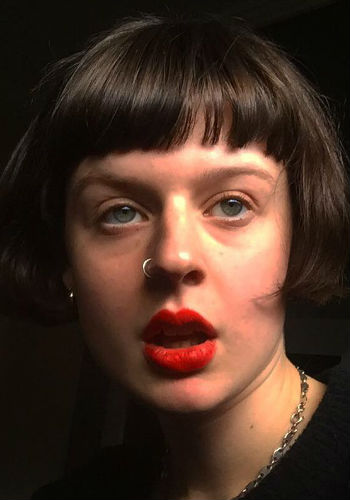
Choreographer and composer: Thomas E.S. Kelly
Cast: Jessica Holman, Thomas E.S. Kelly, Libby Montilla, Amalie Obitz, Taree Sansbury, Kassidy Waters

Theatre review
Accompanying the dance, is a recorded narration about ecology. It provides an Indigenous perspective on our relationship with the environment, particularly memorable for its musings about our responsibilities as custodians of the planet. The message in Thomas E.S. Kelly’s Snap*Click*Shot is sombre, but unifying.

The bodies in motion are simultaneously human and animal, soil and vegetation; the false points of demarcation that separate us are dissolved, for an expression of our existence that is all-encompassing. This is a summation of events that sounds excessively romantic, but when immersed, the show feels authentic, convincing in its depiction of nature as wholistic and incontrovertibly linked to the human experience.

Kelly’s work, as choreographer and composer, is sensitive yet disciplined, elegant yet dynamic. His ability to place in tandem opposing qualities, the hard with the soft, creates a sense of drama that keeps us engaged. It is a strong team of dancers, extraordinarily cohesive, and impressive in their familiarity with Kelly’s idiosyncratic physical language. Their presentation is confident, and very well-rehearsed, with an inexhaustible vigour that fills the auditorium. Costumes and lights are however, inadequately conceived, resulting in imagery that is needlessly monochromatic and repetitive.

At the production’s conclusion, we congregate in a circle, eyes closed, sharing in a moment of silent meditation. Our insecurities from being exposed thus, reach for reassurance, and we find camaraderie in that unusual instance of connection. We often think of independence as a virtue, but it is a falsehood to conceive of any life detached. It is vanity that separates, and narcissism that fuels oppression. The simple exercise of acknowledging others as equals will solve many problems, but we rarely rise to that challenge.

www.karulprojects.com

Review: Arthur & Marilyn (Dinosaurus Productions)

Venue: Blood Moon Theatre (Potts Point NSW), May 29 – Jun 2, 2018
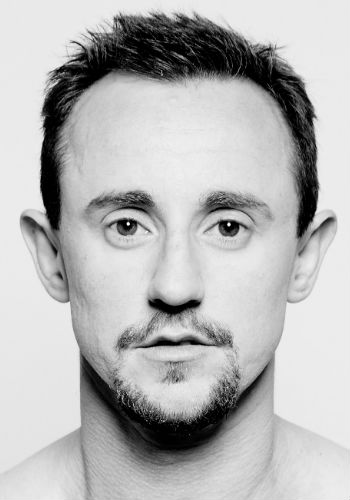
Playwright: Jasper Lee-Lindsay
Director: Danen Young
Cast: Meg Hyeronimus, Alec Ebert

Theatre review
Marilyn Monroe and Arthur Miller, both legends in their own right, are significant not only for the work they had left behind, but as is typical of bona fide celebrities, their personal stories, whether real or fabricated, determine how we remember them generations on. The couple fell in and out of love, against the romantic backdrop of Hollywood in the 1950s. In Jasper Lee-Lindsay’s Arthur & Marilyn, each party is risen from the dead, and the consummate storytellers are called upon to give us their version of that famous love affair.

Dialogue is scintillating in the two-hander, with an admirable authenticity to its depiction of a lulling time and space that has us fascinated and seduced. Actors Meg Hyeronimus and Alec Ebert are an enchanting pair, accurate in voice and physicality for a convincing portrayal of mid-century America. Hyeronimus is wonderful as Marilyn, conveying not only the iconic vulnerable glamour that most of us are familiar with, but also adding a dimension of wilfulness and confidence that makes this iteration seem, perhaps strangely, even more genuine than the original.

The plot of Arthur & Marilyn is imperfect, unable to cultivate an emotional journey with enough potency that can live up to the sentimental value we hold for its subject matter, but levels of intensity for the production, is cleverly controlled by director Danen Young, and our attention is sustained to the end.

Relationships can be kept beautiful, if we are able to concede when their time is up. Longevity of marriages are venerated in polite society, but like so much of life, we learn ultimately that it is the quality, and not quantity, of things that should be valued. Monroe and Miller never had a “happily ever after”, but the many sweet moments that they did have together, represent their very best days on earth.

www.bloodmoontheatre.com | www.facebook.com/DinosaurusProd

Review: Twilight (Motimaru Dance Company)

Venue: The Old 505 Theatre (Newtown NSW), May 29 – Jun 3, 2018
Direction, Concept, Choreography, Dance: Motoya Kondo, Tiziana Longo
Image by Johan Planefeldt

Theatre review
The initial image is of one organism, but our logic soon determines that there are two human bodies on stage. Although nothing is explained by Motoya Kondo and Tiziana Longo, it is probably inevitable that we should interpret their work as a representation of the human experience. We connect with the flesh on display, instinctively thinking that the expressions are about us. Strange as they may be, the movement and shapes evoke a familiarity, perhaps talking about the universal sensation of internal conflict that can arise at any moment within any person, or the eternal difficulties of maintaining relationships.

What we think about Twilight is informed, of course, by what we see. The two bodies convulse and glide, they tear apart, or they cling on for dear life. We may find ourselves forming meanings as a voluntary response to the dance, but it is when we are lured into meditation, observing with no appraisal, that the show is at its most potent. Transcendence on this occasion, is a collaborative art form, with Hoshiko Yamane’s music playing a vital role, alongside Kondo and Longo’s choreography and lighting design. The mesmerising juxtaposition of dynamism and stillness, a hallmark of the Butoh discipline, casts a spell and keeps us engaged throughout the piece.

It is an illusion of separateness that is distinct in Twilight. Quite literally joined at the hip, Kondo and Longo have made themselves appear exactly the same, yet they depict a sense of resistance toward one another, so that harmony is only ever a temporary notion. We wish for unity, but our appetite for discordance seems as natural as breath. It is as though, peace had always existed, but we fail to recognise it, and we make all go to war to find it.

www.motimarubutohdance.com

5 Questions with Alison Bennett and Kate Walder

Alison Bennett

Kate Walder: What is your favourite aspect of devising theatre?
Alison Bennett: A bit like when we had lunch today. We peer into each other’s hearts and it’s so pure and it’s the best and the worst of people. I can honestly say that the best moments of my life happen in a rehearsal room. More than performance. I fall in love with the artists and it hurts when it ends. I discover what I think and what I feel and I learn to humbly listen. I know I sound ridiculous but it’s true.

What inspired you and Hurrah Hurrah to create this show?
The Roomba Robotic vacuum cleaner I saw at my brother’s house. More broadly I guess it’s the driving question I have about how do average people, you and me, change the world? That literally keeps me up at night. So when I see an image that I find fascinating, in this case it was my brother introducing his daughter to the Roomba, I just dig in deep and all roads lead back to a similar question which is how do WE – you and I – face ourselves.

Where do you think we go when we die?
Oh my. I don’t know. This show has made me genuinely conflicted about my own beliefs. I don’t know if we continue or if we simply end. I might say however that heaven and hell… nonsense.

Do you think humans will always be able to control AI?
Nope. Without being grim, I think our ego has set us up for self-destruction.

What is the most ridiculous thing you have ever done for the sake of convenience?
That might be ordering dinner from an Uber so I didn’t have to walk the take away home. OMG. It’s awful.

Do you think robots will take over the world?
I think robots will infiltrate our everyday, in the sense that they will become an accepted aspect of our existence. We already know that many industries will become automated, but what will be interesting is whether Artificial Intelligence runs away with itself and surpasses our ability to control it.

Kate Walder

Alison Bennett: Would you ever buy a Roomba Robotic vacuum cleaner?
Kate Walder: Would now because they have so much personality! Not only do they clean your house, they basically double as automated waiters for light objects like beer or your toothbrush. They would also be quite useful as transport for recalcitrant infants.

Why do you think clowning is an exciting performance style?
I adore clown. The whole concept of being brave but fallible, playing with the audience but accepting the flop, being vulnerable and yet a complete idiot is so freeing and honest. It also allows the actors to address a complex issue with the beautiful simplicity of a child, which is often where the most acute observations are made.

How would you describe your attitude to death in 3 words?
Mildly avoidant. Flabbergasted. Metaphysical. Oops that’s 4.

Are you afraid of dying?
I find it hard to answer that question. I can’t imagine what it must be like to face your own death. I don’t think anyone can know until they get there. I wonder about the circumstances and hope it won’t be tragic. I hope I won’t be alone. I hope I will be taken care of. I accept there will be pain but I hope there will be dignity. For now, the fear is not knowing.

Alison Bennett and Kate Walder are appearing in Roomba Nation.
Dates: 4 – 21 July, 2018
Venue: The Old 505 Theatre

5 Questions with Meg Hyeronimus and Danen Young

Meg Hyeronimus

Danen Young: How does it feel to play such an iconic figure as Marilyn?
Meg Hyeronimus: Initially, terrifying. I didn’t really know much about her other than the typical “blonde bombshell” character and that she’s the most famous blonde of all time or at least the 20th Century. So yeah, completely overwhelmed. I dove into my research, gathered everything I could find and found her to be so incredibly extraordinary and complex. As Arthur Miller said in an interview “whatever anybody was she had a little of it”. I also quickly accepted that I’d never be Marilyn. That took some stress away. I think the script definitely helps with that – with the breaking down of her public persona, and portrays a more real and human version of her. My relationship to her has become incredibly personal, I find myself fighting for her in whatever way possible – in everyday life or during rehearsal (I suppose that’s a real driving force for me in the show) and I love her a lot. I feel her pain and her hope. It’s also opened a lot up for me as an actor, I feel more confident in myself and owning my power. I’m very grateful for the whole process. 

How is it different this time round? 
I think there is an obvious shift in each of us, it feels like we’ve matured as actors/theatre-makers. Don’t get me wrong, we very much are still those excited passionate kids – but the approach to our work is more direct and fast paced. The vision for what we want is clearer; for Alec (playing Arthur) and I as actors making choices for our characters and for Danen and his directorial vision. There is a lot more freedom for me as Marilyn now. I’m not trying as hard to be a certain way. I think I have a better understanding of her, or rather MY Marilyn and all that character stuff (which the first time round plagued me for a while). It now comes second nature, leaving me with so much more room to PLAY! It’s so FUN, even when it tears my heart apart. 

What is your favourite thing about the rehearsal room? 
Well, that I get to work with two of my best friends. Also the silly characters that are always floating around. Alec has one whose name is Timothy Panknell. He’s from somewhere in Brooklyn. And never ever fails to make me laugh. Danen and Alec both take on who they think Arthur Miller’s mother would sound and be like. It’s probably the funniest thing I’ve witnessed first hand. 
We have so many stupid jokes and outbursts of nonsense, and it’s generally Alec saying something so absurd and ridiculous that Danen and I lose it for a good 5 mins. 
It’s a good base for us to be open and just play around with the script, despite the work being so sincere and somewhat philosophical.

If you could have dinner with any famous person from the past, who would it be? 
Is it annoying to say Marilyn, because honestly that would be my first choice. I’m desperate to speak to her. Other than that, Hatshepsut. She’s one boss ass bish! 

Marilyn’s from LA and Arthur’s from New York, so where would you rather live, LA or New York?
Young Meg would say New York in a heartbeat. And I would say present Meg would say it too, just a little more hesitant. I need space and love nature, so I’ll say LA. That is my final answer. Which is lucky considering I’m moving there in 3 weeks, HA!

Danen Young

Meg Hyeronimus: LA or NY?
Danen Young: Oooooh that’s tough. I’d have to say NYC in terms of a city to live in. There is sooooooooo much happening in such a small amount of area, and it literally never sleeps. Which is absolutely perfect for a night owl like myself!!

Dinner guest?
I would have to say Nikola Tesla. Such an incredible mind that was not as successful and far reaching as he should have been. The memory of his great work was stomped on by Thomas Edison and I would just want to say sorry for that!!

How different has it been directing this time around?
There have actually been a lot of things that are similar about directing this time around. The difference mainly being the length, and the challenges we’ve faced in terms of developing a rhythm for the show. The short and sweet version of the play was probably a bit nailed into us, so breaking free of this emotional and muscle memory was the first big hurdle. In terms of staging, lighting, and sound the show is coming together fairly in the same, but on a larger scale; so the lighting plots are more complex, there are more sound cues, and more blocking to figure out. But being on a small budget, and having restrictions on how much set we can have, means that we’ve kept the set minimal, to focus on the characters, relationships and memories that Jasper has so beautifully written into his script. Rehearsals are still super fun and full of cheeky banter!

Why produce this play?
Firstly, because the script is amazing. For actors, the words just pull you along, and it’s a beautiful thing to watch. But I think it’s also a very interesting take on memory, and celebrity culture in this highly connected world of social media. How can we really know who these people were? Whose word can you trust as an authority on what these people were like? Does it really matter? Is it possible to know someone if you’ve never met them? I can’t really answer these questions, but I want to say that the overwhelming feeling I’ve had whilst directing this play, is that our memories are who we are, but in the end, it’s the memory of us in the minds of other people that define who we are.

Describe the show in 3 words.
Sincere. Ethereal. Heartbreaking.

Meg Hyeronimus plays Marilyn Monroe, and Danen Young directs Arthur & Marilyn, by Jasper Lee-Lindsay.
Dates: 29 May – 2 Jun, 2018
Venue: Blood Moon Theatre

Review: Stalking The Bogeyman (Old Fitz Theatre)

Venue: Old Fitzroy Theatre (Woolloomooloo NSW), May 23 – Jun 23, 2018
Playwrights: David Holthouse, Markus Potter (additional writing by Santino Fontana, Shane Stones, Shane Ziegler)
Director: Neil Gooding
Cast: Noel Hodda, Radek Jonak, Deborah Jones, Graeme McRae, Alexander Palacio, Anne Tenney
Images by John Marmaras

Theatre review
David was raped at the age of seven. The damage that follows is unimaginable, and the vigilante action he plans to carry out is understandable, even if some of us will no doubt have misgivings about his intentions to kill. In Stalking The Bogeyman, we are not asked to pass judgement on David’s decisions, but to witness the repercussions of sexual assault, especially as it pertains to the very young. Incidents that take place over several minutes, cause reverberations that last a lifetime. We meet David 25 years after the fateful night, and his struggles are unabated.

With these extraordinary stakes at hand, the play is appropriately enthralling; we are desperate to see how the story concludes. Not only do we want to know, how and if the characters find resolution, it is important that we discover what it is, that our societies would consider to be the right thing to do. In the creation of this play, our values are placed under magnification, and we hope for it to tell us more about ourselves that we may not already know.

It is an engaging production, with Neil Gooding’s restrained direction keeping things concise and clear. Ideas in Stalking The Bogeyman are simple, and powerfully conveyed on this stage. Leading man Graeme McRae’s vulnerability as David is a vital component, that preserves our empathy comprehensively, through every step of the proceedings. The eponymous bogeyman is played by Radek Jonak, whose portrayal of malevolence is as impressive as the electrifying energy he introduces with each appearance.

The play ends on an abrupt, and perhaps anticlimactic note. The drama fizzles out, but as it is “based on a true story” we appreciate the honesty of its divulgements. It is true, that when disaster strikes, we are rarely able to procure redress or compensation that is ever going to be satisfactory. That which cannot be undone, requires that victims find ways, often radical in nature, to make their daily existences bearable. Many even more unfortunate, have suffered annihilating consequences. Another day will dawn, if only for battling the lingering shadows of yesterday.

www.redlineproductions.com.au