5 Questions with Violette Ayad and Mary Soudi

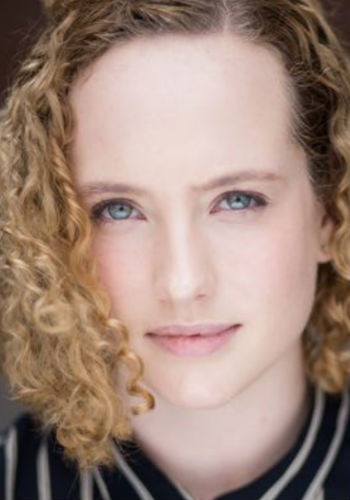
Violette Ayad

Mary Soudi: What’s your favourite part about playing Lilian (Lilo)?
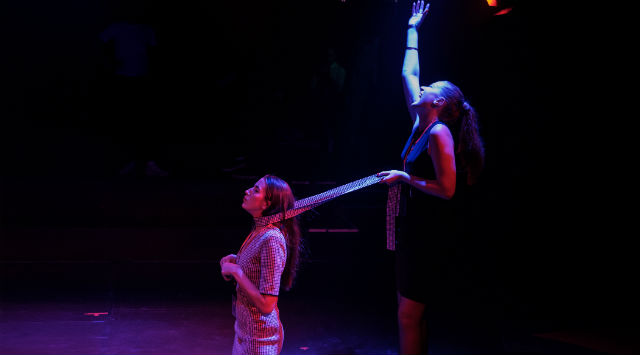
Violette Ayad: I love that I got to name this character myself. In fleshing out the character, the director and I decided that we wanted her to have a name that was a little ambiguous in relation to her cultural background. A name that could belong to someone from a Middle Eastern background (like myself), but was not specifically Middle Eastern (much like my own name). So, I named her after one of my aunties, Lilian, who everyone in the family calls ‘Lilo’ for short.

What’s something that has really surprised you during the creation of Blame Traffic?
The ease with which we’ve moved from reading and workshopping the script to finding the scenes on the floor. It has been a real reminder that when the time is taken to get the script, the foundation, right, everything else can be built on that with clarity and specificity. Part of the joy of having a writer who is also the director was that we could stop and identify problems in the script, and fix them in the script, rather than trying to gloss over them in the performance of it.

What main idea do you think will stay in the minds of audience members in the hours/days after they see the show?
I’d like to think that people’s responses to this play are very varied based on their own experiences of coincidence and serendipity in their lives. But ultimately, I would love everyone to consider a little deeper the amazing moments of chance and luck that make up life. In a world that moves further away from institutional religion every day, finding joy in these chaotic and random encounters feels like a pretty comforting way to live.

What’s your craziest traffic-related experience?
Oh, so many. I was one of those terrible young drivers you always fear is around the corner. I got my license in West Australia before the introduction of the mandatory L plate waiting period and with only 25 driving hours required. This is terrible, but I once lost 4 demerits and $600 in a 24-hour period when I was 19. Find me in the foyer and I will tell you how. Don’t worry, I don’t own a car in Sydney or drive very often, and definitely take road safety more seriously now that I’m older.

Why are you passionate about this production?
This production began as a way to bring together all of my favourite class mates and friends from the training institutions I’d studied at, and show the world how it’s done! Every decision in this production represents what I love seeing and what I believe in. At the core, we have a well-written story that engages the heart and mind equally. Add to that a cast of incredibly different performers that share an ability to contribute, generously, to a whole production, beyond their own specific part. And finally, a contemporary and innovative design team, making funky beats and a simple, but beautiful, stage design.

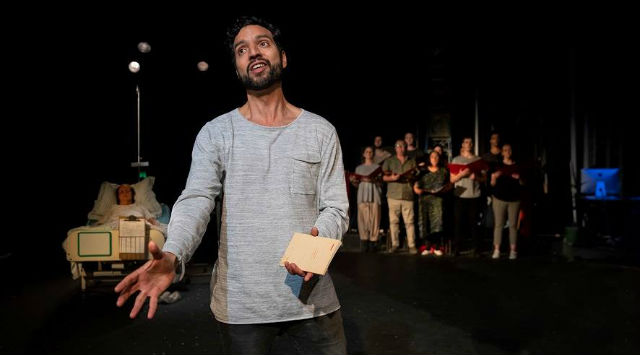
Mary Soudi

Violette Ayad: What is your favourite thing about the Blame Traffic script?
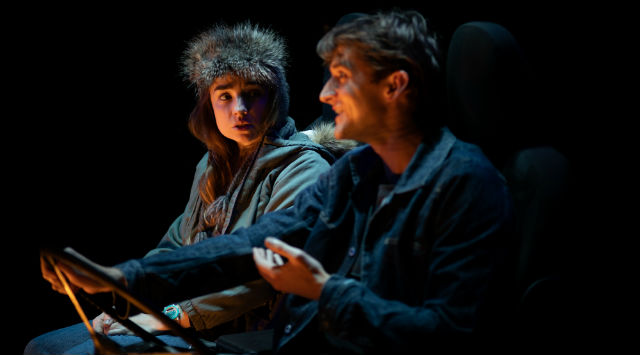
Mary Soudi: The humour that’s sprinkled throughout it! One scene in particular cracks me up every single time – I won’t reveal it, but I will say that Emma O’Sullivan plays a teenage boy behind a wheel of a car, and it is just so, so hilarious. 

What makes this project so exciting for you?
I’m excited by this project because I think Michael is one of the brightest young writers in Australia, and Blame Traffic is his best work yet. Being able to bring this brilliant story of his to life alongside so many brilliant creative minds is pretty darn magical.

Having just finished the Bell Shakespeare tour of The Players, how much driving do you think you’ve done in the past year?
Probably a billion hours. Those long drives were the best way to see this gorgeous country and fully take in just how huge it is. And I must say, I’ve truly surprised myself with my ability to park a giant Kia Carnival (mini-van/small spaceship) in so many cramped little parking lots all around Australia. Believe in yourself, folks!

What have been the benefits of working with people you’ve trained with?
Is there anything better than making art with your favourite humans? Knowing each other inside and out is a huge benefit, because after all the years we’re trained together we end up knowing exactly where each other’s creative genius lies, and can bring it out of each other. And all the endless love and tomfoolery!

Without giving anything away, what do you think is a moment people will really respond to in the play? 
A gorgeous moment of realness between a boy and his uncle, where self-doubt transforms into self-belief. Come see it to find out what I’m talking about!

Violette Ayad and Mary Soudi can be seen in Blame Traffic by Michael Andrew Collins.
Dates: 13 – 24 Nov, 2018
Venue: Old 505 Theatre

5 Questions with Alex Mau and Olivier Rahmé

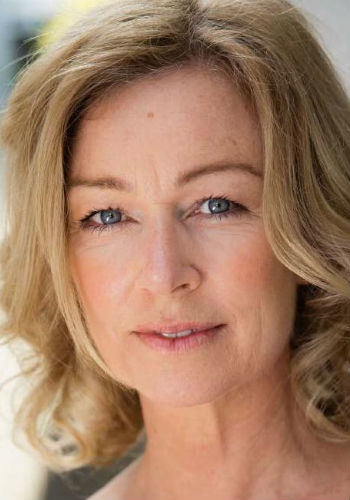
Alex Mau

Olivier Rahmé: If you could play any one role in the show, which one would it be?
Alex Mau: Queenie, of course! Who doesn’t want to play a blonde? Queenie is such a wonderful, three-dimensional female role, something we could do with more of in theatre! When the party is lit, Queenie is living her best life, sassing it up with her BFF Kate, throwing shade at the grand dame Dolores and killing it with her signature dance move, the “Black Bottom”. Come dawn, Queenie breaks it down with the most poignant and touching ballads in the show, alongside the gorgeous hunk Black. Queenie has so much light and shade, it would be so amazing to play her but, fortunately for you, I won’t be doing that and, instead, you’ll have triple threat and all-round superstar, Georgina Walker, portraying this once-in-a-lifetime role!

Which role excites you most in the rehearsal room? Why?
The director! I am in awe of how our director, Alexander Andrews, always does unique and refreshing takes on classics, such as Little Triangle’s inaugural production of Sunday In The Park with George and its sophomore production of Merrily We Roll Along. He encourages the cast to bring themselves to the characters, creating really interesting and fully-developed interpretations of characters that could otherwise be simple caricatures. I couldn’t stress enough than audiences should see this production of The Wild Party – not only is it a rarely produced musical in Australian theatre, you’ll definitely want to see what Alexander Andrews does with this amazing material!

What’s a funny/crazy/interesting thing you’ve picked up on in the rehearsal room?
The Chorines are like the bubbly and hilarious Greek Chorus of The Wild Party (portrayed by Victoria Luxton, Matilda Moran, Sophie Perkins, Jordan Warren & Rosalie Neumair). Being incredible dancers, our fabulous choreographer, Madison Lee, has given them heaps of intense and electric choreography that it feels like they’re doing full-body workouts throughout the entire show! It’s crazy how effortlessly they smash that chorey and then go on to belt those group numbers like they eat dissonant harmonies for breakfast – #goals. Keep an eye out for what I think is one of their funniest dance moves (in the spirit of 1920s vaudeville), which I would describe as a cross between the spread eagle from Chicago and squats in the air – yes, I can see you trying to picture it, but you’ll just have to come and see it for yourself!

What is the wildest party you’ve ever been too?
What happens at The Wild Party, stays at The Wild Party.

What do you think the audience’s reaction to The Wild Party will be?
Michael John LaChiusa (composer and lyricist for The Wild Party) is well-known for writing complex theatre scores so I think audiences will be expecting some very challenging, intellectual theatre. Alexander Andrews has taken an interesting and refreshing interpretation of bringing out and focusing on the human connections between the characters so, while the music is still technically difficult (which, as a pianist, I love!), I think audiences will be surprised by the humanity and rawness of the story and the characters. Prepare for side-splitting laughter and tear-jerking moments, it’s gonna be a WILD PARTY!

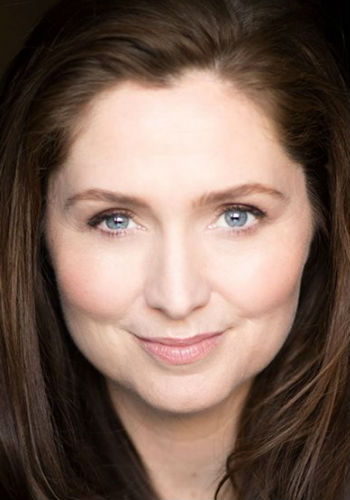
Olivier Rahmé

Alex Mau: Describe The Wild Party in five words?
Olivier Rahmé: Hilarious. Crazy. Shocking. Thrilling. Eye-opening.

What drew you to The Wild Party and why should people see it?
A lot of my friends have worked with Little Triangle before, so I was thrilled, humbled and so excited to be a part of such a reputable company. People should come to the show because of the impact a show like this can have on you – that’s what I love about theatre. As actors we hope the audience members gain something from the performance; to leave with something to think about & to be impacted. I truly believe The Wild Party succeeds in doing this.

What surprised you most about The Wild Party and what do you think will surprise audiences the most?
I love how meaty some of the roles are and how the actor has so much to play with. The script offers a lot and doesn’t box any character into being one thing. Many of us show all sorts of colour, which I love. I think the audience will be surprised by the level of talent – So. Many. BEAUTIFUL. Actors! And the voices are really shown off. My hat goes off to the production team for their casting.

Tell us a little about your character Eddie and how your approach to the character has changed over time.
When I first started reacting to the energies the other actors were giving me and read the script, I thought… Eddie is awful. What an awful man. Perfect. I can do that! But exploring his journey more and trying to figure out why Eddie does some of the things he does, I’ve now realised; Eddie isn’t a bad person. He is a defeated person who does a horrific and unforgivable thing. He struggles a lot with his identity and doesn’t quite know how to be happy – constantly masking his unhappiness and failures by blaming how life turned out on his beautiful wife Mae (Emily Hart). Sidenote: Emily’s belt may or may not be a solid and definite reason you need to see this show).

Tell us a little about the most challenging thing about the role.
The most challenging this I find is the final scene with Eddie towards the end of the show when he abuses everybody both verbally and physically. Emotionally and physically this section is exhausting for me as the actor. I definitely feel my body and mind tiring out after a few runs of this scene!

Alex Mau is répétiteur/pianist and Olivier Rahmé plays Eddie in The Wild Party, the musical.
Dates: 15 – 24 Nov, 2018
Venue: Seymour Centre

Review: Whose Uterus Is it Anyway? (The Old 505 Theatre)

Venue: Old 505 Theatre (Newtown NSW), Oct 30 – Nov 10, 2018
Playwright: Georgie Adamson
Director: Eve Beck
Cast: Toby Blome, Alexandra Morgan, Finn Murphy, Chelsea Needham, Annie Stafford
Images by Jasmin Simmons

Theatre review
It is a game show in the reality competition style, involving the infliction of humiliation and abuse for the benefit of a television audience. In this case, contestants are made to jump through hoops before they are awarded the reproductive health care that they require. George Adamson’s Whose Uterus Is It Anyway? is an indictment of the way bodies of women and trans men are controlled, relegated to a lower class, when they deviate from unreasonably strict norms. When a uterus is not being used for procreation, society sees fit that its owner is put through a process of castigation, as enacted here by a white man in a stylised lab coat, playing the role of game show host, manipulating scenarios and exercising his power, to ridicule his subjects.

Ideas in the play are fresh and exciting, assembled with an enjoyable quirky humour. Its writing could be further refined for a more satisfying plot structure, but its unique approach makes for a show that is at once pertinent and amusing. Eve Beck’s direction for the piece contains appropriately subversive measures, and although its comedy proves slightly inconsistent, there is no doubting the production’s ability to have us firmly engage with its stimulating themes. Martin Kinnane’s lights and Camille Ostrowsky’s set design provide dynamism to a visual aesthetic that conveys effectively, the sinister quality of institutionalised medicine and media. Alex Lee-Rekers is detailed with his work on sound, helping us navigate the many subtle tonal and emotional shifts of the show.

An excellent cast brings to life the theatrical and substantive absurdity of Whose Uterus Is It Anyway?. Toby Blome is captivating as the central authority figure, and as four additional subsidiary characters, his efforts are just as compelling. Alexandra Morgan and Annie Stafford are funny women, both exuberant and incisive with their delivery. Finn Murphy and Chelsea Needham dial up the poignancy factor, for some genuinely moving moments that give the staging a crucial quotient of gravity.

As evidenced in Lysistrata’s fabled sex strike, societies have always been petrified of women using their bodies for anything other than gestation. The impulse to reproduce has fuelled an unquenchable thirst to control our bodies, and as a consequence all of how we exist is dictated in accordance with that sense of ownership and entitlement. Three women in the play, along with a trans man, have made decisions for themselves, but it is clear that their bodies are being held hostage, by traditions and systems that struggle to acknowledge our independence. If our subjugation stems from sex and babies, it would only make sense that a revolution can be precipitated by a radical rethink of our identities in those terms. We should define ourselves in creative and courageous ways, rejecting labels and responsibilities when required, not only to live with greater integrity, but to forge a better, more equitable future.

www.biteprod.com.au

Review: Madiba (State Theatre)

Venue: State Theatre (Sydney NSW), Nov 1 – 18, 2018
Book: Jean-Pierre Hadida, Alicia Sebrien
Author & Composer: Jean-Pierre Hadida
Additional Material: Lunik Grio, Emmanuelle Sebrien
Directors: Pierre-Yves Duchesne, Dennis Watkins
Cast: Courtney Bell, Barry Conrad, David Denis, Blake Erickson, Perci Moeketsi, Ruva Ngwenya, Tim ‘Timomatic’ Omaji, Madeline Perrone, Tarisai Vushe
Images by Serge Thomann

Theatre review
Known as Father of the Nation, South Africa’s Nelson Mandela served 27 years in prison, for activities opposing apartheid. In the musical Madiba, we see his personal struggles, and the inspiration he had provided, and continues to provide, for racial reconciliation in the region and around the world. Mandela’s heroic aura is unwavering as the centrepiece of a production that unfortunately, never quite lives up to the man’s eminence.

The writing manages to establish coherence for a timeline that stretches fifty years, but it is insufficiently rousing, for themes that one expects to be much more intrinsically emotional. The minimalist approach to visual design proves a challenge for the large stage, with lights that get absorbed by heavy curtains before adequate illumination can be provided to performers.

It is however, an excellent cast that presents the musical, with Perci Moeketsi effortlessly convincing as Mandela, an affable presence who reminds us of the warm personality so often seen in the media. Brilliant dancing by David Denis, Tim ‘Timomatic’ Omaji and a very spirited ensemble, has us thoroughly mesmerised. Barry Conrad, Ruva Ngwenya and Tarisai Vushe thrill us with their singing, making full use of the opportunity to showcase their extraordinary vocal talents.

When Noah emerged from his ark after the great flood, a rainbow of peace appeared in the sky, signifying a new beginning. The dream of a rainbow nation in post-apartheid South Africa, is a vision about inclusivity, for a future in which black and white are no longer divided. Now five years after Mandela’s passing, white supremacy can be seen trying again to rear its ugly head, everywhere from Europe and America, to Africa and Australia. The project of decolonisation is a huge undertaking, an extremely difficult exercise that often seems doomed to failure, but forces determined to defeat fascism can never be crushed. We remember the sacrifices made by Mandela and his country, and the progress they were able to attain under onerous circumstances, and use them as motivation, for all the battles that lie ahead.

wwww.madibamusical.com.au

Review: Freud’s Last Session (Clock & Spiel Productions)

Venue: Seymour Centre (Chippendale NSW), Oct 30 – Nov 10, 2018
Playwright: Mark St. Germain
Director: Hailey McQueen
Cast: Yannick Lawry, Nicholas Papademetriou
Images by Alison Lee Rubie

Theatre review
Two men, one atheist and one Christian have an intelligent, and civilised, discussion about the existence of God, in Mark St. Germain’s Freud’s Last Session. A fictional account of Sigmund Freud, approaching the end of life, inviting C.S. Lewis in for a meeting, presumably to help allay inevitable fears of impending death. Everything they talk about is relevant, even fundamental to our very being, but these are ideas we have tossed around in our minds many times, with decisions settled for each individual years ago. Some might be able to see new light on old questions and find the play intellectually stimulating, but for most, the best it can offer is an opportunity to hear the other side of arguments, within its stringently binary presentation of truths.

It is a polished production, with Hailey McQueen’s direction giving the theological themes an elegant and balanced focus. Tyler Ray Hawkins’ work on set decoration is noteworthy for its visual flair, cleverly manufacturing a sense of vibrant theatricality whilst maintaining realism in Freud’s office. Both actors deliver solid performances, with Nicholas Papademetriou particularly convincing as the ailing psychoanalyst, accurate in his portrayal of a legendary figure in his last days, but in a manner that is charmingly playful, to have us engaged and entertained. Lewis is played by Yannick Lawry, appropriately uptight, with an energetic presence that keeps things lively for his audience.

Life is mysterious, so there is no surprise that we often respond by embracing ideas that pertain to the supernatural. Science is in the business of demystification, but our nature seems not to permit an end to human interrogations; for every answer we discover, further questions will arise. The world is determined to be unknowable, yet we desire only to thrive on certainty. God may or may not exist, but if we agree that our time on earth is real, it should then follow that our emphasis must always be concerned with the here and now. The truth however is that, whatever we think is holy up above, has served to divide us. We see ourselves doing unspeakably cruel things to one another in the name of God, yet are unable to disown religious doctrines, refusing to acknowledge the harm that it can cause. The world has never been without Gods, so to imagine ourselves as entirely secular, although an appealing idea, is probably futile. The next best thing would be to trust that each of us can learn to be better persons with each passing day, no matter how ridiculous our personal beliefs.

www.clockandspielproductions.com

Review: Degenerate Art (Old Fitz Theatre)

Venue: Old Fitzroy Theatre (Woolloomooloo NSW), Oct 17 – Nov 4, 2018
Playwright: Toby Schmitz
Director: Toby Schmitz
Cast: Septimus Caton, Guy Edmonds, Giles Gartrell-Mills, Henry Nixon, Megan O’Connell, Rupert Reid, Toby Schmitz
Images by John Mamaras

Theatre review
If it were a painting, Toby Schmitz’s Degenerate Art would comprise a thousand tiny brush strokes, too detailed and too intricate, but they collude to present broad strokes that are imperiously forceful, certain to make an impact. Like other bad boy artists of renown such as Adam Cullen and Damien Hirst, the work is brash and obnoxious, replete with evidence of genius, but unlike white box museums that allow us to glance, gasp and swiftly walk past, Schmitz’s 100 minutes of grandiose cocky art, holds us hostage in our overly snug seats, intimidating us into thinking that some very big meaning lies behind all that is being waxed lyrical in the playwright’s very many excessive diatribes.

The play is ostensibly about Hitler’s relationship with art, and the ironic and incongruous phenomenon of fascist attitudes always seeming to surround the dissemination and consumption of art. We see prominent Nazi figures of the time, arguing over art like any healthy society should, but the way these white men cannot help but escalate their competition of penis extensions into acts of violence, is despicable and telling. Visually sumptuous, the staging is provided a glossy glamour by Alexander Berlage’s diligent lighting design. Schmitz assembles a testosterone fest that begins desirous but eventually turns shrill, with shouty blokes intent on asserting their importance, a reminder that art cannot help but imitate real life.

Although little room for nuance, Degenerate Art is a showcase for some remarkable performances, and the rhapsodic peacocking of its six male actors proves to be truly impressive. Megan O’Connell too, is an effective and memorable narrator, despite never really being able to overcome looking like an afterthought. It is frustrating that we are still being subjected to groups of white men talking about Nazism. To some, it might make sense that white male villains can only be played by white men, but for others, this is completely counter-intuitive, and a lazy, even irresponsible way of getting into discussions about fascism. Actions speak louder than words, especially when the words are deafening.

www.redlineproductions.com.au

Review: Pramkicker (Vox Theatre)

Venue: Chippen Street Theatre (Chippendale NSW), Oct 24 – Nov 3, 2018
Playwright: Sadie Hasler
Director: Linda Nicholls-Gidley
Cast: Cecilia Morrow, Vaishnavi Suryaprakash
Images by Jasmin Simmons

Theatre review
Jude is attending anger management support groups, as punishment for having, amongst other things, kicked a pram at a coffee shop. Her sister Suse is assigned to be her companion for this remedial process, and together they fall deep into discussions about motherhood, and in Jude’s case, the rejection of it. Sadie Hasler’s Pramkicker is a marvellously written work about the modern woman, and the choices she is able to make for herself. Using the experience of childbearing as a springboard, we delve into philosophical, as well as practical, ruminations about all that is expected of women, in order that we may examine the freedoms we do and do not have, in defining existence for ourselves.

Dialogue in Pramkicker is deliciously witty, with some truly scintillating perspectives of life that are brutally honest but rarely disclosed. The characters go through wonderful transformations during the course of the play, for deeply beautiful depictions of sisterhood and of female sovereignty. Emotionally robust, the show takes us from ecstatic laughter to exquisite poignancy. Directed by Linda Nicholls-Gidley whose imaginative and sensitive use of space, generates for the staging a variety of dimensions that engage with us effectively at different mental states. A faster pace would deliver a greater sense of exhilaration to accompany its outrageous conversations, but it is doubtless that this is a production that packs a punch.

Actor Cecilia Morrow is powerful as Jude, with an excellent sense of conviction that befits the role’s very appealing dauntlessness. Suse is portrayed with great authenticity by Vaishnavi Suryaprakash, charismatic with a hint of innocence, perfect for the part of younger sister. Jointly, the pair establishes an extraordinary chemistry that forms the soul of the production, and we find ourselves hopelessly enamoured, and invested in their stories.

For eons, we have been told that it is our duty to procreate. Jude is one of increasing numbers, who has refused that responsibility, and in place of parenthood, she has to find meaning for her own life, in ways that are not prescribed and preordained. We see her in moments of confusion, not fully able to grapple with the enormity, of having accepted this radical freedom. With no tethers to ascertain her identity, it becomes a conscious effort to be who she wants to be, and we see that things could have been easier if she had just gone with rules of the normal playbook. Independence is not for the faint of heart, but it is the only option for those who cannot settle for anything less.

www.voxtheatre.com.au

Review: The Director (Active Theatre Productions)

Venue: The Actors Pulse (Redfern NSW), Oct 25 – Nov 10, 2018
Playwright: Nancy Hasty
Director: Simon Doctor
Cast: Josephine Bloom, Simon Doctor, Sarah Greenwood, Emilia Hristov, Brayden Palmer, Alex Rowe

Theatre review
Annie has written a play and wants Peter to direct it, even though Peter has become a pariah of the theatre industry, currently relegated to the position of janitor at a drama school. We soon find out that his ostracism is well founded, as his creative process unravels a series of unethical strategies that cause appalling harm to his team of actors. Nancy Hasty’s The Director talks about the tricky negotiations of boundaries in artistic ventures, especially when collaborative parties are involved, all wishing to invent new paradigms with their expressions. Some of the play’s ideas are exciting, with quite amusing dialogue, but its plot quickly becomes predictable, as the story begins to take on a repetitive configuration.

Simon Doctor directs the production, and stars in it as Peter, the titular director of the show within a show, for a fascinating confluence of truth and fiction. Doctor is at least adequate as director, but as actor, his abilities are breathtakingly poor, which delivers results that are quite surprising. Actors in the play struggle with their director Peter because of his questionable methods, whilst in our real life, we witness the cast going through a parallel struggle, having to find ways to accommodate Doctor’s sorely deficient acting sharing their stage. It is obvious however, that even though our cast is up against it, they are not in an adversarial relationship with their director/leading man. In fact, they are considerate and generous, proving able to overcome a significant hurdle, and eventually emerging with dignity intact. Actor Alex Rowe is particularly memorable as John, making the right decision to play up the comedy of the piece, to help his audience through the show, so that we feel secure about laughing with, and not laughing at, the performance.

The work of Jerzy Grotowski is referenced frequently in The Director, to represent a concept of unconventionality in the art of theatre making. Peter wishes his work to go against the established, which in his mind, requires an essential redefinition of the audience’s passivity. In some ways, we see these principles manifest in the current production. As actor, Simon Doctor unnerves us, and intentionally or not, he disallows us to engage with the show on the level of a regular dramatic experience. We hear Nancy Hasty’s writing unfold, but observe metatheatre taking place, one that thoroughly interrogates our position as viewer. We should not expect to be spoon fed on every occasion, but when left to our own devices, how we approach an oddity reveals so much of who we are, and how we function as part of this community’s artistic landscape.

www.activetheatreproductions.com.au

Review: Margaret Fulton Queen Of The Dessert (Bondi Theatre Company)

Venue: Bondi Pavilion (Bondi NSW), Oct 12 – 27, 2018
Book: Doug MacLeod (based on Margaret Fulton’s autobiography I Sang For My Supper)
Music: Yuri Worontschak
Director: Ruth Fingret
Cast: Manon Gunderson-Briggs, Clare McCallum, Alexander Morgan, Brett O’Neill, Jasmine Sands, Rebecca Spicer
Images by Lightbox Photography

Theatre review
Australia’s original celebrity chef, Margaret Fulton may be known to have provided culinary lessons to generations, but in the musical Margaret Fulton Queen Of The Dessert, we observe her to be a trailblazer who has, ironically, led women out of their kitchens and into the workforce. The story tracks Fulton’s rise to prominence in mid-20th century, through a combination of verve and luck, culminating in the publication of her hugely successful cookbooks. Helping to broaden the concept of an Australian cuisine, at a time when the White Australia Policy was still in place, her career is a significant landmark that many still hold dear today.

It is a wholesome show, perhaps too polite in tone, but the narrative is structured effectively for an entertaining, often amusing experience, featuring charming insights into our heroine’s story. Music by Yuri Worontschak is beautifully melodious, for a slew of catchy tunes that keep our feet tapping along. Sound design however, is a major sore point, as are most of its visual elements. Nevertheless, Ruth Fingret’s direction ensures that her cast takes every opportunity to deliver energy and merriment through their vibrant performances.

Leading lady Manon Gunderson-Briggs plays a gregarious Fulton; feisty and exuberant at centre stage, keeping us charmed and firmly attentive to the vignettes being shared. Equally likeable is Rebecca Spicer, whose sparkly confidence in a variety of supporting roles makes her a memorable presence. Brett O’Neill proves himself an adventurous performer, as he playfully invents one character after another, always with a tongue-in-cheek sense of extravagance that many will find irresistible.

A person’s legacy relates to their contribution to society. It is a measurement of how many lives are made better, even in the tiniest of ways, by the actions of individuals or groups that endeavour to bring progress to the world. The Margaret Fulton Cookbook has sold a million and a half copies, offering inspiration to young and old for 50 years and counting. Our achievements do not have to be of that scale, but mere mortals too, need to try to leave this a better place than when we had found it. Knowing that every thought, intention and action, has the potential to leave an indelible mark, we must simply always try to do good.

www.bonditheatrecompany.com.au

Review: Julius Caesar (Bell Shakespeare)

Venue: Sydney Opera House (Sydney NSW), Oct 23 – Nov 25, 2018
Playwright: William Shakespeare
Director: James Evans
Cast: Jemwel Danao, Maryanne Fonceca, Ghenoa Gela, Neveen Hanna, Emily Havea, James Lugton, Kenneth Ransom, Nick Simpson-Deeks, Russell Smith, Sara Zwangobani
Images by Prudence Upton

Theatre review
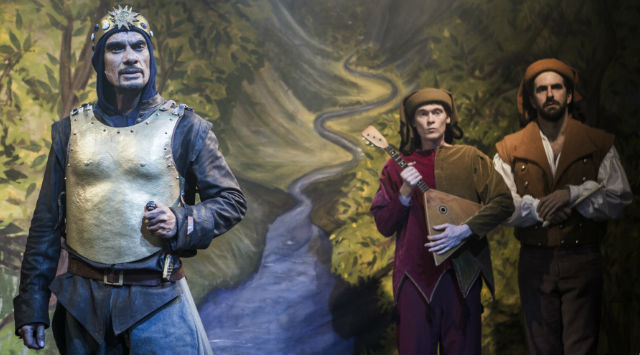
Some things never change, and Shakespeare’s Julius Ceasar could just as well be a story about Canberra in 2018. A controversial leader gets knifed, and all hell breaks loose, in this tale of a mutiny that does not go quite as planned. Cassius and Brutus conspire to have their leader extinguished, in order that a better system of government can be installed, but after Caesar’s death, they find themselves quite inadvertently shot in the foot. This is the story of Malcolm Turnbull, of Tony Abbott, of Julia Gillard, and of Kevin Rudd; a tradition of the Australian government that seems a recent phenomenon, but is in fact centuries old. Even after the chief takes a brutal fall, discontent among the ranks refuses to dissipate, and the process of elimination keeps repeating.

An appropriately modern tone is injected by director James Evans, who assembles for the production, a satisfyingly cinematic look and feel. Music by Nate Edmondson is particularly noteworthy. Luscious, bold and flamboyantly epic, sound proves itself this staging’s most reliable element, whenever we begin searching for explanations to the goings on.

Actor Kenneth Ransom is an unusual Caesar, statuesque but with a subdued presence. Cassius and Brutus are played by Nick Simpson-Deeks and James Lugton respectively, both delivering entertaining and rich characterisations, as well as impressing us with their marvellous ability at harnessing chemistry. In the role of Mark Antony is Sara Zwangobani who all but steals the show in Act III, when her disarming luminosity is given opportunity to occupy centre stage. The actor is intense and authentic, with a visceral power in her performance as the Roman leader that truly dominates.

A healthy democracy requires that we go the polls every few years to cast a ballot on who we wish to have representing us. This does not happen every time the tide changes or every moment we feel disillusioned by those whom we had given office. It is certainly not dependent on how private media companies and other interests wish to exercise their influence. There will always be people who think they know better than the populace, and seek to subvert our electoral rights. We can only hope that those who reject the universal rights all citizens are equally entitled to, like Cassius and Brutus, will in real life, suffer every consequence of their corruption.

www.bellshakespeare.com.au