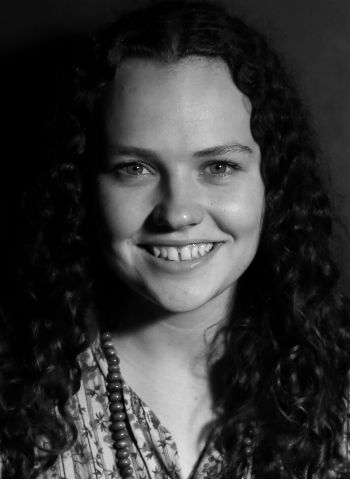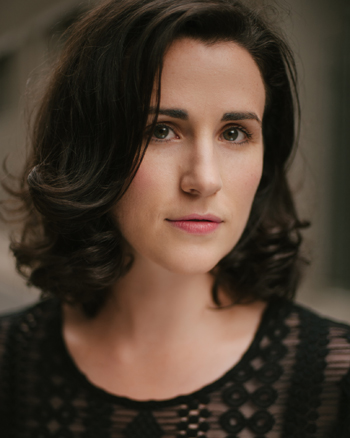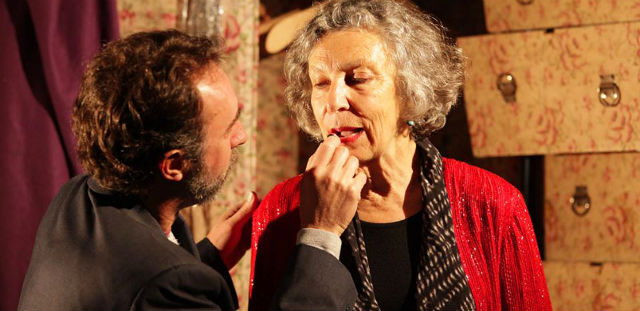
5 Questions with Lucinda Howes

lucindahowesWhat is your favourite swear word?
Unfortunately I say ‘shivers’ a lot, probably too often (I work with children, you have to find substitutes).

What are you wearing?
A jumper, jeans and gumboots.

What is love?
Buying someone flowers when you can’t afford shampoo.

What was the last show you saw, and how many stars do you give it?
The Winters Tale, Bell Shakespeare. It had its moments, good and bad. Three stars.

Is your new show going to be any good?
Yes, though probably not for the cast.


Lucinda Howes is playing the role of Procne in Procne & Tereus part of Sydney Fringe 2014.
Show dates: 16 – 20 Sep, 2014
Show venue: TAP Gallery

Review: The Chosen (Moira Blumenthal Productions / Encounters@Shalom)

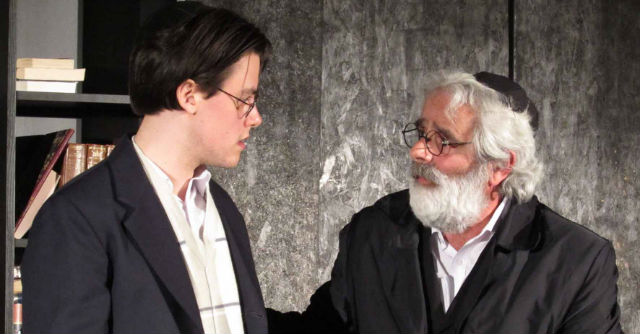
thechosenVenue: Shalom College (Kensington NSW), Aug 27 – Sep 14, 2014
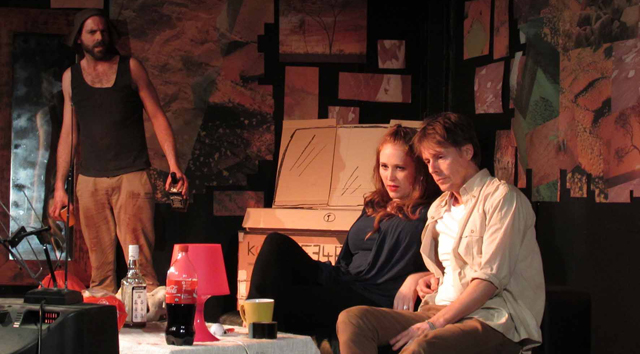
Writer: Aaron Posner, Chaim Potok (from the novel by Chaim Potok)
Director: Moira Blumenthal
Cast: Anthony Darvall, Barry French, Gabriel McCarthy, Daniel Mitchell, Maeliosa Stafford
Image by Geoff Sirmai

Theatre review
The Chosen is the stage adaptation of a well-known 1967 novel of the same name. It features the friendship between two religious teenage boys in Brooklyn, New York. Reuven is a Modern Orthodox Jew and Danny is a Hasidic Jew, and the play showcases their differences wonderfully. Set against World War II and the subsequent revelation of the Holocaust in Europe, this coming of age story is a sentimental, and at times powerful, look at faith, family and friendship.

The script is eventful, with colourful characters and spirited dialogue. Moira Blumenthal’s direction creates distinct personalities that tell their tales with delightful clarity. There is a palpability that feels almost biographical, and along with it, an appealing gravity that keeps us engaged. A particular strength of Blumenthal’s is the seamlessness at which scene transitions are managed. Her use of space and actor positioning is full of flair in the negotiation of the script’s many short sections.

Performances are accomplished, although older members of the cast are quite noticeably stronger. The two young men are comparatively (and understandably) green, but both Gabriel McCarthy and Anthony Darvall show excellent commitment and focus. Daniel Mitchell as Reb Saunders, the spiritual leader of a Hasidic group is especially captivating. The role is a severe one, and Mitchell brings to it a pronounced sense of drama that makes for exhilarant viewing. The actor’s outstanding presence encompasses experience and confidence that lights up the stage.

Stage design is basic, but its elevation helps improve perspectives in a challenging venue. More ambitious is Alistair Wallace’s sound design, which helps manufacture a sense of time and place with creative use of music and effects.

There is a big emphasis on the father-son relationship in The Chosen, but both boys’ mothers are conspicuously missing. We do eventually discover that Reuven’s mother is deceased, but the juxtaposition of a heavily religious context with an all male narrative raises questions about the place of women in these families, and their respective cultural spheres. The story was created in the 1960s, but a production of the play today should take into consideration its skewed gender attitudes, and perhaps its relevance in view of this glaring omission. Nevertheless, this is a staging that speaks to our eternal search for the deeper meanings in life, and our never ending struggle to find political and spiritual peace. Chaim Potok’s text talks about the co-existence of two contradictory truths, an abstract concept that becomes convincing in this depiction of a pure and inspiring friendship.

www.encounters.edu.au

Review: Unholy Ghosts (White Box Theatre / Griffin Theatre Company)

griffintheatreVenue: SBW Stables Theatre (Kings Cross NSW), Aug 27 – Sep 20, 2014
Playwright: Campion Decent
Director: Kim Hardwick
Cast: Robert Alexander, James Lugton, Anna Volska
Image by Danielle Lyonne

Theatre review (originally published at Auditorium Magazine)
We often go to the theatre for a dose of fantasy. It can be escapism that we seek, or a quest for inspiration, and it becomes easy to conceive of fantasy as a thing severed from daily lives where in fact, nothing can make good sense unless it bases itself in reality. Campion Decent’s Unholy Ghosts is mostly autobiographical. It deals with family and death, probably the most real of all concepts to undertake, and also the most difficult of things to articulate. Through art and the guise of theatrical fantasy, Decent enacts a way to analyse, heal and mourn the inevitable but deepest losses one can experience.

Family ties are uniquely challenging. Some of us are gifted more pleasant circumstances than others, but we all understand the unyielding nature of those bonds. Regardless of time and distance, only a very few can truly claim to have made clean cuts from their closest blood relations. We all know what family can make us feel, and it is that intensity of love (and hate) that makes Unholy Ghosts immutable and its effects inescapable. Decent’s writing is humorous but gentle, with a sublime melancholy that appeals to the tenderest of our sentiments. Its thorough honesty is quite confronting. We cannot resist empathising, which means that we cannot help but reflect upon the ones we hold dear, and the invisible, but persistently lingering notion of death that threatens and surrounds us.

The characters are named in the programme simply as Son, Mother and Father, and the script provides what seems to be factual information about their lives and defining events through the years, including the tragic passing of the unseen Daughter. It is a compilation of Decent’s recollections, as well as invented scenarios that help with gaining insight, or at least to find some kind of understanding, so that pain can be tamed and the living can move on. The play’s structure is hugely enjoyable. The confusion between fact and fiction, laughter and tears, victims and wrongdoers, creates a complexity that is undeniably resonant in its familiarity.

Direction is provided by Kim Hardwick, who does an excellent job of locating comedy and pathos in every moment, and allowing them to co-exist in an unusual harmony. Liberal amounts of dark humour pervades the stage, but there is also a surprising compassion that always makes its presence felt. We see resentment, anger and bitterness in the family members, but their conflicts only exist for a love that requires resolution. The intimacy of the space gives the audience easy access to the people on stage, and their terrific chemistry keeps us spellbound. Hardwick has achieved the remarkable feat of crafting a show where we fall for all of its characters at first sight. Unholy Ghosts is unashamedly sentimental, but it is also thoughtful. There are very strong emotions that surface towards the conclusion, but they are not of the wallowing type. The play keeps a level head, always maintaining a level of self-examination, which makes the sadness much more profound.

James Lugton plays the Son, a version of the playwright himself. Lugton’s emotional fortitude is a great asset to the production, for he lets us see the depth of suffering a person endures without a need for predictable and obvious gesturing. The strength he portrays is so genuine and pronounced, that it conveys the sorrow that he cannot reveal. The more he strives to keep a positive outlook, the more we hurt. It is a confident performance that deceives us with its relaxed nonchalance. It looks the opposite of melodrama, but its results are more affecting. There are moments however, where the actor seems to lose focus and he trips over lines several times, causing one to wonder if certain sections are less rehearsed. Also periodically distracted is Robert Alexander who plays Father, but like Lugton, his lapses are negligible. Alexander’s work is colourful, and the miserly man he depicts is charmingly comical and unexpectedly likable. The accuracy at which he performs the role of the “regular older man”, is brilliantly reminiscent of the literal and figurative fathers of our lives, complete with annoying quirks and disappointing imperfections. There are actors who win us over even before their first scene finishes, and Alexander is a shining example. His charisma is magical, and partnered with a clear affection for the stage, his creation is one that endears and impresses.

Mother is a creature of flamboyance and mischief, who had bought her son the Bette Midler book, A View From A Broad for his sixteenth birthday. The divine Anna Volska is electrifying. Her work ranges from outlandish and grotesque, to delicate and introspective. It is a tremendous role, and the actor fulfills every brief and requirement. Volska delivers many instances of sheer hilarity, but the delicious poignancy she invokes at every appearance is unforgettable.

Visual design is minimal and unobtrusive. No great flair is showcased, but nothing feels lacking. Sound design assists well with mood changes but several keyboard interludes are slightly too conspicuous and outmoded. In the final scene, lighting makes a drastic transformation to accompany the uplifting end. The choice to shift tone so extravagantly is questionable. It is clear that optimism and the celebration of life is a key message, but stating the case so literally may not be necessary. Also unnecessary is the compulsion to release the audience in such upbeat fashion.

The play’s happy ending however, is solid and convincing. Whether exuberant or subdued, we understand the spiritual and psychological journey that Campion Decent has taken, and we appreciate the position of enlightenment he presents. Life ends and relationships end, and it is their brief temporality that gives them value. We only wish for something to last forever when we know that its end approaches. It is tempting to declare that nothing is eternal, but the fact is that art can outlive us, and great writing endures for generations. How splendid the thought that ghosts can prevail, if the artist’s life is well lived.

www.whiteboxtheatre.com.auwww.griffintheatre.com.au

Review: Out Of Fear (Night Sky Theatre Co)

nightskytheatreVenue: TAP Gallery (Darlinghurst NSW), Sep 3 – 14, 2014
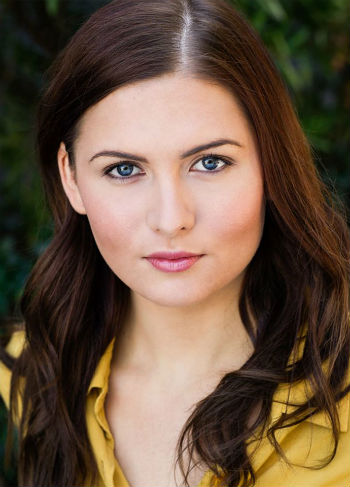
Writer: Dominic Witkop
Director: Garreth Cruikshank
Cast: Chris Miller, Kayla Stanton, Matt Thomson
Image by Geoff Sirmai

Theatre review
There are very dark themes in Dominic Witkop’s Out Of Fear, with murder and destruction in the family unit serving as inspiration. The writer explores masculine anxiety in a heavily surreal world that calls to mind David Lynch’s Lost Highway and its own Jekyll & Hyde references. Witkop’s narrative structure also borrows elements from Chuck Palahniuk’s Fight Club, such as its unusual take on the love triangle dynamic between two men and a femme fatale. The script is a brave attempt at something left of centre and while it does not avoid feeling derivative at times, it is certainly not run-of-the-mill. Witkop’s mise en scène is innovative, but the text requires further editing. A flair for words is only one of the aspects a playwright needs, and Out Of Fear lacks a greater theatricality in terms of the physicality and temporal dimensions of a live performance.

Direction of the work by Garreth Cruikshank aims to create a sense of conventional storytelling, with an emphasis on realism in character portrayal and development. This contradicts Witkop’s writing style, and misses the opportunity for a more visceral approach to performance. The people look like they exist in our world, but they speak as though from dreamland, with coherence proving a challenge. Surrealist theatre has evolved its own traditions and embellishments, but they are negated on this occasion, except for lighting design that attempts to add a more dramatic dimension to proceedings. Also dramatic is Chris Miller’s performance as Travis, whose energy levels are to be admired. The intensity of the role is a highlight of the production, and Miller’s enthusiasm for his character’s mania is fascinating, if a little repetitive. All three characters feel disappointingly distant, but Miller manages to keep us engaged in many of his scenes.

It is noteworthy that the play’s serious social implications do not overwhelm, and it is to the production’s credit that the work retains an experimental edge that prevents it from turning into something generic or melodramatic. On the other hand, a lost message could result in an exercise that feels somewhat inconsequential. Poignancy may elude it, but the work contains gravity, ambition and an earnestness that gives it a quiet lustre.

www.facebook.com/…

5 Questions with Gemma Scoble

gemmascoble‏What is your favourite swear word?
I think “fuck me dead” even though that’s three words and when you think about it, it’s pretty gross.

What are you wearing?
Jeans, cons, a black jumper (cause I like to keep things classsssssy).

What is love?
Love is… Well. When I eat something. Like ribs. Or like a good steak that comes with fries on the side. I always save the best bit till last… Like, I portion off the best bit of steak, and make sure there is just enough fries and sauce to accompany that bite into my mouth. Normally, if someone tried to take that from me I’d stab that motherfucker’s hand with my fork. So I guess Love, in it’s purest form, would be sharing my last bite of my favourite meal with them. Probs not 50/50 though. Maybe 70/30.

What was the last show you saw, and how many stars do you give it?
The last show I saw was Tartuffe. I laughed a lot at the script, and thought the adaptation worked really well. Kate Mulvany is just a bit excellent… but then again so is the entire cast. The women in it, like Helen Dallimore seemed to take on their roles with a contemporary approach or ambition so that the idea of them being “supporting characters” was knocked out the window. To me that’s really inspiring. I would give it 11 stars?

Is your new show going to be any good?
Hells to the yeah.

Gemma Scoble is starring in Jennifer Forever by Tara Clark, for Sydney Fringe 2014.
Show dates: 17 – 28 Sep, 2014
Show venue: The Old 505 Theatre

Review: Harry & Liv (Glebe Justice Centre)

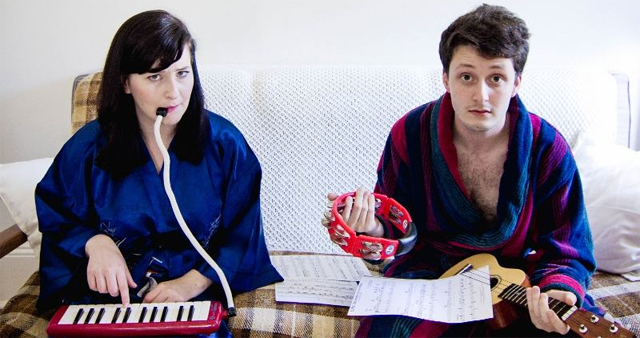
harryliv1Venue: Glebe Justice Centre (Glebe NSW), Sep 3 – 6, 2014
Writer: Charlotte Kerr
Cast: Charlotte Kerr, Evan Kerr

Theatre review
Charlotte and Evan Kerr are siblings, and they portray Harry & Liv (also siblings) in this cabaret/musical theatre piece. Harry has been staying over at Liv’s home, causing the place to look a real mess. Harry enjoys being the thorn in his sister’s side, and his constant jibes irritate her as much as the clutter he has unleashed upon her living room. Their sibling rivalry is charming and their banter is entertaining, but the greatest consequence of their squabbles is the music they create around Liv’s exquisite grand piano.

As a work of musical theatre, Charlotte Kerr’s script is delightfully witty, but it would benefit from a narrative that develops more substantially. As a cabaret act, the duo is eminently likeable with very accomplished musical abilities. Charlotte Kerr’s confident and emotive voice has excellent range that sings with humour and beautiful sensitivity. Evan Kerr is a dynamic pianist who keeps the show lively and animated. Song choices can be a little obscure for those of us who are not connoisseurs of the genre, but they are delivered brilliantly, and we cannot help but be impressed by the artists’ thorough familiarity with the material.

It is the simplest of shows, but Harry & Liv is thoroughly enjoyable. The set is economically but effectively arranged and intimately lit, creating a comfortable homely feeling so that the audience is at ease and involved. Indeed, the Kerrs’ hospitality is warm and their company is wondrous. Their talent is the kind that cannot be adequately represented by recorded media, you really do have to be there.

www.facebook.com/harryandlivcabaret

Review: Oedipus Rex (Belvoir St Theatre)

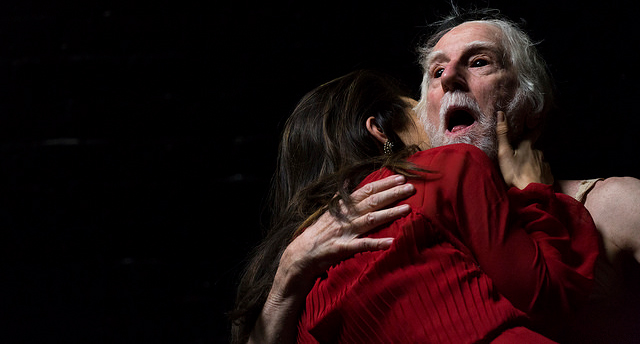
belvoirVenue: Belvoir St Theatre (Surry Hills NSW), Aug 21 – Sep 21, 2014
Dramaturg: Paul Jackson
Director: Adena Jacobs
Cast: Peter Carroll, Andrea Demetriades
Image by Pia Johnson

Theatre review
Sophocles’ Oedipus Rex is a classic tragedy remembered for its themes of fate and incest. Adena Jacobs’ sequel is a vision haunted by a blind and elderly Oedipus in throes of despair, suffering a living hell. His daughter, and sister, Antigone is his carer and companion, but the play features little conversation and no writer is credited. It is poetic and visual theatre, with influence from installation and performance art. Designer Paul Jackson’s creation is a bare clinical space that evokes the cruel agony of hospitals and bureaucratic offices. Ugly false ceiling panels with strategically positioned fluorescent tubes and halogen bulbs provide spine-chilling illumination that emphasise the horrific existence of the man who had been king. The 70-minute experimental work owes more to the paintings of Edvard Munch and Francis Bacon than it does Greek stage traditions. Meaning is created through imagery and sound, with spoken languages taking a back seat. Max Lyandvert’s involvement as composer and sound designer is not always prominent but his efforts are tremendously affecting, and when he does take centre stage, there is no hesitation to grab us by our core to deliver moments of astonishment.

The abstraction in Jacobs’ piece allows for numerous interpretations but the detailed and confronting depiction of an old man under palliative care addresses our universal mortality. The presence and sight of veteran actor Peter Carroll’s bare flesh resonates deeply. Our bodies unite us, and his vulnerable thinness is a visceral reminder of every person’s imminent and inevitable deterioration. The play’s muted narrative opens up the ways in which we can relate to Oedipus. When we no longer see him only as a man with specific circumstances, we are able to recognise more intimately the pain he embodies, and his torment speaks to us all, for true suffering requires no context to connect.

Oedipus Rex is the tour de force of a remarkable actor. Carroll’s performance is powerful and mesmerising, with more depth than any audience can deplete. There is enough drama in every fibre of his being to render narratives gratuitous. His director’s wisdom has allowed the production to strip back on storytelling and rely instead on the actor’s charisma and skill to impress upon us, the essence and soul of this artistic triumph. Carroll’s work is fearless, authentic and assertive, with a sense of traditional Asian theatre forms that focus on the craft of performance itself, rather than using it as a vehicle for saying something else. In this case, we are utterly enthralled by the man on stage, but also aware of the text’s subliminal messages. Antigone is played by Andrea Demetriades who provides solid support. The chemistry between both actors is outstanding, and the palpable trust they have harnessed is the source of many instances of frisson that occur throughout this thoroughly fascinating show.

We indulge in tragic stories because there is an intense beauty that resides in the darkness that befalls the innocent. There is an understanding that bad things can happen to good people, and as much as we strive for goodness, what results may not always be guaranteed. Life is dangerous, because it is uncertain. The ambiguity and risk in Adena Jacobs’ work puts her art in a position that challenges her audience, as well as the state of art production in our communities. Theatre often becomes too predictable and too lazy, and we need agents provocateur like Jacobs and Oedipus Rex to keep it alive.

www.belvoir.com.au

5 Questions with Scott Lee

scottleeWhat is your favourite swear word?
The C-bomb… but only in the confines of my car so know one can actually hear me say it.

What are you wearing?
A green hoodie I stole from my twin brother cause I’m a knob, and the only pair of pants I own (which conveniently has a massive hole in the crotch).

What is love?
I don’t know if I’ve fully figured that one out yet. For me I think it’s the moment when you let all those silly walls we all build down and have the freedom to be yourself (which in my case is being a bit of a nut).

What was the last show you saw, and how many stars do you give it?
Rebels With a Cause directed by Simon Doctor. Was a cool little showcase at NIDA with a whole bunch of scenes from Shakespeare, Chekhov, Harold Pinter, Clifford Odets and other pieces I didn’t recognise but it was great fun and I’d give it 4 stars.

Is your new show going to be any good?
I bloody reckon it will be! 🙂 It’s such a fun play that, I think, already has a massive following. Kenneth Lonergan’s writing is mental! It’s so spot on and human and we are all having a ball rehearsing. The play really speaks to me as a young adult and hopefully will to those who come and see it… but at the very least it’s a hilarious play and I think everyone who sees it will have a giggle, maybe even a laugh out loud.

Scott Lee stars in This Is Our Youth, part of Sydney Fringe 2014.
Show dates: 17 – 21 Sep, 2014
Show venue: TAP Gallery

5 Questions with Megan O’Connell‏

meganoconnellWhat is your favourite swear word?
Cunt. (Sorry, mum. Sorry, Sister Bernadette.)

What are you wearing?
Trackies and ugg boots. The Blacktown uniform. But I’m at home so it’s OK.

What is love?
A well timed cup of tea comes pretty close.

What was the last show you saw, and how many stars do you give it?
We’ve just had a baby, so my brain has gone to pudding. But I’m sure whatever it was, I enjoyed it.

Is your new show going to be any good?
Yes. I almost wish I wasn’t in it so I could see it myself. Almost. (Please don’t fire me).

Megan O’Connell‏ is appearing in The Motherf**ker With The Hat, from Darlinghurst Theatre Company’s 2014 season.
Show dates: 19 Sep – 19 Oct, 2014
Show venue: Eternity Playhouse

5 Questions with Narek Arman

narekarmanWhat is your favourite swear word?
I use the phrase “fuck that shit” quite a bit…

What are you wearing?
Underwear. Too cool for school, I know.

What is love?
Shrek is love, Shrek is life.

What was the last show you saw, and how many stars do you give it?
To be completely honest, I don’t recall the name of the last show I saw but I thought it was worth 3 and a half stars.

Is your new show going to be any good?
Oh you bet it’s going to be good!


Narek Arman plays the role of Aaron in Sugarland. Read Suzy’s review here.
Show dates: 27 Aug – 13 Sep, 2014
Show venue: ATYP