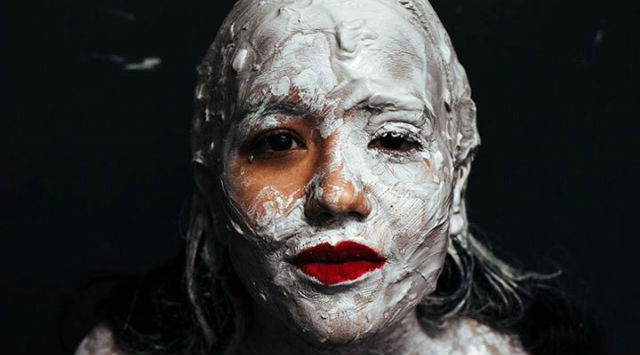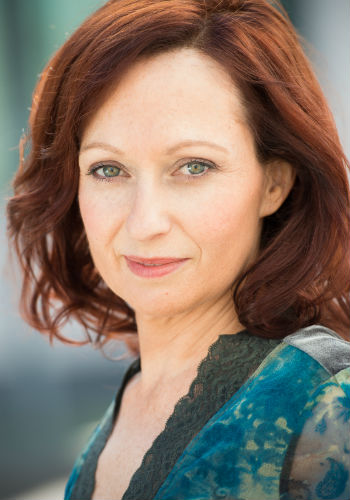
Review: The Real Thing (New Theatre)

newtheatreVenue: New Theatre (Newtown NSW), Oct 6 – Nov 7, 2015
Playwright: Tom Stoppard
Director: Alice Livingstone
Cast: Peter Eyers, Charlotte Hazzard, Ainslie McGlynn, Christopher Tomkinson, Emily Weare, Benjamin Winckle
Photography © Bob Seary

Theatre review
There are two main things being discussed in Tom Stoppard’s The Real Thing; the nature of relationships, and the process of making art. Through several “play within a play” segments, we attempt to get to the bottom of what is most honest, by looking past pretences for a grasp of the real. Monogamy, fidelity and longevity of relationships are dealt with in the most intellectually frank way, and although the play is now well over 30 years old, its propositions are no less refreshing and controversial. The extraordinarily articulate dissection of the creative process, along with the analysis of values that we place upon art, are also full of poignancy and resonance. The play is witty and pointedly intelligent, with challenging concepts and brilliantly delightful use of language that keep us entertained while placing our brains on overdrive.

Director Alice Livingstone is uncompromising with the depth of the text, while simultaneously introducing, quite miraculously, a jaunty pace to a staging that delivers solid laughs alongside a consistently astute level of discourse. The work suffers from a lack of visual imagination that results in stagnant and predictable physical compositions, but its meticulous attention to nuances in dialogue is more than impressive.

Leading man Christopher Tomkinson is the perfect blend of eccentricity, smarts and vulnerability. The actor’s thorough appreciation of the writing offers up an interpretation of Stoppard’s lines that is completely fascinating. He opens up a world of thinking that we rarely encounter; one that seems original yet is able to ring true on a very intimate level. Equally precise is Ainslie McGlynn in the role of Annie, whose embodiment of her character’s conflicts with monogamy and love are thoughtful and provocative. For all the talk about sex, the production’s energy is not particularly libidinous, but chemistry between players is of a good standard. The cast is a cohesive one that tells the story from a unified perspective, and the consequences are often powerful.

The Real Thing is an important work about universal experiences. Love may be hard to define, but it shapes everyone. We chase it constantly but seldom do we stop to reflect on these impulses. Tom Stoppard resists romantic delusions and preconceived notions to locate a truer understanding of that mysterious force underscoring so much of our lives. We want to know what love is, and he intends to show us.

www.newtheatre.org.au

Review: A Flower Of The Lips (King Street Theatre)

flowerVenue: King Street Theatre (Newtown NSW), Oct 6 – 24, 2015
Playwright: Valentino Musico
Director: Ira Hal Seidenstein
Cast: Michelle De Rosa, Marcella Franco, Jamila Hall, Yiss Mill, Kiki Skountzos

Theatre review
Every life has a story to tell. No matter our choices and experiences, narratives can be woven and lessons are to be learned from any being that has walked the earth, but it is up to the storyteller to translate an existence into something meaningful for the listener. Valentino Musico’s A Flower Of The Lips investigates the short life of his great-grandfather, Bruno Aloi of Calabria, Italy a century ago. Aloi’s extraordinary legend has persisted in his village of Pietracupa, and it is understandable that Musico is fascinated by the ancestor and is thus motivated to create a play that immortalises those memories. The work is sincere and earthy, but its pidgin English may be problematic for some. The temporal and social context of the plot may also prove obscure, and reaching an understanding of unfolding events is challenging.

Direction by Ira Hal Seidenstein is stylistically minimal yet energetic and joyful. Early portions of the show would benefit from greater elucidations in order that its distant time, space and characters can communicate more intimately. Performances are committed but the characters are not sufficiently accessible. There is a gulf between them and us that needs to be bridged, so that what we see on stage can find a universality and emotional resonance.

The tales surrounding Bruno Aloi are clearly near and dear to the writer, but those passions are difficult to connect with. Audiences are selfish and need to be shown a way to relate personally to what is being shared. Valentino Musico’s play is an expression of his love of family and of his familial history, which we can appreciate, but from afar.

www.kingstreettheatre.com.au

Review: Edward II (Sport For Jove Theatre)

sportforjoveVenue: Seymour Centre (Chippendale NSW), Oct 1 – 17, 2015
Playwright: Christopher Marlowe
Director: Terry Karabelas
Cast: Angela Bauer, Barry French, Belinda Hoare, Edmund Lembke-Hogan, Gabriel Fancourt, Georgia Adamson, James Lugton, Julian Garner, Michael Whalley, Richard Hilliar, Simon London
Image by Marnya Rothe

Theatre review
Christopher Marlowe’s 1593 tragedy Edward II charts the downfall of a king in a political system controlled vigorously by the church. In the play, Edward’s controversial relationship with one of his minions Gaveston, provides a motive for the barons and Queen Isabella to depose of Edward in favour of his son. In addition to the unorthodox love in question, the king is also portrayed to be an ineffectual leader with few redeeming qualities. The other personalities in the script who plot his demise are similarly repugnant, resulting in a narrative that is emotionally distant in spite of its many scenes of passion. There is no one for us to side with, and we do not feel badly for anybody’s anguish.

Terry Karabelas’ direction emphasises the fleshly pleasures and pains of Edward II. The magnification of sexuality, along with graphic scenes of torture, give the show a refreshing contemporariness. The omnipresence of religion as an insidious force that instigates every objectionable act is a another subversive interpretation that attempts to bring paradigms closer to today’s standards but ultimately, little poignancy is to be found in the production.

Although performances are uniformly polished and energetic, characters rarely communicate beyond the surface. Personalities are insufficiently compelling, and the story turns simplistic. Leading man Julian Garner has a dark and alluring presence, with an intensity that holds our attention, but there is little for the actor to work with. Characters lack complexity and the cast struggles to elevate the play from its predictability. More noteworthy is lighting design by Ross Graham whose excellent work helps to manufacture a sense of theatricality, and atones with emotional dimensions lacking in the text.

Betrayals, mutinies and dethronements are themes more than familiar to any Australian, therefore dealing with those subjects require a level of insight beyond the pedestrian. The changing of prime ministers and governments lead the news on a daily basis, and in spite of its many murders, what Edward II presents is strangely placid. It is unfortunate that the knifing of leaders is now commonplace, but the drama that accompanies those stories should never turn mundane.

www.sportforjove.com.au

5 Questions with Elizabeth MacGregor and Dominique Nesbitt

Elizabeth MacGregor

Elizabeth MacGregor

Dominique Nesbitt: Chekhov is renowned for his honest and well-rounded depictions of women. I think his Three Sisters is a perfect example of the depth and substance he gives to his female characters. What drew you to the character of Olga?
Elizabeth MacGregor: My instant response would be to describe Olga as ‘the sensible one’ – but in reality, that doesn’t do her justice at all. Olga is the pillar of the family, as the eldest sister, she’s assumed the role of care-taker and comforter to her three younger siblings after the death of their mother and father, and has forgone her own ambitions in order to keep the family together. When I first approached this role, I wondered why Olga didn’t seem to be resentful at having to take care of the others, but I really believe that she genuinely cares for her siblings (and the greater ‘family’ of friends and servants) and gains a strong sense of identity and emotional fulfillment through nurturing the others. I think ultimately what drew me to the character of Olga is her emotional strength and her resilience.

Chekhov is also renowned for writing texts that are universal in both theme and tone. We are keeping our production set in the period in which it was written. I was wondering whether this has changed the way you have prepared for the role, or whether its universality has meant that you have easily tapped into the mindset of a woman living in 1900s Russia?
It has been a welcome challenge to prepare for this role – and it is a mixture of both. It’s very important to understand the context of the time and place in which the play is set, so I’ve been reading and researching as much as possible about Russia, the politics of the time and the lives and expectations of a woman in Russia in 1900. Women in 1900 carried themselves very differently from the way we do now – so I’m also thinking a lot about movement, gestures and posture. The themes are universal though – so I feel able to tap into the emotional experience of Olga – but it’s important to be expressing that in the context of the time in which the play is set.

During the play, Masha’s husband Kulygin confesses that he perhaps should have married Olga instead. Have you created a backstory in order to give that scene added gravitas?
As much as possible, I’ve created a backstory using the information provided in the script. It’s important not to give too much of the backstory away though – I wouldn’t want to dissipate the energy of the ‘secret’.

You have just been approached to play the lead in a production of your choosing. What would it be and Why? (You may also want to cast some of the other characters as well!).
I would dearly love the opportunity to play the role of Desiree Armfeldt in Sondheim’s A Little Night Music. The musical explores the themes of love, desire, opportunities, and more importantly, missed opportunities, and the passing of time. Desiree sings the well-known song, ‘Send in the Clowns’ – and when I first learned to sing that song as a naive, unworldly 14 year old, I really didn’t understand the song at all and thought that I was ‘way too cool’ to be having to sing about clowns. Well, when I finally saw the musical about 10 years ago, I heard the song and was completely mesmerized and quite emotional and I just knew then – ‘I really want to sing that song, I really understand it now’. I am completely in awe of Sondheim’s ability to portray intricate themes and complex human emotions with beautiful music and incredibly clever lyrics.

In Act 1, Olga proudly declares that she has prepared supper for Irina’s name-day celebration. During rehearsals, we have all had the absolute pleasure of sampling some of your own delicious creations. What would be on the menu at a dinner party hosted by Elizabeth?
Oh, that’s easy – but how do I narrow it down to just a few dishes! For entrée, I have a wonderful German recipe for a warm potato salad served with cured salmon; followed by duck confit with du puy lentils, and for dessert, lemon tart. There’s no chocolate in the dessert, so I’d simply have to make some truffles to have afterwards, because you can’t possibly have a dinner party without chocolate!

Dominique Nesbitt

Dominique Nesbitt

Elizabeth MacGregor: What drew you to the role of Irina? What do you like about her?
Dominique Nesbitt: I’ve always been drawn to stories that deal with the passage of time. In Chekhov’s Three Sisters we are given the opportunity to track the lives of these three women (and others) across four years. If nothing else, we learn that a lot can happen in that considerably short space of time! When we first meet Irina, she is 20 years old and full of life and promise. I think it was that youthful determination and spirit that first drew me to her. She has dreams and aspirations that are delivered with such vigour and passion that you just hope she can see them fulfilled. It is clear from the outset that those dreams have outgrown her provincial surroundings. She yearns to go home to Moscow and it is that unrelenting desire for the city which sees her through the next couple years spent working in menial jobs. There is something in her story that we can all relate to, I think. She is a fiercely independent and free-thinking young woman who strives for more than a life in the country can offer her. Being the youngest of the family, Irina seeks out the guidance and counsel of her older sisters – particularly Olga – whom she admires and respects. By 23, she has experienced tragedy and faced challenges the likes of which most of us will hopefully never experience in our lives. Her resolve and maturity at the end of the play is startling and it remains one of the things I admire most about her.

How have you approached preparing for your role, bearing in mind the era in which the play is set?
Despite it being set in Russia in the 1900s, I think the characters have been written in such a way that they are as relatable and approachable to modern audiences as they were to audiences 100 years ago. In terms of my own preparation, I have done a little extra research to ensure that my movements and gestures are in keeping with the period. I have also had a look at important historical events that framed this period in Russia because I think it is particularly crucial to setting the mood and tone of the play. In terms of characterisation, I think I have approached Irina as I would any other character. As I said earlier, I think the sentiments she expresses are timeless in that they speak to that youthful determination we all have to carve out a meaningful existence in whatever we choose to undertake. I just hope I can do that justice!

If you, Dominique, could give Irina one piece of advice, what would it be? Are there any other characters in the play to whom you would give advice, and what would that be?
Being 24 myself, I don’t really know what words of wisdom I can impart given that Irina and I are very close in age but I guess I would tell her to place a greater value on patience. There are several moments in the play where she lacks the patience to see that there is great beauty in the path that leads us to our destination. There isn’t one specific character to whom I would seek to advise but I would instead remind everyone that happiness is not overrated and they should seek it out and hold onto it as best they can.

Live theatre is dynamic – no two performances (of the same production) are exactly the same. What is the most unexpected (or funny) thing that has happened to you in a play, and how did you respond?
How true it is! I played Glinda, the Good Witch, in my High School’s production of The Wizard Of Oz and during one performance, I slipped and fell mid-song on the train of my voluminous skirt. Whilst I was unable to mask the fact that I had clearly fallen, I attempted to rally the munchkins around me in the hope that together we could make it through the rest of the song without further incident. It was incredibly embarrassing at the time but I do look back now and laugh.

You clearly have an eye for design and style, given the beautiful and distinctive clothes that you wear every day to rehearsals. Are you inspired by costumes? Is there a particular era or style of costume/clothing that you would like to design?
That is such a lovely compliment. Thank you! I have always been very interested in fashion and costuming, because I think you can glean a great deal about a period just by examining the different silhouettes and range of fabrics used to make garments. That may be why I collect vintage clothes because I love the idea of wearing garments that have a backstory. As an actor, trying on the costumes of your character can be a rather transformative experience. As silly as it sounds, I do believe that your costumes can help you to feel and move as your character. There is no one particular style or era that I would specifically like to design because I would probably pull ideas from several different eras. In saying that, my favourite silhouette is probably the 1950’s ‘New Look.’ If I were to design the costumes for a production, I would love to use that silhouette as a base. I’m also drawn to novelty patterns and rich floral prints. But then I also love Hungarian Folk embroidery, which was popular in the 1930’s and the drop-waist dresses of the 1920’s. It’s far too difficult for me to choose! The common thread is I’m drawn to clothing that signified a shift in the mindset and/or social circumstances of an era. I hope that answers the question.

Elizabeth MacGregor and Dominique Nesbitt will be appearing in Three Sisters by Anton Chekhov, translated by Brian Friel.
Dates: 17 Oct – 14 Nov, 2015
Venue: Genesian Theatre

Review: Pygmalion (UTS Backstage)

utsbackstageVenue: Bon Marche Studio (Ultimo NSW), Oct 1 – 4, 2015
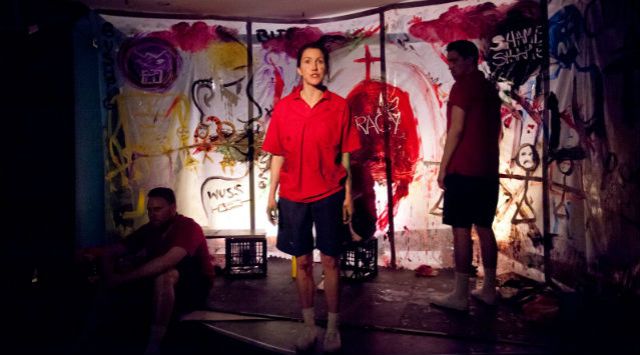
Playwright: George Bernard Shaw (adapted by Joanna Griffiths)
Director: Joanna Griffiths
Cast: Emma Barrett, Ben Chapple, Jack Clark, Elizabeth Collins, Tom Crotty, Remy Danoy, Norah George, Kate Gogolewski, Cameron Hart, Xavier Holt, Blake O’Brien, Mikaela Rundle, Steph Stuart, Adam Teusner, Beattie Tow
Image by Christopher Quyen

Theatre review
Joanna Griffith’s retelling of George Bernard Shaw’s Pygmalion explores the dark facets of the century old story, bringing to focus issues of race, gender and class that can easily be obscured by its own lighter elements. The production is part traditional, part contemporary, and it is the inconceivable juxtaposition of the two, on the same stage, that gives the show a thrilling edge. The inventive use of symbols and abstraction to accompany the antiquated dialogue provides a refreshing theatrical experience and the messages conveyed are at times, quite powerful.

There is a lot of flair in Griffith’s adventurous approach. Her outlandish flourishes, including several segments of dance, as well as a quirky take on Eliza Doolittle’s original voice (possibly an African accent), uses the medium of performance to communicate passionate ideas in an abstract but surprisingly effective way. Presentation of the show’s more conventional segments require greater sophistication, but solid work by its lead actors Mikaela Rundle and Adam Teusner help to keep us engaged. Rundle’s creativity and exuberance as Eliza provide us with abundance of food for thought, along with delightful entertainment value. Her talents in movement are a highlight and the foundation for the most memorable sequences of the production. Professor Higgins is charmingly portrayed by Teusner who displays a strong understanding of the text and its intentions. His ability to finely balance old-fashioned comedy with contemporary political concerns demonstrates sensitivity and intelligence.

This thoughtful rendition of Pygmalion plays with a range of deeply interesting concepts and presents them in unexpected ways. Its daring impulses fascinate and challenge, but are never simplistic or callow. Technical executions can be fine tuned at many levels, but their design and purpose are beautifully imagined. It is important to think about subtexts and subtle implications of every story we tell, and on this occasion, we discover meaning in everything.

www.utsbackstage.com

Review: A Property Of The Clan (Blood Moon Theatre)

bloodmoonVenue: Blood Moon Theatre (Potts Point NSW), Sep 29 – Oct 17, 2015
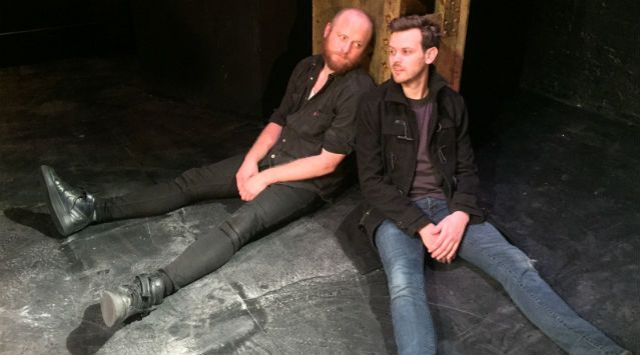
Playwright: Nick Enright
Director: Phillip Rouse
Cast: George Banders, Megan Drury, Jack Starkey, Samantha Young
Image by Phyllis Wong

Theatre review
Nick Enright’s A Property Of The Clan first appeared in 1992. It was the precursor to his more famous Blackrock, both of which were written in response to the murder of a 14 year-old Australian schoolgirl. The play is mainly concerned with our youth, and how misogyny becomes an entrenched part of Australian culture through its early permeation into children’s lives at school and at home. It is a serious subject matter that retains its resonance in 2015. The characters are not obsessed with mobile phones and social media, but their desires and prejudices are no different. We observe a group of teenagers finding their place in society, acquiring values, and growing up. The circumstances in which they find themselves are exceptionally traumatic, but we recognise their hardship to be symptomatic of teenage life in general, and are made to consider the ways ideals and beliefs are reinforced at that sensitive age. The play is about what happens in the formative years, and the lifelong repercussions thereafter.

Direction by Phillip Rouse is restricted by a problematic space, with its tiny stage, awkward entrances and restrictive technical facilities, but his inventiveness shines through. Reducing the play to its essentials, but adding visual flourishes where possible, Rouse is able to make personalities and narratives effective, while creating an environment that feels energetic and nuanced. There are significant problems with lighting and blocking that cause distraction, but the powerful sincerity in the piece ultimately wins over its audience. Performances are strong and the cast is evenly pitched. The adult players approach their teenage roles with integrity and a surprising authenticity that allow us to identify with each of them and to sympathise with their experiences. Megan Drury is especially memorable in both her parts as Rachel and Diane. Her transformations from one to the other are fluently executed, and the balance she achieves between the divergent qualities of youth and gravity is beautifully measured.

The kids learn about discrimination at school, but they struggle to recognise the powers at play in their own spheres. We can talk about all the pressing issues of our times, evangelising on education, parenting, domestic violence and feminism, but the challenge is to make changes to the defects in our culture, and to find real solutions for the problems that we have. There is a gender issue we must address, and the way we teach girls and boys about their differences are in need of a revolution.

www.facebook.com/bloodmoontheatre

Review: Bacon And Eggs (Only Children Theatre Co)

baconandeggsVenue: Old Fitzroy Theatre (Woolloomooloo NSW), Sep 29 – Oct 10, 2015
Playwright: Chris Edmund
Director: Chris Edmund
Cast: Ryan Jones, Tom Dent, Adrian Mulraney

Theatre review
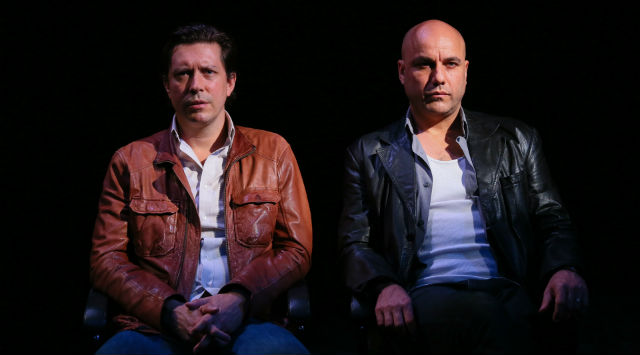
Two actors down on their luck spend the night drinking too much, and stumble upon the ghost of Francis Bacon. When artists struggle with their work, it is important to consult those who have come before, for wisdom, experience and history. Time spent on analysis and self reflection is crucial to the artistic process, especially at those frustrating, but necessary, moments of failure. Chris Edmund’s Bacon And Eggs is a thirty-minute meditation on the greats of European theatre, from Beckett to Shakespeare. Like any artist in any discipline, we study subjects considered to be exemplary, finding appropriate material to inspire and define our personal approaches. Bacon was by any measure, a fascinating figure, but this manifestation of his apparition is particularly straightforward. The play is a very simple one, and even though it does not bear ambitious pretences, there is a monotony to its rhythm and themes that can be challenging.

Performances are quirky but insufficiently varied. Ryan Jones and Tom Dent are strong with their small sections of comedy, but they sustain a singular mode of confusion for a long duration of the work, revealing an overly simplistic understanding of their parts. Adrian Mulraney plays a Bacon who is predictably flamboyant, but there are insufficient dramatic shifts in temperament and motivation to justify a full-fledged standalone production. It is doubtless that interesting ideas can be found in Bacon And Eggs, but at this early stage of its development, many more ingredients are required before the recipe can sizzle.

www.oldfitztheatre.com

Review: A Steady Rain (Redline Productions)

Steady Rain by Tim LevyVenue: Old Fitzroy Theatre (Woolloomooloo NSW), Sep 22 – Oct 17, 2015
Playwright: Keith Huff
Director: Adam Cook
Cast: Nick Barkla, Justin Stewart Cotta
Image by Tim Levy

Theatre review
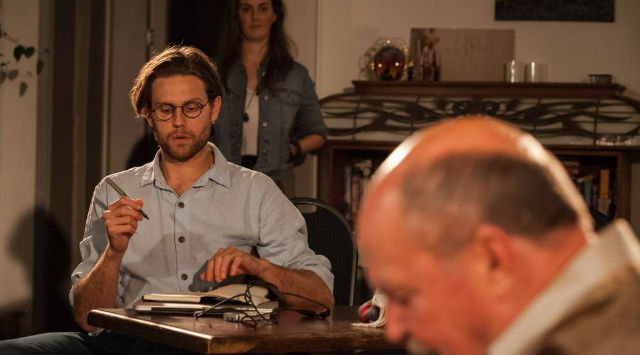
We are all flawed beings. Denny and Joey are Chicago policemen who have all their imperfections put on display in Keith Huff’s A Steady Rain. There is a liberal amount of machismo in the way they live their lives, but the play is more interested in their vulnerabilities and in exposing the damage that resides behind tough exteriors. There are dramatic events and cinematic characters to be found, and even though passions run high, there is no guarantee that audiences would respond with the compassion it aims for. We see the humanity of the cops, but whether we relate to their weaknesses and forgive their misdeeds, and hence empathise with their stories, would probably depend on each individual’s own world view.

Adam Cook’s direction works hard to establish the grave pain experienced by the two men, but we never forget that their circumstances are largely self-inflicted. Nevertheless, Cook’s work is thoughtful, energetic and operatic in its sentimental expressions. He brings a grandeur not only to all the explosive emotions of the narrative, but manages to create in the space, an unceasing frenzy that elevates the two-hander to an immensely gripping thriller of a show. Design aspects of the production are superbly accomplished, with Ross Graham’s set and lights providing an atmosphere full of drama and grit. Sound by Jed Silver underscores the entire text with measured tension and outstanding sensitivity.

The centrepiece of the staging are magnificent performances by its two leads. Justin Stewart Cotta plays the fallen Denny, eloquently detailing a moral and bodily descent that is simply fascinating to watch. His aggressive approach gives the show an edge, and his tenacious ability to intimately engage his audience during his many monologues, makes his character’s destructive journey an insightful exploration into the way we can let things spiral out of control. Joey’s experience is less extreme, but Nick Barkla’s work in the role is certainly no less intense. The actor’s extraordinary emotional range is showcased at all its extremes, and the level of authenticity he injects into every moment is wonderfully mesmerising. For those of us who are unable to find satisfaction in the tale being told, the impressive craft that is put on show by these men is more than compensatory.

There is more to A Steady Rain than a buddy cop drama, but what it tries to explore is not wholly convincing. Narratives take predictable forms because our responses are calculable. Innocence and redemption hold a certain sacramental value, and dark stories need them to find resonance. If blame can be squarely attributed to its victims, whatever demise that befalls them stands every chance of leaving us cold. Here, theatrical magic is delivered on many levels, but what is actually being said is ambiguous at best.

www.oldfitztheatre.com

Review: Crazy Brave (Cross Pollinate Productions)

crosspollinateVenue: San Telmo Studio (Chippendale NSW), Sep 17 – 27, 2015
Playwright: Michael Gurr
Director: Suzanne Pereira
Cast: Les Asmussen, Rhys Keir, Cecilia Morrow, Sam Trotman, Samantha Ward, Michael Wood
Image by John Ma

Theatre review
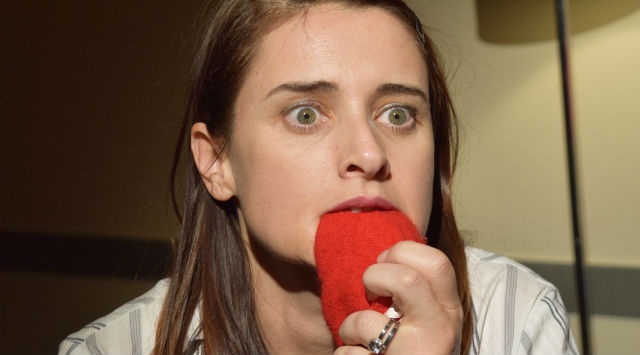
Political discourse is often simplistic, with individuals taking on allegiances with left or right wings for a certain convenience necessitated by the traditional structures of governance. Adversarial parties make us take sides, and difficult issues are made easier by adhering to a seemingly sensible spectrum traversing the far left to the far right. Many of us take on political affiliations as identity markers, always ready to align or dissent based on that tribal connection, and deviations are unthinkable. In Michael Gurr’s Crazy Brave, anarchists aim for social unrest with the sole purpose of disruption. They do not wish to replace existing systems and conventions with new propositions, only to dismantle what they view to be pervasive and fundamentally problematic. Gurr’s script is complex and sophisticated. It addresses the personal and the social with brilliant sensitivity, and structures its plot inventively for a surprising and gripping progression, involving both our emotions and intellect.

Accordingly, direction by Suzanne Pereira appeals to her audience’s desire to be satisfied on those visceral and cerebral levels. Challenging ideas are presented provocatively, and passions are explored with great potency. It is a mesmerising theatrical experience, with adventurous use of space (beautifully aided by Stephen Moylan’s sound and Tim Hope’s lights) and impressively accurate portrayals of relationships and personalities. Lead characters are powerfully performed. Alice, the ardent agitator with big hopes and even greater determination, is played by Samantha Ward who delivers difficult fanatic speeches with amazing clarity and an almost intimidating conviction. Ward’s toughness in the role is awe-inspiring, and her ability to demonstrate vulnerability alongside that immense strength of character, gives the play its credibility and a dramatic quality of urgency. Sam Trotman’s interpretation of Nick is intense and thoroughly studied, and the actor’s marvellous ability to establish chemistry with co-actors makes for compelling scenes that demand our attention. Some of the show’s most moving moments come from Les Asmussen as Harold, who provides a soulful voice of reason with a flair for bringing elucidation and gravity to the subtler, but wise, sections of the text. Asmussen’s delivery of an anecdote in the concluding scene is utterly sublime storytelling.

Broken marriages can be dealt with in several ways including, as is in the play, abandonment and divorce. Defective economic and political systems are contrastingly resilient, where rot is allowed to persist because change does not benefit the powerful. Cosmetic alterations are made to appease the public, but internal deterioration remains. Revolutions require vision, and a populace that understands its own deprivation, both of which are easily concealed by misinformation and deception. Unhappy relationships can be resolved, either by collusive delusion, or a brutal annihilation, but the choices for society are less simple.

www.crosspollinate.com.au

Review: Where’s My Money? (Seeker Productions)

seekerVenue: Erskineville Town Hall (Erskineville NSW), Sep 23 – 27, 2015
Playwright: John Patrick Shanley
Director: Laura Pike
Cast: Amelia Beau Kaldor, Eli King, Chris Miller, Jacki Mison, Monica Sayers

Theatre review
Marriage is one of the most traditional customs of any civilisation, and its long established relationship with money and property distribution remains a crucial part of social systems today. In cultures like ours, love and romance are usually the driving force of unions, but the actual and pragmatic experience remains intrinsically tied with financial matters. John Patrick Shanley’s Where’s My Money? is a boisterous comedy about female-male relationships, and the problematic intertwining of love, sex and money. The characters in the play engage in complex and passionate diatribes, always in the mode of a fight, whether or not they are dealing with their partners. They also have to contend with ghosts that make regular appearances to disrupt their attempts at logic, reminding us all of the constant presence of less tangible things like guilt, regret and love.

This production, directed by Laura Pike, is energetic and funny, with charming performances that deliver consistent laughs. A less naturalistic approach could give the text’s ideas greater elucidation, but the pace of Pike’s show is enjoyably brisk. Even though costumes leave a lot to be desired, character types and relationships are clearly defined with interesting dynamics always at play. The cast of five shows excellent conviction, and an enthusiasm for comedy that guarantees a satisfied audience. There is a subversive spirit in Shanley’s writing that encourages a more adventurous, or less straightforward style of presentation. The show is a well-rehearsed one, but greater nuance could be introduced for a more philosophical rendering of the text.

Making relationships work, can be a lot like making art work. We try to identify all its components and then apply our best efforts to ensure that an ideal result eventuates. There are less administrable forces at play that need attention, but flair and other ephemerals require a sophistication that comes from time and sensitivity. Where’s My Money? is appropriately loud and humorous, and like other people’s marriages, it offers up a pleasing veneer, but we wonder what lies beneath the cheerful surface.

www.facebook.com/events/…