Review: Femme Fatale (Leftofcentre Theatre Co)

leftofcentreVenue: Old 505 Theatre @ 5 Eliza St (Newtown NSW), Jan 19 – 23, 2016
Playwright: Clare Hennessy
Director: Carissa Licciardello
Cast: Rebecca Day, Tiffany Hoy, Henriette Tkalec

Theatre review
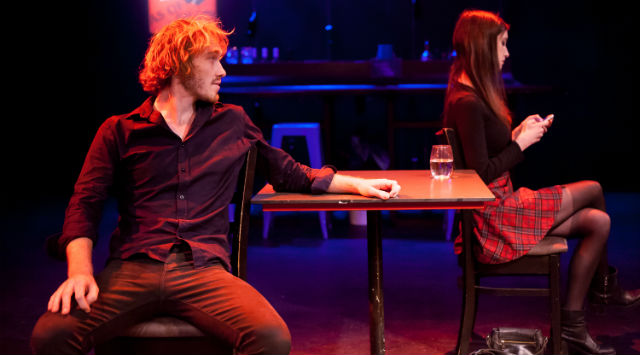
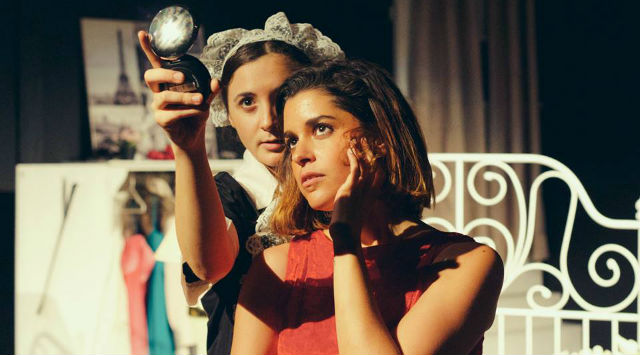
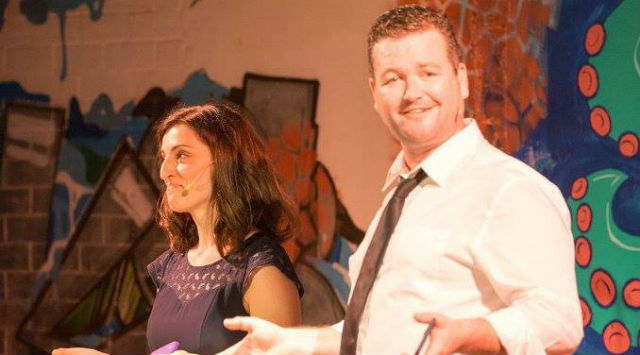
The femme fatale is a figure usually conjured up as a source of threat to the masculine of our species. She seems sexual, devious and powerful, but only exists in opposition, having no meaning independent of her male counterparts. In Clare Hennessy’s Femme Fatale, we look at humankind’s first three women according to Western mythology; Eve, Lilith and Pandora, and their conception as originators of evil and sin. Each were made responsible for releasing to the world a perpetuity of harm. Their myths have framed womanhood as initiator in the eradication of purity and goodness, and the feminine is forever tainted with malice.

The writing is unabashedly poetic, and although full of passion, its structure is insufficiently dramatic. Its abstraction has a deliberate and obscure beauty, but is of the sort that can be too alienating for emotional connection. The production’s atmosphere of foreboding is effectively orchestrated, although greater variation in style and tone between scenes could prove to be more rewarding. The cast is well-rehearsed and each actor shows excellent commitment, with Henriette Tkalec’s intense presence leaving the strongest impression.

It is not the most communicative of works, but its intentions are thoughtful and sincere. We can always rely on politics to give theatre its fire, and Femme Fatale is certainly spirited, buoyed by its many exciting, sometimes repetitious, ideas and inspirations. It makes an unambiguous feminist statement with what it attempts to say, but more so in how the show is put together. These young women have pooled their talents in collaboration for a piece that exists against all odds, in a landscape that is tenaciously patriarchal. No matter how we look at it, Australian theatre is still a boys’ club, but the bad girls are here to stay, and their ripple effect has begun.

/www.leftofcentreau.com

Review: Patrice Balbina’s Chance Encounter With The End Of The World (ATYP)

atypVenue: ATYP (Walsh Bay NSW), Jan 20 – Jan 23, 2016
Director: Fraser Corfield
Cast: Raul Atalaia, Holly Fraser, Emilie Leclerc, Giuditta Mingucci, Yves Simard
Image by Ben Pugh

Theatre review
Patrice Balbina is a 10-year-old asylum seeker. The character might be fictional, but what she goes through is representative of the experiences that millions have shared. It is a familiar story of struggle, but told from the other side of the fence. The work is devised by artists from Australia, Canada, Germany, Italy, Portugal and the UK, countries that offer refuge, and where debates about our responsibilities as citizens of the world rage on. Much of our pervasive news media is concerned with how willing or ready we are as developed nations to receive immigrants, with minimal consideration for the reality of life experienced by those waiting to be granted asylum.

What the collective has created here is an earnest portrayal of the plight of those who had fallen victim to unjust and illegal persecution. Patrice’s family leaves their home to escape violent threats, finding themselves in the mercy of people smugglers, a small boat and the ocean. The story never gets complicated, but it does not delve very deep into its potent themes either. Its scenes are beautifully choreographed and energetically performed, but it brings little fresh information to an admittedly tired topic. For a subject matter that is in our attention day after day, and had been for at least 15 years (since 9-11), we wish for the play to provide fresh perspectives for our jaded minds, or maybe emotional resonance for our callused hearts. Patrice’s story feels like a polite and sanitised iteration of what many of us have often imagined to be much more dramatic and harrowing.

From our privileged first world positions, we hear of murders in foreign lands, deaths in the sea, and fatalities in camps. It takes pictures of toddlers washed ashore to move us to action. Tales about other people’s catastrophes have to be desperately brutal before we even begin to lift a finger, so we have to wonder if political discussions in the theatre about the global refugee crisis can ever take a gentle approach. There are no black or white, easy answers to the state of affairs. Even in the realm of make-believe, finding a way to get to a solution is fraught with uncertainty.

www.atyp.com.au

Review: The Golden Age (Sydney Theatre Company)

stcVenue: Wharf 1 Sydney Theatre Company (Walsh Bay NSW), Jan 14 – Feb 20, 2016
Playwright: Louis Nowra
Director: Kip Williams
Cast: Rarriwuy Hick, Remy Hii, Brandon McClelland, Robert Menzies, Liam Nunan, Zindzi Okenyo, Sarah Peirse, Anthony Taufa, Ursula Yovich
Image by Lisa Tomasetti

Theatre review
At the time of The Golden Age‘s original première in 1985, we talked about multiculturalism. 31 years on, that buzzword has evolved into the contemporary concern for diversity, and a real need for societies to address pervasive inequities, whether they be surreptitious or conspicuous. Since the middle of the previous century, we have seen the rise of political agitation, most significantly in the realms of race, gender and sexuality, that attempt to remedy the injustices of the world, to varying degrees of success.

In Louis Nowra’s play, two cultures collide, with one being an overwhelming and dominating force that instinctively requires anything contradictory to surrender, assimilate and conform. The other is a community of six people, a lost tribe descended from outcasts in the Tasmanian wilderness, admittedly rustic but undeniably peaceful. The idea of an Australian mainstream is explored bitingly by Nowra, who juxtaposes what we have come to think of as normal, against something quite literally extraordinary, to expose the systemic failings of the way we organise life, in the belief that our idea of civilisation is the only one legitimate and proper. The Golden Age reveals how we fight tooth and nail to hold up an ideal that is ultimately of service to no one, and that has an appetite for destruction so voracious that it causes devastation even unto itself.

We can interpret Nowra’s writing in a myriad ways, and apply his parable to any context of power imbalance, but its relevance to the immediate and pressing matter of Aboriginal lives in colonial Australia cannot be ignored. The subjugation of The Golden Age‘s lost tribe, in the name of protecting them, is a painful parallel to the many governmental initiatives that have transpired and continue to be devised, claiming to be in the best interest of our First Peoples. The way power disguises its self-serving objectives behind façades of charity and convenient slogans like “the greater good”, is scathingly deconstructed and laid bare in this production by director Kip Williams. This is highly complex theatre, yet Williams delivers nuance, clarity and power while retaining the poetic, and challenging, spirit of Nowra’s writing.

Williams’s show is profoundly hypnotic, coalesced with brilliant dramatic chemistry and an air of intriguing mystery so fierce that we are left still wanting more after its generous three-hour duration. The Golden Age works on all levels; entertaining, emotional, spiritual, intelligent and meaningful, it fulfils everything the theatregoer wishes to experience, and leaves an impressive political message that implicates every one of us. David Fleischer’s design brings beauty, both raw and refined, to the stage, along with surprisingly flexible spacial configurations that provide excellent variety for the many scene transitions. Sound and music by Max Lyandvert is the clandestine master manipulator of atmosphere and the author of the show’s sublime mythical dimension. He works with our imagination to take us to wondrous spaces never before encountered, but are viscerally familiar. The aesthetics of the production is dreamlike, simultaneously splendid and cruel, almost quintessentially Australian, but completely enchanting.

The cast is ethnically diverse, with several actors playing parts that are of different races to their own (an oddity for Australian theatre even though we are well into the 21st century). Ursula Yovich as Elizabeth Archer in particular, performs with great acerbity, her character’s increasingly oppressive European presence in the play. Yovich’s utterances of prejudicial statements resonate with startling potency, perhaps informed by the actor’s personal experiences as an Indigenous woman. The heart wrenching lead role Betsheb is played by Rarriwuy Hick, who provides a focused and strong centre to the piece. She balances Betsheb’s wildness with a natural warmth to deliver an endearing personality responsible for the show’s many poignant moments. Brandon McClelland is similarly likeable, creating a Francis that is agile and vibrant, with an emotional depth that makes relationships believable. He figures between both sides of the story’s cultural divide, and is convincing throughout.

The flaws in dominant ideologies stare at us straight in the face every day, but most of us accept them as par for the course. Along with that sense of resignation, many underprivileged lives are allowed to remain in disadvantage, injustice, and hardship. In The Golden Age, the powerful are with the assumption that alternatives will be detrimental to their personal lives, and the powerless suffer the consequences of being outsmarted and outnumbered. There are many occasions in Australia today that we think of the need for a revolution, but our majority is crippled with fear, and the minorities are left in sacrifice. Things can change, and they do change, but with each appearance of sensational work like this, our minds are enlightened and refreshed, and a new sense of urgency can be ignited.

www.sydneytheatre.com.au

5 Questions with Christy Sullivan and Stephen Mahy

Christy Sullivan

Christy Sullivan

Stephen Mahy: Hey Stephen Schwartz is coming to town, want to have a sing with him?
Christy Sullivan: Yes, please!

What is it about performing that makes you do it?
That you get to be a perpetual child; always at play! And that you you are lucky enough, through doing that, to make people feel.

Where do you find peace when it’s all too much?
I find peace by the beach. Either standing on the rocky cliffs or down on the sand and in the water.

Cliché, but what’s the dream role?
My dream role is Eliza Dolittle. Either in Pygmalion or My Fair Lady (not this time though!) You get to be the street urchin who turns into a princess, best of both worlds. And I do love accents!

Stephen Schwartz offers you one of his shows to star in, what is it?
The Baker’s Wife.

Stephen Mahy

Stephen Mahy

Christy Sullivan: When was the moment you decided to make performing a career?
Stephen Mahy: I was 21 and performing an amateur version of Les Mis, selling mobile phones and weighed up what was better. Auditioned for the acting schools and went to WAAPA.

Why do you love to sing?
Singing makes me happy, scared, annoyed, frustrated, determined and dedicated. In the words of Eddie Murphy from Delirious, “all you got to do is sing” and the rest follows.

If you could only sing, play an instrument or act for the rest of your life, which would it be?
I would act for the rest of my life. It’s too much fun acting like someone else.

What’s your favourite Stephen Schwartz song to sing and why?
To date I have only ever sung “Wicked” but, I’m really looking forward to performing the song I am singing at the Theatre Royal.

Have you ever sung defying gravity?
The last few bars, every time!

Christy Sullivan and Stephen Mahy are singing at Stephen Schwartz: In Conversation With Leigh Sales .
Dates: 13 Feb, 2016
Venue: Theatre Royal

Review: Tropical Hypeisms‏ (PACT Centre For Emerging Artists)

pactVenue: PACT Theatre (Erskineville NSW), Jan 13 – 16, 2016
Choreographer: Caroline Garcia
Cast: Caroline Garcia

Theatre review
Discussing the effects of colonisation on many of our racial identities is a highly complicated one. It requires an understanding of histories/herstories that we might be able to research and study, but will ultimately involve nostalgic longings of an imagined past that can no longer be wholly authentic. Caroline Garcia is a post-colonial artist interested in the evolution of identities based on ideas of gender and ethnicity as they relate to the Westernisation of cultures. Tropical Hypeisms is a work that appreciates the complexities of those concepts and makes representations that are similarly intricate and elaborate.

There is certainly no watering down of what the artist wishes to say, which means that deciphering her consolidation of symbols can be challenging. Garcia rejects conventional approaches of berating and castigating the forces of domination, and attempts to present a personal conception and experience of what it is like to be outside of the mainstream, and the results are truly unique. Her show is charming yet bold, with a sensational cocktail of sounds and music by Mei Saraswati, and costumes by Matthew Stegh providing an aesthetic that is quite close to being original. Lighting could perhaps assist better with some of the more languid portions of the production, but Garcia ultimately wins us over with charisma, and the confident physicality of every sensual dance.

Invoking Carmen Miranda and Josephine Baker, Tropical Hypeisms is an exercise in locating the self through the deities and divas of one’s choosing. We look into mirrors that do not lie, but how we receive its reflective messages depends on what we want to see. We can accept the impositions of social norms and their requirements, or we can turn against them, to investigate something that corresponds with what we believe to be true. It is a question of soul, and of getting to the heart of the matter.

www.pact.net.au

Review: Masterclass 2 – Flames Of The Forge (Red Line Productions)

redlineVenue: Old Fitzroy Theatre (Woolloomooloo NSW), Jan 12 – 30, 2016
Playwrights: Gareth Davies, Charlie Garber
Directors: Gareth Davies, Charlie Garber
Cast: Gareth Davies, Charlie Garber

Theatre review
In order for artists to embark upon a creative endeavour, they have to locate a certain level of self-belief. This may or may not be justified, or even essentially real, but a kind of confidence needs to be present for potent expression to occur, and actors especially, must be able to cultivate a layer of thick skin in order that they may present their work to the public with any conviction at all. Some have to try harder than others to attain that quality of egotism, but in Masterclass 2, Gareth Davies and Charlie Garber put on unhinged arrogance to provide comical insight into the theatrical process, and behind that false bravado, allow themselves to manufacture an hour of amusing and intelligent reflections on their art form.

The piece has a playful and silly façade, but there is something covertly sophisticated about their approach. Surprising nuance and obtuse concepts betray their unassuming style of delivery. There is a genuine spirit of adventure in Masterclass 2 that makes it more meaningful and elevated than what it claims to be; there is a lot of self-deprecation in how the characters articulate themselves, but seeing through that sense of modesty will reveal thoughtful and intriguing ideas.

The live experience that Davies and Garber provide is full of chemistry and dramatic tautness. Along with Ross Graham’s lights, the show is compelling and always humorous, with captivating sequences that keep our senses bemused and our minds invigorated. It may be difficult to find personal affiliations with their subject matter, but strong performances ensure that we remain interested, at least for the duration.

Davies and Garber half-pretend to be geniuses in their field, and with that calculated and transparent mockery, their true talents are able to shine through. To get to the truth of experience, theatre uses falsities and deception so that we may come to a genuine understanding of our lives and our worlds. The comedy of Masterclass 2 points to something bigger and better than the things it chooses to talk about. Looking beyond its obfuscations is where the real rewards lie.

www.oldfitztheatre.com

Review: The Fantasticks (Wooden Horse Productions)

woodenhorseVenue: Hayes Theatre Co (Potts Point NSW), Jan 11 – 31, 2016
Book and lyrics: Tom Jones
Music: Harvey Schmidt
Director: Helen Dallimore
Cast: Laurence Coy, Martin Crewes, Bobbie-Jean Henning, Jonathan Hickey, Garry Scale
Image by Marnya Rothe

Theatre review
Every day everywhere in the Western world, groups of enthusiasts come together to stage intimate productions of well-known musicals. Their shows are invariably minuscule versions of big budget monsters that had found success on Broadway and the West End. Many are able to prove that money has little to do with the enjoyment and appreciation of a great work, but many more reveal the musical format to be heavily reliant on bells and whistles that can only be acquired by exorbitant sums of cash.

There is a meaningful story in The Fantasticks about the nature of life and love, and the value of emotional pain as children grow into adulthood. Along with beautiful songs that stand the test of time, it is no wonder that this 56 year-old piece is being revived for a Sydney season. In the absence of elaborate sets and other visual wizardry, director Helen Dallimore relies on her excellent cast of five to tell a story of young love and its disappointments. Their talent is undeniable, but the performers are often left to their own devices, and we feel an inadequacy resulting from that lack of support. The stage seems to need more action. On this occasion unfortunately, simply having strong actors do their best on a bare (but pretty) stage does not quite cut it.

Music is also extremely minimal, with only Hayden Barltrop on keyboards and Glenn Moorhouse on guitars, but their work is effective. A surprising and delightful consequence of the quiet accompaniment is that the vocals are beautifully prominent, which is not usually the case at this particular auditorium. Sound Designer Jeremy Silver has clearly done an exceptional job for this production. Also wonderful are Bobbie-Jean Henning and Jonathan Hickey who play the teenage love-birds, both committed and compelling, with sensational voices and irresistible charm. The duo is endearing from the start, and believable until the very end, but the show depends too heavily on their magic, and we see them struggle with some of the heavy lifting in concluding scenes.

It must be noted that the controversial number “Rape Ballet” is kept intact. One cannot imagine a song like it to be written today, so the decision for its inclusion is a problematic one. We should not be a society that disallows any subject matter in our art, taboo or otherwise, but sensitive topics need to be treated with extra care. The word “rape” seems to be on the verge of joining an increasingly long list of words that are to be avoided at all costs in the public domain, but art must not abide by this rule of convenience. It is art’s responsibility to unpack the prohibitions of society, and use its ingenuity to present these issues in ways that will mean progress and enlightenment. This instance of the “Rape Ballet” might be offensive to many, but its omission would have been cowardly. A better solution is to invest immense thought and sensitivity into the matter, and whether or not the creators have done sufficiently here, is entirely debatable.

www.hayestheatre.com.au | www.woodenhorseproductions.net

5 Questions with Jordan Cowan and Tim Franklin

Jordan Cowan

Jordan Cowan

Tim Franklin: What about Tender Napalm drew you in?
Jordan Cowan:The way in which Phillip uses language is so powerful and beautiful. There is something about the way he uses heightened language in such a domestic way that took me by surprise. It’s really fucking honest and intimate and doesn’t shy away from the hard stuff and I really dig that.

How do you find the Sydney theatre scene compared to your home town Radelaide?
I love the Sydney theatre scene, it is a lot more diverse and there seems to be a lot more companies just doing what they do best and finding an audience for that. I love Adelaide don’t get me wrong but there simply isn’t as many people so it’s hard for indie companies to get off the ground.

How are you feeling about performing in such an intimate space like the Old Fitz?
I love the Fitz, there is something so magical about the space it is simple and honest and won’t hold anything but the truth and I love that. It’s the perfect space for the show and I’m excited to just be able to talk to people and tell this beautiful story. That’s what theatre is all about right?

What is your favourite line in the play?
Ahhh there are so many but I think, “My cry of grief was so loud it created a black hole in the universe” is pretty beautiful.

What was it like working with the amazing Tim Franklin?
I would like to say how much of a loser he is BUT he is one of the most generous actors I have ever worked with and I couldn’t imagine doing the show with anyone else. He is as honest as they get. Oh, and a total goob.

Tim Franklin

Tim Franklin

Jordan Cowan: What do you love most about Tender Napalm?
Tim Franklin: At the moment I’m having a serious love affair with the poetic nature of Phillip Ridley’s writing. The play has such a dark subtext but the chinks of light that break through are blindingly beautiful.

What has been the most challenging part of the rehearsal process?
I hate to say it but it’s the answer to the age old, “how did you learn all those lines?” I usually say something like “its how you do anything, you do it again and again until you get it” but fuck me there are a lot of lines! My brain is leaking.

What do you think the audiences will love about the show?
I think the audiences will love the fantastical imaginary world that we will create in this extremely intimate space. Hopefully they will like the way we say the words and how our face moves too.

What is your favourite line in the play?
That’s a hostile question. I can’t choose, I wont choose, I refuse to choose. So I’m going to pick three.

“Oh her eyes! Its like gazing into a universe, I see stars and dinosaurs and whales and skeletons and spaceships.” Yummy

“I remember… at one point, as we were struggling with him on the bed, dad’s eyes sort of locked with mine and it was like… like gazing into a million years of stuff.” Ahhhh that one makes my heart hurt.

And last but not least

“your cunt…. Its such a precocious thing”

….yep

Three words that best describe the show?
Fantastical. Poetic. Tragic.

Jordan Cowan and Tim Franklin can be seen in Tender Napalm by Phillip Ridley.
Dates: 19 – 30 January, 2016
Venue: Old Fitz Theatre

Review: Disco Pigs (Throwing Shade Theatre Company)

throwingshadeVenue: The Factory Theatre (Marrickville NSW), Jan 7 – 9, 2016
Playwright: Enda Walsh
Director: Andrew Langcake
Cast: Jeff Hampson, Courtney Powell

Theatre review
Enda Walsh’s Disco Pigs is a very specific story. It deals with a very particular time in a teenager’s life, and the set of circumstances surrounding its characters is culturally unique. The play does not aim to be universally appealing, but in its passionate exploration of something anomalous, an essence emerges that can reveal aspects of life that we can all recognise. Walsh’s language and narratives are interested in the marginalised youth of Western societies. We are presented with a state of being that needs to be understood, but is often ignored. It deals with the consequences of modernity, and how our young negotiates the dangerous meaninglessness of life at a time when everything can be reduced and diminished. With the commodification of everything in pervasive economic rationalisation, we experience chaotic shifts in ethics and values, and what we impart to our youth is consistently but disappointingly dubious.

Pig and Runt make their own rules. They have accepted that money is out of reach, and coupled with a disrespect of social mores, their lives are guided by the pleasure principle, with intoxication and violence forming the core of their existence. In their failure to see greater meaning in life, time is spent on the base and visceral, and we wonder how the appetite for progress, advancement or even aspiration have come to be in most of our lives. Direction of the work by Andrew Langcake is simple, but energetic. While not hugely imaginative, the staging is mindful of creating a sense of aliveness for the author’s words, in order that we can reach a more intimate perspective of the characters’ somewhat unusual world through their construction of action, sound and atmosphere. Actors Jeff Hampson and Courtney Powell are well-rehearsed and thoughtful in their approach, but execution can be more precise and confident. These are wild stories being told, and even though they make good attempts at depicting the grittiness of their Irish city, finding authenticity for that harrowing environment proves to be quite a challenge.

Artists must be encouraged to create mountains out of molehills, so that the unusual can be seen. As long as truths can be found, all artistic expression is valid. We don’t have to care about the people in Disco Pigs but they do have something to offer anyone who wishes to listen. When the moral of the story is unclear, the captive audience will find for themselves what they most need to hear.

www.throwingshade.com.au

Review: Jasper Jones (Belvoir St Theatre)

belvoirVenue: Belvoir St Theatre (Surry Hills NSW), Jan 2 – Feb 7, 2016
Playwright: Kate Mulvany (based on the novel by Craig Silvey)
Director: Anne-Louise Sarks
Cast: Tom Conroy, Kate Mulvany, Matilda Ridgway, Steve Rodgers, Guy Simon, Charles Wu
Image by Lisa Tomasetti

Theatre review
Laura is found dead, and although not wrapped in plastic, the stories in her town of Corrigan bear many similarities to those at David Lynch’s Twin Peaks. Burgeoning adolescence, secret lovers, hidden sanctuaries, sexual abuse and a creepy man that holds the key to mysteries. Jasper Jones acknowledges the debt it owes to Harper Lee’s To Kill A Mockingbird and Truman Capote’s In Cold Blood, and there is certainly more than a sense of familiarity in the way Laura’s murder is explored, but the play provides a fresh look at Australia’s own troubled experience of race relations, which remains under-represented in our artistic landscape. Unlike the Americans for example, we have shied away from the truths of our racism, both historical and current, so works such as Jasper Jones that place attention on our indigenous and immigrant cultures are deeply important, not only for the development of our theatrical heritage, but also for a wider benefit to society in general. Healing can only come from understanding, and the ugly sides of our histories must be recognised if we are to find meaningful progress as a unified nation.

Kate Mulvany’s witty and highly amusing script portrays a small rural community that is familiar on the surface, but surprising and dark underneath. It is concerned with the duality of the Australian memory of a friendly, unpretentious past, and the cruel prejudice suffered by refugees and Aboriginal peoples through the years. Under Anne-Louise Sarks’ direction, characters in the show are idiosyncratically palpable, and every scene is replete with dramatic and comedic tension. Sarks’ show excels in keeping us engaged and emotionally invested, but the central issue of its title role’s adversities seem underwhelming. Jasper is an Aboriginal teenager accused of Laura’s murder, but his struggles do not provide the strongest resonances in the piece. We are distracted by other more pleasurable details in the plot, and like in real life, tend to overlook the serious plight of our country’s first peoples. Jasper Jones is entertaining, dynamic and extremely likeable, but its gravity is not sufficiently manifested, resulting in a production that is not as thought-provoking as it should be.

Playing 14-year-old Charlie is (adult actor) Tom Conroy, who depicts purity with incredible accuracy and charm. His performance is entirely believable, and we follow his coming-of-age journey with tremendous interest. Conroy provides the anchor on this stage, with an endearing nature that ensures that we care for his town and all that happens in it. Equally captivating is Charles Wu as Jeffrey, a young son of Vietnamese immigrants and Charlie’s best friend. The actor displays splendid humour, and a natural exuberance that injects energy with every entrance. His irresistible comedy ranges from subtle to slapstick, but no matter his approach, we greet it with uncurbed laughter.

There is much to love in Jasper Jones (including Michael Hankin’s versatile set and Matt Scott’s tender lighting design), but it involves subject matter that requires greater impact. We talk about social injustices frequently, and we become blasé about them, if only as a defence mechanism against issues that seem insurmountable, so stories need to pack considerable punch to have real effect. Jasper’s suffering in 1965 cannot be divorced from his ethnicity, and fifty years on, we have to examine the nature of that prejudice and continue to seek a solution to that preposterous violation of Aboriginal communities that refuses to go away. No single play can bring about a complete revolution, but every attempt should bring us closer.

www.belvoir.com.au