Review: Resident Alien (Seymour Centre)

seymourVenue: Seymour Centre (Chippendale NSW), Jul 12 – 23, 2016
Playwright: Tim Fountain
Director: Gary Abrahams
Cast: Paul Capsis

Theatre review
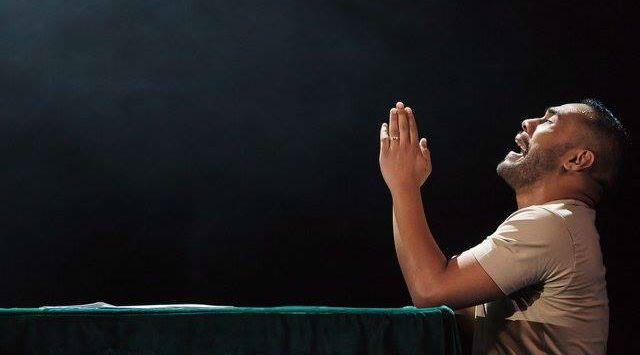
Quentin Crisp is the original and quintessential queer icon of our modern times. Wildly flamboyant and tenaciously outsider, he has left behind a legacy not only of words, but also an attitude and perspective of life that remains cutting edge and inspiring for subsequent generations that continue to be oppressed by the bourgeoisie and its prejudicial values. Tim Fountain’s Resident Alien is eighty minutes of extraordinary wit, unparalleled wisdom and genius observational comedy. Many of the standout lines are familiar to Crisp fans, whether lifted verbatim from his writing and interviews, or simply an accurate representation by Fountain of our memory of the hero. The monologue however, is more than a piece of nostalgic resurrection. It introduces shades of human emotionality to a character who was resolute in presenting a frosty and severe image. The British gentleman is given an opportunity to reveal his tender and vulnerable sides in Resident Alien, so that we can find an even deeper connection through the ever reliable mechanism of sentimentality.

It is a gorgeous production, designed by Romanie Harper (costumes and set) and Rob Sowinski (lights) who provide us with all the visual cues necessary to imagine the decrepit bedroom in which Crisp dwelled, while creating a sense of decadent drama that befits our protagonist, and bringing to sharp focus the physical subject of this monologue presentation. Paul Capsis is the star, captivating, glamorous and alluring with a kind of magnetism that we all desire but rarely encounter. There are efforts at mimicry, but we quickly give up on analysing the impersonation, and delve instead into the glorious essence that Capsis presents on stage, operatic in scale with his bodily and facial gestures, along with a bewitching voice that turns every syllable into song.

We see both Capsis and Crisp, or perhaps more than that, we see ourselves in Resident Alien. It is the meanings that become important. Director Gary Abrahams understands that personality and style are the weapons of seduction, but they play second fiddle to the words that attack with fierce resonance to shake us out of our drear realities. We came to be close to a legend, but are gifted instead a profound and subversive confrontation of our selves, as was Crisp’s very principle for his own existence. His facade was extravagant but flimsy, perhaps intentionally so, so that we can access the truths behind, that his mighty erudition was so generous to offer. Abrahams does the same. His cosmetics are delightful but transparent, allowing us to leave not only with insight into a celebrity’s biography, but the greatest lessons Crisp had learned through 91 years on this earth. His was a theatrical life that always had room for an audience, and the performance was about the alleviation of suffering and a disruption to prejudice. It is the most noble kind of theatre we can hope for, and in Resident Alien, his work lives on.

www.seymourcentre.com

Review: Leaves (Bakehouse Theatre Company)

kxtVenue: Kings Cross Theatre (Kings Cross NSW), Jul 9 – 23, 2016
Playwright: Lucy Caldwell
Director: Rachel Chant
Cast: Harriet Gordon-Anderson, Bobbie-Jean Henning, Poppy Lynch, Simon Lyndon, Amanda Stephens-Lee

Theatre review (of a preview performance)
When news broke several months ago that a 10 year-old Aboriginal girl had taken her own life in Western Australia, our nation was stunned into a moment of grief and rare self-reflection, searching for reasons to help us understand what had happened. We knew that it was the fault of a wider community, but struggled to find a way to take responsibility for the deeply unfortunate incident. In Lucy Caldwell’s Leaves, a teenager attempts suicide and we must again investigate the causes of her calamity. The play takes place in Lori’s home, where everything is healthy and normal, bringing us to the conclusion that family is unable to shield us from all the failings of society. It is a tender script, confidently quiet but with subtle fluctuations in tone that provide unexpected hints of drama and comedy.

Situations in Leaves are volatile, so corresponding emotions are kept under tight containment by director Rachel Chant for a work that is elegant, melancholic and extremely thoughtful. It is a production full of nuance, aided by the considerable talents of music composer Nate Edmondson and lighting designer Sian James-Holland, both providing unobtrusive but essential elements of movement and tension to the piece. A strong cast provides the show with a cohesive and unique flavour (too rich and ephemeral to put to words), with each actor compelling in their respective parts. Poppy Lynch is especially memorable playing a 12 year-old, adorable and authentic in her emulation of childlike qualities, but complex in the relationships she harnesses with co-actors. Bobbie-Jean Henning plays the feisty Clover, rebellious in demeanour but innocent by nature. The actor is convincing and dynamic in her characterisations, effectively adding sprightliness to a largely sombre production.

Places have problems, and sometimes leaving is the best answer. Forming attachment with community is human, but where we call home might not be nurturing or gratifying. The grass is greener on the other side, but when given the opportunity, we must make the effort to discover the truth in what was once only imagined. Taking chances can mean win or lose, but to truly live requires motion. When Lori chose to give up on life, she gave in to stasis and hopelessness. The solution for her problems may not be concrete or certain, but the only way to find it is to get moving.

www.kingsxtheatre.com

5 Questions with Jacqueline Marriott and Nicholas Starte

Jacqueline Marriott

Jacqueline Marriott

Nicholas Starte: If you could be a student at Hogwarts, would you still want to be an actor?
Jacqueline Marriott: Yes but only because I’m a strange human and am not crazy about HP… bad muggle.

2 chickens meet at a bar, one says to the other “I hear you’re in a play call Resolution, why should I come along?” What about the show would convince an alcoholic chicken to come along?
Oh so tough… maybe I’d tell the alcoholic chicken that there are five very charming chooks to check out on the stage. Chicks dig alliteration.

What is your character’s spirit animal?
A swan. Super graceful and has everything together… above the waterline.

Do you have a favourite pre-show ritual?
Yes, two – painting my nails in the colour suited to my character and binding my script with a ribbon that I am only allowed to choose once the show is up and running (actually it usually happens around closing for me)… I make sure the size, colour and texture of the ribbon matches the colour/feel of the show I’ve just finished. I am growing an ever colourful library of much loved, cried upon, yelled at and ultimately bound scripts. At a glance I only see the ribbons but I recognise each one as the gamut of experience it holds tight. The ribbon decision also is definitely only allowed to be made well into (after) the process too because the choice changes so wildly throughout. I think in colours. I am a dag. I also gave you a pre and a post ritual because I’m a colourful dag.

When do your super powered acting skills come in handy in every day life?
In my other job as a Captain Starlight – lots and lots of super powers employed there!

Nicholas Starte

Nicholas Starte

Jacqueline Marriott: If you could sit opposite yourself as a child of 7, what is the most important question you would ask yourself?
Nicholas Starte: Why don’t we hang out more?

When was the last time you cried?
I don’t cry, my heart is made of stone… I’m currently receiving treatment.

What is your one favourite line of the whole play? Can be your own, can be another character’s…
Easiest question ever. It’s a tie between all of Rosie’s lines about balls.

Why acting? Succinct answer please!
Because I refuse to grow up and stop playing make believe.

If not acting, then what?
A lion!

Jacqueline Marriott and Nicholas Starte are appearing in Resolution by Luke Holmes.
Dates: 26 July – 6 August, 2016
Venue: The Actor’s Pulse

Review: Singin’ In The Rain (Sydney Lyric Theatre)

singinintherainVenue: Sydney Lyric Theatre (Sydney NSW), Jul 7 – Aug 28, 2016
Music & Lyrics: Nacio Herb Brown, Arthur Reed
Screenplay: Betty Comden, Adolph Green
Director: Jonathan Church
Cast: Grant Almirall, Robyn Arthur, Mike Bishop, Jack Chambers, Rodney Dobson, Erika Heynatz, Gretel Scarlett
Image by Hagen Hopkins

Theatre review
Regarded by those in the know to be the greatest movie musical of all time, Singin’ In The Rain takes place in Hollywood in the late 1920’s, when sound had begun to disrupt the silent film industry. This theatre production, based on the 2012 London revival, is similarly lighthearted, with a simple storyline that provides justification for a lot of song and dance in a style that harks back to the golden age of cinema.

Performers Jack Chambers and Erika Heynatz are called upon to provide the laughs in distinct comic sequences that showcase their talents appropriately, but the production suffers from a lack of exuberance that maintains an unfortunate muted tone over proceedings. Visual and sound design elements seem to be overly subdued, resulting in a show that often feels distant and lifeless. In the role of Don Lockwood is Grant Almirall, no less skilled and technical than Gene Kelly in the original film, but his very nifty footwork does not make up for the shortfall of charisma that we have come to expect of a Broadway style leading man.

Gretel Scarlett’s best efforts as supporting character Kathy Selden bring memorable moments of theatrical brilliance, leaving an excellent impression with polished execution of choreography and sublime vocals. Equally accomplished are the ensemble players, who present magnificent dance sequences that form the strongest feature of the production. Andrew Wright’s contribution as choreographer is outstanding, and almost compensates for the show’s minor but noticeable imperfections. Much excitement surrounds the heavy rain that pours on stage for the eponymous number; unquestionably gimmicky but also spectacular and beautifully realised. We go to musicals of this genre for amusement, and Singin’ In The Rain certainly does offer entertainment and escape, as well as bucket loads of nostalgia for the more romantic among us.

wwww.singin.com.au

Review: Forbidden (Blood Moon Theatre)

bloodmoonVenue: Blood Moon Theatre (Potts Point NSW), Jul 6 – 23, 2016
Playwright: Visakesa Chandrasekaram
Director: Neil Khare
Cast: Dimitri Armatas, Neil Khare, Belinda Maree

Theatre review
Terrorism ranks atop our most pressing issues of the day, and we argue endlessly to find explanations and remedies for the actions of enemies that we seem never to be able to find an understanding of. Visakesa Chandrasekaram’s Forbidden is the story of one Sri Lankan woman’s personal struggle as we find her on a journey towards oblivion with a militant Tamil separatist organisation.

Chandrasekaram’s script is romantic, colourful and emotional, offering unique insight into a mystifying world. It does not make excuses for the abomination that takes place, but seeks to expand our understanding of a hidden microcosm. Where things are forbidden, there are secrets. The play may not be biographical or even factual, but it inspires a wider conception of an otherness, dissolving a threatening enigma to reach an understanding of what is always and essentially a shared humanity.

The production is a simple one, and too basic in approach for a highly imaginative text that features a non-chronological timeline and supernatural influences. Acting style tends to be overly dramatic for the very intimate space, but strong commitment by the cast helps us find meaning in the story. Each actor is clearly invested in their respective roles, but chemistry is lacking, which can make relationships confusing and events incoherent. The show needs more time to mature, in order that greater depth can be discovered in all areas and for its message to sing with better clarity.

Urmila’s reasons for adopting drastic measures are as personal as they are political. We forget the individual experiences of soldiers from all sides, choosing to conflate every disaster of war into the purely ideological. In Forbidden, the suicide bomber is given a name and her identity is exempt from simplification. To know even one sacrificed life is a powerful antithesis to the faceless apathy that we have come to accept as daily normalcy. No single work of art will solve the problems of the world, but an opportunity to broaden minds exists in every creation, and every bit of wisdom gained is an existence grown stronger.

www.facebook.com/bloodmoontheatre

Review: Hurt (White Box Theatre)

old505Venue: Old 505 Theatre @ 5 Eliza St (Newtown NSW), Jul 5 – 23, 2016
Playwright: Catherine McKinnon
Director: Kim Hardwick
Cast: Ivan Donato, Meredith Penman, Gabrielle Scawthorn

Theatre review
A horrific road accident brings the breakdown of a relationship to its accelerated boiling point. Surrounded by trauma, Mel and Dom are in a state of anguished disintegration, trying to make sense of marriage and family amidst the smithereens. Catherine McKinnon’s Hurt is ruthless in its depiction of human frailties. Through themes of parenthood and misfortune, her play illustrates life at its most difficult moments, asking us to consider the importance of empathy and compassion, not only for others but also for ourselves. There is a complexity to the writing that demands of us, deep analysis as well as a humane response, bringing attention to the nature of our collective ethics and values. Hurt is both controversial and mundane, exposing highly contentious issues within a context of common occurrences, to orchestrate great dramatic tension for the theatre, and to challenge the ways we think about life and the way we treat one another.

Director Kim Hardwick brings a lethal combination of operatic emotionality and psychological acuity to a production that enthrals from start to finish. The interplay of characters constantly fluctuates to keep us mystified and on edge, but a sense of truth prevails no matter which way the show’s tone oscillates. An unrelenting and dark intensity drives the plot through its surprising revelations, with a seductive force, impossible to resist, drawing us further and further into its agonising quagmire. Production design adheres to Hardwick’s powerful but subtle aesthetic approach. Set design by Isabel Hudson, lights by Martin Kinnane, and Katelyn Shaw’s soundscapes provide the cast with elegantly effective backdrops against which their magic happens.

Meredith Penman plays Mel, the troubled mother of two, with a delicious daring that complicates our need to sympathise and deride. Resisting the temptation to turn her character into a convenient victim, Penman’s ability to portray convincing fallibility is key to the show’s brilliance. No parent can ever be perfect, but we hold them to a certain standard that Mel’s story shows to be impossible for many. The role of Alex is performed by the very impressive Gabrielle Scawthorn, whose work in Hurt is nothing short of spectacular. Perfectly measured and delicately balanced, Scawthorn’s creation is simultaneously brutal and tender, displaying an extraordinary vulnerability in her undeniably painful process. Ivan Donato provides excellent support as Mel’s husband Dominic, with a focused conviction that helps sustain the protracted and mesmerising hysteria of Mel’s world.

When it all comes tumbling down, we are faced with the choice of surrender or struggle. We watch the people in Hurt fight through incredible hardship, and worry if their spirit can pull them through. We want to believe that our fortitude can surmount anything, but the truth is that weakness co-exists with strength, and can sometimes be the element that defeats. It is in trauma, that one’s mettle gets tested, and even though every successful attempt to overcome must be celebrated, it is necessary that our failures are afforded forgiveness.

www.whiteboxtheatre.com.au

Review: Henna Night (Mercury Theatre)

mercuryVenue: Old Fitzroy Theatre (Woolloomooloo NSW), Jul 5 – 9, 2016
Playwright: Amy Rosenthal
Director: Glen Hamilton
Cast: Jane Angharad, Romney Stanton

Theatre review
Two women are brought together by their love of one man. They are not particularly inspiring people, but theatre does not have the responsibility to only give us role models. Judith and Ros are in a confrontation, both projecting their resentments onto the other, eventually finding commonality in their romantic dissatisfaction that allows them to discover a bond, unexpected of themselves, but completely predictable for their audience. They languish in all the imperfections of their love lives, but never question the futility of their efforts. Amy Rosenthal’s Henna Night is a story about desperation that shows an unflattering picture of what we look like when feeble and fallible.

It is a mildly comical work, with an emphasis on naturalism that tends to subdue the funnier lines of the script. The clash of rivals is conveyed with insufficient theatricality, but the show has a coherence that communicates logically in the absence of great dramatic tension. Actors Jane Anghard and Romney Stanton are convincing in their portrayals, if a little lacking in dynamism. The production’s shifts in mood and atmosphere could be more amplified for better sensory variation to keep us engaged further with nuances of the piece. Director Glen Hamilton attempts to unearth the truth in these women’s experiences, and is successful in bringing an honesty to the stage, but he requires more spice to accompany this overly polite creation, laden with too much sugar.

It is arguable if nice girls always finish last, but in Henna Night, we yearn for Judith and Ros to throw punches and smash vases. We want to see them lash out, because our own angers and frustrations need a safe space to experience a moment of salvation. Thespians are given the license to behave badly in their worlds of make belief, so that we can benefit from that exorcism of our shared demons. The people in the play have a message for us, but they appear gently and disappear too quietly, leaving little more than a dent in our memory.

www.facebook.com/…

5 Questions with Tasha O’Brien and Lucy Quill

Tasha O'Brien

Tasha O’Brien

Lucy Quill: If you chose to retreat from the world and the people in your life as Cristina in Cristina In The Cupboard does, where would you go and why?
If I wanted to go on a holiday anywhere in the world I might pick some place exotic like Brazil, somewhere romantic like Paris or somewhere with an amazing arts industry like Berlin. I suppose however if I truly wanted to retreat, to get away from everything and everyone, I’d pick some place secluded where I could gather my thoughts and not be distracted by everything the world throws in our way. Some place like Fowler’s Gap which is past Broken Hill in rural NSW. I went there for a week last year and was overcome by the sense of freedom due to the complete isolation. No technology. No stress. Just the stars – the real stars – above you and untouched nature surrounding you.

What’s your favourite trait of your character Belinda and why?
Belinda’s confidence and resilience. Others might see it as cockiness, and contextually it might often be the case, but to her credit she truly believes in what she says and she’ll fight with you until you agree with her. She always makes the best out of the worst situations. If there’s a way she can come out as the hero she will! She might be a bit of a one-upper but I think deep down it’s just a coping mechanism she uses to feel connected to everyone, anyone.

What message have you personally taken away from exploring the Cristina In The Cupboard script?
There are a lot of messages I’ve taken from this script and I mean that sincerely. Cristina In The Cupboard is such a universal story about human connection and the similarities within our differences. For me one of the big messages is that even if you give up on the world and yourself, there will always be people in your life that never give up on you and that might frustrate you as it does Cristina, but you can’t help the way other people feel about you. Another message is that life sucks – but that’s ok! It may be clichéd but you have to take the bad with the good because without it you just can’t appreciate how good it really is. With ups there are downs, but with fear comes joy.

What’s your favourite holiday memory?
My first trip overseas. I went to visit my friend who had moved to New Zealand. I was welcomed by his family into their home and they were so excited about making sure I had the best time! We did a mini road-trip around the South Island, we did the touristy things like Milford Sound, but we also would just drive and randomly stop to see the hidden gems like when we got up early, drove in our pjs and ate breakfast at some lookout where some bikies asked us to take their photo. We stayed at great hostels, we stayed at awful hostels, and it just made the trip more memorable.

What is one of the most bizarre things you’ve experienced?
Bizarre…that’s a tricky one. Probably the looks on people’s faces when a bunch of us were trying to do deep and meaningful acting exercises as part of a uni excursion in the middle of Taronga Zoo. Especially when it was often silent and we were just using facial expressions. We must’ve looked like the biggest bunch of weirdos. I definitely saw some parents physically holding their kids back.

Lucy Quill

Lucy Quill

Tasha O’Brien: What do you think makes Cristina In The Cupboard unique so that people shouldn’t miss out on seeing it?
Lucy Quill: Cristina In The Cupboard is such a unique piece of work because it’s creating a magical world that is Cristina’s mind, where time, thoughts and memories are all skewed, yet there’s something extremely real and relatable about her projections. The experiences and feelings that Cristina is projecting in her mind are things that we’ve all gone through as humans, and it lets you feel like you’re actually normal and like you have a place in the world because you’re clearly not the only one who has had these experiences, and that’s what makes this play so enthralling and hilarious.

What are the similarities between yourself and your character Erica?
Oh geez I hope I’m not TOO similar to Erica! She means well, bless her, but she’d be quite taxing to be around! In saying that, I love her for her faults, which no doubt she sees as extremely endearing qualities. Erica genuinely feels she knows what’s best for everyone in every situation. She’s got an answer for everything and relates to anything you’ve ever been through. If you’re going through a break up, she totally gets it because she broke up with a boy when she was 14 and she felt sad too, probably a bit sadder than you actually. If you have a cold, she has the flu etc., etc… I think we all have a tendency to do that. We want to relate to people and their experiences and we want to be heard and validated, sometimes as the cost of hearing someone else and validating them! I know that if someone is telling a cool story, I’m trying to think of a similar experience that I’ve had so I can jump in when they finish and say ‘That’s like the time I…’. I think it’s human nature to do this and while Erica demonstrates this in an extreme way, this is where I can empathise with her and relate to her the most.

This is your first theatre performance in two years, has the role been what you were hoping for?
Yes, it has been. It’s been such a blast playing Erica, and it’s also been a massive challenge and learning experience. Portraying Erica in the hyperbolic way that she’s been written, whilst still capturing her authenticity has been a challenge that I didn’t initially expect I would come across. I was a little surprised by how complex it’s been to play a comedic role, but it’s something that I’ve loved tackling. I set out to challenge myself when I auditioned for Cristina In The Cupboard, so I’m extremely grateful that this role has given me the opportunity to do that as I’ve learnt so much and feel like I’ve achieved a lot.

How old were you when you had your first kiss?
I was 13 and it was at an underage rage that we all used to go to every Friday night called ‘Redz’. I was wearing low-ride, bootleg jeans with a classic Supré slogan tee that let everyone know that I was a ‘Hustler’, in case they hadn’t realised already. I was cutting shapes on the dance floor to ‘Lose Yourself’ by Eminem and a boy called Greg started dancing with me. He was from another school so I didn’t know him that well but when he leaned down to kiss me I took the opportunity because my friend Abbie had already kissed like three guys in her lifetime. It wasn’t romantic and it was totally gross but I was so happy to have had my first kiss.

Have you travelled to any out of the way places and/or have any interesting travel stories?
I was on an island in the Caribbean with my family and we were doing a bus tour with about 20 other people. The tour guide drove us up to the top a cliff so we could see the point where the Caribbean Sea meets the North Atlantic Ocean. He pulled up and hopped out of the bus and we followed. My sister and my dad had gotten out of the bus, but mum and I were still in there when the bus started rolling back towards the edge of the cliff because the tour guide forgot to put the handbrake on! Just a minor oversight! We all started screaming and pushing each other towards the door and luckily the driver managed to jump in and pull the handbrake in time to save us from going A over T over the cliff. #gratefultobealive

Tasha O’Brien and Lucy Quill are appearing in Cristina In The Cupboard by Paul Gilchrist.
Dates: 13 – 30 July, 2016
Venue: The Depot Theatre

5 Questions with Geraldine Hakewill and Amy Ingram

Geraldine Hakewill

Geraldine Hakewill

Amy Ingram: This play explores the friendships and relationships of women and how they view each other and themselves. Do you recognise yourself in any of the women or the relationships they share?
Geraldine Hakewill: I recognise myself in all three women, and I’ve definitely experienced the sorts of relationships they share: the jealousy, the awkwardness, the passive-aggressive conversations, the solidarity, the depth of love and affection, the fragility, the dangerous unpredictability and the profound trust. I think most women will recognise it all too. That is the brilliance of this play and why it still works. I really get Mary’s over-analysis and anger at the world. I completely identify with Jo’s self-loathing coupled with positivity. And Celia is basically me, on crack. Not really. (But really).

Feminism seems to be making its way back into the forefront of social media, how do you think this play looks at feminism in today’s current political climate?
I think what is fascinating about us doing this play right now is that so little has changed since Claire McIntyre wrote it back in 1989. That’s very frightening. Beauty is still the strongest currency in this world, and women are still afraid when we walk down the street at night because we might get attacked, simply for being female. This isn’t OK. What has changed is that it feels like social media has been taken up as a tool to unite feminists around the world, be they male or female, and allow people to have a voice in order to educate and to argue and to discuss. I think that’s brilliant. As much as the anonymity of Twitter and Facebook allows for trolling and abuse, it also allows people who aren’t public figures and who never thought they could participate in a public discussion, to share their stories and create awareness. This production has been updated by Justin (Martin, our director) so that we are referencing this shift. We aren’t changing Claire’s words, but we are bring her text into this era of modern technology and we’re trying to explore how media and technology has changed feminism and the discussion around it- for better and for worse. It feels more immediate and relevant than almost any other play I’ve ever done.

Your character is very particular about her routine and products. If you could take one of those products and make it do anything in the world what would it do?
Well, what if my ocean fresh exfoliating shower gel could somehow make me invisible? I think that’d be pretty amazing. I’m such a secret snoop, and I’ve always loved the idea of being a spy. This would be really helpful. Even if it was just 45 minutes worth of invisibility. Plenty of time for spy-stuffs. And well worth the $5.99.

If you met Celia out at a bar what do you think she would be doing? What would you two get up to in the course of the night?
I think she’d be waiting for a Tinder date. She’d be looking pretty hot. She’d be nervous-sweating but she would have worn extra strong antiperspirant and so she’d still smell fresh. She’d be sitting alone at the bar. I’d be with a group of friends at a booth after a day of rehearsals. I use hippy deodorant so I would not be as fresh as her. Her date is two hours late but she’s stubborn. She waits. She’d look forlornly over to our group as we laughed too loudly at some private ‘actor’ joke that no one else will ever find funny. I’d go to buy a round of drinks and she’d comment on my jeans. They fit well. Thanks, I’d say. It’s really hard to find the perfect jean. She’d agree. By the end of the night we are singing Celine Dion karaoke together at 4am and promising to be best friends for life. We never see each other again. But, I’ll always be impressed that she knew all the words to “It’s All Coming Back To Me.”

If your life was a midday movie what would the title be?
“It’s All Coming Back to Me.” It’d just be a series of musical flashbacks and dream ballet sequences. You can be in it Amy, if you like. We can do a pas de deux.

Amy Ingram

Amy Ingram

What was so special about this role that made you want to come down from Brisbane to do it?
First off it was more about working with Kate as I had not seen her in ages and always thought it would be great to work with her. She seemed so excited about the project I was immediately intrigued. Then I read the script and laughed out load at so many points I knew that was a good sign. I am extremely interested in roles where women are the central focus and their character journey is more than a supporting role for some 40 year old dudes mid life crisis. The fact that this show also looks how we view ourselves in the world meant I was basically hooked! On a side not it is always exciting to work with new people, in new places and venues – I think it makes you a better artist.

The play was written and is set in the 80s in England. Do you think we’re managing to do a good job of setting it in 2016 in Australia? And how?
Unfortunately most of the conversations we have now about equality and how women are objectified to the point of violence are exactly the same. All that has changed is the context and medium or lens used. The rise of social media and the fact that more and more women are moving into higher positions of power (HURRAHHHH!) means that we are some cases seeing the extent to sexism in a much clearer light. So basically – Yes – I think we are doing a good job of it because the world is often doing a shit job of shutting sexism down. When I first read the script I was surprised at how old it was and I think you can’t help but put a contemporary context on it because we are living here and now and our lives and experiences fuel our choices on stage

What do you think the title, Low Level Panic refers to?
Welcome to the everyday world people. We are in a constant fret about our appearance , what people think about us, what we think of ourselves. This is not exclusive to women. But you add onto that the fear some women face everyday in their own homes. The simple choice of trying not to walk home when it is dark. Asking yourself if the dress you are wearing is going to invite negative attention, crossing the road when you run because because you don’t want to get heckled . And I know some people reading this will say I’m blowing it out of proportion and #notallmen. And that’s true. It’s absolutely true . But then why does what I mention still happen more frequently than you’d think and why do we still feel this way?

What’s your favourite thing about being Amy Ingram?
Now why would I give away that info for free? Come to the show and have a drink with me afterwards and find out for yourself…

You really don’t like wearing pants, but if you had to wear pants every day of your life, describe your ideal pair. They can be magical.
Pants that make me fly. Or time travel. Pants that can take me to some tropical island whenever I wish. Now those are pants I can get around. Also pants that whenever I reach into the pockets there are wads of money inside. I’d bloody never take them off.

Geraldine Hakewill and Amy Ingram can both be seen in Low Level Panic by Clare McIntyre.
Dates: 12 July – 12 August, 2016
Venue: Old Fitz Theatre

Review: The Viagra Monologues (Off The Avenue Productions)

offtheavenueVenue: Blood Moon Theatre (Potts Point NSW), Jun 16 – Jul 2, 2016
Playwright: Geraldine Brophy
Director: Samuel Allen
Cast: Tom Matthews, John Molyneux, Meynard Penalosa

Theatre review
Three male actors present a series of small episodes offering perspectives on life and humanity, through experiences of male sexuality. Like its very famous feminine predecessor, characters in The Viagra Monologues centre their stories on their genitalia. The pharmaceutical referenced in the title does not make frequent appearances, but its presence is a conspicuous metaphor figuring alongside ideas of masculinity and emasculation, which form the play’s main focus. An erect penis alone does not maketh the man, and we explore what it is that today’s man needs in order to find strength and spirit for his existence. Geraldine Brophy’s script is appropriately diverse in scope, with an admirable objective of portraying vulnerability within its very wide range of personality types. Virtually everything we see in the theatrical landscape involves men, but it is not a regular occurrence to see them only at their most vulnerable, stripped of every macho pretence.

Director Samuel Allen does well to create on the stage, distinct scenes and people who appeal in differing ways. The use of space has a tendency to be too basic and repetitive (and lighting design leaves much to be desired), but Allen’s attention to detail in performances provides an effective realism to all the stories we hear. It is an accomplished cast, balanced and cohesive in their efforts but each with their own idiosyncrasies. Tom Matthews entertains with a flamboyant edge to each of his depictions, John Molyneux is charismatic especially when playing young children, and Meynard Penalosa is captivating in his portrayals of emotional intensity. There are inconsistencies in their ability to delve into the fragility of each sequence, but when successful, the monologues take on a powerful poignancy that speaks deeply about the way we are, and how we treat each other.

These are stories about men, but written by a woman. The best of feminism benefits all, and it is the acknowledgement of the destructive qualities of manhood in these stories that make them meaningful. We observe a series of male characters in varying stages of intimate vulnerability, each exposing themselves in a way that real life (outside of the theatre) disallows. The men are beautiful when they bare all under this spotlight, but these are moments of imagination that, although truthful, are rarely encountered face to face, even with the ones we love. We make our men resilient, powerful and hard, as a matter of course, without stopping to think about the sacrifices involved. They soldier on, with all their softer sides buried and suppressed, but dark monsters manifest when we fail to take care.

www.offtheavenue.com.au