Review: Look Back In Anger (Red Line Productions)

redlineVenue: Old Fitzroy Theatre (Woolloomooloo NSW), Aug 16 – Sep 10, 2016 | Belvoir St Theatre (Surry Hills NSW), Sep 13 – 17, 2016
Playwright: John Osborne
Directors: Damien Ryan, Lizzie Schebesta
Cast: Robin Goldsworthy, Andrew Henry, Melissa Bonne, Chantelle Jamieson
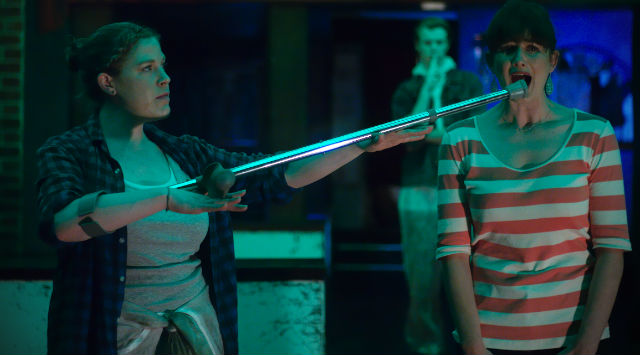
Image by John Marmaras

Theatre review
Jimmy is a very angry young man, and in Look Back In Anger, we are subjected to a series of his incessant, long and very tedious rants that prove themselves to be ultimately ineffectual, and highly irritating. At one point, he insists “that voice that cries out doesn’t have to be a weakling’s does it?”

1956 it seems, was a completely different time. Today, a white man with youth and a university education, living in a Western society, is considered to be in possession of the greatest of privileges, and we have no patience for their complaints about their perceived (and possibly, imagined) injustices of life. Of course, residing in positions of advantage does not automatically absolve a person of angst and self-proclaimed victimhood. Jimmy’s grief with our troubled existence is valid, and it is his right to refuse to suck it up, grin and bear it, but like all the furious white male voices that rule the talk-back radio waves, we can choose to ignore their shrill babble. John Osborne’s play is well structured, but its themes and concerns could not be more dated, and for many feminists, not much is lost if Look Back In Anger, along with its overt misogyny, is left dead, buried and cremated.

From a technical perspective however, co-directors Damien Ryan and Lizzie Schebesta have revived the play with admirable accuracy and nuance, delivering powerful drama, especially to those more welcoming of its ethos. Also accomplished are its designers; Jonathan Hindmarsh’s set and Anna Gardiner’s costumes add meaningful, dynamic touches to the look of the piece, thoughtfully utilising the space’s intimacy to provide a vibrant immediacy to the experience.

The cast is uniformly strong, with each actor contributing impressive depth in their characterisations of less than inspiring personalities. Osborne’s dialogue is provocative (to say the least), and his lines are given tremendous fervour by an ensemble insistent on winning us over. Andrew Henry is at his bombastic best as Jimmy, with a portrayal so passionate and convincing that we struggle to detach our dislike for the character from what is actually an excellent performance by the leading man. Henry finds scintillating chemistry with each of his co-stars, and it must be said that every scene is captivating, but also undeniably excruciating for audiences less tolerant of its turgid drivel.

Like many works of art (good or bad) that cause exasperation, Look Back In Anger will spark discussion. In its time, the work was relevant for its interest in class consciousness and issues of poverty, but these ideas have evolved into something that is now inseparable from contexts of race and gender. In the past, audiences were able to understand the world from Jimmy’s perspective, but today, the world turns the tables and puts him under scrutiny. We are made to look at anxieties of the white man, but his anger scarcely raises a brow. Perhaps it is only himself who could possibly benefit from wallowing in that distorted and narcissistic reflection.

www.oldfitztheatre.com

Review: Orpheus (Lies, Lies And Propaganda / Suspicious Woman Productions)

liesliesVenue: Blood Moon Theatre (Potts Point NSW), Aug 18 – 27, 2016
Director: Michael Dean
Dramaturg: Jasper Garner Gore
Cast: Dymphna Carew, Curly Fernandez, Victoria Greiner, Lana Kershaw, Daniel Monks, Bodelle de Ronde, Michael Yore
Image by Sasha Cohen

Theatre review
Orpheus’ story is often told with emphasis on a husband’s drudgery in trying to rescue his wife from the mouths of danger, but in Michael Dean’s revision, we explore the possibility of Eurydice being a more provocative character, whose own desires are more complicated and less convenient for her husband’s legend. Hell is an Australian outback hick town, from which Eurydice finds herself unable to leave, but Orpheus is determined to bring her back to their life in the city, where a previously shared reality seems to be fading with the passage of time.

Similarities with David Lynch’s surrealism where “this whole world is wild at heart and weird on top” can be observed in Dean’s portrayal of an ugly yet seductive foreboding, set within a seedy bar where the drawing of raffle tickets is “the moment we’ve all been waiting for.” Michael Yore’s music and Liam O’Keefe’s lights provide splendid transportative atmospherics for an operatic expression of an ancient mystery suited to contemporary times, and Rachel Weiner’s illuminative choreography, although excessively demanding at certain points, demonstrates a healthy instinct for space as a fundamental device of communication.

With little in terms of dialogue that could be employed, the depiction of characters relies heavily on movement and presence, which the cast accomplishes with dexterity, but there is a gentleness to the overall approach that contradicts some of the darker elements in the piece. A greater sense of gravity and perhaps bigger personalities would generate a more sinister edge to fortify its enigmatic tone. Daniel Monks leaves a strong impression in the title role, authentic and captivating with his ability to meaningfully embody Orpheus’ sentimental qualities. The actor’s unequivocal focus and connection with all who are on and off stage, is the basis on which the production addresses its emotional dimensions.

Michael Dean’s vision of theatre as a dynamic and unpredictable art form is marvellously realised in Orpheus. Adventurous, playful and iconoclastic, Dean’s presentation is a surprising and delightful show that challenges not only notions of storytelling, but also conventions of our cultural endeavours. It is a virtuous exercise, made even more wonderful by sheer, undeniable talent and exquisite taste. There is exceptional work to be found here, the kind that makes us want more of the same from every stage, but it is the utter unorthodoxy and subversive nature of its appeal that provides its avant-garde lustre.

www.liesliesandpropaganda.com | www.suspiciouswomanproductions.com

Review: Bijou (Smallshows / The Depot Theatre)

smallshowsVenue: The Depot Theatre (Marrickville NSW), Aug 17 – 27, 2016
Playwright: Chrissie Shaw
Director: Susan Pilbeam
Cast: Alan Hicks, Chrissie Shaw
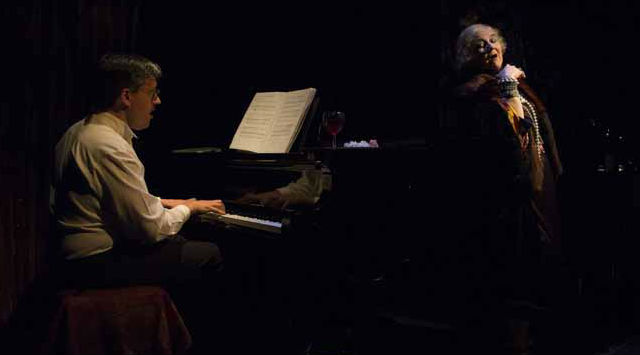
Image by Lyndel Arnett

Theatre review
Bijou has lived through a lot. Now in her autumn years, she looks back and recounts stories, with the aide of abounding song and dance, to share her experiences as a woman on the fringes of Parisian society. Chrissie Shaw’s script is charming, with surprising revelations that are guaranteed to delight, and even though it shies away from a stronger sense of drama that could deliver greater poignancy, it is certainly not afraid to touch on the raunchier aspects of Bijou’s past.

As performer, Shaw’s vocal abilities are her greatest asset. Interpretations of yesteryear songs are consistently enchanting, and the sharp focus she maintains in her one-woman show format is thoroughly impressive. Alan Hicks is on the piano providing accompaniment, with tremendous style and effortless flair. His voice and humour make only brief appearances, but they are very memorable indeed.

The elders of every community are truly the most valuable in terms of the wisdom they can offer, yet we relegate them to minor roles, often forgetting to include them in our ways of life. In Bijou, we are shown that many of the answers we seek, have already been found by those who had come before us. The seniors are ignored at our own peril, and the beauty of Bijou’s story, and of Shaw’s work, demonstrates how much there is to lose, if we persist with that ignorance. We can learn from going through firsthand, every high and low of life, but we must also listen to those who had taken the hard road, so that we may explore newer, more peaceful ones.

www.bijoucabaret.com

Review: Tribunal (Powerhouse Youth Theatre / Griffin Theatre Company)

pytVenue: SBW Stables Theatre (Kings Cross NSW), Aug 12 – 20, 2016
Concept: Karen Therese
Collaborators/text/performers: Sarah Coconis, Paul Dwyer, Iman Etri, Katie Green, Rhonda Grovenor Dixon, Bilal Hafda, Mahdi Mohammadi, Karen Therese, Jawad Yaqoubi
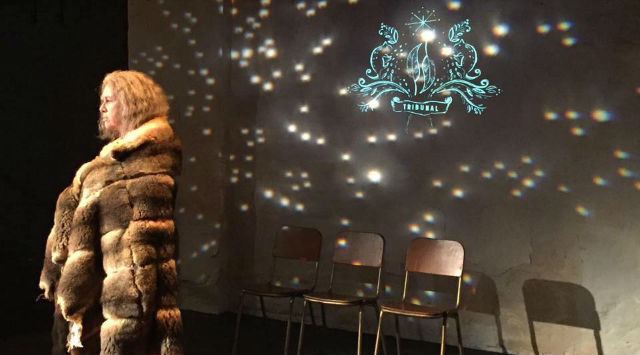
Image by Gracie Partridge

Theatre review
Any story can be told at the theatre, whether exaggerated or realistic, but to create something convincing is often a struggle for practitioners. In Tribunal, key personalities play themselves, leaving no room for us to doubt their authenticity. The presentation is a discussion of colonialism in Australia, with a particular focus on our habitual mistreatment through the years, of groups that are systematically subjugated and persecuted by a rapacious government, and its complicit populace. The production places side by side, an Aboriginal elder and an Iranian refugee, not only to convey the injustices inflicted upon them, but also to emphasise the delusionary insistence by White Australia of the land’s Westernness and its racist exclusion of all that it considers “other”.

Our weathered sensibilities may no longer be able to react with shock at the show’s revelations, but its verbatim, anecdotal format is unquestionably powerful, due especially to the sheer presence of those who have suffered under our cruelty. The act of putting on display their pain and damage, creates a palpable state of emergency and crisis that we simply cannot extricate ourselves from. In the guise of a tribunal hearing, the production turns its passive audience into the awakened body politic; we are all implicated in these harrowing recounts, no matter how long ago or how far away these events had taken place. Powerless individuals who shirk responsibility are, for the moment at least, given passionate idealism, and the audience begins to think about its part, as citizens involved in the machinations contributing to the humanitarian catastrophes that must be addressed.

We may not all run off into the night with radical courses of action inspired by Tribunal, but it sows the seeds required for a nation to evolve stronger morals and to inculcate better humanitarian values into its every decision, especially the tough ones. Bringing people from abstract consciousness, into a real life sharing of space, is theatrical magic that can do wonders to how we experience society. It is easy being inhumane to those who only live in imagination, but when confronted face to face, we can only be guided by compassion and love, which are after all, the most valued of all our qualities as the earth’s beings.

www.pyt.com.auwww.griffintheatre.com.au

Review: House Of Games (New Theatre)

newtheatreVenue: New Theatre (Newtown NSW), Aug 9 – Sep 10, 2016
Playwright: Richard Bean (based on the film by Jonathan Katz, David Mamet)
Director: Louise Fischer
Cast: Ben Brock, Hannah Day, Cheyne Fynn, Charles Jones, Mark Langham, Rebecca Levy, Colin McCarlie, Katherine Shearer, Benjamin Vickers, Cindy Wang
Image by Bob Seary

Theatre review
House Of Games features a psychiatrist and a group of con artists. It wishes to be full of surprises and unexpected twists, but the unsophisticated writing relies on the unbelievable gullibility of its protagonist, as well as a gullible audience, for any of its plot to be effective. Its premise is interesting, with a straitlaced academic type finding herself embroiled in the underground activities of the Chicago lowlife, but there could not be a more predictable way to tell the story. Every revelation aims to deliver thrills, but is only disappointing in its failure to offer anything more than what is obviously anticipated ahead of every juncture.

Leading lady Katherine Shearer shows good conviction, in spite of a frankly ridiculous role that seems to take pleasure in depicting a woman’s status and accomplishments as an esteemed doctor, only to take her down more than a few notches by turning her suddenly, and unreasonably, stupid and naive. The actor’s impressive presence almost holds the show together, but we struggle to reconcile her character Margaret’s undeniable intelligence with the absurd predicament in which she finds herself. Co-star Ben Brock displays enough charm for initial scenes of flirtation to work, but to make Margaret “blinded by love” and be so thoroughly entangled in his deceptions, is a tall order that is beyond any sensible performance.

Names of three male writers are attached to this play. It is arduous, and deeply boring, to take them to task for a misogynist creation, but the show offers little else worthy of discussion. It is to their credit however, that the driving force behind House Of Games is Margaret’s ambitions, but it seems that diminishing those very desires is the only way to make sense of things. Feminist readings do not require that every woman comes out on top, but the masochistic treatment of “a strong female” here is reprehensible, because her degradation results from weak logic and too little plausibility, a figment of the imagination of a boys’ club, intimated, perturbed and panicked.

www.newtheatre.org.au

Review: Aladdin (Capitol Theatre)

aladdinVenue: Capitol Theatre (Sydney NSW), Aug 3 – Oct 23, 2016
Music: Alan Menken
Lyrics: Howard Ashman, Tim Rice, Chad Beguelin
Book: Chad Beguelin
Director: Casey Nicholaw
Cast: Aljin Abella, Adam Jon Fiorentino, George Henare, Arielle Jacobs, Ainsley Melham, Adam Murphy, Michael James Scott, Troy Sussman, Robert Tripolino

Theatre review
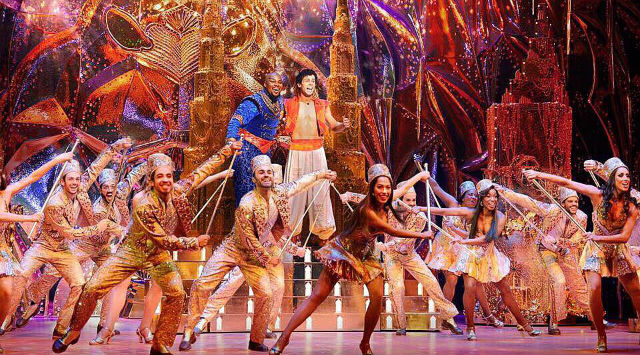
Based on their own 1992 film, Disney’s musical version of Aladdin is everything one could hope for in an adaptation of a much loved family classic. Fondly remembered for Robin Williams’ hilarious interpretation of Genie, and the chart-topping song “A Whole New World”, this theatrical rendering first appeared in 2011, and is now a well-oiled machine that delivers every bell and whistle expected of the format, including jaw-dropping state-of-the-art stagecraft, along with genuinely effective comedy, that provide sensational entertainment for young and old alike.

The show’s visual design is lavish and inexhaustibly dynamic. Costumes, sets and lights are a real treat, fascinating our senses at every moment like a kaleidoscope that constantly amazes. The manifestation of an actual magic carpet that literally flies around the stage is a gimmick that will captivate any viewer, including the very seasoned theatregoer.

Performances are strong, and the cast will likely grow in chemistry as the Australian season progresses. Michael James Scott’s work as Genie is particularly likeable. Although his energy levels do appear to falter after vigorous sequences, Scott impresses with charisma, sharp humour and a brilliant singing voice, making the larger than life character as commanding a presence as we wish for him to be. Ainsley Melham and Arielle Jacobs are the extraordinarily attractive leads, both delightful in their respective roles, and perfectly charming as the saccharine lovebirds.

It is an innocent romance that blossoms between Aladdin and Jasmine, but the show is a sophisticated one with its naive conceits kept in check. The world is a dangerous place in Aladdin, and its people must access their sense of morality to make the right choices. Themes of slavery, feminism and poverty are only lightly touched upon, but they provide the story with a meaningful foundation on which it discusses the eternal struggle between good and evil. This Disney musical has all the froth and frivolity that fans spend their money on, but at its heart is an ancient folk tale from the legendary One Thousand And One Nights, where the human condition is scrutinised, to reach an understanding of how we are, on our very best days.

www.disney.com.au

5 Questions with Melissa Bonne and Robin Goldsworthy

Melissa Bonne

Melissa Bonne

Robin Goldsworthy: Cast your mind back…you’ve picked up Look Back In Anger for the very first time. You read it cover to cover and gently set it down beside your play reading chair. Walk us through your immediate gut reaction.
Melissa Bonne: Well, I actually read this play for the first time while I was studying acting at The Actor’s Pulse, but I was 17 so I don’t know if I was smart enough or open enough to truly take the story in. When I read it for the first time, since the first time, I actually just sat there (in my play reading chair), staring at the last page for a while, not only unsure of what to make of how the play ended, but also unsure of why it made me feel so uncomfortable. At the time I didn’t exactly know how to articulate why I was feeling that way but I knew that because of that, I had read something very special and that this play was probably going to be very important for me in some, if not many ways. It also didn’t feel like I had just read a play. It felt more like I was right there in that tiny room with these four people. I think that’s a pretty rare gift for anyone — artist or audience — that when it comes to a play or film or story, it feels almost too real to be something you are watching but more something that you are a part of, and I think maybe that is one of the things that is great about this play…it is so confronting and ruthless in everything that it is saying, that it’s almost impossible for audiences not to get pulled in and become so personally involved in the experiences of the characters.

What an amazingly complex character Alison is! A true gift for any actress to sink her teeth into. So my question is: If Alison were a sandwich, what type of sandwich would she be?
Hmm. Well, she would have to be the best bread made from the finest ingredients by maybe a French Chef or something. And I’d say her crusts would have to be gently sliced off. Her bread parts would also have to be right out of the oven so that she was still warm when served. Inside there would have to be something with bite, but tender, like a spicy piece of organic chicken. She would need a bit of razzle dazzle, so maybe something like a slice of avocado with a drizzle of olive oil and some broccoli sprouts. And she wouldn’t be complete without something sweet, so perhaps a thin slice of beetroot. When served, Alison would need to be gently sliced into triangles, as a triangle is her favourite shape.

Have you, yourself ever looked back in anger with regards to any moment in life thus far?
Oh dear. Well in regards to my own life, I’ve mainly looked back in anger at the not so great things that I myself have done or the great things that I had the opportunity to do but didn’t do… times in my life where I could have been kinder to people or paid more attention – like during a card game or something, where I would be in my own world and end up losing every time. One of the things that comes to mind that I would be angry looking back at, is growing up as a teenager and thinking I knew what was best for me. So silly. Should’ve listened to mum more. Grrr.

What is the best/worst thing about working with the prodigious acting talent of Robin Goldsworthy?
Haha, well it’s been delightful so far. I think you were perfectly cast and I am so glad because you’re a very authentic person to work with and you always make me laugh – which is so very important! Overall I feel very blessed to have you, Andrew and Chantelle to work with because you all make it very easy for me to believe you in every moment and believe you are the characters you are playing. So the best thing would totally be that you are completely believable as Cliff, but the worst thing would be that you have such a great, charming accent… which is, just so you know, quite the distraction. Oh and your jackets… I’m a big fan of how you dress to rehearsals. Very cool you are.

If John Osborne wrote Look Back In Anger today, how do you think the play would shift thematically?
If you think about what the themes possibly mean in the context of this story, I don’t think they would have to shift all that much to be relevant today or in other words, for audiences to relate to, especially when you simplify it all. For example, you have Alison and Jimmy — from two completely different backgrounds — who fall in love, only to find that their backgrounds are a constant obstacle in their relationship with each other and their lives together. I feel like there is always this human need for connection through understanding and you can see it in so many stories and it is such a dominant force in this play. When people come from different upbringings and backgrounds, it sometimes seems to cause conflict and that conflict eventually separates people from one another. That’s what happens throughout this play. But there is this truth that everyone can relate to on some level, and that is, through understanding all bridges are formed, but that understanding is only really possible when people are heard. I think that finding your voice and having your voice be heard is such an important part of this play and ultimately, every voice being just as relevant as the next, is a message that we are left with. Although Osborne may use a more modern way of delivering this story, I think using the same themes would be just as a gift now for people as they were in 1956.

Robin Goldsworthy

Robin Goldsworthy

Melissa Bonne: What would you like people to take away from this play, or in other words, what about this play would you like to stay with our audiences after they have seen it?
Robin Goldsworthy: Mainly how relevant this play still is. 2016 has been a pretty ugly year so far and there’s so much fire in the heart of this play that slots perfectly into our modern context. There’s a lot of anger and passion around the world at the moment, and this play’s got that in spades.

If you were alive and living in London in 1956 and still you — a wonderful person and actor — what do you think it would be like to play Cliff in the original production of Look Back In Anger?
Oh I think it would have been tremendous fun! There had never been a play like this on the London stage before… The institutions and ideas that are raged against in Look Back make it such an exciting and dangerous play. To do that for the first time, who wouldn’t love that?

Cliff’s upbringing and background is a bit of a mystery in this play. What story would you give him that could possibly change everything that we think about this man and his journey in the play?
Well we talked about Cliff’s sexuality in rehearsals for a while. There’s such a closeness and tenderness between him and Alison that’s totally non threatening to Jimmy (husband to young Alison) so yeah, we discussed the possibility of Cliff being gay. Would it change much? Not sure. In another production it would have been really fun finding out.

What has this play and/or Cliff taught you about yourself?
That Welsh is an incredibly hard accent to tame. At the moment I sound like Mrs Doubtfire’s gone to India. We’ll get there, hopefully.

What is the one question you would ask John Osborne?
I’d ask him if he were a sandwich, what kind of sandwich would he be? 😉

Melissa Bonne and Robin Goldsworthy can both be seen in Look Back In Anger by John Osborne.
Dates: 16 August – 10 September, 2016
Venue: Old Fitz Theatre
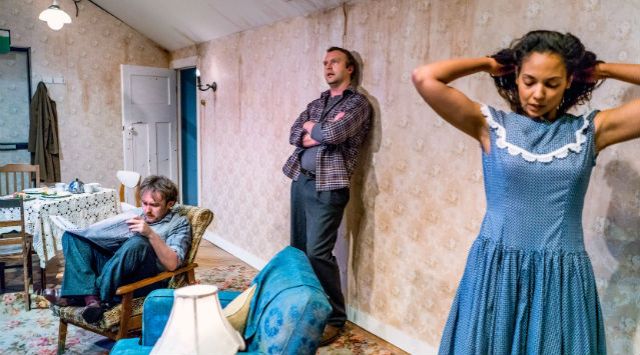
Review: A Nest Of Skunks (Collaborations Theatre Group)

depotVenue: The Depot Theatre (Marrickville NSW), Aug 3 – 13, 2016
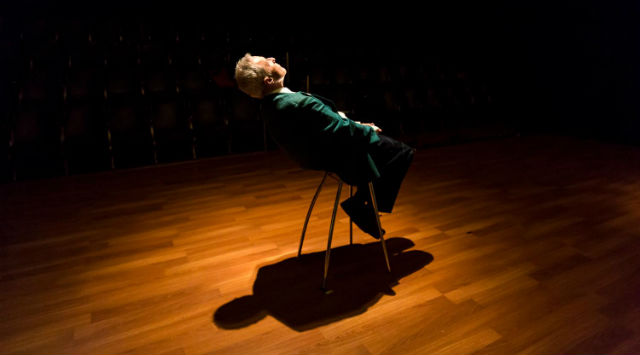
Playwright: James Balian, Roger Vickery
Director: Travis Green
Cast: Peter Condon, Jeannie Gee, Penelope Lee, Amanda Maple-Brown, Brendan Miles, Aanisa Vylet

Theatre review
It is the future, and the slang word for refugees is “skunks”. Even though there is no indication as to how far ahead in time A Nest Of Skunks is set, our imagination does not have to work very hard at all to believe that society has disintegrated to that level, where we liken asylum seekers to an animal known for its repulsive stench. In fact, we often forget that events in the play are not actually taking place in the here and now, being so used to prevailing sociopolitical attitudes towards the needy that are already full of contempt.

The script, by James Balian and Roger Vickery, is taut, confrontational and stimulating. It appeals to our decency, demanding that we think about the repercussions of political decisions with compassion and rationality. Convincing parallels are drawn between Nazism and how public ideology is currently evolving, and in its dystopic vision, we see that it takes only a few small steps before fascism ascends again. A Nest Of Skunks is gripping drama, with compelling twists and turns that provide food for thought, along with excellent entertainment. Director Travis Green creates a powerful statement with the text, and although a couple of crucial plot revelations require greater clarity, his storytelling is nonetheless affecting.

There are accomplished performances in the piece, most notably by Brendan Miles whose robust presence and emotional authenticity, ensure that the show is held together by our tremendous empathy for his character Stephen. There are slight issues with the portrayal of language barriers between cultures in the play, but they do not dampen our enthusiasm for Miles’ very moving interpretation of a man in turmoil and desperation.

Refugees are used as pawns in the quest for power by those in the business of government. We are made to fear the weak. Instead of providing help, we turn against the innocent, employing harsh and cruel measures in the name of protecting our self-interest. A Nest Of Skunks demonstrates that resistance is the only instrument we have that could turn the tide. Characters in the play make radical decisions to do the right thing, but what is required of us is only reason, so that we may triumph against lies and greed, and all the irrationality peddled by fear-mongers who wish to undermine the best of our immortal human spirit.

www.facebook.com/CollaborationsTheatreGroup

Review: Who Am I (The Old 505 Theatre)

old505Venue: The Old 505 Theatre (Newtown NSW), Aug 2 – 20, 2016
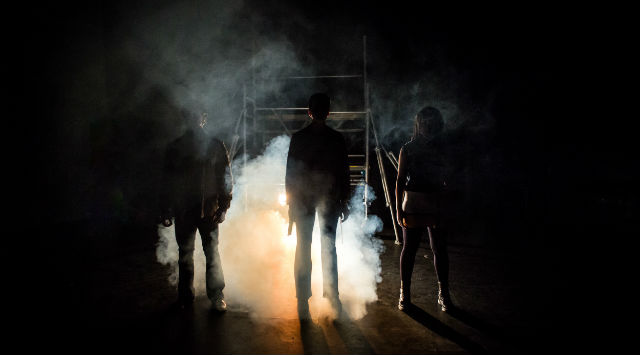
Playwright: Russell Cheek
Director: Stephen Abbott
Cast: Russell Cheek

Theatre review
Watching game shows on television is perhaps one of the most frivolous ways to spend time. Obscure questions might be asked of its contestants, but what it offers viewers is mind-numbing entertainment that does little more than to help soothe away the day’s worries. None of it holds meaning for us after the 25 minutes have past, and we scarcely remember anything that had secured our undivided attention previously. This is not the case for Russell Cheek, who in 1993 participated in Sale Of The Century, one of the countless game shows to have appeared on our screens since the early days of broadcast technology. It was a life changing experience for Cheek, and in Who Am I, memories of that special time is presented to us, by a protagonist still spirited and surprisingly engaging in his one man show.

Cheek’s show entices with nostalgia, humour and a rare optimism. The prospect of sitting through 70 minutes of a man recollecting an event that is of consequence only to himself, seems farcical and banal at the outset, but we soon find ourselves investing in his tale. It is a story that appeals to our insatiable thirst for hope, and proves itself to be buoyant to a remarkable degree. Cheek is here to share in his joy, and it is terribly infectious. The script is simple but rigorously worded, so that its imagery is vivid, and the punchlines it delivers are definite. Stephen Abbott brings a discerning approach to direction that gives the show a delightful and relentless playfulness, while maintaining an air of elegance to proceedings. Cheek wins us over with charisma and a genuine eagerness to connect, and even though certain sequences seem slightly under-rehearsed, his ability to put all at ease makes for a pleasurable time at the theatre.

It is a turning point in life, with talent and chance coinciding to provide Russell Cheek with not just a unique anecdote for the ages, but also financial rewards and the associated freedoms that many of us can only dream of. We discover a comfort in the knowledge that dreams do come true and fairy tales can happen, and when it is a good person who has reaped the benefits, we are all the happier.

www.old505theatre.com

Review: Black Hands Dead Section (Sydney University Dramatic Society)

sudsVenue: PACT Centre for Emerging Artists (Erskineville NSW), Aug 3 – 13, 2016
Playwright: Van Badham
Director: Zach Beavon-Collin
Cast: Adrien Stark, Alice Birbara, Amelia McNamara, Anna Rowe, Anna Williamson, Bianca Farmakis, Cameron Hutt, Charlie Meller, Elliott Falzon, Eloi Herlemann, Emma Throssell, Hal Fowkes, Hannah Craft, Helena Parker, Henry Hulme, Isabella Moore, Jimmy Pucci, John Kenedey, Joshua Powell, Julian Hollis, Laura McInnes, Louisa Thurn, Maddie Houlbrook-Walk, Nick Jackman, Nell Cohen, Oliver Ayres, Patrick Sunderland, Victoria Boult, William Hendricks
Image by Clare Hawley

Theatre review
West Germany’s Baader-Meinhof Group were a far-left militant group in the early 1970’s, that had orchestrated acts of terror, including bombings and assassinations, in its efforts to instigate social and political change. In Black Hands Dead Section, playwright Van Badham provides a history lesson on the gang, looking at past events through a contemporary lens, mindful that terrorism is the hottest of today’s issues. No society thinks of itself as aggressors; in Australia, terrorists are foreign and we are its innocent victims. The simple but dishonest dichotomy frees our conscience, so we can continue with life as we know it, without having to understand the complexities of how we are responsible for our own woes.

Characters in the play begin as perfectly reasonable Western middle-class individuals, passionate about what they believe to be right, and although sometimes radical with their ideas, these personalities are familiar ones that we relate to readily. We want the same things of life, and our world views coincide. Gradually however, their actions become increasingly reprehensible, and we struggle to find the line at which us had become them. It is this ambiguity that is missing from public discourse about “religious extremists”. Dehumanising the enemy makes things convenient, but the lack of transparency and truth in how we talk about perceived threats, compounds our fears and prevents us from solving problems.

This student production features 29 enthusiastic actors, some more talented than others. The unevenness in ability certainly makes for challenging viewing, and although nuances and details are sorely lacking in their interpretations, they make their point loud and clear. Acts I and II feature an inordinately large number of characters and scene changes, which would test even the most accomplished directors and designers, so it comes as no surprise that this simple staging often leaves us confused with its every who, what, where and why. Thankfully, Act III turns uncomplicated and is more successfully rendered, eventually leading us to a cogent conclusion.

There are no easy answers in any war, because all life must be valued equally. If we believe that those in opposition must be annihilated, then no one is safe, and human nature is nothing but a perpetual death wish. We have to find the root of every evil before we can genuinely be rid of them, but this is not how we do politics (never have and probably never will), and when we look at the past, the truth is unquestionably full of doom and gloom. War has always been, but so has the longing for peace, and we cannot give up the desire for something better as it is that very desire that defines humanity. Characters in Black Hands Dead Section wishe for a better future, but it is their refusal to include every adversary in their vision of the ideal, that keeps them fettered.

www.sudsusyd.com