5 Questions with Bert LaBonte and Marney McQueen

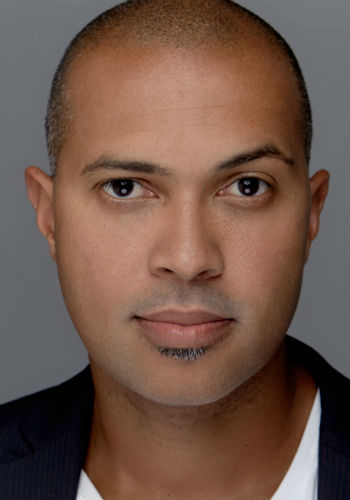
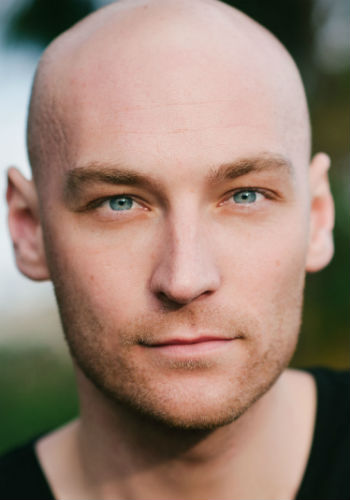
Bert LaBonte

Bert LaBonte

Marny McQueen: What are the best things about your home town, Geelong?
Bert LaBonte: Being so close to the water, but far enough away from the city.

In what ways do your sons take after you?
Oh look, they’re very sociable and blood cheeky.

Is your wife Amanda happy to be rid of you ¾ of the year while you are on tour?
I can safely say NO! But we make it work when it happens. We call it Team LaBonte!

Which have you been most proud of in your entire performing life?
I’d probably say Foley from An Officer And A Gentleman because I created the role in an original musical. Oh, and I might’ve won a few awards for it too.

What advice would you give other actors regarding working with a diva like me?
Just smile, breathe and think of home time.

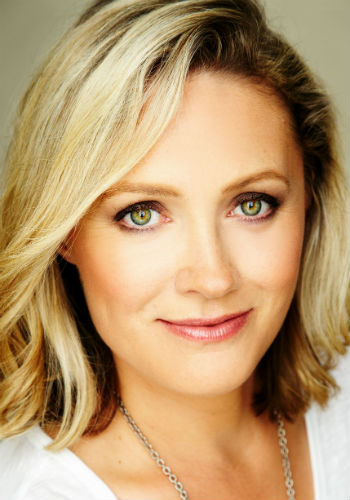
Marney McQueen

Marney McQueen

Bert LaBonte: Other than me, which other leading man/men have you found inspirational to work with?
Marney McQueen: Tony Sheldon in Priscilla, he never missed a show, and even in rehearsals he always gave it 150%. I loved working with Andrew McFarlane, mostly because I was able to live out a childhood crush developed over many years of Playschool watching, and I learned many lessons about making sure you enjoy yourself while you are working from Bob Hornery. But my most inspirational leading man was the incomparable Garry MacDonald. In my comedy shows I work alongside an exceptional theatrical animal, Mark Jones, who I could not do cabaret without.

What is your favourite role you’ve played in your career to date?
At school, John Proctor in The Crucible. I went to an all girls’ school.

How do you find being a mum with little ones in this industry helps you as a performer?
It certainly helps you focus in your job while you are at work, you become more efficient. Although in this show you can tap into the immense pool of emotions that little people unleash within you.

If you weren’t a performer what would you be doing with your life?
I love this question. I studied commerce at the University of Melbourne, but I don’t think I would’ve pursued a career in that department. I think I’d be a real estate agent, which is basically being an actor, yeah?

What’s your favourite thing to do away from work?
Go swimming at the Coogee Women’s Pool.

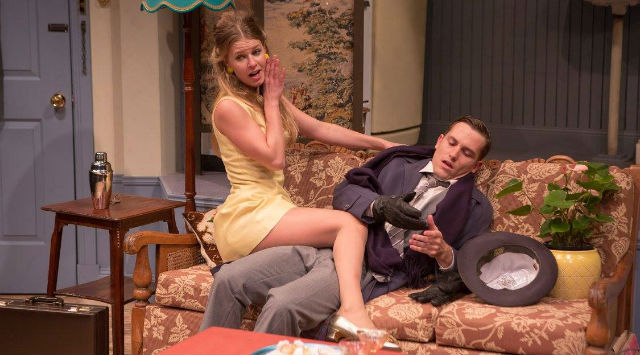
Bert LaBonte and Marney McQueen can both be seen in Dream Lover the musical.
Dates: from 22 September, 2016
Venue: Sydney Lyric Theatre

5 Questions with Bree Langridge and Lachlan Martin

Bree Langridge

Bree Langridge

Lachlan Martin: In Side Show, you play the Tattooed Lady. Do you have any tattoos?
Bree Langridge: I have three; a spider on my ankle, a lotus on my wrist and Aboriginal symbols on my ribs. I love tattoos. If I weren’t a performer I would get a full sleeve.

What is your dream role?
Sally Bowles from Cabaret. (Lachlan: Funny – my dream role is the Emcee from Cabaret.)

Have you worked at the Hayes before?
I performed my cabaret/tribute show called Little Diana based on the life of Diana Ross.

You’ve performed in some of Australia’s biggest theatres. How are you feeling about putting this reasonably large musical in such an intimate space like The Hayes?
I’m quite petite so I’ll fit nicely in the Hayes. But it will be a challenge especially because we are playing with the idea of dancing on silks hung from the ceiling. Exciting nonetheless.

Do you have any funny moments that have happened from previous productions?
I’ve just finished touring Cats as an onstage swing and the first time I performed the role of Rumpleteaser, (usually Cockney) I jumped past my light, over energised my voice and sounded Celtic. The rest of the show was banging though.

Lachlan Martin

Lachlan Martin

Bree Langridge: You play the Lizard Man in the freak show. How do you relate to lizards?
They are long and skinny – me down to a tee!

What are you enjoying about the process of creating the world of the freak show?
Well, I have never worked with any of the cast so getting to know them is fun. What we are doing is sometimes silly and very physical; we are throwing ourselves into it, which is allowing all sorts of creativity. The freaks are essentially a family and even after day 4 I can see us as actors becoming a family. And they are all super talents!

If you could have anyone over for dinner, dead or alive, who would it be?
James Dean. I can’t cook though so we would go out to a fancy restaurant and he would pay. Ha!

In Side Show you play not only the Lizard Man but a variety of other small roles. As an actor how do you differentiate between them?
We are still working through that process but as I’m a very physical person I use several different postural choices, vocal shifts and accents. The story travels during the show allowing us to access all sorts of worldly characters.

What attracted you to working in theatre?
As a child I would run around the house like a show queen! I grew up in Glenelg, Adelaide and mum took me to lots of theatre. From a very young age I knew I wanted to perform however it may happen – singer, dancer, actor, lizard!

Bree Langridge and Lachlan Martin can both be seen in Side Show the musical.
Dates: 23 September – 16 October, 2016
Venue: Hayes Theatre

Review: Letters To Lindy (Seymour Centre)

merrigongVenue: Seymour Centre (Chippendale NSW), Sep 2 – 10, 2016
Playwright: Alana Valentine
Director: Darren Yap
Cast: Jeanette Cronin, Glenn Hazeldine, Phillip Hinton, Jane Phegan
Image by Lisa Tomasetti

Theatre review
There was always something impenetrable about Lindy Chamberlain. Without performing appropriately the role of a distraught mother losing her child, many Australians found her coolness disarming. Alana Valentine’s Letters To Lindy too, does not reveal enough of the protagonist’s inner world. A substantial portion of the show is absorbed in recounting events that are already familiar, and although it does provide glimpses into Chamberlain’s deeper thoughts, the play’s structure although earnest, does not quite deliver a poignancy that lives up to its central, harrowing incident. The mother retains a sense of detachment from her public, and we once again struggle to connect.

Jeanette Cronin is star of the show, impressively dynamic in her approach, with surprising interpretations that prevent Chamberlain’s story from turning cliché. Director Darren Yap pitches the performance at a level suitable to the vast auditorium, encouraging actors to bring a vigour to the stage that keeps us attentive. Of the supporting cast, Glenn Hazeldine is particularly charming in a wide ranging suite of personalities, colourfully portraying each character with a delightful, and thoughtful, sensitivity.

We have no right to demand that Lindy Chamberlain acts out a part to fit a narrative that pleases us. In fact, she is to be commended for going against the grain of stereotype, especially in this new era of pervasive and obsessive media scrutiny, to insist on presenting a face of authenticity. As a theatrical work however, Letters To Lindy needs to fulfil our need for something more engaging, and more moving, in its drama.

The cruelty that societies are so ready to dispense on individuals, especially those in the public eye, have to be kept in check, yet we keep creating opportunities for those injustices to be amplified. It seems our need to witch hunt does not cease, even when we already know better.

www.merrigong.com.auwww.seymourcentre.com

Review: Gloria (Griffin Theatre Company)

griffinVenue: SBW Stables Theatre (Kings Cross NSW), Aug 26 – Oct 8, 2016
Playwright: Benedict Andrews
Director: Lee Lewis
Cast: Kristy Best, Chloe Bayliss, Marta Dusseldorp, Louis Fontaine, Huw Higginson, Meyne Wyatt, Pierce Wilcox
Image by Brett Boardman

Theatre review
Gloria is a mother and a wife, but to everyone around her and to herself, she is first and foremost, a star of the stage. Having spent her life playing many legendary tragic heroines, Gloria knows more about the fictional women of Western theatre than she does the actor who portrays them. Benedict Andrew’s script is stylised and abstract, an imaginative creation that parallels Gloria’s struggle for coherence. The leading lady’s existence is one of disorientation and tumult, and Andrew’s writing relishes in that chaos for a work striking in its originality and remarkable boldness.

Equally audacious is director Lee Lewis’ resolve to reach the truth in the enigmatic world of Gloria, where obfuscation and secrets are given their due, while a foundation of instinctive authenticity is established with absolute imperviousness. Every artistic and mysterious flourish, no matter how flamboyant (including Steve Toulmin’s extraordinary music), is anchored in startling emotional precision and intensity, conveyed through a captivating combination of deep understanding and steely determination.

The actors provide an unforgettable experience, visceral and immediate, persistently surprising and colourful, with a baroque sensibility that elevates the theatrical form to a rare level of infectious excitement. Marta Dusseldorp is devastating as Gloria. In a state of constant distress and confusion, Dusseldorp’s embodiment of Gloria is tenacious, powerful and very, very dark.

The play is intentionally coy about Gloria’s problems, therefore even though emotions are almost always at a fever pitch, its moments of melodrama are few. The audience is then free to find an interpretation of her narrative, so we rely on our own faculties to impose upon Gloria, a reading of her story that will only ever be partially accurate. The actor wishes to step onto the stage with nothing of herself, and everything of the person she represents. An emptiness resides in her, and because the soul is constantly morphing for another, it forgets itself.

www.griffintheatre.com.au

Review: Barefoot In The Park (Ensemble Theatre)

ensembleVenue: Ensemble Theatre (Kirribilli NSW), Aug 25 – Oct 8, 2016
Playwright: Neil Simon
Director: Mark Kilmurry
Cast: Mia Lethbridge, Daniel Mitchell, Jamie Oxenbould, Georgie Parker, Jake Speer
Image by Clare Hawley

Theatre review
It is the 1960s. Corie and Paul are moving into their tiny New York apartment, about to begin life together as newlyweds. After 6 days of honeymoon bliss cooped up in a hotel room, they emerge to meet us just as the reality of mundanity begins to sink in. Divorce was a topic much more controversial at that time, and the threat of a marriage breakup in Neil Simon’s Barefoot In The Park has lost considerable effect in terms of the dramatic tension it is able to create, but as a frothy comedy, its structure and dialogue retain a classic charm that many will find irresistible.

Mia Lethbridge leads a cast of actors, memorable for their bubbly playfulness and congenial warmth. As Corie, Lethbridge’s perky portrayal of naivety is consistently delightful and surprisingly persuasive, with an energetic presence that holds the show together, along with all its relentless frivolities. Director Mark Kilmurry does an excellent job of the comedy, establishing a brilliant sense of timing for the production’s entirety that ensures top entertainment value, but the development of character conflicts require greater nuance for Simon’s plot to be more believable.

When two people get together and form an intense bond, the pleasures that materialise are almost always coupled with challenges, big and small. In Barefoot In The Park, we want the lovebirds to find a way to sort out their differences. We invest in their romance, because loneliness is an abominable monster that must be vanquished at all cost. Times change, but the fear of being alone is perennial. Without each other, Corie and Paul must find meaning only within themselves but in Neil Simon’s quaint fantasy, they only have to indulge in a mutual infatuation, so that their days may be filled with joy, to have and to hold, till death do they part.

www.ensemble.com.au

5 Questions with Chelsea Ingram and Luke Edward Smith

Chelsea Ingram

Chelsea Ingram

Luke Edward Smith: What inspires you?
Chelsea Ingram: I am inspired by life. I am an extremely sensitive person and embrace the crazy energies that are constantly surrounding us. I guess I am inspired by others stories, most people in this world underestimate their strength and tales and I have always wanted to express their stories and triumphs through my art.

What advice would you give to other young female actresses and writers?
Learn to hussle. Have your mum on speed dial. Be strong, humble and most importantly love and embrace yourself. Geoffrey Horne my teacher at Strasberg and a gifted actor once wrote “I’ve lived my life expecting things to take care of themselves. I told myself that all I had to do was be a good actor. Believe me, that’s not the way it works.” – I kind of live by this.

Do you have a method to prepare for your roles?
After studying at The Lee Strasberg theatre and film Institute for 2 years, I am a huge believer in the method. I personalize my characters emotions by using my personal experiences to embody and find the truth of the characters journey. To prepare I will study their lives, loves, woes and highs to understand and fully embrace their stories.

How was working in the big apple?
Incredible and unbelievable. Actors in New York are so giving and have immense respect for the art and its craft. I can’t really put into words how magnificent life is as a actor in NYC, but it’s like nothing I had ever experienced. I worked on the stage, feature and short films and web series – every project was amazing. New York is a hard city, most months it’s a struggle to even pay rent. I can’t help but respect every actor who throws themselves into the NYC world of arts and embraces that extreme and yet amazing life style.

Do you have any upcoming projects to watch out for?
Currently I am working on an upcoming film. My play Keep Calling plans to move over to NYC in later 2017. I am connected to an unbelievable theatre company in NYC, Primitive Grace, directed by Paul Calderon and David Zayaz, with shows coming out soon. I have a few other projects that I am unable to speak about but please keep an eye out on social media.

Luke Edward Smith

Luke Edward Smith

Chelsea Ingram: What made you come back from NYC to do Keep Calling as part of the Sydney Fringe?
Apart from the convenient excuse to visit friends and family? It was the punch in the guts the script gave me. I read it and was still thinking about it a few days later. Always a good sign. I’m always looking for that element of fear in bringing something to life in a performance and this role left me thinking, “can I pull this off?” I wasn’t sure, but I knew I’d like to give it a red hot go.

How did you approach working on the role?
It wasn’t too different an approach from any other. I always start with what about them is similar to me. It’s much easier to work from those similarities and then layer in those things that make us different. It helps me ground the performance and hopefully it makes it all the more believable when an audience comes to see it.

Did you find much that was similar between you and Sam?
I recognised that attraction to something you know isn’t good for you. I’ve never been in the same shoes exactly (thank God), but I saw the behaviour, the longing, the need to belong and that I think is universal. It’s something anyone can identify with, being attracted to or trying to please someone or something that can’t or won’t be pleased. That coupled with the huge regret and confusion and anger that comes with not being strong enough to give it up. I like to work very personally so I’ve gone back to moments in my life where I’ve felt the same way as Sam.

What do you do to come down from working on something that intense and personal?
I go home and do the complete opposite of what I’ve been doing in the rehearsal room that day! I listen to upbeat music, I watch TV, lots of comedies, or curl up with a trashy novel. And tea. Tea makes everything better. Anything that puts the balance back into life. Everything I put into that day’s work I try to leave in the room. It’ll be there tomorrow.

When you’re in New York, what do you miss most about Australia?
Tim Tams. I’ve eaten way too many packs since I got back. I always take two big jars of Vegemite with me when I go back, so I’ve got that covered. But Tim Tams? You can get them but they go for about $7 a pack in the States, and if any other Australian knows you’ve got them…

Chelsea Ingram and Luke Edward Smith can both be seen in Keep Calling in the Sydney Fringe Festival.
Dates: 13 – 17 September, 2016
Venue: PACT, Erskineville

Review: Alex & Eve – The Complete Story (Bulldog Theatre Company)

bulldogVenue: Factory Theatre (Marrickville NSW), Aug 25 – 28, 2016
Playwright: Alex Lykos
Director: Alex Lykos
Cast: Chris Argirousis, Anne Marie Cavaco, Sylvia Dritsakis, Michael Kazonis, Janette La Kiss, Alex Lykos, Paul Miskimmon, Jadah Quinn, Kate Ryerson, Sal Sharah

Theatre review
There are many among us who are conservative and traditional, but in multicultural places like Australia, their tendency to be inflexible with visions of how we live together can be problematic. Salwa is Lebanese Muslim, and George is Greek Orthodox, both insular and intolerant of other cultures, refusing to accept the validity of other ways of life, until their offspring force them into a confrontation of wills through the classic contrivance of a mixed marriage. Alex Lykos’ Alex & Eve: The Complete Story combines three episodic plays to tell the couple’s story from their first meeting to the birth of their first child. Its duration is inevitably long, but the script is a tight concoction of high jinks and social commentary that although entirely predictable, is endlessly amusing with its host of vibrant, irresistible archetypes.

The production is a visually basic one that would benefit greatly from more ambitious efforts in set and costume design, but Lykos’ own direction of the work is effectively comedic and fast-paced. There is no attempt at a naturalistic mode of presentation, which can make for an excessively farcical show, but its slapstick is unquestionably charming and proves very appealing to its target audience. Janette La Kiss as Salwa and Michael Kazonis as George are both strikingly present, with flamboyant approaches to performance that captivate and entertain. Both are able to find nuance with their roles, thereby delivering more than stereotypical interpretations of minority elders.

Not being dominant cultures in Australia, the Greek and Lebanese characters have a greater freedom to portray the nature of prejudice in our communities. Some of what they say is objectionable, but their statements are tempered with good humour, and those who speak indiscreetly are exposed for their ignorance. Not one person can be excluded from the world’s politics, but how individuals participate in it, is infinitely variable. Alex & Eve does not talk about terrorism or immigration, but its feuding families are involved in a war that serves to remind us of how we must value peace, no matter how big or small a perspective we may have of the world.

www.bulldogtheatre.com

5 Questions with Giles Gartrell-Mills and Bishanyia Vincent

Giles Gartrell-Mills

Giles Gartrell-Mills

Bishanyia Vincent: What can Sydney audiences expect from you as a director?
Giles Gartrell-Mills: As much as possible I like to put story first. My favourite thing about theatre is that we ask the audience to endow the world they are seeing. We need them to create it for them-selves. I generally like to keep my production simple in terms of design and fit them to the space I’m working in. One of the best things about the late shows at the Old Fitz is that you need to work with what you have. It inspires creativity, which is why we do it in the first place.

What do you love most about Where Do Little Birds Go?
Cheesy as it sounds, I love Lucy! She’s a wonderful character. She sees the best in bad situations and manages to remain somewhat sweet through a very tough and brutal world. I think audiences will love her too.

I’ve heard you really love to know your stuff. Is Wikipedia your greatest addiction?
Possibly. Wikipedia, Jiu Jitsu and coffee are my greatest addictions. I love to learn and these days if I come across something I don’t know or a person I’ve not heard of from any field, I often jump on Wikipedia or Google to get any information I can about them. It’s not work… I just get interested in things I’ve never heard of.

What would you like to see change in the Sydney theatre scene and would you like to keep the same?
The scene in Sydney is great. If anything I would like to see a bit more confidence in it. Since moving here I’ve found everyone to be very open and welcoming. I think there is opportunity for more site specific work too. Last year I saw a show produced by the Kings Collective in an unused floor of a shopping centre. It creates new challenges and is a welcome change for a loyal theatre audience.

Ok so lastly and most importantly, how do you find directing your other half in a one woman show? Is she much of a diva?
Haha! Luckily enough because we trained at the same school we have a lot of common language when it comes to approaching the work. A one woman show is a big undertaking and a bit of that diva confidence can be very helpful sometimes too.

Bishanyia Vincent

Bishanyia Vincent

Giles Gartrell-Mills: As a relative newcomer to the Sydney theatre scene, what do you think makes it different to other cities you have visited?
Bishanyia Vincent: I think the biggest difference I have noticed between here and London is the sense of community within the independent theatre scene. London is such a big city and often you can feel like your tube stop is an island and there’s a giant gulf between you and your creative friends.. In Sydney you can bump into numerous creative souls on jaunts about town and feel a huge sense of belonging and support for one another. I feel very grateful to be a part of it.

What is the biggest difference preparing for a one woman show than preparing for a show with other performers?
Lines…SO MANY BLOODY LINES. Also creating the show with your own energy and sustaining that for an hour with the audience’s attention. We’ll see how that goes next week! Although I do have a lovely handsome pianist on stage with me playing so he’s definitely a reason to come along! *wink*

Who are your greatest influences as a performer and why?
The people around me everyday in my life who are battling the same demons and still get up and try again anyway. Life. Love. Stories. Human beings. People I bump into, happen across and experience in my day to day life. Because that’s where it all begins. Storytelling wouldn’t be storytelling without people and their stories.

Why do you think Sydney should meet Lucy Fuller (from Where Do Little Birds Go?)
Because it’s a true story. Because the real Lucy (Lisa Prescott) never got to share her story and Camilla Whitehill read a little bit about her in a novel about the Kray’s and took the time to write her story and give her a voice and that is a beautiful gift to give to the world.

If you could travel to any time in history when would it be and what would you want to do when you got there?
I can barely even decide what to choose on a dinner menu without getting FOMO when I order the wrong thing and someone else’s looks better and you ask me THIS? No comment. I plead the fifth.

God there are so many amazing time periods. I can only hope to be lucky enough throughout my career I get to experience ALL OF THEM in some capacity.

Giles Gartrell-Mills and Bishanyia Vincent are working on Where Do Little Birds Go by Camilla Whitehill.
Dates: 30 August – 10 September, 2016
Venue: Old Fitz Theatre

Review: Before The Water Gets Cold (Smoking Gum Theatre)

smokinggumVenue: Sydney Theatre School (Chippendale NSW), Aug 23 – 27, 2016
Playwright: Charles O’Grady
Director: Lucinda Vitek
Cast: Samuel Beazley, Robin Chen, Julia Robertson, Amy Zhang

Theatre review
Part poetry, part dance and part play, Before The Water Gets Cold is a multidisciplinary exploration into the nature of artistic expression. With themes of love and loneliness providing its main threads of inspiration, what we see on stage are four performers inhabiting a range of personalities, not to convey a narrative, but to evoke sensations and emotions that we are all familiar with.

The work is guided by an innovative spirit, and is often a refreshing experience, although significant portions can seem clichéd, due to its inability to transcend the derivative. Writing, direction and choreography exhibit moments of beauty through their various modes of experimentation, but a greater sense of originality, or perhaps boldness, is missing in the production.

Performer Julia Robertson is memorable for her captivating presence, and a surprising authenticity that she brings, even to the more absurdist sequences of the show. Her work with Robin Chen in a montage composed of romantic movie quotations is particularly delightful. Composer Josephine Gibson and sound designer Jeaux Pfeffer contribute proficiently to this collaboration, both sensitive and understated in style, for a delicate air that envelopes the auditorium.

Before The Water Gets Cold wishes to marry logic with something more ephemeral, but a greater trust in the visceral instance would allow us to dive in deeper into its artistry. The mind gets in the way of much of life’s pleasures, and at the theatre, an opportunity for us to be in touch with the magic of the here and now is always present, if only we resist the temptation to analyse everything even before it begins to happen.

www.smokinggumtheatre.com

5 Questions with Lulu Howes and Caitlin West

Lulu Howes

Lulu Howes

Caitlin West: So you’re condensing 15 books and 250 stories down to a single show. Is there a theme or set of themes that have guided and tied together your telling of these stories?
Lulu Howes: I’d say our approach to adapting such a large body of work was inspired by the vastness of Ovid’s original text. Metamorphoses is such a sprawling book, it picks up threads of myths and then drops them, tells half stories, revisits characters sporadically. Ovid really seems to pick and choose what he’s interested in, then loosely ties everything up in the theme of ‘metamorphoses’. So the myths we’ve chosen to work with and the way we’ve decided to adapt them is pretty eclectic. We were all drawn to different stories for different reasons, and I think this boundlessness is what binds them together, embracing that vastness rather than running away from it. That being said, there are definitely some themes that have continued to crop up. If I had to pick, the big three would probably be gender, politics and power.

How closely has the language of the original text shaped your telling of these stories?
I’m not even sure how many translations of Metamorphoses we now have between us – probably too many. Trying to find the right mode of expression to represent a myth has been half the battle of adaptation, so language has definitely played a massive part. Sometimes we’ll quote directly from a translation, or use the Elizabethan adaptation, or delve into how Ovid has presented a particular idea. More than anything else I think the comedy of the original text has worked its way into a lot of the play. There’s a lot of satire and a lot of silliness.

Saro has directed you in a few shows in the past. How have you found working with him as an actor?
The same but different. It’s been a very collaborative process – everyone’s open to each other’s ideas and feedback so in that regard it feels very familiar. Having done shows together in the past we went into Metamorphoses with a great friendship to work off and a good idea of what it might be like devising together. I think it’s been a really natural transition, especially with Imogen stepping into a more directorial role and just generally being amazing. Saro’s got great comic timing and likes improvisation more than I do, which is good because it keeps me on my toes and terrible because I can’t always keep a straight face.

Can you tell me a bit about how you’re approaching the task of characterisation in a show that presumably is dealing with multiple character voices?
There’s such a huge array of characters in the show, there hasn’t been a set approach. As almost none of the characters reappear in more than one scene, it’s been about establishing really strong voices or images in a short amount of time. Different methods have worked for different scenes, whether we’re improvising and working off each other in the room, or painstakingly going through the script to create these really defined voices for a two-minute scene. We’ve both been able to pick and choose who might play which character, with no expectation that if the character is a man it should be played by Saro or vice versa. In general there’s been a lot of freedom with how we tackle these characters, and way, way too many costume changes.

Seriously, will there be Kanye West references?
There are already too many, we need to be stopped.
Caitlin West

Caitlin West

Lulu Howes: Tammy & Kite is delving into the world of children and the things they ‘do or don’t see.’ What first drew you to this idea?
When Hannah and I first came together to make this show, we both knew that we wanted to talk about children, siblings and the imagination. As someone with a much younger sister, and with a personal interest in child play therapy, I was keen to look at how children process and express difficult emotions. This was complemented by Hannah, who came at this as an artist, and as someone with an incredible visual imagination. She had a million ideas for how we could translate those concepts into something really beautiful and tangible. So I guess it was kind of a crossover of our own personal interests and skills, and a shared desire to try to communicate and think about the way a child sees the world.

I am so excited to see you and Hannah (Cox) onstage together; you’re both such energetic, engaging performers. What does the inside of your rehearsal room look like at the moment?
Well, at the moment, I’m sitting here writing this, while Hannah plays a pretty intense game of handball with herself against the wall. There’s a pile of discarded toys and books on the floor, a half-finished Lego spaceship on the bed, and Phillip the duck is sitting next to me. We’ve just finished rehearsing a scene where Kite saves Tammy from a monster armed only with a light sabre, so we’re taking a break before we move on to some of the more tightly choreographed puppet scenes.

A ten year old wants to come see Tammy & Kite. How do you describe the play to them?
In this show we’re trying to use a language that will be accessible to both young people and adults (although perhaps for different reasons and in different ways) so to be honest, I think I’d tell them the same thing I’d tell an adult. In a nutshell in Tammy & Kite we’re taking the best and the worst parts about being a kid, and trying to translate them into something that grown-ups can understand.

What’s the scariest/hardest/most challenging part of devising your own show?
I think the scariest thing, when creating a show from scratch with another person, is knowing how to trust that person enough to fail. When you’re rehearsing a show with a bunch of other actors, or with a pre-written script, or with a director who’s always in the room with you, it can be easier in a sense to hide behind those things or to use them to fall back on when you get it wrong. Hannah and I were already great friends before we started working on this show, which was a big help, but over the rehearsal process I think we’ve both gotten a lot better at trying out new things, and not being afraid to do that. I think once you let go of the fear of trying something that might not work, that’s when you end up finding the seeds of the best stuff.

If you could go back in time and give kid Caitlin one piece of advice, what would it be?
When the ice cream truck plays “Greensleeves” that does not mean it has run out of ice cream and don’t let anyone tell you that it does.

Lulu Howes and Caitlin West can both be seen in Sydney Fringe Festival shows by Montague Basement.

Tammy & Kite
Dates: 13 – 17 September, 2016 at 8pm
Venue: Erskineville Town Hall

Metamorphoses
Dates: 13 – 17 September, 2016 at 10pm
Venue: Erskineville Town Hall