Review: Mark Colvin’s Kidney (Belvoir St Theatre)

belvoirVenue: Belvoir St Theatre (Surry Hills NSW), Feb 25 – Apr 2, 2017
Playwright: Tommy Murphy
Director: David Berthold
Cast: Peter Carroll, Kit Esuruoso, John Howard, Sarah Peirse, Chris Stollery, Helen Thomson
Image by Brett Boardman

Theatre review
We want many ideas and themes running through our plays, so that they may be experienced with complexity and a sense of surprise. In Mark Colvin’s Kidney, by Tommy Murphy, we think about friendship, altruism, wealth, technology, and the Leveson “phone-hacking” inquiry, divergent concepts that the writer consolidates with the help of a real story.

It is a tricky undertaking, having to find the right balance so that our focus sticks with the plot’s main concern. The play wants to talk about the unusual affair of a broadcaster, Mark Colvin’s kidney transplant, but sets of circumstances in the donor’s life that take us to the main event, often seem equally or more interesting, perhaps due, admittedly, to the brevity at which they are dispensed. Protagonist Mary-Ellen Field is an extraordinary woman who has had a very full life, and we require more than just that one great deed of rescuing a sick man, to satisfy our desire to know and celebrate her.

Murphy’s representation of characters, Mary-Ellen and Mark, is warm, vibrant and suitably life-affirming. Actors Sarah Peirse and John Howard are both immensely affable, but their unpreparedness for opening night is apparent, and disappointing. The magic of the piece lies in the fascinating implausibility, of a friendship developing so quickly and deeply in cyberspace, with the actors assigned the unenviable task of making that relationship believable. Director David Berthold’s spatial manipulations are marvellously imagined, for his creative portrayal of dialogue that takes place only on mobile devices, but performances fail, ironically, to make convincing, events that actually did happen.

It is nonetheless, a feel-good uplifting tale that is at once hopeful and inspiring. Mary-Ellen’s determination to give up her kidney may not be entirely comprehensible, but we recognise the divine in her actions. Her name may not bear enough eminence to claim space in the title, but she is a modern day real-life hero to whom we should all aspire, if only we could come away with a greater understanding of what it is that makes her tick.

www.belvoir.com.au

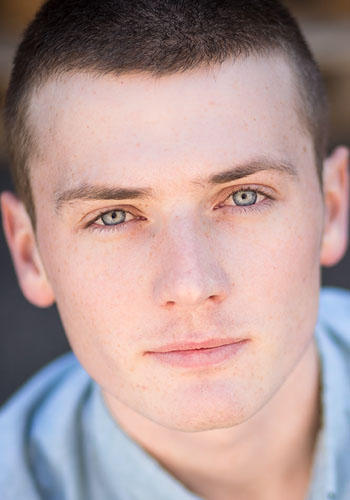
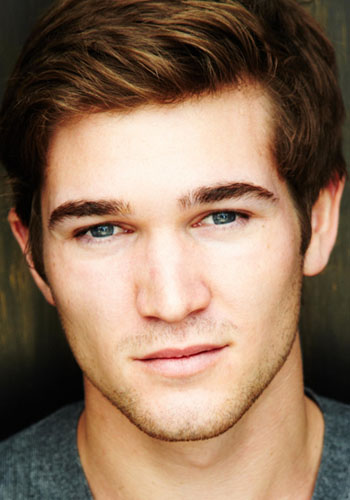
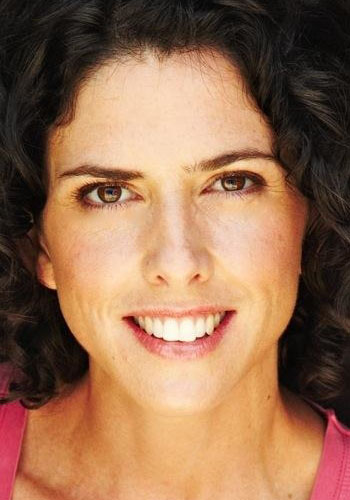
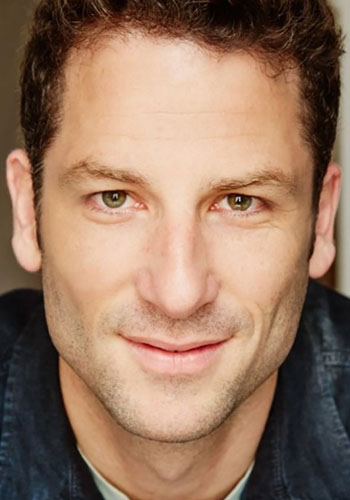
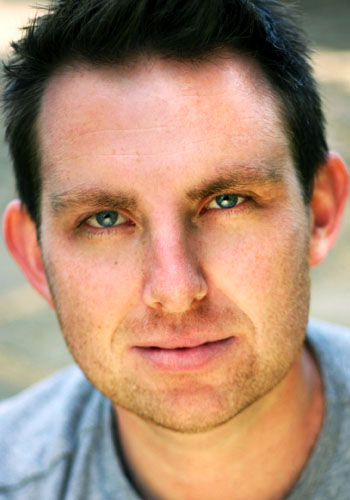
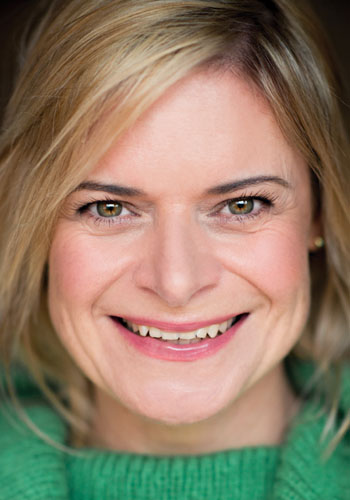
5 Questions with Julia Christensen and James Wright

Julia Christensen

Julia Christensen

James Wright: Regardless of whether you believe in past lives, what/who would you like to imagine you were in a past life?
Julia Christensen: OK, I really can’t subscribe to believing in anything as utterly ludicrous as past lives, but also I COMPLETELY ONE HUNDO-PERCENTO BELIEVE I WAS A GENTLE TEXAN COWBOY. I was a renegade gun-slinger with a deadly aim and heart of gold.

What’s your perfect Sunday? And would it be different if money was no object?
My perfect Sunday involves no deadlines. My current day to day is on a super-tight-ship-shape schedule, so my ideal is wanting what I can’t have. Late morning start and some exercise with an animal (species irrelevant, I’ll walk an axolotl if necessary). Then great coffee, writing, reading and someone with a beautiful mind to talk about life and the world with. Head into rehearsals or see something/be in something on stage, debrief with aforementioned beautiful mind and hopefully passionately disagree with them so we can have a fantastic argument over a house red or four. If money were no object, it would just be a variation on a theme, probably featuring more dogs or teacup pigs and whiskey. While I’m at it, let’s transfer the whole scene to London at The National Theatre; I’ll catch a matinee followed by an early evening performance at The Donmar. And I’ll pay for Rose McGowan, Caitlin Stacey and Gang of Youths to join me. And you, Jamesy!

Is it better to live comfortably but be professionally uninspired or to live simply while following your passion?
Live simply and follow your passion. Straight up. I’m fuelled by instant coffee, rollies, art and beautiful human beings more so than I could ever be fuelled by material possessions. Bukowski once wrote, ‘find what you love and let it make you wonder how the fuck you’re going to make rent this week and hope to fuckery you’ve got enough money on your card to pay for this $3.30 coffee please say Approved, please sa- HAHA YES!’ Or something to that affect, I might be paraphrasing. (Just a call-out post to my privilege. As a cis-white-hetero the only way I could move through space with more privilege is if I had a dick. I live in heckin’ Marrickville; my version of ‘simple’ would be so many other’s ‘comfortable’)

Do you think we’re all better off being unaware that were living under tyranny or aware but ultimately powerless in resisting it?
Thank you for fielding this question to your resident Baby Socialist. Democracy is a necessary tyranny. It’s the most defective political structure except for all the other ones we’ve tried. If tyranny is understood as cruel and oppressive government, there are so many current political policies that are being enforced (let’s go for an obvious target: Australia’s treatment of asylum seekers) that I would describe as such. So. People are unaware of the “tyranny” we exist under because we dress it up with the title ‘Democracy’, and people are therefore powerless in resisting it because they are compliant, and therefore complicit in their own oppression. We’re completely free… within a closely monitored, tightly confined structure. Although, take me with a pinch of salt and also the entire Dead Sea here, because this is all come from someone who pays rent of time every month with the money she makes from selling women things they don’t need, and the mere thought of not Tapping On makes me skittish. Sorry, I’ve turned the volume on this casual Q&A up to Full Hektik, but I have a chronic case of NO CHILL also SEXUALITY IS A SPECTRUM, GENDER ISN’T BINARY, THE CAKE IS A LIE. xoxo.

What is your all-time dream role?
Gimme a crack at Romeo or Mercutio. I’m hungry for Donna from Shanley’s The Dreamer Examines His Pillow. Martha from Who’s Afraid Of Virginia Woolf and Beatrice one day. But Donna soon, I hope.

James Wright

James Wright

Julia Christensen: In today’s competitive break-neck-pace capitalist society, can a man truly have it all?
I believe a man could achieve that perfect combination of a fulfilling career, decent income and work/life balance in today’s crazy world if they maybe free themselves from feeling the need to adhere to social expectations whether that be about gender roles or financial gain, if they can be driven and strive towards short term goals while also being open minded to the unplanned unpredictables, and if we all rise up and overthrow the fascist tyranny which both rules and abuses us at each step of our personal journeys.

When you reintroduced yourself to me at our second rehearsal because you forgot who I was and thought we hadn’t met, was that the first time that had happened to you or have you always been a self absorbed prick?
I have always been a self-absorbed, unobservant, forgetful prick who speaks first and thinks later.

If nothing of us is original and we are all just a swirling conglomerate of other people’s ideas and influences, how much of you is Toadie from Neighbours?
Ha well unfortunately for this moment only I have never watched Neighbours. I see myself as an awkward blend of Ace Ventura, Jesse Eisenberg and Withnail.

What would you get written on your tombstone?
Instead of a tombstone I just want a tree grown from seeds sprinkled onto my corpse… and because that’s what I want I’ll accept that someone will probably scratch WANKER on it once it’s grown.

Julia Christensen and James Wright can be seen in

Review: Away (Sydney Theatre Company)

stcVenue: Sydney Opera House (Sydney NSW), Feb 18 – Mar 25, 2017
Playwright: Michael Gow
Director: Matthew Lutton
Cast: Marco Chiappi, Julia Davis, Wadih Dona, Glenn Hazeldine, Natasha Herbert, Heather Mitchell, Liam Nunan, Naomi Rukavina
Image by Prudence Upton

Theatre review
It all happens in the summer of 1968. Martin Luther King, Jr. is assassinated in the USA, and the black power salute of the Mexico City Olympics stuns the world. Meanwhile in Australia, baby boomers come of age in a country of stability and abundance. Michael Gow’s Away is about life on this land, half a century ago. Three families, connected through high school, go through their private experiences of grief, at a time when all should have been peachy keen.

It is arguable whether their personal dramas are able to find relevance, two generations later, with today’s audiences. We exist in what seems like a completely different time, and even though we comprehend the human struggles and relationship pressures in Gow’s writing, their concerns seem far removed from our daily realities. There are allusions to issues of racial disharmony in Away that feels more current of its themes, but much of the piece hinges on anxieties of a bygone era. The Vietnam War and Gone With The Wind have long been surpassed as symbols of cultural significance.

Director Matthew Lutton chooses wisely, to hone in instead on the more theatrical, almost operatic qualities of the play, amplifying its non-naturalistic portions for a production that thrills with its flamboyance and episodic surrealness. The most memorable moments involve wildly imagined spectacle, usually without dialogue, prompting us to wonder if the text is but a conduit for Lutton’s prime interest in the visceral possibilities of the art form. Act IV commences with the most breathtaking of set transformations; a 10 second sequence stunning in its beauty, and flabbergasting with its technical proficiency, proving set designer Dale Ferguson and lighting designer Paul Jackson to be the real stars of the night.

Also stellar however, is the cast of eight, each one beautifully delicate in their interpretations of roles, and enchanting with the chemistry they formulate as an ensemble. Heather Mitchell is particularly mesmerising as Gwen, the angry unfulfilled mother, resentful of everything and everyone within earshot. Mitchell brings her performance close to caricature hysteria, but always ensuring that we understand Gwen’s small world of perpetual catastrophe. The other inconvenient female of Away is Coral, isolated and traumatised, played by Natasha Herbert who brings classic tragic glamour to the part, keeping us engaged in her painful journey, while providing entertainment value with her confidently expressive portrayal. These are two wonderful characters who give the show its exuberance, but they represent a kind of gender depiction that is thoroughly unbalanced and outmoded. The women are crazy and the men, sturdy. The women are a handful and the men have to pick up the pieces. This dichotomous construct is tired and dangerous.

There is noteworthy and substantial reinvention that takes place in this production of Away, demonstrating its undeniable need for an update. We are attached to works like this not just for its inherent artistic merit, but also because of commerce, nostalgia, and cultural sentiment. We must always move on when making art, but when we wish to look back, we must only do so without fear of being adventurous and radical.

www.sydneytheatre.com.au

Review: Member (Fairly Lucid Productions)

fairlylucidVenue: Blood Moon Theatre (Potts Point NSW), Feb 21 – Mar 4, 2017
Playwright: Ben Noble
Director: Casey Gould
Cast: Ben Noble
Image by Deryk McAlpin

Theatre review
Corey is a man whose homophobia is bigger than the love for his own son. Ben Noble’s Member is an investigation into how young men learn to hate, and more specifically, how a culture of gay bashing and gay murders, is fostered in places like Sydney. Corey grew up in the Northern Beaches, a regular white boy with no cares in the world, wanting for nothing except for the acceptance of his peers. We see him fall in with a gang of young men who hunt down gay individuals in isolated areas, and witness how he is pressured into his first killing.

The writing is powerful, dark and urgent. Although conceived as a monologue, it comprises voices of the many personalities in Corey’s world, that reflect the social construct of his very being. It helps us understand how violence is bred, not so that we forgive perpetrators, but to find a way to dismantle the process by which our innocent children are groomed into hateful forces of evil. The play marvellously exposes us to the depths of Corey’s vicious immorality, while insisting on his unassailable humanity, in order that we may recognise the reality of his wrongdoing and not have it glossed over as some kind of psychopathic exception. As a community, we are made to see in Member, where our complicity lies in the formation of behaviour and belief systems of people like Corey. We may not be responsible for these murderers, but we have to discover a change that will ensure that this continuing misanthropy is eradicated.

It is a finely calibrated show by director Casey Gould, impressively dynamic and wildly captivating with its expansive landscape of sentimentality. Very effective design work (sound by Coleman Grehan and lights by Lisa Mibus) relies on a high-polish precision that helps facilitate our every emotional response, and the delicate transitions between. Gould’s very complicated structure of speedy character transformations is a remarkably tall order, and although Ben Noble’s execution as actor is not completely flawless, he is often astonishing on stage. Noble’s extraordinary concentration and impeccable ability to thoroughly communicate meanings and emotions, elevates this simplest of theatrical forms, the one man show, to an art that is hard to beat for its empathetic impact.

There remain parts of the world where LGBT people are marginalised, and killed, as a matter of course. We may not feel the need to concern ourselves with those lives, but we must acknowledge that that same psychology and sociology of hatred exists right here, and when left unchecked, can manifest just as brutally. The flavour of the month in our violent West, may no longer be the lonely gay man who seeks solace in dangerous beats, but that attitude of senseless persecution of minorities is a thriving part of our lives, and must never be left disregarded.

www.fairlylucidproductions.com

Review: Big Crow (Brave New Word Theatre Company)

bravenewwordVenue: Pulse Group Theatre (Redfern NSW), Feb 21 – Mar 4, 2017
Playwright: Mark Langham
Director: Barry Walsh
Cast: Amylea Griffin, Charles Jones, Ben Maclaine, Jodine Muir, Liam Smith
Image by David Hooley

Theatre review
Many of us have felt the urge to kill our bosses, at one time or another. We may be able to operate under authority on most days, but human nature has its limits when kept under tight control. Tommy and Albert were Londoners brought to Australia in the 1930’s. Fed up with slave-like conditions, they decide to capture their employer in an effort to turn their fortunes around. Based on a true story, Mark Langham’s Big Crow features five contrasting personalities, each with their own distinct proclivities. The play sets up a fascinating context for their interactions, and even though the stakes at play are high, the sparks that fly are minute and momentary.

It is a plot that struggles to find focus, with competing narratives fighting for our attention. We are intrigued by the theatrical temperament of its characters, but their individual stories all seem too vague and under-cooked. What they reveal of themselves only teeter on the brink of something enticing and salacious, never really bringing us to a satisfying epiphany. Director Barry Walsh’s attempts at manufacturing an atmosphere of violence and brutality helps provide some visceral drama to the piece, and although some of the acting is convincing (Charles Jones and Jodine Muir are its saving grace), the show offers little that would allow us to connect.

When Peg discovers her husband tied up, about to be slaughtered, she reacts with an unexpected sadistic delight. The show is on, and like Peg, we wait for something to happen that would deliver thrills and enlightenment. When our expectations are not met, we can look back for what might have been missed, or we can move forward in search of the inevitable next opportunity.

www.bnwtheatre.com.au

Review: The Trouble With Harry (Siren Theatre Co)

sirentheatrecoVenue: Seymour Centre (Chippendale NSW), Feb 16 – Mar 3, 2017
Playwright: Lachlan Philpott
Director: Kate Gaul
Cast: Thomas Campbell, Bobbie-Jean Henning, Jodie Le Vesconte, Niki Owen, Jane Phegan, Jonas Thomson
Image by Clare Hawley

Theatre review
In there somewhere, is a true story. Harry Crawford was a transgender man who lived in Sydney a century ago, and when he fell foul of the law, was forced to present as female in public. Stories of the oppressed are systematically sublimated by dominant forces that demand not just acquiescence in behaviour, but also censorship of histories. Lachlan Philpott’s The Trouble With Harry goes in search of a fascinating figure from our cultural past, to create a new collective memory that is as significant to our lives today as it should have been yesterday.

It is a modern piece of writing on the subject. We are still focused on the persisting struggles of trans people, but Philpott does not put us through the exasperating process of “understanding why”. The trans person is not required to defend his position, or explain his existence, and this is radical. We only see the persecution and injustices that befall Harry, and that is more than enough for our protagonist to connect with his audience’s humanity.

The sophistication of the script is reflected in the production’s look and sound, with an exceedingly elegant team of designers bringing to the space, a serene beauty that evokes an appropriate grandness of emotion and meaning, so as to correspond to Harry’s extraordinary experiences. Matt Cox’s work on lights is particularly laudable, for an unmistakable quality of transcendence that permeates the show.

The same sophistication is missing however, in the casting of a female actor as the leading man. One could easily imagine Harry turning in his grave at the very idea. The play’s structure too is damaged by the cat being let out of the bag, far too early in the plot. We need to see what Harry’s neighbours see, in order that the cruelty and absurdity of his troubles can be revealed with greater poignancy, and accuracy. (More on this “theatrical misgendering” of trans characters in my piece last year on Belvoir’s Back At The Dojo.)

Nonetheless, performances are uniformly accomplished in The Trouble With Harry. Jodie Le Vesconte is a soulful Harry, convincingly strong and silent, with an impressive sense of depth to his inarticulate suffering. A mesmerising couple, with Jane Phegan as his Annie, their mutual affection feels completely genuine, and a crucial point of success for the production. Director Kate Gaul’s confident, understated approach gives us a very smart show, with a lot of integrity injected into her depiction of one of society’s most misunderstood. There is a real beauty in Gaul’s theatricality, but dramatic tension for the piece is inconsistent and occasionally underwhelming. We want the tragedy to play out in a more predictable way, but the staging resists that convention and its associated clichés.

There is a delicate balance in our society that involves the constant negotiation between cohesion and individuality. We want to feel safe in our communities, so we are compelled to make endless assumptions about our neighbours, and how much they are just like us. We want other people to conform, because if we are to follow the rules unquestionably, we will ensure that others must do the same. Gender, it can be argued, is nothing but a long list of requirements made of us that contain virtually no inherent logic. Harry was a man with a quirk, and a man with no quirks, is no human at all.

www.sirentheatreco.com

Review: The Judas Kiss (Old Fitz Theatre)

redlineVenue: Old Fitzroy Theatre (Woolloomooloo NSW), Feb 15 – Mar 11, 2017
Playwright: David Hare
Director: Iain Sinclair
Cast: Robert Alexander, Luke Fewster, Simon London, Hayden Maher, Hannah Raven, David Soncin, Josh Quong Tart
Image by John Marmaras

Theatre review
Oscar Wilde’s career was cut short, when in 1895, just several months after The Importance Of Being Earnest first opened, he was sentenced to two years’ imprisonment for homosexual behaviour. David Hare’s The Judas Kiss is a chronicle of Wilde’s downfall, with Act 1 detailing his last day of freedom, and Act 2 summing up his final years in exile and poverty.

Hare’s writing is nothing short of sublime. The beauty of his language lives up to our expectations of Wilde’s speech and milieu, along with gripping philosophy incorporated into its plot at every turn. It is a rewarding intellectual experience, but the play is also rich with romantic and emotional dimensions that have the ability to engage the more empathetic sides of our attention.

Under Iain Sinclair’s heavily melancholic direction, the show’s humorous Act 1 becomes more sombre than necessary. A dark cloud looms over all the brilliant wit and notorious flippancy associated with Wilde, taking away the laughs, and causing the gravity of the piece to appear too plain and obvious. Sinclair’s style is more effective in Act 2, where the serious tone provides good support to the dramatic unravelling of its main characters.

Playing Wilde is Josh Quong Tart, an actor capable of great intensity, excellent at portraying the role’s inner turmoil. We see him grapple with the writing’s complexity, slipping in and out of resonance, but Quong Tart proves himself to be always captivating even in momentary lapses of authenticity. The Judas in question is Wilde’s lover Alfred, performed by Hayden Maher who brings youth and energy to the stage, but his interpretation is a simplistic one that detracts from the story’s otherwise extraordinary depth. Simon London leaves a remarkable impression with his disciplined, understated approach as Robbie, a quiet personality given tremendous presence by the actor.

Kudos must also be given to Jonathan Hindmarsh’s extremely ambitious set design. Breathtakingly constructed by Colin Emmerton and Gautier Pavlovic-Hobba, one can hardly imagine the effort required for its daily assembly and dismantling.

The persecution of Oscar Wilde has made him an unwilling hero of our LGBT movement, one that is hungry for historical figures to help validate our existence, and to provide contexts for our narratives of struggle. People who had suffered before, tend to have their stories wiped away by the same dominant forces responsible for their mistreatment, so we cling on tightly to the tales that remain. Wilde is remembered not only for his legacy in writing, but also his part in helping us articulate, as a community to the wider world, the prejudice we face, and the value we bring to the world.

www.oldfitztheatre.com

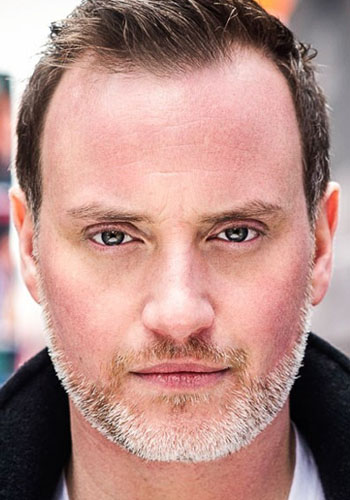
5 Questions with Brett Rogers and Charles Upton

Brett Rogers

Brett Rogers

Charles Upton: Describe the play using a haiku.
Brett Rogers: Mitchell is a star, who lives life in the closet. Then he meets Alex.

What do you think makes this play important and how does it relate to your life?
This play is important because it forces audiences to look at the double-standards they hold, of which they might not even realise they have. Why can we happily believe an actor is a serial killer, bank-robber or S&M fetishist but we won’t believe that a gay actor is straight on screen? The Little Dog Laughed forces audiences to look at themselves and talks about the crushing pressure this puts on actors to choose between main-stream success and authentic happiness.

I relate strongly to this play. I have always been open about my sexuality but it creates barriers to getting work and being represented. I also have creative friends who refuse to live openly; they can achieve leading, main-stream roles more easily but it takes a heavy toll on their mental health.

The Little Dog Laughed is New Theatre’s Mardi Gras play for the year. What was your first experience of Mardi Gras?
My first experience of Mardi Gras was the FULL experience. I had just relocated to Sydney from Hobart and my new friends wanted me to experience Mardi Gras as there was nothing like it in Hobart. Dressed as Tom Cruise from Risky Business I marched in the parade on the Actors float and attended the official after party. Up until that point I had not been exposed to LGBT culture in such an open and celebratory way. It was an amazing introduction to Sydney and Mardi Gras that I hope more people from rural and remote areas, or more conservative areas, get to experience.

What do you find most rewarding about your creative life and career?
What I find most rewarding today is the same thing I found rewarding when I first started acting. Performing other people’s stories allows me to have greater empathy in my day to day life and a greater awareness of what’s happening around the world. One specific highlight was touring the Northern Territory with Terrapin Puppet Theatre for the Helpmann Award winning show Boats. We had the opportunity to perform in remote communities throughout the NT and conduct puppet making workshops with some of the most exciting, cheeky and infectious little personalities. Recently I have also worked with people with intellectual disabilities; bringing drama to this group will always be a career highlight.

Who is your favourite character in this play and why?
I really like Alex. Given one of the themes of the play is about the pursuit of happiness, I think Alex’s understanding of what happiness really means is more three dimensional, mature and authentic than the other characters.

Charles Upton

Charles Upton

Brett Rogers: Describe The Little Dog Laughed using a limerick.
There was a man named Mitchell Green, set for a life on the big screen. He meets a boy. His life fills with joy. What happens next could not be foreseen.

What drew you to this story and the role of Alex?
I was drawn to this story because it’s funny. It’s about people pursuing happiness, some of those people are lost or going in the entirely wrong direction, which makes it very funny sometimes but also very sad sometimes. But that’s the common thread. And I was drawn to Alex because he does his best to act courageously and be true to himself, because he’s a survivor.

What scenes challenge you most?
It honestly changes night to night. But my initial concern was a key sexual scene in the play where I have to get nude. My mind was constantly distracting me for every vain reason you can think of throughout rehearsals. I’d never had to do a scene like that before, but it was only challenging the first time, now it’s quite liberating. Also my main concern as an actor is always being truthful and in the moment, so whenever that’s not happening, I have a challenge on my hands.

Who do you think will see this play and who do you think should see this play?
Well The Little Dog Laughed is New Theatre’s Sydney Mardi Gras show for the year. So there will definitely be a lot of the Mardi Gras crowd coming to see it. Also it’s a comedy, I think anyone who wants to have a good laugh should come for sure, the play is a lot of fun. It pokes fun at the world of film and theatre and ultimately it makes fun of itself. So people who work in the creative arts should definitely come and see too, they’ll get some jokes not everyone will.

What was your first experience in the creative arts?
Professionally, I started working in the arts at 18 and it was actually my first official job. I’d moved to Sydney from Northern NSW and somehow managed to get a job at the Sydney Opera House working on an opera as a props assistant. I was over the moon. But my first experience I can remember was seeing Cats when I was about seven. It was this big regional tour and I was totally blown away. I was fascinated by every element of it, but particularly by how much fun the performers were having. I can remember thinking, I want to do that.

Brett Rogers and Charles Upton can be seen in The Little Dog Laughed by Douglas Carter Beane.
Dates: 7 Feb – 4 Mar, 2017
Venue: New Theatre

Review: Making Love (King Street Theatre)

kstVenue: King Street Theatre (Newtown NSW), Feb 14 – 25, 2017
Playwright: Jess Scott Driksna
Director: Martin Ashley Jones
Cast: Philip D’Ambrosio, Jess Scott Driksna, Shannon Daniel Fallows, Eleanore Knox, Matthew Oberg

Theatre review
It might look like the 1990’s but the story takes place in a sci-fi future. Robots have become indistinguishable from humans, and are being sold to us as spouses and lovers. Jess Scott Driksna’s Making Love envisions a time when we finally give up on each other, and choose instead to live with compliant beings customised to fulfil our every desire.

It is a logical development of course, as technology continues to take over every function. We know that the events in the play are probably many lifetimes away, but Driksna’s predictions are entirely reasonable. Today, 50 million people are estimated to use the dating app Tinder, and many men in Japan have already declared themselves in serious relationships with virtual girlfriends who exist only on their computing devices and in the imagined ether. We might think of technology as synthetic, and hence contrary to the organic flesh and blood quality of how we conceive of relationships, but our behaviour demonstrates the readiness at which we meld the two.

Driksna’s writing inspires many fundamental and exciting questions about humanity at this advanced stage of civilisation, and even though his ideas are interesting, execution requires greater refinement. The play needs a trimmer plot, and characters would benefit from shorter, sharper dialogue. The script does offer some witty banter, but direction of the piece, which involves long sequences of actors sitting on a couch doing little more than reciting lines, and occasional corny physical humour, is less than exciting.

Acting is unfortunately stilted and under-rehearsed, although leading lady Eleanore Knox does leave a good impression with her concluding scene, in a soul-baring speech about loneliness in cutting edge times. As our consciousness shrinks into a size that fits into our smartphones, we become increasingly insular. People are distractions from an all-important self that exists only between one’s own body and a small magic screen. There is no need to understand others, there is no need to embrace other bodies. Everything can be made to fit one person’s vision of the world, and we think that each one of our tiny bubbles is good enough.

www.kingstreettheatre.com.au

Review: The Mystery Of Love & Sex (Darlinghurst Theatre Company)

darlotheatreVenue: Eternity Playhouse (Darlinghurst NSW), Feb 10 – Mar 12, 2017
Playwright: Bathsheba Doran
Director: Anthony Skuse
Cast: Deborah Galanos, Thuso Lekwape, Nicholas Papademetriou, Contessa Treffone
Image by Steven Siewert

Theatre review
We have told many “coming out” stories over the last several decades. The agonising process of revealing one’s own queerness to inevitably heterosexual parents and a correspondingly straight world, is a mainstay of queer art. In Bathsheba Doran’s The Mystery Of Love & Sex however, we are concerned with how individuals come out to themselves.

Charlotte’s parents are open-minded, savvy individuals who are relaxed about homosexuality, yet she finds herself in a state of crisis when discovering that she might be gay. Her closest confidante Jonny, too, is taken by surprise. Even with all the intimacies that they had shared through the years, the assumption of heterosexuality never goes away. Best friends can tell each other everything, but when it comes to any possible deviation of sexual preferences, those remain a deep, dark private secret.

The play is about society’s persistent inability to makes structural adjustments, that will allow our children to grow into adults with sexual idiosyncrasies, without fear of discrimination or persecution. Doran’s approach for this political issue is subtle, very cleverly handled. It is an intriguing plot, with dialogue that amuse, resonate and challenge. Its ideas are not new, but they are presented in a manner that makes us feel only their relevance and urgency.

Directed by Anthony Skuse, the show has an enchanting warmth that appeals to our sentimental selves. These may not be our families and friends who tell their stories on stage, but Skuse makes us feel as though they are part of our lives. The production has a tendency to be overly polite and placid, but all its messages are relayed with clarity and a beautiful deliberateness.

Charlotte is played by Contessa Treffone, effervescent in personality and comic timing, for a central character impossible to dislike. Best friend Jonny is sensitively crafted by Thuso Lekwape who brings wonderful depth and complexity to a young man trapped between tradition and modernity. Nicholas Papademetriou as Howard is a loving father, almost too sweet for several of his more combative scenes, but we believe all the relationships he fosters. The fiery Lucinda is a memorable presence in actor Deborah Galanos who contributes an excellent vitality, and whose artistic instincts are relied upon for much of the staging’s authentic sense of time and space.

It is a real privilege when the greatest obstacle for social acceptance comes from one’s self. Many of us who will see The Mystery Of Love & Sex, live in progressive communities who have learned about our LGBTQ neighbours, and the diverse expressions of love, sex and gender of all peoples, yet many of us struggle to face our personal desires and sexual experiences with honesty, and without shame. The things we are taught as children stick with us tenaciously. Values and beliefs that have long expired can retain their grip on how we think of ourselves. Each of us has to come to a full realisation that these old ideas have outstayed their welcome, and have them banished.

www.darlinghursttheatre.com