5 Questions with Jasper Lee Lindsay and Nicholas Sinclair

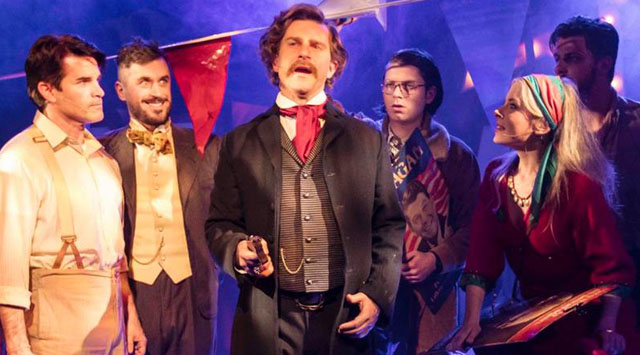
Jasper Lee Lindsay

Nicholas Sinclair: What has been the hardest part of this role?
Jasper Lee Lindsay: I was really worried at first when I thought about the ‘social commentary’ aspect of the play, especially as it’s all very relevant in today’s society and I didn’t want to be the one to take a wrong turn and make people feel sour after the play. But atmosphere of the whole production is filled with such heart and care that I was able to settle in to the play and let go of the worry.

What are the similarities and differences between you and your character?
There are quite a few similarities, but the one I like the most is that we both like to think we’re the wittiest guy in the room, which is funny because Reid actually says his witty things out loud while I just sorta whisper them to myself and pat myself on the back for being so darn clever.

What is the best advice you have been given in regards to acting?
Best advice: “Listen”. I know it’s kind of a boring answer, but it’s how I keep myself happy in performance. Receiving what an actor is giving me in a scene and responding to it in the moment, whilst keeping it all in balance with all the technical work, is great for keeping me active and connected on stage.

What is your dream role?
Every role. *pats self on back*

Why do you think this play is relevant in today’s society?
I think this play is very much about the modern context and how things that used to be considered “taboo” are having more light shone on them today. Nothing is really off-limits to talk about anymore and whether it’s for better or worse, it might just be necessary.

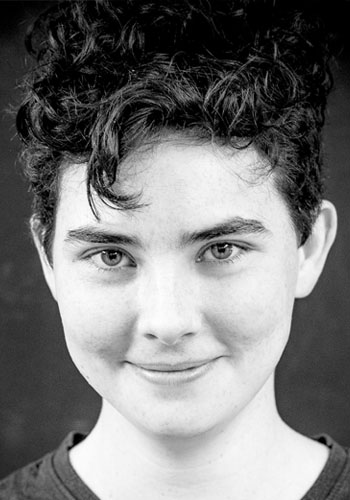
Nicholas Sinclair

Jasper Lee Lindsay: How has it been taking on the role of someone struggling with gender identity?
Nicholas Sinclair: I’m not going to lie, it has been a challenge. As someone who has been lucky enough to have a very easy life in regards to coming out and accepting my sexuality, it was difficult to put myself in the shoes of someone who doesn’t have that same luxury. I feel the hardest part of this character is not making every choice or decision simple or easy to answer.

How does the Post family compare to your real family?
They are completely different! My grandparents aren’t racists and homophobes but like all families we do have our fights just like the Post family. We are really supportive of each other! I think the biggest similarity is that we love Chinese food.

Has playing a teenager brought back any painfully embarrassing memories from your high school days?
Oh god… I guess? I feel I look better in a school uniform now than when I actually went to school. I remember one day when someone put a stink bomb in my bag at lunch time, that was pretty awful. I think my mind may have blocked any embarrassing moments because I’m really struggling to think of some right now.

This play is kind of a roller-coaster of emotions. How do you think the audience will feel at the end of the play?
I hope that they feel the same freedom that we as the characters feel. I want people to walk away with questions and excitement!

What’s your favourite use of the word ‘bitch’?
I think my favourite would have to be: “Whatever, bitch.” Mainly for when someone is trying to prove you wrong and you don’t have time for them anymore… and you also know that you’re wrong.

Jasper Lee Lindsay and Nicholas Sinclair can be seen in Bitch by Wayne Tunks.
Dates: 31 May – 17 June, 2017
Venue: The Depot Theatre

5 Questions with Rosane McNamara and Keila Terencio

Rosane McNamara

Keila Terencio: Which is your favourite joke?
Rosane McNamara: As noted in the play, the best jokes are dirty ones! My favourite joke is so dirty that I couldn’t possibly write it here but, if you run into me at the theatre, I’m very happy to tell it to you 😊

Which English word do you least like saying? And why?
“Can’t”. I’ve always been a “glass half full” person and, even in the saddest of times, I like to focus on what can be done. It sounds a bit twee but life really is about possibilities.

Which was the first theatre production you were involved in?
Can I remember that far back? My first role was in primary school. I was the Queen in Blackbird Pie and I had one line: “Bring him his majesty’s dinner”. I got the role because I had the loudest voice. No surprises there! My first professional role was in Cinderella – as one of the ugly step sisters. No comments thank you!

What sort of person is going to love The Clean House?
People who can laugh in the face of the absurdity and messiness of life. Hopefully that’s all of us. Life, love and death are rarely as “clean” as we’d like them to be so learn to love the mess.

What’s your favourite line in this Sarah Ruhl text?
“This is how I imagine my parents”. This line leads us into the play’s world of magic realism in which Matilde continues her relationship with her late parents. Theatre is a place for the imagination to roam and I love all the “other worldly” aspects of The Clean House e.g when it snows in the living room or when apples fall from the sky.

Keila Terencio

Rosane McNamara: What is the biggest challenge for you in this play?
Keila Terencio: There are so many challenges in this play for me, but one of them is what has given me trouble for the last few years: the language! Even after 5 years learning English, there is still a struggle and effort to pronounce many words. Even though I am playing a character that has an accent (thank god! ), in the show I can’t rely on my “hands talking” as I do in the day-by-day conversations. So yes, English is (still) the challenge.

What is your favourite moment in the play?
Yesterday my favourite moment was the “telenovela” scene. The day before it was the part that Maltide and Virginia talks about underwear. Last week my favourite was the “perfect joke’ and “apples” part. Every time I leave the rehearsal room, I have a new favourite moment, and as we explore the play further I love it more and more!

Your character, Matilde, is Brazilian and so are you. Are there other similarities between you and her?
Yes many, but apart from the language, these similarities are not related to our nationality. Matilde is a young lady with big dreams and a positive attitude to life, I am connected to her in this way. However, I believe, she could be from anywhere in the world. I am sure every country has their own Matildes.

You have done a lot of aerial and acrobatic dancing. Is this still part of your work or are you now more interested in acting?
For me, both acting and aerial dance are part of the performing arts mix in my life. I train aerials in an exploration of different ways to tell stories, and acting is an essential part of that.

Matilde makes up jokes. What type of jokes do you like?
My family is from the country in Brazil, so I grew up listening to jokes of country people, most of them involves animals, accents or just making fun of the way people on the farms live. I love these kinds of jokes because they are close to me, they are connected to people that I know. Back home we love making fun of each other, we always give funny nicknames to our friends and we love making people embarrassed in front of others – I know it sounds terrible, but believe me, in the cultural context it is quite funny, we are very easy-going people haha! Just to think about it makes me start laughing!

Rosane McNamara is directing Keila Terencio in The Clean House by Sarah Ruhl.
Dates: 6 June – 8 July, 2017
Venue: New Theatre

5 Questions with Ben Hall and Hayden Tee

Ben Hall

Hayden Tee: Why does everyone call you Annie?
Ben Hall: Annie is a nickname given to me by Simon Burke who I worked with on Devil’s Playground. It’s a reference to the Woody Allen film Annie Hall; Simon has given quite a few people nicknames, isn’t yours “Maggie T” Hayden, as in Maggie Tabra?

Annie, describe yourself in three adjectives and tell us why?
Hmm, considered – I think about most decisions a lot, perhaps too much. I like to analyse things and find the best way of doing something. Self-deprecating – it isn’t always a useful quality but it helps to push me forward at times too and hopefully keeps me humble when things are going well. Placable – I don’t hold grudges I tend to be non-confrontational and laid back, I just like to get on with it.

Annie, in what ways are you similar to Tim, the character you play in Only Heaven Knows?
Funnily enough I think those adjectives above could be used to describe both of us, perhaps that’s why they came to mind. I also think that we are both willing to just go and throw ourselves in the deep end and see if we sink or swim. And I think we are similar in the way that we learn the most from the people that we are closest to and take on their qualities. Tim always wants to learn and he likes change and I think that’s what I love about the character.

Annie, you work regularly in all mediums, theatre, TV and film. Which is your favourite and why?
I love each medium in different ways, so far one hasn’t captured me more than the other. In theatre I love the collaboration, the research and the time you have to find real depth in a character (I think you learn more here because you can read the audiences response instantaneously too). In TV, I really enjoy exploring the technicalities and the stillness and specificity you can bring on such a minute scale when you’re in so close. I’m yet to do a feature length film but what I love about film is the attention to detail and the reality of it – you’re given the time and trust to live in the moment as truthfully as possible.

Annie, since I first started working with you on Les Miserables I have been saying “Ben Hall is the next Hugh Jackman” now I know you will actually be the first Ben Hall which is even more exciting. How does Ben Hall see himself making his mark?
Thanks Hayden! I suppose my end goal is similar to yours in the way that I’d just like to keep working on shows that affect people and make them more empathetic because from there real change can be made. To do that I think I’d need to create more and more realistic and believable characters that speak to more people – basically just keep on learning and getting better at what we do whilst still being a decent human being. It’s fairly low key really. 🙂

Hayden Tee

Ben Hall: Hayden, what is the role you’ve enjoyed the most in your career and why?
To be honest I’m happy as long as I am working and I have enjoyed them all for completely different reasons. Right now, playing Lana in Only Heaven Knows is my favourite. After 3 years of playing Javert in Les Miserables it is really refreshing and liberating to inhabit such a fun and light character, someone who’s first instinct is to resort to humour. He is also the closest I have ever been to playing myself including my first New Zealand accented role which I am very much enjoying.

Has this show changed you in some way? If so how/why?
This show has an incredibly important message. It is about the long march toward equality and that is something I am very passionate about. When there are concentration camps for homosexuals in Chechnya and countries where homosexuality is illegal and here in Australia still no marriage equality – I feel this play is saying something that needs to be said, although the play has not changed my view on these issues it has made me feel as if I am now a part of the conversation and I am honoured to be able to make people think after seeing this important play.

What is your ultimate goal in this industry i.e. When you’re 95 what do you hope to have achieved?
My goal is always to work and always has been. I would like to get to the end and still be doing what I love, I’ve always said i want to die on stage having never retired. Let’s hope it’s not at the Hayes in heels however.

What is your best theatre story?
BERTIE THE COCKROACH.
That time a cockroach crawled out of my toupee onto my face. During a scene. On stage. Apparently from the audience it looked like I was having a stroke. I have now added 3 cockroach checking seconds to my quick change.

What is your favourite moment in the show and why?
The nudity of course! I only wish I could see it instead of frantically changing gender backstage.

Ben Hall and Hayden Tee can be seen in Only Heaven Knows by Alex Harding.
Dates: 26 May – 1 July, 2017
Venue: Hayes Theatre

5 Questions with Sapna Bhavnani and Faezeh Jalali

Sapna Bhavnani

Faezeh Jalali: If you were a book which one would you be and why?
Sapna Bhavnani: A few years ago my god daughter handed me a book and said “look Sapna, this is you.” On the cover was an illustration of an inked woman and her 2 daughters. The book was The Illustrated Mum by Jacqueline Wilson. I read that book in half an hour and cried through most of it. More than the mom, I related to the stories of the daughters. And as cliché as it sounds, being an inked woman myself, I cannot think of another book I would rather be. And maybe, just maybe, because I haven’t read any other book since Nancy Drew and Famous Five. Don’t you judge me!

What gives you great joy and what is your greatest frustration?
Yoga. In my recent years of practice, I have started journeying inwards more that outwards. It’s one of the most challenging things I have ever done. The process of being true to yourself at every moment and working towards the ability to witness joy and pain equally, with the same level of non-enthusiasm is my new high. The process of stepping out of my body and witnessing myself as a third party in the room is my new theatre.

You created the character of the old woman in the play Jatinga. What inspired you to write her and what about you is similar to the old woman?
We are all born old. We carry with us stories and burdens from previous lives. We carry guilt and shame from current lives. We carry ambitions and hopes to the future lives. And the circle continues. Age does not have a gender or an age. So yes, Sapna is similar to the old woman. But so is Faezeh, and Suzanne, and every member of the cast regardless of the burden of gender or nationality.

How many tattoos do you have? Tell the story of one of them.
Only an amateur counts the number of drinks consumed. I am an alcoholic.

Sapna means dream- what is/are yours? (I’ll make this hard by asking you to describe it as a fairytale)
I’m constantly in a lucid dream space. I have 7 imaginary friends, all called Alice and 5 mannequins also all called Alice. It’s the way I call their names that distinguishes one Alice from the other. We all live happily ever after in a one-bedroom apartment in Bandra, Bombay with 3 cats and 45 plants. Our most favourite thing to do is take a road trip to our farmhouse 3 hours outside Bomaby to visit the 3 other Alice’s that live there with 4 cats and 89 trees and a gazillion flowers. As you can see it’s an ongoing fairytale and keeps on getting more magical with each passing moment or should I say with each passing Alice.

Faezeh Jalali

Sapna Bhavnani: What keeps you ticking in the theatre world after so many years?
Faezeh Jalali: Experimentation and the desire to take risks and tell stories that are important to me. I won’t take on a play that doesn’t excite me because I won’t be able to create it truthfully. I enjoy the creative process and making theatre that pushes boundaries comfort zones, physical and intellectual limits. Theatre that is socio-political, that is relevant to our current times. I wouldn’t be happy doing living room dramas and probably would do a shoddy job of those.

How did you prepare for Manda?
I think the process is organic. I think the character is in the writing and in the work done with other actors right from the first development/audition. For me the character comes alive on the floor in the body, not from writing notes or thinking too deeply about it. The playwright gives you the most information and I take that and fly…

What is the next project seeding in that wonderful brain of yours?
Several. I’m writing a new play, I guess you could say some sort of a musical satire about religion, godmen/godwomen/religious heads. I want to do one physical piece based on Mumbai life. I have written small sections of action but would need to string those together. I want it to be a circus piece actually. And a couple of others, that other writers will write or have written.

If there is another profession you could be in, what would that be?
As a teenager I wanted to take revenge on my dentist so I did take pre-medical with theatre, in undergrad. But then I imagined myself doing that and it bored me. So it didn’t work out. There was a phase when I thought I’d be a physicist. That fizzled out. Currently I think some sort of chef.

Are you sure you’re not Kashmiri?
No, I’m sure I’m not Kashmiri or should I say yes I’m sure I’m not Kashmiri. I’m a citizen of the planet (she said cheesily).

Sapna Bhavnani and Faezeh Jalali can be seen in Jatinga by Purva Naresh.
Dates: 9 – 24 June, 2017
Venue: Kings Cross Theatre

5 Questions with Kate Bookallil and Rupert Reid

Kate Bookallil

Rupert Reid: What attracted you to the role of Alice and the play originally?
Kate Bookallil: I really admire Alice’s stillness and dignity. I don’t want to give too much away, but Alice is surprising and I love her because she knows who she is and has a lot of self respect.

I was attracted to the play because it makes me laugh at, question, contemplate, challenge, bask and despair in all that makes us fallible human beings. The writing is witty and direct, playful and confronting. Penelope Skinner has written a play with women at the centre, but it is also a play about men and society at large and how we will choose to move forward.

In what ways do you relate to your character and differ?
There are many parts of Alice’s story that align closely with my life. Of course, there are many differences too. In terms of character, I would say that I am envious of an aloof quality that Alice possesses that I have never been able to achieve, no matter how hard I have tried. I am all open book and Alice is far more contained than I am!

Why does Oliver describe Alice as “not unstable… sensitive”
Alice would not want to be described in such a way and does not see herself like that… I think that’s a question for Oliver! Alice is trying to conceive a child, so she’s under a certain amount of pressure… let the audience decide why Oliver would describe his wife in that way!

What kind of experience do you think will people have watching The Village Bike?
I think The Village Bike will be a great conversation starter. Hopefully it will encourage the audience to step up and decide if we are happy with the place of women in our society and if not, what are we going to do about it? I have three children and I can’t help think about them and the digital world they will become teenagers in and my role in helping them navigate their way through the matrix. Hopefully the audience will enjoy themselves too, as it is a really funny play! Come in a big crowd and see where the discussion leads afterwards!

Have you ever combined apple with peanut butter? If not, are you serious!? Why not??
Of course! I love apple and peanut butter together. I also love peach and feta. Vegemite and cheese. Lemon and sugar. Gin and tonic.

Rupert Reid

Kate Bookallil: What attracted you to the role of Oliver and the play originally?
Rupert Reid: His sense of fun and disregard for social norms which are both important thematically to The Village Bike. Oliver is a fascinating exploration of how subtle (and not so subtle) language we take for granted can be used to manipulate and control. What attracted me to the play was the ease and economy of the writing. Ms Skinner has asked us to challenge our preconceived notions of womanhood, motherhood, manhood and sexuality in one fell swoop while maintaining darkly comedic tone that intensifies to the last moment of the play.

What does the bike mean to Oliver?
Sex

Do you have a favourite line in the play and if so, why?
John’s line ‘Let’s put these bitches away’. (or something close to that). It’s just so wrong. Brilliantly out of left field in the moment it’s said and both hilarious and shocking in the same breath.

What does a perfect day off look like for Rupert?
Run, swim and about 4 hours of guitar playing.

Who should come and see The Village Bike?
Everyone. Except my parents. It’s a bit raunchy.

Kate Bookallil and Rupert Reid can be seen in The Village Bike by Penelope Skinner.
Dates: 7 June – 8 July, 2017
Venue: Old Fitz Theatre

5 Questions with Thomas Campbell and Jane Phegan

Thomas Campbell


Jane Phegan: What attracts you to Enda Walsh’s writing? Misterman is the second play of his that you have performed.
I love Enda Walsh’s plays and characters because I pick up a script of his and have no idea where to start and that excites me. There’s a consistent theme through most of his plays where his characters are searching for love so there’s a deep truth to them. Added to that, he uses extraordinary language and word play so it’s a delight and a challenge to speak his words. He’s effing brilliant.

Why do you want to take this work or work in general to the Edinburgh stage?
Edinburgh Fringe has always been a bit of a bucket list thing for me but it’s a very expensive exercise so seemed like a bit of an impossibility. When we took Misterman to Hobart last year and had a mini tour experience, Hartley, our lighting designer, suggested we look at going to Edinburgh so we started to put the wheels in motion. Also, Misterman is just a great showy piece for all of us and then I thought I should take my comedy piece, One Hander, as well. Why not?

What inspired you to write and perform One Hander?
I was living in London, having my UK ‘experience’, pretty depressed and artistically deprived. I’ve always had these stories about people’s reactions to my hand, or lack thereof, which have been great dinner party fodder. So at about 3am one morning, after my 10th episode of Real Housewives of Beverly Hills, I decided to get off my arse and face a fear and do a stand up comedy open mic night. I started writing, did the open mic night, and a month later I did a full hour show at the Battersea Barge in London. That’s where it began.

Like myself, you have worked with Kate Gaul several times – what keeps you coming back for more?
Kate Gaul is a genius. She’s unbelievably hard working and has such rigour to her work. She’s constantly asking questions of herself and her creatives right up until the show closes. She always asks ‘what is the story we are telling?’ which seems like basic question but it’s the most important and tends to get forgotten in a lot of productions I see. She’s also not afraid to be ‘direct’ as opposed to ‘polite’ in a rehearsal room which I respond well to and believe it’s a short cut to the best work.

What’s your favourite musical?
I love musicals but my favourite changes daily depending on the mood I’m in. Today it’s probably my old favourite, Into The Woods, because I remember getting a VHS copy of the OBC production with Bernadette Peters, when I was about 13 and watching it 4 times back to back in the one day. It was the first musical I saw that showed they didn’t have to just be frothy and shiny but could have cracking acting as well. I’m also a little bit obsessed with Dear Evan Hansen at the moment- I have a dodgy bootleg copy- but I’m yet to work out if it’s just Ben Platt’s performance that is the extraordinary thing or the show or both.

Jane Phegan


Thomas Campbell: Tell me about the play and your role?
It is a beautiful piece by Noelle Janaczewska that takes the audience on a wild adventure down the Amazon, a long dreamed of destination, and through the history of that part of the world. At the same time the character is coming to terms with her father’s illness and exploring their relationship which centres around a shared love of literature. They are both venturing into other worlds and the unknown. It is in turn a poetic, funny and, as Ben Neutze described, “ultimately heartbreaking piece of theatre”.

What’s it been like to revisit a role for the second time?
I am just beginning to revisit the role and Noelle has made some minor edits – that is one of the brilliant aspects of being able to do a piece more than once – the ability to refine and go further. I hope to do the same with the performance! I’m looking forward to going back into the world of the show and finding new gems with a sense of knowing.

Are you nervous about taking your work to the Edinburgh Fringe Festival?
Of course!! What a loony thing to do! It’s bad enough taking to the stage on your own in Sydney let alone in front of an international audience. But that is what we do, is it not? Move toward that which scares us the most. Now I’m really nervous – thanks Tom!

What’s Kate Gaul like as a director?
I have worked with Kate a number of times now and that is because I trust her 100%.That trust extends to both the bigger picture and also my performance. Because of that I can push the boundaries of what I think is possible (and be pushed!) and know that she will never let me (or her) look foolish or the show be under par. She is imaginative, forthright, assured, switched on and fun. I admire her drive and Kate is such an intelligent director, in tune with the work and only taking on what she is truly inspired to bring to life.

How are you travelling with a group of misfits like myself?
Actually travelling? By plane. Maybe a train here and there. And I hope we can walk to the venue! How am “dealing” with the group of misfits? I am one! We’re going to have a ball and we get to showcase some Australian work on the international stage. Super excited.

Tom Campbell and Jane Phegan are in Siren Theatre Company’s Edinburgh Program season of Misterman, Good With Maps and One Hander.
Dates: 14 – 18 June, 2017
Venue: Belvoir St Theatre

Review: How To Build A Home (Ever After Theatre)

Venue: Balmain Uniting Church (Balmain NSW), Jun 1 – 3, 2017
Contributing Writer: Emily Dash
Directors: Natalie Rose, Alice Osborne, Marnie Palomares
Cast: Kerrie Ann Bezzina, Christine Blanche, Matthew Cutmore, Emily Dash, Glennen Fahey, Sophie Grivas, Tom Hancock, Emma Plant, Roddy Salinas

Theatre review
The idea of a dream home is explored by differently abled performers in How To Build A Home. An opportunity for all to reflect upon concepts such as personal limitations and aspirations, social obligations and privacy, the often abstract work may leave a lot to our imagination, but there is no mistaking the statement it makes about the importance of security and care that we all need in order to have fulfilling lives.

The show is full of spirited whimsy, with an enthusiastic cast offering up vim and vigour, along with a genuine vulnerability that is quite captivating. A collaborative segment featuring Emily Dash reciting a poignant monologue, alongside Tom Hancock on piano establishing an atmosphere of sombre drama, is beautifully, and hauntingly, rendered. Also memorable is Sophie Grivas’ idea of a house with three disco rooms, reminding us that our bodies, whether moving or stationary, are to be loved and pampered.

Visual design by Mirabelle Wouters, and James Brown’s work on sound and music, give the production an excellent sense of polish. The space they have created is glamorous yet unpretentious, a homely environment we find to be simultaneously comfortable and inspiring.

As long as we are alive, every individual has a right to space, and that space must be treated with respect. The home is both mundane and sacred, and recognising it as such, encourages us to honour every breath taken and every second that ticks past. Life is too short for any of us to be perfunctory about the time that we have been gifted. When we realise that every here and now is special, each moment experienced, and its corresponding place, has the possibility to nourish and fulfil, as though always at home, sweet home.

www.everaftertheatre.com

Review: An Unseasonable Fall Of Snow (Ewan Productions)

Venue: The Actors Pulse (Redfern NSW), May 30 – Jun 3, 2017
Playwright: Gary Henderson
Director: Giles Gartrell-Mills
Cast: Alex Ewan, Nico Papademetriou, Randall

Theatre review
The setting looks like an office, for lawyers or the police perhaps, but we never really find out where Arthur and Liam actually are, as we witness the aggressive interrogations taking place. Gary Henderson’s An Unseasonable Fall Of Snow involves two deaths, a mystery that takes the form of an intriguing puzzle, challenging its viewer to discover its secrets before everything is laid bare at the end.

Director Giles Gartrell-Mills orchestrates an enjoyable ride, luring us into the enigmatic qualities of the play with a quiet elegance. Sound and lights are underutilised, so we are not quite spellbound by its flirtations with the supernatural, but the plot is nonetheless effectively relayed for an engaging hour of theatre.

Arthur is played by Nico Papademetriou, who makes us believe that there is always more being hidden away, a convincing mastermind of sorts, and we need to know all the cards that he holds close to his chest. Alex Ewan is impressive as Liam, volatile yet operatic in his portrayal of a young man deep in trouble. It is a performance thoroughly considered, and boldly executed, leading to a result that illustrates some of the more obscure facets of human nature, while providing an exciting sense of high drama to the piece.

When snow falls in springtime, nothing is quite what it seems. We wish for life to adhere to expectations, but the forces in control of existence are far greater than any individual’s volition. If we find ourselves walking into a blizzard, when all we had wanted was a garden of green, there is no changing how nature wishes to be, and we must look to our desires for answers on how the inside can be in harmony with outside.

www.facebook.com/…

Review: Only Heaven Knows (Luckiest Productions)

Venue: Hayes Theatre Co (Potts Point NSW), May 26 – Jul 1, 2017
Music, Book, Lyrics: Alex Harding
Director: Shaun Rennie
Cast: Mathew Backer, Blazey Best, Tim Draxl, Ben Hall, Hayden Tee
Image by Robert Catto

Theatre review
Tim and Cliff’s love story begins in 1944, probably the most dangerous of times for gay men, with many impounded in European concentration camps, and the rest of the world correspondingly paranoid and cruel in their treatment of homosexuality. Alex Harding’s Only Heaven Knows remembers queer life in mid-20th Century Sydney, and the resilient community that persisted to thrive, with a dignified integrity, in the face of unrelenting and brutal persecution.

It is the subplots that captivate. Minor characters who chronicle struggles of a traumatic past, retain their pertinence, proving themselves more resonant than a central romance that seems unremarkable by comparison. The work is flamboyantly sentimental, but is only occasional moving. We are engaged instead by its textual complexity, seduced by an opportunity to analyse its sociopolitical connotations and to examine the degrees of relevance its narratives continue to hold over our existence today.

Production design attempts to address the frequent changes of settings, but scene transitions can often lack elegance. Performers take awkwardly long walks before finding the stage. Entrances and exits notwithstanding, the show is sensitively brought together by director Shaun Rennie, with a warm sincerity that elevates a slightly dated play from 1988, to something that is strikingly urgent. The ghost of Lea Sonia, a drag queen character, has the freedom to travel through time, to make references about marriage equality, and Grindr, so that history is resurrected for good reason.

There are marked divergences in terms of singing ability, but the cast is surprisingly cohesive. In the world of musical theatre, scene-stealing show-offs are almost encouraged, so it is a rare treat to be able to adore every performer equally. Matthew Backer is impressive with the thoroughness of nuance he introduces to all his roles, and is truly unforgettable in a scene that brutally portrays the experience of electroconvulsive therapy inflicted upon “sexual deviants” of the time. Blazey Best and Hayden Tee are excellent with their comedy, both actors sharp and confident, while adhering to the subtle tones of the production. The lovebirds, played by Tim Draxl and Ben Hall, are tender and effortlessly convincing, making the most out of fairly colourless material.

It is important that young ones know our queer histories, and it is important that love stories are made for people who identify differently from the mainstream. In 1944, queer folk had few past lessons to draw upon, and nothing in the future that they could look forward to. Only Heaven Knows allows us to grow with the knowledge that people had been through worse, but things keep getting better. It also serves as reminder the depth of depravity that societies are capable of, and that a sense of moral vigilance must never be taken lightly. The game of endless persecution may shift its focus away from one community to another, but those who had suffered must not be complacent in their newfound emancipation, but continue with a resistance against senseless violence and oppression.

www.hayestheatre.com.au

Review: 2071 (Seymour Centre)

Venue: Seymour Centre (Chippendale NSW), May 26 – Jun 10, 2017
Playwrights: Duncan Macmillan, Chris Rapley
Director: Tim Jones
Cast: Lucy Brownlie, John Gaden, Heath Jelovic, Ellery Joyce, Jacqueline Morrison, Sasha Rose, Matthew Simmons

Theatre review
In 2071: a performance about climate change, we have to listen closely to a lesson about the science of our climate. There are projections to look at, and children forming occasional tableaux to help illustrate the point, but it is only the words that we should pay close attention to. Clearly a very serious matter, and for those of us less keen on scientific study, the details are challenging. It is an issue that requires tremendous focus, but when we invest, with determination, to hear what is being said, 2071 is undoubtedly rewarding.

Essentially a monologue, the writing feels no different from a lecture, dense with facts and evidence. The layperson would struggle to absorb every sentence uttered, but there will certainly be pertinent points that resonate for each individual who is present. It contains no surprises, but the production does communicate a sense of urgency to drive home the message. Music by Andrée Greenwell, and actor John Gaden’s delivery, are responsible for the hastened air of impulsion at conclusion.

The science points to an impending ecological disaster. Whether or not one wishes to accept the causes that lead to this state of devastation, every citizen of the world must commit to improving the conditions in which we have to live. Only the most masochistic and nihilistic will choose to persist with the status quo, but it must surely be a very small minority that wants to watch everything come to a painful ruin. Now is the time to be fearful of complacency and inaction.

www.seymourcentre.com