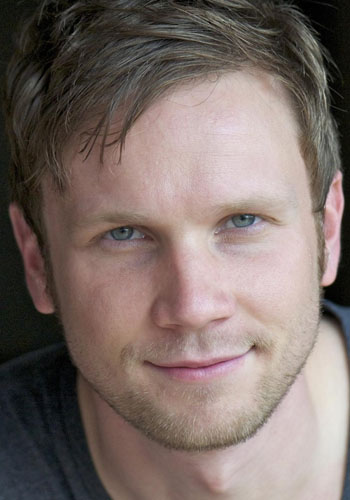
5 Questions with George Banders and Amelia Robertson-Cuninghame

George Banders

Amelia Robertson-Cuninghame: How can today’s society relate to the text and its characters?
George Banders: The wonderful thing about this play is that it’s still so relevant. The themes of alcohol addiction, jealousy, betrayed, unrequited love are all highly relatable to modern audiences. The characters aren’t archetypes, they feel so real with their own little quirks, which makes them a joy to play.

Your character David has a few vices, do you have any?
Way too many to mention so publicly. I do however secretly enjoy big game hunting, I know it’s probably not PC these days but there’s nothing like the feeling of bagging a majestic 6 tonne male elephant. What a rush…

What is it like working with Giles Gartrell-Mills?
Terrible, the man’s a hack! He couldn’t direct traffic! But if he asks, tell him I’m really enjoying it. He has a wonderful sense of the world, and gives you the room and support you need to see what these characters are capable of, and how far we can push this play to make it thrilling. He dialogues with actors so well, and it’s always such a fun, energetic room to play in. Would work with him any day.

If you could be one character from After The Dance in real life, who would it be?
I’d be the doctor, George, just for that sweet sweet pay check, also I feel practising medicine in the 30’s was so much easier; “splitting pain in your side and jaundice? Have a Coca Cola!”

Describe the play in a Haiku.
Bottomless drinks served
Swinging naked from chandelier
Mind the balcony-

Amelia Robertson-Cuninghame

George Banders: What is the most rewarding project you’ve ever worked on and why?
Amelia Robertson-Cuninghame: Well this one time, I mâchéd the entire solar system out of found chewing gum wrappers just to top Melissa Fuller from 7B’s volcano. That’s not entirely, or at all, true. I don’t think I can pinpoint one project that is more fulfilling than the other. I think everything we take on, we do so because it’s the right fit for us at the time. Each time we walk away with more wisdom and knowledge then before. Hopefully.

What do you find is the most moving moment in After The Dance?
For a play that is all airs and graces, there are so many moving moments! But, without giving too much away, probably the ending. Although that may be for my own selfish reasons!

If the main characters in the show were cocktails what would they be?
David is a Side Car, a classic, but still a bit old and musty. Joan, a dirty Gin Martini, refined with just the right amount of salt. John doesn’t make it to cocktail stage, he’s slugged straight from the bottle. Helen is a Mimosa, equal parts sensible and fun. Peter is a Tom Collins, trying to play with the big boys, but still topped up with soda. And Julia is a Mint Julep, a harsh spirit almost too much to bear, cut often with saccharine.

Who was the first actor you saw that blew you away?
Joan Cusack in Addams Family Values, yaaass feisty husband slayer from the 90’s! Also, still know every word!

What song do you listen to, if you’re going into an intense scene, to pump you up?
Die Antwoord would be my go to a lot of the time, although if I’m after melancholy, probably some Jeff Buckley.

George Banders and Amelia Robertson-Cuninghame are appearing in After The Dance, by Terence Rattigan.
Dates: 9 August – 9 September, 2017
Venue: New Theatre

Review: One Flew Over The Cuckoo’s Nest (Sport For Jove Theatre)

Venue: Seymour Centre (Chippendale NSW), Aug 3 – 19, 2017
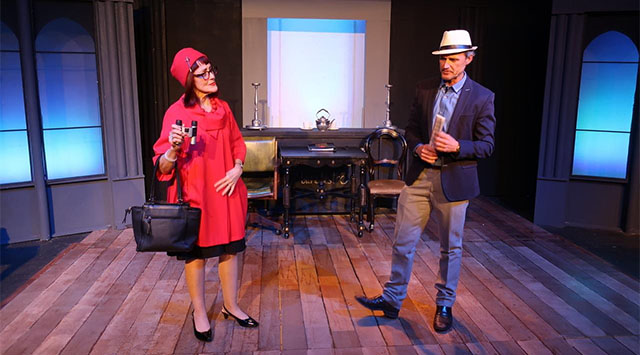
Playwright: Dale Wasserman (adapted from novel by Ken Kesey)
Director: Kim Hardwick
Cast: Matilda Brodie, Laurence Coy, Patrick Cullen, Anthony Gooley, Travis Jeffery, Felicity Jurd, Stephen Madsen, Wayne McDaniel, Joshua McElroy, Tony Poli, Nick Rowe, Di Smith, Wendy Strehlow, Bishanyia Vincent, Johann Walraven
Image by Marnya Rothe

Theatre review
The action takes place inside a male psych ward, except of course, the allegory is in reference to the mad world that all of us inhabit. In Ken Kesey’s One Flew Over The Cuckoo’s Nest, McMurphy (made famous by Jack Nicholson in the film version) represents the wild man that we have to tame. He turns up full of life, impressing upon us that he is not in fact insane, but a product of nature in its splendid rawness, and is clearly out of place in this environment of medicated placidity. It is probably no surprise that in this 1962 work, it is a woman who is charged with the business of suppressing that sublime nature.

Nurse Ratched has successfully emasculated everyone we see, and McMurphy must find a way to escape her wicked depravity. Man’s authenticity is upheld as desirable and esteemed, even if all the women who cross McMurphy’s path are debased and humiliated. The rebel’s story is always a powerful one, and it is no different here, whether or not we warm to its central character. It is after all, a battle for dignity and innocence, and we will only be allowed to side with the righteous hero.

Anthony Gooley’s charisma serves him well in the role of McMurphy. Dynamic and intuitive, and effortlessly captivating, it is a pleasure to watch the actor fill the stage with his brand of robust theatricality. Simultaneously portraying qualities that are menacing and vulnerable, the character that he presents is complex, considered and hence, convincing. Ratched is a surprisingly human manifestation, under Di Smith’s interpretation. Hints of warmth and kindness make her a believable personality, but an impotent villain. In the absence of a formidable opponent, McMurphy looks to be a rebel without a cause, and dramatic tension is significantly compromised.

Director Kim Hardwick’s approach is a contemplative one, and although never lacking in verisimilitude, sections that deal with aggression and chaos, can seem too gently manufactured. Individual patients in the show are fascinating, often beautifully performed, but they feel strangely distant. Without a threatening presence, the group misses an opportunity to have us more viscerally engaged. The production however, boasts accomplished design work, especially noteworthy are Martin Kinnane’s lights; compelling when subtly rendered, and utterly remarkable when his creativity turns bold or extravagant.

We play by the rules, thinking them necessary for self-preservation, even when we judge them unsound. When one’s own sanity comes into question, it is invariably societal expectations that provide the measure at which behaviour must be gauged and contained, whether or not conditions of that acceptance are based in logic. McMurphy’s radical disobedience involves him acting from unmitigated impulse, alone, and the consequences he has to face are dire. It is true, that much of what we endure, is unfair. It is also true, that rules are made to be broken, and when the lunatics take over the asylum, redress can be achieved, if unity, and solidarity, can be found.

www.sportforjove.com.au

Review: Acts Of Faith (Popinjay / Emu Productions)

Venue: King Street Theatre (Newtown NSW), Jul 18 – Aug 5, 2017
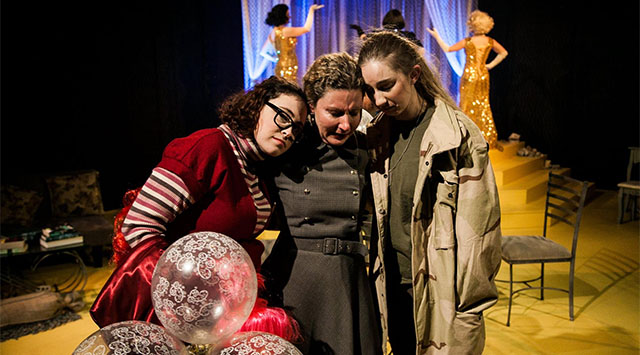
Playwright: Melvyn Morrow
Director: Elaine Hudson
Cast: Taylor Owynns, Joseph JU Taylor

Theatre review
A property developer and a nun may seem an unlikely pairing, but because they meet in Sydney, it makes sense that both are in the real estate market, trying to take advantage of one another. Melvyn Morrow’s Acts Of Faith is a response to this city’s obsession with property prices, and our unabashed pursuit of preposterous inflation and personal gain.

The play features a string of deceptions by untrustworthy types, determined to make the most of a system that feeds the rich and greedy. It reflects our increasing emphasis on money, as a society that has moved away from defining characteristics of mateship and the fair-go, to what is today a guiltless infatuation with materialism. Even a mother superior has to participate in this gluttony for her narrative to materialise on the twenty-first century stage.

Dialogue in the show takes on a very formal tone that can seem old-fashioned, but undeniably suited to the archaic institutions being represented. Director Elaine Hudson ensures that actors approach their parts with impeccable logic, and that they deliver their lines with an enjoyable sense of rhythm and buoyancy. Although we are kept engaged in every scene, the comedy could benefit from a greater sense of flamboyance in delivery. Taylor Owynns and Joseph JU Taylor bring their warm presences to the story, both impressive with the precision and conviction that they put on display.

In a world that insists on everything being monetised, the modern economy is brutal with how it dictates the way we live, and how our personal choices must conform to its principles of profit maximisation. Religious organisations too are participants in this race for money and power, yet they hide behind disguises that appear celestial and traditional, to gain an upper hand in a system that allows them to benefit exclusively, from donations, tax breaks and the like. Numbers do not lie, but they can only work their magic when applied with diligence and fairness.

www.kingstreettheatre.com.au

Review: Technicolor Life (The Depot Theatre)

Venue: The Depot Theatre (Marrickville NSW), Jul 26 – Aug 12, 2017
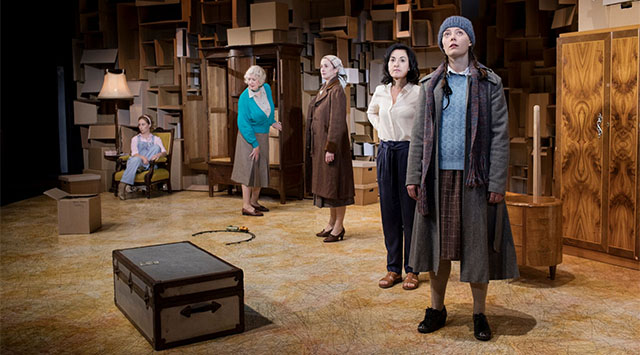
Playwright: Jami Brandli
Director: Julie Baz
Cast: Amy Victoria Brooks, Nyssa Hamilton, Michael Harrs, James Martin, Tasha O’Brien, Cherilyn Price, Emily Sulzberger, Cherrie Whalen-David
Image by Katy Green Loughey

Theatre review
Maxine is a gregarious 14-year-old with a lot to deal with. Her sister has returned from the war in Iraq, having lost her left hand along with much of her will to live, while their grandmother decides to move in to enjoy her last days, before having to succumb to cancer. Jami Brandli’s Technicolor Life is an entertaining exploration into the notion of joie de vivre, where tragic circumstances are filtered through a youthful optimism and resilience, as represented by the very innocent, but very wise, Maxine. People lose limbs and lives everyday, yet somehow we must move on, and resist being submerged by the inevitable accumulation of damage over time.

Director Julie Baz ensures that characters are colourful, with consistently vibrant interactions. Pathos is perhaps too mild under Baz’s interpretation, but we nonetheless find ourselves deeply involved. Nyssa Hamilton does fabulous work in the role of Maxine, particularly memorable for her voice, which seems to be endlessly malleable and powerful. The actor is a delightfully inviting presence, and she keeps us firmly engaged with the conundrums that surround her. Amy Victoria Brooks and Emily Sulzberger play Maxine’s fairy godmothers, who introduce a thrilling effervescence with each entrance, through their mimicry of Marilyn Monroe and Jane Russell in Gentlemen Prefer Blondes, after our protagonist discovers the 1953 classic.

Necessity compels us to take action, but inspiration is the most blissful way to achieve motivation. Having lost herself inside the glittering falsity of old Hollywood, Maxine delves into dreamland searching for answers to problems in her real world. We are often caught up in the gruelling demands of daily existence, and our minds are made to be increasingly restrained by the need to act with practicality, prudence and pragmatism, leaving us to reject that which is the most beautiful and sublime. Asking for divine intervention is usually the last resort, but what could result from the consultation of higher planes, must never be underestimated.

www.thedepottheatre.com

Review: Kindertransport (Darlinghurst Theatre Company)

Venue: Eternity Playhouse (Darlinghurst NSW), Jul 28 – Aug 20, 2017
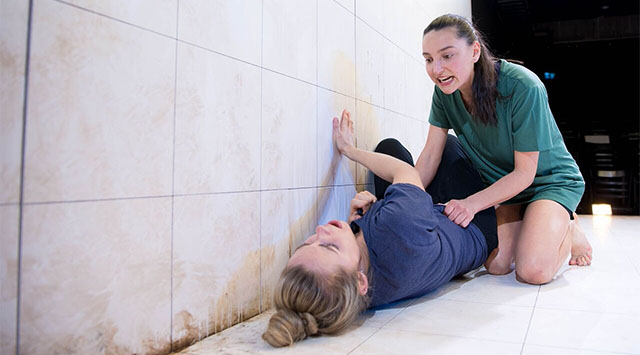
Playwright: Diane Samuels
Director: Sandra Eldridge
Cast: Camilla Ah Kin, Annie Byron, Harriet Gordon-Anderson, Sarah Greenwood, Emma Palmer, Christopher Tomkinson
Image by Philip Erbacher

Theatre review
In 1938, an estimated ten thousand Jewish children from families in Germany, Austria and Czechoslovakia, were moved to safety in the United Kingdom, before the commencement of the second World War. Diane Samuels’ Kindertransport is the fictional story of one such child, nine-year-old Eva who finds herself sent away from Hamburg. She ends up in Manchester, north of England, eventually changing her name to Evelyn. Decades later, we discover that she has all but forgotten her life as a Jewish child. To leave the past behind, Evelyn’s survival instincts have created a kind of amnesia, in order that she may make the most out of her present circumstances. The play is about the relationship between yesteryear and today, and how our histories are constantly under threat of obliteration.

There are many theatrical works about Jewish experiences during the Nazi era, and Kindertransport can often feel generic in its approach to telling its story. It is a narrative that has to be reinforced, because there are wounds yet to be healed, and antisemitic threats have yet to disappear. There may be nothing particularly unpredictable about the show, but its capacity for the expression of genuine emotions, is nonetheless valuable, in the ongoing process of catharsis for many who continue to be affected by events of the war.

Sandra Eldridge’s direction introduces a gentle touch, working on the tenderness between characters rather than on exploiting the more sentimental elements of the play. Sections can feel underwhelming, with dramatic tensions kept subdued, but a highlight occurs in a fantasy sequence where Evelyn confronts her mother, both speaking as adults, putting to words their respective struggles. Actors Camilla Ah Kin and Emma Palmer find remarkable chemistry in this moment, and the stage becomes briefly incandescent. Also noteworthy is set design by Imogen Ross, with a backdrop composed of open cardboard boxes, symbolising the movement of peoples and cultures, as well as the human need to bring illumination to our darker inner selves.

There is much to be sad about what Evelyn has had to endure, but it is her ability to emerge strong and flourished that should be celebrated. None of us should hope to reach our graves unscathed by the ravages of mortality, if we are to seek a life well lived. It may be considered unfortunate that some of us have had to abandon religion, tradition and culture in order to find a way forward, but survival is key, and we must attain it however possible.

www.darlinghursttheatre.com

Review: Dry Land (Mad March Hare / Outhouse Theatre Co)

Venue: Kings Cross Theatre (Kings Cross NSW), Jul 28 – Aug 19, 2017
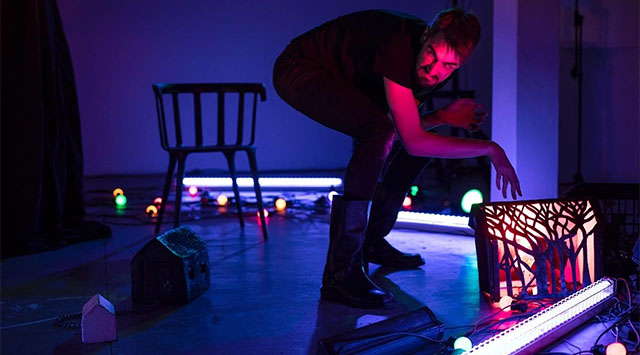
Playwright: Ruby Rae Spiegel
Director: Claudia Barrie
Cast: Sarah Meacham, Michelle Ny, Patricia Pemberton, Julian Ramundi, Charles Upton
Image by Marnya Rothe

Theatre review
Teenage years are but a flash in any lifetime, yet they are the most formative, and in many cases, offer the most exciting of experiences and memories. Before we are tamed into adults, and before we understand the price to be paid for every decision, the teen is a new person unleashed from childhood, ready to explore all that had been previously prohibited. In Dry Land, Ruby Rae Spiegel writes about the locker room at a girls’ swim squad, except where we expect banter, we discover some very hard truths being learned. Amy and Ester are in the process of figuring out the women they want to be, and with the bravery and fortitude they had gained from training in elite sport, they put themselves through the most brutal loss of innocence.

These fearless characters see the immensity of the world and rush head-on to devour its every promise, limited only by that same flesh and blood that is determined to keep each of us contained. It is a story about the spirit of youth, and how every person has to come to terms with their own corporeal limitations, as well as those psychological and social. Ester is fighting tooth and nail to excel in her swimming, while Amy exploits every resource to obtain an abortion without parental consent. They know what is best for them, regardless of our judgements, and Spiegel’s ruthless need to put on display every explicit detail of their confronting endeavours, makes Dry Land an extremely edgy work of theatre that challenges our personal and collective values.

It interrogates notions of youth and gender, and seeks to dismantle bourgeois constructs that dominate discourse in Western art. Claudia Barrie, as director of the piece, demonstrates a real passion for those subversive and feminist ideals, in her creation of a work that is absolutely uncompromising and forceful with what it has to say about our realities, and their accompanying structures of artifice, pretence and hypocrisy. Collaborative outcomes with designers are perhaps slightly predictable, but their efforts are undeniably effective in the production’s ability to manufacture atmosphere and pace, keeping us completely engaged with its narrative.

Barrie’s strength as guiding light for actors, shines brilliantly in Dry Land. All performances, including Julian Ramundi’s very small part as the apathetic Janitor who has seen it all before, are deeply evocative and resonant. No stage moment is allowed to go to waste, and we are thus enthralled. Sarah Meacham’s explorations as the ambitious Ester are as exhaustive as they are delightful. A character study that feels utterly intelligent and inventive, Meacham elevates the show from one that can easily be monotonously dark and serious, to something that is unexpectedly very funny, and overwhelming with compassion. Her comedy sits mischievously under every expression of trauma, giving Dry Land a unique quality of tragicomedy that brings perverse joy to those who can stomach it. Amy is played by Patricia Pemberton, whose resolute refusal to portray a simplistic victimhood, compels us to interpret her grievous circumstances beyond its instance of desperation. It is an extraordinarily rich and defiant personality that Pemberton presents, one who demands admiration over pity, and who reinforces the female as gloriously sovereign and interminably powerful.

When we look back at the salad days of one’s youth, it is with contradictory feelings of pride and embarrassment, exhilaration and regret. No matter how we choose to regard the past, there is no denying that the tougher the lessons, the greater we are today in every aspect of being. We have to try always to protect our young, but allowing them to face difficulty in every mishap and blunder will, as they say, build character. The young women we encounter in Dry Land are caught in a snapshot of suffering and struggle, but their futures are not diminished, only emboldened and bright.

www.madmarchtheatreco.com | www.outhousetheatre.org

Review: Business Unfinished (Bondi Feast)

Venue: Bondi Pavilion Theatre (Bondi NSW), Jul 27 – 29, 2017
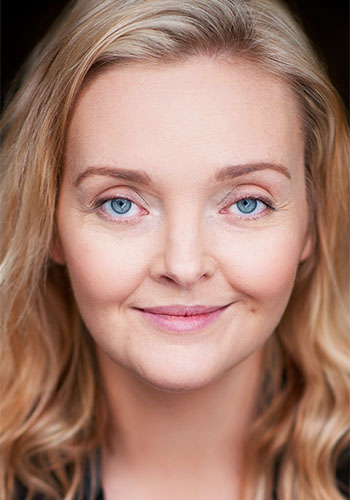

Creator: Tom Christophersen
Director: James Dalton
Cast: Tom Christophersen, Tim Kemp
Image by Philip Erbacher

Theatre review
Tom Christophersen has a fascination for the paranormal, and in Business Unfinished, we gather around him as though around a campfire, listening to ghost stories that he has amassed. A collector of metaphysical tales, the idiosyncratic obsession that Christophersen presents, is something we relate to, for what he does in the show, is to question a reality of which everyone is implicated.

Believable or not, depending on each of our own constitutions, episodes in Business Unfinished are an inviting exploration into the nature of time and space, as well as an examination of the human tendency to create relationships with the supernatural, religious or otherwise. It then extends into the idea of sanity, and that sense of coherence necessary for the world to exist as an understandable, rational whole. An acceptance of incoherence would suggest that phenomena is beyond all human control, and therefore devastating.

Christophersen’s work on soundtrack is outstanding; blending firsthand accounts with an imaginative selection of music and a broad assortment of effects and clips, what we hear is deeply evocative, and a thorough expression of the creator’s unbridled fascination for the subject. Sound design however, is underwhelming, with two basic speakers behind the stage unable to manufacture appropriate sensations that would trigger our more visceral responses. Christophersen performs a substantial portion of the show as a lip-sync act, mouthing to recordings of various personalities, with astonishing accuracy. Stage manager Patrick Howard’s precision in dispensing cues is noteworthy in this regard.

Lighting design by Alexander Berlage is charming and playful, offering a good level of visual excitement to the piece. The space is problematic, being right next door to a rowdy watering hole, and the production insufficiently compensates for noise, leaving atmosphere severely compromised, in a work that is all about things creepy and ominous. Nonetheless, it is unequivocal that what its innovative director James Dalton delivers, is a rich and artful theatre, one that is as interested in its subject matter as it is in the characteristics of theatre itself.

Live performances comprise both the concrete and the esoteric. We go to them in search of magic, trusting that although the flesh and matter we encounter are essentially ordinary, something beyond the mundane will be experienced. If ghosts can be created on stage, we can make them appear in other places, voluntarily or involuntarily. As with gods, we can only prove their non-existence, but their presence is resolutely persistent, and ultimately ineludible.

www.bondifeast.com.au

5 Questions with Amy Victoria Brooks and Emily Sulzberger

Amy Victoria Brooks

Emily Sulzberger: Why do you think this play is relevant in today’s society? 
Amy Victoria Brooks: Technicolor Life is relevant in our society because it is about a family and every family’s story is unique and important. This play examines the members of a family who are dealing with hardship, and how they cope with – and react to – their lives being upended. The audience will be offered a glimpse into the life of a war veteran who has returned home after active service in Afghanistan and is attempting to fit back in to her previous life, whilst dealing not only the loss of a limb, but the loss of her former self. What excites me most about Technicolor Life are the strong females, everyone is a protagonist. Way too often, substantial female characters can be under-represented, or even invisible, on stage. But by selecting this play for The Depot Theatre’s 2017 program, Julie Baz gives these women voices. Each character is compelling in her own way. She has her strengths and weaknesses and above all, she is determined. 

What are the similarities and differences between you and your character? 
Dorothy Shaw and I share a lot of attributes! We are strong, outspoken and confident women who are empathetic and fiercely loyal. The words “sassy” and “outspoken” also spring to mind. 
Dorothy can be more shallow than I am, and her wardrobe is a million times better than mine. Also, Dorothy Shaw has Lorelei Lee as a best friend! My best friend is a fantastic person, but I wouldn’t describe him as a Marilyn Monroe type (though with the right wig and frock…). 

When you’re not acting, what would we find you doing? 
When I’m not acting, you will find me attending the theatre, watching (mostly-) excellent quality Netflix, and reading plays and fiction. I also enjoy going on on-line shopping websites and adding items to the shopping cart, only to never purchase. And I don’t know if wine can be considered a hobby, but I am an enthusiast. I work in retail and I love interacting with customers. There are always interesting people around and I am fascinated by what makes people tick. 

What would be the funniest thing to fill a piñata with?
Certainly not dad jokes. Maybe the jokes that come in Christmas bon-bons. No, wait! Smaller piñatas! But the best thing? Lipsticks by MAC, please. So… many… shades. I want to collect them all. Although it wouldn’t really be fair on the non-lipstick wearers with whom I am competing. 

What do you hope the audience will take away from watching this show? 
Of course I hope the audience will leave the theatre having seen a great production. But further to that, I hope we make people FEEL. It is the role of creative people to challenge the views of those who view our work and I want them to have learned something. Or questioned their own opinions.  Theatre audiences are often some of the most open-minded people, willing to learn and be inspired. I hope we make people talk.

Emily Sulzberger

Amy Victoria Brooks: Why should people see Technicolor Life?
Emily Sulzberger: Technicolor Life reveals a lot about a beautiful family of four women, how they learn to deal with each other, as they have gone through trauma and how that has changed them as people. We get right down to a personal level, from the inside of a War hero’s diary, to the reality of living with fake tatas, an absent father and a missing limb. All of this, served up next to some fun dance numbers, promises to be a good night out. And if that’s not enough, come for the strong female leads, it’s great to have a play with so many female characters!

What has been the hardest thing about playing this character?
I think it’s playing a character that is so iconic. Everyone knows the blond bombshell who sings “Diamonds Are A Girl’s Best Friend”, and finding the heart of who she was as a character and giving a genuine performance as opposed to just impersonating the old gal.  

Who inspires you?
I think being a theatre maker is a huge responsibility, we need to be in tune with what is happening in our world, and be prepared to be vulnerable, to be judged and criticised for our work, but nonetheless provide society with stories we believe they need to hear. There are many theatre makers out there who have dared to do this and made a huge impact on society. One of my favourites being Augusto Boal. Oh and my mum and dad of course.

What has been the weirdest thing that had ever happened to you in the theatre?
Hmm once in a very intimate theatre, we were just about to finish the last scene of the play. As I began to break down in tears over the death of my best friend, someone in the audience collapsed. Which brought the show to a standstill, and as the lady (who, not to worry- turned out to be fine) was taken care of, we just picked back up from where we left off and continued. A few people thought it was all part of the quirky show, and were a little confused to the ending.

If you weren’t an actor, what would be your dream job?
I think the most interesting thing about being an actor, is being able to spend time in other people’s shoes. Not literally the old second hand shoes from the costume department, but being able to play different characters, from all different walks of life, and that gives you a better understanding of why people are the way they are. If I wasn’t an actor, I think I would be a social worker or psychologist. I think they both have a great interest in people and their behaviour.

Amy Victoria Brooks and Emily Sulzberger are appearing in Technicolor Life, by Jami Brandli.
Dates: 26 July – 12 August, 2017
Venue: The Depot Theatre

Review: Velvet (Roslyn Packer Theatre)

Venue: Roslyn Packer Theatre at Walsh Bay (Sydney NSW), Jul 26 – Aug 20, 2017
Director and creator: Craig Ilott
Musical director: Joe Accaria
Choreographer: Lucas Newland
Cast: Joe Accaria, Kaylah Attard, Emma Goh, Marcia Hines, Mirko Köckenberger, Rechelle Mansour, Tom Oliver, Craig Reid, Stephen Williams

Theatre review
The show begins when a young man appears on stage with luggage. Dressed as a Jehovah’s Witness, or maybe a Mormon, the wide-eyed innocent finds himself in a new city, and we imagine that he encounters disco for the first time. This would mean that the action takes place in the late 1970s, when Donna Summer and the Bee Gees ruled the charts, and in New York, the notorious night club Studio 54 was the epicentre of society and culture. Craig Ilott’s Velvet is essentially a variety show, an homage to the era of the hustle, the afro and cocaine. All is light and frothy, with the protagonist’s journey offering a vague sense of narrative, that holds everything together.

At the centre is a slew of hits, unforgettable songs that defined a generation, marvellously reassembled and executed by musical director Joe Accaria, who ensures that their sparkly appeal is always accompanied by a deep appreciation for the soul and funk roots of these dance-floor stompers. Living legend Marcia Hines plays the diva with effortless grace, trusting that her exceptional voice to take us away from daily humdrum to her realm of sequinned ethereality. Leading man Tom Oliver works harder to prove himself, in archetypal musical theatre style, energetic and earnest in his efforts to reach out to everyone in attendance. Acrobats and circus performers provide excellent spectacle and thrills, each of them accomplished and beautiful. The production relies heavily on two very versatile talents Kaylah Attard and Rechelle Mansour, to maintain its effervescence but later sections require more surprises, perhaps in the form of bigger costumes or additional dancers, to sustain our enthusiasm.

Colours of the rainbow flag make more than a few appearances. We cannot be sure if our boy comes out as gay, but he certainly does come out of his shell in the process. Disco may be about debauchery and hedonism, but we remember it also, for the liberation it inspires and represents, even today. At its best, disco is uplifting while it keeps us feeling dirty. It makes us think of sex as salvation, and creates a space where heaven and hell can meet to reveal so much that is dichotomous about being human.

www.velvettheshow.com

Review: Rice (Griffin Theatre Company / Queensland Theatre)

Venue: SBW Stables Theatre (Kings Cross NSW), Jul 21 – Aug 26, 2017
Playwright: Michele Lee
Director: Lee Lewis
Cast: Kristy Best, Hsiao-Ling Tang
Image by Brett Boardman

Theatre review
Yvette cleans Nisha’s office, but it is not the company employing them, that brings them together. Both are Asian-Australian women, and although their personal concerns and interests are miles apart, there is something intrinsic about being ethnic minorities, and of being “the fairer sex”, that makes it easy for them to bond. In Michele Lee’s Rice, we encounter two distinct and fascinating personalities; people we see everyday in our cities, but who rarely make an appearance in the stories we tell in the arts and media. They are regular people, as all our surface pretences portray us to be, but Nisha and Yvette have revelations that are rich enough for any stage or screen.

The two women are imagined with beautiful detail by their playwright. We learn about their worlds, their problems and the way they negotiate life at every turn. Through these keen observations, Lee is able to offer an accurate reflection of how many of us are, in today’s Australia. These ideas however, do not necessarily combine readily for great drama or comedy. The play begins very slowly, with excessive focus on Nisha’s tiresome corporate career, which she pursues with admirable ferocity and little humour. When we discover Yvette’s difficulties at home, the narrative suddenly tightens, but our focus is made to disperse, in Rice‘s ambitions for a more complex structure of storytelling.

We watch Nisha and Yvette go through an emotional time, but we are rarely moved. There is much to cover, and we are rushed through every scene and every possible piquancy. Actors Kristy Best and Hsiao-Ling Tang are the model of conviction, both unshakeable and glorious in their confidence. Best in particular is extraordinarily energetic, especially impressive when playing subsidiary roles, but there is a sense that the actors are compensating for a piece of writing that can otherwise feel muted and underwhelming. We are engaged with the show, usually because the performances are so intense.

The women are an unlikely pairing, and the trust they have for each other is reassuring, though surprising. Against the oppressive power wielded by white men, that attempts to destroy all that they hold dear, Nisha and Yvette find a friendship that offers support and strength. The disparities that exist between them, in the illusory shape of social status, education, wealth and sophistication, are dissolved by a patriarchy that is determined to leave them stripped of all but the perceived weakness of being feminine and coloured. We see them forming an alliance through those very qualities of disparagement, and we await retaliation.

www.griffintheatre.com,au