Review: The Library Of Babel (Sydney Fringe Festival)

Venue: HPG Festival Hub (Erskineville NSW), Sep 26 – 30, 2017
Concept: Claudia Osborne, Emma White
Director: Claudia Osborne
Cast: Evan Confos, Isabella Debbage, Vincent Grotte, Emily Haydon, Holly Friedlander Liddicoat, Anna Hedstrom, Sally Lewis, Amanda Lim, Sean Maroney, Beth McMullen, Sasha Mishkin, Joseph Murphy, Gemma Scoble, Eliza Scott, Isabella Tannock, Rosie Thomas
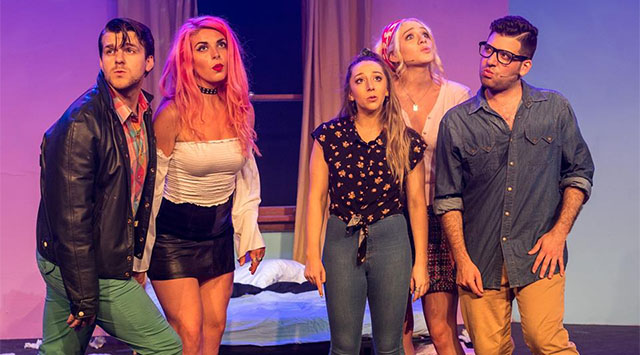
Image by Philip Erbacher

Theatre review
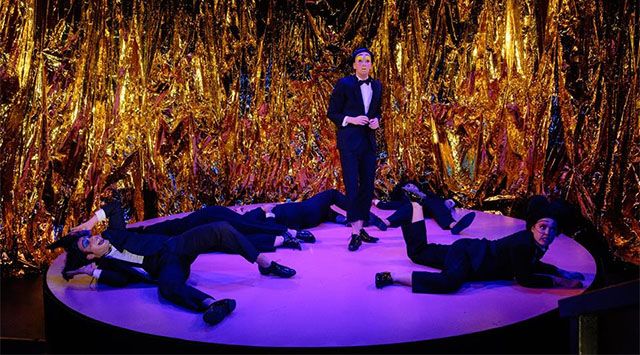
The Library Of Babel takes the form of one big theatrical space, with seven small rooms located within. 16 artists present incongruous and deliberately perplexing pieces of performance art, as we wander through the maze, looking at, and sometimes interacting with, these otherworldly creatures.

In their manufacturing of something that is beyond immediate comprehension, each performer reaches for ideas outside of our shared prosaic existence. To be in contact with inspiration, is to extend consciousness to strange places. Our mind will attempt to form meanings from these disparate encounters, but its tendency to usurp time and space, can be resisted.

It is important that this theatrical experiment insists on the participation of our bodies. The Library Of Babel makes us move around, to forage with our limbs, in addition to the usual deployment of ears, eyes and nervous system. We absorb the experience, and for the hour or so, confusion and disorientation make friends with fascination and intrigue. Trying to achieve an understanding of the work as a conventional theatrical entity, is futile. Intellect should be made secondary, at least temporarily, as it can only be an obstruction to the appreciation of the strange expressions taking place.

The world remains a riddle, no matter how much human interpretation is imposed onto it. We try to shape it into our image, but it always outsmarts us and has the last laugh. In our efforts to become masters of the universe, we get entangled in internal monologues, and lose the ability to find a state of peace, with the greater environment that accommodates us. In The Library Of Babel, we share space and focus on the now. We hold each other in mutual presence, perfectly tangible in our flesh and blood, and we allow time to take on a quality of irrefutable authenticity.

www.kleinefeinheiten.com

Review: Cleansed (Montague Basement)

Venue: PACT Centre for Emerging Artists (Erskineville NSW), Sep 20 – 23, 2017
Playwright: Sarah Kane
Director: Saro Lusty-Cavallari
Cast: Sam Brewer, Lucy Burke, Alex Chalwell, Kurt Pimblett, Jem Rowe, Michaela Savina, Annie Stafford
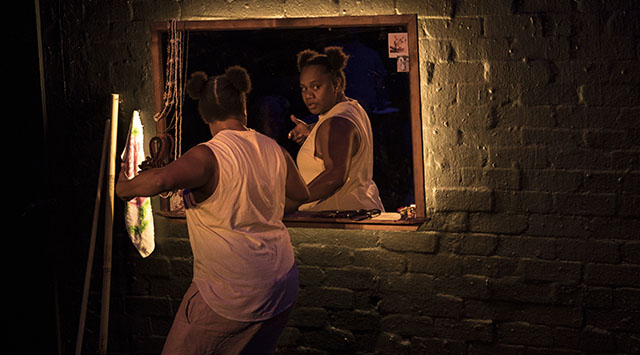
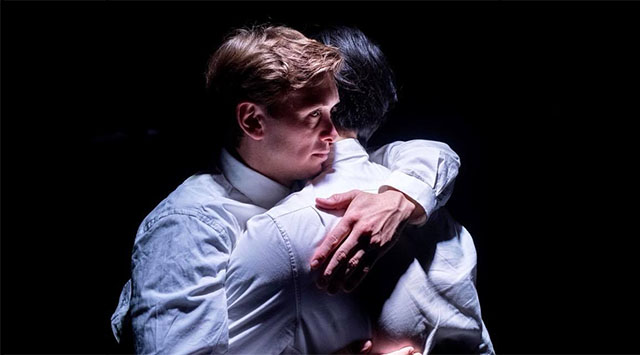
Image by Clare Hawley

Theatre review
Tinker is a figure of authority at a hospital, and the sadist antagonist in Sarah Kane’s Cleansed. She is all-powerful, able to wield any form of torture she pleases. The patients are trapped, unjustly and unexplained, subject to a range of inhumane violations, in scenes of terror that constitute the savagery of Kane’s play. Also prominent are instances of nudity and sexual activity, that accompany pervasive themes of gender and sexuality, all presented as the main agents of instigation, for the brutality that we see. Everyone in Cleansed is being punished for their sex, and we wonder if the hospital functions as an allegory for the wider world.

Director Saro Lusty-Cavallari’s gore is heightened and viscerally affecting. His show recalls films from horror and exploitation genres, but the effect of shock here, is thought-provoking and never meaningless. Long scene changes prevent our anxiety from ever reaching a boiling point. Our minds are given space to work for clarity, during these moments of emotional release, but an opportunity for a more thrilling experience that could result from the manufacture of a truly suffocating atmosphere, is sacrificed. Live video projections are incorporated for an adventurous commentary on current states of technological voyeurism, and are used along with bold approaches to light and sound, to enhance dramatic qualities of the production.

The provocative material is brought to life by an impressive cast of actors with great conviction and nerve. The very scary Tinker needs a bigger, more foreboding presence, but Annie Stafford’s restraint allows our imagination to explore freely into the psyche that is at work here. Jem Rowe is outstanding as Robin; the fear and desperation he portrays seems thoroughly authentic, and the spectacle he creates around his role is brilliantly captivating. Sam Brewer and Alex Chalwell play gay lovers, memorable for the poignancy of their relationship and the remarkable intensity at which they tell that story.

There is no underestimating how much we control each other with sex. The essentially social nature of our genders and sexualities, have opened us up to evaluation and persecution from all corners. The fear of being labelled deviants, and the understanding of that consequence, are indicative of attempts to keep us adhering to an intolerable straight and narrow. Even Tinker is herself consumed by her self-diagnosed perversion, and proceeds to exercise her hypocrisy in the most destructive ways possible. Consenting adults are frightening. They can threaten the very fabric of a society that lives by rules that are arbitrary, cruel and profoundly wrong.

www.montaguebasement.com

Review: Beautiful The Carole King Musical (Sydney Lyric Theatre)

Venue: Sydney Lyric Theatre (Sydney NSW), Sep 17 , 2017 – Jan 21, 2018
Book: Douglas McGrath
Music & Lyrics: Gerry Goffin, Carole King, Barry Mann, Cynthia Weil
Director: Marc Bruni
Cast: Jason Arrow, Stephanie Caccamo, Doron Chester, Barry Conrad, Andrew Cook, Marcus Corowa, Julia Dray, Akina Edmonds, Esther Hannaford, Amy Lehpamer, Cameron Macdonald, Nana Matapule, Mike McLeish, Lorinda Merrypor, Joseph Naim, Ruva Ngwenya, Josh Piterman, Naomi Price, Rebecca Selley, Sean Sinclair, Angelina Thomson, Mat Verevis, Anne Wood, Chloé Zuel
Image by Joan Marcus

Theatre review
It was 1958 when 16 year-old Carole King sold her first song to Dimension Records, thus beginning her career as a trailblazing female of the music industry. Featuring her hits, and others of the era, Beautiful the musical charts King’s early years as a songwriter, depicting personal and professional challenges that had come her way, as she evolved into the legendary figure we have come to know.

Douglas McGrath’s book is tender, gently but effectively sentimental, and memorable for its surprising humour. The soulful songs are arresting, with an immediacy of appeal derived from the unabashedly catchy style of 3-minute hit factories typical of the time. Powerfully nostalgic, there is no other way to respond to the music than to gush with excitement, at the beginning of each familiar tune.

Esther Hannaford is deeply endearing in the lead role, effortlessly sassy but with a startling quality of earthy humility that closely approximates our impression of the woman herself. Hannaford’s voice is scintillating in ballads and in numbers that convert easily to the musical theatre format, but grittier fare like “Natural Woman” and “I Feel The Earth Move” expose the rift in genres that remains to be ameliorated.

It is a large and talented cast, with moments of brilliance emerging from each member, to our immense delight, as the show progresses. Beautiful is a simple story, but rich with theatrical pleasures. Director Marc Bruni’s creation seems always to be perfectly gauged. It fulfils predictable requirements of a conventional Broadway show, but is fundamentally elegant in all its approaches. There are bells and whistles everywhere we look, but nothing ever goes overboard.

It is not a regular occurrence on stage, that a tale is told of a woman who reaches great heights of success, without her having to make enemies, or to lose integrity. Beautiful is about women making it in showbusiness, without demeaning themselves or anybody else. The show is unquestionably enjoyable, and it delivers all the frivolous fun one asks of the format, but its quiet representation of a sovereign womanhood, is the reason for our elation.

wwww.beautifulmusical.com.au

Review: In Real Life (Darlinghurst Theatre Company)

Venue: Eternity Playhouse (Darlinghurst NSW), Sep 15 – Oct 15, 2017
Playwright: Julian Larnach
Director: Luke Rogers
Cast: Anni Finsterer, Elizabeth Nabben
Image by Philip Erbacher

Theatre review
Although a completely natural state of being, we think of emptiness as a kind of malady. It is that sense of lack, that so often drives us to action. At our best, we are productive and inspired, but at our worst, it is our decisions that can cause unimaginable harm. In Julian Larnach’s In Real Life, we meet Theresa, a highly successful entrepreneur and innovator, whose own emptiness moves her to create two entities that define her life. Her invention Drum is a technological device that has captivated the world and is used by 2 billion people. Eva, her daughter, is the other source of pride.

The play deals with the dichotomy of organic versus synthetic, and the increasing conflation of the two in today’s lives. It explores our fears of technology, as innumerable others have, but provides space for its audience to determine independently, the morality, of its characters and of its narrative, within which we are inexorable participants. Larnach’s work is valuable in its timeliness, as it is vitally important that we discuss phenomena as they occur, but its concepts, although pertinent, are not always presented with sufficient salience, to be effectively engaging.

The two actors however, provide clear commentary on motivations and emotions represented by each character. Anni Finsterer is operatic in approach, telling Theresa’s story with great panache. We recognise all her psychological states, and the plot is made satisfying as a consequence, but it is a relentlessly intense performance that can seem deficient in authenticity. Elizabeth Nabben plays Eva, along with a host of secondary characters, demonstrating excellent focus and versatility. The two-hander is directed by Luke Rogers, who ensures that a sense of theatricality always accompanies the show’s intellectual interests. It is a well designed production, if slightly too literally rendered, with Sian James-Holland’s lights proving memorable in their playful liveliness.

Theresa constantly reaches outside of herself to seek answers for her anxieties. Even though there is no denying the greatness she has achieved, it is the profound sorrow of which she is architect, that remains. That singular desire, arising from an ineffable emptiness, has delivered both the best and worst of her existence. It is true, that our choices are good and bad. Regrettable decisions should be regarded as such, so that errors are not repeated. Regret, and disappointment, are crucial to how a person grows. Perhaps this is also how we can view our relationship with technology. Movement is inevitable, but trajectory and velocity can always be manipulated, in accordance with the lessons we learn.

www.darlinghursttheatre.com

Review: Ghosts (Belvoir St Theatre)

Venue: Belvoir St Theatre (Surry Hills NSW), Sep 16 – Oct 22, 2017
Playwright: Henrik Ibsen (adapted by Eamon Flack)
Director: Eamon Flack
Cast: Tom Conroy, Taylor Ferguson, Robert Menzies, Colin Moody, Pamela Rabe
Image by Brett Boardman

Theatre review
It is late 19th century, and the widowed Mrs Alving is building an orphanage so that her dead husband’s money can be released from her conscience. She is still unable to find peace, even though her poisonous marriage is now over, after having suffered in silence for decades. Ibsen’s Ghosts is about the incontrovertible links between past and present. It looks at how we are controlled by beliefs, events and decisions of days gone by, and the unconscious ways in which we keep ourselves and one another bound to societal rules and conventions.

Mrs Alving understands that a better life is possible, yet she persists with misery. Director Eamon Flack prompts us to question the nature of our protagonist’s volition, whilst simultaneously placing emphasis on external forces that insist on her compliance. From all our personal experiences, we know the tension that lies inevitably between others and the will of the self. The concept of a self-determined existence is an attractive one, even though none of us can lay claim to have fashioned an entirely independent state of being.

Ghosts is an inherently challenging work, and with the passage of time, its narrative has turned predictably archaic, leaving only its central philosophies to speak with pertinence. Tradition and religion no longer hold the same power, so the Alving family’s story is in many ways only a relic, but Flack’s ability to turn the essence of Ibsen’s writing into a resonating force for his show, is certainly admirable.

Pamela Rabe’s performance as Mrs Alving has an understated charm, that shifts the play’s old melodramatic quality to something that is altogether more elegant and naturalistic. It is quite extraordinary, the way Rabe sublimates obsolete details into her very convincing storytelling. All the actors are worth their salt, successful in bringing invigoration and surprising nuance, to some very dry material. Equally remarkable are Nick Schlieper’s lights, especially noteworthy in the final act, when imagery turns breathlessly sublime, and we see baroque paintings come to life.

Artists need knowledge of the past, in order that they may forge new ground, but like characters in Ghosts, their work is constantly under threat of being undermined by the reverence we so often attribute to the historical. The continual resurrection of dead white males like Ibsen can be considered necessary, but it can also be thought symptomatic of problems that the Australian artistic landscape faces. Our art means little if it hinges so strongly on traditions of olden Europe. The Alving patriarch might be dead and buried, but those he had left behind are doomed to perpetuate his agony. We want them to renounce those burdens and henceforth, prosper with the current of their own autonomy, but it seems easier said that done.

www.belvoir.com.au

Review: Assassins (Hayes Theatre)

Venue: Hayes Theatre Co (Potts Point NSW), Sep 16 – Oct 22, 2017
Book: John Weidman
Music & Lyrics: Stephen Sondheim
Director: Dean Bryant
Cast: Laura Bunting, David Campbell, Connor Crawford, Martin Crewes, Kate Cole, Bobby Fox, Hannah Fredericksen, Jason Kos, Rob McDougall, Maxwell Simon, Justin Smith
Images by Philip Erbacher

Theatre review
Australia does not believe in capital punishment, and we certainly never condone murder under any circumstance, but this principled conception of the world relies entirely, on a justice system that convinces us of its adequacy. If men in high places get off scot-free after committing egregious acts of immorality, we begin to think in terms of vigilantism. In Stephen Sondheim and John Weidman’s Assassins, a congregation of women and men remembered for the dubious accolade of having attempted to shoot and kill American presidents, are gathered for a history lesson, that talks about the phenomenon of political assassinations, and the meanings it represents in our modern democracies.

It is a great joy to be able to take pleasure in a work of musical theatre, that is not frivolously romantic, or twee, or excessively sentimental with its concerns. Some might argue that its topic is of particular relevance in 2017, but Assassins is thematically pertinent as long as our governments are a thing of contention, and for true democracy to exist, that sense of discordant anxiety must surely be ever-present. Whether or not the leader is to your tastes, there will always be a substantial portion of the population that is against them, if we are to uphold the fundamental doctrines surrounding our shared understanding of freedom.

Brilliantly conceived for the Sydney stage by director Dean Bryant, who balances spectacle with nuance, to deliver a show that is as entertaining as it is meaningful. In perpetual and harmonious motion, Bryant and choreographer Andrew Hallsworth, have created a sophisticated interpretation of Assassins, that addresses the genre’s need to tease and dazzle, whilst maintaining an air of gravity to proceedings. The production is a visual delight. Alicia Clements’ set and Ross Graham’s lights continually steal the show, with surprises that unfurl through every scene, splendid and ravishing from beginning to end.

An impressive ensemble takes charge of the material. Although not evenly skilled, their spirited cohesion makes for a performance that is firmly captivating. David Campbell is compelling as John Wilkes Booth, the man responsible for Lincoln’s death. Fabulously gifted in voice, and delicately studied with his acting, Campbell may not be a leading man on this occasion, but proves himself to be the unequivocal star of Assassins. Justin Smith’s marvellous acting chops too, make a fascinating Samuel Byck, the all too familiar loony who would very likely be a regular caller on talkback radio if alive today. Also memorable, is Martin Crewes, whose passionate singing and radiant presence, are reliable, as always, for adding vibrancy to the presentation.

There is always a temptation to imagine a world suddenly better, after a terrible tyrant is killed, but history has proven time and time again, that the removal of a head, does not automatically bring peace to the body politic. If there is anything worth celebrating about our Western democracies, it is our ability to argue for the greater good to prevail. As long as our conscience leads the way, harm can be minimised, but by the same token, the imperfections of our societies will remain salient. Murder can be sweet revenge, but it solves nothing, serving only to prolong the torment of injustice.

www.hayestheatre.com.au

5 Questions with Kurt Pimblett and Annie Stafford

Kurt Pimblett

Annie Stafford: In Cleansed, your character is a ghost for the majority of the show, do you have a favourite ghost story or have you ever had a run-in with a ghost?
Kurt Pimblett: Yeah, me and my cousins and sister saw a lot of ghosts growing up. One of them was the ghost of our dog who’d been run over the year before, which was nice. I think my favourite ghost story though is that Paul Jennings one where a boy falls down a well and there’s a ghost down there who steals all your clothes and escapes and then you become the naked ghost trapped in the well. I feel like that’s the kind of weird ghost thing Graham would do.

When you first read the stage directions “dance of love”, what dance moves came into your head?
Two things, simultaneously. One of them was this incredibly beautiful and emotive sequence that was immediately recognisable as a dance of love – no-one would ever put any other name to it. The other was the bit from High School Musical where those two kids do a weird interpretive dance to audition for the winter musical and get told they should have therapy. I hope that what we’ve ended up with is a happy medium between the two.

Now this is a classic question, in the Hollywood film version of this play, who would you want to play Graham and why?
Harry Styles. No explanation necessary.

What did you find the hardest when approaching this text? Because let’s be honest, its pretty damn out there.
With Cleansed, Sarah Kane has been quite kind with the dialogue and emotional journeys of most characters. Everything that’s happening makes sense, the logic isn’t hard to access, and it feels natural to embody and put into action. Cleansed is a huge practical challenge though, and a lot of thought has gone into realising her incredible stage directions. A lot of them seem a bit impossible, but what I found most confronting in rehearsal was the things that aren’t impossible. The things that you can totally just go and do, but wouldn’t, or shouldn’t, if you weren’t in this play. Another thing I found difficult was rationalising Graham’s relationship with Grace, in conjunction with Graham’s relationship with Tinker. I very much approached the text thinking that Graham was always right and was totally a good guy (which is a useful perspective to keep in mind as an actor), so I was pretty shaken when it started to dawn on me that sometimes his choices aren’t the most upstanding.

You’re stuck on a desert island with only one other cast member from Cleansed, who would you want it to be? And why?
Okay. I would want it to be someone whose sense of humour gelled well with mine, so that it doesn’t get boring, but also so that when I start making off-colour panic-jokes they don’t get weirded out. Are we trying to escape the island? Because then I would also want someone who’d be determined and upbeat enough to help me make a billion different palm tree boat prototypes. Also probably someone with a nice grounding in facts because on a desert island my skills probably wouldn’t extend far beyond writing poems about the ocean and I’d need someone to tell me what’s okay to eat and where snakes live so I can avoid them. There’s also a high chance that I’d get so restless and desperate for entertainment that I’d stop listening to them about which berries are poisonous and start to provoke the snakes just for something to do, so it would be great if the person could talk me down from doing things like that. Look, this is a tall order, so Cleansed cast, if any of you feel like you can adequately fill this role, hit me up.

Annie Stafford

Kurt Pimblett: Tinker has a lot of power but (arguably) questionable morals. What kind of life advice would she give? If she wrote a self-help book what would it be called?
Annie Stafford: I sincerely hope no one ever asks Tinker for advice let alone reads her self help book. How the heck did she get that book deal?! That aside, I think her incredibly deep and sage life advice would be “Get shit done. Shut shit down”. To be completely honest, that’s been my own motto for the past 2 years. But in a very absurdist way it applies to Tinker. She’s pretty proactive, getting things done. And if she’s not about something or it isn’t worth her time, she shuts it down. It’s title? “I’m not responsible.”

Shoot, shag, marry: Cleansed. Go. And try not to shag or kill anyone you’ve already shagged and killed.
Oh well that narrows it down, you’ve literally left me with 3 characters. I think I’d…Tinker would marry Woman. But they’d have to travel to make that happen, cheers Australian Government for that one. Who would have thought you’d be living the dream in a Sarah Kane play. Political moment over. Shag Carl just to add insult to injury, and oh so much injury poor ol’ Carl. And I guess kill Robin. That’s actually quite hard when you take out of it everyone I’ve already killed and shagged. I mean Tinker has already killed and shagged, don’t want to get too method over here.

It is a tricky text – is there anything that you read and thought would be difficult but turned out not to be? Anything that went the opposite?
I actually thought the sex scene between the Woman and Tinker would be really hard, maybe not simply to choreograph, which it wasn’t, but my ability to do it. To be naked in a rehearsal room in such close proximity to someone else, without the tricks of the trade you get in screen. But the process of it was so smooth, and after a while it just makes sense. After sitting in the play for so long and sitting with Tinker and her journey, that moment is so necessary and normal and just feels right-thus I felt so ready to do it when it came to that time. And the opposite? Figuring out Tinker. She’s a tough cookie. So close to performances and I’m still working her out. Which I like actually, she keeps surprising me.

What’s your favourite Sarah Kane’s Cleansed stage direction?
But there are so many excellent ones!!! Can I do a top 3? Well, I’m going to anyway.
1. “Carl tries to pick up his hands – he can’t, he has no hands.”
I’ve decided against giving 3, I want there to be some element of surprise for the audience. But I’ve definitely given you an absolute gem. Sarah Kane is actually hilarious.

Lastly, in a direct theft from the dude from Inside The Actors Studio, if heaven exists, what would you like to hear God say when you arrive at the pearly gates? Answer as both yourself and Tinker.
Before I say, I want these answers to be read in the voice of Morgan Freeman. For some very unknown reason, that’s what my idea of God sounds like. As Annie I would like to hear “Hey mate, good work, here’s a beer”. It would preferable be a VB, taste of the old country. As Tinker, I think she will hear “You don’t even go here!” but I reckon she’d like to hear “You did what you had to do for love”.

Kurt Pimblett and Annie Stafford are appearing in Sarah Kane’s Cleansed, part of the Sydney Fringe Festival 2017.
Dates: 19 – 23 September, 2017
Venue: PACT

Review: All Our Lesbians Are Dead (Zenowa Productions)

Venue: New Theatre (Newtown NSW), Sep 16 – 19, 2017
Playwright: Natalie Krikowa
Director: Natalie Krikowa
Cast: Teneale Clifford, Stephanie Hamer, Felicity Keep, Laura Nash, Gemma Scoble

Theatre review
Only 2% of all television characters are lesbian or bisexual women, but they account for 10% of deaths. As the representation of gay women increases in our media, it seems that they are being killed off at an even higher rate. These are the alarming statistics we hear about in Natalie Krikowa’s All Our Lesbians Are Dead, a comedy that presents this wanton massacre on our TV sets, as conspiracy theory.

There are men in high places who understand that the inclusion of queer characters is advantageous to the bottom line, but are unwilling to accept the validity of queer lives. Lesbians are added to shows, to serve their purpose as profit-making commodities, but are routinely murdered to maintain the heteronormative status quo, established since the inception of television almost a century ago.

The plot involves a private investigator being hired by a couple of lesbian couch potatoes, to investigate the reasons behind these rampant TV deaths of queer women. There are scintillating data and intriguing hypotheses in Krikowa’s script, but dialogue is stilted, with unrealistic personalities constructing narratives that are rarely engaging. The cast exhibits good conviction, with actors Teneale Clifford and Gemma Scoble providing a level of proficiency that offer us moments of invigoration, in what is a very basic effort at making theatre.

Bianca says in the play, that it is better not to see yourself at all, than to see yourself dying over and over again. LGBTQI people should not have to choose between invisibility and destruction. Neither should we still be begging for legitimacy in the twenty-first century, but the truth is that our oppression persists. To see ourselves portrayed with fairness in mainstream media may or may not happen in this lifetime, but the alternative underground is where we have always thrived, and it is here that we find our voice and solidarity. Long may we reign.

www.newtheatre.org.au

Review: The Night Alive (O’Punksky’s Theatre)

Venue: Old Fitzroy Theatre (Woolloomooloo NSW), Sep 13 – Oct 14, 2017
Playwright: Conor McPherson
Director: Maeliosa Stafford
Cast: Laurence Coy, Patrick Dickson, Sarah Jane Kelly, John O’Hare, Darren Sabadina
Image by Rupert Reid

Theatre review
In a run-down home in Dublin, surrounded by insidious violence, its inhabitants go about their simple lives, acculturated and unperturbed. Conor McPherson’s The Night Alive begins with Aimee’s bloodied face, and we are struck by the astonishing ease at which everyone is able to recover from the savage episode. These are people who live rough, and we watch them get on with it, like most humans do, trying to figure things out in a world that always seems to be on the verge of turning dystopian.

Director Maeliosa Stafford brings to the stage, the quintessential Irishness of its characters, offering an intriguing glimpse into a culture that oscillates between familiar and exotic. Our Australian sensibilities at times run parallel, but can often seem divergent. With McPherson’s very fascinating dialogue, the other side of the planet is turned immediate, and even though the slow pace at which Stafford allows for things to happen can prove demanding, The Night Alive is a whimsical piece with definite charm.

Tommy is down on his luck, but John O’Hare’s naturalistic portrayal of a man who soldiers on, gives the show its tenacious optimism. Sarah Jane Kelly is spiritedly valiant, in her attempts at preventing the sole female in The Night Alive from dissolving into a subjugated accessory for the men’s stories. It must be said however, that romance blooms unconvincingly between the two.

Laurence Coy and Patrick Dickson are memorable in the play’s quirkier roles, both delightful presences with a sense of precision in their respective approaches. Kenneth is a slightly cliché bad guy type, but Darren Sabadina’s energy is refreshing, and a much needed boost for a production that tends to fall too languorous.

It may be hard out there, but we brave it. There are forces that work against Tommy and his friends, and not a day passes without its challenges, yet they remain hopeful. We can be certain that without hope, all our tomorrows may as well cease to exist. To live, we must keep on dreaming, for it is only in how we manufacture anticipation, that time can derive its meaning.

www.opunkskystheatre.com

Review: Dinner (Sydney Theatre Company)

Venue: Sydney Opera House (Sydney NSW), Sep 11 – Oct 28, 2017
Playwright: Moira Buffini
Director: Imara Savage
Cast: Caroline Brazier, Brandon Burke, Claire Lovering, Rebecca Massey, Aleks Mikić, Sean O’Shea, Bruce Spence
Image by Brett Boardman

Theatre review
Paige is throwing a pretentious dinner party, for people she dislikes. Moira Buffini’s takedown of the English upper class, Dinner, begins promisingly enough, with pathetic women and impotent men tearing into each other, to expose the ignorant indulgences of those at the top, who seem to have things much easier for no good reason. Touches of surrealism give the play an enjoyable whimsy, but we quickly discover its plot and dialogue to be unoriginal, almost generic in its castigation of the rich. Characters with a depraved sense of entitlement, all in broken relationships, engaging in hateful exchanges over an expensive meal; none of it ever ceases to feel a tad too familiar.

The action takes place in a glorious dining room (designed by Elizabeth Gadsby), behind a big glass window. Either the great unwashed has to be kept at bay, or the theatre patrons need to be protected from some big mess that is poised to take place on stage. Three words, “fuck things up”, are given grand emphasis several times in the course of the production, but the wait for radical activity proves fruitless. Director Imara Savage makes several obtuse gestures in her staging, attempting to introduce the idea of subversion to her work, but it all feels much too polite, and they fall regrettably flat.

Caroline Brazier gives a polished performance as Paige, and although we can certainly see the disquiet and the deceptive fragile glamour of the lady of the house, we never really come to an understanding of the source of her immense toxicity, which underpins the entire narrative of Dinner. Aleks Mikić plays Mike, the outsider who stumbles in, representing the working class, in a juxtaposition of the privileged against the concept of an everyman. In spite of the actor’s strange and unexplained use of a posh accent, the enigmatic qualities created for his persona, makes him one of the more intriguing aspects of this production.

There are laughs to be had, and valuable concepts to chew on, but Dinner needs a lot more spice if its ambitions are to be fulfilled. Social inequity is a problem of great severity, especially troubling in the Trump age, and when we decide to challenge the imbalance of wealth, any hint of the perfunctory would risk the exercise turning inadequate and hypocritical. It is never sufficient that artists are well-meaning. We rely on them to tell the truth in a way that the truth may have an effect on how we think and live, and when the message is hard to digest, their arguments need to find a way to make themselves persuasive. A gentle simmer might be an easy way to broach the subject, but it rarely manages to get the job done.

www.sydneytheatre.com.au