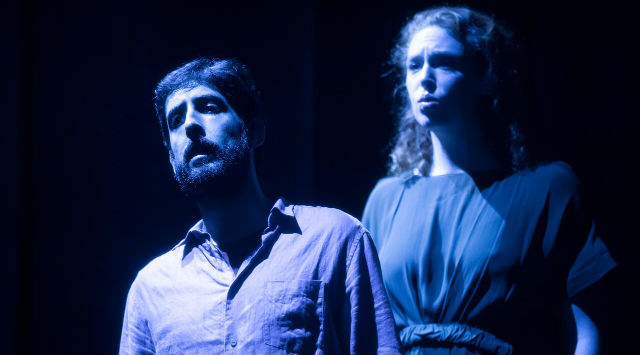
5 Questions with Tony Goh and Shan-Ree Tan

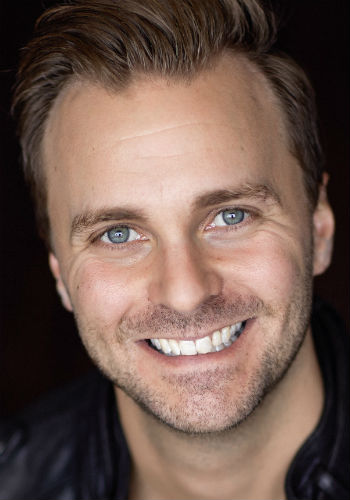
Tony Goh

Shan-Ree Tan: So who’s Tony Goh, and how’d he come to be in a theatre in Marrickville with the rest of us?
Tony Goh: Tony is an Australian born Chinese. I was born in Brisbane, grew up in Marrickville, got married, lived in the US for 13 years, started a family – I have two young boys 15 and 13. I have returned to Marrickville through an odd journey and co-incidences. I am currently studying acting and was interested in doing a stage play. Over the past two decades, I dabbled in TV, commercials, and film – including two in the US. So, I have constantly re-inserted acting into my life, perhaps because I am always interested in the lives of others, how others live.

You play a character who’s a big fan of theatre in this play. What’re you a big fan of in real life in that way?
Definitely a fan of movies, but then again who isn’t? I was bitten by the acting bug really young, at age 16, when I went heard they were auditioning for the role of an Asian shopkeeper in a very shortlived TV series called “Arcade” shot in Cremorne shopping arcade. I couldn’t really turn my back away after that even though I never got the part. I’m also a fan of cooking and staying in shape.

We’ve got a pretty diverse cast for a Chekhov, I reckon. Do you feel particularly as an Asian face you’ve got more to prove as an actor? Or does it not really worry you? It worries me…
If I were to enter the entertainment business today, I would feel more pressure to prove myself. Sure there’s still pressure, it comes with the territory. But back in my day…god I sound old, there were fewer parts for Asians, mostly stereotyped roles. I think the Australians are now accustomed to seeing Asians as being well, just Aussies, so there’s little in the way of having to conform to some image. We can just be actors/characters/people. However, I also think there are more roles for Asians nowadays which means there’s a lot more opportunity to showcase the available talent. I think the pressure to prove as an Asian actor could stem from the fact that Asian culture is one of conformity. Conformity and creativity are at odds. It is those Asians or any migrant culture who best absorbs the available culture that will be able to grow and develop as both actors and members of society. I think the issue is one of broader acceptance. We’re lucky in Australia in some respects because we tend to focus on producing drama, which opens the way for dramatic roles, character based. Whereas when I cast my eyes to Hollywood, there tend to be more stereotyped Asian roles. The US is getting better sure with shows like “Fresh Off the boat” but those are few and far between as you’d be hard-pressed to see many Asian actors playing characters as opposed to caricatures.

You’re always a terrifically jovial presence in rehearsal. What have you enjoyed the most about director Anthony Skuse’s process?
I have enjoyed Anthony’s insight, creativity, and patience. He is a great communicator, as a result, you have a clear picture of what is expected of you and what he wants from the scene, the emotion. One of the questions he’s asked us, certainly me, is who is my character, and what do the people around the character mean to my character. Those are questions to shape my own thoughts and bring my own interpretation of the character, yet remain truthful. It is amazing what that has accomplished and the clarity it brings to the preparation process. I also enjoy the cast. We’re a mixed bunch and get along well. We know we have a job to do and we’re not assholes going about it.

What kind of role/project would you want to tackle next, if you had to make a total change from this gig?
A tough question. I won’t go into the personal side of my life, but let’s just say the last four years of my life have been a wild ride, an adventure if you will. I feel I am still trying to find my way in life. I would very much love to pursue further acting endeavours, perhaps as a regular on TV drama series – the typical lawyer, doctor, cop thriller comes to mind. I have long since given up on the dream of making a living in acting, so whatever morsel comes my way I am deeply grateful for.

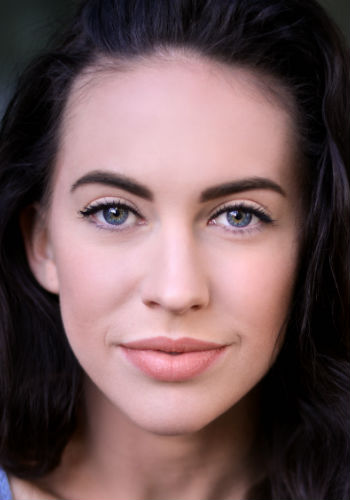
Shan-Ree Tan

Tony Goh: What are you enjoying about working in this play?
Shan-Ree Tan: Ah, everything. Even the challenges of rehearsing on a co-op schedule and all the technical
curveballs that come with any show. Working with Anthony has been brilliant – I’ve really gotten a lot out of his literate, rigorous approach to text and his direction, which is somehow both entirely intuitive yet absolutely precise, and demanding while also being really supportive – and he’s got a great sense of humour. Really enjoying soaking up the learning from our experienced and generous castmates and crew too: serious about the work without taking themselves seriously at all. Definitely feeling like I have to jog very very briskly to keep up, but same, I’m grateful for the chance I’ve got even to share a stage with these folks.

What do you see as the future of acting in a multi-cultural Australia?
Big question! I’m not equipped at all to make any informed predictions – but like you, I’d like to see the performing arts here get to a point similar to where the UK industry seems largely to have gotten to, where it’s largely unremarkable to see culturally diverse actors in almost any production. “Unremarkable” is probably the wrong word. What I mean is that I hope that we can work to make two things happen: one is that we get to an overall much, much better place with “any ethnicity” or colourblind casting where that’s appropriate, and the other is that the appetite for the kinds of Australian stories where an actor’s cultural or ethnic background is an active asset, and can be appropriately provocative, continues to increase. The challenges will be quite radically different for actors from different cultural backgrounds – Indigenous representation or Middle Eastern representation are good examples – so the solutions to perennial hurdles like stereotyping and tokenism will be different.

We’ve seen a quite a few trailblazing Asian arts and media personalities take stage here in recent years and it’s going to be really interesting to see that develop. I’m particularly interested in what’s going to happen in the conversation between media/arts representation reflective of folks like us who grew up in Sydney and are more Aussie than anything else – out in the Hills in my case and in Marrickville in yours – against the popular culture of the beachhead communities of the “new Asia” who are paying attention to a whole other vast entertainment industry. The cultural gulf there alone can be huge, I’m keen to see how it plays out. As far as our production goes: people may wonder why this particular diverse cast was chosen to portray a bunch of ostensible 19th century Russians, particularly with our wildly differing regionalisms, but I like that it adds a new musical range and quite a powerful meta element to it. The play is literally about trying to reinvent theatre in a social context, so I reckon it rewards the approach that Anthony’s taken.

What movie/theatre stars do you admire and why?
Too many, for too many different reasons. A few completely random names from things I’ve seen this year:
Blazey Best. Not reasonable for someone to be able to be that funny and musical while literally standing on her head in the Wharf Review this year. Rob Brydon/Steve Coogan/Michael Winterbottom, the collective team. The Trip was life-changing. Takeshi Kitano. Big fan of his consistent ability to find the darkest, driest laugh possible at everyone’s expense and that he keeps finding new ways to provoke. Kate Mulvany. That lady knows how to Shakespeare. Gary Oldman. He seems to know precisely where to set the dial for whatever movie he’s in. Taika Waititi. What a mad Kiwi wizard. Thanks to my girlfriend for forcing me to sit down to watch What We Do In The Shadows for the first time earlier this year. We’re also at a moment where creatives are using whatever recognition they have to take a stand and speak out on the critical social and political issues that are roiling us right now, even at massive professional and personal cost to themselves. That’s hugely admirable.

What do you think happened (to the characters) after this play?
Is it still possible to spoil the ending of a 120 year old classic? Chekhov’s got a very particular definition of “comedy” – things are just not going to work out well for most of them are they…? Your character, Shamraev, probably makes off all right – I like to think he basically gets left with the estate to do with as he likes. Your wife Polina might have convinced the good doctor Dorn to run off with her before then though. Masha: cirrhosis. Medvedenko: pneumonia, from all that walking through Russian snow.

What don’t your friends know about you, that only your closest, or longest time friends do?
All my vocal impressions of people are now actually just take offs of Rob Brydon doing far superior impressions of those people. To be fair, people work that out pretty fast.

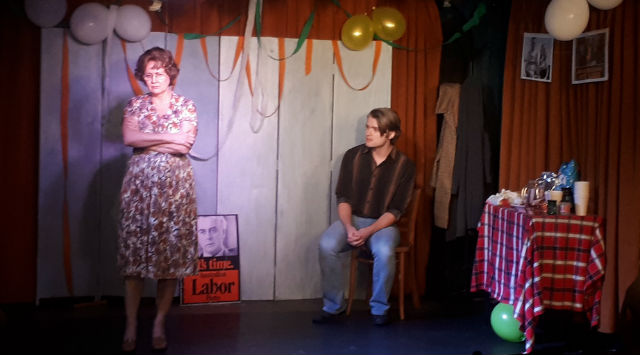
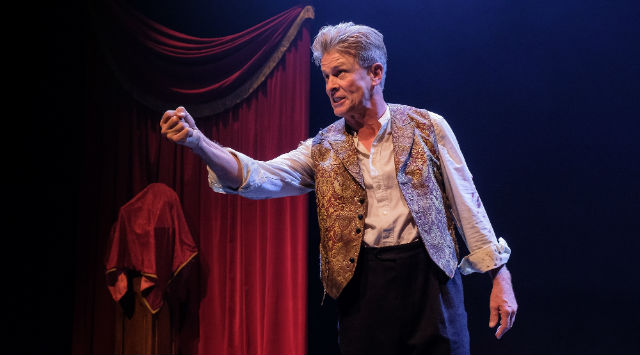
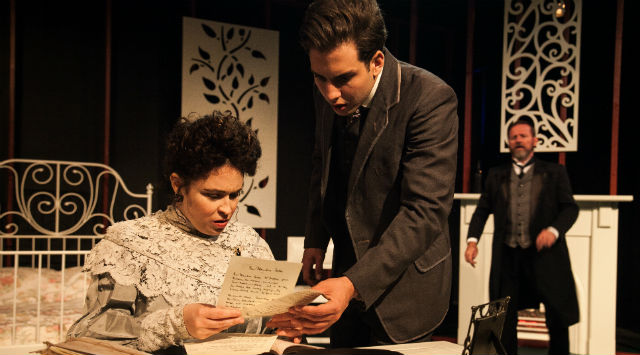
Tony Goh and Shan-Ree Tan can be seen in The Seagull by Anton Chekhov.
Dates: 6 – 16 Dec, 2017
Venue: The Depot Theatre

Review: Knots (The Old 505 Theatre)

Venue: Old 505 Theatre (Newtown NSW), Dec 5 – 17, 2017
Creators: Gareth Boylan, Kerri Glasscock, Michael Pigott
Director: Gareth Boylan
Cast: Giles Gartrell-Mills, Kerri Glasscock, Michael Pigott
Image by Clare Hawley

Theatre review
Jerry likes watching people, as if he has never seen people before. At the theatre, we have the opportunity to look at ourselves as though aliens have just landed. With fresh eyes, we might be able to gain new knowledge about humankind, and perhaps learn to do things better.

Knots prides itself on being obscure and random; keen to speak but not to explain. There is space travel in the mix, and certainly a lot of exploration into all things weird and wonderful. Just as the earth spins on its own accord, we have to go along for the ride, and figure things out the best we can.

The work is fabulously theatrical, and notwithstanding its minimal set design, very pleasing for the senses. Director Gareth Boylan’s manipulations of atmosphere is magical. He persuades our minds to attend to the poetry of Knots, and to make secondary our usual obsession with logic and narrative. Meaning happens, but not at our demand.

The conscious mind is only one part of our constitution. When we find ourselves wholly present and immersed in a work of art, interaction with it involves more than what can be thought through. Knots disrupts conventional reliance on the standardised language of our storytelling. It seeks to communicate in alternate ways, in order perhaps, that we may attain a level of awareness previously unavailable.

Giles Gartrell-Mills, Kerri Glasscock and Michael Pigott perform the piece with excellent focus and discipline. Occasional smatterings of humour provide a sense of dimension, and emotional volatility that seem to appear unexpectedly, helps us connect.

Most plays can be written down and re-staged, but Knots does not want to work that way. It is hard to imagine that the written word will satisfactorily capture its style and essence; its desire is to go boldly where no person has gone before. What we want from theatre, is vastly different from what a good book can deliver. At its most fundamental, theatre is about community and collaboration. It rejects distance and proxy, so you really had to be there.

www.old505theatre.com

Review: Barbara And The Camp Dogs (Belvoir St Theatre)

Venue: Belvoir St Theatre (Surry Hills NSW), Dec 2 – 23, 2017
Playwrights: Alana Valentine, Ursula Yovich
Director: Leticia Cáceres
Cast: Troy Brady, Elaine Crombie, Jessica Dunn, Michelle Vincent, Debbie Yap, Ursula Yovich
Image by Brett Boardman

Theatre review
Barbara has a lot of fun in the city, singing at bars and events, being independent and vivacious. She is a mischievous character, and together with her cousin René, they paint the town red on the regular, determined to devour all that life has to offer, and to escape the troubling roots of their outback origins. Barbara And The Camp Dogs by Alana Valentine and Ursula Yovich, falls into categories of the musical and the epic journey, but it is a consistently surprising ride that defies all manner of expectations.

Barbara does well in life, but as an Aboriginal woman, the scars that she carries are deep, agonising and easier left ignored. When she finds herself having to return home to fulfil her filial obligations, all that she tries to deny, come flooding back to taunt her. The play expresses the nature of that immense suffering, with extraordinary acuity. Barbara and René sing, because so much of Indigenous experience is beyond our usual capacities of speech. In Barbara And The Camp Dogs, we are able to connect with the injustice and pain that have become entrenched in Black Australia. It divulges with power and wit, through its songs and storytelling, the darkest, most hidden of many Indigenous women’s lives.

It is impossible to overstate Jessica Dunn’s achievements as musical director. Barbara’s secret inner world turns intimately palpable, via influences of rock and soul, for a mode of communication sublime in its startling veracity. The songs move us as though a spiritual entity has taken hold. We are guided from scene to scene, with emotional intensity, precise and lush at every juncture.

Director Leticia Cáceres imbues the show with a warm glow, enchanting and irresistibly alluring. Everything about Barbara And The Camp Dogs is designed to have us fall in love with its characters and their narratives, and we endear to it all, readily and completely. There are occasional instances of abruptness in the transition of scenes, that can be slightly disorienting, but the raw aesthetic of the production is a forgiving one. Moreover, any blemishes would be easily shielded by the show’s incredibly charismatic stars.

The sensational voices and effervescent personalities of Ursula Yovich and Elaine Crombie win us over effortlessly, from the very beginning. The harmony forged between the two is a delight to our ears and to our hearts; what they present is wonderfully tender and exceptionally real. Yovich in particular, moves us in the most profound but unexpected ways. Telling us Barbara’s story of intolerable suffering, is not for a moment of catharsis, but a lasting gift of inspiration. We observe and learn, and promise to do better, to do more.

Barbara is not a social justice warrior. She is not a conscious activist, but she has to fight every day of her life, to defend herself against structural forces determined to keep her down. Australia’s shameful history of genocide, originating from the illegitimate claim of terra nullius in 1788, has reverberations that remain cruel and potent in the twenty-first century. A semblance of equality is not sufficient to heal these dreadfully severe wounds. Meaningful reparations will cost, but they must be made.

www.belvoir.com.au

Review: Andrew Henry’s Vertical Dreaming (Old Fitz Theatre)

Venue: Old Fitzroy Theatre (Woolloomooloo NSW), Dec 5 – 15, 2017
Director: Andrew Henry
Cast: Andrew Henry
Image by John Marmaras

Theatre review
For Andrew Henry’s Vertical Dreaming, its eponym is for 50 minutes, onstage with songs and poems that have proved significant to his healing process, earlier in the year, at a mental health facility. Depression and bipolar disorder are discussed alongside addiction and lost loves, through a compilation of works by male poets, presented in the form of a monologue. Musical interludes by an accomplished band of four, add colour and breathing space to the production.

Henry reveals that the struggle of psychological disorders is an isolating one, with patients unable to extricate themselves from the constant torment of interminable introspection and self-flagellation. Unable to shift his attention away, meaningfully, to the outside world, that incessant examination of the self becomes perniciously despairing and narcissistic. The show attempts to engage our empathy, but it is our logical responses that are initiated, and we leave with a better understanding of our humanly dysfunctions.

It is a very strong performance by Henry, whose compelling presence and admirable skill as actor, has us spellbound to his adroit storytelling. The vulnerability he puts on display is immense, and it represents the most valuable element in this instance of live drama, but for all the anguish that we do witness, the message it ultimately imparts, is comparatively lacklustre.

Pain can only ever be subjective, but in art, it becomes communicable. To turn one’s suffering into a matter of relevance for another, is not often a straightforward exercise. Each can only perceive existence from their own vantage point, which the artist must negotiate with savvy and ingenuity. Everyone is susceptible to mental illness, but until we experience things firsthand, the chasm between sympathy and actuality, requires the greatest of sensitivity.

www.redlineproductions.com.au

Review: Wasted (The Kings Collective)

Venue: The Factory Theatre (Marrickville NSW), Dec 1 – 9, 2017
Playwright: Kate Tempest
Director: Elsie Edgerton-Till
Cast: Jack Crumlin, David Harrison, Eliza Scott
Image by Robert Catto

Theatre review
Charlotte, Danny and Ted live in England where, like in all developed nations, opportunities abound. It is never easy though, to get ahead, to carve out a life, even when all the fruit is ripe for one’s picking. We stand in our own way, with psychological barriers that exist mainly as a result of social conditioning, or maybe the competitive nature of our economies are determined to make losers out of some, in order that the rich can get richer.

Kate Tempest’s Wasted does not take a strong stance on the external factors that affect English youth, but makes a case for personal responsibility. These are able-bodied, heterosexual, white people after all. Tempest is frustrated with the way these twenty-somethings jeopardise their own lives, when they clearly know better. This generation is given all the information and resources they require, yet many are unable to create a meaningful existence, choosing instead to languish in drugs, alcohol, in a state of perpetual purgatory.

The play’s message is simple, but Tempest’s writing is extraordinary. The passion with which her ideas are articulated, and the emotive use of language, go for the jugular, and we are held captive by the sheer intensity that the playwright builds into every line of dialogue. Directed by Elsie Edgerton-Till, the production is correspondingly powerful. Choreography for several of its more theatrical moments could be improved, but there is no question that Tegan Nicholls’ music is a source of energy that adds a great deal of excitement to the show.

Most memorable of all, is the trio of actors that bring scintillating life to the piece. We are shaken by Eliza Scott’s compassion as Charlotte, whose purity of spirit shines through, amid the despondent confusion of her pessimistic narrative. Together with Jack Crumlin’s convincingly crestfallen Danny, the couple’s love story moves us, in spite of the carelessness with which they regard each other. Ted is played by the charming David Harrison, who entertains us with an inexorable ebullience. The three strike the perfect balance in providing amusement, along with a sincerity and a sense of urgency that keeps us heedful of the work’s pertinence.

For those who have the privilege of access, the only real definition of failure, is when they ignore the opportunities that have been made available. There is no need to subscribe to how the concept of success is generally construed, but one has to understand the destructiveness that can be self-inflicted. When we have the freedom to decide for ourselves, what is good and bad, values can be poorly judged, and individual lives can turn to waste. Not everyone should aspire to be a millionaire, but we must all try to give more than we take, and to leave the world a better place.

www.tkcaus.com

Review: Virgins And Cowboys (Motherboard Productions)

Venue: SBW Stables Theatre (Kings Cross NSW), Nov 30 – Dec 16, 2017
Playwright: Morgan Rose
Director: Dave Sleswick
Cast: Katrina Cornwall, George Lingard, James Deeth, Penny Harpham, Kieran Law
Image by Ashley de Prazer

Theatre review
The characters in Morgan Rose’s Virgins And Cowboys are in a constant state of struggle. Unable to identify anything authentic in their lives, they go about their days acting upon desires that never seem to come from within. We observe these derivative existences, and wonder how much of our own being, is a result of the control that others exert. The question of self-determination, it appears, is always a tricky one, even though it is clear that narcissism is never in short supply.

The play is a cryptic and therefore challenging one, although the nature of our libido is unquestionably at the centre of its explorations. Sexuality motivates the five personalities, and fuels our imagination. The things we do as a matter of course; the fucking, the procreation, the careers, are put under a microscope, devoid of delusion and romance, so that we may examine our behaviours, with perhaps, some sense of objective accuracy. It is an interrogation into our unconscious masochism, an attempt to locate what it is that we do to ourselves, that makes us so miserable.

Beautiful and quietly surreal, the production is inventively designed by a team of creatives impressive in their artistic rigour. Sound by Liam Barton is edgy, often quirky, in its definition of a space, both fragile and phantasmal. Lisa Mibus’ lights are sensual, surprising, and entertainingly dynamic. The evocative set and costumes establish the tone of the show, succinctly assembled by Yvette Turnbull.

Director Dave Sleswick’s academic approach can be confounding, but his ability to manufacture intrigue, keeps us on tenterhooks. There is a lot to be curious about, and Sleswick does a marvellous job of sustaining our attention without ever damaging the mysterious qualities of Virgins And Cowboys. He never reveals too much, and only very little is explained.

The cast is splendid. Uniformly and cohesively vivacious, each actor brings a sense of luxuriant depth to the discussions that they facilitate. Even when we lose sight of the point being made, the people on stage are full of conviction, infallible with their undisclosed narratives at the heart of Virgins And Cowboys‘ absurdist aesthetic.

We can show each other all kinds of practices and all manners of wanting, but for an individual to discover the essence and truth of their own being, the exercise of introspection is imperative. So much of how we spend each day is reliant on emulation; people will tell us how we should act, and what is required of us, but it is not always clear to the self, when the social and personal are melded, and confused. When we observe the dissatisfaction of characters in Virgins And Cowboys, and recognise our universal conundrum, the impulse is to stop, for a moment of evaluation. Consumed by the world, we rarely take stock of things habitual. We settle for being lesser, when we forget to question.

www.motherboardproductions.com.au

Review: Jobready (Feckful Theatre)

Venue: 107 Projects (Redfern NSW), Nov 30 – Dec 1, 2017
Playwright: Caitlin Doyle-Markwick
Cast: Sabrina D’Angelo, Caitlin Doyle-Markwick, Sarah Easterman, Matte Rochford

Theatre review
Matte is a musician in need of an income. Australian bureaucracy dictates that he goes through onerous channels, to find a job that addresses that need, without concern for the talents that he possesses. It certainly pays no attention to any of the interests that he may have as a sentient being.

In Caitlin Doyle-Markwick’s Jobready, we see our economy determined to dehumanise those who rely on it to survive. We allow money to drive the way communities operate, and as we become increasingly consumed by financial pragmatism, and the accompanying concept of productivity, what makes us human is reduced into a process of monetisation that seems to value only that which can be commodified. It is just too bad that Matte’s abilities are judged to be worthless.

The ideas are sombre, but the show is uproarious. We watch our ludicrous beliefs presented in a comedy unhinged with an exaggerated absurdity, but feel only its accuracy. Although a straightforward piece of writing, the self-directed cast of Jobready brings to the stage, something that is quite extraordinary in its acerbity and exuberance. Its commedia dell’arte style of presentation is joyful, and marvellously entertaining; the laughs in this show are nothing short of rambunctious.

As Matte is put through the system, his transformation into something robotic, reminds us of technological advancements that are now said to be poised to take over most of our jobs. The things that we are grooming Matte for, will soon be taken over by machines. He will then have to exploit parts of himself that artificial intelligence is unable to replicate, and in that process become more human than ever before. This is a future we should not be afraid of. Utopia might still require money, but it is up to our most optimistic humanity to re-imagine that iteration of a new economy.

www.107.org.au

Review: Taking Steps (Ensemble Theatre)

Venue: Ensemble Theatre (Kirribilli NSW), Nov 23, 2017 – Jan 13, 2018
Playwright: Alan Ayckbourn
Director: Mark Kilmurry
Cast: Emma Harvie, Peter Kowitz, Drew Livingston, Simon London, Christa Nicola, Andrew Tighe
Image by Prudence Upton

Theatre review
We can all have an appetite for a silly comedy, but how much frivolity a person is able to handle in one sitting, is certainly a variable factor between individuals. There is nothing in Alan Ayckbourn’s Taking Steps that pretends to offer more than simple laughs, but the 1979 play does seem to think, erroneously, that its sense of humour has stood the test of time. It is all terribly old-fashioned, and at two-and-a-half-hours, very arduous indeed for those of us who have moved on from Fawlty Towers and The Two Ronnies.

The production is a sleek one, with good energy from a well-rehearsed cast that has figured out their ordered trajectories within the erratic chaos of a classic farce. Some actors do however, appear to be more naturally suited to the genre than others. Peter Kowitz is particularly credible in this presentation style, appropriately nostalgic in approach and effortlessly charming in the part of Roland. Emma Harvie and Drew Livingston are refreshing presences, who bring a sensibility that is slightly more au courant, through their idiosyncratic interpretations of supporting roles.

Humour can be general or very specific, but there is perhaps not one show, that will make every person laugh. Taking Steps still has an audience; its jokes have after all, been tried and tested. Theatre has the responsibility to do many things, and providing comfort has always been one of them. The familiarity of an old play, that transports us back to an idea of better times, is valuable, and for some, that reminiscence represents the best form of entertainment. There is always the temptation to live in the past, when the present and future look to be persistently disappointing. This is understandable of course, but tomorrow will come, come hell or high water, and we need to find a way to just get on with it.

www.ensemble.com.au

Review: Don’t Go To This Show (The Leftovers Collective)

Venue: Yellow Umbrella (Potts Point NSW), Nov 25 – 26, 2017
Devisors/Performers: Veronica Alonzo, ​Tom Beynon, Danica Burch, Lauren Clair, Veronica Clipsham, Sabrina D’Angelo, Peter Defreytas, Lakshmi Fernandez, Curly Fries, Claire Giuffre, Tim Kemp, Lana Kershaw, ​Michelle McCowage, Alexander McIntyre, Charlotte Rose Pietsch, Angel Rodriguez, Gemma Scoble, Denis Tarrant, Brendon Ussher, Nick Woods

Theatre review
The show takes the form of an art gallery exhibition. Everything happens in a glamorous white room, with each piece (or scene) assigned its own station. Western art authorities are always ripe for mockery; it is easy to disrupt the way they are determined to take themselves so seriously. The concept of bad language can be thought of similarly. The rationale behind these taboos, so strictly enshrined, are patently flimsy. It takes the collusion of deluded masses to adhere to these behavioural codes, and in Don’t Go To This Show, we take a look at swearing and consider the arbitrary nature of these social contracts.

There are at least 8 “artworks” that constitute the event. We walk from one to another, usually spending cursory time with each. It is a gleeful exercise, playful and absurd in their various manifestations in accordance with the theme. The ideas are simple, as are performances, but the production is well executed, with an irrefutable ability to amuse and fascinate. Although not entirely thought-provoking, the experience is nonetheless delightful, with Claire Giuffre, Lana Kershaw and Gemma Scoble particularly memorable as comedic elements that add a sense of exuberance.

The very purpose of language necessitates concurrence. In that process of communication, we want words to affect, and by the same token we want also to be able to control, how we are to receive them. When words are issued, intention floats in the ether, and can transform at the point of interpretation. We cannot always be sure if and when offence is the objective, and it is not always the objective that dictates offence. Our communities need to be kinder, that is for certain, but it must be incumbent on every individual, not just the polite, to improve how we can live together.

www.theleftoverscollective.com

Review: The Caretaker (Throwing Shade Theatre Company)

Venue: The Actors Pulse (Redfern NSW), Nov 22 – Dec 2, 2017
Playwright: Harold Pinter
Director: Courtney Powell
Cast: Alex Bryant-Smith, Andrew Langcake, Nicholas Papademetriou

Theatre review
The house is dilapidated, but its three male inhabitants do nothing to improve conditions, choosing instead to involve themselves in mind games, finding ways to exert power over one another, as they while the days away, never achieving anything.

Harold Pinter’s The Caretaker themes are many. Talking about things social, political and psychological, the 1960 play does not make explicit any of its concerns, but creates scenarios and dialogue that may inspire us to find associations with the real world. Resonances have faded with time, as the issue of relevance comes into question, but it is doubtless that Pinter’s characters are fascinating, and their interactions, fabulously theatrical.

The production is often an intriguing one, with director Courtney Powell facilitating our questioning of all the activity that takes place. A naturalistic style, carefully orchestrated, prevents us from dismissing scenes as simply bizarre, and lures us in, to consider the dynamics and meanings in operation.

A strong cast keeps us involved in the many unlikely exchanges. Nicholas Papademetriou manipulates us in his interpretation of a central figure, a vagrant who finds himself in the middle of two brothers, becoming increasingly sinister, and surprising us quite delightfully, through subtle transformations of personality. Alex Bryan-Smith is a convincing ruffian, animated in his portrayal of a menacing type, bringing excellent energy to the show as Mick. In diametric opposition is Andrew Langcake who plays a quiet, possibly disturbed Aston, offering perfect balance to the noise of his counterparts.

The character of the house has changed, since the play’s inception 57 years ago. The meaning of property ownership informs the way we see The Caretaker, and in hyper-commercialised Sydney today, divorcing ourselves from the economics of the story is impossible. We observe the three men in hierarchical terms, the landlord, the tenant and the temporary resident, and we wonder how money, along with the disparity between rich and poor, affects the way we live with one another. The root of all evil is perhaps perennial, but its nature seems to morph with the passage of time.

www.throwingshade.com.au