Review: The Hanging (Sydney Theatre Company)

stcVenue: Wharf 1 Sydney Theatre Company (Walsh Bay NSW), Jul 28 – Sep 10, 2016
Playwright: Angela Betzien
Director: Sarah Goodes
Cast: Luke Carroll, Ashleigh Cummings, Genevieve Lemon
Image by Lisa Tomasetti

Theatre review
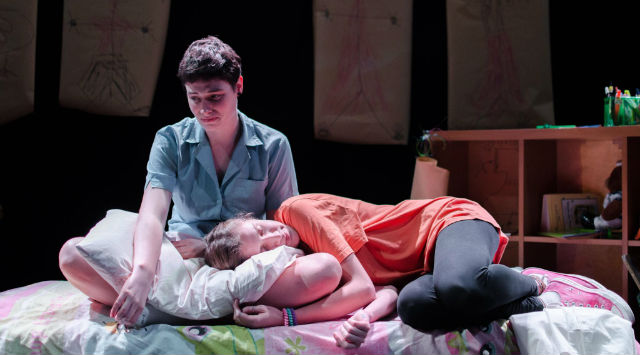
When a girl becomes a woman, her body changes and her mind expands. The world’s ugly sides begin to reveal themselves, and she is disoriented, trying to understand her new place in the bigger scheme of things. She may choose to subsist in delusion, pretending that her guardians can shield all evils, or she can test the waters in a life fraught with danger, seduced by its honesty and the knowledge of its inevitability.

In Angela Betzien’s The Hanging, three 14-year-old girls vanish from their private school privilege, and the nation is gripped. We make assumptions based on beliefs about innocence, and create visions of their victimhood. When one of them returns, the mystery deepens and all is not what it seems. Inspired by Joan Lindsay’s Picnic At Hanging Rock, the 1967 novel is also an actual presence in the play that characters refer to. We are reminded of how we had reacted to the older story, and wonder if the way we think about girls, their desires and their strength, are trapped in fictive and romantic idealism.

Betzien’s plot structure makes for an intriguing experience, with fragments of potent curiosities scattered through its dialogue, intimating but not divulging what the three girls try to hide. It is enthralling theatre, made even more sensational by its subtle incorporation of many au courant social and political concerns. Its ideas are progressive and plentiful, and they elevate the play from its mystery genre to something altogether more important and affecting.

Having adopted Lindsay’s Australian Gothic aesthetic, the production is viscerally haunting in a familiar way, similar to the book and its famous film adaptation, but also sensitively updated to its contemporary context for a more evolved portrayal of femininity, and its encircling issues. Director Sarah Goodes brings a strong sense of import to the themes of the story, whilst pursuing dramatic tension for the very fascinating narrative. A stronger ambience of danger and sexuality could make the show even darker and more powerful, but Goodes’ work is undoubtedly enchanting. We are invested in the riddles of The Hanging right from the start, and she makes us hunger for each revelation that she delivers in perfect time, every one of them satisfying.

Restrained but intense performances by Luke Carroll, Ashleigh Cummings and Genevieve Lemon bring to the stage a distinct flavour, partly a conventional, almost soap opera approach using common archetypes, coupled with a confident embrace of a more silent and poetic approach to acting. Lemon is particularly memorable in the role of Corrossi, sharp and abrasive, with surprising emotional range, interpreting beautifully, the being of a middle age modern woman, and the perspectives of a high school teacher who has seen legions of girls blossom and decay.

Society is disparaging of femininity, and underestimates the young. When Ava, Hannah and Iris disappear, they expose our beliefs and expectations, along with the prejudicial ways we think about adolescent girls. The Hanging questions the way we nurture and offer guidance, confronting us with difficult truths about the instability of human volition, freedom and fortitude, especially volatile in the teenage years. In an effort to find a real understanding of how we are, the reflections we see in the play are necessarily pessimistic. It refuses denial of the bad inherent in what we do and think, making us acknowledge the less than perfect aspects of our nature. There are masochistic pleasures discoverable in its gloomy expressions, but for those less morbidly-inclined, its important lessons although disturbing, are relevant to one and all.

www.sydneytheatre.com.au

Review: Three Sisters (Sport For Jove Theatre)

sportforjoveVenue: Seymour Centre (Chippendale NSW), Jul 28 – Aug 13, 2016
Playwright: Anton Chekhov (translated by Karen Vickery)
Director: Kevin Jackson
Cast: Tom Campbell, Paige Gardiner, John Grinston, Noel Hodda, Zoe Jensen, Graeme McRae, Michael McStay, Kenneth Moraleda, Lyn Pierse, Lauren Richardson, Shane Russon, Justin Stewart-Cotta, Dorje Swallow, Janine Watson
Image by Marnya Rothe

Theatre review
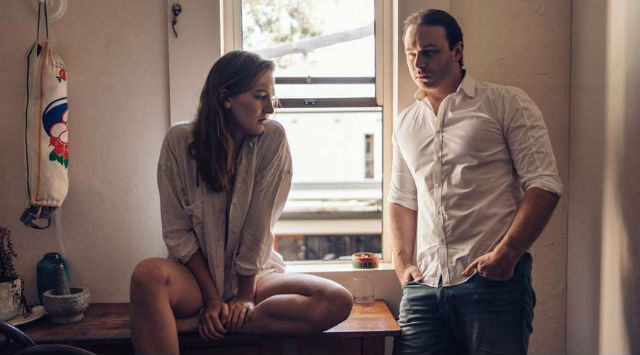
There are few absolutes in life, but change is certain. The world transforms from moment to moment, and how each person experiences the flux of being is where we discover meaning. In Chekhov’s Three Sisters, characters talk about progress, expressing hopes for the future, but are unable to propel themselves into action. Passivity is the enemy, and they succumb to its control. Years pass by and each day in their provincial estate becomes increasingly forlorn and depressed. There is something about the comfort of wealth that prevents individuals from reaching the best of their potentials; in the absence of urgency, one is left frozen, unable to attain greatness that can only result from courage and risk.

The production is both courageous and risky. Under Kevin Jackson’s direction, actors make bold decisions with how their stories are told. They commit to a highly animated style of presentation, uncommon in our day and age, that delivers wonderfully amusing results, but can at times be jarring to our benumbed bourgeois sensibilities. Whether or not we find interpretations believable in psychological terms, Jackson brings a level of clarity to the ideas being discussed that allows the hundred (and some) year-old Three Sisters to speak with an unexpected relevancy.

The director’s love of acting is evident in the amount of detail he encourages from the cast, but at over three hours long, the play is too much of a good thing. Nonetheless, the delightful ensemble of twenty diverse actors (resplendent in costumes by Emma Vine) is teeming with vigour, and evenly impressive. The most memorable scene belongs to Irina, Masha and Olga in Act III when they confide in each other, sharing feelings about sad events, but guffawing at themselves. The contradictions they perform are not only effective in reinforcing Chekhov’s commentary on aristocracy, but a sophisticated device that marries irony with theatricality, for a complex representation of humanity at a moment of despondence.

The tragedy of not being able to realise one’s dreams is made more pitiful when there is nothing ostensibly in the way. The women and men of Three Sisters have no one to blame but themselves for their disappointments, and we react with laughter and with sadness, a bittersweet acknowledgement of their predicament that we readily relate to. In the play, happiness is a concept detached from realities, and the concept becomes increasingly abstract with age. We end the show with women on the verge of a nervous breakdown, but the conclusion is a buoyant one for it provides answers to burning personal questions, along with an optimistic perspective of what can often be a very dark existence.

www.sportforjove.com.au

Review: Beirut Adrenaline (Théâtre Excentrique)

excentriqueVenue: Belvoir St Theatre (Surry Hills NSW), Jul 27 – Aug 14, 2016
Playwrights: Jalie Barcilon, Hala Ghosn
Director: Anna Jahjah
Cast: Danielle Dona, Neveen Hanna, Mansoor Noor, Eli Saad, Sana’a Shaik, Delphine Vuagnoux
Image by Emma Lois

Theatre review
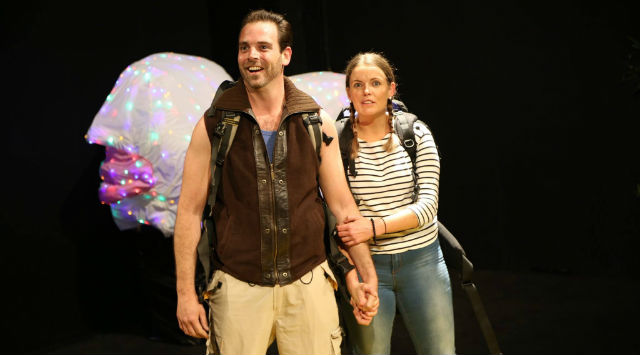
The play is set wartime, approximately thirty years ago in Beirut. We do not see politicians or armies, only civilians who attempt to live every day with as much normalcy as they can muster. Amidst constant worry and foreboding, every step they take becomes a heavy one, with repercussions that no one can be certain of. Their experience may now be considered a chapter of the past, but war is ever-present, and its unchanging complexion means that every story of survival, or otherwise, serves to help us reflect on the many dark events of our day.

The stress and anxiety from that state of emergency is portrayed well in Beirut Adrenaline, even though time and space is, in the play, often confused. Like the experience of trauma, the production opens with a sense of disoriented bewilderment, and we are forced into an inconvenient struggle to figure out each of its story’s where, when and who. It takes considerable time before we are able to form enough narrative coherence, but it is a worthwhile investment that ultimately does take us to a satisfying conclusion.

Neveen Hanna and Eli Saad play the bigger parts in the show, and are both affecting. We warm up to them slowly, but their efforts are fundamentally passionate, with an impressive sincerity especially moving at the climactic end. Mansoor Noor’s animated approach for his teenage character is delightful, and the confident demeanour he brings to the stage is refreshing and quite critical in adding a quality of exhilaration to its often sombre tone.

Although Beirut Adrenaline is rough around the edges, unable to provide a polished telling of its pessimistic tale, it does leave us with a truthful and evocative essence of those terrifying experiences. It is in our nature to want easy answers and impeccable solutions, but war is a beast that will forever resist our every grasp and restraint. The notion of world peace exists only in the phantasmagoric land of fairy tales and beauty queens. To find any progress, our existences must include the acknowledgement of suffering, especially of those we call our enemies.

www.theatrexcentrique.com

Review: Twelfth Night Or What You Will (Belvoir St Theatre)

belvoirVenue: Belvoir St Theatre (Surry Hills NSW), Jul 23 – Sep 4, 2016
Playwright: William Shakespeare
Director: Eamon Flack
Cast: Peter Carroll, Anita Hegh, John Howard, Lucia Mastrantone, Amber McMahon, Anthony Phelan, Keith Robinson, Damien Ryan, Nikki Shiels, Emele Ugavule
Image by Brett Boardman

Theatre review
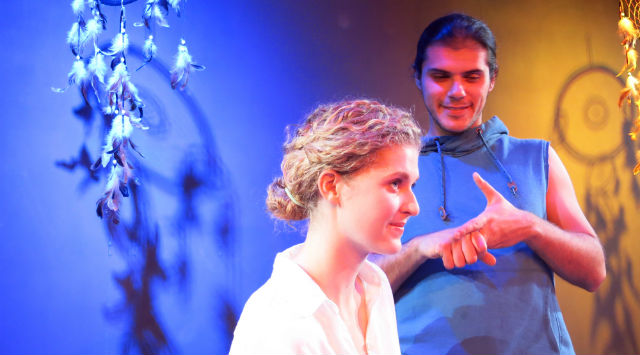
Characters in Shakespeare’s Twelfth Night Or What You Will are drunk with infatuation. They chase after that sweet sensation of being overcome by the notion of love, obsessed with finding reciprocation from the object of their desire. It is an escape from the harsher realities of life, this frivolous respite. Taking us away from stories of war, of incarcerated children, or of religious schism. Countering the dark with light, we can go to the theatre for mirth, seeking refuge in its momentary illusions so that our souls can rest and be comforted, like a baby, safe in her mother’s womb.

The production understands the joy it has to deliver, in order that it may bear any meaning at all. Director Eamon Flack’s approach takes things back to basics, creating a show that looks and feels as if presented by a troupe of Elizabethan travelling players, who have little more than their bodies and voices to tell the story with. Flack’s experimentation with working from a script that is virtually unedited, means that we rely on the actors to make every line of dialogue count, including the many instances of “archaic nonsense” (Flack’s words) that only the scholarly would appreciate. It is a tall order, and the results are predictably mixed. The very accomplished and esteemed cast delivers three hours of wonder, amusement and laughter, along with interludes of bewilderment and boredom. Anthony Phelan’s camp humour is outrageous, completely gleeful in its tenacious need to tickle our funny bone. Keith Robinson is charming as Feste, breaking through the fourth wall for a firm connection with his audience, daring to improvise beyond Shakespeare’s words. Peter Carroll and Lucia Mastrantone impress with their energy and precision, both inventive in their surprising artistic choices.

The world can spin too fast, too manic for mere humans to cope. Retreating into the classics can help us regain composure, and with the old-fashioned Twelfth Night, we can hope to find our feet again, in everything that is placid and familiar. Tradition is valuable in the way it reminds us of what is good and time-honoured, giving us an understanding of humanity’s nature, helping us define our place in the world, but it is also the basis on which we decide what needs to change, and how we can progress and become better. Shakespeare is a past that continues to haunt us, but we can make of him what we will.

www.belvoir.com.au

Review: Rhinoceros (Jetpack Theatre Collective)

jetpackVenue: Kings Cross Theatre (Kings Cross NSW), Jul 26 – 31, 2016
Playwright: Eugène Ionesco
Director: Jim Fishwick
Cast: Jade Alex, Madeleine Baghurst, Robert Boddington, Kate Coates, Rebecca Day, Jim Fishwick, Emilia Higgs, Johnathon Lo, Madeline Parker, Alexander Richmond, Julia Robertson, Cheng Tang, Luke Tisher
Image by Julia Robertson

Theatre review
The show begins with Frenchman Berenger having an impassioned existential discussion with his friend at an al fresco café, before being interrupted by a rhinoceros charging through the streets to everyone’s surprise. We try to return to a sense of normalcy from the strange phenomenon, but the rhinoceros rushes past again and patrons of the establishment begin arguing if it was the same beast that had appeared twice, or if they had in fact witnessed two entirely different breeds. Eugène Ionesco’s play has an absurd start, but transforms into something altogether more contemplative, interrogating issues of social conformity and ostracism, along with political ideas relating to justice and otherness. The writing can certainly be dense in parts, but it is to a greater extent, reflective and enlightening, with an amusingly eccentric plot that is quite fascinating.

Director Jim Fishwick brings an exciting visceral dimension to the intellectual work, with an avant-garde spirit that injects a sense of adventure and daring to the oft too polite Australian stage. A subversive attitude and its corresponding sense of humour make the production a memorable one, although Act III could benefit from a more textured approach to achieve greater nuance with Ionesco’s pointed assertions. Experimental and sensitive use of a chorus is a highlight, brilliantly executed by an ensemble of dedicated and enthusiastic players. Alexander Richmond as Berenger is, within the play’s bizarre context, strangely believable, and even though he lacks the bolder qualities of a leading man, the fluency of his enunciation and the solid integrity that he brings to dialogue, are key to preventing the show from disintegrating into mere farce. Julia Robertson impresses as Daisy, animated yet authentic, with a magnetic presence that secures our attention effortlessly.

No person is an island. We are herd animals that insist on acquiescence from fellow beings, only allowing minor deviations from socially constructed notions of what is acceptable. In Rhinoceros, people go with the tide, allowing dominant currents of their time to determine the way we live. Resistances such as Berenger’s can arise, but we question their efficacy. We wonder how it is that new movements in our evolution come to be, and consider the possibility that we may engineer those trajectories to suit our ideas of change for a better world. Berenger’s actions may prove futile, but if we acknowledge that the world is in need of a revolution, his solitary politic represents the only hope, and the threat of its defeat is a reminder of our moral volatility.

www.jetpacktheatre.com

Review: Resolution (Brave New Word Theatre Company)

bravenewwordVenue: Pulse Group Theatre (Redfern NSW), Jul 26 – Aug 6, 2016
Playwright: Luke Holmes
Director: Sascha Hall
Cast: Peter Bass, Deirdre Campbell, Lauren Lloyd Williams, Jacqueline Marriott, Nicholas Starte
Image by David Hooley

Theatre review
The CEO of a media giant passes away, and names her daughter heir to the company. Suddenly thrust into the limelight, Abigail has to deal with her mother’s death as well as unexpected revelations of the inconvenient inheritance. The story is about coming to terms with one’s parent’s failings, and even though Resolution is guided by strong ideas that most are able to relate to, the script is dry, with few opportunities for effective comedy or drama to take hold.

The narrative is needlessly complex, with superfluous characters and numerous scene changes that the simple style of direction struggles to bring clarity to. Jacqueline Marriott is a likeable leading lady, but her work lacks the gravity required by the role, and even though her commitment is faultless, there is little in her portrayal of a high powered corporate executive that is convincing. An improvement to costume and hair design might be helpful. The charismatic Nicholas Starte has a more straightforward part to play as Abigail’s beau Cameron, impressing us with strong dynamic range and a theatrical effervescence that brings flashes of life to the stage.

We may not relate to Abigail’s position as a leader of hundreds, but we understand the painful feelings that can exist between any parent and child. There are always things a mother could have done better, or words a father could have said with more kindness. As children grow into adults, and as we start seeing the world from older eyes, scars can begin to be erased. No one wishes for any bundle of joy to be contaminated, but babies can only be taught by the imperfect; innocence will be lost and disappointments will arise. We can remain idealistic, but the turbulence of life can never be eradicated.

www.bnwtheatre.com.au

Review: A History Of Falling Things (Ensemble Theatre)

ensembleVenue: Ensemble Theatre (Kirribilli NSW), Jul 7 – Aug 20, 2016
Playwright: James Graham
Director: Nicole Buffoni
Cast: Eric Beecroft, Merridy Eastman, Sophie Hensser, Brian Meegan, Sam O’Sullivan
Image by Phil Erbacher

Theatre review
It is like a long distance love affair, except Jacqui and Robin live just 30 minutes apart. They have only ever seen each other via the internet, as both suffer from severe phobias that keep them indoors. James Graham’s A History Of Falling Things is a quirky love story about two perfectly ordinary and charming individuals who happen to be limited by mental illness, although it must be acknowledged that it is precisely their irrational fears that provide a point of connection for the two. A union of idiosyncrasies is perhaps how love happens. What sets each person apart from the rest of the world finds solace in an other, whose own oddity can cohere to form harmony.

Nicole Buffoni’s very wistful direction of the piece brings an exceptional sensitivity and tenderness to the couple’s story (with excellent help from Tim Hope’s incredibly delightful illustrated projections). Some of the very British humour requires greater creativity to involve an Australian audience, and although at times too resolutely gentle in her approach, Buffoni’s staging captures our imagination, to inspire deep interesting ideas about modern life and our primitive need for affection.

Eric Beecroft and Sophie Hensser are the leads, both impressive in their portrayals of innocence, completely convincing in the childlike quality they manifest for the story. Beecroft is animated and buoyant as Robin, while Hensser is a delicate and nuanced Jacqui, for a combination that although not overflowing with chemistry, provides the show with a dynamic balance of energies. Also noteworthy is Merridy Eastman, compelling and perfectly adorable in her support role, playing Robin’s very understanding mother.

In the play, we wonder if love conquers all. Our romantic selves want to know if we can be rescued from our dysfunctions, by someone extraordinary and beautiful. We get by with a little help from our friends, but some of us have the good fortune of meeting a special someone for a transformative experience that could make life that much easier. Jacqui and Robin find in each other, the strength that is absent within themselves. Life requires us to be self-sufficient, but it is rarely an easy journey and the promise of romance can alleviate those troubles, even if only for a moment of theatrical fantasy.

www.ensemble.com.au

Review: Drift (Two Peas)

twopeasVenue: ATYP (Walsh Bay NSW), Jul 20 – 30, 2016
Playwrights: Tara Clark, Kieran Foster
Director: Tara Clark
Cast: Ayeehsa Ash, Challito Browne, Olivia Jubb, Adam Kovarik, Alex Packard, Lauren Pegus

Theatre review
Six friends, tightly bonded, navigate the challenges of early adulthood together. When one of them is diagnosed with a terminal illness, their lives begin to unravel. Tara Clark and Kerian Foster’s Drift looks at friendship for twentysomethings, and the effect death has on them as individuals and as a group. There is a charming simplicity to the writing that presents the nature of relationships with a graceful honesty. The dynamics between friends, lovers, and siblings are depicted accurately and intimately in a series of small scenes, many of them meaningfully mundane.

The production however, charts a haphazard emotional journey that does not deliver us to its desired conclusion accurately. We struggle to connect sufficiently with appropriate personalities and narratives for a focused enough experience that would arouse the sentiments necessary for what the show tries to achieve. In the absence of lead roles, our attention is spread thin, and unable to find suitable empathy for appropriate characters, we are kept outside of their microcosm. Performances are accomplished, although the players seem to take time to settle, only able to establish chemistry and energy after several minutes of imprecision. Adam Kovarik impresses in the role of Harrison, bringing much needed exuberance and authenticity to a play that is essentially about our raw emotions. The actor’s vigour brings life to the stage, and with a distinct sense of theatricality, relays his part of the story with clarity and ironic humour.

Death is the end of suffering, but is also agony for loved ones left behind. Time is key in the process of mourning. Nothing can speed it up, but one has to find ways to fill that time. Theatre is the most ancient form of time-based art, and in Drift, we spend moments with its characters counting the minutes as they contemplate the future after being inflicted with an abrupt end. For a life well lived, there must be movement forward, but for motion to matter, stillness must be embraced. While we are alive, heaven and hell are the here and now, both inescapable and both requiring our complicity, in order that our brief existences may become rich, and loved.

www.thetwopeas.com

Review: Betrayal (Ensemble Theatre)

ensembleVenue: Ensemble Theatre (Kirribilli NSW), Jul 16 – Aug 20, 2016
Playwright: Harold Pinter
Director: Mark Kilmurry
Cast: Guy Edmonds, Ursula Mills, Matthew Zeremes
Image by Clare Hawley

Theatre review
In Harold Pinter’s Betrayal, everyone cheats on their spouses. The play first appeared in 1978, with a plot that moves in reverse chronological order, and in some ways, we do have to go back many years in time to find an appreciation of the work. Its drama relies on a sense of scandal and taboo that is no longer scintillating. We may still hold the concept of marriage in high regard, and still be hurt by infidelity, but as a dramatic device, we have clearly become jaded and immune to its effects. Nevertheless, Pinter’s dialogue remains delightful, almost mesmerising in its lexical beauty. His sardonic expressions bear a seductive power that keeps us eager to hear more, if only for the richly evocative, and ironic, words that the characters say to each other.

The production is saturated with tension from the very beginning. Director Mark Kilmurry’s ability to engage our thirst for intrigue is put to good use here, as we find ourselves keenly following the plot, in anticipation of dramatic revelations, which unfortunately, the script does not always deliver. A minimal approach to its staging ensures that all attention is placed on its cast of three very attractive players, each with their own allure, but all skillful and committed in their respective characterisations.

The radiant Ursula Mills plays serial adulterer Emma, conflicted yet libidinous, with an impressive confidence that makes her part in the show powerful and surprisingly believable. Emma’s husband Robert is given excellent nuance by Guy Edmonds, whose dynamic depiction of a man betrayed, is perfectly measured and consistently entertaining. Robert’s best friend Jerry, who sleeps with Emma for seven years, is an energetic and affable presence in actor Matthew Zeremes, whose caddish but sincere approach protects the production from descending into melodrama. Comprised mainly of two-hander scenes, the actors manufacture great chemistry on stage for a cohesive and compelling experience, even if the play’s age does work against them.

Jerry’s wife and best friend both fail him, but he sticks around, accepting the betrayals with little resistance. Keeping calm and carrying on, the British gentleman is dejected but does not seem to demand more of life; it is not the end of the world, after all. His tolerance is perhaps not uncommon. We imagine married couples to be monogamous, but what happens behind closed doors is anyone’s guess. Jerry has to keep up appearances, because everyone else does. We maintain a certain image required of us by society, even when under great hardship, because there are few things as painful as ostracism. We see the characters in Betrayal live their own lies, and think about the price of truth. An authentic existence is an extravagance that many do not wish to pay for, but what we are left with at the end, will only be tainted with regret.

www.ensemble.com.au

Review: Low Level Panic (Thread Entertainment)

threadentertainmentVenue: Old Fitzroy Theatre (Woolloomooloo NSW), Jul 12 – Aug 12, 2016
Playwright: Clare McIntyre
Director: Justin Martin
Cast: Geraldine Hakewill, Amy Ingram, Kate Skinner
Image by Julia Robertson

Theatre review
Three young women share a home, and in their interactions within the intimate setting of a shared bathroom, we come to understand their desires and insecurities, along with the obstacles they encounter in daily life that shape their respective sense of self. Jo, Mary and Celia are different in many ways, but they are all subject to the male gaze. Their heterosexuality locks them further into complicated entanglements with the opposite sex, and allows Claire McIntyre’s Low Level Panic to unpack issues of politics and misogyny for a look into the modern woman’s relationship with the world, and more particularly, with sex, and with her own body. The statements made in the play are nothing new; it is after all, close to three decades old, having first appeared in the late 80’s, but the experiences it portrays still feel accurate and its revelations remain raw.

Director Justin Martin’s production is innovative and exuberant, with bold staging devices that assist in making the play’s concepts more lucid and powerful. The introduction of social media as an instrument of oppression brings the story up to date, offering a frame of reference that we relate to readily. A team of seven men are positioned around the stage dressed like stagehands, but are in fact part of the show, always watching, and always insisting that their masculine presence not be dismissed. They purport to be invisible but are actually a menacing force that fuels the subtext of the women’s conversations. Martin’s theatrical embellishments are a pleasure; sensitive, intelligent and often witty, but being much more pronounced in the first half, later sequences feel suddenly stark, almost too plain to meet our heightened expectations.

Performances are passionately vivid. The marvellous Amy Ingram leaves a remarkable impression with her impeccable timing and disarming authenticity as Jo, a character with endearing vivacity who nonetheless suffers from the unfortunate, but all too common, obsession with her self-determined physical inadequacies. The actor brings a valuable dignity to a discussion that tends to present her role as a victim of circumstance, and her brilliant sense of humour is the spoonful of sugar that makes the caustic medicine go down. Geraldine Hakewill and Kate Skinner provide excellent support with contrasting portrayals of femininity that gives the text’s argument a complexity, by challenging our preconceptions of gender representation.

In Low Level Panic, we are witness not only to the fact of sexual objectification, but also the reinforcement of that prejudice against women, by the three housemates onto themselves. The Stockholm syndrome as applied to the reprehensible male gaze is a truth rarely spoken. Segregation and subjugation based on gender is one of the most entrenched foundations of patriarchy, even the enslaved is unable to recognise her own debasement. Bringing us to this realisation is where the play becomes radical, but how it leaves off is of great importance. In our individual and collective feminisms, the problem of the male gaze is addressed in divergent ways. None reigns supreme, but it is our very action of living feminist lives that is meaningful.

www.facebook.com/threadentertainment