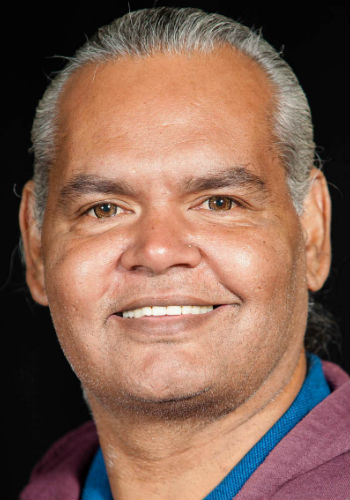
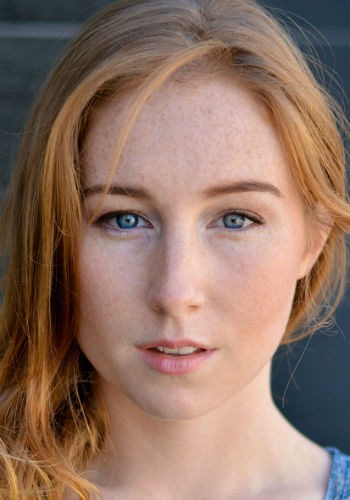
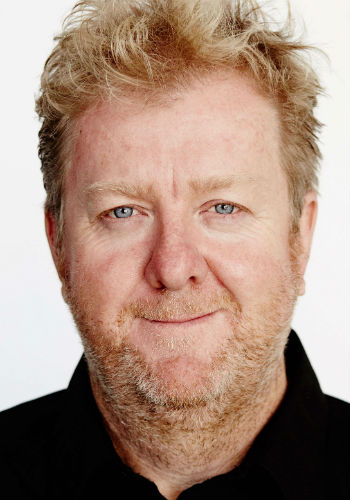
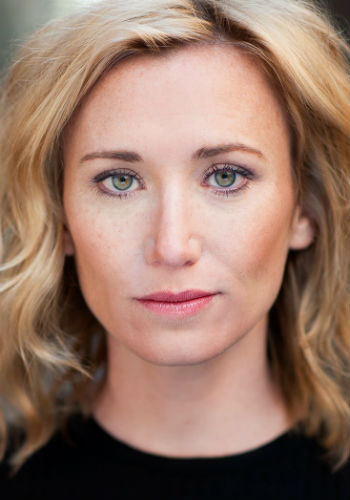
5 Questions with Jessica Bellamy and Kirsty Marillier

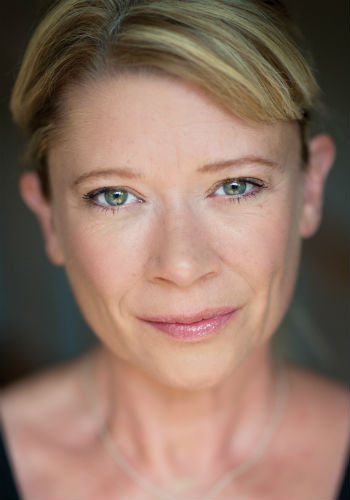
Jessica Bellamy

Kirsty Marillier: How does it feel to be staging Shabbat Dinner for the third time?
Jessica Bellamy: It feels very strange to be staging Shabbat Dinner for the third time. It felt strange staging it the other two times, too, though. I’m still getting my head around the idea of autobiographical theatre and the fact that anyone wants to take a night off their Bachelor viewing schedule to see my family story. But then I try to channel the confidence of a universally reviled politician deciding to make a tilt at national leadership. I ask myself: “why not me?” I would like to continually build my professional confidence so it’s akin to that of a mediocre white guy.

To offer a more serious answer to this question, it is quite rare for an Australian playwright to get multiple productions of their play in a five year period. I’m glad this work resonates with people, and I’m also really lucky it was championed and incubated by the much-missed Tamarama Rock Surfers, who supported me becoming a playwright by giving me the opportunity to make shows.

If you could be one character from Broad City for the day, who would you be and why?
Ilana! Everyone wants to be Ilana, right? I’ve actually written an article for Feminartsy journal explaining why I love her so much. I love the way she traverses her city like it was meant for her. Her effervescence, her passion, and her incredible fashion sense. The way she is styled reminds me that it’s OK to have big, frizzy hair, to wear whatever you want, to feel safe (or that you deserve to feel safe) walking the streets of your city at night.

What is your favourite dish to eat at Shabbat?
Bloody borscht, mate! It’s heaven! Anyone with a womb should eat beetroot at least once a month. A traditional Shabbat dinner would involve chicken soup, and when I can be bothered I might whip up a vegan version using vegie stock and alphabet noodles. My own strange version of the real deal.

What advice would you give teenage Jessinka?
Don’t worry so much. No one cares as much as you think they do. There’s no certain thing you have to achieve by a certain time. Say what you think, get angry, demand your rights, and take up space.

What does your family think about the play?
My family have been very generous about this work, especially considering the fact that it is so personal. They have also supported me in my personal growth over its three seasons. I’ve learnt a lot about my own value system through making this show, and I’m making decisions now, in my thirties, that I wouldn’t have had the emotional intelligence to make any earlier. This involves weighing up a cost-benefit analysis of anything autobiographical I write. Asking myself: who benefits from this, and who is challenged, in a way they haven’t asked to be, by me deciding to write something? When a story belongs to more people than just me, these things need to be negotiated and carefully considered.

I will paraphrase another Russian writer, Maria Tumarkin, whose memoir workshop I went to a few years ago. She said that if her work is going to hurt people, she won’t do it. Caring for people is more important to her than whatever art might come out of being provocative.

Ultimately, I value my relationships over anything I’ll make in my career. And I know that I’m a strong enough writer to make excellent work that also prioritises care in every element of its creation. In my first few years of practice, I didn’t really understand the fact that art – this great amorphous thing – could be chopped and changed to abide to your moral code. I used to think the art was the art, and I had to get out of its way. I’m getting better at thinking a little wider now.
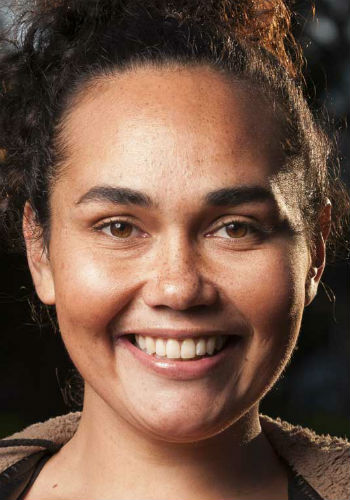
Kirsty Marillier

Jessica Bellamy: Did little Kirsty know she wanted to be an actor?
Kirsty Marillier: Yeah she did. It all started from around age 9. In year 3, I was cast in a tiny role as the indigo fairy. During the performance I fell over on stage in front of the entire school and I reckon I made a pact with myself that it would be the last time I would EVER let people laugh at me on stage unless I had told them to. I auditioned for the lead the next year and got it! I also had a wonderful performing arts program at Leeming Senior High School and some really inspired teachers. I think I owe a lot of my drive and confidence to them.

What’s a family recipe as significant to you as some of the food we serve in Shabbat Dinner?
My GiGi’s Magwinyas. Magwinyas are deep fried savoury doughnuts that you break apart and shove curry inside. They are not for the faint hearted; oily as and have zero nutritional value but are insanely good and give you that combined sweet/savoury dopamine hit. Yum. They are really hard get to right because you need to make sure you knead them with “gentle hands”. So they have enough air. It’s an art form and my Gig is going to give me lessons on them next time I’m in Perth.

How do you get those curls so stunning, girl?
Girl, it’s called Shea Moisture and Priceline have 20% off as we speak. I also started making my own aloe vera gel. You need fresh aloe vera and an entire Sunday to do it but it’s worth it. I also sleep with my hair in a pineapple and wrap it in a silk scarf, it’s a process.

What are the ways you connect to a play about Jewish ritual and Torah stories?
This play centres around tradition, women and food. How we inherit tradition from those who came before us, and the intergenerational effects of migration. I’m a coloured South African woman. I moved to Australia at age 10, have religious parents and 7 South African aunties scattered around Australia. It would be pretty hard for me not to connect with this play.

I said to someone a few of weeks ago that this show (in 2015) was my first encounter with intersectional feminism. It was the first time I’d said that out loud, but it’s totally true! I’ve learnt a lot about my own culture and feminist practice doing this show. How one can re-appropriate culturally specific beauty regimes to suit their own life, how perspective and clarity on your gender and identity can be found by unpacking your past, and how the women in our lives have influenced us more than we know. They hold power in their rituals and it’s something to celebrate! (I feel like I’ve gone on a tangent but I thought it would be an interesting thing to add.)

I connect with this show by thinking about the women in my life, past and present. How much they have made me who I am and how I carry their stories with me.

What do you want to be doing artistically in 5 years’ time?
I want to be writing. I’d love to have a play or two under my belt. I also want to more involved in the telling of culturally diverse stories. I want to see more people of colour on stages; I’d like to help push that process along in any way possible.

Jessica Bellamy and Kristy Marillier are appearing in Shabbat Dinner, by Jessica Bellamy.
Dates: 10 – 15 September, 2018
Venue: SBW Stables Theatre

5 Questions with Rizcel Gagawanan and Joy Gray

Rizcel Gagawanan

Joy Gray: Why did you want to be a part of this production?
Rizcel Gagawanan: First of all, “all-female production”, enough said. Second, I’ve always wanted to act in a Shakespeare play. Growing up I wasn’t exposed to a lot of theatre but everyone knew Shakespeare or at least knew of it. These days to get my Shakespeare fix I watch National Theatre Live at the cinemas. The performances are so amazing but what would be even more inspiring would be to see more POC actors on a Shakespeare stage. So here I am!

Why did you want to be an actor?
My mum put me in the ‘Johnny Young Talent School’ when I was 4 because I was a handful, so I guess from a young age I started to love performing but mostly it was because I had no shame. However, I’ve only come back to acting in the last 4 years and it’s the same things that brought me back, loving to perform (and having no shame), but also the passion to create and tell stories. More specifically telling stories that matter to me and represent me. As I was growing up it was rare to see someone who looked like me on TV or on stage. These days that’s starting to change but we have a long way to go. I believe that my work as an actor is helping change that.

What are your hobbies?
I run long distance, I recently ran City2Surf, 14km in 95 minutes! I’m hoping to finish a half marathon some day (…some day). In my spare time I’m either sketching in an art gallery or having embroidery dates with friends, and Netflix is a hobby too right?

If you could be in any movie, what character would you play?
I think TV shows beat films in terms of great badass female lead characters. I’d like to play an action hero like a spy/assassin character like Maggie Q’s Nikita and Jodie Comer’s Villanelle in Killing Eve but with the comedy antics of Ali Wong. If only I could do my own stunt work.

What are your top 5 movies?
In no particular order: Crash, Coming To America, Crazy Rich Asians, Get Out, and all the Harry Potter movies.

Joy Gray

Rizcel Gagawanan: Who has influenced you the most in your life?
Joy Gray: I would say my older sister has influenced me the most because she has always put me on a pedal stool and has consistently been the positive voice in my head when it comes to loving who I am, and going for my dreams. She has also influenced my decisions in occupations, as I am often in a care giving type of work environment, having followed her lead in life.

How has working with only women in the rehearsal room impacted the creative process for you?
Women can be great to work with in this capacity because we tend to have great emotional and intuitive intelligence. This intelligence can create an atmosphere of sincere relationships. Having sincerity on stage is important for the creative process because it allows an easier space to fully realize the way in which the actions and reactions given by your fellow cast mates are affecting the words being said and their meaning.

What was it about the play that made you want to audition?
I wanted to audition for this play because I wanted to do Shakespeare and I liked the idea of doing an all-female show. I also liked the musical aspect of the show. I auditioned because I wanted to challenge myself and gain experience as an actor. It was icing on the cake that this play is embracing women who want to destroy the status quo, and She Shakespeare is doing this by keeping all the unique elements of the play intact, but also keeping the characterizations that make women unique and beautiful.

What made you want to become an actor?
I have always been interested in how people communicate with each other, whether their through words, or the many kinds incremental gestures with their face and body. This fascination led me into the study of psychology and neuroscience. Underneath that academic attraction, I have also have a need to break out of my interior and exterior shell, and acting is the embodiment of changing who you are. I know I would rather just stay safe inside my head, inside my living room, with a Virtual Reality headset, but acting forces me to be social, to think about, and be in different scenarios; and it’s tough! On a lighter note, I grew up in a family who loved to go to the cinema, who loved music, dancing and technology. I married a man who is a musician and a philosopher, who also appreciates a myriad of live performance such as opera, spoken word, and of course stage acting.

What’s the worst movie you’ve ever seen?
The worst movie I have ever seen is Tommy Wiseau’s The Room. It is also the funniest movie I have ever seen. I loved going to see it at a cinema full of people armed with plastic spoons for throwing, who are yelling the phrase “because you’re a woman!”. I liked the cringe worthy sex scenes that looked completely wrong and sounded hilarious to a repetitive cheesy, 90’s jazz music score. The absolute best thing about the movie is the horrendous acting and dialogue. It is infamous!

Rizcel Gagawanan and Joy Gray can be seen in Macbeth , by William Shakespeare.
Dates: 29 Aug – 8 Sep, 2018
Venue: PACT

5 Questions with Shiv Palekar and Hannah Waterman

Shiv Palekar

Hannah Waterman: What made you want to become an actor?
Shiv Palekar: I was a pretty silly child, I was naughty, I’d always play the fool and get in trouble lots. I think I recognised it for the first time when my cousins would ask me to pretend to be Mr. Bean, because I realised that doing something performative or out of the ordinary could make people happy or have some kind of effect on them. So I think I always was performative in some kind of way, I wanted to be a musician throughout high school until I got cast in a school play when I was in year 10. My mum forced me to go in and audition for it and I was hesitant and almost didn’t show up, but during rehearsals for that show I realised that I loved playing slightly outside of reality and I could get paid to essentially keep being a naughty boy.

What drew you to this play?
I hadn’t worked all year, and I really wanted a job. I was sick of being a waiter and so that’s what initially drew me to it. I served Lee Lewis a few times at the cafe I worked at and so maybe that’s why I was asked to audition. That’s the honest first part of my answer. But of course I read the play and fell in love with it and what it says and all the rest of the things that an actor would usually say. But for real, Kendall has written an incredibly beautiful story of a young woman and how she navigates her life with mental illness and that made me want to be a part of this great new Australian work. I’ve also wanted to work with Lee for ages.

Is this the first time you’ve worked at Griffin?
Yes and hopefully not the last.

Do you think the industry needs to change in regard to casting people of more diverse backgrounds?
Yes.

Where do you see yourself in 10 years?
Hopefully not being a waiter. Maybe I’ll have a child?

Hannah Waterman

Shiv Palekar: What music have you been listening to lately? Have you used it as an ‘in’ for the play?
Hannah Waterman: I tend to listen to whatever is in my library whilst cooking. It’s more of a relaxation thing and a release than an ‘in’. Although I do always have a character perfume!

What’s your favourite food? Do you eat before or after a show?
Cheese, I’m essentially a rodent. I eat before as I’m a type one diabetic and this means I have time to digest and for my blood sugars to settle before hitting the boards.

What makes you laugh?
My family. Not always in a good way, mostly though.

A memorable meal your Mum cooked you?
Mum’s lasagna was a favourite as a child and is now one of my sons favourite meals so the tradition continues.

What’s it like being a working mum? Advice for actors who are thinking of being parents?
Being a working mum is tough in any profession and I think we have a long way to go yet in making theatre and television more accessible for working mothers. Luckily the Griffin team is very sensitive and accommodating and recently allowed my 7 year old to come to rehearsal. It would be wonderful if one day that became the norm. Don’t let being an actor put you off becoming a parent. The industry is moving in the right direction and ultimately kids are pretty portable and fairly adaptable, at least when they’re young!

Shiv Palekar and Hannah Waterman are appearing in The Almighty Sometimes, by Kendall Feaver.
Dates: 27 July – 8 September, 2018
Venue: SBW Stables Theatre
5 Questions with Mick Bani and Kire Tosevski

Mick Bani

Kire Tosevski: List three words that best describe King Of Pigs.
Mick Bani: Intense. Thrilling. Unpredictable.

The abuse of women at the hands of men is an important theme throughout the play. What do you think audiences are most likely to walk away with after experiencing the show?
I think they’ll walk away with a better understanding on how much pressure society place upon us men. With the play focusing on surface issues, hopefully this will give the audience an opportunity to reflect and talk about the causal issues instead.

How do you connect with the character that you’re playing?
When I auditioned I said to Steve and Blazey, “this character reminds me of my former self.” Ex footy player, career cut short through injury, worked at dead end jobs, and fell into depression. But the important thing now is I connect to the character knowing full well that there is hope (for everyone) at the end of the tunnel.

What do you feel you’ve learned about yourself from being involved in this production?
I’ve learned so much of myself than as an actor since rehearsals began. The cast & crew are amazing. The stage has and will give me a platform to not only showcase my talent but to express (in a controlled environment) what most men do behind closed doors.

If you had the opportunity to play another character featured in the play, who would it be and why?
I would actually play Man 1 because he’s amongst all the drama. To me, Man 1 plays a vital part in each of the character’s lives. With his professionalism he sees each person eye to eye, and supports each of them throughout their ordeal.

Kire Tosevski

Mick Bani: List three words that best describe your character.
Kire Tosevski: Sensitive; weary; thorough.

What’s the biggest challenge about taking on this role?
I’ve often been cast to play larger-then-life characters – villains, overtly passionate eccentrics – and this man is a departure from that. He’s much more contained. He also spends a lot of time being a silent observer to the often intense interactions between other characters. Building and maintaining a complex inner-life that can be easily read by the audience, especially during such moments, can be quite challenging.

What’s going to surprise people about this show?
How quickly events can turn; how slippery the proverbial gates that lead relationships towards crisis are. That, and how the rearing of boys cannot be overlooked in dealing with issues of male-on-female violence.

Due to the theme of this production, how have you had to prepare for it?
My character is the one who talks to both the victims and perpetrators of the violence, so simply watching the other scenes play out becomes a simple and direct way to stimulate the imagination. Plus there’s no shortage of literature and media content on the subject. It can all be quite confronting and it naturally leads you to look at yourself as a man. I definitely spent some time thinking back on some past relationships with women.

Based on the contents of the play, what advice would you give to your younger self?
As often as possible, try to make choices based in love, not out of fear.

Mick Bani and Kire Tosevski are appearing in King Of Pigs, by Steve Rodgers.
Dates: 1 Aug – 1 Sep, 2018
Venue: Old Fitz Theatre

5 Questions with Katie Beckett and Kamahi Djordon King

Katie Beckett

Kamahi Djordon King: How do you feel about playing back on home turf at the Seymour centre with a different actor in the role of Dad?
Katie Beckett: I am so excited to be playing back in Sydney. I love Sydney. The west and the inner west are my hoods. I was born out in Western Sydney, went to primary school there in north St Mary’s. Moved to QLD, then moved back. And as an adult lived around the inner west, Redfern, Newtown, Enmore, Glebe and now Lilyfield. So Sydney holds a special place in my heart. The last time I did the show in Sydney it was part of the Sydney Festival at Belvoir and we smashed it out of the park. Sold out with an extra week. 

I love working with Kamahi as Dad. My dad even loves Kamahi as playing him. Kamahi brought a breath of fresh air to the character, love and comedy to the role. Professional and easy going to work with. It’s been a dream having him.

Has the end result of the work surpassed your expectations on how the work is received by audiences?
Yes!! I’m surprised for me it was just a little family yarn. A way of healing and coping with dad’s fifth heart attack. So I write with heart. And it’s beautiful seeing the audience take it.

Question to the writer. What are three things you would change about your character and why?
Considering it’s my first play and I now have a bit more experience of writing I would change my character to be softer in moments. And make her grow up a bit more. I find her annoying and childish at times. But I also did that to get the comedic elements to work with the dad.

What did you see yourself doing at this age twenty years ago?
I saw myself working in the camera department in film and tv industry. I dreamed of being a cinematographer. But here I am an actor and writer for theatre, film and tv.

What has the impact been on you as an actor with a new person stepping into the dad role? 
The impact has been fantastic and I found things I discovered before in my character. I have a different connection with Kamahi so it’s easier to do.

Kamahi Djordon King

Katie Beckett: Were you worried about coming into a role that has already been played by another actor?
Kamahi Djordon King: I was a little at the start until I figured you and Rachael were not expecting me to be exactly the same as the other actor. 

What made you say yes to taking on this role?
It was going to be my first tour with an Ilbijerri produced play and I though it would be nice to work on a tour again.  Especially a long tour like this.  Plus it was an affirmation that I was getting older and playing someone’s dad is the best thing for that, as an actor challenge-wise I mean. 

I’m impressed with you learning the script in 2 weeks. Can you share your secret to learning and developing your character in a short time?
Yes, the honesty and truth of the character comes from the physicality of the actions.  The memories are created by rehearsing the script up on the floor.  It is almost like muscle memory with dancers.  After a while the lines sink in together with the actions of the character and a memory is created so that when you are doing the play, the memories become your inner monologue and you deliver your lines with their actions creating honesty or truth.  I learned this from The Actors Workshop in Brisbane with Lynn Kidd.

I hear you are close to Constantina Bush. Any chance she will pop up along the tour? Has she said anything about the show?
Yes, we are close although very much in competition with each other all the time.  I think she said she is popping in to do shows in Mildura and Canberra. She reckons she will try to catch the show at one of those places although I wouldn’t count on it.  She has never once seen one of my shows.  Nor I hers for that matter… 

You are a true artist… writer, actor, singer, dancer, painter, female impersonation. And do it all incredibly well. And always in demand. How do you manage to balance all your artistic ventures?
The balance seems to happen naturally, very rarely do I double book, although it has happened. The art is something that keeps me busy when either of us has no work.  The visual art side of things is something that I have been doing for a long time and it does sell which keeps me in money when the performance side is quiet.  I come from a family of artists so that is natural. The performance is something that i have had to learn and perfect though and I only get better with everything that I do and take on such as this play.  It will be great for when I have to play someone’s dad again, haha.

Katie Beckett and Kamahi Djordon King can be seen in Which Way Home , by Katie Beckett.
Dates: 24 Jul – 4 Aug, 2018
Venue: Seymour Centre

5 Questions with Harriet Gordon-Anderson and Steve Rodgers

Harriet Gordon-Anderson

Steve Rodgers: What stands out to you about You Got Older?
Harriet Gordon-Anderson: It’s written by someone born after 1980. And it’s a female someone so, jackpot. I love how funny it is, especially when characters are in hospital, or poking worriedly at the lumps in their bodies, or brokenhearted – it’s in these ordinary and frightening everyday moments that Clare finds some hilarity.

Is there a dance routine in this show?
…Obviously.

Have you ever wanted to be a cowboy?
Yeah, somewhere between my Doctor Stage and Explorer Stage I reckon there was a Cowboy one. I did line dancing with my parents when I was about 5 years old, I think we have footage of that on VHS somewhere. I’ll set up a merch stall and sell copies in the foyer.

What kind of preparation have you been doing for the role?
I’ve trained myself to pee on cue. I needed something for the skills section of my resume.

Do you pee in the show?
Absolutely!

Steve Rodgers

Harriet Gordon-Anderson: You’re playing a dad in You Got Older to four adult children. You’re a dad in real life. Do you feel like there’s much of a cross over between you and the character?
Steve Rodgers: Both the character and I love our kids big time, and are constantly negotiating what it is to say too much, hold on too tight, how much to let go, to encourage, lift up, stay out of the way, and let your kids live their own life. Parenting – It’s a balancing act.

This is your first independent show in a long time. Why this one?
I saw Claudia’s Dry Land last year at KXT and it was one of the best things I saw that year. I was so moved by the partnership between those two young women and how one of them refused to walk away when her friend was going through this traumatic act. When Claudia sent me You Got Older I loved it, and it was time to do a job for my heart. Plus I get to work with you Sarah Meacham, Ainslie McGlynn, Alex Beauman, Gareth Rickards and Cody Ross, and oh yeah, Claudia Barry.

We spend a bit of time talking about your vegetable garden in the play, do you garden?
I love it. If I’m out of work, gardening and swimming are like therapy. I just put a Grevillea Banksii in my backyard on the weekend.

You write plays as well as act, what’s happening on that front at the moment?
I’ve got a play over at Redline at the Old Fitz that I wrote opening after us, called King Of Pigs, being directed by Blazey Best. It’s a tough one, but necessary I think. Get along!

Why should everyone come and see our play, You Got Older?
It’s funny, sexy in parts, and disturbing in parts. It’s about all the biggies – Intimacy between a parent and a kid, how we’re all going to die, and therefore how do we live well between moments of happy and sad. It’s about all of us, in all our complicated glory and I promise you’ll feel better about life after seeing it, which in the todays world, can only be a good thing.

Harriet Gordon-Anderson and Steve Rodgers are appearing in You Got Older, by Clare Barron.
Dates: 13 July – 4 August, 2017
Venue: Kings Cross Theatre

5 Questions with Anna Houston and Arky Michael

Anna Houston

Arky Michael: What do you love about being an actor?
Anna Houston: I love exploring and living with complex characters that do and say all the things I could never get away with in my own fairly pedestrian life. I get to behave really badly in this show, and it’s thrilling. I also love gluing my script into a scrapbook on day one of rehearsals. No brag, but I’m pretty good at it. My corners are VERY TIDY.

What should audiences expect from Permission To Spin?
Some big questions about how we live and how we treat other. The show is tightly packed with big ideas that fly at you so swiftly, so brutally, that you may need days afterwards to untangle them and formulate a response to the work. Also, heaps of lols. It’s really funny.

What do you find challenging about being an actor?
The industry itself has never been easy. There are so many terrifically talented actors out there not working. Staying optimistic and secure between acting jobs hasn’t gotten any easier since I entered the industry.

When was the last time you felt bliss?
Last night, falling asleep on the couch, heater turned up. That was bliss. Being safe and warm at night shouldn’t be a privilege, but in the Sydney we live in, it is. It feels like a gift. I’m lucky.

What personality traits do you admire most in men?
Empathy. Imagination. Kindness. Generosity. Humility.

Arky Michael

Anna Houston: There are three very flawed characters in Permission To Spin. Which character – Jim, Martin or Cristobel – would you spend a year with on a desert island?
Arky Michael: I would spend a year in the tropics with Cristobel . Martin would turn cannibal and eat me and Jim would send me crazy with his weird neurosis. Cristobel would be the type who’d help me gather island detritus and flora to create and design our own line of natural fibre swimwear and resort wear which would occupy our years of marooned bliss. The label would be called PERMISSION TO SPIN – OUT, BABY!

We first worked together on a play in 2005. In the thirteen years that have followed, what’s the biggest change you’ve noticed in the Australian performing arts industry?
Big changes are the new technology platforms which have blown open the doors to multiple accessible forms of art practise : you can create your own podcasts, blogs, and make films with digital cameras and editing apps on your laptop. Also in the last 15 years, the welcome and long overdue implementation of a cultural shift to reflect the diversity of modern Australia on out stages and screens. What is worse is the continued lack of government policy to nurture the performing arts sector.

Your character Jim manages Miss Polkadot, a children’s entertainer. What was the first album you bought? How old were you?
I was thirteen or so, and I remember recording “Disco Inferno” from the radio onto a blank audio cassette in my purple themed bedroom. The curtains were purple , so were the furry bedspreads and there were a pair of lilac furry feet shaped mats on the floor. I remember this song sending me crazy with joy!

This play deals with some ethical grey areas. When faced with your own ethical dilemmas, who or what do you look to as your moral compass?
Unfortunately it is always a battle locating my moral compass in almost every situation. I’m not proud of this. My innate greed, selfishness and sheer opportunism make me a poor quality life companion candidate. Anything beautiful I want sole rights over, anything delicious I prefer not to share, any item of nice clothing that I covet, I will not stop scheming to acquire. I am a lonely man. But I do think Tanya Plibersek would be a good person to set moral standards by.

Arky Michael, you are not only a masterful actor, you are also a fashion savant. Which member of the Permission To Spin family would you most like to give a fashion makeover? (I know that several of my rehearsal room jumpers have been traumatising for you, so don’t hesitate to nominate me.)
Thank you for saying I’m a fashion icon, because this is a fact. I often hear youngsters yell out : “look mum, there’s a W.A.G.O.S.E.!” (walking art gallery of sartorial elegance). I’d give Anna Houston a makeover because she seems to be confused about what is appropriate clothing for sleeping and clothing when you are awake – she tends to favour ripped stockings, jeans her mum wore in 1935, jumpers that are for babies and she needs to increase the frequency of shampooing her hair. Is this too harsh? I fear it may be, but strangely I can’t find the delete button on this laptop.

Anna Houston and Arky Michael are appearing in Permission To Spin, by Mary Rachel Brown.
Dates: 3 – 28 July, 2018
Venue: Old Fitz Theatre

5 Questions with Antoinette Barboutis and Philip D’Ambrosio

Antoinette Barboutis

Philip D’Ambrosio: Why does this show matter in the current theatrical landscape in Sydney?
Antoinette Barboutis: There’s a paradox at play. It has very little relevance because of its context in the Sydney theatre scene. It’s either totally relevant, or complete trash. We are destabilising literary text and moving towards performance text- even a nexus of the performative and the narrative. I don’t want to fall under the pseudo avant-garde of post dramatic theatre. So, I’ve coined a new theatrical term “post ironic”.

It matters and it doesn’t matter on a personal level. I’ve seen productions this year that have given me cause to question the status quo- eg. scenographic replicas of Ivo Van Hove’s The Damned, glass-ceilings designed by men in Top Girls. Sadly, that leaves little room for mainstage reinvigorations. In saying that, we’ve used the worst-cliché Trojan Horses- Hamlet.

Does ‘New Australian Work’ get enough backing from the industry?
I don’t know Phil, I can’t answer this one. I’m new to this. I think there’s a lot of funding in it. ATYP, STC, PWA all seem to support new writing? I enjoy “Rough Drafts” a lot. But when the result in the Helpmann nominations (prophetic, I know) is “Hamlet”, albeit operatic, as Best New Australian Work- who knows?

With the use of drama school students in this production, who are so young in their development, were you worried their work wouldn’t stand up to the standard of theatre in Sydney?
Absolutely not! I believe so much more in the individual, than I do the actor. Textually, there’s a hierarchical structural at play, and completely contradicting this is the non-hierarchical structure used as a methodology in the acting. I’ve used the Brechtian technique of exploiting humanism, this anthropocentric approach is really to my taste! I’ve taken a lot of it trust in the process from watching hours of Tim Heidecker/Super Deluxe/Brown Cardigan. People as they are, are great.

How do you think audiences receive this production?
I aim to leave an audience free to produce their own interpretation. The audience should be able to question the material and I really encourage them to think their own solution. That’s the exchange I crave as an emerging auteur. In an early public reading, it polarised the audience- I see that as a sign of success. They will also have to think to determine the irruptions of truth vs fiction.

What is coming up next for Antoinette Barboutis?
I have nothing. I applied for a Greek tragedy, with a White-Anglo-Celtic director who called for “diverse” actors. I applied with noting I held an Athens residency card and a Greek passport. I did not receive a response. I didn’t get cast amongst all the other millennial 2017 Sydney Theatre Award nominated alumni for The Wolves– I didn’t even get an audition. It’s more telling of me, a Holocene I wasn’t maybe meant for- I want to be an actor.

Philip D’ambrosio

Antoinette Barboutis: Is it exploitative to expose the individual on stage?
Philip D’ambrosio: Ironically, you might be taking advantage of my status as an acting student here (even by asking me this very question) and using it as a device in the production to speak to the discourse you establish. I am the scapegoat of the production. But with permission and consent, the very essence of being on stage is to uncover what makes us humans, how we see the world and to be a vessel for storytelling. I have very little stage experience and I am so thrilled to engage with anti-didactic work at this level, that I can only bring myself- no ego. Would you say it is the acting students that become the anchor to moral reason and ethics? I sure as hell want to work in this industry but at what cost… we need to maintain our self-respect and give consent and know that we can set boundaries ourselves and not be governed by hierarchy.

Has this text given you strength to challenge the vicious cycles of abuse that occur in theatre?
The script is irreverent, unapologetic and completely bizarre – very much like me! I feel a strong connection with this style of post-dramatic theatre. I think that you have used this text to rupture the discourse surrounding abuse in this industry, mental health and female oppression. Cheers to that! I hope that it comes across as fearless and brave, as all theatre should be. We all need to find strength somehow. As a young gay male in this landscape, mental health is important so I want to back work like this. We all are struggling with our mental health, or self-worth. I am constantly plagued with doubt and to have someone to look up to when I was younger would have been nice. The industry is a difficult arena to navigate through and it needs to become softer and gentle so that artists can thrive and not self-combust. I think that the text has given me the power to remember, as fresh and naive as I might be, that I have a voice and I can be heard. With more in your face work like this, young emerging artists like us can help pave a new way so people of all walks of life can tell their stories and feel safe to do so.

When Hamlet drops his “dirty” stockings and exposes his genitals to Ophelia while she is domestically sewing, is this the timeless Shakespeare the theatre world embraces?
The world needs Shakespeare! We can’t ban it. (YES WE CAN) By using a Hamlet, you are in fact reinforcing its permanence and highlighting the power of the language to transcend time and place. Isn’t the the very reason you are using it in your play? It’s ironic. I get it. I think the work of Shakespeare allows us to see ourselves reflected and shaped through such great writing! It is clear that the resonance and beauty of his language gives us a poetic landscape to explore who we can be as humans. The scene in question, it can be see from different perspectives. All art is subjective, isn’t it? Well, let’s embrace the debate, let’s give our audience something to decide for themselves.

Is this show actually a comedy?
It’s pretty bloody funny from where I am sitting. I think it’s laced with all forms of irony and sarcasm. Do we need to label it? It’s post-dramatic theatre. The opening monologue will surely be a wtf moment. We will have to let the crowd let us know what it is by the end of it, because I’m just as confused as you are at this point. But isn’t that the point Antoinette? I’m a bit of a production myself, so if I trip on stage – it wasn’t on purpose.

Am I (Antoinette) actually a good actor?
I think that the level of professionalism we show each other in the rehearsal room makes a good actor for the most part; the openness and willingness to play, to be malleable and aware is key. Well, that’s what I’m learning at the Institution. You throw yourself completely into the work, which is to be admired. Your personality is unique and engaging, an important quality to have on stage, which a lot of trained actors can’t seem to bring to the table at times. However, I think the value we place on ‘good’ acting nowadays seems to take the focus away from storytelling. At the end of the day, we are a blank canvas and should aim to serve the story. If that is done successfully and audience is changed, we have done our job.

Antoinette Barboutis and Philip D’Ambrosio are in håmlet, part of Bondi Feast 2018.
Dates: 24 – 25 July, 2018
Venue: Bondi Pavilion

5 Questions with Sinead Cristaudo and Rachel Tunaley

Sinead Cristaudo

Rachel Tunaley: What have you learnt about yourself since moving away from home to pursue a career in the performing arts?
Sinead Cristaudo: I learnt first and foremost that no one is going to believe in myself for me. I think having to adapt to being in completely foreign surroundings entirely alone forces you to sink or swim. At some point you have to choose whether or not to back yourself, and there is definitely a hardness in me that I would never have developed without moving away from my home.

What’s your favourite moment to perform in the show?
I love the entire prom sequence, Norma gets to do all of her meddling which is so much fun for me. I also love the opening of our show, the way our very clever director and choreographer has set “In” makes it really meaty and layered so there is plenty to play with each time we run it.

What made you want to audition for Carrie?
I have loved the Stephen King story in its film adaptations and was elated to hear Louis Ellis Productions was auditioning for the musical of which I had always been curious but had never seen. I spent an evening listening to the soundtrack with my housemate Kristy who is also in the cast and we both got decidedly hyped for the auditions. I had also had the pleasure of seeing our director’s previous work of Parade the Jason Robert Brown musical and was in awe of how he presented a show I completely adore. I simply had to audition!

If you could play any role in musical theatre of any age or gender, what would it be?
Without a doubt it would be Mama Rose in Gypsy. Rose is an incredibly complex and flawed character that’s story is told through what I believe to be the best book written for a musical, accompanied with brassy golden age style music. Rose and Gypsy are everything I love about musical theatre, storytelling in a timeless and idiomatic way.

List three women who have inspired you to pursue a career in performing.
Barbra Joan Streisand must be first here, she is the strong, consummate icon I adore. I would sing her arrangements in our tractor shed to my audience of cane for hours, trying to sound exactly like her. Then without a doubt my dance teacher Louise Buljubasich and her mother Carol who cultivated my love for being on a stage from when I was four, exposing me to the wonders of Fosse and time steps and caring for me endlessly while I practically lived out my teens in the studio.

Rachel Tunaley

Sinead Cristaudo: What do you love about playing Chris Hargensen?
Rachel Tunaley: I’ve always been intrigued by villainous characters in shows. There’s just something so fun about playing a character so different from yourself and getting to be super feisty. I admire the way Chris doesn’t let anyone else define her and makes her own rules throughout the show, even though her morale are rather compromised. I also get a killer song and get to belt like no tomorrow which is a win!

Has a mentor or teacher ever given you advice that has shaped the way you approach and view performing, if so what is it?
A teacher I had at NIDA would always get us to look at a text, whether it’s a scene or a song, and he would ask us “what is this?” I loved this approach because there was no falseness to it. It would force us to just look at the act for what it is; “a confession of love”, “a song of mourning”, “an apology”. Asking myself this when approaching a new text forced me to get out of my “artists” brain trying to find a deeper meaning and just accept the text for what it was.

What do you think people love about the story of Carrie that sees it remade in film and revamped in theatre?
Well if you found the movie(s) too scary, I think you’ll find the musical is a little easier to watch. It’s still bloody and there’s still a lot of dark elements but it’s just hard to be scary
while singing show tunes to be honest. The musical also re imagines the characters Stephen king has created and sheds a different light on them that audiences may not have seen before.

What is your favourite part of the rehearsal process? What has it been so far in Carrie?
Definitely getting to do the blocking of ‘The World According To Chris’. I get to have my Regina George Mean Girls moment standing at the point of a triangle with my posse behind me and I’ve just never felt more powerful in my entire life.

What performances or pieces of theatre have inspired you most?
Gosh that’s a hard question because most theatre excites me and inspires me to be a better performer and to want to create something great. The first time I saw Rent the musical really struck a chord with me though. I guess I was used to musicals being super camp and glitzy so when I first saw it I was completely blown away. It depicted a certain honesty and tragedy in such a beautiful way which I wasn’t used to in musicals, plus the music is so damn catchy.

Sinead Cristaudo and Rachel Tunaley can be seen in Carrie the musical.
Dates: 25 Jul – 4 Aug, 2018
Venue: The Depot Theatre

5 Questions with Alison Bennett and Kate Walder

Alison Bennett

Kate Walder: What is your favourite aspect of devising theatre?
Alison Bennett: A bit like when we had lunch today. We peer into each other’s hearts and it’s so pure and it’s the best and the worst of people. I can honestly say that the best moments of my life happen in a rehearsal room. More than performance. I fall in love with the artists and it hurts when it ends. I discover what I think and what I feel and I learn to humbly listen. I know I sound ridiculous but it’s true.

What inspired you and Hurrah Hurrah to create this show?
The Roomba Robotic vacuum cleaner I saw at my brother’s house. More broadly I guess it’s the driving question I have about how do average people, you and me, change the world? That literally keeps me up at night. So when I see an image that I find fascinating, in this case it was my brother introducing his daughter to the Roomba, I just dig in deep and all roads lead back to a similar question which is how do WE – you and I – face ourselves.

Where do you think we go when we die?
Oh my. I don’t know. This show has made me genuinely conflicted about my own beliefs. I don’t know if we continue or if we simply end. I might say however that heaven and hell… nonsense.

Do you think humans will always be able to control AI?
Nope. Without being grim, I think our ego has set us up for self-destruction.

What is the most ridiculous thing you have ever done for the sake of convenience?
That might be ordering dinner from an Uber so I didn’t have to walk the take away home. OMG. It’s awful.

Do you think robots will take over the world?
I think robots will infiltrate our everyday, in the sense that they will become an accepted aspect of our existence. We already know that many industries will become automated, but what will be interesting is whether Artificial Intelligence runs away with itself and surpasses our ability to control it.

Kate Walder

Alison Bennett: Would you ever buy a Roomba Robotic vacuum cleaner?
Kate Walder: Would now because they have so much personality! Not only do they clean your house, they basically double as automated waiters for light objects like beer or your toothbrush. They would also be quite useful as transport for recalcitrant infants.

Why do you think clowning is an exciting performance style?
I adore clown. The whole concept of being brave but fallible, playing with the audience but accepting the flop, being vulnerable and yet a complete idiot is so freeing and honest. It also allows the actors to address a complex issue with the beautiful simplicity of a child, which is often where the most acute observations are made.

How would you describe your attitude to death in 3 words?
Mildly avoidant. Flabbergasted. Metaphysical. Oops that’s 4.

Are you afraid of dying?
I find it hard to answer that question. I can’t imagine what it must be like to face your own death. I don’t think anyone can know until they get there. I wonder about the circumstances and hope it won’t be tragic. I hope I won’t be alone. I hope I will be taken care of. I accept there will be pain but I hope there will be dignity. For now, the fear is not knowing.

Alison Bennett and Kate Walder are appearing in Roomba Nation.
Dates: 4 – 21 July, 2018
Venue: The Old 505 Theatre