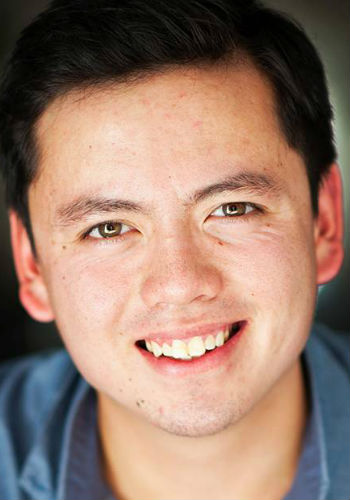
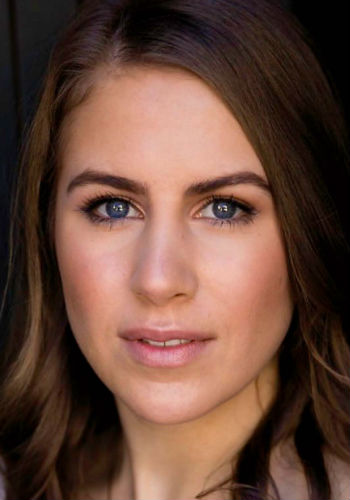
5 Questions with Kate Champion and Steve Rodgers

Kate Champion

Steve Rodgers: What’s the first memory you have of seeing live theatre?
Kate Champion: I was lucky enough to see Lindsey Kemp, the mime artist who taught Bowie, when I was pretty young. I remember there was nudity and men wearing frocks with powdered faces – they were moving but it wasn’t like any dance I’d ever seen and they were acting but it certainly wasn’t naturalism. It was exciting because it was outrageous and risky and different.

What works by others over the years have inspired you?
Hmmm – I always find this question difficult to answer because there are so many and afterwards I’ll end up thinking more about the ones I’ve left out. I find that work from genres other than the ones I work in have probably influenced me more. Music, film, comedy, visual arts, architecture, books…

You’ve been directing a heap of shows lately, Evie May a musical at Hayes Theatre, you’ve got Arthur Miller’s A View From A Bridge coming up at SASTC, what’s special about Every Brilliant Thing?
I am enjoying how different the shows I’ve been working on are – it really tests my skill set as a director. Every Brilliant Thing – as we wrote in the program notes – is almost not a play. It practically creates its own form which I love. Its form has come about as an honest and appropriate response to its subject matter. I come from a history of devising work from scratch. I recognise the skill with which Every Brilliant Thing has been devised and therefore appreciate its distilled and deceptive simplicity. To achieve what it does without the usual bells and whistles is its triumph.

What are the ingredients for a ‘brilliant’ rehearsal room?
I think having mutual respect in the room is vital. Giving everyone the ability to contribute their opinion yet at the same time asserting the necessary leadership that you, as directors, will make the final call. Talking about personal experiences around the subject matter of the play is vital. We’ve been writing our own list of Every Brilliant Thing every morning of rehearsal. Everyone who is in the room writes down ten brilliant things and then we read them out aloud. I think we’ve learnt more nuanced information about each other this way than we would have found out otherwise. It’s a ‘brilliant’ way to start the day. It’s also vital that everyone knows that they can be vulnerable in the room and will be supported. A combination of discipline and playfulness is imperative.

Why should people come to this play, now?
There seems to be a strong disconnect these days between a surface way of sharing and deep social isolation. Every Brilliant Thing brings us together as an audience literally face to face to share the personal account of a struggle with unstable mental health. This difficult subject matter is handled in a down to earth, tender, even lighthearted way which is ultimately beautifully life affirming. I think there’s a good chance it will still be relevant long into the future.

Steve Rodgers

Kate Champion: You’re both a writer and an actor – how do you think your acting experience influences your writing and visa versa?
Steve Rodgers: I think writing and acting inform each other in the sense that they’re both about making words live off the page. I guess obviously acting is more about playing the words, where as with playwriting you get the chance to create the words for someone else to play. But they talk to each other because they’re both beautiful imaginative leaps that require discipline.

How does Every Brilliant Thing differ from how you might approach other roles?
Every role I’ve ever done is about examining what I think I understand and know about the character in relation to my own experience, and what I don’t know or understand, and need to find out. This role is all about shedding your skin, without layering something else on top.

What’s it like going from the co-directing to the acting ‘head space’?
I understand the director has the final call, so as the co-director I think my job is to be a part of the discussion as another observer, offer another perspective, and in a small tight room like ours, try and make a few jokes. As an actor I’m also doing the same. It’s a discussion about personalising the work. I must admit watching Mulvers get up and do it each day is easier than getting up and doing it your self. I’m reminded how much acting personally costs.

Do you enjoy learning lines?
No… But when they’re learnt, I’m anyone’s.

What part of the process of creating/getting a show to the stage do you enjoy the most?
Rehearsals for me are sacred, where I’m always reminded I’m not alone in the world. People and stories… what else is there?

Kate Champion and Steve Rodgers are co-directing Every Brilliant Thing by Duncan Macmillan.
Dates: 8 – 31 Mar, 2019
Venue: Belvoir St Theatre

5 Questions with Nyx Calder and Julia Robertson

Nyx Calder

Julia Robertson: In your experience, what was the best part about being a kid?
Nyx Calder: It was definitely the boundless curiosity and hunger for knowledge, I remember spending hours finding new words in dictionaries and looking up synonyms to broaden my vocabulary. I was so eager to learn how to read that I drove my parents half mad, they eventually taught me to read out of sheer frustration.

What’s a big similarity between you and Joe? What’s a major difference?
In terms of similarity, definitely the gentle and quiet nature. While I get pretty wild after getting comfortable with folks, I tend to be quite slow to develop connections, and I am inherently quite shy – I have a lot of social anxiety that I think Joe shares. Unlike Joe, I tend to wear my heart on my sleeve! I’m slow to develop connection, but I tend to overshare quite a fair bit and without knowing people very long, while Joe tends to keep his personal history under lock and key.

You’ve recently graduated from NIDA, how does it feel to surface from the depths of drama school and dive straight into a two person text?
It’s an absolute dream! While NIDA educated me in a great many ways, it also left me feeling very boxed in at times, especially towards the end of my stay. Being able to step into a rehearsal room as an actor and not a student is such a pleasure, and even more so to do it with a text as rich and expansive as Jess & Joe Forever. It’s also incredibly liberating to be working in such an intimate and direct form of theatre with such giving and wonderful folks.

What is something that has challenged you during the rehearsal process of Jess & Joe?
The voices! I underestimated just how many perspectives we see through this play in spite of the cast size, and when you start throwing dialects into the mix, it can all be quite overwhelming. Fortunately, everyone has been very patient and nurturing, and we’ve had wonderful input from our dialect coach, so it’s been entirely manageable.

What makes this story worth seeing, and why should audiences see this production in particular?  
I think this story speaks to something quite universal in the experience of puberty; the sense of loneliness and isolation felt during those vulnerable developmental years, and the yearning for companionship and acceptance. This play allows us to see a beautiful connection blossom between two kids who do not just survive their circumstances, but start to thrive and prosper alongside each other. Jess & Joe Forever is for those of us who, in our adolescent years, struggled to find ourselves in the world around us. This play speaks to that uncertainty in a tender, honest and loving way, and I believe audiences will be thrilled to join us on such a moving journey.

Julia Robertson

Nyx Calder: Given that we’re both twenty eight years old, what has your process been in finding your inner adolescent?
Julia Robertson: My inner adolescent is… disturbingly accessible? Julia means youthful after all! I spend a lot of time with teenage girls as a drama and singing teacher. Their complexities, empathy and curiosity are continually fascinating to me. Teenage me made a lot of mistakes, felt very alone but always wore a smile on her face. I like in this production that we are able to see the truths, whatever they may be, underneath the polite smile that has been forced upon young women for a very long time.

What’s the biggest difference, and the biggest similarity, between you and your character Jess?
I find differentiating myself from a character once I’ve gotten them under my skin quite difficult! But let’s try. Difference: in her younger years Jess is very feminine and proper. I was not. I was a “boy-girl” and pretty determined to be an entomologist when I grew up. When I began at an all girls school, I was suspended for punching someone in the face a week in. Jess takes a little longer to find her physical prowess! Similarity: Too many. She’s lovable and annoying. I hope/think that’s me. 

What’s your favourite rom-com of all time?
Goshhhhhh I honestly don’t know if I have one! I used to like How To Lose A Guy In Ten Days? Maybe? The hairless dog in it is good?

What sets Jess & Joe Forever apart from other plays and makes it a must-see?
Jess & Joe Forever is unique. It tenderly explores hardships that only a minority of us have ever or will ever experience. Jess and Joe are like and unlike any tweens you know and love. And that’s what makes this story so special. 

What even is a scotch egg, anyway?
A tiny, bald, white man in a kilt. Nah, jokes it’s some bacon-crusted egg thing? Sounds gross. Apparently it’s artisanal. 

Nyx Calder and Julia Robertson can be seen in Jess & Joe Forever by Zoe Cooper.
Dates: 13 – 30 Mar, 2019
Venue: Belvoir St Theatre
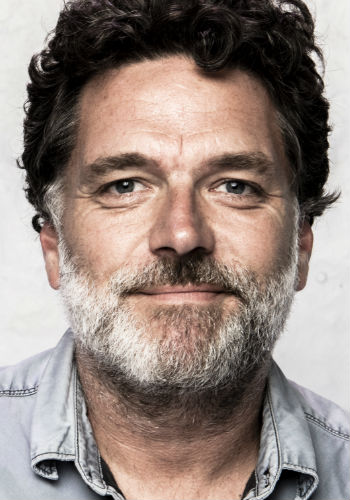
5 Questions with Lucia Mastrantone and Josh Quong Tart

Lucia Mastrantone

Josh Quong Tart: For ‘great’ television, who would you choose as a partner if you were to enter The Amazing Race and why?
Lucia Mastrantone: Valentino Rossi because I’m not a lover of rugged travel nor roughing it whilst I travel. I’d love to fang it around the world with an Italian who’d be very good at getting you to each destination quickly and in time for an aperitif before dinner and face whatever adventure one needs to face after having a beautiful meal.

What was your greatest culinary disaster? Please explain.
Serving a gluten-free and vegetarian meal to a potential Italian mother-in-law. I don’t think that needs an explanation.

If you had all the money in the world what would you bid on at the auction house?
Australian art and furniture.

Re the art of comedy who do see as your funniest female actor?
Madeline Carn.

If you could choose anywhere in the world to tell someone you love something REALLY special where would that be and why?
The island of Ischia off the port of Naples. An unknown proper working Mediterranean village with incredible seafood, views, volcanic springs and nightlife that only Italians and Germans visit or know of, as a holiday resort.

Josh Quong Tart

Lucia Mastrantone: What is your favourite non-touristic destination in NSW?
Josh Quong Tart: Dolphin Point (near Ulladulla). Swimming in crystal clear water fed by the ocean into Burrill Lake. Best time to do it – on the incoming tide just before it peeks. Dive in let the current take you a couple of hundred meters where you can jump out and do it all over again. Amazing.

In what country overseas did you have your most romantic love affair and why was that so?
Innsbruck Austria. Travelling alone a few years back (got off the train by accident) to discover this beautiful place. I’m a big sucker for mountains and centuries-old town squares covered in snow and dripping elegant Christmas decos.

What would be your monster’s ball meal if you were ever on death row?
Spaghetti bol.

Who is your artistic idol?
Barry Humphries is right up there.

If you were a genie, what famous person would you like to find your genie bottle and bring you to life and why?
Jenny Morris singer in the 80’s. Cause she’s kinda fun and thinks big. I’d trust her judgement with her wishes.

Lucia Mastrantone and Josh Quong Tart can be seen in Griffin Theatre’s Dead Cat Bounce by Mary Rachel Brown.
Dates: 22 Feb – 6 Apr, 2019
Venue: SBW Stables Theatre

5 Questions with Romy Bartz and Enya Daly

Romy Bartz

Enya Daly: If our characters, Huldey and Agatha, went on the X Factor, who do you think would get further in the competition?
Romy Bartz: Agatha is the ultimate strategist and excels in competition. Although her singing voice may leave something to be desired, she would surpass Huldey and most likely go on to win X Factor. She would locate a weak spot in each contestant and use it to destroy them, pegging them off one by one until, by default, she was the last one stranding. Simon Cowell would be gobsmacked, but there you have it.

What have you learned from the character you’re playing, Agatha?
I am learning to be still and let other people do the work. I am learning to squash self-doubt and maintain a sense of self-assurance at all times. Agatha is incredibly ambitious and single minded in the pursuit of an objective. She is not afraid to use unorthodox methods to get what she wants, and she has an unwavering belief in her own power to bring about change. I love this, and I delight in playing such a strong and uncompromising woman!

What is your favourite stage of working on a production?
Definitely the technical rehearsal. The cast and crew are all trapped in a darkened theatre for around 12 hours and slowly the world of the play starts to form. All the elements – lights, sound, set and costume – are integrated like puzzle pieces and you sort of allow yourself to be enveloped by it. It can feel quite magical.

Do you keep a diary? If so, tell me (and the nosy public) the best secret you’ve got in there. If not, tell me the secret you WOULD put in there.
I kept diaries all through my teens and into my early twenties. I still have them somewhere. The ravings of a pubescent, emotional wreck! Everything that every happened went into them. I’m sure most of it was ‘shameless’, saucy and highly passionate. The secret that I would put in my diary, if I had one today, would be that I am terribly attracted to red heads who play the lute.

Have you ever harboured murderous thoughts about a sibling? Please elaborate.
No, but my children, who are two years apart, harbour murderous thoughts about each other constantly. Harbouring may not be the right word, more blatant thoughts constantly manifesting as violence. I suppose there is nothing more frustrating than sharing the space with someone who has known you forever and knows exactly which buttons to press in order to achieve maximum results.

Enya Daly

Romy Bartz: What do you enjoy most about playing Huldey and what are the challenges?
Enya Daly: I love her heart. She’s been given more than enough reason to be guarded and cold, but has miraculously remained earnest, transparent and hopeful. I think the most challenging thing about this play, from a technical standpoint, is finding and maintaining the lightness of touch and truthfulness required to make the comedic moments sing.

What was it about the play, The Moors, that made you want to audition?
Honestly, when I read the audition brief, I smelt the whiff of a period drama costume and thought, “I’m there!”. I’m a period drama fanatic. I love how heavily loaded with subtext and coded behaviour they are. When I discovered that this play is not a traditional period drama but takes that familiar form and turns it on its head by subverting traditional representations of gender, I was hooked.

If Huldey had a gaming avatar, what would it look like?
I’m visualising a gauche combination of Daenerys Targaryen from Game Of Thrones, Miss Scarlet from Cluedo and Carmen Sandiego (that last one is for the 90s kids). The design should clearly be an attempt to conjure up an air of mystery and intrigue. The more elaborate, the better.

If Huldey was alive today in Sydney, Australia what would her circumstances be?
There is no doubt in my mind that she’d be a budding social media influencer. She’d have an Instagram, Snapchat, YouTube channel, Twitter and blog. Somehow, I think she has what it takes to be quite a fabulous social media influencer. She’s dramatic, loves attention and has no filter. A long-term goal of hers would be to have her very own reality TV show. She’d definitely still be living with, and supported by, her parents.

What is your favourite part of the rehearsal process?
I love the freedom you feel when you’ve gotten off book but are still sculpting each moment in the piece. I find that stage of rehearsal to be very playful.

Romy Bartz and Enya Daly can be seen in The Moors by Jen Silverman.
Dates: 8 Feb – 1 Mar, 2019
Venue: Seymour Centre

5 Questions with Eddie Orton and Elijah Williams

Eddie Orton

Elijah Williams: What do you enjoy doing when you’re not acting?
Eddie Orton: I love sport. Watching it, playing it, reading about it. I’m from Melbourne originally so AFL was my first love. None of this rugby league rubbish. A lot of my family is in Melbourne so I love seeing them.

What quality do you bring to the role of Mikey?
I think there’s of lots of things that I have been discovering about the character with Warwick the director. I would say I inherently bring a physicality to the role. The sporting background helps with that kind of thing.

What challenges have you experienced trying to break into the Sydney scene from Melbourne?
I was surprised that it’s totally different up here. Not bad different just different. I was told a lot at Uni that there was tonnes of crossover but having just Melbourne credits doesn’t necessarily mean a lot here. I’ve just tried to meet people and make friendships. Those genuine friendships through work and so on have lead to fun things happening.

Who do you look up to?
My family. My parents were very supportive of me deciding to do acting at the end of Year 12. My two older brothers who aren’t actors have been amazing as well. My parents and brothers are just good people. Open minded, hard working and caring. Couldn’t ask for more.

If you weren’t acting, what would you be doing?
I think I’d be in sports coaching in some way. I wasn’t good enough as an athlete to take that further, so coaching would be a great way to stay involved.

Elijah Williams

Eddie Orton: What part of the play are you most excited about?
Elijah Williams: I’m looking forward to bringing these two characters to life for the audience. And in particular holding up a mirror that reflects the time and age we currently live in. One filled with humour, friendship and sacrifice. It’s not every day that you also get to perform with such an awesome person such as Eddie, and this process has essentially bought us together, so sharing the story with him is a major phase that I’m excited about.

What do you like most about acting?
I love unearthing stories and pasts, and in particular learning about characters and imprinting a part of your soul in their world and life.

Who is your favourite actor?
I respect and appreciate everyone that is an actor because it is bloody hard to do. However, it comes down to Denzel Washington and Samuel L Jackson. Because of their dedication to the craft and the impacts and change that they have brought for many African actors.

Who has been your most influential mentor?
Suzanne Millar and John Harrison along with the women at Sophie Jermyn management have been my biggest pillars of mentorship. Starting in the industry without any formal training, they helped greatly in making the transition and learning process easy and enjoyable whilst pushing me to be a better actor and person in the same breath. I owe a lot of thanks to my coach Cathy Walsh, who outside the acting world trains me for track and field, an aspect of my life which I am very passionate about. Over the years she has taught me the value of a hard word, discipline and dedication. And the notion that doing something that one is passionate about, isn’t work.

If you could have one last meal, what would it be?
I LOVE FRIED CHICKEN and ice-cream. Separately!! NOT TOGETHER. I would smash a few kilos of chicken followed by a massive serving of ice cream, either raspberry or mango and roasted coconut. And for dessert I would have some rice and eat it one grain at a time, just to draw the process out a bit.

Eddie Orton and Elijah Williams can be seen in If We Got Some More Cocaine I Could Show You How I Love You by John O’Donovan.
Dates: 8 – 23 Feb, 2019
Venue: Kings Cross Theatre

5 Questions with Caitlin Berry and Jonathan Hickey

Caitlin Berry

Jonathan Hickey: How are you different/similar to your character in Aspects Of Love?
Caitlin Berry: Rose is a wonderfully complicated character and I think, through playing her, I’ve seen some of her qualities rub off on me. Rose has striking confidence and tenacity, which are characteristics that don’t come as naturally to me. I’ve enjoyed inhabiting someone who acts on gut feeling, and I’d like to be as bold as Rose more often! I can relate strongly to her desires as a performer, and also her vulnerability in her professional and personal life.

What is your best/favourite love story of all time?
You can’t go past the smart and stubborn Ms Lizzy Bennet meeting her match, Mr Darcy, in Pride And Prejudice. It didn’t hurt that Colin Firth was added to the imagining of this story in the movie adaptation of the book. The meeting of great minds is very romantic.

Who/when was the first time you fell in love?
I probably felt the full, horrible, wonderful and scary force of love when I was with my high-school sweetheart of three years. We met on a musical (go figure). He was a wonderful man and I did all the stupid things you do when you are in the throes of first love. Many songs and movies suddenly made sense.

Any pre-show rituals or superstitions?
I’m embarrassed to say that I have a few pre-show rituals. They serve as a comfort, but can get in the way of being flexible. I like to arrive quite early, I have certain vocal warm-ups I make sure I do, and I have a butter menthol before I go on stage. I’ve been forced to run around the Hayes building three times because I accidentally said ‘The Scottish Play’– so, I’ve learned my lesson in terms of superstitions.

Where and who will you be spending your Christmas with this year?
My older sister is hosting Christmas for the first time. The baton has changed from my mother. I have nephews and nieces now, so Christmas has become about the little ones and just enjoying precious time together as a large bunch of Berrys. I’ve only missed one Christmas with my family, and I hope I can keep it that way.

Jonathan Hickey

Caitlin Berry: How are you different/similar to your character in Aspects Of Love?
Jonathan Hickey: I see quite a few similarities between myself and Alex – We have both experienced the joy of being in love and also the pain, betrayal and sadness of losing love. When I was younger it was easy to fall in love – now that I’ve experienced heartbreak it stays with you, very much like Rose with Alex. 
 
Who/when was the first time you fell in love?
First time I thought i was in love or said ‘I love you’ was when I was in second year uni. Unfortunately the relationship didn’t last all that long but we’re still friends and keep in touch. But yes I’ve been in love and experienced heartbreak – both of which have helped me in playing Alex. 

Where and who will you be spending your Christmas with this year?
I’m going back to Brisbane for Christmas for a couple of days – my family and I will be spending it with my cousins up in Maleny in the Sunshine Coast hinterland. It’s become a bit of a Christmas tradition to have lunch up there. 
 
Does love change everything?
Love does change everything – to love someone and be loved is beautiful, you become a part of a team – you share your life with that person, support each other. One of my friends told me you’re a “witness of that persons life” which I thought was pretty special. Although it can make you irrational at times, the happiness and well-being of that person you love is more important than your own.

Have you met a famous person, if so who?
When I was in London late last year, I bumped into David Mitchel at Primrose Hill and had a very brief chat – told him I loved his work in Peep Show and various other TV shows and got a quick snap. He was lovely.

Caitlin Berry and Jonathan Hickey can be seen in Aspects Of Love , by Andrew Lloyd Webber.
Dates: 22 Nov – 6 Jan, 2018
Venue: Hayes Theatre

5 Questions with Marcus Rivera and Cypriana Singh

Marcus Rivera

Cypriana Singh: If you had to play another character in Ned who would it be and why?
Marcus Rivera: I’d be interested to play Fitzpatrick because I’m drawn to what you’d call the “villainous” character who, on the surface, won’t catch your attention, but as the story unfolds, you realise, was incredibly instrumental in the (tragic) fate of the lead. I also want to make Fitz even more sinister!

Has rehearsals and getting to know the Kelly story changed your opinion of the Kelly’s and Australian bush ranger folklore?
Absolutely. I think it’s fantastic that Hamish, Miranda and the team have taken on this momentous project because it will help more people realise the complexity of the Australian bushland stories of the past. I developed an appreciation for it for sure! Although I wonder how the story would have unfolded if Ned had a wifi and a million Instagram followers to share his story!

What is Superintendent Hares’ most endearing quality?
He’s a stickler for the rules and, unlike Fitzpatrick, has a lot of integrity. Okay, it’s a bit of a stretch to say he is the equivalent of Atticus Finch from To Kill A Mockingbird in trying to get to the truth but the audience will know what I mean when they watch one of the scenes I have with Fitzpatrick. I think he’s trying to act tough because he’s got a big job to do but deep inside, he’s a softie.

You’ve played a few villains in your career. Can you rank your previous roles from evil to most evil? Where does Hare rank?
Ohhh, I’d like to use the descriptions “had terrible role models” or “misunderstood” instead of straight up “evil” but Hare is up there with The Engineer, the ‘pimp’ role I played in Miss Saigon. He is above the ‘could have been evil’ role that I played in The King And I. I was the understudy for The Kralahome in that musical. As for Sweeny Todd, Hare was very much a square and very virtuous in the role that I played there.

If you could be any Disney Princess who would be and why?
I’d have to say Ariel. No other Disney princess can say they battled a villain who is half-woman, half-Octopus! Ariel was the ultimate outsider. She was half-fish for goodness sake! That’s some serious fairy tale ending there.

Cypriana Singh

Marcus Rivera: What is your favourite scene from Ned and why?
Cypriana Singh: Ned deals with difficult time in Australian history and there are a lot of ‘heavy’ plot points. I really enjoy the lighter moments in the show and the cast always has a lot of fun when we have the chance, but my favourite scene leans more toward the serious side. Maggie has a really fun moment with Constable Fitzpatrick, I won’t spoil anything but it involves flowers, potatoes and a knife.

How can the theatre community benefit from diversity?
The more diverse the stories, actors and creatives are on a project the more varied the perspectives are. Diversity makes theatre more accessible and inclusive of wider audiences. Art encourages empathy; diverse stories allow for relevant, interesting content while unifying the community through a shared experience.

If you could play a character in Game of Thrones, which character would you like to play?
I’d love to be Jon Snow; so handsome so likeable… but if we are being realistic in this casting process then I’d probably be one of the Sand Snakes or a White Walker.

Drama or comedy, pick one. Why.
Comedy. It’s good to laugh.

Favourite Broadway musical and why?
I can’t pick my favourite flavour of ice cream let alone my favourite musical. Today let’s go with a triple scoop cone of Bridges Of Madison County, The Light In The Piazza and Fiddler On The Roof.

Marcus Rivera and Cypriana Singh can be seen in Ned: A New Australian Musical.
Dates: 18 – 22 December, 2018
Venue: New Theatre

5 Questions with Harry Milas and Jordan Shea

Harry Milas

Jordan Shea: What makes Cascadia different to all your other work?
Harry Milas: It’s surreal and it’s got a narrative. It’s also got a director (who I adore and deeply respect) and he’s keeping me focused on what’s important, what’s real and what’s valuable. Orson Wells said that the problem with magicians is they try to do everything alone. I can count on one hand magic shows that have had a director. Also I hate magic shows that are just “Look how clever I am” or god forbid making birds appear to music. There’s no connection to the audience at all. No contact. Cascadia follows a journey I took with a fascination for making things vanish from childhood to present day and the audience feature heavily in that every step of the way.

What animal would you like to study in depth if you had the money and time?
That is a very difficult question and I really had to think about it, and I think my answer is the Bonobo. They are incredibly good at forward rolls, and general movement. They’re also our closest living relative and are deeply interesting. They also need help as their numbers are dwindling. I’ve been to The Democratic Republic of the Congo briefly and I’d love to go back and really soak it up. 

Magic is timeless. It’s been around or thought about since people have co-existed. This new show, how does it appeal to a theatre-going audience?
Because it’s theatre. It’s theatre that happens to be a magic show. Magic seems steeped in tradition and stuffed with clichés but there are always new ideas and breakthroughs coming to the surface. People who call themselves magicians comprise a wide range of styles and personalities. I’ve written the show from the perspective of a writer and performer who happens to be a magician. But let’s be honest the appeal is mostly going to be people wanting to see how I’m going to make a volunteer vanish in that dark basement of a theatre.

What was the first piece of music you ever heard that really said something to you?
I remember my brother giving me a copy of Boards Of Canada’s Music Has The Right To Children when I was about 11, and the track “Telephasic Workshop” just kinda fucked me up in the best way. I remember I got so excited when I listened to that song for the first time that I did a forward roll and my headphones came off! That is an incredible album that’s overflowing with wildly creative and brilliant electronic music. 

Have you ever met Don Rickles? If so, give me a brief run down of how it happened? 
So strange you ask me that. I have met Don Rickles, yes. On my first trip to New York I went to see the debut production of A Behanding In Spokane, then Martin McDonagh’s newest work. It had Sam Rockwell and Christopher Walken in the two main roles. It was my first broadway play and I was very excited. The play was fantastic and the production was amazing (Walken did some of the best non-acting acting I’ve ever seen) and after it finished I was expecting everyone to run out to the stage door, but instead they were all milling around in the stalls talking to someone. Turns out it was Don Rickles, who I have loved since I was a little kid. He was a total mensch and was shaking everyone’s hands. I managed to have a quick interaction with him as he left the theatre, and the most amazing part was instead of getting in a car he just did a forward roll and was somehow really far away at the end of it. I’ve never seen anyone move that quickly and he was really old at the time!!

Jordan Shea

Harry Milas: Do you know how Harry is going to make the audience member disappear?
Jordan Shea: I don’t. But that might be a lie. Harry’s practice, to me, is about the possibility he might be making all of this up. I won’t know until we’re there, present, in the moment, as to how he will make this person disappear. All I know is he will do it, and probably make you have a good laugh and maybe be a little scared doing it. I don’t think a lot of conventional plays or performances can do that-but Harry and his magic can.

Cascadia is a wildly different direction for you. What drew you to the work and why is it important?
Because it’s a challenge. I don’t know if I’ll ever do something like this again. As a director and maker, it’s important to challenge yourself and just do different things. It’s weird. It’s important because it is in no way preachy but at least it’ll make you think for a while after. I like one man shows as well, I think if you can find someone who can intimately hold an audience for 30 plus minutes, you should collaborate with them-because you can learn a lot.

What is a film you think is massively overlooked?
The Swedish film As It Is In Heaven. We saw it around my 12th birthday at the Orpheum and it is a film of such nuance. Go download/buy/google it. 

What do you reckon about… I don’t know…the lockout laws?
I think most decisions by NSW Liberals since their election in 2011 (including the lockout laws) are the most poorly thought out pieces of legislation in the history of our state. I don’t understand the government’s tact or ethos because they don’t really have any at all, and I think they are just blindly ruining this state year by year.

When was the last time you actually took a break pal? You’ve been working real hard for a long time now.
I went on extended holidays in June/July and it made me realise I need to do that more. I’m training as a school teacher next year, and hopefully I can afford to take at least two weeks somewhere. I try to go once a year, somewhere. I think everyone working should. No matter where you are, there’s more to see. 

Harry Milas and Jordan Shea collaborate in Cascadia: A Magic Show.
Dates: 23 – 25 November, 2018
Venue: Old Fitz Theatre

5 Questions with Emily Dreyer and Grace Driscoll

Emily Dreyer

Grace Driscoll: What drew you to working on a show as iconic as Company?
Emily Dreyer: The music! Stephen Sondheim is an absolute genius and the score is just incredible. Every musical number in the show is catchy and innately engaging… as well as challenging at times for singers which makes it just as much fun to rehearse as it is to watch being performed. Also, some of the cast and production team I have worked with before so it’s always a pleasure working with them again!

Why do you believe audiences should come see this show?
It’s so relatable, the music is outstanding, it’s hilarious and it will overall be a fantastic night out… to be honest I wouldn’t want to miss it!

What first ignited your passion for dancing/musical theatre?
I grew up training in ballet at the Elizabeth McGirr School of Ballet doing one big concert every two years! One year we did a version of Mary Poppins and I got the chance to be Jane (one of the children), after our one show was over, 11 year old me was so depressed for about two weeks… that’s when I knew I needed more. I then moved into other styles of dance and seriously started musical theatre training two years ago when I started at ED5International.

Where do you hope to see yourself professionally in 5 years time?
In a touring company for a musical but if we are really reaching for the stars Broadway!

Who is your musical theatre inspiration?
It changes all the time but at the moment it would have to be Donna McKechnie and Charlotte D’Amboise. Donna McKechnie was the original Kathy in Company and then went on to be the original Cassie in A Chorus Line. Watching footage of her performing is just so inspiring and to be able to do a solo dance number in a musical is so rare and Donna McKechnie is just incredible. I feel so lucky to be playing the same role of Kathy and being able to dance “Tick-Tock”, which is often left out of productions of Company. Charlotte D’Amboise played Kathy and Cassie too, but many years later in revivals and she is just as inspiring but reminds me of how it’s important to put yourself and your strengths into the role. I have so many people that are always inspiring me from my teachers, my dance students and of course the cast and production team of Company at Limelight on Oxford.

Grace Driscoll

Emily Dreyer: What about your character Marta is similar to you?
Grace Driscoll: I love playing Marta, as I feel like she is a very heightened version of myself. I think we share the same passion and thirst for life, and that even the smallest things excite us. We both love experiencing new things, and are open to learning from every person we meet. I am however, without a doubt, a self-professed dork- which isn’t what most people necessarily think of cool, trendy Marta. In order to find my way into her, I tried to channel my natural weirdness but in a way where she is 100% unapologetic about it. Embracing herself, her ideas and her opinions wholeheartedly and boldly, is what I believe makes her so confident and so effortlessly cool.

What is your favourite part about being in Company?
My favourite part about being in Company is working with such an incredible team and just doing a musical. Because I’ve only just completed studying, it has been such a long time since I’ve done a musical, and to get the opportunity to now do it, with material as rich as this, in a brand new theatre and with a company this talented, feels like an absolute dream! Being the baby of the cast, I am constantly in awe of everyone’s talent, experience and expertise in their craft and have learnt so much from every single person.

If anyone could come and see the show who would it be and why?
I think this show is perfect for… everyone! The story is so real and so accessible for anyone who has ever been in a relationship. I think Sydney audiences young and ‘older-than-young’ will enjoy what this musical has to give, so I encourage everyone to book tickets and have a night out at the theatre. Also, come and checkout the incredible new venue that is Limelight! I anticipate it will soon be a prime theatre-goers hot spot.

What brings you to musical theatre?
I was first introduced to musicals by my grandfather’s collection of old movie musicals that I would play, entranced and on repeat whenever I visited, including The Sound Of Music and The King And I. It wasn’t until I was 10 where I saw a community production of Guys And Dolls that I became hooked on musicals and performing. This passion has since taken me through two training courses, 800km away from home, and given me many lifelong friends. There’s something so special about combining the elements of song, music and dance in order to tell a story. I love reading a script or a score that is rich with good writing and detail, and wanting nothing more than to share it with audiences.

Dream musical role and why?
Too many to list! My number one role would definitely be Natasha in Dave Malloy’s Natasha, Pierre And The Great Comet 1812. Similar to Sondheim’s Company, Malloy’s writing is so detailed and intricate which makes for some stunningly beautiful songs. I also love the fact that the show promotes diversity in its casting, despite the setting being 19th century Russia.

Emily Dreyer and Grace Driscoll can be seen in Company by Stephen Sondheim.
Dates: 14 November – 1 December, 2018
Venue: Limelight On Oxford

5 Questions with Laura Djanegara and Francisco Lopez

Laura Djanegara

Francisco Lopez: What do you love most about theatre in Sydney?
Laura Djanegara: I love the incredible array of talented and driven people that there are in the arts in Sydney. There are so many incredible and hardworking people in theatre in all its areas, cast and crew alike, that there is a lot to be inspired by. I also like that there is still a great sense of community in theatre. Back in Perth where I grew up, the theatre world was quite small but they cultivated a strong sense of community in theatre. Even though the industry here is much bigger, in my experience you still often have mutual friends with other theatre makers and that I really like.

What have you found most challenging about working on The Laramie Project or The Laramie Project: 10 Years Later?
It is a challenge making sure that each of your characters is distinct, especially when they are some that have fewer lines than others. Having clear and differing personalities for so 10+ characters can be tricky. Also, the narrator lines!

What has been your most memorable experience within the LGBTIQ+ community?
I think it would have to be when a dear friend of mine did a performance outlining why he wanted to be able to marry his partner one day. It was before the marriage equality vote and it was such a well written and performed piece that I felt truly positioned to see his point of view. That his love wasn’t wrong and wasn’t there to offend anyone. It was just love. I’d always been for marriage equality because it just makes sense to me but this performance was the first moment it really hit me in the heart. His love for his partner was so beautiful, it really moved me.

What do you wish most for the next generation of LGBTIQ+ Australians?
I wish very much for the next generation of LGBTIQ+ Australians to have acceptance, love and understanding. I was with a friend the other day and someone rolled down their car window to yell obscenities at them because they perceived them to be gay. It made me really angry. I think people have the right to make their own decisions about how they live and love. I wish this next generation doesn’t find it hard to be who they are. I wish for them a sense of belonging.

What can audiences expect to walk away with after seeing The Laramie Project or The Laramie Project: 10 Years Later?
I think a great sense of compassion and empathy. What I really like about this play is the way it doesn’t shy away from the humanity in it all. You hear from all differing views on what happened and from that you draw a clear view of how divided people can be within themselves. This murder forced people to look on their own views towards homosexuality and acceptance. I don’t think it’s enough to tolerate something – that just means putting up with something you are opposed to. This play focuses on the ‘why’ of the opposition. If it can have that effect on an audience it would be a very important experience

Francisco Lopez

Laura Djanegara: What drew you to this production and why should Sydney audiences see it?
Francisco Lopez: I had never read The Laramie Project. I knew it existed and I had a vague knowledge of Matthew Shepard’s horrific death by a fence. Maybe it sounded too horrific for me to accept; and too recent of an event. After having to fight for marriage equality last year, right here in Australia, I want to keep talking about what is holding us back from true acceptance of the LGBTIQ+ community. The Laramie Project goes beyond branding individuals as homophobes, and studies a whole town’s make up in relation to this tragedy. I invite audiences to see our two plays to remember what any equal rights movement is up against. It’s easy to believe we have made a lot of progress when we examine the horrors of the past, or the atrocities in distant parts of the world. The Laramie Project reminds us of the forces constantly present in our own communities today.

In a show of this nature where you play multiple characters, what has been the biggest challenge for you as an actor?
I play more than ten characters across the two plays, some of them appearing in both plays. There are many challenges that come with stepping into characters of different ages, professions, and belief structures. I think my biggest challenge was understanding that ultimately, these people cannot be too far away from who I am. I don’t have to wear wigs, fake noses or outrageous costumes. I may very well have said the things these people said in different circumstances. And I’m reminded that this play shows audiences just that – that Laramie is not that different from their own communities.

Which character in either play would you most like to act as and why?
I don’t know if it’s just because of the actor playing her (wink, wink, Laura!) – but Romaine Patterson, a friend of Matthew Shepard, seems like such a bad-ass in the best of ways! She wanted to be a rock star and instead became an activist who inspired so much social change across the USA. She even takes on Fred Phelps in one of the plays!

The shows are set in 1998 and 2008 respectively, what was your life like in 1998 and 2008?
Oof… in 1998 I was in Year 11 at a Catholic school in one of two Victorian electorates that voted No to marriage equality. It was my last year of studying drama, as I went on to study maths and sciences in the pursuit of academic glory. I was good at performing in life – so I had a great time in high school with some beautiful friends. I went on to be school captain and school dux – even if I wasn’t being 100% honest with myself about who I wanted to be. In 2008 I was improving workflows in an emergency department by day, and producing a community television show about Hispanic and Latin American culture by night. I was a very busy young man – and very curious about the world beyond my upbringing. That year I travelled to Dubai, London, Israel and the West Bank.

Describe The Laramie Project in 5 words.
Tragic. Hopeful. Brave. Compassionate. Love.

Laura Djanegara and Francisco Lopez can be seen in The Laramie Project and The Laramie Project: 10 Years Later.
Dates: 28 Nov – 8 Dec, 2018
Venue: Seymour Centre