HELPMANN AWARDS CEREMONY
Monday 27 July, 2015 | Capitol Theatre, Sydney
THEATRE
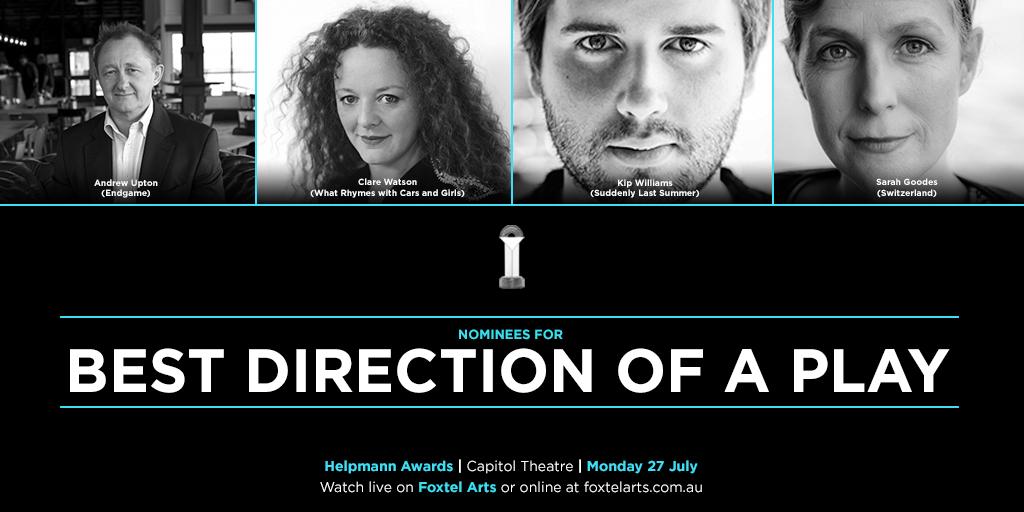
BEST DIRECTION OF A PLAY
ANDREW UPTON
Endgame (Sydney Theatre Company)
CLARE WATSON
What Rhymes with Cars and Girls (Melbourne Theatre Company)
KIP WILLIAMS
Suddenly Last Summer (Sydney Theatre Company)
SARAH GOODES
Switzerland (Sydney Theatre Company)
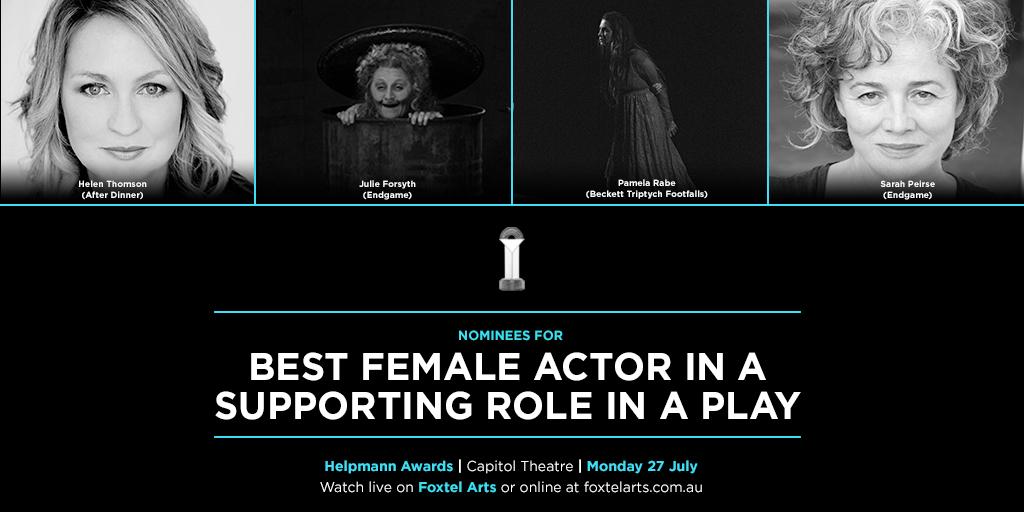
BEST FEMALE ACTOR IN A SUPPORTING ROLE IN A PLAY
HELEN THOMSON
After Dinner (Sydney Theatre Company)
JULIE FORSYTH
Endgame (Melbourne Theatre Company)
PAMELA RABE
Beckett Triptych – Footfalls (State Theatre Company of South Australia)
SARAH PEIRSE
Endgame (Sydney Theatre Company)
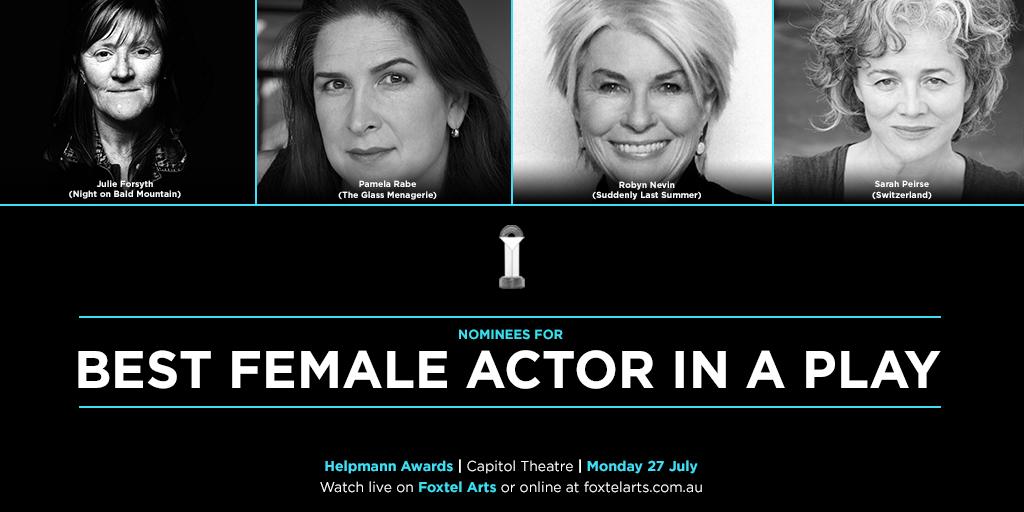
BEST FEMALE ACTOR IN A PLAY
JULIE FORSYTH
Night on Bald Mountain (Malthouse Theatre)
PAMELA RABE
The Glass Menagerie (Belvoir)
ROBYN NEVIN
Suddenly Last Summer (Sydney Theatre Company)
SARAH PEIRSE
Switzerland (Sydney Theatre Company)
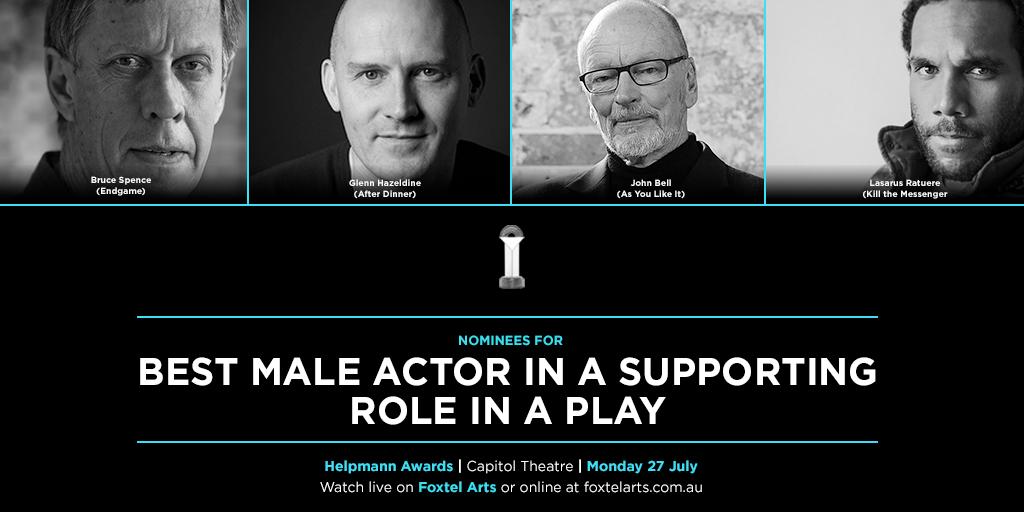
BEST MALE ACTOR IN A SUPPORTING ROLE IN A PLAY
BRUCE SPENCE
Endgame (Sydney Theatre Company)
GLENN HAZELDINE
After Dinner (Sydney Theatre Company)
JOHN BELL
As You Like It (Bell Shakespeare)
LASARUS RATUERE
Kill the Messenger (Belvoir)
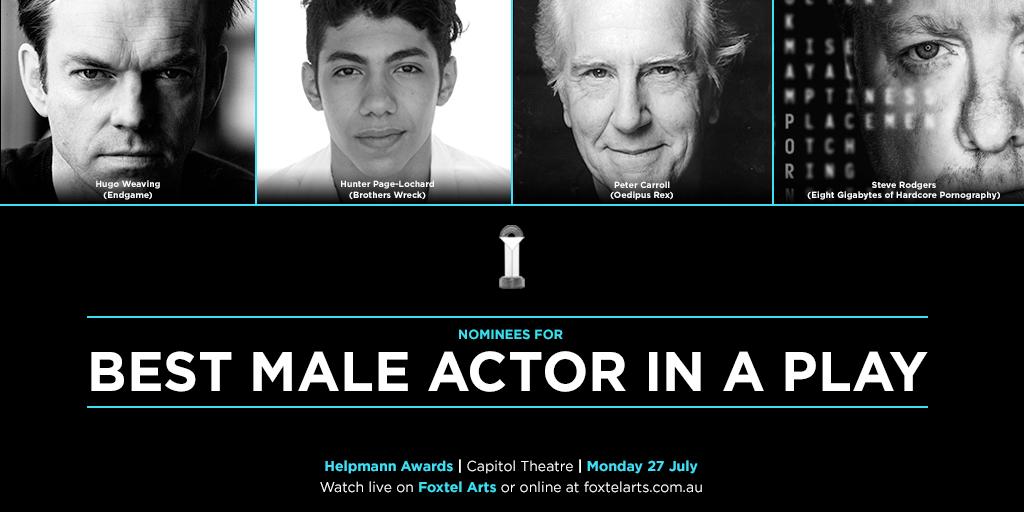
BEST MALE ACTOR IN A PLAY
HUGO WEAVING
Endgame (Sydney Theatre Company)
HUNTER PAGE-LOCHARD
Brothers Wreck (Belvoir)
PETER CARROLL
Oedipus Rex (Belvoir)
STEVE RODGERS
Eight Gigabytes of Hardcore Porn (Griffin Theatre Company and Perth Theatre Company)
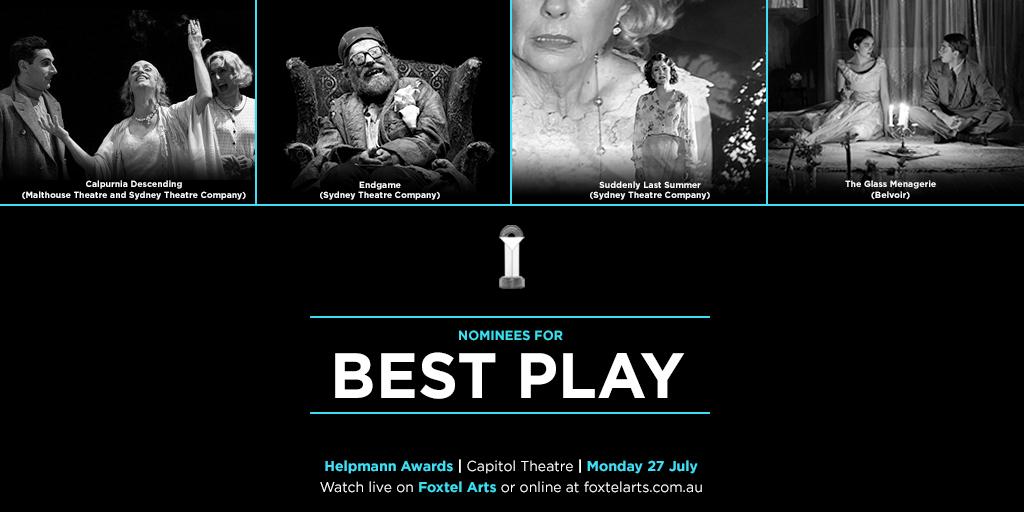
BEST PLAY
CALPURNIA DESCENDING
Malthouse Theatre and Sydney Theatre Company
ENDGAME
Sydney Theatre Company
THE GLASS MENAGERIE
Belvoir
SUDDENLY LAST SUMMER
Sydney Theatre Company
MUSICALS
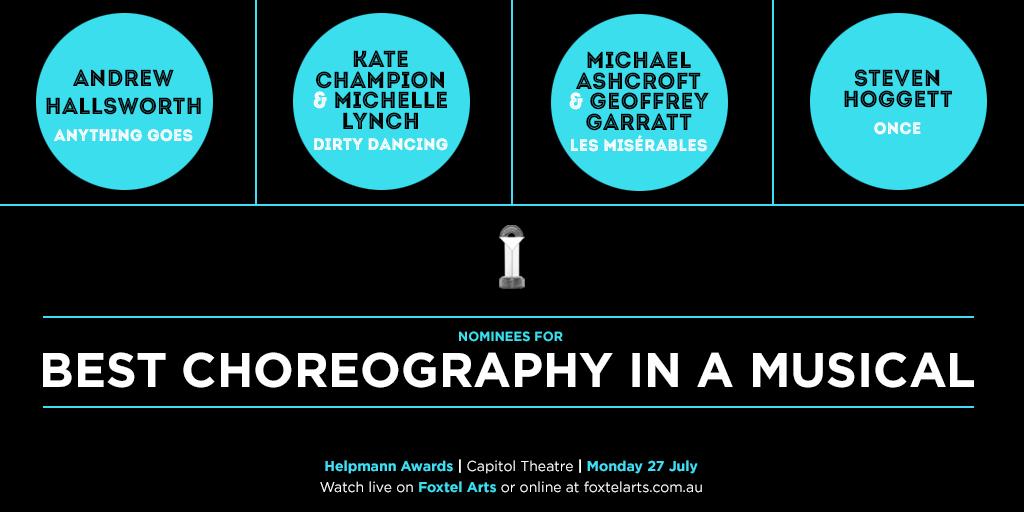
BEST CHOREOGRAPHY IN A MUSICAL
ANDREW HALLSWORTH
Anything Goes (Opera Australia and John Frost)
KATE CHAMPION and MICHELLE LYNCH
Dirty Dancing – The Classic Love Story on Stage (John Frost)
MICHAEL ASHCROFT and GEOFFREY GARRATT
Les Misérables (Cameron Mackintosh Australia)
STEVEN HOGGETT
Once (John Frost, Barbara Broccoli, John N. Hart Jr., Patrick Milling Smith, Frederick Zollo)
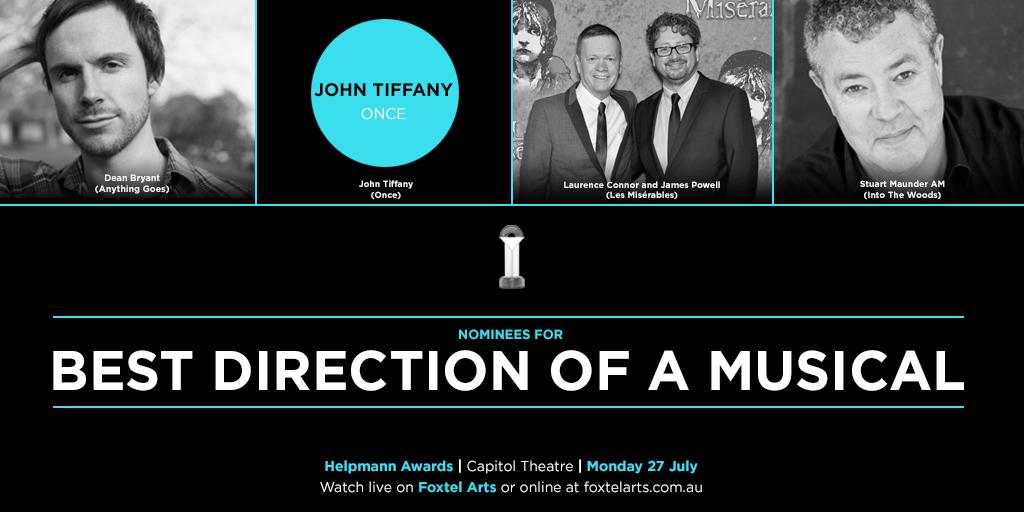
BEST DIRECTION OF A MUSICAL
DEAN BRYANT
Anything Goes (Opera Australia and John Frost)
JOHN TIFFANY
Once (John Frost, Barbara Broccoli, John N. Hart Jr., Patrick Milling Smith, Frederick Zollo)
LAURENCE CONNOR and JAMES POWELL
Les Misérables (Cameron Mackintosh Australia)
STUART MAUNDER AM
Into the Woods (Victorian Opera)
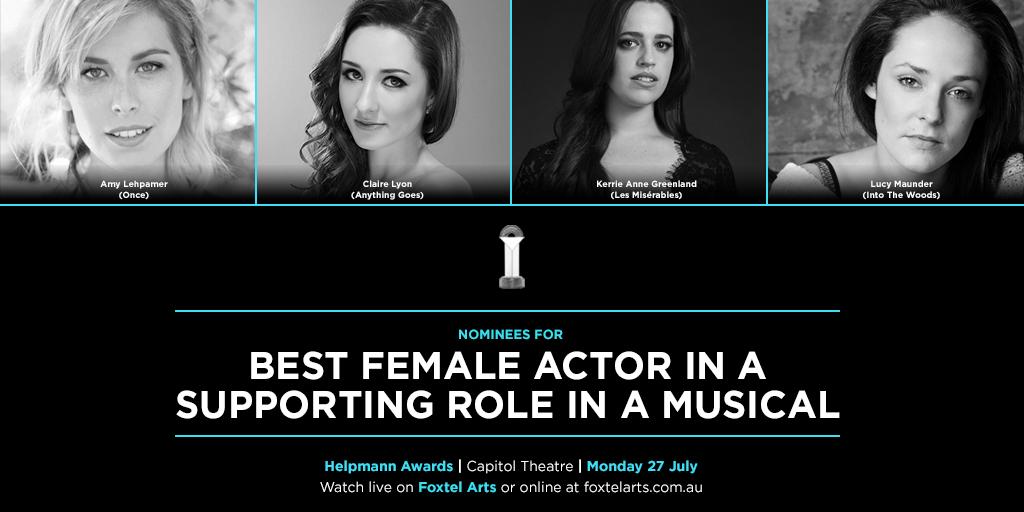
BEST FEMALE ACTOR IN A SUPPORTING ROLE IN A MUSICAL
AMY LEHPAMER
Once (John Frost, Barbara Broccoli, John N. Hart Jr., Patrick Milling Smith, Frederick Zollo)
CLAIRE LYON
Anything Goes (Opera Australia and John Frost)
KERRIE ANNE GREENLAND
Les Misérables (Cameron Mackintosh Australia)
LUCY MAUNDER
Into the Woods (Victorian Opera)
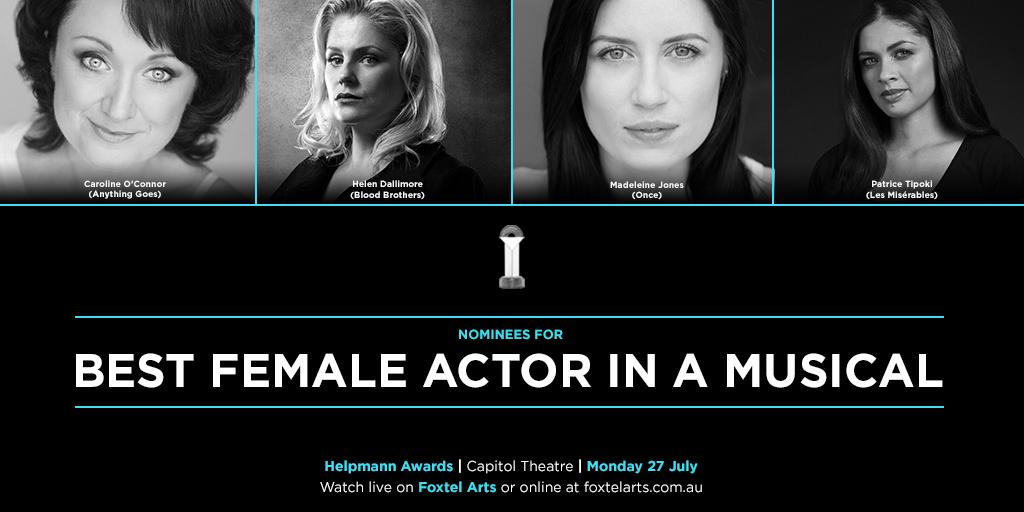
BEST FEMALE ACTOR IN A MUSICAL
CAROLINE O’CONNOR
Anything Goes (Opera Australia and John Frost)
HELEN DALLIMORE
Blood Brothers (Enda Markey Presents)
MADELEINE JONES
Once (John Frost, Barbara Broccoli, John N. Hart Jr., Patrick Milling Smith, Frederick Zollo)
PATRICE TIPOKI
Les Misérables (Cameron Mackintosh Australia)
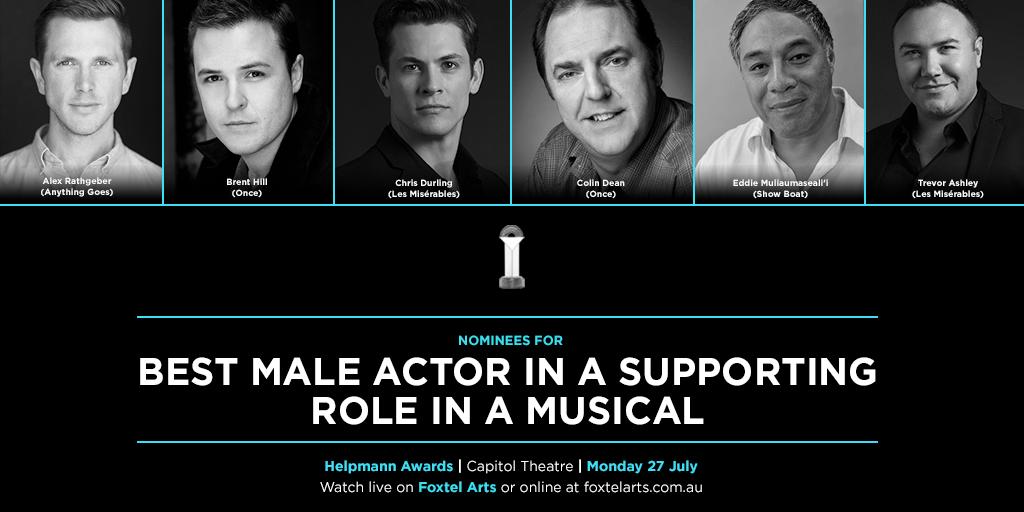
BEST MALE ACTOR IN A SUPPORTING ROLE IN A MUSICAL
ALEX RATHGEBER
Anything Goes (Opera Australia and John Frost)
BRENT HALL
Once (John Frost, Barbara Broccoli, John N. Hart Jr, Patrick Milling Smith, Frederick Zollo)
CHRIS DURLING
Les Misérables (Cameron Mackintosh Australia)
COLIN DEAN
Once (John Frost, Barbara Broccoli, John N. Hart Jr, Patrick Milling Smith, Frederick Zollo)
EDDIE MULIAUMASEALI’I
Show Boat (The Production Company)
TREVOR ASHLEY
Les Misérables (Cameron Mackintosh Australia)
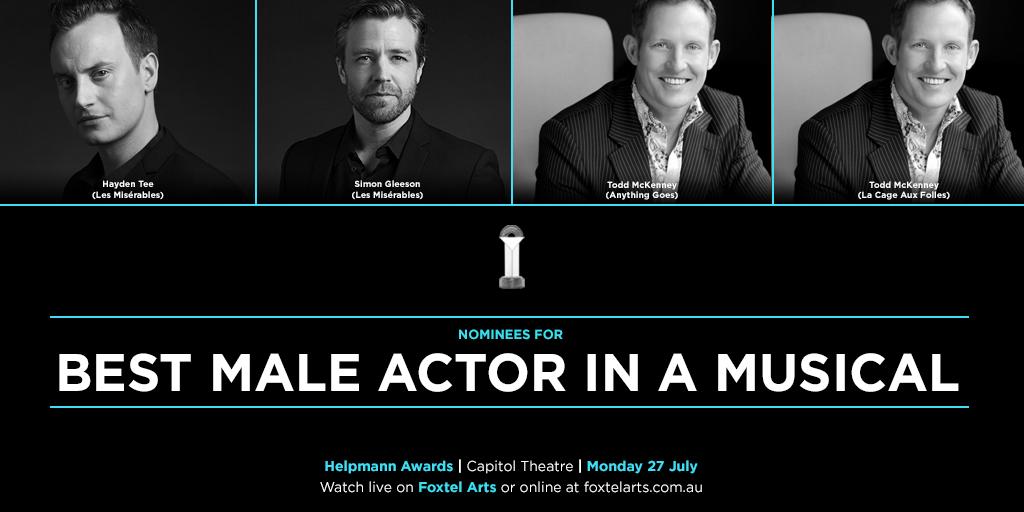
BEST MALE ACTOR IN A MUSICAL
HAYDEN TEE
Les Misérables (Cameron Mackintosh Australia)
SIMON GLEESON
Les Misérables (Cameron Mackintosh Australia)
TODD MCKENNEY
Anything Goes (Opera Australia and John Frost)
TODD MCKENNEY
La Cage Aux Folles (The Production Company)
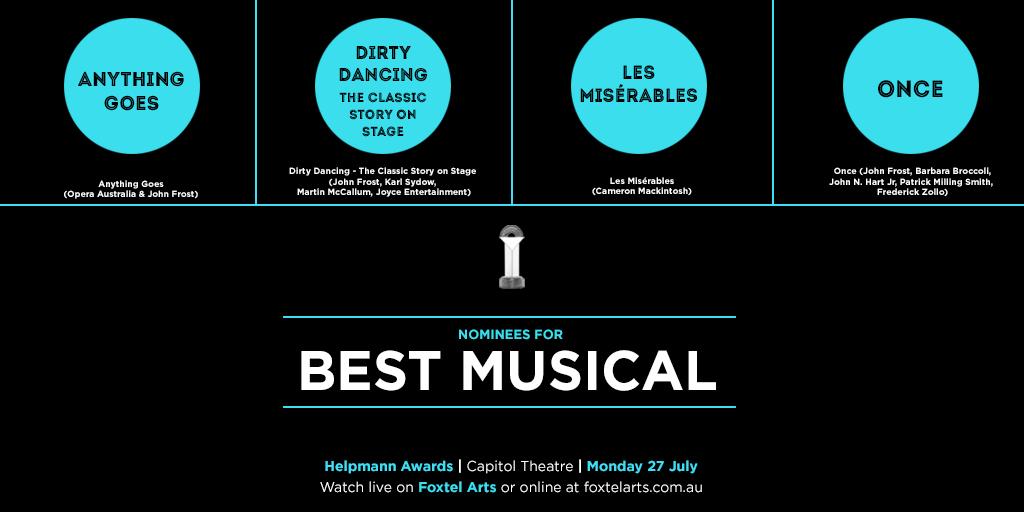
BEST MUSICAL
ANYTHING GOES
Opera Australia and John Frost
DIRTY DANCING – THE CLASSIC LOVE STORY ON STAGE
John Frost, Karl Sydow, Martin McCullum and Joyce Entertainment
LES MISÉRABLES
Cameron Mackintosh
ONCE
John Frost, Barbara Broccoli, John N. Hart Jr., Patrick Milling Smith, Frederick Zollo
INDUSTRY AWARDS
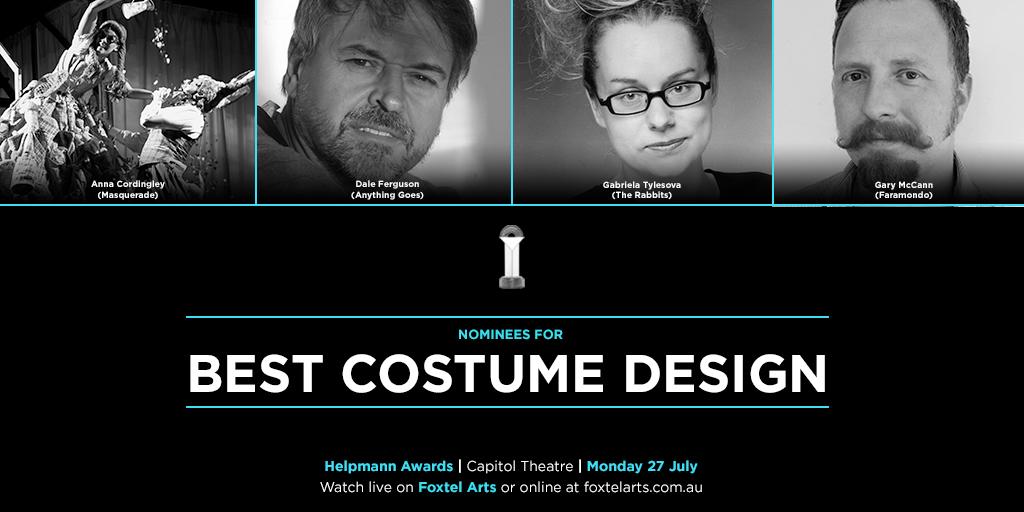
BEST COSTUME DESIGN
ANNA CORDINGLEY
Masquerade (Griffin Theatre Company and State Theatre Company of South Australia)
DALE FERGUSON
Anything Goes (Opera Australia and John Frost)
GABRIELA TYLESOVA
The Rabbits (Opera Australia and Barking Gecko Theatre Company)
GARY MCCANN
Faramondo (Brisbane Baroque in association with QPAC)
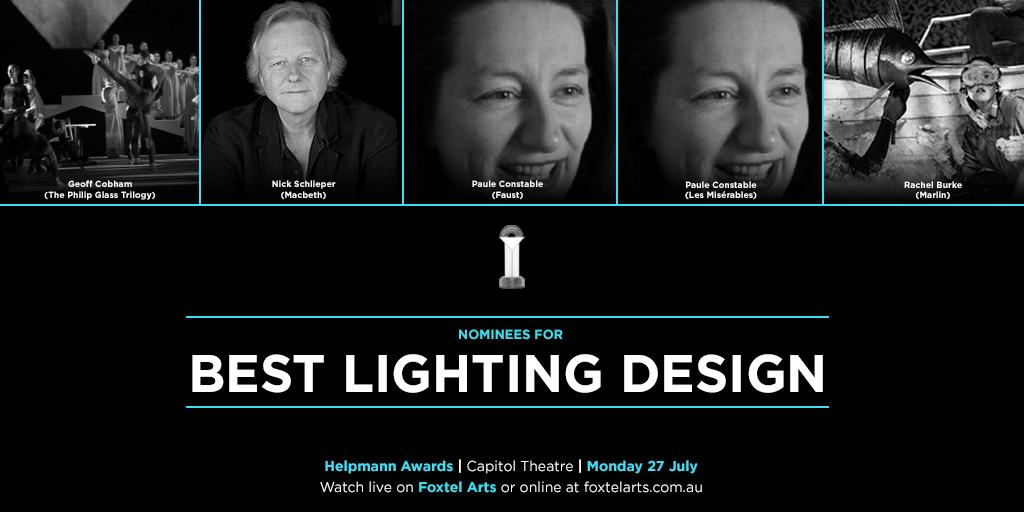
BEST LIGHTING DESIGN
GEOFF COBHAM
The Philip Glass Trilogy (State Opera Company, South Australia)
NICK SCHLIEPER
Macbeth (Sydney Theatre Company)
PAULE CONSTABLE
Faust (Opera Australia)
PAULE CONSTABLE
Les Misérables (Cameron Mackintosh Australia)
RACHEL BURKE
Marlin (Arena Theatre Company and Melbourne Theatre Company)
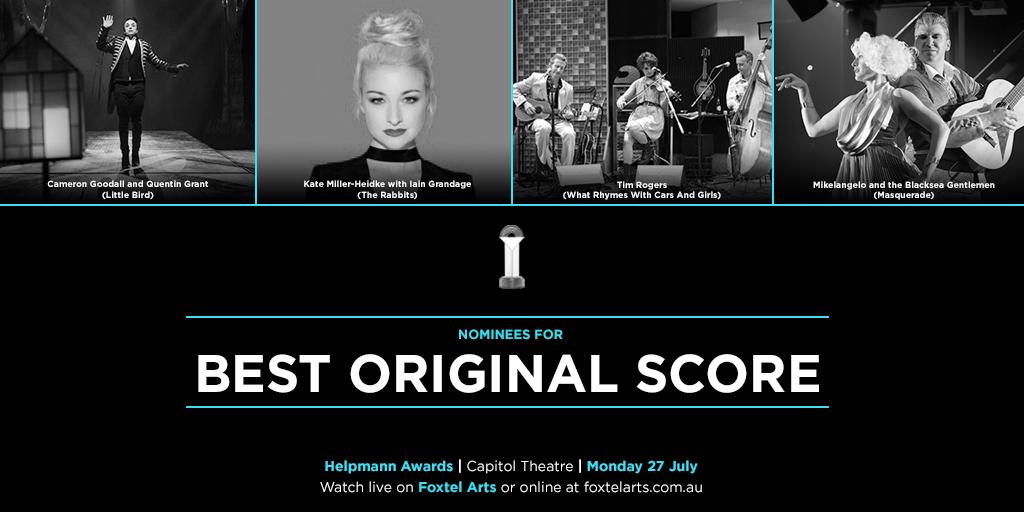
BEST ORIGINAL SCORE
CAMERON GOODALL and QUENTIN GRANT
Little Bird (State Theatre Company of South Australia)
KATE MILLER-HEIDKE with IAIN GRANDAGE
The Rabbits (Opera Australia)
MIKELANGELO and THE BLACKSEA GENTLEMEN
Masquerade (Griffin Theatre Company and State Theatre Company of South Australia)
TIM ROGERS
What Rhymes with Cars and Girls (Melbourne Theatre Company)
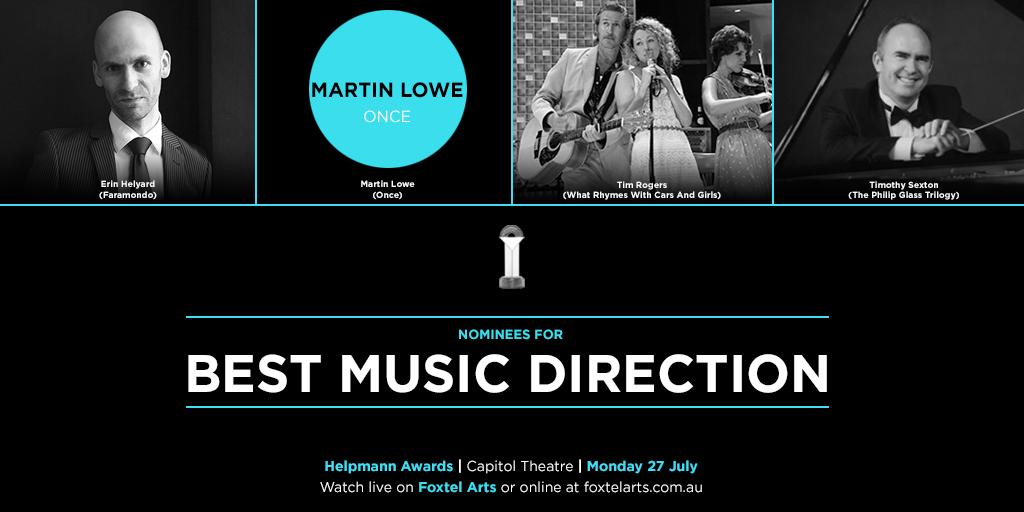
BEST MUSIC DIRECTION
ERIN HELYARD
Faramondo (Brisbane Baroque)
MARTIN LOWE
Once (John Frost, Barbara Broccoli, John N. Hart Jr., Patrick Milling Smith, Frederick Zollo)
TIM ROGERS
What Rhymes with Cars and Girls (Melbourne Theatre Company)
TIMOTHY SEXTON
The Philip Glass Trilogy (State Opera South Australia)
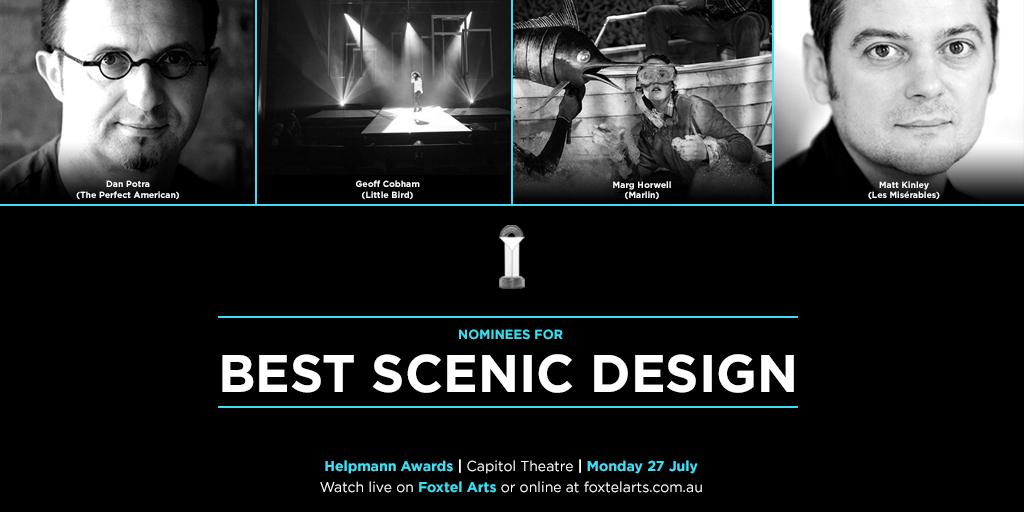
BEST SCENIC DESIGN
DAN POTRA
The Perfect American (Brisbane Festival and Opera Queensland)
GEOFF COBHAM
Little Bird (State Theatre Company of South Australia)
MARG HORWELL
Marlin (Arena Theatre Company and Melbourne Theatre Company)
MATT KINLEY
Les Misérables (Cameron Mackintosh Australia)
BEST SOUND DESIGN
CLIVE GOODWIN
Once (John Frost, Barbara Broccoli, John N. Hart Jr., Patrick Milling Smith, Frederick Zollo)
JD BRILL, CLAIR GLOBAL and EAGLES
Eagles | History of the Eagles Live In Concert 2015 (The Eagles and Frontier Touring)
MICHAEL WATERS
Anything Goes (Opera Australia and John Frost)
MICK POTTER
Les Misérables (Cameron Mackintosh Australia)
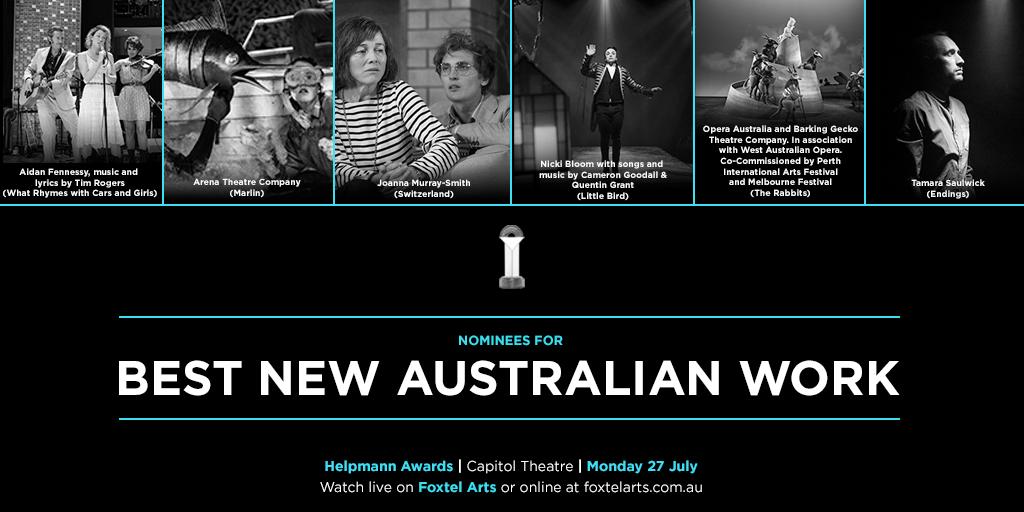
BEST NEW AUSTRALIAN WORK
AIDAN FENNESSY, MUSIC AND LYRICS BY TIM ROGERS
What Rhymes with Cars and Girls (Melbourne Theatre Company)
ARENA THEATRE COMPANY
Marlin (Arena Theatre Company and Melbourne Theatre Company)
JOANNA MURRAY-SMITH
Switzerland (Sydney Theatre Company)
NICKI BLOOM with songs and music by CAMERON GOODALL and QUENTIN GRANT
Little Bird (State Theatre Company of South Australia)
OPERA AUSTRALIA and BARKING GECKO THEATRE COMPANY
The Rabbits (Opera Australia and Barking Gecko Theatre Company)
TAMARA SAULWICK
Endings (Sydney Festival and Insite Arts)
CONTEMPORARY MUSIC
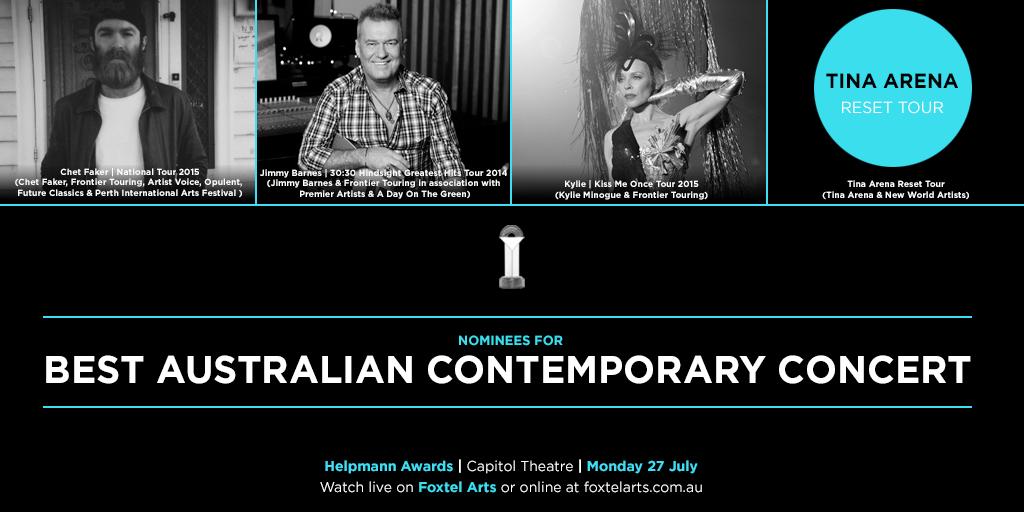
BEST AUSTRALIAN CONTEMPORARY CONCERT
CHET FAKER | NATIONAL TOUR 2015
JIMMY BARNES | 30:30 HINDSIGHT GREATEST HITS TOUR 2014
KYLIE | KISS ME ONCE TOUR 2015
TINA ARENA RESET TOUR
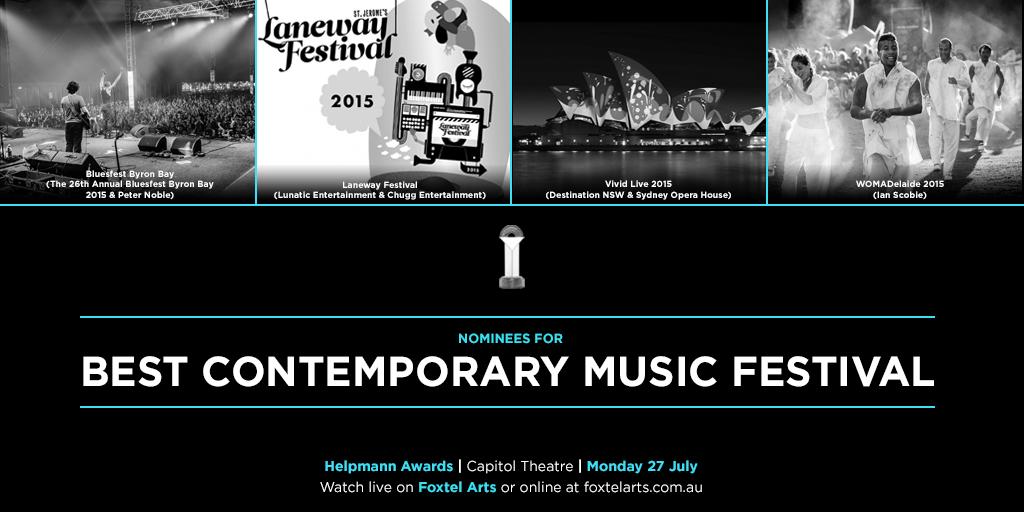
BEST CONTEMPORARY MUSIC FESTIVAL
BLUESFEST BYRON BAY
LANEWAY FESTIVAL
VIVID LIVE 2015
WOMADELAIDE 2015
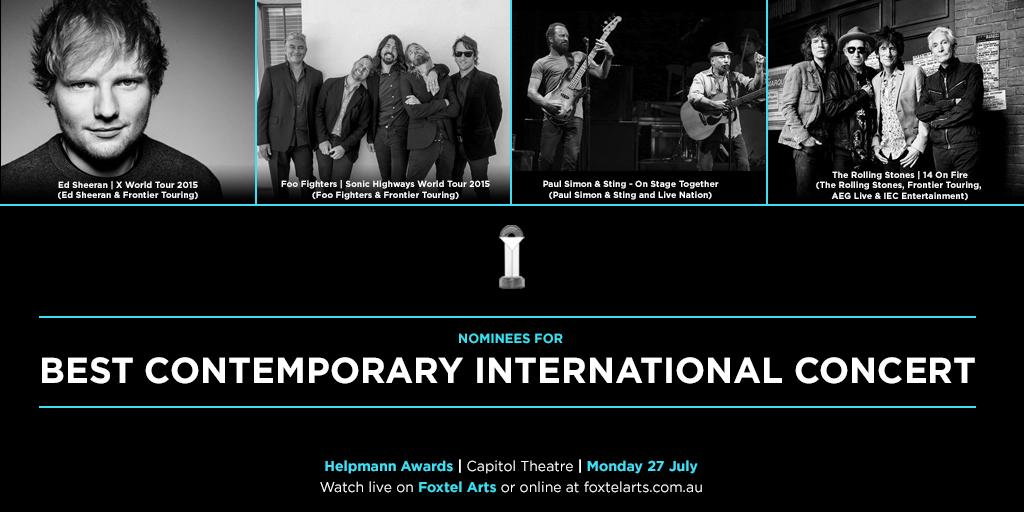
BEST CONTEMPORARY INTERNATIONAL CONCERT
ED SHEERAN | X WORLD TOUR 2015
FOO FIGHTERS | SONIC HIGHWAYS WORLD TOUR 2015
PAUL SIMON and STING – ON STAGE TOGETHER
THE ROLLING STONES | 14 ON FIRE
COMEDY
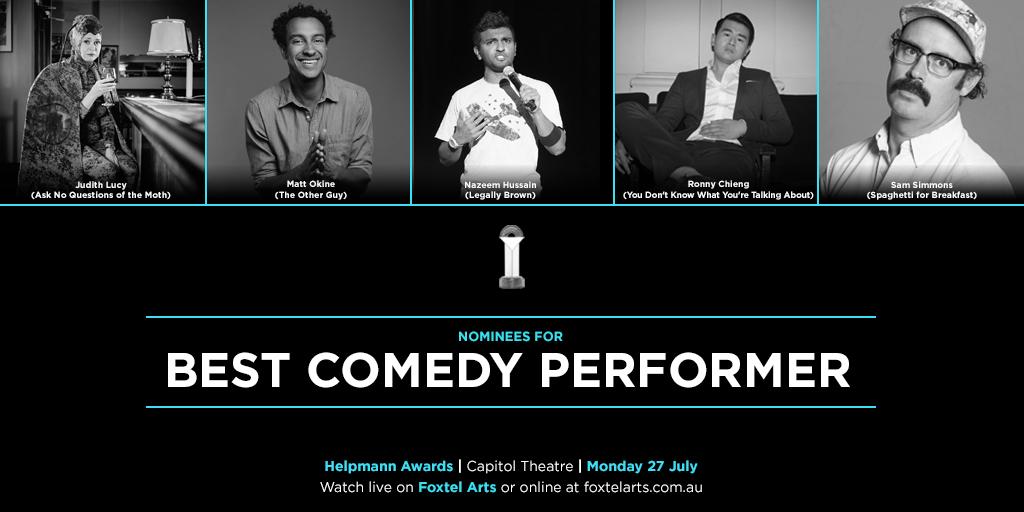
BEST COMEDY PERFORMER
JUDITH LUCY
Judith Lucy – Ask No Questions of the Moth (Token Events)
MATT OKINE
The Other Guy (Century Entertainment)
NAZEEM HUSSAIN
Nazeem Hussain – Legally Brown (Live Nation)
RONNY CHIENG
You Don’t Know What You’re Talking About (Century Entertainment)
SAM SIMMONS
Sam Simmons – Spaghetti for Breakfast (Token Events)
CABARET
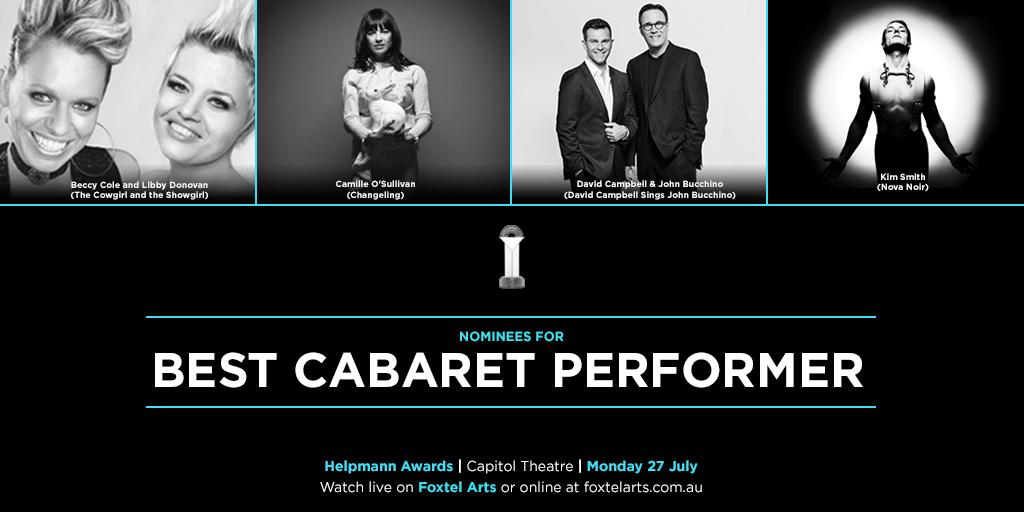
BEST CABARET PERFORMER
BECCY COLE and LIBBY DONOVAN
The Cowgirl and the Showgirl (Adelaide Festival Centre Trust)
CAMILLE O’SULLIVAN
Camille O’Sullivan – Changeling (Arts Centre Melbourne)
DAVID CAMPBELL and JOHN BUCCHINO
David Campbell Sings John Bucchino (Luckiest Productions)
KIM SMITH
Nova Noir (Adelaide Festival Centre Trust)
DANCE AND PHYSICAL THEATRE
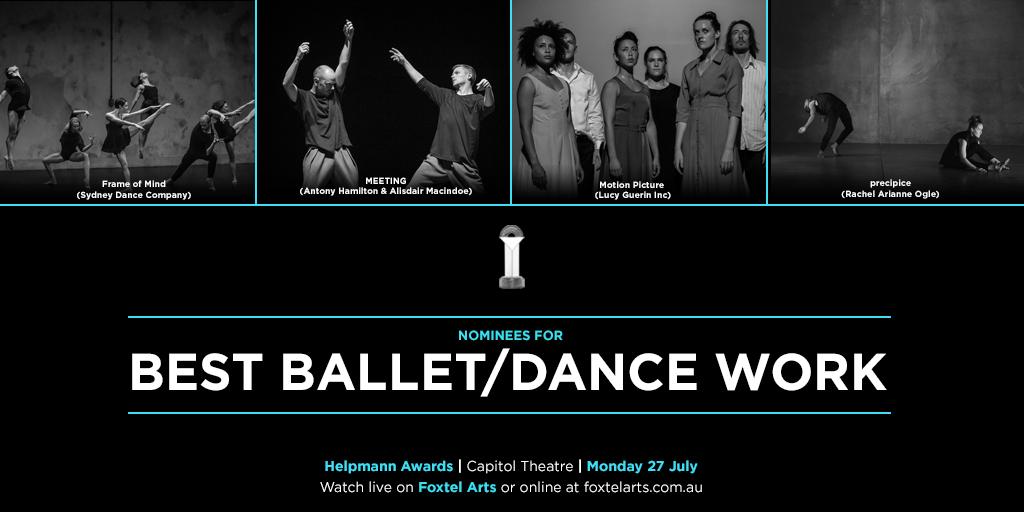
BEST BALLET OR DANCE WORK
FRAME OF MIND
Sydney Dance Company
MEETING
Antony Hamilton and Alisdair Macindoe
MOTION PICTURE
Lucy Guerin Inc
PRECIPICE
Rachel Arianne Ogle
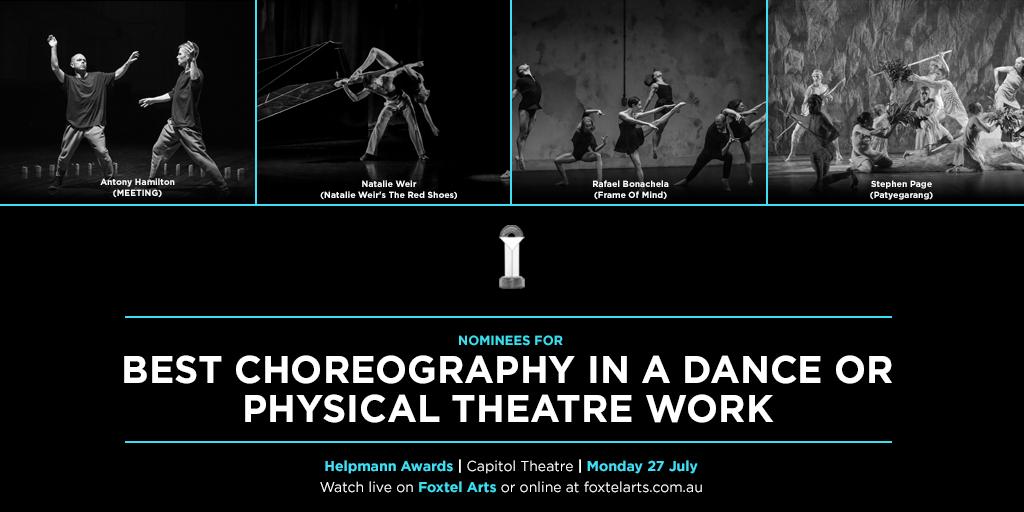
BEST CHOREOGRAPHY IN A DANCE OR PHYSICAL THEATRE PRODUCTION
ANTONY HAMILTON
MEETING (Antony Hamilton Projects, Arts House and Insite Arts)
NATALIE WEIR
Natalie Weir’s The Red Shoes (Expressions Dance Company and Queensland Performing Arts Centre)
RAFAEL BONACHELA
Frame of Mind (Sydney Dance Company)
STEPHEN PAGE
Patyegarang (Bangarra Dance Theatre)
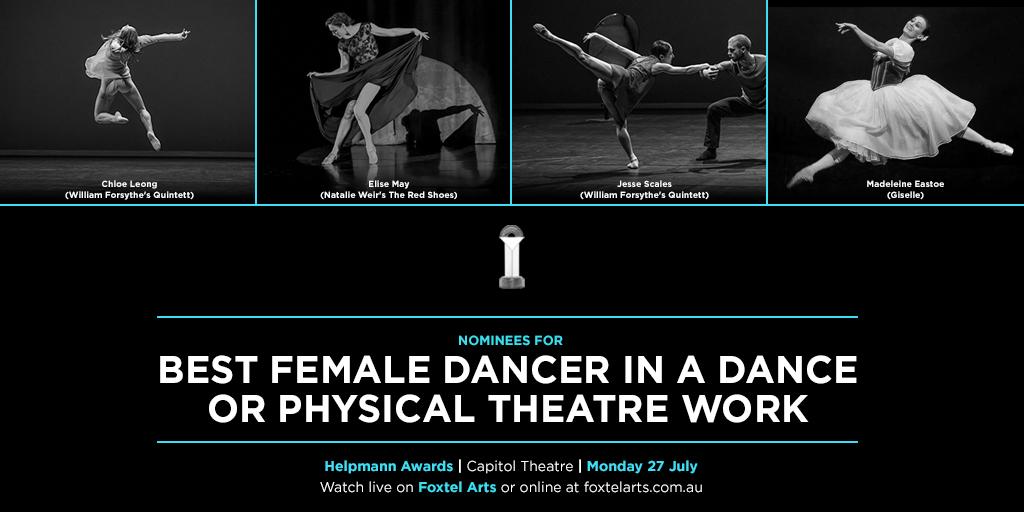
BEST FEMALE DANCER IN A DANCE OR PHYSICAL THEATRE PRODUCTION
CHLOE LEONG
William Forsythe’s Quintett (Sydney Dance Company)
ELISE MAY
Natalie Weir’s The Red Shoes (Expressions Dance Company and Queensland Performing Arts Centre)
JESSE SCALES
William Forsythe’s Quintett (Sydney Dance Company)
MADELEINE EASTOE
Giselle (The Australian Ballet)
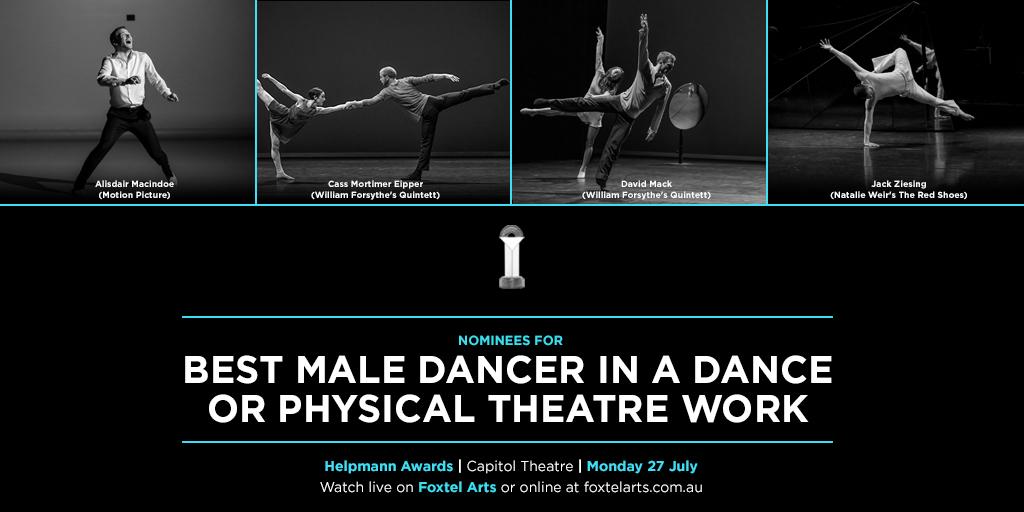
BEST MALE DANCER IN A DANCE OR PHYSICAL THEATRE PRODUCTION
ALISDAIR MACINDOE
Motion Picture (Lucy Guerin Inc)
CASS MORTIMER EIPPER
William Forsythe’s Quintett (Sydney Dance Company)
DAVID MACK
William Forsythe’s Quintett (Sydney Dance Company)
JACK ZIESING
Natalie Weir’s The Red Shoes (Expressions Dance Company and Queensland Performing Arts Centre)
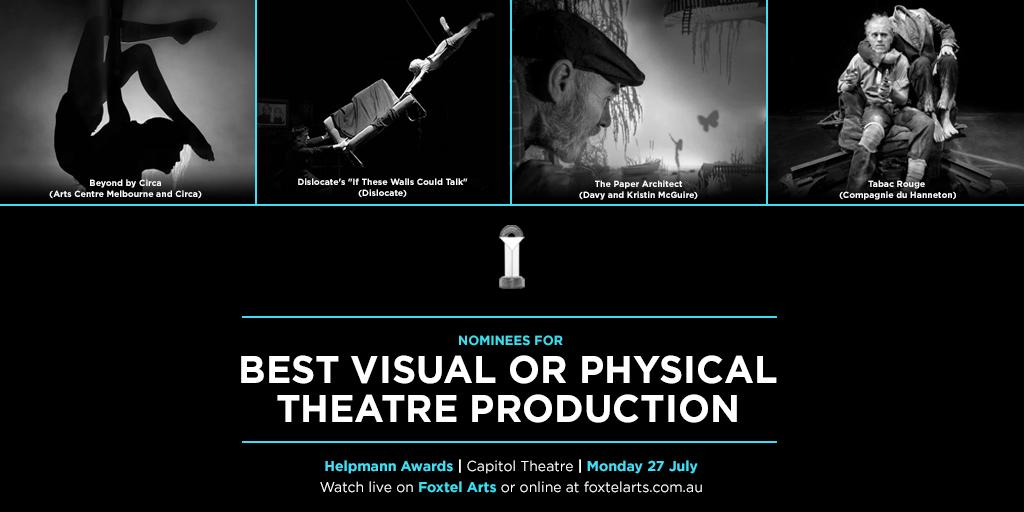
BEST VISUAL OR PHYSICAL THEATRE PRODUCTION
BEYOND THE CIRCA
Arts Centre Melbourne and Circa
DISLOCATE’S “IF THESE WALLS COULD TALK”
Marguerite Pepper Productions
THE PAPER ARCHITECT
Davy and Kristin McGuire and Perth International Arts Festival
TABAC ROUGE
Produced by Compagnie du Hanneton, presented by Sydney Festival
OPERA AND CLASSICAL MUSIC
BEST DIRECTION OF AN OPERA
DAVID MCVICAR
Faust (Opera Australia)
DAVID MCVICAR
Don Giovanni (Opera Australia)
LEIGH WARREN
Philip Glass Trilogy (State Opera of South Australia)
PAUL CURRAN
Faramondo (Brisbane Baroque)
BEST FEMALE PERFORMER IN A SUPPORTING ROLE IN AN OPERA
ANNA DEVIN
Faramondo (Brisbane Baroque)
ANNA STARUSHKEVYCH
Faramondo (Brisbane Baroque)
NICOLE CAR
Don Giovanni (Opera Australia)
TARYN FIEBIG
Don Giovanni (Opera Australia)
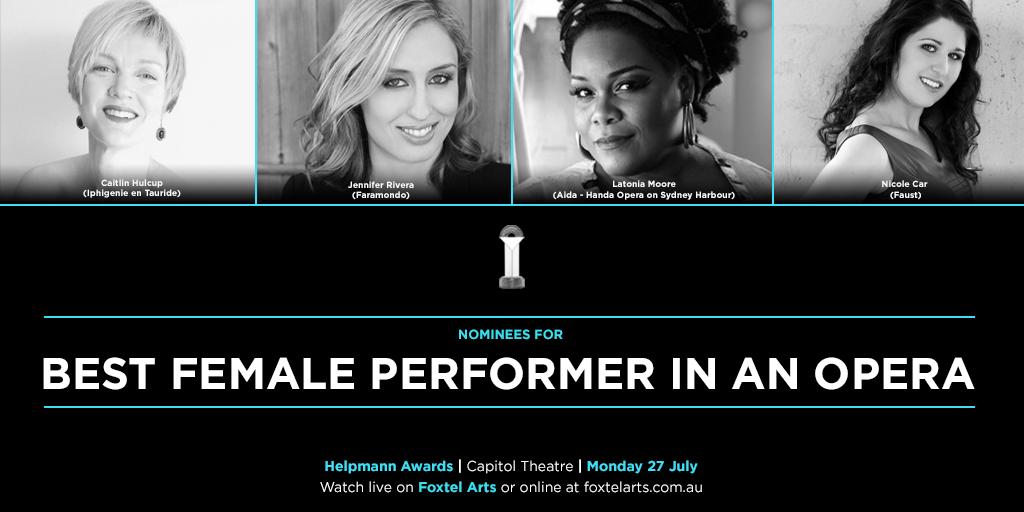
BEST FEMALE PERFORMER IN AN OPERA
CAITLIN HULCUP
Iphigenie en Tauride (Pinchgut Opera)
JENNIFER RIVERA
Faramondo (Brisbane Baroque)
LATONIA MOORE
Aida – Handa Opera on Sydney Harbour (Opera Australia)
NICOLE CAR
Faust (Opera Australia)
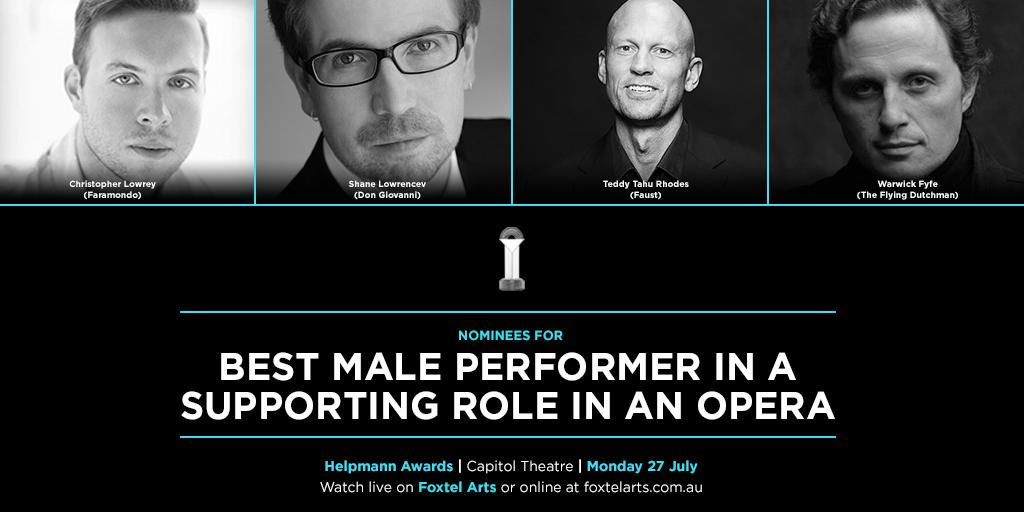
BEST MALE PERFORMER IN A SUPPORTING ROLE IN AN OPERA
CHRISTOPHER LOWREY
Faramondo (Brisbane Baroque)
SHANE LOWRENCEV
Don Giovanni (Opera Australia)
TEDDY TAHU RHODES
Faust (Opera Australia)
WARWICK FYFE
The Flying Dutchman (Victorian Opera)
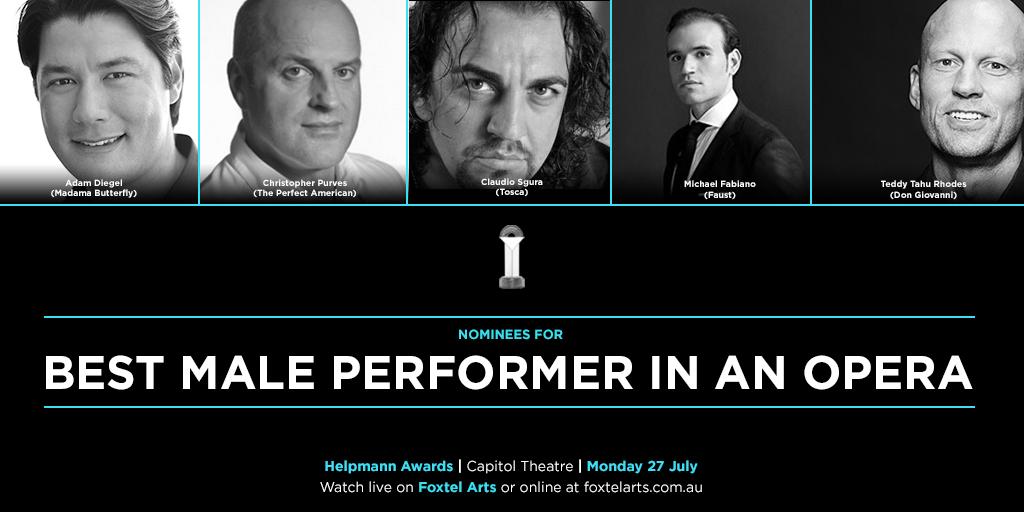
BEST MALE PERFORMER IN AN OPERA
ADAM DIEGEL
Madama Butterfly (English National Opera, Metropolitan Opera and Lithuanian National Opera)
CHRISTOPHER PURVES
The Perfect American (Brisbane Festival and Opera Queensland)
CLAUDIO SGURA
Tosca (Opera Australia)
MICHAEL FABIANO
Faust (Opera Australia)
TEDDY TAHU RHODES
Don Giovanni (Opera Australia)
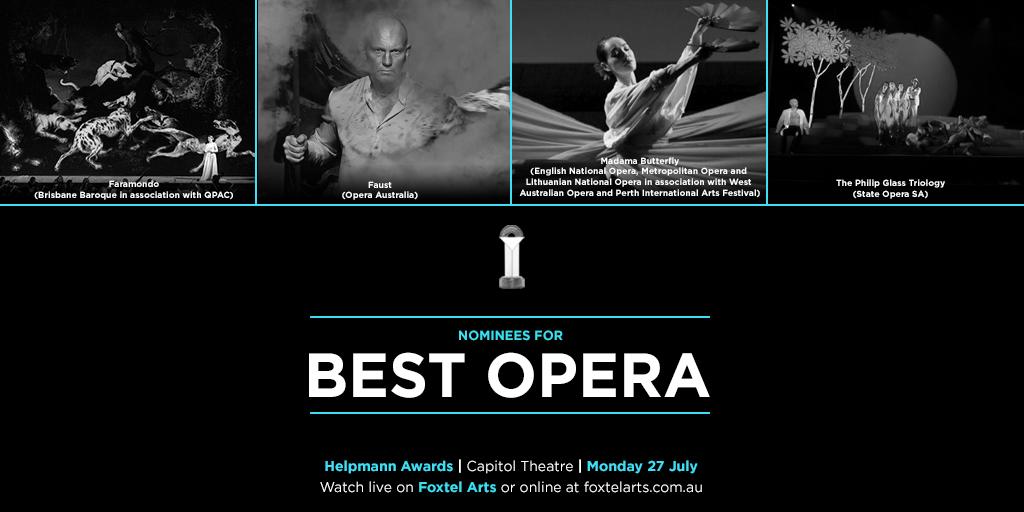
BEST OPERA
FARAMONDO (Brisbane Baroque)
FAUST (Opera Australia)
MADAMA BUTTERFLY (English National Opera, Metropolitan Opera and Lithuanian National Opera)
THE PHILIP GLASS TRILOGY (State Opera South Australia)
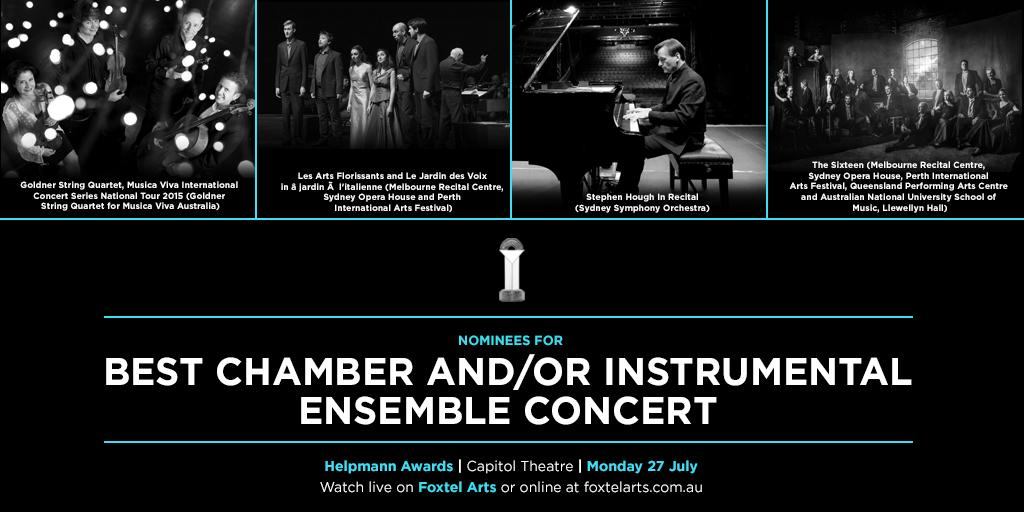
BEST CHAMBER AND/OR INSTRUMENTAL ENSEMBLE CONCERT
GOLDNER STRING QUARTET, MUSICA VIVA INTERNATIONAL CONCERT SERIES NATIONAL TOUR 2015
Goldner String Quartet for Musica Viva Australia
LES ARTS FLORISSANTS and LE JARDIN DES VOIX IN Â JARDIN Ã L’ITALIENNE
Melbourne Recital Centre, Sydney Opera House and Perth International Arts Festival
THE SIXTEEN
Melbourne Recital Centre, Sydney Opera House, Perth International Arts Festival, Queensland Performing Arts Centre and Australian National University of Music, Llewellyn Hall
STEPHEN HOUGH IN RECITAL
Sydney Symphony Orchestra
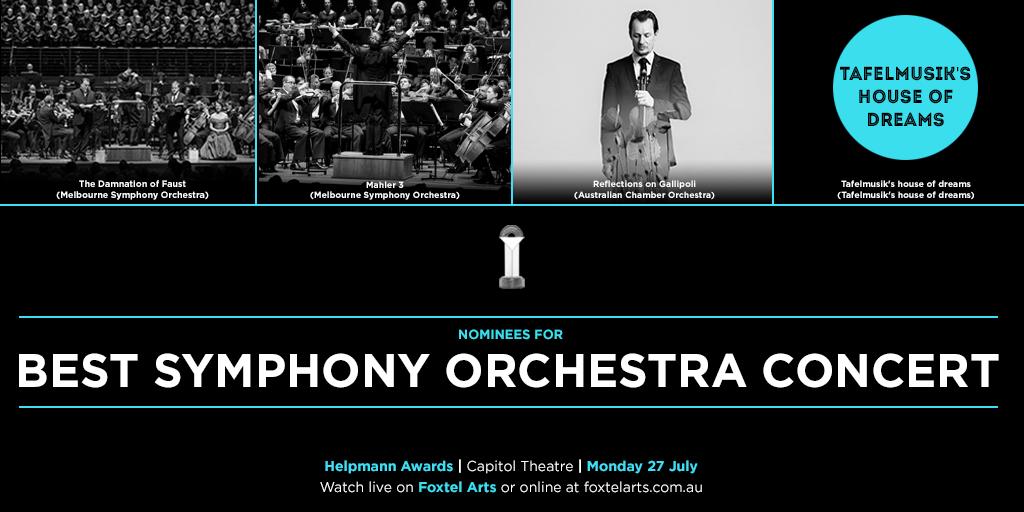
BEST SYMPHONY ORCHESTRA CONCERT
THE DAMNATION OF FAUST
Melbourne Symphony Orchestra
MAHLER 3
Melbourne Symphony Orchestra
REFLECTIONS ON GALLIPOLI
Australian Chamber Orchestra
TAFELMUSIK’S HOUSE OF DREAMS
Musica Viva
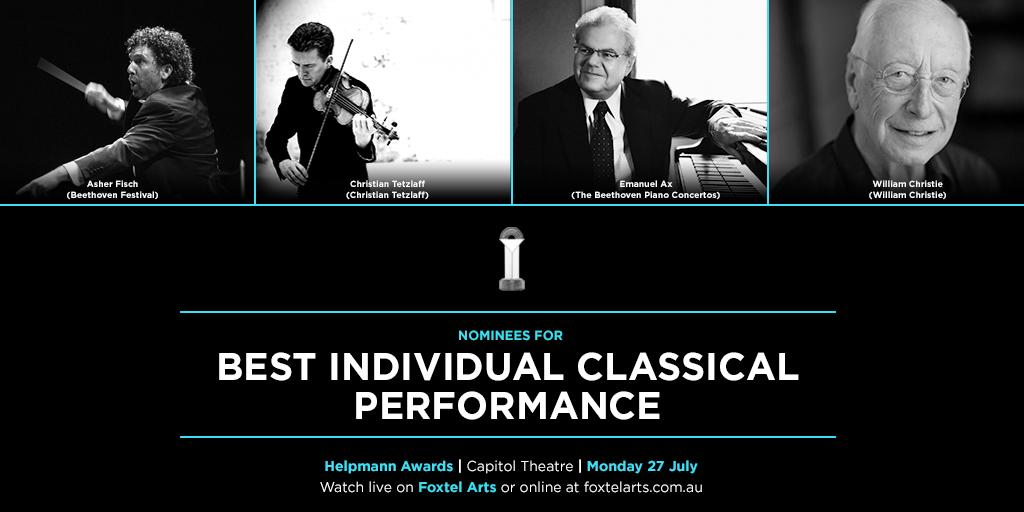
BEST INDIVIDUAL CLASSICAL MUSIC PERFORMANCE
ASHER FISCH
Beethoven Festival (West Australian Symphony Orchestra)
CHRISTIAN TETZLAFF
Christian Tetlaff (Melbourne Recital Centre)
EMANUEL AX
The Beethoven Piano Concertos (Sydney Symphony Orchestra)
WILLIAM CHRISTIE
William Christie (Melbourne Recital Centre, Sydney Opera House, and Perth International Arts Festival)
REGIONAL TOURING PRODUCTIONS
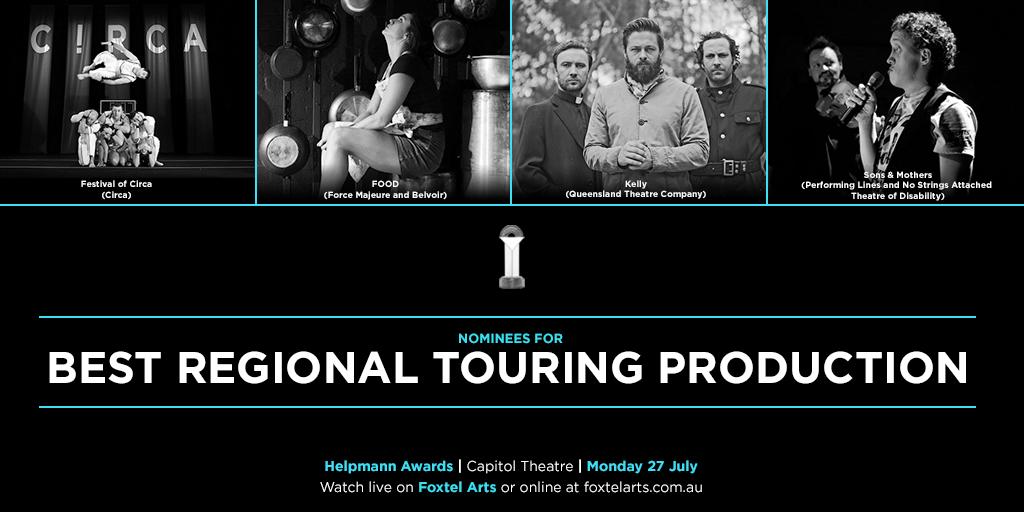
BEST REGIONAL TOURING PRODUCTION
FESTIVAL OF CIRCA
Circa
FOOD
Force Majeure and Belvoir
KELLY
Queensland Theatre Company
SONS & MOTHERS
Performing Lines and No Strings Attached Theatre of Disability
CHILDREN’S PRESENTATIONS
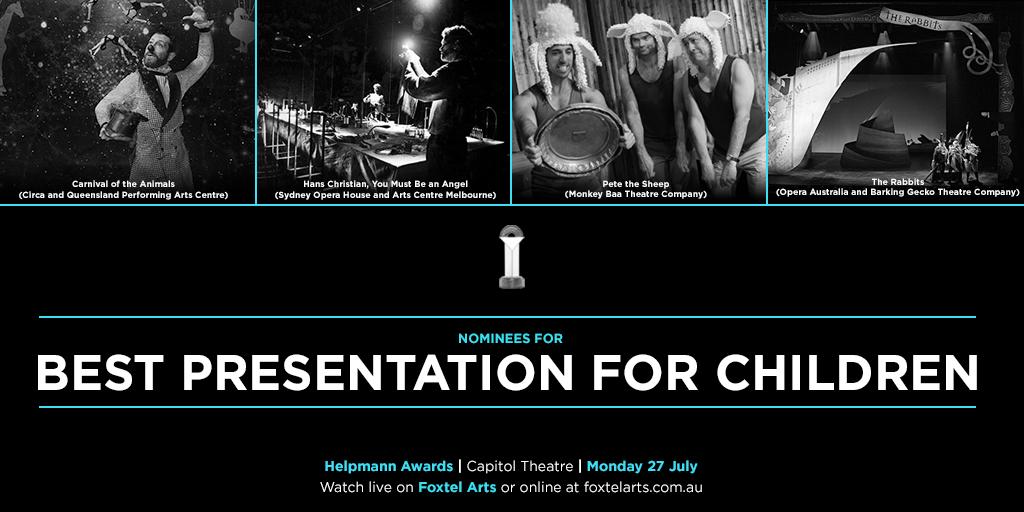
BEST PRESENTATION FOR CHILDREN
CARNIVAL OF THE ANIMALS
Circa and Queensland Performing Arts Centre
HANS CHRISTIAN, YOU MUST BE AN ANGEL
Sydney Opera House and Arts Centre Melbourne
PETE THE SHEEP
Monkey Baa Theatre Company
THE RABBITS
Opera Australia and Barking Gecko Theatre Company, in association with West Australian Opera, cocommissioned
by Perth International Arts Festival and Melbourne Festival
2015 HELPMANN AWARDS BESTOWED AWARD
BEST SPECIAL EVENT
PERTH INTERNATIONAL ARTS FESTIVAL IN ASSOCIATION WITH ROYAL DE LUXE
The Incredible and Phenomenal Journey of the Giants to the Streets of Perth
LIFETIME ACHIEVEMENT AWARDS
SUE NATTRASS AWARD™
ERIC ROBINSON
JC WILLIAMSON AWARD®
PAUL KELLY
BRIAN STACEY AWARD 2015
JESSICA GETHIN
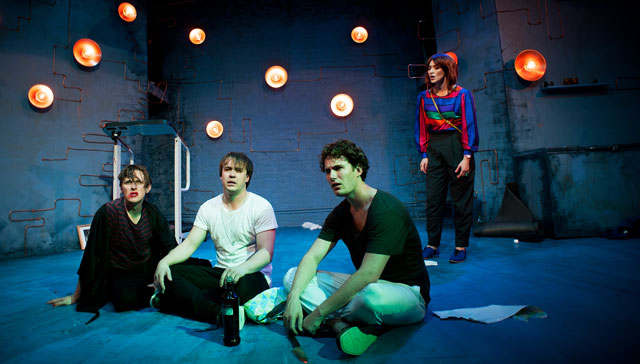 Venue: Old Fitzroy Theatre (Woolloomooloo NSW), Jun 30 – Jul 25, 2015
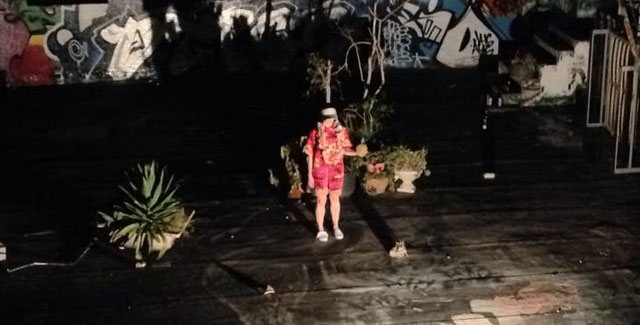 Venue: Old 505 Theatre (Surry Hills NSW), June 30 – July 5, 2015

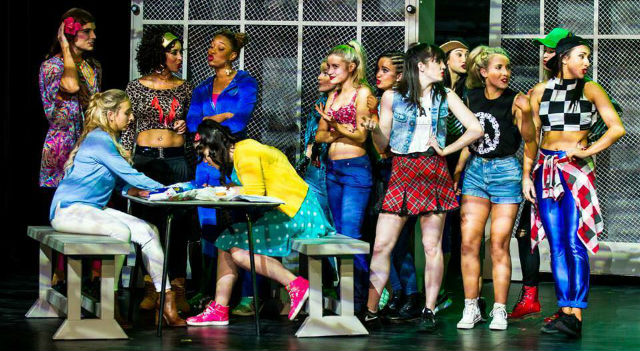 Venue: NIDA Parade Theatres (Sydney NSW), June 27 – July 9, 2015
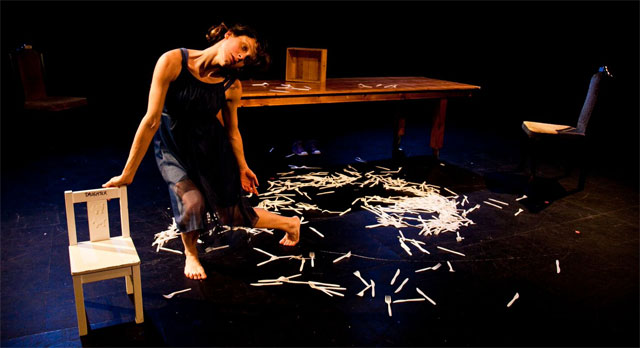 Venue: PACT Theatre (Erskineville NSW), June 17 – 20, 2015
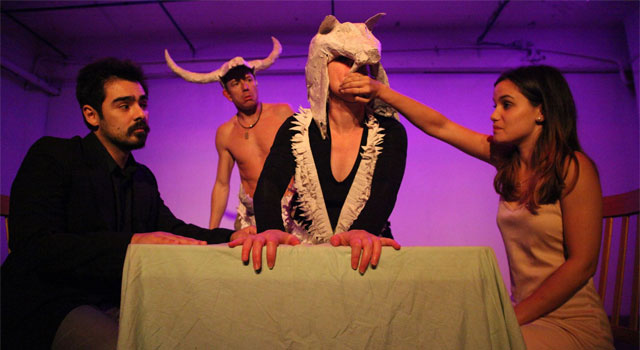 Venue: Old 505 Theatre (Surry Hills NSW), Jun 23 – 28, 2015
![781198-f461dc9e-0993-11e5-8dc7-b0c4f7af3b6c[1]](https://suzygoessee.com/wp-content/uploads/2015/06/781198-f461dc9e-0993-11e5-8dc7-b0c4f7af3b6c1.jpg?w=640&h=360) Venue: Theatre Royal (Sydney NSW), Jun 18 – Jul 5, 2015
Venue: Theatre Royal (Sydney NSW), Jun 18 – Jul 5, 2015


 Venue: Seymour Centre (Sydney NSW), Jun 17 – Jul 4, 2015
