5 Questions with Jacki Mison and Liam Nunan

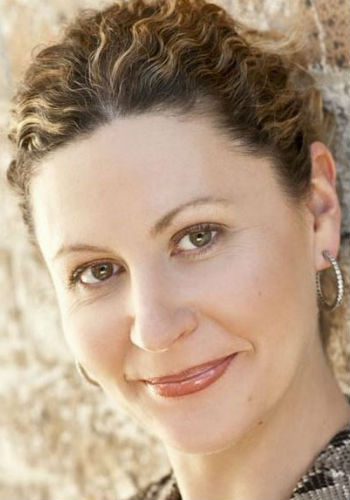
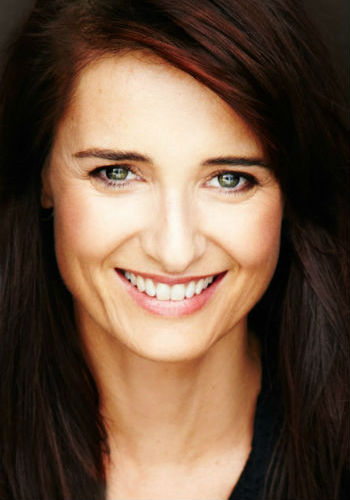
Jacki Mison

Jacki Mison

Liam Nunan: If you could have the career of any other actor, who would that be?
Jacki Mison: Sigourney Weaver because I was a huge sci-fi fan growing up and Ripley was my idol! She’s tough, funny, smart and able to move across genres, stage and screen.

As a producer and actor, what drew you to putting on Orphans?
I had seen a fantastic production of Orphans done a few years ago by the Queensland Theatre Company and it was one of those shows that really stayed with me for a long time. The intensity of it, Dennis Kelly’s particular style of dialogue and the moral dilemma at the core of it, for my character Helen, led me to try and secure a production. It was also in a completely different ballpark to the last show I had produced, which was an American comedy, so it felt right to switch things up.

Tell us about Helen. What excites you most about playing her?
I love the fact that she is a survivor. She is one of those people who are capable of doing the things that need to be done. But the personal cost, while not always evident, eventually bubbles up. She’s incredibly complex and has a fascinating arc throughout the play.

If, when you died, you could come back as any character in theatre, who would it be?
Would love to be one of the witches from Macbeth!

What character or production in your body of work are you most proud of?
My Subway commercial…
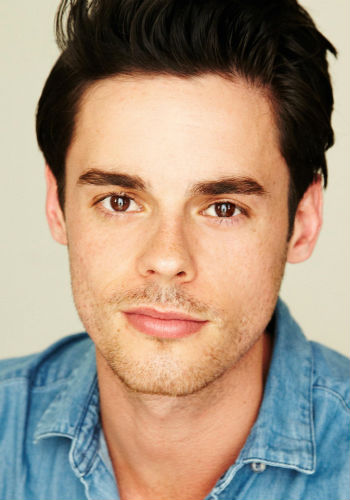
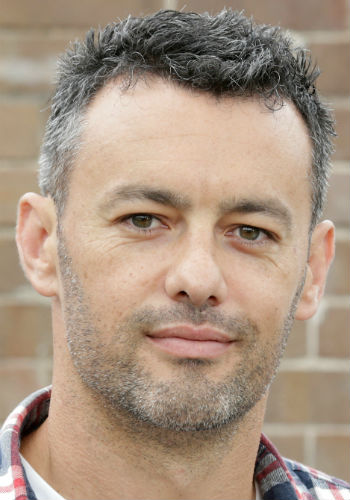
Liam Nunan

Liam Nunan

Jacki Mison: Dennis Kelly has written an intense, fast-moving play with Orphans. What has been your biggest challenge with the role of Liam so far?
Liam Nunan: Understanding Liam’s thought process. The play is written in a sort of chaotic frenzy of interrupting dialogue and if the rhythm isn’t spot on, the whole thing can come crashing down. You need to be hyper aware of what words trigger your impulse to launch over the other characters’ lines. Liam also changes his thought process faster than he has time to verbally articulate it. So he very often doesn’t finish his thoughts at all and talks himself in circles. So to answer your question; the acting bit.

Do you choose particular underpants for each character you play?
Great question, Jacki. Not by myself. I like to think it’s a collaborative process. I prefer to get the designers input early on before rehearsals begin and have some renderings sketched up to put forward to the director. If we can’t come to an agreement I usually get my agent involved. Surprisingly, most of the time, no one but me cares.

Who are the actors that most inspire you?
I’m inspired by actors that allow themselves to be inspired. I don’t know who said ‘Don’t be interesting. Be interested’ (or something like that) but the same can be said here. I love watching and working with actors that are open and ready to be inspired. They allow themselves to be changed by you and respond so organically, you can’t help but be changed by them.

What’s been your most embarrassing moment on stage so far?
In drama school we had just finished our first production open to the general public, The Winter’s Tale. We ran on for our curtain call, bowed, and ran off. In the wings everyone turned and ushered me to run back on to lead a second curtain call. ‘That makes sense’, I thought. ‘The audience have just sat through 3 and a half hours of 2nd year student actors doing Shakespeare whilst dressed as cowboys with southern American accents. It’s likely the best thing they’ve seen this year. I sure think it is. Of course they want more’. So I bounded back on stage. Half the audience were already making there way up the aisle. I look around, and of course I’m alone, dressed as Old Shepherd. The cast laugh. The audience look back and they laugh. Everyone laughs.

There was also the time in year 12 I had a testy blow out while I was singing ‘Maria’ in West Side Story.

If you had a choice of any role, stage or screen, what would it be?
Believe it or not, Liam in Orphans by Dennis Kelly. I’ve wanted to do this play for a while now. I saw a brilliant production of it at QTC a number of years back. I was absolutely shaken by it. I picked it up and read it maybe a year later and I was still just as moved. I thought ‘I must play this role’. I jumped at the opportunity and I’m thrilled I’ve been given the chance to play with such a complex character.

Jacki Mison and Liam Nunan can be seen in Orphans by Dennis Kelly.
Dates: 19 -30 April, 2016
Venue: Old Fitz Theatre
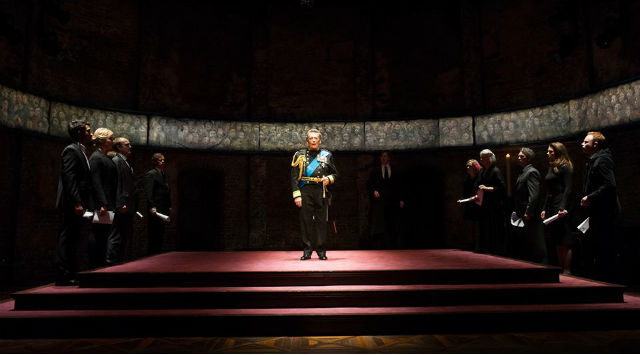
Review: King Charles III (Almeida Theatre)

stcVenue: Roslyn Packer Theatre at Walsh Bay (Sydney NSW), Mar 31 – Apr 30, 2016
Playwright: Mike Bartlett
Director: Rupert Goold, Whitney Mosery
Cast: Jennifer Bryden, Richard Glaves, Dominic Jephcott, Geoffrey Lumb, Lucy Phelps, Carolyn Pickles, Robert Powell, Ben Righton, Giles Taylor, Tim Treloar, Beatrice Walker, Paul Westwood, Emily Swain, Emily-Celine Thomson, Ryan Whittle, Karl Wilson
Image by Richard Hubert-Smith

Theatre review
Many consider the monarchy to be an archaic and irrelevant institution. It is constantly under scrutiny and criticism, mostly for the notion that it bleeds the economy of money without seeming to contribute anything concrete. In Mike Bartlett’s imagined near future, Prince Charles finally ascends the throne, and we are presented with the astonishing circumstance of the new king exerting his right to influence governance of the United Kingdom. The silent figurehead decides to act according to his conscience, and opposes the passage of a new law by parliament, which results in unadulterated pandemonium and excellent drama. Bartlett’s story about the most famous family in the world is part Shakespearean, part tabloid influenced. The high and low brow concoction speaks to our perceptions about the royals; we think of them as enigmatic, grand and otherworldly, but also as gossip fodder, with petty concerns that our curiosity feels entitled to.

The show begins with exquisite humour, then develops increasingly heavy, ultimately ending in great pessimism similar to many cautioning fables about governments and democracy. Even though energy levels drop significantly as the plot turns serious, both its comedic and dramatic aspects are effectively conveyed. We are gripped by its fast moving scenes, each one short and scintillating, as though on steroids courtesy of prime-time TV. Its familiar personalities are seen just the way we expect them to be, but with additional dimensions that provide surprises to the startling narratives that unfold. Bartlett’s dialogue is endlessly amusing in its juxtaposition of contemporary speech with Shakespearean conventions, which the cast delivers with impressive skill and fluency.

Richard Glaves is a memorable Prince Harry, endearing and vulnerable just the way many would wish him to be. Humour in the production is extremely contained, but Glaves is able to find a sense of mischief within the restraints, consistently depicting emotional authenticity while asserting the entertaining qualities of his role. Charles is played by Robert Powell, imposing and noble, utterly believable as King. His portrayal bears little cosmetic resemblance to the character we see regularly on the news, but is full of nuance and texture. Even though appropriately stoic and stiff upper lipped, Powell brings complexity and psychological accuracy to the piece, replete with humane ambiguities that challenge our moralistic judgements. We find our opinions about Charles constantly shifting as we gain an increasingly deeper understanding of his nature and intentions.

We look for bad guys in the play, but there are no convenient answers. Democracy is what we value most in the collective entity we term society, and its machinations are evaluated in King Charles III in a theatrical but honest way. There are many Australians passionate about turning our country into a republic, and the play certainly pleads a strong argument for that case. Our democracy may be flawed but it is what we hold dear. In the play, Charles is a good man, and could well be a great leader, but he is not appointed by the people and further, unprotected by our legal and political processes. Civilisations need to work towards greater transparency, so that our progress may reach closer to democratic ideals, but the monarchy, by definition, contravenes those principles we revere in the highest regard. This story seems a wild one, but it resonates strongly and we believe its outrageous scenarios to be plausible, implying that there are dangers in our current systems, which although underestimated and overlooked, are in fact gravely threatening.

www.almeida.co.uk

Review: Plaything (The Depot Theatre)

depotVenue: The Depot Theatre (Marrickville NSW), Mar 30 – Apr 16, 2016
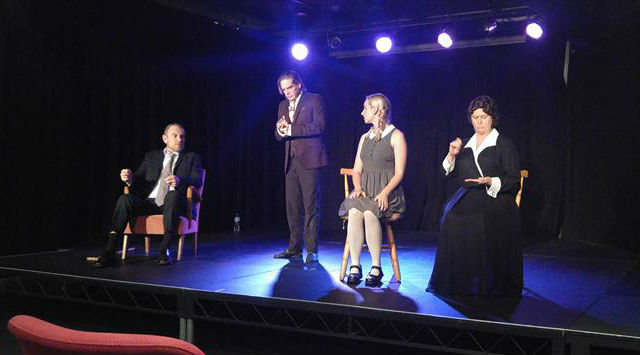
Playwright: Simon Dodd
Director: Julie Baz
Cast: Caspar Hardaker, Michael Harrs, David Jeffrey, Cherilyn Price, Cherrie Whalen-David
Image by Katy Green Loughrey

Theatre review
Two people walk onto the stage by accident and find themselves unable to escape the audience’s gaze. They become stars of the night’s play, not by choice but by circumstance. Much like how we live our lives, we are the protagonists of our stories not by our own choosing, but because we are brought into existence for reasons entirely beyond our control. The characters cannot resist the urge to create meaning and to achieve a sense of coherence, so that time can be filled with some semblance of reason and purpose, even though they know with absolute certainty that an end will come. Simon Dodd’s thoughtful script is joyful and amusing. Its existential concerns are rendered with a gentle touch so that the viewing experience remains light and upbeat, but his work leaves enough food for thought to prevent the show from becoming too frivolous. There is very funny dialogue to be found, and although its structure can be more refined, Dodd’s meticulous writing ensures that Plaything provides entertainment at every moment.

The show’s lead performers are equally strong, but in different ways. Cherrie Whalen-David is precise in her approach, and presents a well-rehearsed interpretation of her role that always seems considered and purposeful. David Jeffrey’s appeal is in the quality of mischief that he brings to the stage, and the important sense of play that he introduces into the creation of comedy for his audience. The humour in Plaything is most effective when we feel a genuine and lively impulse within its comic timing. In spite of the absurdist nature of its context, the show requires an authentic presence, a genuine sharing of time and space between audience and actors, for it to be truly engrossing. Direction of the work by Julie Baz is vibrantly energetic, with an urgency that keeps us engaged and intrigued. The plot’s unpredictability is well utilised to keep the show one step ahead of us, so that pleasant surprises steadily emerge.

There is a lot of fun to be had at Plaything. It is a clever script that demands a lot of its actors, and when they hit their mark, results are thoroughly satisfying. It is on one hand unafraid to be philosophical, and on the other, more than a little fond of sophomoric humour. We discover that drawing parallels between the creative process and the living of life itself can be just as funny as watching people drink copious amounts of urine. We also learn that the matter of taste is completely subjective, even where bodily fluids are involved.

www.thedepottheatre.com

Review: Metamorphosis (Throwing Shade Theatre Company)

throwingshadeVenue: The Factory Theatre (Marrickville NSW), Mar 31 – Apr 2, 2016
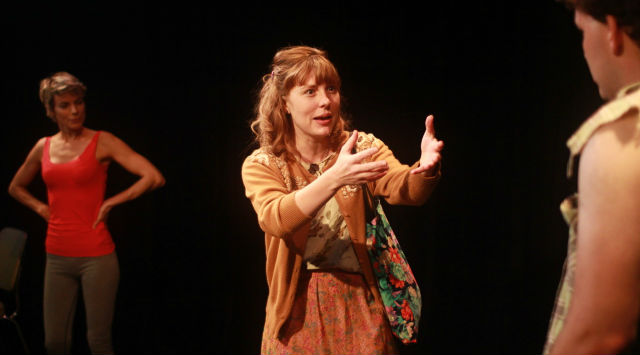
Playwright: Steven Berkoff (based on Franz Kafka’s novella)
Director: Andrew Langcake
Cast: Harley Connor, Darcie Irwin-Simpson, William Jordan, Susan M Kennedy, David McLaughlin

Theatre review
Gregor wakes up one day and finds himself transformed into something gigantic and hideous. He has turned from a responsible and upstanding citizen into a monster, and can no longer carry out his obligations to family and society. His physicality and behaviour have changed, but his feelings remain human, and he suffers the ostracism that results from his sudden abandonment of normal life. Steven Berkoff’s adaptation of Franz Kafka’s popular classic is sarcastic yet charming, with a biting humour that tickles without interfering with the dark themes being explored. The narrative is clearly fantastical, but its concerns are kept strictly human.

Direction by Andrew Langcake is highly stylised, appropriately so, with shades of Surrealism and German Expressionism. He creates a heightened aura within the story’s sad circumstances, one that is both dreamlike and nightmarish. While the stage is designed with some flair, it lacks a certain intimacy that the work seems to require. Powerful moments would be more effective if they are able to confront us with greater immediacy, but we are kept safe by a disconnecting rift between audience and action.

It is a strong cast that gives us this Metamorphosis. The players have a unified energy and tone that portray a convincing netherworld, with an entertaining flamboyance that gives the work’s inherent eccentricity a strange allure. Susan M Kennedy is captivating as Mrs Samsa, dramatic, emotional and bold with her artistic choices. Gregor is played by Harley Connor, who impresses with strength and versatility both physically and vocally. Although tucked up in a corner far upstage, the actor’s vibrancy is unmistakeable, and the curious character he creates, is very fascinating indeed. An unlovable monster that is of no use to anyone, and a drain to society, is the stuff of our deepest fantasies. There are times when we see only the futility of all our duties, and wish to play the rebel, walking away with a big flick of the middle finger, but we keep ourselves in check. We know that the consequences can only be dire.

www.throwingshade.com.au

Review: Kayak (Cross Pollinate Productions)

crosspollinateVenue: Old Fitzroy Theatre (Woolloomooloo NSW), Mar 29 – Apr 9, 2016
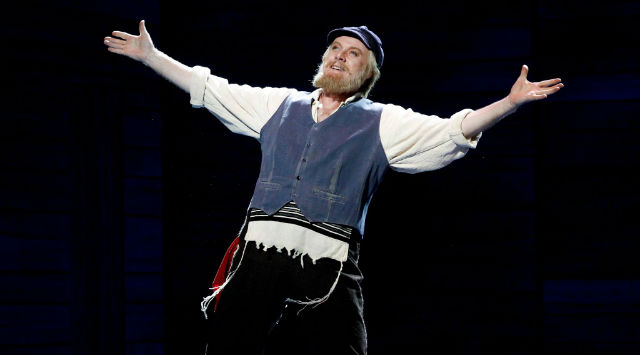
Playwright: Katherine Thomson
Director: Adam Cook
Cast: Matthew Cheetham, Matilda Ridgway, Francesca Savige
Image by Mansoor Noor Photography

Theatre review
Desperate people do desperate things, and in Kayak, their actions are certainly outrageous. Katherine Thomson’s dark comedy features three characters, all lonely and lost, grasping at whatever crosses their paths that may contain salvation. Morals and ethics vanish when the going gets tough, and it is that process by which a person loses their mind, that provides the play with its biting humour. Thomson’s characters and dialogue are delightfully perverse and although they do not seem to make perfect psychological sense, it does provide sufficient contextual logic for us to connect with the increasingly wild stories that unfold.

Director Adam Cook’s interpretation of the work is full of energy, with attention placed on creating a lively and vibrant show. The narrative is conveyed with appropriate comedic levity, and each character is clearly defined, but the all-important humour of the production relies heavily on the cast, who do not always deliver the jokes with as much complexity as the material calls for. Matilda Ridgway is strongest, and very clever with the way she enacts the many surprises written for her character Wen. It is a charming performance, with an exaggerated quirkiness that is both theatrical and captivating. All players are passionate and determined to portray intense emotion, but the show lacks a certain melancholy. There are lots of tears, but we do not feel their sadness, and it is that sadness that is central to all the high jinks that transpire.

Wen, Ruth and Luke are dysfunctional people, crippled by misfortune. We identify with their pain because the causes of their troubles are all familiar. At the root of their many shenanigans are setbacks and misery that have descended upon us at one time or another, and while we may not express our grief in such dramatic fashion, the fantastical events they go through somehow ring true, perhaps relating to the fears we have about not being able to spring back, of not having enough resilience to cope with life. They crumble and fall into disaster, and we watch knowing that we are the lucky ones, if only for the moment, because disaster does happen, and people do break.

www.crosspollinate.com.au

Review: Fiddler On The Roof (Capitol Theatre)

fiddlerjeffbusbyVenue: Capitol Theatre (Sydney NSW), Mar 24 – May 6, 2016
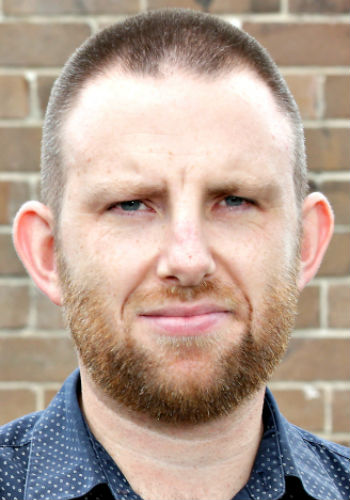
Music: Jerry Brock
Lyrics: Sheldon Harnick
Book: Joseph Stein
Director: Roger Hodgman
Cast: Blake Bowden, Sara Grenfell, Glen Hogstrom, Andrew Kroenert, Lior, Mark Mitchell, Jensen Overend, Anthony Pepe, Annie Stanford, Monica Swayne, Derek Taylor, Sigrid Thornton, Jessica Vickers, Anthony Warlow, Nicki Wendt, David Whitney, Teagan Wouters
Images by Jeff Busby

Theatre review
Stories of diaspora never seem to lose their relevance. Fiddler On The Roof is over 50 years of age, but its story of religious persecution consists of an authenticity that every generation will find poignant. As the problem of refugees escalates and takes over our airwaves, themes in the musical hold a deep resonance that relate directly to big issues of the day that all of us are made to face. Tevye and his family are charming folk that, although culturally different from contemporary Australians, endear to us with familiar and admirable qualities, representing the best of our shared humanity. Tevye is an honourable and humble man, with little to his name except for a loving family, and the respect of his community. The songs are similarly heart-warming, with an integrity found in its folk and traditional style, that sets it apart from the tried, tested and very tired styles of music in many other shows of the Broadway genre.

Anthony Warlow’s performance as Tevye is truly remarkable. From physicality and voice, to humour and spirit, Warlow is exemplary on the stage, with impressive star power coupled with indisputable talent, eclipsing every other element of this production. He is a grand presence who is able to convey subtleties. He entertains but keeps us conscious of the higher stakes at play. His generosity extends not only to his audience, but also to his colleagues, whom he offers strong support for their individual shining moments. Monica Swayne and Blake Bowden play Hodel and Perchik, one of the story’s romantic couples, with beautiful chemistry and moving passion. Swayne’s solo rendition of “Far From The Home I Love” is a tearjerker executed without overblown sentimentality, only pristine honesty accompanying a sensational voice able to portray a sublime vulnerability in spite of its palpable strength.

The show is at its best when scenes are tender, deep and meaningful. Sequences of exuberance are less consistent, with many of its early moments seeming to lack energy and spontaneity. Fortunately Act II, although shorter in length, becomes much more dramatically engaging, leading to a heartbreaking conclusion orchestrated with outstanding sensitivity and elegance. It is not often that a big musical touches us beyond the superficial, but the message of peace that it conveys from beginning to end, in different guises, speaks profoundly, and we can only respond accordingly.

www.fiddlerontherooftour.com

5 Questions with Tom Campbell and Troy Harrison

Tom Campbell

Tom Campbell

Troy Harrison: It’s not often that all cast members are on-stage every second of a production but such is the case in Savages. How have you found that?
Tom Campbell: With all of us on stage at all times, it meant that we had to bond and connect with each other pretty quickly. Particularly in this play, where there are big sections of poetry and we rely on each other to pick up each others cues, focus as one group and really work together as an ensemble. In saying that, I really don’t enjoy working with any of you, so it’s been tough.

Some actors look for similarities between themselves and the characters they play as a way to connect so are there any between award winning actor Tom Campbell and lying, loser Runt?
Ummmmm…. Well, we’re both liars……and both losers…..so yeah. And they both enjoy a drink.

What character have you never played but would love to?
Bobby in Company, The Baker in Into The Woods or Leo Frank in Parade. A musical please.

If a film was made about your life who would you want to play you and who would really get the part?
I could only hope for Mark Ruffalo, although he was very shouty in Spotlight. Some ladies in a foyer once told me I looked like Ben Affleck but I think they were on acid. Look, ultimately, Barbara Streisand would most probably be cast.

Do you like me?
No. I don’t like you. I’m desperately in love with you.

Troy Harrison

Troy Harrison

Tom Campbell: You worked for Darlinghurst Theatre in their first season in The Motherfucker With The Hat [Suzy’s review here]. Are you looking forward to revisiting the stage at the Eternity?
Troy Harrison: I am. I think the Eternity is one of the most beautiful theatres in Australia and Darlo are a great company to work for. My company, Workhorse Theatre Company was a co producer of Motherfucker, producing and acting in a production is quite an intense experience so it’s nice to be here and be able to focus purely on being an actor.

You worked on cruise ships years ago… tell me how gross they are?
Yep, I had a career as a dancer before I studied acting and I started out on cruise ships when I was 18. As for how gross they are, it depends on what type of gross you’re talking about so I’ll just say what happens in international waters, stays in international waters.

What’s the worst/most embarrassing thing you’ve ever done whilst pissed?
Voted Liberal. I was young and drunk but that’s no excuse. I’m so ashamed.

What do you think of the lock-out laws?
I think it’s a band aid solution to a much bigger problem. The binge drinking culture and the violence that can be a part of it needs to be seriously addressed. But having lockout laws only in a certain area does nothing but shift the problem to other areas. I also don’t think it’s a good look for our state government that the casinos are exempt. Whether it’s true or not it makes it look like money talks. And perception is everything in politics.

How’s preparations for the new ‘arrival’?
I’m guessing that you’re talking about my impending second child and not the extra terrestrials you’re always warning us about… but thanks for my tinfoil hat. Prep is going well. It’s a different experience the second time around. Living with a two year old is as fun as you’d think and gives you very little time to just enjoy the pregnancy like the first. Although watching my little girl cuddle and kiss my wife’s belly saying “cuddles for bubba” is quite possibly the greatest thing ever. I’ve also been rehearsing for Savages six days a week for the past month so my wife has been doing it all. She’s a champion. I’m extremely lucky with the two girls in my life.

Tom Campbell and Troy Harrison can be seen in Darlinghurst Theatre’s Savages by Patricia Cornelius.
Dates: 1 April – 1 May, 2016
Venue: Eternity Playhouse

5 Questions with Cherrie Whalen-David and Caspar Hardaker

Cherrie Whalen-David

Cherrie Whalen-David

Caspar Hardaker: What is the most valuable experience you’ve gained from working on Plaything?
Cherrie Whalen-David: This play is a real workout for the brain. Not only is the play quite wordy, so challenging to learn the dialogue, but there is the abstract element to get my head around as well.

What is your favourite pastime when you have no obligations to anything?
I love spending time with friends and family enjoying delicious food and wine.

Are there such things as aliens in our galaxy?
Not in my world, but perhaps I’ve just been too busy to notice them.

What’s the most awkward experience you’ve had whilst performing?
During The run of The Cherry Orchard (last year at The Depot Theatre) I managed to tip coffee all over myself one evening , luckily my character had a butler to help tidy her up.

Are you a cat or a dog type of person?
We currently have 2 cats whom I love but am secretly hoping to get a white West Highland Terrier one day.

Caspar Hardaker

Caspar Hardaker

Cherrie Whalen-David: Your character in Plaything loves to party. What’s your idea of a great night out?
Caspar Hardaker: My idea of a great night out is actually completely different to my character’s. I actually would prefer having a night in with movies and a glass of red. If I’m planning on having a big one then I guess I would love to be able to buy food and alcohol without spending too much money but that’s somewhat of an inescapable conundrum in my life.

A character in Plaything dies suddenly in mysterious circumstances. What would you choose as your last supper?
As a last supper I would have to go with a superfluous amount of garlic dip, garlic bread, Woodford Margherita pizza, and a lovely glass (or bottle(s)) of Shiraz.

How tall are you Casper?
Last time I checked I was about 6 foot 5, or 6 foot 6. In centimetres I think I’m around 195cm.

If you weren’t an actor what other career would you like to pursue?
I would be pretty open to anything really. I don’t really know what I’d choose straight away but possibly something to do with children or music. Or maybe even both!

What’s your favourite time of the year?
My favourite time of the year is Spring. When the weather starts to change and you can smell the jacarandas and feel summer. Good vibes and festivities are upon the horizon and everything feels like it’s just around the corner. What’s not to love?

Cherrie Whalen-David and Caspar Hardaker can be seen in Plaything by Simon Dodd.
Dates: 30 Mar – 16 Apr, 2016
Venue: The Depot Theatre

Review: Connect With Excellence (Ever After Theatre / Red Door Arts)

everaftertheatreVenue: Rozelle Neighbourhood Centre (Rozelle NSW), Mar 23 – 24, 2016
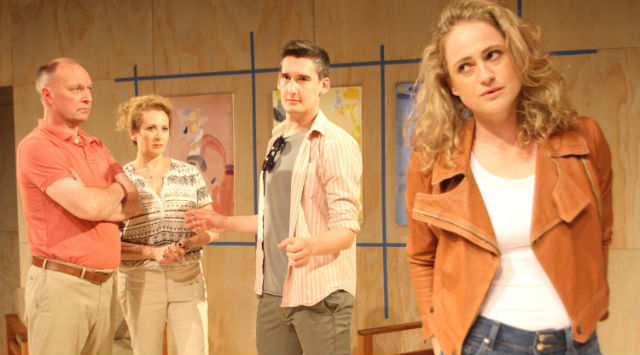
Playwrights: Emily Dash, Alyson Evans
Director: Alyson Evans
Cast: Rosie Amis, Kerrie Ann Bezzina, Christine Blanche, Jessie Chapman, Matthew Cutmore, Emily Dash, Teneile English, Patti Gilbert, Steve Konstantopoulos, Emma Plant, Roddy Salinas, Kate Walker, Lucy Watson

Theatre review
Lola is the passionate leader of “The Removal of Physical & Socio-cultural Barriers & Establishment of Equal Opportunities Committee” in Rozelle, one of Sydney’s more glamorous suburbs. We are taken on a tour of the neighbourhood, with headphones on, trailing behind Lola and her wheelchair, as she evaluates our suitability for joining the committee. Travelling through shops, streets and buildings, we hear stories from local residents and business operators, about people with disabilities, the challenges they face and the way they relate with community. We ponder on the differences and similarities of their experiences with able-bodied people, and spend a lot of the duration walking in their shoes.

Scripted by Emily Dash and Alyson Evans, Connect With Excellence is exuberant, humorous, and very touching. The impressive strength of ordinary people takes centre stage, while invisible privilege is exposed, making us confront our own positions in society, and the generosity we may or may not extend to others in everyday interactions. The work is delicately composed to take us through a visceral and emotional journey, going deeper and deeper as time passes, into our personal humanity. It is a meditative and profoundly reflective process that allows art to do its most sacred job, which is to make people better. The show brings to our attention, not only the challenges faced by people with disabilities, but also the unsung heroes who overcome barriers on a daily basis.

Dash’s performance as Lola is full of charm, wit and fortitude. The spirited and often bossy personality she creates makes for an effective and commanding tour leader, and her warm presence gives us a sense of security, as we step out of our comfort zones to look at Rozelle through her eyes. The show is amusing and entertaining, but also inherently political. It culminates in a pledge from each individual, with pen on paper, on how we wish to effect change. It is a decision and commitment that we make for the world that we share, to think about the needs of community, and to play a part in bringing about improvements, big and small.

www.everaftertheatre.comwww.reddoorarts.org

Review: Unfinished Works (Bontom Productions)

bontomVenue: Seymour Centre (Chippendale NSW), Mar 23 – Apr 2, 2016
Playwright: Thomas De Angelis
Director: Clemence Williams
Cast: Deborah Galano, Kyle Kazmarziks, Lucy Goleby, Contessa Treffone, Rhett Walton

Theatre review (of a preview performance)
Thomas De Angelis’ Unfinished Works talks about art and the selling of art, but it is also concerned with how young people discover adulthood, and the challenges it presents. Strong themes and engaging characters give the play its allure, but its ideas are not always as clever as they wish to be. Dialogue and plot structure also require further refinement and deeper thought, but its concluding, and climactic, scenes are fortunately the most effective and powerful of its two-hour duration.

There is an earnest and provocative spirit, introduced by director Clemence Williams, who explores the text with great honesty and is always conscious of giving proceedings a dimension of emotional intensity. There could be more humour in the way characters interact, and a less innocent approach to the portrayal of their individual foibles, but Williams’ work is thoughtful and energetic, and a delight to connect with. Bringing visual sophistication is designer Charles Davis, who finds simple but smart solutions to accompany the production’s examination and representation of the art world. His set and lights are minimal in style, but very charming indeed.

Lucy Goleby does an astonishing job as Frank, the complicated art star with a lot of weight on her shoulders. Goleby’s portrayals of fear and cynicism feels thoroughly authentic, and the assertive confidence that persist alongside all her insecurities is fascinating to observe. The pairing of vulnerability and strength is beautifully inhabited by the actor, and it is that palpable humanity she depicts that keeps us engrossed. The other leading lady of the piece is Contessa Treffone who plays Isabel, a young woman finding her place in the world, defining her self against family and negotiating grey areas of ambition and sex. Treffone shows strong focus and conviction, and although slightly twee in tone, she is more than capable of holding our attention. The chemistry between both women is full of sparks and a real joy to watch. Unfinished Works does not explicitly discuss the issue of feminism, but there is no need to, because the women it places on stage are prime examples of how we are and how we should be seen; independent, intelligent, ambitious, and frightfully flawed.

www.bontom.com.au