Review: The Hanging (Sydney Theatre Company)

stcVenue: Wharf 1 Sydney Theatre Company (Walsh Bay NSW), Jul 28 – Sep 10, 2016
Playwright: Angela Betzien
Director: Sarah Goodes
Cast: Luke Carroll, Ashleigh Cummings, Genevieve Lemon
Image by Lisa Tomasetti

Theatre review
When a girl becomes a woman, her body changes and her mind expands. The world’s ugly sides begin to reveal themselves, and she is disoriented, trying to understand her new place in the bigger scheme of things. She may choose to subsist in delusion, pretending that her guardians can shield all evils, or she can test the waters in a life fraught with danger, seduced by its honesty and the knowledge of its inevitability.

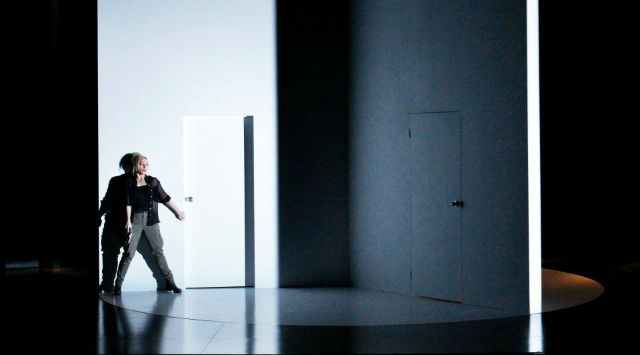
In Angela Betzien’s The Hanging, three 14-year-old girls vanish from their private school privilege, and the nation is gripped. We make assumptions based on beliefs about innocence, and create visions of their victimhood. When one of them returns, the mystery deepens and all is not what it seems. Inspired by Joan Lindsay’s Picnic At Hanging Rock, the 1967 novel is also an actual presence in the play that characters refer to. We are reminded of how we had reacted to the older story, and wonder if the way we think about girls, their desires and their strength, are trapped in fictive and romantic idealism.

Betzien’s plot structure makes for an intriguing experience, with fragments of potent curiosities scattered through its dialogue, intimating but not divulging what the three girls try to hide. It is enthralling theatre, made even more sensational by its subtle incorporation of many au courant social and political concerns. Its ideas are progressive and plentiful, and they elevate the play from its mystery genre to something altogether more important and affecting.

Having adopted Lindsay’s Australian Gothic aesthetic, the production is viscerally haunting in a familiar way, similar to the book and its famous film adaptation, but also sensitively updated to its contemporary context for a more evolved portrayal of femininity, and its encircling issues. Director Sarah Goodes brings a strong sense of import to the themes of the story, whilst pursuing dramatic tension for the very fascinating narrative. A stronger ambience of danger and sexuality could make the show even darker and more powerful, but Goodes’ work is undoubtedly enchanting. We are invested in the riddles of The Hanging right from the start, and she makes us hunger for each revelation that she delivers in perfect time, every one of them satisfying.

Restrained but intense performances by Luke Carroll, Ashleigh Cummings and Genevieve Lemon bring to the stage a distinct flavour, partly a conventional, almost soap opera approach using common archetypes, coupled with a confident embrace of a more silent and poetic approach to acting. Lemon is particularly memorable in the role of Corrossi, sharp and abrasive, with surprising emotional range, interpreting beautifully, the being of a middle age modern woman, and the perspectives of a high school teacher who has seen legions of girls blossom and decay.

Society is disparaging of femininity, and underestimates the young. When Ava, Hannah and Iris disappear, they expose our beliefs and expectations, along with the prejudicial ways we think about adolescent girls. The Hanging questions the way we nurture and offer guidance, confronting us with difficult truths about the instability of human volition, freedom and fortitude, especially volatile in the teenage years. In an effort to find a real understanding of how we are, the reflections we see in the play are necessarily pessimistic. It refuses denial of the bad inherent in what we do and think, making us acknowledge the less than perfect aspects of our nature. There are masochistic pleasures discoverable in its gloomy expressions, but for those less morbidly-inclined, its important lessons although disturbing, are relevant to one and all.

www.sydneytheatre.com.au

Review: Disgraced (Sydney Theatre Company)

Venue: Wharf 1 Sydney Theatre Company (Walsh Bay NSW), Apr 16 – Jun 4, 2016
Playwright: Ayad Akhtar
Director: Sarah Goodes
Cast: Paula Arundell, Glenn Hazeldine, Sachin Joab, Shiv Palekar, Sophie Ross
Images by Prudence Upton

Theatre review
We can all agree that everything is not quite coming up roses in the world today, with terrorists blowing up cities everywhere, and people waging war against one another, all in the name of race and religion. There is no denying that at the root of these catastrophes is hate. Hate that comes in a manner of guises and a range of justifications, but ultimately it all boils down to the simple truth that people are prejudiced and destructive. This is difficult to hear, because life is impossible without believing that humanity is good, so we embrace hope with a kind of blind naivety and evade the truth in order that we may get out of bed and be happy.

Ayad Akhtar demolishes those delusions with Disgraced, in which racist hate is served up plain as day. The characters are intelligent, successful and glamorous, tailor-made so that they are irresistible to bourgeois theatregoers, but their ugly sides emerge, increasingly aggressive over time, and we find ourselves in a state of violation, caused by this transgressive mix of seduction and repulsion. It is at the point where we become intimate with protagonist Amir and the people around him that we see their racism. We are unable to dismiss them because we had already submitted trust, having decided that they are good people, so our minds are in conflict, made to juggle the puzzle pieces that refuse to form an easy picture. In that process of confusion, we reach for a new depth of understanding about our nature and how hate resides in our beings, and how it manifests. In the face of Akhtar’s explicit honesty, we are presented a challenge of interpretation. We recognise the reality of the situation, but we have no convenient way of dealing with the information. The big mess of life is truer than the circumscribed narratives we use to arrange our thoughts, and in this play, that chaos is allowed to rear its ugly head, without a false sense of resolution to contain our anxieties. Bad things happen because there are people with hate in their hearts. Getting to know them is important, but not having anywhere to go thereafter is the conundrum.

It is a stunning and explosive script that drops bombs at regular intervals to unnerve, to disarm and most of all, to confront. It is a response to the undeniable horrors around us that involves no sugar-coating, and no rose-tinted glasses. It is a brutal piece of writing, made only more powerful by its ability to tell us the worst while it secures our unwavering attention. Sarah Goodes’ direction delivers that brutality with a blunt but measured force. Her ability to communicate details no matter how subtle, makes this staging an enriching and enlightening experience. She draws attention to nuances that are missed in our daily interaction with the subject matter, dismantling our habit of two-minute sound bites and 140 character tweets, in exchange for a more thorough study on the state of our world.

Amir is among the most important characters to have appeared in recent theatre history. His experience is ubiquitous but virtually never brought to light. There is shame, fear and danger associated with his story, so our impulses tell us to keep it buried, for we are afraid of the controversies he represents, and we worry about the people he offends. Performing the role is Sachin Joab, exhilarating, authentic and alluring in his depiction of the Pakistani-American caught in a moment of crisis. Joab brings extraordinary illumination to the tremendous complexity of his part, presenting a great deal of insight into a psychology that we all need to know. His work is emotional and vulnerable, but the actor is also able to convey an unmistakeable menace that is central to the play’s effectiveness. Joab overwhelms us with his talent and conviction, and leaves an indelible impression with his remarkable grace. Also exquisite is Elizabeth Gadsby’s set design, providing a backdrop of sophistication and class to a tale about social status and division. The configuration of spaces caters cleverly to all seats in the auditorium, offering excellent perspective and a beautiful vista from every angle.

This is a show full of tension, with its drama derived from issues of the day that are usually too unseemly to discuss in frankness. The action happens in an exclusive New York apartment, but we all have a stake in the subject matter. Peace will benefit everyone, but in its pursuance, we all seem to be losers. In the middle of a war, we are never sure if anything that we say or do will contribute to making things better, but regardless of context, art must always reveal the truth. We cannot mend what is broken without knowing its problems and although a bitter pill is hard to swallow, there is no escaping it. In Disgraced, characters have to drop their pretences and acknowledge the cold, hard fact that their world is in turmoil, but whether they can bring about improvements, or revert to their previous delusions, is not a question anybody has a definitive answer for.

www.sydneytheatre.com.au

Review: Machu Picchu (Sydney Theatre Company / State Theatre Company Of South Australia)

STCVenue: Wharf 1 Sydney Theatre Company (Walsh Bay NSW), Mar 3 – Apr 9, 2016
Playwright: Sue Smith
Director: Geordie Brookman
Cast: Elena Carapetis, Darren Gilshenan, Luke Joslin, Annabel Matheson, Lisa McCune, Renato Musolino
Image by Brett Boardman

Theatre review
What we understand mid-life crises to be, seems relevant only to the privileged. Gabby and Paul are a middle class couple, both independently established and intelligent, reaching a point in time where their mortality suddenly comes into focus. Machu Picchu is about their reassessment of priorities and values, and although the threat of death is thankfully more than an abstract construct in Sue Smith’s play, the problems they face can often feel hyperbolic. Their struggles are honest, but also indulgent. Where others have had to just keep calm and carry on, Smith’s characters have the luxury of excessive rumination, which in turns disallows much drama or comedy to transpire. There are opportunities for philosophy, but those tend to be subsumed by domestic situations that prevent intriguing ideas from developing with satisfactory depth. Although emotionally distancing, the text has an enjoyable and innovative plot structure that reveals flair in the way its non-chronological timeline is formed. Scenes unfold unpredictably to keep us attentive, with surprising elements appearing at regular intervals for added variety.

We never quite warm to the characters in Machu Picchu. Director Geordie Brookman maintains an understated tone to proceedings, which gives an air of sophistication but also detracts from the story’s gravity. Gabby and Paul’s catastrophic state is comprehensible, but only intellectually so. The fears and trauma that they experience do not connect beyond the cerebral, and the work’s inability to encourage greater empathy gives the impression that its concerns are probably less meaningful than it wishes to be. Dramatic tension never becomes taut enough for us to feel strongly about the characters’ woes, and themes surrounding relationships and ageing, although earnestly portrayed, are not presented with sufficient ingenuity. The only people who are surprised by the effects of time seem to be on stage, and they add little to our own understanding of those ravages.

Lisa McCune’s performance as Gabby is focused and intense. There are many moments of authenticity in her depictions of disappointment, frustration and anguish, and her energetic approach helps sustain interest in her narrative, which can at times be lacklustre. The role of Paul is tackled by Darren Gilshenan who introduces an instinctive levity to the production. Gilshenan is a charming actor with tongue always firmly in cheek, but who proves capable of more serious material with this character’s adversity. It is not an entirely convincing coupling of actors, but the pair finds good rhythm with dialogue and together create imagery evocative of a bourgeois Australian identity that many will find familiar.

Clichés persist for their truth. Life is about the journey, not the destination. The Machu Picchu in Peru represents an ideal that exists in Gabby and Paul’s imagination, a place they have never experienced but that they believe to be special. In our lives, we often long for what we have yet to encounter, thinking that salvation lies therein. It is human to dream, but how much of dreams we allow to interfere with reality, is deeply personal, and determines the shape of each individual’s existence. It is ultimately inconsequential whether the protagonists get themselves to the location of their aspirations. What they are able to create and discover in their time before that fateful day is of great value, if they choose to recognise it as such.

www.sydneytheatre.com.au | www.statetheatrecompany.com.au

Review: The Golden Age (Sydney Theatre Company)

stcVenue: Wharf 1 Sydney Theatre Company (Walsh Bay NSW), Jan 14 – Feb 20, 2016
Playwright: Louis Nowra
Director: Kip Williams
Cast: Rarriwuy Hick, Remy Hii, Brandon McClelland, Robert Menzies, Liam Nunan, Zindzi Okenyo, Sarah Peirse, Anthony Taufa, Ursula Yovich
Image by Lisa Tomasetti

Theatre review
At the time of The Golden Age‘s original première in 1985, we talked about multiculturalism. 31 years on, that buzzword has evolved into the contemporary concern for diversity, and a real need for societies to address pervasive inequities, whether they be surreptitious or conspicuous. Since the middle of the previous century, we have seen the rise of political agitation, most significantly in the realms of race, gender and sexuality, that attempt to remedy the injustices of the world, to varying degrees of success.

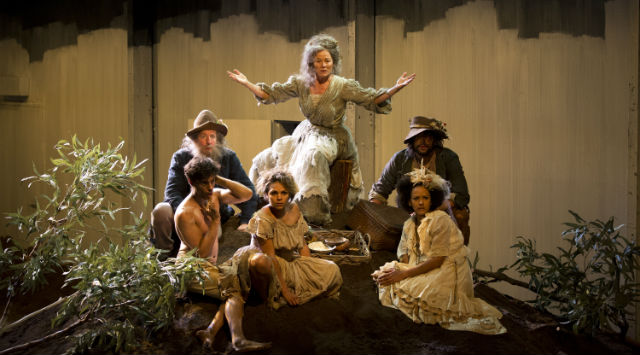
In Louis Nowra’s play, two cultures collide, with one being an overwhelming and dominating force that instinctively requires anything contradictory to surrender, assimilate and conform. The other is a community of six people, a lost tribe descended from outcasts in the Tasmanian wilderness, admittedly rustic but undeniably peaceful. The idea of an Australian mainstream is explored bitingly by Nowra, who juxtaposes what we have come to think of as normal, against something quite literally extraordinary, to expose the systemic failings of the way we organise life, in the belief that our idea of civilisation is the only one legitimate and proper. The Golden Age reveals how we fight tooth and nail to hold up an ideal that is ultimately of service to no one, and that has an appetite for destruction so voracious that it causes devastation even unto itself.

We can interpret Nowra’s writing in a myriad ways, and apply his parable to any context of power imbalance, but its relevance to the immediate and pressing matter of Aboriginal lives in colonial Australia cannot be ignored. The subjugation of The Golden Age‘s lost tribe, in the name of protecting them, is a painful parallel to the many governmental initiatives that have transpired and continue to be devised, claiming to be in the best interest of our First Peoples. The way power disguises its self-serving objectives behind façades of charity and convenient slogans like “the greater good”, is scathingly deconstructed and laid bare in this production by director Kip Williams. This is highly complex theatre, yet Williams delivers nuance, clarity and power while retaining the poetic, and challenging, spirit of Nowra’s writing.

Williams’s show is profoundly hypnotic, coalesced with brilliant dramatic chemistry and an air of intriguing mystery so fierce that we are left still wanting more after its generous three-hour duration. The Golden Age works on all levels; entertaining, emotional, spiritual, intelligent and meaningful, it fulfils everything the theatregoer wishes to experience, and leaves an impressive political message that implicates every one of us. David Fleischer’s design brings beauty, both raw and refined, to the stage, along with surprisingly flexible spacial configurations that provide excellent variety for the many scene transitions. Sound and music by Max Lyandvert is the clandestine master manipulator of atmosphere and the author of the show’s sublime mythical dimension. He works with our imagination to take us to wondrous spaces never before encountered, but are viscerally familiar. The aesthetics of the production is dreamlike, simultaneously splendid and cruel, almost quintessentially Australian, but completely enchanting.

The cast is ethnically diverse, with several actors playing parts that are of different races to their own (an oddity for Australian theatre even though we are well into the 21st century). Ursula Yovich as Elizabeth Archer in particular, performs with great acerbity, her character’s increasingly oppressive European presence in the play. Yovich’s utterances of prejudicial statements resonate with startling potency, perhaps informed by the actor’s personal experiences as an Indigenous woman. The heart wrenching lead role Betsheb is played by Rarriwuy Hick, who provides a focused and strong centre to the piece. She balances Betsheb’s wildness with a natural warmth to deliver an endearing personality responsible for the show’s many poignant moments. Brandon McClelland is similarly likeable, creating a Francis that is agile and vibrant, with an emotional depth that makes relationships believable. He figures between both sides of the story’s cultural divide, and is convincing throughout.

The flaws in dominant ideologies stare at us straight in the face every day, but most of us accept them as par for the course. Along with that sense of resignation, many underprivileged lives are allowed to remain in disadvantage, injustice, and hardship. In The Golden Age, the powerful are with the assumption that alternatives will be detrimental to their personal lives, and the powerless suffer the consequences of being outsmarted and outnumbered. There are many occasions in Australia today that we think of the need for a revolution, but our majority is crippled with fear, and the minorities are left in sacrifice. Things can change, and they do change, but with each appearance of sensational work like this, our minds are enlightened and refreshed, and a new sense of urgency can be ignited.

www.sydneytheatre.com.au
Review: Death And The Maiden (Sydney Theatre Company / Melbourne Theatre Company)

sydneytheatrecoVenue: Wharf 1 Sydney Theatre Company (Walsh Bay NSW), Aug 28 – Oct 17, 2015
Playwright: Ariel Dorfman
Director: Leticia Cáceres
Cast: Eugene Gilfedder, Steve Mouzakis, Susie Porter
Image by Jeff Busby

Theatre review
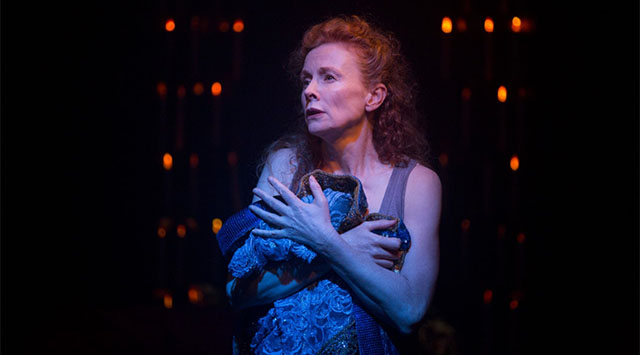
Paulina resides in the space of terror. Captured, tortured, and raped; not only have the fractures in her world endured 15 years since the devastating event, her thirst for revenge is becoming an increasingly uncontrollable force that drives her to the extremities of Ariel Dorfman’s Death And The Maiden. Paulina was blindfolded during her ordeal but remembers the voice of her rapist, and during a chance encounter one night, she identifies a kindly, mild-mannered man Roberto to be the perpetrator, and proceeds to keep him captive in her home. Stripped and tied to a chair, Roberto is threatened by Paulina’s revolver and her accusations, but maintains his innocence. Paulina fluctuates between demanding a confession and wanting his life, but we are never sure if Roberto is in fact the right man. Dorfman’s work is dramatic and tense, with an undeniable political emphasis. Inspired by Chile’s progression from totalitarianism to democracy in the 1980’s, difficult questions about finding justice for victims of the state are explored. In an Australian context, the most direct association one could make would involve the continuing mistreatment of our Indigenous communities, but there are no obvious adaptations in the production that attempt to find a more specific point of relevance for its audience.

Scenic and lighting design by Nick Schilieper reduces the space and concentrates the action efficiently onto a small stage, so that nothing distracts us from the show’s intimate sequences. The leanness of its appearance however, conveys only a monotonously cold atmosphere. Correspondingly, Leticia Cáceres’ work as director seems to pay fastidious attention only to performances by its three players. The production feels insufficiently ambitious in scope, eschewing a bolder use of space that could have assisted us in relating to the unfolding plot better, by depicting either the oppressiveness of Paulina’s home and mental state, or a wider and more identifiable political and social environment. Composer and sound designer The Sweats excels in his control over atmosphere and scene transitions. He introduces a sophistication, along with a sense of drama to a staging that is often too minimalist in its overall style.

Leading lady Susie Porter presents a likeable and convincing Paulina. Porter’s cerebral portrayal gives integrity to the story being told, and her gracious presence keeps us firmly on her character’s side, but her performance is ultimately a tepid one that lacks a certain operatic quality required for the production to engage more powerfully. Porter’s interpretation is one steeped in depression, where a more dynamic madness would allow the narrative’s controversial aspects greater potency, and therefore elicit a more robust response from its audience. The actor’s work comes across psychologically accurate and very thoughtful, but the Latin American text asks for a fire that may only exist beyond rationality, which itself (being rational or not) is after all, one of its chief concerns. In the role of Paulina’s husband Gerardo, is Steve Mouzakis, who takes every opportunity to raise temperatures in the theatre. It is a smaller part but one that moves through different emotional phases, and the performer brings a spirited passion to each of them, reflecting an impressive conviction that viewers can no doubt appreciate. Eugene Gilfedder makes an interesting villain of Roberto. Probably not quite as charismatic as Porter, and therefore tilting the adversarial balance slightly off between duelling characters, but nonetheless an intriguing personality. He keeps us guessing, which is central to the play’s effectiveness, and provides fine tension at its concluding moments.

Death And The Maiden contains poignant moments of philosophy and drama, but at 25 years old, its resonances require translation. We are certainly no strangers to concepts of political upheaval, war and terror, but what we view to be tangible threats have changed. In spite of the production’s success at achieving a good level of believability, the play feels distant. We are reminded that our concerns have evolved, and although we often consider our civilisations to have improved, the fact remains that the things that haunt us never go away; they only take the form of something else. The fears in the play are different from ours today, but the vulnerabilities we share are interminable, and it is that darkness that Paulina needs to release with indomitable fury.

www.sydneytheatre.com.au | www.mtc.com.au/

Review: Love And Information (Sydney Theatre Company / Malthouse Theatre)

Venue: Wharf 1 Sydney Theatre Company (Walsh Bay NSW), Jul 9 – Aug 15, 2015
Playwright: Caryl Churchill
Director: Kip Williams
Cast: Marco Chiappi, Glenn Hazeldine, Anita Hegh, Zahra Newman, Anthony Taufa, Ursula Yovich, Alison Whyte, Harry Greenwood
Images by Pia Johnson

Theatre review
Caryl Churchill’s Love And Information is a 90 minute play, composed entirely of very short sequences that look to be extracts from a wide range of stories running the gamut of genres in conventional theatre. Each independent bite-sized piece, not matter how small, provides enough for us to make sense of events taking place in the moment, but the scenes do no immediately relate to one another. Except, it is human nature to make meaning regardless of what is being scrutinised, and we form voluntary interpretations about the things we see. In the case of Churchill’s very fascinating work, we are seduced into intellectual overdrive, almost like reading a mystery, piecing together clues that may or may not be, to find a consolidation of significance. A great work of art is one that helps its viewer see a true picture of themselves, and their place within a social universe. The moral of Churchill’s stories is a fluid one, and we take from them what is intimate to us as individuals, and as such, it can be seen that the writer has used abstraction to successfully facilitate a kind of self-awareness in the viewer’s sense of being and identity.

The work makes a statement about contemporary times, and our environment of obsessive information technology. If modernity is sick, attention deficit disorder would be one of its chief ailments. We are incessantly seeking out information from all sources, like an addict with no ability of discernment. We find out small bits about everything, with no regard for relevance, and certainly no capacity for any depth. As our social and physical spaces become increasingly congested, our attention is compelled to be dispersed into a multitude of directions, all of the time, and this might be a case of “resistance is futile”, as we cannot be sure if we have any choice in the matter, or if indeed, we are able to withdraw into any alternatives. The play talks about choices, especially the lack thereof, and toys with the concept of hiding as a solution, but it is clear that we are what we are.

Director Kip Williams gives us all that we wish from a stage production, in spite of a missing story. The production is emotionally appealing, as it carefully emulates the sentimental journey of a narrative-driven plot, with all its intrigue, comedy, surprises and poignancies. Williams makes us respond accordingly even though there are no characters to follow. The thoroughly experimental nature of the work is no impediment at all to a satisfying experience for any audience with even just a minutiae of sophistication. Additionally, the work’s cerebral aspects might be unusually dynamic, but they are accessible to most. The production is an engaging one that inspires questions at every step of the way, and we read it at any level of competency that suits us personally.

Lighting designer Paul Jackson gives each distinct chapter and verse, a personality and beauty that captivate us, while assisting our subconscious to understand all that is being conveyed. Our visual attention is masterfully controlled so that we are kept firmly within the unusual plot trajectories that unfurl. Music and sound by The Sweats are a key feature that binds each aspect of the production to present a surprisingly coherent whole. The soundscape dictates the pace of the piece from beginning to end, and tells us quite directly how to respond at all times in our participation just outside the stage’s fourth wall. The technical proficiencies of Love And Information is extraordinary. There is nothing else that calls for as many scene and character changes, with what must be over one or two hundred entrances and exits, all flawlessly executed with an unbelievable fluency and grace. Stage Manager Lisa Osborn’s abilities are truly remarkable.

Also proficient is the diverse cast of eight, every one unique in appearance and style, yet tightly unified in the vision they aim to concoct and the energy they bring to the stage. The accuracy required of them both in terms of the technical and the artistic are simply unbelievable and they deliver with astounding dexterity. Predictably, the funnier actors leave a greater impression, and while Glenn Hazeldine’s comedy is only allowed flashes of brilliance in a play with lightning speed transitions, the actor never misses with any of his punchlines no matter how subtle. Anita Hegh too, is memorable for creating laughter at will, and her effortless charm is one that grabs hold of our attention and convinces us of everything being communicated. The play has philosophy seeping through every pore, and Ursula Yovich gives them a sublime gravity, whether the topic be death or infidelity.

A distillation of the theatregoing experience would probably reveal two fundamental elements; entertainment and meaning. When art is challenging, it helps us discover new things and prevents our existences from turning empty, but entertainment is always the easier ticket to purchase. While not mutually exclusive, they rarely meet as equals. In Love And Information, the two come as an explosive package. Philosophically and intellectually enthralling, it is similarly exciting and joyful from a perspective of pure amusement. There are better sources of fun and frivolity of course, but here is a rare and monumental leap in the evolution of the theatrical arts. If this is experimental, the real event that it paves way for, will be nothing less than revolutionary.

www.sydneytheatre.com.au | www.malthousetheatre.com.au

Review: Storm Boy (Barking Gecko / Sydney Theatre Company)

Venue: Wharf 1 Sydney Theatre Company (Walsh Bay NSW), Apr 24 – May 17, 2015
Playwright: Tom Holloway (based on the book by Colin Thiele)
Director: John Sheedy
Cast: Jimi Bani, Julian Garner, Kai Lewins, Rory Potter, Phil Dean Walford, Anthony Mayor
Images by Brett Boardman

Theatre review
Christians believe that “Man is more valuable to God than animals,” and “men were created in the image of God”. Indeed, humankind often thinks of itself as separate from nature, and superior to it. We then give ourselves permission to devour and ravage the planet as though a commodity at our disposal, without its own rights and destinies. Colin Thiele’s book Storm Boy was published in 1964, and in 1976, its film version was released. Theatre productions are staged regularly to introduce new generations of children to the story, and its lessons, not only of environment conservation, but also of death, grief, and for Australian audiences, the relationship between Aboriginal and European cultures on our land.

John Sheedy’s direction of the piece is intelligent, creative and tender. It is a soulful rendition of an innocent tale that can touch the hardest of hearts. The expert level of stagecraft being incorporated is sophisticated and dynamic, with its puppetry elements a breathtaking stand out. Phil Dean Walford and Anthony Mayor are dancers who provide an indigenous omnipresence to the show, while simultaneously, and marvellously, operating the pelicans that share centre stage with its protagonist. Peter Wilson is Puppetry Director, and along with Michael Scott-Mitchell who is designer for set, costumes and the puppets, their artful vision is successfully translated to convey Thiele’s magical tale with great poignancy. Lighting Designer Damien Cooper and Sound Designer Kingsley Reeve both contribute extraordinarily inventive work that help form a fantastical experience that is truly amazing.

The lead role of Storm Boy is played by Rory Potter who impresses with an almighty focus and a deep understanding of his character’s journey. We see him completely absorbed, and believe unreservedly in all that he portrays. His father Tom is performed with subtle complexity by Julian Garner, an efficient and restrained actor who manages to reveal a world of emotion with a beautifully minimal approach. Jimi Bani is the boy’s mentor and friend, Fingerbone, an animated and passionate personality manifested by Bani’s excellent use of gesture and movement. Chemistry between the cast is natural, strong and joyful. Together, their work is consistently engaging, in a show that speaks intimately to our humanity and remarkable in its capacity to move us. Theatre can do many things, but one of its greatest accomplishments is to remind us of the enormity and largesse of the universe, beyond our selfish daily concerns. Life is meaningless when we refuse to look at the big picture, and that is exactly what Storm Boy wants us to see.

www.barkinggecko.com.auwww.sydneytheatre.com.au

Review: After Dinner (Sydney Theatre Company)

Venue: Wharf 1 Sydney Theatre Company (Walsh Bay NSW), Jan 15 – Mar 7, 2015
Playwright: Andrew Bovell
Director: Imara Savage
Cast: Glenn Hazeldine, Anita Hegh, Rebecca Massey, Josh McConville, Helen Thomson
Images by Brett Boardman

Theatre review
As our societies become increasingly concerned with political correctness, theatre seems to have to reach back through the annals of time to locate comedies that appeal to wide audiences, and ones that do not disrupt any of our delicate sensibilities. Contemporary subject matter is replaced with nostalgia, and we can laugh at days gone by in the safety of imagining that things have improved since. Andrew Bovell’s 1988 play After Dinner is a harmless piece about loneliness and sex. It does not resonate with great poignancy, but it does strike a chord with accurate depictions of human emotion and behaviour.

The production’s core feature is its extraordinary cast. All five actors are brilliant comics and they take the opportunity to showcase their very best under the generous direction of Imara Savage, who cleverly places focus on performance above all else. The script and its humour have aged significantly, but Savage’s team apply a modern interpretation that gives an unexpected edge to what could have been a desperately clichéd farce.

Helen Thomson plays Monika with magnificent aplomb. There is a fearless abandon to her approach that gives the show an air of wildness and decadence, encouraging the crowd to indulge in the text’s many mischievous, and occasionally blue, jokes. Thomson’s extravagant sense of humour is infectious and irresistible, and the almost ridiculous bigness of her performance is given solid support by a gentle empathy she invests into her character’s underlying sadness. The role of Stephen is played by Josh McConville, who manages to miraculously marry sleaze with sweet, creating a persona that is as repulsive as he is charming. The actor’s physicality is perfectly exploited (with the help of stunning work on wigs by David Jennings) to create an appearance and a movement vocabulary that is nothing short of hilarious, and very evocative indeed, of a kind of unfortunate barfly from the era.

Design elements of the production are effective but less than ambitious. The look and sound of the work is surprisingly tame for a decade that is associated with poor taste and general gaudiness, but fortunately, all the action that takes place on stage is anything but beige. Beneath the energetic and incessant provision of laughter, is a view into modern lives, and the challenges we experience with issues of intimacy. Instead of after dinner tribute bands, we talk today, about hook up apps and sexting, but continue to be confounded by the search for love and some of its illusions of fulfillment. With the unfathomable advances in information technology, communications have taken over every aspect of every second, yet loneliness is more present than ever before.

www.sydneytheatre.com.au

Review: Kryptonite (Sydney Theatre Company)

sydneytheatrecoVenue: Wharf 1 Sydney Theatre Company (Walsh Bay NSW), Sep 11 – Oct 18, 2014
Playwright: Sue Smith
Director: Geordie Brookman
Cast: Ursula Mills, Tim Walter
Image by Lisa Tomasetti

Theatre review
Through an international love story, Sue Smith’s Kryptonite examines the relationship between the personal realm and our wider circumstances. When Lian first met Dylan at an Australian University in pre-Tiananmen 1989, she was a new immigrant from China and Dylan had looked every bit the quintessential middle class Australian preoccupied with surfing and student protests. Over the years, Lian returns to Dylan for a series of brief but dramatic encounters, and by 2014, they are almost entirely different people, and we question if the countries from which they emerge, have evolved correspondingly, into virtually unrecognisable entities.

Freedom, idealism and innocence are put through the wringer in Smith’s play, in which we witness the ravages of time on the beauty of youth. Growing old is a tragedy, but not because of the inevitable deterioration of flesh. It is what happens to the heart and soul as time wears on, not just for each person, but also for the worlds in which we dwell. We cannot travel back in time, and our nations will never revert to a purer state. Indeed, the past is painted as though through rose-coloured glasses, but it is a persuasive picture that Smith creates. In Kryptonite, the loss of our innocence is certain, and sad. Smith’s work is emotional and powerful, with a perspective of our recent histories that feels accurate and is deeply perceptive.

The character Lian is particularly well-written, with an authenticity in speech and sense of humour that is quite outstanding. Performed by the brilliantly astute Ursula Mills, the role becomes thoroughly familiar, even though realistic Chinese women are rarely seen on our stages. She is surprisingly funny, and her motivations in each sequence are concise, keeping us engaged with her storytelling in a plot that can be a little convoluted at times. Mills is required to speak and sing in Chinese languages over the course of the show, but proficiency is lacking although her conviction remains strong. There is an oversimplification in some of Lian’s darker moments, but the actor never fails to bring a delicious fire to the drama when required. Also captivating is Tim Walter who is yin to Mills’ yang. Chemistry between the two are not quite exceptional, but they find a harmonious balance that brings great elucidation to the play’s themes and concepts. Walter’s work is thoughtful and confident, but the lightness in his presence, while delightful for the younger Dylan, is a hindrance in several of his graver moments. His depiction of a jaded politician in his late forties is not entirely convincing, but as a young man confused and enchanted by the object of his affections, Walter is charmingly captivating.

Geordie Brookman’s direction retains the challenging nature of the plot’s non-chronological timeline, but provides a good sense of clarity to the narrative. He succeeds in manufacturing a believable romance out of a complex framework of dramatic shifts in time and spaces, but some of the script’s political details are subsumed by his emphasis on pace and rhythms. The show is an enjoyable one. Its scenes are dynamic and unpredictable, always introducing fresh elements to ensure a gripping experience. Design aspects are not greatly ambitious, but they help tell the story with efficiency and elegance.

Kryptonite talks about how we have changed as nations of people, but its views of China are more exacting than how it sees its own country. The Australian play shows the evolution of a foreign land through its distinct junctures of transformation, but it is less brutal with its self-reflection. Yet again, we find meaning through the definition of an other, but this time, we move focus from our perverse European obsession to a place closer to home. China is a significant trading partner, with an astronomical rise in recent times that sees its influence spread across the world, not only in monetary terms, but also cultural and social. The first officially recorded Chinese migrant arrived in 1818 and today, Australians with Asian heritage number at 2.4 million. While we still seem to avoid it like a comic hero avoids a mythical adversary, the importance of finding a way to articulate that experience and relationship is impossible to overstate.

www.sydneytheatre.com.au

Review: Calpurnia Descending (Sisters Grimm / Sydney Theatre Company)

sistersgrimmVenue: Wharf 2 Sydney Theatre Company (Walsh Bay NSW), Oct 9 – Nov 8, 2014
Playwright: Ash Flanders, Declan Greene
Director: Declan Greene
Cast: Paul Capsis, Ash Flanders, Sandy Gore, Peter Paltos
Image by Brett Boardman

Theatre review
Calpurnia Descending borrows heavily from the 1950 Hollywood films, All About Eve and Sunset Boulevard. With an exploration into the evolution of show business and media, we observe that artifice and female rivalry persist as dominating themes that shape our consumption of popular culture through the years. Ash Flanders and Declan Greene’s script is a decadent high camp romp that exercises its creators’ eccentric and original vision, with a resulting beast that is more about heresy and iconoclasm than it is about entertainment or storytelling. In spite of its meaningful central ideas, the work does not aim to deliver poignancy but is interested instead, in unusual perspectives of theatre and innovative modes of experiencing live performance.

Half of the show is seen on a cinema sized screen. We can hear sounds from the live action emanating from behind the projection, so we know that the actors are creating the show in real time, but the significant length of the filmic portion means that it feels strangely close to being at the movies. It is understandable that Greene, as director, chooses the video format to discuss our obsession with screens big and small, but placing the production in a theatrical context is a curious decision, given the obvious affiliation with film and its possibilities. Nevertheless, Greene’s work is vibrant, colourful and thoroughly quirky, often with an air of vaudeville permeating the atmosphere. He is sensitive to energy levels, and although the show’s sense of humour is specific, he maintains a pace that is tight and lively, ensuring an amusing experience for most audiences.

Paul Capsis does his best Norma Desmond in the role of Beverly Dumont, a star of the Broadway stage poised to make a sensational comeback at the ten-year anniversary of her misreported death. Capsis brings a drama and grandiosity that the part requires, along with excellent comic timing and a gripping presence. The role is simple, but the actor’s work is beautifully complex, adding gravitas to something that is determined to revel in its silliness. Calpurnia Descending‘s version of Eve Harrington is the duplicitous Violet St Clair, played with mischievous exuberance by Flanders whose wide range of camp extends from delightful to macabre. The actors form a strong and balanced team in their portrayal of a malevolent sisterhood, but not much is made of the inevasible drag element. There is no obvious commentary that arises from the casting of male performers, and the production would not present too differently without it, so perhaps a point is made about the irrelevance of gender in the narratives we weave.

At a time when some of us can spend virtually every waking moment in front of a screen of some description, the production should be able to provide some resonance with its interest in the way we relate to mass media and its celebrities, but its preoccupation with depicting shallowness prevents us from connecting in an authentic way. Be that as it may, the show is memorable for being adventurous and rich with original thought, and it is the artists who dare to push the boundaries that we must value the most.

www.sydneytheatre.com.au | www.sistersgrimm.com.au