Review: Sex Object (Jackrabbit Theatre / The Depot Theatre)

Venue: The Depot Theatre (Marrickville NSW), Apr 19 – 29, 2017
Playwright: Charlie Falkner
Director: Michael Abercromby
Cast: Charlotte Devenport, Charlie Falkner, Andrew Hearle, Grace Victoria
Image by Omnes Photography

Theatre review
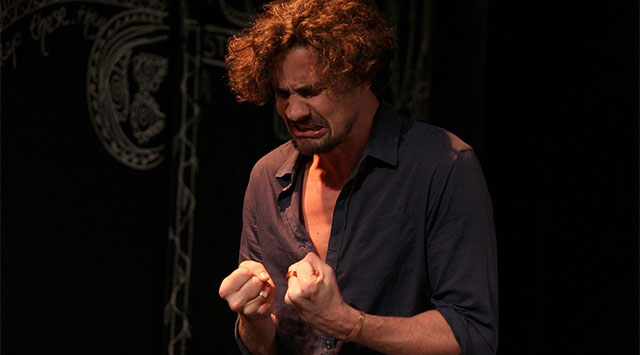
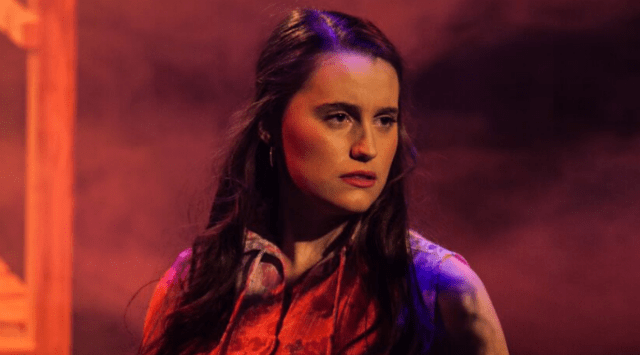
Ben is addicted to pornography, an increasingly widespread problem resulting from recent technological advancements, that have allowed unprecedented access to explicit sexual content. Unable to conduct a healthy relationship with his girlfriend, he decides to break things off, but Ron’s father has just passed away, and timing is a real issue. Charlie Falkner’s Sex Object may not be very sure about what it wishes to say, but its dialogue and characters are certainly amusing. We go on a delightful ride with the youthful foursome, entertained by the things they say and do, and even though we end up at a place quite unexceptional, the journey is ultimately a pleasing one.

The show is energetic, full of effervescence, and we are kept engrossed in each of its very chatty sequences. Director Michael Abercromby is determined to have interchanges occur with great exuberance, which holds the audience’s attention well, but it is doubtful if we ever find an opportunity to invest anything deeper than cheerful laughter. Falkner’s own performance as Ben is charmingly idiosyncratic, like a Millennial Woody Allen, struggling to make sense of his own world, while exposing the dysfunctions that we all share. Playing Gustav is the very funny Andrew Hearle, long-limbed and manic, prancing around the stage with uncontainable enthusiasm, and proving himself to be an awfully infectious presence.

The play beats about the bush, wishing to talk about sex in the modern era, but is unable to get deep and dirty with its ideas. Taboo subjects are by definition seldom discussed, and as such, we often lack the ability for their articulation. Not only do we lack the language, we lack the philosophy, because silence hampers how we communicate and how we think. It is clear that Sex Object wishes to interrogate something contemporary about our sexualities, at a time when technology and commerce are allowed to penetrate all that is intimate and private, but what it actually does say is insubstantial. In its inevitable and unintended prudishness, we receive instead a barrage of jokes, like children discovering sex, unable to appreciate it for its profundity, indulging instead in its many awkward and silly, although not unenjoyable, thrills and spills.
www.jackrabbittheatre.comwww.thedepottheatre.com

Review: Ellie, Abbie (& Ellie’s Dead Aunt) (The Depot Theatre)

Venue: The Depot Theatre (Marrickville NSW), Mar 29 – Apr 8, 2017
Playwright: Monica Zanetti
Director: Monica Zanetti
Cast: Meagan Caratti, Margi De Ferranti, Sophie Hawkshaw, Geraldine Viswanathan, Monica Zanetti

Theatre review
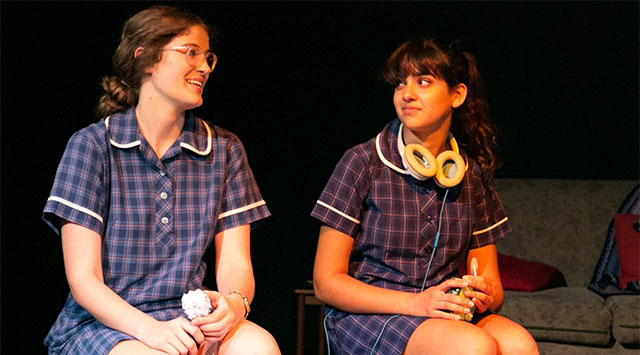
Ellie has developed a crush on Abbie, and is trying to figure out how best to ask her along to their year 12 formal. Having only just come out to her mother, who is, predictably, struggling to come to terms with her daughter’s sexual identity, Ellie is lucky to have the ghost of her lesbian aunt show up to help navigate new terrains. Monica Zanetti’s Ellie, Abbie (& Ellie’s Dead Aunt) introduces a new paradigm to the story of same-sex attracted girls. Not only does Ellie benefit from the guidance of role models, the play’s portrayal of lesbian and gay relationships in Australian high schools, as entirely normal and accepted, is thoroughly refreshing.

The work is elevated by Zanetti’s incorporation of LGBT political history. By placing emphasis on the hard won rights of Ellie’s community, we experience a gravity in our protagonist’s story without having to see her go through archaic narratives of homosexual agony. It is important that we make representations of LGBT youth in our art and storytelling that reflect the increasing normalisation of their place in society, while preserving their significance within conceptions of social diversity. Zanetti’s writing is sentimental but considered, innocent but sophisticated; it speaks intelligently to our young, and helps advocate for greater inclusiveness of sexual minorities.

The production is staged with minimal fuss. Little ingenuity is put into direction, and set design is overly bare, but the roles are soulfully realised. Appropriately, leading lady Sophie Hawkshaw is strongest of the cast, with a natural charm that endears Ellie to her audience from the very beginning. It is a gentle performance that feels effortless, but one that is surprisingly convincing. Hawkshaw makes us want the best for Ellie, and it is this emotional investment she elicits that keeps us engaged to the end.

www.thedepottheatre.com

Review: Bare (The Depot Theatre)

supplyevolutionVenue: The Depot Theatre (Marrickville NSW), Nov 30 – Dec 17, 2016
Book: Jon Hartmere, Damon Intrabartolo
Lyrics: Jon Hartmere
Music: Damon Intrabartolo
Director/Choreographer: Hannah Barn
Cast: Aaron Robuck, Sophie Perkins, Alex Jeans, Natalie Abbott, Timothy Langan, Teale Howie, Alexandra Lewtas, Caroline Oayda, Matt Laird, Stephanie McKenna, Ibrahim Matar, Tara Hanrahan, Annette Vitetta, Penny Larkins, Gavin Leahy

Theatre review
The musical is set in a Catholic high school. Peter and Jason are secret lovers struggling to come to terms with their gay relationship and the identity markers that will inevitably become a matter of controversy given the social context. It is an age-old story, but one that bears repeating. Our religious institutions remain unkind to those who do not conform to their narrow definition of acceptable sexual behaviour, and Bare‘s response is still important, even if its story offers little that would be refreshing for the twenty-first century.

Hannah Barn’s direction of the piece pays strong attention to the show’s emotive qualities. Every melodramatic flourish is amplified to passionately drive its point, and to captivate. The more humorous portions of the musical seem to be neglected, which results in a production that can feel slightly unvarying and predictable, but there is plenty of dynamism to be found in the music. Musical director Matthew Reid does wonders with his 8-piece band, providing injections of energy whenever required, and calibrating atmosphere with remarkable sensitivity throughout, but sound design, especially in the first half, needs to be refined.

It is a very committed cast of performers that take to the stage. Alex Jeans and Aaron Robuck play their leading parts with integrity, and even though their interpretations of characters can feel somewhat one-dimensional, both young men tell their stories with impressive enthusiasm. Along with Jeans and Robuck, accomplished singing by Natalie Abbott and Penny Larkins give the production a surprising polish that reflects a good level of professionalism and admirable devotion to the time-honoured craft of musical theatre.

Bare is yet another work that documents the struggle of gay men in a society that refuses to accept them as equals. We have heard it all before, but we must not stop telling these tales of oppression as long as the cruelty persists. For some of us, progressive political movements have brought us better lives, but for many others, the chains of injustice are a daily reality. We might like to think of ourselves as first world civilisations, but if we have children living in fear and in some tragic cases, taking their lives, our complacency has to take responsibility.

www.thedepottheatre.com

Review: Let’s Talk About You (Pop Up Theatre)

popupVenue: The Depot Theatre (Marrickville NSW), Nov 16 – 26, 2016
Playwright: Rivka Hartman
Director: Rivka Hartman, Christine Mearing
Cast: Elaine Hudson, Taylor Owynns, Anne Tenney
Image by Vicki Skarratt

Theatre review
Ernestine’s marriage and career are adequate, but clearly far from perfect. She has a high level of self-awareness, constantly in dialogue with herself (quite literally) to examine thoughts and feelings as they emerge, but she keeps things under strict control. Ernestine is not one to rock the boat. Her husband is philandering, and job promotions are lost to less qualified male persons, but she grins and bears it, determined to fulfil the part of the good girl. When the beautiful Joy enters the picture, however, our protagonist is inspired to let all hell break loose.

Rivka Hartman’s Let’s Talk About You is about a woman whose time has come, admittedly a little late in life, but Ernestine is finally at a point where she realises that following all the rules has paid her poor dividends. It is a deeply charming play, witty and spirited, with depth and humour effortlessly guiding us through its simple but delightful narrative.

The production is directed with a warm vibrancy that keeps us connected with its characters, but spacial configurations could be more imaginative to allow scene transitions to occur with less fuss. Performance for the piece tends to be overly declarative in style, but what it lacks in terms of an empathetic naturalism, it atones with genuine passion and excellent stage presence from its smart team of actors. Elaine Hudson is a sagacious leading lady, imparting wisdom and flair through her incisive interpretation of a personality that we will all find familiar, and honest.

It should be easy living in a country that is free and rich, but we can often find ourselves held back from happiness. What happens in the mind is endlessly complex, but in Let’s Talk About You, we can see that fear and delusion are luxury items many of us in developed nations possess, and like that Patek Philippe or that Lamborghini, completely unnecessary and irrelevant to finding a good life. Ernestine understands her own irrationality, but what she does with it, is the million dollar question.

www.thedepottheatre.com

Review: My Father’s Left Testicle (Mustard Seed Productions)

mustardseedVenue: The Depot Theatre (Marrickville NSW), Nov 2 – 12, 2016
Playwright: Murray Lambert
Director: Murray Lambert
Cast: Robert Carne, Matt Lausch, Emily McGowan, Nick O’Regan, Kristelle Zibara
Image by Clare Hawley

Theatre review
Australia may be far away from a lot of the world, but we cannot help but obsess over the idea that savages from places we know little about, are coming to overwhelm and steal everything we own. Of course, this is exactly what has been happening to Aboriginal peoples for two-and-a-half centuries, but these days, it seems the aggressors have somehow convinced themselves that the tables have turned, and foreigners are busy plotting to swamp this land illegitimately.

A substantial part of our daily political discourse involves the perceived threat of refugees, and how harshly our political leaders are willing to treat asylum seekers who dare brave our shores. Murray Lambert’s My Father’s Left Testicle talks about the offshore immigration detention centres that are constantly on the news, presenting absurd renditions of horrific stories reported over the last few years.

We may have heard it all before, but this is information that bears repeating. The atrocities never seem to cease, and even though our society is at a loss as to what can actually be done to alleviate the situation and achieve a humane result, we must not stop discussing these issues, repetitive as they might be, and risk forgetting the disaster occurring at our doorstep.

Lambert frames the stories within a context of very black comedy, some sequences of which are genuinely funny and others proving to be very uncomfortable viewing, although undeniably powerful. Often imaginative and passionate, the script includes clever dialogue that make up for where it lacks structural sophistication. The production suffers slightly from inelegant scene transitions, but charming work on set design by John Alan Sullivan is a highlight.

The work is performed confidently by a spirited ensemble of five. The meatiest roles are taken on by Nick O’Regan, who attacks with gusto and a sincerity that helps us connect with the play’s assertions. Also memorable is Robert Carne’s ability to convey authenticity, notwithstanding the production’s surreal and mischievous tone.

The show’s evocative title and its tagline “My Father’s Left Testicle… Go Back To Where You Came From!” suggests a desire to see a world without boundaries, where land is shared and where things that separate people are dissolved. The notion is idealistic, and naive, but it is not hard to recognise the truths that it contains. We might wish to preserve the inequalities of the world so that those at the top of food chains will remain dominant, but there is no need for our greed to exist without compassion. Even when we are determined to have more than others, it is clear that there is enough for everyone, but it seems that we can only think of things in terms of all or nothing, and will continue to wield cruelty where we can.

www.facebook.com/mustardseedproductionshome

Review: The Days Are As Grass (Resource Performance Workshops / Stories About Humans)

depotVenue: The Depot Theatre (Marrickville NSW), Oct 19 – 29, 2016
Playwright: Carol Hall
Director: Jane Edwina Seymour
Cast: Richard Cotter, Christine Greenough, Susan M Kennedy, Kimball Knuckey, Sarah Plummer, Felicity Steel
Image by Clare Hawley

Theatre review
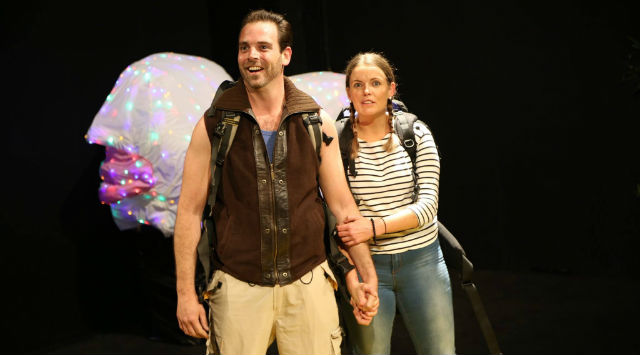
Eight short plays about life as older people, make up the anthology in The Days Are As Grass, covering a range of experiences, from the funny and frivolous, to the more sobering moments of our humanity. Carol Hall writes with humour, wisdom and extraordinary sensitivity, giving voice to Australian seniors, in a style that speaks to audiences of all ages. Its characters are vivid, and their stories refreshing. This collection of short plays is often surprising, yet their subjects always feel authentic (except, it must be noted, for the very unfortunate inclusion of only one person of colour, who ends up a thief).

Director Jane Edwina Seymour keeps the show visually basic, placing emphasis instead on the personalities and relationships that occupy centre stage with excellent conviction. Seymour’s flair for nuance ensures that we engage with the production meaningfully, and that we are charmed by her persuasive cast. Actors Kimball Knuckey and Felicity Steel are especially captivating, playing three roles each, vibrant and movingly vulnerable in every segment. Knuckey consistently delivers poignancy with the most subtle of approaches, while Steel impresses with her physical dynamism and intelligent comedy.

There is no better way to celebrate life, than to celebrate the process of ageing. A linear passage of time ensures that we can always learn from the mature constituents of our communities, if only we take the opportunity to listen. We often dream about foretelling the future, unable to realise that much of our tomorrow already exists in our parents and grandparents. In The Days Are As Grass, it is clear that there are willing participants in the all-important inter-generational dialogue, but those who stand to benefit most, need to pay attention.

www.rpworkshops.com.au | www.facebook.com/storiesabouthumans

Review: Reflections Of A Cause (On The Cusp Productions)

onthecuspVenue: The Depot Theatre (Marrickville NSW), Sep 7 – 10, 2016
Playwright: Sage Godrei
Director: Joy Roberts
Cast: Ivan Chew, Macushla Cross, Emma Dalton, Benjamin Hanly, Chris Miller, Anthony Yangoyan

Theatre review
It is a simple story that looks at a pair of lovers as they begin their relationship, and also at their deteriorated state twenty years later. Made more substantial by a wide range of ideas, the play unfortunately becomes a complicated one that struggles to find focus and clarity. Scenes vary from the very basic, to the very obtuse, and although the show’s experimental spirit is commendable, it suffers from appearing hesitant and irresolute in what it wishes to achieve.

There are certainly passionate assertions to be found, especially in Chris Miller’s performance, but the message of Reflections Of A Cause is largely lost. Its characters’ experiences might appear familiar, but a weak narrative structure prevents us from connecting with any of its drama, and the tenuous inclusion of social issues into the couple’s journey only serves to confuse and alienate.

The play contains elements that could certainly be made interesting. It may be too raw and immaturely presented, but it is neither mindless nor frivolous. In any of the art that we make, it is crucial that we identify what it is we wish to say, and then do all we can to communicate those ideas. There will always be noise that interfere, but it is the artist’s discipline that makes sure what they consider most important, be the most indelible of each experience.

www.onthecuspprod.com

Review: Bijou (Smallshows / The Depot Theatre)

smallshowsVenue: The Depot Theatre (Marrickville NSW), Aug 17 – 27, 2016
Playwright: Chrissie Shaw
Director: Susan Pilbeam
Cast: Alan Hicks, Chrissie Shaw
Image by Lyndel Arnett

Theatre review
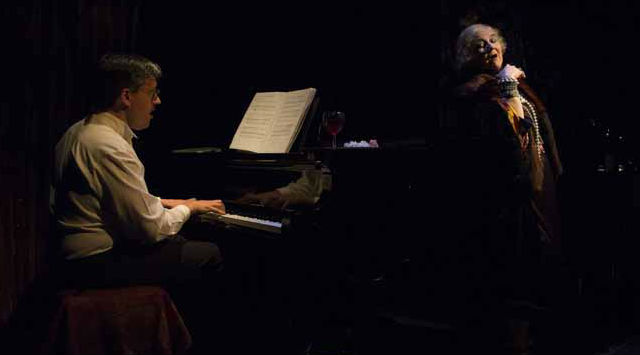
Bijou has lived through a lot. Now in her autumn years, she looks back and recounts stories, with the aide of abounding song and dance, to share her experiences as a woman on the fringes of Parisian society. Chrissie Shaw’s script is charming, with surprising revelations that are guaranteed to delight, and even though it shies away from a stronger sense of drama that could deliver greater poignancy, it is certainly not afraid to touch on the raunchier aspects of Bijou’s past.

As performer, Shaw’s vocal abilities are her greatest asset. Interpretations of yesteryear songs are consistently enchanting, and the sharp focus she maintains in her one-woman show format is thoroughly impressive. Alan Hicks is on the piano providing accompaniment, with tremendous style and effortless flair. His voice and humour make only brief appearances, but they are very memorable indeed.

The elders of every community are truly the most valuable in terms of the wisdom they can offer, yet we relegate them to minor roles, often forgetting to include them in our ways of life. In Bijou, we are shown that many of the answers we seek, have already been found by those who had come before us. The seniors are ignored at our own peril, and the beauty of Bijou’s story, and of Shaw’s work, demonstrates how much there is to lose, if we persist with that ignorance. We can learn from going through firsthand, every high and low of life, but we must also listen to those who had taken the hard road, so that we may explore newer, more peaceful ones.

www.bijoucabaret.com

Review: A Nest Of Skunks (Collaborations Theatre Group)

depotVenue: The Depot Theatre (Marrickville NSW), Aug 3 – 13, 2016
Playwright: James Balian, Roger Vickery
Director: Travis Green
Cast: Peter Condon, Jeannie Gee, Penelope Lee, Amanda Maple-Brown, Brendan Miles, Aanisa Vylet

Theatre review
It is the future, and the slang word for refugees is “skunks”. Even though there is no indication as to how far ahead in time A Nest Of Skunks is set, our imagination does not have to work very hard at all to believe that society has disintegrated to that level, where we liken asylum seekers to an animal known for its repulsive stench. In fact, we often forget that events in the play are not actually taking place in the here and now, being so used to prevailing sociopolitical attitudes towards the needy that are already full of contempt.

The script, by James Balian and Roger Vickery, is taut, confrontational and stimulating. It appeals to our decency, demanding that we think about the repercussions of political decisions with compassion and rationality. Convincing parallels are drawn between Nazism and how public ideology is currently evolving, and in its dystopic vision, we see that it takes only a few small steps before fascism ascends again. A Nest Of Skunks is gripping drama, with compelling twists and turns that provide food for thought, along with excellent entertainment. Director Travis Green creates a powerful statement with the text, and although a couple of crucial plot revelations require greater clarity, his storytelling is nonetheless affecting.

There are accomplished performances in the piece, most notably by Brendan Miles whose robust presence and emotional authenticity, ensure that the show is held together by our tremendous empathy for his character Stephen. There are slight issues with the portrayal of language barriers between cultures in the play, but they do not dampen our enthusiasm for Miles’ very moving interpretation of a man in turmoil and desperation.

Refugees are used as pawns in the quest for power by those in the business of government. We are made to fear the weak. Instead of providing help, we turn against the innocent, employing harsh and cruel measures in the name of protecting our self-interest. A Nest Of Skunks demonstrates that resistance is the only instrument we have that could turn the tide. Characters in the play make radical decisions to do the right thing, but what is required of us is only reason, so that we may triumph against lies and greed, and all the irrationality peddled by fear-mongers who wish to undermine the best of our immortal human spirit.

www.facebook.com/CollaborationsTheatreGroup

Review: Cristina In The Cupboard (The Depot Theatre)

depottheatreVenue: The Depot Theatre (Marrickville NSW), Jul 13 – 30, 2016
Playwright: Paul Gilchrist
Director: Julie Baz
Cast: Nyssa Hamilton, Teale Howie, David Jeffrey, Emily McGowan, Tasha O’Brien, Sarah Plummer, Lucy Quill, Rachael Williams
Image by Katy Green Loughrey

Theatre review
We hear of people going on therapeutic retreats, travelling to the countryside, away from everyday city life, to find themselves. Some sound like lavish holidays disguised as spiritual endeavours, while others seem too challenging for mere mortals to even imagine, such as those who require individuals to be shut off from the world, speaking to no one at all for weeks on end. Cristina locks herself up in her cupboard, compelled to look inward, rejecting efforts to intervene from family and friends. She is determined to withdraw from the noise, and listen only to her own heart.

In Paul Gilchrist’s exceptional and very contemplative play Cristina In The Cupboard, we join a girl on her journey of self-discovery, as she asks all of life’s big questions and takes it upon herself to provide the answers. Like Cristina, the script is charming, intelligent and brave. It is an invaluable expression of the universal but private experience of introspection, giving form to something that is usually subconscious, so that our hidden and buried realities comes to light, and that we may begin to have a better understanding of our minds, along with a warmer regard for our souls.

The vibrant and imaginative production under Julie Baz’s direction works effectively at enhancing the ideas of the play, bringing lucidity to the many deep meditations therein. There are powerful and oftentimes complicated concepts that require the physical dimensions of theatre to put to effect, and Baz negotiates them successfully. Sections of the show could be dealt with with a lighter touch, but the overall impression it leaves is dynamic and surprisingly entertaining. Each of the production’s characters are well considered and delightfully detailed, for a stage that is consistently abuzz with adventure and life. It is a strong cast, featuring Emily McGowan in the title role portraying the demanding duality of girlish innocence and a remarkable wisdom. McGowan’s confident presence allows us to connect with her character’s unusual circumstances, and the precision at which she delivers her performance turns the show’s context of magical realism into something quite profoundly authentic.

Life is hard, and art alleviates suffering by letting us know that we are not alone. As we relate to Cristina’s struggles, we are consoled by the mutuality of all our concerns and anxieties, and in the process come to a re-acquaintance with humanity and its inevitable vulnerabilities. Without art, we are sold only false representations of life that tend only to make things even harder. It is no wonder that we have to hide away, to retreat into spaces of safety that can only be provided by the self, the truth, and everything we trust to be real art.

www.thedepottheatre.com