Review: Green Day’s American Idiot (Sydney Opera House)

Venue: Sydney Opera House (Sydney NSW), Jan 11 – 14, 2018
Music: Green Day
Lyrics: Billie Joe Armstrong
Book: Billie Joe Armstrong, Michael Mayer
Director: Craig Ilot
Cast: Kaylah Attard, Kyla Bartholemeusz, Erin Clare, Connor Crawford, Linden Furnell, Phil Jamieson, Alex Jeans, Nicholas Kyriacou, Vidya Makan, Phoenix Mendoza, Phoebe Panaretos, Christopher Scalzo, Maxwell Simon, Ashleigh Taylor, Kuki Tipoki
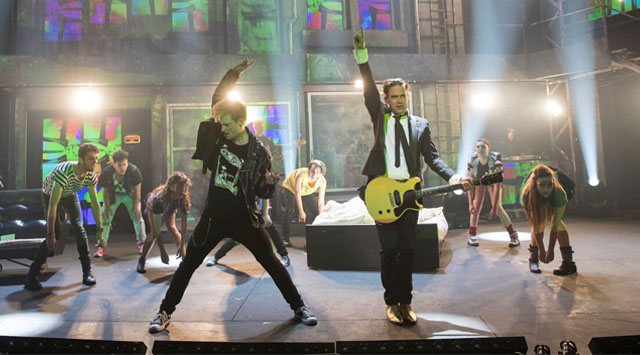
Image by Ken Leanfore

Theatre review
Comprising songs by American punk rock band Green Day, American Idiot is a musical, or a rock opera to be slightly more precise, that showcases the band’s unquestionably popular songwriting talents. Billie Joe Armstrong, Tré Cool and Mike Dirnt are Gen X’ers who have found an audience with their brash but commercial sound, and like many successful music artists today, exploring a jukebox musical with their pre-existing catalogue is now par for the course.

While it is somewhat refreshing to have the punk genre incorporated into this almost always contrived genre of show, a stronger book is required for American Idiot to speak to those who are less than fanatic about the band’s oeuvre. We see characters go through the semblance of a plot, but glean no detail from any of their stories. Cheesy choreography and unimaginative use of projections, cause the show to further alienate.

The adaptation of music is however, fairly effective, with dramatic arrangements helping to sustain interest. It is a committed cast of varying abilities, most memorable of whom is Linden Furnell in the central role of Johnny, exquisitely confident in his multidisciplinary approach to the production’s quite exacting requirements. His effortless blend of rock and broadway, along with a physical agility, provide us with a sense of impressive polish and professionalism. Much less comfortable on the musical stage is Phil Jamieson, who although exhibits good presence from his years as a rock musician, is visibly disoriented in this switch in performance style.

It is certainly one for the fans, but there is no reason for the bar not being raised higher. There is excellent energy and poignant intent in each of the songs being sung in American Idiot, and when presented appropriately, there is plentiful opportunity for a wider crowd to connect. The talent here is evident, but greater diligence is necessary for a show that could speak to more, with better clarity and at a more affecting depth.
www.americanidiotlive.com.au

5 Questions with David Morton and Nicholas Paine

David Morton

Nicholas Paine: What’s The Wider Earth about?
David Morton: The Wider Earth is a work of fiction drawn loosely from the historical record. It takes memories of real people, places and events and passes them through the lens of myth. Some may call it blasphemous. Others may caution that the simplicity of the tale undermines the real work of its hero. I hope it might stand as a celebration of the incredible complexity of our planet, and go some small way towards humanising the part played by those brave enough to stand against the dominant thought of their time.

What’s it like developing a new work?
Developing new work brings with it the simultaneously liberating and horrifying reality that everything is in flux, and there is nothing to fall back on. It takes a special group of people to inhabit that chaos, particularly with an opening night looming. Over the last couple of years we’ve had the honour of working with an incredible team of creatives and performers. They’ve not only deftly embraced continuous rewrites, the quirks of puppetry, and other obstacles to the process, but had an insatiable drive and passion to push the work to new heights.

Tell me about the design of the puppets.
The design for the puppets used in the show was undertaken during an intensive eight-month process. The journey of each creature began with us spending time with their real-life counterparts, sketching and taking video as studies to determine the key structures and movement qualities of the different animals and how we could best embody these in the final objects. The drawings and notes from these encounters were then turned into three- dimensional digital renderings of each creature to design the mechanisms that would allow for their controlled movements. Finally, these models were broken into cross sections that could be laid at as a plan to be laser cut into wood, paper and leather pieces.

Over the course of four months a team of fabricators assembled these pieces in the Queensland Theatre workshop. This began with slotting and gluing the main structures together to give the creatures a base form that was then further embellished using wicker. The internal mechanisms were activated with the installation of control systems similar to miniature brake cables, and handles and rods were attached. Each of the puppets was given colour using wood stain and arted with ink. Finally, each had a pair of obsidian (volcanic glass) eyes installed.

How were the puppets introduced into the show?
Similarly to the construction, incorporating the finished puppets into the work followed a series of distinct stages. The first of these involved training the ensemble in the key manipulation techniques used by the Society. These include the focus of the puppet, its breath, and its ability to give an illusion of weight and gravity. Following this, the performers were slowly introduced to the various creatures and undertook extensive research into the movement and behavioural qualities of each. When working out the choreography for each scene we first start by devising the large movements – like where on the stage the puppet travels – and as this becomes embodied by the performers more ne detail is added.

The process of bringing a puppet to life on stage takes an incredible degree of commitment and discipline; unlike an actor who spends a rehearsal period developing a character, a puppet has to first learn how to be alive before we can even start to wonder as to what its character might be. Ultimately, the process isn’t completed until the imagination of an audience turns the movement cues that we give into the illusion of life.

If you could take the show anywhere, where would it be?
The Galapagos Islands, of course!

Nicholas Paine

David Morton: Tell us more about the cast for The Wider Earth.
Nicholas Paine: The production features seven of some of the country’s finest actors and puppeteers. Together, they form the ensemble that will tell you the story. The line between actor/puppeteer is blurred. In some scenes you’ll have actors playing characters alongside puppets, and in other scenes those actors will be manipulating puppets and performing more choreographic sequences. It will certainly keep them on their toes… and hopefully you too!

What is it about Charles Darwin that inspired you to create The Wider Earth?
We were inspired to create this work when we were visiting Handspring Puppet Company in South Africa in 2013. We got talking with the Executive Producer, Basil Jones, about how Charles Darwin stopped in Cape Town on the HMS Beagle just prior to returning home to England. We were both familiar with the work of Charles Darwin but what we didn’t realise was that he was just 27 years old when he made this stop and only 22 when he left on the voyage. We thought that his journey could make a stunning coming of age story, full of exquisite creatures, and to make comment on the wonder of our planet.

Dead Puppet Society went to Brooklyn (New York City) for eight months of pre-production in the creation of The Wider Earth. How was that experience for you?
We were developing the show with St. Ann’s Warehouse for that whole period of time. The specific focus of the development program was on refining the kind of puppetry we wanted to use to tell this story. We were working with eight other companies who also work in visual theatre, which for us was a really eye-opening experience. We’ve never really collaborated or connected with any other puppet-based artists before because it’s not an overly used form in Australia. The residency resulted in a 20-minute work in progress showing. And all of those artists have gone on to further develop their work in very different arenas.

How long from page to stage?
It’s about a three-year process. By the time we open it will have been exactly three years.

If you could take the show anywhere, where would it be?
Shrewsbury, UK. Where Charles Darwin was born.

David Morton and Nicholas Paine are producers of Morton’s The Wider Earth, part of Sydney Festival.
Dates: 17 – 27 January, 2018
Venue: Sydney Opera House

Review: Three Sisters (Sydney Theatre Company)

Venue: Sydney Opera House (Sydney NSW), Nov 6 – Dec 16, 2017
Playwright: Anton Chekhov (adapted by Andrew Upton)
Director: Kip Williams
Cast: Alison Bell, Peter Carroll, Callan Colley, Miranda Daughtry, Harry Greenwood, Melita Jurisic, Brandon McClelland, Eryn Jean Norvill, Rahel Romahn, Chris Ryan, Nikki Shiels, Mark Leonard Winter, Anthony Brandon Wong, Charles Wu
Images by Brett Boardman

Theatre review
The existential angst in Chekhov’s Three Sisters is timeless; the need to understand what we are here for, and how we can find happiness, are fundamentally human and eternal. Once again, we see Olga, Irina, Masha and all their friends babble on for three hours, about how hard it is to do life. Andrew Upton’s adaptation gives the play a slight refresh, but it is a predictably faithful rendering that takes on the burden of the original’s dreariness, as it ruminates on the tedium of the bourgeoisie.

As is characteristic of director Kip Williams’ style, the show is presented with remarkable polish and an impressive elegance. Alice Babidge’s set design establishes an inescapable air of glamour for the production’s minimalist aesthetic, while Nick Schlieper’s delicate lights bring sumptuous beauty to proceedings. Music by The Sweats and sound by Nate Edmondson help us locate the contemporary relevance in Chekhov’s story, whilst retaining its intrinsic sense of Russian austerity.

It comes as no surprise that this is yet another dry and dreary rendition of Three Sisters. For all the reverence associate with the play, it is at its core, a work about the lifelessness of the privileged. The point is its stasis, that nothing happens for years, and that these women are mysteriously incapable of taking meaningful action.

Williams is inventive in the first half, introducing energy wherever possible, but the depressive quality of the text proves insurmountable. Although some of the flourishes can be distracting and excessive, there is no denying our appreciation for the effort put into injecting animation and comedy, derived from the sheer desire to see some theatricality.

Actor Miranda Daughtry is memorable as Irina, with explosive emotions that are both captivating and genuine. The cast understandably adopts an extravagantly declarative approach to performance, but Daughtry’s way of connecting with her audience is particularly truthful. Alison Bell’s droll humour as Olga shines a light on the often neglected irony in Chekhov’s writing, and Eryn Jean Norvill’s exaggerated comedy as Masha is similarly delightful. We are glad to be spared too much bleakness, but it is arguable if these interpretations are effective, in helping us absorb the philosophies in Chekhov and Upton’s writing.

There always seems to be a Chekhov play on a stage in Australia somewhere. We are so much like the sisters, understanding the concept of progress but unable to extricate ourselves from the old and deficient. We may not be able to create anything without being informed by tradition, but this Three Sisters draws attention to the parts of us that refuse to move on, that are rigid in their worship of a conceptual “home”, undeviating from sacred points of origin. These parts of us that are backward and regressive must be interrogated, if not demolished.

www.sydneytheatre.com.au

Review: The Merchant Of Venice (Bell Shakespeare)

Venue: Sydney Opera House (Sydney NSW), Feb 25 – Apr 1, 2017
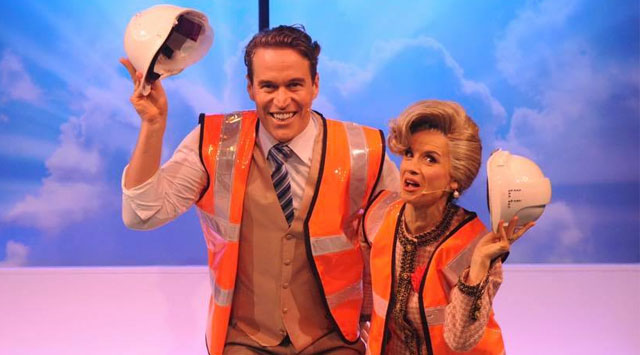
Playwright: William Shakespeare
Director: Anne-Louise Sarks
Cast: Mitchell Butel, Catherine Davies, Eugene Glifedder, Felicity McKay, Shiv Palekar, Damien Strouthos, Anthony Taufa, Jessica Tovey, Jo Turner, Jacob Warner
Image by Prudence Upton

Theatre review
It is clear that Shakespeare wrote The Merchant Of Venice for an antisemitic audience. When we revisit the play today, there are choices to be made in its interpretation, to appropriately address its inherent prejudices. If it was indeed Shakespeare’s intention to shame and vilify Jewish people, contemporary productions must take the radical decision of going against the playwright’s will, or risk making statements that are completely unacceptable in our modern day.

Director Anne-Louise Sarks shifts the discussion from being an indictment on Jews, to one that chastises both Christianity and Judaism, effectively turning all the characters in The Merchant Of Venice uniformly into villains, and deftly solving the problem of Shakespeare’s racism. It is a thoroughly enjoyable staging, with commendable proficiency in all aspects, but it is the dialogue between Sarks and Shakespeare that is most engaging.

In imposing contemporary sensibilities onto the piece, Sarks lets us observe an evolution that has taken place over four centuries, and gives us the opportunity for repudiation and rectification. There is no better reason to remount classics, than using them to distance ourselves from the traditions and cultures they represent.

In acts of subversion, symbols of power, along with their gatekeepers and revered masters, are often implicated in the creation of something progressive and new. If we are to do Shakespeare endlessly, we must not permit the repetition of mistakes, even if it means changing the very essence of what is being said.

The role of Antonio the pious Christian, is carefully modified in this iteration to provide new meaning. Actor Jo Turner plays him unforgivable and contemptible, so that we too, want his pound of flesh. Shylock is performed by Mitchell Butel with excellent nuance, providing an image of vulnerable humanity, coupled with a vengeful ferocity, to make comprehensible the character’s temperament and intentions. It is an excellent cast, inventive and entertaining in all their contributions, for a show as amusing as it is intelligent.

In 2017, it is no longer tolerable to express any form of racial discrimination, but religion has itself become susceptible to scrutiny. In our refusal to abide by Shakespeare’s sanctimonious depiction of Christianity through the denigration of Jews, how we think about The Merchant Of Venice must go through transformation. What our gods represent must be allowed to move with the times, even if it means to disregard those who insist on adhering to unreasoning traditions.

www.bellshakespeare.com.au

Review: Miracle City (Sydney Opera House)

Venue: Sydney Opera House (Sydney NSW), Oct 12 – 29, 2017
Books & Lyrics: Nick Enright
Music & Concept: Max Lambert
Director: Darren Yap
Cast: Missy Higgins, Josie Lane, Lara Mulcahy, Gus Murray, Liam Nunan, Anthony Phelan, Kelly Rode, Jessica Vickers
Image by Branco Gaica

Theatre review
The Truswells are American televangelists who make commerce out of religion, by commodifying faith and targeting herds of desperate souls. They put on a weekly TV show, promising inspiration, redemption and salvation, in exchange for cash from their loyal viewers. Behind the scenes however, the family is going broke, as they try unsuccessfully to fulfil ambitions of expanding their operations.

Miracle City depicts an absurd slice of life, but the production is rarely funny. The plot trudges along, offering no surprises and only few instances of amusement. In the absence of humour, we search instead for poignancy, which disappointingly and quite bewilderingly, never arrives. It is fortunate then, that the show features excellent singing and a pleasing score of Christian gospel music.

The cast works hard, with leading lady Kellie Rode bringing a valuable sense of vibrancy and polish to the show. Gus Murray cuts an imposing figure as Reverend Truswell, but it is a portrayal that seems insufficiently sinister in this tale of crushed dreams and broken morals. A trio of choristers provide some stunning powerhouse vocals that lift the mood, thankfully, at very regular intervals. Missy Higgins, Josie Lane and Lara Mulcahy play subsidiary characters, but their voices are the highlight of a musical that is otherwise strangely passionless.

We pay businesses to satisfy our needs, but we want them to be transparent in our dealings. Religion can give a lot to individuals, but the magic that they perform, often relies on obfuscation and mystery. We need to be in touch with the sacred, but we do not wish for access to the venerable be contingent on trade. Those who peddle in the divine, are therefore deceptive and hypocritical, whether on trash TV or in our more hallowed institutions.

www.thetheatredivision.com

Review: Dinner (Sydney Theatre Company)

Venue: Sydney Opera House (Sydney NSW), Sep 11 – Oct 28, 2017
Playwright: Moira Buffini
Director: Imara Savage
Cast: Caroline Brazier, Brandon Burke, Claire Lovering, Rebecca Massey, Aleks Mikić, Sean O’Shea, Bruce Spence
Image by Brett Boardman

Theatre review
Paige is throwing a pretentious dinner party, for people she dislikes. Moira Buffini’s takedown of the English upper class, Dinner, begins promisingly enough, with pathetic women and impotent men tearing into each other, to expose the ignorant indulgences of those at the top, who seem to have things much easier for no good reason. Touches of surrealism give the play an enjoyable whimsy, but we quickly discover its plot and dialogue to be unoriginal, almost generic in its castigation of the rich. Characters with a depraved sense of entitlement, all in broken relationships, engaging in hateful exchanges over an expensive meal; none of it ever ceases to feel a tad too familiar.

The action takes place in a glorious dining room (designed by Elizabeth Gadsby), behind a big glass window. Either the great unwashed has to be kept at bay, or the theatre patrons need to be protected from some big mess that is poised to take place on stage. Three words, “fuck things up”, are given grand emphasis several times in the course of the production, but the wait for radical activity proves fruitless. Director Imara Savage makes several obtuse gestures in her staging, attempting to introduce the idea of subversion to her work, but it all feels much too polite, and they fall regrettably flat.

Caroline Brazier gives a polished performance as Paige, and although we can certainly see the disquiet and the deceptive fragile glamour of the lady of the house, we never really come to an understanding of the source of her immense toxicity, which underpins the entire narrative of Dinner. Aleks Mikić plays Mike, the outsider who stumbles in, representing the working class, in a juxtaposition of the privileged against the concept of an everyman. In spite of the actor’s strange and unexplained use of a posh accent, the enigmatic qualities created for his persona, makes him one of the more intriguing aspects of this production.

There are laughs to be had, and valuable concepts to chew on, but Dinner needs a lot more spice if its ambitions are to be fulfilled. Social inequity is a problem of great severity, especially troubling in the Trump age, and when we decide to challenge the imbalance of wealth, any hint of the perfunctory would risk the exercise turning inadequate and hypocritical. It is never sufficient that artists are well-meaning. We rely on them to tell the truth in a way that the truth may have an effect on how we think and live, and when the message is hard to digest, their arguments need to find a way to make themselves persuasive. A gentle simmer might be an easy way to broach the subject, but it rarely manages to get the job done.

www.sydneytheatre.com.au

Review: Djuki Mala (Sydney Opera House)

Venue: Sydney Opera House (Sydney NSW), Jun 13 – 18, 2017
Director: Joshua Bond
Choreographers: Nikki Ashby, Joshua Bond, Lionel Garawirrtja
Cast: Wakara Gondarra, Baykali Ganambarr, Watjarr Garmu, Didiwarr Yunupingu
Image by Daniel Boud

Theatre review
Hailing from north-eastern Arnhem Land in the Northern Territory, Djuki Mala comprises a group of Aboriginal men who showcase their proud Yolngu culture through traditional and contemporary dance. Between the live action, video projections featuring interviews with the dancers and their maternal figures, provide background information that help us contextualise the lives being showcased on stage.

As the show progresses, significant influences from American culture, from Michael Jackson to Gene Kelly, become markedly present. Westernisation is a facet that insists on being incorporated into every Australian existence, but the purity of Yolngu heritage remains, even at the dance’s more colonised moments. Joy will persist, regardless of our oppressors’ intentions and efforts.

Whether the segments are choreographed to be quiet or rambunctious, this magnetic cast of five, bring a sense of celebratory spiritedness to all that they present. It is an enthusiasm that is tremendously infectious, and never fading. The greatest beauty of Djuki Mala lies in the luminous optimism of the people being represented, and the resilience that we witness. Successful Indigenous lives are evidence of a resistance that is ongoing and untameable, and these carefree dancers demonstrate that the best revenge is a life well lived.

www.djukimala.com

Review: Talk (Sydney Theatre Company)

Venue: Sydney Opera House (Sydney NSW), Apr 3 – May 20, 2017
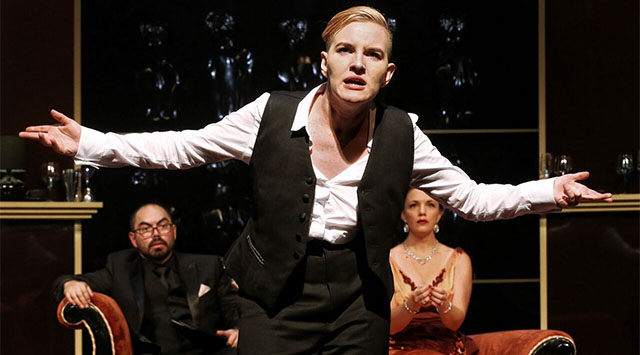
Playwright: Jonathan Biggins
Director: Jonathan Biggins
Cast: Valerie Bader, Helen Christinson, Paige Gardiner, Peter Kowitz, Lucia Mastrantone, Kenneth Moraleda, Andrew Tighe, Hannah Waterman, John Waters, Ben Wood
Image by Brett Boardman

Theatre review
Journalists are losing jobs every day, while the world transitions from traditional forms of news consumption to what is termed new media. In the digital age, information comes cheap, and its dissemination no longer relies on sources of authority and legitimacy. Instead, we find ourselves obtaining news from literally anyone, with little discernment, through things like social media or any of the millions of internet web pages.

What used to be considered a revered profession, is now dissolved into commentary, opinion and hearsay, coming from people who have demonstrated nothing that earns our trust, most of which is never verified or verifiable. A lot of Jonathan Biggins’ Talk is about the well-founded anxiety surrounding this changing landscape, as well as the ever-present threat that commerce and propaganda pose to our media organisations.

Three powerful bodies are represented in the play; the Australian Broadcasting Corporation, the Daily Telegraph, and a fictive mercenary radio station with its talkback star. We observe them finding their way around the case of an alleged paedophile, each one responding in their characteristic manner, with none able to report the truth. Biggins offers insight and perspective on an industry he knows well. The clarity of his deductions is valuable to how we understand the state of play today, in forces that have undeniable influence on all our lives. As a work of theatre though, the dialogue is often contrived, with a transparently didactic approach that gets in the way of its storytelling.

A lack of nuance in its depiction of archetypal personalities produces a kind of comedy that is perhaps too obvious and slightly hackneyed. Its characters are never surprising, although performances are uniformly polished and considered. Actor John Waters as the aforementioned talkback radio host John Behan, is entirely convincing, but the material at hand does not seem to encourage a depiction that is as comical and outrageous, as the real life examples he emulates.

Production design is a straightforward affair in Talk, but for what it lacks in ingenuity, it compensates with efficiency. Mark Thompson divides the stage into three static portions, to accommodate the play’s three workplaces. If their only intention is to create believable and functional spaces for action to occur, then design faculties have passed with flying colours on this occasion.

We want the news to give us access to the truth, but truth is rarely the real priority for those who give us the news. As we become increasingly sceptical of the old gatekeepers, we reach for alternate sources in hope of locating information that is more accurate and relevant, but that can lead us into echo chambers that have us shielded from reality. It is a grim scenario that Talk leaves us with, but its pessimistic resistance of digital advancements in our media is overstated. Traditional formats were never without their problems. It is tempting to think of the past as simple and wholesome, but lying crooks have existed since the dawn of time, and we will have always have to be vigilant, no matter ink or pixels.

www.sydneytheatre.com.au

Review: Richard III (Bell Shakespeare)

Venue: Sydney Opera House (Sydney NSW), Feb 25 – Apr 1, 2017
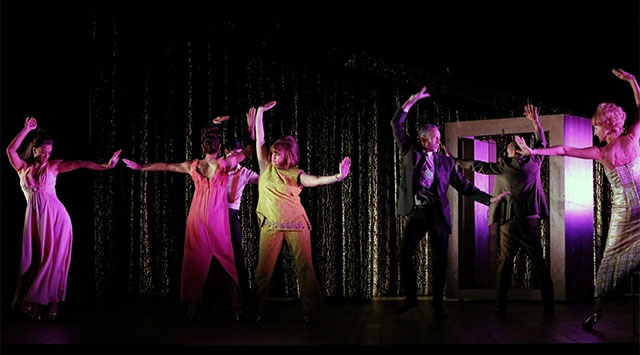
Playwright: William Shakespeare
Director: Peter Evans
Cast: Ivan Donato, James Evans, Sandy Gore, James Lugton, Kevin Maclsaac, Kate Mulvany, Meredith Penman, Gareth Reeves, Rose Riley, Sarah Woods
Image by Prudence Upton

Theatre review
Born ugly, Richard never understood what it is to be loved, and his story details the effect on a person when rejection is a constant and central defining experience. Coupled with what we now term privilege, his aristocratic life places him in a position of power in spite of that perpetual derision, and what results is a bitter thirst for the reciprocation of inhumanity, that knows no bounds.

It is possible to think of evil as a condition that is somehow innate, even natural to some, or as Shakespeare does in Richard III, we can conceive of evil as a manufactured and socialised phenomenon. In director Peter Evan’s rendition, the way brutality manifests, is an unambiguous process of retribution; Richard’s behaviour is depicted as being a direct consequence of the way he suffers under the mistreatment of a cruel world.

The production is adequately assembled, but there is no overstating its capacity as a showcase for the staggering talents of Kate Mulvany, who takes on the eponymous role with splendid aplomb. Mulvany’s unequivocal brilliance occupies centre stage, having us enthralled at every second, and casting a shadow over the rest of the show. All we want, is to absorb every meticulous minutiae that she serves up in each word and gesture.

It is pure genius at work, and to witness a virtuoso performance that is so exhaustively invested and incredibly rich with resonance, is the kind of theatre that broadens our understanding of what art is capable of doing. When Mulvany strips off at dramatic climax, to reveal her own scoliosis, we see the severely curved spine that she shares with Richard, and in that moment, performativity and reality conflate, for one of the most powerful visions ever brought to stage. Our reaction is appropriately visceral, but we are also made to consider how we attribute a person’s merits, or more accurately in this case, demerits, to their natural traits. If Richard is a villain because of his congenital physical condition, we must question how Mulvany’s and everybody else’s corporeality, is able to determine the people that we eventually become. We wonder about the finality of fate from the point of birth, and the extent to which our existence is written in the stars, and on the flesh.

There are other members of cast who impress, most notably Meredith Penman and Sarah Woods who deliver sensational scenes of heightened emotion, but the piece dulls significantly in the short moments when our star is offstage. Evans’ frequent use of his actors as a chorus is occasionally awkward, although the sense of vigour they create is valuable in ensuring that our attention is sustained. The set and costumes do not quite achieve the luxury and decadence that it aspires to, and the use of a small television set to convey the presence of a dumbwaiter is an inelegant solution and a continual distraction.

Visual aesthetics in this Richard III may not be a strength, but the character we have come to see, is marvellously presented. To live is to learn, and to be human, we need to understand humanity. Art shows us all the possibilities of being, so that we can find ways to negotiate better, both our environs and our selves. It is unlikely that Richard is a straightforward reflection of any one of us, but through this extraordinary rendering of a man who suffers and who retaliates, we gain insight into the nature of personal demons and recognise the way we co-exist in communities. Love can bring about things most beautiful, but its absence, is how we invite every ugliness.

www.bellshakespeare.com.au

Review: Away (Sydney Theatre Company)

stcVenue: Sydney Opera House (Sydney NSW), Feb 18 – Mar 25, 2017
Playwright: Michael Gow
Director: Matthew Lutton
Cast: Marco Chiappi, Julia Davis, Wadih Dona, Glenn Hazeldine, Natasha Herbert, Heather Mitchell, Liam Nunan, Naomi Rukavina
Image by Prudence Upton

Theatre review
It all happens in the summer of 1968. Martin Luther King, Jr. is assassinated in the USA, and the black power salute of the Mexico City Olympics stuns the world. Meanwhile in Australia, baby boomers come of age in a country of stability and abundance. Michael Gow’s Away is about life on this land, half a century ago. Three families, connected through high school, go through their private experiences of grief, at a time when all should have been peachy keen.

It is arguable whether their personal dramas are able to find relevance, two generations later, with today’s audiences. We exist in what seems like a completely different time, and even though we comprehend the human struggles and relationship pressures in Gow’s writing, their concerns seem far removed from our daily realities. There are allusions to issues of racial disharmony in Away that feels more current of its themes, but much of the piece hinges on anxieties of a bygone era. The Vietnam War and Gone With The Wind have long been surpassed as symbols of cultural significance.

Director Matthew Lutton chooses wisely, to hone in instead on the more theatrical, almost operatic qualities of the play, amplifying its non-naturalistic portions for a production that thrills with its flamboyance and episodic surrealness. The most memorable moments involve wildly imagined spectacle, usually without dialogue, prompting us to wonder if the text is but a conduit for Lutton’s prime interest in the visceral possibilities of the art form. Act IV commences with the most breathtaking of set transformations; a 10 second sequence stunning in its beauty, and flabbergasting with its technical proficiency, proving set designer Dale Ferguson and lighting designer Paul Jackson to be the real stars of the night.

Also stellar however, is the cast of eight, each one beautifully delicate in their interpretations of roles, and enchanting with the chemistry they formulate as an ensemble. Heather Mitchell is particularly mesmerising as Gwen, the angry unfulfilled mother, resentful of everything and everyone within earshot. Mitchell brings her performance close to caricature hysteria, but always ensuring that we understand Gwen’s small world of perpetual catastrophe. The other inconvenient female of Away is Coral, isolated and traumatised, played by Natasha Herbert who brings classic tragic glamour to the part, keeping us engaged in her painful journey, while providing entertainment value with her confidently expressive portrayal. These are two wonderful characters who give the show its exuberance, but they represent a kind of gender depiction that is thoroughly unbalanced and outmoded. The women are crazy and the men, sturdy. The women are a handful and the men have to pick up the pieces. This dichotomous construct is tired and dangerous.

There is noteworthy and substantial reinvention that takes place in this production of Away, demonstrating its undeniable need for an update. We are attached to works like this not just for its inherent artistic merit, but also because of commerce, nostalgia, and cultural sentiment. We must always move on when making art, but when we wish to look back, we must only do so without fear of being adventurous and radical.

www.sydneytheatre.com.au