Review: The Misanthrope (Bell Shakespeare / Griffin Theatre Company)

Venue: Sydney Opera House (Sydney NSW), Aug 28 – Sep 28, 2018
Playwright: Molière (a new version by Justin Fleming)
Director: Lee Lewis
Cast: Simon Burke, Danielle Cormack, Catherine Davies, Ben Gerrard, Rebecca Massey, Hamish Michael, Anthony Taufa
Images by Brett Boardman

Theatre review
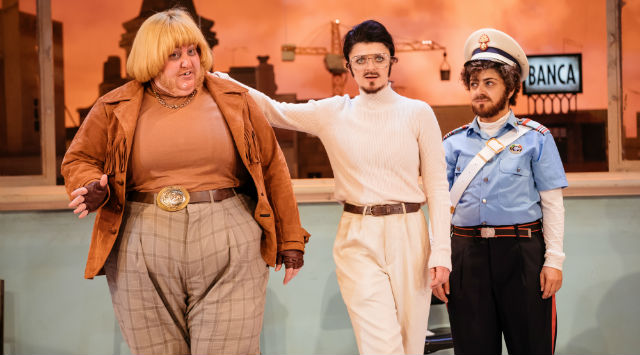
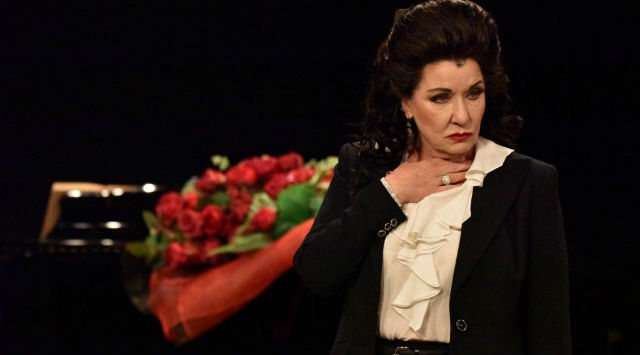
Alceste believes that the only truths are the ones in her own head, refusing to accept any behaviour she perceives to be contrary, and charges them all with hypocrisy. As fate would have it, her lover Cymbeline is no believer in fidelity, and when Alceste has to confront Cymbeline’s covert flirtations with several others, matters of the head and heart come to agonising conflict, in this tale about how we value our principles. Justin Fleming’s new adaptation of Molière’s The Misanthrope brings the play into our contemporary times, by immersing it deep into our obsession with popular culture, and even more significantly, by altering the genders of its key roles.

Alceste is now a woman, played by Danielle Cormack, a powerful and captivating presence, appropriately representing the influential position of our lead character, although a persistently sombre approach to the central role, does significantly diminish the humour of the piece. Cymbeline, previously Célimène, is now a male pop star, convincingly portrayed by Ben Gerrard who luxuriates in the part’s farcical narcissism. Sexuality is turned entirely fluid in this rendition of The Misanthrope, with every personality capable of gay and straight love, and orientation is no longer a concern.

The production looks vivid, absolutely glitzy at times, with Dan Potra’s very flashy costumes leaving a particularly strong impression, but the show is often underwhelming, unable to excite with its comedy or philosophies. Director Lee Lewis succeeds at making things modern and coherent, but an air of banality does, unfortunately, pervade.

Passion for one’s beliefs, is often the propulsion that moves us to greater planes, but it is perhaps more exigent than ever, that we should learn as societies, to accommodate the opinions of others at these very fractious times. Unable to reconcile her disdain for all that is dishonest and insincere, Alceste is increasingly isolated, ultimately left only with a doctrine that has achieved nothing. It is a huge challenge, to hold on to what is right, yet able to negotiate all the contrarians that inevitably surround. To find the answer to our peace is difficult, but imperative.

www.bellshakespeare.com.au | www.griffintheatre.com.au

Review: Horror (Sydney Opera House)

Venue: Sydney Opera House (Sydney NSW), Aug 29 – Sep 2, 2018
Artistic Director: Jakop Ahlbom
Cast: Andrea Buegger, Sofieke De Kater, Yannick Greweldinger, Silke Hundertmark, Gwen Langenberg, Reinier Schimmel, Luc Van Esch, Thomas Van Ouwerkerk
Images by Prudence Upton

Theatre review
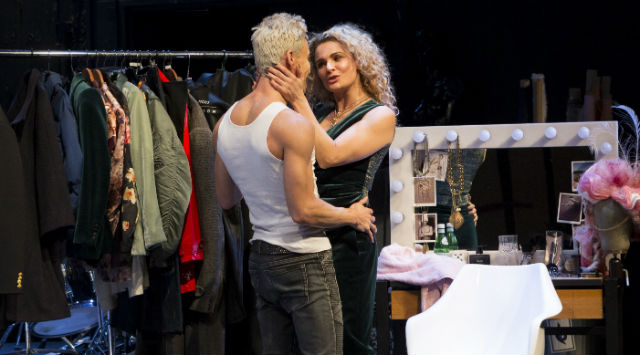
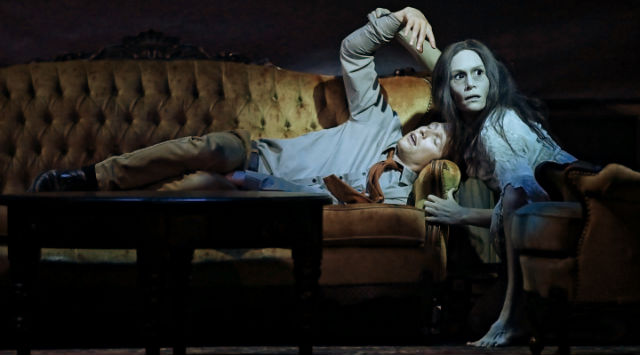
The action takes place in a haunted house. No words are spoken, but we know exactly what happens in each moment, mainly because we have seen everything before at the cinema. The horror film genre relies on special effects and creative editing, both technical features unavailable to the live format. In Jakop Ahlbom’s Horror, however, capacities of the stage are pushed to their limit, to achieve something that is best described as a tribute to the great classics of fear and revulsion. The show aims to frighten, and like the vast majority of scary pictures, it is only occasionally successful in that regard, although there is no denying the production’s very persistent entertainment value.

Cleverly designed on all fronts, from set and lights, to hair and makeup, and of course the obligatory cacophony of jolting sounds, Horror is an innovative tapestry of creative imagination. A skilful cast portrays a range of supernatural beings, performing unearthly acts that have us amused and fascinated. It is a well-oiled operation, every moment executed with impressive precision. Some of its gimmicks can feel underwhelming, but the show is ultimately a satisfying one, memorable more for its hits than for its misses.

We are afraid of ghosts, because we understand the mistreatment that people suffer when alive. These beings return from the dead, with nothing to lose, and their vengeance is both justifiable and boundless. To see them, is to think of ourselves at our angriest, except completely unrestrained. Our biggest fear perhaps, is when people believe that they can act without consequence. Ghosts, and so many of our intangible creations, teach us to be good whilst being keenly aware of our capacity to be bad, and telling ghost stories is as though to put a curse on the evil, when they are hiding in plain sight.

www.horrortheshow.com | www.sydneyoperahouse.com

Review: Ich Nibber Dibber (Sydney Opera House)

Venue: Sydney Opera House (Sydney NSW), Aug 15 – 19, 2018
Playwrights: Zoë Coombs Marr, Mish Grigor, Natalie Rose
Director: Zoë Coombs Marr, Mish Grigor, Natalie Rose
Cast: Zoë Coombs Marr, Mish Grigor, Natalie Rose
Images by Jacquie Manning

Theatre review
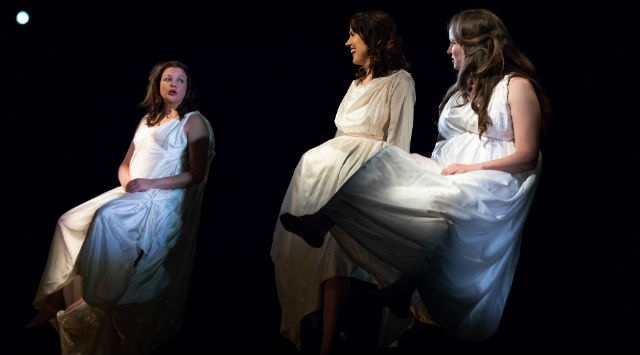
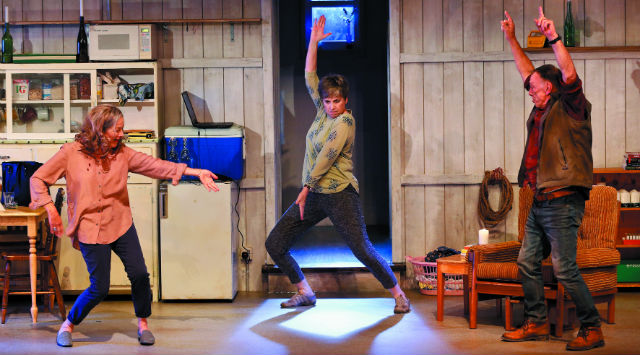
Three goddesses are afloat in white robes, eternal but not quite ethereal. Zoë Coombs Marr, Mish Grigor and Natalie Rose’s Ich Nibber Dibber features quick-fire conversations between old friends, natural and very candid, as though a verbatim recreation of private moments, collated over two or so decades. Confidences between close friends that are never meant for public consumption, bawdy and reckless, occupy centre stage to claim a position of dominance for the oft-neglected notion of female subjectivity. It is an exercise in rejecting the gaze, and of women asserting a perspective that is wholly about self-determined existences.

Audacious in its imagination of a post-feminist era, its accompanying politics are confident but subdued. Instead of overt investigations into meanings of gender, the play emphasises its comedy, and through that brazen attitude of subversive recalcitrance, Ich Nibber Dibber encourages us to laugh on our own terms, and by inference, to laugh at patriarchy. The show is thoroughly amusing, with its creators proving to be highly persuasive presences, as they jubilantly perform their defiance.

The women are unequivocally real, but they are also otherworldly, with a circularity to their experience of time that offers a glimpse into a future universe beckoning us to catch up. Michael Hankin’s set and costumes, along with Fausto Brusamolino’s lights, orchestrate this magical encounter between profane and divine, presenting imagery that reminds us of the transcendence we are all capable of. Music and sound by James Brown facilitate our connection with the storytellers, and then disturb our peace to keep us thinking.

It is believed that male desire in all its forms, have determined how we conceive of ourselves, but what had seemed inescapable, can now be put through a process of reconditioning. To extricate our own desires from those of the other, is likely an inexhaustible task, and because a woman’s work of resistance is never done, it is that ongoing project of continual redefinition and ever new formations of identities that can lead us to greater autonomy.

www.postpresentspost.com | www.sydneyoperahouse.com

Review: The Long Forgotten Dream (Sydney Theatre Company)

Venue: Sydney Opera House (Sydney NSW), Jul 23 – Aug 25, 2018
Playwright: H Lawrence Sumner
Director: Neil Armfield
Cast: Jada Alberts, Wayne Blair, Nicholas Brown, Brodi Cubillo, Melissa Jaffer, Ningali Lawford-Wolf, Wesley Patten, Justin Smith, Ian Wilkes
Images by Heidrun Löhr

Theatre review
King Tulla’s remains are being flown back to Australia, after having been detained in England for three generations. His grandson Jeremiah is required to preside over the welcome home ceremony, but the prospect of having to deal with buried trauma and lost family histories, sees him unravelling, as he comes to grips with all that his emotions have struggled to face. There are few stories as profound and important for us today, as H Lawrence Sumner’s The Long Forgotten Dream. It explores the crippling effect of colonialism, on our Indigenous peoples, as well as the paradoxical urgency of their need to recover, to foster a brighter future. Sumner is marvellously revelatory of the Aboriginal experience, splendid in his clarity of language and of thought, for a piece of writing extraordinary for the power it dispenses, and for the wisdom that it contains.

Director Neil Armfield brings palpable life to this tale of lost souls and transposed dimensions. We are moved by the production’s remarkable tenderness, evident in every delicate aspect that it presents on stage. Live music by William Barton is ethereal but incredibly precise, with a spiritual quality that has us responding in accordance with each of its enigmatic inclinations. Jacob Nash’s set design keeps us enthralled, speaking to us as though on a visceral or perhaps instinctive level, in varieties of shapes and proportions, carrying us from space to space. Mark Howett’s sensual lighting style is relied upon to add warmth to the family drama, and gravity to our national concerns. Technical elements of The Long Forgotten Dream are inventive in their conception, and sumptuously executed.

It is an exquisite cast that takes the stage, with leading man Wayne Blair delivering phenomenal intensity and poignancy, to anchor the show in an unyielding point of pertinence. He couples vulnerability with dignity, ensuring that we are moved by Jeremiah’s circumstances and more vitally, by all the wider injustices implied in the depiction of his suffering. It must also be noted that Blair’s whimsical approach to humour is deeply endearing, and a crucial factor in allowing us to identify with a personality that can seem a world away from most of our daily realities. Also very charming is Ningali Lawford-Wolf, who plays Jeremiah’s sister Lizzie, a sassy, bold presence dependable for introducing a vibrant luminosity with every entrance. Jada Alberts is suitably subtle and thoroughly convincing as Jeremiah’s daughter Simone, and Melissa Jaffer is captivating in a somewhat surprising way, when she conveys so effortlessly, the romantic secrets of a 102-year-old woman.

The refusal to listen, may be our biggest pitfall. We can make repetitive and incessant claims of good intentions, but our inability to actually prioritise the needs and demands of Indigenous communities, will only serve to sustain these unacceptable state of affairs. When we think about Aboriginal and Torres Strait Islander ancestral remains and sacred objects being controlled by colonising forces and their institutions, it becomes obvious the degree to which Australia denies the sovereignty of its First Nations. The inequity and, in some cases, inhumanity, they have had to tolerate, can only begin to find atonement when we are able to place their welfare at the very forefront of the national agenda, on equal footing with, if not ahead of, our selfish and exclusionary obsessions.

www.sydneytheatre.com.au

Review: The Children (Sydney Theatre Company)

Venue: Sydney Opera House (Sydney NSW), Mar 29 – May 19, 2018
Playwright: Lucy Kirkwood
Director: Sarah Goodes
Cast: Sarah Peirse, Pamela Rabe, William Zappa
Image by Jeff Busby

Theatre review
Lucy Kirkwood’s The Children imagines what it would be like, if an all-consuming ecological disaster were to strike today. Instead of the pandemonium surrounding earthquakes and tsunamis, we see an aftermath involving three scientists who are partly responsible for the catastrophe. It is a story about technology, concerned with the way inhabitants of the developed world are failing to find harmony with our greater environment. Hazel, Robin and Rose are retirees approaching seventy years of age, but their work in nuclear power is an enduring legacy that has wreaked havoc to all of humankind.

The play takes on some of the most important themes of our times, not only in its bold discussions of climate change, but also with its ultramodern perspectives on ageing and death. Explored with remarkable sophistication, Kirkwood’s ideas are edgy but truthful, often confrontational in their dissection of responsibility and attribution of blame, as they pertain to the current state of our planet. Diligently crafted to provoke thought and to elicit benevolent responses, The Children tackles pressing issues with intelligence and splendid inventiveness. It is a gripping work, surprisingly entertaining, but is ultimately most valuable for its political statements.

Set inside a humble cottage (designed with minimal fuss by Elizabeth Gadsby), the action begins deceptively mundane as its three characters skirt the issue, trying to be cordial company, before a sense of security arrives that will allow floodgates to open. Everything feels precarious, even before the audience is let in on the severity of their situation. Director Sarah Goodes teases with an exquisite balance of the austere, banal and lighthearted aspects of the story. Tensions ebb and flow, but we are mesmerised, captivated by the extraordinary stakes of the fictional tale, and how they feel so immediately, and terrifyingly, applicable to our real lives.

Actor Pamela Rabe plays Hazel, a woman straining under delusions, surviving on a despairing combination of determination and feeble crutches. It is a wonderfully humorous performance, dark and sensitive, cleverly conveying the fragility of existence under the mercy of indomitable forces. Rose, performed by Sarah Peirse, appears out of the blue, complete with bleeding nose, to shake us into reality. A charismatic and powerful mouthpiece for the play’s central ideology, Peirse is eminently compelling and deeply persuasive. Robin is the thorn among the roses, entrusted with the plot’s more sentimental sections. William Zappa brings authenticity and warmth, and occasional levity, to what is essentially a caustic evaluation of our nature.

Our experts work ceaselessly to extend our lives, to have us live longer and more voraciously than ever before. We keep finding greater ways to devour the world, to satisfy an insatiable and ever-escalating list of wants, in a narcissistic experience that forever thinks of human as supreme. We plunder remorseless, even when faced with irrefutable evidence of our self-destruction, as though carnage can only be accepted as inevitable, and we persist in a race that feels too far gone to accommodate any idea of reversion. In The Children, characters figure out the best way to live by weighing between options of death. We can only bear witness to their calamity and hope to do better.

www.sydneytheatre.com.au | www.mtc.com.au

Review: Master Class (Sydney Opera House)

Venue: Sydney Opera House (Sydney NSW), Mar 20 – Apr 8, 2018
Playwright: Terrence McNally
Director: Adam Spreadbury-Maher
Cast: Jessica Boyd, Tomas Dalton, Dobbs Franks, Kala Gare, Amanda Muggleton
Image by Kate Ferguson

Theatre review
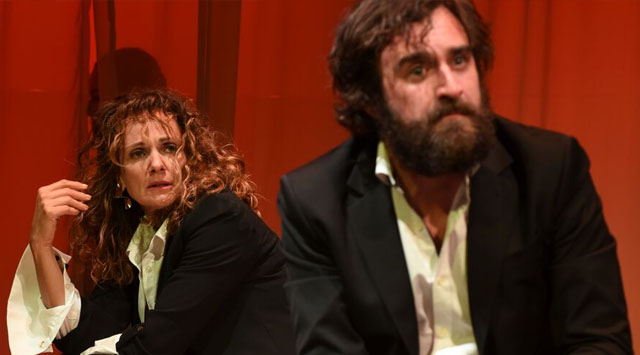
Maria Callas ranks amongst the world’s most loved opera singers in living memory. Terrence McNally’s Master Class features an extraordinary woman who understands her own magnificence, recreating sessions at the Juilliard School of 1971 and 1972, in which Callas provides instruction, on singing, art and life in general. McNally’s admiration is apparent, and the Callas he pens, is one determined to elicit her audience’s reverence, regardless of any feelings we may initially bear about the legendary star.

It is a spectacular piece of writing, with each line saturated with either comedy or pathos, and passionate lessons that many will find deeply affecting. It is also an extremely challenging work for the actor who decides to take Callas on, as no concessions are made that will allow any compromise in this portrayal of someone larger than life, and quite clearly a greater expression of human existence than most could ever fathom.

The best that one could hope for, is to come close, and actor Amanda Muggleton certainly does. Her astounding familiarity with the material and the technical precision she applies to it, are enough to impress, but the poignancy and disarming sense of spirit that she frequently delivers, not only has us captivated, we find ourselves moved, powerfully so, by her character’s unpredictably profound observations. We see Callas, but we also see Muggleton. In sections where the character is required to interact, with her audience or her students, there is often a humour that seems to emanate from Muggleton, that is somewhat distinct from La Divina, as she might figure in our imagination.

Adam Spreadbury-Maher’s direction is particularly noteworthy for the way vintage audio recordings are incorporated into the show. The simultaneous coalescence of Callas’ singing through speakers with Callas speaking on stage, is sublimely harmonised, to deliver a theatrical experience rarefied, and highly operatic. There is a tendency for the tone of performance to be repetitive, with speech patterns rarely deviating from an established range of inflections, but meanings and nuances of the text are always rigorously conveyed.

Callas wanted her students to leave it all on the stage; the inspiration she provides, is relevant to us all. The diva had lived fast, loved hard, and died young. In Master Class, some might choose to see a tragedy, but it is without doubt that her glory and influence remain immense and unequivocal. Whether or not one has an artistic practice, the notion that we have to give it our all, in order that something remarkable can result, is a lesson that bears repeating. It is not unusual advice by any means, but when it comes from a woman who had fought tooth and nail to attain her place in world history, its impact is tremendous.

www.sydneyoperahouse.com

Review: Antony And Cleopatra (Bell Shakespeare)

Venue: Sydney Opera House (Sydney NSW), Mar 3 – Apr 7, 2018
Playwright: William Shakespeare
Director: Peter Evans
Cast: Johnny Carr, Ray Chong Nee, Joseph Del Re, Lucy Goleby, Catherine McClements, Ursula Mills, Zindzi Okenyo, Gareth Reeves, Steve Rodgers, Jo Turner, Janine Watson
Image by Heidrun Löhr

Theatre review
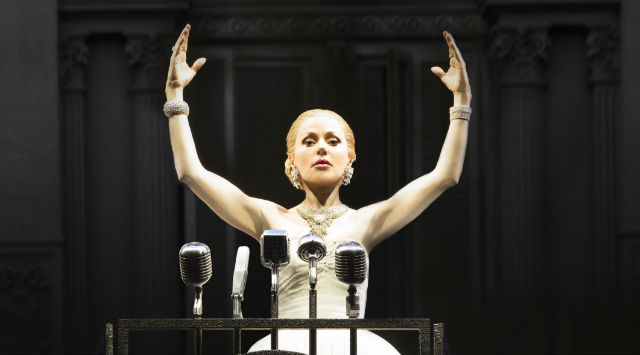
In Shakespeare’s version of the historical drama, we see Antony of Rome trying to sort out the world’s problems, while his lover Cleopatra of Egypt attends to matters of the heart. A story of two of the world’s legendary leaders is twisted askew in Antony And Cleopatra, and we observe how much the idea of a female ruler was disturbing to the English mind. Under Shakespeare’s depiction, the woman’s decisions are made around the feelings she carries for her beau, but the man is allowed to get on with business as usual, burdened by much more than a love affair.

The production is beautifully presented. Anna Cordingley’s simple solution for set design conveys stately glamour with little fuss or ostentation, and her costumes achieve a remarkable level of sophistication, crucial in making the royal characters convincing. Lights by Benjamin Cisterne are similarly attractive, especially impressive when displaying bold choices, although many instances of unintended glare from a reflective backdrop, are more than a little distracting. Director Peter Evans does well in manufacturing a visually captivating piece of theatre; his work with abstract physical movement is particularly effective, but the classic tragedy struggles to find any genuine sense of poignancy on this stage.

Cleopatra is played by Catherine McClements, who brings good humour to the piece, cleverly subverting much of Shakespeare’s inanely “feminised” dialogue. The actor is a powerful presence, and we submit to her queenly preeminence with little effort. Johnny Carr is an intense Antony, charming in his conviction, but a strange interpretation of the role’s final moments, sets the scene for an anticlimactic conclusion to the play. An absence of chemistry between the two leads, further diminishes the potential for greater piquancy in this ancient romance. Moments of drama can however, be found in scenes that feature supporting actor Lucy Goleby, who introduces both vigour and nuance to her depictions, of Pompey and Scarrus, adding excitement and significant tension to the show. Also memorable is the luminescent Zindzi Okenyo, sensuous and strong as Egypt’s maid of honour Charmian.

The women are languid in Antony And Cleopatra. Seductive and emotional, and despite visible attempts to elevate status and meanings around them, Cleopatra’s romantic fixation keeps the story firmly in a sphere of gender inequality. We wish for relationships to help us be better people, who will do better things, but what we see happen between these protagonists is quite the opposite. Love is a destructive and retrogressive force, causing people to lose their minds and weaken their fortitude. Just four years before the play’s first staging, Elizabeth I of England ended her reign, remaining to her last breath, The Virgin Queen, if not for anything true about what men can do to a woman, then certainly for what men can write about women.

www.bellshakespeare.com.au

Review: Top Girls (Sydney Theatre Company)

Venue: Sydney Opera House (Sydney NSW), Feb 12 – Mar 24, 2018
Playwright: Caryl Churchill
Director: Imara Savage
Cast: Paula Arundell, Kate Box, Michelle Lim Davidson, Claire Lovering, Heather Mitchell, Helen Thomson, Contessa Treffone
Image by Brett Boardman

Theatre review
Caryl Churchill’s Top Girls exposes our discomfort with stories that talk of societal problems, without the service of convenient villains. We have a hard time thinking about structures that have proven themselves unacceptable, without being able to place blame on individuals or archetypes. Churchill encourages us instead, to examine the ways in which those systems insist on our acquiescence at every turn, making us complicit some or all of the time, often keeping us ignorant of our participation in the damage being caused.

Angie has two role models at home, each representing dichotomous extremes of how we perceive the economy, society and our womanhood. It is Thatcher’s Britain in 1982, and the world seems to have split into simple distinctions of certain people deserving privilege, and others who are not. Angie thinks that emulating her aunt, Marlene, would deliver a more rewarding life, but what she sees, is only the surface of how things operate. She buys into the notion that success looks a certain way, and to attain it, one only needs to take certain steps of action. Churchill exposes, through Angie’s naivety, and in extremely subtle ways, the lies that are sold to us, and that we perpetuate every day.

Director Imara Savage’s faithful presentation of Churchill’s feminist declarations, keeps Top Girls as unconventional as ever. Its non-linearity and contradictory complexities seem to make for a show that is eternally refreshing. It confronts how we discuss gender, through a sustained reliance on symbolism over declarative language, for a more accurate depiction of the insidious nature of capitalistic corruption and deprivation. David Fleischer’s functional, unobtrusive set design allows little distraction from the important matters at hand.

The production succeeds in using what is in many ways a difficult text, to create a captivating work of theatre. The intellectual stimulation it provides, is challenging and unrelenting, but ultimately gratifying. Even though statements in the plot are made with a sense of ambiguity, our interpretations are never permitted to diverge from its political position. Actor Kate Box is particularly effective as Angie’s mother, Joyce, a woman defined by failure, who Box argues for, with great dignity and zeal.

It is a very impressive ensemble that takes the stage, featuring more than a few moments of brilliance from each performer. The luminous Helen Thomson brings excellent irony to Marlene’s fragile image of the woman who has it all, assisted wonderfully by Renée Mulder’s incisive costume designs and Lauren A. Proietti’s humorous wigs. Claire Lovering and Heather Mitchell are both memorably acerbic with their comedy, while Paula Arundell and Michelle Lim Davidson bring nuanced gravitas to the complicated souls that they inhabit. The youthful innocence of Angie is astutely portrayed by Contessa Treffone who proves herself a compelling presence, simultaneously measured and effervescent.

2018 is an exciting time to embrace feminism, but as long as opposition forces exist, implementing acts of feminism will always be difficult. To identify, attack and destroy unjust structures that are pervasive and normalised, is a task unspeakably enormous. To take on the interrogation and diminishment of things believed to be incontrovertibly true, is thankless to say the least, but of course, the best of us will persist. Tolerating subjugation may be easier for many, but for others, the compromise to integrity is unbearable.

www.sydneytheatre.com.au

Review: Green Day’s American Idiot (Sydney Opera House)

Venue: Sydney Opera House (Sydney NSW), Jan 11 – 14, 2018
Music: Green Day
Lyrics: Billie Joe Armstrong
Book: Billie Joe Armstrong, Michael Mayer
Director: Craig Ilot
Cast: Kaylah Attard, Kyla Bartholemeusz, Erin Clare, Connor Crawford, Linden Furnell, Phil Jamieson, Alex Jeans, Nicholas Kyriacou, Vidya Makan, Phoenix Mendoza, Phoebe Panaretos, Christopher Scalzo, Maxwell Simon, Ashleigh Taylor, Kuki Tipoki
Image by Ken Leanfore

Theatre review
Comprising songs by American punk rock band Green Day, American Idiot is a musical, or a rock opera to be slightly more precise, that showcases the band’s unquestionably popular songwriting talents. Billie Joe Armstrong, Tré Cool and Mike Dirnt are Gen X’ers who have found an audience with their brash but commercial sound, and like many successful music artists today, exploring a jukebox musical with their pre-existing catalogue is now par for the course.

While it is somewhat refreshing to have the punk genre incorporated into this almost always contrived genre of show, a stronger book is required for American Idiot to speak to those who are less than fanatic about the band’s oeuvre. We see characters go through the semblance of a plot, but glean no detail from any of their stories. Cheesy choreography and unimaginative use of projections, cause the show to further alienate.

The adaptation of music is however, fairly effective, with dramatic arrangements helping to sustain interest. It is a committed cast of varying abilities, most memorable of whom is Linden Furnell in the central role of Johnny, exquisitely confident in his multidisciplinary approach to the production’s quite exacting requirements. His effortless blend of rock and broadway, along with a physical agility, provide us with a sense of impressive polish and professionalism. Much less comfortable on the musical stage is Phil Jamieson, who although exhibits good presence from his years as a rock musician, is visibly disoriented in this switch in performance style.

It is certainly one for the fans, but there is no reason for the bar not being raised higher. There is excellent energy and poignant intent in each of the songs being sung in American Idiot, and when presented appropriately, there is plentiful opportunity for a wider crowd to connect. The talent here is evident, but greater diligence is necessary for a show that could speak to more, with better clarity and at a more affecting depth.

www.americanidiotlive.com.au

5 Questions with David Morton and Nicholas Paine

David Morton

Nicholas Paine: What’s The Wider Earth about?
David Morton: The Wider Earth is a work of fiction drawn loosely from the historical record. It takes memories of real people, places and events and passes them through the lens of myth. Some may call it blasphemous. Others may caution that the simplicity of the tale undermines the real work of its hero. I hope it might stand as a celebration of the incredible complexity of our planet, and go some small way towards humanising the part played by those brave enough to stand against the dominant thought of their time.

What’s it like developing a new work?
Developing new work brings with it the simultaneously liberating and horrifying reality that everything is in flux, and there is nothing to fall back on. It takes a special group of people to inhabit that chaos, particularly with an opening night looming. Over the last couple of years we’ve had the honour of working with an incredible team of creatives and performers. They’ve not only deftly embraced continuous rewrites, the quirks of puppetry, and other obstacles to the process, but had an insatiable drive and passion to push the work to new heights.

Tell me about the design of the puppets.
The design for the puppets used in the show was undertaken during an intensive eight-month process. The journey of each creature began with us spending time with their real-life counterparts, sketching and taking video as studies to determine the key structures and movement qualities of the different animals and how we could best embody these in the final objects. The drawings and notes from these encounters were then turned into three- dimensional digital renderings of each creature to design the mechanisms that would allow for their controlled movements. Finally, these models were broken into cross sections that could be laid at as a plan to be laser cut into wood, paper and leather pieces.

Over the course of four months a team of fabricators assembled these pieces in the Queensland Theatre workshop. This began with slotting and gluing the main structures together to give the creatures a base form that was then further embellished using wicker. The internal mechanisms were activated with the installation of control systems similar to miniature brake cables, and handles and rods were attached. Each of the puppets was given colour using wood stain and arted with ink. Finally, each had a pair of obsidian (volcanic glass) eyes installed.

How were the puppets introduced into the show?
Similarly to the construction, incorporating the finished puppets into the work followed a series of distinct stages. The first of these involved training the ensemble in the key manipulation techniques used by the Society. These include the focus of the puppet, its breath, and its ability to give an illusion of weight and gravity. Following this, the performers were slowly introduced to the various creatures and undertook extensive research into the movement and behavioural qualities of each. When working out the choreography for each scene we first start by devising the large movements – like where on the stage the puppet travels – and as this becomes embodied by the performers more ne detail is added.

The process of bringing a puppet to life on stage takes an incredible degree of commitment and discipline; unlike an actor who spends a rehearsal period developing a character, a puppet has to first learn how to be alive before we can even start to wonder as to what its character might be. Ultimately, the process isn’t completed until the imagination of an audience turns the movement cues that we give into the illusion of life.

If you could take the show anywhere, where would it be?
The Galapagos Islands, of course!

Nicholas Paine

David Morton: Tell us more about the cast for The Wider Earth.
Nicholas Paine: The production features seven of some of the country’s finest actors and puppeteers. Together, they form the ensemble that will tell you the story. The line between actor/puppeteer is blurred. In some scenes you’ll have actors playing characters alongside puppets, and in other scenes those actors will be manipulating puppets and performing more choreographic sequences. It will certainly keep them on their toes… and hopefully you too!

What is it about Charles Darwin that inspired you to create The Wider Earth?
We were inspired to create this work when we were visiting Handspring Puppet Company in South Africa in 2013. We got talking with the Executive Producer, Basil Jones, about how Charles Darwin stopped in Cape Town on the HMS Beagle just prior to returning home to England. We were both familiar with the work of Charles Darwin but what we didn’t realise was that he was just 27 years old when he made this stop and only 22 when he left on the voyage. We thought that his journey could make a stunning coming of age story, full of exquisite creatures, and to make comment on the wonder of our planet.

Dead Puppet Society went to Brooklyn (New York City) for eight months of pre-production in the creation of The Wider Earth. How was that experience for you?
We were developing the show with St. Ann’s Warehouse for that whole period of time. The specific focus of the development program was on refining the kind of puppetry we wanted to use to tell this story. We were working with eight other companies who also work in visual theatre, which for us was a really eye-opening experience. We’ve never really collaborated or connected with any other puppet-based artists before because it’s not an overly used form in Australia. The residency resulted in a 20-minute work in progress showing. And all of those artists have gone on to further develop their work in very different arenas.

How long from page to stage?
It’s about a three-year process. By the time we open it will have been exactly three years.

If you could take the show anywhere, where would it be?
Shrewsbury, UK. Where Charles Darwin was born.

David Morton and Nicholas Paine are producers of Morton’s The Wider Earth, part of Sydney Festival.
Dates: 17 – 27 January, 2018
Venue: Sydney Opera House