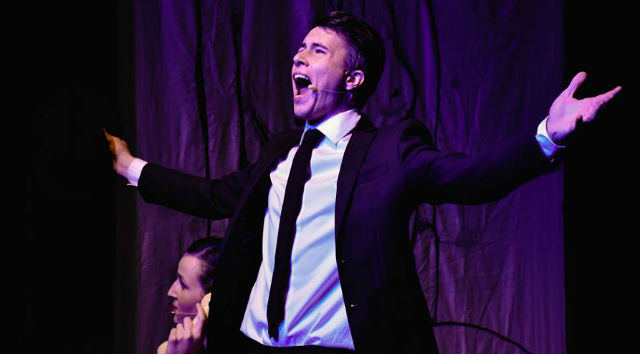
Review: Unfinished Works (Bontom Productions)

bontomVenue: Seymour Centre (Chippendale NSW), Mar 23 – Apr 2, 2016
Playwright: Thomas De Angelis
Director: Clemence Williams
Cast: Deborah Galano, Kyle Kazmarziks, Lucy Goleby, Contessa Treffone, Rhett Walton

Theatre review (of a preview performance)
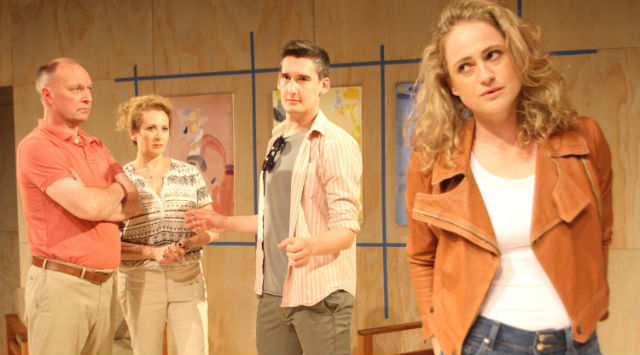
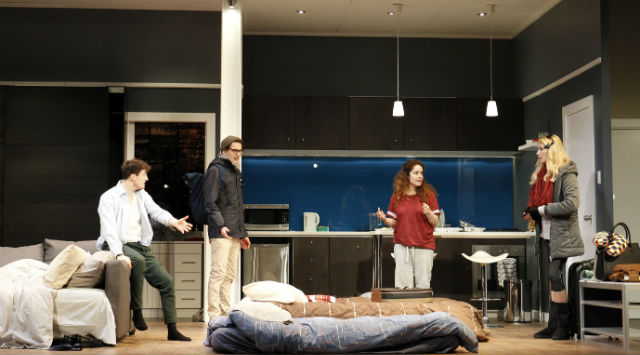
Thomas De Angelis’ Unfinished Works talks about art and the selling of art, but it is also concerned with how young people discover adulthood, and the challenges it presents. Strong themes and engaging characters give the play its allure, but its ideas are not always as clever as they wish to be. Dialogue and plot structure also require further refinement and deeper thought, but its concluding, and climactic, scenes are fortunately the most effective and powerful of its two-hour duration.

There is an earnest and provocative spirit, introduced by director Clemence Williams, who explores the text with great honesty and is always conscious of giving proceedings a dimension of emotional intensity. There could be more humour in the way characters interact, and a less innocent approach to the portrayal of their individual foibles, but Williams’ work is thoughtful and energetic, and a delight to connect with. Bringing visual sophistication is designer Charles Davis, who finds simple but smart solutions to accompany the production’s examination and representation of the art world. His set and lights are minimal in style, but very charming indeed.

Lucy Goleby does an astonishing job as Frank, the complicated art star with a lot of weight on her shoulders. Goleby’s portrayals of fear and cynicism feels thoroughly authentic, and the assertive confidence that persist alongside all her insecurities is fascinating to observe. The pairing of vulnerability and strength is beautifully inhabited by the actor, and it is that palpable humanity she depicts that keeps us engrossed. The other leading lady of the piece is Contessa Treffone who plays Isabel, a young woman finding her place in the world, defining her self against family and negotiating grey areas of ambition and sex. Treffone shows strong focus and conviction, and although slightly twee in tone, she is more than capable of holding our attention. The chemistry between both women is full of sparks and a real joy to watch. Unfinished Works does not explicitly discuss the issue of feminism, but there is no need to, because the women it places on stage are prime examples of how we are and how we should be seen; independent, intelligent, ambitious, and frightfully flawed.

www.bontom.com.au

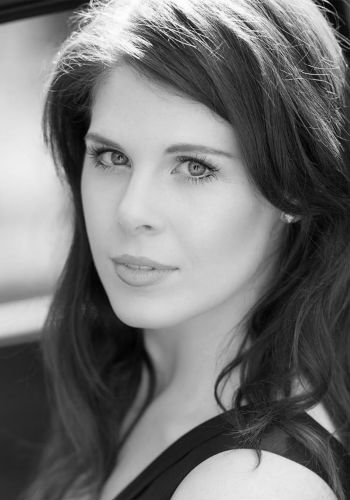
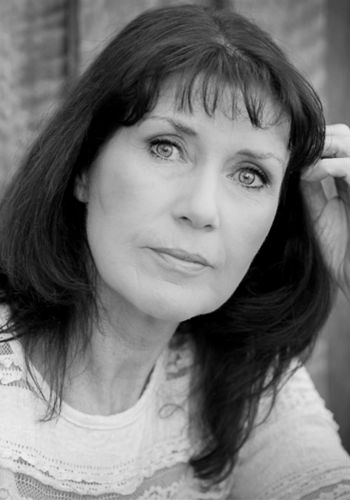
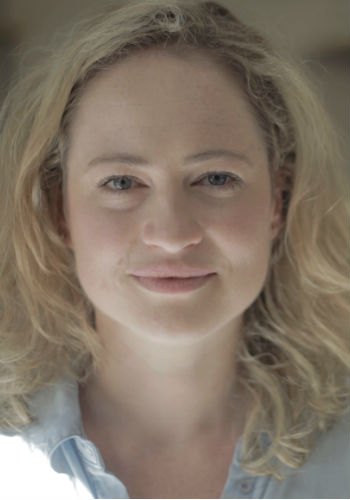
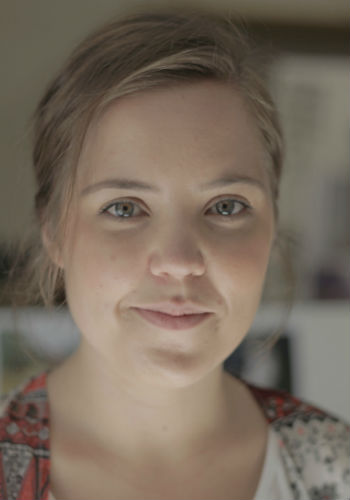
5 Questions with Lucy Goleby and Contessa Treffone

Lucy Goleby

Lucy Goleby

Contessa Treffone: What is Unfinished Works about in one sentence?
Lucy Goleby: It’s the story of a successful artist, her agent, and an architect student with artistic ambition wrestling with the question of whether good art demands self-sacrifice and suffering.

Frank was originally written to be a male role. How have you found playing a role specifically written for a man?
It’s been a fascinating process. Although we changed the pronouns on day one, it’s taken me a while longer to wean myself off relying on a hyper-masculine energy. Male roles are inherently different from female roles and yet this is where I think we’ll eventually reach gender equality in performance – by writing complex and contradictory characters who are human first and gendered as a changeable afterthought.

Isabel has a bit of a talent crush on Frank in the play. Who is someone you have a talent crush on?
I think we all have a talent crush on Meryl Streep. The woman is superhuman in every way.

Rumour has it you are quite the jack of all trades. Tell us three hidden talents of Lucy Goleby, in 15 seconds, go!
1) I recently assembled, and now work at, a treadmill desk. 2) I play an excellent game of hide and seek. 3) I mend most things with dental floss.

Who would win in a battle, one hundred duck sized horses or one horse sized duck?
I’ll go with the 100 duck-sized horses – the more brain power, the better!

Contessa Treffone

Contessa Treffone

Lucy Goleby: What excites you about Unfinished Works?
Contessa Treffone: 1) The people. There is way too much talent in the one room not to get excited. 2) Creatively exploring the fundamental questions that I believe any artist asks themselves everyday; What is good art? And how does one make good art? 3) Deborah Galanos’ rehearsal snacks.

Who would play you in the biopic of your life?
Abbi Jacobson or Kristen Wiig. They can battle it out for the role.

If you could change one thing about the world, what would it be?
Eliminate guns and plastic.

If you could claim any piece of art or invention as your own, what would you choose?
It would be so delicious to say that I actually painted Gustav Klimts, The Virgin. Or to be the brain behind batteries that store solar energy would be pretty brill!

What temptation can’t you resist?
Sean Connery and good gin. Preferably together.

Lucy Goleby and Contessa Treffone are appearing in Unfinished Works by Thomas De Angelis.
Dates: 23 Mar – 2 Apr, 2016
Venue: Seymour Centre

Review: Life Without Me (Illuminate Educate)

illuminateeducateVenue: Seymour Centre (Chippendale NSW), Feb 9 – 16, 2016
Playwright: Daniel Keene
Director: Cathy Hunt
Cast: Martin Broome, Annie Byron, Laurence Coy, Drew Fairley, Brendan Donoghue, Julie Hudspeth, Anne Wilson
Image by Stephen Reinhardt

Theatre review
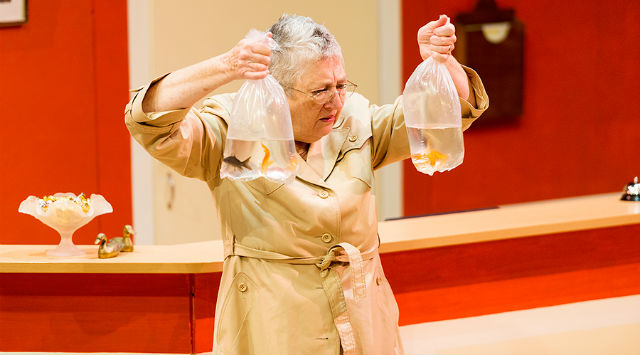
The action takes place in a hotel, mostly in its lobby. The transient nature of this setting prompts us to look at the way we move through life; how we travel in relation to time, the people we encounter, and the meaning of ephemerality itself in personal existences that often deceive us with a feeling of permanence. Daniel Keene’s script has a surreal edge that helps skew our perspective, providing an alternative to the linearity that informs many of our understanding of the universe. The play has more than a few quirky facets, but its scenes are firmly attached to everyday concerns in a way that allow us to relate with all its characters no matter how colourful each scenario becomes.

Direction by Cathy Hunt achieves good clarity with plot trajectories and her active use of space helps keep our senses engaged, but the show is surprisingly muted. Keene’s text provides potential for a more adventurous approach, yet the production often seems to lack a greater sense of extravagance that would befit its very imaginative dialogue. Its actors tend to be restrained and polite, even though the concepts introduced veer towards something much wilder. Memorable personalities include Mrs Spence, performed by the very animated Annie Byron whose precision is a joy to watch. Her passionate demeanour and confident comic timing brings a valuable liveliness to a stage that is often too staid in tone. Also delightful is Laurence Coy as Roy who injects a convincing spontaneity to proceedings, along with a sensitive balance of consternation and optimism that we identify with.

Life Without Me is about living in purgatory, suspended in a state of limbo excluded from where the real action is. We wish for the characters to discover that the point of life is to live, to participate and to commit. We fear for their aimlessness and their indecisiveness, and we observe their passivity through the passage of time as if waiting for nothing but the arrival of certain death. At the hotel, people are always going somewhere, but they forget that they are already here.

www.illuminateeducate.com.au

Review: Grey Gardens (Squabbalogic Independent Music Theatre)

Venue: Seymour Centre (Sydney NSW), Nov 18 – Dec 12, 2015
Book: Doug Wright
Music: Scott Frankel
Lyrics: Michael Korie
Director: Jay James-Moody
Cast: Sienna Arnold, Caitlin Berry, Maggie Blinco, Kelly Callaghan, Beth Daly, Blake Erickson, Sian Fuller, Jenna Keenan, Simon McLachlan, Russell Newman, Timothy Springs
Images by Michael Francis

Theatre review
The legendary Edies made their way into public consciousness through the now classic Maysles documentary film of 1975, Grey Gardens. It was an instant hit, but unlike many documentaries that seem to lose relevance beyond the time of their emergence, this is a story that has captivated every subsequent generation. The last decade especially has been particularly illustrious for the mother-daughter pairing, with the Maysles releasing a second documentary about the same subjects on home video, along with a prominent feature film by HBO, and a Broadway musical paying tribute to the famous eccentrics.

The musical commences in the heyday of Grey Gardens, a time when glitzy parties at the East Hamptons property saw the rich and important mingle, and where social status was the greatest of currencies. It is soon revealed however, that all is not well in the Beale household. Big Edie has been abandoned by a philandering husband, and finds herself left with nothing but the mansion and a daughter desperate to be married off to a Kennedy. In Act Two, we return thirty-three years later to discover the two women in their famous dilapidation. We are bewildered by their spectacular descent from glory to squalor, and the failure of the Edies to explain the predicament only makes us more intrigued.

Their allure is beautifully encapsulated by the writing. Larger than life personalities, frightful circumstances, piercing humour and cruel social realities; all the best ingredients of the beloved documentary have made their way into the musical. There is an abundance of wit for endless amusement and enjoyable tunes that have us entranced, inspired by the stranger than fiction characters and their delightfully curious ways.

The songs are performed marvellously under Jay James-Moody’s direction. Every musical number is conceived with flair, creativity and nuance, utilising the cast’s considerable talents to great effect. Sequences between songs are less successfully realised, with chemistry between performers faltering in the absence of choreography and singing. The production suffers from an overall lack of precision and polish, but it is a show with spirit, buoyed by Beth Daly’s astonishing portrayal of middle-aged Little Edie. Breathtakingly accurate re-enactments of iconic film moments and a thorough understanding of her character’s traits, allow Daly to create a theatrical marvel that is deeply endearing and incredibly impressive. The effect her Little Edie has on us, is little different from what the real McCoy delivers in the original film. We are shocked, confused, saddened but powerfully moved by her extraordinary story. Maggie Blinco and Caitlin Berry play the other Edies (at different ages), both accomplished and compelling with their respective interpretations. Blake Erickson is memorable in the supporting role of George Gould Strong, providing a dramatic but subtly comical performance, accentuated by a remarkable singing voice that never fails to seize our attention.

The production is ambitious with its visual elements but does not quite hit the mark. Lighting design by the inventive Benjamin Brockman is heavily relied upon to depict time and spacial shifts in the presence of a domineering yet inflexible set. Costumes are charming when imitating the documentary’s looks, but they fall short at delivering the extravagant decadence necessary in Act One. On a brighter note, the show’s sound design by Jessica James-Moody and music direction by Hayden Barltrop are executed with great fervour and brilliant sensitivity. The aural landscape of the show is the chief element that takes us through every step of the plot, and it does so thoughtfully, with an effortless elegance.

What the Edies represent, is the notion of freedom, or more accurately the lack thereof. Grey Gardens insists that we consider how the women had arrived at their disappointing state of affairs, and through that discussion, to go on and think about issues of personal volition, kinship and the consequences of forsaken responsibilities. Big Edie’s father, husband and sons had all but discarded our protagonists, and what we encounter is the harsh truth of what remained. We wish that the Edies had been stronger and more resourceful, but the irrefutable fact is that they were deserted and destroyed. We all have a right to live the lives we dream, but we are also bound by the people who need us. We can simply walk away, but the price to pay can sometimes be too great.

www.squabbalogic.com.au

5 Questions with Caitlin Berry and Beth Daly

Caitlin Berry

Caitlin Berry

Beth Daly: What movie would Little Edie star in if she were around today?
Caitlin Berry: Edie would be the most sensuous Bond girl you’ve ever seen! She would also star in the opening credit song; lots of daring silhouettes.

Edie is very eccentric, what is your most eccentric quality?
She is indeed. Caitlin is not as eccentric, but I’d say I have the loudest laugh at a party and I like to count tiles when I’m in a bathroom. I also (stupidly) get superstitious around show time; no new shoes on the table, or saying “the Scottish play” backstage.

How did you create your younger version of Edie when there is no documented footage?
When Edie was filmed in the 1975 documentary, she was still very childlike and playful. I don’t think her youthful energy ever lessened. I can only imagine it was more intense when she was 24. I researched the era very well, and made sure I took note of the times Edie spoke about her younger years. Drew Barrymore also does a great interpretation of Little Edie in the HBO series, which I used as a reference too, when imagining my own Edie.

What draws you to Grey Gardens the musical?
This musical is so beautifully written. The music captures the era and the writing serves the women very well. It’s very special to be part of something that is based on real life events. Their story is stranger than fiction, and deserves to be told.

What’s your favourite thing about working with Beth?
Beth is a hoot. She is very warm and funny in rehearsals. We share the same dorky characteristics, and can both poke fun of ourselves with ease. My favourite thing about working with Beth is also that it’s never happened before! Beth and I have known each other for many years and had always hoped there would be a day we could share the stage!

Beth Daly

Beth Daly

Caitlin Berry: What bits of Beth can we see shine through Little Edie?
Beth Daly: My marching skills definitely – I was Physical Culture champion girl for 7 years running. Finally I get to use it! And I think I can be just as cute as Edie.

What clothing label would Edie pioneer in this era, and why?
No doubt recycled clothes re-invented. And she would have an absolutely fabulous line of capes for the staunch woman!

How do you get your head around playing two different characters? What helps you get into each one?
I love that each women is so physically and vocally different. So I walk around as each one saying a key phrase for each. For Edith: “Sing… me? Twist my arm, blackmail me, threaten my very life, and who knows? You might get a verse of something!” For Edie: “I’m extremely organised, I’ve got everything under control, kid.”


What would you say to Little Eddie, if you could?
Let’s put on a cabaret together!

Are these women tragic or heroic?
Both. I feel the depth of the tragedy of what could have been, but I revel in the power of these two women to stay true to themselves and make the best of what comes their way.

Caitlin Berry and Beth Daly are the two Edies in the Grey Gardens musical, by Squabbalogic.
Dates: 18 Nov – 12 Dec, 2015
Venue: Seymour Centre

Review: Nine (Sydney University Musical Theatre Ensemble)

museVenue: Seymour Centre (Chippendale NSW), Oct 21 – 24, 2015
Book: Arthur Kopit (based on the Italian by Mario Fratti, after Federico Fellini’s )
Music & Lyrics: Maury Yeston
Director: Jonathan Rush
Cast: Mikhaila Chaplin, Anna Colless, Hannah Cox, Genevieve de Souza, Rielly Dickson, Doug Emery, Jacinta Gregory, Bridget Haberecht, Bronwyn Hicks, Jane Hughes, Gabi Kelland, Lisa-Marie Long, Jos Markerink, Rose McClelland, Olga Solar, Nicole Toum, Stephanie Troost, Sam Wood

Theatre review
Based on Federico Fellini’s 1963 semi-autobiographical film , this is a musical about a man’s passion for life, work and women. The central character in Nine is Guido Contini, the superstar director under pressure to create a new work. He escapes, procrastinates and reminisces, but we do not see the film being made. His artistic process is not a straightforward one, and we learn that genius manifests itself in unexpected ways.

The songs in Nine are melodic and extravagant, powerfully orchestrated by ten musicians under the supervision of Alexander Norden, who breathes life into Maury Yeston’s 42-year-old compositions. The show is directed with flair and energy by Jonathan Rush, and choreographed intelligently by Natasha Heyward. It is a production that successfully expresses the exuberance of Fellini’s Italy, with all elements finding cohesion in the decadence and wildness of that romanticised world.

There are accomplished performances in the show, most notably Hannah Cox’s turn as Liliane La Fleur, completely stealing the show in her sensational Folies Bergère number, with perfectly pitched humour, rambunctious sex appeal, and a stunning sense of joy. There are major problems with sound in the production, but stronger singers, including Anna Colless and Bronwyn Hicks do manage to overcome them with sheer vocal power. Less fortunate are the show’s leads Doug Emery and Bridget Haberecht, the Continis who find themselves consistently drowned out by musical accompaniment. Nevertheless, their committed and eloquent performances leave a strong impression, and help to deliver a fascinating narrative that is ultimately very satisfying.

This might be a minimal staging, but its imperfections are few. Nine stands the test of time, and this small revival demonstrates the potentialities and pleasures it contains. Inspiration is invaluable, and artists especially must be able to identify them. Fellini’s magnificence is emulated in Yeston’s musical, and this production is clearly touched by the muses, but we do not have to wait for the calling of divinity to be spurred on to create something special; as we see in Guido’s story, greatness is to be found in la dolce vita.

www.museatusyd.com

Review: Edward II (Sport For Jove Theatre)

sportforjoveVenue: Seymour Centre (Chippendale NSW), Oct 1 – 17, 2015
Playwright: Christopher Marlowe
Director: Terry Karabelas
Cast: Angela Bauer, Barry French, Belinda Hoare, Edmund Lembke-Hogan, Gabriel Fancourt, Georgia Adamson, James Lugton, Julian Garner, Michael Whalley, Richard Hilliar, Simon London
Image by Marnya Rothe

Theatre review
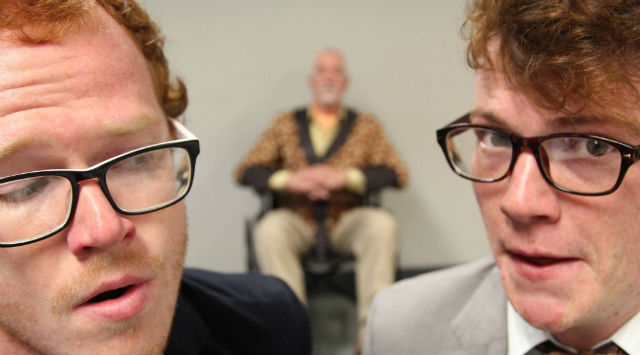
Christopher Marlowe’s 1593 tragedy Edward II charts the downfall of a king in a political system controlled vigorously by the church. In the play, Edward’s controversial relationship with one of his minions Gaveston, provides a motive for the barons and Queen Isabella to depose of Edward in favour of his son. In addition to the unorthodox love in question, the king is also portrayed to be an ineffectual leader with few redeeming qualities. The other personalities in the script who plot his demise are similarly repugnant, resulting in a narrative that is emotionally distant in spite of its many scenes of passion. There is no one for us to side with, and we do not feel badly for anybody’s anguish.

Terry Karabelas’ direction emphasises the fleshly pleasures and pains of Edward II. The magnification of sexuality, along with graphic scenes of torture, give the show a refreshing contemporariness. The omnipresence of religion as an insidious force that instigates every objectionable act is a another subversive interpretation that attempts to bring paradigms closer to today’s standards but ultimately, little poignancy is to be found in the production.

Although performances are uniformly polished and energetic, characters rarely communicate beyond the surface. Personalities are insufficiently compelling, and the story turns simplistic. Leading man Julian Garner has a dark and alluring presence, with an intensity that holds our attention, but there is little for the actor to work with. Characters lack complexity and the cast struggles to elevate the play from its predictability. More noteworthy is lighting design by Ross Graham whose excellent work helps to manufacture a sense of theatricality, and atones with emotional dimensions lacking in the text.

Betrayals, mutinies and dethronements are themes more than familiar to any Australian, therefore dealing with those subjects require a level of insight beyond the pedestrian. The changing of prime ministers and governments lead the news on a daily basis, and in spite of its many murders, what Edward II presents is strangely placid. It is unfortunate that the knifing of leaders is now commonplace, but the drama that accompanies those stories should never turn mundane.

www.sportforjove.com.au

Review: Ljubičica – Wild Violet (Seymour Centre)

ljuibicicaVenue: Sound Lounge, Seymour Centre (Sydney NSW), Sep 17 – 19, 2015
Playwright: Melita Rowston
Director: Melita Rowston
Cast: Josipa Draisma, Mara Knezevic, The Squeeze Box

Theatre review
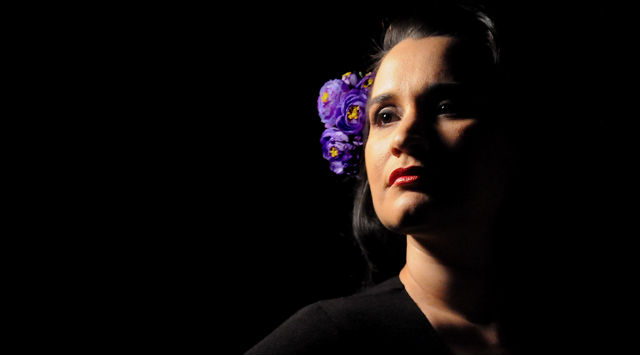
Josipa Draisma’s show is composed of stories and songs from her mother’s childhood. Born in a Croatian village, Ljubičica – Wild Violet details her days as a young girl missing her absent father, and her subsequent journey to Australia in search of a better life. The stories are sentimental, and the songs are romantic. The bitter-sweet show, written and directed by Melita Rowston, strikes a thoughtful balance between biography and entertainment, with surprising variations in atmosphere that help hold our attention. The piece could benefit from a trim to speed things up slightly, but it is ultimately a delightful insight into one of our many migrant experiences, with a special poignancy that seems to arise uniquely from true stories.

Draisma’s performance is a passionate one, and we are swept away by the many beautiful Croatian songs she presents with gusto. Several humorous impressions of characters in her mother’s life are especially effective; the actor’s talent seems to be stronger with comedy, but the show is presented mostly in a serious tone. Mara Knezevic provides fine support as the secondary voice of the production. The women’s harmonies together are sublime, and a rare treat for our Anglocentric city. The handsome Gypsy jazz trio The Squeeze Box adds a sophistication and polish to the stage with their sensual and confident accompaniment on accordion, guitar and violin. Draisma’s monologues help the music communicate with our foreign ears, but it is the music that gives soul to the show.

Our nation is composed of a million exotic tales. Attempts to obliterate our diversity from public discourse occurs everyday, but the fact remains that a vast majority of lives on this land have roots in places far away. Ljubičica – Wild Violet tells of one migrant’s experience, but we should not look upon it as unique or foreign. It should be embraced as the true face of normal, with all its individual colours and melodies.

www.josipadraisma.com

Review: Our Father Who Art (Nearly) In Heaven (Seymour Centre)

ourfatherVenue: Seymour Centre (Chippendale NSW), Sep 15 – 19, 2015
Playwright: N. Gregory Finger
Director: Stuart Owen
Cast: Richard Clark, Catherine Davies, Chris Heaslip, Daniel Hunter, Douglas Kent, Michelle Millgate, Nid Oswald, Stuart Owen, Kate Parker-Frost

Theatre review
N. Gregory Finger’s Our Father Who Art (Nearly) In Heaven takes the form of a classic farce, with fast paced, frivolous and wise-cracking scenes of amusement emerging one after another. The show is old-fashioned in ways, but many of its jokes are genuinely funny, often with a pointed flamboyance that prevents it from being a dowdy imitation of its forebears. Its characters are clearly defined ones who reference familiar archetypes that we are more than comfortable making fun of. These less than dignified personalities are placed in the predictable situation where they find the patriarch with one foot in the grave, all scrambling to secure a slice of the estate. Hilarity does ensue, quite surprisingly, proving that wit and flair can trump innovation under the right circumstances.

Direction of the piece by Stuart Owen is suitably speedy and madcap. The script’s many short sequences are deftly handled by Owen who uses stage space intelligently, although lighting design could be more responsive to his attempts at shifting our attention. Efforts at imbuing energy into every interchange gives the show an exuberance that keeps us engaged, although the wide range of abilities in the cast of nine is a major weakness that is hard to ignore. Some of the players are clearly inexperienced, and even though there is never a shortage of enthusiasm, the inaccuracy of their portrayals can be punishing. Owen saves the day however, with an excellent performance as Ben, one of the dying man’s son. He is charming and rambunctious, with perfect comic timing that elevates the show with his every appearance. Owen’s ability to present varying styles of humour, and his versatility at depicting his character’s temperamental transformations, is delightfully memorable. The very animated Chris Heaslip plays Damian, the other son, also to good effect, with an infectious confidence and a steadfast love for performance that shines through. Heaslip can be repetitive with his manic approach to the role, but his vigour is crucial to the delirious experience that the play delivers.

Fashion comes and goes, but when it comes to entertainment, we can always go back to the tried and tested. Our Father Who Art (Nearly) In Heaven is a new play that reminds us of special moments of laughter in movie and live theatres in years past, and its stylistic revival is remarkably welcome.

www.seymourcentre.com

Review: What Is The Matter With Mary Jane? (Seymour Centre)

seymourcentreVenue: Seymour Centre (Chippendale NSW), Aug 4 – 8, 2015
Playwright: Wendy Harmer, Sancia Robinson
Director: Sancia Robinson
Cast: Gabrielle Savrone
Image by Jodie Hutchinson

Theatre review
Wendy Harmer and Sancia Robinson’s What Is The Matter With Mary Jane? gives exposure to the experiences of patients who suffer from acute eating disorders. It is a passionate work with clear intentions of informing society about lives that are often shrouded in the secrecy and shame of anorexia and bulimia nervosa. The play has a desire to improve awareness and perhaps inspire political action that will help with healing or eradicating these horrific diseases from our communities, which results in a text that is full of enthusiasm but also clinical at times. The work focuses on the processes involved in, but not the reasons behind its protagonist’s affliction, so that it can represent a wide range of experiences unified by manifestations of the illness. The play acknowledges that the causes of these disorders vary widely, but the omission of psychological insight or analysis of specific events that have contributed to its unfortunate circumstances, is a significant decision that prevents the show from engaging with its audience more deeply. Sentimental dramatics might not always be elegant, especially in profoundly personal disclosures, but they are often necessary in helping our heads and hearts in becoming more involved with the story and its message.

In directing her own biography, Robinson brings to the stage an intimacy and truthfulness that can only come from having lived through the ordeal very personally. There are some shocking revelations, but the authenticity in her style of presentation disallows any room for doubt, and important facts from Robinson’s recollections are imparted in the process. Gabrielle Savrone’s portrayal of pain is accurate and moving. We are convinced of her character’s divulgements, and she satisfies the purpose of the work by alerting us to the nature of the problem from personal and societal perspectives. The lighter portions of the play are less effectively performed, but the actor’s conviction is strong, and her work develops with more power as the play progresses.

Self-image is an integral part of every individual’s being. How we live depends largely on how we see ourselves, and for many, physical appearance is a component that can turn into an all-consuming preoccupation, which is actually symptomatic of an impairment that lies deeper than skin. What Is The Matter With Mary Jane? demonstrates an extreme consequence of untreated emotional difficulties that requires our vigilance. Compassion towards others, and having a healthy attitude towards other people’s bodies is a good, and necessary start, that will quickly evolve into the same generosity that we must afford our selves.

www.seymourcentre.com