Review: Sami In Paradise (Belvoir St Theatre)

Venue: Belvoir St Theatre (Surry Hills NSW), Apr 1 – 29, 2018
Playwright: Nikolai Erdman (adapted by Eamon Flack and the company)
Director: Eamon Flack
Cast: Paula Arundell, Fayssal Bazzi, Nancy Denis, Charlie Gerber, Victoria Haralabidou, Marta Kaczmarek, Mandela Mathia, Arky Michael, Yalin Ozucelik, Hazem Shammas, Vaishnavi Suryaprakash
Images by Clare Hawley

Theatre review
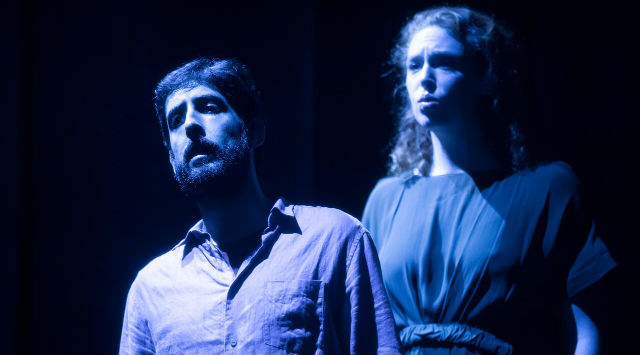
In a refugee camp, life is cheap. Its inhabitants are essentially stateless, treated like human waste; unwanted and despised by the world. When word goes out that Sami is contemplating suicide, a throng materialises, of groups suddenly taking interest in his existence, not to offer dissuasion or rescue, but to leverage his impending death for their own purposes. Nikolai Erdman’s deeply cynical The Suicide undergoes a wild adaptation by director Eamon Flack and the company of Sami In Paradise, updating the 90 year-old play so that it converges with concerns of the day. The ubiquitous but blasé digital activism being disseminated in developed nations, is juxtaposed against the dire plight of asylum seekers, to deliver a work that interrogates our social consciousness through some very acerbic humour.

A thoroughly entertaining production, Sami In Paradise engages cleverly with its audience, discussing the most serious of issues with a deceptively light touch. The many laughs that it provides requires that we pay attention to matters that many usually choose to turn a blind eye to; the only way to indulge in its comedy is to be engrossed in the dark tale that lies at the centre of all the jolly action. An effervescent carnival atmosphere is manufactured by Flack, who demonstrates extraordinary inventiveness in his use of space and talent. Jethro Woodward’s music plays an integral part in calibrating energy and mood for the piece, with musicians Mahan Ghobadi and Hamed Sadeghi proving invaluable to the show’s resounding success.

A motley crew of sprightly characters, inexhaustibly mischievous, take to the stage for an exceptionally well-rehearsed and creative theatrical experience. Their confident chemistry ensures that we enjoy every minute of their presentation; delightful and provocative in equal measure. Leading man Yalin Ozucelik’s glorious portrayal of the despondent and confused Sami, is a work of comic genius. Technically brilliant, but also undeniably soulful, his storytelling captivates and inspires, while keeping us endlessly amused. The cast’s ability to convey a sense of depth within each of its jokey manoeuvres, makes their show revelatory and meaningful.

Humans are capable of great atrocities, and it is important that art helps us understand the parts of ourselves that are reprehensible. It is easy to ignore the ugly ways in which we operate, and let comforting delusions lead us to believe that humanity is only benevolent. Art has to embody and reflect the truth, and the more that it is able to let us see who we actually are, the more it needs to be championed, even if the results are difficult. Sami acknowledges that we hold power over his destiny, and asks us point blank, if we wish to have him killed. Our answer should be simple, but all the evidence suggests that we are not capable of doing the right thing.

www.belvoir.com.au

Review: The Sound Of Waiting (Darlinghurst Theatre Company)

Venue: Eternity Playhouse (Darlinghurst NSW), Mar 31 – Apr 22, 2018
Playwright: Mary Anne Butler
Director: Suzanne Pereira
Cast: Reza Momenzada, Gabrielle Scawthorn
Images by Phil Erbacher

Theatre review
Hamed is stranded at sea with his small daughter, after having lost the rest of their family to explosives in their war-torn home. Escape is the only option, but with no apparent destination, their scurry can only be treacherous and agonising. Mary Anne Butler’s The Sound Of Waiting gives voice to those we term asylum seekers, whose stories are routinely exploited by politicians and media outlets for selfish gain. Here, however, we attempt to hear from the source, a first-person narrator untarnished by intrusions of our prejudice.

Also present is the Angel of Death, a mystical creature and a force of nature, but at times also a human enemy, who pursues Hamed, determined to annihilate. Both are in fierce opposition, but they speak almost in tandem, sharing a rhythm that drives the plot and action. Although in sync, the two characters develop in divergent trajectories, with Death always pulling attention away from our concern for Hamed. It is appropriate that they are not telling a cohesive story, and perhaps revealing, in the way director Suzanne Pereira allows a degree of distraction from the real tragedy.

Pereira’s work is powerful in its treatment of atmospherics. Together with Samuel James’ video projections and Tegan Nicholls’ sound and music, it is a spectacular collaboration that enchants the senses. Also very strong are both performers, Reza Momenzada and Gabrielle Scawthorn, who bring depth and intensity to the production. Momenzada’s ability in conveying authenticity is particularly valuable in this very contemporary tale of loss and hope.

Australia’s reaction to Hamed’s adversity is not explicitly written into The Sound Of Waiting. The audience is given a plain version of facts, so that our mettle is tested. It wants us to rise to the challenge of a compassionate response, which it accomplishes successfully. The consequences of war, as we see here, are undoubtedly bleak, but more significant is the play’s implication that compassion has become a challenge of our times, and although pervasive and banal, our cruelty is deplorable and deeply shameful.

www.darlinghursttheatre.com

Review: The Children (Sydney Theatre Company)

Venue: Sydney Opera House (Sydney NSW), Mar 29 – May 19, 2018
Playwright: Lucy Kirkwood
Director: Sarah Goodes
Cast: Sarah Peirse, Pamela Rabe, William Zappa
Image by Jeff Busby

Theatre review
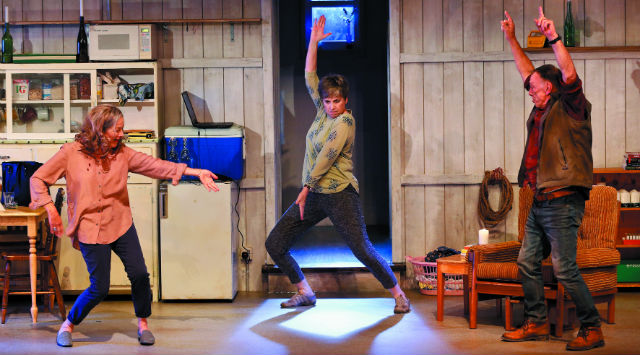
Lucy Kirkwood’s The Children imagines what it would be like, if an all-consuming ecological disaster were to strike today. Instead of the pandemonium surrounding earthquakes and tsunamis, we see an aftermath involving three scientists who are partly responsible for the catastrophe. It is a story about technology, concerned with the way inhabitants of the developed world are failing to find harmony with our greater environment. Hazel, Robin and Rose are retirees approaching seventy years of age, but their work in nuclear power is an enduring legacy that has wreaked havoc to all of humankind.

The play takes on some of the most important themes of our times, not only in its bold discussions of climate change, but also with its ultramodern perspectives on ageing and death. Explored with remarkable sophistication, Kirkwood’s ideas are edgy but truthful, often confrontational in their dissection of responsibility and attribution of blame, as they pertain to the current state of our planet. Diligently crafted to provoke thought and to elicit benevolent responses, The Children tackles pressing issues with intelligence and splendid inventiveness. It is a gripping work, surprisingly entertaining, but is ultimately most valuable for its political statements.

Set inside a humble cottage (designed with minimal fuss by Elizabeth Gadsby), the action begins deceptively mundane as its three characters skirt the issue, trying to be cordial company, before a sense of security arrives that will allow floodgates to open. Everything feels precarious, even before the audience is let in on the severity of their situation. Director Sarah Goodes teases with an exquisite balance of the austere, banal and lighthearted aspects of the story. Tensions ebb and flow, but we are mesmerised, captivated by the extraordinary stakes of the fictional tale, and how they feel so immediately, and terrifyingly, applicable to our real lives.

Actor Pamela Rabe plays Hazel, a woman straining under delusions, surviving on a despairing combination of determination and feeble crutches. It is a wonderfully humorous performance, dark and sensitive, cleverly conveying the fragility of existence under the mercy of indomitable forces. Rose, performed by Sarah Peirse, appears out of the blue, complete with bleeding nose, to shake us into reality. A charismatic and powerful mouthpiece for the play’s central ideology, Peirse is eminently compelling and deeply persuasive. Robin is the thorn among the roses, entrusted with the plot’s more sentimental sections. William Zappa brings authenticity and warmth, and occasional levity, to what is essentially a caustic evaluation of our nature.

Our experts work ceaselessly to extend our lives, to have us live longer and more voraciously than ever before. We keep finding greater ways to devour the world, to satisfy an insatiable and ever-escalating list of wants, in a narcissistic experience that forever thinks of human as supreme. We plunder remorseless, even when faced with irrefutable evidence of our self-destruction, as though carnage can only be accepted as inevitable, and we persist in a race that feels too far gone to accommodate any idea of reversion. In The Children, characters figure out the best way to live by weighing between options of death. We can only bear witness to their calamity and hope to do better.

www.sydneytheatre.com.au | www.mtc.com.au

Review: Diplomacy (Ensemble Theatre)

Venue: Ensemble Theatre (Kirribilli NSW), Mar 23 – Apr 28, 2018
Playwright: Cyril Gély (translated and adapted by Julie Rose)
Director: John Bell
Cast: John Bell, John Gaden, Genevieve Lemon, James Lugton, Joseph Raggatt
Image by Prudence Upton

Theatre review
On the eve of Paris’ impending decimation by the Nazis, Raoul Nordling a Swedish diplomat, pays a surprise visit to the hotel suite of German military governor Dietrich von Choltitz. In Cyril Gély’s Diplomacy, we witness the intense negotiations that lead to Choltitz’s eventual surrender. We always knew how the play was going to conclude, so it is the dynamics between the two men that are crucial to the drama that ensues.

These historical facts, albeit amplified, are fascinating. The idea that one man could thwart an operation of such scale, should prove to be quite astonishing, but the production is tepid, unable to convey the tension of war, and the very serious stakes never become sufficiently persuasive.

It is a good looking show; Michael Scott-Mitchell’s set design is sophisticated and inventively functional, while Genevieve Graham’s costumes are detailed and impeccably tailored. Lights by Matt Cox and sound by Nate Edmondson, are elegant, both suitably restrained and minimal in approach.

As Choltitz, John Bell is appropriately imposing, but it is a portrayal that can feel surface and impenetrable. John Gaden plays up the charm of Nordling, and makes good use of comic opportunities, but chemistry between the two leads struggles for authenticity, and their story ends up being told with only grandiosity and no discernible nuance.

Stories of war will always be worth recounting, as long as we continue to undertake them. Histories repeat, as though human nature will forever be doomed to replicate all its mistakes. Some will consult the annals to try for improvements to our behaviour, but others it seems, will look to the past only to learn how to win at meaningless battles of our future.

www.ensemble.com.au

Review: Going Down (Sydney Theatre Company)

Venue: Wharf 2 Sydney Theatre Company (Walsh Bay NSW), Mar 23 – May 5, 2018
Playwright: Michele Lee
Director: Leticia Cáceres
Cast: Paul Blenheim, Catherine Davies, Josh Price, Naomi Rukavina, Jenny Wu
Images by Brett Boardman

Theatre review
After the publication of her first book, young author Natalie finds herself at a crisis of authenticity. What she had thought to be a good representation of her life and times, has turned out a commercial disappointment. In the search for success, she embarks on a process of self-redefinition. Michele Lee’s Going Down is a tricky story to tell. The play begins at a point where we have to watch our protagonist cave in, to societal pressures that are determined to tell her that she is inadequate. Early scenes feature a confident woman being attacked for not producing a commercially viable product in her autobiography, and although she does offer some resistance, the premise of Going Down is that society wears Natalie down, transforming her from self-assured to self-doubting. Although we discover that society is ultimately right in its estimation of Natalie, as her story does lead to a conclusion of greater fulfilment, it remains a matter of contention that a young woman’s self belief should be defeated by market forces and community.

The spirit of the writing however, is undeniably vibrant, and the production is accordingly energetic and colourful. Set and costumes by The Sisters Hayes, along with lights by Sian James-Holland, are humorous and playful, completely delightful in their interpretation of the world inhabited by a youthful Melbournite. Much of the show’s comedy is reliant on visual cues, and the creatives are certainly excellent in this regard. Music too, is incisively formulated to reflect the culture being represented. Composer and sound designer The Sweats does marvellously to tell us precisely who these characters are, and in the process keeps us invigorated and entertained.

The extraordinary Catherine Davies plays Natalie, feisty yet vulnerable, for a character memorable for her passionate full throttle approach to living life. We are convinced by all that the actor offers, whether portraying juvenile antics or deep awakenings, her performance of the role is utterly perfect. The supporting cast is also effective and very funny. They play a big range of personalities, many of whom are weird and whacky, and thoroughly amusing. Director Leticia Cáceres has put together an inventive show, charming in its quirkiness. Her ability to infuse each moment of Going Down with layers of meaning, keeps us engaged, with both our instinctual and intellectual capacities.

It is difficult however, to find Natalie’s story entirely satisfying. Maybe being an ethnic minority does prevent one from being unfettered and wholly buoyant. Natalie is not a white woman, and the play questions if she can ever write a book that is blind to race. We wonder if she can ever put race aside, or if she will forever be talking about her Asian heritage. This is an honest conundrum, one that is worthy of considerable analysis. Natalie must be regarded as autonomous, for she is a grown woman, but our relentless expectations of her as one of the tribe must influence her conceptions of autonomy. The matter is a troubling one, and it awaits further exploration.

www.sydneytheatre.com.au

Review: The Resistible Rise Of Arturo Ui (Sydney Theatre Company)

Venue: Roslyn Packer Theatre at Walsh Bay (Sydney NSW), Mar 21 – Apr 28, 2018
Playwright: Bertolt Brecht (translated by Tom Wright)
Director: Kip Williams
Cast: Mitchell Butel, Peter Carroll, Tony Cogin, Ivan Donato, Anita Hegh, Brent Hill, Colin Moody, Monica Sayers, Hugo Weaving, Charles Wu, Ursula Yovich
Images by Daniel Boud

Theatre review
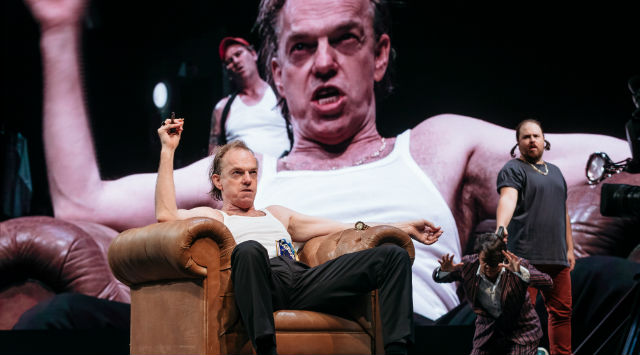
A gangster film is projected on screen, as we witness it being shot on a sound stage. The action happens across not two, but three platforms. We watch a film, the making of the film, and a theatre production, all simultaneously and frantically taking place before our eyes. Bertolt Brecht’s The Resistible Rise Of Arturo Ui is concerned with artifice and image, written at the time of Al Capone and Bugsy Siegel. Director Kip Williams’ decision for a multimedia presentation may seem initially, to be little more than gimmickry, but his profusion of Brechtian devices transcend academic tribute, proving themselves relevant and ultimately, highly effective.

Brought up to date by Tom Wright’s very shrewd adaptation, Arturo Ui’s story is now unquestionably of our time. A criminal hungry for attention, he stops at nothing to satisfy an interminable and narcissistic urge for notoriety. To make his presence a permanent fixture, Arturo takes on political ambitions in order that his influence may turn pervasive and inescapable. We can think of more than a few public figures who operate in a similar vein. It is a witty and wise transposition, taking Brecht’s meditations on the Hitler phenomenon and applying them to the current state of our world. Retaining the spirit of epic theatre, Wright’s work is dark but rarely pessimistic. A parable and cautionary tale, it demonstrates human nature at its worst, but is deliberate with its manipulations of our autonomy as audience and citizens. It always reminds us of our capacity to resist and reverse the actions of those with an appetite for destruction.

Williams’ production is sophisticated, often extravagant and flamboyant in its attitude and accompanying style. Its theatrical grandness is alluring; we find ourselves seduced by its many clever manoeuvres, and are surprised by our unequivocally political response to its ideas. The show knows what it wants to do, and achieves it well. Sections of dense dialogue might be lost, when we get distracted by the very busy stage, but the simple overall point of it all, is clear and powerful under Williams’ interpretations. The director’s ability to shift our attention between screen and stage becomes impressive, once we get over the shock of the unusual. Once we stop questioning the validity of the complicated form being presented, the efficacy at which information is being conveyed, through its complex amalgamations, is quite astounding.

The set takes the shape of an efficient film studio that accommodates complicated camera work whilst prioritising direct audience access, designed by Robert Cousins with appropriate restraint. Nick Schlieper’s lights are attractive and suitably dramatic, conspiring closely with cinematography to provide stunning live visuals with some very advanced video technology. Justine Kerrigan’s adventurous and imaginative cinematography is quite an amazing thing to behold. Also deeply satisfying is Stefan Gregory’s music, inspired by early genre films, and assisted by excellent sound engineering, to offer great drama and intrigue, electrifying from prologue to epilogue.

Hugo Weaving’s performance as Arturo Ui exhausts the gamut of emotions, as well as all the superlatives a critic is tempted to use in describing his brilliance. If there is ever perfection in art, Weaving embodies it here. The man is in charge every second, and we are putty in his hands, hopeless and lost in whatever he wishes to impart. His skill is second to none, and his mesmerising charisma is bewildering. It is hard to come close to the standard that he sets, but others in the cast too, are truly remarkable. Peter Carroll in particular, contributes extraordinary incisiveness as Dogsborough, depicting the blurred lines of good and bad with wonderful flair and persuasiveness.

If we see the natural world as an organism with tendency for chaos, and humankind’s insatiable need for creating order, in our own image, a kind of violation, then man’s obsession with power is an abomination. Arturo Ui goes against everything that we want to think of as good and right in the world, in his continual seizure of power and domination over every being, but it is likely that the only language he and his ilk understand is power, and to rival them requires that we take mirroring actions. Pacifism and the qualities of integrity that it encompasses, may be a more idealistic way of approaching peace, but in The Resistible Rise Of Arturo Ui it is hard to not see these romantic notions as ineffectual or much worse, calamitous. It is time perhaps to find better ways to fight fire with fire.

www.sydneytheatre.com.au

Review: Silent Disco (New Theatre)

Venue: New Theatre (Newtown NSW), Mar 22 – Apr 14, 2018
Playwright: Lachlan Philpott
Director: Johann Walraven
Cast: Leilani Loau, Badaidilaga Maftuh-Flynn, Natasha McNamara, Brendan Miles, Tom Misa, Gemma Scoble
Image by Liam O’Keefe

Theatre review
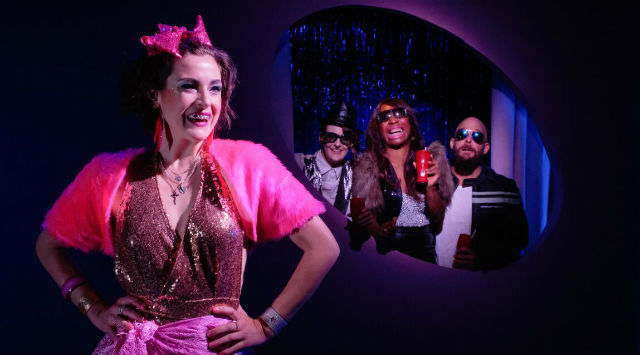
15 year-old Tamara has a talent for writing, but little else besides. Her story in Lachlan Philpott’s Silent Disco, is one of disadvantage and hopelessness. Although living in one of the world’s wealthiest nations, her future as a Millennial Australian is pessimistic. At the mercy of parents and a school system that are broken and desperately failing, we watch Tamara struggle, as her circumstances lead her to a path of ruin. The young rely on our nurturing, but when we offer only neglect and abuse, the inevitable result is destruction.

There is remarkable sophistication in Philpott’s beautifully stylised writing, but the ideas in Silent Disco are simple. Although its characters are dynamic, and the relationships between them are intriguing, Johann Walraven’s restrained direction provides only minimal dramatic tension, offering instead an unyielding sense of naturalistic authenticity to its melancholic situations. Set design by Ester Karuso-Thurn is visually arresting, but activity feels distant, in a vast space that requires a less understated approach. Jessica Dunn’s work as sound designer is refreshing, and her inventive compositions help enliven proceedings.

Actor Gemma Scoble is a convincing Tamara, looking and sounding every bit the rebellious school girl on all of our suburban high streets. Her portrayal of the wilful teen is certainly accurate, but a greater sense of theatricality would allow us to engage better with her experiences. Tamara’s boyfriend Squid, is played by Badaidilaga Maftuh-Flynn, appealing with the emotional nuances he very effectively conveys, and Leilani Loau’s performance as a compassionate teacher is quiet but powerful, and vitally thought-provoking.

We disapprove of any parent less than responsible and competent, but we routinely allow our community organisations to falter. Tamara’s parents are deeply disappointing and probably unforgivable, but their human flaws are understandable. As a nation that boasts of so much, our failure to protect each other should be even more reprehensible, but the ease with which we turn a blind eye, is appalling. In becoming increasingly individualistic, society turns neglectful. It is as though we have stopped thinking of the weak as deserving of care, and have begun regarding them as dispensable and contemptible.

www.newtheatre.org.au

Review: Home Invasion (The Old 505 Theatre / An Assorted Few)

Venue: Old 505 Theatre (Newtown NSW), Mar 21 – Apr 7, 2018
Writer: Christopher Bryant
Director: Alexander Berlage
Cast: Chloe Bayliss, Kate Cheel, Yure Covich, Morgan Maguire, Wendy Mocke, Cecilia Morrow
Images by Robert Catto

Theatre review
In Christopher Bryant’s Home Invasion, two modern American tragedies are memorialised, and analysed through the lens of pop culture. The murder of child beauty queen JonBenét Ramsey, and the suicide of an American Idol contestant, outside of pop star Paula Abdul’s home. Through these stories of unfulfilled lives, the play presents a cynical view of the woman’s world, in which her desires are shaped intractably, by portrayals in the media, of the feminine as being essentially inadequate and a scourge.

We meet the aforementioned singing aspirant June (who changes her name to Paula), along with a housewife Carol and a 15 year-old Lolita type, Sam. All three individuals are disturbed, but we have to join the dots to figure out their dysfunctions. Director Alexander Berlage places these characters within the glossy setting of our consumerist lives, drawing attention to the unrelenting superficiality that seems determined to prevent us from attaining healthy existences.

Set design by Jeremy Allen and Berlage’s lights, together with Ellen Stanistreet’s costumes, forge a powerful collaboration offering a series of striking imagery, often more impressive with the aesthetic statements being made, than the actual stories they help to tell.

Adventurous interpretations by a strong cast, keep us intrigued and intellectually stimulated. Kate Cheel is thoroughly captivating as the wannabe Paula, simultaneously critical and empathetic towards the narrative she inhabits. She turns an outrageously bizarre personality into someone we recognise, and although we may never understand the extreme measures she undertakes, the actor is more than able to convince us of Paula’s truths, impenetrable as they might be. Also wonderful, are Chloe Bayliss and Morgan Maguire, both marvellously animated, delightful with their comedy, whether frothy and madcap, or darkly unsettling.

The play seems to say that we are powerless against tragic narratives that are continually thrust open us by commercial media outlets, the same ones that are then consecrated and fetishised by society. Home Invasion depicts female subjugation in contemporary terms, as an operation inherent in processes of commodification and of the media. It is true that we are in danger of having our minds clouded and capitalised by institutions that will benefit from our delusions, but we must believe that resistance is possible, and necessary. Where the show ends, is where we begin deducing alternatives for our aftermath.

www.facebook.com/anassortedfew | www.old505theatre.com

Review: Master Class (Sydney Opera House)

Venue: Sydney Opera House (Sydney NSW), Mar 20 – Apr 8, 2018
Playwright: Terrence McNally
Director: Adam Spreadbury-Maher
Cast: Jessica Boyd, Tomas Dalton, Dobbs Franks, Kala Gare, Amanda Muggleton
Image by Kate Ferguson

Theatre review
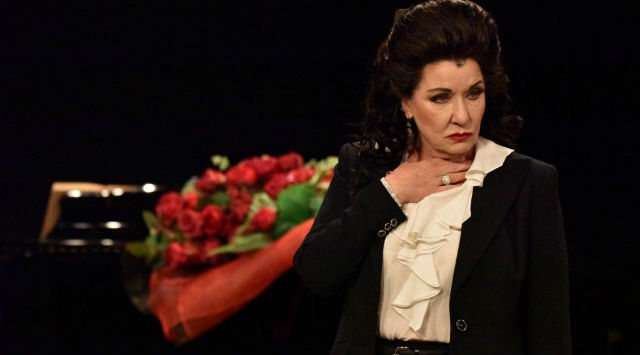
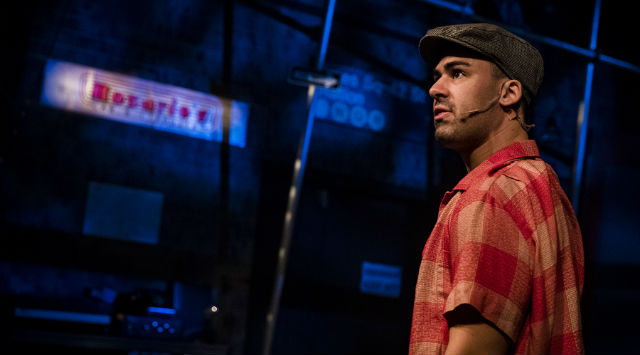
Maria Callas ranks amongst the world’s most loved opera singers in living memory. Terrence McNally’s Master Class features an extraordinary woman who understands her own magnificence, recreating sessions at the Juilliard School of 1971 and 1972, in which Callas provides instruction, on singing, art and life in general. McNally’s admiration is apparent, and the Callas he pens, is one determined to elicit her audience’s reverence, regardless of any feelings we may initially bear about the legendary star.

It is a spectacular piece of writing, with each line saturated with either comedy or pathos, and passionate lessons that many will find deeply affecting. It is also an extremely challenging work for the actor who decides to take Callas on, as no concessions are made that will allow any compromise in this portrayal of someone larger than life, and quite clearly a greater expression of human existence than most could ever fathom.

The best that one could hope for, is to come close, and actor Amanda Muggleton certainly does. Her astounding familiarity with the material and the technical precision she applies to it, are enough to impress, but the poignancy and disarming sense of spirit that she frequently delivers, not only has us captivated, we find ourselves moved, powerfully so, by her character’s unpredictably profound observations. We see Callas, but we also see Muggleton. In sections where the character is required to interact, with her audience or her students, there is often a humour that seems to emanate from Muggleton, that is somewhat distinct from La Divina, as she might figure in our imagination.

Adam Spreadbury-Maher’s direction is particularly noteworthy for the way vintage audio recordings are incorporated into the show. The simultaneous coalescence of Callas’ singing through speakers with Callas speaking on stage, is sublimely harmonised, to deliver a theatrical experience rarefied, and highly operatic. There is a tendency for the tone of performance to be repetitive, with speech patterns rarely deviating from an established range of inflections, but meanings and nuances of the text are always rigorously conveyed.

Callas wanted her students to leave it all on the stage; the inspiration she provides, is relevant to us all. The diva had lived fast, loved hard, and died young. In Master Class, some might choose to see a tragedy, but it is without doubt that her glory and influence remain immense and unequivocal. Whether or not one has an artistic practice, the notion that we have to give it our all, in order that something remarkable can result, is a lesson that bears repeating. It is not unusual advice by any means, but when it comes from a woman who had fought tooth and nail to attain her place in world history, its impact is tremendous.

www.sydneyoperahouse.com

Review: In The Heights (Hayes Theatre / Blue Saint Productions)

Venue: Hayes Theatre Co (Potts Point NSW), Mar 16 – Apr 15, 2018
Music & Lyrics: Lin-Manuel Miranda
Book: Quiara Alegria Hudes
Director: Luke Joslin
Cast: Marty Alix, Libby Asciak, Ana Maria Belo, Samantha Bruzzese, Will Centurion, Margi de Ferranti, Ryan Gonzalez, Monique Montez, Tim ‘Timomatic’ Omaji, Alexander Palacio, Michelle Rozario, Luisa Scrofani, Stephen Tannos, Richard Valdez, Olivia Vasquez
Images by Grant Leslie

Theatre review
At the far north of Manhattan lies the Washington Heights neighbourhood, populated by a predominantly Dominican-American community, living and pursuing the American Dream. Lin-Manuel Miranda’s first musical In The Heights appeared in 2005, featuring an almost entirely Latinx cast of characters, with music heavily influenced by styles and rhythms of Latin America, along with a generous measure of Miranda’s now signature incorporation of rap. It is a story of aspiration and struggle, with the immigrant experience placed respectfully, at its centre. Although culturally specific in its explorations, In The Heights is broad in appeal, and proves to be readily received by audiences in Australia, where an ascendant history of migration has shaped the identities of us all.

Musical Director Lucy Bermingham’s marvellous interpretation of the score, brings us a vitality rarely encountered at our theatres. Exciting, soulful and wonderfully refreshing, the show is an unequivocal treat for the ears. A formidably well-rehearsed band plays the work with astonishing brilliance; contributions by drummer Emma Ford and percussionist Alysa Portelli are particularly invaluable in sweeping us away from our dreary humdrum. Choreography by Amy Campbell is ferociously riveting. Her use of space and bodies, has us dazzled and thrilled, and dancers Samantha Bruzzese and Michelle Rozario are simply unforgettable with their athletic glamour.

Ryan Gonzalez is the powerhouse leading man, impressive at all the facets required of a musical performer. His Usnavi is a warm, charismatic and persuasive character, whose narrative moves us purely because of the talents displayed on stage by Gonzalez. Whether singing, rapping, dancing or acting, we devour all that he offers up so thoroughly flawlessly. Also very successful are Tim ‘Timomatic’ Omaji and Luisa Scrofani, both strong in voice and presence, spectacular in their respective roles. Marty Alix and Richard Valdez leave excellent impressions in smaller parts, with musical and comic abilities clearly eclipsing the actual scope of what had been stipulated. Director Luke Joslin’s achievements with In The Heights are rich and very gratifying. Together with an accomplished team of designers, he has brought us a big, brash musical that stands for something more than entertainment.

Art has the capacity to talk about power in our worlds, with absolute truth and honesty. The predicament of the underprivileged must be conveyed to all, especially to those who do not wish to hear it. The nature of how we structure communities, in the daily expansion of what we consider to be meritorious, must always be questioned, and within that, the problem of how we exclude and exploit peoples, must be continually interrogated. We can no longer hold on to ignorant conceptions of living in stagnant societies. In this new era of advanced technology and accelerating warfare, the movement of people will only intensify, and our ability to extend justice and equity is the greatest test to our humanity.

www.hayestheatre.com.au | www.bluesaint.com.au