Review: The Rise And Fall Of Little Voice (Lane Cove Theatre Company)

lanecoveVenue: New Theatre (Newtown NSW), May 15 – 24, 2014
Playwright: Jim Cartwright
Director: Christine Firkin
Actors: Debbie Neilson, Wendy Morton, Michelle Bellamy, Nick Bolton, Luke Reeves, Kevin Weir, Mark Reiss
Image by Geoff Sirmai

Theatre review
Northern England is a long distance away, with its own significant cultural and language affectations. The desire to stage a production from that region for a Sydney audience, demonstrates the universal appeal of Jim Cartwight’s script. The Rise And Fall Of Little Voice is a comedy that examines the darker side of family dynamics in a deceptively upbeat manner. It tackles dysfunction and neglect in the guise of a pseudo-musical, with ample measures of broad campy humour and a lot of singing.

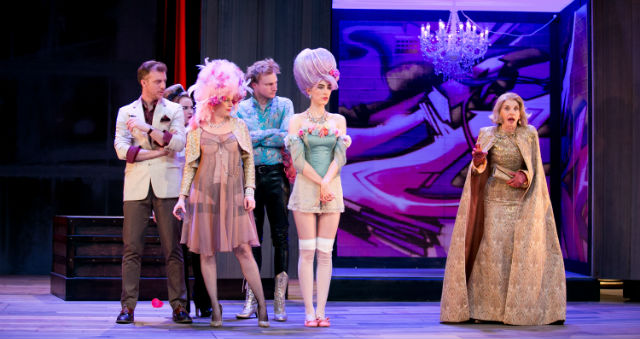
Lane Cove Theatre’s production places emphasis on the play’s light-hearted elements. We see the drunken fumblings of a desperate middle-aged woman Mari Hoff, her daughter LV’s burgeoning and very innocent romance, and their neighbour’s kooky jesting. There is some effort at depicting Hoff’s love interest with some sinisterness, but by and large, the show lacks a gravity that would give meaning to its story and characters. Little Voice relies heavily on empathy and personal identification for its dramatics to be effective, but the narrative does not always connect sufficiently with its audience. An important aspect of the play is the loss of the family’s paternal figure that causes disharmony and grief, and it is the memory both women bear of the man that provides impetus for the plot, but his presence is unsatisfactorily sparse in this staging. He leaves a hole in their lives, but we are blissfully oblivious to it.

Wendy Morton is an energetic actor who provides Mari Hoff with an emotional neediness and instability that is uncomfortably believable. There is a sense of self-abandonment in Morton’s work that is entertaining and fitting, but the character she creates has too much warmth, and comes across overly endearing. The story needs a mother with a cruel and villainous edge to justify her appointed conclusion, and to help explain her daughter’s strangeness, but Morton lacks those malevolent qualities in her otherwise delightful portrayal. LV is played by Debbie Neilson who shines in musical sections where her talents as an impressionist take centre stage. She performs as Judy Garland, Lulu, Edith Piaf, Marlene Dietrich and Shirley Bassey, and is particularly memorable with her mimicry of Marilyn Monroe and Shirley Temple. It is clear that Neilson’s vocal ability contributes greatly to her part in the show, but the actor is not ideally cast. Neilson is a vibrant and gregarious performer who seems to be at odds with the timidness and melancholy that is fundamental to her character. In the role of her love interest Billy, is Luke Reeves who delivers the most consistent and convincing characterisation in the show. The script does not demand very much of the actor, but Reeves is clear of his contribution to the plot, and addresses each scene with charm and precision.

Little Voice is effervescent and colourful, but it is the exploration of the writing’s psychological and emotional depths that would give it a sense of authenticity. Death and mourning are themes that touch all our lives, and truthful theatrical renderings always resonate. Coming of age tales are appealing because they speak of hope, but they need the darkness before the light in order to hit home.

www.lanecovetheatrecompany.com

Review: Something To Be Done (Gabatwa Studios)

rsz_10259032_782336098466784_8926997888061039248_oVenue: TAP Gallery (Darlinghurst NSW), May 13 – Jun 1, 2014
Writer: Gabriel McCarthy
Performer: Gabriel McCarthy

Theatre review
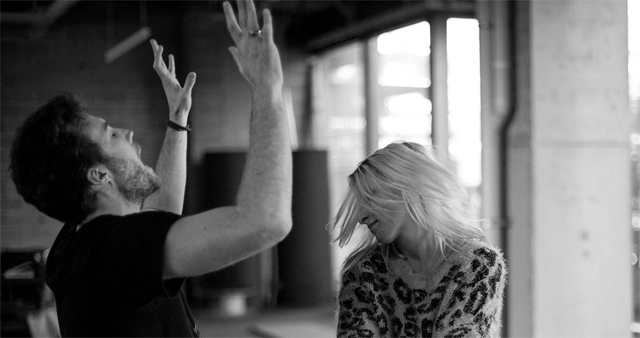
Reminiscent of work by Buster Keaton, Charlie Chaplin and Rowan Atkinson, Gabriel McCarthy’s one-man show communicates without words, relying instead on the actor’s ability to create meaning with his body and face. The story is vague, but its themes are clear. McCarthy’s show is about innocence, mortality, love, and art. There is also a sense of burgeoning manhood being explored by the performer who discovers the universe around him, but within an independence that he manufactures, almost to stake his claim on a personal and self-determined identity.

The show is 75 minutes long, and while it does switch gears often and there is plenty of variety to prevent any hint of self-indulgence, its scenes are not always engaging. The format of the production is challenging, as it requires of its audience, a mode of watching that is acutely different from what is conventional and mainstream. It does what it wants, with admirable eccentricity and idiosyncrasy, but we need something more. Many great works have touched audiences without the use of words, and it is the artist’s responsibility to locate that point of connection.

Erin Harvey is stage manager, and does a splendid job with the minimal technical facilities at hand. The show looks and feels refined, with a set by Christie Kay Bennett that is basic but considered and restrained. The show’s innumerable sound cues are a key feature, and Harvey’s faultless execution is noteworthy. A thorough understanding of the show and its performer is necessary, and the chemistry between tech and talent for this production is beautifully harmonious.

McCarthy is a performer with great skill and presence. He is phenomenally agile and energetic, and his ability to convey concepts and to express intention is remarkable. There are many memorable moments of vigorous gesturing and lively leaping, but the actor is equally effective in significant pauses, unafraid of a more silent approach. There is a sincerity to the man that is endearing, but his story is less captivating. Even though it is not difficult to follow, it is too abstract. We want to connect, but it is too distant. The tale seems personal, but it is also shrouded, and maybe a little elusive with its message.

www.facebook.com/gabatwastudios

Review: Amanda (Old Monk Productions)

oldmonkVenue: TAP Gallery (Darlinghurst NSW), May 13 – 18, 2014
Playwright: Mark Langham
Director: Mark Langham
Actors: Amylea Griffin, Paul Armstrong, Elizabeth Macgregor

Theatre review
Amanda is a new play that asks questions the way an inquisitive small child would. Its persistent wonderment inspires thoughts and ideas that range from the familiar and enduring, to fresh and complex ones that we rarely encounter outside of the world of art. Mark Langham is a brave writer who dares to explore deep and dark recesses of the human condition, even when there is no guaranteed satisfaction or indeed, conclusion. Langham’s approach is philosophical, but his creativity for the stage is savvy and accomplished. Amanda is an intriguing work, with interesting characters that hold our attention. Their provocative lives are richly imagined, and thoroughly engaging.

The protagonist Amanda is a childlike woman, played by Amylea Griffin who brings a necessary gravity to a performance that is intense and energetic. It is noteworthy that the character is not portrayed with weakness even though her story is one of victimhood and injustice. Griffin’s sense of defiance is an important and beautiful ingredient to her work, but there is a lack of levity to her delivery that could have helped craft a more dimensioned characterisation. Paul Armstrong takes on a trio of personalities with good variation and conviction. The actor’s relaxed nature contrasts well with his co-players’ sense of severity, but is also able to inject power and dynamism when required. Elizabeth Macgregor’s characters are colourful and deliciously odd, but her interpretations tend to be fairly subdued. Although missing the opportunity to create something quite eccentric, Macgregor’s portrayals are effective, and sensitive to the plot’s progression.

Langham’s direction does not shy away from expressive dramatics that create a sumptuous texture in the moody script, but the performers’ inconsistent group chemistry is an issue. Virtually every scene involves the actors in collaboration, but they are not always in tune. Early scenes seem to work better, but as complexities accrue, the work starts to lose its persuasiveness. The plot evolves into greater abstraction, with actors seeming to proffer incongruous perspectives of the text, and decipherment becomes difficult.

Amanda might be challenging, but it is not without pleasures. The play is full of intellectual stimulants, and the writer’s lines are pointedly witty. Directing one’s own script is a tall order. Langham tends to place too much trust on the autonomy of his words, but he does an admirable job of materialising his concepts and presenting a show that communicates on emotional and cerebral levels.

www.oldmonkproductions.com.au

Review: The Detective’s Handbook (Sydney University Dramatic Society)

rsz_10344095_783993371619707_864135050788121539_oVenue: University of Sydney Studio B (Camperdown NSW), Apr 30 – May 10, 2014
Book and Lyrics: Ian Ferrington
Score: Olga Solar
Director: Ian Ferrington
Actors: Alessandro Tuniz, Matt Bartlett, Alexander Richmond, Natasha Vickery, Victoria Zerbst, Elliott Miller, Alice Birbara

Theatre review
The Detective’s Handbook is a new musical written by Ian Ferrington, with score provided by Olga Solar. It is a satirical take on film noir, bringing to mind, films like Dead Men Don’t Wear Plaid (1982) and Who Framed Roger Rabbit (1988). It is persistently self-conscious, but it takes its parody seriously, placing as much focus on storytelling and its musical numbers, as it does on creating laughs.

Ferrington’s vision is ambitious and idiosyncratic. His work might not look original, but it bears a quirkiness that prevents it from feeling derivative. His writing is witty and charming, but his characters, although spirited, are too traditional. Ferrington’s direction is energetic, with an emphasis on rhythms, which keeps things buoyant and lively. There is however, a need for punchlines and plot twists to be cleaned up for clearer delivery. Olga Solar’s delightful music is beautifully woven into the narratives, and effectively provides characters with interest and complexion. There is a noticeable lack of melodies in most of the songs, with the team’s decision to adopt a “rap-infused 1950s showtune jazz” style. It is debatable whether that choice is a wise one, but the two most memorable numbers, “Too Much To Ask” and “Congratulations”, are both conventionally structured, hummable tunes.

Matt Bartlett has the strongest singing voice in the cast, and plays Detective Jimmy Hartman with great conviction, creating a character that stands out as the most believable of the group. The actor brings a warmth to his performance, and quickly establishes a good connection with the audience. Natasha Vickery plays her three characters with panache and levity. She embraces the show’s giddy style of comedy with good humour, and although required to play silly often, we remember her performance to be a polished one. Other players tend to have an oversimplified approach, with characterisations that do not develop far enough to sustain a show that’s considerably more substantial than a skit.

This is a musical with a lot of frivolity, but it also demonstrates impressive flair. Ferrington and Solar’s material contains great potential, with generous room for comedians to provide dynamic and creative interpretations. This production might be a little under-cooked with too many one trick ponies, but there is no doubt that if explored with greater depth, its future incarnation could well be The Big Noir Musical Hit.

www.sudsusyd.com

Review: Trainspotting (Black Box Theatre)

trainspottingVenue: King Street Theatre (Newtown NSW), May 8 – 24, 2014
Playwright: Harry Gibson (based on the novel by Irvine Welsh)
Director: Luke Berman
Actors: Damien Carr, Taylor Beadle-Williams, Brendon Taylor, Leigh Scully

Theatre review
Irvine Welsh’s Trainspotting is one of the defining cultural landmarks of the 1990s. From novel, to play, and eventually to the blockbusting hit film, its immense popularity and pervasiveness in landscapes the world over is testament not only to the quality of work by artists involved, but also to the way its story has resonated and subsequently appropriated as a sign of the times.

Black Box Theatre’s staging of the 1994 Harry Gibson adaptation seems, on the surface, to be an exercise in nostalgia. It is entirely too predictable to have a group of Gen-Y enthusiasts take on a cult classic that pushes the boundaries of decency, but what they have created is a work that is surprisingly relevant, and very well crafted indeed. Luke Berman’s direction is exciting, colourful and crisp. Scenes move along quickly but clearly, as though injected with adrenaline. The action is heightened and dynamic, but sentiments are always elucidated. Berman has a sensitivity that ensures the text’s many controversial elements are handled circumspectly, with just the right amount of restraint that keeps bad taste from turning unacceptable.

Berman’s cast is truly impressive. They are a fearless and captivating foursome, whose love for the art of performance is absolutely evident. By taking on multiple roles, they all receive significant stage time and are able to showcase creative versatility, but we are not always able to identify the characters being played, although it must be said, that this does not seem to alter the enjoyment of the work. Damien Carr plays Mark, the protagonist and narrator of the piece. The duality of simultaneously narrating the story and performing the scenes being described is fascinating, and Carr does a stellar job of it. He is on stage for virtually the entire duration, and is able to provide a consistently focused energy that keeps us engaged and involved. Taylor Beadle-Williams is magnificent in her roles. There is often a baroque exuberance in her work that articulates perfectly the aesthetic of Welsh’s hallucinatory world, but at the core of her performance is a fixation on truth, which gives all her characters a beautiful empathy that is irresistible.

Drug abuse and the “junkie” subculture is sadly, not a relic of the past. Trainspotting‘s articulation of that underworld satisfies our curiosity, telling us about the fringe dwellers who reside on our peripheries. We are reminded that the world is a shared one, and our beliefs about life are often fundamentally the same. Even when our values diverge, and our judgemental minds divide us, it is our common humanity that allows us to look into the experience of others, drawing parallels where they exist, and discovering through these diversities what is enduring, and what actually matters.

www.blackboxtheatre.org

Review: Arthur’s Place (TAP Gallery)

arthursplace1Venue: TAP Gallery (Darlinghurst NSW), May 7 – 11, 2014
Playwright: Ben Eadie
Director: Ruth Fingret
Actors: Dominic Witkop, Aaron Nilan, Matt Jacobsen, Steve Vincent, Timothy Parsons, Jamie Merendino, Cait Burley

Theatre review
The young Australian man has in recent times become a subject of interest in media and social discourse. Characterised as violent, drunk and disorderly, he is also often considered to be of white and middle class origins. Ben Eadie’s script is concerned with this particular group of “lost souls”. Six characters are created to represent an aimless but troubled segment of our society, each with a distinctive personality type but all are purposeless except for a preoccupation with drugs and alcohol.

Eadie’s efforts at painting a picture of detachment is effective. He gives a clear impression of characters unable to engage meaningfully, but although we are able to relate them with some familiarity to our lived communities, they struggle to evoke empathy or arouse much interest. The fact that they are privileged enough to live a lifestyle that includes no work but a lot of debauchery, prevents us from feeling for them or for dramatic tension to build sufficiently. Not very much seems to be at risk. Some attention is paid on sexual abuse in a couple of the boys’ histories, but those scenes feel like afterthoughts, even if they are clearly well-intentioned.

The pace of the show is exceedingly languid. Much of the acting seems to be based in “real time”, which often comes across too slow for the audience. Dominic Witkop’s performance is slightly too internalised, but his focus and commitment is strong. His character Lance is by far the most convincing one, and the care and measuredness at which he attacks his part is laudable, but introducing a greater sense of vigour would allow him to connect better. Arthur is played by Aaron Nilan who lacks the enigmatic quality required by the script, but his less restrained performance in the second act adds much needed energy and animation to the stage.

Unlike its characters, Arthur’s Place has a purpose. It discusses our social problems, which is one of the most important functions of theatre, but while it tries to push the envelope with its exaggerated use of profanity, more conviction is needed to advance its central message. We do not expect plays to give us solutions, but when art is able to make us care about our worlds, it becomes indispensable.

www.tapgallery.org.au

Review: Thom Pain – Based On Nothing (Sydney Independent Theatre Company)

Auditorium_American-issue_TVenue: Old Fitzroy Theatre (Woolloomooloo NSW), May 5 – 10, 2014
Playwright: Will Eno
Director: Julie Baz
Actor: David Jeffrey

Theatre review (originally published at auditoriummag.com)
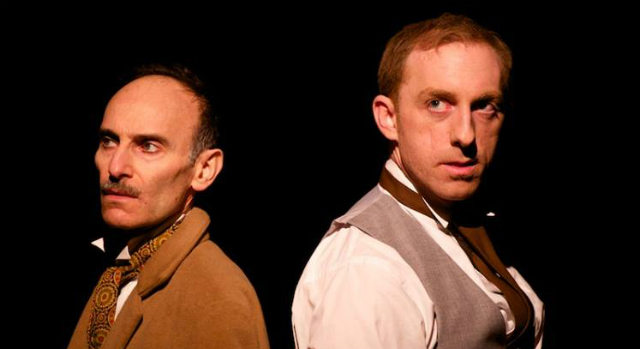
Thom Pain (Based On Nothing) is about fear, loss and loneliness. Will Eno depicts a state of sadness that is genuine in its erratic complexity, but also joyful and humorous in its profound observations. Thom Pain is a man who has experienced disappointments, and he knows what betrayal and injustice feels like. Eno’s script expresses the process that one needs to go through in order to emerge renewed and strengthened, but Pain has not yet found that enlightenment.

His struggle is the flesh and blood of this work, and a representation of a condition of being that is too easily forgotten. The human capacity to leave pain behind after it subsides, makes this a valuable piece of rumination. We get over things and move on, but Pain’s very presence demonstrates some of the intricacies of our coping mechanisms, and watching them in action is fascinating. The writing has a rambling incoherence that seems theatrical, but also poignantly realistic. We are rarely clear of mind at troubled times, and Eno utilises that natural inability to make sense of things, to great dramatic effect. Everything is strange yet familiar. The audience observes the peculiarity of Pain’s behaviour, while feeling a close affinity to the character.

Thom Pain (Based On Nothing) is a work of art that cuts deeply and meaningfully, revealing an image of our own humanity through a mirror that is rarely uncovered. It is also a work of excellent entertainment, with performer David Jeffrey providing the one-man show considerable pathos and a very charming whimsy. In spite of his considerable actorly talents, Jeffrey brings a quality of diffidence to the stage that gives his character an authenticity that we not only warm to, but almost feel protective towards. The text’s unconventional structure risks alienating its audience, but we care for the man Jeffrey creates, and he makes us sit and listen intently.

He is very funny, and very wry. He wallows, but he is also self-effacing. He plays with our emotions, taking them on an unpredictable and haphazard journey, to all the spaces we messily label “mixed emotions”. Jeffrey’s achievement however, goes further than succeeding in making us laugh and cry. The actor’s portrayal of melancholy is so charged with vulnerability, it reminds us of feelings we bury deep within. The same ones we can sense in our bodies almost everyday but are rarely allowed to surface. Jeffrey makes that pain emerge with a quiet wonder, and in the safety of the theatre, we encounter the closest friend of all, our own broken hearts.

Melancholia is the overriding tone, and perhaps theme, of the show. Director Julie Baz creates an atmosphere thick with moody pensiveness, and it is seductive. The evocative and beautiful underscoring music is a selection of pieces from Sergey Akhunov’s Big Elegy To John Cage, which contribute greatly to the production’s introspective texture. Melancholy visits us all and people relate to it in different ways, ranging from repulsion to pleasure. Accordingly, the production’s appeal would vary according to tastes, but the liberal amount of comedy intelligently added to Baz’s weighty microcosm, ensures that the work speaks to many.

It is often too easy to overindulge in lengthy well-written passages, putting too much trust on the words to work their own magic. Baz is conscious of the pitfalls of extended monologues and wisely encourages the actor to embellish with movement, both exaggerated and subtle, resulting in a performance that is energetic and optically dynamic. The use of space is similarly active, but stage design is overly minimal due to Eno’s specifications. He believes that “there is a humility about theatre and life in the script; it should be there in the production, too.” This is a persuasive argument, but it is also true that the script could benefit from greater visual flourish and imagination. Pain talks about magic, and there are moments where our eyes wish for something slightly fantastical to materialise.

The view inside Pain’s mind is bittersweet, truthful, and scarred, and therefore beautiful. His story is hopeful, yet he seems oblivious to the good around him, and inside of himself. Blinded by fear and dejection, he is a whirling dervish in search of salvation. For us, his magnificent dance is a spiritual lift, and we desire only the best for him, in the trust that a new dawn is always on the approach.

www.sitco.net.au

Review: Event For A Stage (Carriageworks)

rsz_10296577_10154052802420464_5556522318690470678_nVenue: Carriageworks (Eveleigh NSW), May 1 – 4, 2014
Artist: Tacita Dean
Actor: Stephen Dillane

Theatre review
English visual artist Tacita Dean’s Event For A Stage is her first work in the “live theatre” medium. Unsurprisingly, the piece is not concerned with theatrical conventions, and it certainly places no interest on the fabrication of a narrative. The rectangular stage is surrounded by audiences on all 4 sides, and Dean, the artist sits front row with us, in a darkened corner. A big chalk circle is drawn on the stage, with two people operating a film camera within the circle, and another two people outside of it. A microphone is suspended from the fly bars into the middle of the circle. For the duration of the 45-minute work, the actor Stephen Dillane walks around the stage, usually following the chalk line, but uses regular disruptions to the circular stroll to create a sense of action or to emphasise certain points in his monologue.

Over the course of the performance, Dillane walks up to Dean and obtains, with visible resentment, sheets of theatre and performance theory, which he reads aloud, effectively using them as scripts. The writing is insightful and fascinating, and Dillane’s interpretation of them is thoroughly compelling. In addition to Dean’s sheets of paper, Dillane also gives us coherent and interesting accounts of conversations he has had with the artist, or about events and people from his personal life. Further, he reads sections from a slim novel he keeps in his pocket, and performs extracts from Shakespeare’s The Tempest. The work however, is not about stories. Its main crux deals with the nature of theatre and performance, the sociology of spaces in a theatrical venue, and the relational dynamics between artists and audiences.

There are layers upon layers of ideas that are touched upon in this deconstruction of performative spaces. Things get complex, but Dillane’s supreme ability to connect, keeps us from confusion or perplexity. One of the main themes discussed relates to contrivances that arise from the convergence of creators and spectators. The presence of film cameras helps illustrate the point, while simultaneously adding to the multiplicity of the artist’s concepts in its obvious extension into other televised or filmic media. Dillane also talks about the danger that sits below the surface of theatrical artifices, and his close proximity from us is a constant threat to our presumption of security, with the cameras amplifying the stakes at hand.

Event For A Stage approaches theatre with concepts and conventions from the visual art world, in a collision of forms that is fresh and exciting. It seeks not to emulate familiar precedents, but like all great works of theatre, it enthrals, intrigues and informs, even if its subject matter (its self) is a little haughty.
 

www.tacitadean.net

www.carriageworks.com.au

Review: His Mother’s Voice (Bakehouse Theatre Company)

rsz_attachmentVenue: ATYP (Walsh Bay NSW), Apr 30 – May 17, 2014
Director: Suzanne Millar
Playwright: Justin Fleming
Actors: Alice Keohavong, Angela Tran, Arisa Yura, Dannielle Jackson, Harry Tseng, John Gomez Goodway, Jonathan Lourdes, Michael Gooley, Monica Sayers, Renee Lim, Isaiah Powell
Image by Tessa Tran, Breathing Light Photography

Theatre review
China’s Cultural Revolution ended officially in October 1976, but its after-effects are felt everyday the world over. Today, China’s influence on the global economy develops rapidly, and the country is now widely known to be Australia’s largest trading partner. According to the 2011 census, 4 percent of Australians identify themselves as having Chinese ancestry, and that number continues to grow. Justin Fleming’s His Mother’s Voice is a story about the Cultural Revolution, and the defection of a Chinese pianist to Australia.

Fleming’s script is colourfully structured. With the story of Qian Liu as a young boy, it sets out to provide a dramatic background of the Cultural Revolution that would assist audiences who might be unfamiliar with that slice of history. When Qian matures and becomes a successful pianist, he takes an opportunity to defect to Australia, and the story takes a turn that allows a more direct connection with its intended audience. Fleming’s focus however resides with the relationship between Qian and his mother Yang Jia, who struggles against all odds to teach her son the piano, in the firm belief that music is integral to their family identity and survival. The universal ties between parent and child is rightly central to the story, as it is a theme that we all have an affinity for.

Director Suzanne Millar’s sensitive creation of scenes from the revolution are dynamic and fascinating. Her talent in the use of space and sounds crafts a show that is relentlessly engrossing (lighting designer Christopher Page and sound designer James Colla execute Millar’s vision with great elegance). She has a deep understanding of the audience’s senses, and we are kept entirely under her spell. The stage is kept very busy, but our minds are always carefully guided through all the action with clarity. The show she has built is an entertaining one, but casting issues prevent it from being the moving experience it wishes to be.

Henry Tseng is a perfect visual fit for the lead role, but a lack of authenticity in his characterisation disrupts the crucial relationships Qian has with his mother, and his wife. Without a believable emotional centre, the story is one we hear, but do not feel. Qian’s Australian wife is Emma Fielden, played by Dannielle Jackson. Jackson has a delightful effervescence that brings a necessary lightness to the often heavy going narrative, but can be slightly distracting when scenes require more gravity.

Renee Lim as Qian’s mother Yang Jia, is star of the show. Her performance is powerful yet varied, and her strong presence is consistently engaging. The level of commitment she exhibits is impressive, and it is noteworthy that she exercises restraint effectively on many occasions, although her emotional scenes are unmistakably remarkable. John Gomez Goodway and Michael Gooley both play their paternal roles with excellence, and Alice Keohavong and Monical Sayers are memorable in a humorous scene as bumbling officials negotiating Qian’s farcical reconciliation.

His Mother’s Voice is earnest, and beautiful. It does not always resonate, but it is fiercely captivating. The exoticism involved in dealing with foreign cultures is often tricky, but this production handles matters with respect and dignity. Fleming and Millar are to be commended for looking abroad in their search for artistic inspiration, and for a show that tells us who we are by finding the similarities that lie in the seemingly drastic differences between us and them.

www.bakehousetheatrecompany.com.au

Review: Chroma (The Australian Ballet)

chroma
Venue: Sydney Opera House (Sydney NSW), Apr 30 – May 17, 2014
Choreographers: Wayne McGregor (CHROMA), Stephen Baynes (ART TO SKY), Jiří Kylián (PETITE MORT and SECH TÄNZE)
Image by Jess Bialek

Theatre review
The programme begins with Wayne McGregor’s 2006 work, Chroma. Set against the powerful and aggressive music of Joby Talbot and Jack White III, this very modern ballet is instantaneously captivating. Its exquisite set is designed by John Pawson, evoking sensibilities proffered by the minimalist art movement. Covered in white and with its corners rounded off, the stage glows with a warm and quiet spirituality that finds a strange harmony with the vigorous soundscape conducted by Nicolette Fraillon. The dance creates a new grammar based on the balletic form. It is characterised by a dynamic desire for freedom, and it seeks in movement, the expression of all that is beautiful, emotive, and sublime. Inspired by a concept of nothingness, what transpires is a process of distillation with an outcome that displays honesty and necessity. The dance is fresh and new, but it is at no point hollow. There is an originality in its shapes and tempo that seems completely natural, even though it intends to break new aesthetic ground. McGregor’s earth shattering creation is a true work of art, but more than that, its deeply transcendent quality affects us as though it is by nature, sacred.

Stephen Baynes’ new piece Art To Sky is considerably more traditional. It is impressively technical, and the dancers’ athleticism is wonderfully pronounced here. The most well rehearsed and precisely performed work of the night, it showcases the company in glorious light. Chengwu Guo’s solo sequence is remarkably powerful, executed with great flair and exactness. An exceptionally tender pas de deux featuring Madeleine Eastoe and Andrew Killian is touching in its passionate fluidity, and sensitively embellished by the talents of lighting designer Rachel Burke.

Czech choreographer Jiří Kylián is featured twice. His Petite Mort (1991) is as sensual as the title suggests, but also unpredictable. Surprising movements, coupled with unconventional combinations of the dancers’ bodies make for startling and breathtaking beauty. There is however, a lack of depth with its realisation on this stage. The performers require a more thorough engagement with the work to muster a greater range of subtleties to exalt more life. Kylián’s Sechs Tänze (1986) is a delightful and theatrical creation that is equal parts camp humour and extraordinary choreographic innovation. It is engaging, provocative and endlessly fascinating, and the dancing seems to be particularly enthusiastic for this section. This morsel of genius is undeniably the perfect choice for closing the show on a high note.

www.australianballet.com.au