Review: The Violent Outburst That Drew Me To You (Siren Theatre Co / Griffin Theatre Company)

griffinVenue: SBW Stables Theatre (Kings Cross NSW), Jun 18 – Jul 12, 2014
Playwright: Finegan Kruckemeyer
Director: Kate Gaul
Cast: Emily Ayoub, Renee Heys, Michael Cutrupi, Natalia Ladyko, Anthony Weir

Theatre review
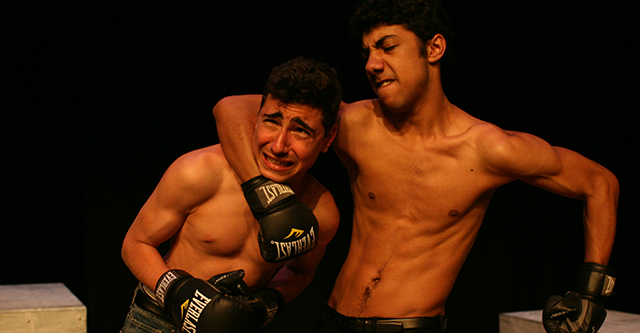
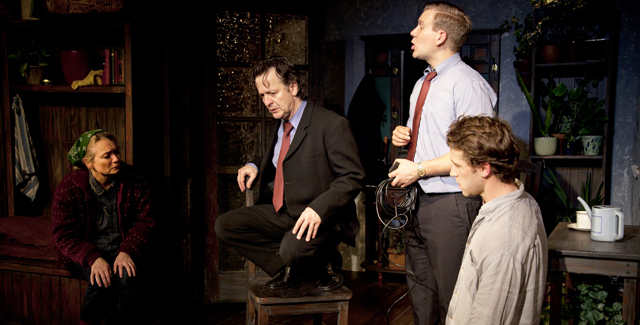
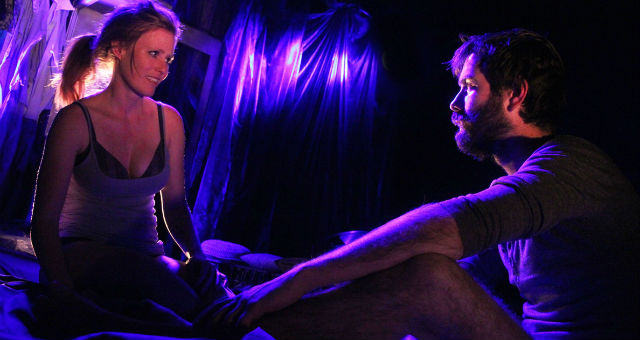
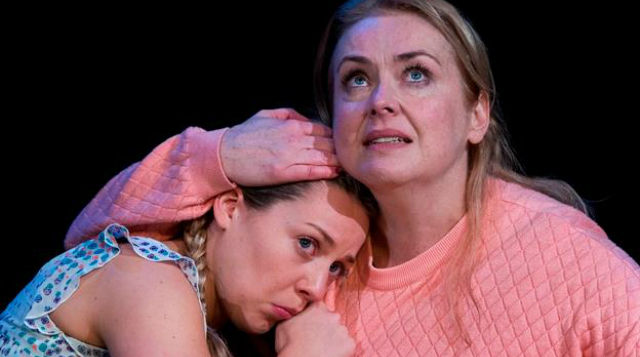
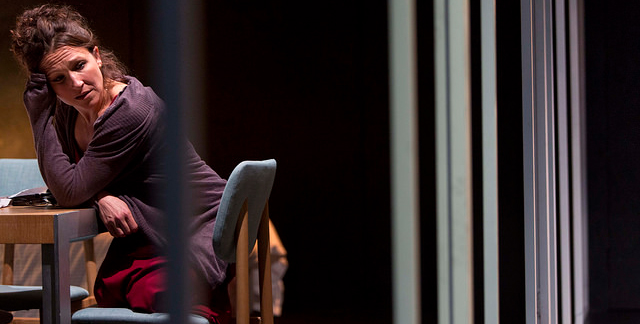
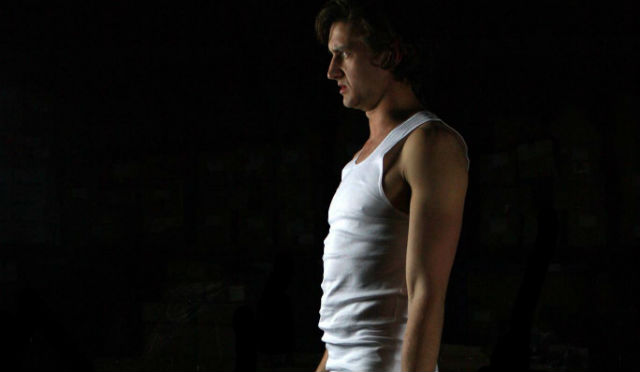
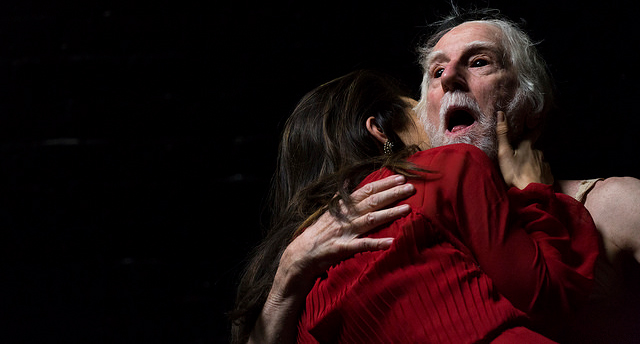
Teenage life is difficult. In The Violent Outburst That Drew Me To You, we observe that adults are really just teenagers covered in calluses. The essence of things do not change, but we lose our innocence, choosing to cope with the world by growing thicker skin wherever possible, and also to turn a blind eye whenever required. Connor and Lotte are younger and purer versions of us. They are old enough to detect and to call bullshit on offending circumstances, and young enough to remain unconvinced that evils are ever necessary. Their idealism is rarely a match for machines of the establishment, and Finegan Kruckmeyer’s writing invites us to lament the brevity of youth and to reflect upon the many years we live in states of compromise and imperfection, that we thoughtlessly term “growing up”.

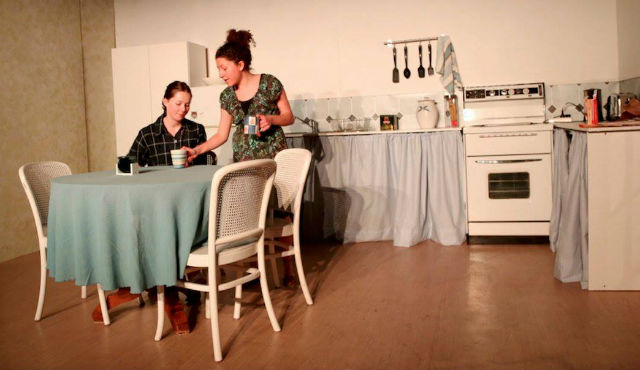
Kate Gaul’s direction is a celebration of youth. Her creation is energetic, mischievous and very vibrant. Borrowing elements from children’s television and theatre, the production is joyfully buoyed by big characters, song and dance numbers, and colourful costumes. There is even shadow play, with the stage turning into an over-sized zoetrope on several occasions. Jasmine Christie’s production design and Daryl Wallis’ sound design help transform script into action. The show arrests our senses, providing an immersive experience that makes adventurous use of the theatrical form. We have lots to see and hear beyond the writer’s words. The spirit of collaboration is alive under Gaul’s stewardship.

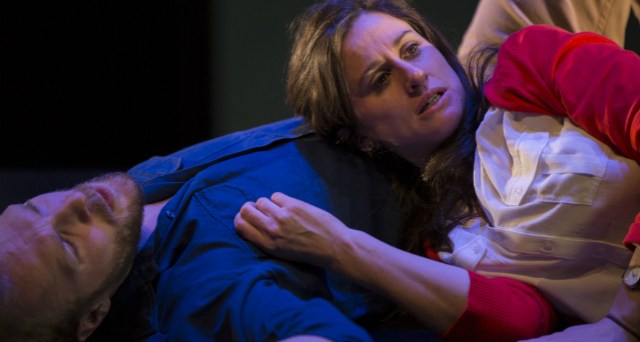
Connor is played by Michael Cutrupi, whose portrayal of the teen spirit is amusing yet genuine. His sense of rebellious wonder is deeply appealing. We relate easily to his character, who bears qualities that are universally familiar. Anthony Weir is memorable for a host of personalities, all whacky and wonderful. Weir is able to make every line tickle, especially in song. His vocal abilities are limited, but his commitment as a comedic actor is outstanding. Renee Heys brings extraordinary passion and presence to her roles. She is a versatile actor who is effective, quiet or raucous, and her talents are showcased remarkably well in this production. Not every role gives much room for showing off, but every performer on this stage is focused, precise and strong.

The work ends abruptly. The narrative quickly turns serious, and the tonal transformation happens faster than we are able to adapt. It suddenly loses connection at the end, but the message can still be heard. The flaw is small but the opportunity for greater poignancy seems to have been missed. Regardless, Kruckemeyer’s writing concludes wisely and we are served up substantial food for thought. The play is meaningful for young and old, perhaps in different ways, but it contains truths that will resonate with every open heart.

www.sirentheatreco.comwww.griffintheatre.com.au

Review: O.C. Diva (Hayes Theatre Co)

hilarycole1Venue: Hayes Theatre Co (Potts Point NSW), Jun 15 – 29, 2014
Directors: Hilary Cole, Jay James-Moody
Musical Director: Steven Kreamer
Cast: Hilary Cole

Theatre review
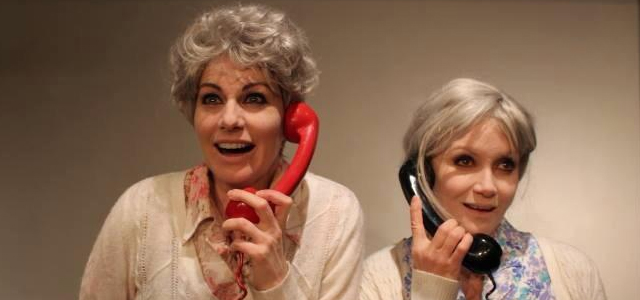
Hilary Cole’s cabaret show takes on the familiar structure of a singer with a microphone, and her musical director on piano. The format works well for Cole, whose voice is an absolute delight, and her ability to convey clear stories and emotions through song demonstrates real talent. As is customary, the song list is composed mostly of familiar standards, but unexpected twists are introduced for added dimension as well as comic effect. Blondie’s 1979 hit “One Way Or Another” gets a surprising mash up treatment with Andrew Lloyd Webber’s “Phanton Of The Opera”, delivering laughs as well as an impressive opportunity to showcase Cole’s musical flair and her musical director Steven Kreamer’s prowess as an accompanist. There is also a one-woman “duet” with Cole being joined by her own impersonation of Bernadette Peters, that illustrates her admiration for the Broadway superstar, and reveals an unexpected versatility.

Direction of Cole’s performance is effective in the comic sections. Her punchlines are subtle but defined, and the jokes are well written. The young performer’s level of confidence is still in teething stages, but she manages to connect well in the venue’s intimate setting. Cole does fidget and stroll around excessively, and her eyes often withdraw into an introspective downward glance, but her passion for the stage is vibrant and infectious. There is a significant portion of the show that looks back at Cole’s experience with obsessive compulsive disorder. The performance becomes vulnerable and truthful, but also overly dark and depressing. Balance is lost here, and one is reminded of the work of Sandra Bernhard and Liza Minnelli where melancholic humour is retained when dealing with bleaker subject matter. Sadness does have a place in the cabaret, but a greater sense of show needs to be applied.

Cole is a beautiful performer, both physically and vocally. She is also a quirky personality, which justifies the choice for a show that is slightly unorthodox in tone. Ultimately, O.C. Diva‘s most memorable moments involve Cole’s singing, which proves to be much closer to perfection than she believes it to be. After divulging her anxieties about personal deficiencies, the show ends at a point of catharsis where she confesses the need for trust. It is evident to all in the audience that she can certainly rely on her talents to take her very far indeed.

www.hayestheatre.com.au

Review: National Play Festival 2014 (Playwriting Australia)

mothsVenue: Carriageworks (Eveleigh NSW), Jun 12 -15, 2014
Artistic Director: Tim Roseman

Festival review
This year’s National Play Festival was held in Sydney’s Carriageworks. It featured talks, panel discussions, masterclasses, as well as full-length readings of new works. Suzy Goes See attended four of the highlights.

Free Speech: In Their Words featured a panel of four actors, chaired by John McCallum, theatre reviewer and academic. Insights and anecdotes were shared from the perspective of actors, about the experience of working with playwrights, and the presence of playwrights in the rehearsal studio. It appears that writers can be fairly involved in the rehearsal process, and many do not consider their writing complete until rehearsals begin, or indeed conclude. The actors talk about writers who prefer to be less involved, but it seems that their input is a valuable part of the actor’s process. We do not hear of troublesome personalities.

(+65) Singapore Calling is a showcase of works by Checkpoint Theatre of Singapore. Faith Ng’s For Better Or For Worse is read by Jean Ng and Julius Foo, who were the original cast in last year’s premiere production at the Drama Centre in Singapore. Memorable for its use of language, the play explores the fairly mundane world of a married couple in their fifties. The performers are thoroughly engaging, with laughter and pathos delivered effectively, but the work seems a little parochial, unable to extend its insights of a private world into something more universal. Ng’s writing is a charming morsel that represents a part of middle-class life, and would connect well with the right audience, but its potential for greater social significance is questionable.

A short excerpt of a second play, The Weight Of Silk On Skin by Huzir Sulaiman is performed by John Shrimpton. The monologue features another fifty-something character of Chinese heritage, but the English language is radically different in Sulaiman’s text. The character’s accent is of an American variety, and he talks of subjects like 90’s minimalism and Giorgio Armani. One wonders if it is cultural cringe that has necessitated the addition of this extract to supplement the other already lengthy presentation. In any case, it is a shame that a second session was not added for Checkpoint Theatre to present Sulaiman’s script in its entirety.

Samson by Julia-Rose Lewis is about teenagers. Through an examination into the way they communicate, we learn about the world they inhabit. Tom Conroy’s performance as the 15 year-old Rabbit leaves the greatest impression. His work is animated and rich, and even though his mature appearance is at odds with the character being portrayed, we are convinced by what he creates. There is also a dimension of commentary in Conroy’s acting that provides a sense of sophistication to the writing. Lewis’ script has a structure that keeps us engaged. Its balance of melancholy and humour is appealing, and even though the characters might prove slightly obscure, they bear enough colour and depth to keep us entertained.

Moths by Michele Lee is a thorough examination of the Asian-Australian experience. It is highly self-aware, constantly investigating clichés and thus avoiding them. It goes into ideas about what it must be like for Asians in Australia, and dispels each of those notions. There is a sense that definitions are to be resisted in order for each individual to reach their greatest potential. Labels, in language or concept, serve only as hindrances.

Lee’s script is particularly strong in its first half, where a group of Asian-Australian actors workshop a new play based on their perspectives about a supposedly unique experience of identity. The material here is often profound and rarely articulated. In its efforts to avoid being too introspective, the work attempts to extend into an imaginary future with the same cast of characters for the subsequent half. What results is slightly unfocused, but the concepts it introduces are strong.

www.pwa.org.au

Review: Trafficked (Darling Quarter Theatre)

traffickedVenue: Darling Quarter Theatre (Darling Harbour NSW), Jun 13 – 15, 2014
Playwright: Carli Carey
Director: Carli Carey
Cast: Sorcha Harrop, Amy Fisher, Michael Smith, Jace Pickard, Isaac Reefman

Theatre review
The play begins with television news reports from a commercial station about the subject of human trafficking and modern slavery. As is often the case with commercial news, the stories are sensationalist, and the network’s watermarked logo exists almost as a reminder to take everything we see with a grain of salt. Of course, its themes are genuine, but we have learned as a society to remain sceptical about the things we are told, and we demand concrete evidence before outrageous claims can be believed.

Trafficked tells horrific tales of young Australians in captivity and enslaved. They look and sound like any young adult we know, and are even of Caucasian appearance. The play subjects them to incredible cruelty, and tells their stories with earnest fervour. The characters are intertwined and build relationships with each other, but everything they say is addressed directly to the audience. It feels like documentary, but there is absolutely no indication that their words are not entirely fiction. Their stories are unbelievable, and we struggle to be convinced by anyone.

Performances are uneven, but Michael Smith and Sorcha Harrop work hard to make their parts meaningful. They have good focus, and show excellent commitment in tricky moments of melodrama. Smith has a good presence that makes him the most memorable element of the production. Harrop succeeds in encouraging some empathy, and impresses with the stamina she displays for her arduous role.

Technical aspects are very lacking. Light and sound design are poorly judged, and execution seems to go awry from start to end. It is obvious that there is a serious lack of experience in the crew, and it is unfortunate that a more accomplished production manager had not been assigned to assist and nourish this young crew.

Every project in the arts is an opportunity to grow. Director Carli Carey and her team have not created a masterpiece on this occasion, but they have succeeded in turning talk into action. They have put money where their mouths are, and are therefore one step ahead of those who dream but do nothing.

www.traffickedproject.com

Review: The Boat People (Rock Surfers Theatre Company / The Hayloft Project)

hayloftVenue: Bondi Pavilion Theatre (Bondi NSW), May 29 – Jun 21, 2014
Playwright: Benedict Hardie
Director: Benedict Hardie
Actors: Susie Youssef / William Erimya / Emily Rose Brennan / Luke Joseph Ryan
Image by Zakarij Kaczmarek

Theatre review
One of the exciting facets of theatre is the way it is able to deal with social issues. The stage provides a membrane of safety, where artists can venture into dangerous territory, and say things that are controversial, or even, fictional. In this unique space of expression, the audience is able to examine ideas with their own free will, and perhaps have opinions swayed, or maybe come to new realisations about the world.

Benedict Hardie’s The Boat People is a script that we desperately need. It tackles subjects that are prominent in news and politics, but approaches it from an artistic perspective. What results is a discussion about themes that we care passionately about, but unpacked in an unconventional way. Its story and characters present to us a refreshing way at looking at Australia’s obsession with asylum seekers and our ever-changing stance on immigration policies. It is neither journalistic reportage nor realistic documentary. It is imaginative, and in its “what ifs”, we are able to observe and judge our personal responses to some of the ideas brought up by the work. Hardie’s writing is sardonic and sophisticated. There are surprises everywhere, and its characters connect deeply with the way we look at ourselves today. Hardie’s direction however, is slightly lacking. The pace of the piece misses a certain fluidity. There are many gear changes that occur from constant shifts in comic tone, which is conceptually exciting, but experientially, a little awkward. Our emotions and attention are prevented from becoming more deeply invested, which might be intellectually interesting, but in reality, quite frustrating. We like the characters and want to feel more for them.

Susie Youssef’s performance as Sarah is extraordinarily centred and strong. Playing a character that is unable to anchor herself morally, Youssef is surprisingly authentic. She presents a truth that we relate to, one that appeals to our humanity; the part of us that lives in shades of grey, and where life forces us to move within these shades, refusing to let us hold on to black or white regardless of our desire for certainty and convenient truths. The level of conviction in Youssef’s work is impressive. The confidence she brings to a role that is characterised by its power and wealth is very persuasive indeed.

Karl is played by William Erimya, who is memorable for his immense affability. Karl is absolutely adorable, and Erimya’s performance is hilarious, but his final scene attempts to shock, only to leave us bewildered and unconvinced. Melanie is another role who goes through a confusing transition, but Emily Rose Brennan’s performance is engaging and enjoyable. Brennan’s work is precise, with an exquisite polish, and she brings an intense energy that is deceptively subtle. Luke Joseph Ryan is the live wire of the group. He is outlandish, buoyant and effervescent, giving us a lot of silliness that contrasts effectively with the gravity of the work. He does seem to be slightly detached from the ensemble who are comparatively subdued, but we do catch glimpses of great chemistry when situations are conducive.

The production is designed intelligently and efficiently. Michael Hankin’s set is simple but arresting. His construction of “windows” is a stroke of genius. Sound designer and composer Benny Davis makes us laugh with pop music made “ethnic”. Costumes by Elizabeth Gadsby helps tell the story well, and her work for Karl and Melanie are particularly attractive but Sarah’s stature requires further finesse.

The complexity of The Boat People is unapologetic and essential. Hardie’s writing resists simplification, so we are forced to grapple with the difficulty of issues at hand. Art is not always about truths, but this show hits the nail on the head. The accuracy at which it portrays contemporary Australian beliefs is staggering, and the results are not always easy to digest. Theatre must not always be a walk in the park, and on this occasion, the ride is bumpy, for good and bad.

www.rocksurfers.org | www.hayloftproject.com

Review: Love Song (Gamut Theatre Co)

gamut1Venue: TAP Gallery (Darlinghurst NSW), Jun 11 – 22, 2014
Writer: John Kolvenbach
Director: Glen Hamilton
Cast: Melinda Hyde, Ford Sarhan, Ben Scales, Romney Stanton
Image by Farland Photography

Theatre review
John Kolvenbach’s Love Song is beautifully written. Witty and thoughtful lines, colourful characters, imaginative scenarios with humour and poignancy, and surprising plot trajectories, all make for a play that is irresistibly charming, and rich with potential for creative interpretation. Kolvenbach’s script about relationships and eccentricity is crafted with intelligence. It has a refreshing originality, but it also bears a universality that ensures a wide appeal.

Direction by Glen Hamilton is elegant but fairly subdued. There is some attention placed on lighting effects, especially during scene transitions, but Hamilton focuses almost entirely on working with his actors to form interesting and dynamic personalities. The four main characters are distinct and memorable, each with their own rhythms and quirks. Ford Sarhan plays Beane, the young protagonist, and he is completely delightful. Sarhan is charismatic, understated, and tremendously funny. His comic timing is a highlight of the production, often delivering big gleeful laughs at unsuspecting moments. Ben Scales’ work as Harry is sensitively considered yet playful. He has a thorough connection with the text, and his articulation of the writer’s ideas is clear and powerful. This is a cast with good presence and buoyant energy, and their performances have created a show that is entertaining and consistently engaging.

Love Song does talk a little about romance, but that is not the whole of its message. It is interested in the way people’s lives are nourished through relationships, and through love. The concept of love is explored at depth. We watch how it affects us comprehensively, and how we transform in its presence. Most significantly, we learn how it (love) is essential for life to flourish, no matter what form it may take, and no matter how much effort is required for it to materialise.

gamuttheatreco.wordpress.com

Review: Winter (Persophia / The Old 505 Theatre)

winter2Venue: Old 505 Theatre (Surry Hills NSW), Jun 7 – 22, 2014
Playwright: Jon Fosse
Director: Jonathan Wald
Cast: Susie Lindeman, Berynn Schwerdt

Theatre review
Extramarital affairs remain a taboo subject in the twenty-first century. Marriage is still considered sanctimonious, and of course betrayal in any relationship will never be greeted with nonchalance. Taboos are by nature difficult to discuss, and language often escapes those who transgress. When one is acting against better judgement, explanations struggle to find logic, and words fail. In the space of impulse and emotion, expression is not always best achieved through speech.

Jon Fosse’s Winter demonstrates those inadequacies in the theatre, with a script that uses words to propel action, and to evoke sentiments, but not to describe motives or to divulge feelings. The nameless characters, a woman and a man, speak in incomplete sentences, and with repetitive words that reveal little. Under Jonathan Wald’s direction, the play is surprisingly digestible. A clear sense of narrative is achieved in spite of the text’s poetic style. Assisted by Stephen Colyer’s expertise as a movement choreographer and an accomplished design team, the dynamic and inventive use of space creates an experience that is visually exciting and charged with sensuality.

Susie Lindeman’s performance is suitably quirky, creating a refreshing character with an intriguing allure. Qualities of desperation and desire are beautifully conveyed. Lindeman introduces a vulnerability that gives the story complexity, and keeps us engaged. Berynn Schwerdt’s presence is genuine and weighty. His style is minimal but effective, which adds an air of sophistication to the production. The actor seeks to build meaning into his character’s silences, with quite powerful results.

Winter makes us see and hear from an alternate perspective. It experiments with the way meanings are formed from all that occurs on stage. It is concerned with convention, and the lack of it, in relation to how our senses and minds function. This is not an emotional work, but it does not leave you cold. It is more about the nature of art than it is about relationships and illicit affairs, and fortunately, art can sometimes be more seductive than the prospect of a secret rendezvous in a fancy hotel room.

www.venue505.com/theatre

Review: Why Torture Is Wrong, And The People Who Love Them (New Theatre)

newtheatreVenue: New Theatre (Newtown NSW), Jun 3 – 28, 2014
Playwright: Christopher Durang
Director: Melita Rowston
Actors: Peter Astridge, Romy Bartz, Ryan Gibson, Terry Karabelas, Alice Livingstone, Ainslie McGlynn, Annie Schofield
Photograph © Bob Seary

Theatre review
With a title as provocative and powerful as this, the play’s central concept hangs over everything that unfolds. We evaluate every situation, trying to decide what our personal definitions of “torture” might be, in relation to the statements that the writer makes. It is not a passive experience, sitting in the darkness of this theatre. The script seeks to involve and implicate us in its world. We look at its characters and wonder how we fit in, or indeed how the stories fit into our lives.

The production however, struggles to connect with us. The players are in their own world, always at a distance, and while there is a consistent semblance of poignancy and performances are all polished and precise, there is an uncomfortable inaccessibility that makes engagement difficult. Melita Rowston’s direction is wonderfully heightened and outlandish, but its strict structure seems to restrict her actors from playing with audience reactions and from using our presence as extensively as a comedy of this nature should. Nevertheless, Rowston’s work is suitably subversive in vision, and the courage at which she tackles the play’s difficult subjects is noteworthy.

Set design by Sasha Perri and Clarisse Ambroselli is imaginative and efficient. The action takes place in almost ten different places, and great lengths are taken to make every setting convincing and evocative. The play goes through many scene changes, and each transition is managed with elegance. From a production values perspective, the show scores very well.

Standouts in the cast include Peter Astridge, who plays Leonard, an extreme right winger of the nutty and violent variety. Astridge’s confident absurdity is refreshing and seductive. The caricatured roles are not written with much range or variance, but Astridge manages to find nuances to create a sense of dimension and unpredictability. Romy Bartz as Hildegarde plays up to the wildness in Christopher Durang’s comedy and delivers several big laughs. There are no weak performances in the show, and all roles are cast well. The script seems to require its players to portray the duality of character and actor, and although some effort is put into creating a sense of “metatheatricality”, a more conventional approach is usually chosen. Immersed within their roles, they miss opportunities for a more post-modern style of commentary on the situations being depicted.

A play that examines our moral compasses with torture and terror, should never leave us cool, or cosy. Its elements of controversy and iconoclasm should take precedence, and their disruptive nature should spawn discomfort, or disquiet. The play shows itself thinking things through; it is concerned with the use of intelligence, and it wishes to be challenging. The edge of the envelope can be pushed further.

www.newtheatre.org.au

Review: Beauty! Glamour! Fame! (The Cafe Debris Company / Merrill Pye Productions)

brentthorpe

Venue: The Imperial Hotel (Erskineville NSW), Thursdays Jun 5 – Jul 3, 2014
Playwright: Brent Thorpe
Director: Brent Thorpe
Cast: Brent Thorpe, Zan Cross
Image by Brett Boardman

Theatre review
Saying that Brenda Trollope is larger than life is an understatement. She is rambunctious to the extreme and fervently demented, with a penchant for sharing too much, and at too much detail. She is a creation of Brent Thorpe, who is a performer with a keen sense of subversive humour, and an even keener urge to entertain.

In Beauty! Glamour! Fame!, Trollope addresses her audience directly, divulging tales of debauchery, and enacting outrageous highlights from her colourful existence. References to Australian culture of the last forty years abound. There is no question that the lady has been around the block more than once or twice. Thorpe’s performance is energetic and frenzied, owing more to vaudeville than to Stanislavski. His approach focuses on timing and presence, without letting the idea of emotional truth get in the way of a good tall tale. There is one scene, however, where Thorpe speaks on a “talkback radio” program as a secondary character Deirdre Flick, and an authenticity in his convictions shines through. In the space of several minutes, he encapsulates all that is disturbing about Australian media and politics today. Deirdre needs her own show.

Zac Cross plays various male characters, providing sturdy support as the reliable sidekick. Thorpe’s nerves can at times be apparent, but Cross seems to take everything in his stride. They are an odd coupling, but nothing in the show is averse to strangeness. It is an eccentric work about an eccentric mind. Trollope is not interested in the deep and meaningful, but she enjoys herself. She does not invest in poignancy, but pulls out all the stops for laughter. There may not be very much love or compassion here, but Trollope’s valour is certainly a thing to behold.

www.theimperialhotel.com.au

Review: Brothers Wreck (Belvoir St Theatre)

belvoir

Venue: Belvoir St Theatre (Surry Hills NSW), May 24 – Jun 22, 2014
Playwright: Jada Alberts
Director: Leah Purcell
Actors: Cramer Cain, Lisa Flanagan, Rarriwuy Hick, Hunter Page-Lochard, Bjorn Stewart
Image by Brett Boardman

Theatre review
Jada Alberts’ play is about family, poverty and depression. It is also a coming-of-age story about masculinity in Australia’s Northern Territory. Alberts’ characters are lively and refreshing, with a vernacular that is rarely heard on our stages, yet it accurately reflects the way many of us speak in daily lives. The play has a charming realism. It makes the familiar seem fascinating, and regular people become interesting.

Lisa Flanagan plays Petra, a vibrant woman of substance. Flanagan’s presence is immediate and robust, and she plays her role with great precision and versatility. Her sharply confident comic timing introduces an excellent levity, and her tears leave a lasting impression. The clear highlight of the show however, is Hunter Page-Lochard’s performance as lead character Ruben. Ruben is an underprivileged young man receiving psychotherapy treatment after becoming embroiled in a traumatic event. Unable to acknowledge and verbalise his emotions, Ruben’s grief manifests in destructive behaviour, resulting in disharmony at home and discord with local authorities. Page-Lochard inhabits his character to astonishing authenticity. His use of voice, movement and facial expressions present a level of believability that is deeply impressive, and powerfully captivating . There is also a sense of drama and tension in his work that demonstrate a natural propensity for the actor to entertain and connect. Page-Lochard is interested in portraying something truthful, but is also mindful of showmanship. To find that fabulous combination in a young indigenous actor is incredibly exciting.

Direction by Leah Purcell places emphasis on the quality of performances. There is an obvious purity and sincerity in the actors’ work, and the ensemble chemistry provides a beautiful closeness to the family being depicted on stage. Purcell, like Alberts, sensitively crafts an effective realism, but the play lacks a certain theatricality to elevate it from our everyday mundanity. The script requires greater tension and suspense, and both director and playwright could experiment with more imaginative devices to engage us more creatively. A great deal of depth is established in the play’s characters and relationships, but a more adventurous approach to telling their stories would give them more dimension and dynamism.

It is important that stories like Brothers Wreck are told. We need to learn about the underclasses and they must always be given a platform to represent their perspectives, and to develop their artistry. Young men like Ruben are damaged not by nature, but by our sociopolitical dysfunctions. It is a most pressing priority for our nation, that their voices be found, and be emboldened.

www.belvoir.com.au