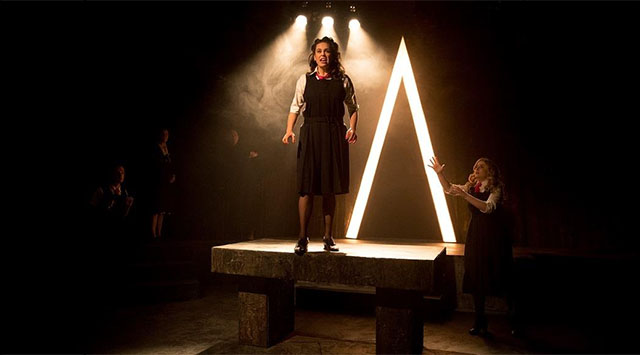
5 Questions with John Michael Burdon and Patrick Howard

John Michael Burdon

Patrick Howard: What about this play drew you to it and led to your auditioning for it?
John Michael Burdon: In 23 years of theatre, I have never had the opportunity (until now) to work on a truly contemporary written piece that really transforms the idea of what we expect queer theatre to be. The fact that it is a verbatim piece and is telling the stories of real people yet maintaining a certain theatricality to it is not something we see every day as an actor. And I truly do try to push my personal boundaries as an actor to find the truth of this play and my character in ways I have never done before so that’s exciting; to have the opportunity to look at a part of myself I’ve always tended to avoid in the past on stage. Plus I’ve always wanted an excuse to wear a leather harness on stage.

The ‘guy’ you’re playing, B, describes himself as an ‘instigator’, and that certainly comes to fruition in the show. How do you relate to playing this role?
My character B, is definitely the most sexually driven and sexually charged character, not only in the play, but also that I have ever performed. As a young man, I was very much the same and lived in the same world of sorts and B, for me, is who I think I would have become, had I not settled down with a partner and become a parent. It’s like playing an alternative future for me – a “what could have been” scenario had I stayed on the path I was on in my late teens / early twenties.

5 Guys Chillin’ is a bit deep-end in its content at times. Why do you think people should come and see this play, rather than avoid it?
Let’s be honest, this play is graphic. From the stories told to the language used, and the simulated sex scenes and drug use, it is quite hardcore to watch. There’s a sense of voyeurism that borders on intrusion from an audience point of view. But I would also say it’s an exercise in watching bravery on stage from a group of actors who are really trying to bring the truth to stage.  This play is set in London where this particular “scene” is a lot more common, however it is happening in Australia as well. It’s an exploration into the way gay men now connect with each other in a world of apps, instant connections, swipe rights, immediate gratification and easy access. I lived in a world of MSN Chat, gay phone lines like Manhunt & clubs and bars – but this play definitely shows us a new world in the gay community and how the men who live in it, still try to find any connection to other men that they can. 

You’re coming into this show right off the back of playing John in After The Dance at the New. What’s it been like juggling these two very different roles?
It’s been a strange experience, there’s been times when I have gone directly from a 5 Guys Chillin’ rehearsal in the rehearsal room upstairs at the New Theatre to preparing for an evening performance of After The Dance, a Rattigan play set in 1939. Jumping from one to the other has been a challenge. Having said that, the two plays and characters are so very far removed from each other, it’s easy to compartmentalise my “actor brain”. Which is a great thing, because the last thing I need is to jump on stage as John in After The Dance and start talking about the epic sex party in Berlin I went to.

I’m going to throw your question right back at you: what is the most embarrassing situation you’ve found yourself in in performance / rehearsal?
Let’s just say it involved a production of Hair, where I appeared naked on stage. I had eaten something bad the night before and…yeah…
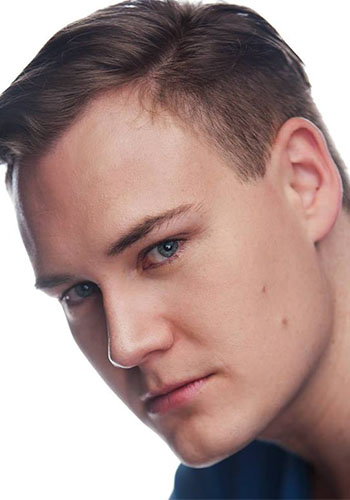
Patrick Howard

John Michael Burdon: What has been the biggest challenge in directing 5 Guys Chillin’?
Patrick Howard: Moving past my crippling lack of self confidence, actually. This is the first time I’ve directed a play on my own in quite a number of years, and having trained and worked since with a very collaborative approach to theatre, I’ve constantly been questioning my style of developing theatrical work is effective when directing a scripted piece. But a few minutes into every rehearsal I’m so at ease, it’s all working out really well and I’m learning a lot! I also knew from the start that, given that movement and choreography are some of my weaker attributes as an artist, making the sex scenes and intimate moments on stage work was going to be a challenge. But, I trusted my strongest skills, and have a great and very generous cast, and we’ve all really come together (so to speak…)

Describe 5 Guys Chillin’ in five words.
Funny, affronting, concerning, honest, human.

What is your experience in verbatim theatre?
Before I studied theatre, I’d done an Honours thesis for my music degree which involved a lot of fieldwork, interviews, transcribing and writing and I really enjoyed that. I first took an interest in verbatim theatre when we did Paul Brown’s Aftershocks and Campion Decent’s Embers in drama school, and that was where I started to see where my interests in qualitative research and theatre could meet. I took it upon myself to make it my own private major study in drama school and developed two verbatim plays about police brutality and student politics, and a surreal ‘documentary musical’ about food and medication, which was produced as part of our graduating production. I’ve worked on quite a number of verbatim and documentary works over the past few years, including Götterdämmerung with my own company, Arrive. Devise. Repeat. I love the idea of sculpting something raw with such truth to become part of some bigger truth, and then finding a way to make that exist in space and time in and interesting way that moves an audience. 5 Guys Chillin’ is tremendously successful in this sense – the characters and drama of the work are compelling through subtext, despite being a collage of interviews. It stays fascinating from beginning to end and there’s no judgement or bias of the stories told at all.

Can you see yourself taking part in one of these parties if you were invited?
To be honest, probably not. The opportunity has been there many times, and I’ve never taken it up. Again, there’s that crippling lack of self-confidence again, but this time with reference to my body. I am very good friends with people who a part of this scene, and through them feel like I have experienced it in a way (I’ve certainly experienced helping cleaning up the aftermath of one…) and while I think the idea of it is great, I have a bit of a hesitation with putting myself in situations where I’m not in control. And obviously, with some of the drugs used in this scene, there’s some substantial risks involved, which gives me another reason to pause for thought.

What is the most embarrassing situation you’ve found yourself in in performance / rehearsal?
I tend to be a bit of a risk taker when it comes to art, so don’t easily find myself embarrassed. As an actor, directors tend to give me notes like, ‘A very bold choice, but…’ and as a director, well, we’ll see…? I think, though, some of my teenage memories probably fit the bill, when I didn’t have any self-confidence and was a terrified closeted little band geek. Having to kiss a girl when I had the lead role in the musical in year nine was a big one. I wanted the ground to eat me up whenever it came up. I remember passing a note to my romantic interest via a friend assuring her I was gay and it didn’t mean anything, but that didn’t make it any easier at all. There were some corker teste-pop notes in that show too, god, and I was singing pop/rock songs and I’m just not cool enough to pull that off at all, even now.

Patrick Howard directs John Michael Burdon in 5 Guys Chillin’ by Peter Darney.
Dates: 12 – 15 Sep, 2017
Venue: New Theatre

Review: After The Dance (New Theatre)

Venue: New Theatre (Newtown NSW), Aug 9 – Sep 9, 2017
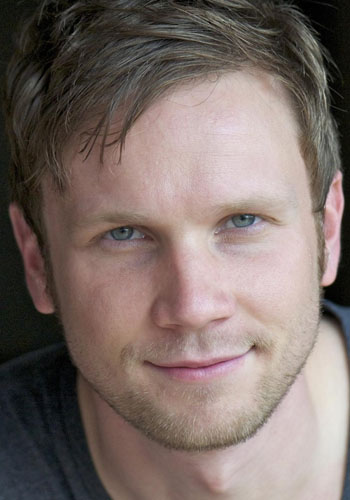

Playwright: Terence Rattigan
Director: Giles Gartrell-Mills
Cast: Tom Aldous, Callum Alexander, Lloyd Allison-Young, George Banders, John Michael Burdon, Sandra Campbell, Rowan Davie, Peter Flett, Matt Ford, Valentin Lang, Lauren Lloyd Williams, Amelia Robertson-Cuninghame, Alyssan Russell, Claudia Ware
Image © Bob Seary

Theatre review
It is England in the 1930s. David is fabulously wealthy, and dreadfully miserable, living a life with no aim and purpose. Terence Rattigan’s play is about a writer who has everything, including two women vying for his affections, but who remains obstinately unfulfilled. Time has not been kind to After The Dance, which feels sorely irrelevant, with its archaic, although honest, worldview. We no longer despise work, and we no longer tolerate the representation of women as accessories for the libido and vanity of men. We have thankfully moved beyond Rattigan’s depiction of a failed existence, as exemplified by his protagonist’s persistent disquiet.

Director Giles Gartrell-Mills shows us the emptiness of David’s days, through the inconsequential and foolish ways personalities in his household spend their time. There is a worthwhile discussion to be had about the overindulgence of alcohol that is perhaps the only thing in the show that retains some resonance, but we are never able to really empathise with those who appear onstage. When we see Helen and Joan fighting over David, we question his appeal, having seen only evidence of his shortcomings, and the narrative’s persuasiveness begins to suffer.

Actor George Banders faces the grim task of making David a likeable figure, and even though his attempts are doubtlessly confident, the battle seems to be ill-fated from the start. More impressive is Amelia Robertson-Cuninghame as Joan, the vivacious wife who, although rudimentarily written, is memorable for the performer’s conviction at delivering surprising complexity, and a refreshing sense of panache. Also noteworthy are Brodie Simpson’s costumes for the show’s female characters, each outfit beautifully fitted and thoughtfully assembled.

David connects with nothing, and finds himself in a painful abyss of solitude. Loneliness is universal, but as we discover in After The Dance, how we talk about it changes with time and space. We can invent endless concealments so that the plague of loneliness can be diminished, but finding true release from it, requires that the self must go through the most genuine of reflections, and the most brutal interrogation. David suffers from writer’s block, unable to find expression for what he knows to reside within, yet he looks only outward, hoping for respite to come from others. A large mirror sits in the drawing room where all the action takes place, but in spite of his vanity, David takes not one look into his own eyes.

www.newtheatre.org.au

5 Questions with George Banders and Amelia Robertson-Cuninghame

George Banders

Amelia Robertson-Cuninghame: How can today’s society relate to the text and its characters?
George Banders: The wonderful thing about this play is that it’s still so relevant. The themes of alcohol addiction, jealousy, betrayed, unrequited love are all highly relatable to modern audiences. The characters aren’t archetypes, they feel so real with their own little quirks, which makes them a joy to play.

Your character David has a few vices, do you have any?
Way too many to mention so publicly. I do however secretly enjoy big game hunting, I know it’s probably not PC these days but there’s nothing like the feeling of bagging a majestic 6 tonne male elephant. What a rush…

What is it like working with Giles Gartrell-Mills?
Terrible, the man’s a hack! He couldn’t direct traffic! But if he asks, tell him I’m really enjoying it. He has a wonderful sense of the world, and gives you the room and support you need to see what these characters are capable of, and how far we can push this play to make it thrilling. He dialogues with actors so well, and it’s always such a fun, energetic room to play in. Would work with him any day.

If you could be one character from After The Dance in real life, who would it be?
I’d be the doctor, George, just for that sweet sweet pay check, also I feel practising medicine in the 30’s was so much easier; “splitting pain in your side and jaundice? Have a Coca Cola!”

Describe the play in a Haiku.
Bottomless drinks served
Swinging naked from chandelier
Mind the balcony-

Amelia Robertson-Cuninghame

George Banders: What is the most rewarding project you’ve ever worked on and why?
Amelia Robertson-Cuninghame: Well this one time, I mâchéd the entire solar system out of found chewing gum wrappers just to top Melissa Fuller from 7B’s volcano. That’s not entirely, or at all, true. I don’t think I can pinpoint one project that is more fulfilling than the other. I think everything we take on, we do so because it’s the right fit for us at the time. Each time we walk away with more wisdom and knowledge then before. Hopefully.

What do you find is the most moving moment in After The Dance?
For a play that is all airs and graces, there are so many moving moments! But, without giving too much away, probably the ending. Although that may be for my own selfish reasons!

If the main characters in the show were cocktails what would they be?
David is a Side Car, a classic, but still a bit old and musty. Joan, a dirty Gin Martini, refined with just the right amount of salt. John doesn’t make it to cocktail stage, he’s slugged straight from the bottle. Helen is a Mimosa, equal parts sensible and fun. Peter is a Tom Collins, trying to play with the big boys, but still topped up with soda. And Julia is a Mint Julep, a harsh spirit almost too much to bear, cut often with saccharine.

Who was the first actor you saw that blew you away?
Joan Cusack in Addams Family Values, yaaass feisty husband slayer from the 90’s! Also, still know every word!

What song do you listen to, if you’re going into an intense scene, to pump you up?
Die Antwoord would be my go to a lot of the time, although if I’m after melancholy, probably some Jeff Buckley.

George Banders and Amelia Robertson-Cuninghame are appearing in After The Dance, by Terence Rattigan.
Dates: 9 August – 9 September, 2017
Venue: New Theatre

Review: Mauritius (New Theatre / Sure Foot Productions)

Venue: New Theatre (Newtown NSW), Jul 12 – 29, 2017


Playwright: Theresa Rebeck
Director: Richard Cornally
Cast: Brett Heath, Kitty Hopwood, Peter-William Jamieson, Emma Louise, Andy Simpson
Image by Sundstrom Images

Theatre review
Jackie finds herself in possession of some highly collectable postage stamps after her mother’s death, and goes about trying to sell them for an enormous sum of money. The process is fraught with danger and dispute, as shady figures and family members get in her way. Theresa Rebeck’s Mauritius talks about greed, and the ugly behaviour that accompanies our thirst for personal gain. It is not a work with philosophical depth, but its effective take of a classic structure, provides ample opportunity for a gripping and entertaining thriller.

The production is well-rehearsed, with actors demonstrating excellent conviction. There is good energy on the stage, but a strange and awkward lack of humour tarnishes the show. Chemistry between players is present, although their focus on drama is often misplaced, during sections of the play that seem to offer favourable circumstances for comedy. Lighting and sound could help lift atmosphere, but both are severely neglected.

Kitty Hopwood is a very intense Jackie, always looking as if she is consumed by fear. Her steadfast approach reveals a part of the character that is anxious about her situation, but her scenes have a tendency to feel monotonous as a result of that unwavering artistic choice. More motivated by laughter is Peter-William Jamieson, who thankfully brings some joviality to the role of Dennis. A memorable performance is given by Brett Heath, who plays the villain of the piece Sterling, with a sense of creativity and playfulness that delivers theatricality, to this otherwise overly stiff and serious presentation.

www.surefootproductions.com

5 Questions with Emma Louise and Andy Simpson

Emma Louise

Andy Simpson: Violence is an important part of Mauritius. It colours our characters’ motivations and experiences. Have you ever found yourself in an unexpectedly violent situation?
Emma Louise: Wow, what a question to start with!  Yes, I guess I have been witness to various violent situations.  One which immediately springs to mind was when a person I was just getting to know had just walked a friend of his down the road from my place in Darlinghurst at the time to get a cab or something.  The next thing I know I hear these awful loud guttural sounds coming from that same direction down the street. I run out to my balcony to see what’s going on, and coming up the road I see both my new friend and another huge shirtless guy circling each other, weaving in and out between parked cars and making these noises I can only describe as animalistic. It certainly wasn’t English! Both already had blood staining their faces and arms, so I knew punches had already been thrown. It honestly looked like they were going to kill each other, despite being complete strangers who had never crossed paths before. I (oh so heroically) ran into my flatmate’s room screaming for his help, and he then saves the day… going outside, placing himself in the middle of these two burly men intent on destroying each other, and calmly talking the shirtless stranger down while firmly instructing my new acquaintance to get into the house. All while I stood watching on in horror on the balcony.  Ah the random, weird, unexpected violent things that can happen at 3.30am on a Friday night in Darlo!  Happy to report that I never saw the big shirtless guy again, and am also no longer in the company of the other violent acquaintance. The lovely hero flatmate however, (another actor incidentally, who uses words instead of fists) will always be in my life.  That’s definitely the kind of company I prefer to keep!

Serena Williams was pregnant while competing at The Australian Open this year. Is it a challenge to act when you are pregnant?
Ha! A little I guess, especially as you grow bigger with each passing month – making it a harder thing to physically disguise. I will be 7 months along when this show is up, so am extra aware of my physicality… having to watch that I’m not standing like a pregnant lady, or letting the tell tale waddle slip in anywhere. Even the way you get up and down from a chair can be tricky at times. So much to monitor! But basically I’m just aiming to keep myself as rested as possible when not rehearsing/performing, as well as stretching and seeing a physio to help keep everything as limber as possible. A woman being pregnant is not a disability after all… we can do pretty much most things we would usually do – perhaps just being a bit more mindful, that’s all.

Mauritius is an intense play. Full of emotion and pain. Do you prefer this sort of work or are you a comedy gal?
Ooooh, I really like both! I’ve been super lucky I think to have had the opportunity to work across many genres. I learnt back at drama school that I had the ability to effectively tap into painful emotions – helping me dig into roles like Madame de Tourvel  (Les Liaisons Dangereuses), Paulina (The Winter’s Tale) or Olive (Summer Of The Seventeenth Doll).  But I’ve also discovered through training and practise that I have a bit of a knack for making people laugh as well – enjoying roles like Edith (The Women), Daria (We’ll Always Have Wagga) or Mum (Vernon God Little). I would hate to have to pick just one or the other to do for the rest of my life, and here’s hoping I never have to!

Have you acted in other cities around Australia, or even overseas? How does the Sydney theatre scene compare?
I actually started out acting in Canberra – back before I went to Uni, and we used to joke that the only way anyone from Canberra would get to set foot on the Canberra Theatre stage was to leave Canberra and be employed by an interstate company. There really wasn’t much around at that time, however from what I’ve read now it seems that the Canberra Theatre scene has grown somewhat, and even has an acting school of it’s own which is great. I then went to study in QLD, so have performed in both Toowoomba and Brisbane, though it has been years since being there so I can’t really give it an accurate comparison to the Sydney scene I’m afraid. Other cities I’ve performed in include Melbourne and Adelaide – which is so great to perform in at Festival time. There is such a buzz and sense of artist camaraderie at the Adelaide Fringe which I wish could bottle and bring to Sydney to have all year round!  

What do you prefer, rehearsal or performance?
Ooooh, that’s another hard one. Ultimately performance if I had to pick one, as by then I’ve done all of the work and can enjoy just giving myself over to the character each night and watching how their story affects different audiences. But playing with other actors in a rehearsal room is pure joy also! I love meeting new actors whom I’ve not worked with. I love hearing words off the page for the first time. I love making ridiculous mistakes throughout the rehearsal process all in the pursuit of truth and telling a good story.  I love being so frustrated that a scene is not working, and having a breakthrough moment where it all becomes clear. God I probably sound like a bit of a wanker, but I really do love what we do!

Andy Simpson

Emma Louise: What is Mauritius all about, and why did this play appeal to you?
At a basic level Mauritius is about stamps. Extraordinarily valuable stamps. Although saying that is a bit like saying Indiana Jones is about archaeology or Animal Farm is about farm animals. The play is about five desperate people who will go to extreme lengths to get what they want. They steal, lie, fight and intimidate, all for “two tiny slips of paper”. Mauritius has wonderful characters and pacy, muscular dialogue. I love American drama like this. It is evocative of the plays of David Mamet and Martin Scorcese’s New York movies. Truly exciting work.

Are you, or have you ever been a stamp collector? Or avid collector of anything for that matter?
I collected stamps as a child although I had completely forgotten about it until I was cast in the play. It was almost like a suppressed memory that popped back into my head. I’ve since found that my parents still have my collection in their home, safe and sound and exactly as I left it. I’m looking forward to reconnecting with it when I next visit them next year.

If you were writing a personal ad for your character (Philip), how would it read?
Companion wanted for lost man. Must love embarrassing silences and glib comebacks. Passion for retrospection and bitter recrimination a definite plus but not a deal breaker if you’re willing to put out. A willingness to excuse long, unexplained absences and poor timekeeping would be appreciated. 

How did you get this role?
Sure Foot put on auditions. There was a small problem with getting me the audition material but two hours is enough notice I reckon. Two hours to get my twins dressed, my daughter and son to Saturday morning sport (different sports of course) grab a coffee (vital), drive to Newtown, find parking, find the theatre, read the three scenes, shake hands and smile. I auditioned. I was the least bad option. Typical audition really.

What is your favourite thing to do when you’re not busy playing with us in a rehearsal room?
Softball. Playing softball. Practising playing softball. Talking about softball. And coffee.

Catch Emma Louise and Andy Simpson in Mauritius, by Theresa Rebeck.
Dates: 12 – 29 July, 2017
Venue: New Theatre

Review: The Clean House (New Theatre)

Venue: New Theatre (Newtown NSW), Jun 6 – Jul 8, 2017
Playwright: Sarah Ruhl
Director: Rosane McNamara
Cast: James Bean, Colleen Cook, Mary-Anne Halpin, Alice Livingstone, Keila Terencio
Image © Bob Seary

Theatre review
In Sarah Ruhl’s The Clean House, sisters Lane and Virginia are exemplary women who spend their days obsessing over having to do the right thing. One pursues a fabulous career in medicine, and the other indulges in an irresistible urge to clean houses. Both live in accordance with values our societies deem admirable and righteous, but neither are rewarded with enduring happiness. In fact, the only incidents of true elation in the play, are accompanied with certain death.

The perpetual state of tension between order and chaos, is a succinct way of describing all of human existence. In our desire to put things into structures of subjective logic, we come into conflict with nature, or a conception of nature, that is separate and external to the supreme beings we think ourselves to be. It seems we are the only creations of Mother Earth that insist on agendas that run contrary to the will of all else that makes up the universe.

Ruhl’s magical realism has a feeling of unassuming banality, delivered through its unmitigated look at our relationship with domesticity, yet its imaginative explorations into the often overlooked quirks of simply being, turn the everyday into something endlessly fascinating. The greatest purpose of art, is that it can re-contextualise humanity, so that the unseen is made visible, in order that we may gain new knowledge of the infinitely mysterious self. The Clean House places us firmly inside normalcy, and then reveals what lies beyond its superficial veneers.

The writing is gloriously funny, and under Rosane McNamara’s direction, Ruhl’s humour, along with an undeniable poignancy, are given full illumination. Rich with meaning and amusement, the play is captivating, thoroughly inquisitorial, and McNamara’s subtle approach with its messaging, keeps us keenly intrigued.

The actors tell the story with excellent clarity and conviction, but performance rhythms require finessing for their presentation to communicate at a tighter pace. The impressive Dr Lane is played by Mary-Anne Halpin, focused and decisive with motivations, but slightly lacking in complexity with the interpretations brought to her character. Alice Livingstone is delightful as the decidedly sad Virginia, outstandingly acerbic, and scintillating with irony. The cleaning lady, and aspiring comedian, Matilde is a vivacious presence in Keila Terencio, who delivers impressive theatrical energy, and a powerful sense of purity essential to the work’s ideology.

The personalities in The Clean House are shown for their flaws, but we know that these people cannot help themselves. We can try, and we should try, to be better people, but there is nothing that can turn us invincible. Feelings will be hurt, mistakes will be made, no matter how much we dream up safeguards and assurances. We make it a habit to act as though we are the sole determinants of fate, but there is no certainty to be found in how life wishes to pan itself out. There is however, tremendous satisfaction to be had in the experience of kindness, as we see at the show’s end, and the way acts of compassion are always able to defy regret, is one comfort we can hold on to.

www.newtheatre.org.au

5 Questions with Rosane McNamara and Keila Terencio

Rosane McNamara

Keila Terencio: Which is your favourite joke?
Rosane McNamara: As noted in the play, the best jokes are dirty ones! My favourite joke is so dirty that I couldn’t possibly write it here but, if you run into me at the theatre, I’m very happy to tell it to you 😊

Which English word do you least like saying? And why?
“Can’t”. I’ve always been a “glass half full” person and, even in the saddest of times, I like to focus on what can be done. It sounds a bit twee but life really is about possibilities.

Which was the first theatre production you were involved in?
Can I remember that far back? My first role was in primary school. I was the Queen in Blackbird Pie and I had one line: “Bring him his majesty’s dinner”. I got the role because I had the loudest voice. No surprises there! My first professional role was in Cinderella – as one of the ugly step sisters. No comments thank you!

What sort of person is going to love The Clean House?
People who can laugh in the face of the absurdity and messiness of life. Hopefully that’s all of us. Life, love and death are rarely as “clean” as we’d like them to be so learn to love the mess.

What’s your favourite line in this Sarah Ruhl text?
“This is how I imagine my parents”. This line leads us into the play’s world of magic realism in which Matilde continues her relationship with her late parents. Theatre is a place for the imagination to roam and I love all the “other worldly” aspects of The Clean House e.g when it snows in the living room or when apples fall from the sky.

Keila Terencio

Rosane McNamara: What is the biggest challenge for you in this play?
Keila Terencio: There are so many challenges in this play for me, but one of them is what has given me trouble for the last few years: the language! Even after 5 years learning English, there is still a struggle and effort to pronounce many words. Even though I am playing a character that has an accent (thank god! ), in the show I can’t rely on my “hands talking” as I do in the day-by-day conversations. So yes, English is (still) the challenge.

What is your favourite moment in the play?
Yesterday my favourite moment was the “telenovela” scene. The day before it was the part that Maltide and Virginia talks about underwear. Last week my favourite was the “perfect joke’ and “apples” part. Every time I leave the rehearsal room, I have a new favourite moment, and as we explore the play further I love it more and more!

Your character, Matilde, is Brazilian and so are you. Are there other similarities between you and her?
Yes many, but apart from the language, these similarities are not related to our nationality. Matilde is a young lady with big dreams and a positive attitude to life, I am connected to her in this way. However, I believe, she could be from anywhere in the world. I am sure every country has their own Matildes.

You have done a lot of aerial and acrobatic dancing. Is this still part of your work or are you now more interested in acting?
For me, both acting and aerial dance are part of the performing arts mix in my life. I train aerials in an exploration of different ways to tell stories, and acting is an essential part of that.

Matilde makes up jokes. What type of jokes do you like?
My family is from the country in Brazil, so I grew up listening to jokes of country people, most of them involves animals, accents or just making fun of the way people on the farms live. I love these kinds of jokes because they are close to me, they are connected to people that I know. Back home we love making fun of each other, we always give funny nicknames to our friends and we love making people embarrassed in front of others – I know it sounds terrible, but believe me, in the cultural context it is quite funny, we are very easy-going people haha! Just to think about it makes me start laughing!

Rosane McNamara is directing Keila Terencio in The Clean House by Sarah Ruhl.
Dates: 6 June – 8 July, 2017
Venue: New Theatre

Review: The Chapel Perilous (New Theatre)

Venue: New Theatre (Newtown NSW), Apr 25 – May 27, 2017
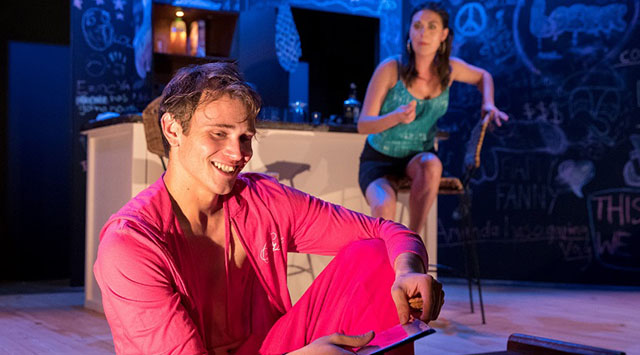
Playwright: Dorothy Hewett
Director: Carissa Licciardello
Cast: Courtney Bell, Alison Chambers, Julia Christensen, Meg Clarke, Jasper Garner-Gore, Brett Heath, Madelaine Osborn, Tom Matthews, James Wright
Image © Bob Seary

Theatre review
Defiant by nature, Sally faces a real challenge, having to live in the conservative times of 1930s Australia. In Dorothy Hewett’s The Chapel Perilous, we observe a young woman trying to be her own person, not hurting a soul in the process, but who constantly suffers injustice and oppression from a society that demands her gendered subjugation. Sally is a symbol of feminism, although she seems to be unfamiliar with the concept herself, unable to comprehend the futility of her insatiable need to make herself an object of desire to men who offer her little. She is not a hero, but she is like many of us, when we find ourselves motivated by pure desire, unafraid to want.

It is a dynamic production that Carissa Licciardello directs, with adventurous and vivid interpretations of scenes coinciding effectively with clever use of space. It is noteworthy that Kyle Jonsson’s set and Martin Kinnane’s lights are beautifully rendered, for a show that looks remarkably polished. There are moments however, where the politics of the piece becomes muddy, probably due to a conflict in ideologies between personnel and text, and the delivery of meanings end up less poignant than imagined.

Julia Christensen is a very exuberant Sally. The actor is extremely animated with her portrayal of the central role, bringing to the stage a sense of boundless energy, but that continuous vigour can turn alienating. Like the character she plays, Christensen has a hard time endearing herself to everyone in her presence. The charming duo of Alison Chambers and Brett Heath play figures of authority, with excellent nuance and flair. Both give commanding performances in what are admittedly less complex parts, leaving strong impressions in spite of that simplicity.

Sally has no compatriots in her struggle, so the chances of her emerging victorious are close to none. All of society objects to her behaviour, and when a person realises that she is one against the world, hope can only give way to hopelessness. The sadness in The Chapel Perilous however, belongs to the past. What we have today are radically improved circumstances. Feminists now join in a movement that gains momentum everyday, and although we feel the pain of our wronged protagonist (for we have experienced similar transgressions), we know that progress is taking place. Those whose resistance had counted little, are to be mourned, and those who continue to blaze our trails, must be celebrated.

www.newtheatre.org.au

Review: Consensual (New Theatre)

Venue: New Theatre (Newtown NSW), Mar 14 – Apr 15, 2017
Playwright: Evan Placey
Director: Johann Walraven
Cast: Callum Alexander, Michael Brindley, Claire Crighton, Rhys Johnson, Eloise Martin-Jones, Eliza Nicholls, Eamon O’Flynn, Celeste Reardon, Lauren Richardson, Natasha Rose, Anton Smilek, Nicole Toum,
Benjamin Vickers, Paul Whiddon, Emma Wright
Image © Bob Seary

Theatre review
Freddie was a 15 year-old schoolboy when a sexual tryst occurred between himself and his teacher, Diane. Seven years later, a confrontation takes place, with Freddie accusing Diane of rape. In Consensual, playwright Evan Placey poses a challenge to our ethics, not only in terms of what we consider to be sexual assault and what constitutes consent, but also how, as individuals and as society, we determine what is acceptable and what is abhorrent. The play is as much about where to draw the line, as it is about how we find consensus in the way that line should be drawn.

Placey’s gripping drama is often outrageous, but balance is offered by ethical and intellectual investigations that are as considered as they are controversial. Urging us to respond on levels that are both emotional and logical, the play leads us to experience states of struggle and confusion, while we attempt to negotiate right from wrong in all the grey areas of what we see on stage, and in those of our own real world experiences. Characters in Consensual are believable and quite frighteningly, we relate to all of them. Even when we wish to castigate certain behaviour, we understand the fallibility on display, and realise how easy it is to make those same mistakes.

Freddie is played by Paul Whiddon, perfectly cast as the male Lolita, vulnerable yet seductive, manipulative yet naive. We see a man domineering with his sexuality, as well as a lost boy not knowing what he is getting himself into. Whiddon brings a level of authenticity to the show that is quite arresting, allowing us to observe clearly, all the conflicting nuances that make his story so provocative.

Lauren Richardson takes on the highly complex role of Diane, portraying concurrent but contradictory layers of truth that has the audience squirming in nervousness. Some of her motivations could be played with greater conviction, so that the climactic moment can ring truer, but it is an accomplished performance that reveals the disconcerting depths of Diane’s story.

A strong ensemble of extraordinarily engaging young actors make up the high school classroom, typically rambunctious but surprisingly (and unnervingly) grown up in their exchanges about sex. Particularly impressive is Callum Alexander whose excellent focus and commitment, makes the supporting part of the very wise Nathan, especially memorable.

Production design is simple but effective. Renee Halse’s set and Liam O’Keefe’s lights are polished, efficient and unobtrusive, while music composer Nicky D’Silva’s exciting electronica in scene transitions, brings great vigour to the stage. Director Johann Walraven’s exhibits a valuable talent in making Consensual both intelligent and entertaining. More detailed work in dramaturgy would give greater finesse, but the show is nonetheless engrossing.

A child wants ice cream morning, noon and night. No amount of explanation could make the consequences more real than the yearning they experience. Likewise with teenagers and sex. Adults must protect the young, even when they appear headstrong with what they wish to explore. Sex and relationships are complicated, and we will continue to make mistakes no matter how grown up we feel, but as long as the more experienced can keep a watchful eye, the minimisation of harm must always be a priority.

www.newtheatre.org.au

5 Questions with Lauren Richardson and Paul Whiddon

Lauren Richardson

Paul Whiddon: Which pop star would you name your kid after?
Lauren Richardson: If it was a girl, Beyoncé. If it was a boy…Beyoncé.

What challenges did you have to face playing Diane?
Every day in the rehearsal room was a challenge, the role is quite confronting and I had to step outside of my comfort zone in terms of what I was (often quite literally) willing to bare. But I’ve learnt that that can be quite liberating.

What would you have done in Diane’s position as a 22 year old?
I don’t want to give too much away, so I’ll just say I wouldn’t have opened the door.

Who would you go younger for?
I tend to prefer older men 😉 haha

Have you ever considered becoming a teacher?
I come from a family of teachers, my best friend is a teacher, and I’m a passionate advocate for public education. But there’s no way I could do it!!! Nothing but respect and admiration for teaches who work tirelessly and often without due thanks.

Paul Whiddon

Lauren Richardson: Pop star you’d name your kid after?
Paul Whiddon: Of it was a girl Ella, after Ella Fitzgerald. If it was a boy Benjamin, after Macklemore.

Did you ever have a crush on a teacher?
Yes. My Dance teacher. I actually nearly got her in trouble after I sent her a Valentine’s Day card as a joke.

Hardest part about playing Freddie?
Not to you use too much of my own experience. There are many similarities between how Freddie is and how I am. The hardest part was taking on the differences and separating Freddie from myself.

Geek or jock in high school?
I wasn’t really either. I was in second top classes, was pretty athletic all round, but really, I was a shit. The ‘group’ I suppose to could put me in was the smokers. I wagged, smoked cigarettes and weed through school. I wish I’d done more, but I was one of those kids you’d barely see except in school plays.

What do you like about the play?
I like that it isn’t too subjective to a particular character’s point of view. But rather sparks debate with with each audience member relating to different characters

Lauren Richardson and Paul Whiddon can be seen in Consensual by Evan Placey.
Dates: 14 Mar – 15 Apr, 2017
Venue: New Theatre