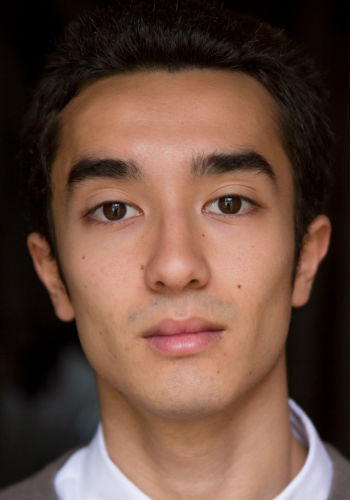
5 Questions with Jeremi Campese and Meg Clarke

Jeremi Campese

Meg Clarke: If you could be any animal what would it be and why?
Jeremi Campese: My dog, Bobbie (genuinely his name). I guess domestic dogs in general; who wouldn’t? Everything’s covered: food, water, food, love, bed, cuddles, exercise and cuddles.

What would you like the audience to take away and learn from Yen?
Without insisting that the audience feel a certain way, it’d be great if they feel conflicted, particularly about the boys. They’re endearing in so many ways, but are the exact opposite in others; so I hope people will find themselves wanting to appreciate all their nuances. How our society raises boys is at the heart of the play, and I’d really like audiences to see that the way we meet them isn’t just on account of their choices, but is far more comprehensive than that. It’s a result of broader social perceptions of sex, women, and violence that they’ve internalised so quickly.

As a man do you feel any differently about men in society after this play? And what have you learnt about your own masculinity?
Certainly boys. In playing someone like Bobbie and researching boys in these contexts, you see how malleable and easily influenced they are by their circumstances. With the wrong role models and the wrong exposure, awful things happen. For me, I’m only 20. I’m still developing, learning and growing. So much of this play (apart from being an incredible piece of theatre) has been both cautionary tale and one of the most profound exercises in empathy.

What is your favourite sound and most hated noise?
Favourite sound is probably Cynthia Erivo singing. That woman’s vocal chords were crafted by angels. But my most hated noise is definitely my alarm clock… it is cruel; full of sound and fury.

What’s your favourite line in Yen?
So many to choose from! Anna is so good at bringing lines back throughout the show in different contexts. The one I think she does best is, “Family’s important, don’t you think?”
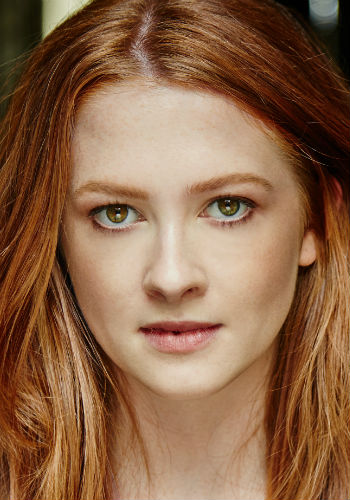
Meg Clarke

Jeremi Campese: What’s your biggest guilty pleasure?
Meg Clarke: It’s very hard to think of the biggest because I feel like I have a lot. Like any well adjusted 20 something year old, I’ve wasted many hours eating sloppy food in my bed and re-watching Gossip Girl and The O.C. probably about 16 times now (and that includes season 4 after Marissa dies… embarrassing but true). Sometimes I truly believe that the Black Eyed Peas are the most underrated musical phenomenon of all time and I really get into watching hours of YouTube footage of people falling over and injuring themselves in bike accidents… that last one really makes me sound sinister.

What was your reaction when you first read Yen?
It was a bit of an emotional roller coaster to be honest. I laughed my way through the first half, I cried somewhere in the middle and by the end felt incredibly ill. I also felt a very overwhelming desire to play the character of Hench, but now I can’t imagine anyone but the beautiful Ryan Hodson in that role. Halfway through the first page I knew I wanted to be a part of the production. I think it’s such an important piece of writing to be showing in the current climate and the content hits really close to home for me. I thought ‘thank god someone wrote a play about this!’ But I don’t want to give too much away! To be honest, the only apprehension I had on my first read was “how on earth do you do a Welsh accent?!” 

What do you love most about Anna Jordan’s writing?
Anna’s writing is so incredibly nuanced and delicate. It’s hyper realistic. I love how honest it is, no frills! Which makes it so much easier as an actor because every time you’re in doubt about your intention or how your character is feeling, the answers are all right there in the script. I’m also impressed by how well she can write completely from the inner truth of four very different people. 

Who is Jenny in 3 words?
Number 1: Empath (most empathetic person I know) 
Number 2: Fierce (I want to say fearless, but nobody really is) 
Number 3: Un-prejudiced 

What’s your favourite smell?
Jeremi’s mums cooking, haha. But also Basil, basil is ultimate smell joy. If it was socially acceptable to walk around with basil shoved up your nose, I’d be the face of that movement. In fact when Yen closes… 

Jeremi Campese and Meg Clarke can be seen in Yen by Anna Jordan.
Dates: 27 Sep – 13 Oct, 2018
Venue: Kings Cross Theatre
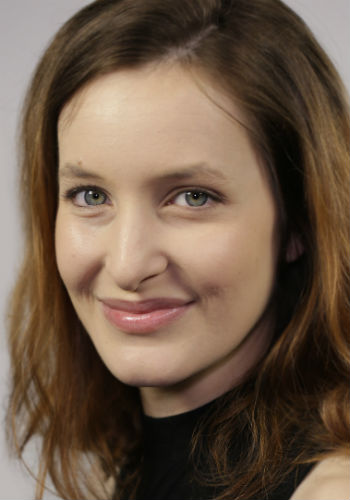
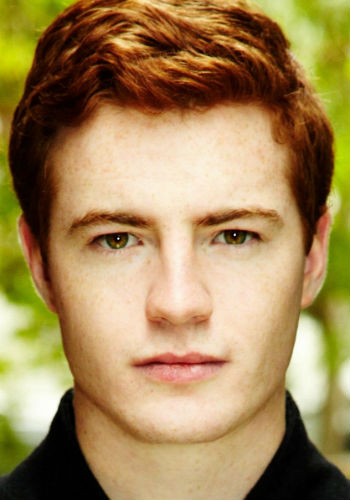
5 Questions with Lucy Clements and Brandon McClelland

Lucy Clements

Lucy Clements

Brandon McClelland: As a writer, which piece of literature or drama do you most wish could have had your name in place of the author’s? Conversely, which are you most glad your name is absent from?
Lucy Clements: To have my name on: Hamilton, Wicked or My Fair Lady. I’m such a fan girl for the great musicals. I’d get writing on my own, but my ridiculous lack of music knowledge and taste makes me nervous to try… but hey, why make excuses, I should get writing! And absent from… I’ll go Mao’s Little Red Book. Pretty glad my name’s not on that.

If you could travel in time, but only in one direction and with no possibility of return, when would you travel to and why?
I’d definitely go forward, I think the unknown is so much more exciting than all the stuff we already know about from the past. But probably only one century max… as too much more and I’ll probably find myself in a global warming destroyed world and be consumed by man eating plants that have taken over the planet. And only if I could take you with me!

Fracture is a piece that has gone through extensive development, transformation and is a completely different iteration than its original Perth production. Since the first draft of Fracture to now, what has been the most significant change in your own life?
Meeting you of course! Because of our relationship I have moved out from my family home in Perth and am now living with you in the midst of the vibrant art scene of Sydney, I’m debuting my first work with you as my lead actor and co-producer… and I will soon be following to you to New York on your Broadway tour of STC’s The Present! If someone had told me that all of this was going to happen three years ago I never would have believed them.

Do you believe a playwright’s voice should be neutral (non-partisanal, apolitical, objective) or should they have a singular opinion that they back unreservedly? In relation to this, which of these do you think dominates the Australian theatrical landscape?
I don’t believe there is a “right” or “wrong”. There are many successful opinionated and neutral-voiced plays. My personal taste goes towards a voice that gives you both perspectives and lets you decide… so, a neutral voice. I recently read Night of January 16th by Ayn Rand. Although Rand is quite well known for her opinionated works, this particular play, set in a courtroom where the audience becomes the jury, plays on our own personal biases and how this can manipulate our judgment. The play does nothing to prove who is “good” or “bad”, but presents both sides of the story and challenges audiences to cast from this our own opinions. I loved this play. I find it much more challenging to have to find my own opinion with all the facts presented to me, rather than having one side of the story drummed into me as opinionated pieces can do. I believe Fracture has a neutral voice. It simply tells a story, and lets audiences decide what is good and what is truth within it. I think we’ve got both sides pretty covered in Australia, particularly with 44% of our programing being international scripts (which is also a very saddening statistic!).

You originally planned to be a nurse, so do you believe your earlier career aspirations have had an effect on who you are as a writer/artist?
Definitely! I’ve always been quite an empathetic person – hence my drive to become a nurse. I think all the characters I write are created from the same drive. In Fracture, my leading character (who you are playing) has abandoned his life partner without a goodbye or word of warning. But why do people make these choices? What’s going on inside them that from the outside can make them seem cowardly or cruel? Was it even in their control? What perspective can I tell this story from that could make audience’s understand, to question other people’s circumstances one more time before casting judgement? These are all the questions that Fracture interrogates – which are the questions that drive all of my plays.

Brandon McClelland

Brandon McClelland

Lucy Clements: Here’s a million bucks to put on a production in Sydney next year. What play, which venue, and do you have anyone in mind to direct and/or co-staring beside you?
Brandon McClelland: Well, a million dollars is a ridiculous amount of money. I’d most likely split it up and try to program a full season of independent shows from a range of different young writers and directors. Although if, like Highlander, there can be only one, then I would love to put that money towards a production of The Weir by Connor McPherson in a smaller theatre. I don’t know who’d direct it. Maybe I’d hold auditions just to turn the tables.

What’s the best and worst thing about dating your director?
Best thing is that we already have a shorthand in regards to communication and we can talk about the play pretty much round the clock. The worst thing is that there’s no excuses when it comes to doing my ‘homework’ as it were. You know everything about me. Example: I didn’t read the new addition to the scene because I was watching Mythbusters again.

What excites you most about realising Fracture?
It’s a show I’ve followed since its premiere in Perth. Being involved in the development and progression of the play over the past year it’s clear that it is a completely different beast and I think it’s an exciting project. The conversation it enables regarding mental health is particularly poignant and personally relevant. I’m fascinated to discover how audiences will react.

This is your second time taking on the dual role of producer and performer. What draws you to this combination?
I’m a sucker for punishment. I don’t know really. It’s a tough ask to take on both roles and I think you have to be a very special kind of mind to successfully operate and fulfil your duties equally. I don’t know how I’d do it without you. I really don’t.

You’re elected as Prime Minister of Australia. What’s your first call of action?
Treaty with the Indigenous, First Peoples with full recognition in the constitution. No hesitation.

Lucy Clements and Brandon McClelland are co-founders of New Ghosts Theatre Company, presenting Fracture in Sydney after a successful season in Perth last year.
Dates: 2 – 12 August, 2016
Venue: Old Fitz Theatre