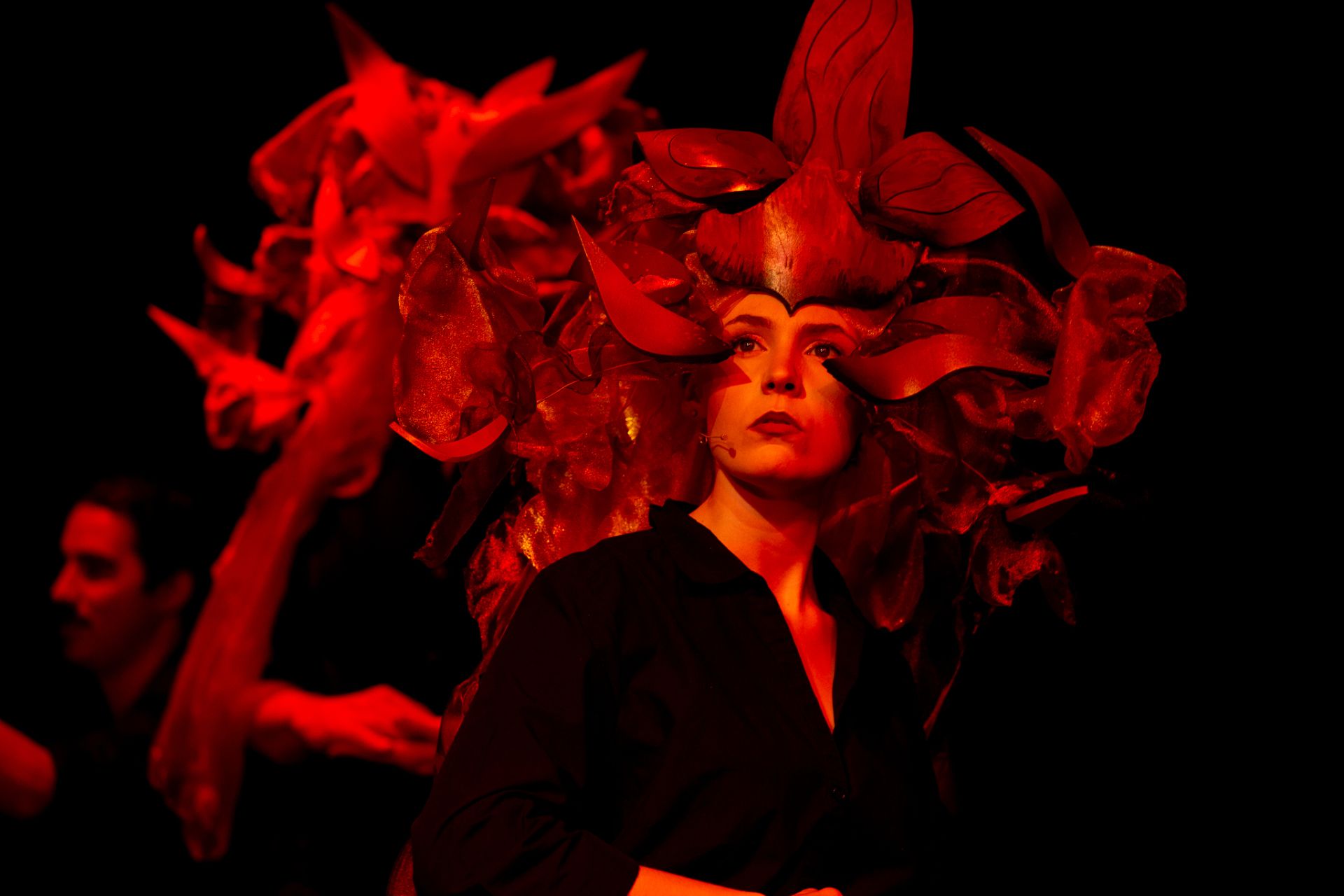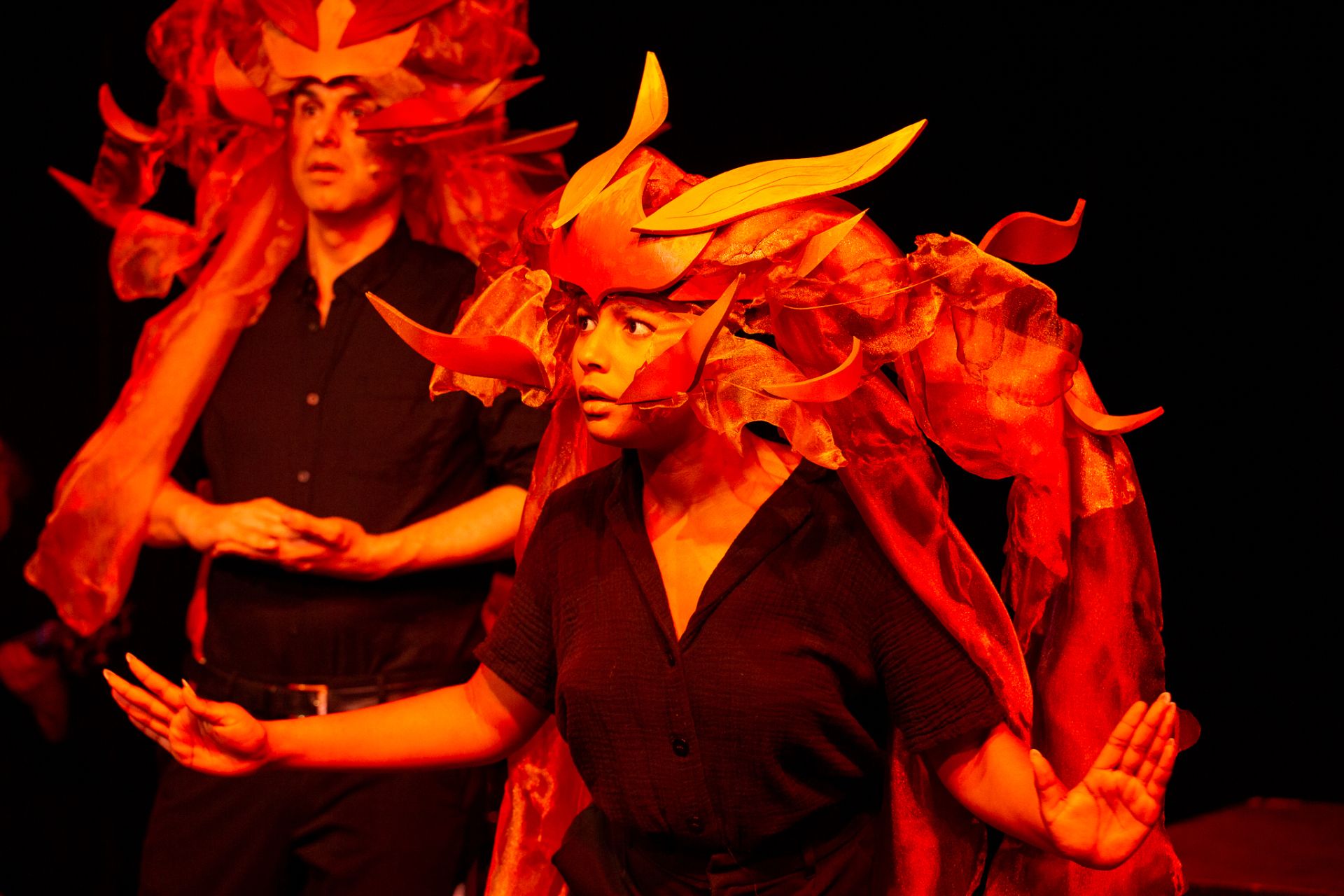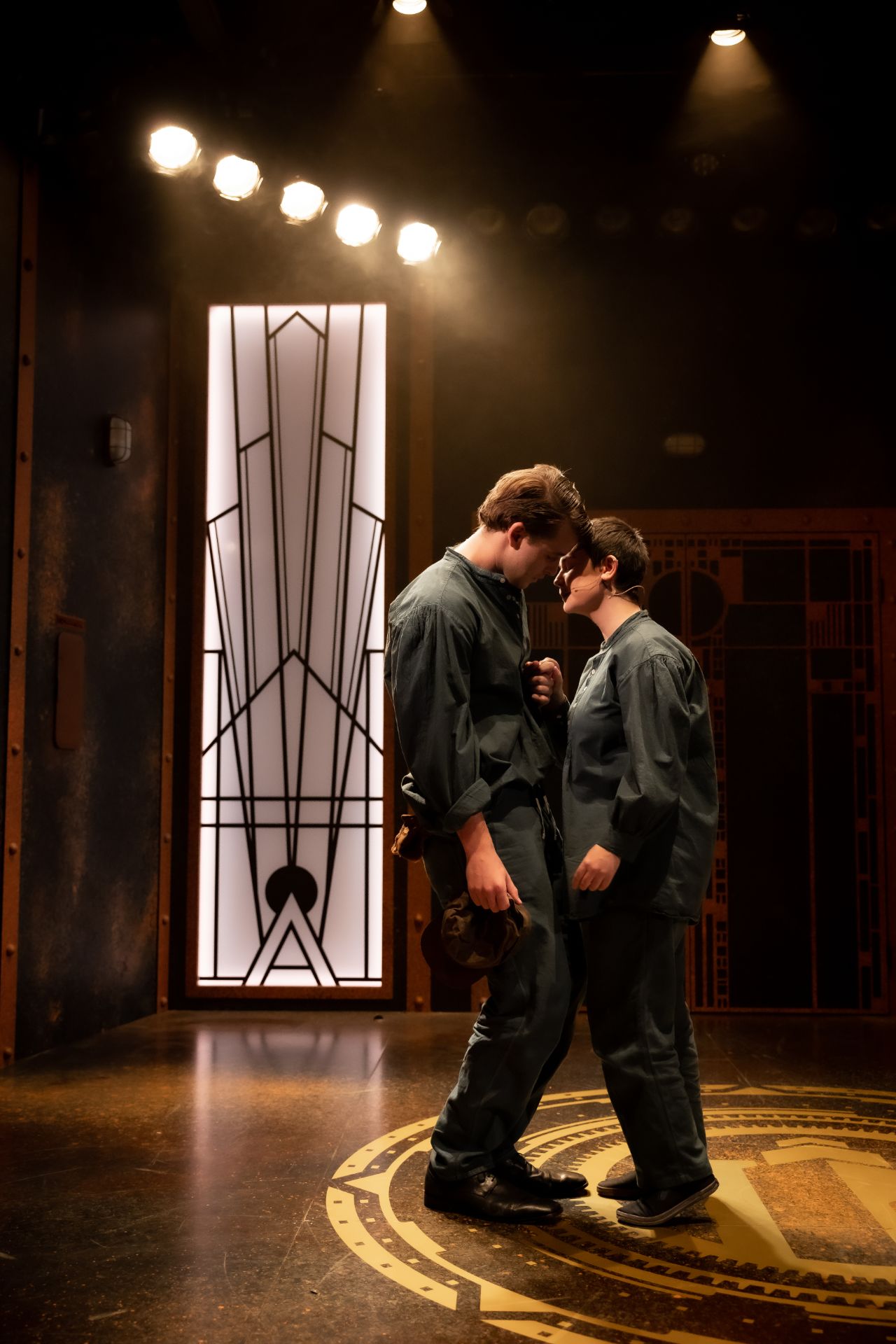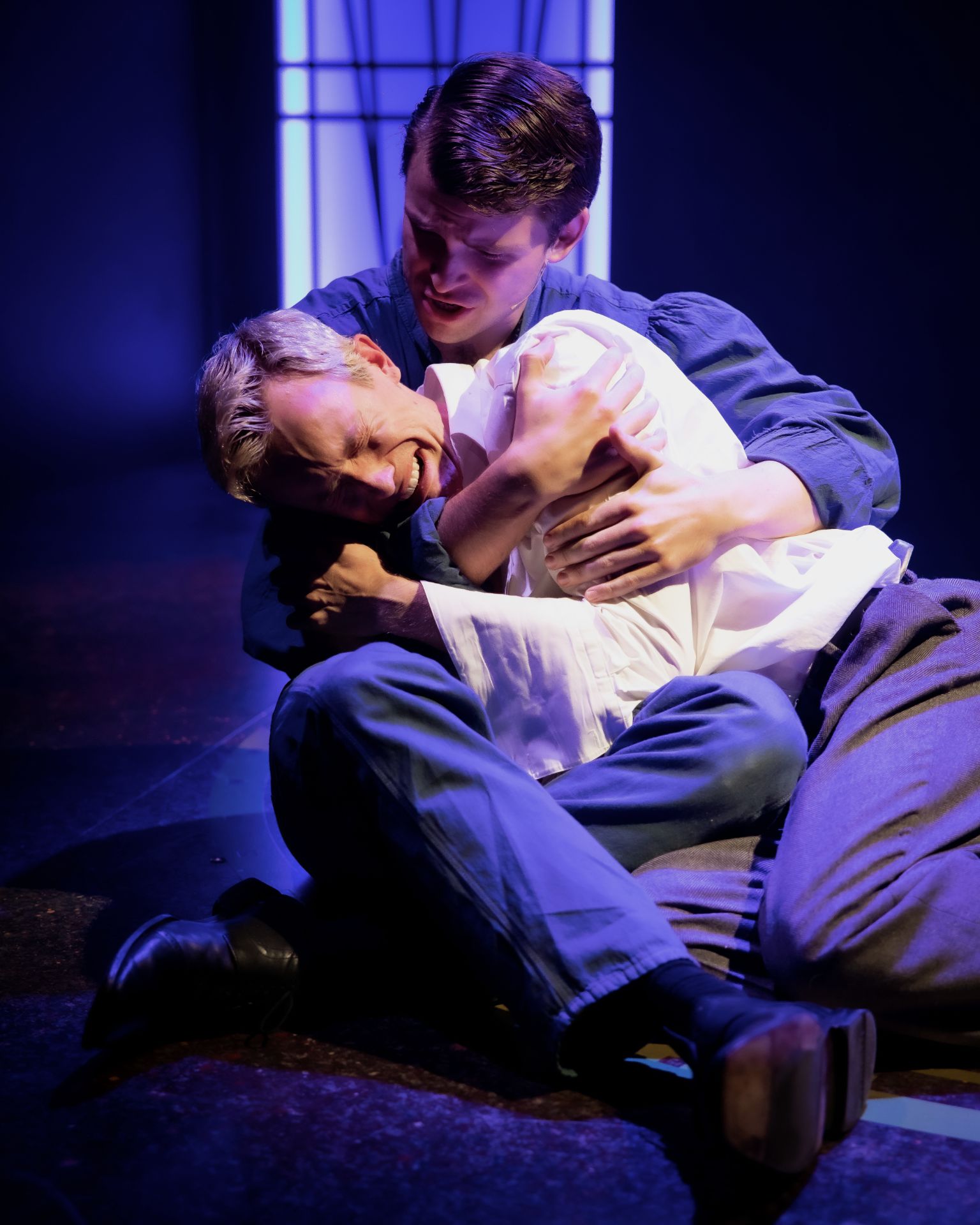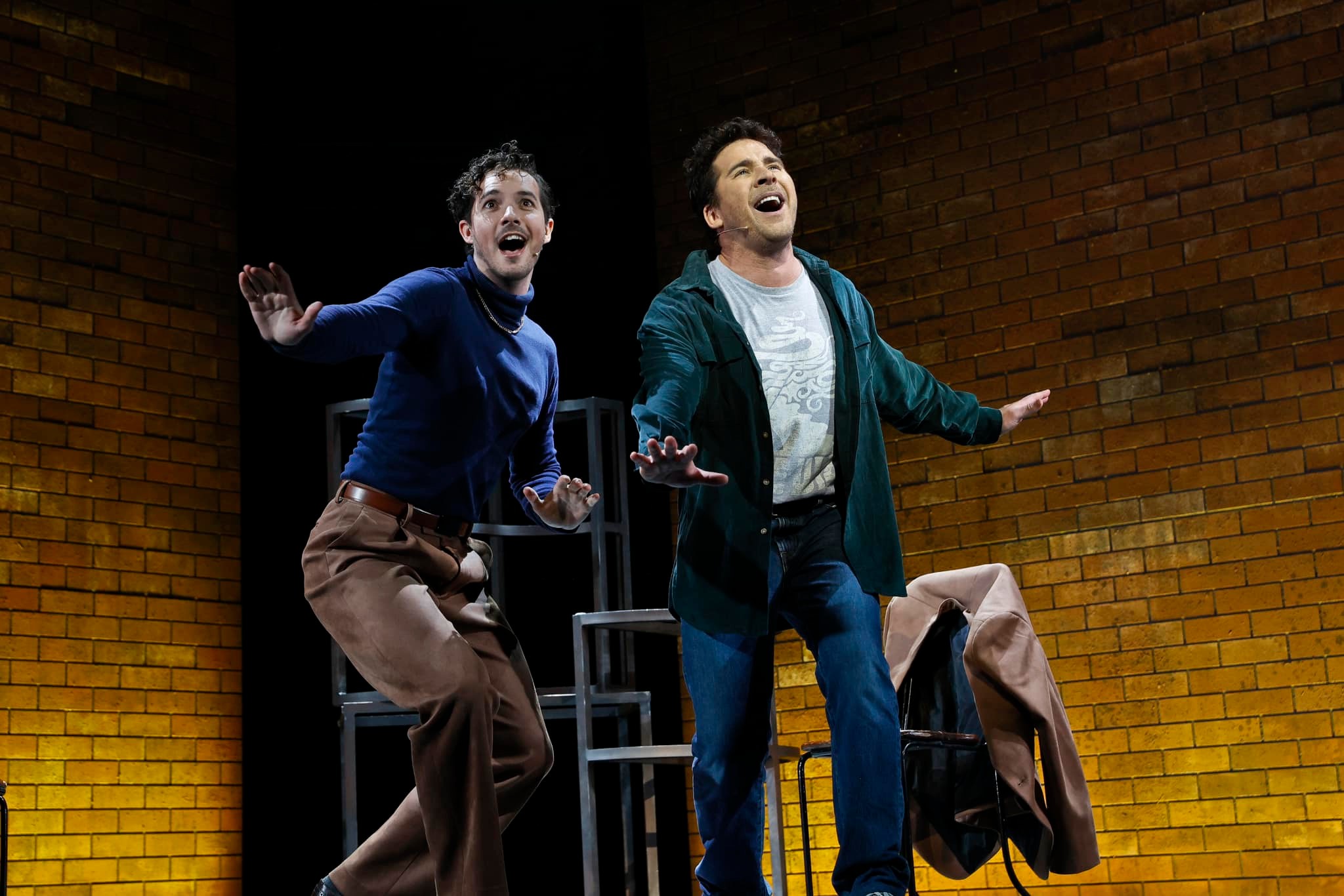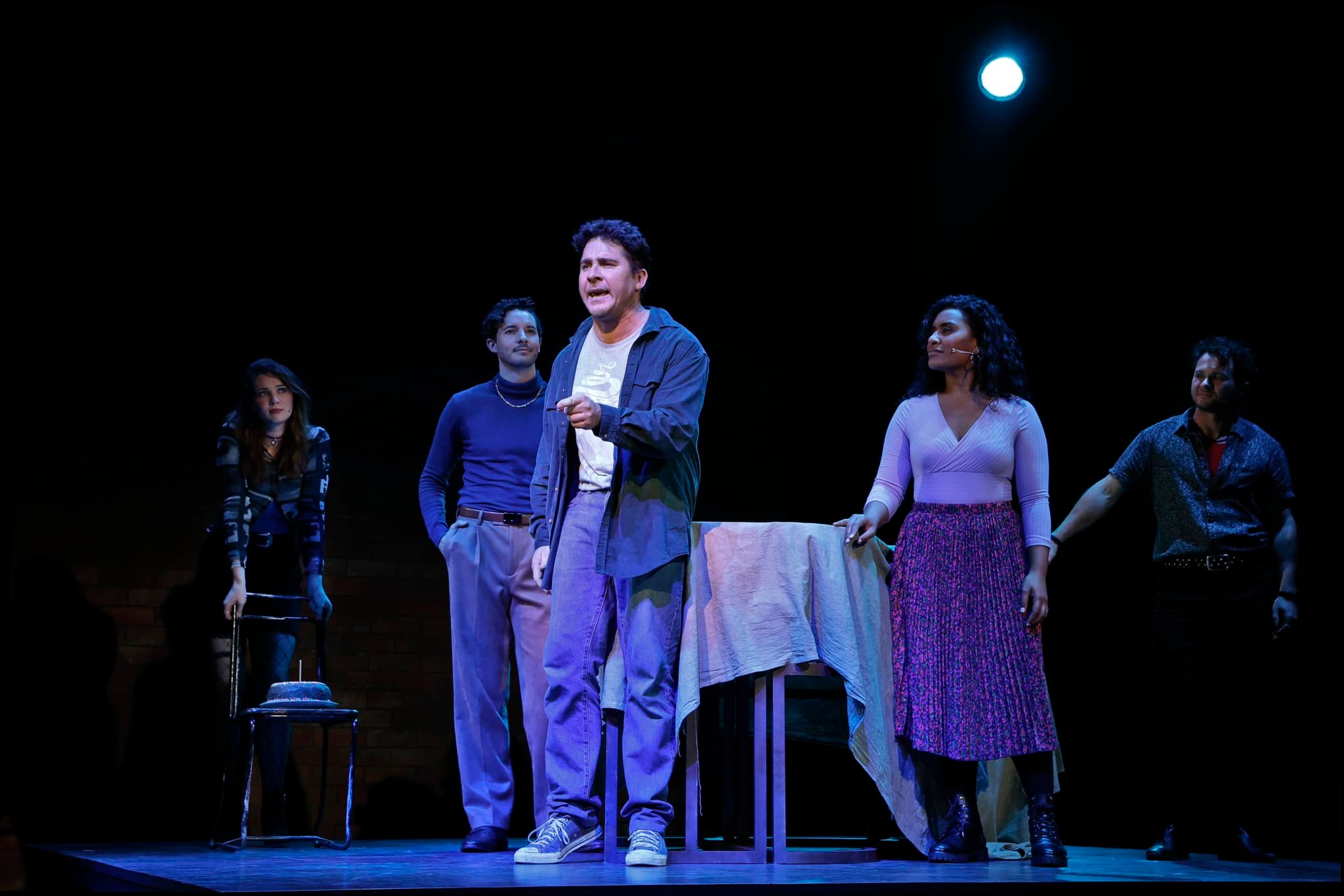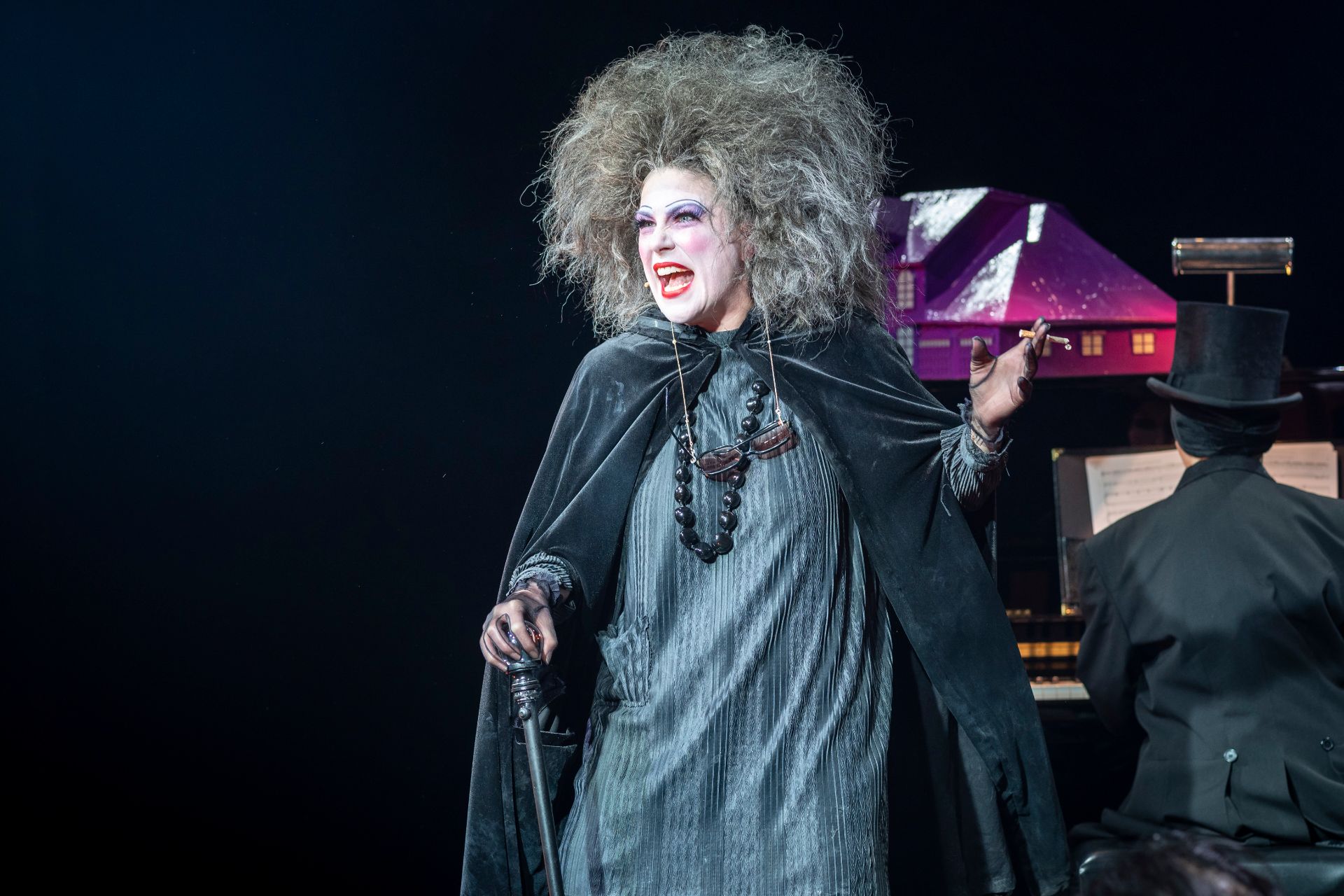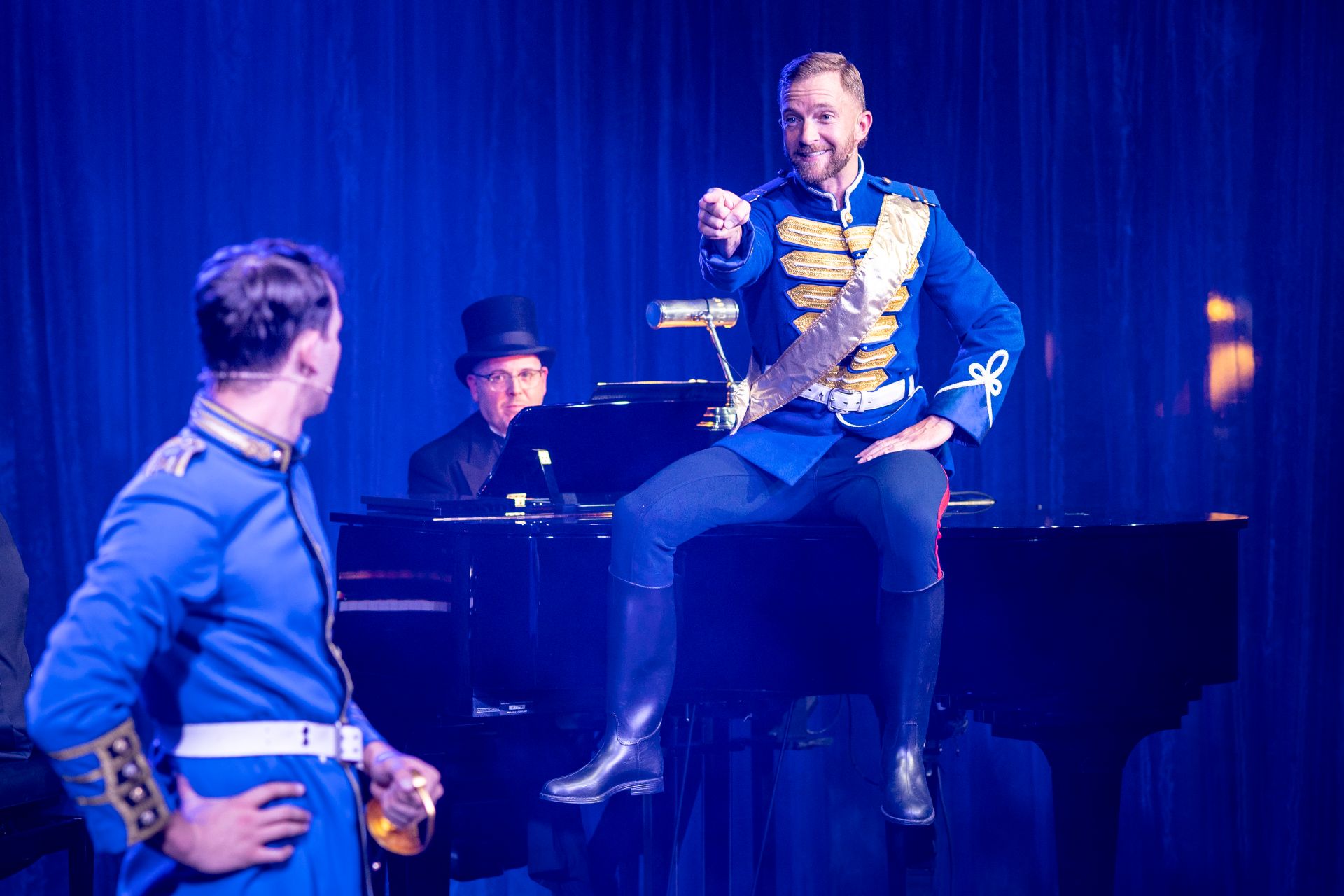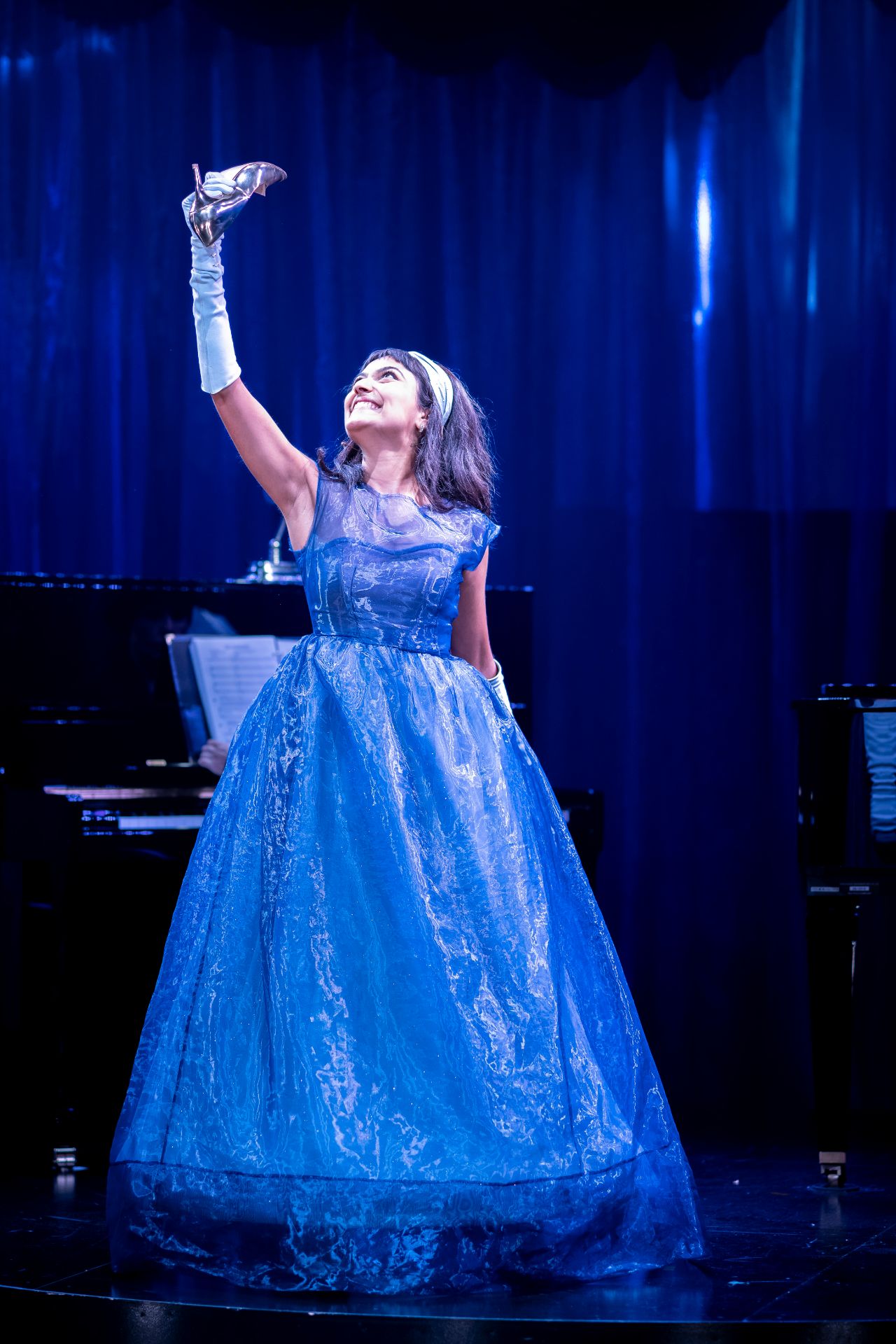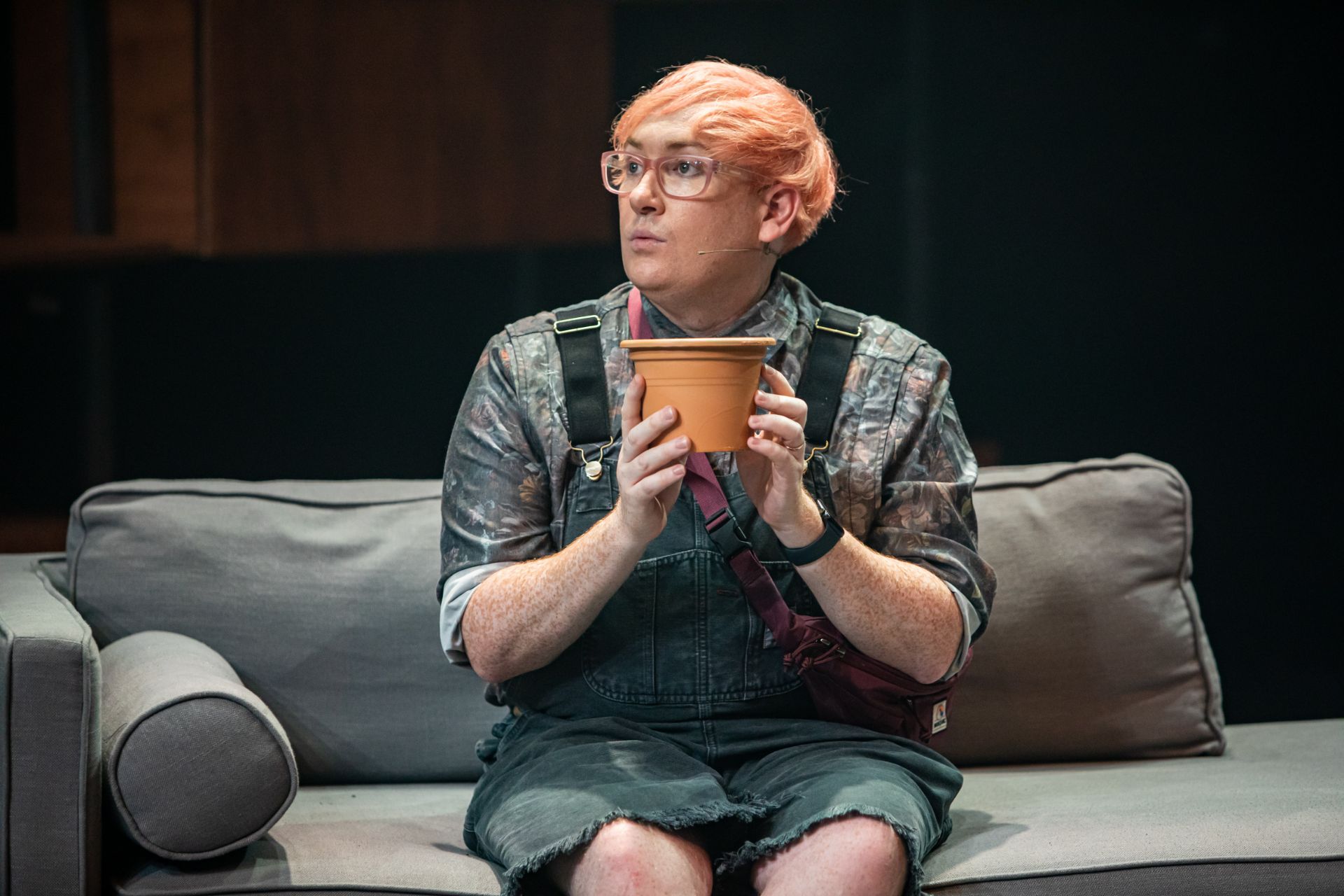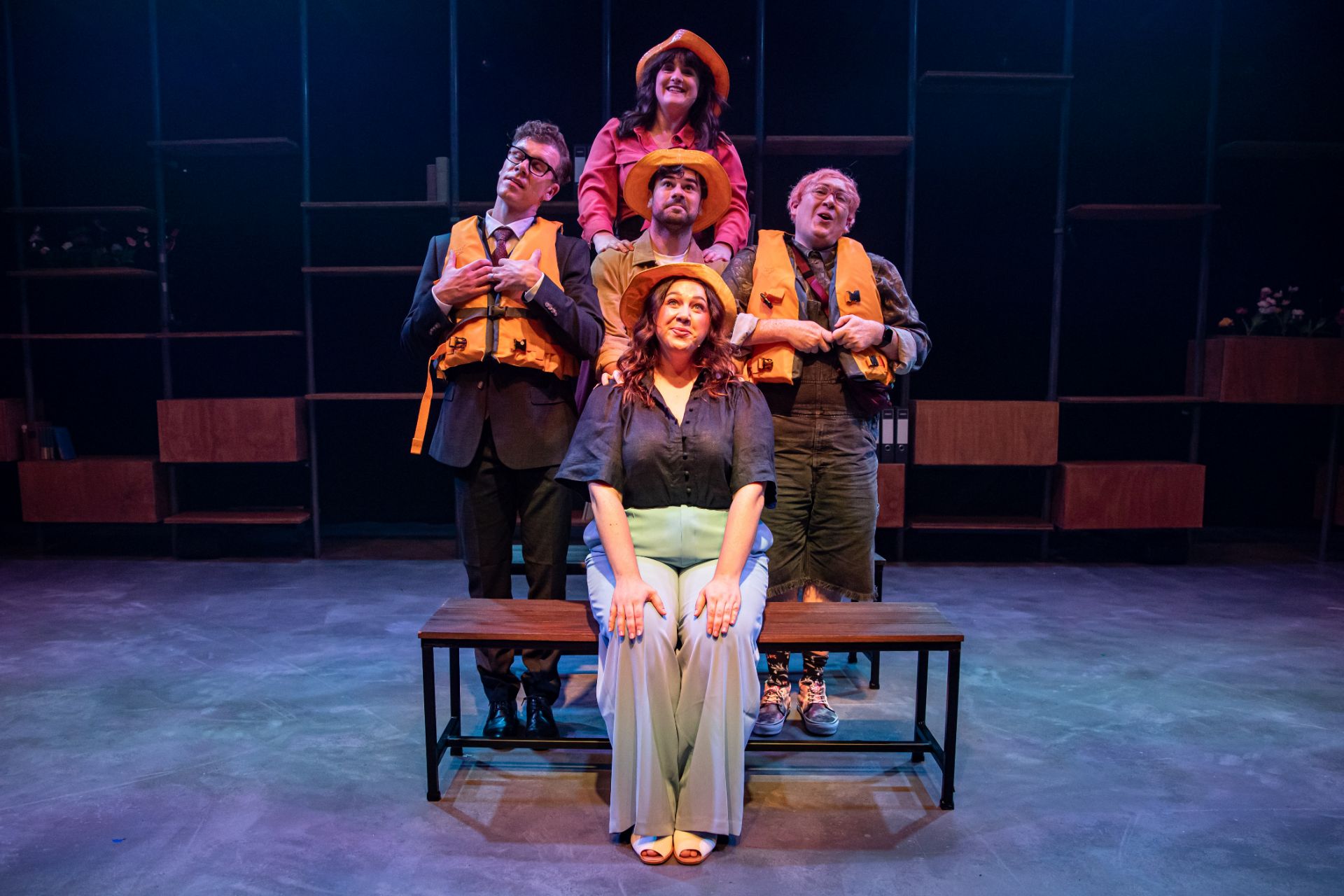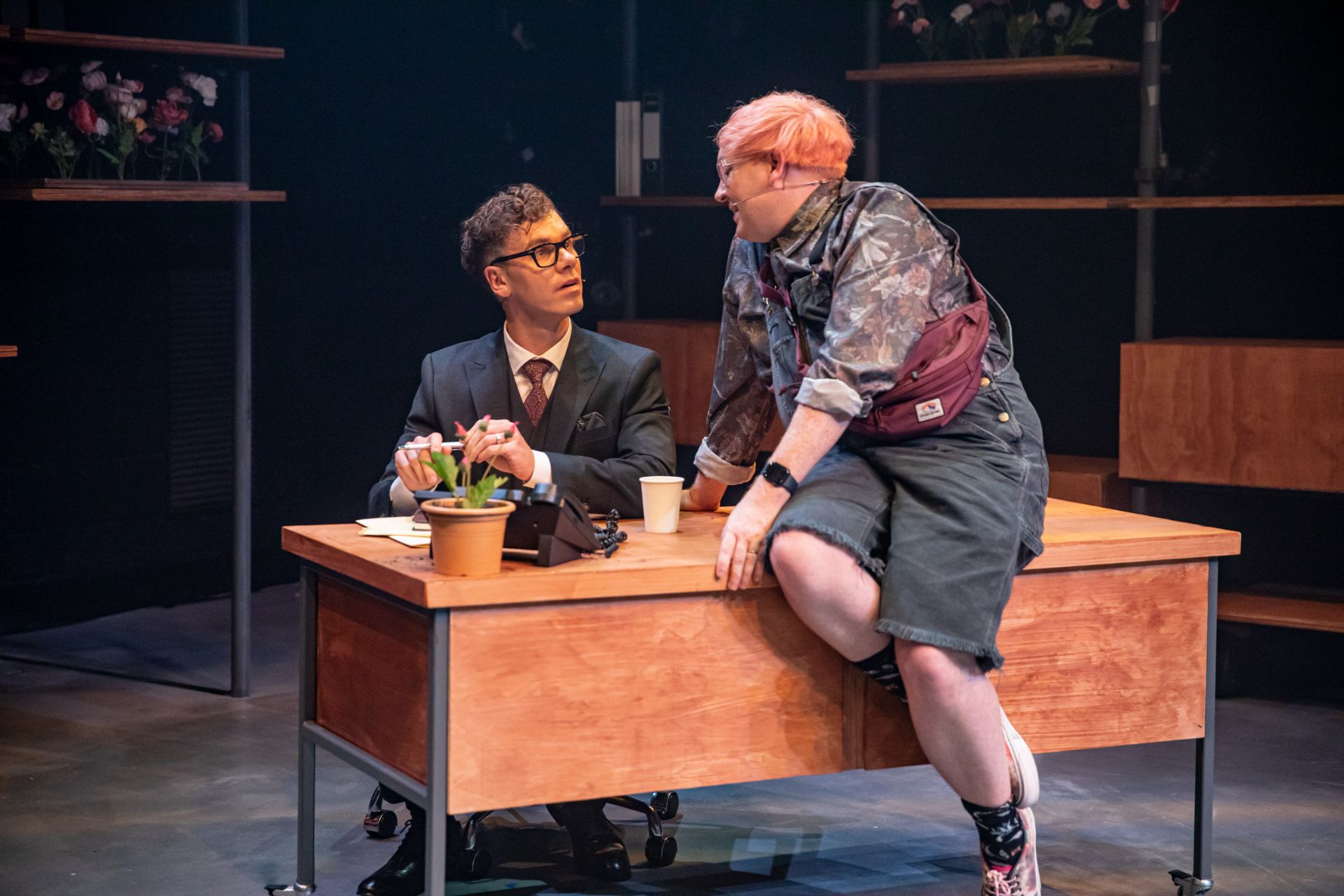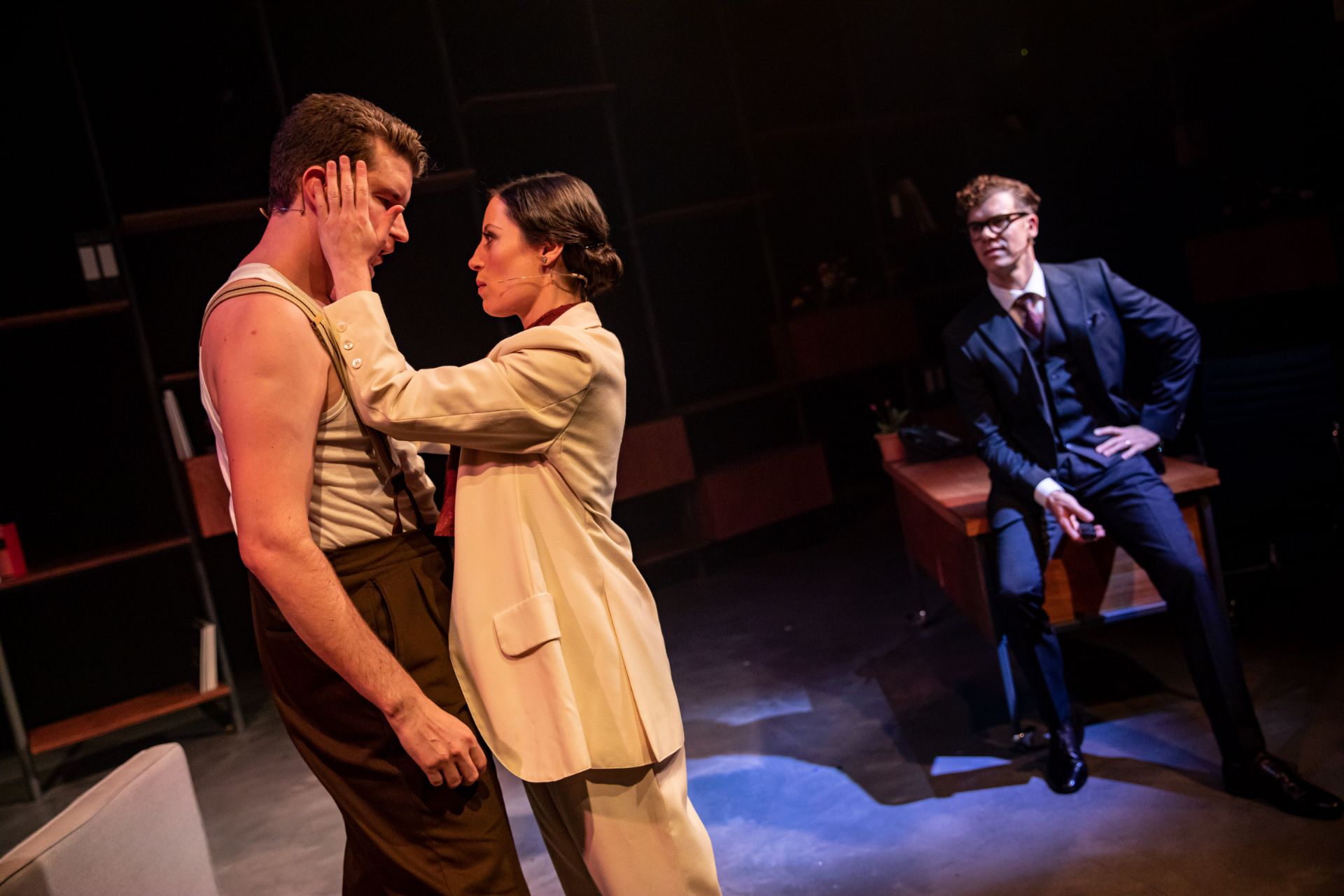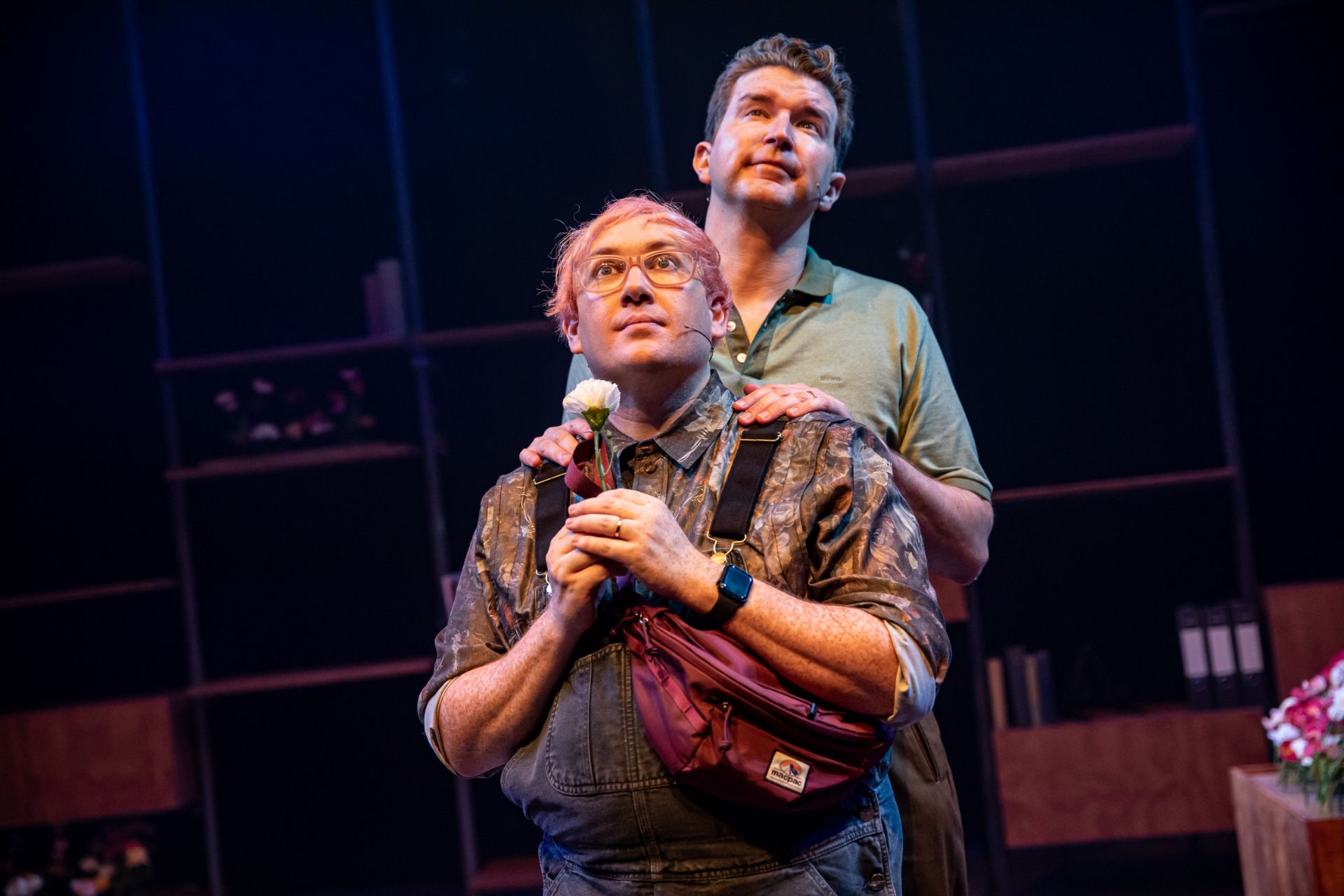
Review: Natasha, Pierre & The Great Comet Of 1812 (Darlinghurst Theatre Company)

Venue: Eternity Playhouse (Darlinghurst NSW), Jul 7 – Aug 27, 2023
Book and Lyrics: Dave Malloy (based on Leo Tolstoy)
Music : Dave Malloyl
Director: Dean Drieberg
Cast: Cameron Bajraktarevic-Hayward, Anton Berezin, Grace Driscoll, Zoy Frangos, Kala Gare, Lillian Hearne, Jillian O’Dowd, Jules Pendrith, Marissa Saroca, P. Tucker Worley
Images by Robert Catto

Theatre review
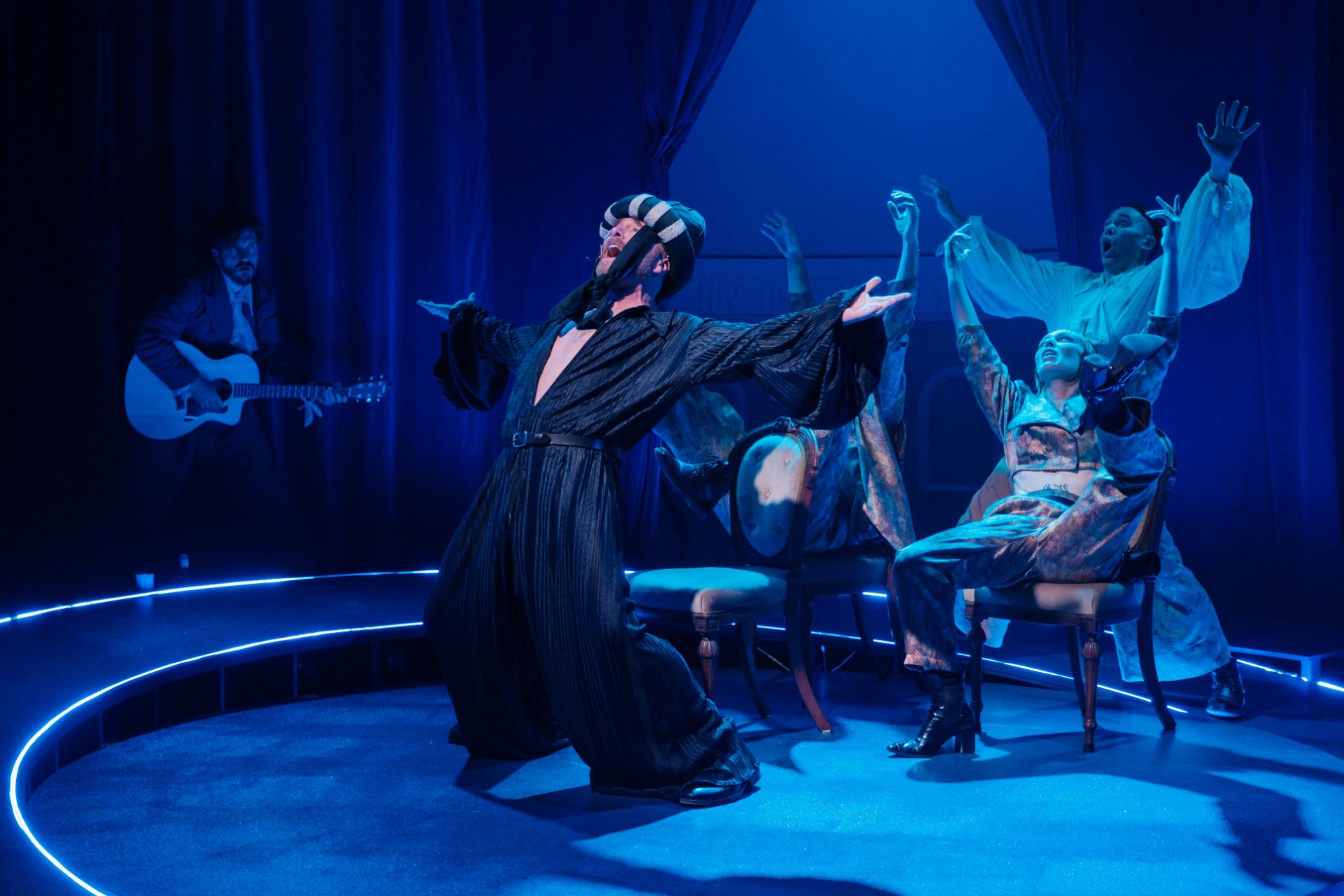
Natasha falls for bad boy Anatole, when her fiancé Andrey is away at war. Meanwhile, Pierre is undergoing an existential crisis, and hits the bottle hard. Dave Malloy’s Natasha, Pierre & The Great Comet Of 1812, is based on Part 8 of Leo Tolstoy’s masterpiece War and Peace, in which the novelist draws inspiration from a comet that appeared in the Russian skies, remaining visible to the naked eye for 260 days.

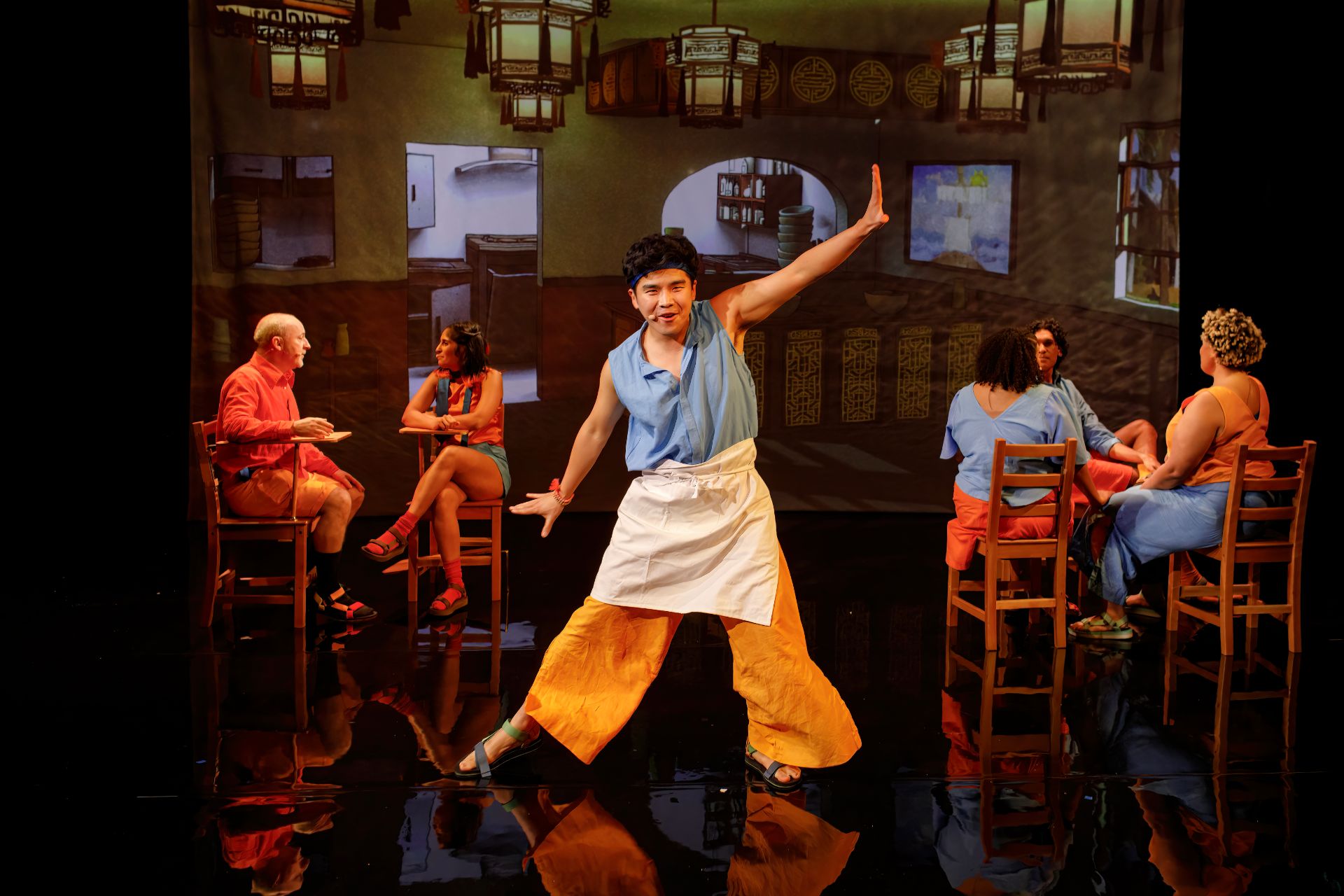
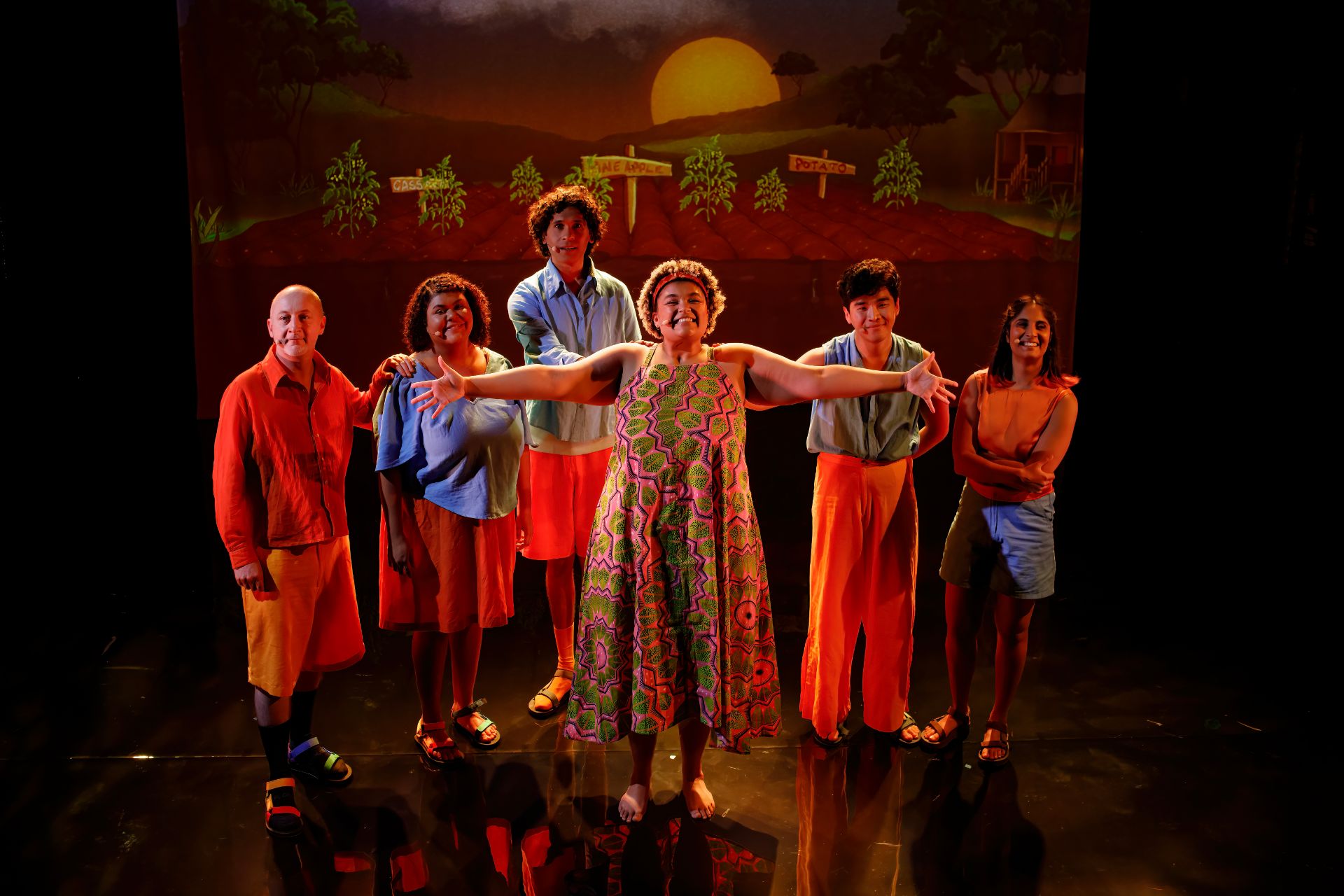
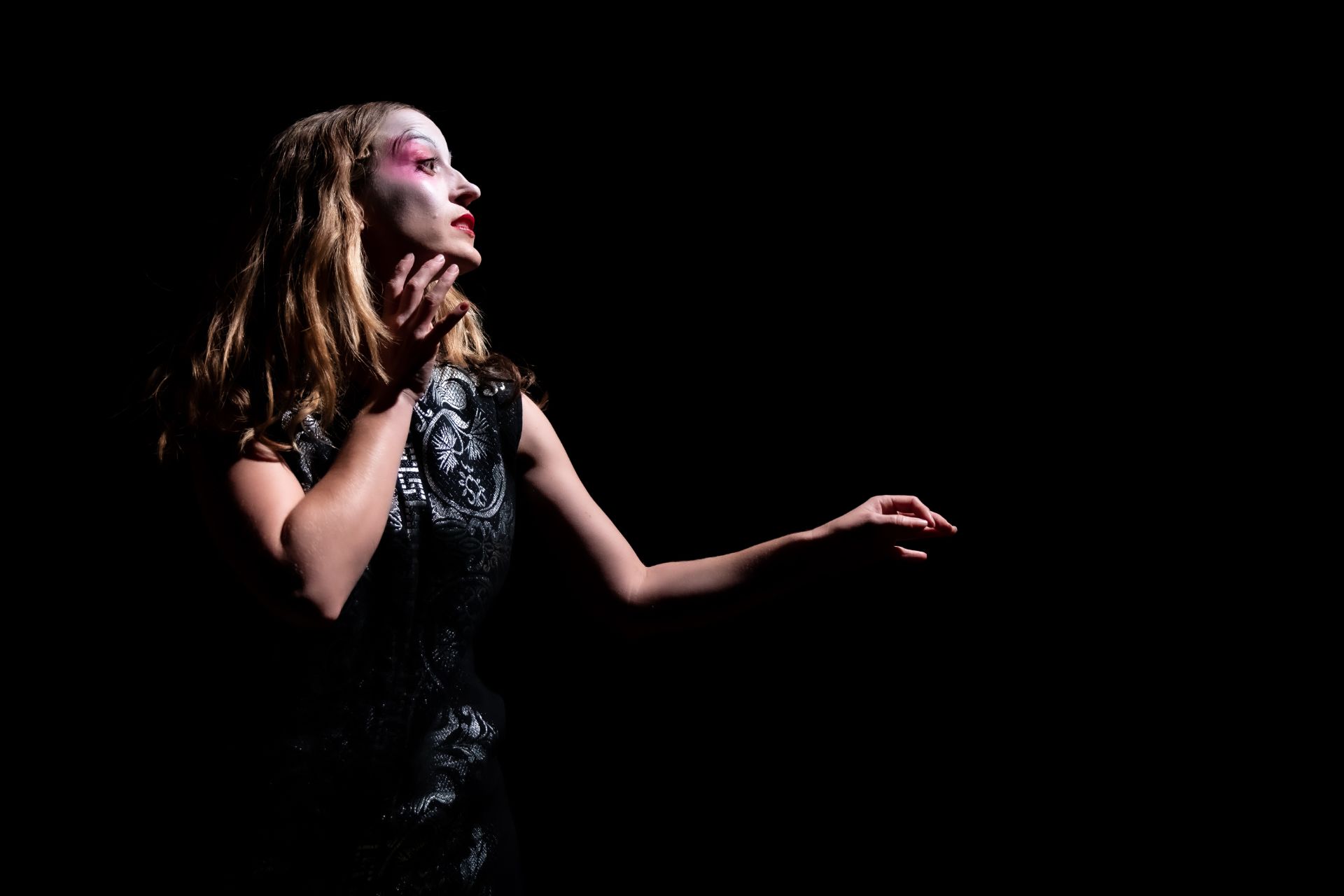
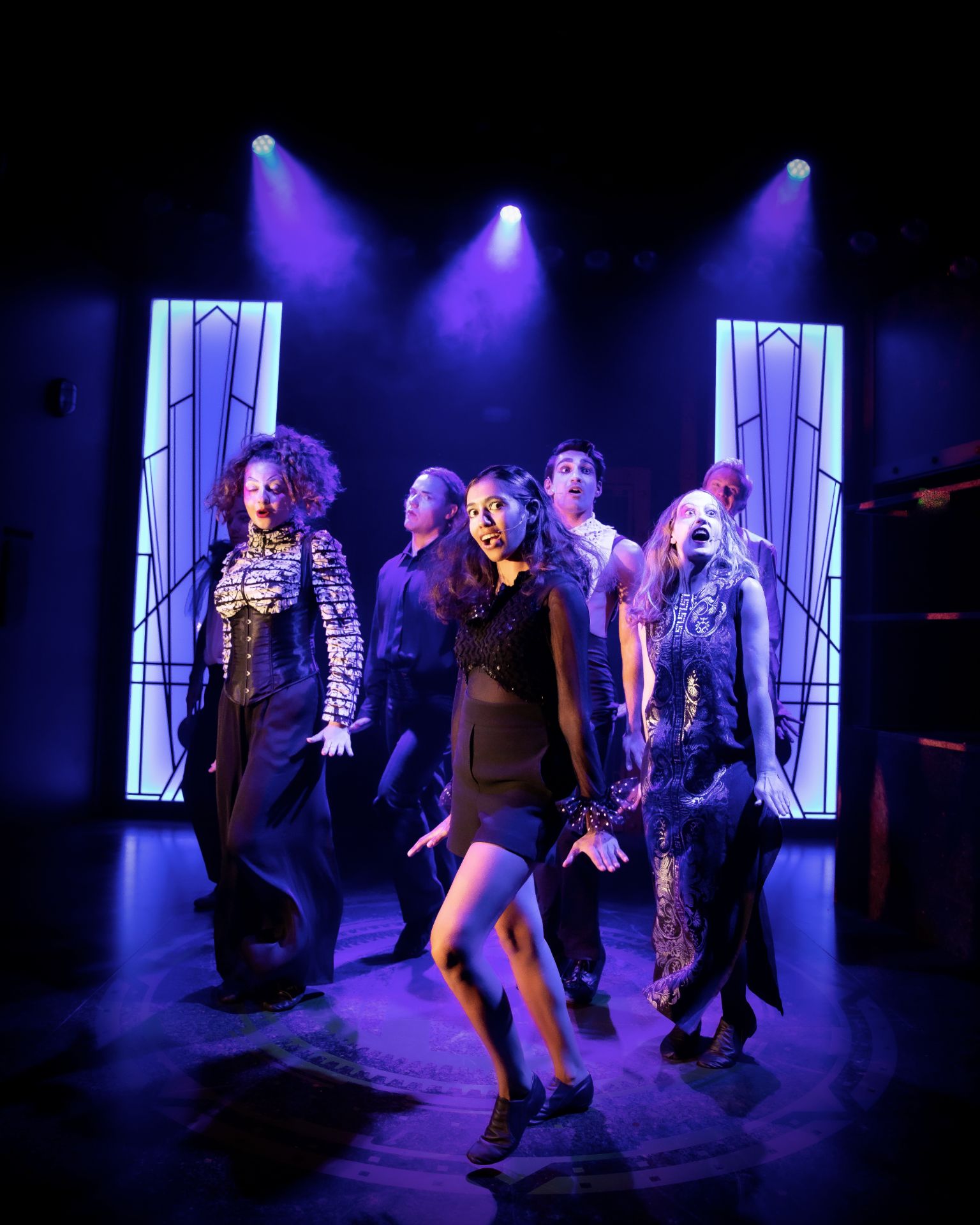
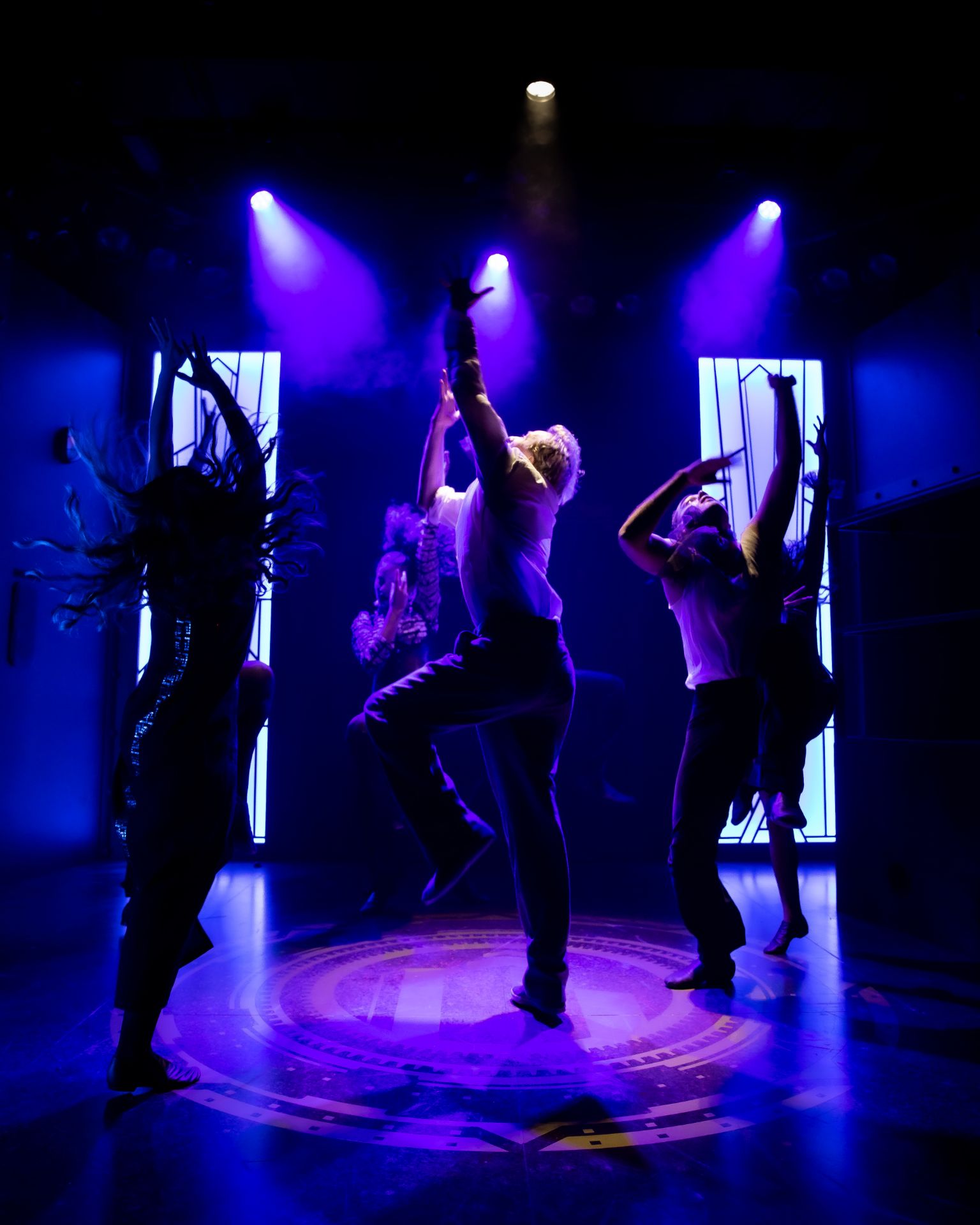
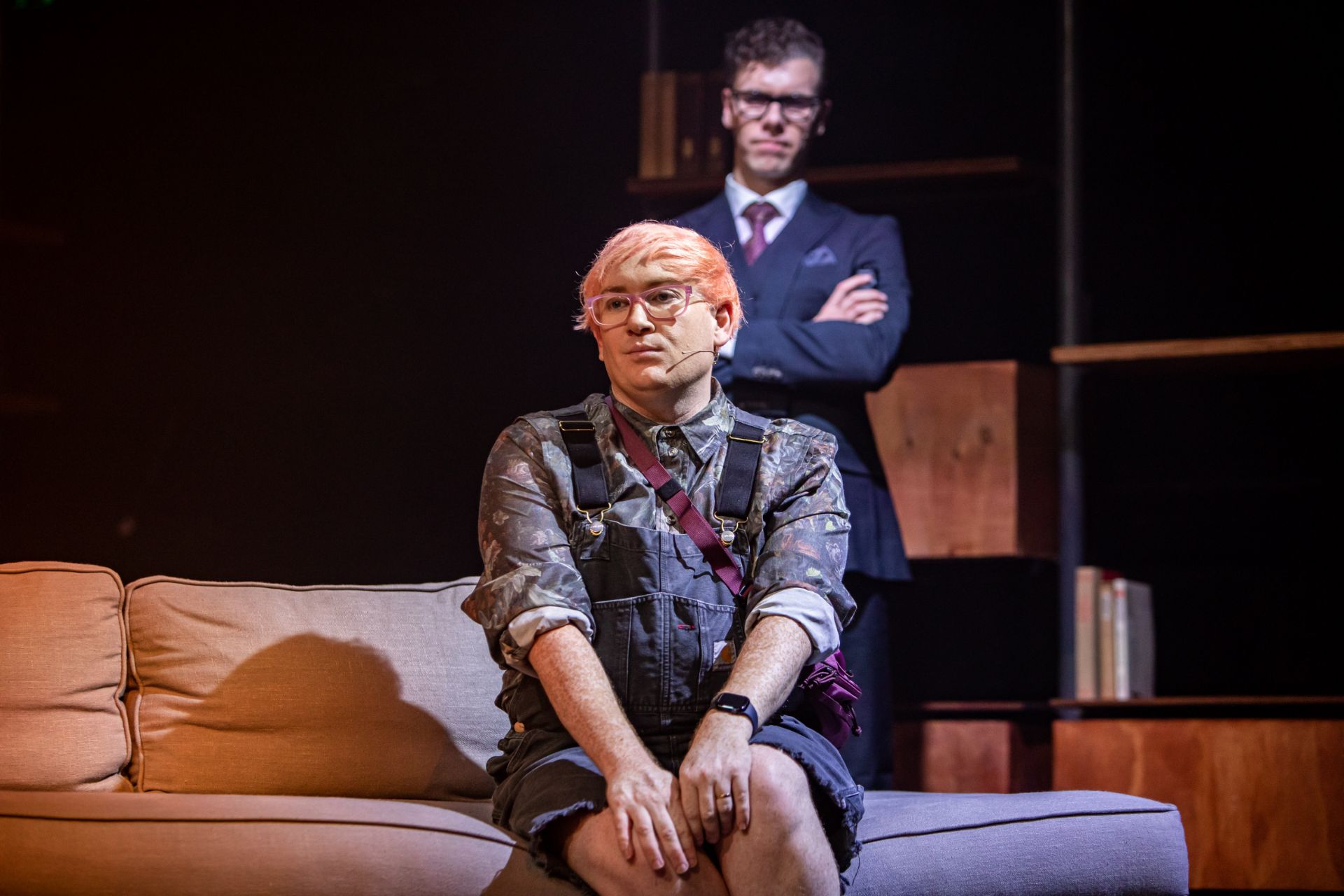
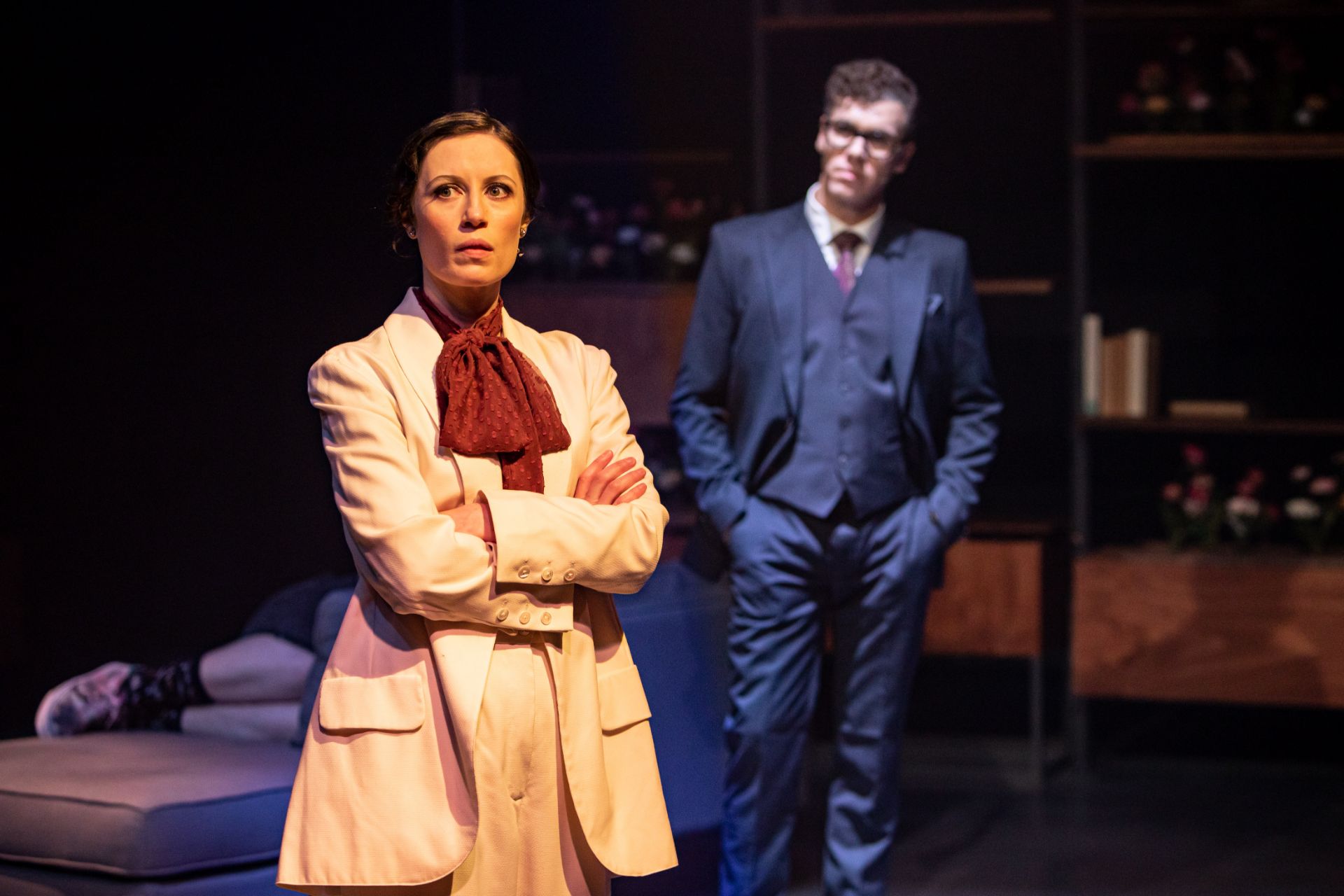
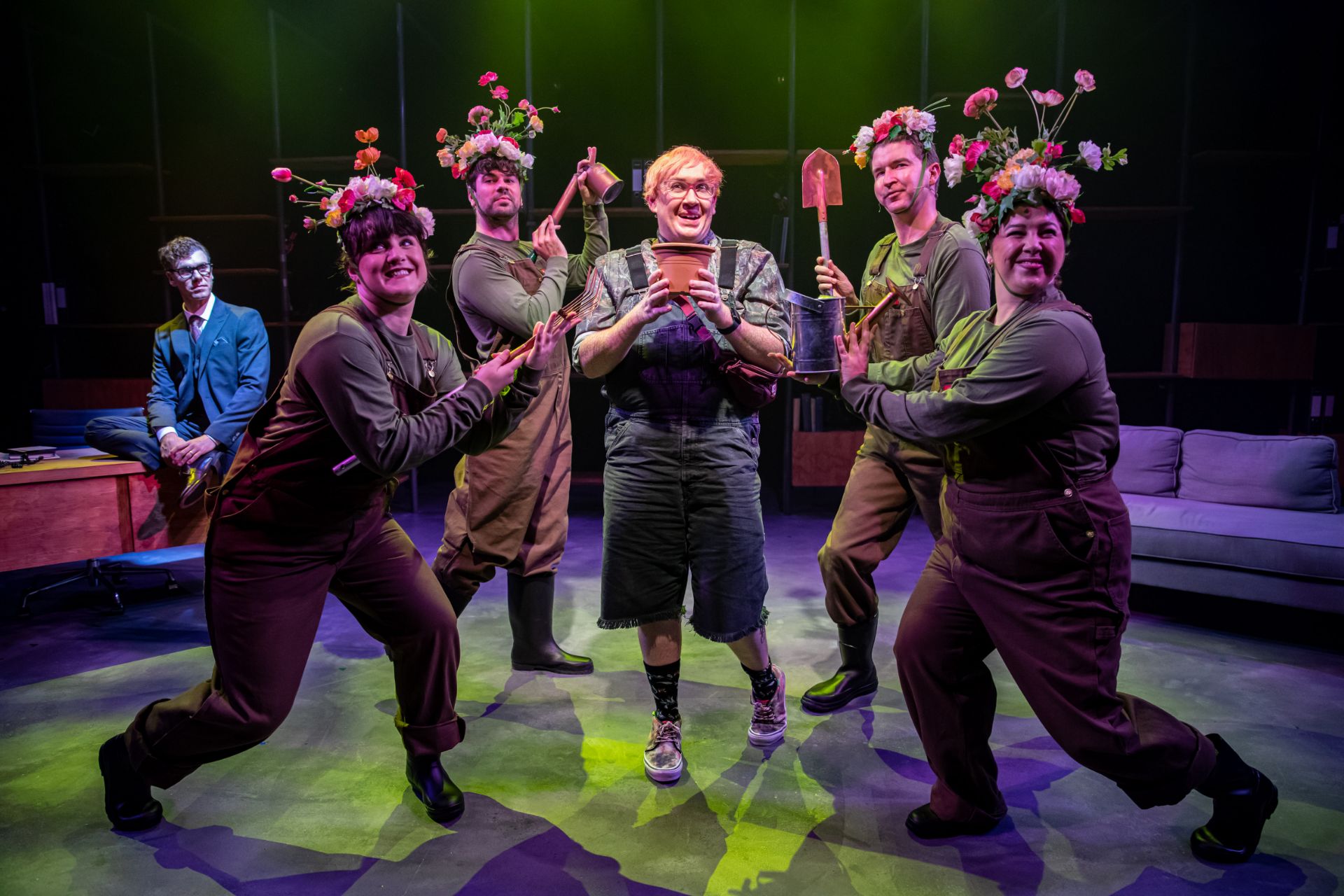
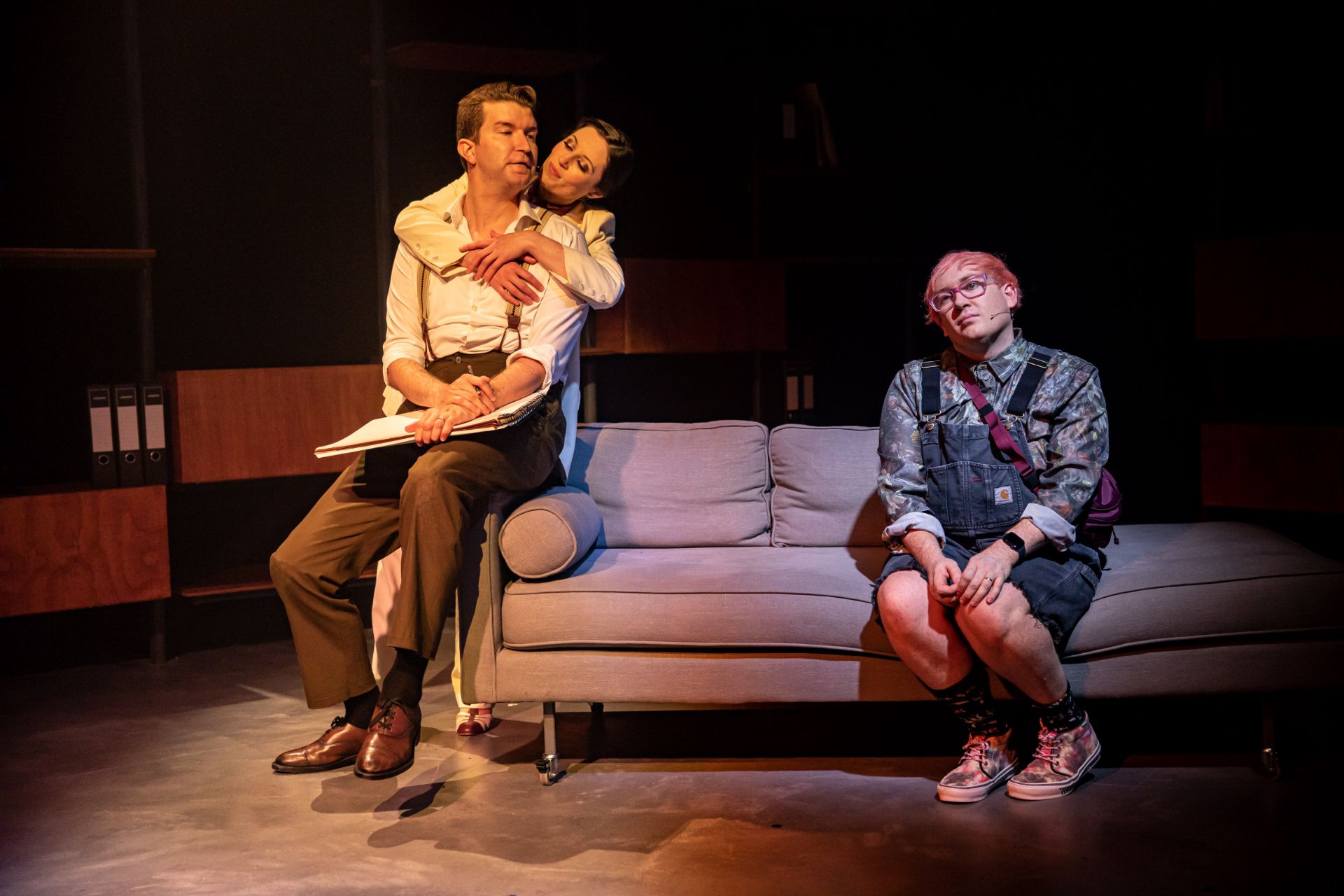
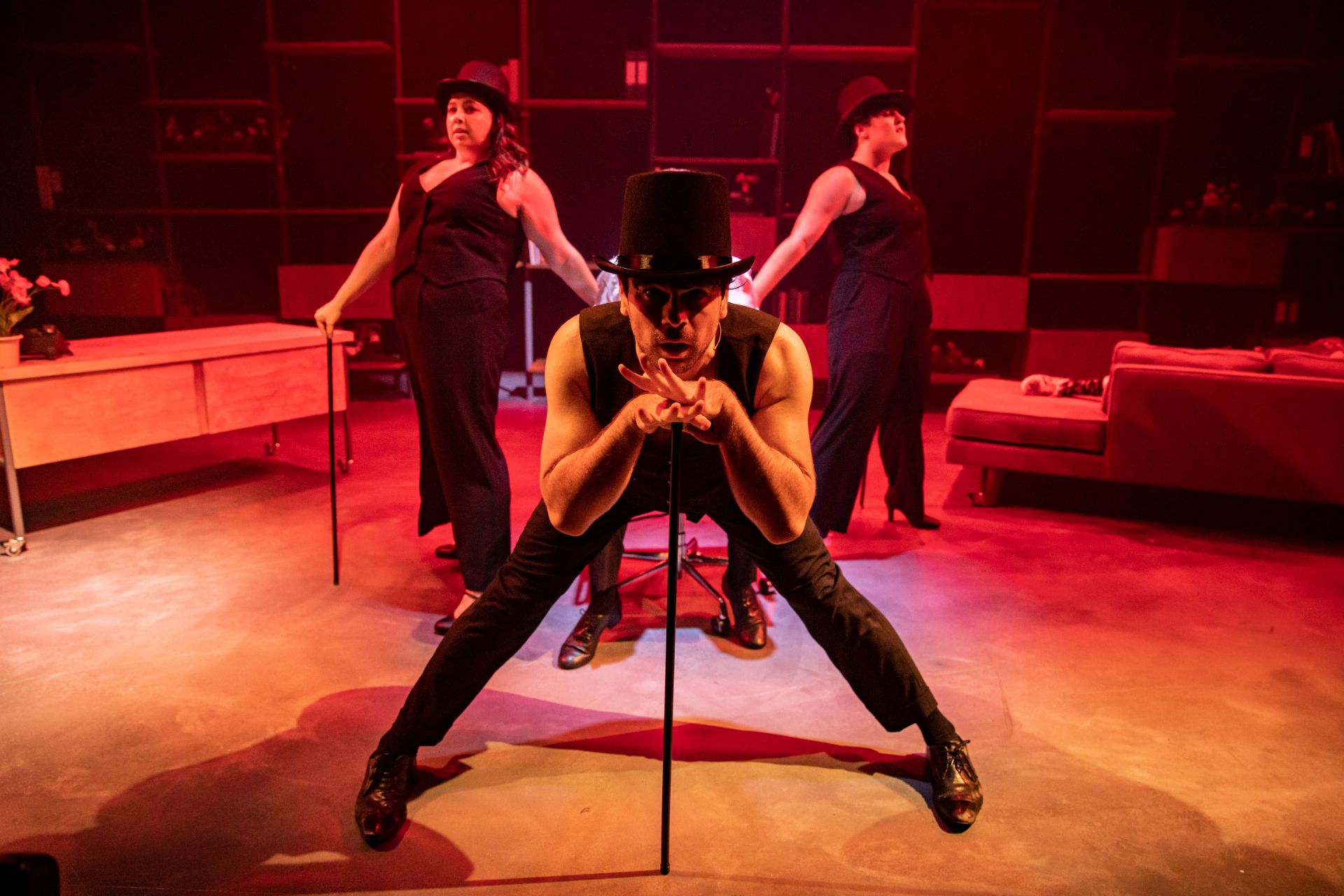
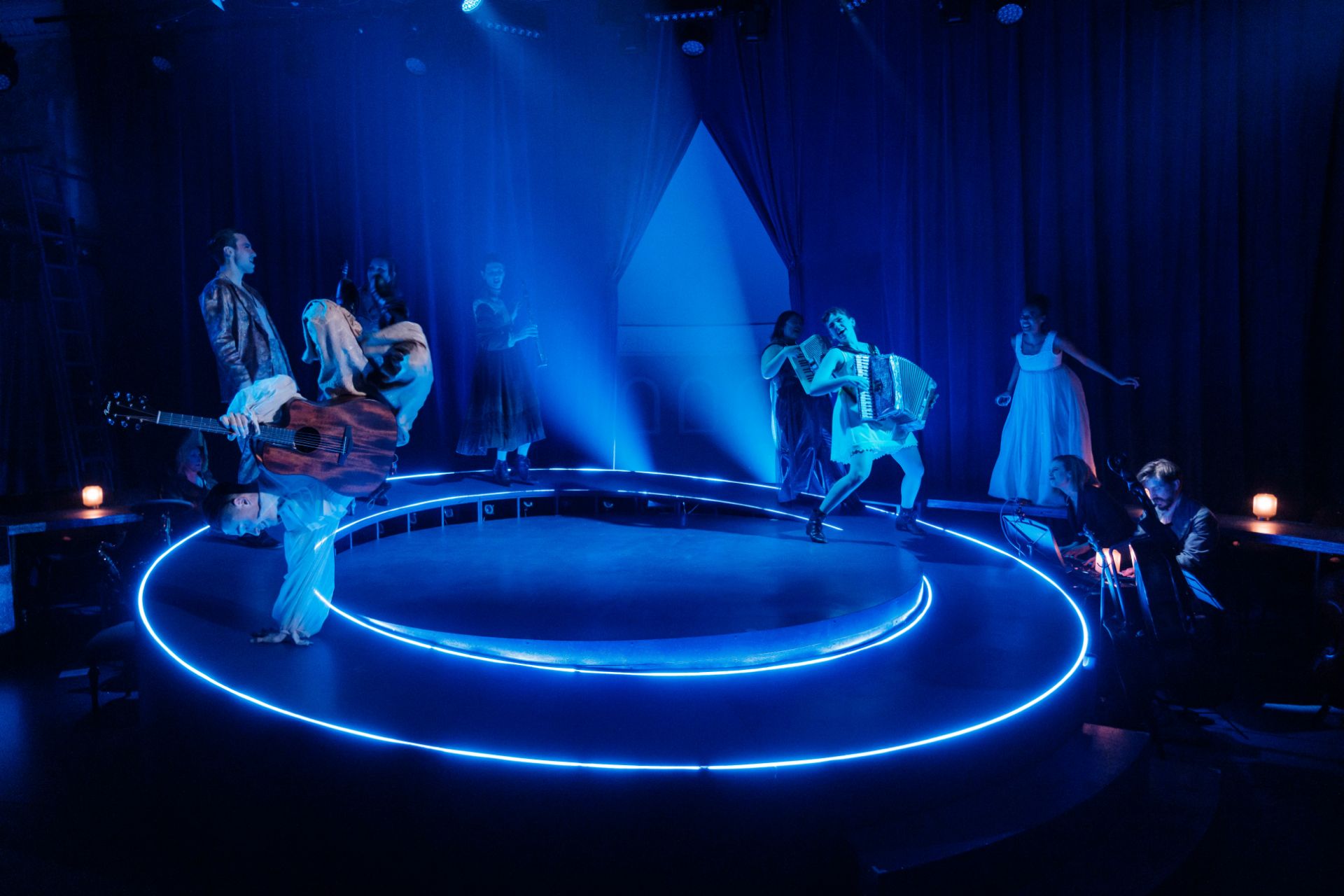
Malloy’s musical rendition is an adventurous work, memorable for its experimental qualities, even if its book can at times be frustratingly indecipherable. Directed by Dean Drieberg, the production is full of vitality, with a mischievous spirit that truly endears. There may be little to savour in terms of a narrative, but each number is richly conceived by Drieberg, in partnership with choreographer Brendan Yeates, to deliver an engrossing experience that talks to us on a visceral level, endlessly fascinating and unpredictable.

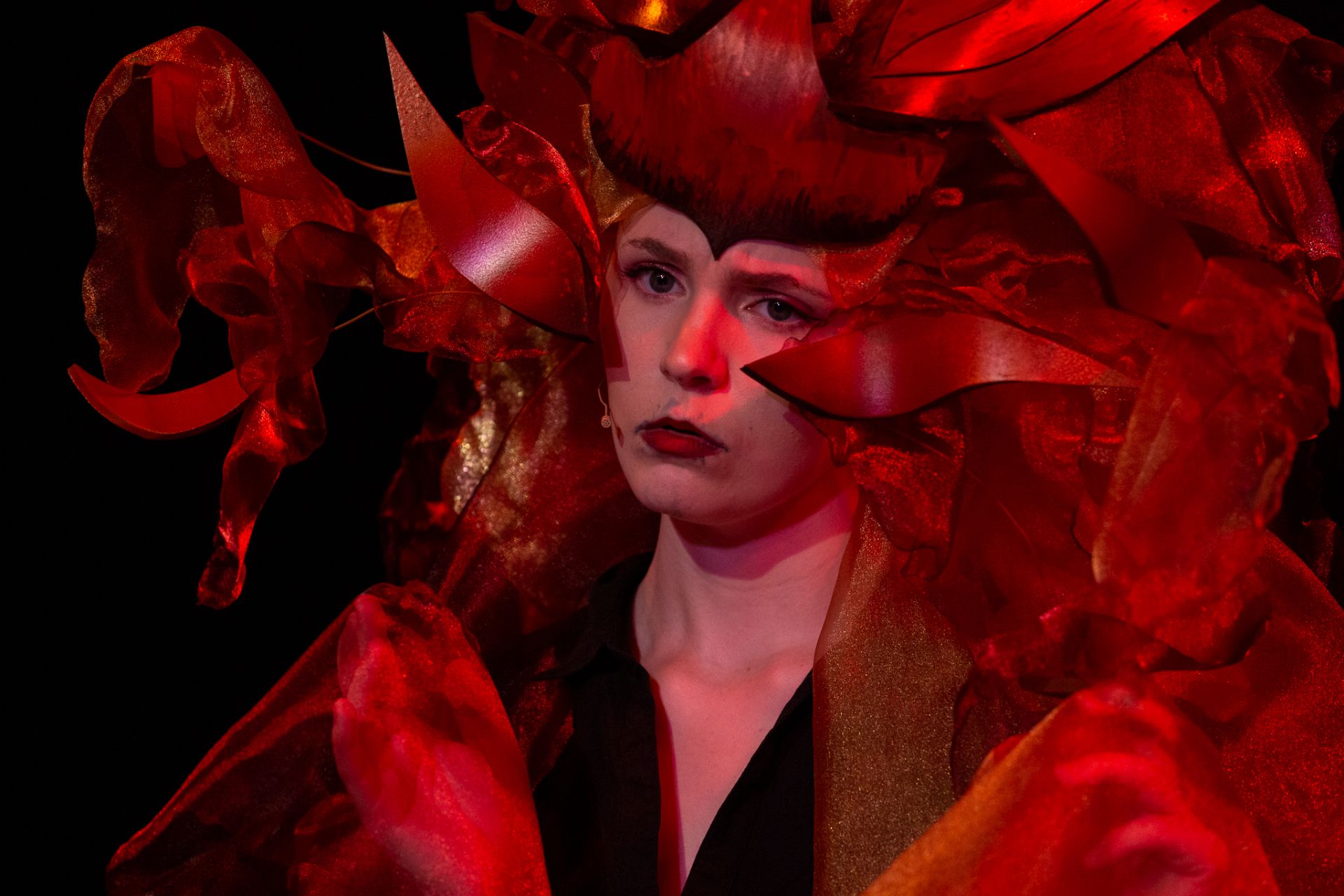
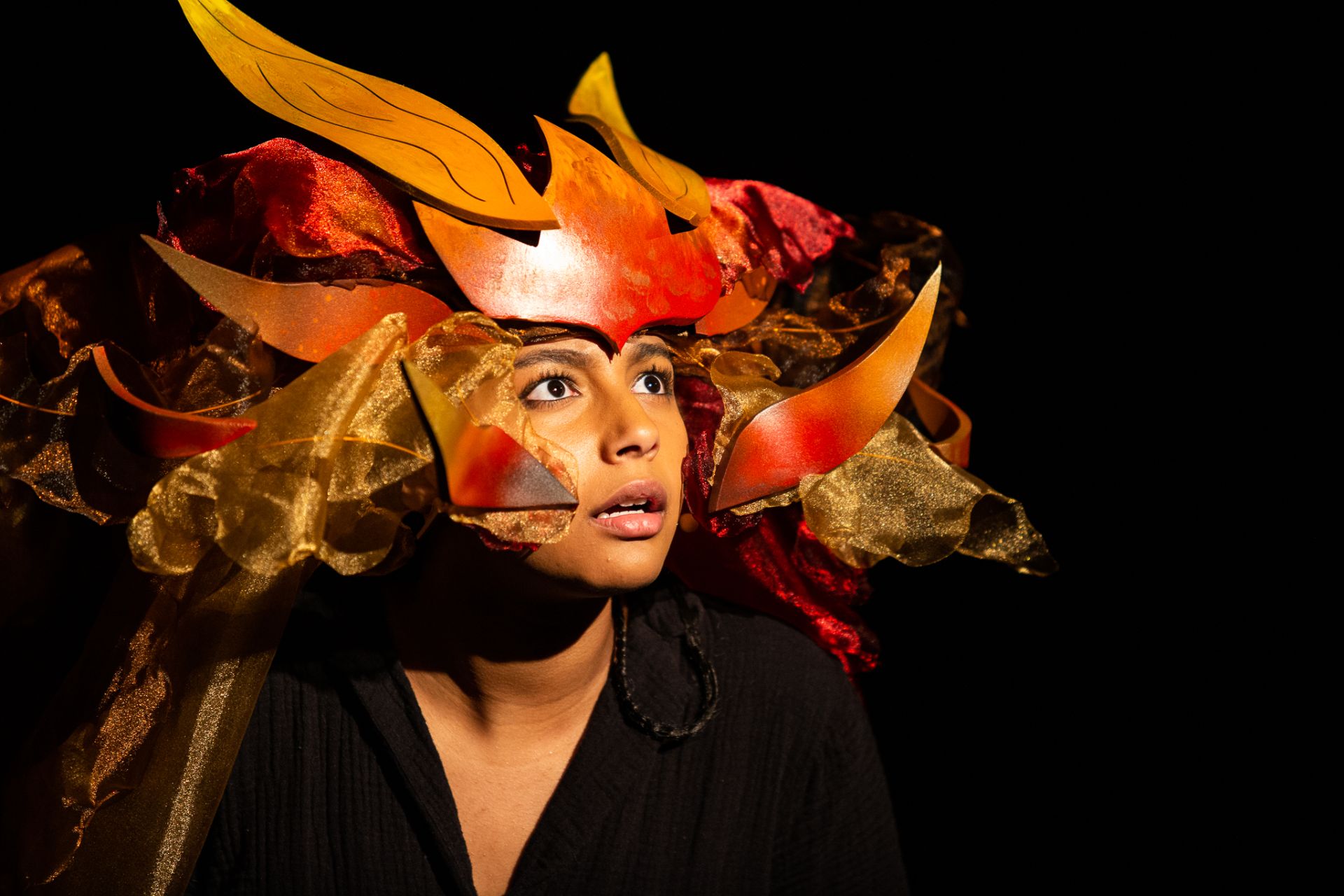
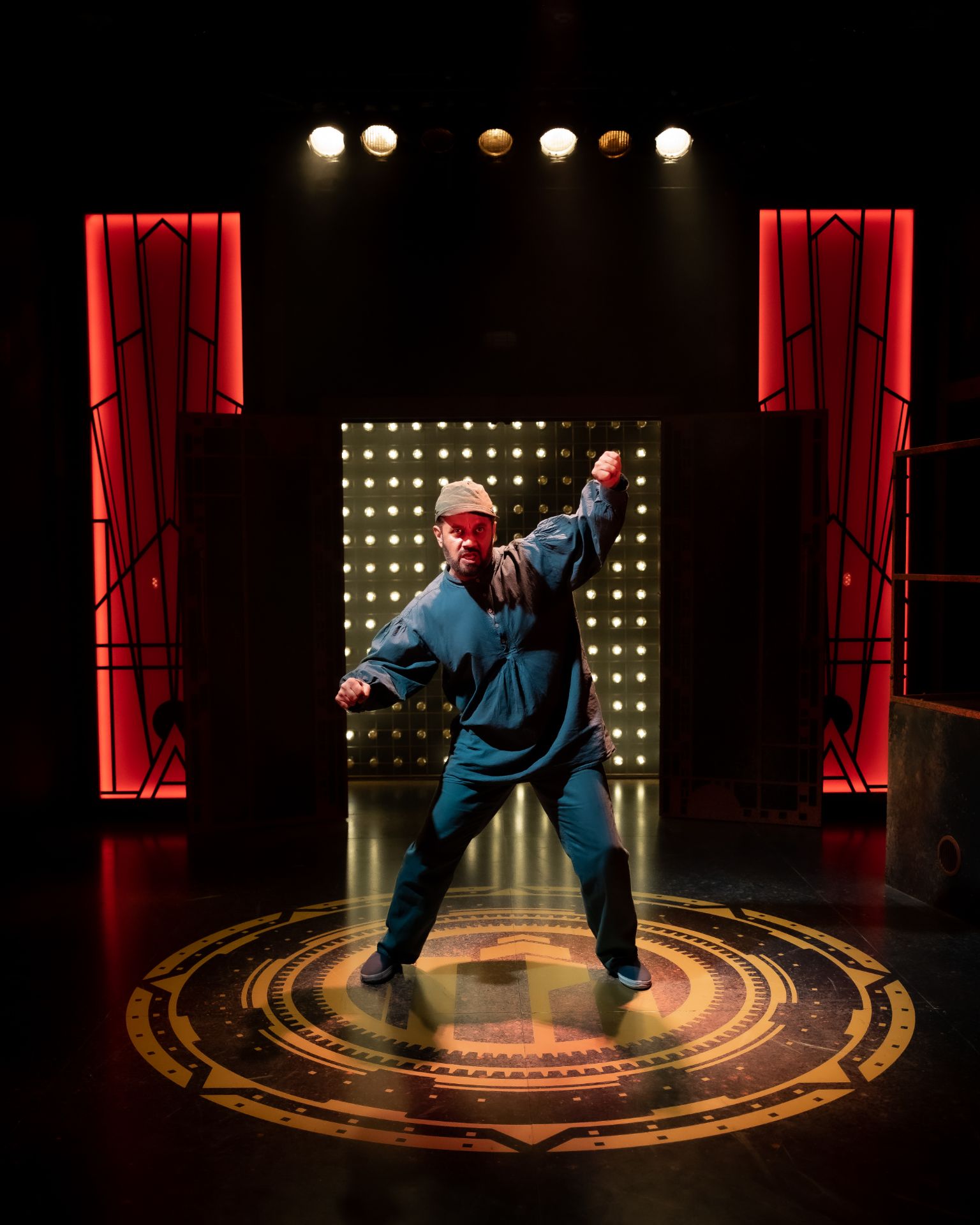
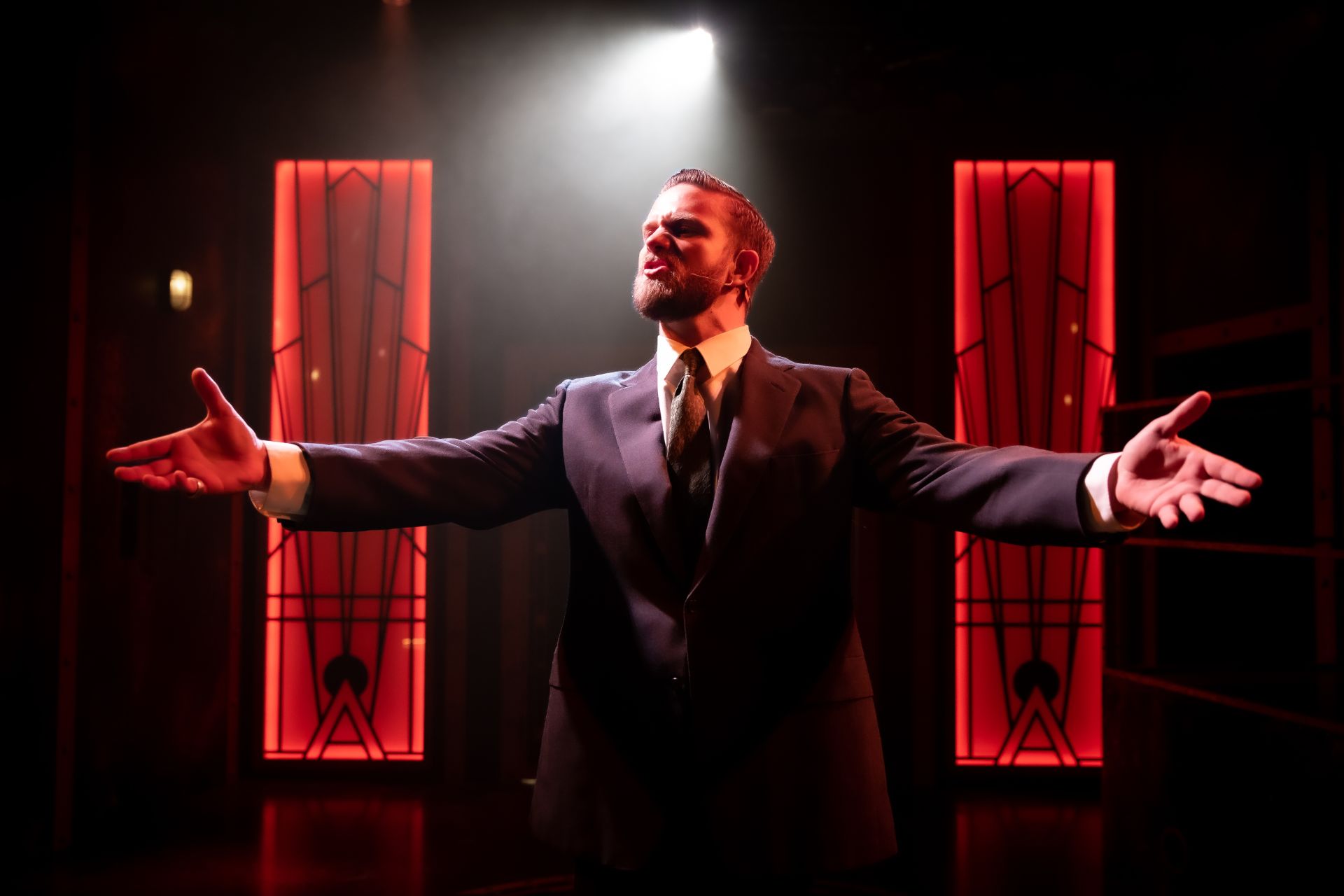
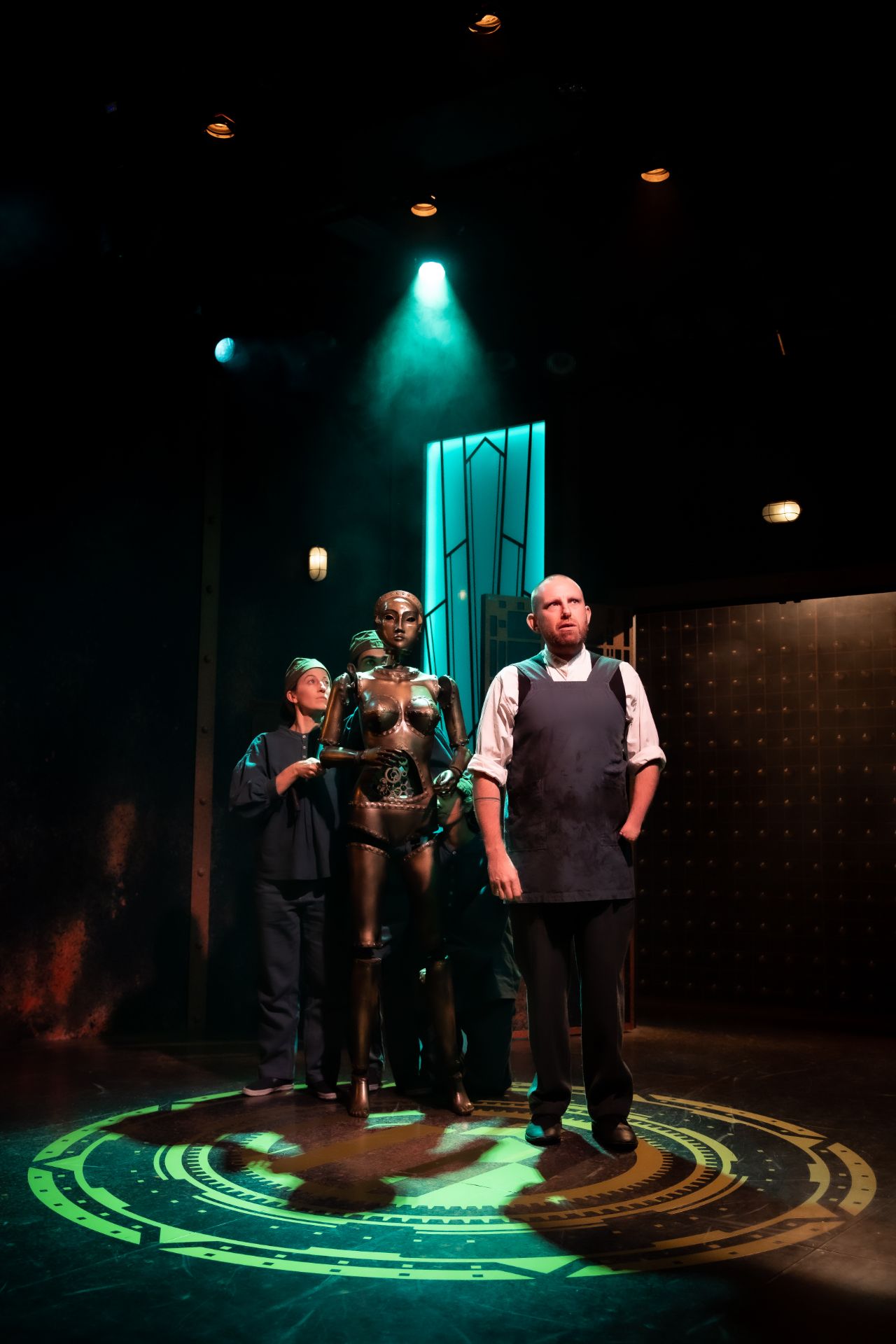
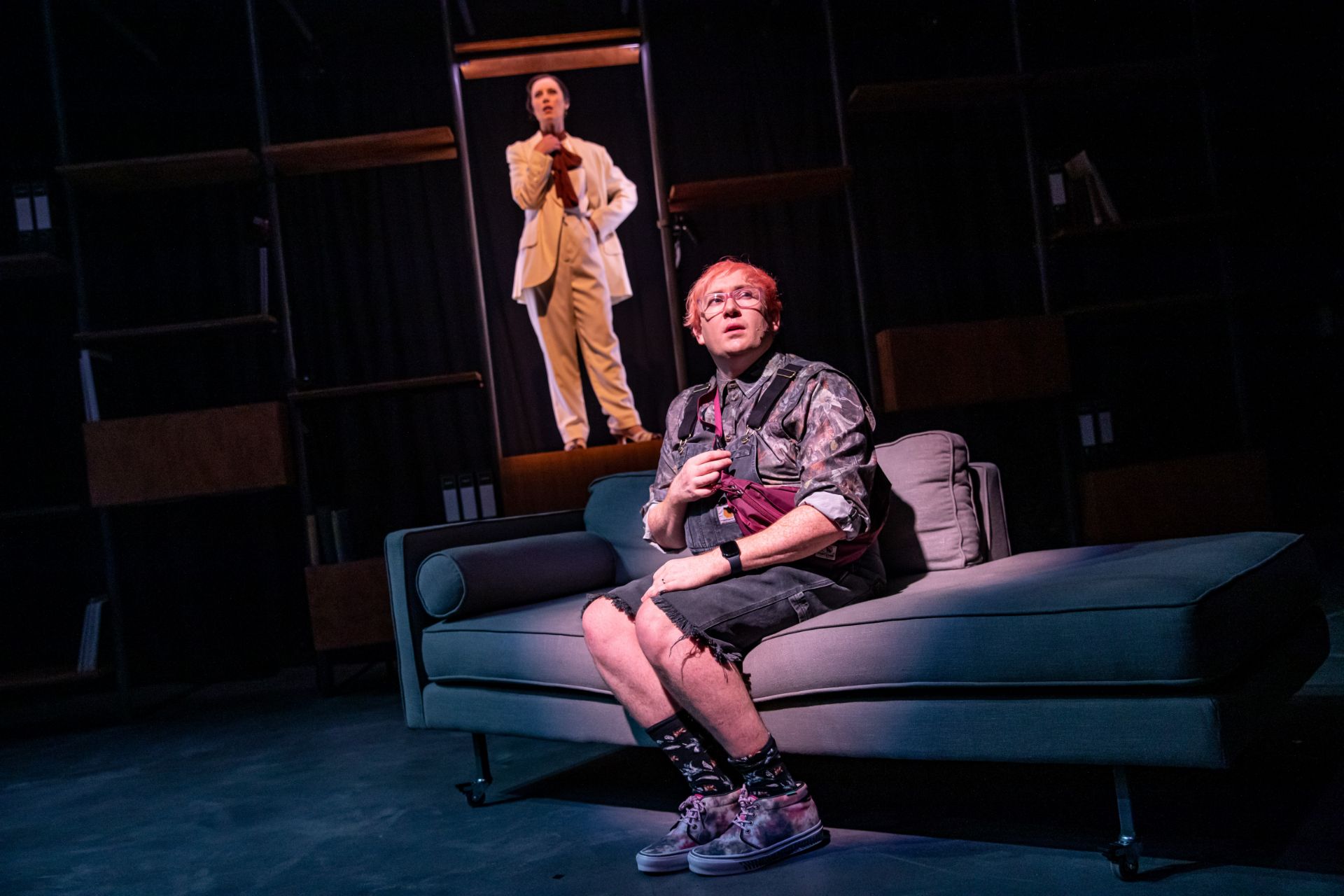
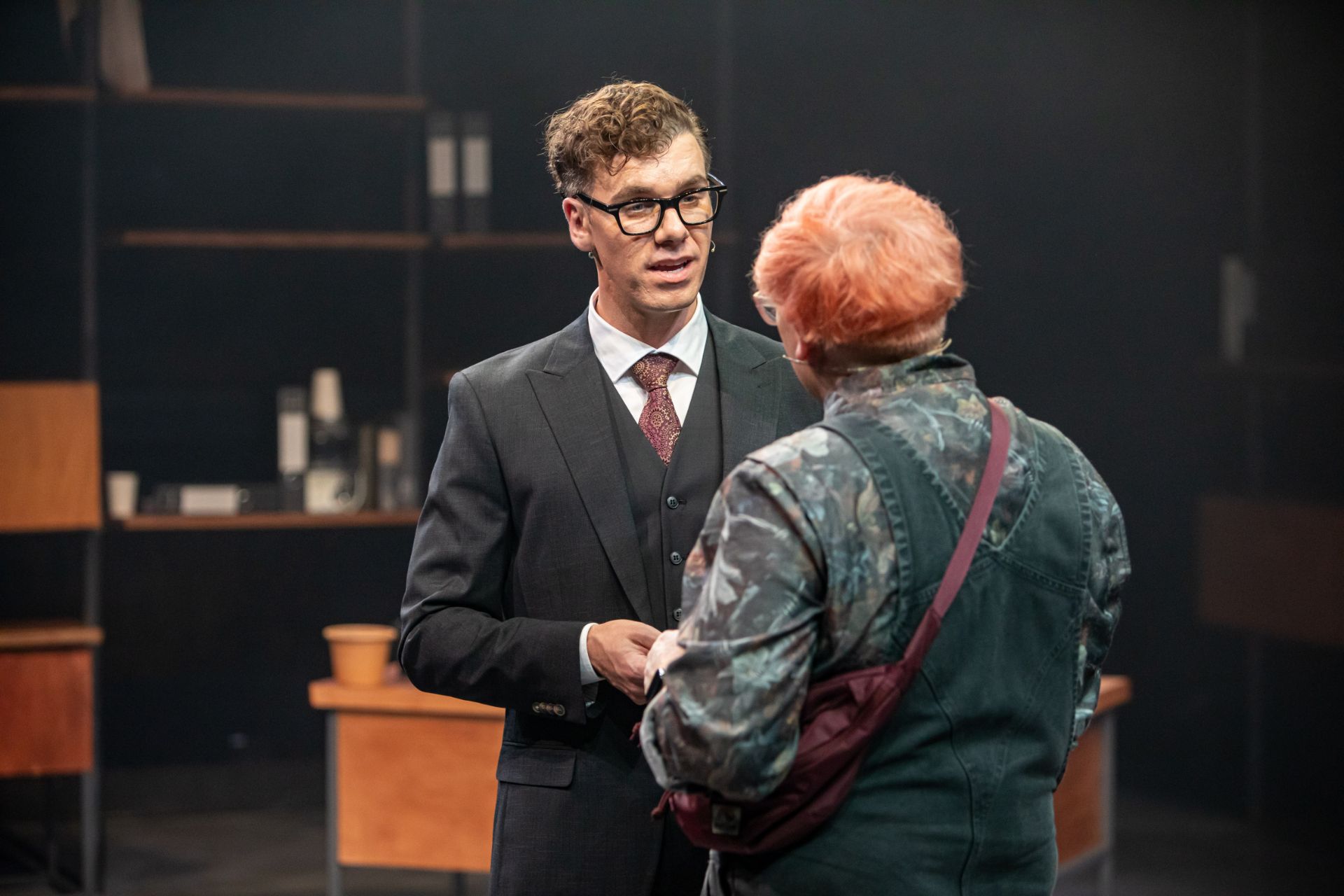
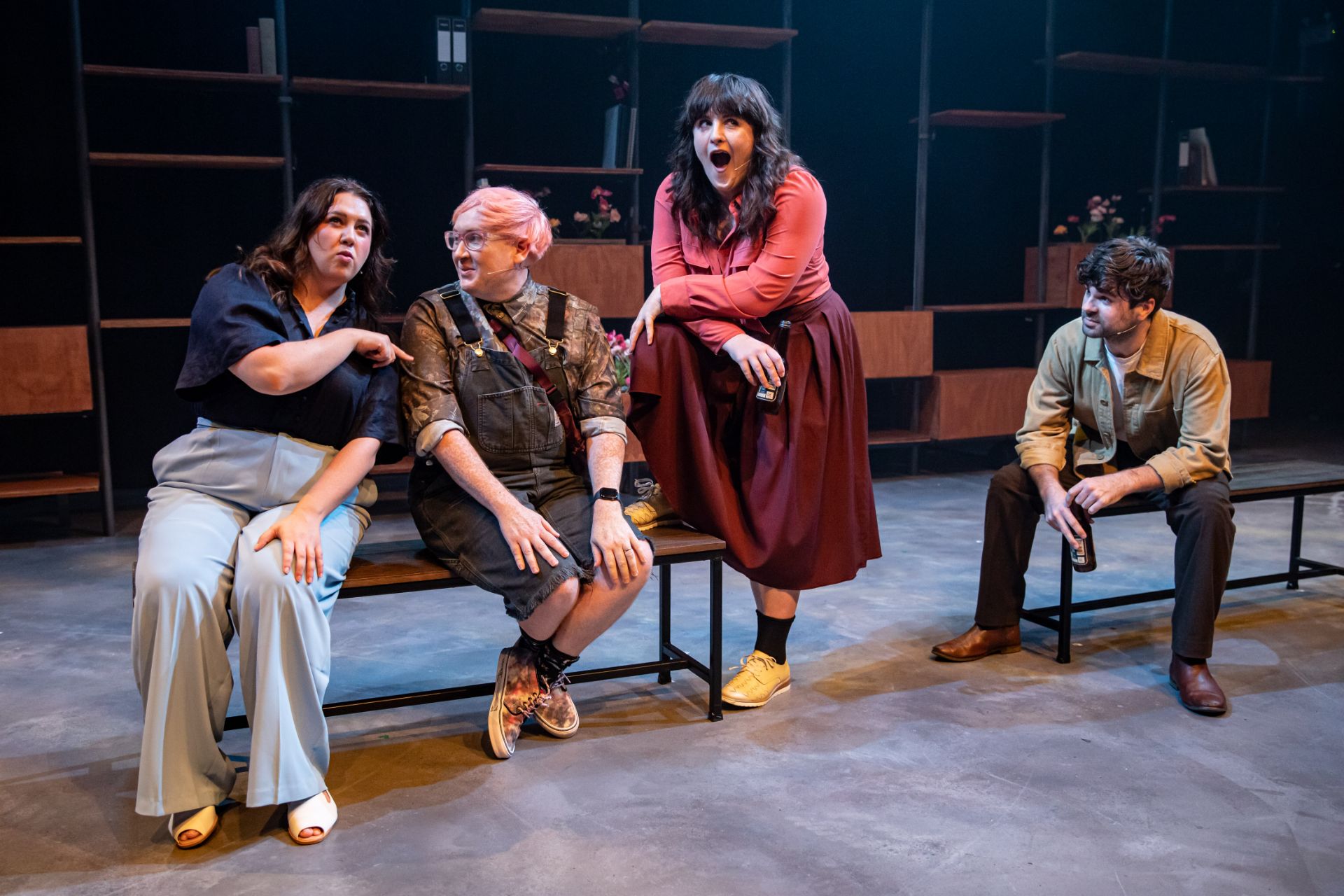
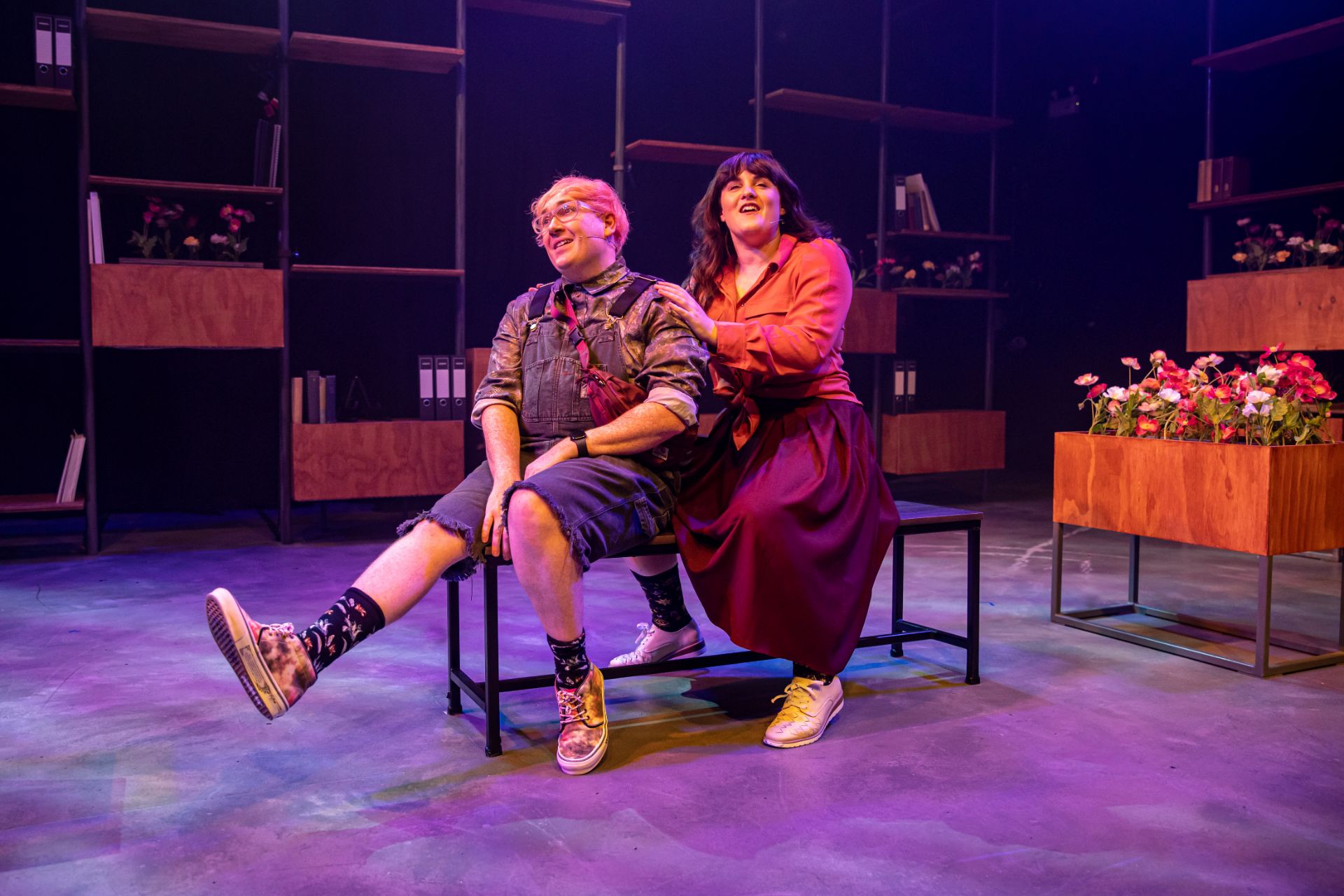
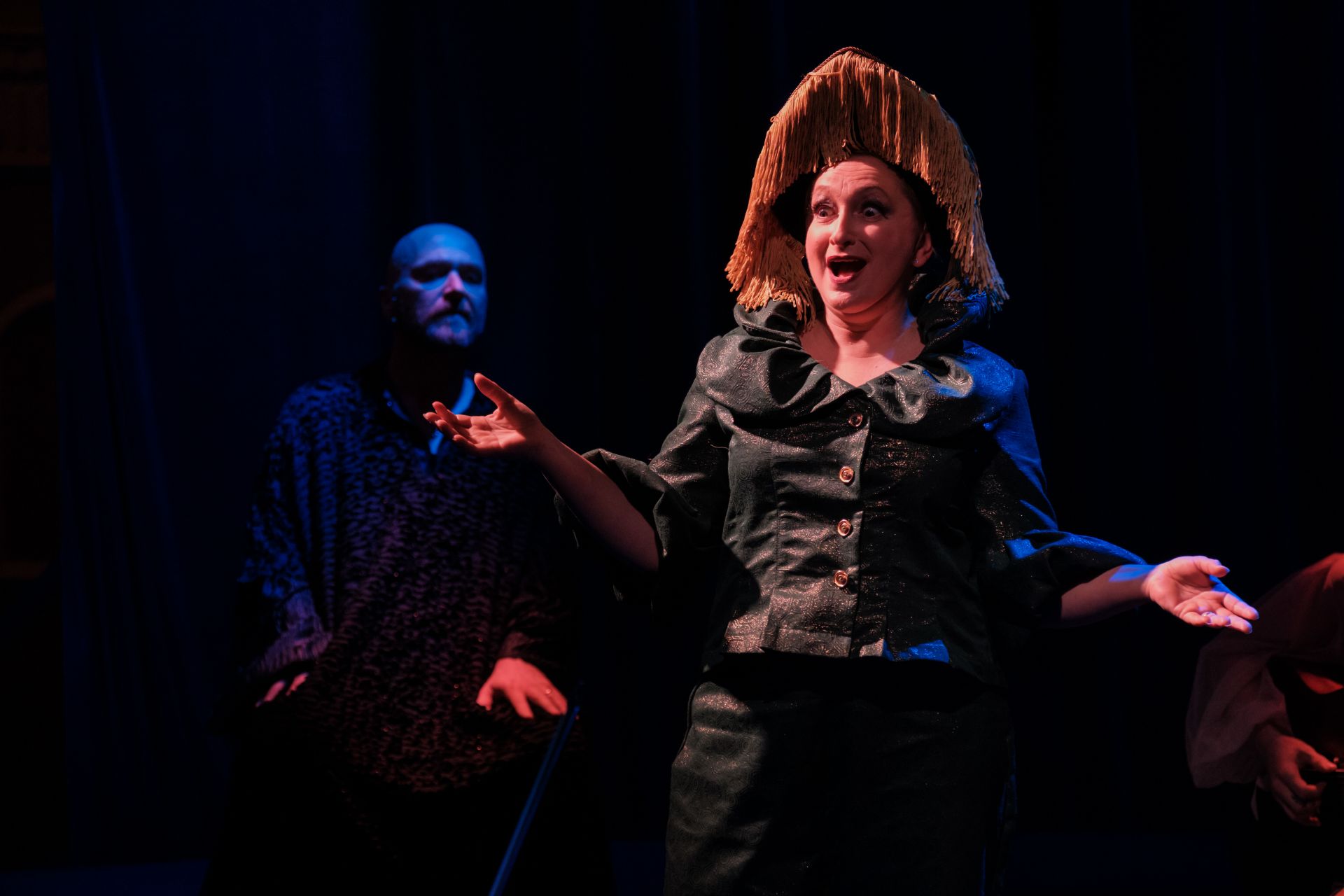
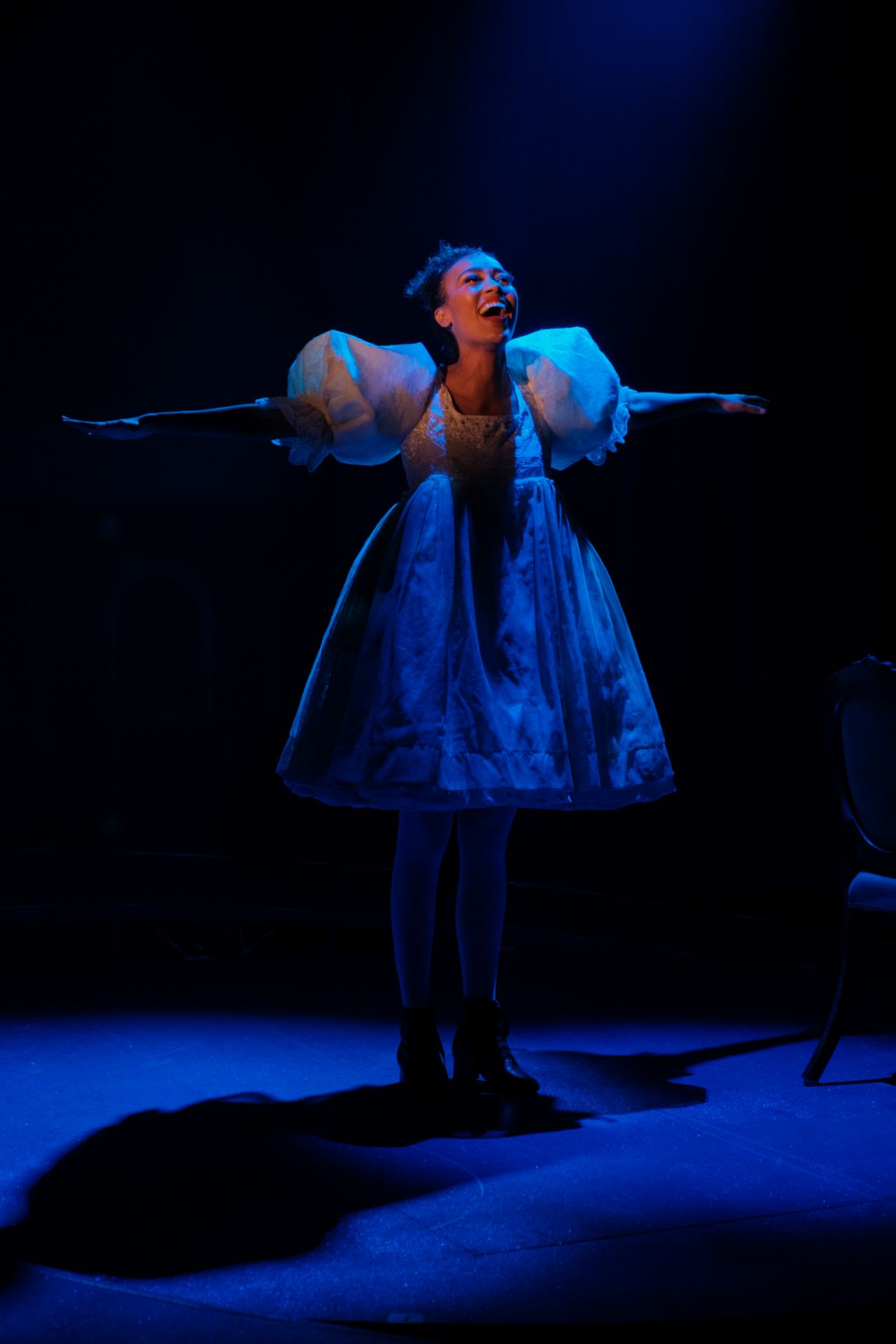
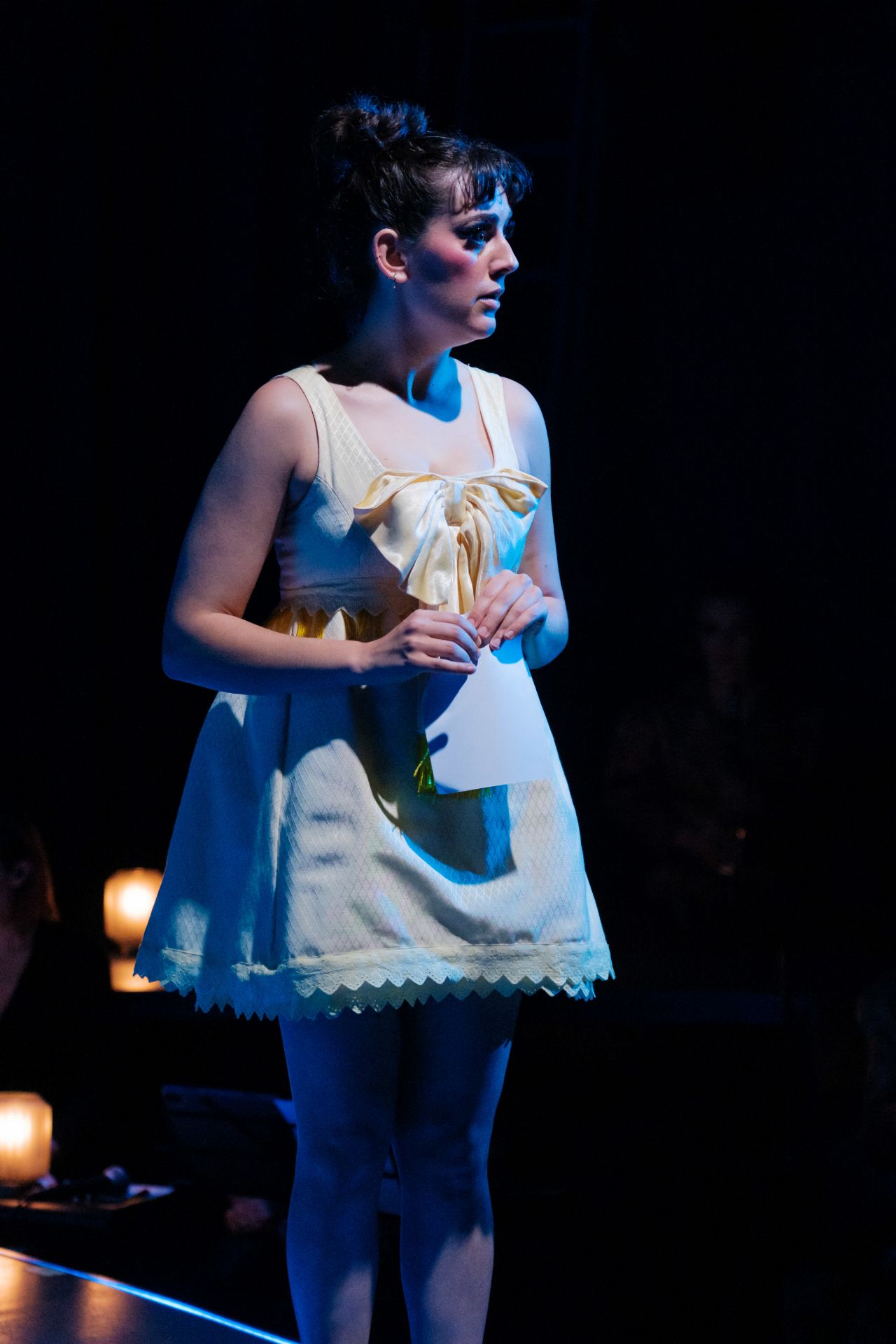
Set design by Tyler Hawkins provides a multitude of performance spaces, trying its best to accommodate a show that often feels poised to burst at its seams, with its irrepressible thirst for action and unbridled exuberance. Costumes by Nicol & Ford address the need for accuracy in terms of personality types within a particular historical epoch, but also satisfies our desire for something more flamboyantly theatrical, offering exquisite elevation to a story involving Russian nobility of a bygone era. Also very visually pleasing, are lights by Veronique Benett, who brings a sense of unmistakable lavishness to proceedings, unabashedly extravagant with all the embellishments being rendered.

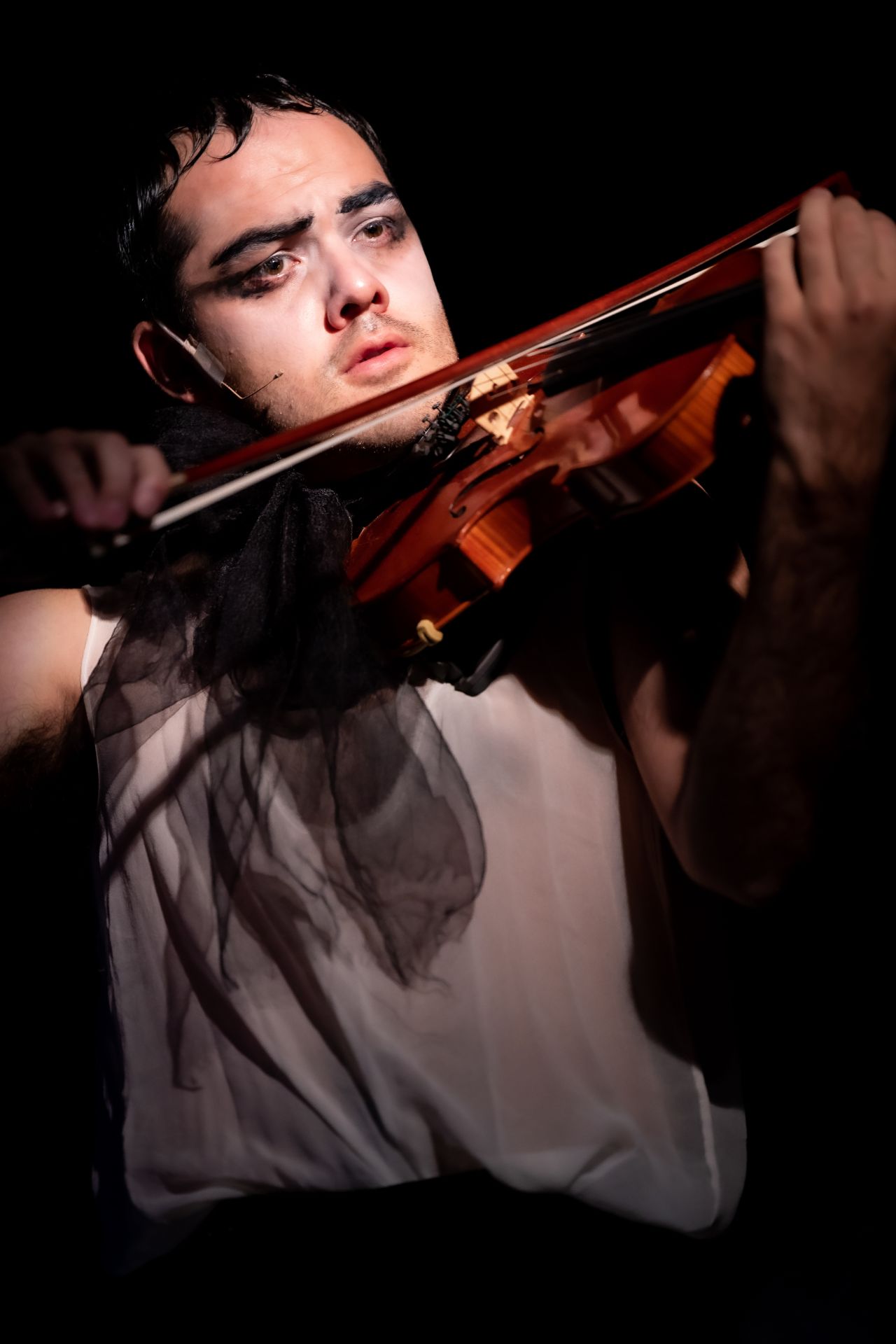
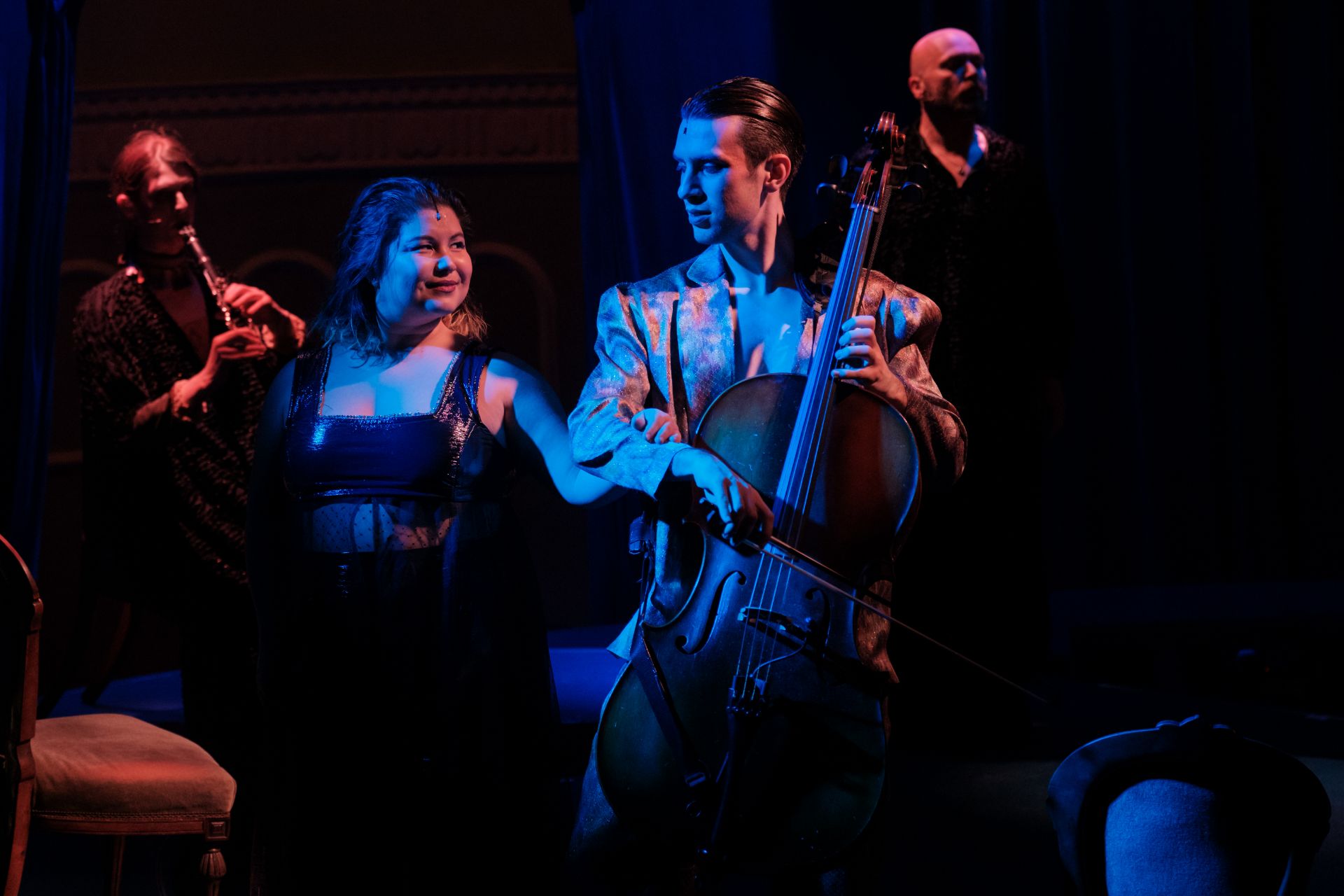
Claire Healy’s musical direction is an outstanding feature of the show, exciting with its immense inventiveness, able to connect powerfully without relying only on conventional strategies of the genre. It is noteworthy that music is performed by the cast, who seem to be in constant motion, every artist completely dazzling with all that they deliver on this lively stage.

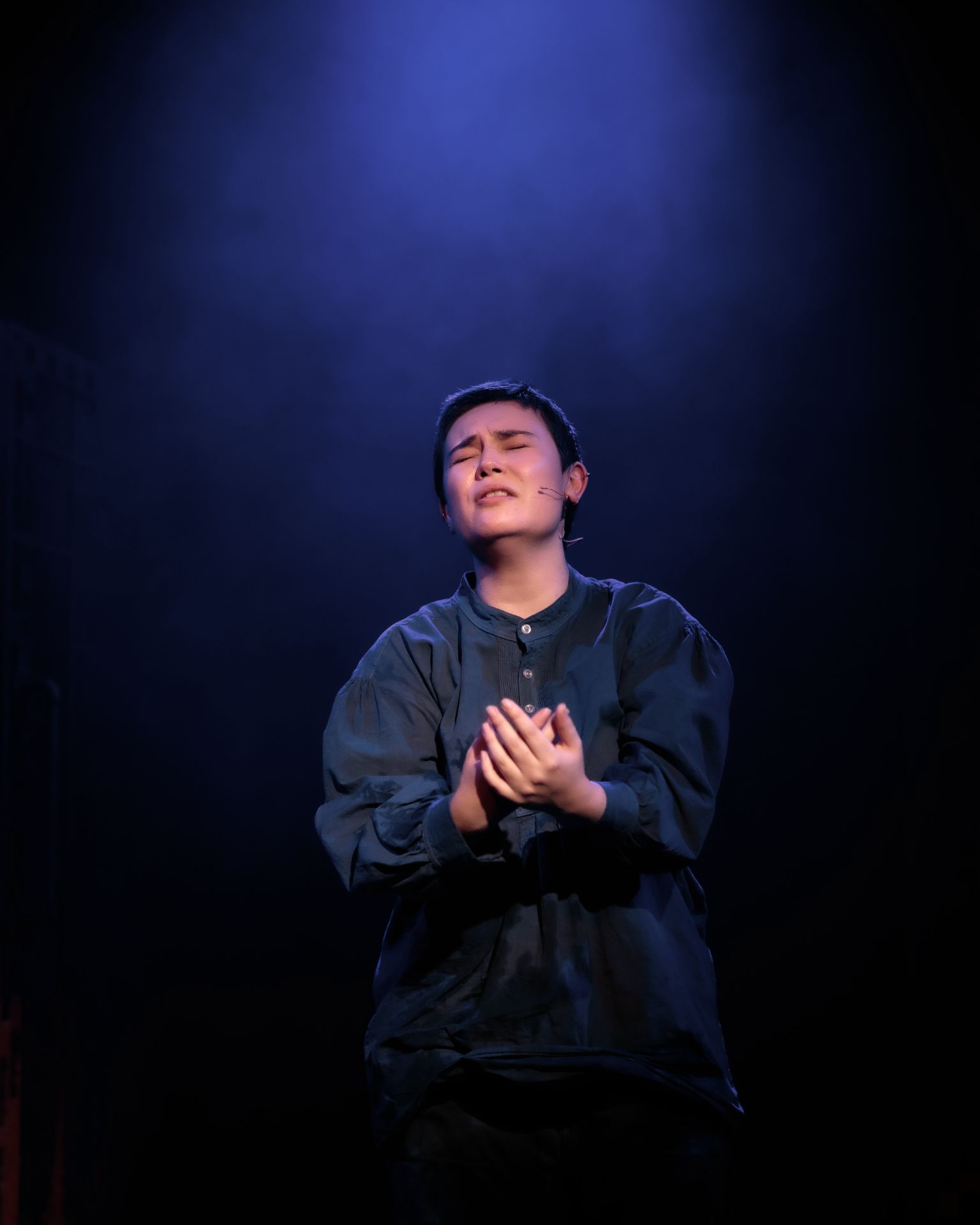
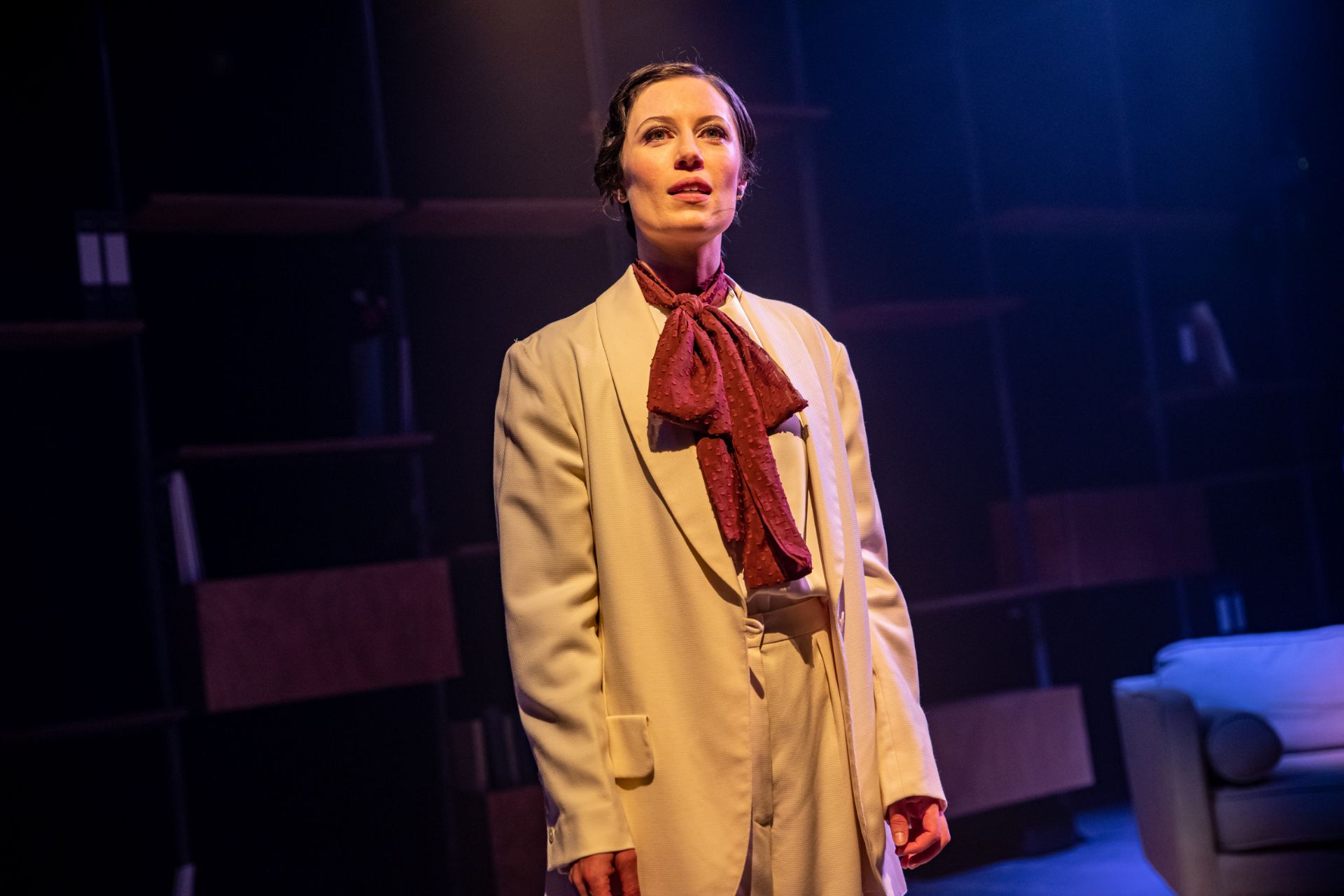
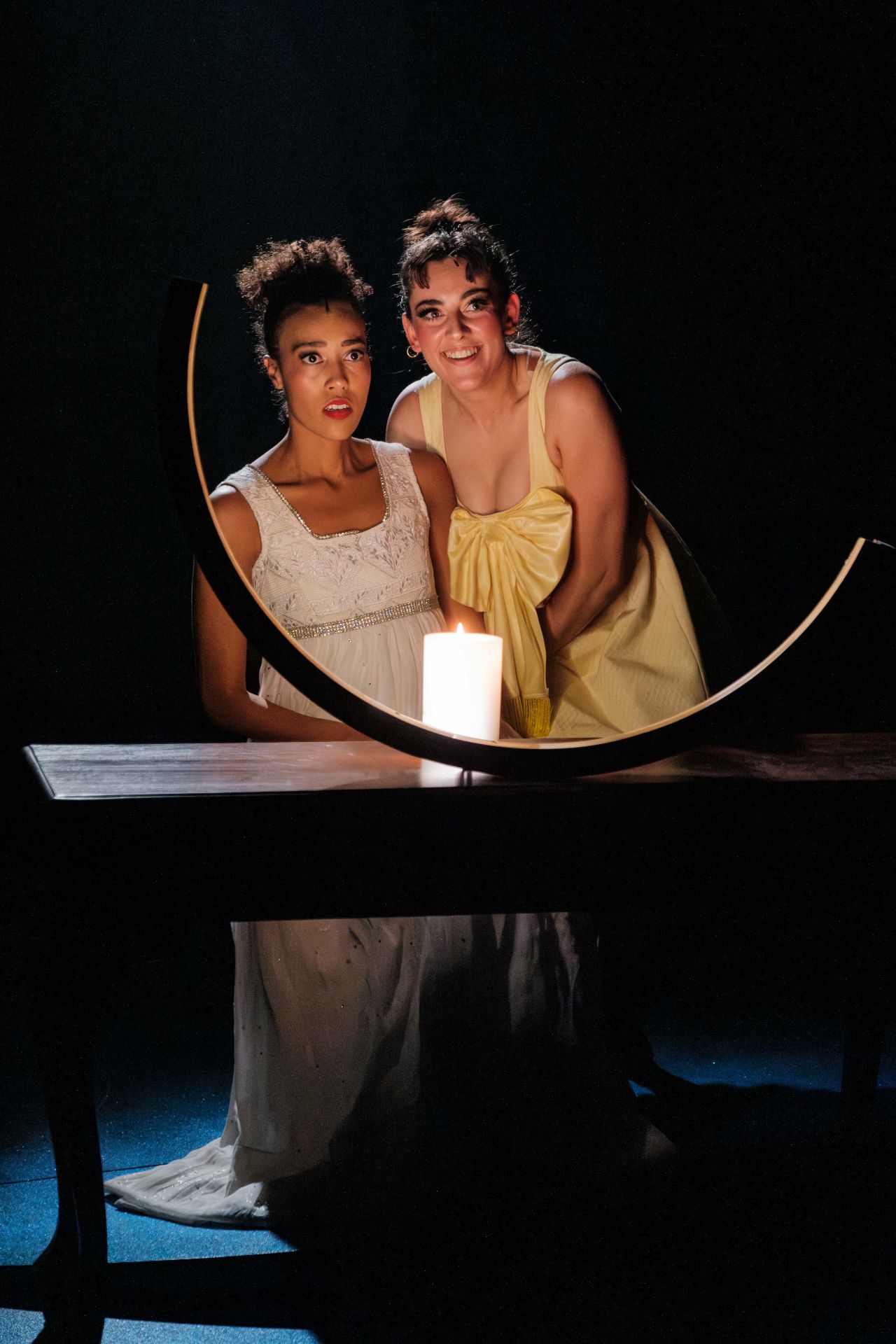
Grace Driscoll as Natasha sings every note with a delicate beauty, and along with the compelling presence she harnesses for the role, keeps us mesmerised and intrigued. Zoy Frangos too is thoroughly persuasive as Pierre, unforgettable for his honeyed tone of voice. The pair’s collaboration in the show’s final moments resounds with a rare transcendence, and is not to be missed by fans of the art form. Anatole is played by Jules Pendrith, whose excellent swagger has us simultaneously seduced and repelled. The soulful Kala Gare is remarkable in her magnetic solo “Sonya Alone”, bringing the house down in the production’s singular moment of minimalism.

Art offers exaltation, but not always in predictable ways. At the theatre, in this town, we are accustomed to a dependence on the content of stories, rather than the very act of telling them, to offer inspiration. On this occasion, the body understands more than the mind, and that is something we simply must learn to trust and listen.
www.darlinghursttheatre.com

Review: City Of Angels (Hayes Theatre)

Venue: Hayes Theatre Co (Potts Point NSW), Jun 23 – Jul 23, 2023
Music: Cy Coleman
Lyrics: David Zippel
Book: Larry Gelbart
Director: Sam Hooper
Cast: Madeleine Betts, Doron Chester, Chantel Cofie, Sian Crowe, Paul Hanlon, Glenn Hill, Noah Janssen, Katelin Koprivec, Penny McNamee, Mia Morrissey, Conor Neylon, Shannen Alyce Quan, Ethan Rutledge, Marcus Rivera, Aaron Tsindos, Jessica White
Images by Grant Leslie

Theatre review

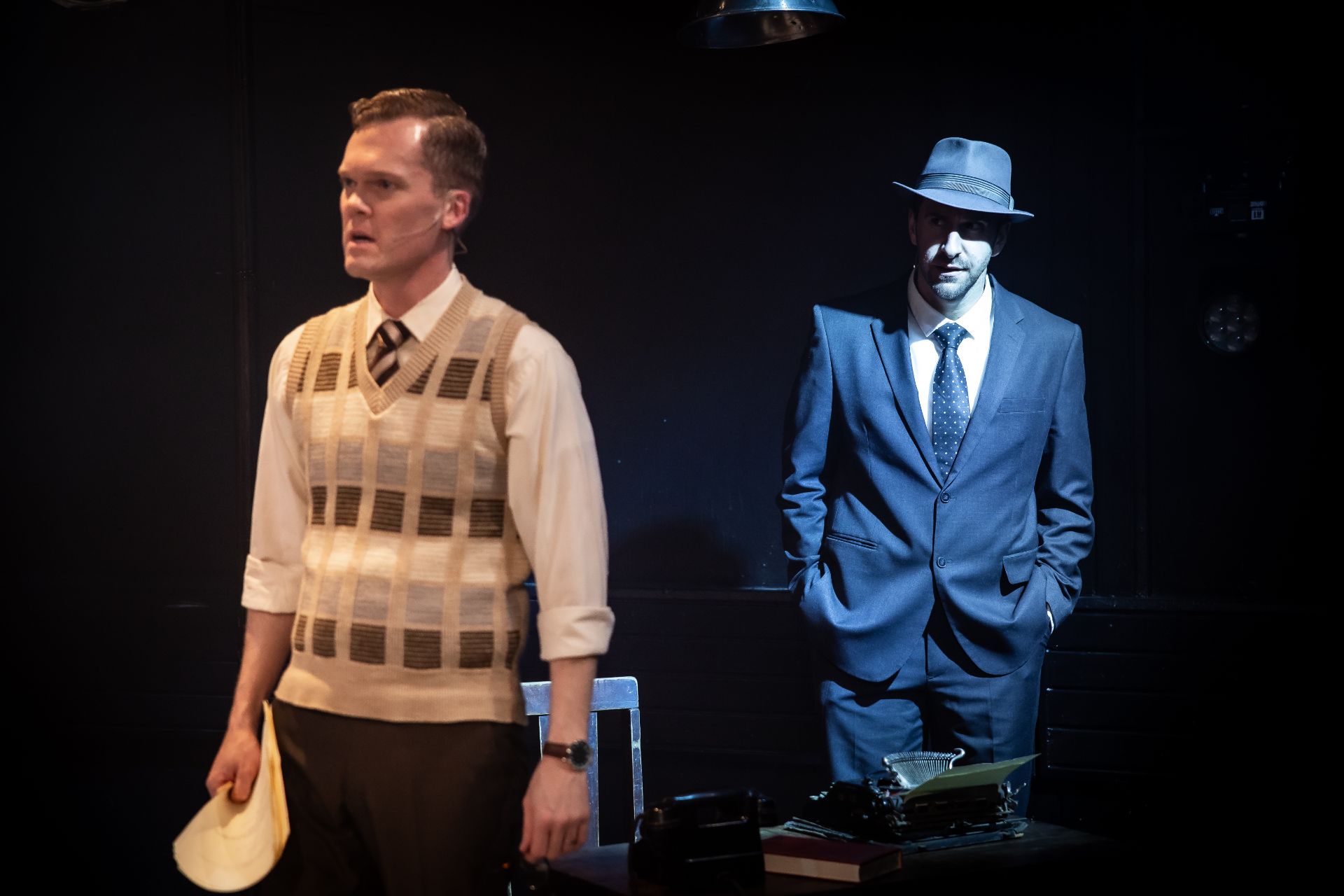
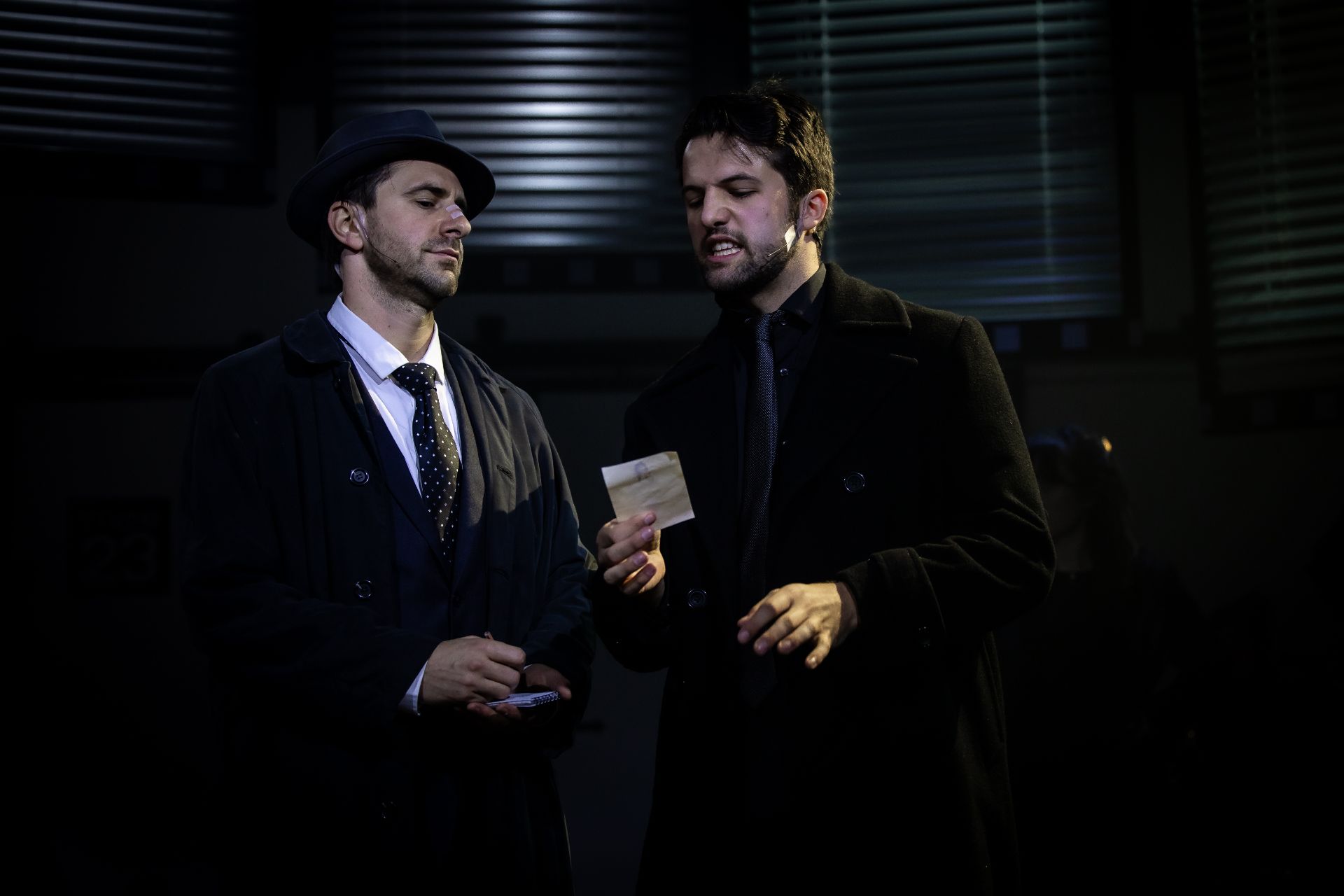
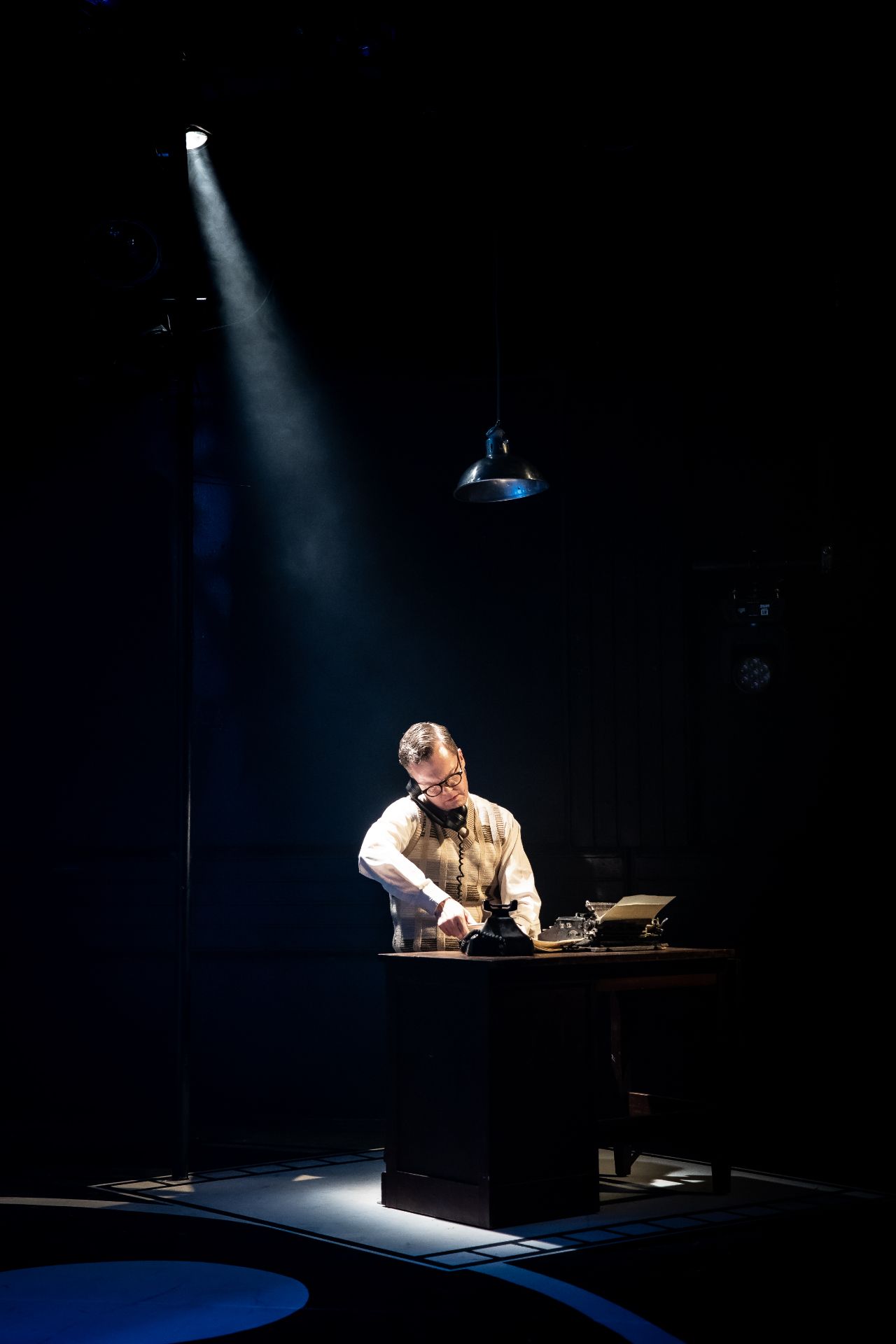
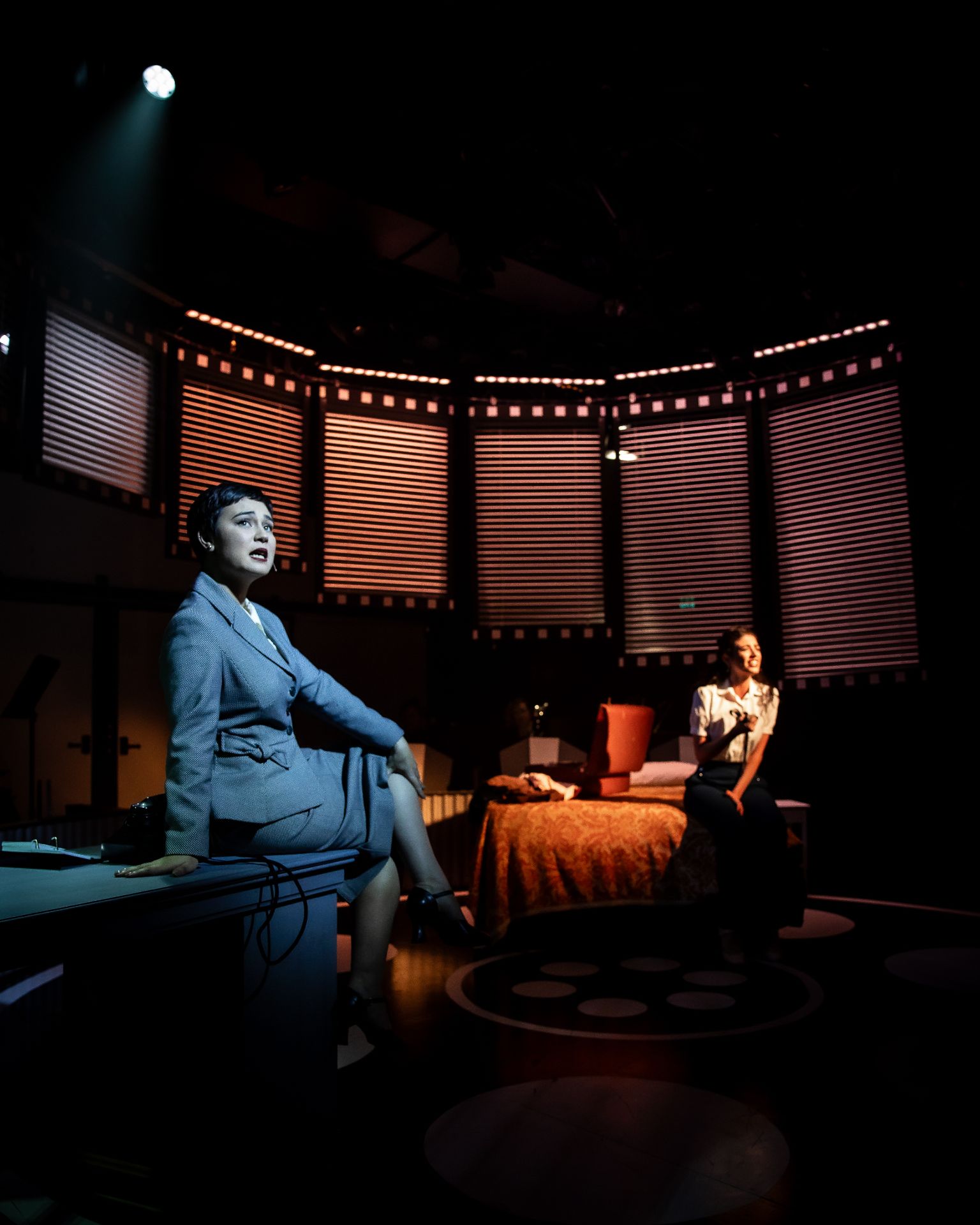
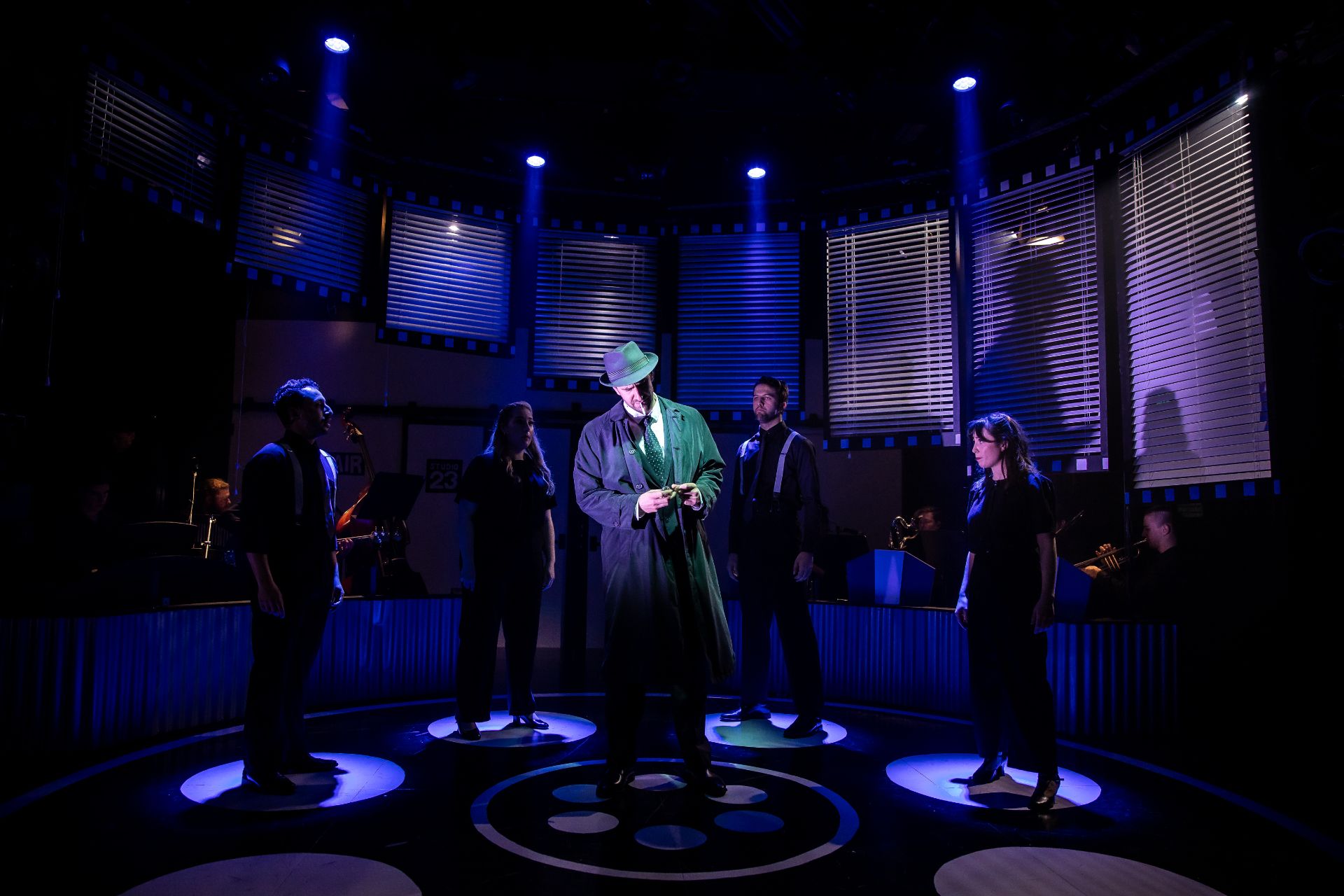
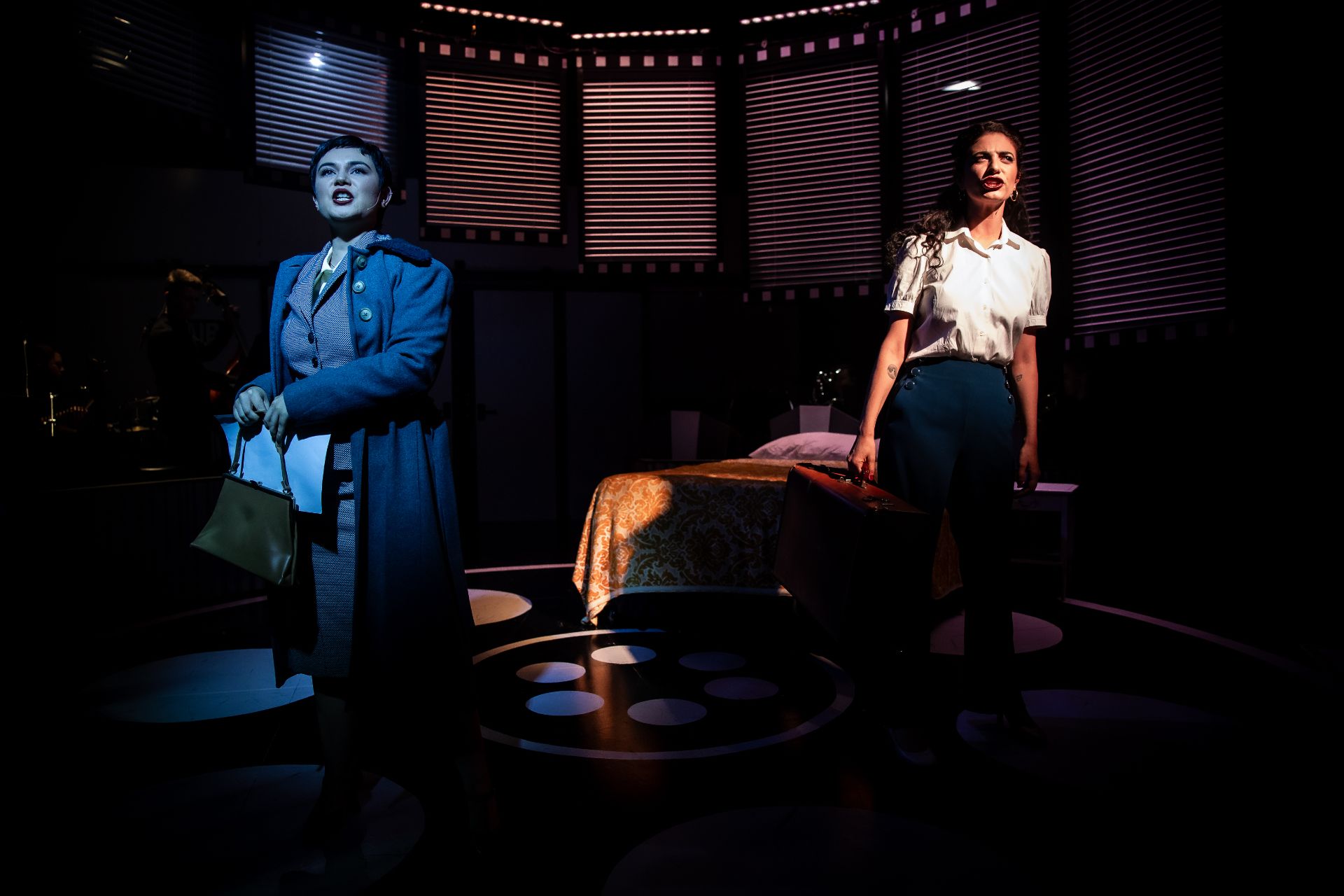
It is the 1940s and Stine is adapting his award-winning novel into a screenplay for Hollywood. Transitioning from one art form to another proves challenging, as he tries to preserve artistic integrity, in what quickly proves to be little more than a commercial venture. In the 1989 musical City of Angels, we see both Stine’s reality as well as a manifestation of his film noir creation, involving a private detective Stone and the various temptresses within his orbit. Despite its highly convoluted plot structure, the payoff is ultimately underwhelming, offering a narrative that feels much too predictable. Furthermore its humour seems not to have stood the test of time, although it must be said that music composition is its silver lining, with every song proving to be masterfully composed, by the legendary Cy Coleman.

The 3-hour production is valiantly revived by director Sam Hooper, who although demonstrates passionate verve, lacks inventiveness and an eye for detail. City of Angels not only requires great ambition, it demands a meticulousness and sophistication that few are able to muster. There is an evident lack of polish in the set design by Simon Greer, which can be blamed for the many clumsy, and noisy, scene changes. Lights by James Wallis attempt to create a sense of delineation between real and reel, but is in general too muted and lifeless. Costume designs by Esther Zhong are more accomplished, able to instinctively convey personality types of the many characters we encounter.

Music direction by Abi McCunn and Damon Wade, is the unequivocal highlight, greatly evocative of the big band era, with just seven musicians delivering all that is necessary to take us back in time, sonically at least. Singing is also of a high standard, with Glenn Hill and Aaron Tsindos (as Stine and Stone respectively), leading a cast that is never short of dedication and commitment. More memorable performances include Mia Morrissey playing dual roles of Gabby and Bobbi, introducing sensuality along with authenticity, to a production that tries to negotiate the outmoded and problematic portrayals of womanhood. Marcus Rivera is unforgettable in the number “All You Have to Do Is Wait” as Muñoz, full of intensity and unapologetic in a rare singular moment of candour, that feels suddenly resonant.

In 2023 it is perhaps no longer a surprise, that to make money, a portion of a person’s soul has to be sold, along with whatever labour is entailed in the transactive process. Just several decades ago, it had felt poignant to see an artist losing their way, when trying to exploit the big-money world of commercialised entertainment. Today at a time of late capitalism, idealism for artists seems a distant memory, yet we persist in searching for something of greater value, than what can be commodified. Within that spirit, we understand that money can never completely encompass what we do, that it is always the immaterial that represents our true purpose, even as we learn to accept that that which is material, should no longer be seen only as the evil adversary.

www.hayestheatre.com.au | www.jrpaustralia.com

Review: Beauty And The Beast (Capitol Theatre)

Venue: Capitol Theatre (Sydney NSW), from Jun 14 – Dec 24, 2023
Book: Linda Woolverton
Lyrics: Howard Ashman, Tim Rice
Music: Alan Menken
Director: Matt West
Cast: Rohan Browne, Nick Cox, Rodney Dobson, Jackson Head, Gareth Jacobs, Shubshri Kandiah, Hayley Martin, Orlando Steiner, Alana Tranter, Jayde Westaby, Brendan Xavier
Images by 

Theatre review
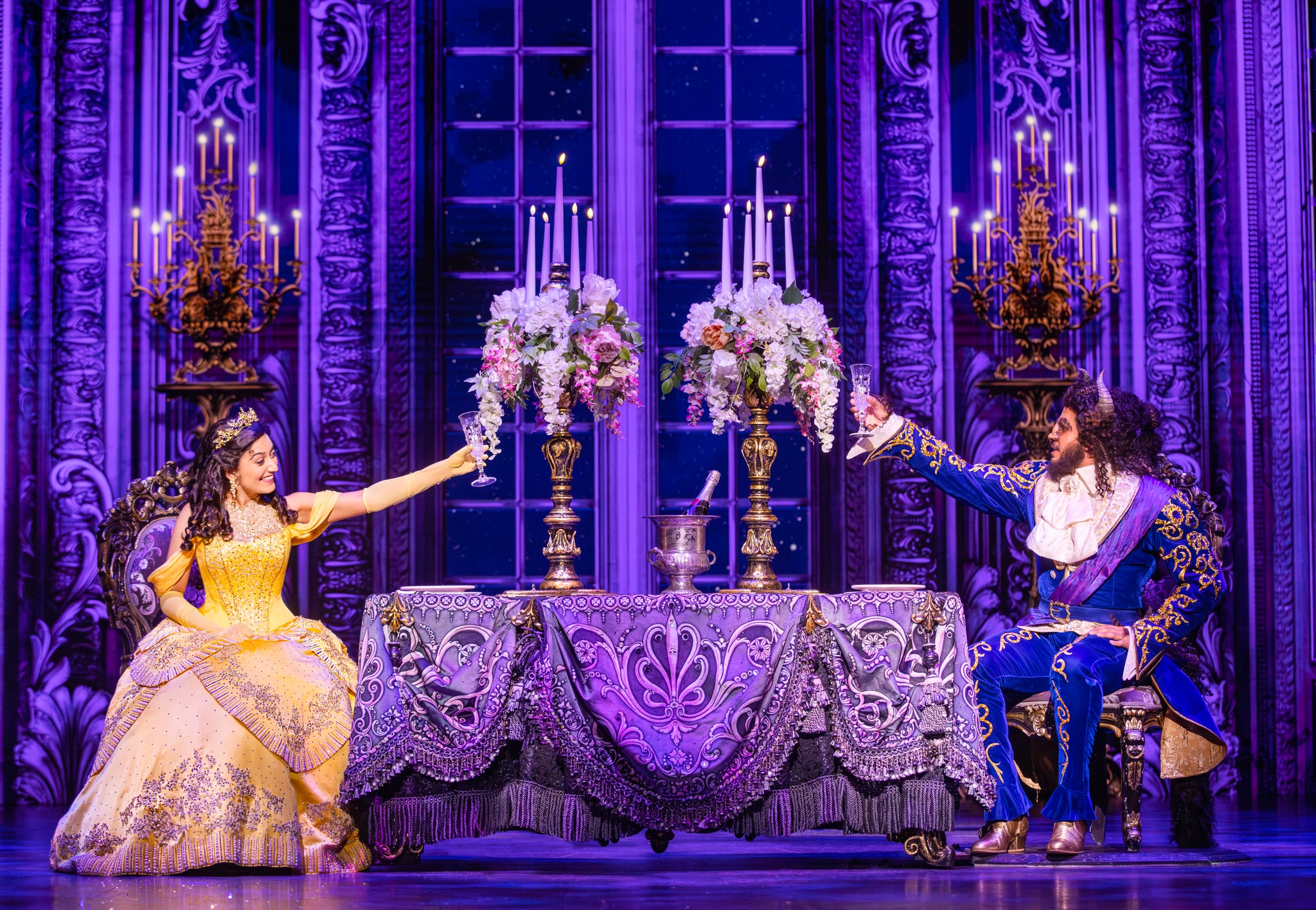
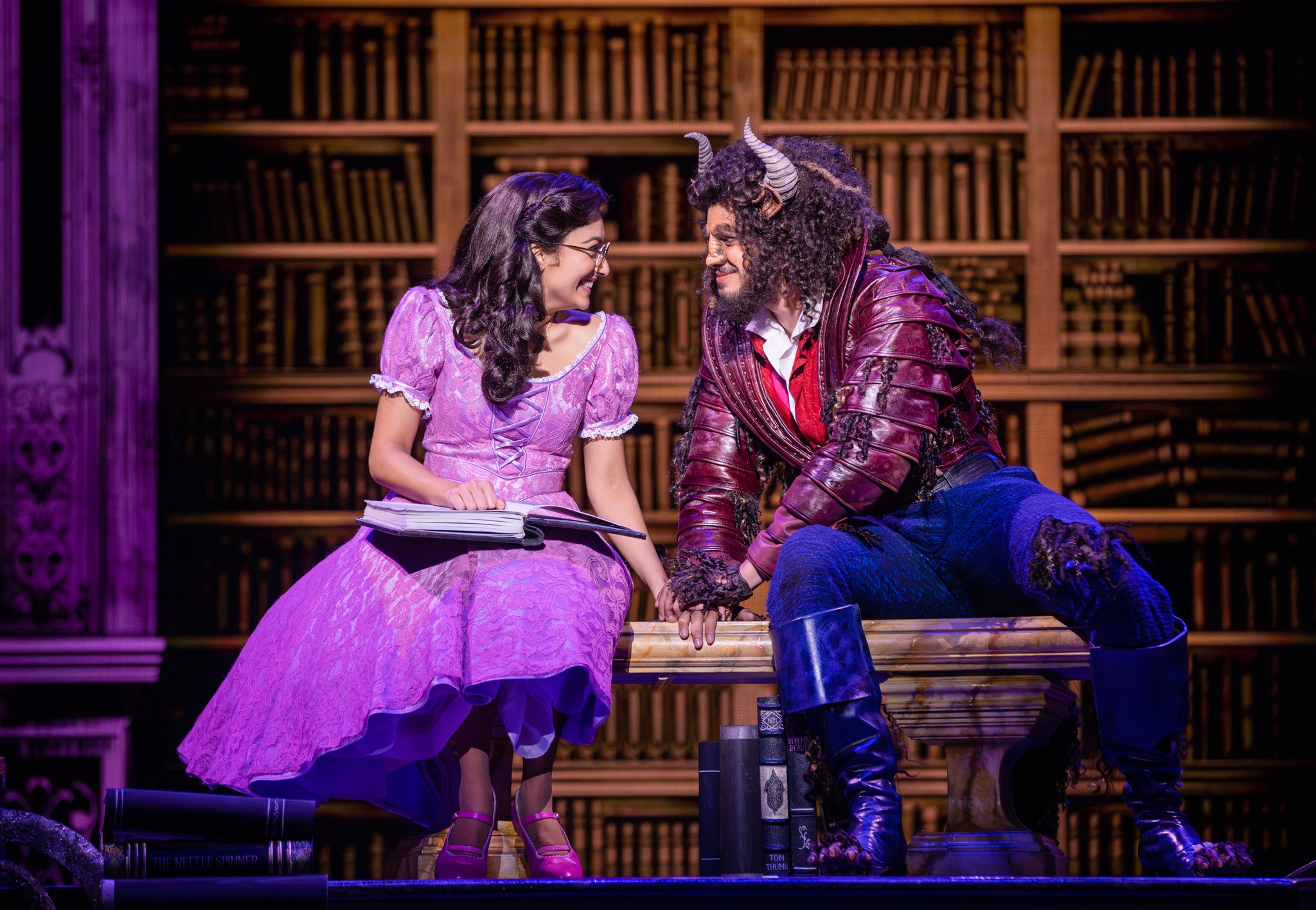
Belle is an avid reader, who lives an idyllic life with her father in a village somewhere in France. Just as she begins to express the need for something more, adventure descends upon her simple provincial existence, when her father is held captive in the castle of the abominable Beast. This stage musical version of Beauty and the Beast first appeared on Broadway in 1994, when the Disney corporation had begun to deviate from the damsel in distress narrative. Even though Belle finds love in a prince, we are thankful that her sense of identity extends far beyond romance and marriage.

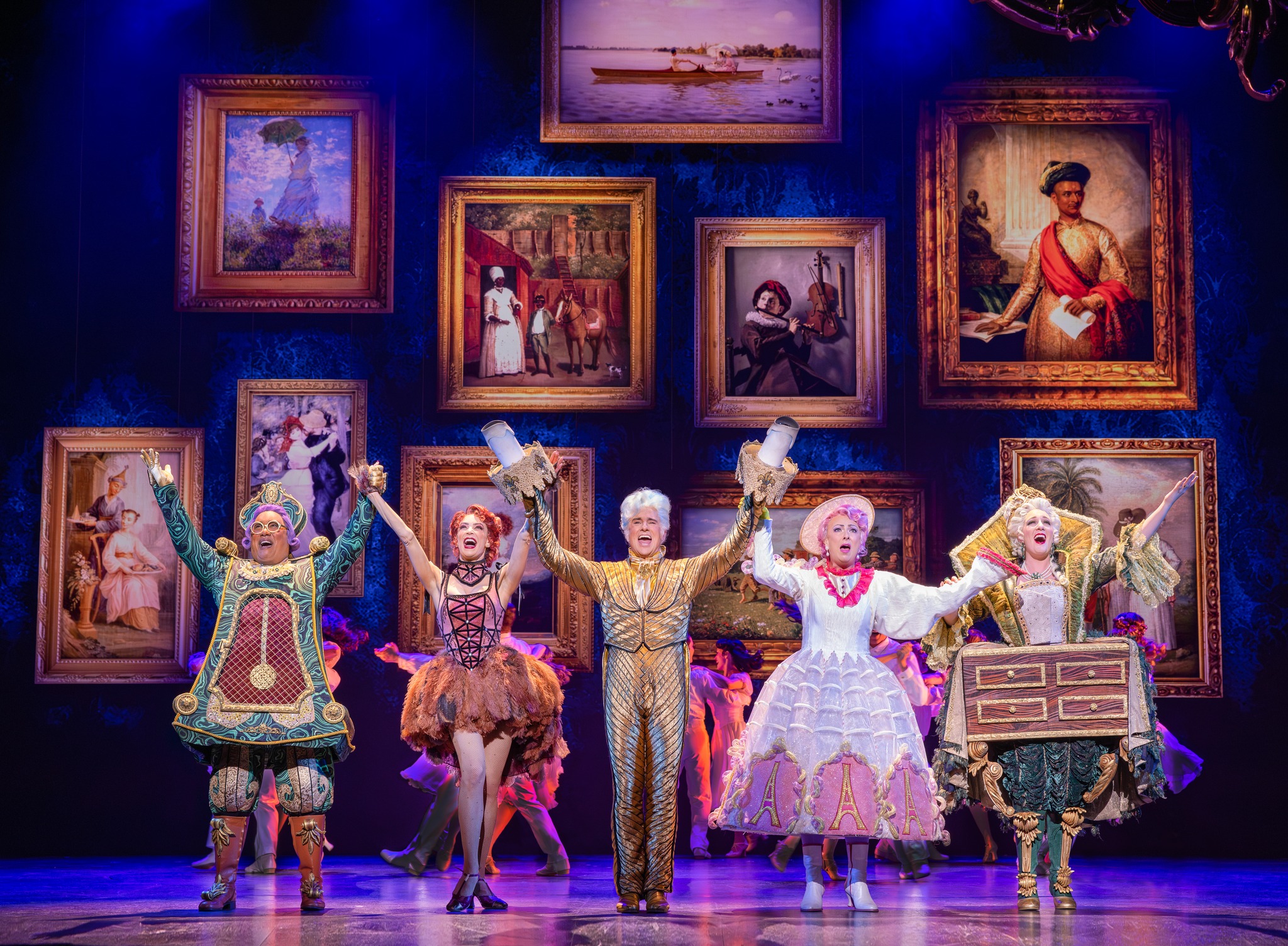
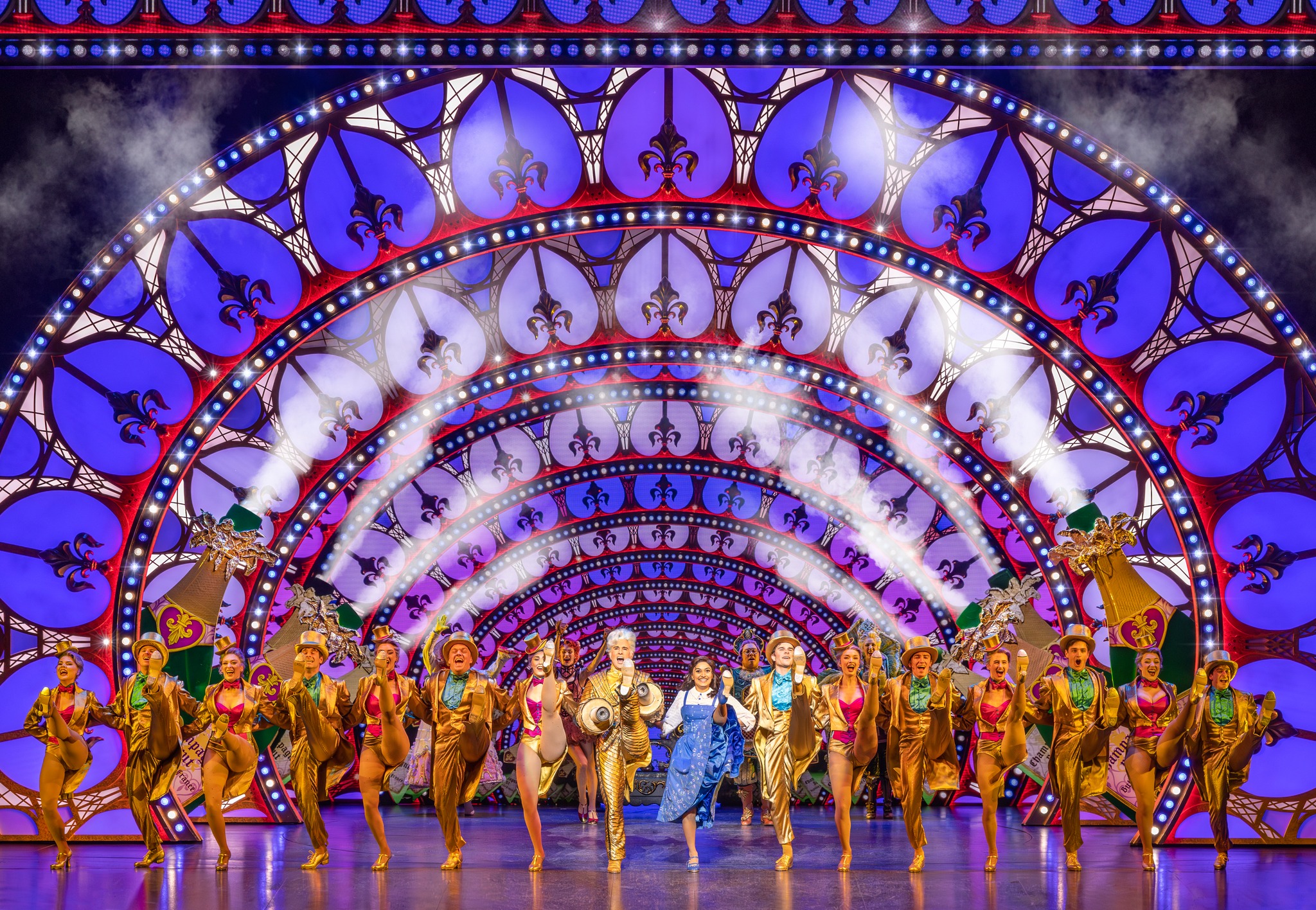
Revisiting the show in 2023, it is Belle’s strength and independence that truly resonates. The production benefits greatly from advancements in technology over these three decades, for some seriously spectacular staging especially notable in the world famous “Be Our Guest” number among others, but the effectiveness of the show is essentially predicated on a narrative about the celebration of humanity. All Beast and his servants want, is to become human again. All Belle wants, is freedom for herself and for her father. It turns out that love is the phenomenon that delivers for everyone at the end, but we know that humanity is the real and fundamental concern in Beauty and the Beast.

Exceptional stage craft in this production, offers an unparalleled experience of theatrical magic, capable of delighting even the most jaded of audiences. It delivers the kind of sensation that no other art form can; the thrills from witnessing live performance at this level of accomplishment, is quite transcendent. The artistry of a musical performer though, remains crucial to its success, and its star Shubshri Kandiah is so electrifying as Belle, one could imagine the show being equally satisfying without all the extravagant trimmings, just as long as Kandiah is present to bring her astounding talent, skill and soulfulness to the piece.

Beast is played by Brendan Xavier, whose flawless singing has us completely bewitched, and is surprising with the tenderness he injects, into depictions of a new masculinity much more suited to our contemporary age. Jackson Head as the cocky Gaston is appropriately conceited and comical, with a precision to his work that proves to be highly engaging. The iconically flamboyant Lumiere is brought to glorious life by Rohan Browne, who demonstrates incredible charisma and power, virtually unmatchable in allure whenever he steps onto the stage. 

Beast can only turn human again when he is touched by love. In order to survive this existence, we all go through processes of dehumanisation, where over time we become harder, colder, closed off and anesthetised. Romance will not be every person’s salvation, but we can fight determined, against that which wants to turn us brutal and unfeeling. People are capable of loving again, and layers of calluses can be removed, to reveal a weathered but stronger heart, ready for bigger and better.

www.beautyandthebeastmusical.com.au

Review: Rabbits On A Red Planet (Flight Path Theatre)

Venue: Flight Path Theatre (Marrickville NSW), Jun 7 – 24, 2023
Book and Lyrics: Irving Gregory, Andy Leonard
Music: Ryley Gillen
Director: Isaac Broadbent
Cast: James Burchett, Sara Camara, Isabelle Kohout, Andy Leonard, Jenna Wooley
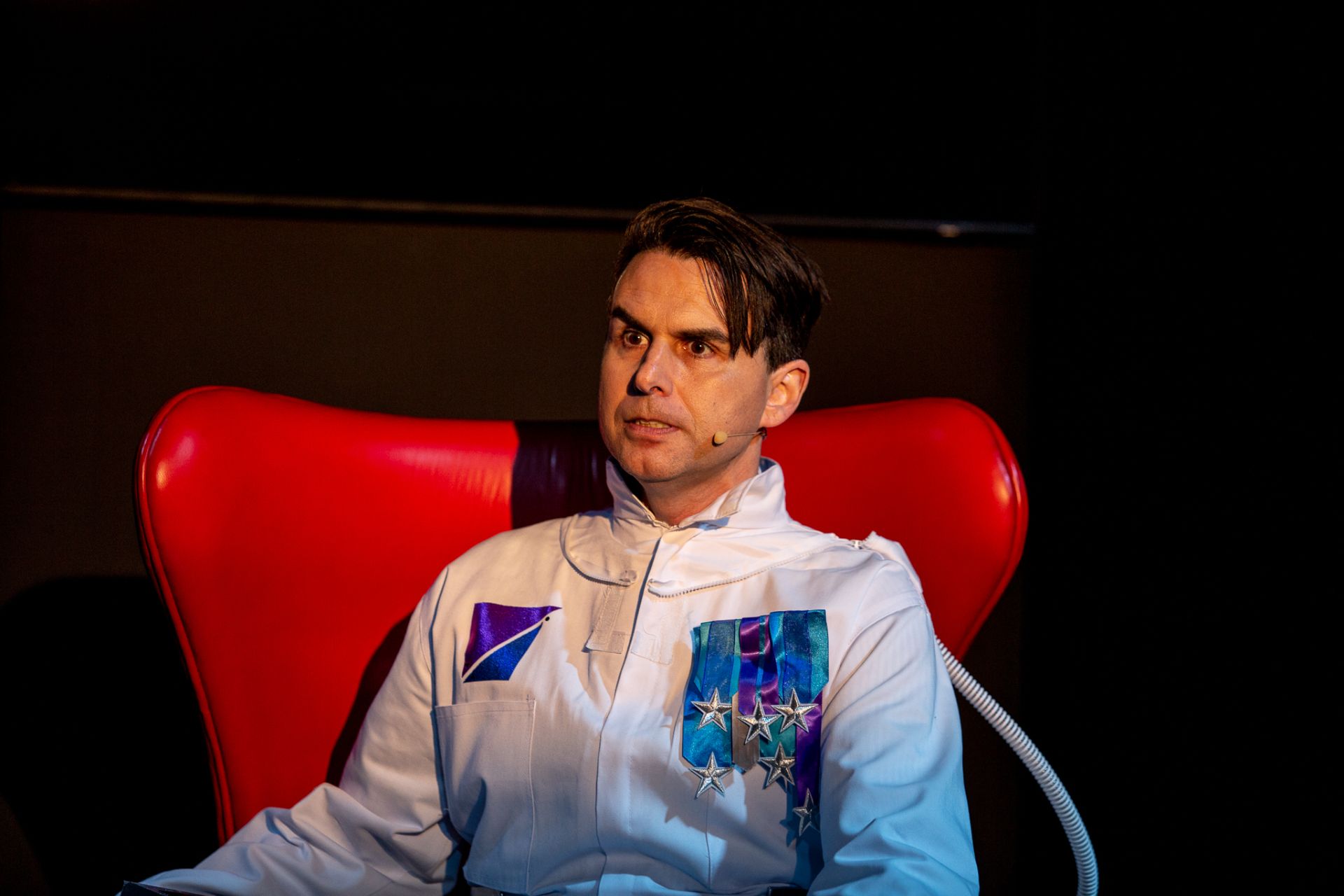
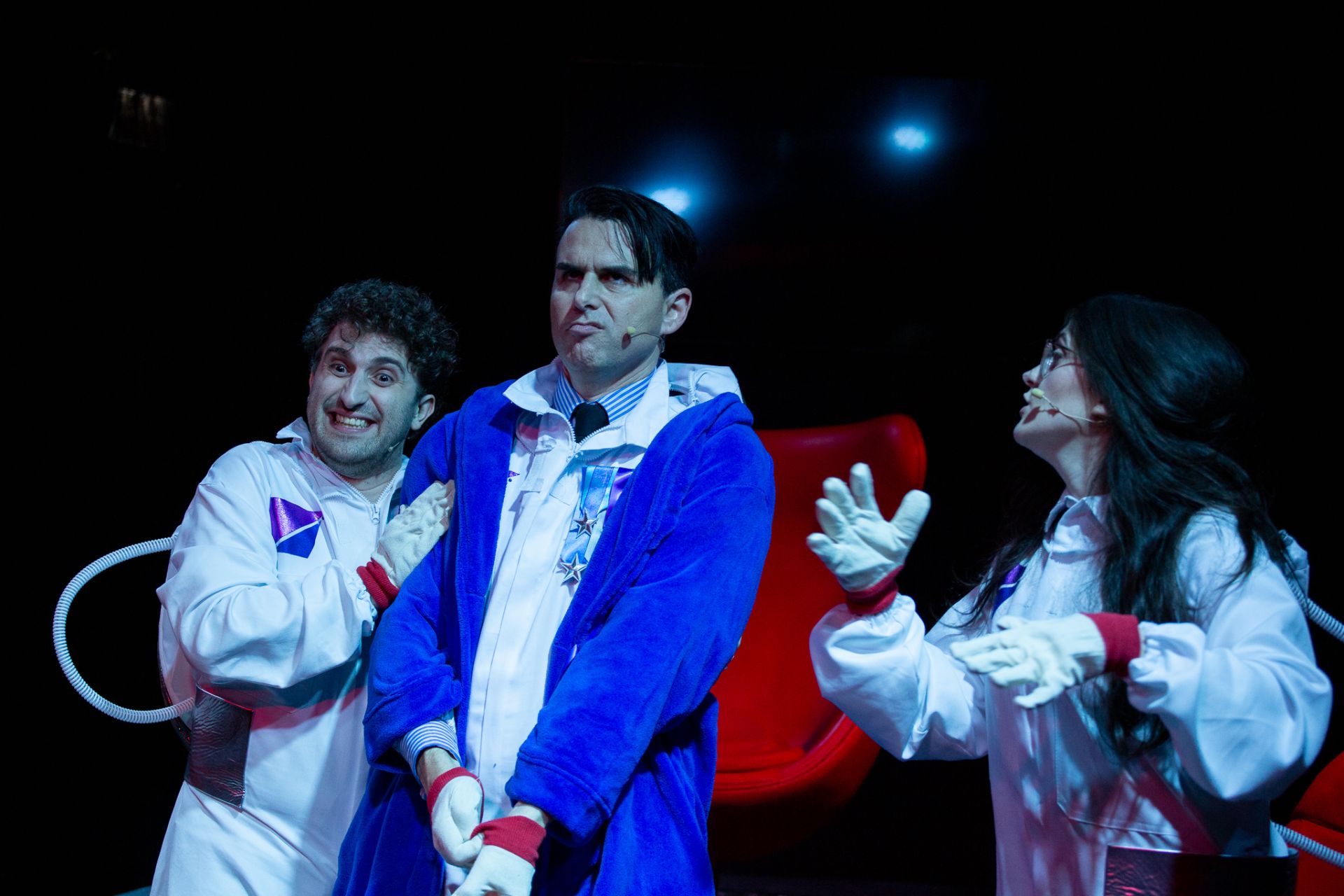
Images by Anthony Stone

Theatre review

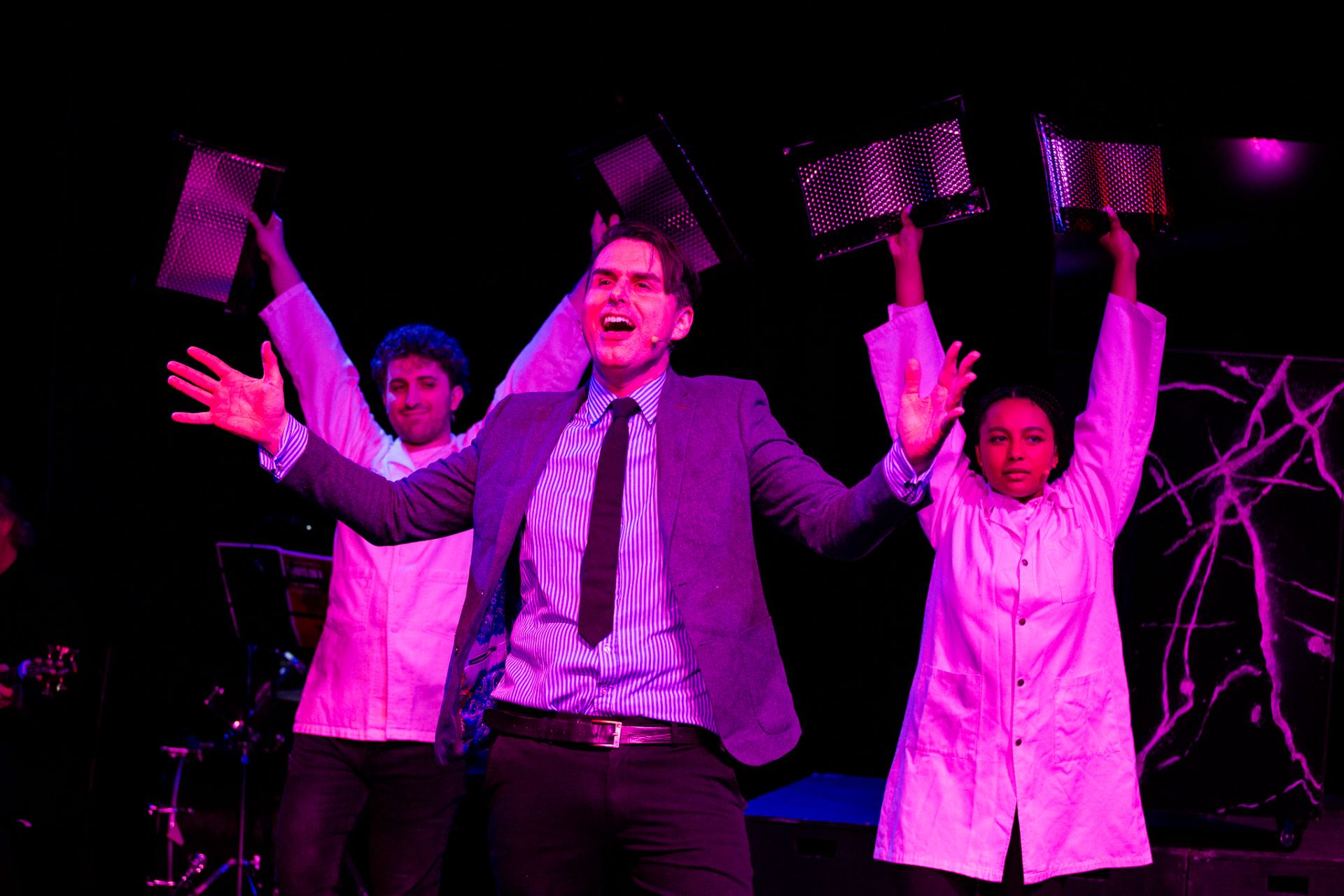
There are giant mutant rabbits running rampant on Earth, and instead of utilising his resources to fix the problem, billionaire Muskas is heading to colonise Mars, so that he can enjoy being king somewhere else. The book and lyrics of Rabbits on a Red Planet are suitably absurd, but they are also relentlessly confusing, making its efforts to amuse appear chaotic and floundering. Composition and music direction by Ryley Gillen can feel overly derivative, but his tunes are not unenjoyable, often with a jaunty character that helps to speed things along.

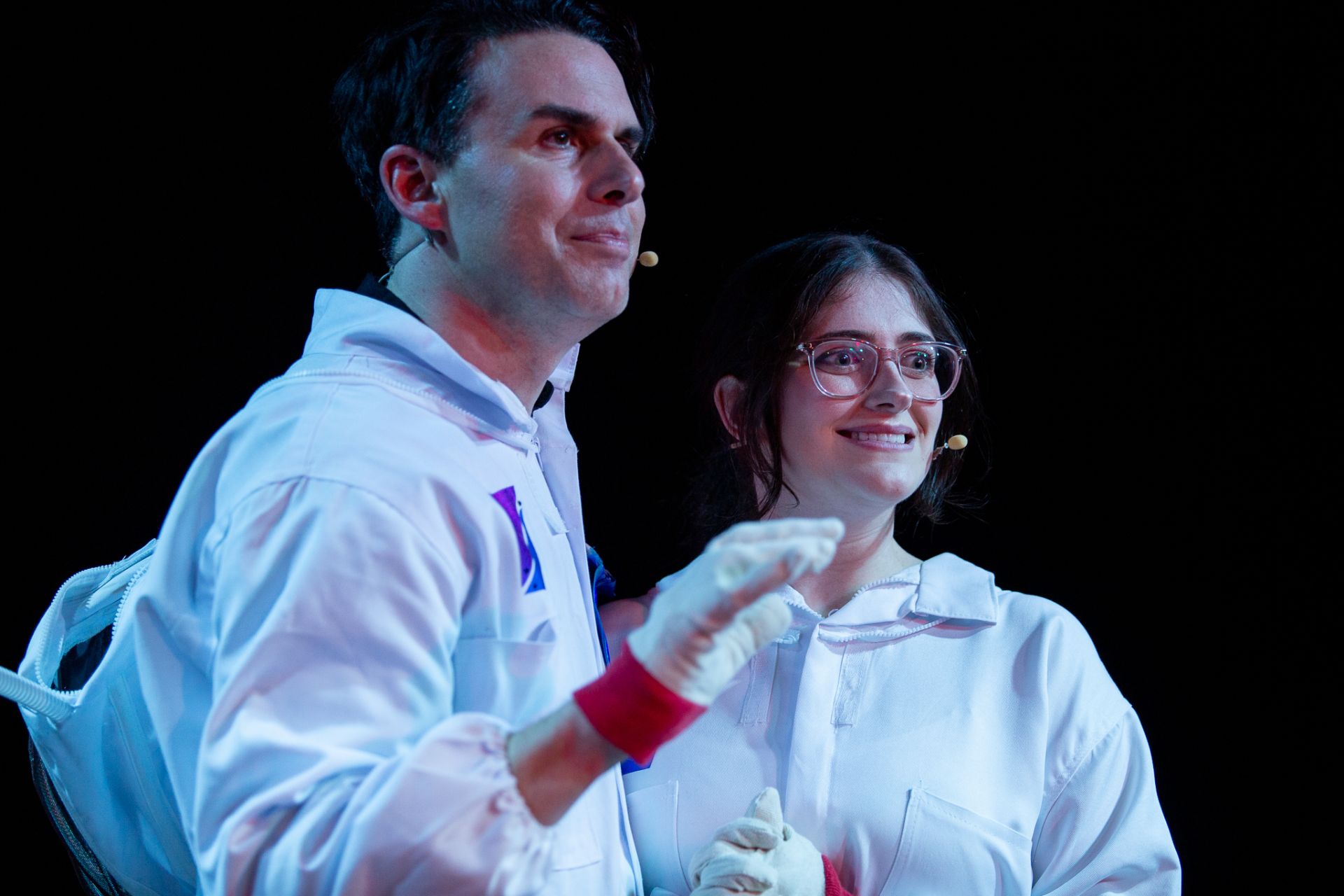
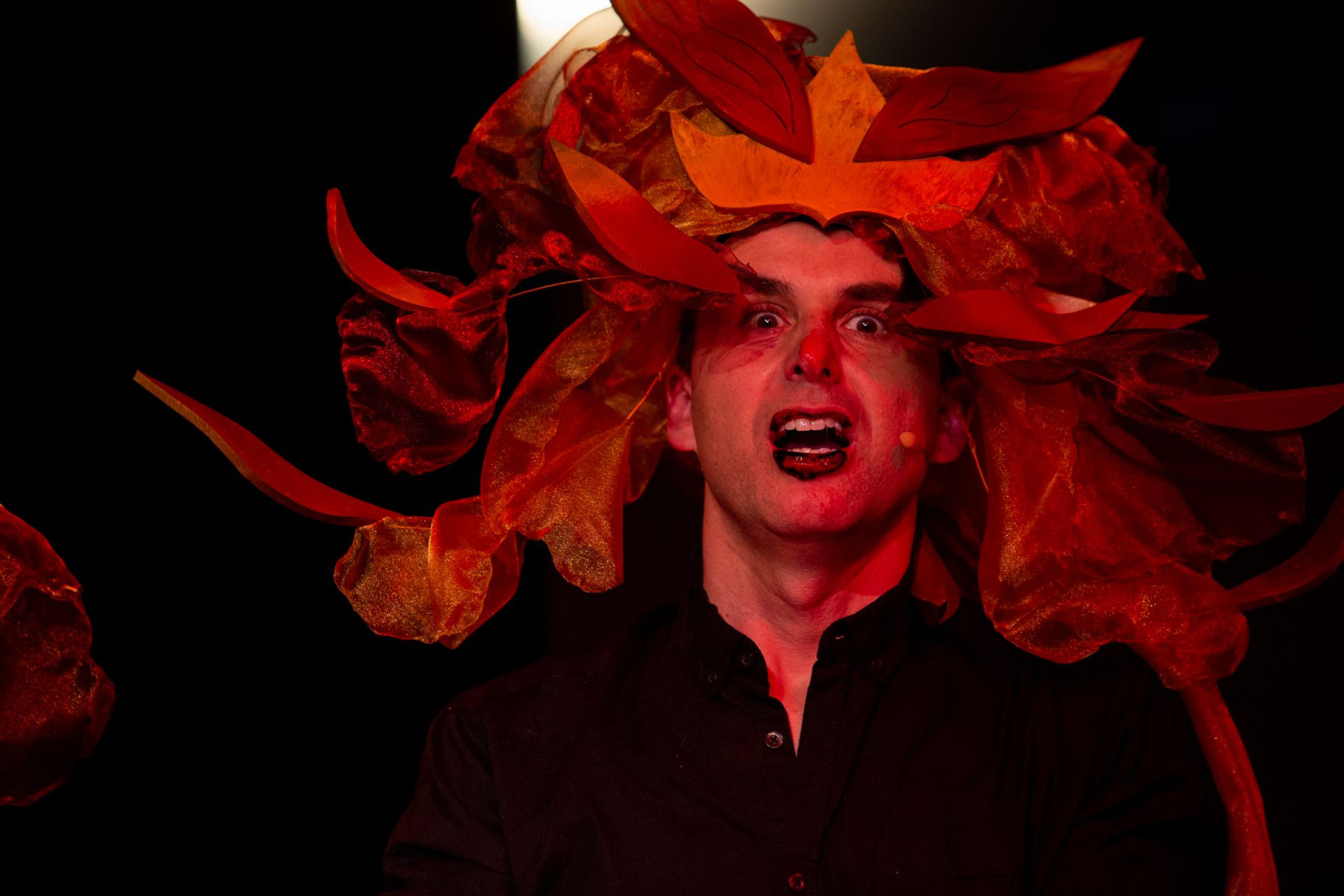
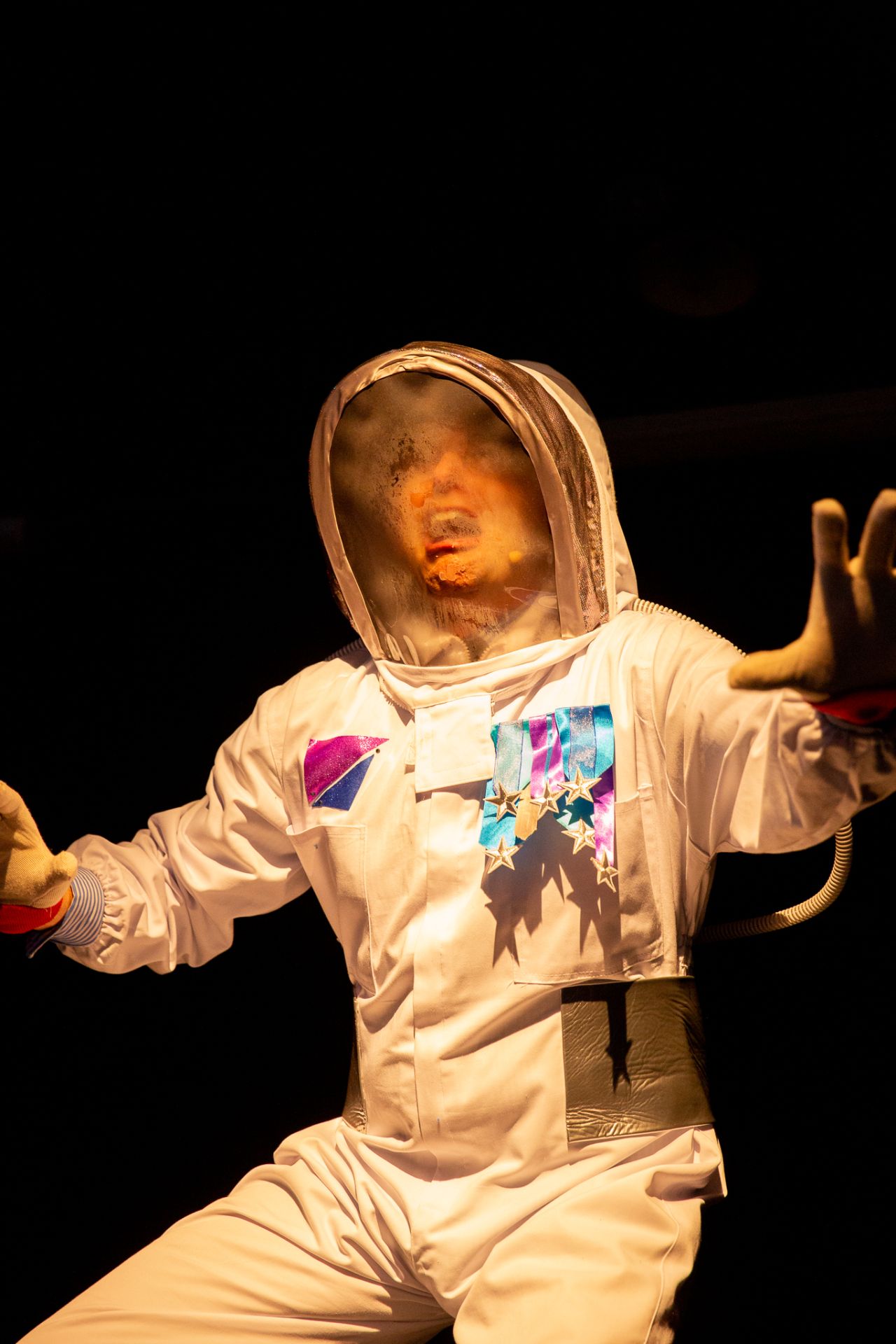
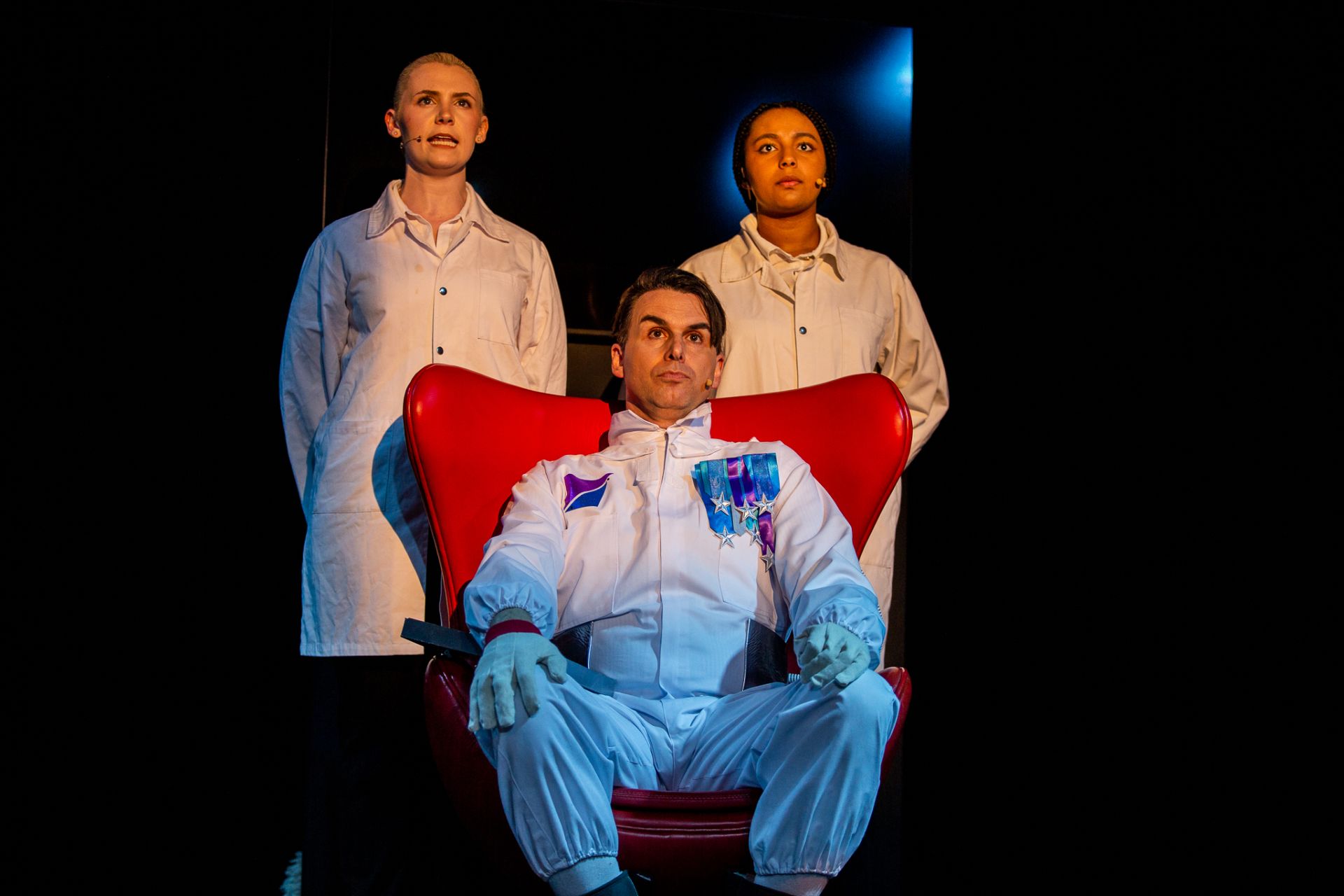
The production is directed by Isaac Broadbent, who tries to institute a sense of polish and order, for a work that seems still to be in its nascent stages. Lights by Julian Dunne have a tendency to look perfunctory and repetitive, although attempts to provide some dynamism to the action can be discerned. Costume design by Alli Sebastian Wolf are memorable for flamboyant headdresses denoting alien life, and for the billionaire’s convincing spacesuits, demonstrating good use of materials that give the staging a touch of elevation.

The cast comprises James Burchett, Sara Camara, Isabelle Kohout, Andy Leonard and Jenna Wooley, all of whom unimpeachable with their level of commitment to the cause, each impressive with the quality of singing they deliver. The band too, is professional with their performance of the score, gratifying with the precision they bring to each number.

The rabbits have grown terrifying, and although they do not come into view, we know what has been done to them, given this sad state of affairs. It is without doubt that humans excel at acts of self-destruction. Whether we are any good at redemption, remains to be seen.
www.flightpaththeatre.org

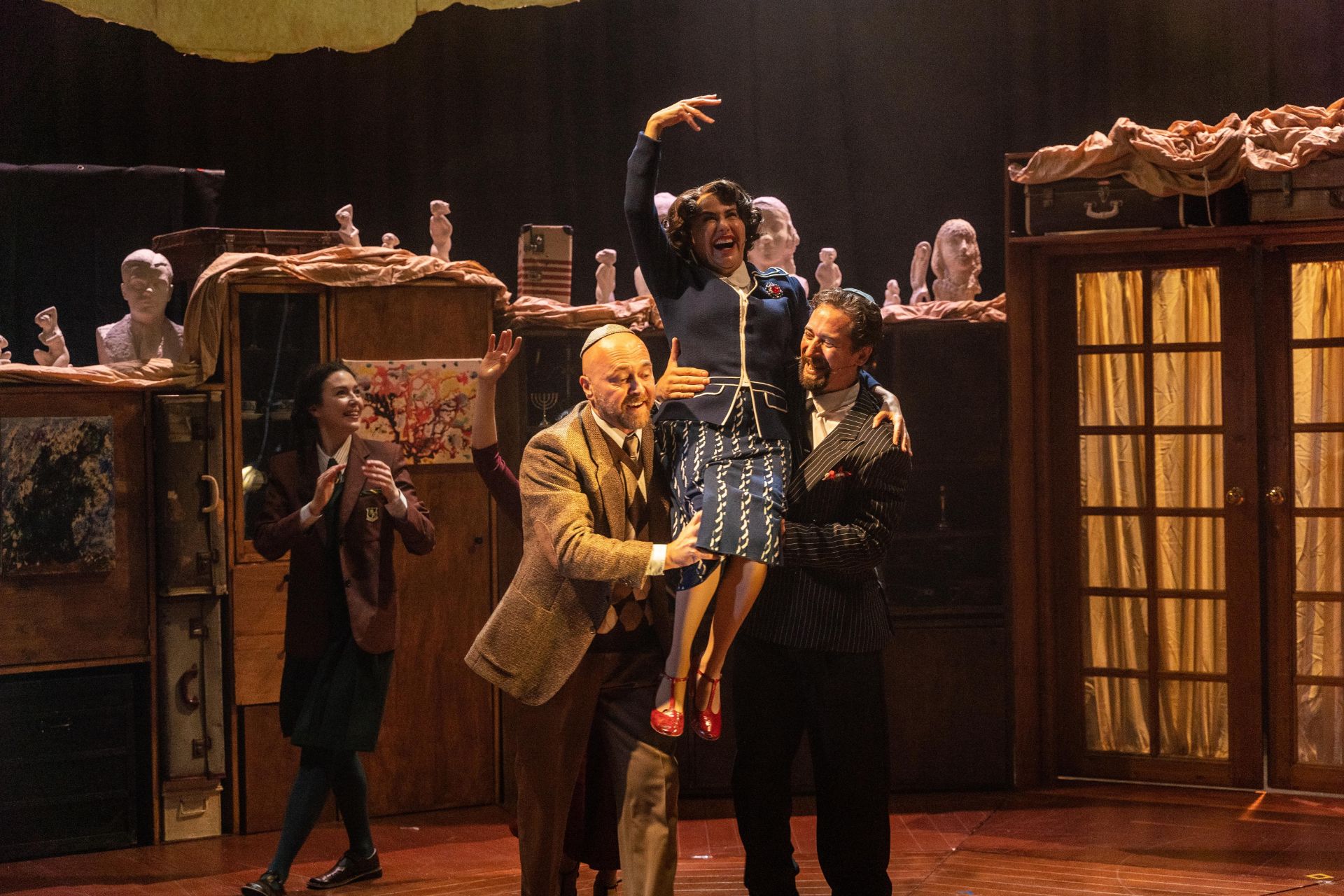
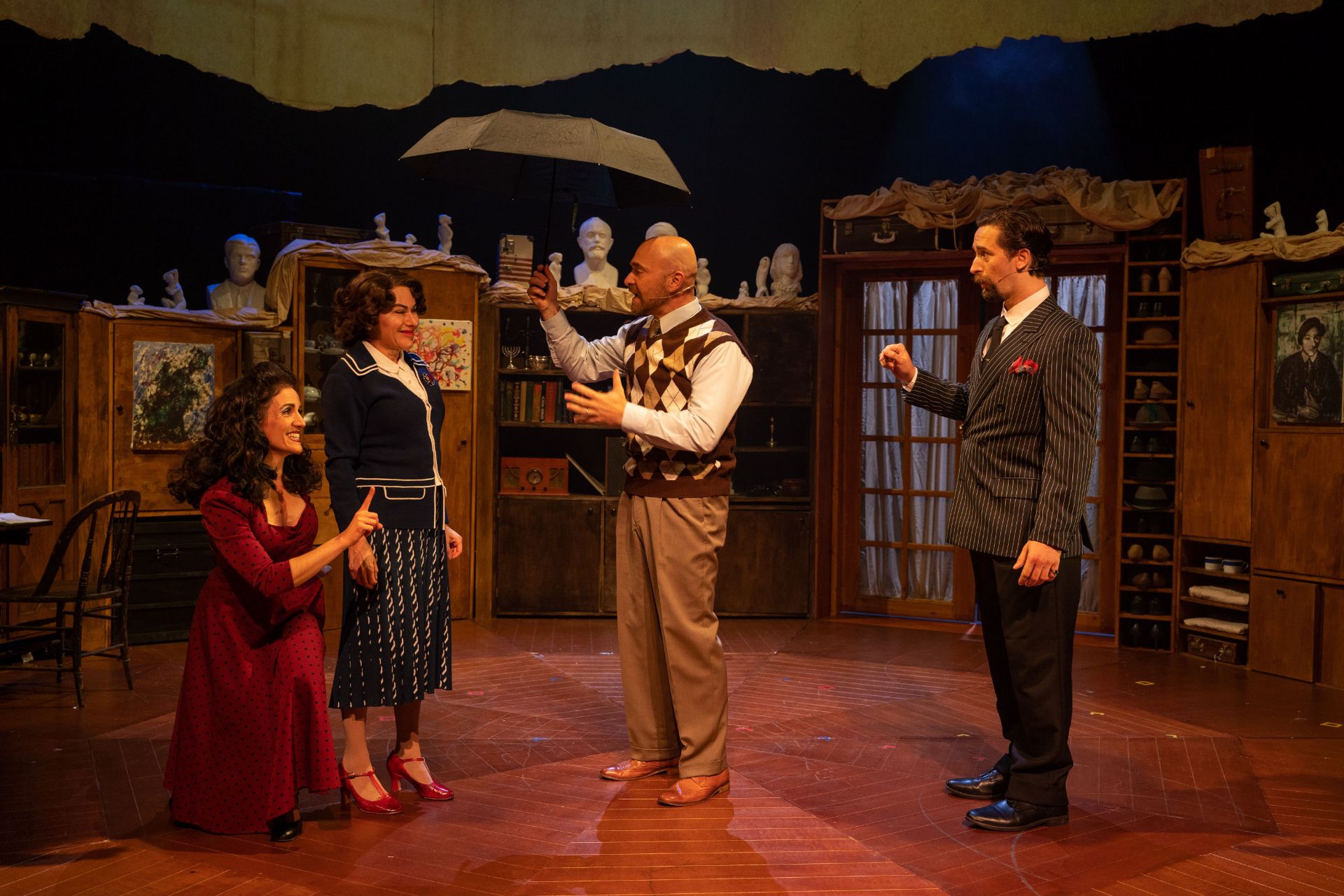
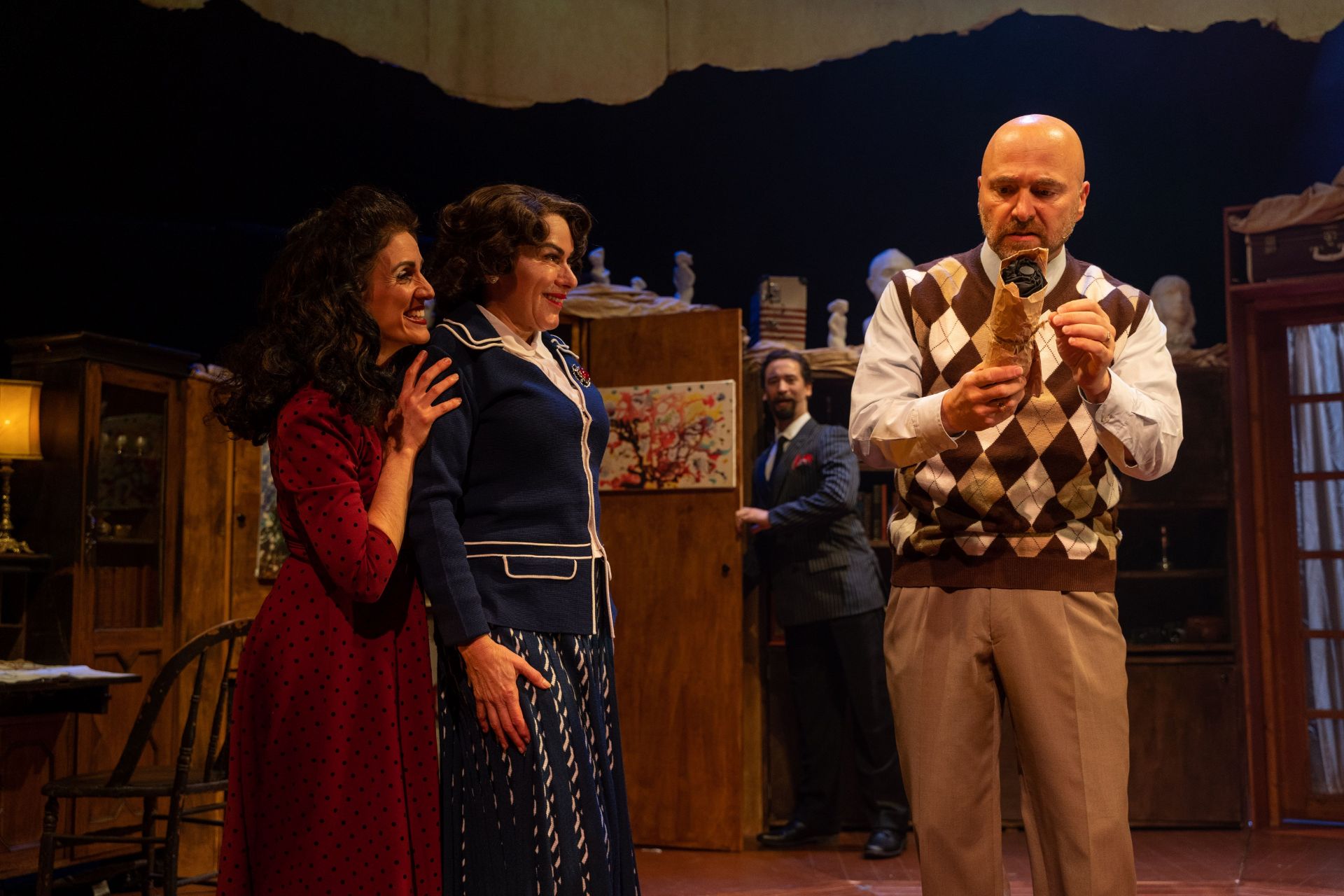
Review: Driftwood (Eternity Playhouse)

Venue: Eternity Playhouse (Darlinghurst NSW), Jun 7 – 18, 2023
Book: Gary Abrahams, Jane Bodie (based on Eva de Jong-Duldig’s memoir)
Music and Lyrics: Anthony Barnhill
Director: Gary Abrahams
Cast: Anton Berezin, Michaela Burger, Bridget Costello, Tania de Jong, Nelson Gardner
Images by James Terry

Theatre review
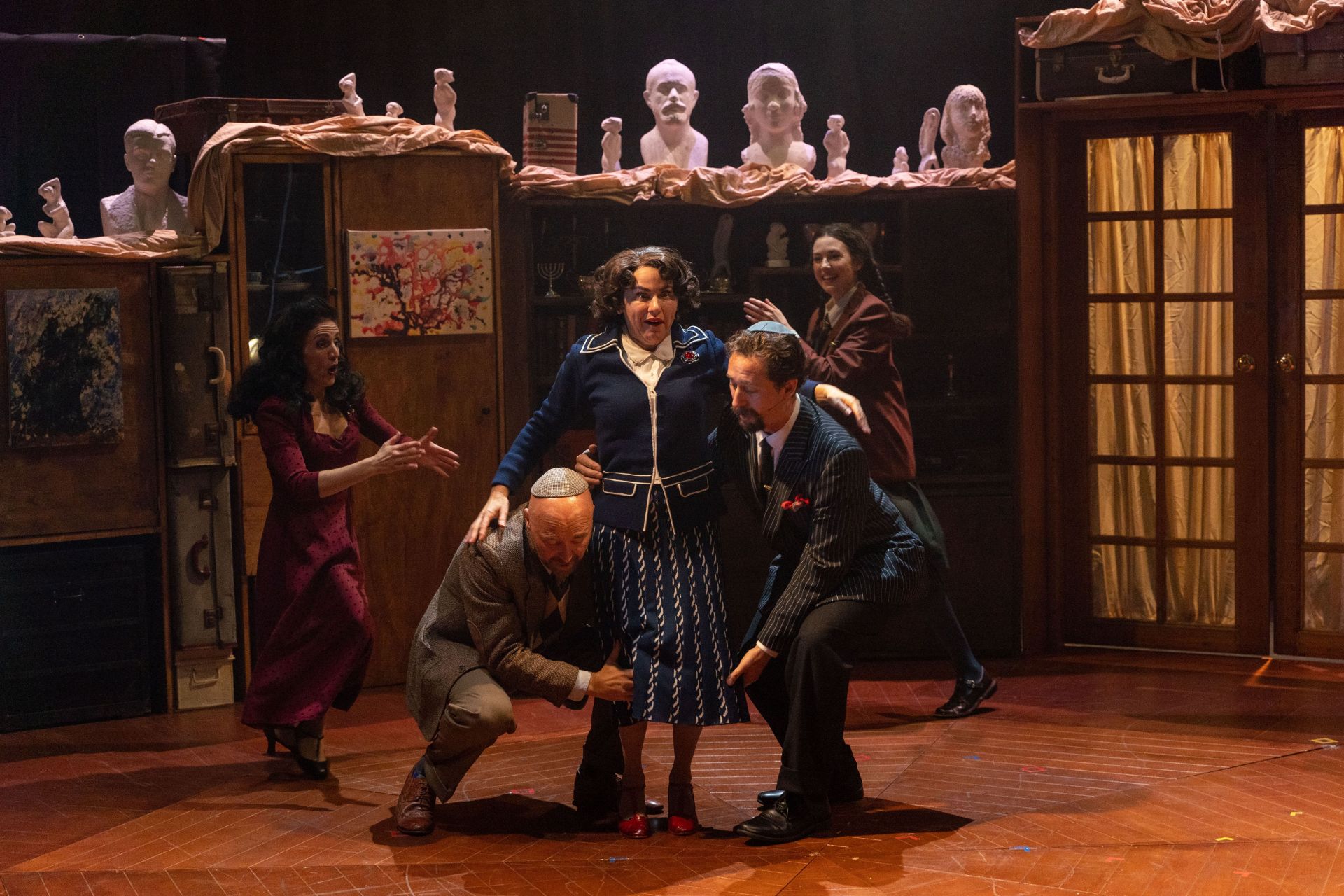
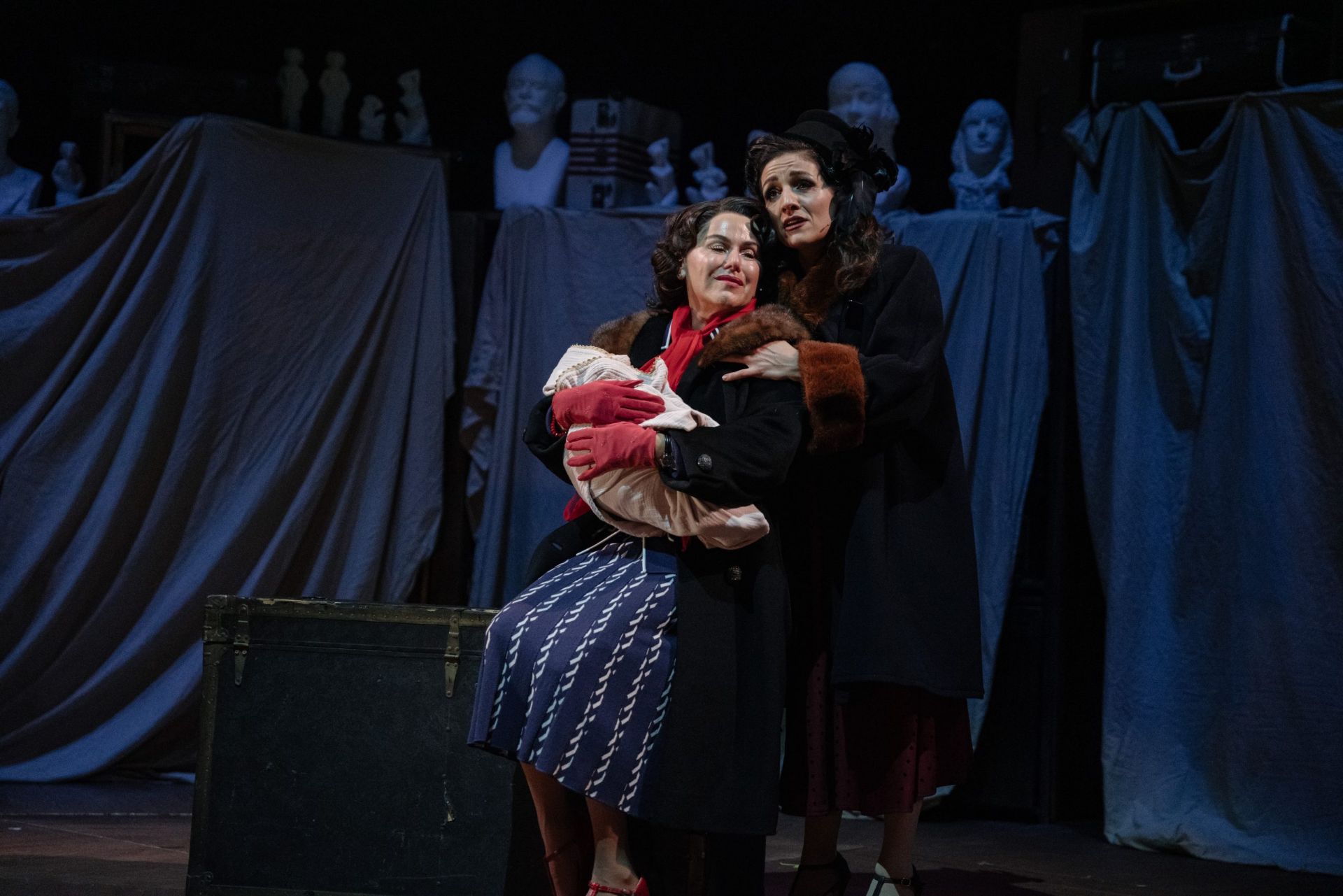
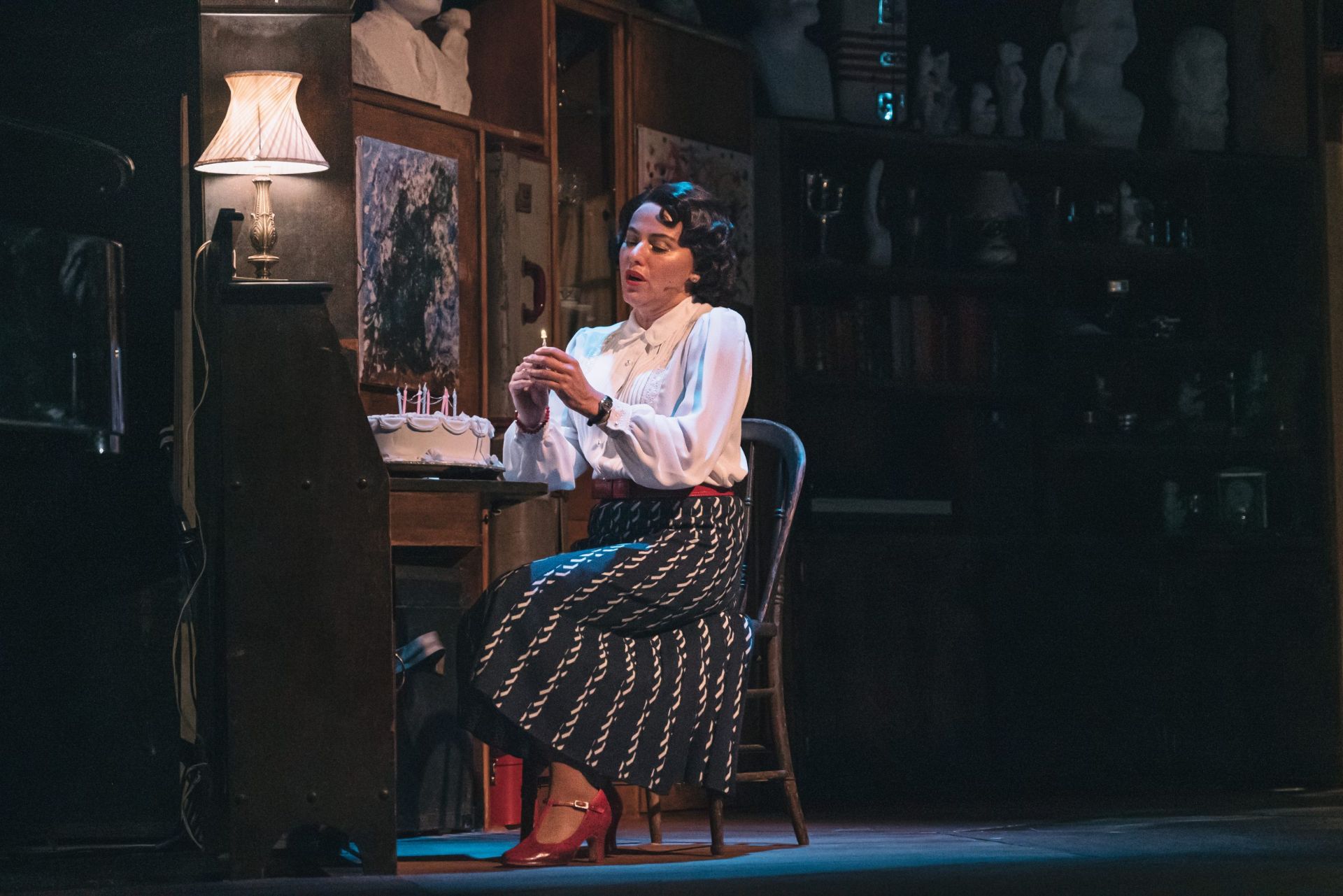
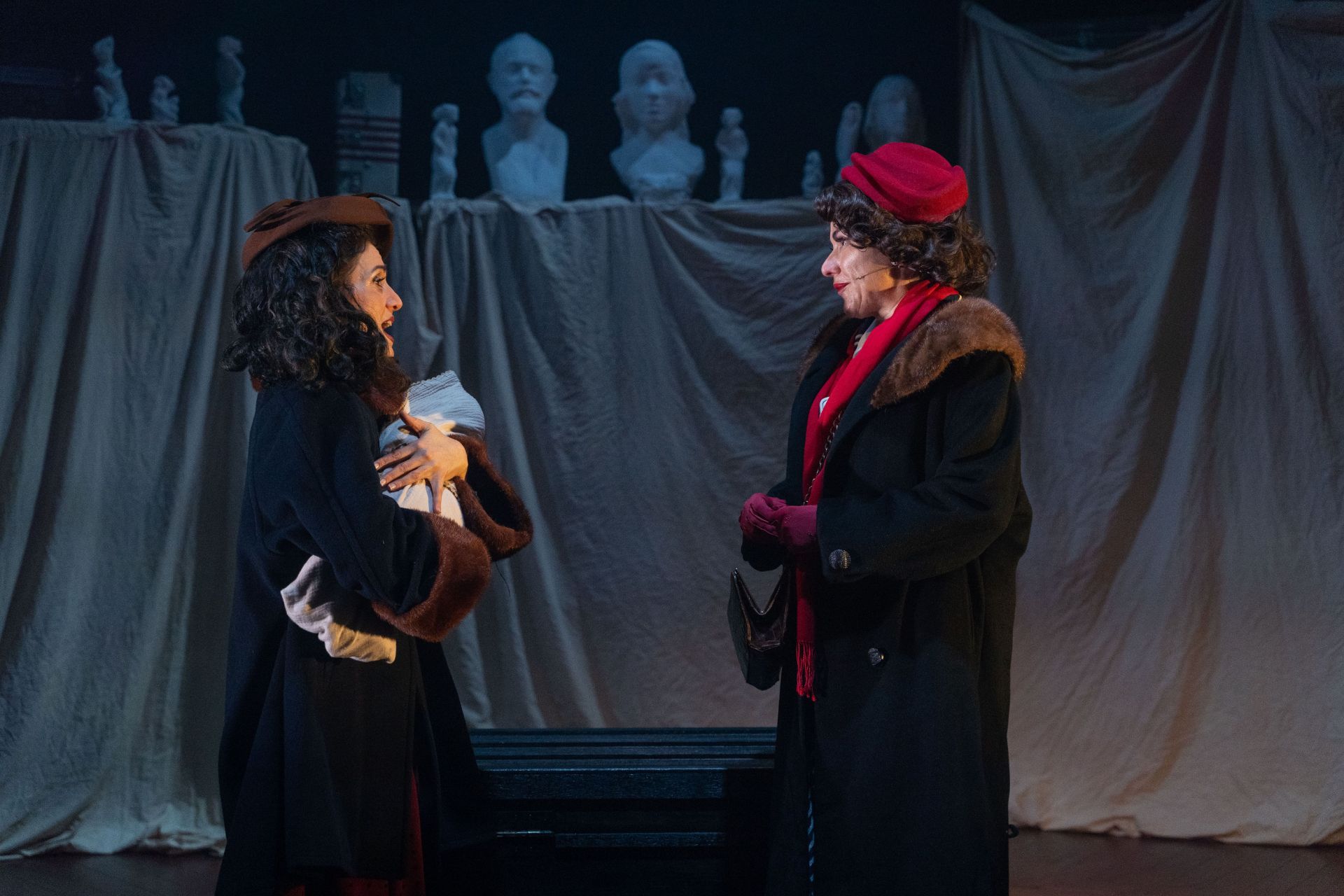
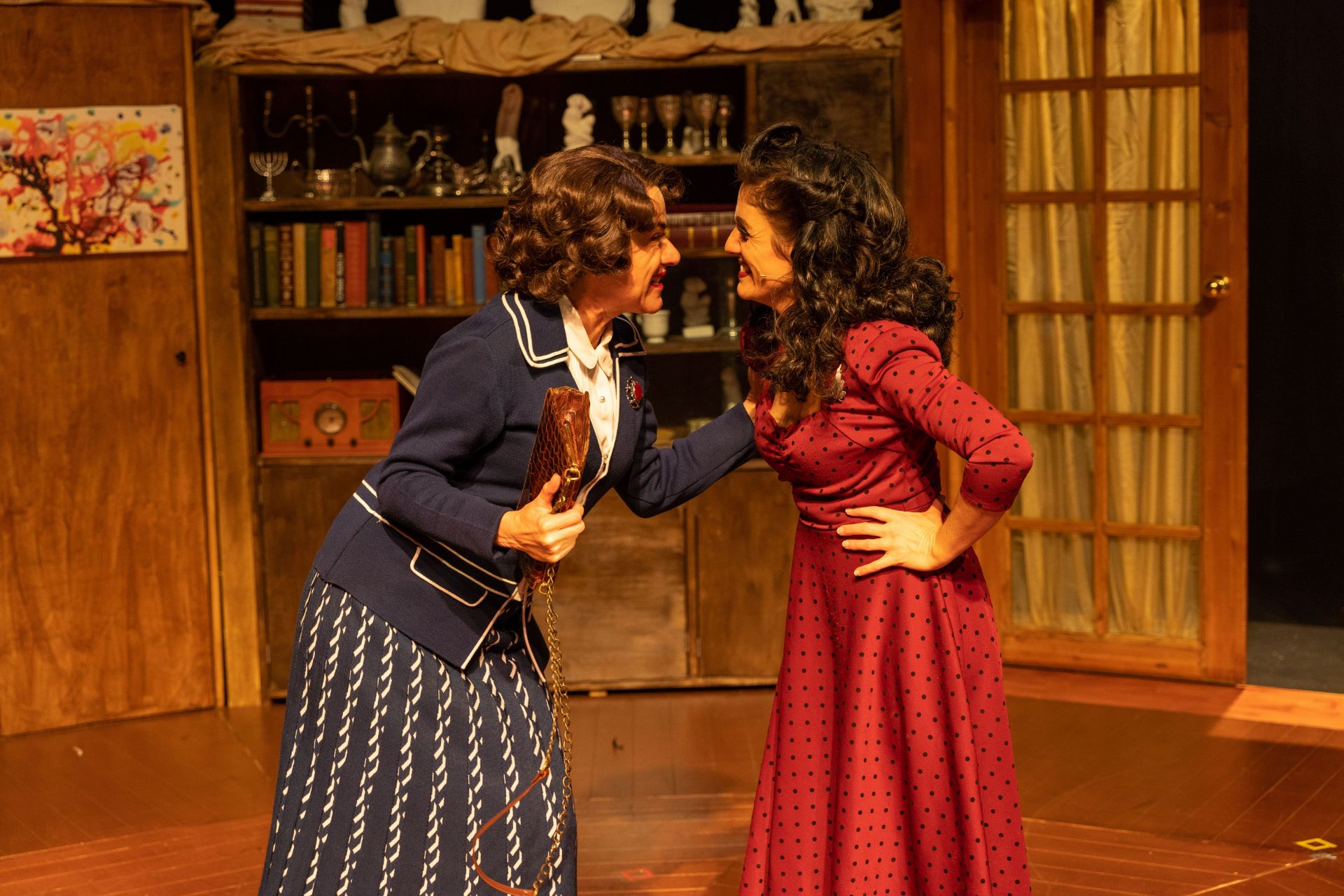
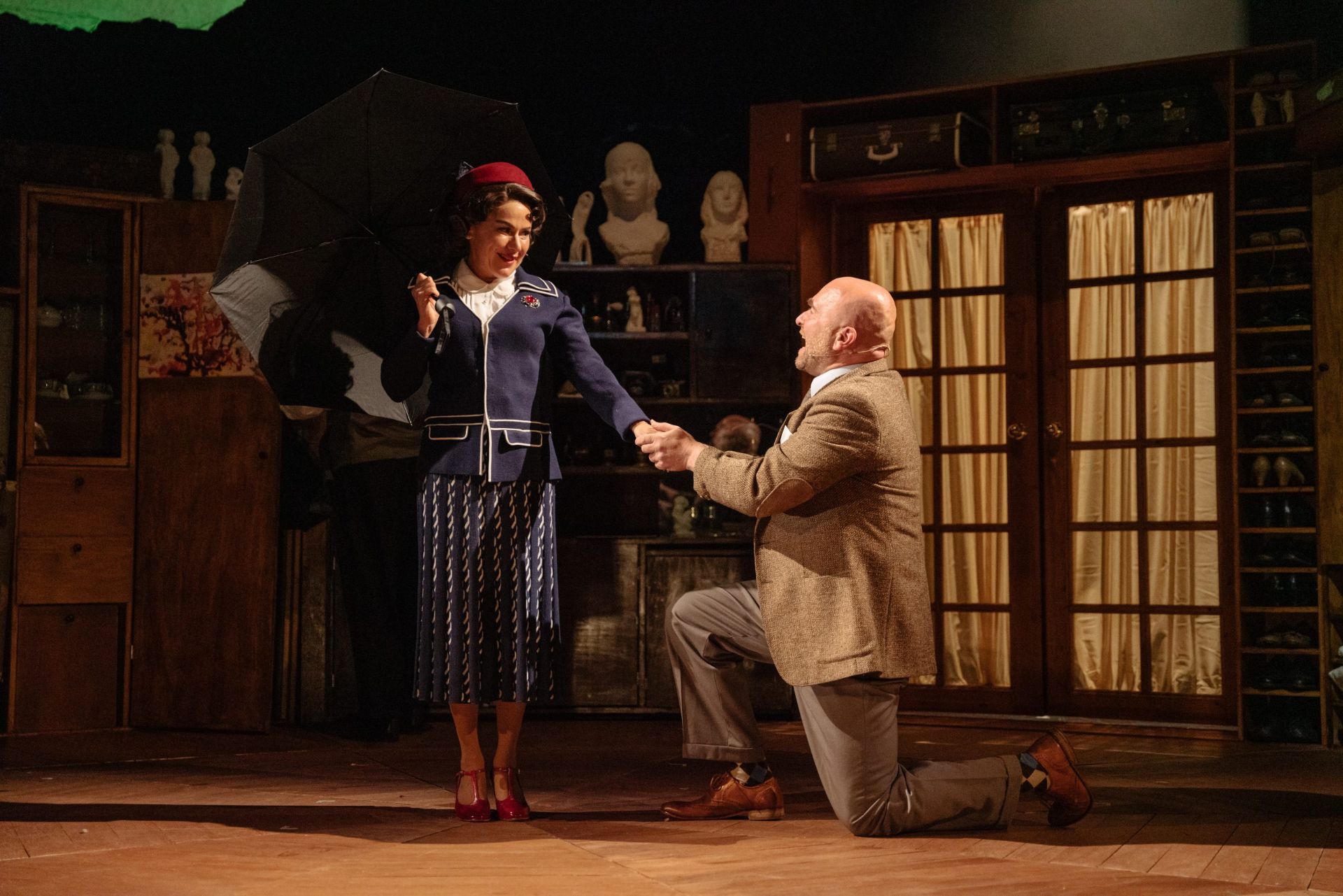
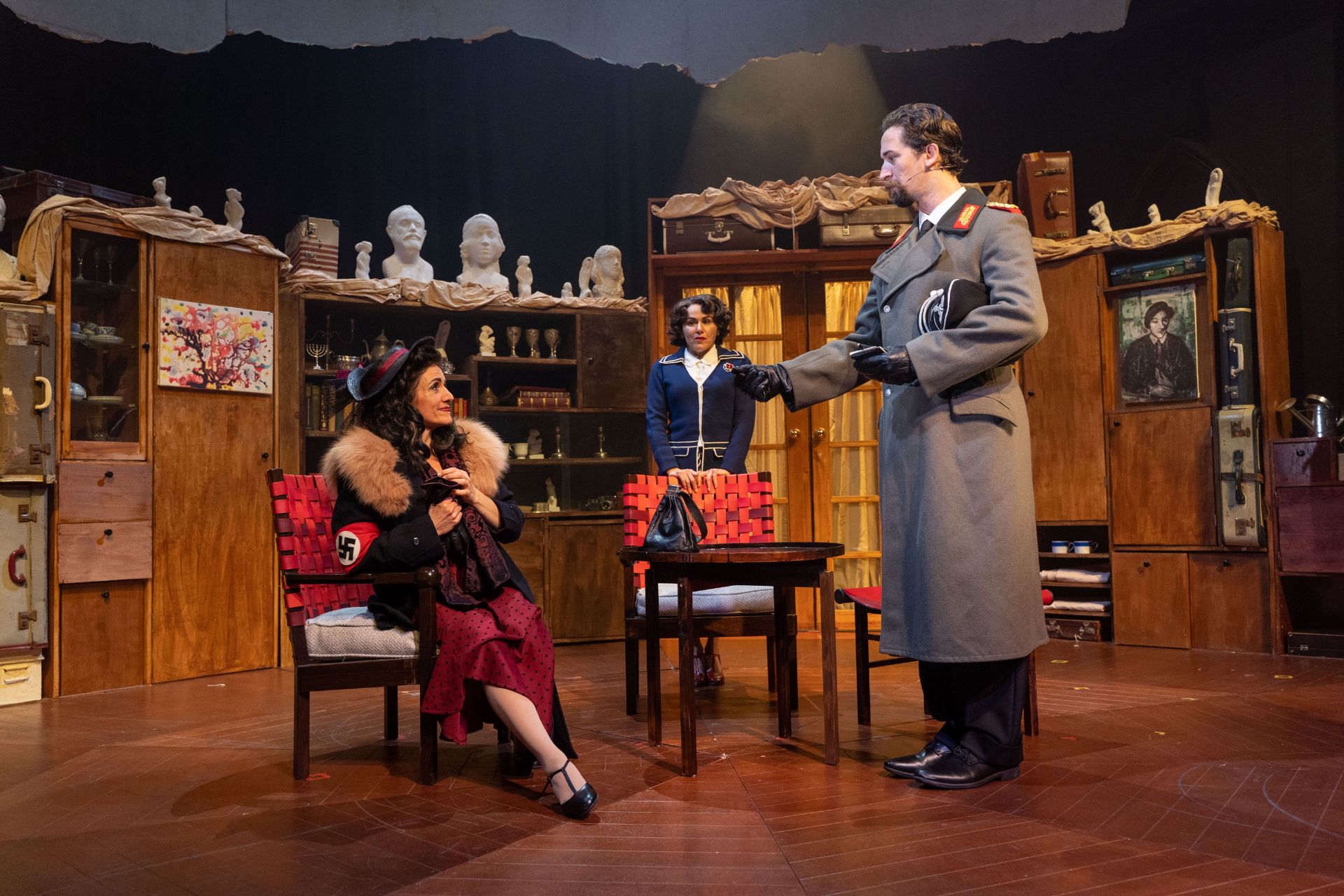
Not only did the artist Slava Horowitz-Duldig invent the foldable umbrella, she had recently given birth, when forced to flee Vienna. It was 1938, and because Slava and her husband Karl were Jewish, staying in their beloved city was no longer an option. After several years of travelling and uncertainty, they eventually became citizens of Australia, where both were able to resume their lives as artists.
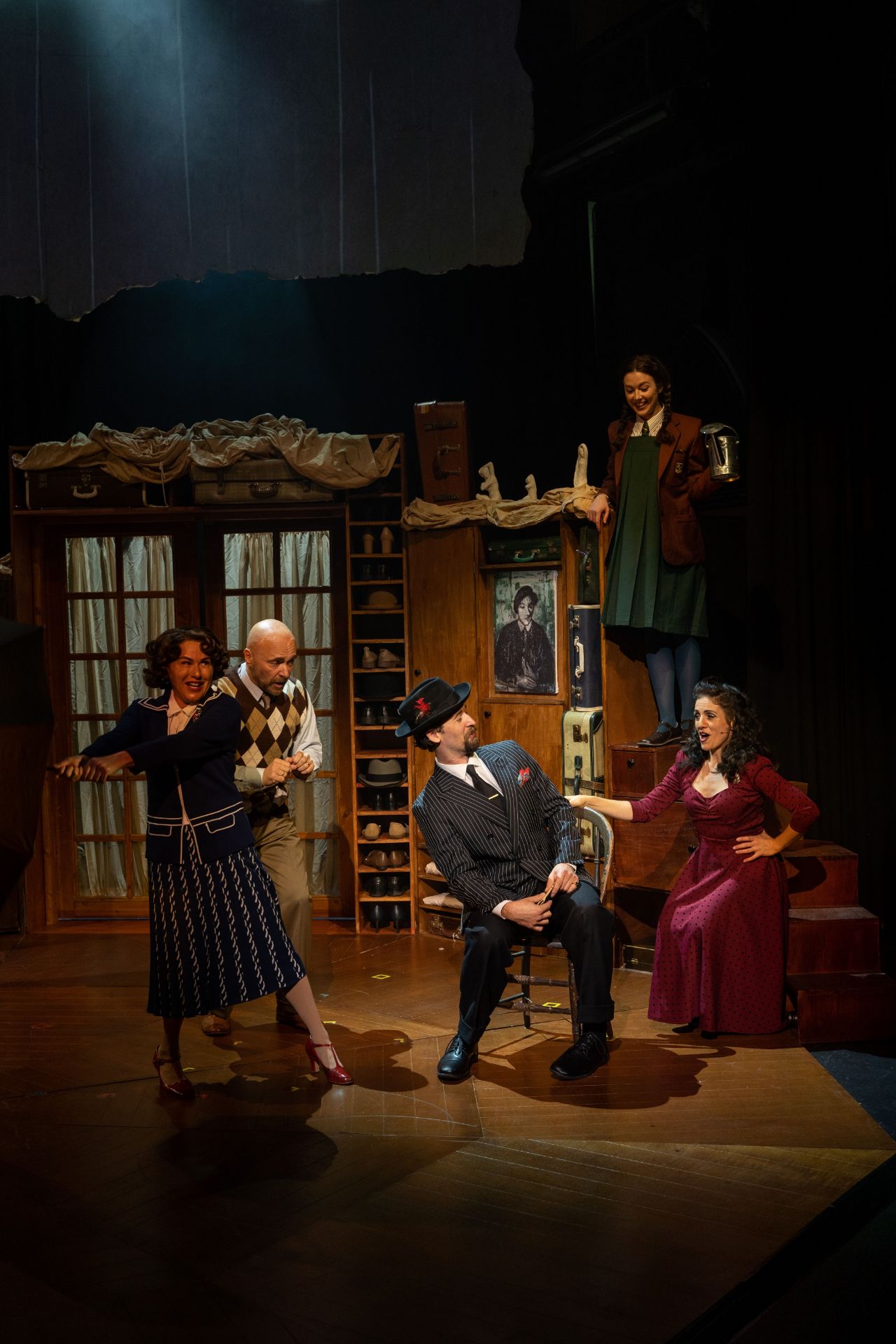
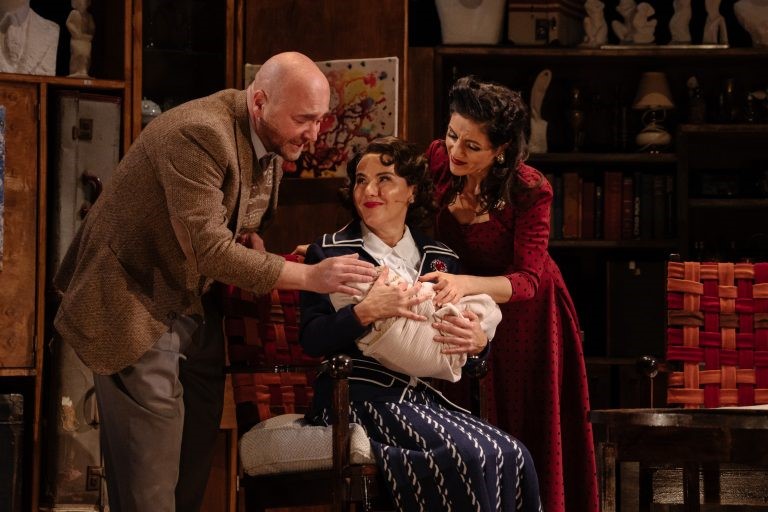
The musical Driftwood is based on stories from their daughter Eva de Jong-Duldig’s memoir, with songs by Anthony Barnhill, and a book by Gary Abrahams and Jane Bodie. Thoroughly considered and delicately structured, it shares a refugee experience from the perspective of one family during that tumultuous period of persecution and portrays their healing in subsequent years. Directed by Abrahams, the work is consistently heartfelt, marked by an exquisite sensitivity. It has a tendency to feel somewhat staid and old-fashioned in style, but the authenticity it emanates is commendable. Choreography by Sophie Loughran too is traditional, but certainly skilfully accomplished.

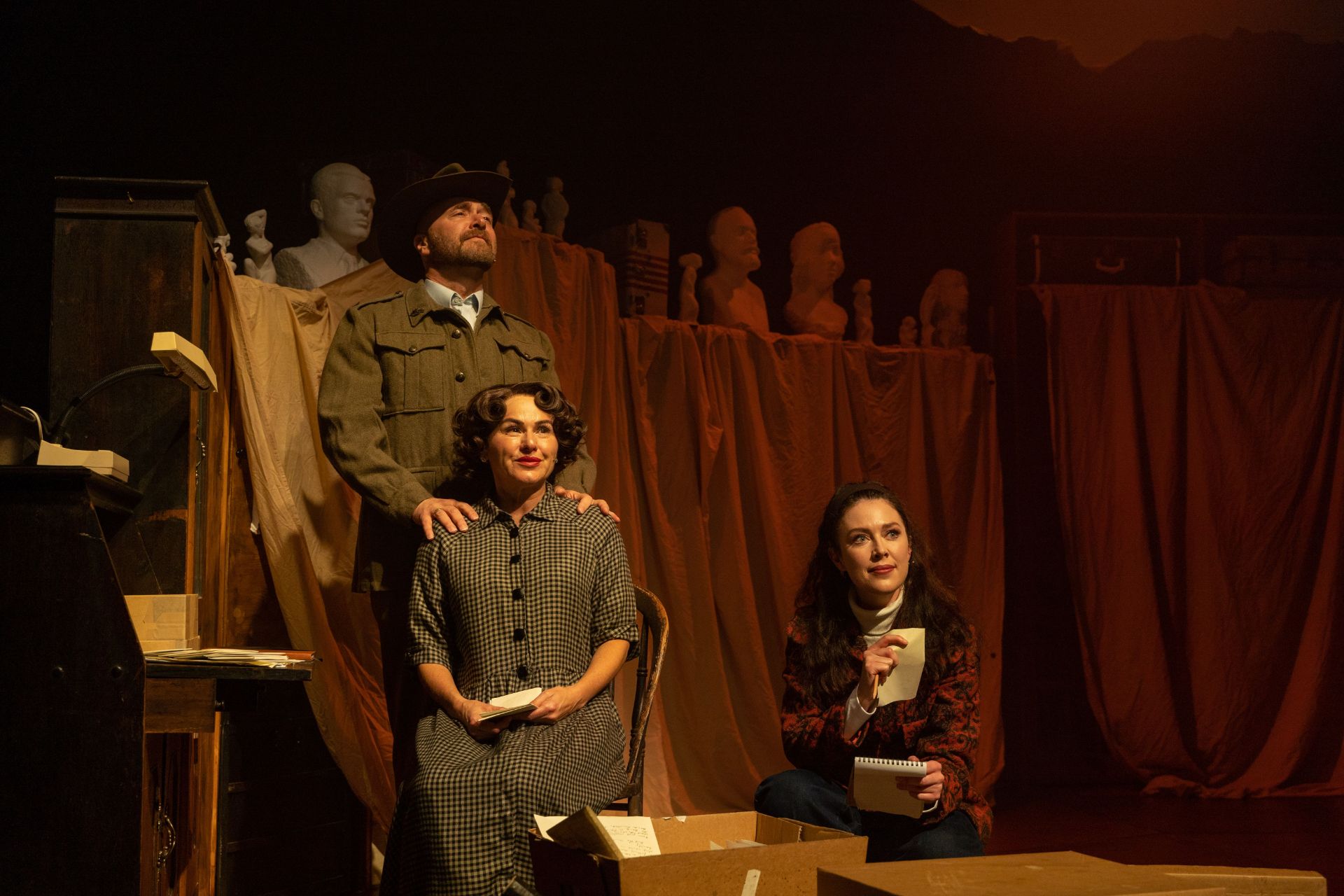
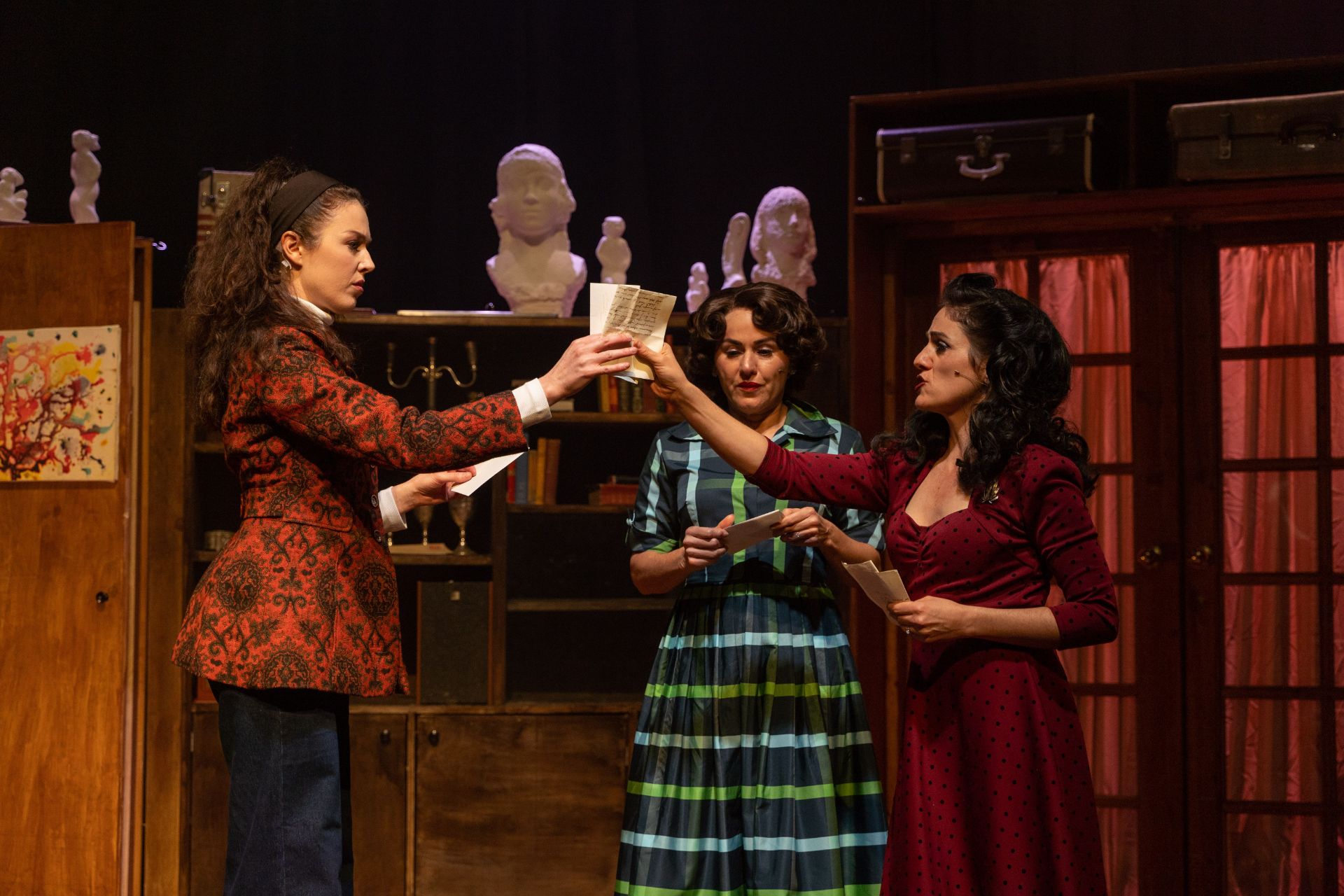
Set design by Jacob Battista is a charming representation of the Horowitz-Duldig home, with soft curves that provide a sense of intimacy to the story-telling. Costumes by Kim Bishop imbue the characters with vivacity and an essential dignity. The palette of Harrie Hogan’s lights are surprisingly simple, but consistently warm for a show that never strays far from the sensation of melancholy. Also noteworthy are video projections by Justin Gardam, judiciously rendered to help us navigate time and space with great ease.

Performer Tania de Jong takes on the role of her real-life grandmother Slawa, with a conspicuous adoration for a generation that had to endure too much. Bridget Costello as daughter and narrator Eva is an animated presence, reliably energetic for the entirety. Michaela Burger as sister Rella, Anton Berezin as Karl, and Nelson Gardner in a variety of roles, offer excellent support adding a remarkable level of polish. Classical singing from the entire cast is a delight, with accompaniment by pianist David Gardos, violinist Michele O’Young and cellist Rachel Valentine introducing beautiful sentimentality to the staging.

It is incredible to think of the way this land has welcomed so many. It is imperative that we never forget how we came to have that privilege of making lives here, and must always honour those who are rightful custodians, and who are endlessly gracious in offering safe harbour. Great legacies often emerge from great hardship; those in need today, are likely to achieve greatness tomorrow, if only they can find a helping hand.

www.driftwoodthemusical.com.au

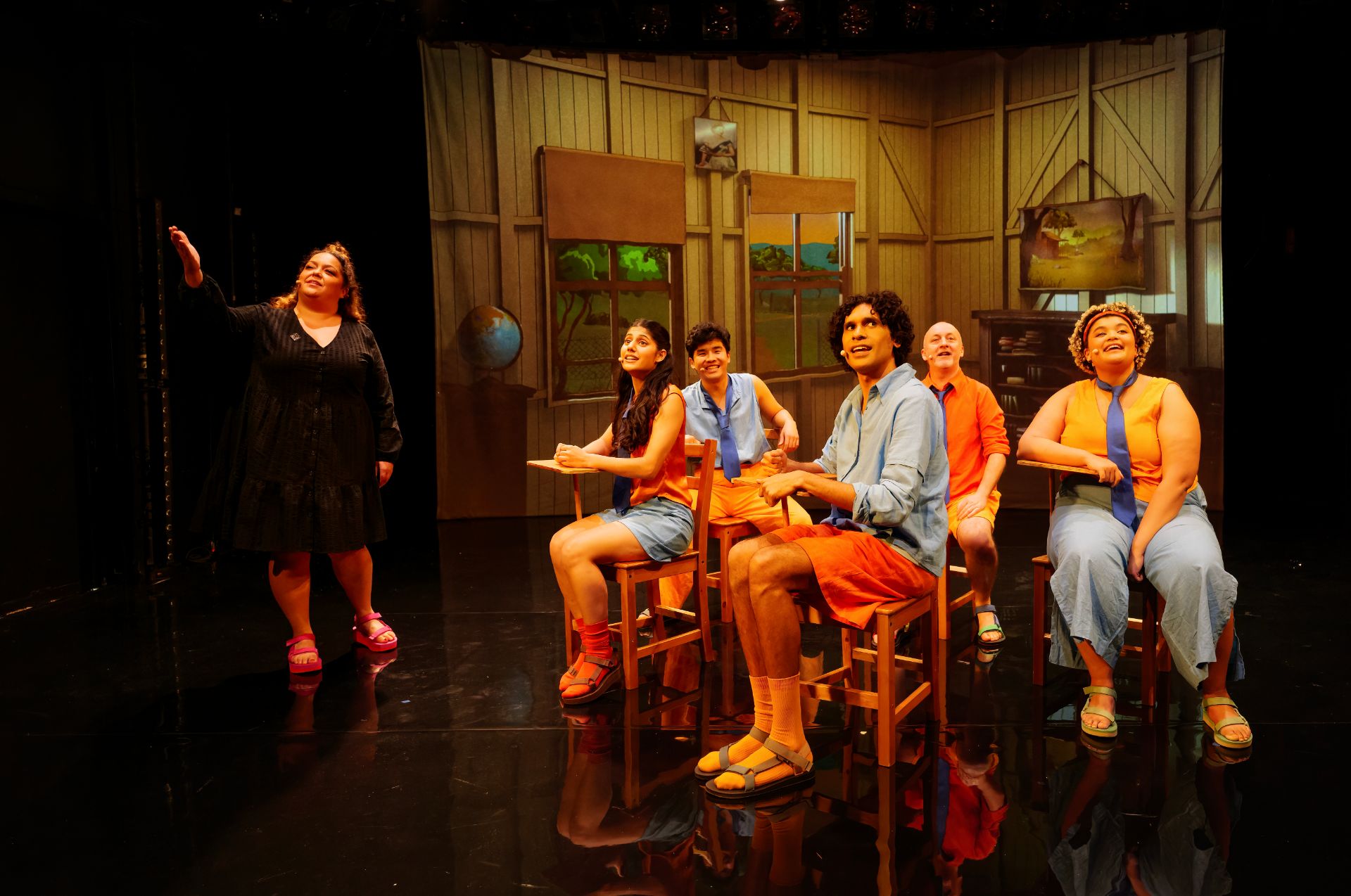
Review: The Lucky Country (Hayes Theatre)

Venue: Hayes Theatre Co (Potts Point NSW), May 26 – Jun 17, 2023
Music and Lyrics: Vidya Makan in collaboration with Sonya Suares
Director: Sonya Suares
Cast: Joseph Althouse, Dyagula, Milo Hartill, Jeffrey Liu, Vidya Makan, Billy Mcpherson, Karlis Zaid
Images by Philip Erbacher

Theatre review

It is perhaps the most important function of the theatre, to help us figure out, who we are as a community. A space of congregation where artistic expression is shared, so that issues can be discussed by those local to the area, and where hopefully some form of consensus can be reached. Theatre is at its best, a force for social cohesion. In these times of division, brought on by unprecedented technological disruptions, the myth of monolithic cultures can no longer prevail. Yet we have to find ways to uphold notions of unity, in a new climate determined to acknowledge and appreciate the irrefutable diversity that can no longer be subsumed by outmoded conceptions of a singular identity.

In The Lucky Country, a new musical written by Vidya Makan in collaboration with Sonya Suares, that diversity is displayed extensively on stage, but without a sense of fracture that has come to inform how we understand difference. Makan and Suares’ thorough search and depiction of ways to pay respect, for the many peoples that we are, allows The Lucky Country to offer a showcase of identities that feels accurate and aspirational. Each of its many delightfully melodious songs represents a different part of those on this land; they are distinctly rendered, more like an anthology than one narrative of experience, allowing each of us to have our own say, and demonstrating the ease of co-existence.

The work is incredibly moving with its deep excavations of marginalised lives, but it is also guided by a scintillating humour, for a show that is disarmingly funny from beginning to end. Directed by Suares, along with choreography by Amy Zhang, The Lucky Country is energetic and bustling with activity, holding our attention captive, always keeping us fulfilled and wanting more.

Instead of a set, the empty stage is adorned with a cyclorama, on which Justin Harrison’s witty and sensitive video compositions are projected, adding further emotional dimensions to the production. Lights by Rob Sowinski and costumes by Emily Collett are slightly under explored, but both provide satisfactory levels of embellishment. Heidi Maguire’s orchestrations are entertaining and lively, and along with Michael Tan’s sound design, deliver for the songs a beautiful simplicity that feel rich in resonance.

In spectacular form, a wonderful cast delivers these stories of diminished individuals to glorious light. Joseph Althouse, Dyagula, Milo Hartill, Jeffrey Liu, Vidya Makan, Billy Mcpherson and Karlis Zaid bring technical acuity, as well as exceptional soulfulness, to make The Lucky Country an unforgettable instance of transcendence, filled with love for all who have been welcomed to this country.

Colonialism aims to make so many of us feel small and devalued. It also wishes to drive wedges between us, so that we forget who the real enemies are. Its apparatus is hopelessness, wearing us down until we relent and allow them to exploit and pillage as they wish. Defiance however is a part of the human spirit that remains accessible, even during the hardest of times. In The Lucky Country, we see that the act of defiance can be joyful and unifying. An insistence on new ways to define ourselves beyond old ideas that privilege few, is an urgent need that begins with a defiance that can be summoned, from every dark depth of despair.

www.hayestheatre.com.au

Review: Metropolis (Hayes Theatre)

Venue: Hayes Theatre Co (Potts Point NSW), Apr 21 – May 20, 2023
Book and Lyrics: Julia Robertson (based on the novel by Thea von Harbou)
Music: Zara Stanton
Director: Julia Robertson
Cast: Thomas Campbell, Tom Dawson, Sam Harmon, Selin Idris, Dominic Lui, Amanda McGregor, Tomas Parrish, AJ Pate, Joshua Robson, Anusha Thomas, Shannen Alyce Quan, Jim Williams
Images by Grant Leslie

Theatre review

Thea von Harbou’s 1925 novel Metropolis, emerged as a response to the Second Industrial Revolution, when it had become clear that modernity was likely to involve catastrophic consequences, that the powers that be, could very well ignore. In von Harbou’s story, business magnate Joh Fredersen’s ambitions knows no bounds. His efforts to exploit new technologies for unprecedented material gains, turns him blind to the devastating human and environmental costs, resulting from these twentieth century ways of organising labour. There may be a naivete associated with Metropolis, but a century on, it is clear that von Harbou’s early concerns, criticized for being overly simplistic, have now become completely substantiated, and sadly commonplace.

This musical adaptation, with book and lyrics by Julia Robertson and music by Zara Staunton, certainly preserves the uncomplicated tone of the original book (and the famous Fritz Lang film of 1927). Its songs are highly enjoyable, with unpredictable orchestrations by Staunton that evoke meaningful contrasts between notions of the natural versus the synthetic. The plot however, is rarely compelling or convincing in a show, directed by Robertson, that is perhaps excessively stylised, ironically unable to convey sufficient humanity, for its audience to invest meaningfully into any of its characters, or its moral intentions.

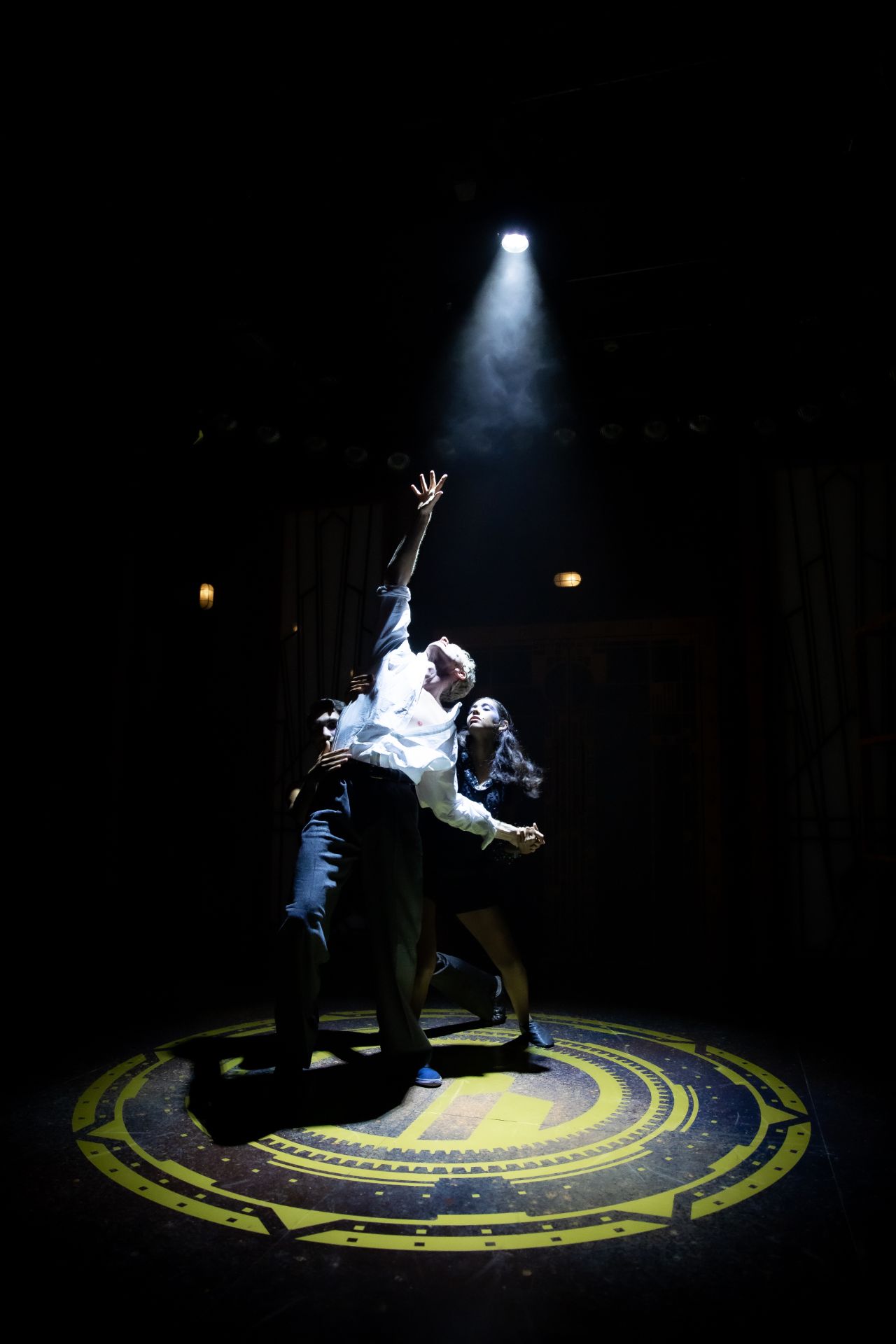
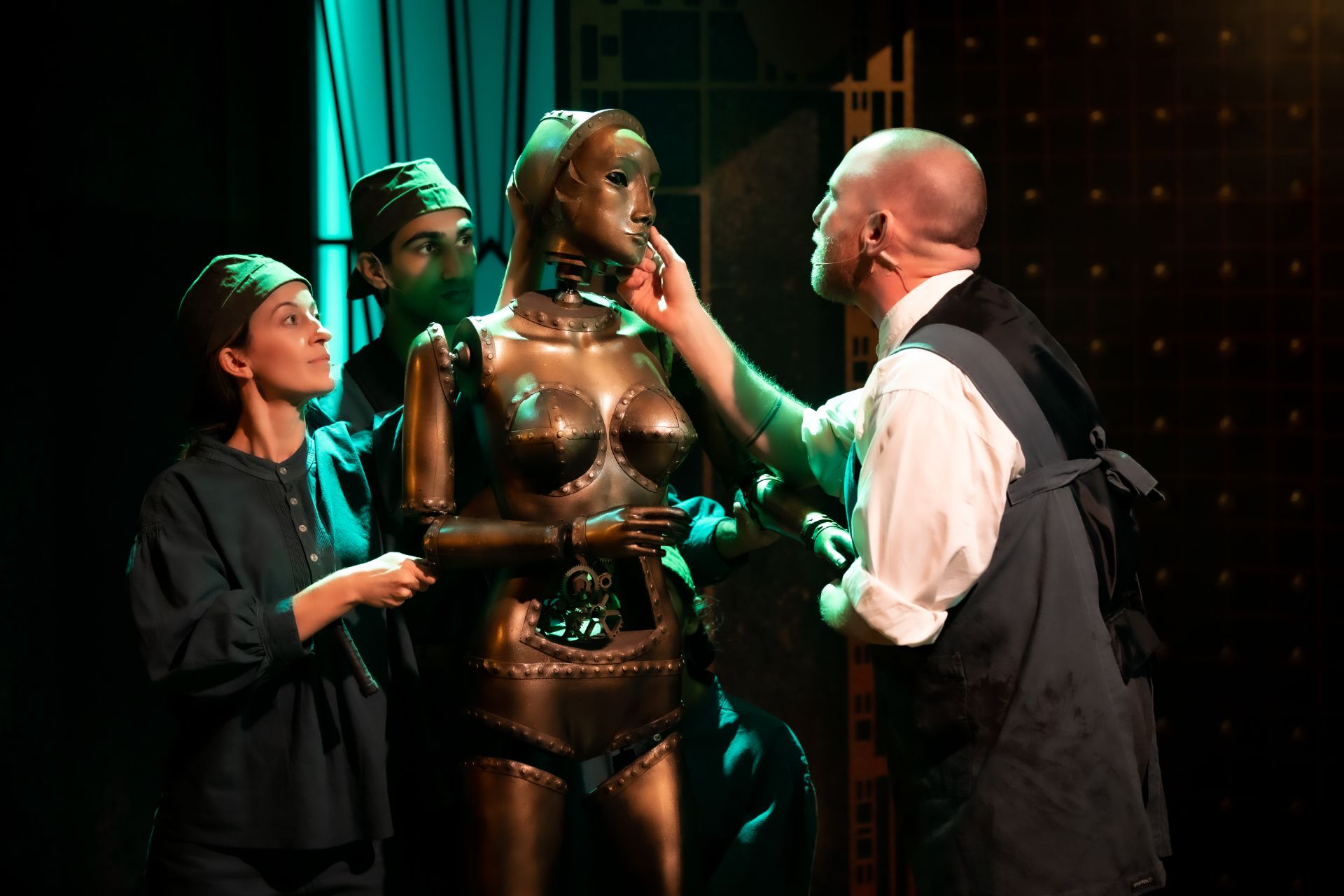
There are however, many instances of visual splendour, on a set by Nick Fry whose rendering of classic art deco schemes, delivers satisfying imagery commensurate with expectations derived from the cultural landmark that is Lang’s film. Fry’s work on a human-size puppet that depicts a dystopic robot, is especially impressive. Ryan McDonald’s lighting design too is pleasing to the eye, although it can seem too pre-occupied with the manufacturing of beauty, leaving some spatial configurations to look somewhat deficient. Ella Butler’s costumes depict well, the decay of modernity, but some attempts at portraying decadence, are less than adequate.

Joshua Robson plays Fredersen, and along with Shannen Alyce Quan in the role of Maria, offer some of the stronger singing, in a cast memorable for its unwavering earnestness. Tom Dawson brings stage presence to Fredersen’s honourable son Freder, but it is Thomas Campbell as the mad scientist Rotwang who is memorable with a sense of authenticity, albeit in an extravagantly fantastical realm.

Freder repeatedly urges for his father to do better, but it is hard to tell anyone to moderate their behaviour, when they see no incentive to do so; for some people, the idea of “a greater good” simply never resonates. It makes sense therefore, to resort to the language of power, that they evidently believe in above all else. This then requires that the disenfranchised find cohesion and consensus, for the only way for the huddled masses to be able to participate in the discourse of power, is for us to coalesce, in hopes of forming something threatening enough, that will force a change. When our disparities are this severe, we need to wake to the fact that any amelioration, will only come from our steely insistence, and never from the kindness of those whose hearts are determined not to be found.

www.hayestheatre.com.au | www.littleeggscollective.com

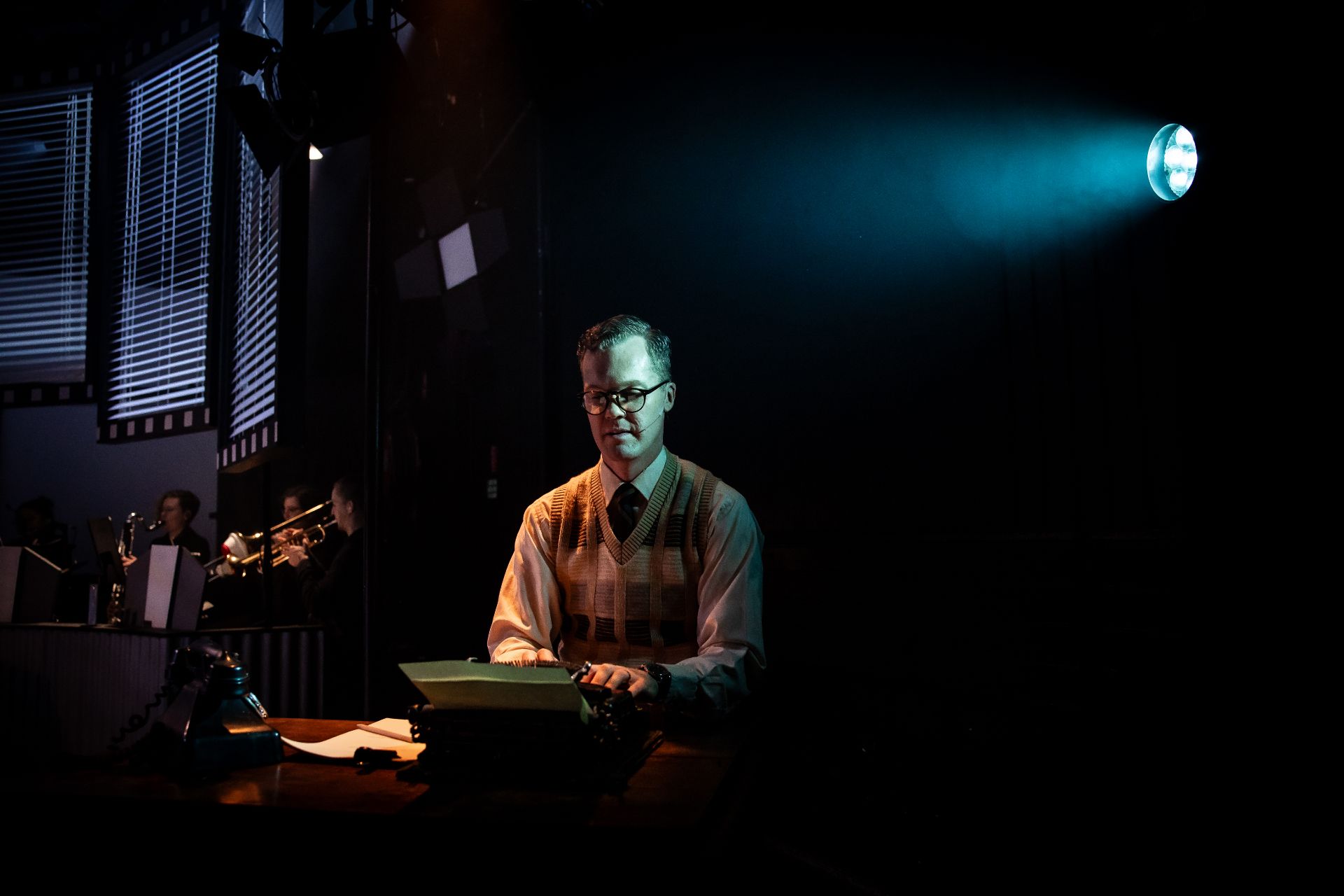
Review: Tick, Tick… Boom! (Sydney Lyric Theatre)

Venue: Sydney Lyric Theatre (Sydney NSW), Apr 20 – 26, 2023
Book: Jonathan Larson
Lyrics: Jonathan Larson
Music: Jonathan Larson
Director: Tyran Parke
Cast: Sheridan Adams, Finn Alexander, Hamish Johnston, Elenoa Rokobaro, Hugh Sheridan
Images by Jeff Busby

Theatre review

Jon’s thirtieth birthday is fast approaching, and his anxiety is on overdrive. An artist living and working in New York, his career has yet to take off, even though everyone seems to heap praise on his song writing. Tick, Tick… Boom! is a semi-autobiographical work by Jonathan Larson, first performed in 1990, just six years before his untimely death, at the very young age of 35. Larson’s greatest success finally came with the musical Rent, but he never saw the warm reception of opening night, having passed away just the day before its first preview.

Tick, Tick… Boom! was never conceived for large venues. This staging, directed by Tyran Parke, is based on an adaptation by David Auburn that expanded the work from Larson’s original solo format, and its current iteration in a 2,000 seater auditorium, demonstrates unfavourably the intimate nature of the musical. The drama never grips, and the songs rarely soar. We feel energies dissipating long before they reach us, from a stage that often looks too subdued, and too far away.

Christina Smith’s scenic design encloses the action on the centre third of the proscenium, which helps to concentrate focus, but which also restricts movement, in a way that makes the show look monotonous. Lights by Matt Scott, although adept at providing appropriate illumination, does not deliver much more than its essential functions. Musical direction by Kohan van Sambeeck, while able to imbue some intensity to the plot, is let down by sound engineering that keeps the band distant, and much of their efforts withdrawn and contained within the stage area.

Leading man Hugh Sheridan, while not lacking in verve, has a voice that is excessively raspy and strained, unable to allow his audience to connect with the songs, and therefore losing the essence and soul of his character Jon. Performer Elenoa Rokobaro is the saving grace of the production, confident and delightful in all of her roles, especially memorable in her showstopping tune, “Come to Your Senses”, taking the opportunity very late in the piece, to remind us of the magic, that theatre is capable of.

Artists do not create work in vacuums. It is fundamental to any art practice, that communication between creator and audience is a matter of consideration, but there always comes a point where one can care too much. Jon cares too much, about what people think, not only in relation to his work as a writer of songs and musicals, but also as a man struggling in a contemporary epoch, defined by envy and competition. It is a shame that we have manufactured a world, in which few artists are able to be content simply with the joy of creation, where most are made to involve themselves with an endless barrage of peripheral interferences, that fuel professional jealousy and gratuitous aspiration. Jon is good at what he loves, but it is a real shame that everywhere he seeks affirmation, seems to make him think, that he is not enough.

www.ticktickboomthemusical.com.au

Review: Into The Woods (Belvoir St Theatre)

Venue: Belvoir St Theatre (Surry Hills NSW), Mar 18 – Apr 23, 2023
Book: James Lapine
Music and Lyrics: Stephen Sondheim
Director: Eamon Flack
Cast: Marty Alix, Stefanie Caccamo, Peter Carroll, Tamsin Carroll, Andrew Coshan, Lena Cruz, Tim Draxl, Esther Hannaford, Shubshri Kandiah, Mo Lovegrove, Anne-Maree McDonald, Justin Smith
Images by Christopher Hayles

Theatre review

Truth always finds its way into the stories we tell, although the degree with which it is incorporated, varies wildly. Some truths are hard to bear, so we have them varnished and camouflaged. Other truths are easier understood, when disguised as something adjacent to stone cold facts. There is a danger however, that the human mind can sometimes do all it can, to evade truths that are too bitter, so we spare ourselves the cruelty, and fabricate nonsense for delusory alternatives that might be more tolerable, thereby circumventing any action that could help improve matters.

James Lapine and Stephen Sondheim’s Into The Woods takes aim at the ways in which we explain the world to our children, urging us to consider how much protection to offer them, and how much real understanding we want them to have. By extension, it compels each of us to examine our own capacities to handle the rougher aspects of existence, and questions the veracity with which we navigate the more consequential challenges that inevitably arise.

Exuberant direction by Eamon Flack, along with a sense of indefatigable urgency that sets the pace, makes for a show that has us riveted and amused. A stellar cast brings not only great skill and talent, but also an inspiring sincerity, that draws us deep into the nuances, both sensorial and intellectual, of Lapine and Sondheim’s masterpiece.

Orchestrations by Guy Simpson reduces accompaniment to a couple of pianos, with mixed results. An inviting intimacy is achieved for the production, but the music can on occasion be insufficiently rousing. Fortunately, sound design by David Bergman supplements our need for greater drama, in moments where a more rhapsodic level of emotion is required.

Set design by Michael Hankin is fairly minimal in approach, with an abundance of gleaming black surfaces that deliver timeless visual sophistication. Costumes by Micka Agosta do not veer very far away from the vivid essences of characters as prescribed in the text, but several surprising and extravagant interpretations, leave a remarkable impression. Damien  Cooper’s lights are in constant motion, meticulously and imaginatively illuminating the action, to create endlessly sumptuous imagery, whilst facilitating all the meaningful storytelling.

It is probably with a considerable amount of delusion, that people decide to birth babies into existence. Parents imagine that they can shield their offspring from all manner of harm, and further, they fantasise about creating futures that are brighter and altogether lovelier, in which their children can flourish. It is in moments of passion perhaps, that people forget the unrelenting suffering, intermittent it may be for some, that underscores all our days on this plane. They then dream up fairy tales and enchanting fables, to manufacture sweeter, kinder and more tender realities, for ears that will only be delicate for a short amount of time, before they too have to wake up, to all that is nightmarish, in how we have to traverse this mortal experience.

www.belvoir.com.au

Review: On A Clear Day You Can See Forever (Seymour Centre)

Venue: Seymour Centre (Sydney NSW), Mar 17 – Apr 15, 2023
Book and Lyrics: Alan Jay Lerner (adaptation by Jay James-Moody)
Music: Burton Lane
Director: Jay James-Moody
Cast: Natalie Abbott, Blake Bowden, Lincoln Elliott, James Haxby, Jay James-Moody, Madeleine Jones, Billie Palin
Images by David Hooley

Theatre review

Daisy is put under hypnosis by Dr Bruckner, to explore a sort of regression therapy, in order that the origins of Daisy’s ESP abilities can be uncovered. Quite by accident, a past life emerges, and Bruckner promptly falls for the ghost of Melinda, who seems to reside in Daisy’s body. The trouble however, is in the liberties that the doctor takes with his patient’s body. Daisy remains unaware of Melinda’s existence, and is certainly oblivious to the physical intimacies being shared, whilst in a trance.

Alan Jay Lerner’s 1965 book and lyrics for the musical On a Clear Day You Can See Forever certainly would not fly in today’s climate, especially if Daisy was a woman. This current adaptation by Jay James-Moody, takes inspiration from the 2011 Broadway adaptation, and makes Daisy a man, presumably so that the quandary of gender imbalance in the original is eliminated. A case of sexual assault between men, along with professional impropriety, is however still at the centre of the piece, and it is arguable if the production addresses either adequately.

The show begins with wonderful charm, as we are introduced to the three main characters, all of whom are played by extremely likeable performers; James-Moody as Daisy, along with Blake Bowden as Bruckner and Madeleine Jones as Melinda, form quite the formidable team.  The supporting cast of Natalie Abbott, Lincoln Elliott, James Haxby and Billie Palin, too is an accomplished foursome, each with evident commitment to the cause.

As we get into the nitty-gritty of the story, a lethargy unfortunately develops, and a conspicuous lack of theatrical verve persists until the end of Act 1. Returning from interval, things take a swift turn, and a much more convivial experience takes hold, for a comedy that is although problematic, has the capacity to keep its audience engrossed.

Set design by Michael Hankin is creatively imagined, and beautifully realised by Bella Rose Saltearn, but awkward entrances and exits, reveal an oversight perhaps, of the show’s more practical requirements. Costumes, also by Hankin, establish strongly the personality types we encounter, but it is not entirely convincing that an English woman from 1923 is wearing trousers outside of the sporting field, or that Daisy would be wearing shorts, to embark on a vacation to Vancouver. Lights by James Wallis, operate delicately to offer visual enhancements for recurring supernatural elements, but several deficient blackouts, prove distracting for an otherwise pleasurable vista.

Natalya Aynsley’s orchestrations and arrangements are inexhaustibly elegant, fully utilising the score’s old Broadway sound to great nostalgic effect. Subtle sound design by Oliver Brighton delivers further auditory magic, with thoughtful adjustments that help us place the narrative in oscillating realms, moving us between past and present, real and metaphysical.

Not only has Dr Bruckner recently lost his wife, he is now dealing with the complications of having amorous feelings for another dead woman, as well as being newly enamoured with a real human male. All this vulnerability could make Brucker an empathetic character,  but he should not be regarded as anything other than the villain of the piece. It is unforgivable behaviour, even if disguised by some of the most romantic music, and plenty of sweet nothings, one can hear.

www.squabbalogic.com.au