Review: Saturday Night Fever (Sydney Lyric Theatre)

Venue: Sydney Lyric Theatre (Sydney NSW), Mar 27 – Jun 2, 2019
Book: Robert Stigwood, in collaboration with Bill Oakes (based on the film by Nik Cohn)
Director: Karen Johnson Mortimer
Cast: Angelique Cassimatis, Natalie Conway, Paulini Curuenavuli, Euan Doidge, Bobby Fox, Melanie Hawkins, Marcia Hines, Stephen Mahy, Nana Matapule, Ryan Morgan, Tim ‘Timomatic’ Omaji
Images by Heidi Victoria

Theatre review
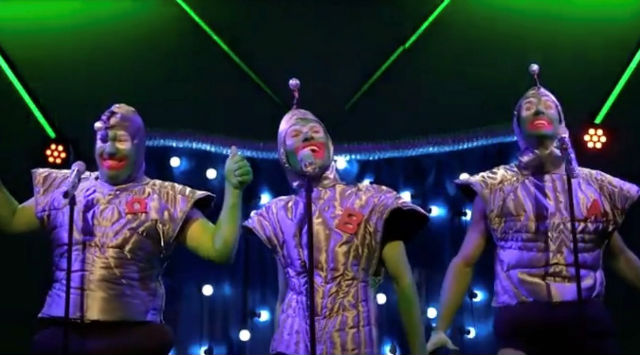
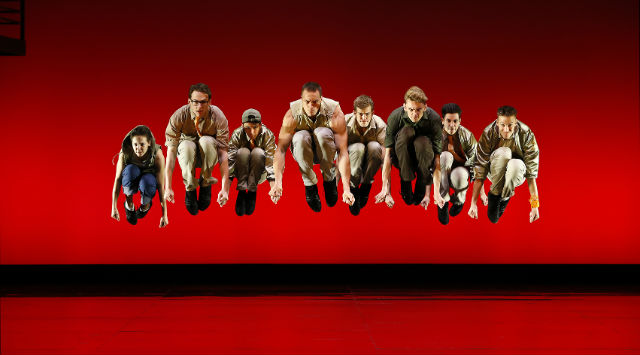
The plot was always flimsy in Saturday Night Fever, but all its music and dance sequences have made it an unequivocal icon of the disco era. With a soundtrack album that has sold over 45 million copies worldwide, its songs and their accompanying decadent style, proceeded to define entertainment in the immediate years after its 1977 release, and continue to retain significant cultural cache for generations thereafter. This live theatre version first appeared 1998 in the West End, predictably stirring with the deeply familiar and seductive song list, and this 2019 rendition is similarly appealing.

Accepting that the story is largely irrelevant to how one should enjoy the piece, song and dance is then allowed to become the focus. Choreography by Malik Le Nost is exhilarating, and faithfully nostalgic. Paul Herbert’s orchestrations amplify the pizzazz and schmaltz that the audience adores. We want the big productions to never end, but alas, several extended scenes that attempt to deliver drama, or at least some sense of narrative, only prove themselves to be unsought distractions that bring the energy down, along with our excitement, between the genuinely gratifying episodes of discotheque fabulosity.

Leading man Euan Doidge is a very average actor in the role of Tony Manero, but thankfully shows himself to be a sensational dancer, and doubtless for many an audience member, a real looker. Even with the completely disco-erroneous short haircut and tight trousers, Doidge is a breathtaking specimen who almost has us forgiving everything. His dance partner is the impossibly perfect Melanie Hawkins, who makes every one of Stephanie Mangano’s entrances look like an angel descending from above. Club DJ Monty is played by the thoroughly engaging Tim ‘Timomatic’ Omaji, who absolutely shines in the supporting role, with timing and moves that have us eating out of his palm. All the hits are sung marvellously, mainly by a fantastic group of four (Natalie Conway, Paulini Curuenavuli, Bobby Fox and Nana Matapule), but there is no denying the superstar power of Marcia Hines, who is called upon to inspire awe with each of her brief appearances.

Saturday Night Fever tries to give us more than what we bargain for, where it should know better its own strengths. Like legendary party animals of the late 70’s and their penchant for amphetamines and cocaine, we come to the show as hedonists with no time for emotion. Between bumps of pleasure, we have to endure moments of tedium, but we stay for the duration, because we know exactly what the next peak is going to bring.

wwww.saturdaynightfever.com.au

Review: Monty Python’s Spamalot (One Eyed Man Productions)

Venue: Hayes Theatre Co (Potts Point NSW), Mar 6 – Apr 13, 2019
Book & Lyrics: Eric Idle (based on the film Monty Python And The Holy Grail)
Music: John Du Prez, Eric Idle
Director: Richard Carroll
Cast: Marty Alix, Blake Appelqvist, Cramer Cain, Rob Johnson, Josie Lane, Aaron Tsindos, Bishanyia Vincent, Jane Watt
Images by John McRae

Theatre review
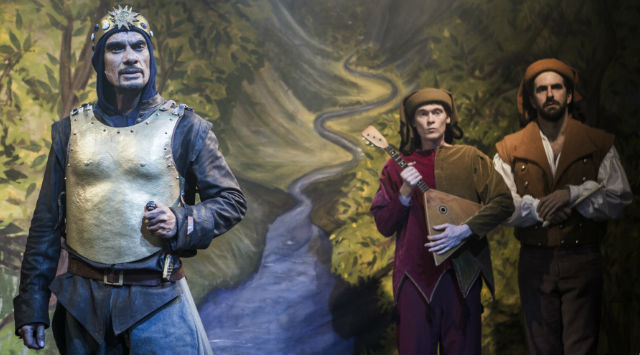
Hard to believe that it has been half a century, since Monty Python began its influence on British comedy and entertainment. Since first appearing in 1969, their distinct style of irreverent humour has helped define laughter for generations, all over the globe. With a particular interest in lampooning figures of authority, the Monty Python brand has been a force in counter-culture, allowing us to use its absurdity to investigate what is considered polite and normal in many of our societies. Monty Python’s Spamalot is a characteristically iconoclastic and rambunctious take on musical theatre, adapted from their now legendary Monty Python And The Holy Grail, the 1975 film centring on the misadventures of King Arthur and his knights.

Under Richard Carroll’s direction, these old jokes prove to be funny as ever, with liberal updates making the show feel unexpectedly immediate. The production appeals to fanatics, but also caters to a general contemporary audience. We are all there for a good time, and the laughter it delivers is fast and furious. Performer Cramer Cain is solid as King Arthur, with an effortless strength to his presence that keeps our attention on the lead role, in the middle of a lot of hullabaloo. Josie Lane is a tremendous delight as Lady of the Lake, an unrelenting diva who refuses to let her audience forget who the real star should be. Her sensational combination of self-effacing hilarity and vocal prowess, is truly remarkable. The brilliant ensemble is tirelessly goofy, and highly inventive. It is a group completely dedicated to creating a high-octane electrifying experience, determined to pull us out of the mundane, for two hours of unbridled lunatic pleasure.

The written word will gather dust, with many having faded away with time, forgotten and forever buried. The nature of theatre compels us to make everything new again. No matter the origins of a text, those who take it upon themselves to bring the past onto the stage, must find ways to connect the old with the here and now, so that art can do its job and not be a meaningless relic. The spirit of Monty Python is shown here to be eternal. For as long as we believe in venerating kings and gods, its humour will cut them down to size, to offer a reality check that can only be healthy. Laughter eases pain, and by helping us see through the nonsense, Monty Python is able to make real life that little bit more bearable.

www.oneeyedmanproductions.com | www.hayestheatre.com.au

Review: The Things I Could Never Tell Steven (Whimsical Productions)

Venue: Limelight on Oxford (Darlinghurst NSW), Feb 20 – Mar 2, 2019
Music & Lyrics: Jye Bryant
Directors: Ghassan Kassisieh, Katherine Nheu
Cast: Julia Hyde, Joey Sheehan, Suzanne Chin, Tim Martin
Images by Zaina Ahmed

Theatre review
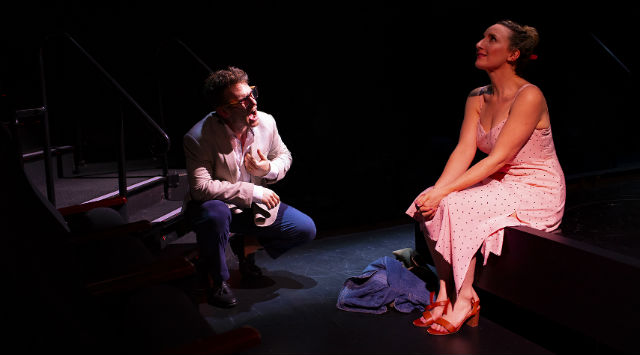
Steven is constantly evasive, nowhere to be seen, because he had done the wrong thing. After their recent nuptials, Steven’s wife finds that he often disappears, and we discover that he chooses to spend time instead with an ex, a male lover happy to rekindle the relationship, unaware of Steven’s change in marital status. Steven however would only stay for the sex, and vanish in between coitus, unable to extend intimacy beyond the flesh. Jye Bryant’s The Things I Could Never Tell Steven tells an intriguing story about sexual orientation for our times, to provoke questions about identity, and to discuss the quickly evolving meanings of marriage under our newly egalitarian legislation.

Bryant’s musical features songs that are beautifully melodic, with witty lyrics that offer plentiful amusement. Musical direction by Ghassan Kassisieh, who provides accompaniment on keyboard, is precise and pleasant. The production is minimally designed, but directors Kassisieh and Katherine Nheu offer elegant staging solutions that keep meaningful emphasis on the songs. Performer Julia Hyde is very impressive as Steven’s unnamed wife, with a wonderful voice that delivers considerable dynamism to the show. Her mother-in-law is played by Suzanne Chin who brings an excellent measure of comedic energy to proceedings. Joey Sheehan is less effective with the humour, but as Steven’s ex his falsetto is a real auditory joy, and Tim Martin who, although not sufficiently dramatic in approach, is nonetheless convincing in his portrayal of the reliably stoic father.

Steven is not present to plead his case, but he is clearly not the marrying type. In times past, we would have conveniently attributed his misbehaviour to him being a closet case, but now we are free to examine his tale as one about the relevance and purpose of marriage. It is possible that Steven’s regret is simply about attachment, of having to sacrifice his selfhood for no good reason, regardless of the genders at play in the musical. He should have known to interrogate rules around monogamy and fidelity before taking that solemn vow, and more importantly, he should have challenged notions of conformity and conventions, that have brought him to this point of dilemma.

www.whimsicalproductions.com.au

Review: Dorian Gray Naked (Popinjay Productions)

Venue: Limelight on Oxford (Darlinghurst NSW), Jan 30 – Feb 16, 2019
Libretto: Melvyn Morrow
Music: Dion Condack
Director: Melvyn Morrow
Cast: Blake Appelqvist

Theatre review
A fictional character provides the inside scoop on his author Oscar Wilde, in Melvyn Morrow’s Dorian Gray Naked. Resurrected to speculate on the inner workings of a novel, from a time when homosexuality was an abomination that would render entire existences underground and secret, Dorian the Adonis/Narcissus of queer literature offers a revised perspective for our comparatively liberated times.

Imaginative and appropriately flamboyant, Morrow waxes lyrical about what might have been. Together with Dion Condack’s music, Dorian Gray Naked paints a melancholic and often abstract picture, about artistic creation, highly sentimental but insufficiently witty. Performer Blake Appelqvist’s affected approach, punctuated by incessant sharp inhales, executed like DIY sound effects, can be alienating, but his presence is a strong one that fills the room effortlessly. It is basically a one-man show, but with Condack positioned onstage, passionate on the piano, interplay between the two men are inevitable in this exploration of gay culture and history.

Choreographer Nathan Mark Wright uses exaggerated body shapes to make a statement about camp, and to disrupt the meanings of masculinity in Wilde’s suspicious narrative of heterosexual love. The effect is skin deep, but it reveals an aspect of gayness that is obsessive about surface. Although Dorian Gray Naked is thorough with its reinventions and fabrications, it seems incapable of reaching greater emotional or psychological depths that will achieve meaningful resonance. It remains mainly a cerebral experience, and for some, that could be enough.

www.limelightonoxford.com.au

Review: Herringbone (Squabbalogic Independent Music Theatre)

Venue: Kings Cross Theatre (Kings Cross NSW), Jan 18 – Feb 2, 2019
Playwright: Tom Cone
Music: Skip Kennon
Lyrics: Ellen Fitzhugh
Directors: Jay James-Moody, Michael Ralph
Cast: Jay James-Moody
Images by David Hooley

Theatre review
It was 1929, at the dawn of the Great Depression when eight-year-old George was assigned to be star of the stage, and bread winner at home. Billed as “a vaudevillian ghost story”, Tom Cone’s Herringbone tells the fantastical tale of George’s possession by a poltergeist named Lou who returns, determined to resume his prematurely terminated acting career. Wonderfully imaginative, with a flamboyant and quirky sensibility that transports us to realms of fascinating awe, the show also includes songs in a nostalgic style inspired by the era, all of them full of charm, certain to delight.

Jay James-Moody alone plays all ten of Herringbone‘s different characters, enthralling for the entire 90-minute duration. We witness superhuman talent, along with extraordinary skill and conviction, as the consummate storyteller takes us to the farthest reaches of what theatrical magic can achieve. His technical abilities prove as moving as the palpable love he has for the art form, so clearly discernible on this stage. James-Moody (who also co-directs) allows himself to be completely vulnerable, so that we can come in contact not only with the humanity of the piece, but also the staggeringly delicate nature of live performance. Creating theatre, especially at this intimate scale, is to fly without a safety net, and when we see the work soaring, the inspiration that it provides is incomparable.

Choreography by co-director Michael Ralph is thoroughly inventive, with a jubilant spirit that makes the experience an uplifting one (in spite of its dark themes). Adding to the visual splendour is Benjamin Brockman’s lights, extravagantly conceived to deliver luscious and dramatic imagery, much of which lingers on well after curtain call. Three musicians, Natalya Aynsley, Amanda Jenkins and Tom McCracken, electrify the space with their passionate interpretations of the score, having us impressed by their detailed and tight performance, no doubt due in large part to musical direction by Benjamin Kiehne.

Musical theatre is big business, and as such, much of what we see can tend to be predictable and formulaic. Even if there is undeniable professionalism on display, all the money in the world can never guarantee that our soul is touched by a production. Commerce is always risk averse, and by the same token, it can often be fearful of ingenuity and all things ephemeral, ingredients that great art can never do without. Herringbone has a little bit to say about how we care for children, but it is the very application of artistry, and the collaboration of disciplines, that makes this show so exquisite.

www.squabbalogic.com.au

Review: Ned (Plush Duck Productions)

Venue: New Theatre (Newtown NSW), Dec 18 – 22, 2018
Book: Anna Lyon, Marc McIntyre
Music & Lyrics: Adam Lyon
Director: Miranda Middleton
Cast: Erin Bogart, Denzel Bruhn, Rowan Brunt, Siobhan Clifford, Sinead Cristaudo, Lincoln Elliott, Martin Everett, Jacqui Greenfield, Jodie Harris, Rob Hartley, David Hov, Josh McElroy, Courtney Powell, Marcus Rivera, Georgia Rodgers , Carmel Rodrigues, Cypriana Singh, Guy Webster
Images by Shakira Wilson

Theatre review
For many Australians of European descent, the legend of Ned Kelly is a crucial element in the way identity is imagined. An outlaw with a heart of gold, the anti-authoritarian myth has helped create a notion of selfhood, that persists even in these days of bourgeois ubiquity. In the new musical Ned, old stories are resurrected once again, to reinforce ideals that are at once romantic and subversive, reflecting perhaps a longing for more innocent times, or simply to offer a reminder of the kind of people Australians have, for a long time, prided ourselves to be.

The work is in many ways derivative and predictable, with form and content both proving to be risk averse, for this Broadway-style biographical drama. There might be little that feels inventive, but its ambition is certainly laudable. Peter Rubie’s lighting design provides a sense of grandeur and polish, for captivating imagery that help elevate the simple tale. Conductor Hamish Stening puts passion into the music, keeping proceedings lively and entertaining.

Leading man Joshua McElroy is suitably moody as Ned Kelly, with an imposing physical presence that comfortably seizes the limelight. Jodie Harris is excellent as the hero’s mother Ellen, strong in voice and in personality, for a powerful characterisation of the early migrant woman. The cast is generally well-rehearsed, although choreography has a tendency to be unflattering and therefore distracting.

Ned Kelly keeps returning to our consciousness, because we have a fondness for thinking that he is a good representation of who we are. It is more likely however, that Kelly stands for values we wish to possess, but that we can no longer lay claim to. Over a century has past, and we are a world away from the rough and tumble of Van Diemen’s Land. In today’s highly materialistic existences, rebels are quashed, not by ideological compromises, but by the imperious might of money.

www.plushduckproductions.com.au

Review: Aspects Of Love (Hayes Theatre)

Venue: Hayes Theatre Co (Potts Point NSW), Nov 22 – Dec 30, 2018
Book: Andrew Lloyd Webber (based on the novella by David Garnett)
Music: Andrew Lloyd Webber
Lyrics: Don Black, Charles Hart
Director: Andrew J. Bevis
Cast: Finn Alexander, Hugh Barrington, Caitlin Berry, Ava Carmont, Annelise Hall, Christopher Hamilton, Jonathan Hickey, David Hooley, Stefanie Jones, Megan Kozak, Wendy Lee Purdy, Michaela Leisk, Matthew Manahan, Sam Marques, Grant Smith
Images by David Hooley

Theatre review
Rose and Alex have an unconventional romance, with each other as constants, but also involving several other people who weave through over the years, to test traditionally held notions of love. David Garnett’s 1955 novella Aspects Of Love is a seductive work, with intentions for a refreshed sense of modernity, but Andrew Lloyd Webber’s clumsy adaptation turns the story into an absurd one, with abrupt renderings that in effect, ridicule its characters and alienate its audience. The opening song “Love Changes Everything”, a legitimate hit from the composer’s heyday, is characteristically schmaltzy, but other tunes are even less appealing, in a show that disappoints from the very beginning.

Although unable to surmount the astonishingly poor writing, this production, directed by Andrew J. Bevis, is assembled with an admirable polish. Tim Chappel’s costumes and Steven Smith’s set design are particularly charming, with John Rayment’s lights helping to provide a visual sophistication to the bewildering goings on. Performers are similarly accomplished, with leading lady Caitlin Berry introducing a high level of professionalism as Rose, to keep us secure in her unwavering and impeccable stage savvy. Alex is played by Jonathan Hickey, convincing as the 17-year-old ingénue, but who gradually loses his grip on the material as the role progresses into maturity. Stefanie Jones is memorable as Giulietta, spirited and alluring in a role that otherwise makes little sense.

At the heart of Aspects Of Love is a wonderful tale that challenges the way we look at our world. Its women are free, able to fall without explanation, time and time again, for friends and lovers all through their lives. They experience marriage, but remain unencumbered. Rose chooses the right husband, who helps her grow beyond the prescribed and parochial, never ceasing to flourish, forever expanding, in both professional and personal terms. The musical however, fails to encapsulate that majesty, instead it deflates and diminishes, with an insistence that all should yield to a perspective that is ultimately pedestrian, and incapable of inspiration.

www.hayestheatre.com.au

Review: Company (Limelight On Oxford)

Venue: Limelight on Oxford (Darlinghurst NSW), Nov 14 – Dec 1, 2018
Book: George Furth
Music & Lyrics: Stephen Sondheim
Director: Julie Baz
Cast: Heather Campbell, Maree Cole, Grace Driscoll, Emily Dreyer, Lincoln Elliott, Jacqui Greenfield, Michele Lansdown, Michael McPhee, Alexander Morgan, Bridget Patterson, Brendan Paul, Ileana Pipitone, Marcus Rivera, Richard Woodhouse
Images by Clare Hawley

Theatre review
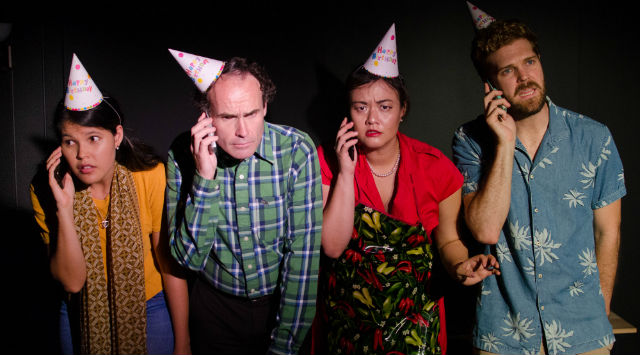
Bobby is celebrating his thirty-fifth birthday, with friends who all appear to be married couples, unable to resist badgering him into finding a wife of his own. Stephen Sondheim’s Company is approaching half a century old, and although its conceit seems archaic, we know that the experience it depicts remains resolutely accurate. People are often unwilling to accept single life as a valid and healthy option, and even though the musical does not portray marriage to be comprehensively wonderful, its insistence that Bobby comes to an acquiescence, in spite of his quite fabulous New York City bachelor existence, is representative of our narrow definitions of identity.

George Furth’s book for the 1970 creation might bear an exasperating plot that does not stand the test of time, but Sondheim’s songs continue to be sublime. Directed by Julie Baz, the production is entertaining and spirited, on a very busy stage that although not always visually appealing, is consistently ebullient, with an ensemble cast full of beans. Leading man Brendan Paul does an adequate job of his singing, but it is his radiant high-wattage smile that really charms. Heather Campbell is deeply impressive as Amy, delivering a rendition of the notoriously difficult “Getting Married Today” at an exceptional standard. Another memorable tune, “The Ladies Who Lunch” is performed by the commanding Michele Lansdown, whose interpretation of the socialite lush Joanne, is a delightful contrast to a lot of the squeaky clean goings on. Also noteworthy are the jubilant musicians that make up a sensational six-piece band, led by Antonio Fernandez whose music direction brings us a great deal of class, through his faithful interpretation of a now nostalgic score.

When Bobby finally admits to his loneliness, we question the veracity of his proclamations, wondering if it is a case of peer pressure leading our protagonist, to invent feelings that are not entirely authentic. Sondheim came out as gay in 1998, at the age of 68. Company is essentially a work he had written about the confirmed bachelor, at a time when his sexuality was in the closet, in which the protagonist’s friends are confounded by his refusal to settle with a woman. The incessant nagging leads to Bobby eventual relenting, not by actually marrying a woman, but by performing a ruse of regret and embarrassment, that many gay people have had to carry out, as a strategy in dealing with the heteronormativity that they inevitably have to contend with. Like many LGBTQ people, Bobby probably feels no need to satisfy those traditional expectations, but a big song and dance is always useful in getting them off our backs.

www.limelightonoxford.com.au

Review: The Overcoat (Belvoir St Theatre)

Venue: Belvoir St Theatre (Surry Hills NSW), Nov 15 – Dec 1, 2018
Book & Lyrics: Michael Costi (based on the short story by Nikolai Gogol)
Music: Rosemarie Costi
Director: Constantine Costi
Cast: Laura Bunting, Kate Cheel, Aaron Tsindos, Charles Wu
Images by Clare Hawley

Theatre review
Nikolai is an unremarkable man, an ordinary citizen of Russia, who lives and works in St Petersburg, not unlike the faceless millions in any of the world’s cities. He is unambitious, able to be content with a simple life, but the most basic of human requirements, dignity, eludes him. He is sold a luxurious coat, one he is unable to afford, with the promise that the new garment would finally help him gain the respect of people he sees every day at work. Based on Nikolai Gogol’s short novel of the same name, The Overcoat is about injustice, and the sacrifices some have to make, just to attain a level of subsistence.

Adapted by Michael Costi, whose book and lyrics retain the poignancy of the original, this musical version is an understated but thoroughly moving work of theatre. Rosemarie Costi’s music is consistently gripping, and delightfully idiosyncratic, incorporating shades of Kurt Weill and Stephen Sondheim to find exquisite balance in this sophisticated take on the genre. Director Constantine Costi exhibits great style, alongside a sensitive understanding of drama, for a production that lulls us gently to some very deep places in our hearts and minds.

Performer Charles Wu is an enchanting presence, vulnerable yet confident as Nikolai. Not only does he earn our empathy for the pitiful character, Wu elevates our experience of the sad story with his capacity to inspire our intellect. Aaron Tsindos’ booming voice thrills and satisfies, as do his extravagant depictions of several unforgettable supporting roles. Laura Bunting and Kate Cheel create a range of ebullient personalities, both actors proving themselves to be as commanding as they are charming.

Our protagonist procures his coat, with money that should have gone to food and rent. Before society can provide him with a feeling of belonging, Nikolai must give up more than all he has; we come to the cruel realisation that the real world does not offer unconditional love. When we participate in the labour force, we go to work for survival and for salvation, but there is never any guarantee that the exchange can be a fair one. In fact, we see in The Overcoat, that when the marketplace is left to its own devices, many of us are put in positions where we have to give more than we can ever receive in return. The unfairness is ubiquitous, and without intervention, disparities can only widen.

www.belvoir.com.au

Review: The Wild Party (Seymour Centre)

Venue: Seymour Centre (Chippendale NSW), Nov 15 – 24, 2018
Book: Michael J. Lachiusa, George C. Wolfe
Music & Lyrics: Michael J. Lachiusa
Director: Alexander Andrews
Cast: Michael Boulus, Jack Dawson, Nick Errol, Emily Hart, Prudence Holloway, Matthew Hyde, Tayla Jarrett, Katelin Koprivec, Victoria Luxton, Matilda Moran, Rosalie Neumair, Sophie Perkins, Olivier Rahmé, Zach Selmes, Samuel Skuthorp, Georgina Walker, Simon Ward, Jordan Warren, Madeleine Wighton, Victoria Zerbst
Images by Clare Hawley

Theatre review
It is New York City in the 1920s, and the party is lit. Bohemian types gather at the behest of volatile lovers Queenie and Burrs; not a single introvert in sight, all thirsty for a good time, ready to make the drama happen. Michael J. Lachiusa and George C. Wolfe’s 2000 musical The Wild Party is a rollicking ride with colourful characters taking us through a succession of exuberant numbers, celebrating life in the most exciting of cities.

Under Alexander Andrews’ direction, The Wild Party is a dazzling, fun-filled romp. Even though its narrative becomes somewhat vague, the production’s relentless vibrancy keeps us engaged and uplifted. Music direction by Conrad Hamill is lush and decadent, a wonderfully evocative element. Outstanding choreography by Madison Lee brings unexpected sophistication. Imaginative and adventurous, Lee’s work is thoroughly compelling, and along with dance captain Sophie Perkins’ efforts, it is the way bodies move through every second in this staging, that proves truly splendid. A group of 5 chorines, Victoria Luxton, Matilda Moran, Rosalie Neumair, Jordan Warren and the aforementioned Perkins, are the stars, brilliant with their spirit and charm, extraordinarily cohesive with all that they present.

Georgina Walker plays a very alluring Queenie, with an attitude and physical gestures that are flawlessly reminiscent of that bygone era. Sound engineering is often deficient, and Walker’s voice suffers as a result, but the intricacy of her performance is no less impressive. Prudence Holloway and Victoria Zerbst take on flamboyant roles with extravagant aplomb, both actors fierce and fabulous.

Parties are worth little when participants are unable to let their hair down, but as we see in The Wild Party, things can go too far. Art however, plays by different rules, and social transgressions are often an important part of how it can create impact. Considering the context, this staging is perhaps slightly polite, so it is never really able to provide much more than entertainment. To be wild, is to explore boundaries and question the rules. Little Miss Goody Two-Shoes may well be liked by everyone, but she is unlikely to have left an indelible mark anywhere.

www.littletriangle.com.au