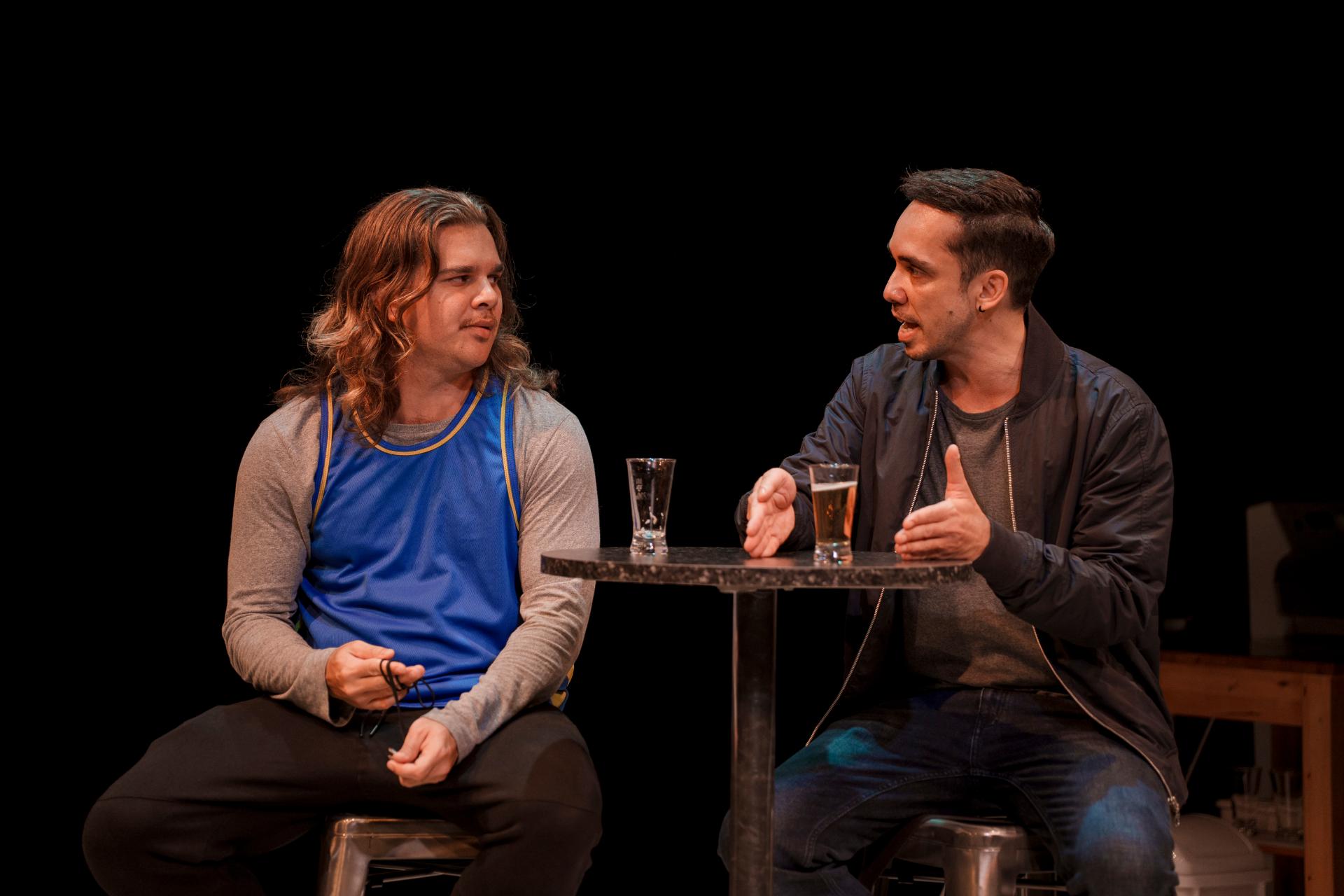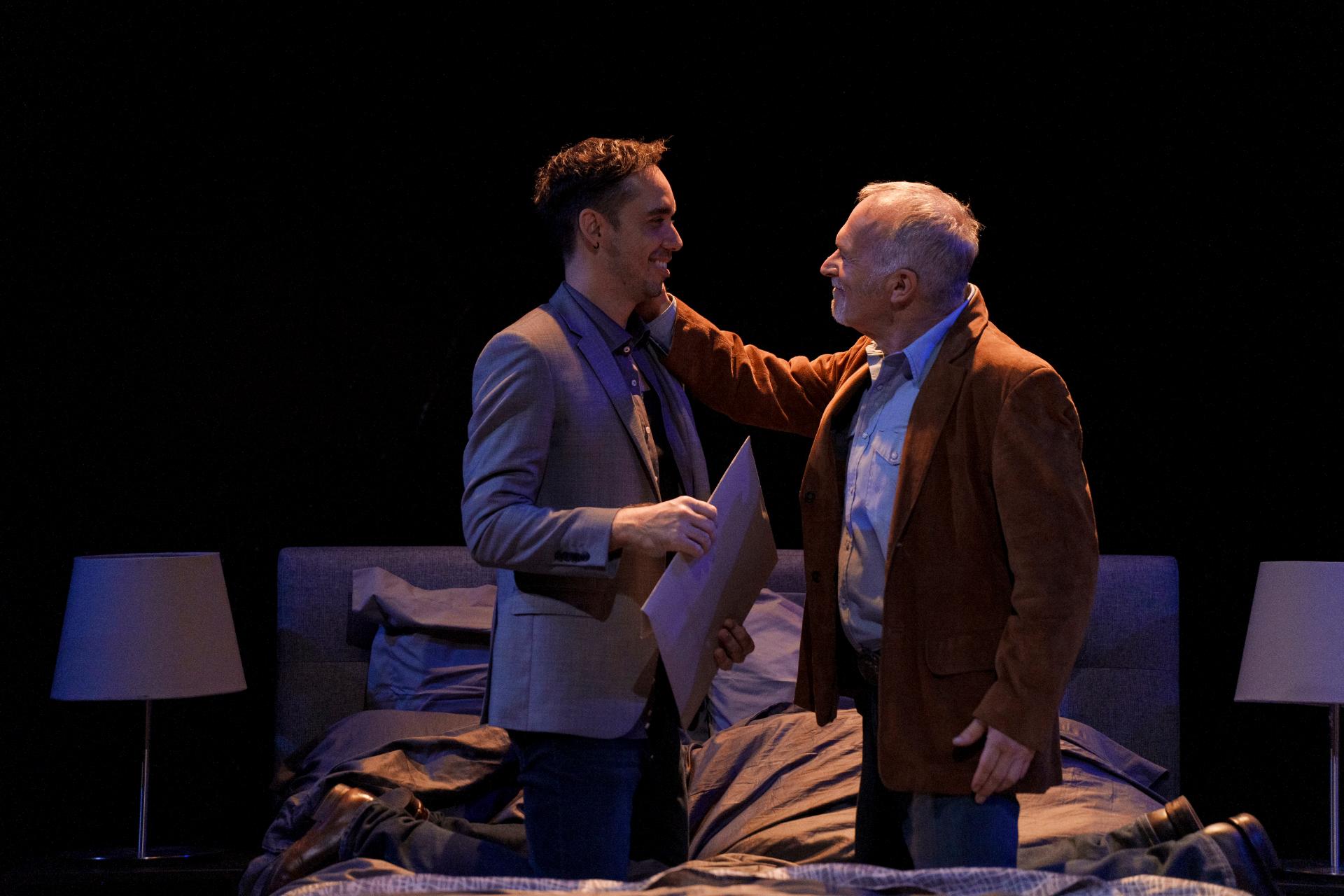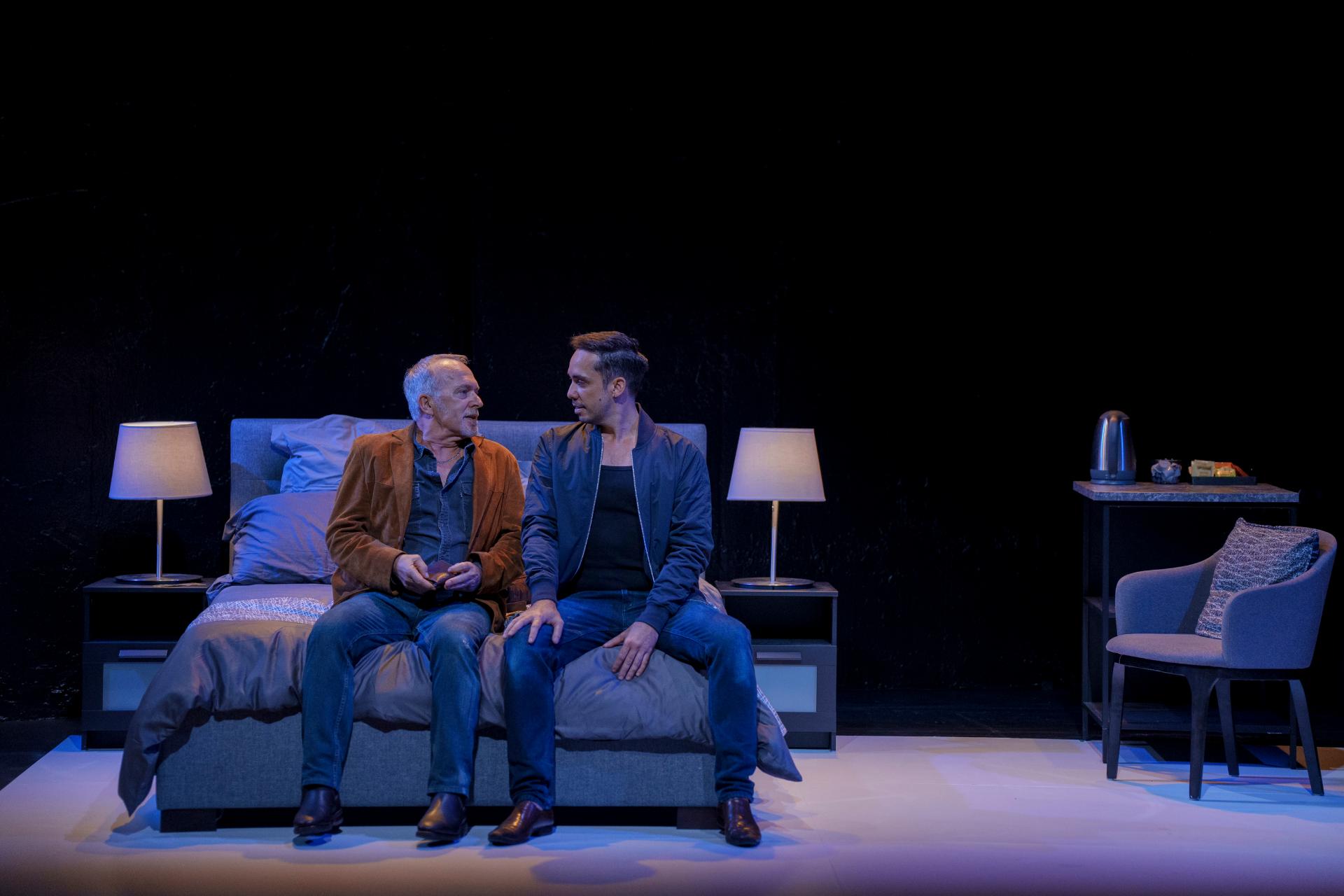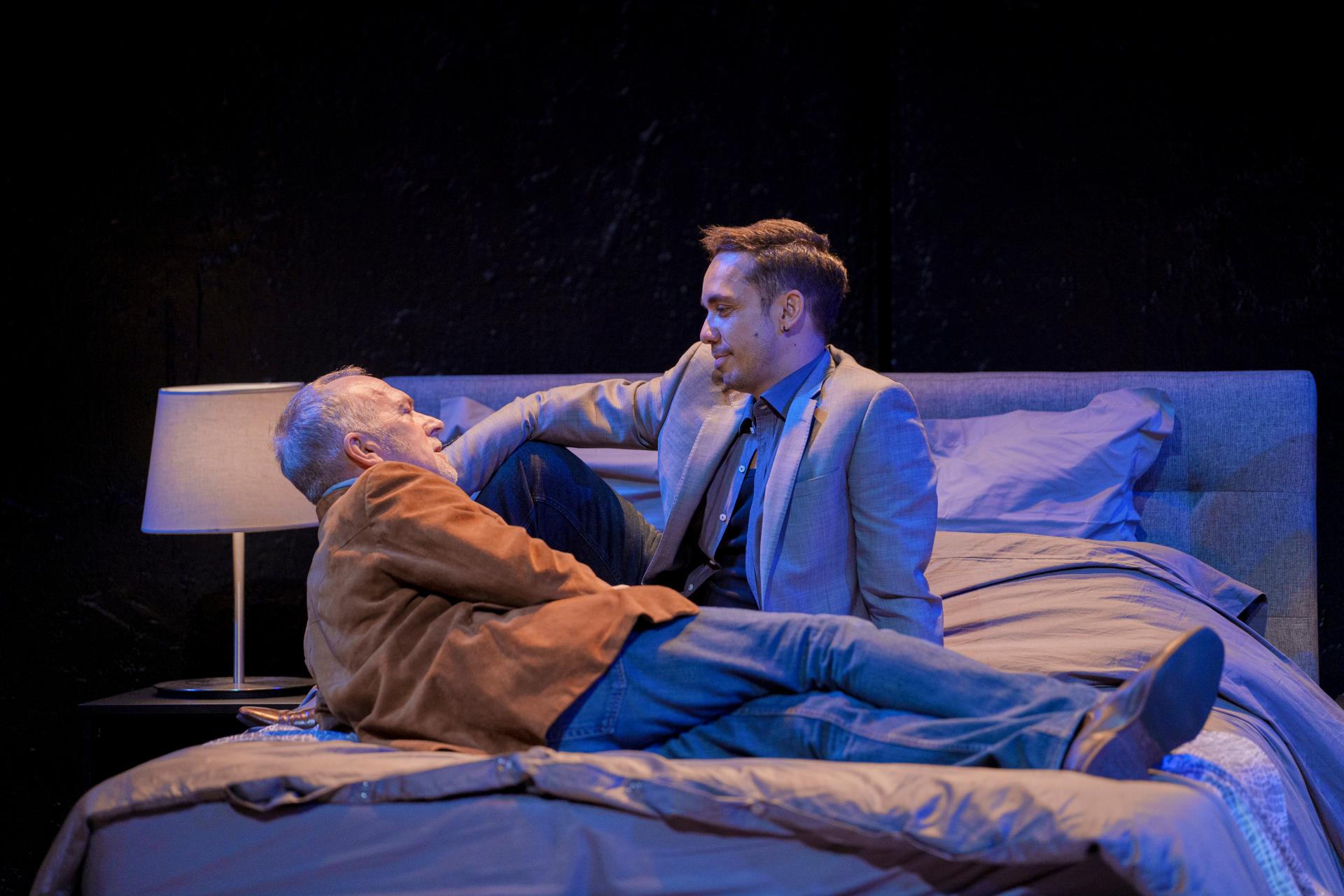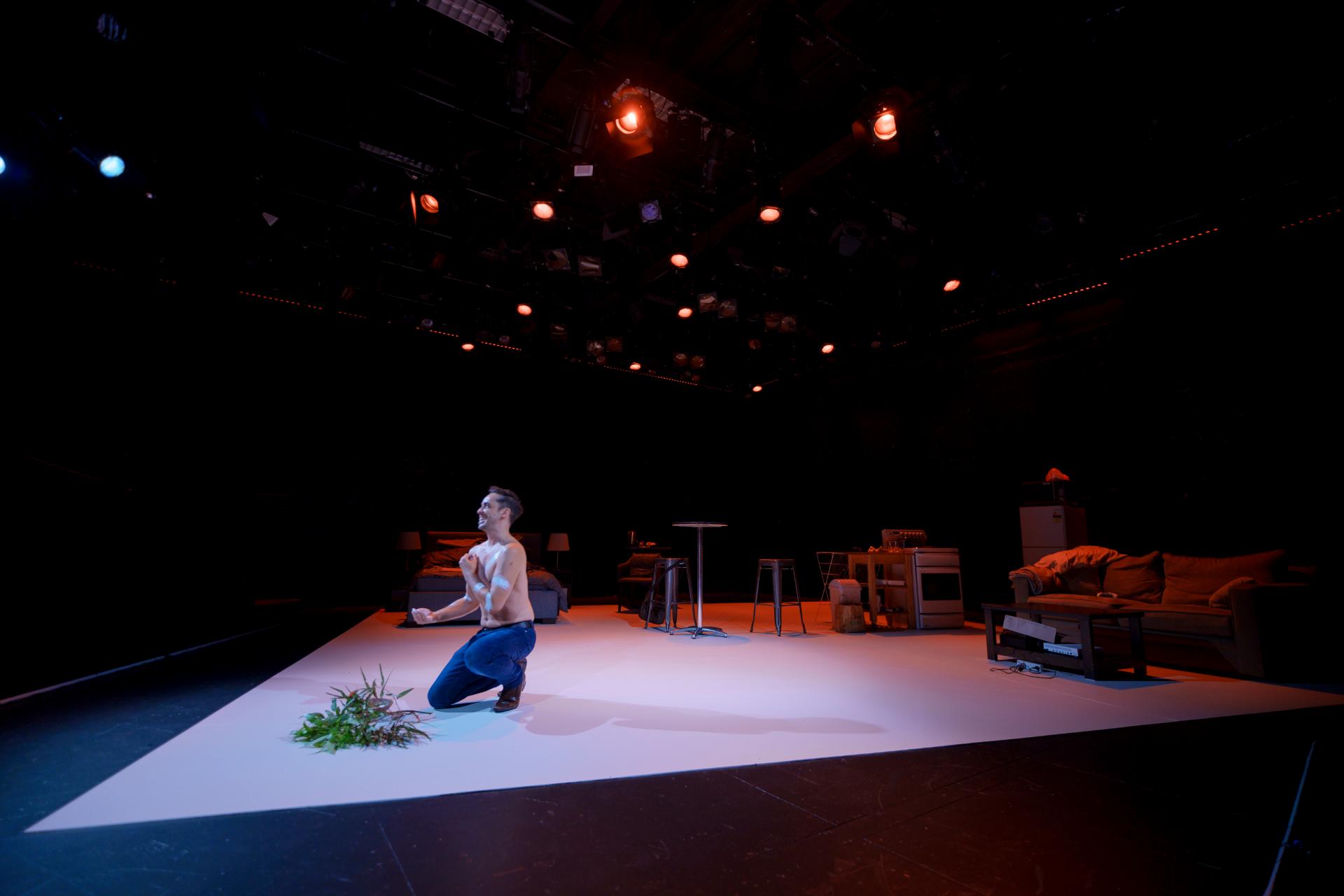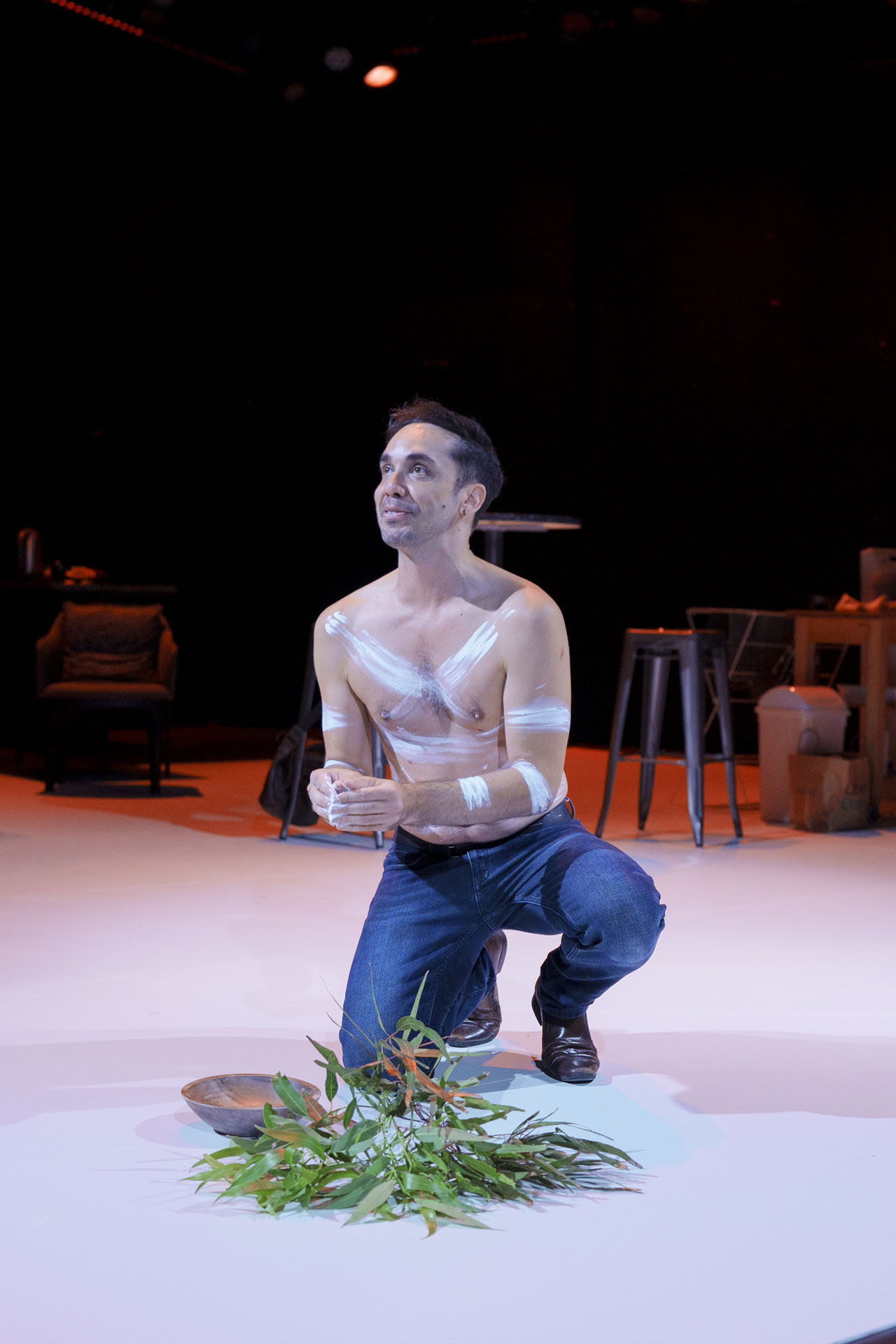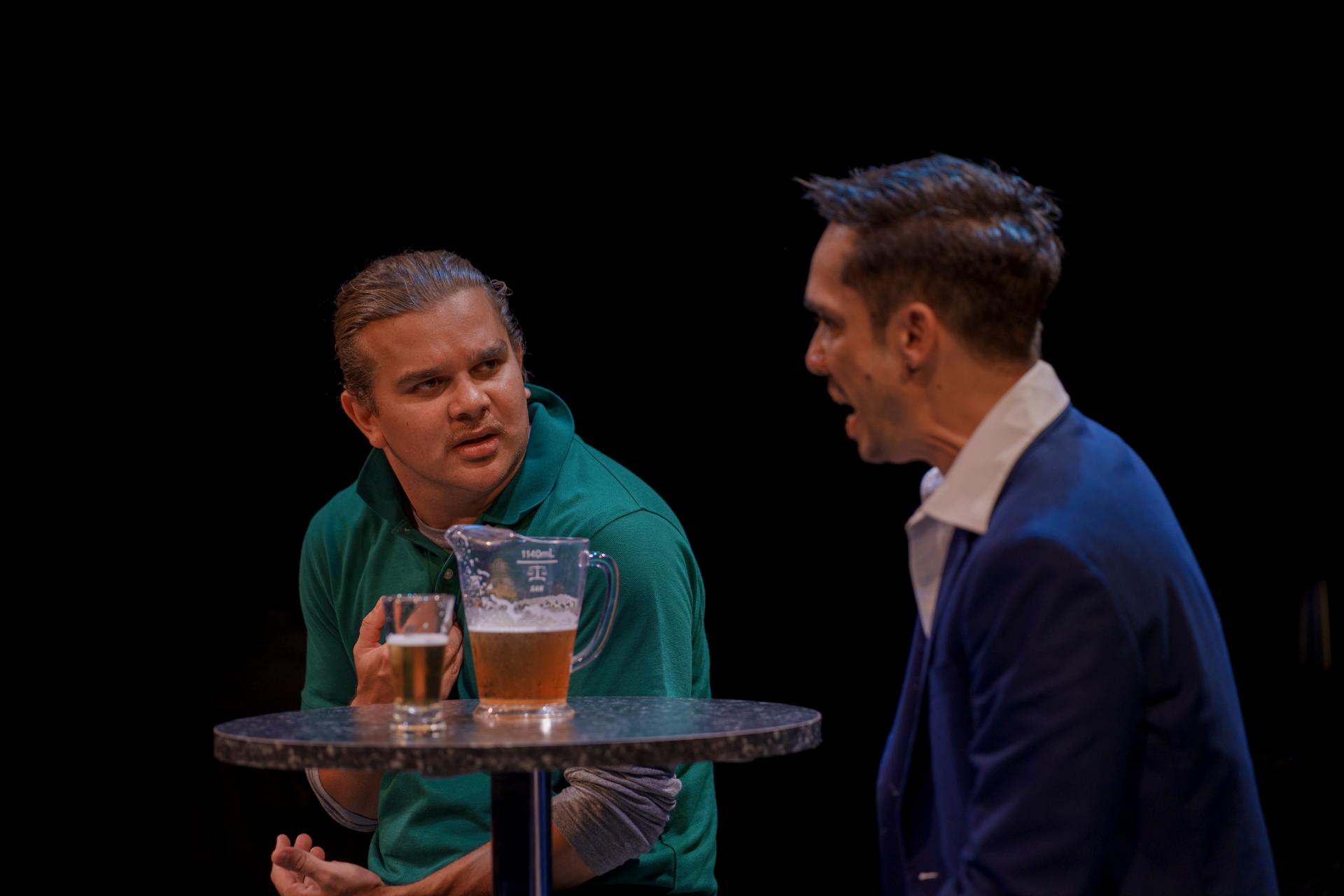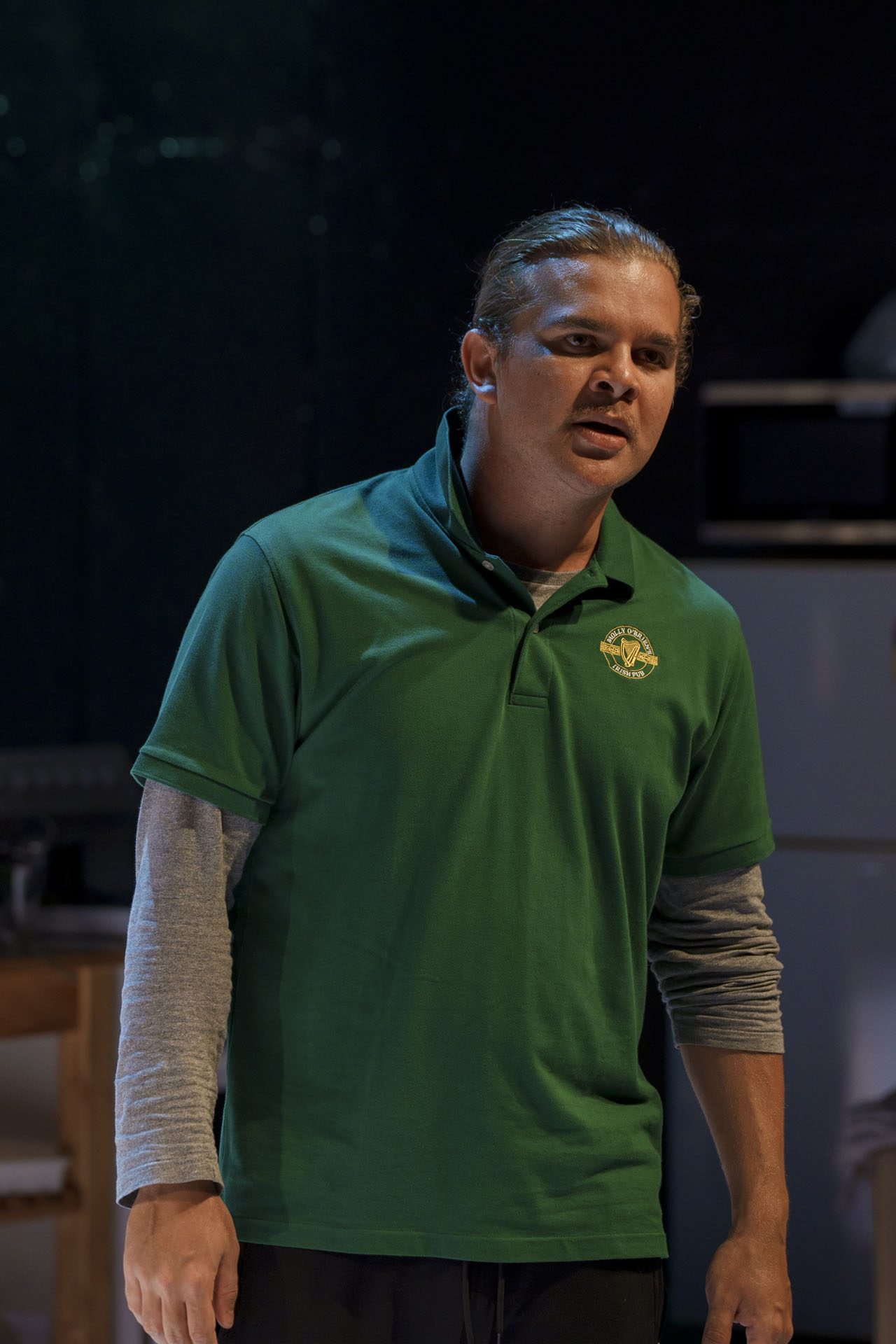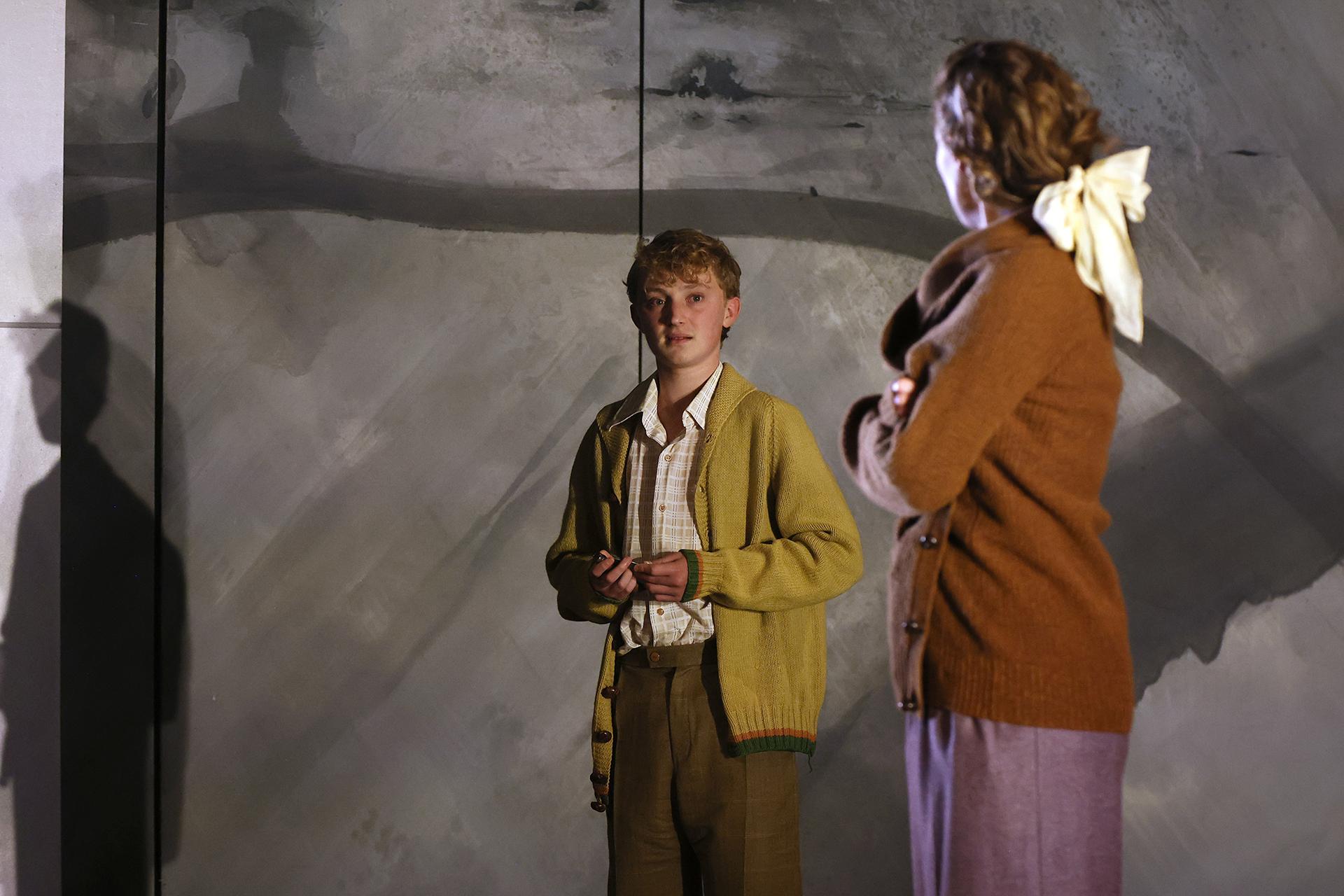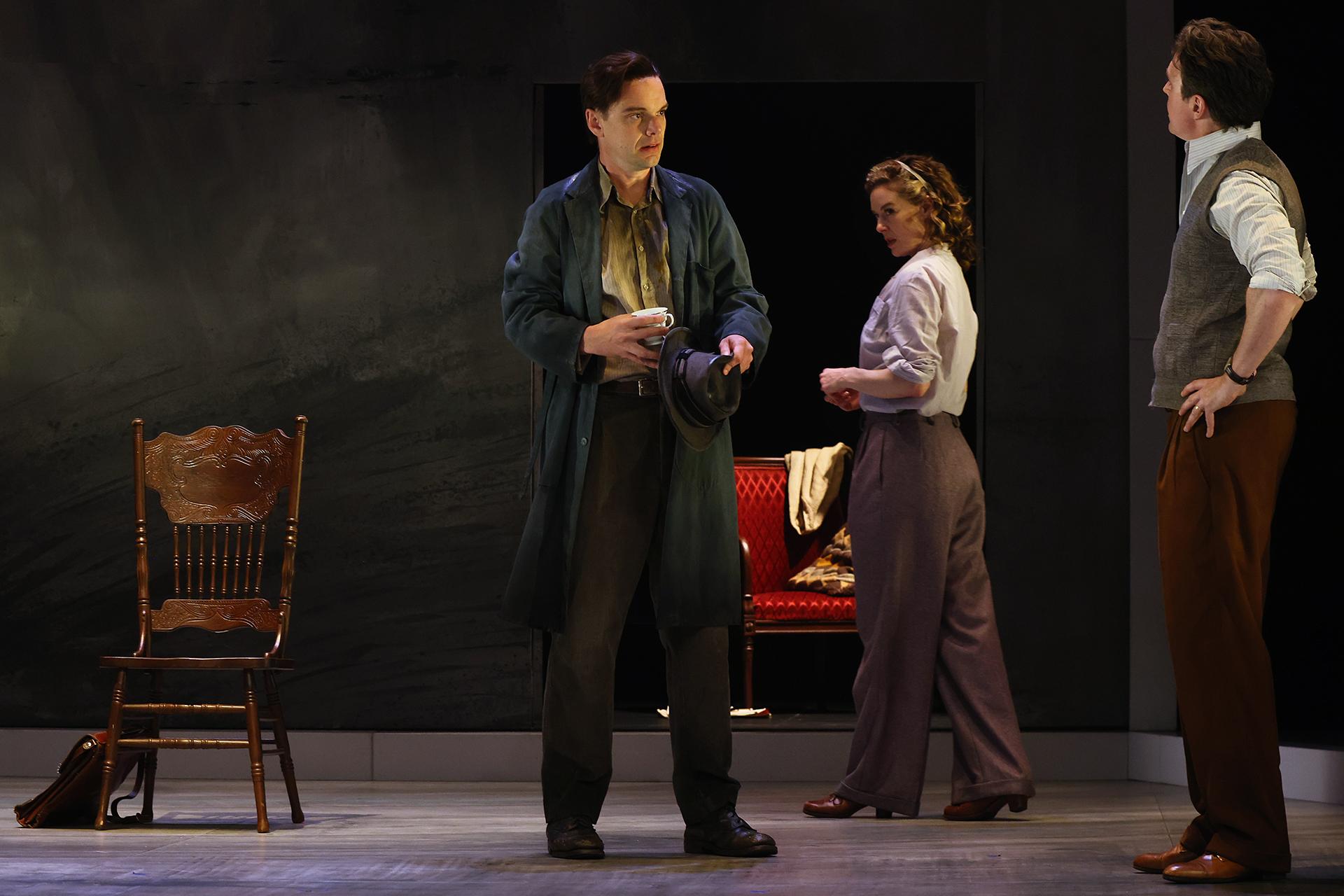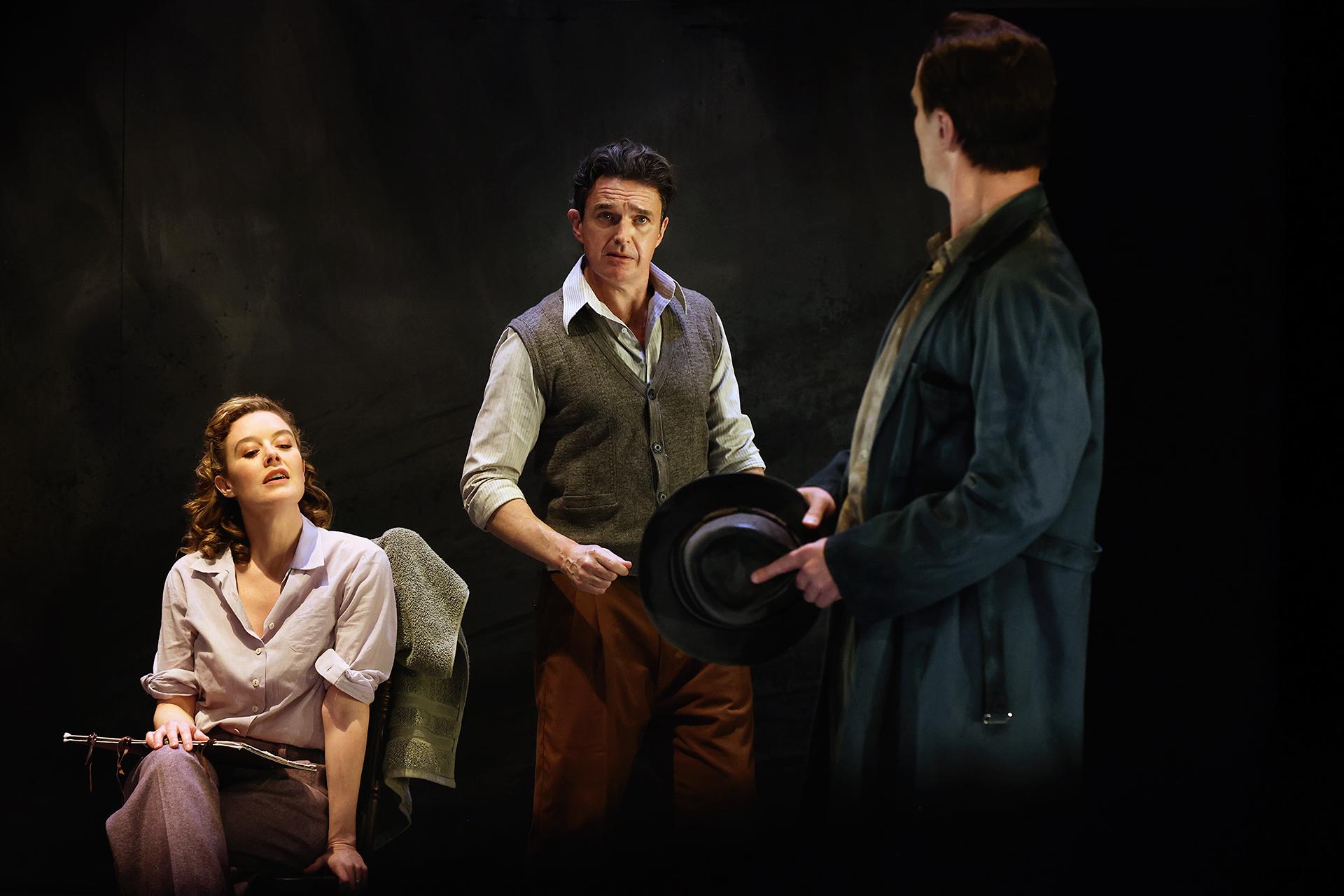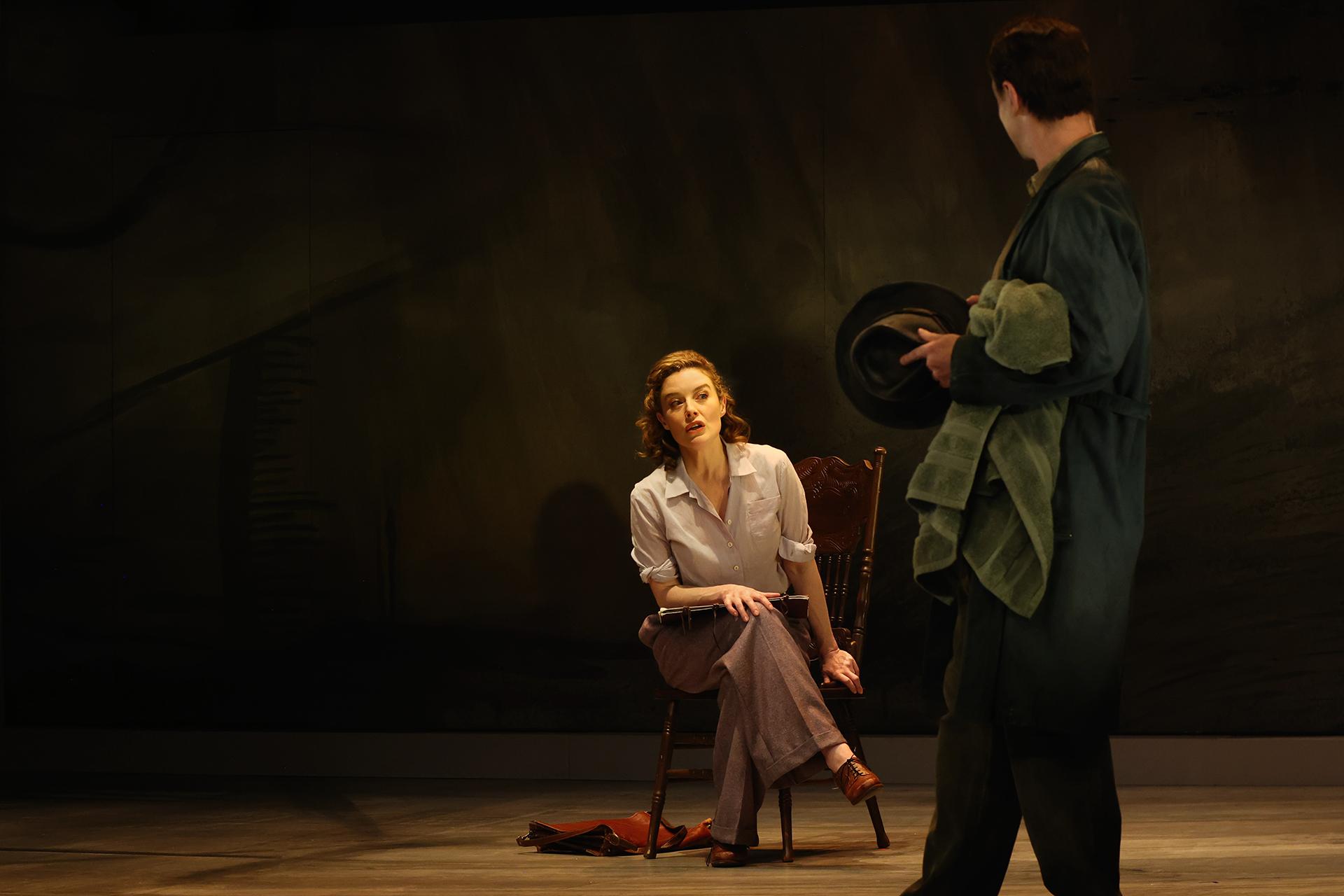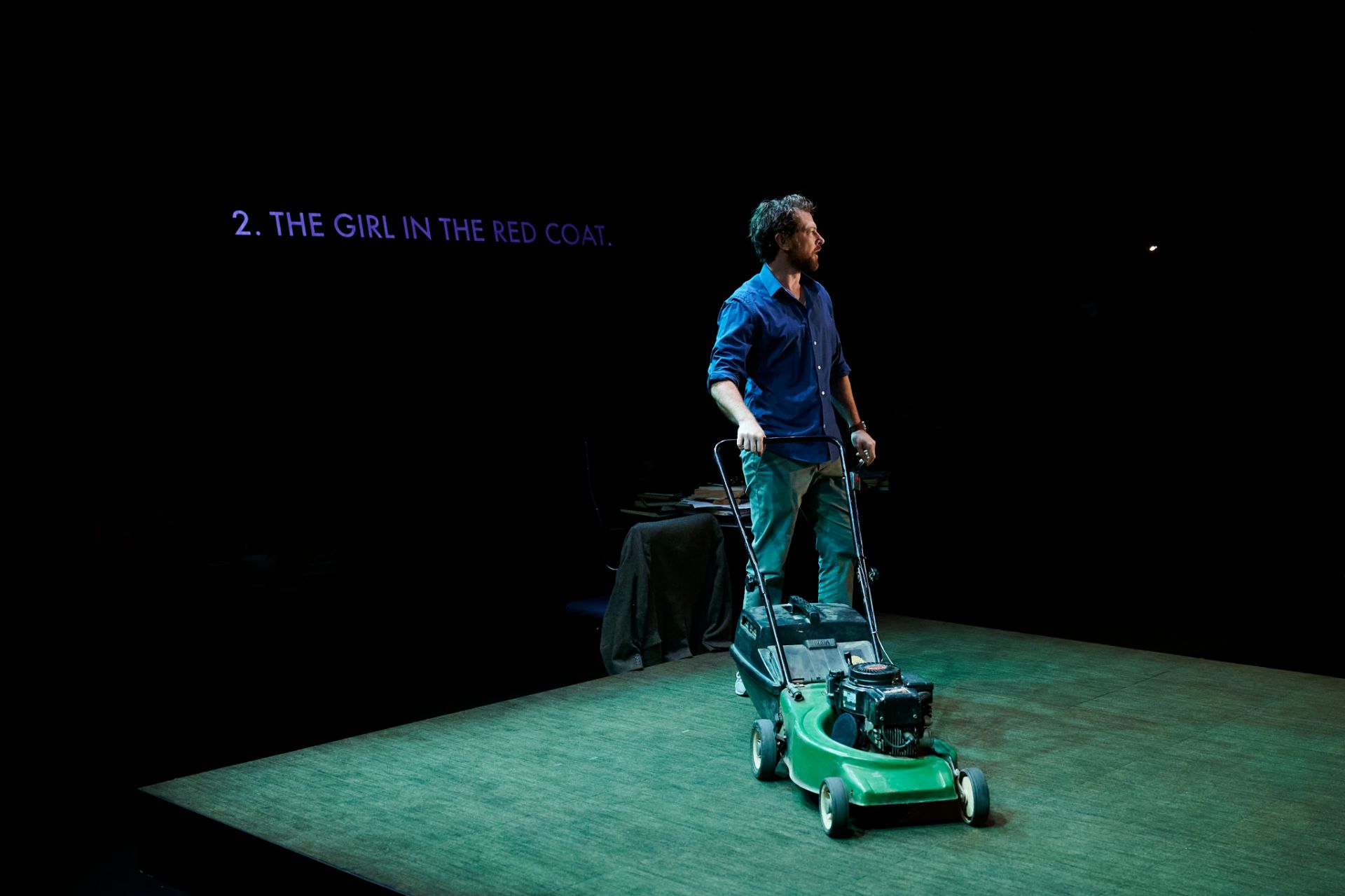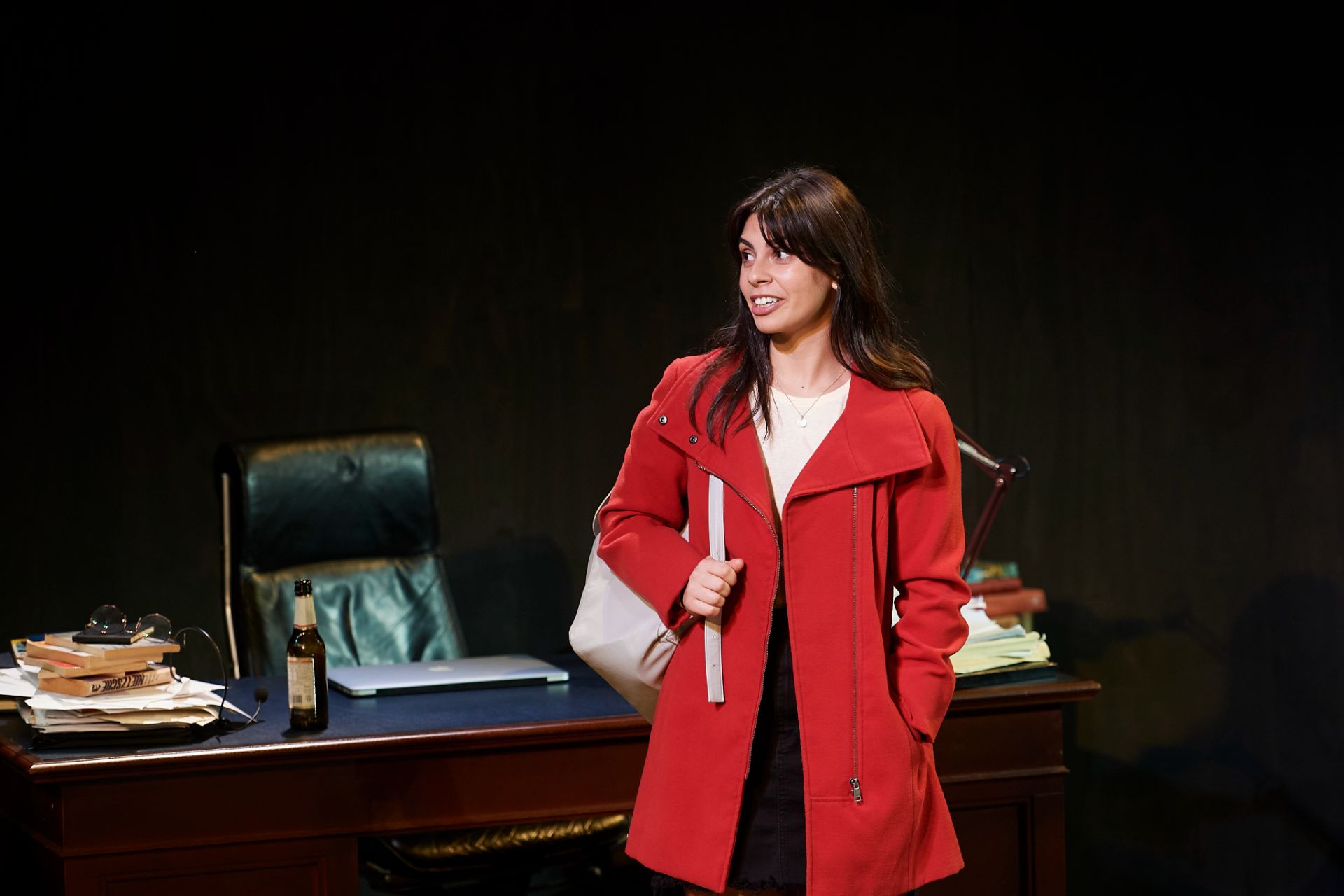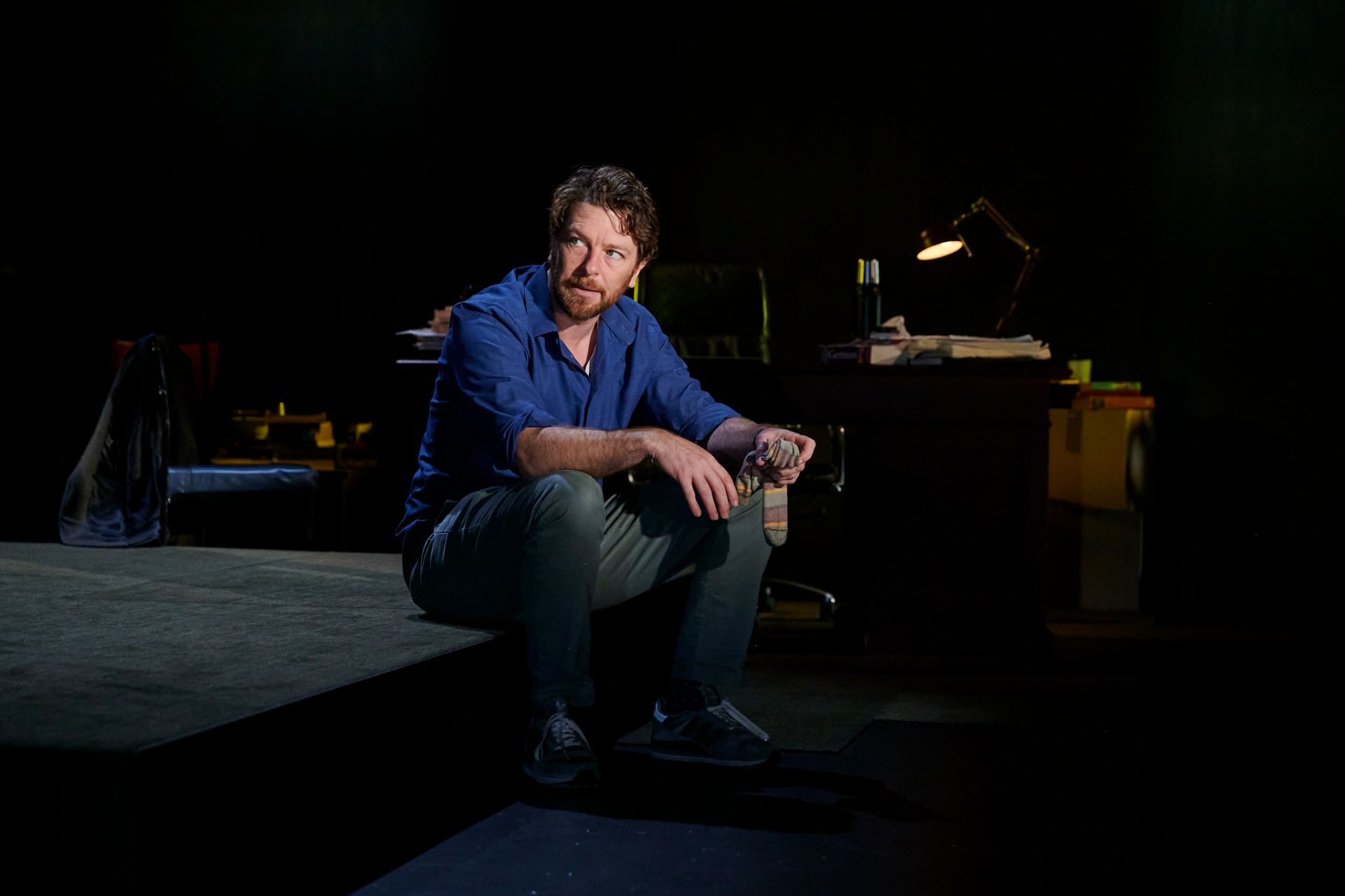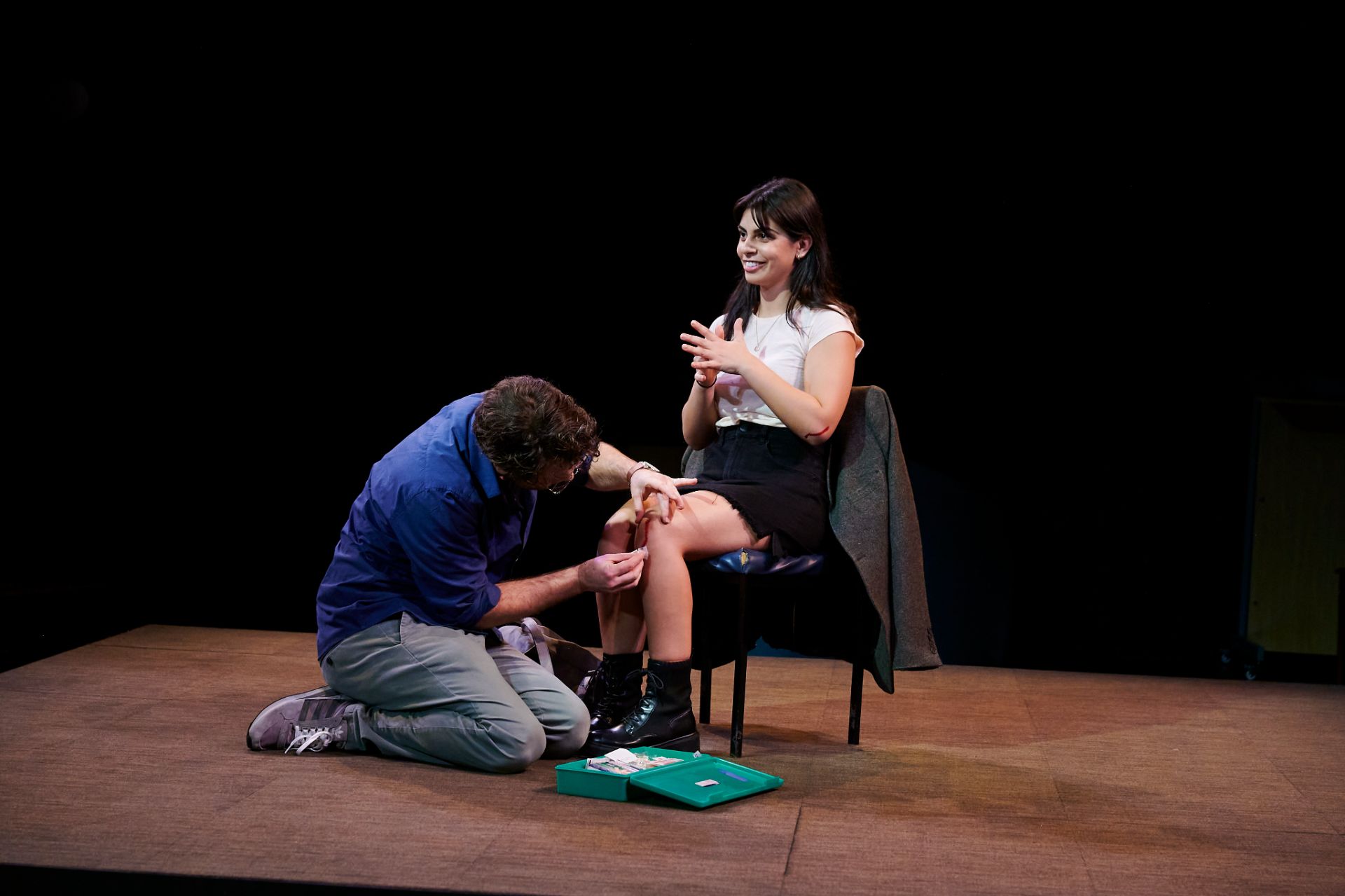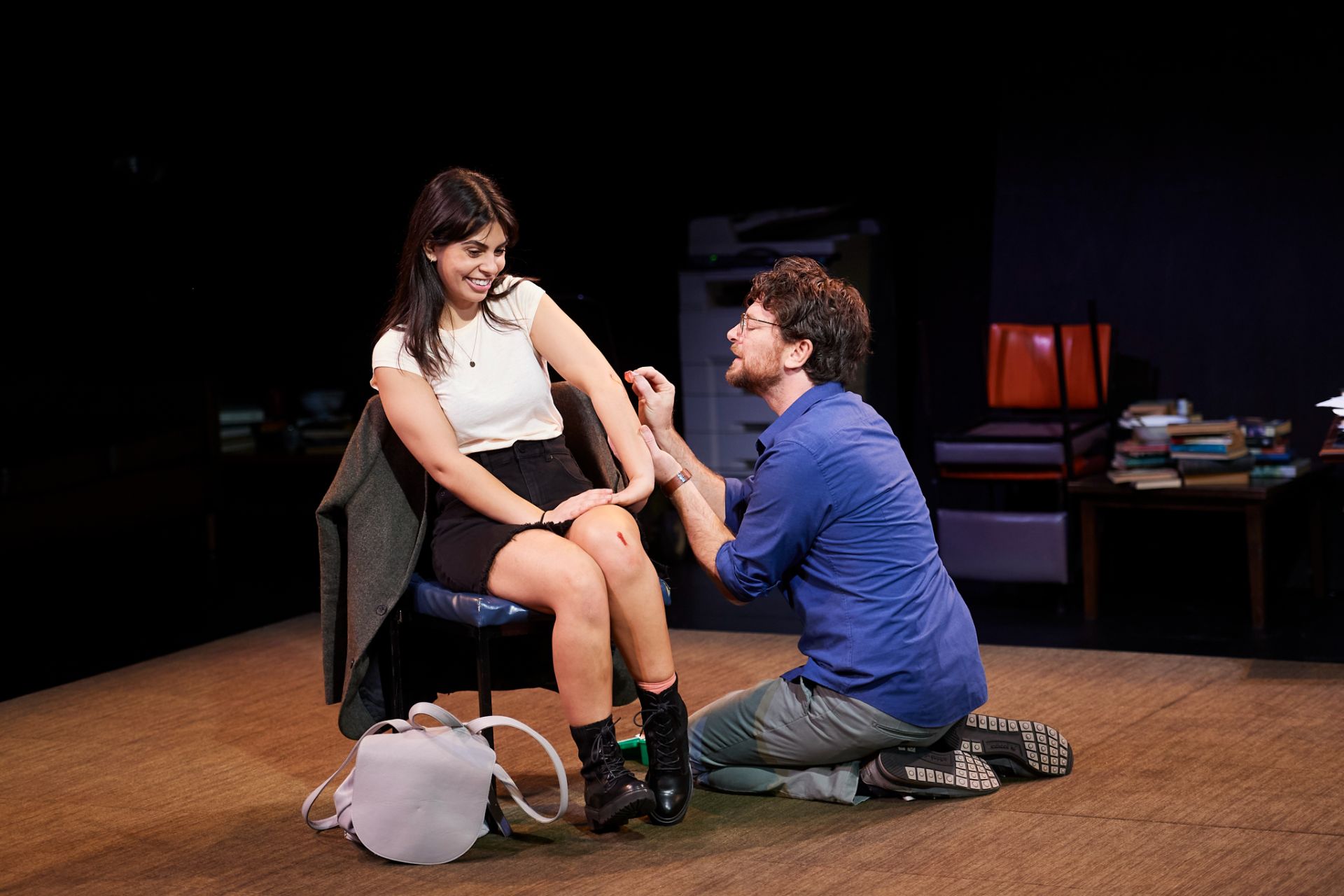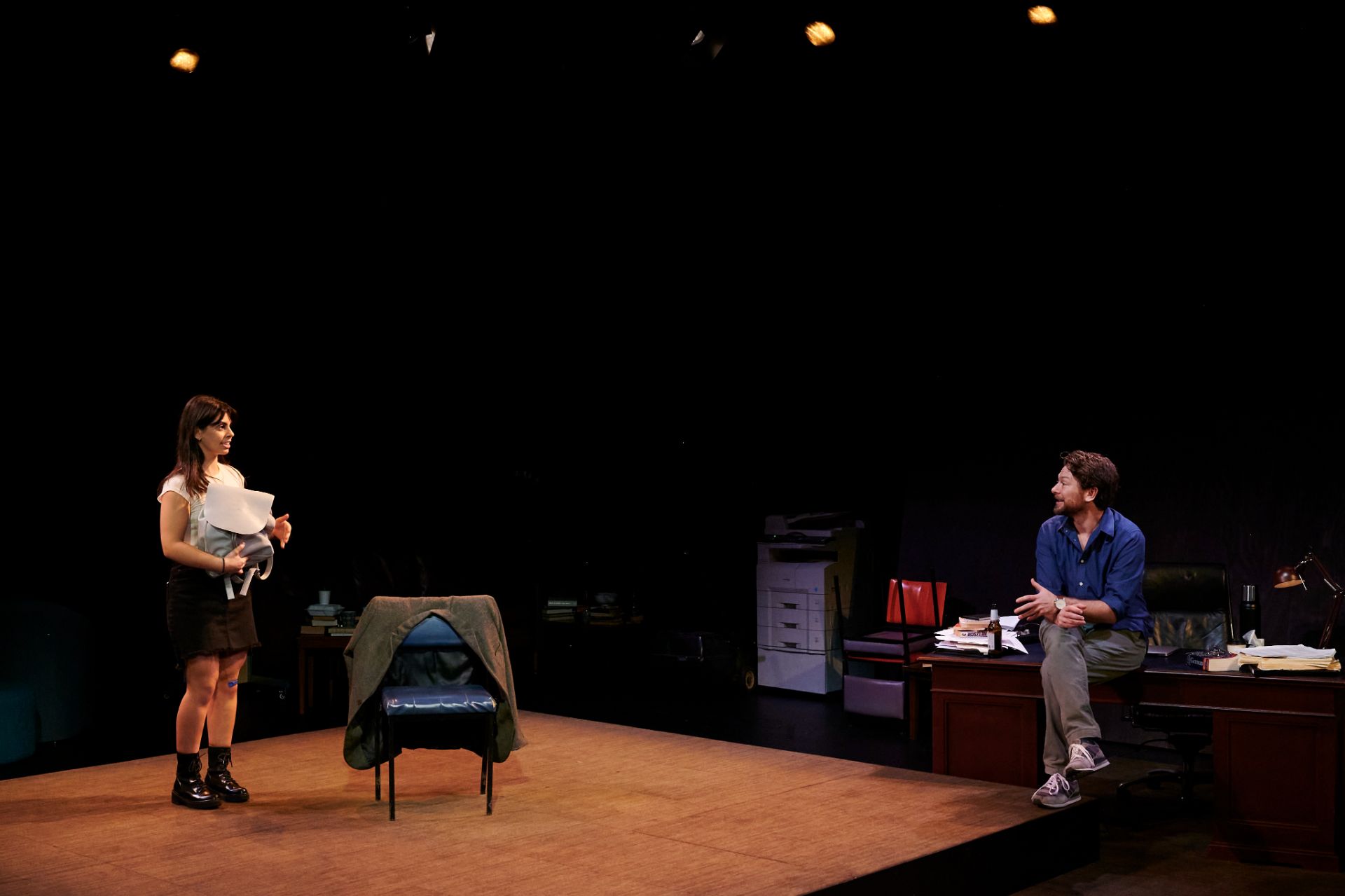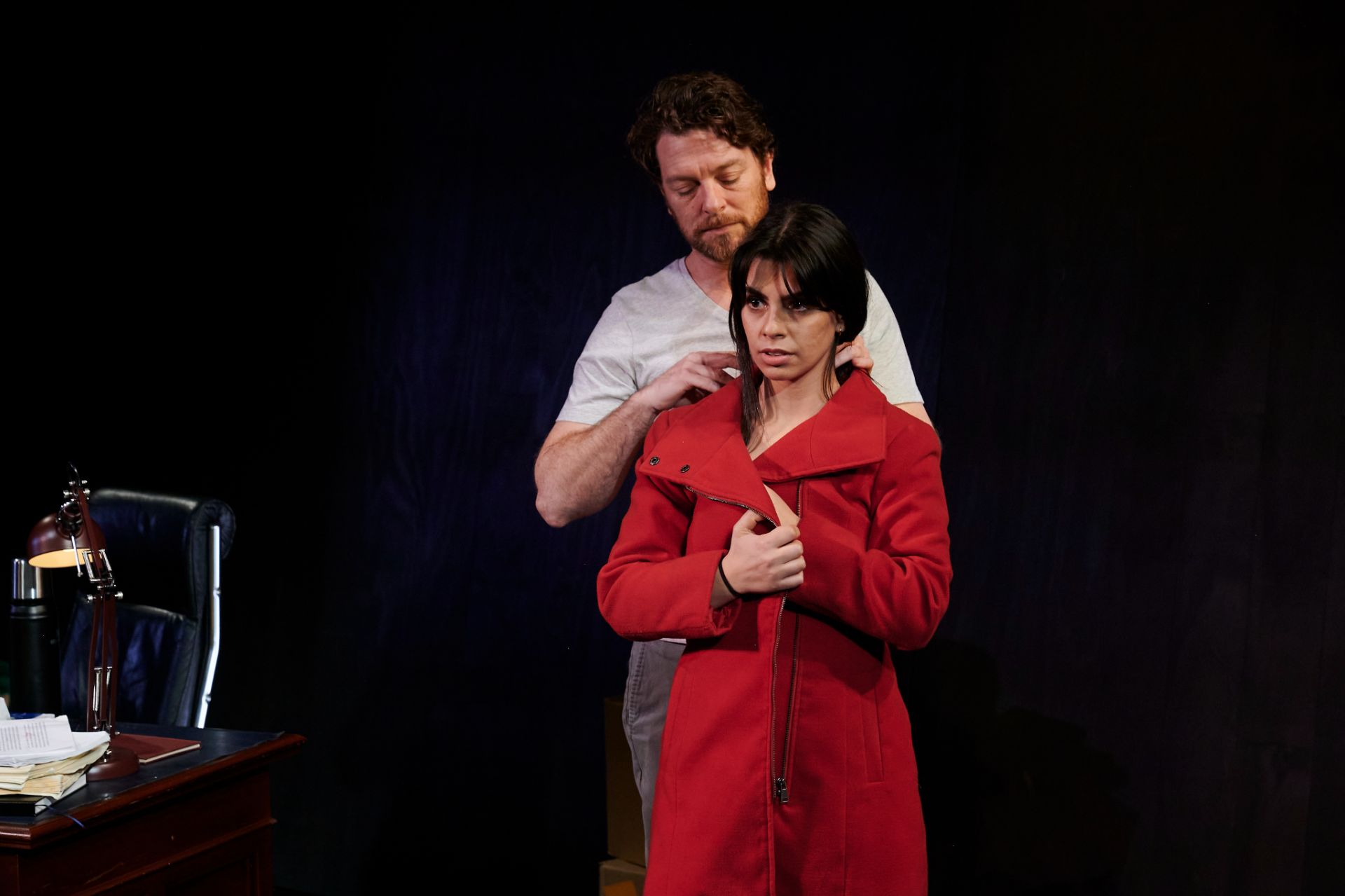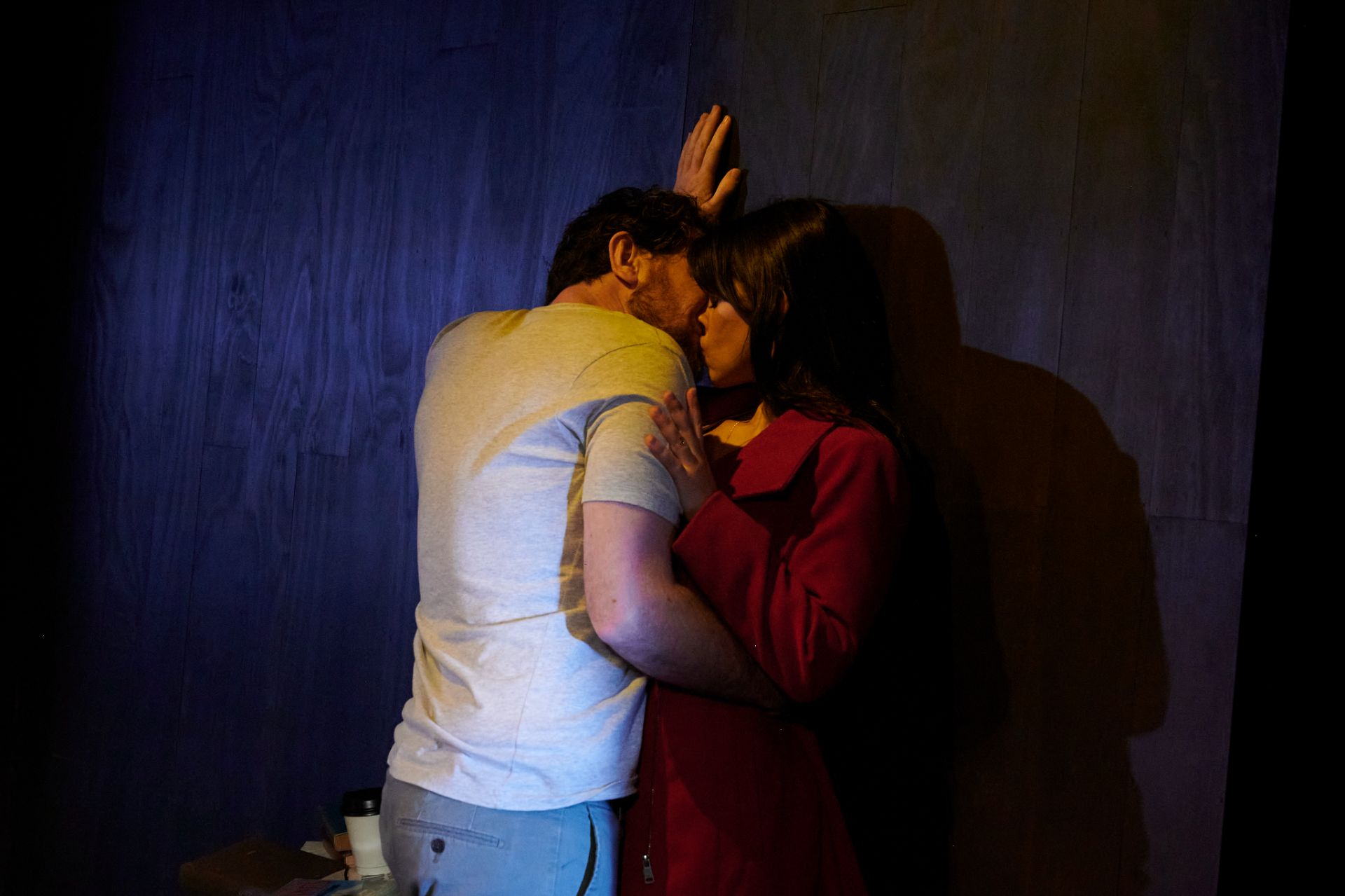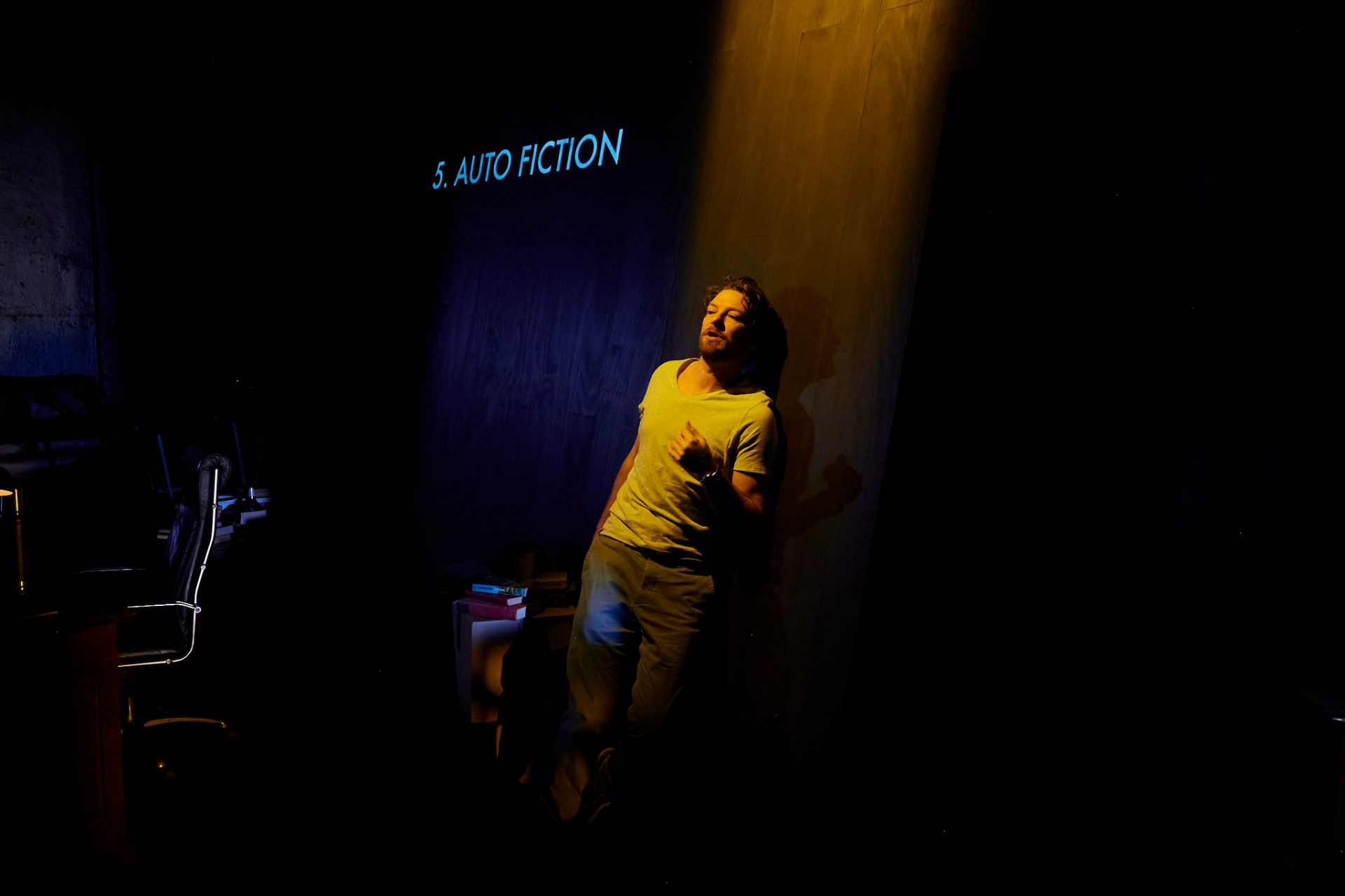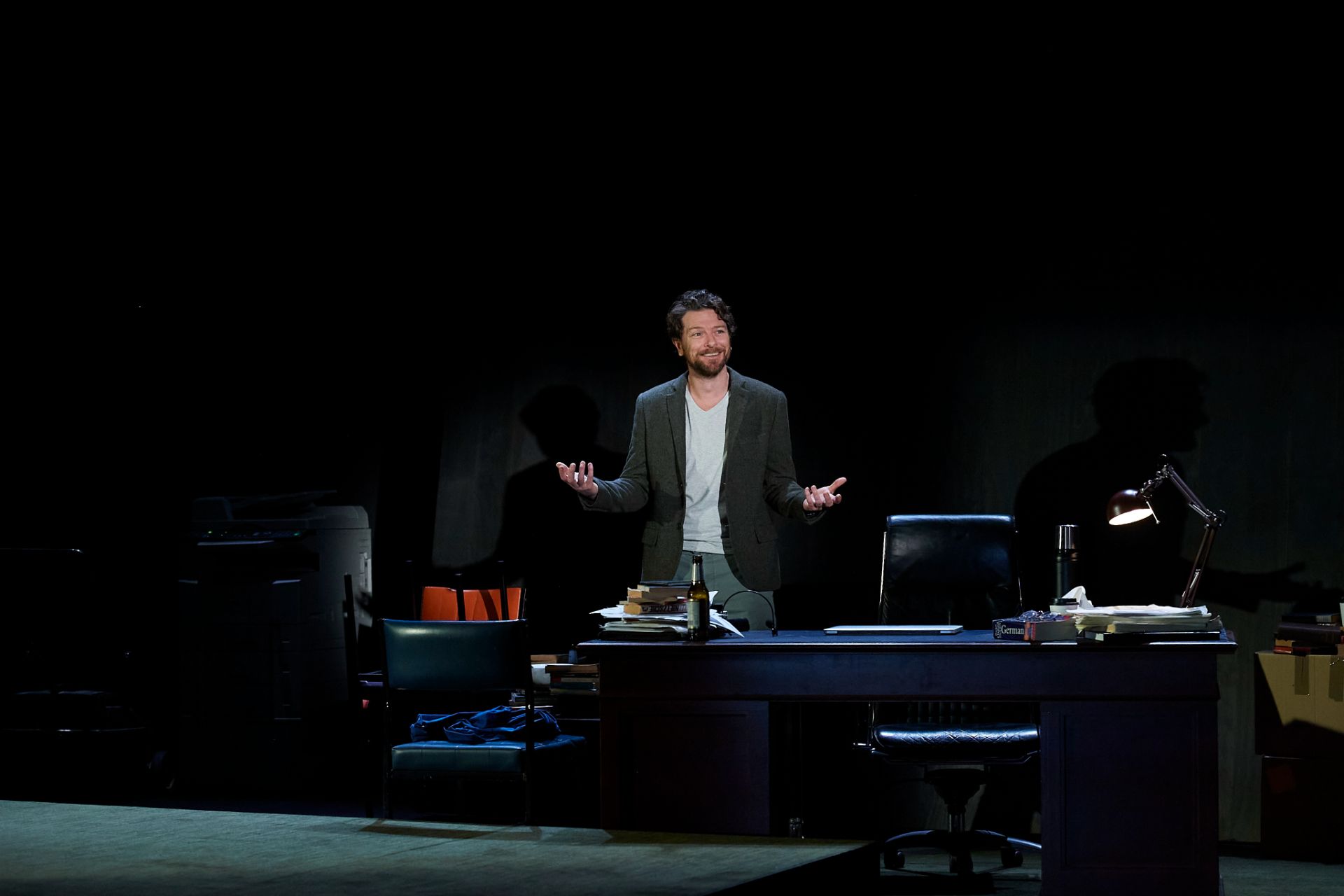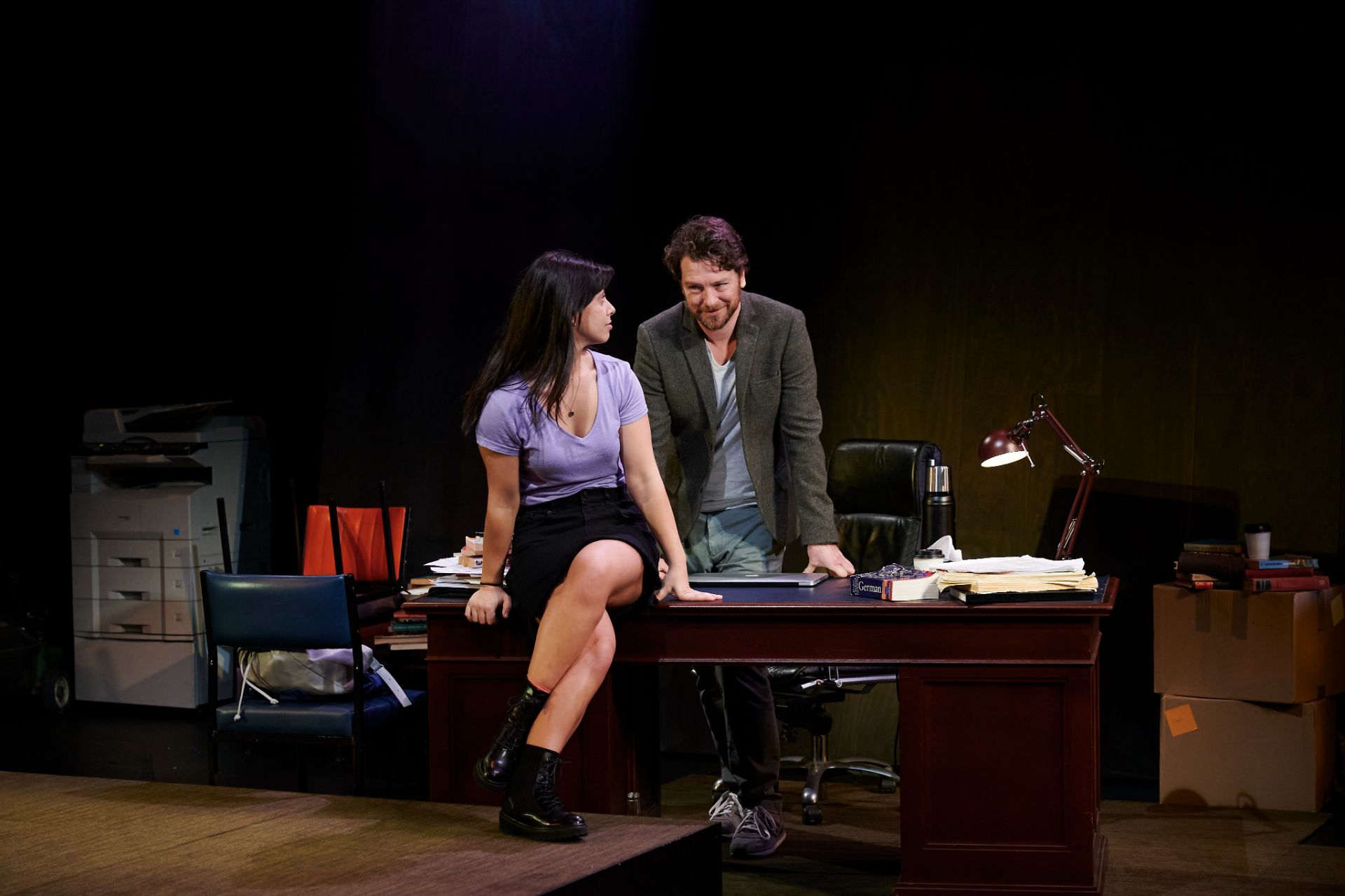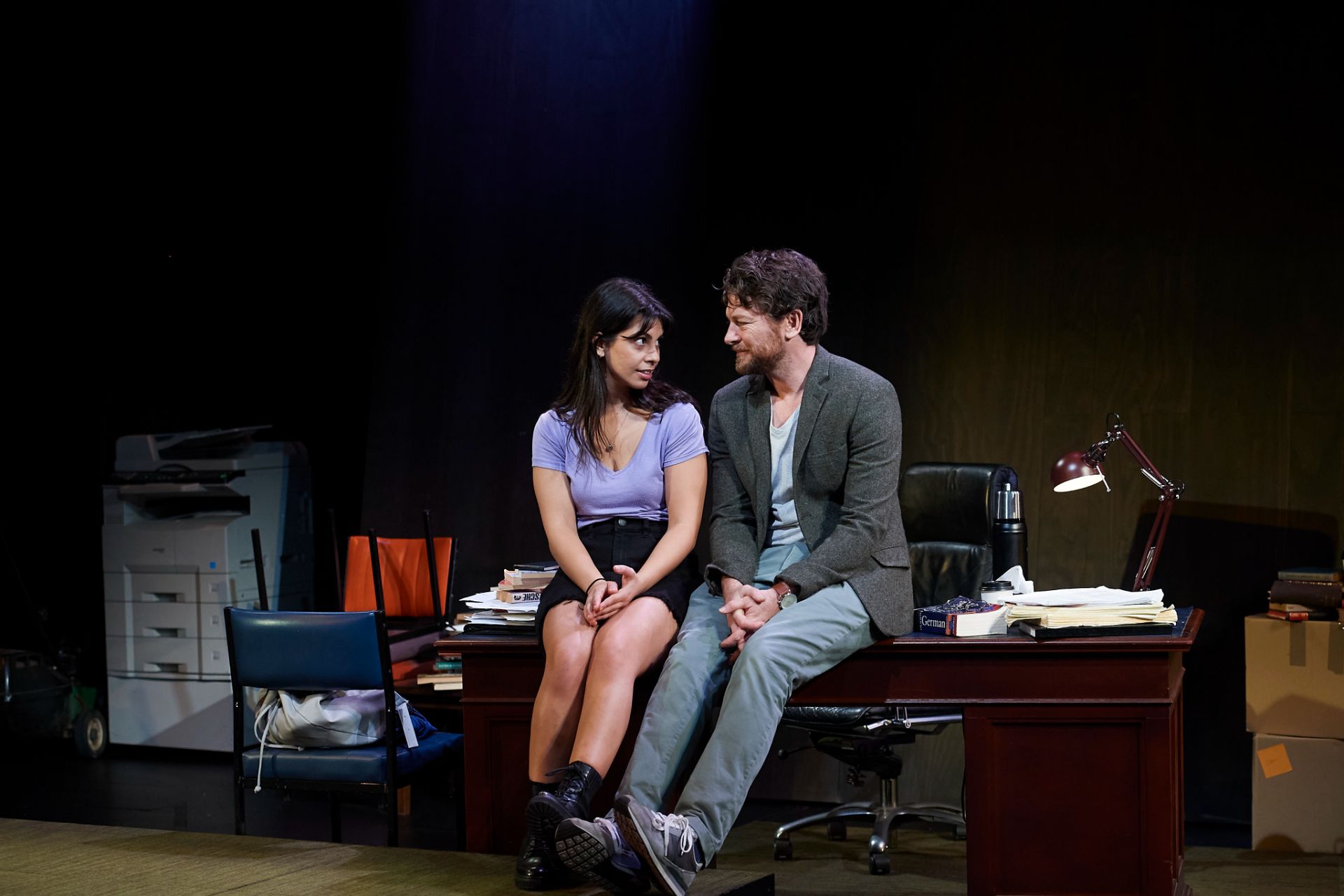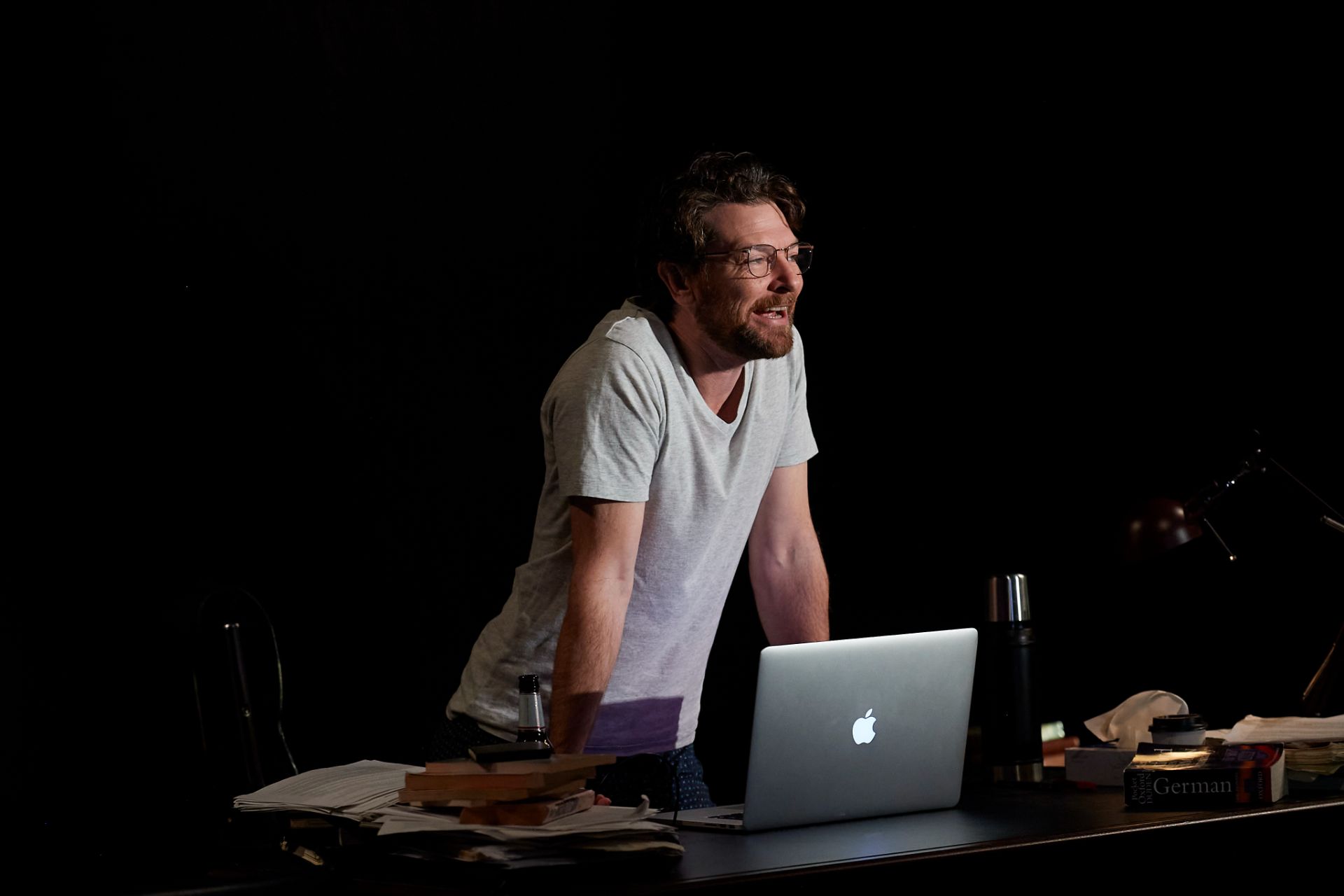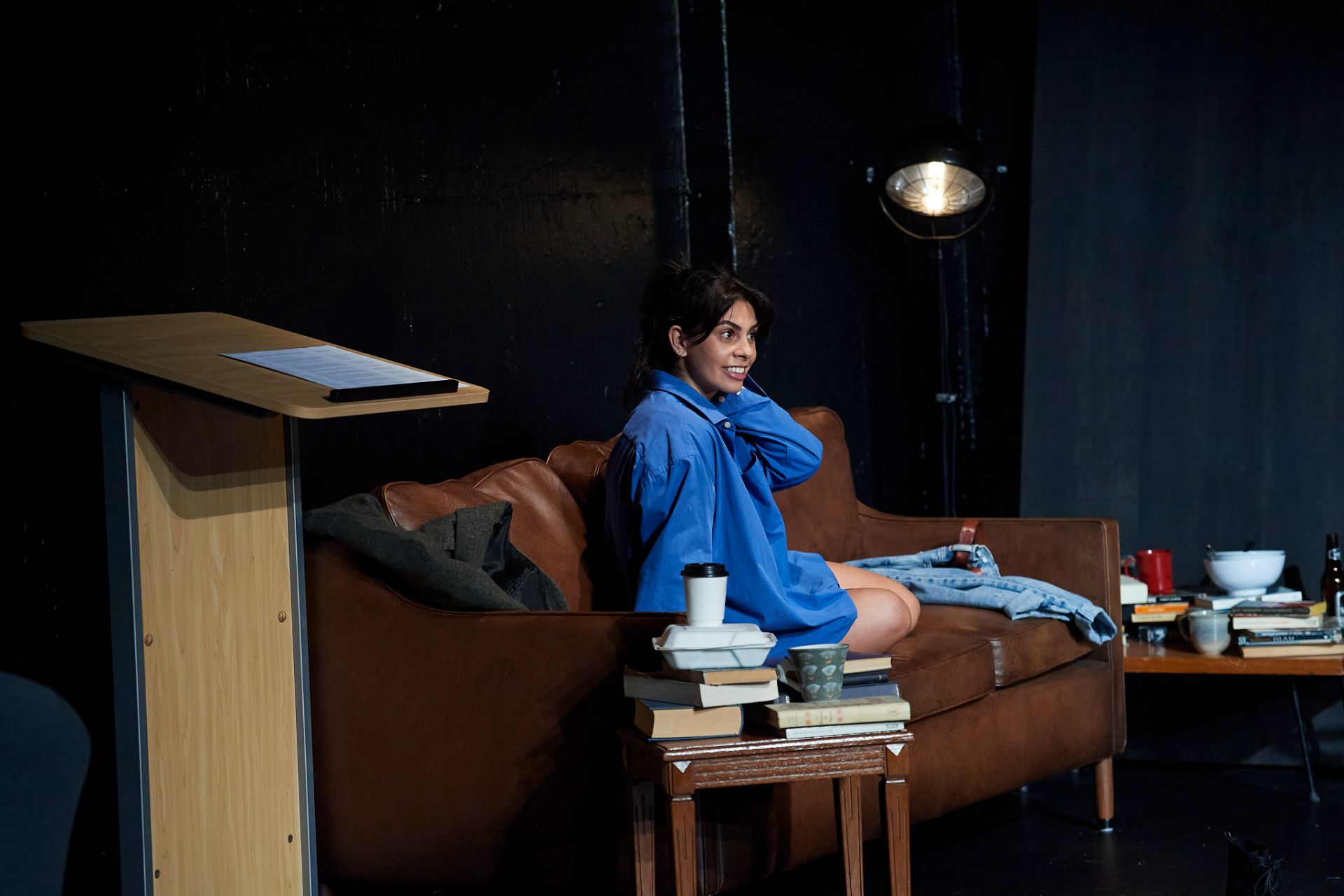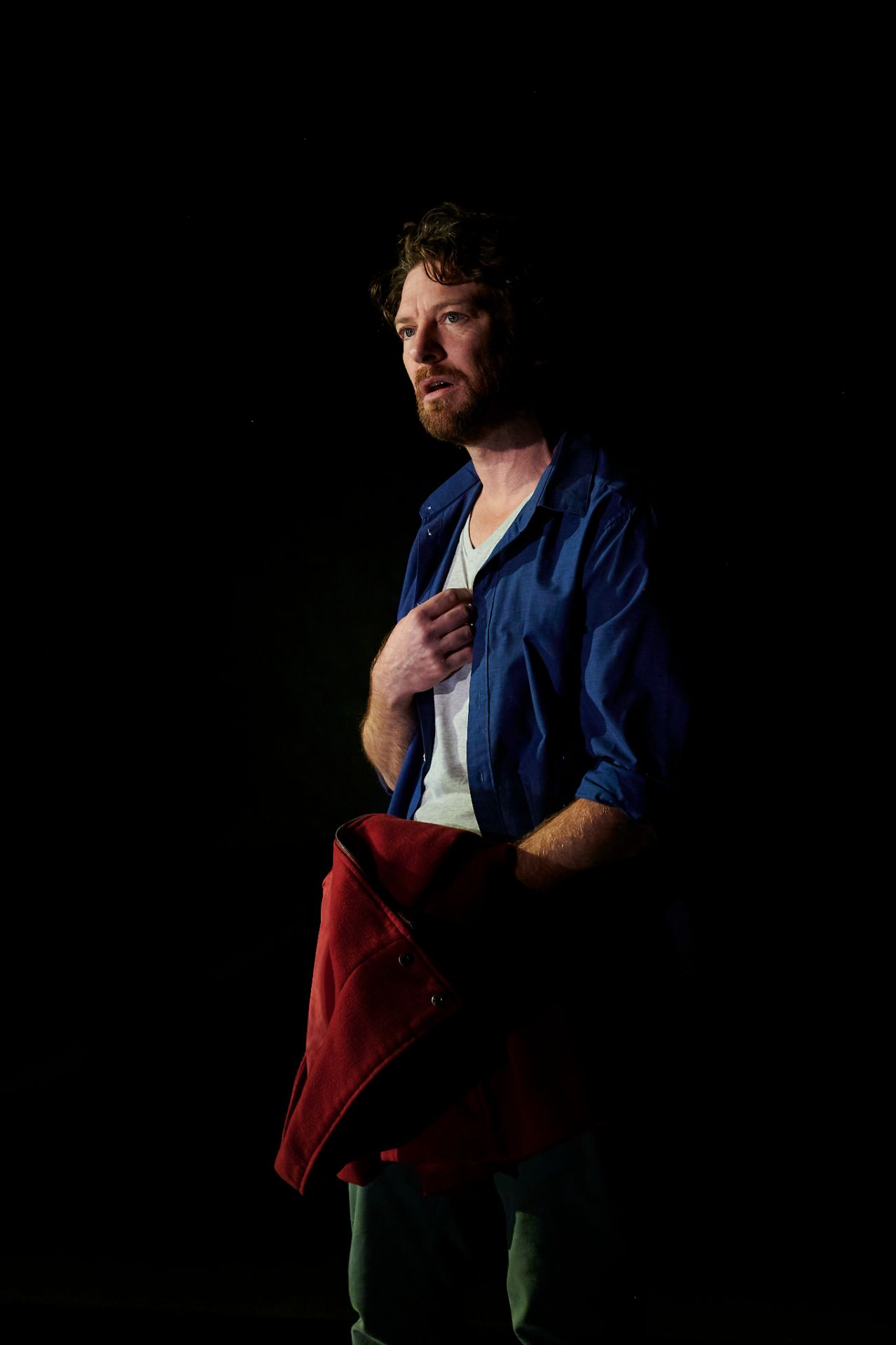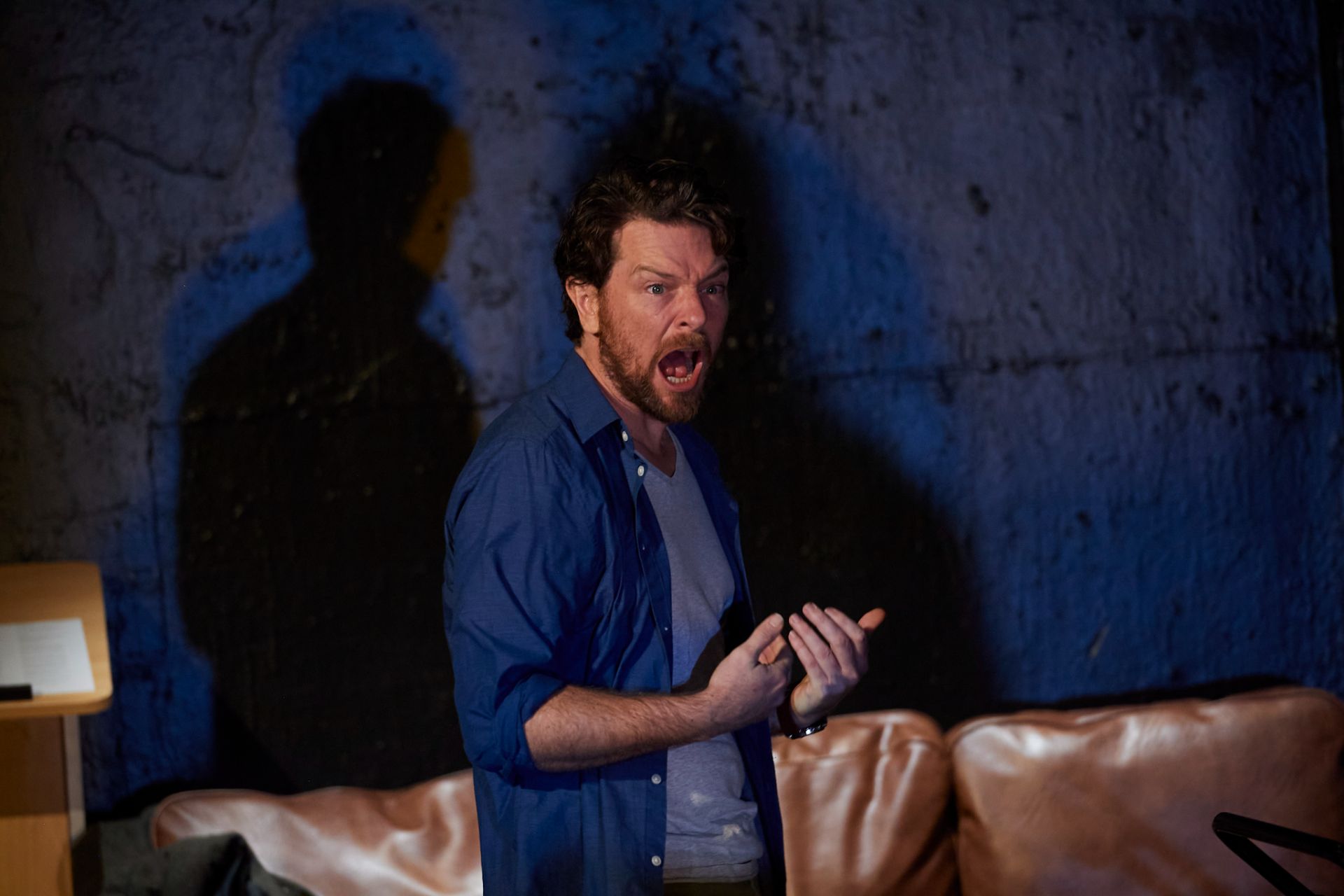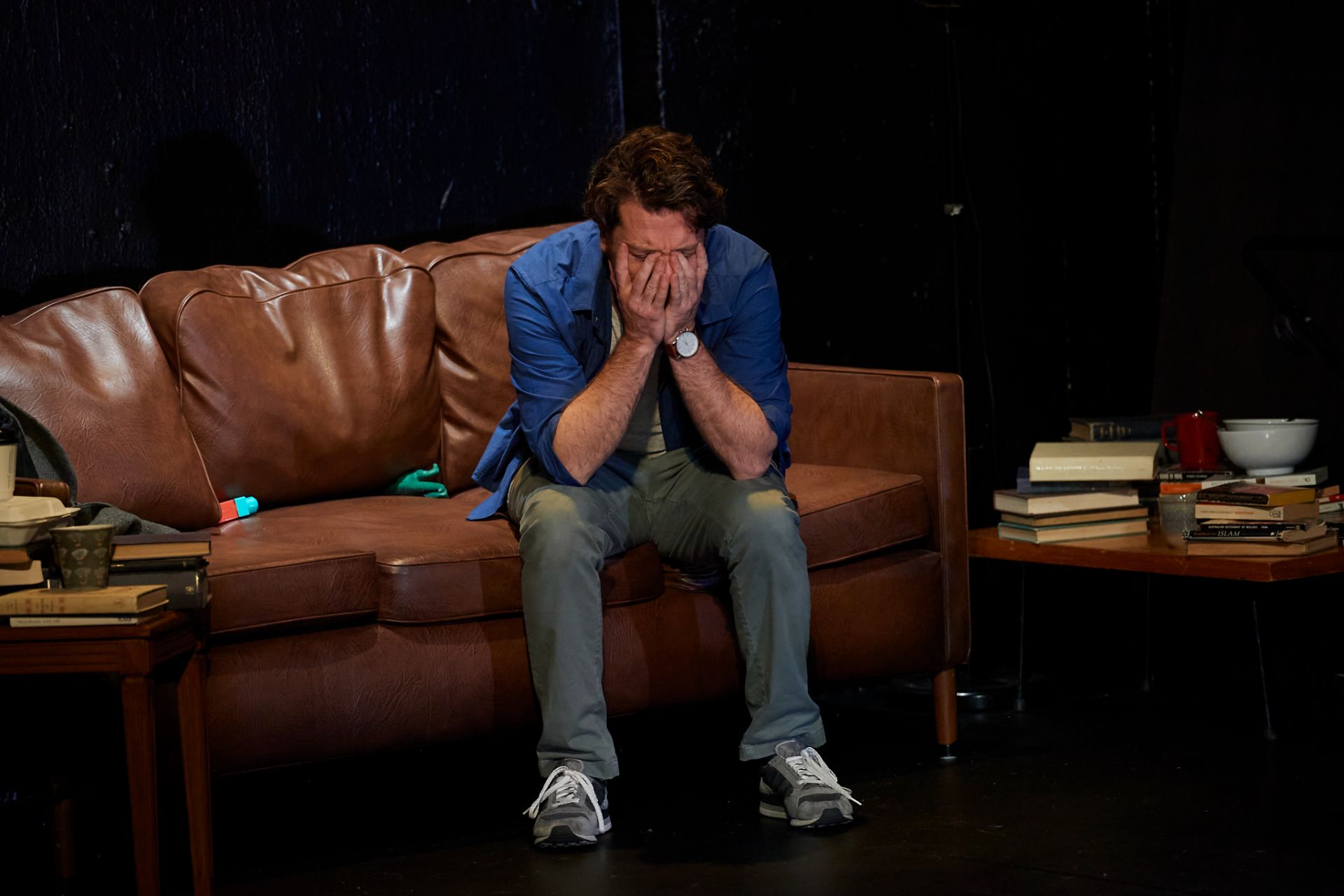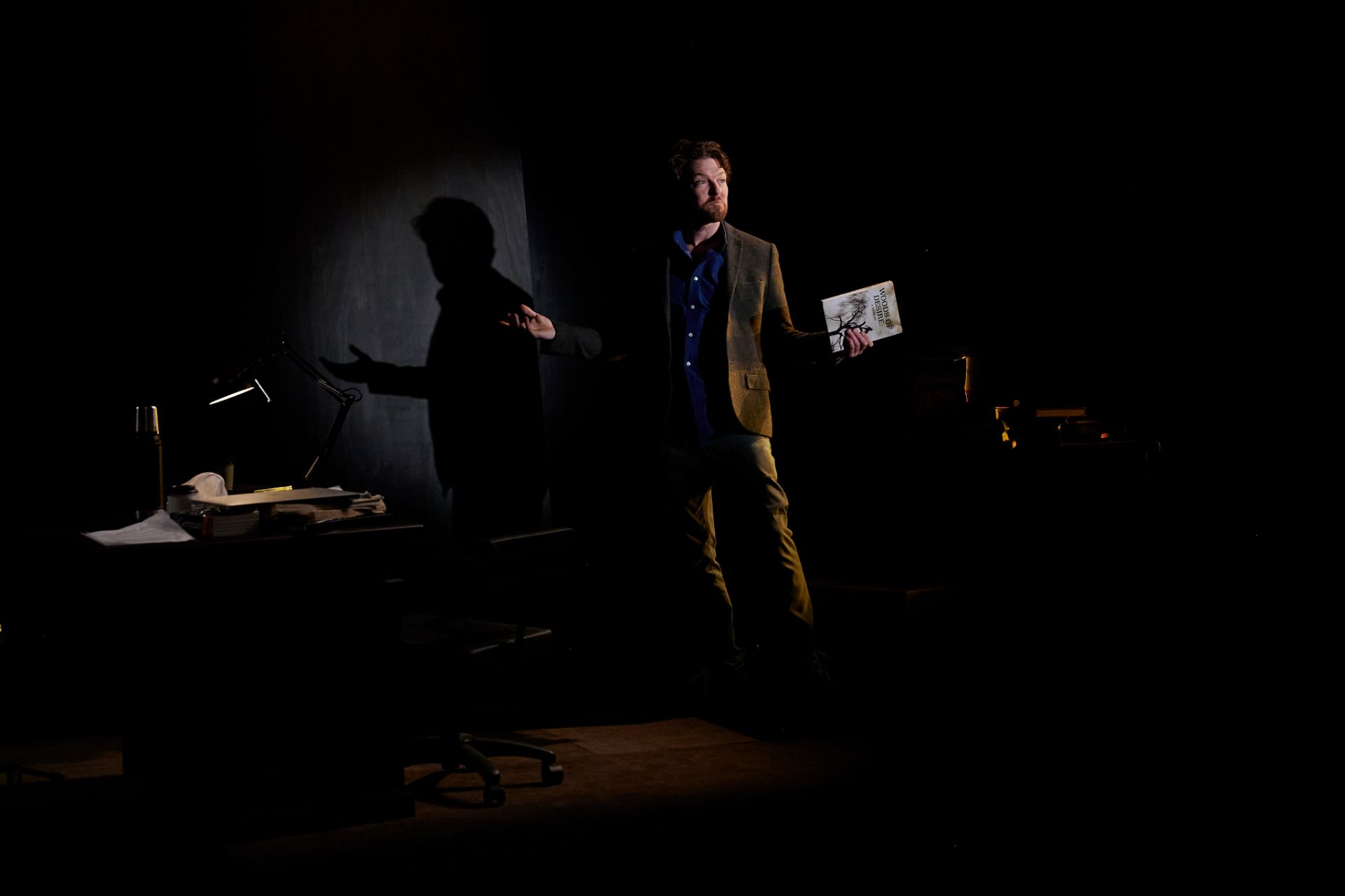
Review: Bloom (Sydney Theatre Company)

Venue: Roslyn Packer Theatre (Sydney NSW), Mar 29 – May 11, 2025
Book and Lyrics: Tom Gleisner
Music: Katie Weston
Director: Dean Bryant
Cast: Evelyn Krape, Vidya Makan, Maria Mercedes, Eddie Muliaumaseali’i, John O’May, Christina O’Neill, Jackie Rees, Slone Sudiro, John Waters, Christie Whelan Browne
Images by Daniel Boud

Theatre review
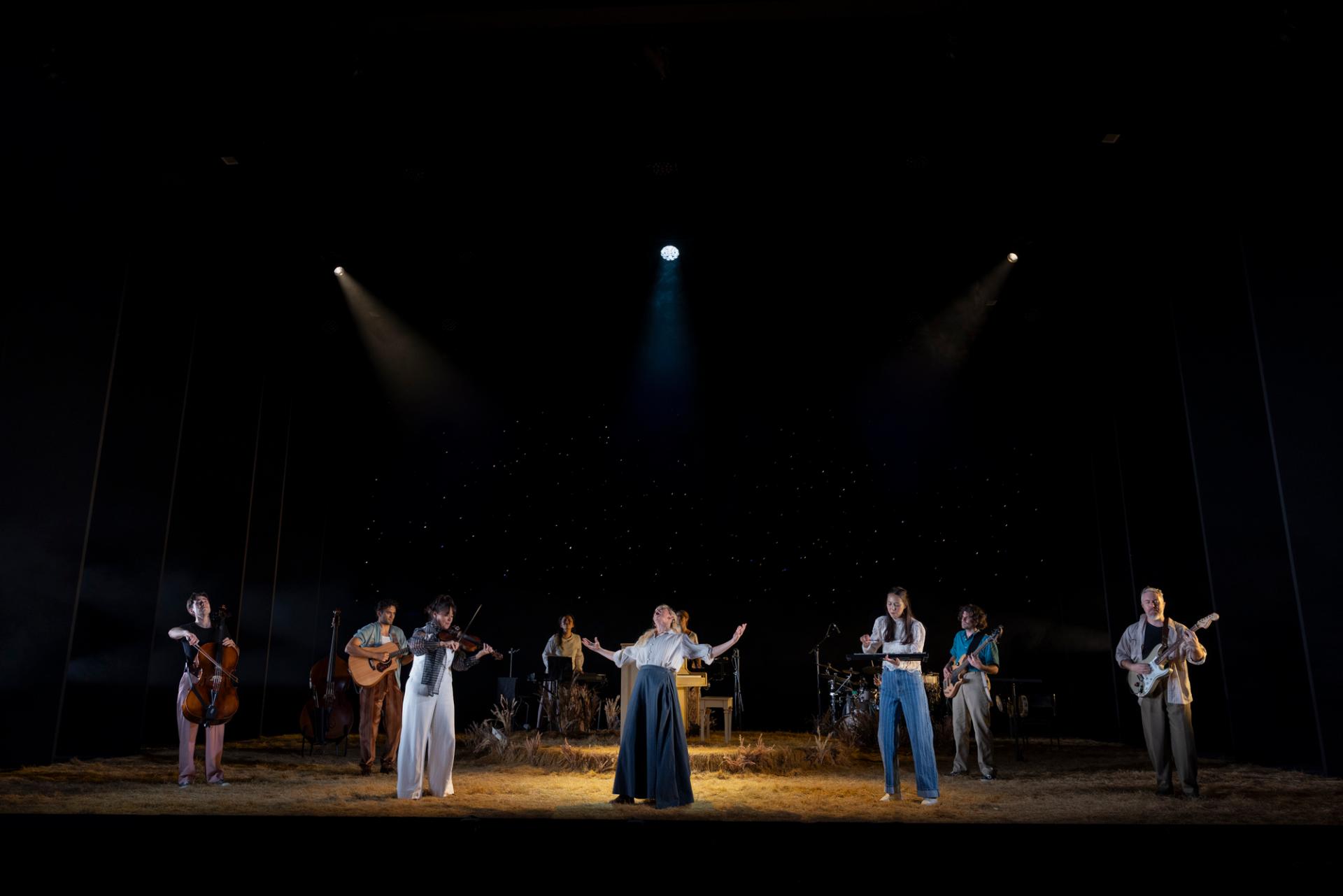
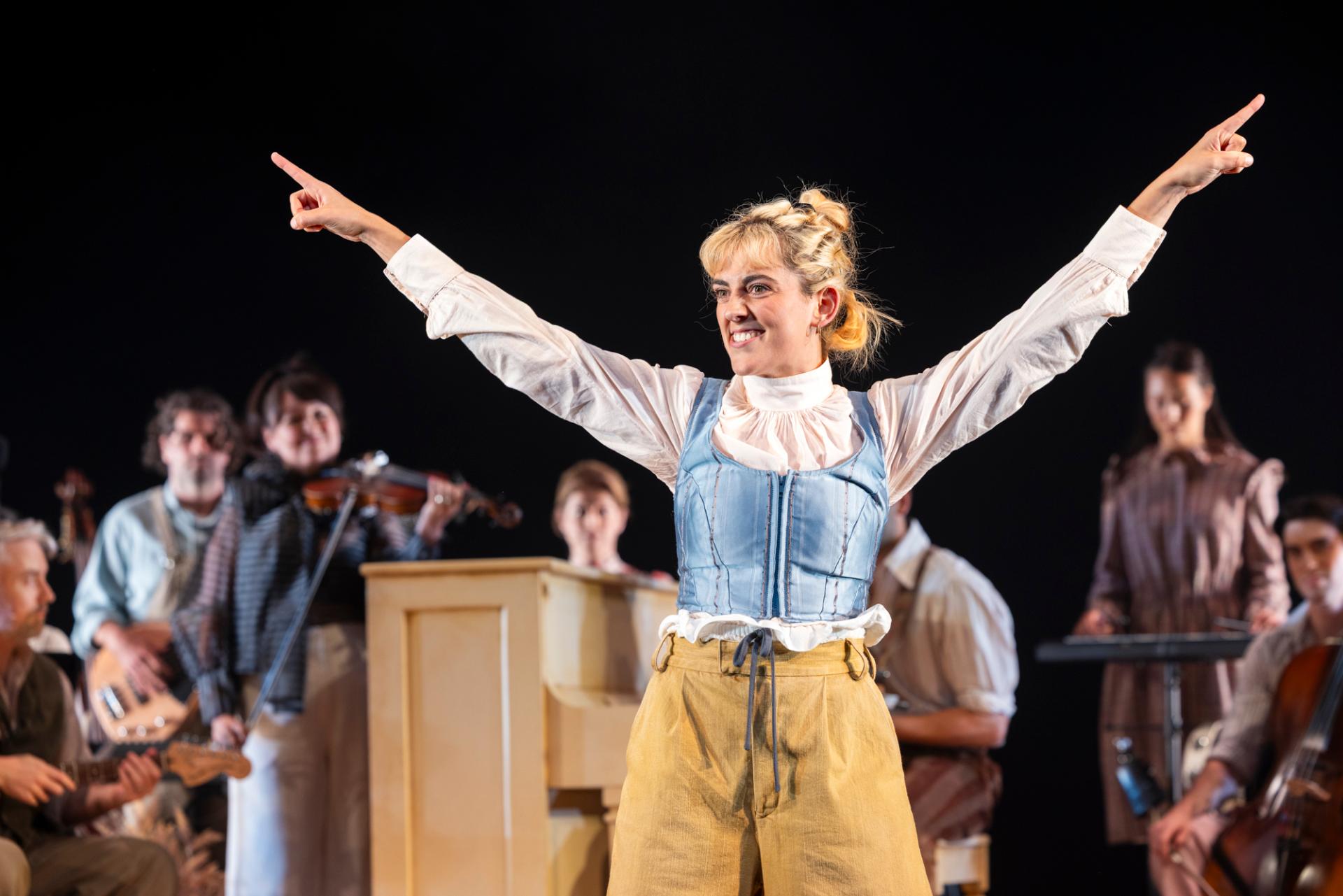
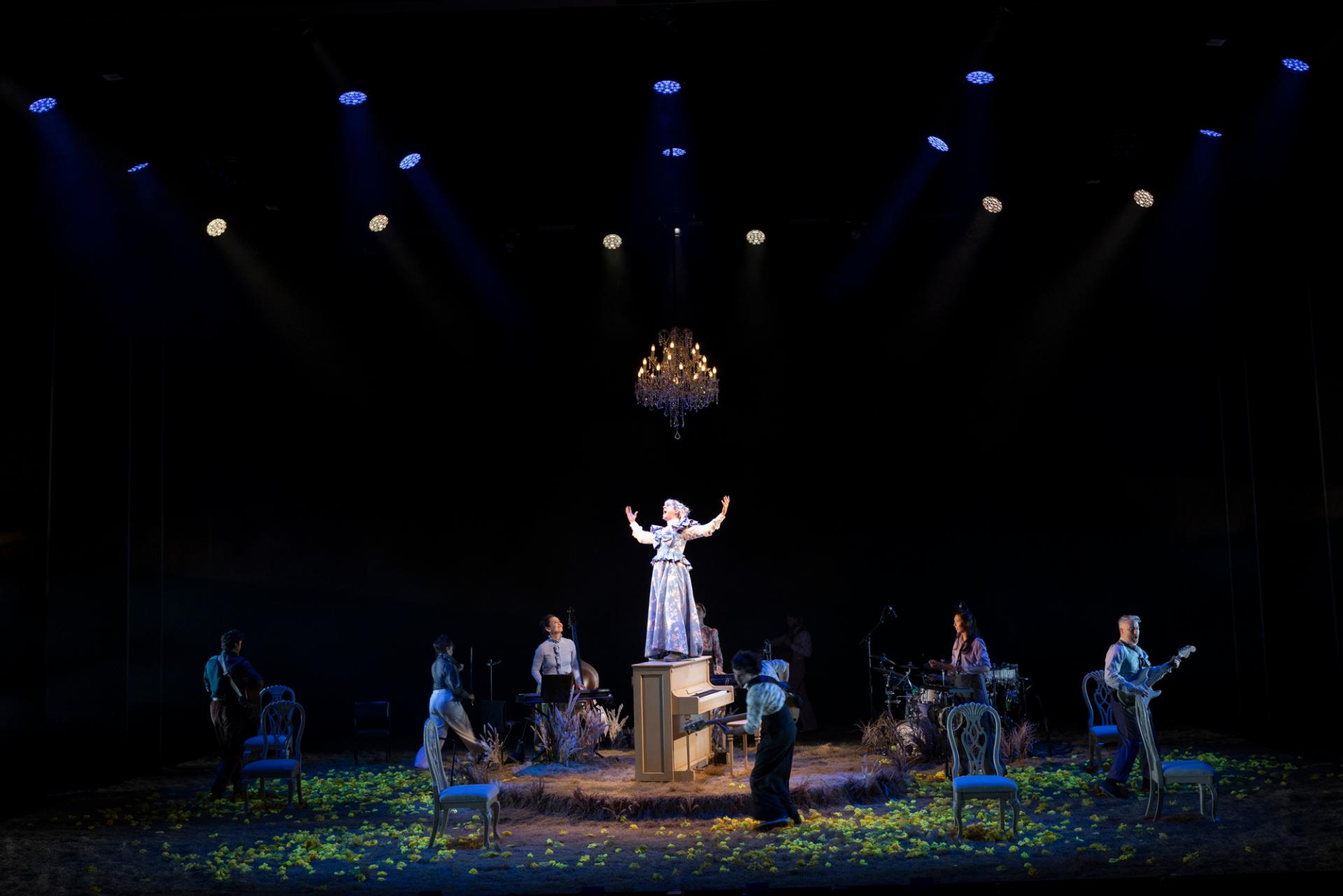
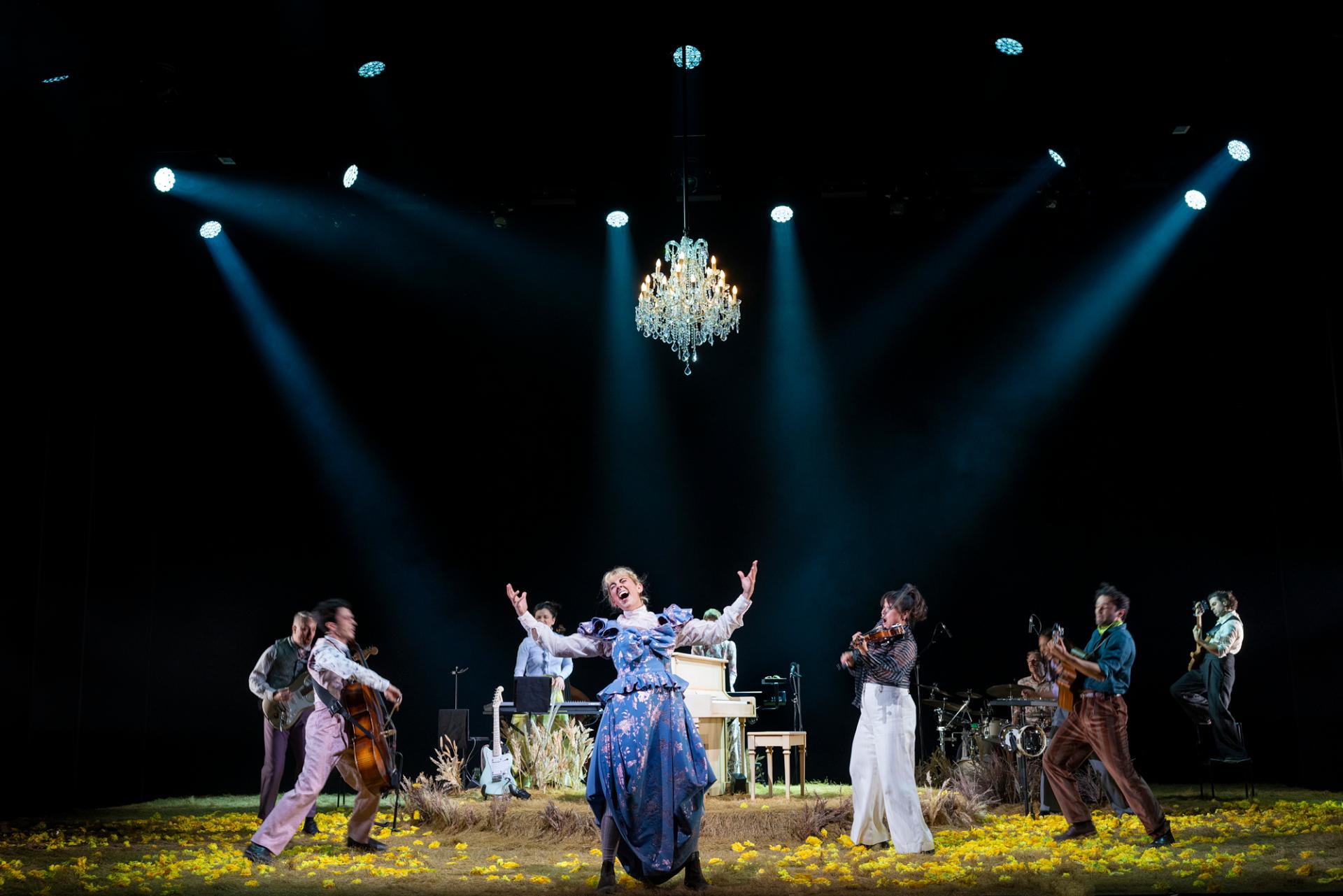
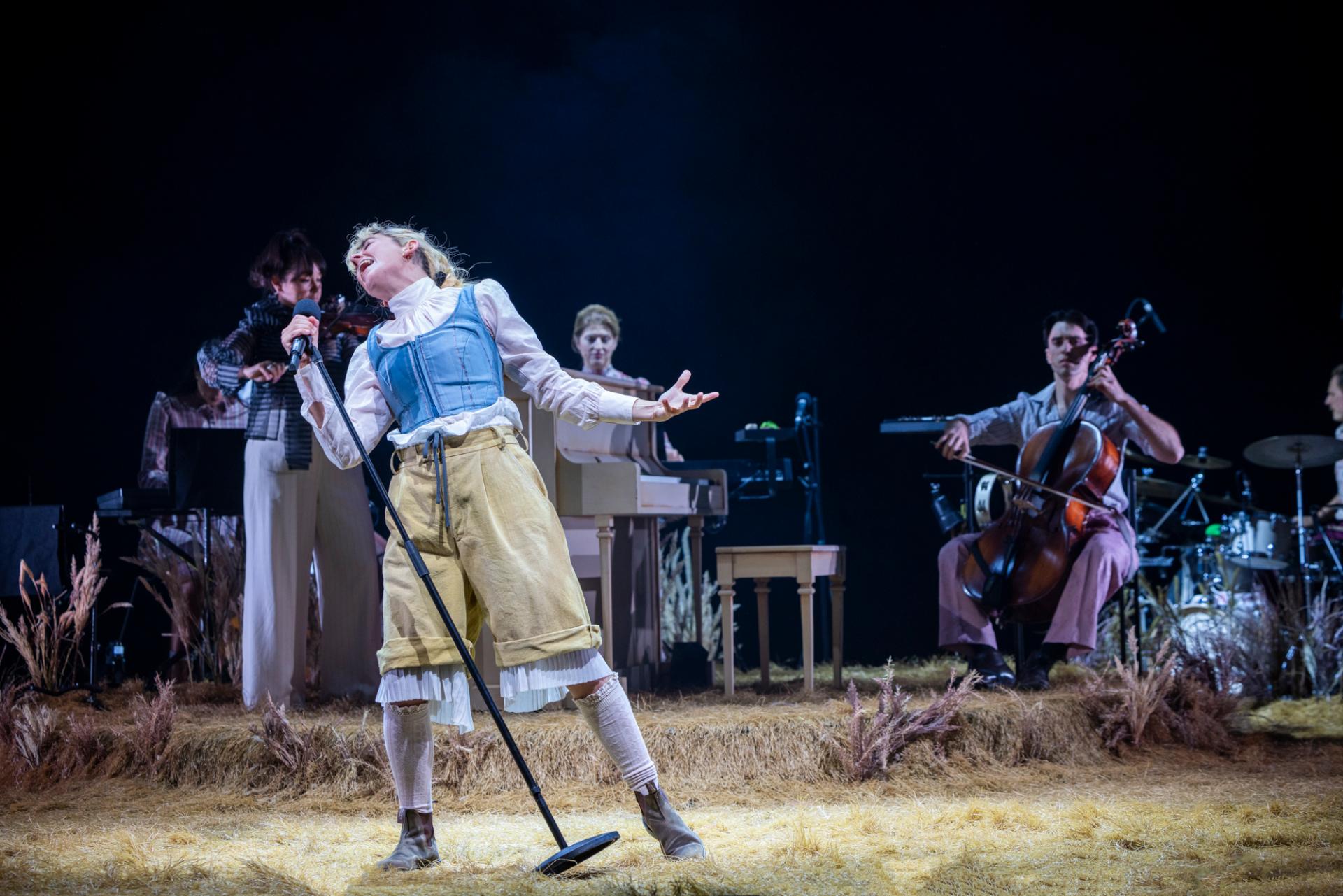
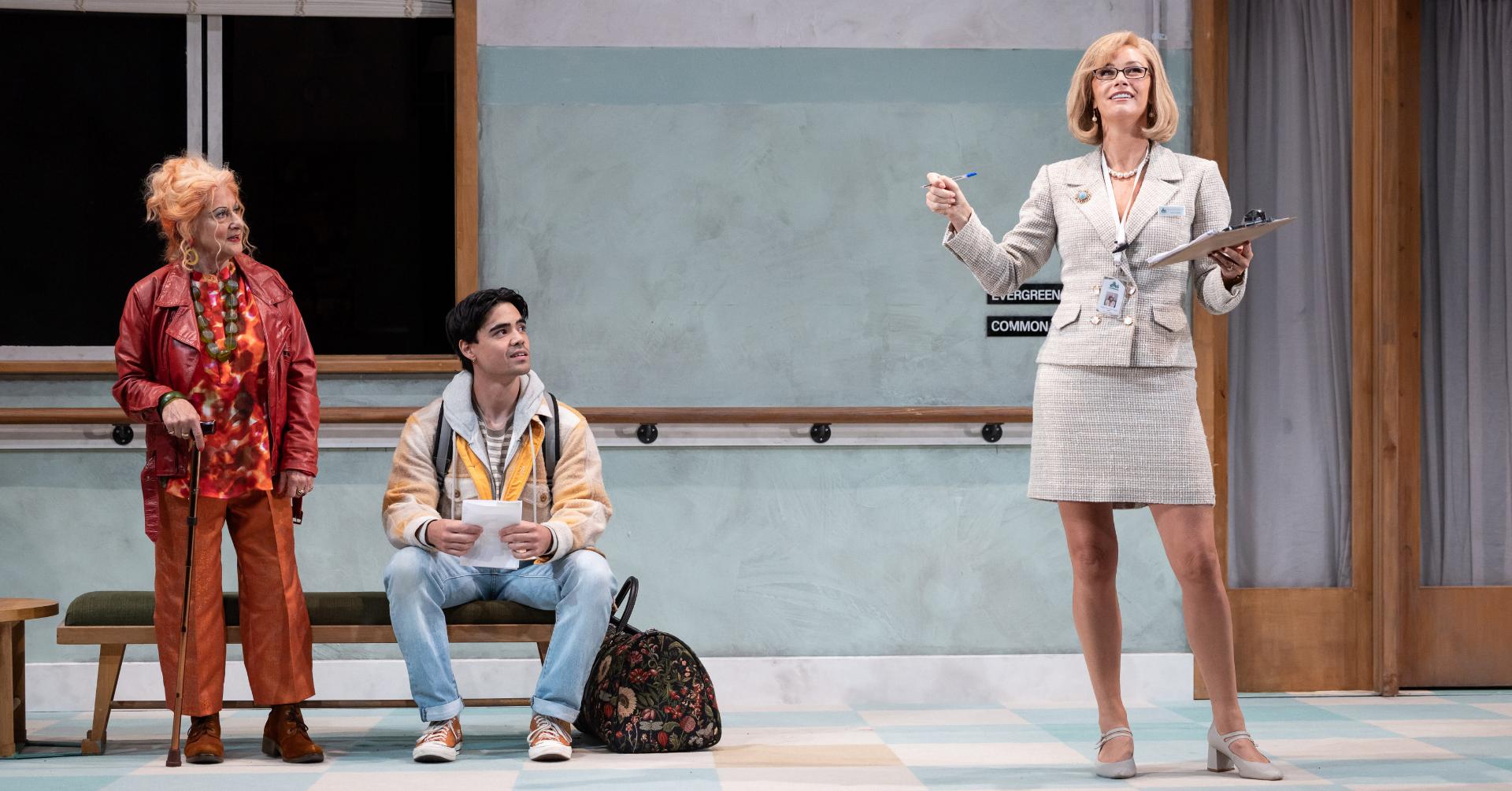
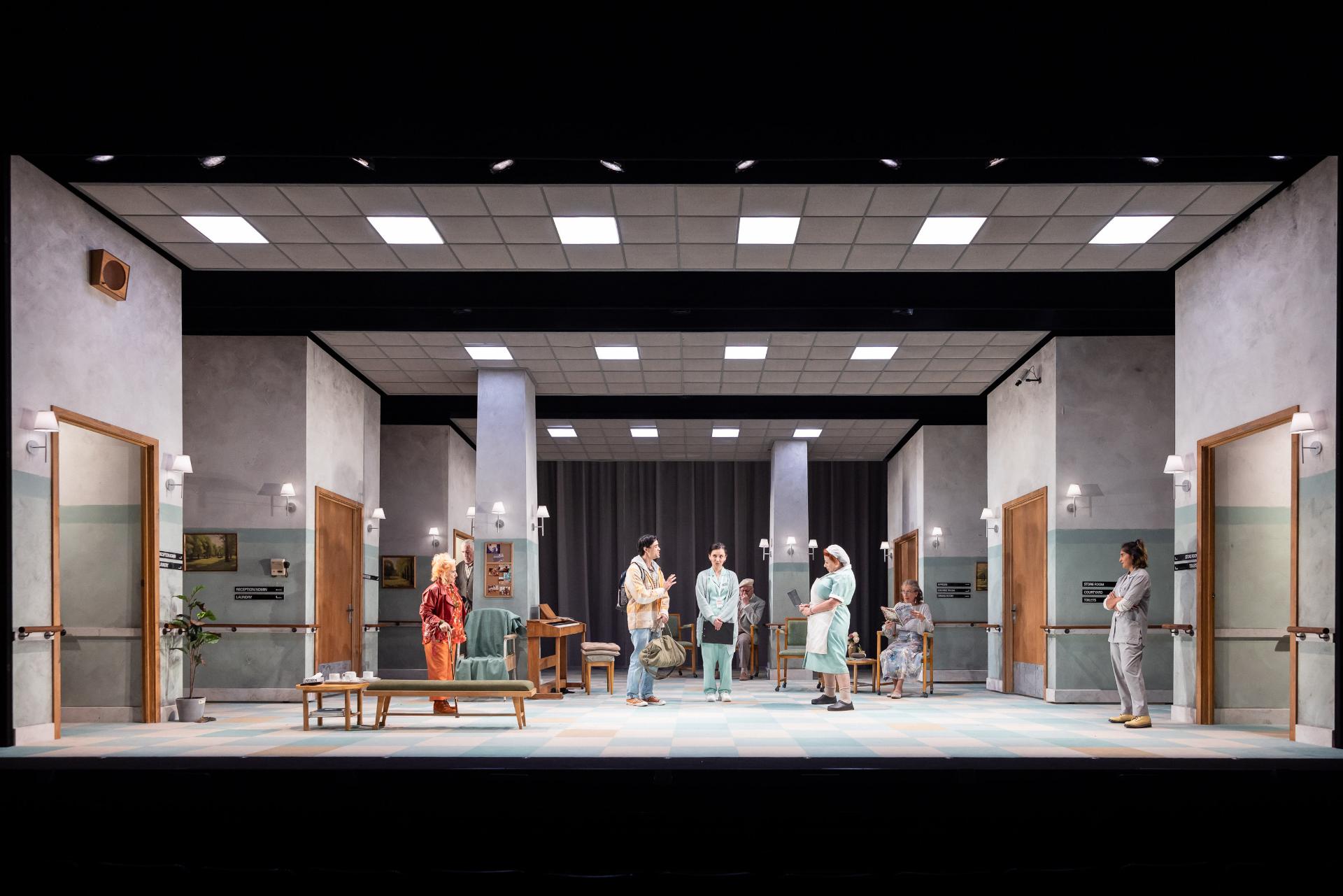
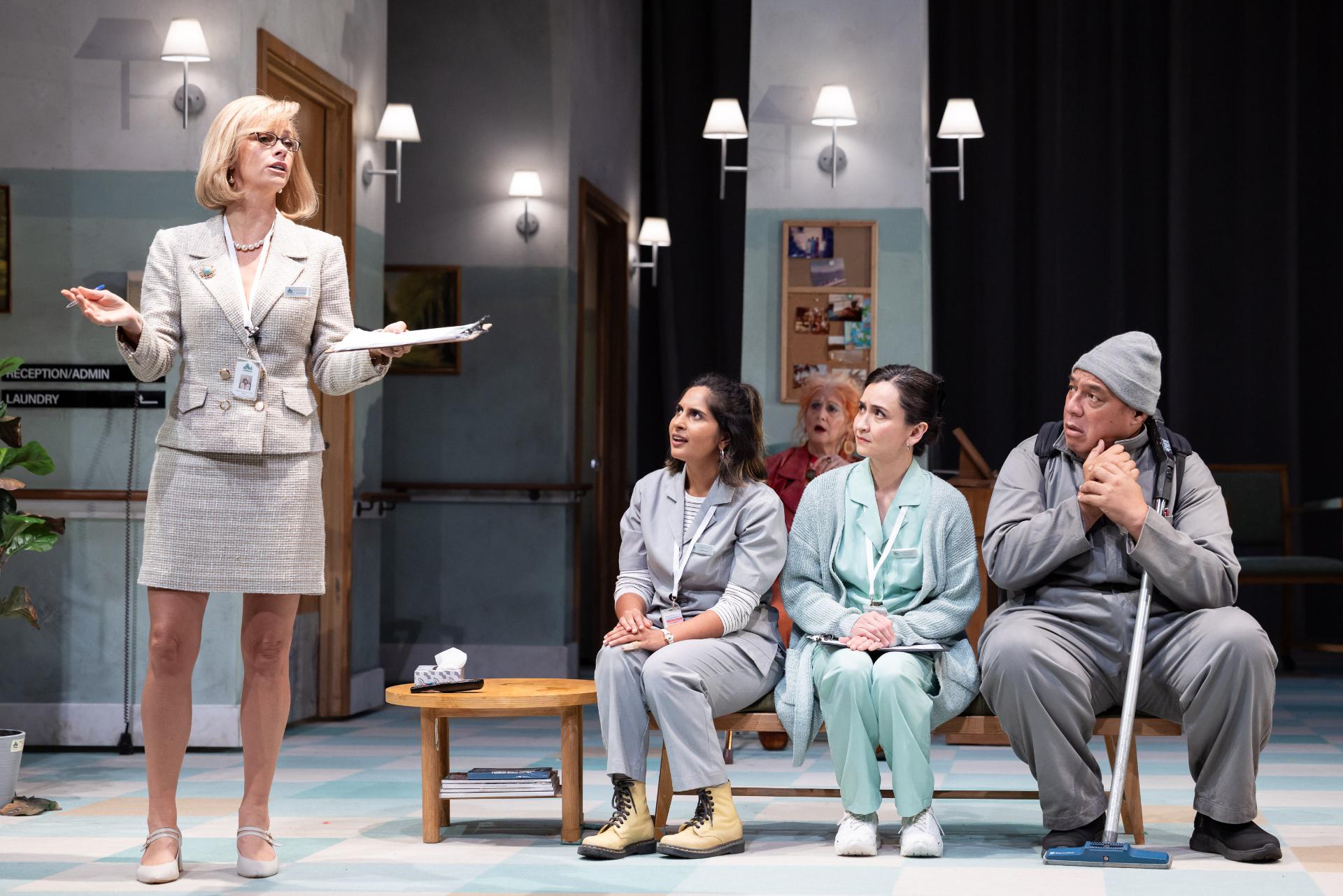
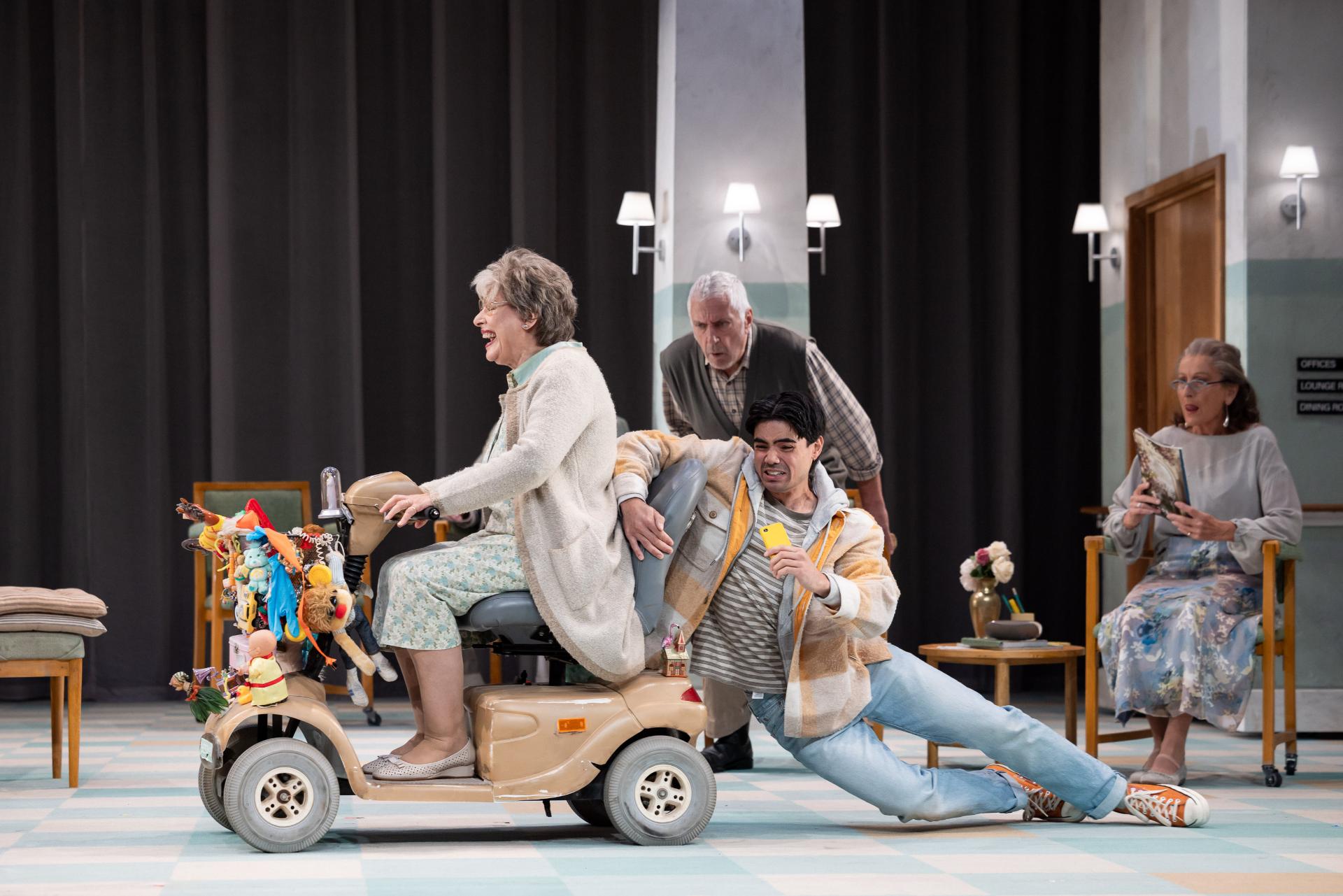
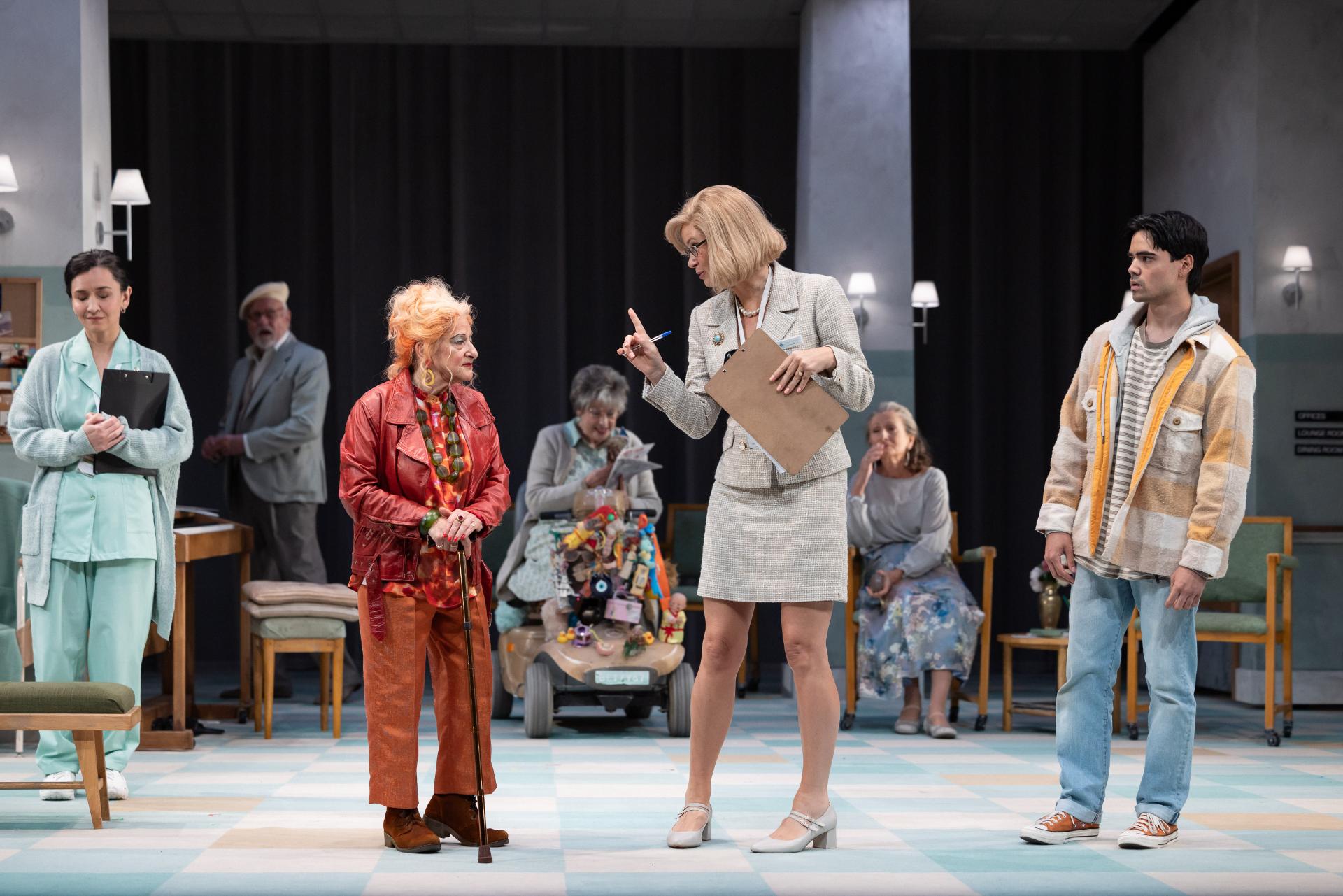
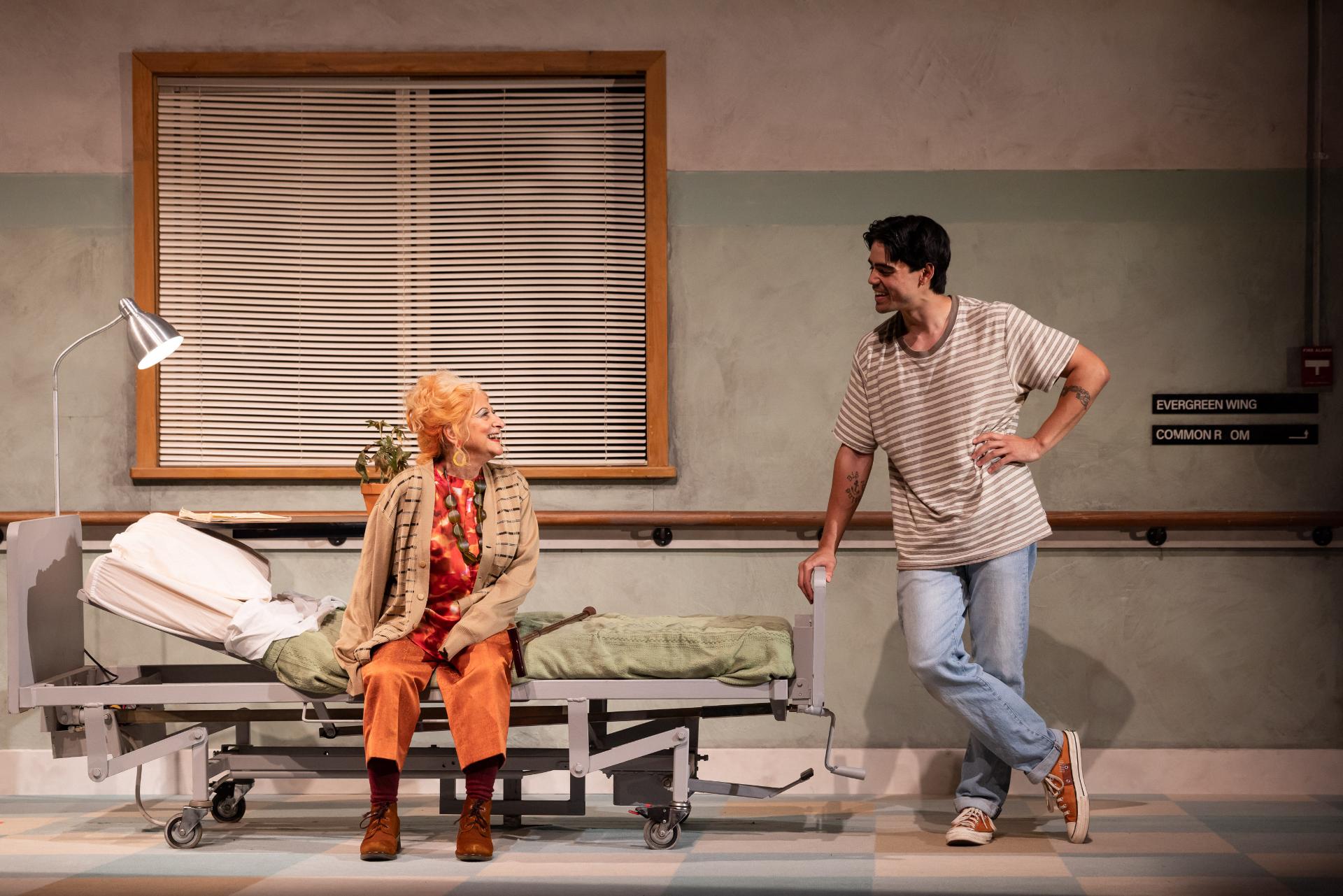
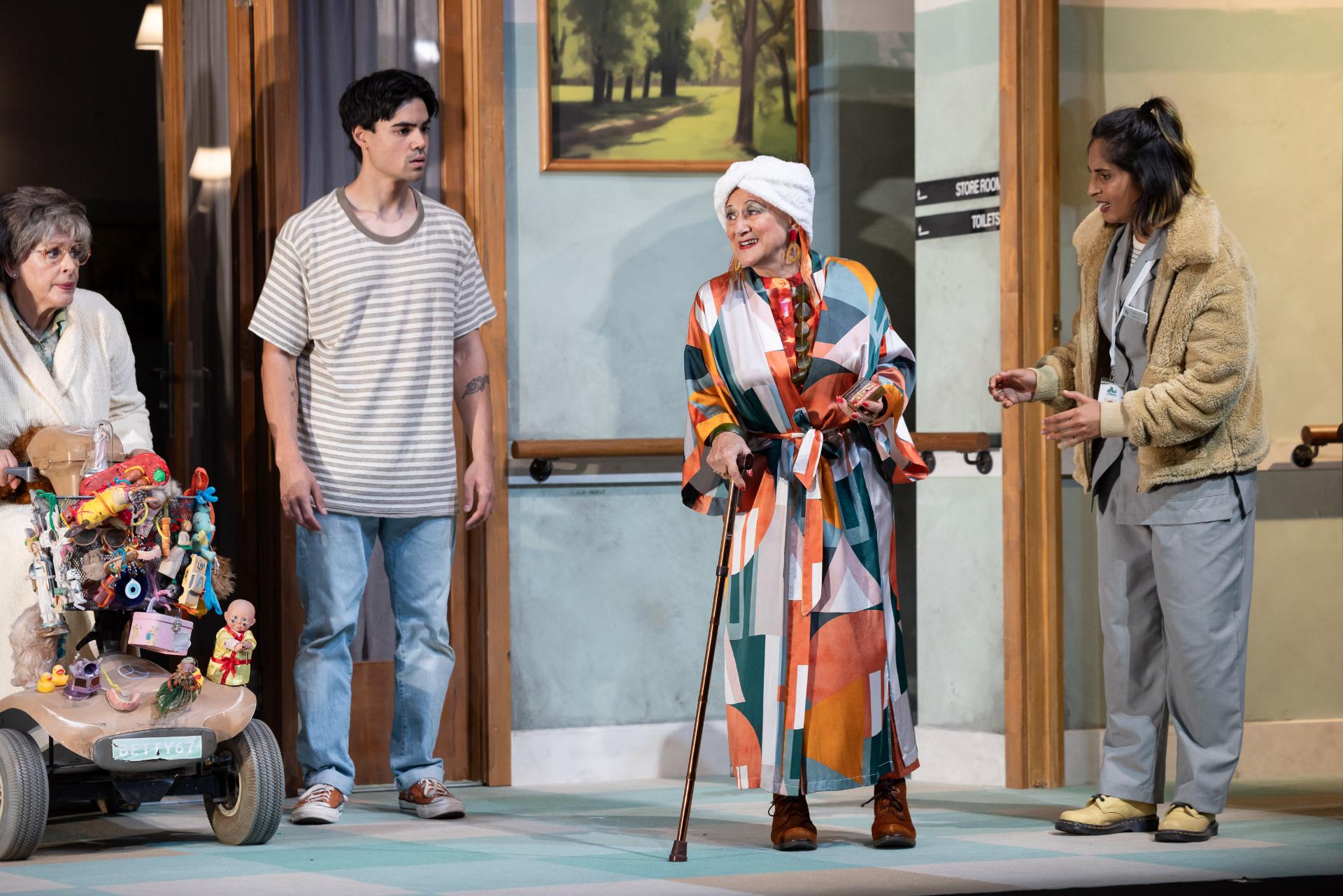
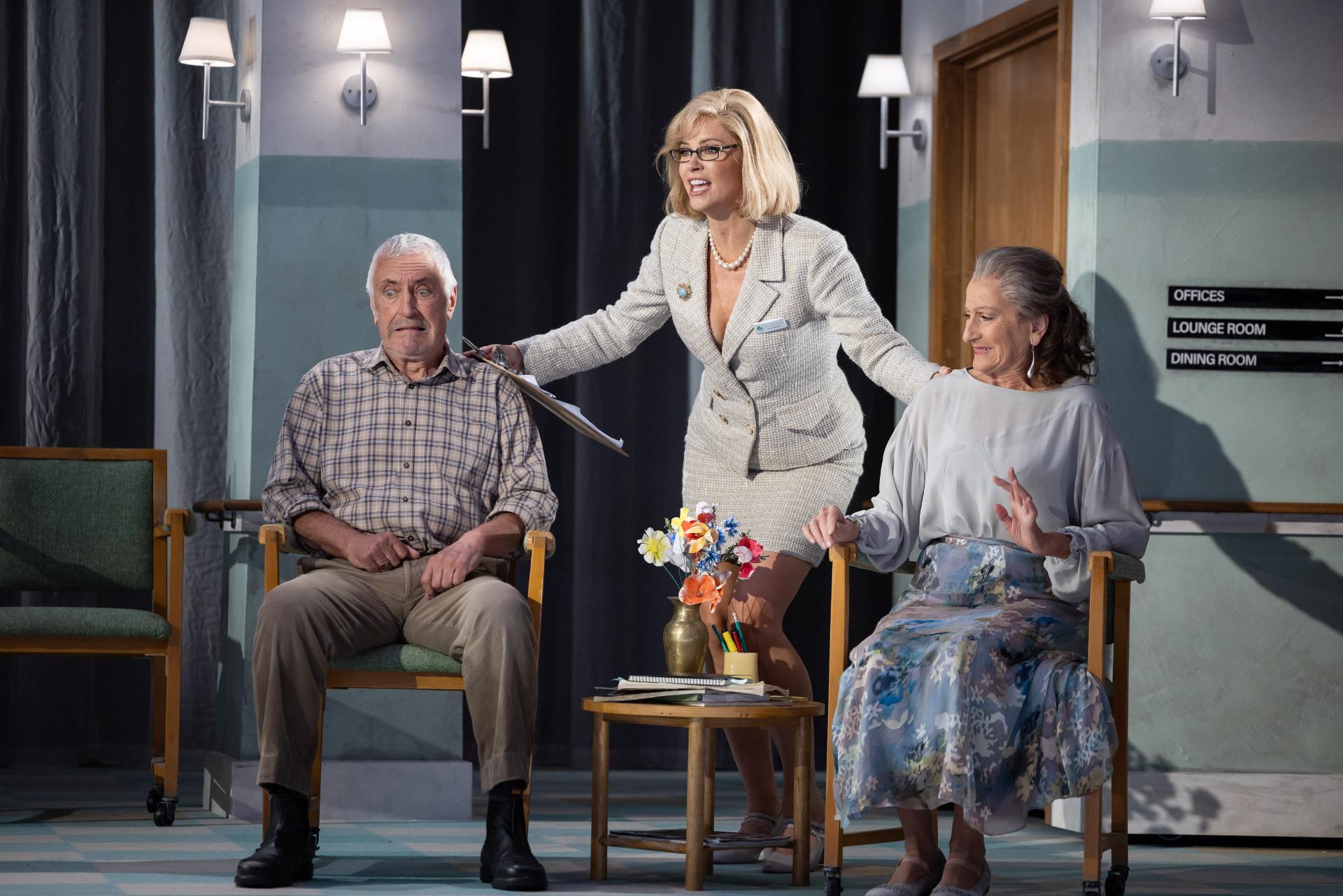
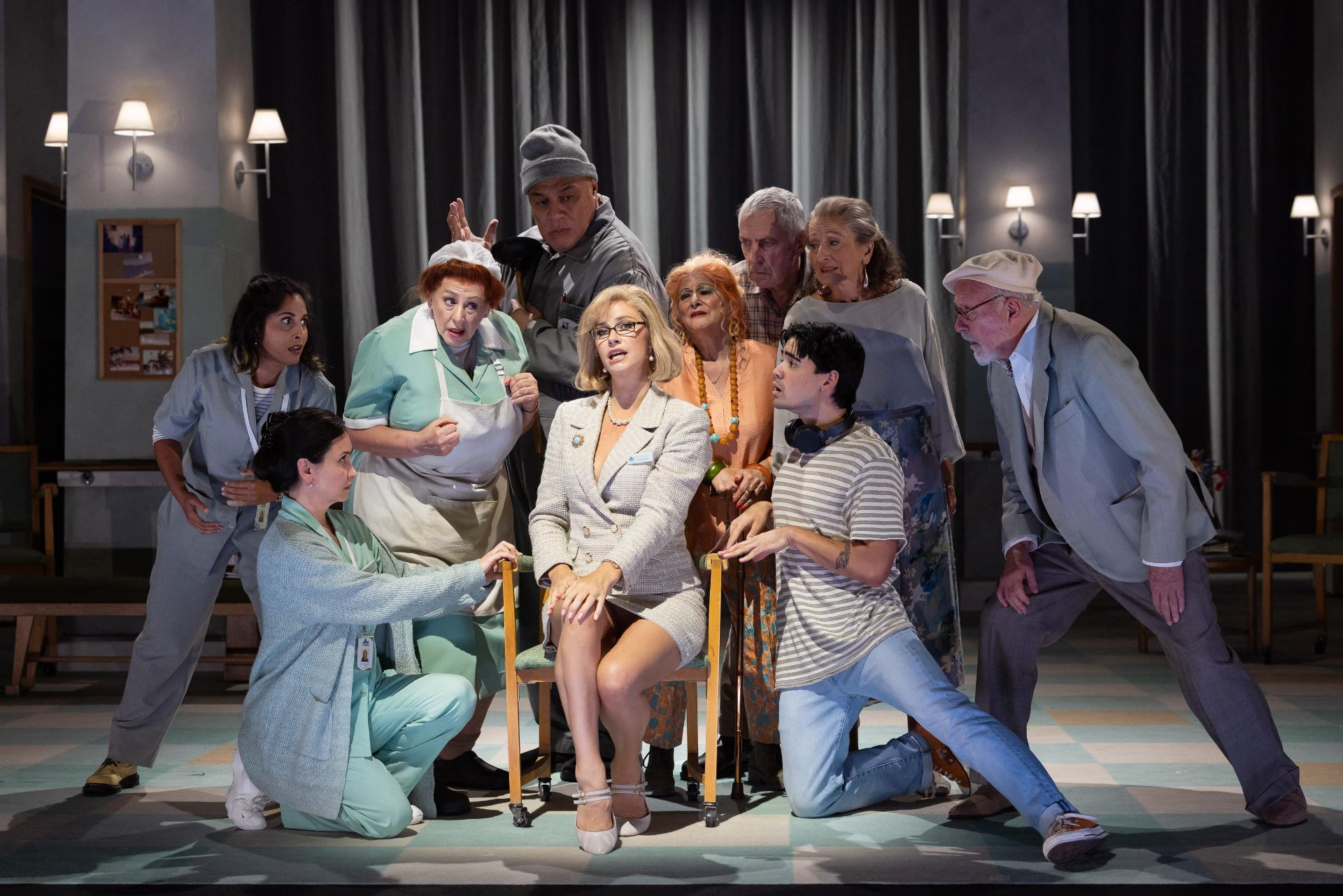
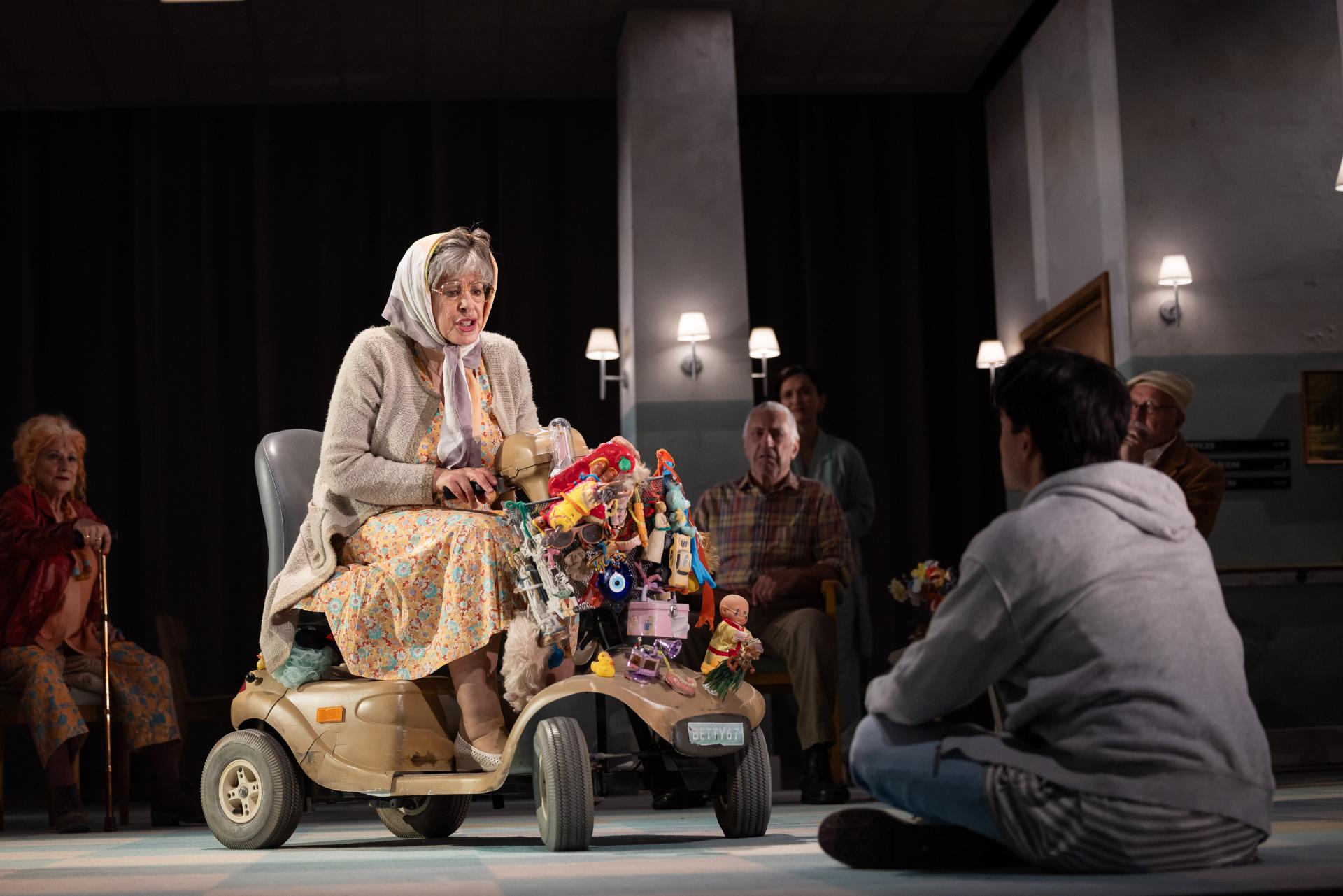
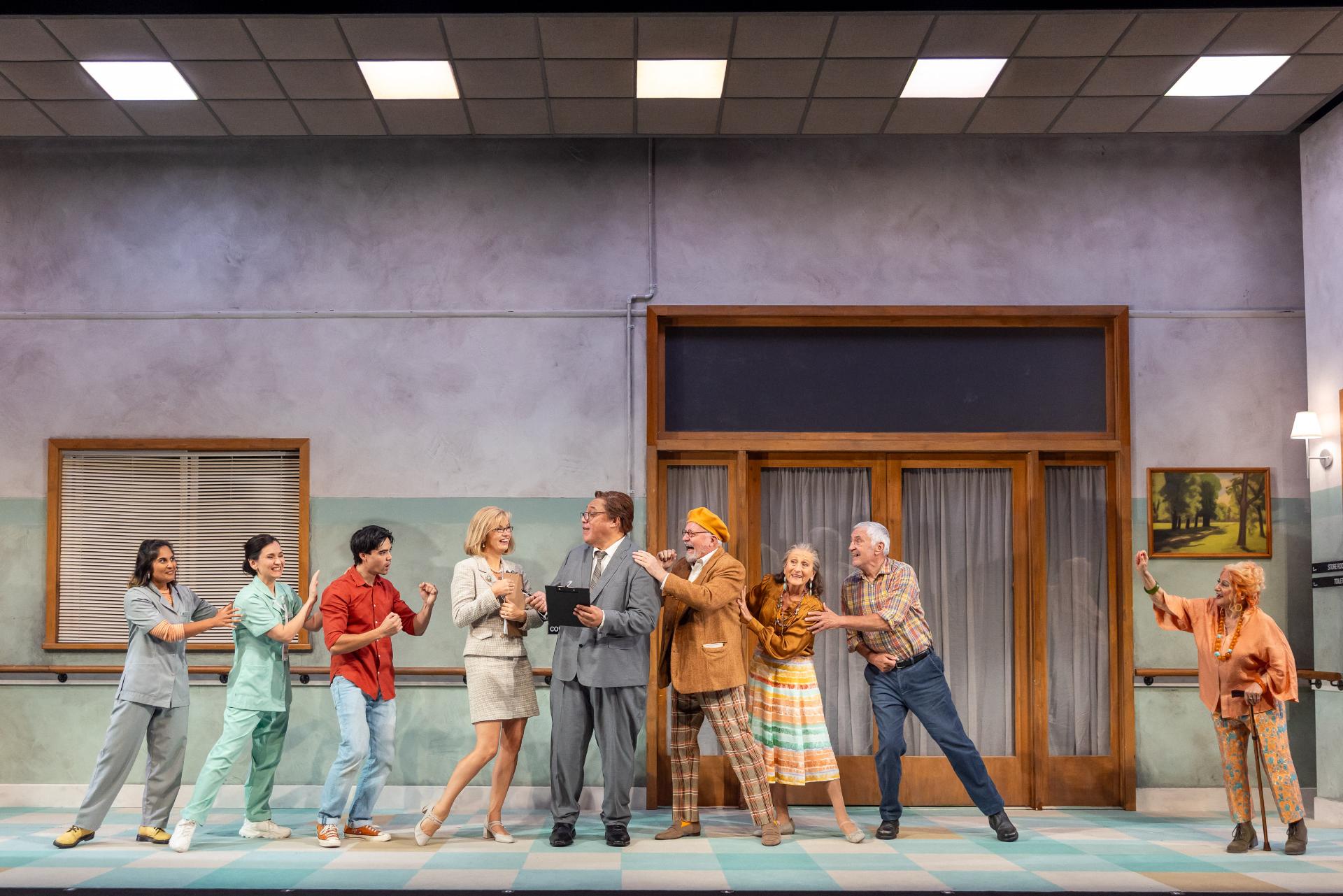
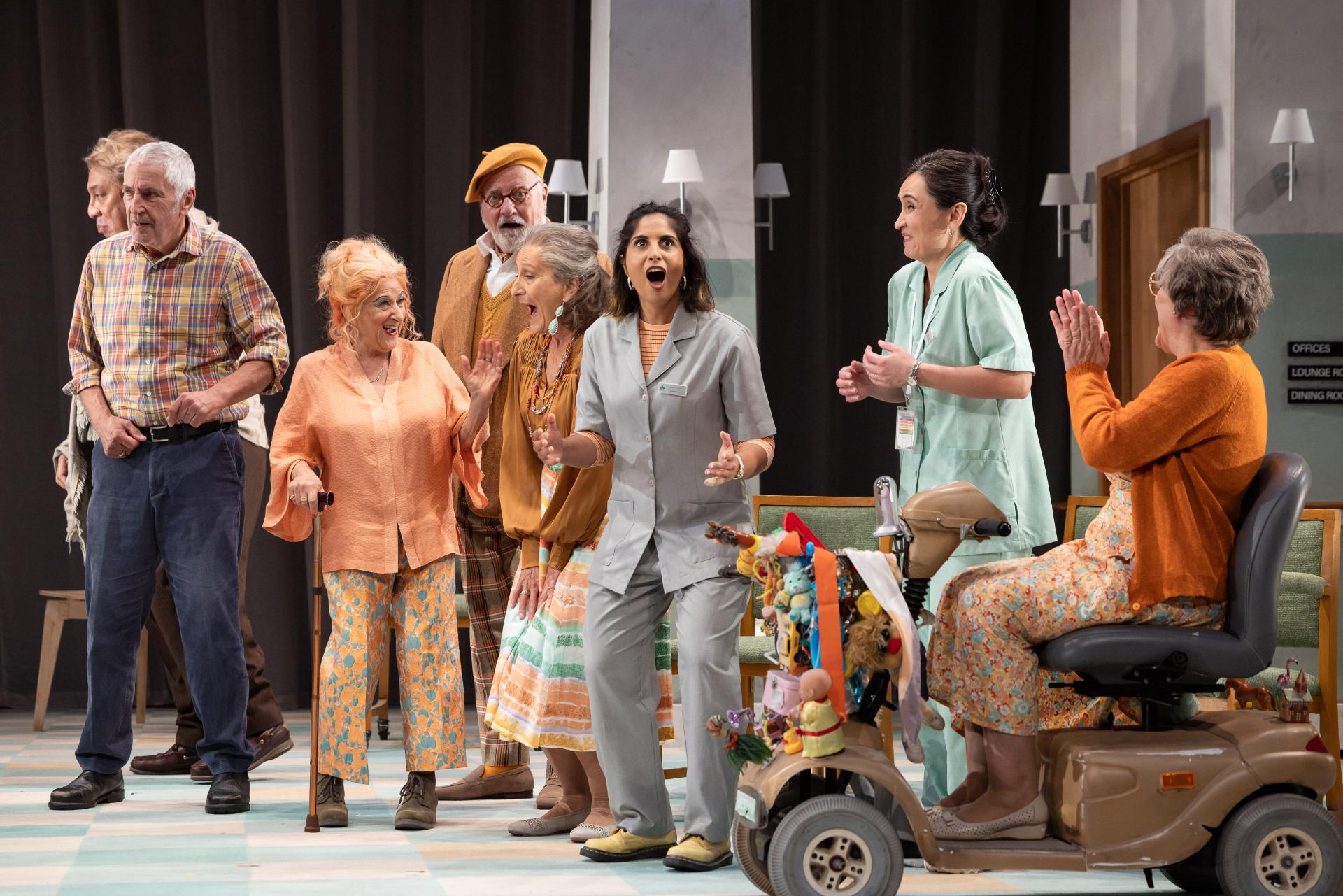
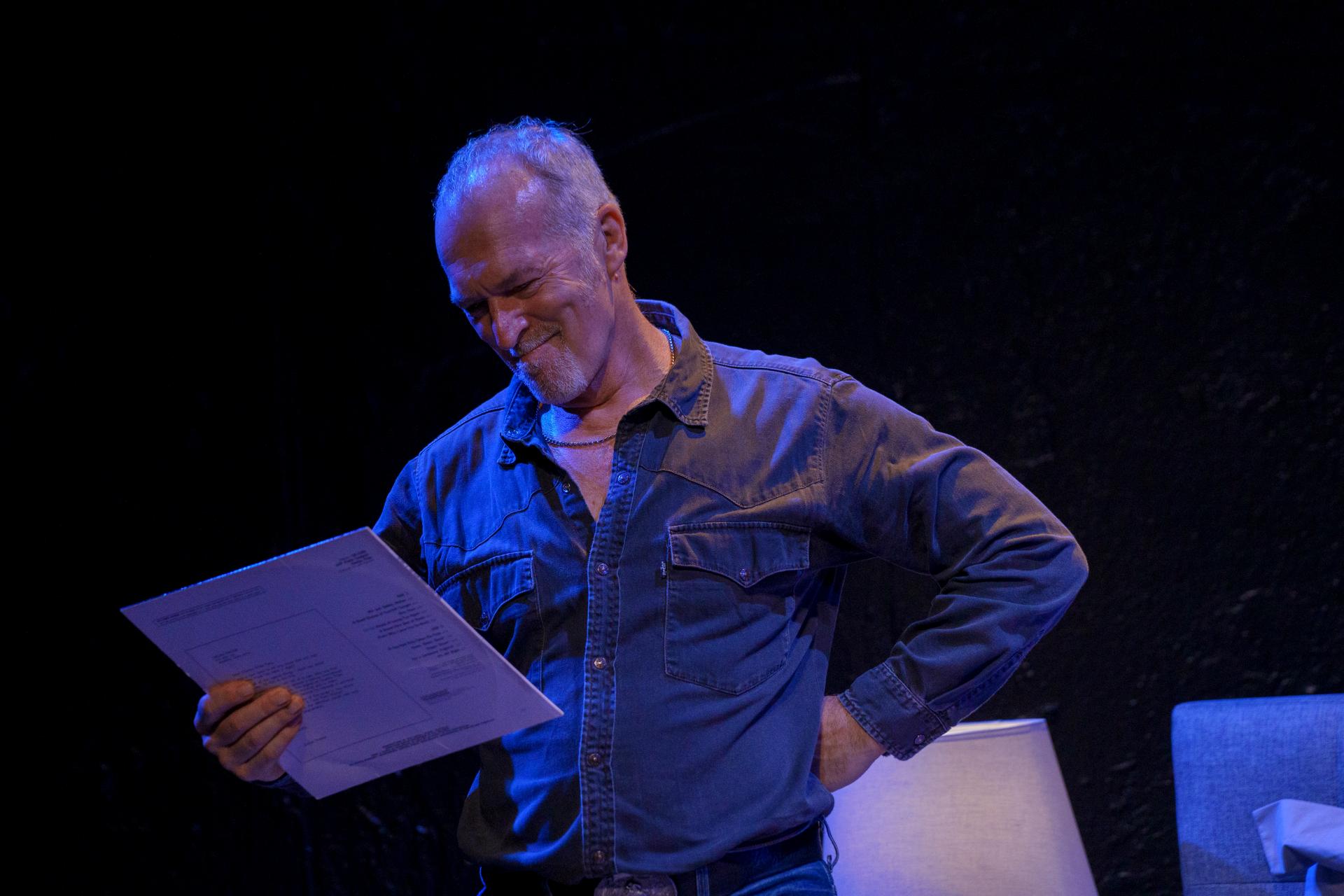
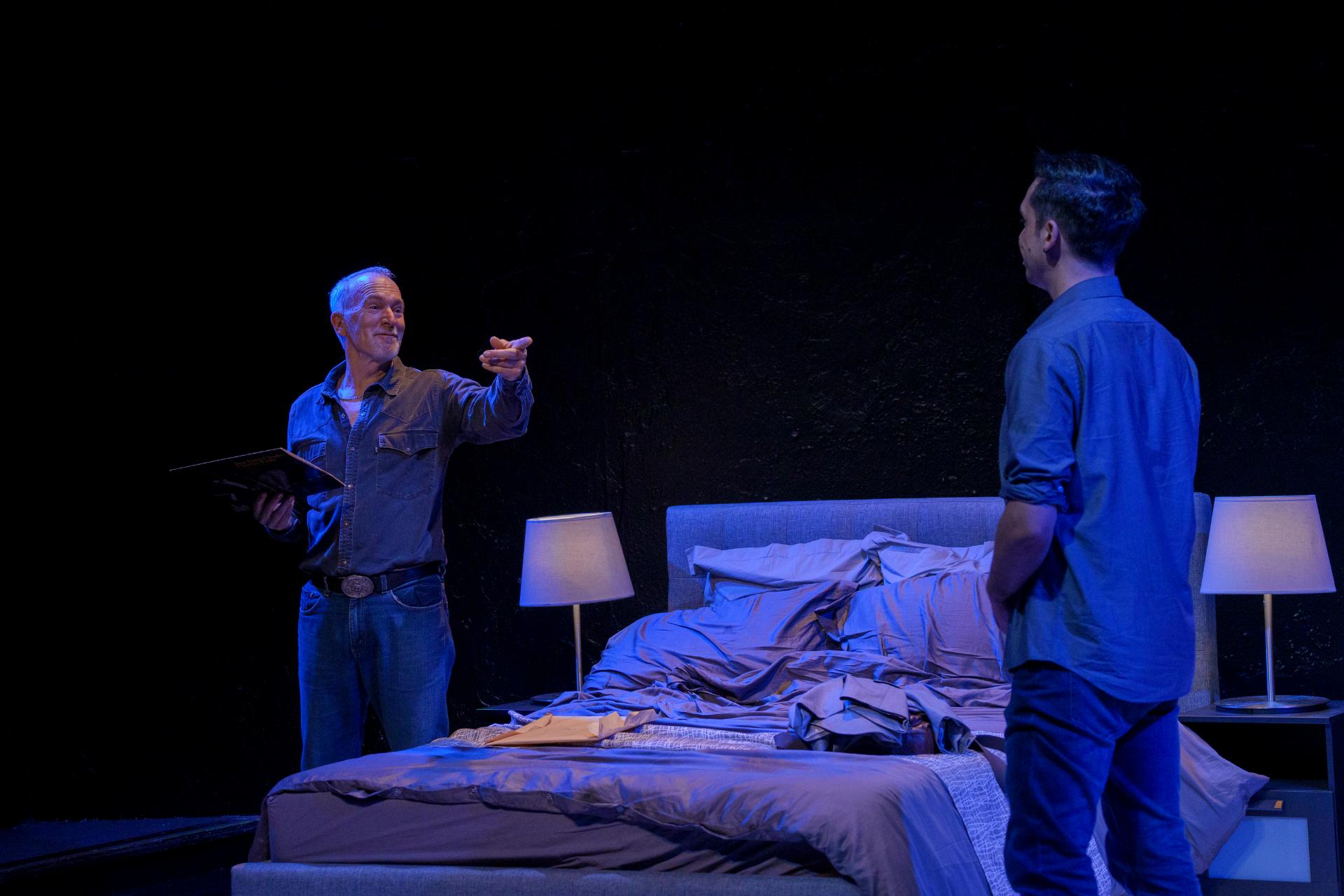
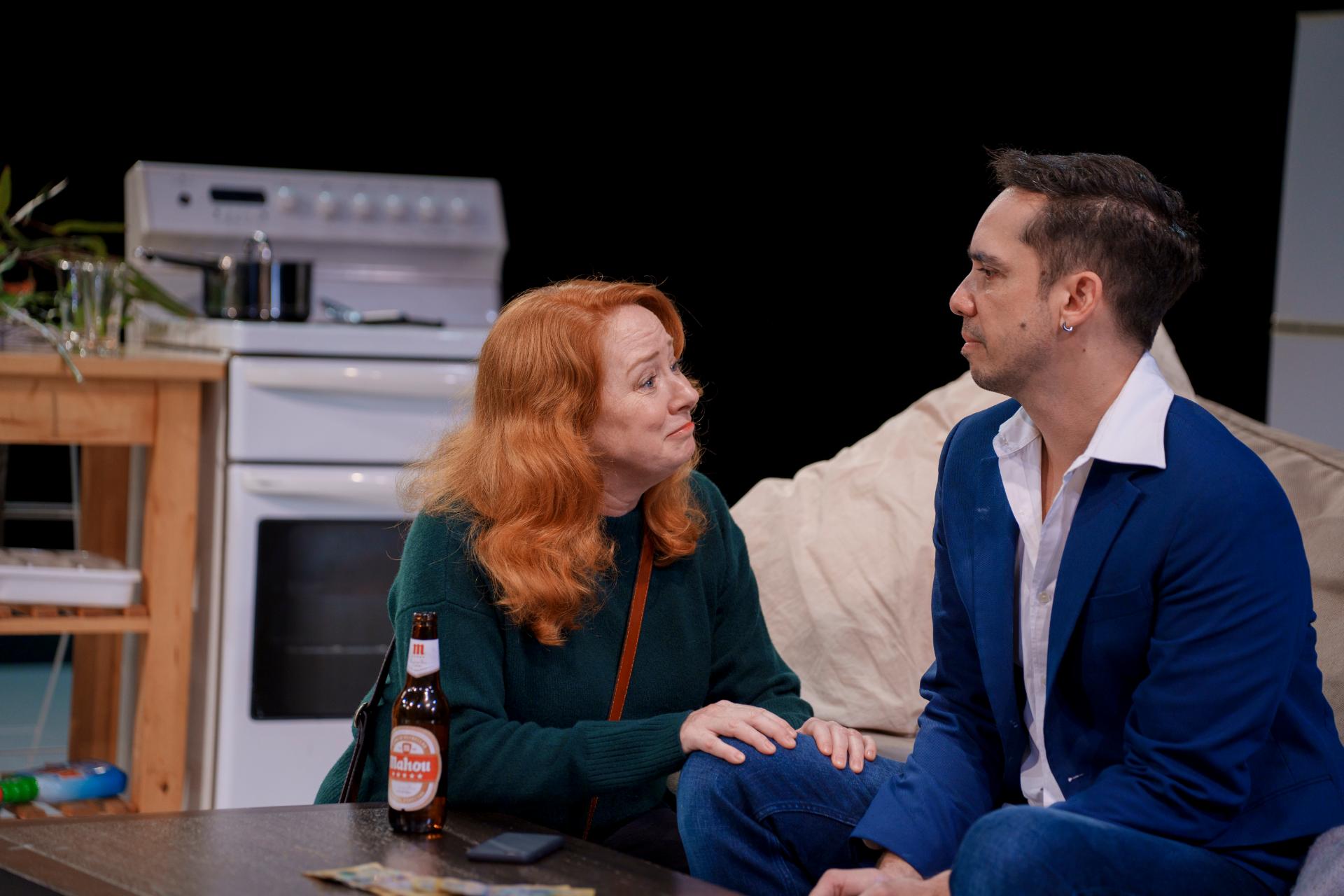
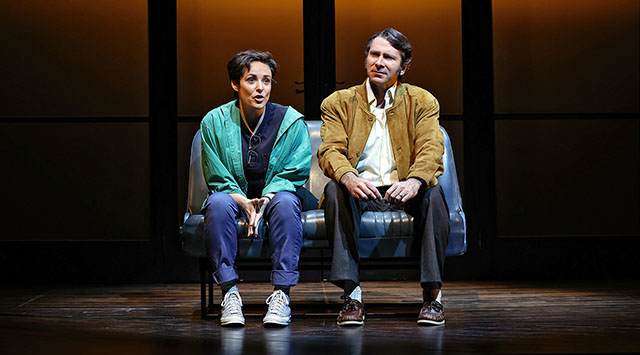
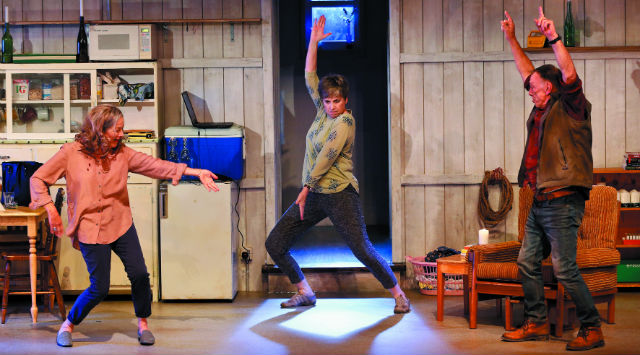
One would hope that retirement homes are the most idyllic places in which the elderly can enjoy their twilight years, but Pine Grove is no such institution. In Tom Gleisner’s musical comedy Bloom, senior residents are treated with no respect, by a management that thinks only of the bottom line. The characters we encounter in Gleisner’s writing are thoughtfully assembled, but his plot unfolds predictably at every juncture, and a clichéd sense of humour guides the tone for the entire presentation.

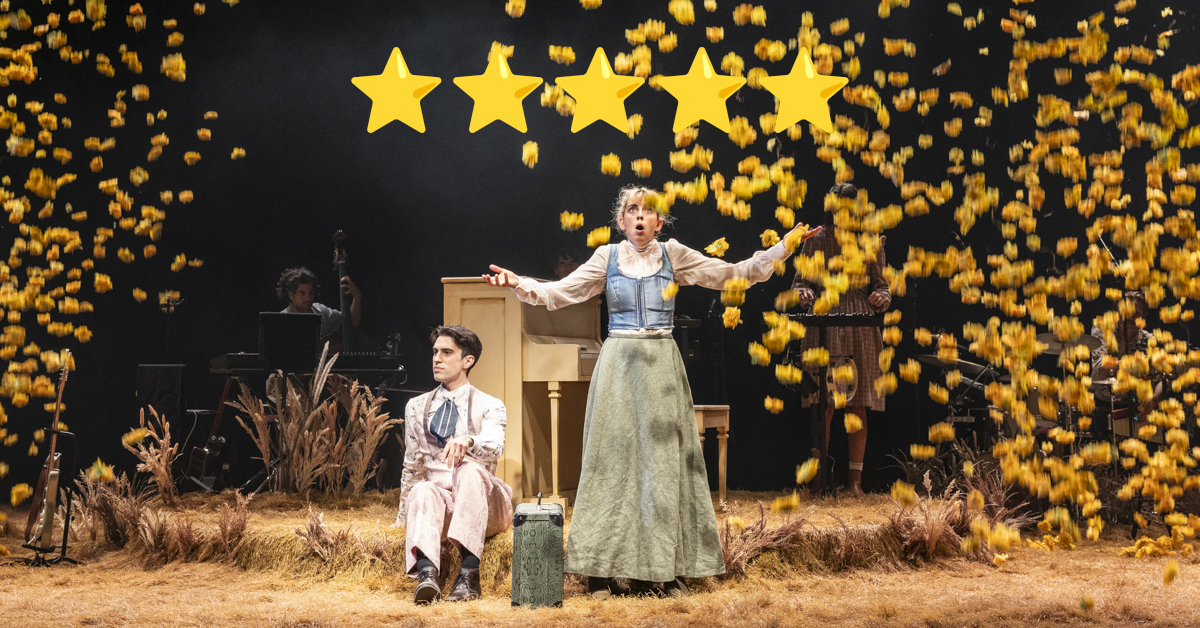
Direction by Dean Bryant demonstrates little need for inventiveness, focussing efforts instead on creating a show that speaks with poignancy and tenderness. Its efficacy as a heart-warming tale is however debatable, with some viewers likely to respond favourably to its sentimentality, while others may be left unmoved by its hackneyed approach. The music of Bloom, written by Katie Weston and directed by Lucy Bermingham, is somewhat pleasant but the thorough conventionality of its style might prove uninspiring for some.

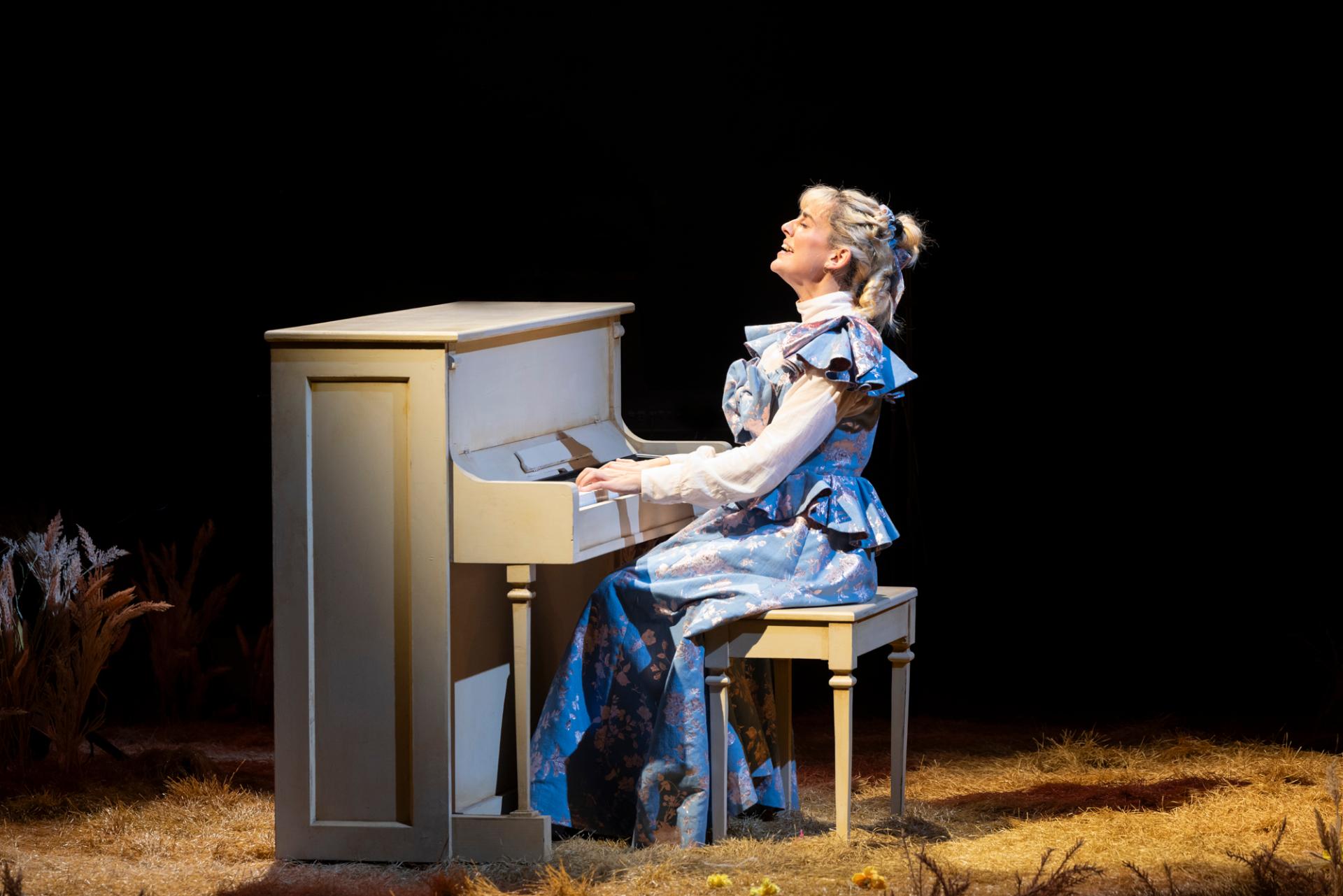
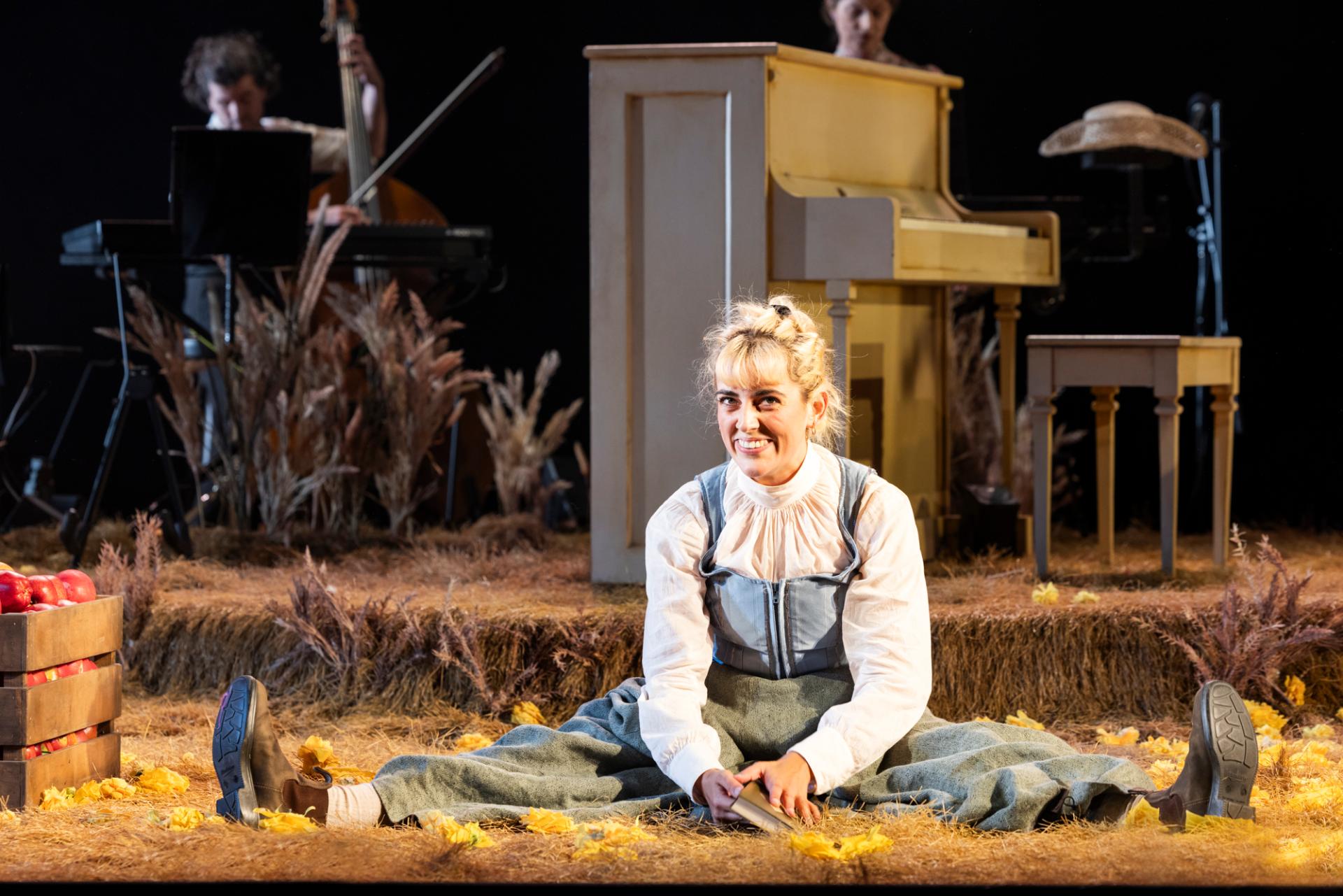
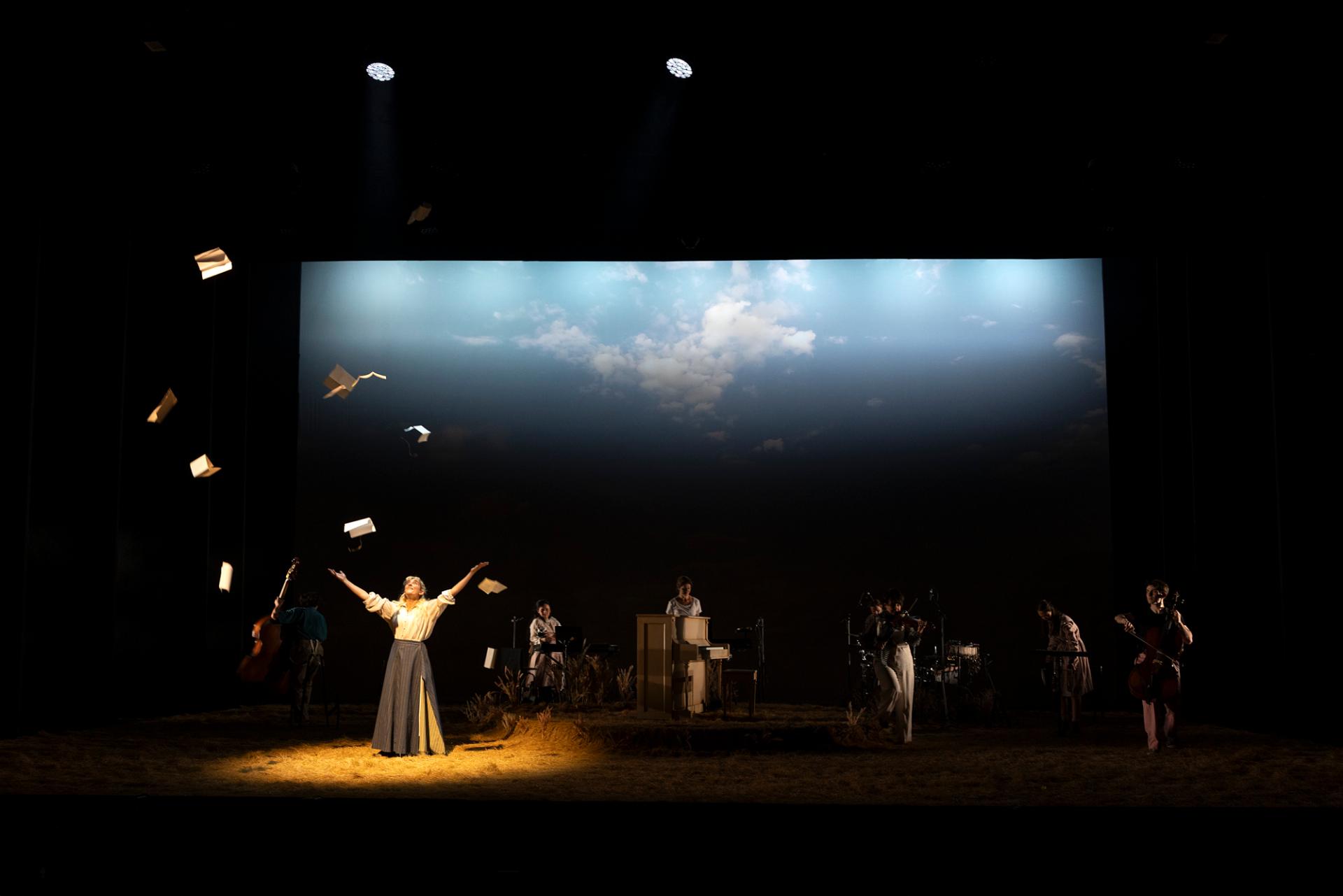
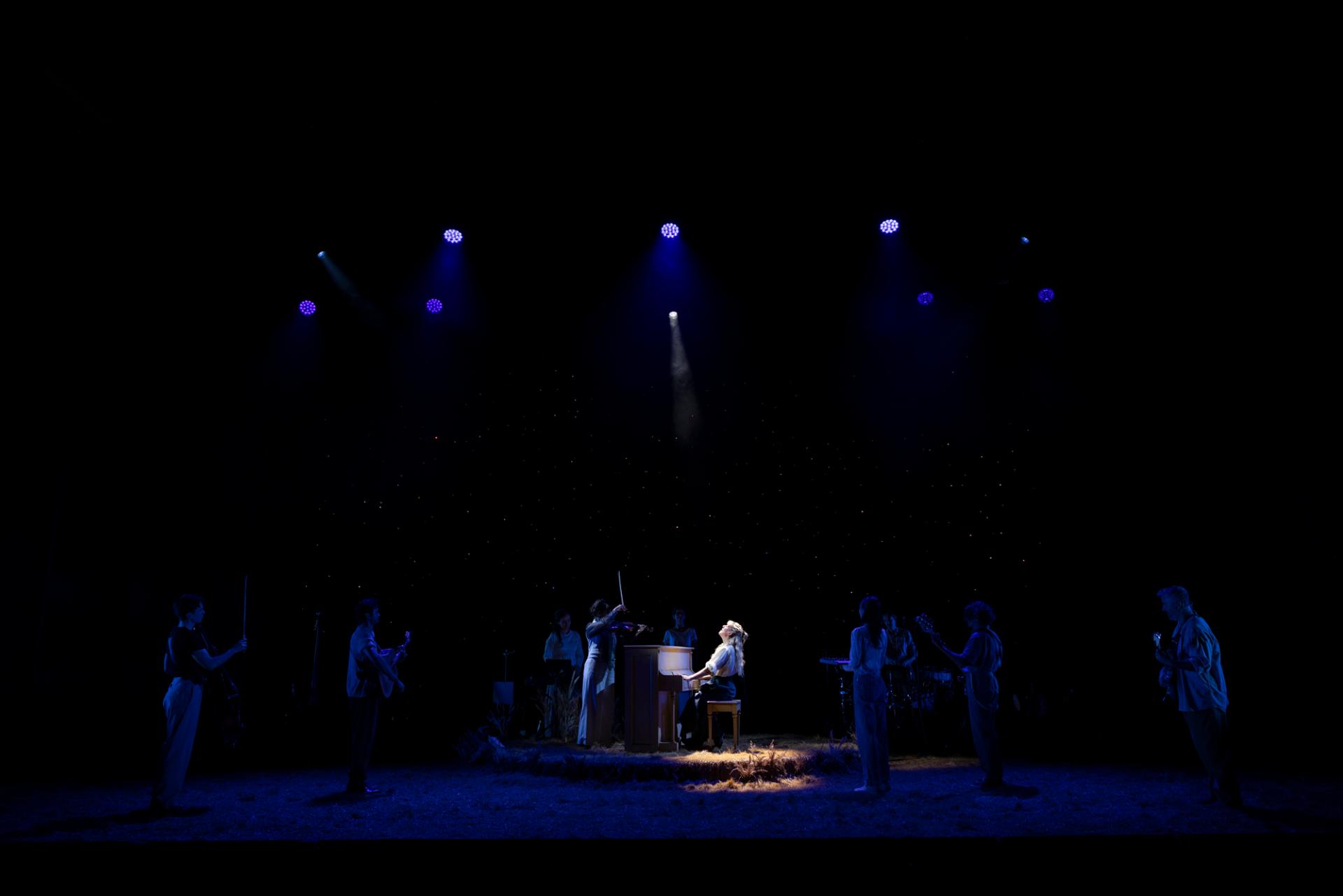
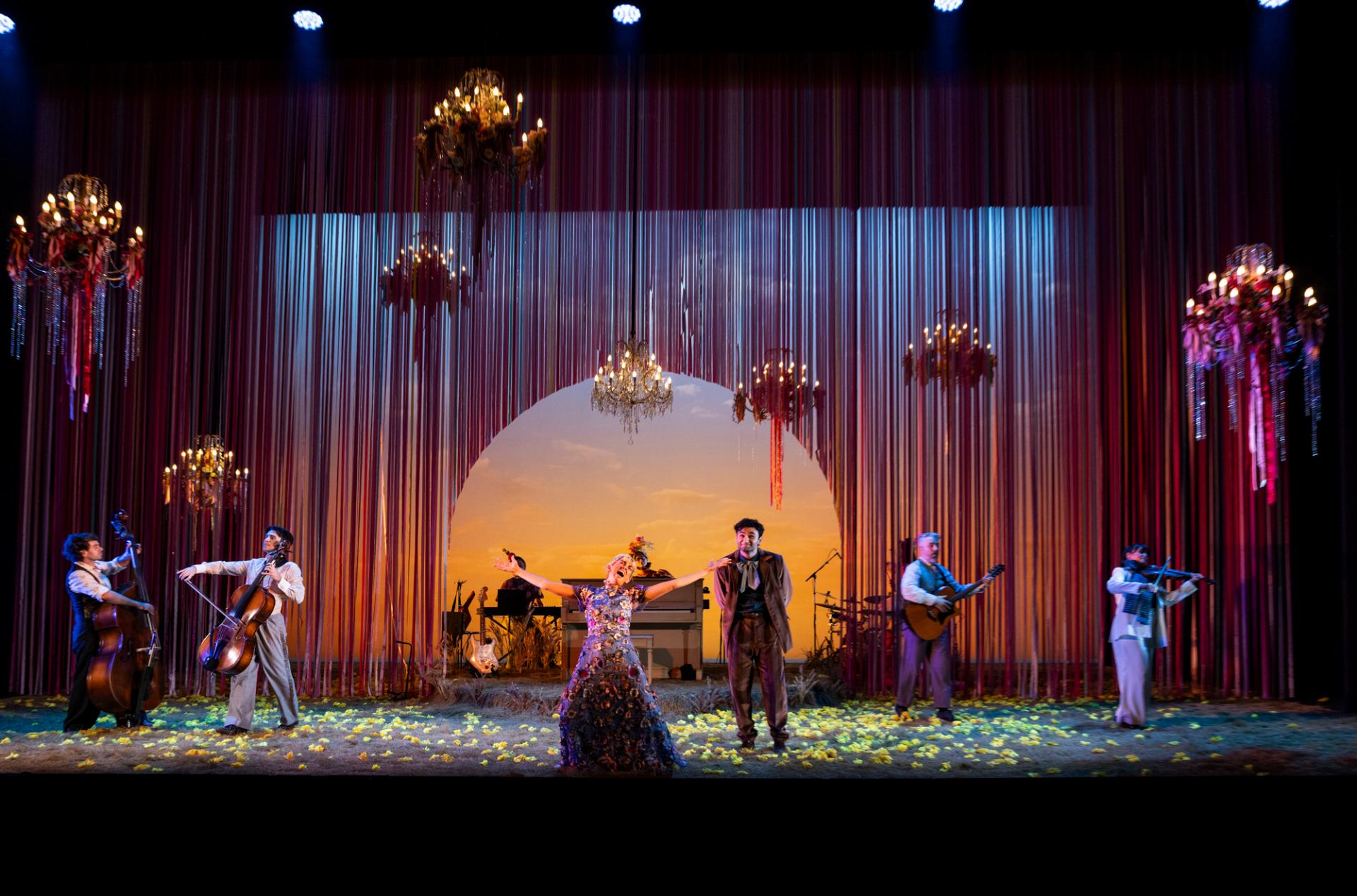
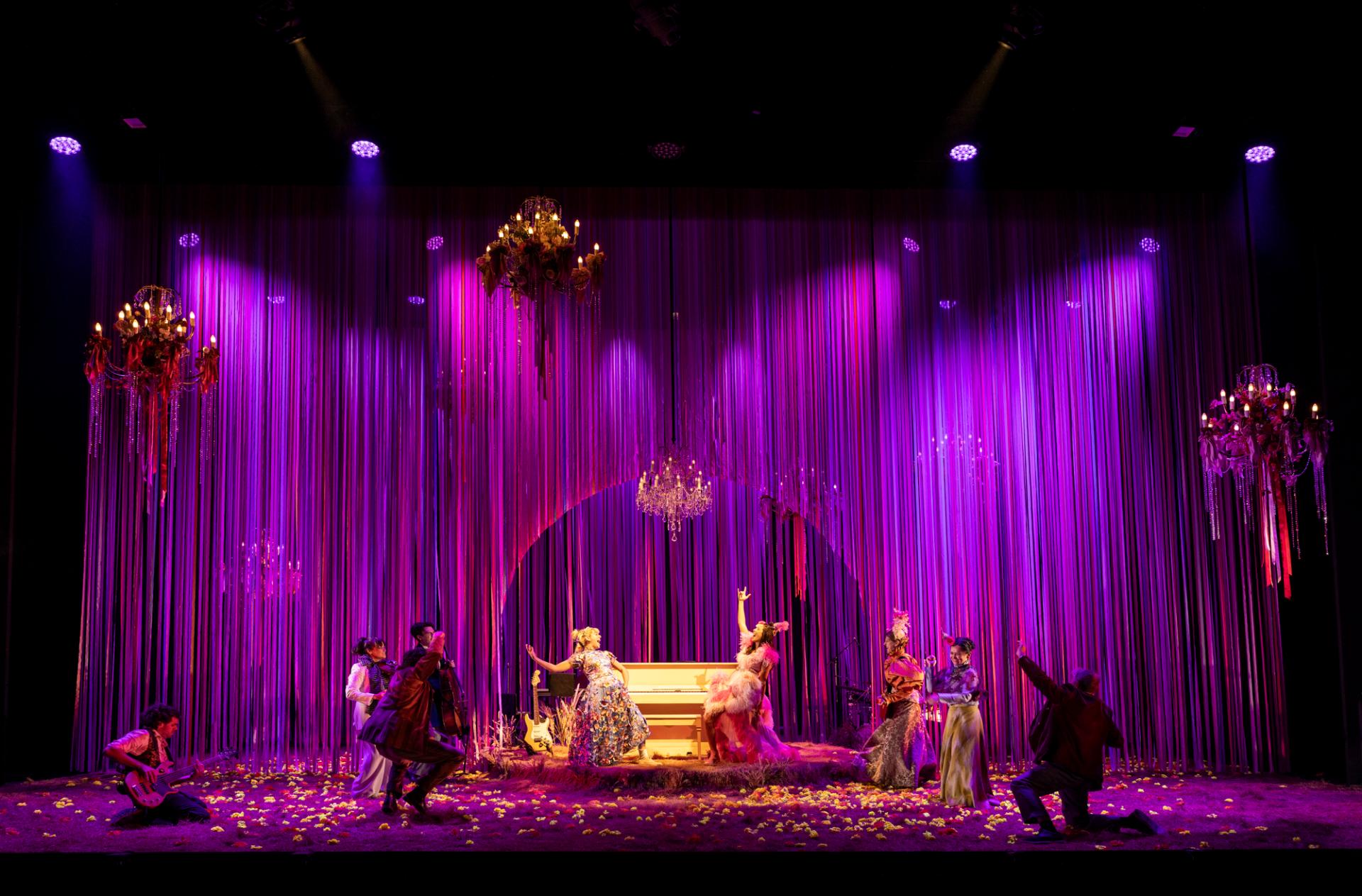
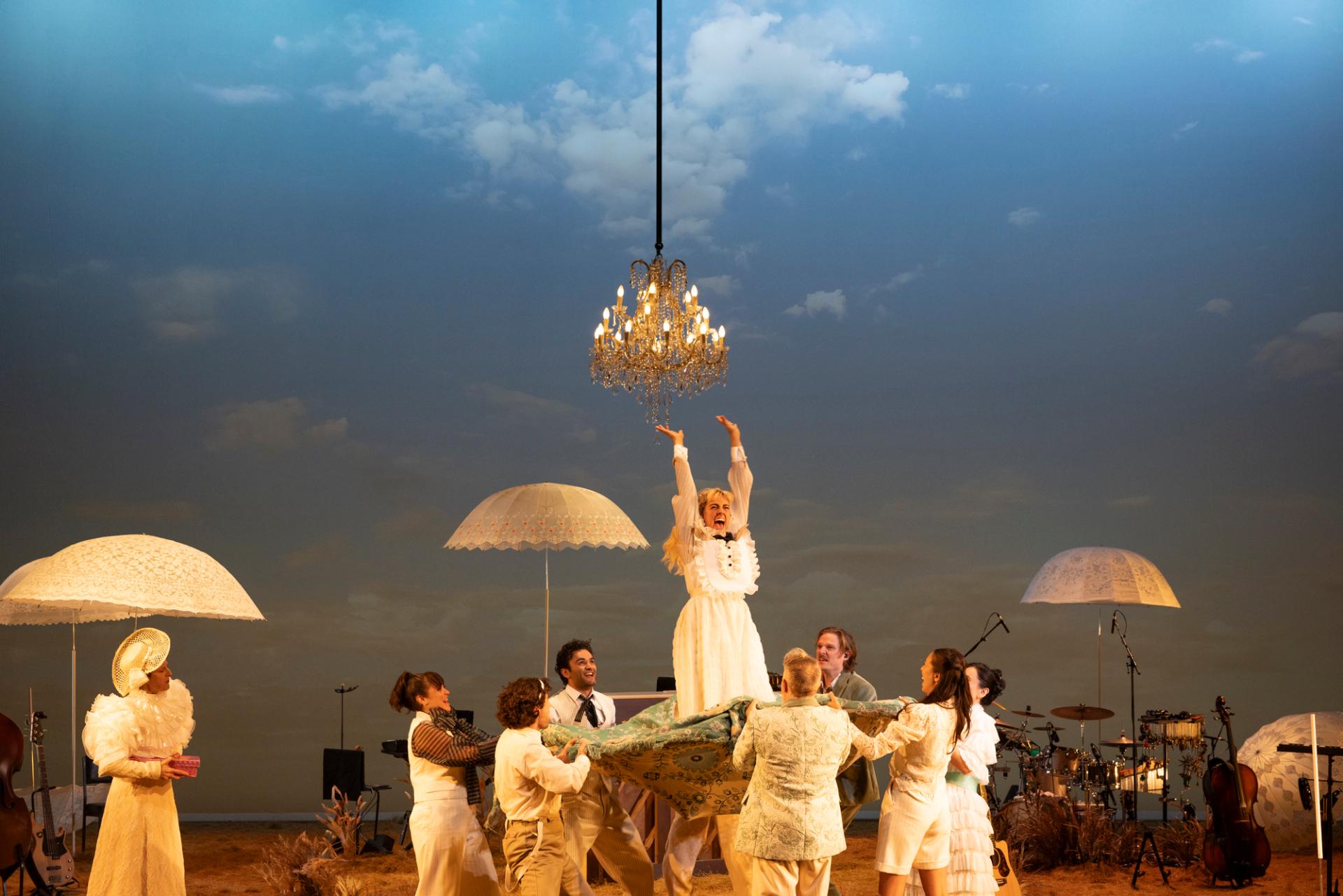
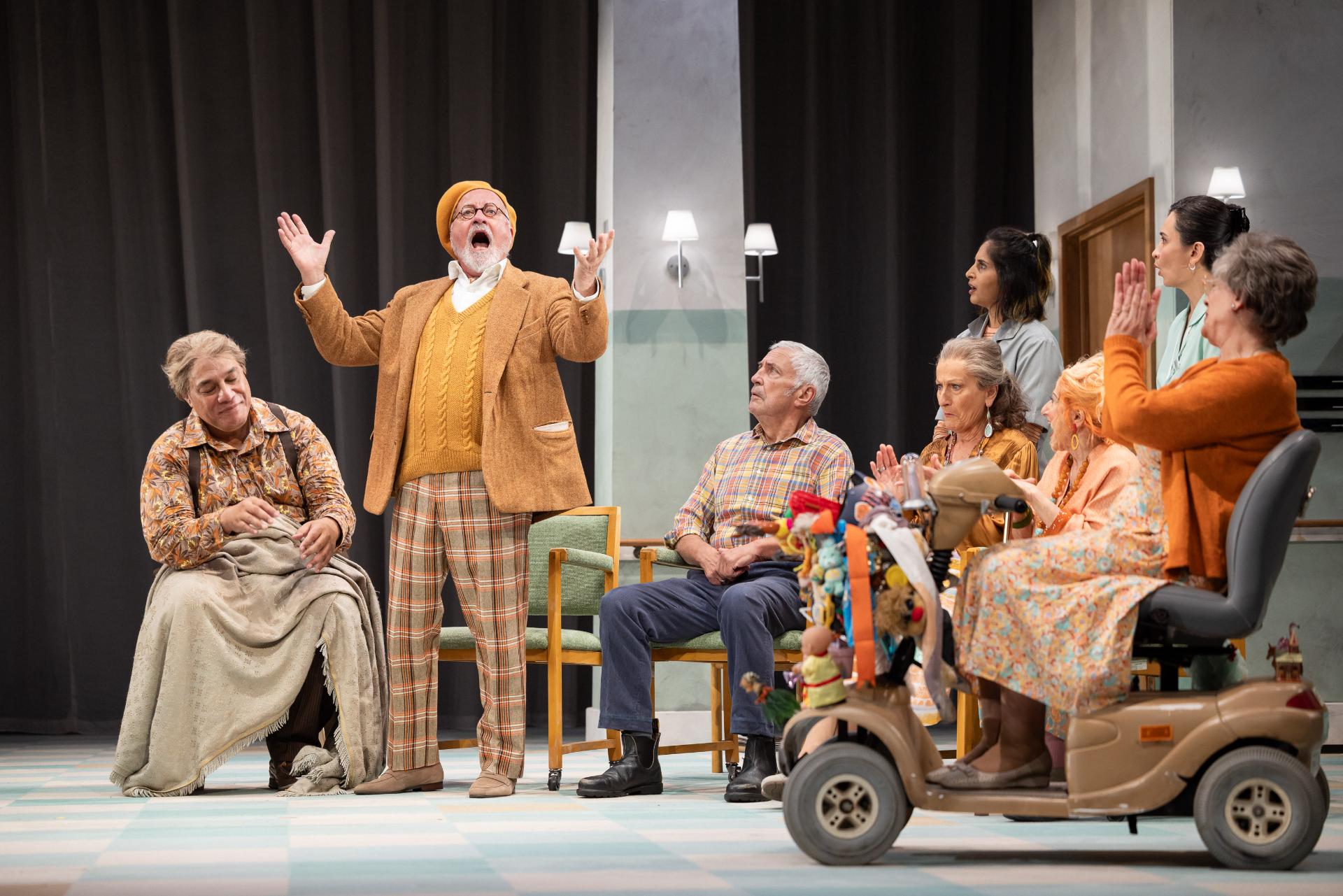
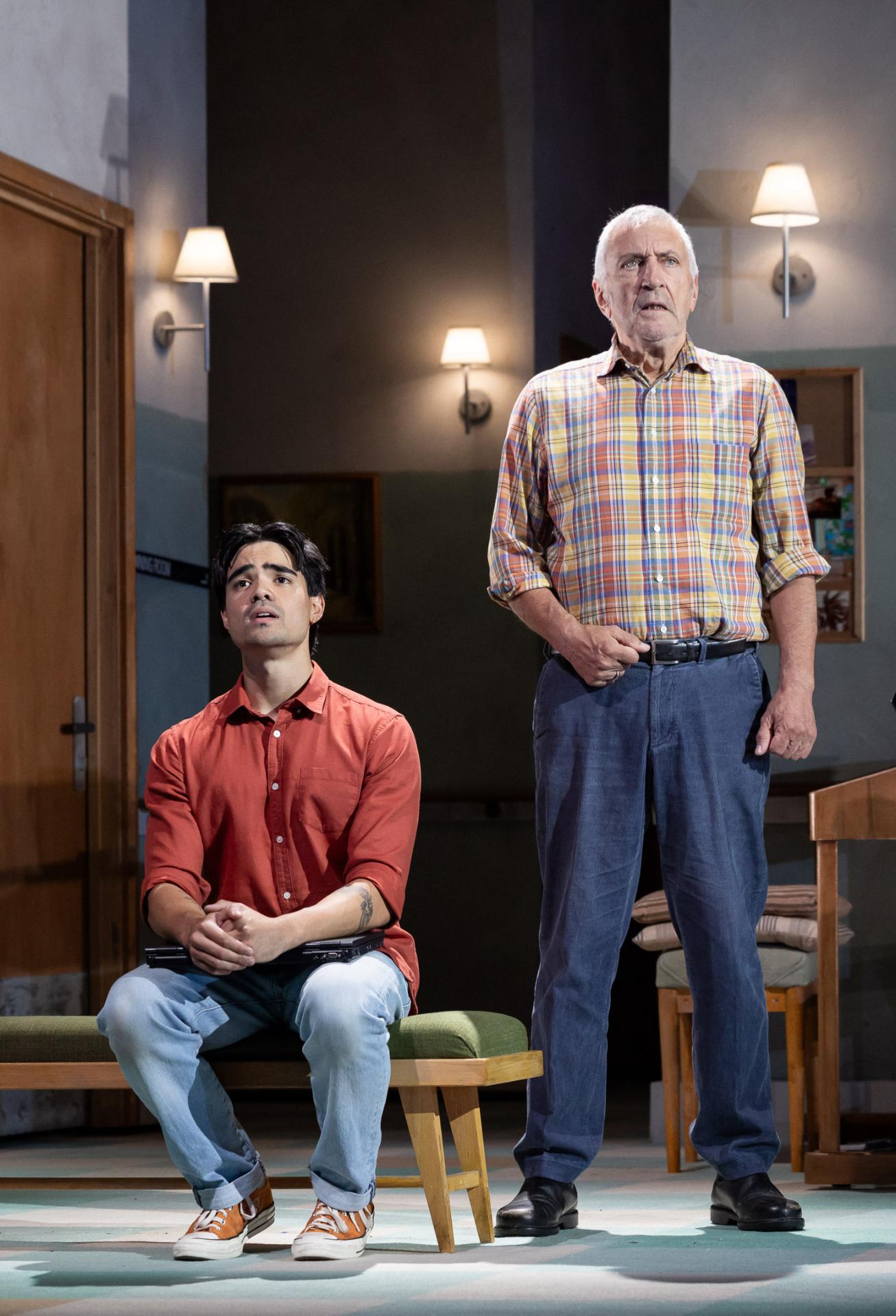
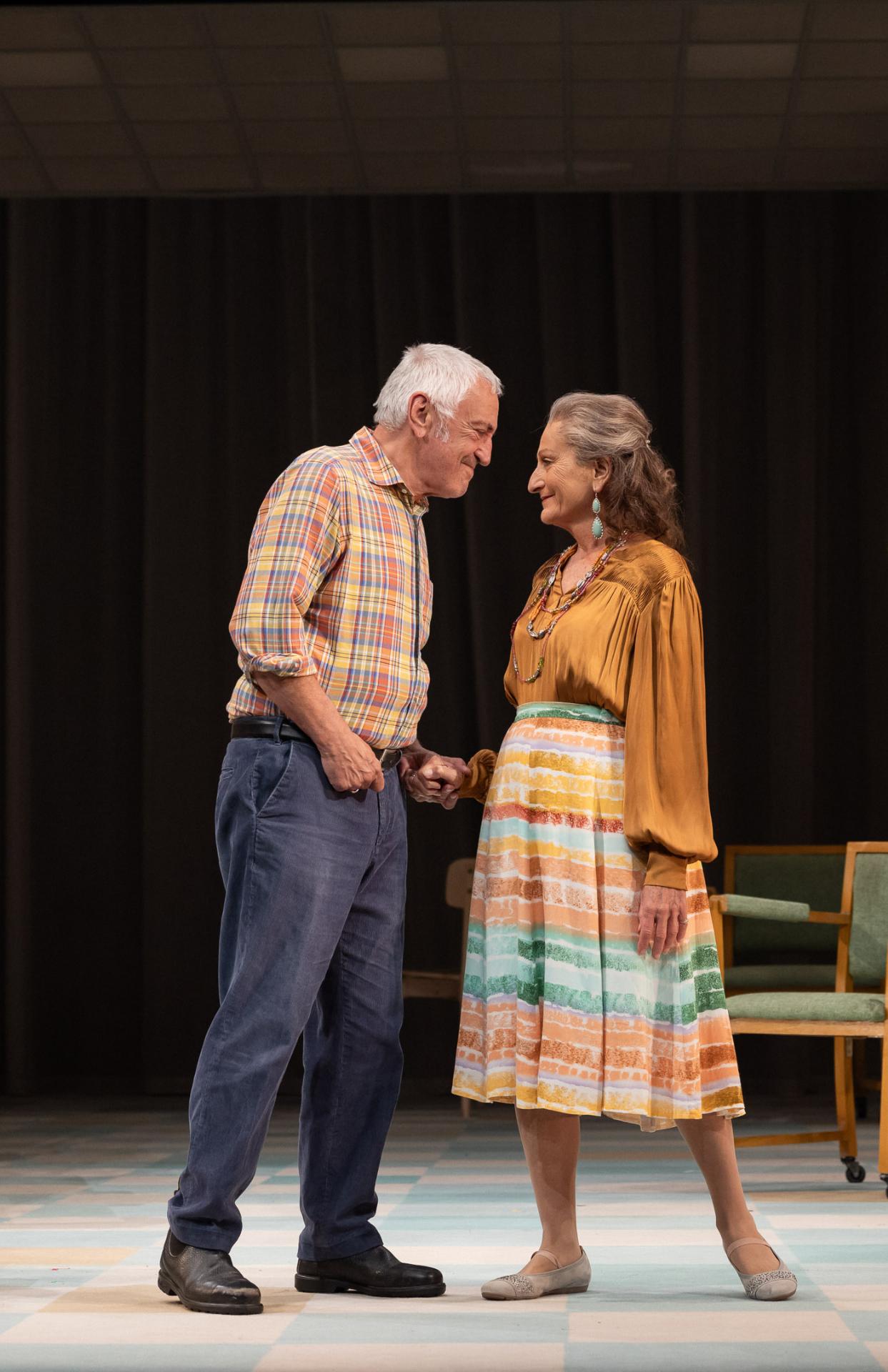
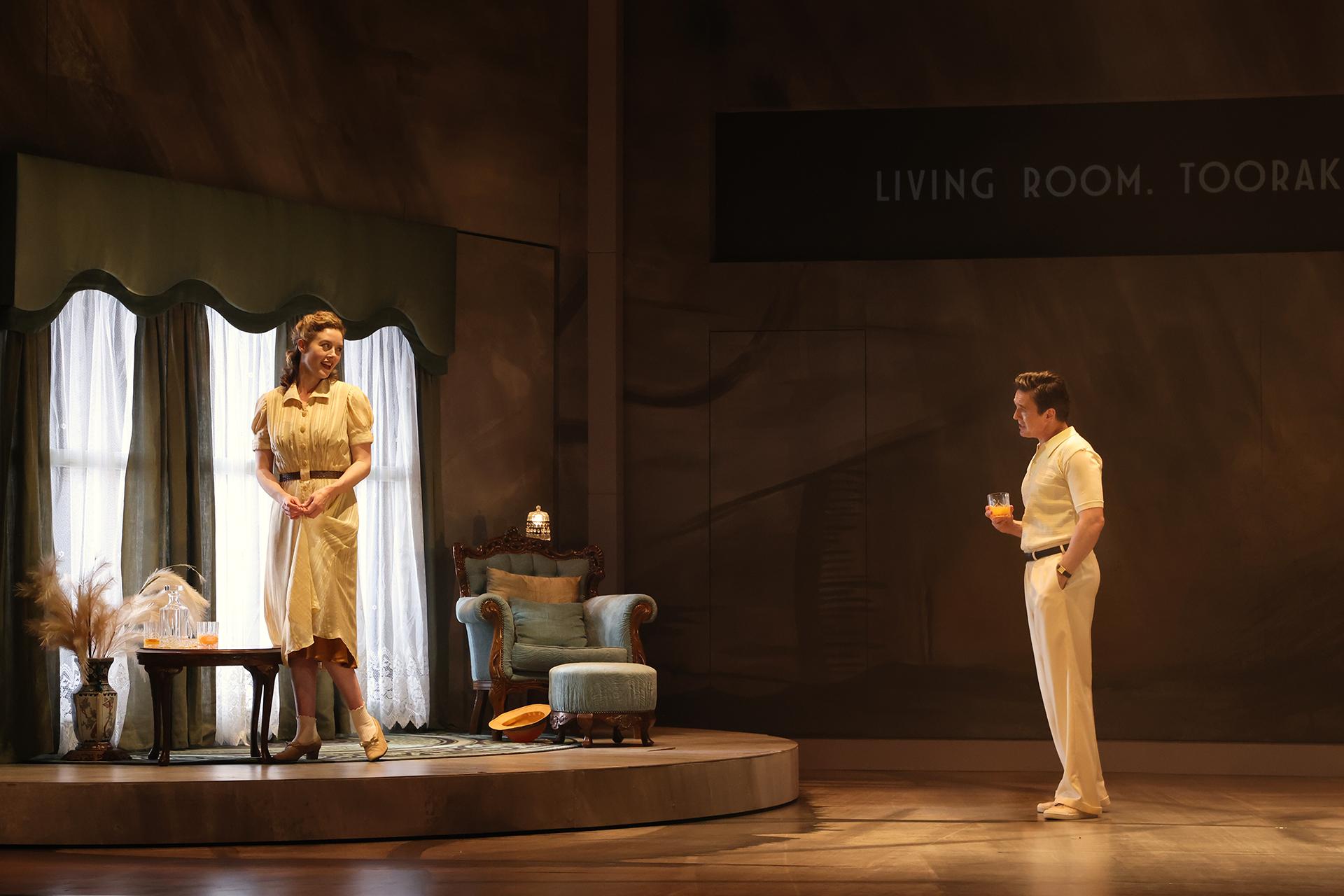
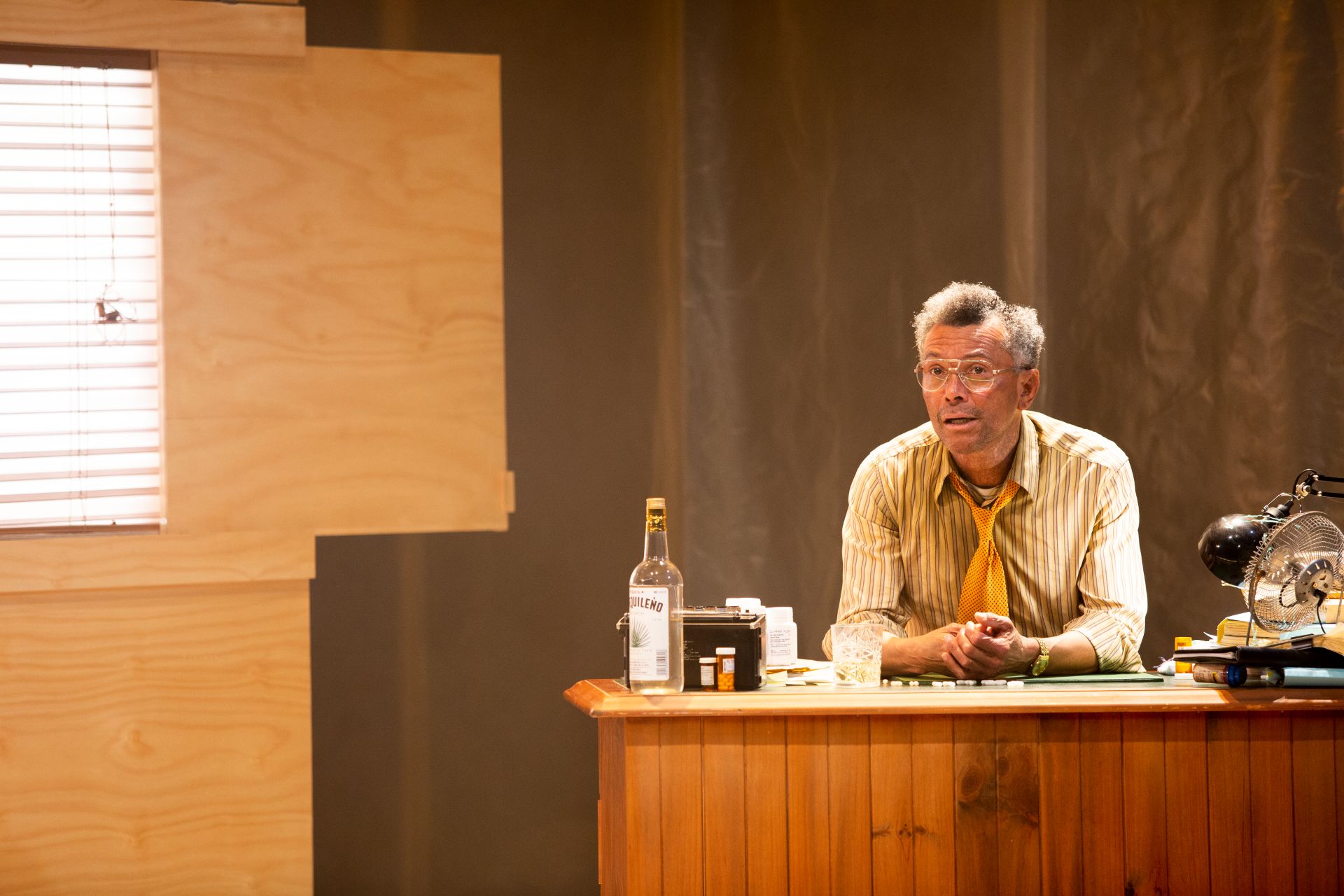
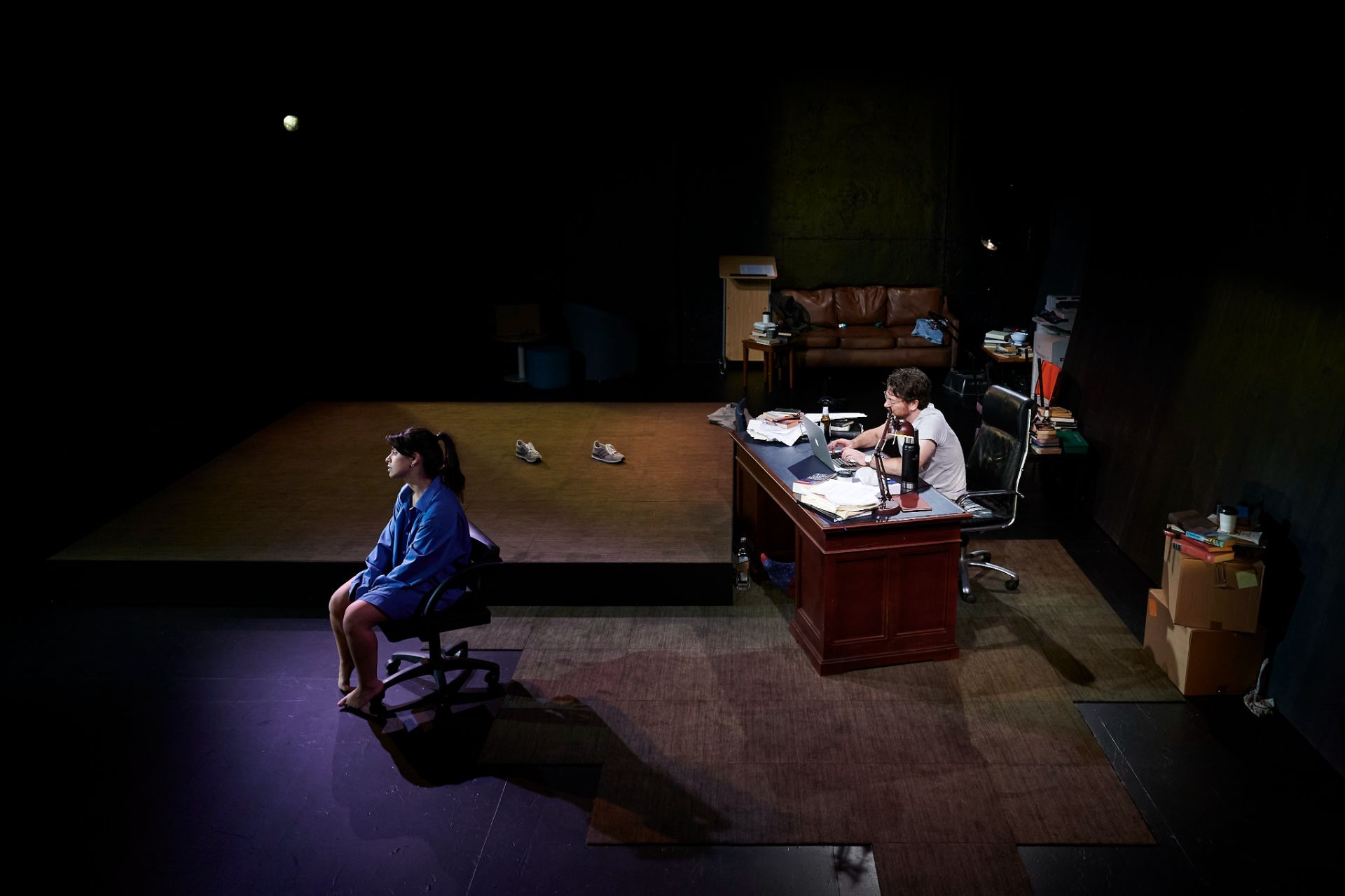
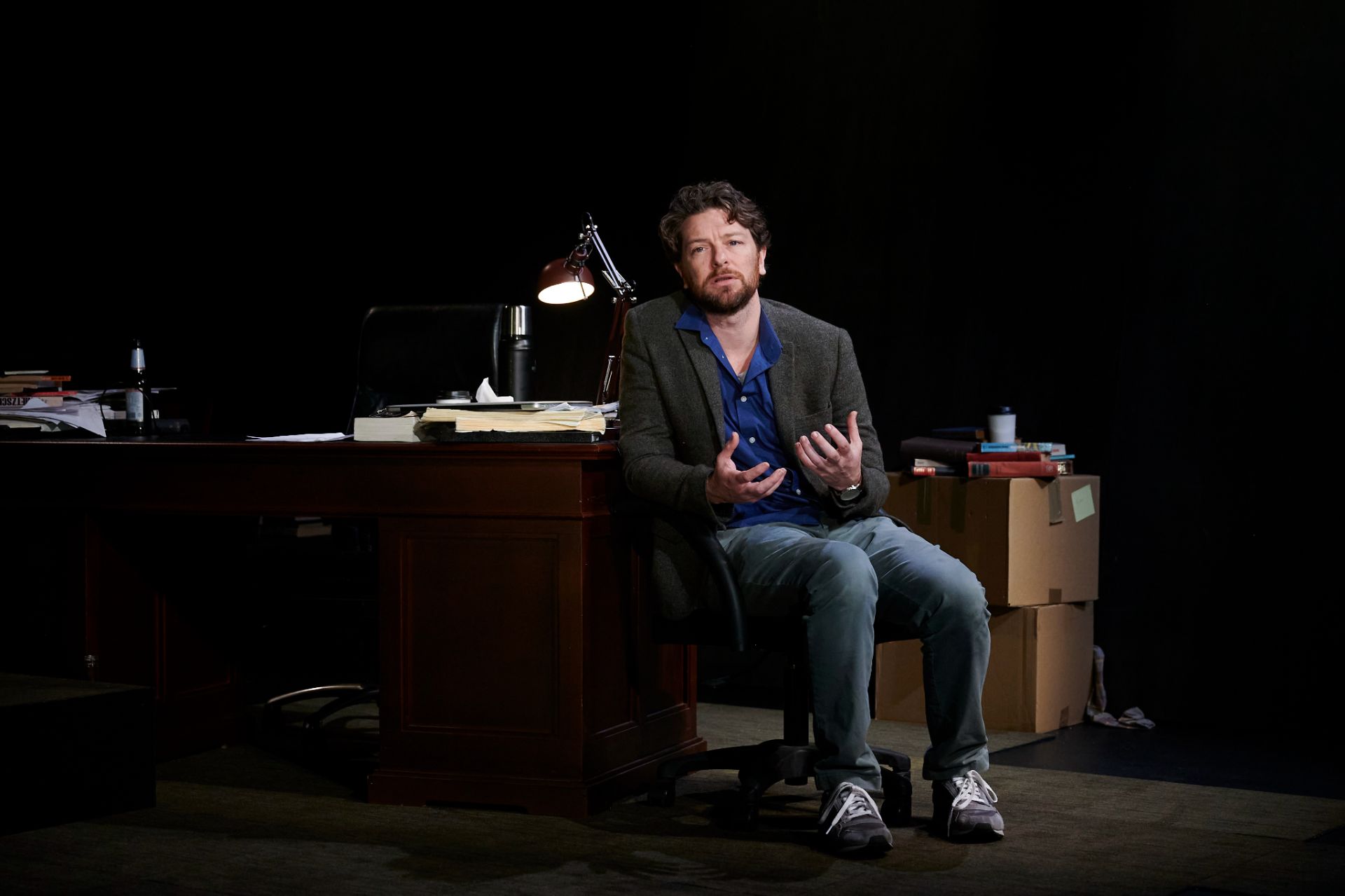
Set design by Dann Barber, along with costumes by Charlotte Lane, are appropriately and intentionally drab for a story about the failures of aged care systems. Lights by Sam Scott too, fulfil with unquestionable proficiency, the practical requirements of the simple narrative.

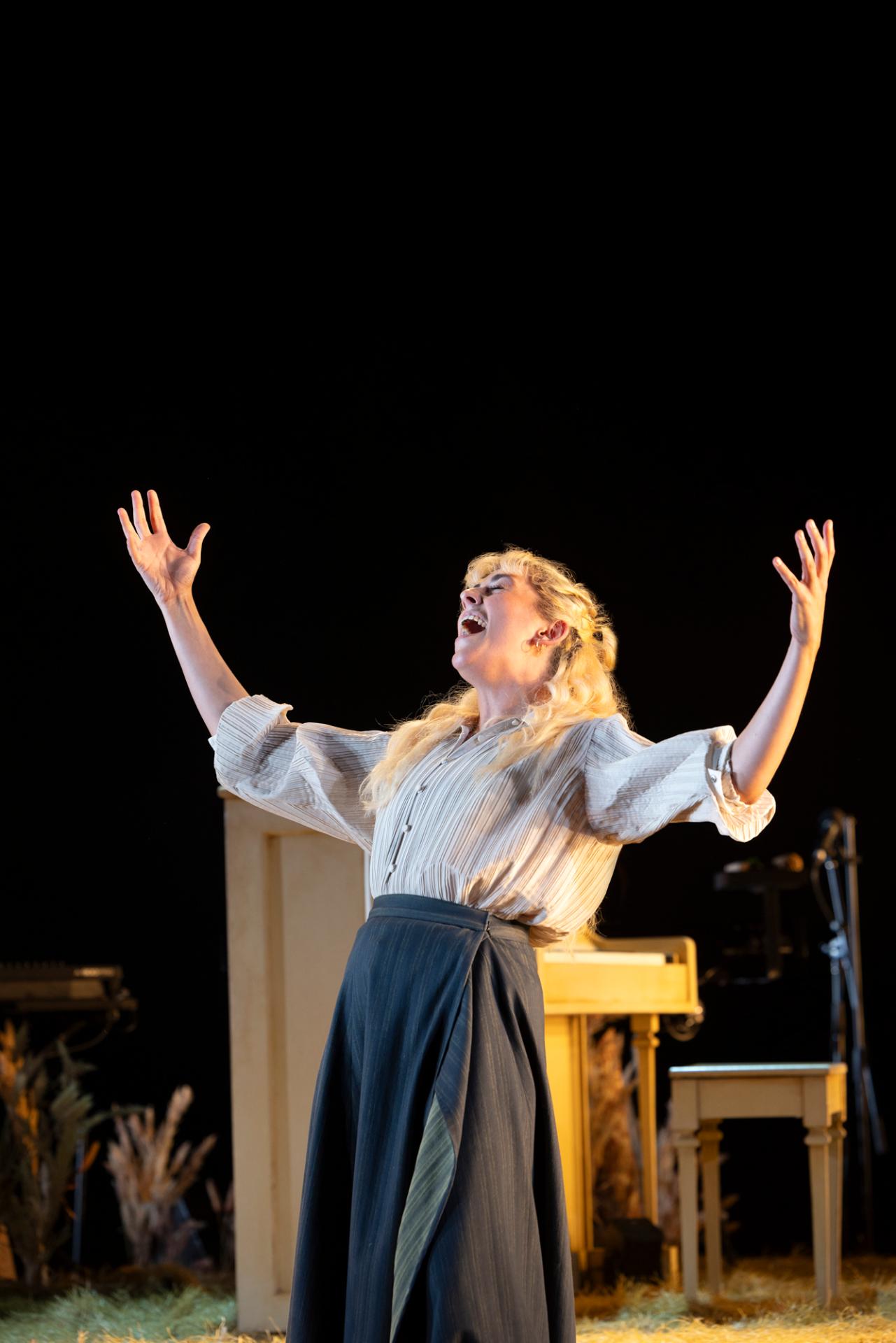
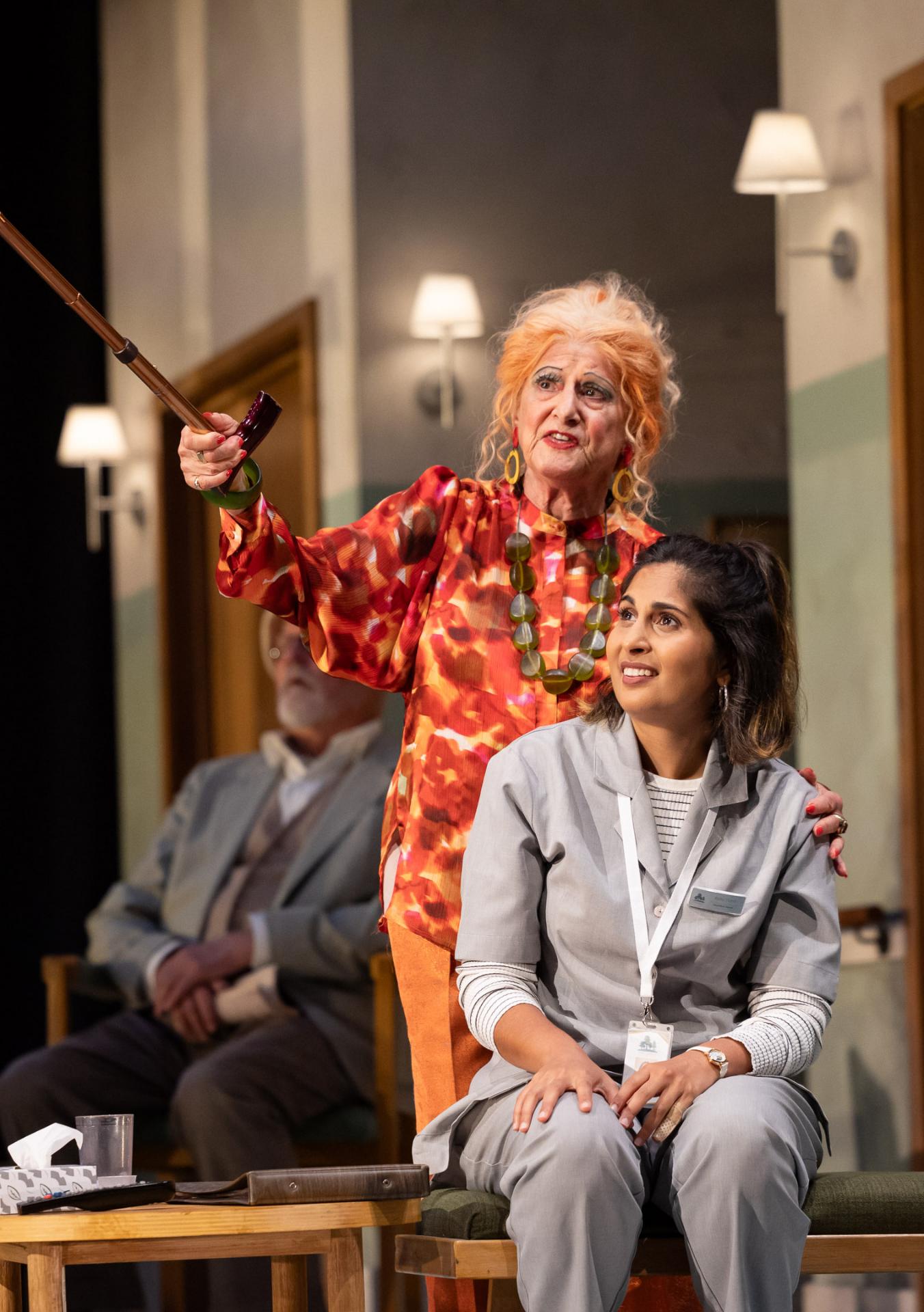
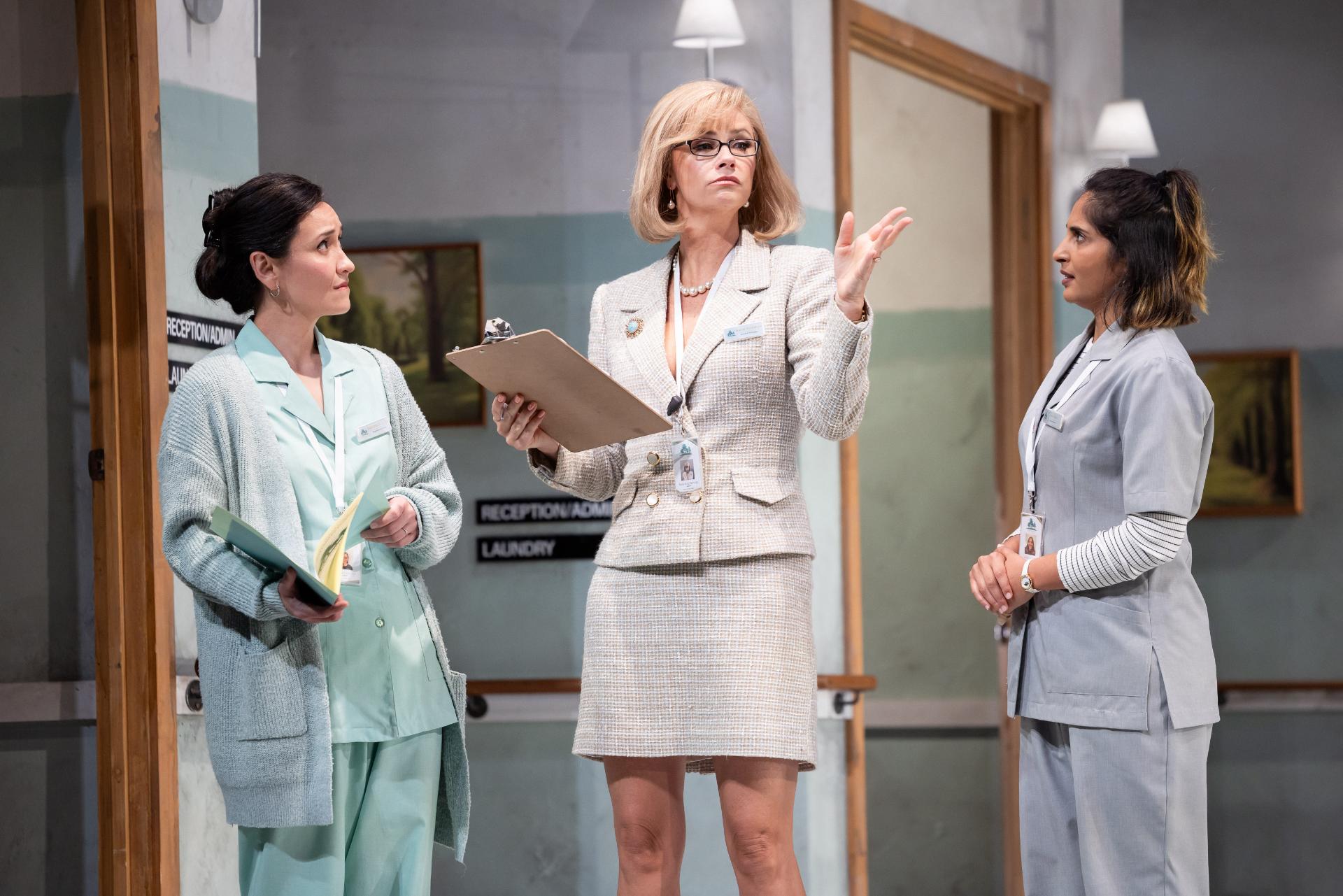
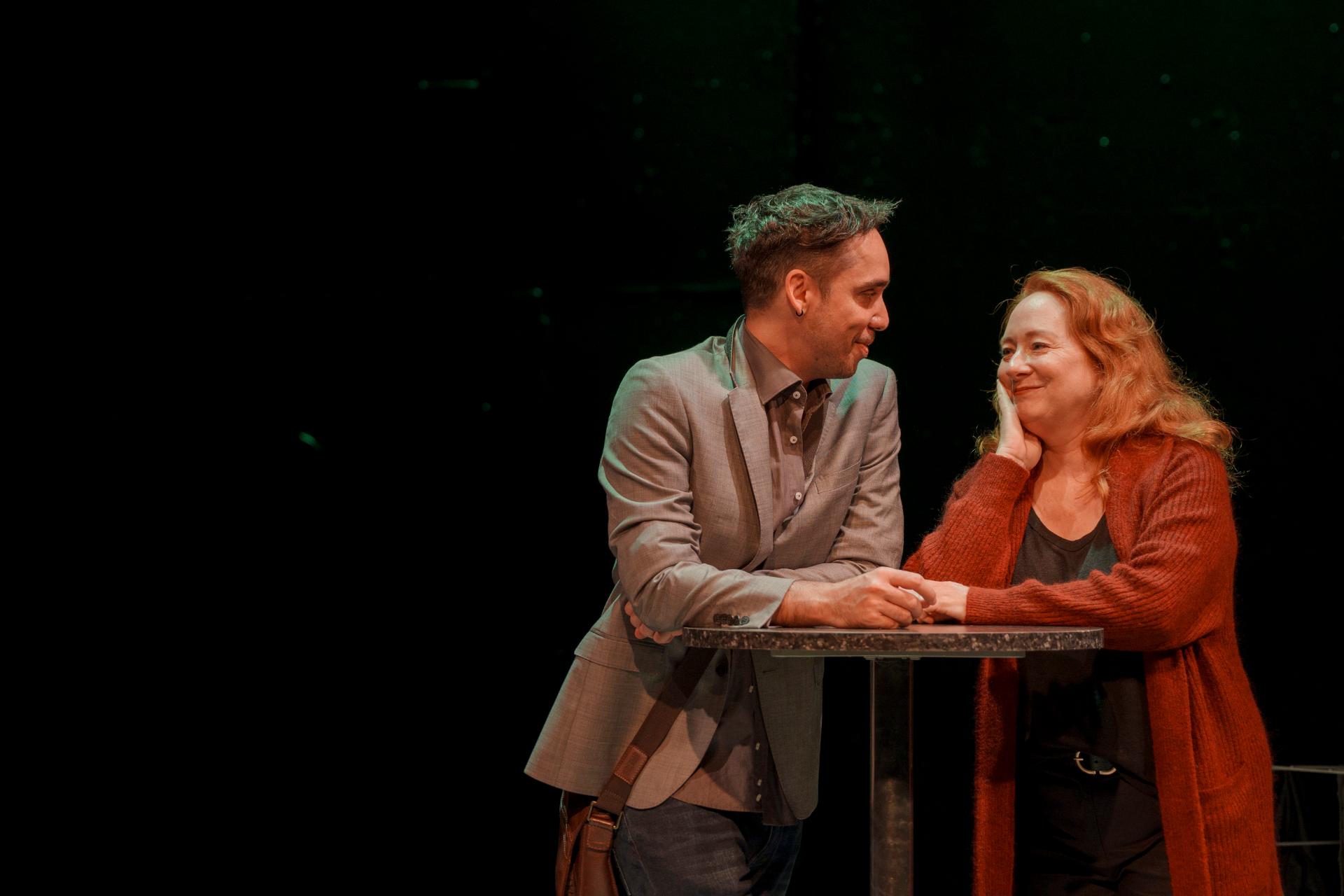
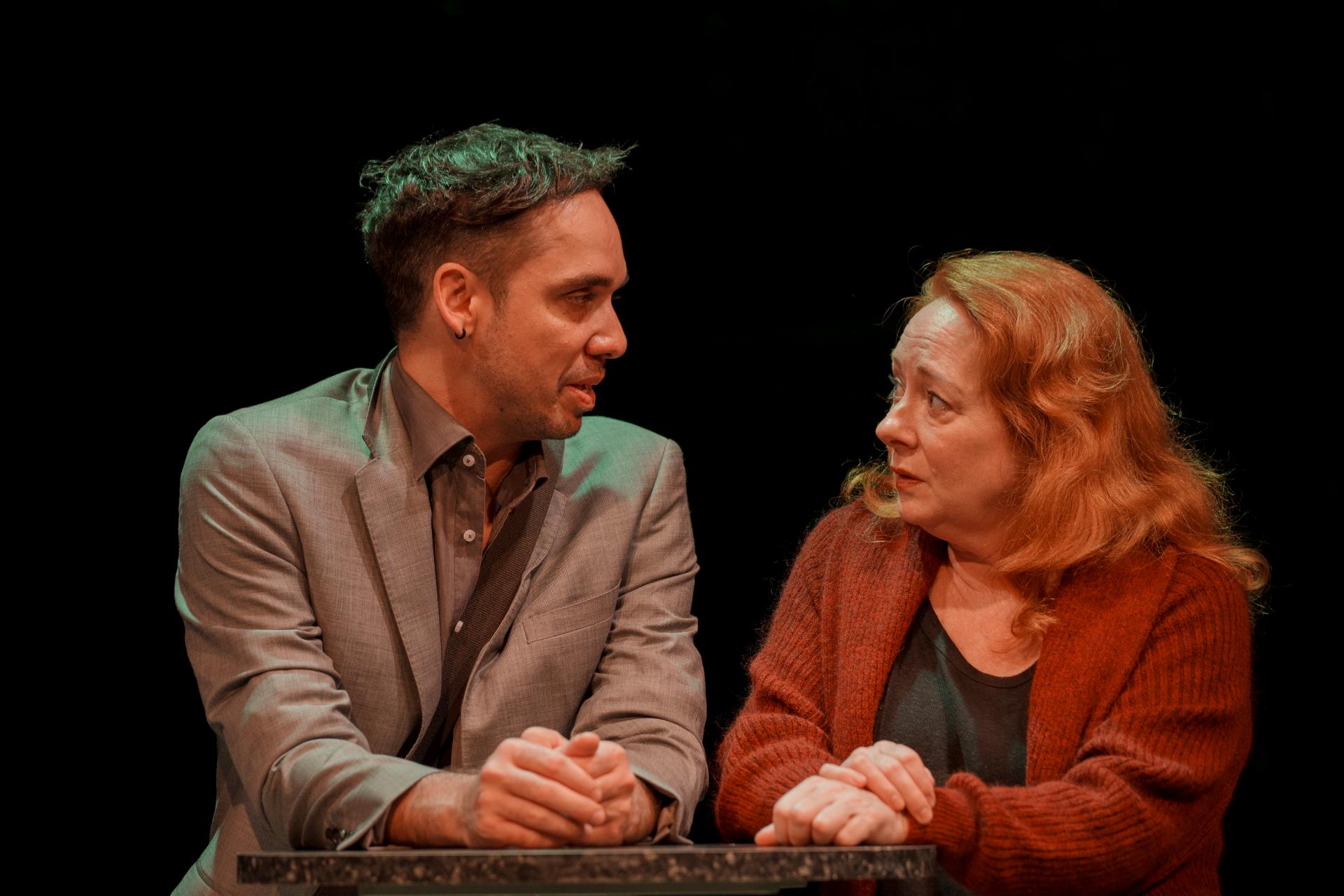
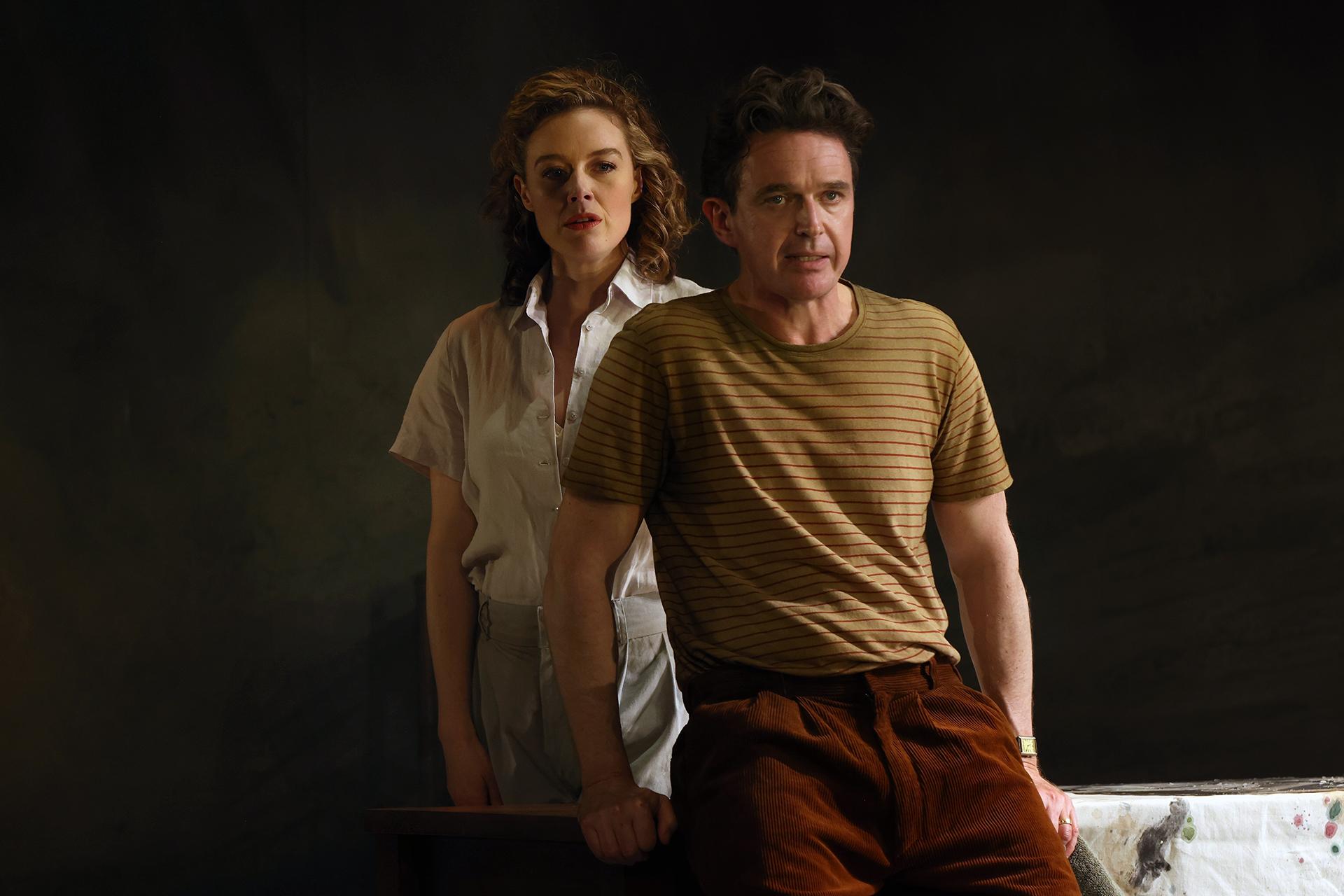
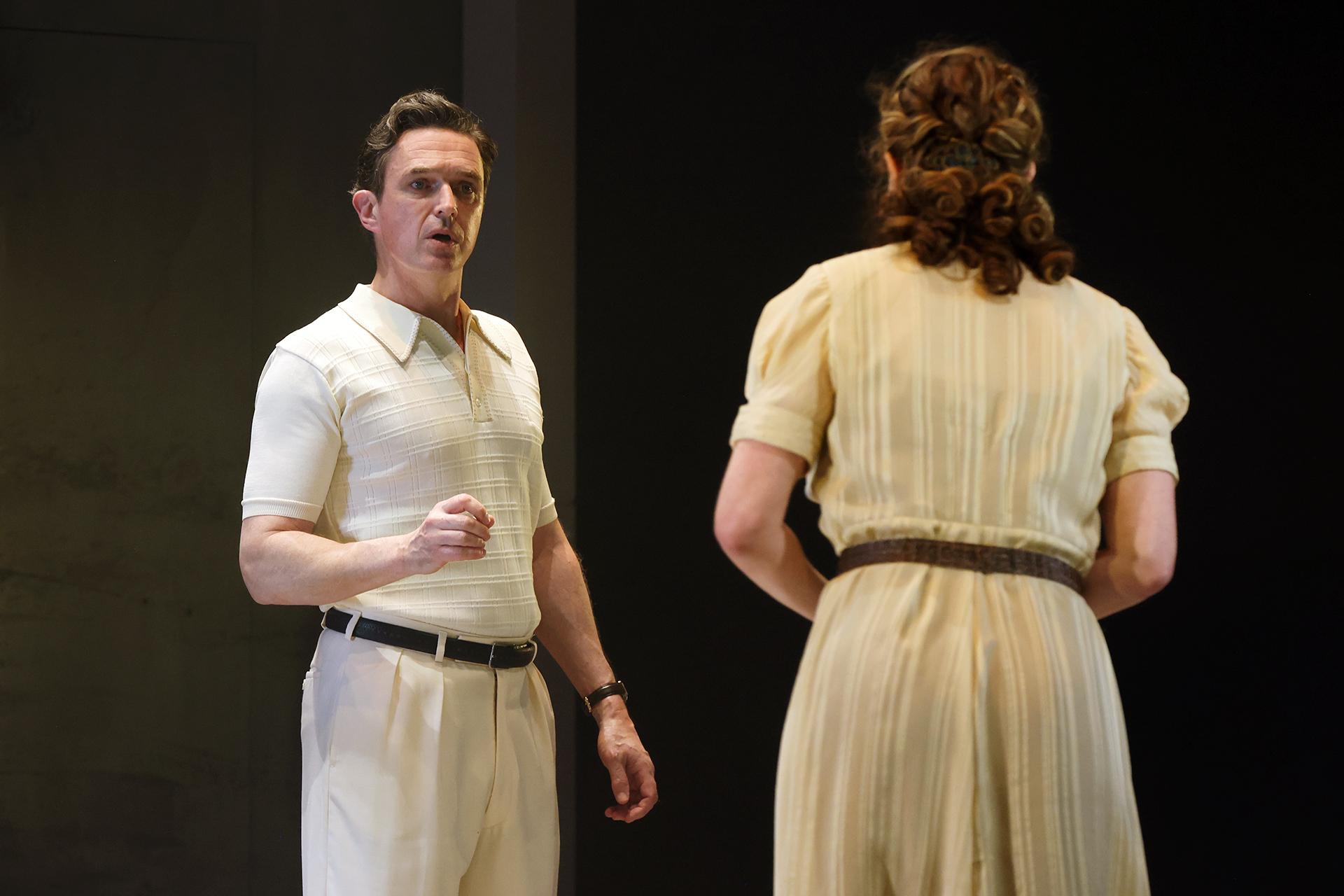
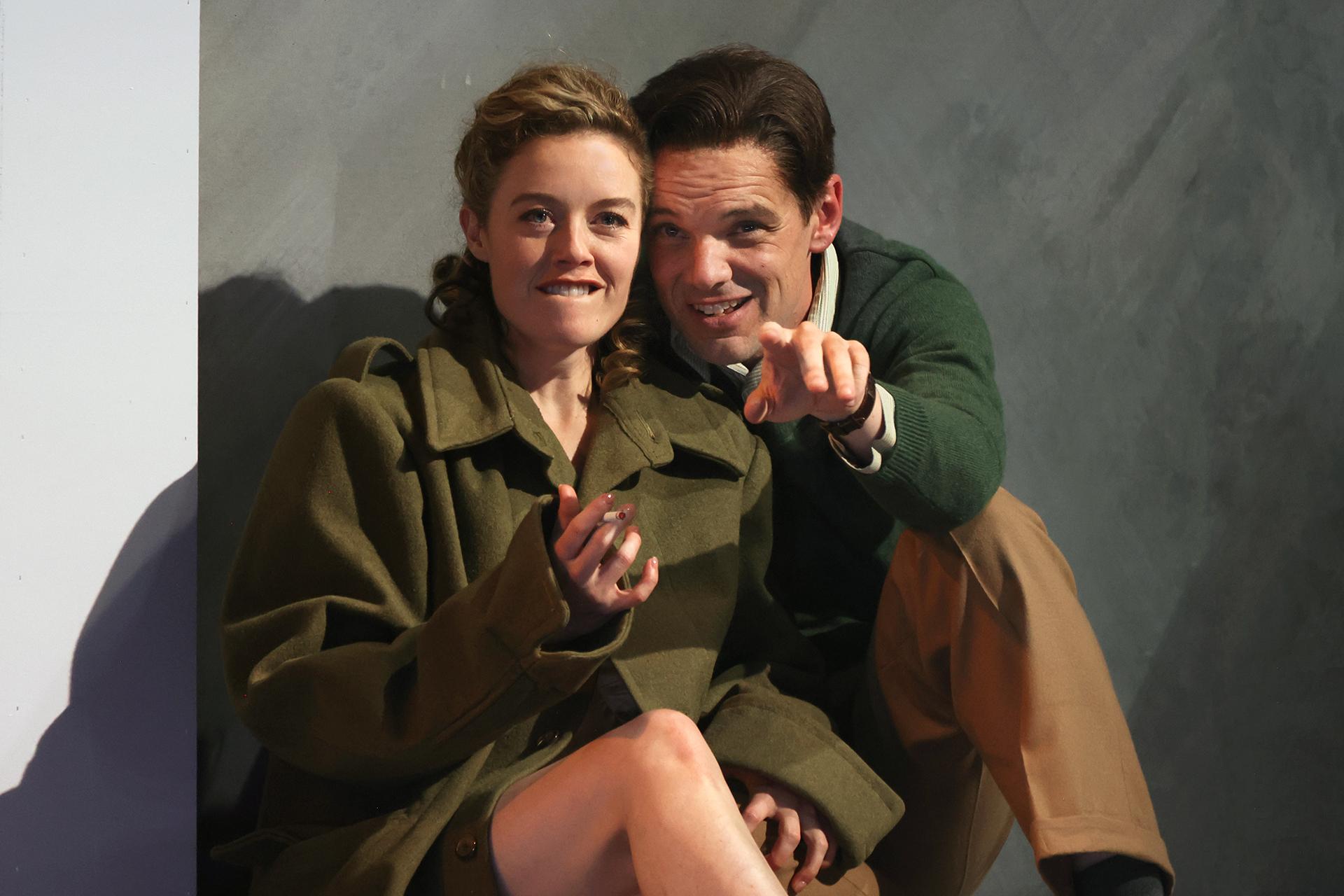
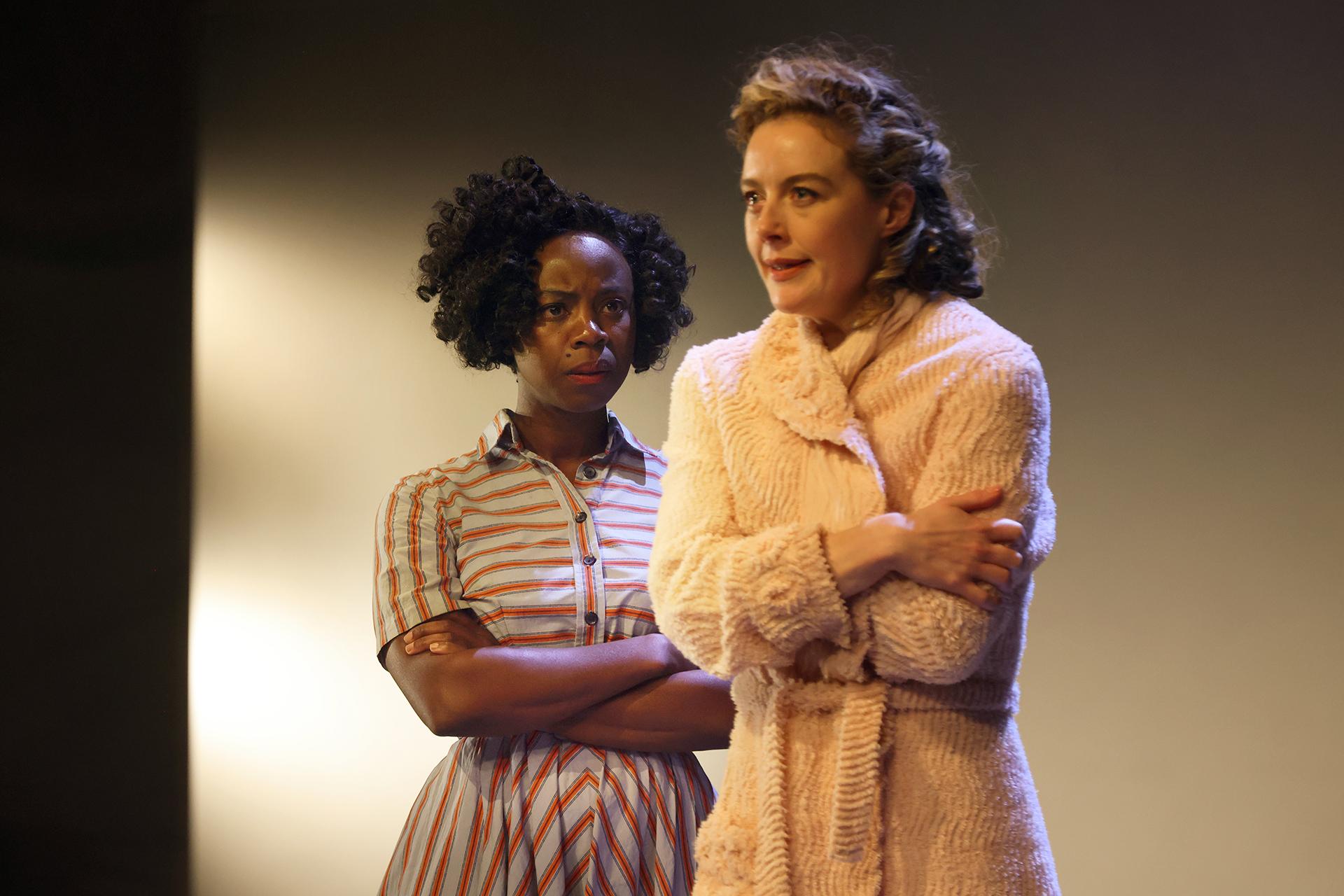
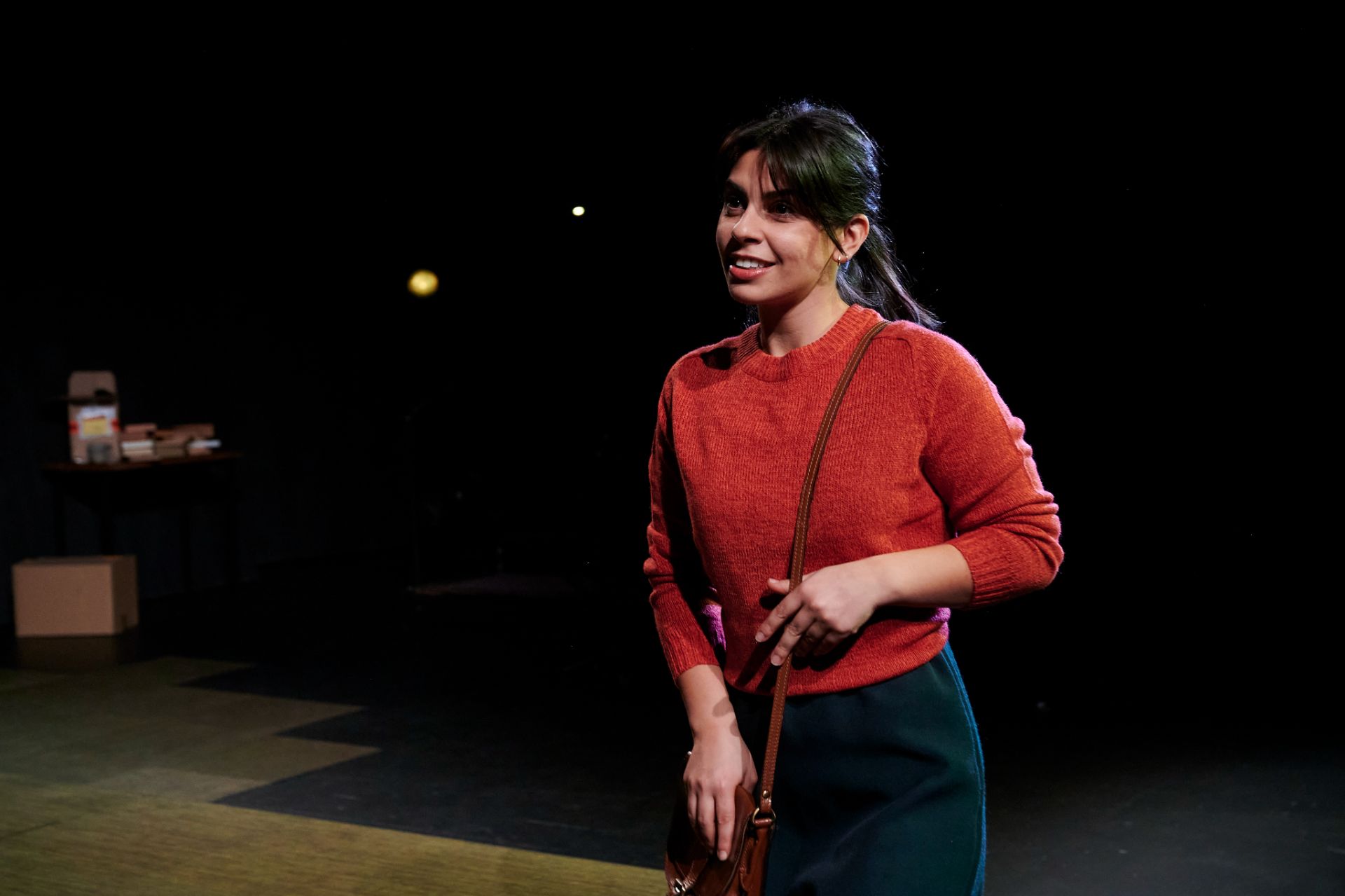
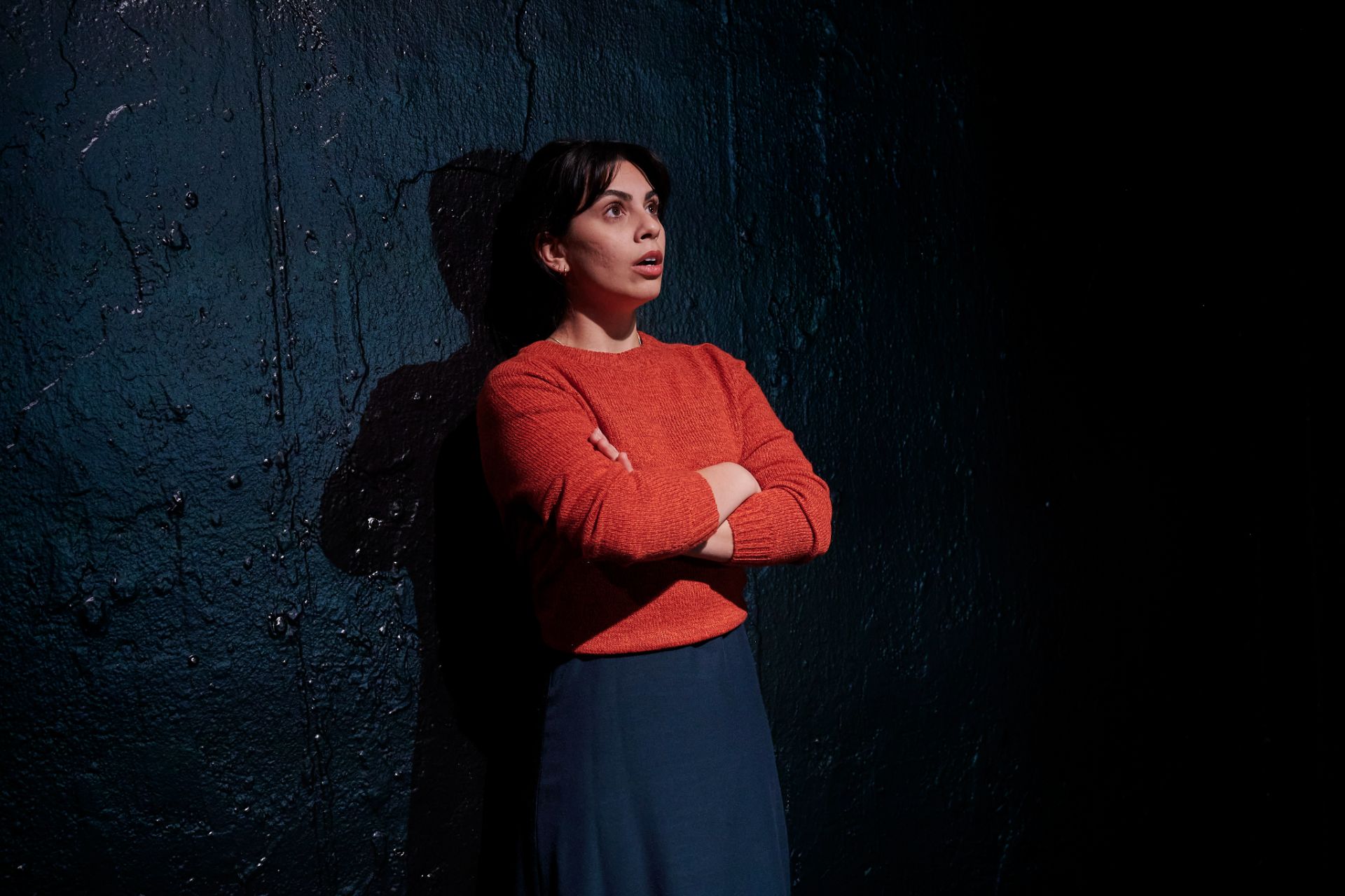
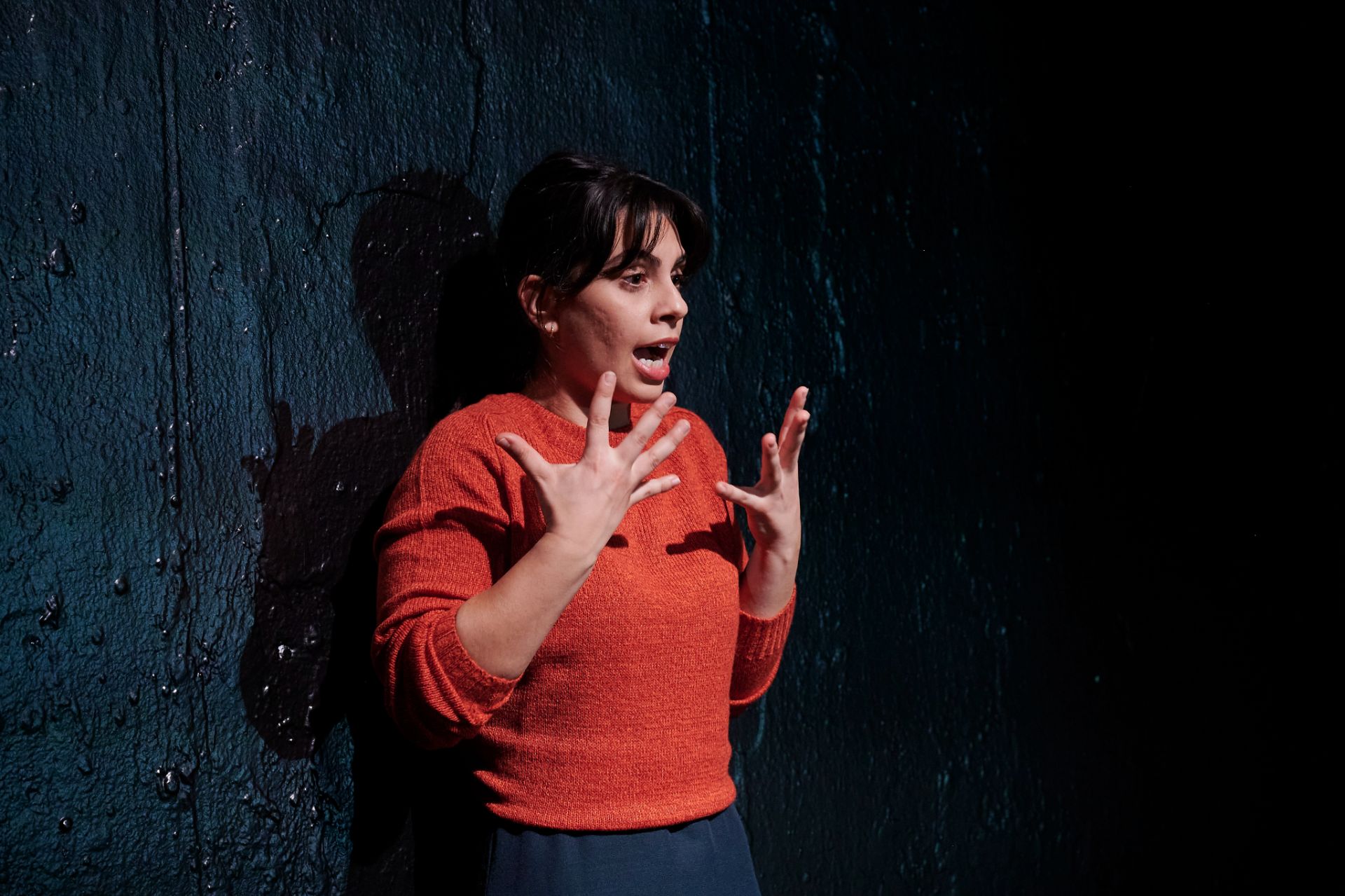
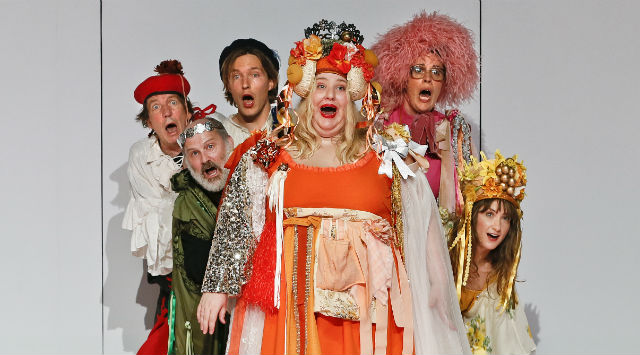
The ensemble is commendable for the gleam it brings to Bloom, with their confident singing and spirited delivery of old-school comedy, ensuring a consistent sense of professionalism. Performer Christie Whelan Browne is especially noteworthy for her flamboyant approach, in the hilarious role of Mrs MacIntyre the dastardly owner of Pine Grove. As staff member Ruby, Vidya Makan’s big voice is a treat and a memorable feature, in a production that has a tendency to feel more than a little tired.

www.sydneytheatre.com.au | www.mtc.com.au

Review: Jacky (Belvoir St Theatre)

Venue: Belvoir St Theatre (Surry Hills NSW), Jan 16 – Feb 2, 2025
Playwright: Declan Furber Gillick
Director: Mark Wilson
Cast: Danny Howard, Mandy McElhinney, Guy Simon, Greg Stone
Images by Stephen Wilson Barker

Theatre review
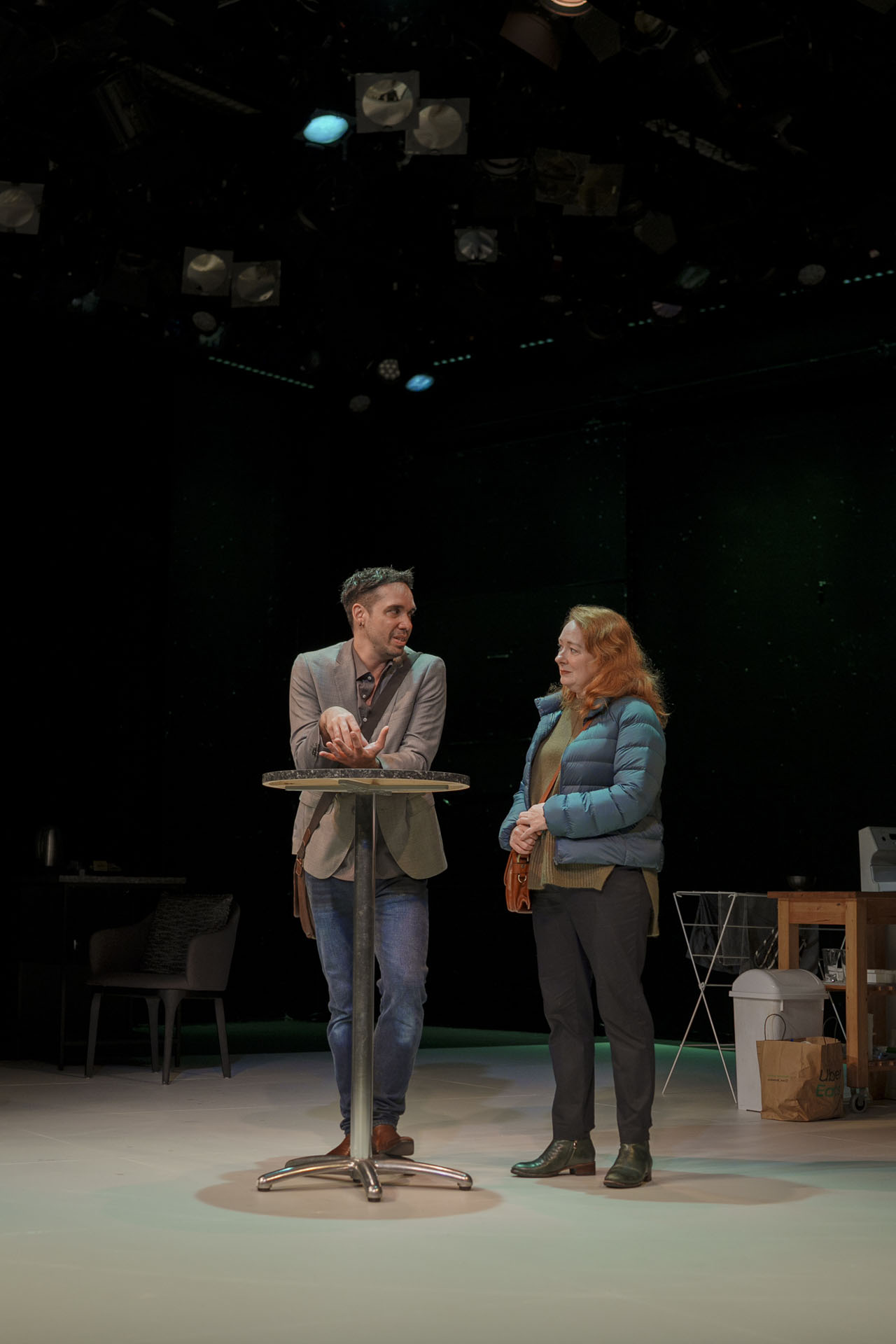
Having moved to the city, and now starting to put down roots, Jacky is hoping to finally be able to buy his home. Even though he is of Indigenous background living on unceded lands, he accepts that the prevailing system requires a lot of jumping through hoops, before he can be granted approval for a loan. In Declan Furber Gillick’s marvellous play Jacky, we watch as the titular character twists and contorts himself into all manner of awkward and humiliating states, in order that he may feel like he is getting ahead in life.

Jacky strives for success and is willing to compromise endlessly his own integrity to attain his dreams. However, the realities of a colonized existence gradually reveal demands that extend beyond his personal sacrifices. Furber Gillick’s writing makes an exceptionally powerful statement about injustice, through a narrative of normative modernity, contextualising contemporary politics in a way that resonates with all. His work is blisteringly spirited, whilst being consistently witty and entertaining, effortlessly holding our attention as it drives home some of the hardest truths about the foundations of our communal life.

Direction by Mark Wilson is commensurately daring, memorable for pushing the delicious but agonising drama to the edge of our nervous limits. Difficult discussions are presented unvarnished, allowing us to consider these matters of national importance with absolute candour. Although unyieldingly serious, the show is often very funny, filled with ironic humour for an experience nothing less than scintillating.

Design elements of the production are all rendered with efficacious simplicity. The set by Christina Smith delivers logical demarcations of performance space. Emily Barrie’s costumes help create believable personalities from everyday life. Lights by Matt Scott, along with sounds by James Henry, offer uncomplicated solutions that signal movements in time and space.

Leading man Guy Simon sets the tone with restraint and charisma. His minimalist style of presentation is thoroughly mesmerizing, perhaps due to the contrast with the many provocative situations Jacky finds himself in. Simon articulates perfectly the immense complexities involved, when Indigeneity has to navigate structures that are fundamentally about the entrenchment of white supremacy. 

Danny Howard plays Jacky’s brother Keith, with wonderful effervescence and disarming depth. An admirably nuanced Mandy McElhinney in the role of Linda confronts the values of our white middle class, asking troubling questions about whether a person can survive the economy, without furthering racist agendas. Greg Stone is fearless as Glen as he demonstrates most convincingly, the extent to which racism can appear so benign yet be so damaging.

Linda and Glen are entirely oblivious to the hurt and harm they cause, in fact they only ever think of themselves as being generous and helpful. We see in them, the familiar intention to do good, followed by a painful observation of devastating results. We are reminded of the famous words from American activist Audre Lorde, that “the master’s tools will never dismantle the master’s house”. In Jacky it can be seen so clearly, the very real problems that hold us back, and only if we really want to, we can detect the solutions that Jacky provides.

www.belvoir.com.au | www.mtc.com.au

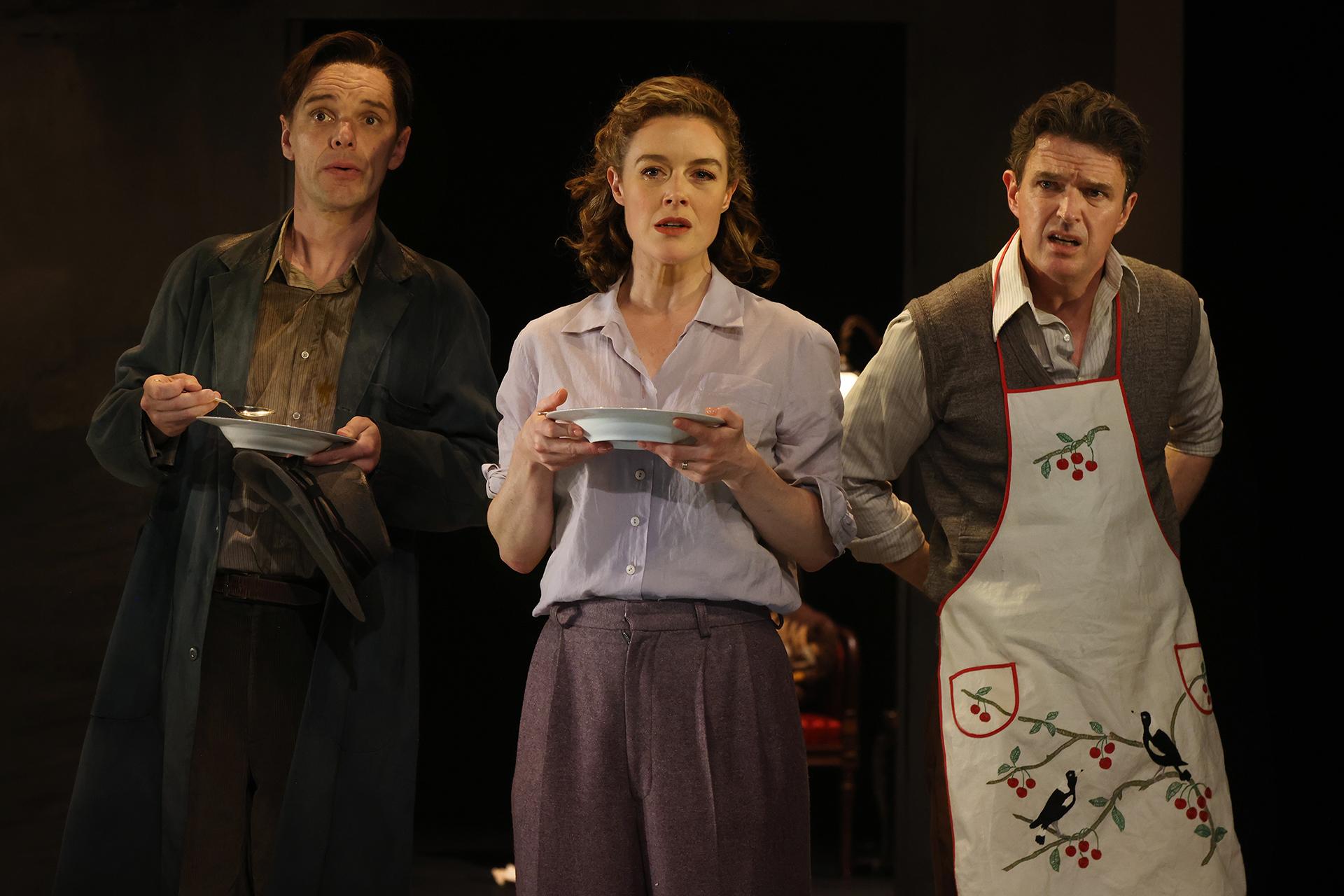
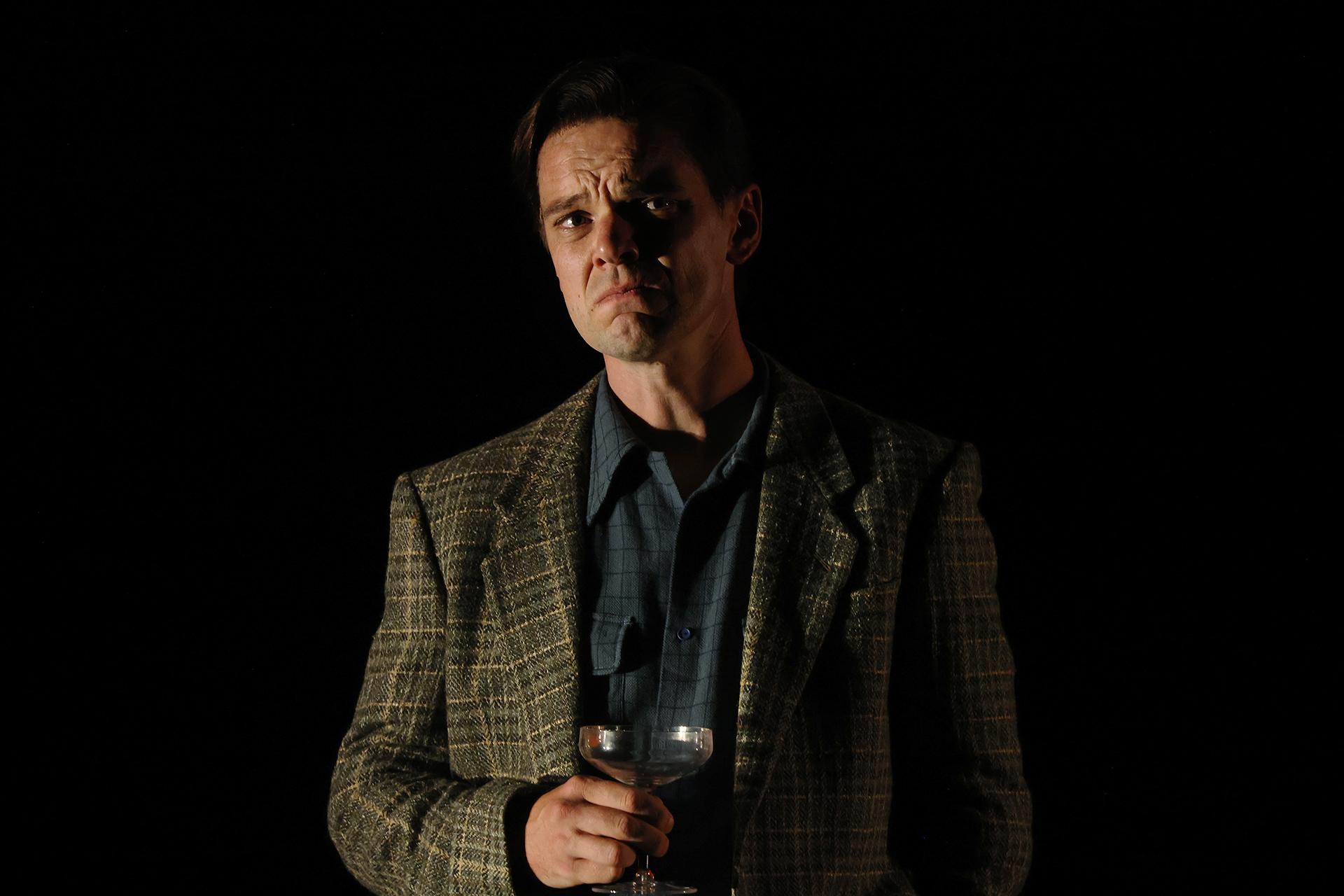
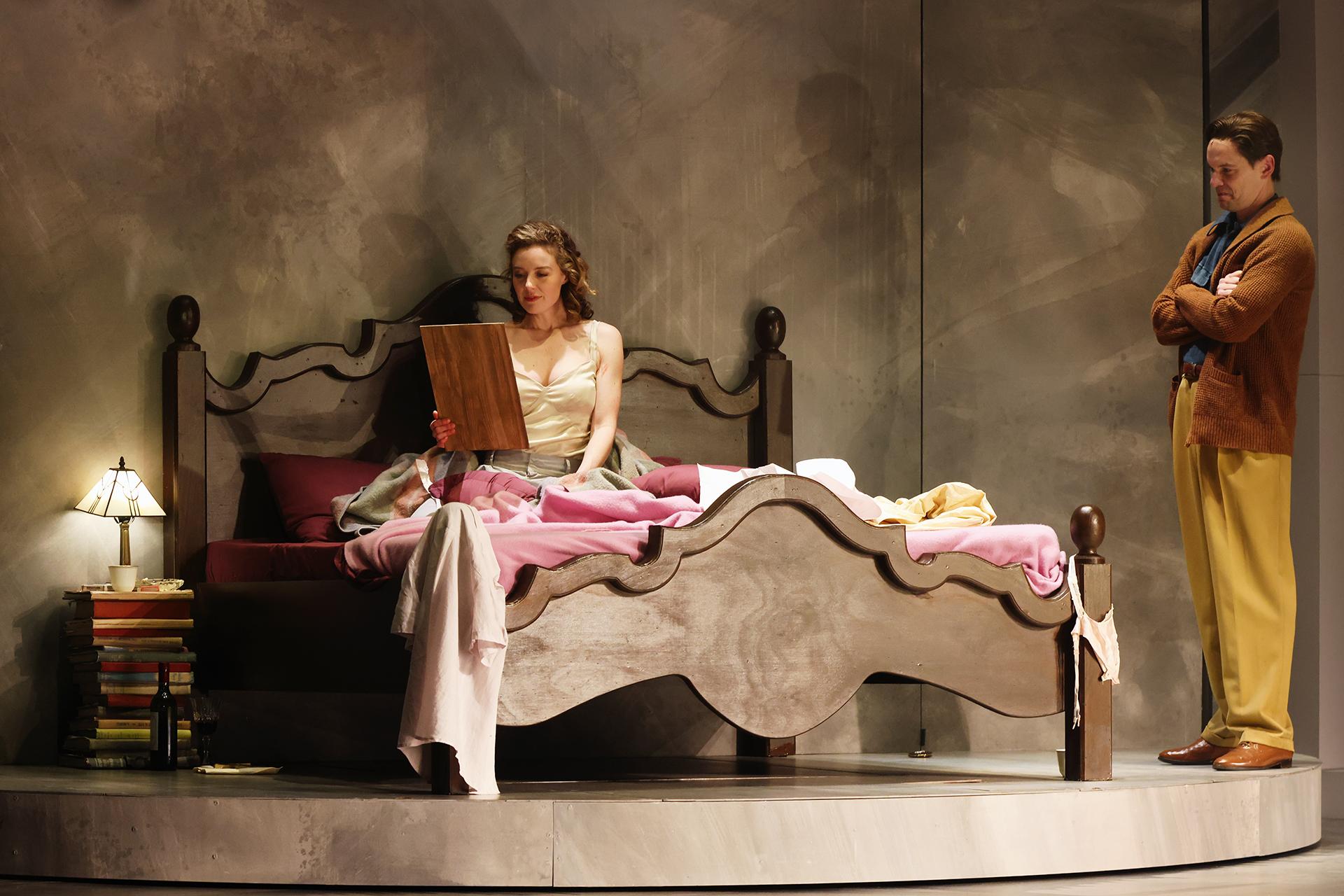
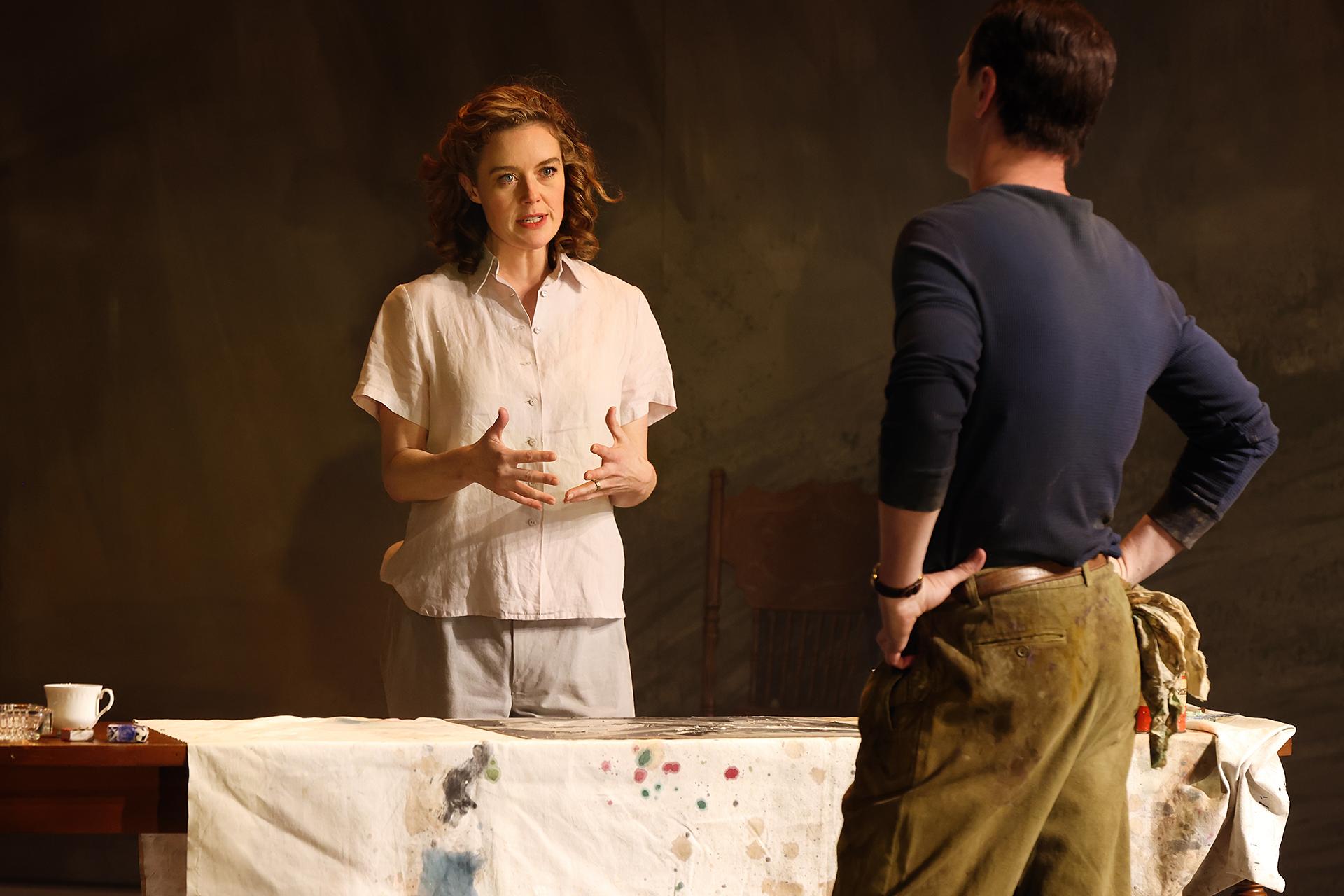
Review: Sunday (Sydney Theatre Company/Melbourne Theatre Company)

Venue: Sydney Opera House (Sydney NSW), Nov 28 – Dec 7, 2024
Playwright: Anthony Weigh
Director: Sarah Goodes
Cast: Matt Day, Jude Hyland, Ratidzo Mambo, James O’Connell, Nikki Shiels
Images by Prudence Upton

Theatre review
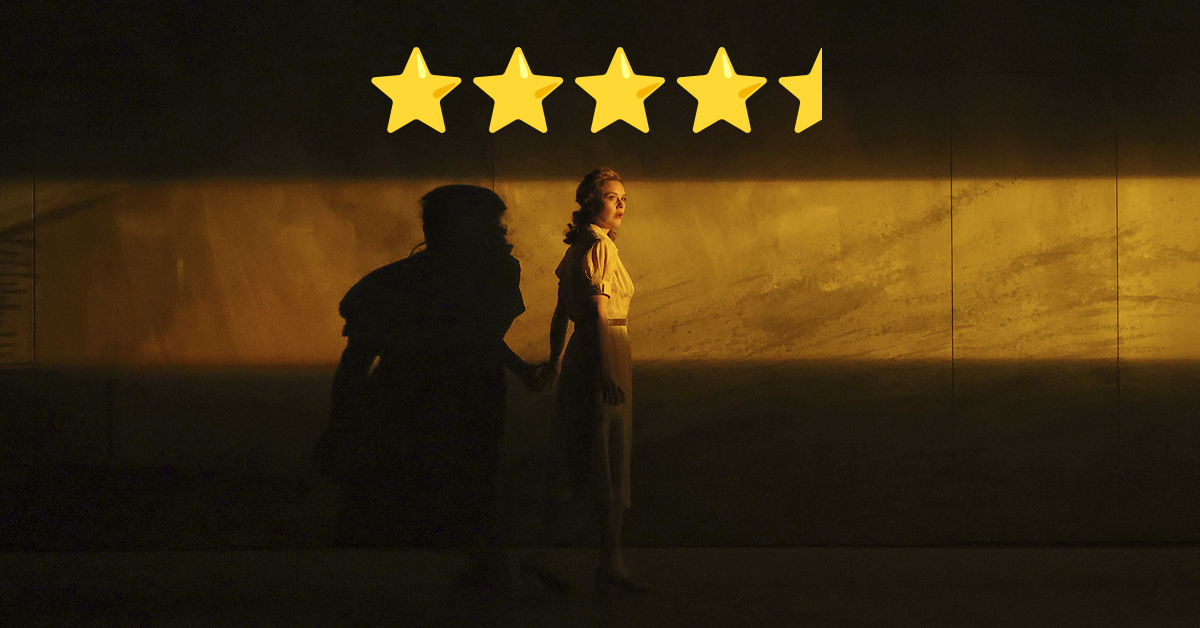
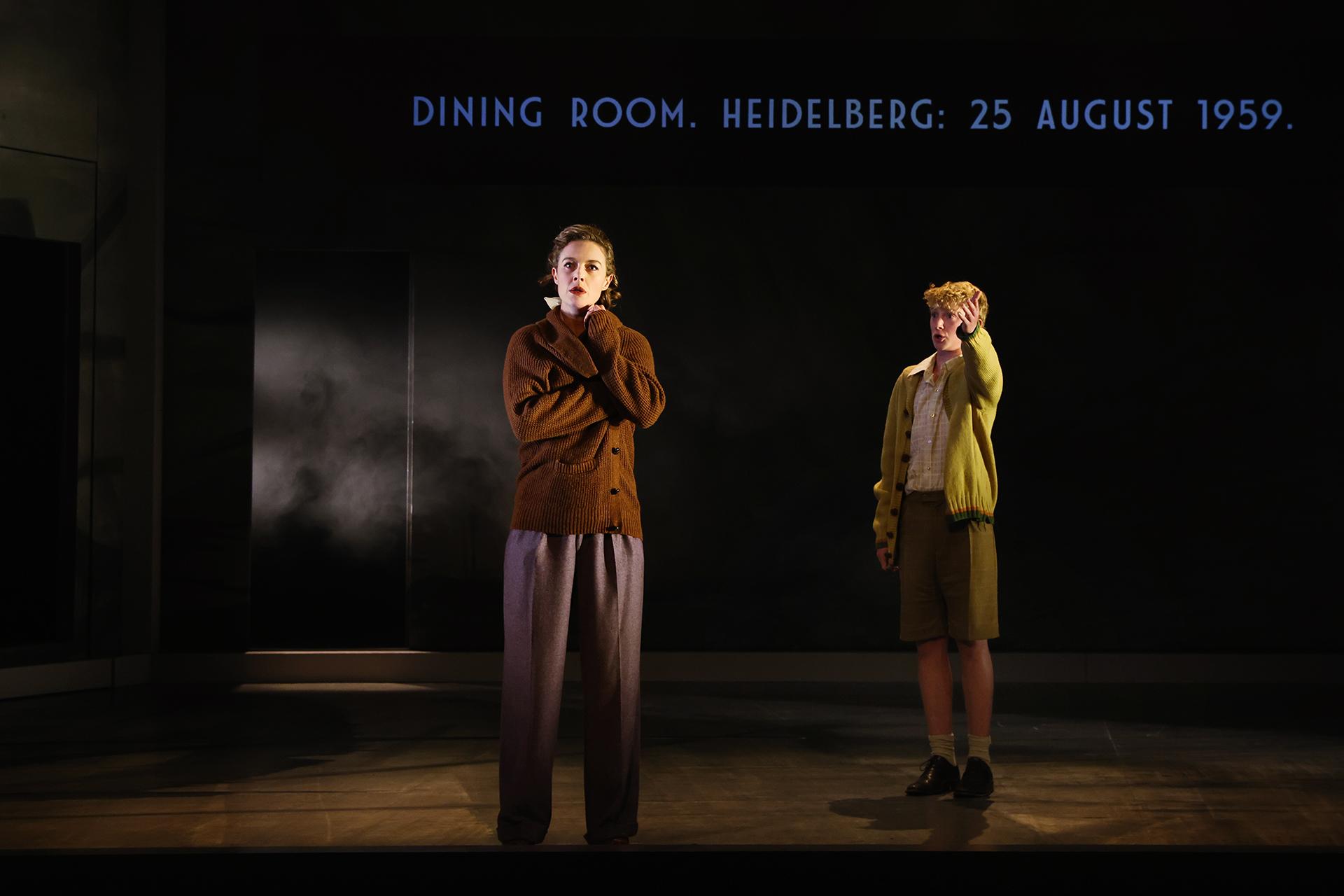
It was the 1930s and Sunday Reed wore trousers. Obviously unafraid of controversy, she had courted a life of affluent bohemia, at a time when being a patron of the arts did not preclude one from more unconventional or perhaps, scandalous pursuits. No doubt her ménage à trois with husband John Reed and now legendary painter Sidney Nolan would have raised more than a few eyebrows, the Reeds were nonetheless celebrated for supporting the careers of prominent artists through their establishment of the Heide Circle.

Anthony Weigh’s Sunday offers a glimpse into the heady days of our heroine’s life as philanthropist and muse, paying particular attention to the years during which Nolan had played a significant part. Weigh’s writing is passionate and incisive, for a sprawling tale spanning more than two decades. Sections venture into the granularity of art philosophy that may not appeal to wider audiences, but Sunday‘s explorations of an unorthodox romance is certainly fascinating.

Directed by Sarah Goodes, the staging is a spirited showcase of a woman’s experience of privilege and autonomy, at a time when gender roles remained strictly prescribed. It is in many ways an inspiring portrait, not only of the daring choices made by a woman, but also of the tacit acceptance of her radical approach to life, by the men around her. Sunday Reed is presented as brilliant, but also flawed, which somewhat perversely makes her story all the more intriguing.

Nikki Shiels is our marvellous leading lady, authoritative and robust in her depictions of a complex personality, rigorously persuasive with all that she manifests. Highly dramatic but also irreproachably detailed, it is a performance that is as provocative as it is captivating, demanding both our focus and intellect. Matt Day brings relentless charm to the part of John Reed, memorable for a lightness of touch that conveys a great deal of sophistication, in a play that communicates with gratifying maturity. In the role of Sidney Nolan is James O’Connell, whose journey from naivety to self-assuredness is charted with evident diligence alongside an admirable grace. Jude Hyland and Ratidzo Mambo as Sweeney Reed and Joy Hester respectively, surprise with the gravity they introduce, notwithstanding the brevity of their appearances.

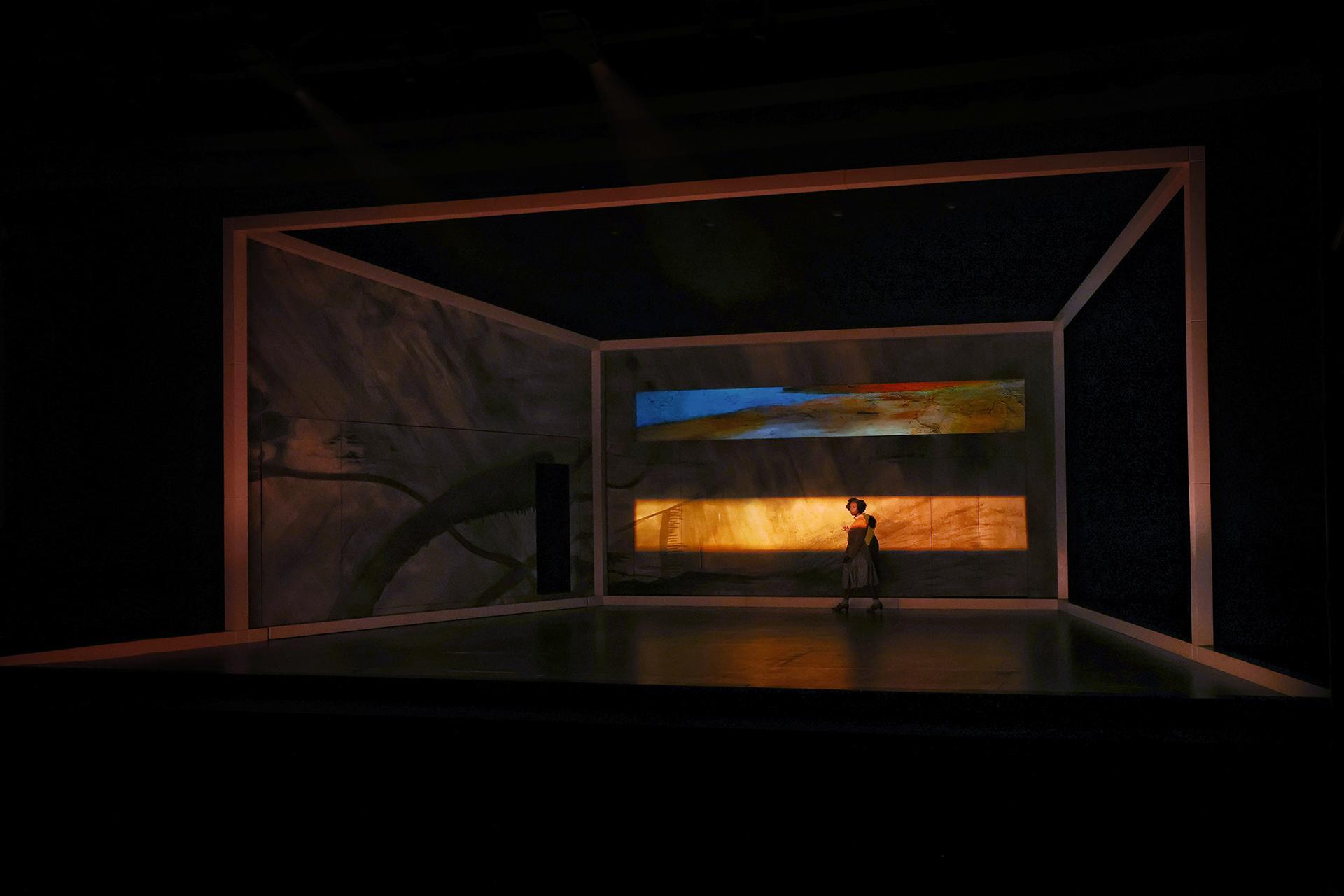
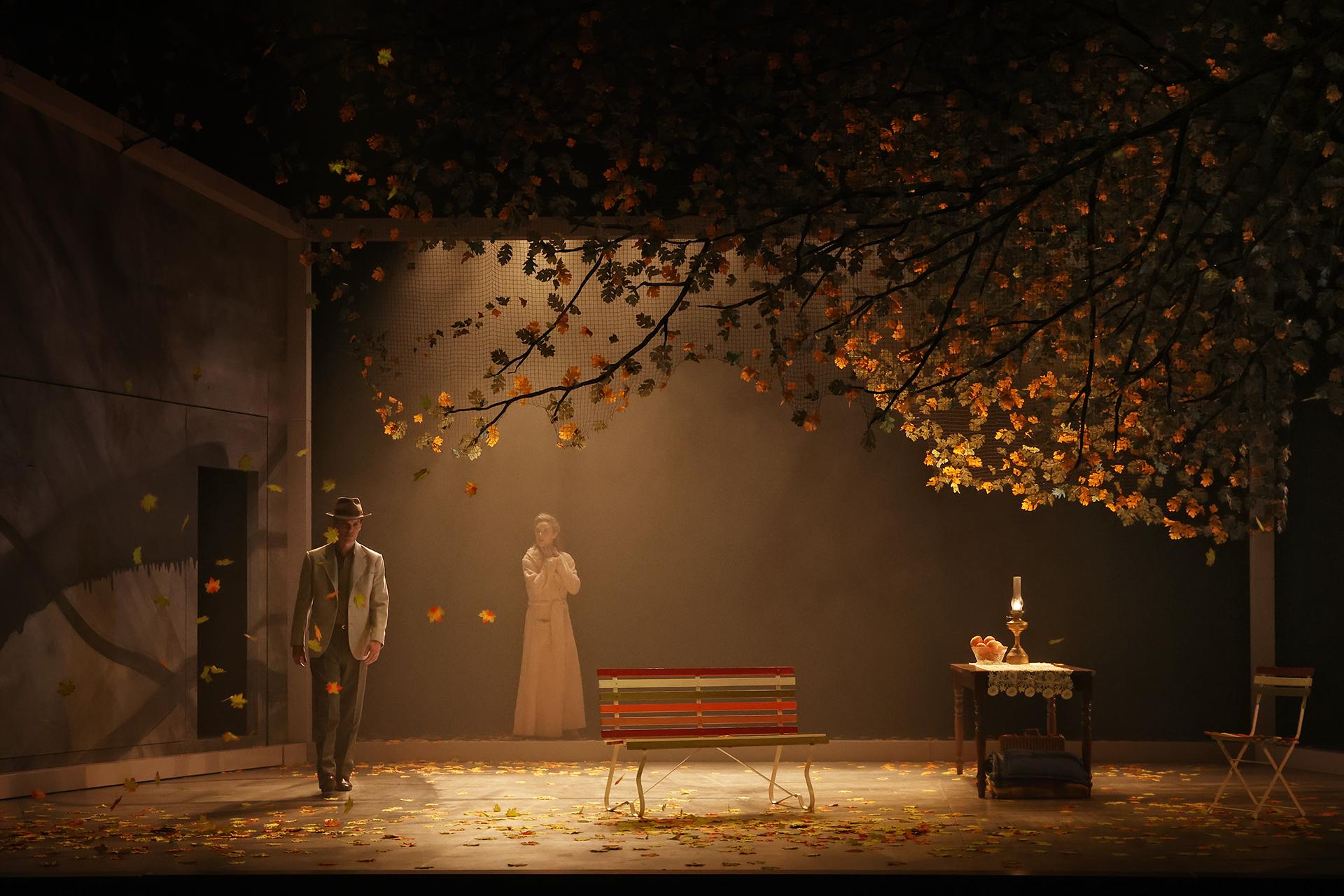
Set design by Anna Cordingley is appropriately painterly with the textures it incorporates, and paired with lights by Paul Jackson, there is an unmistakeable delicacy to the beauty being harnessed, for a tale that often talks about aesthetics as a central value defining our ways of being. Impressively detailed costumes by Harriet Oxley transports us in time and in sensibility, to invite contemplation on our recent history, especially in terms of class and gender. Sublime work by composer Jethro Woodward includes unforgettable moments in the most exquisite of jazz forms, as well as some truly entrancing sound effects that get us completely invested in all the delicious tumult of Sunday.

The wealthy will always have inordinate influence on the architecture of our collective lives. The Reeds were a dominant force in our artistic landscape in a modern and colonised Australia, not only making decisions about who to foreground, but also on what the agenda looks like. Along with the ability to circumvent societal norms, it is that insidious impact on others, that defines power. One imagines that rich white women can do anything, and Sunday Reed certainly dared to reach for the stars.

www.sydneytheatre.com.au

Review: Is God Is (Sydney Theatre Company)

Venue: Wharf 1 Sydney Theatre Company (Walsh Bay NSW), Sep 15 – Oct 21, 2023
Playwright: Aleshea Harris
Directors: Zindzi Okenyo, Shari Sebbens
Cast: Henrietta Enyonam Amevor, Clare Chihambakwe, Kevin Copeland, Masego Pitso, Cessalee Stovall, Darius Williams, Patrick Williams, Grant Young
Images by Pia Johnson

Theatre review

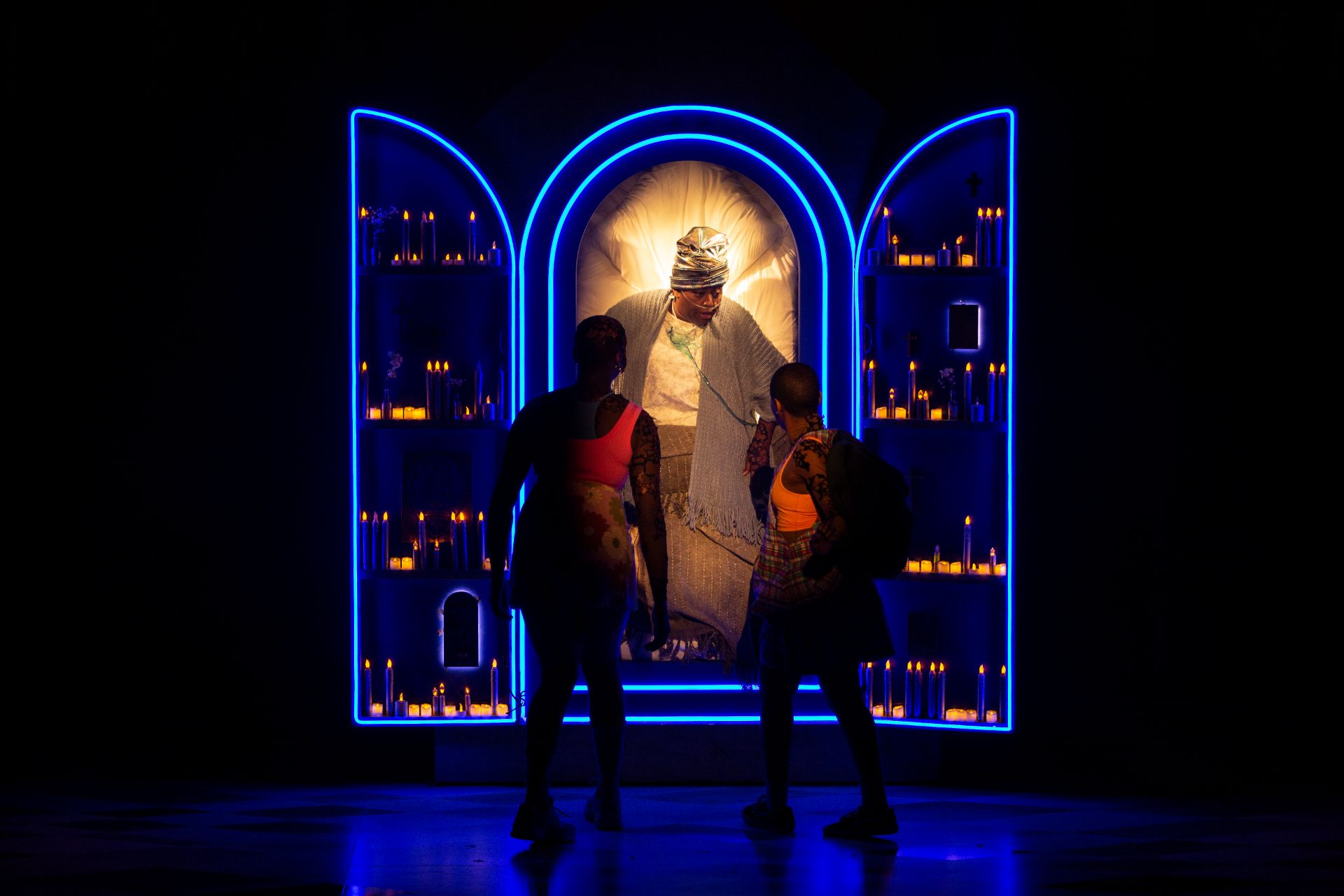
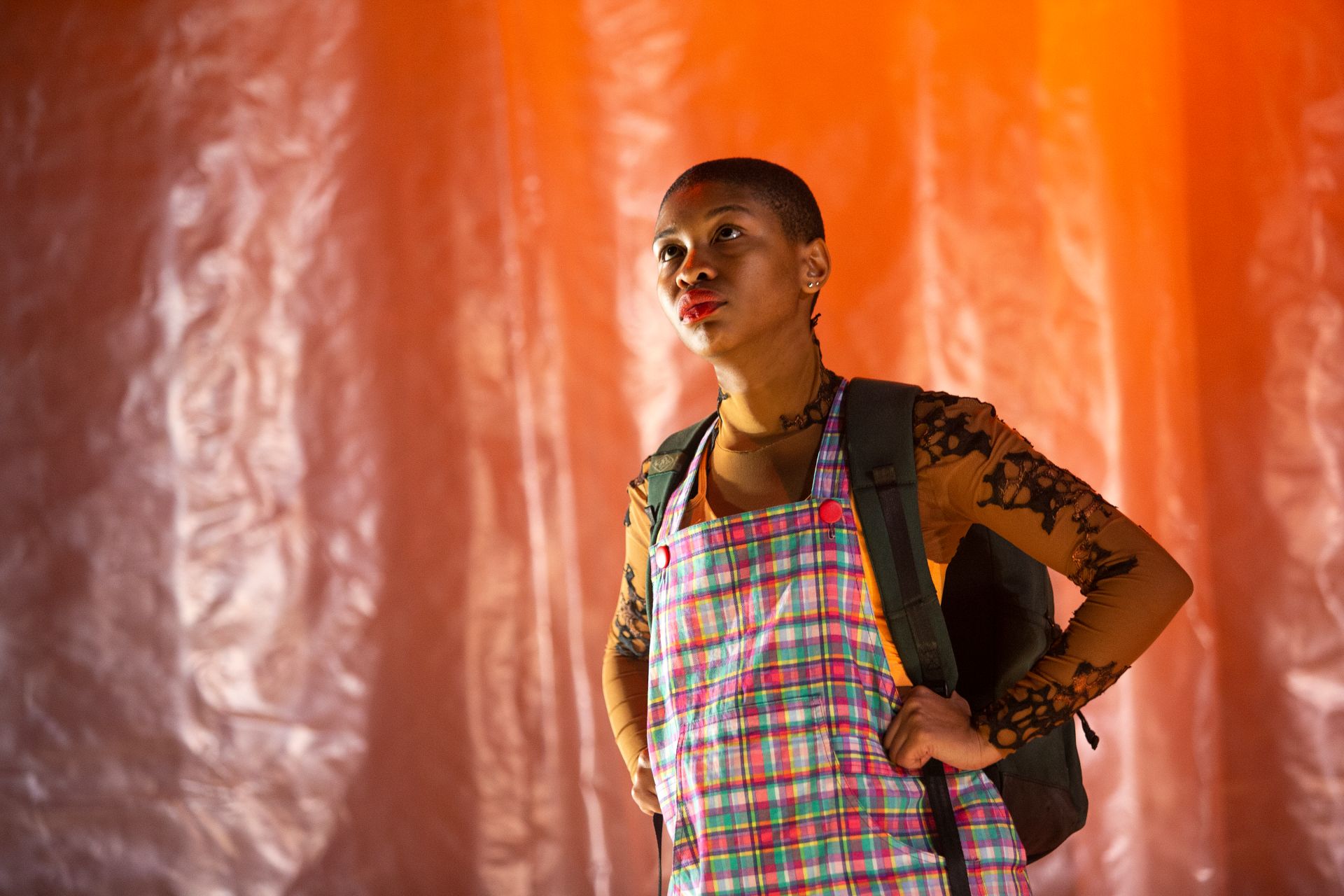
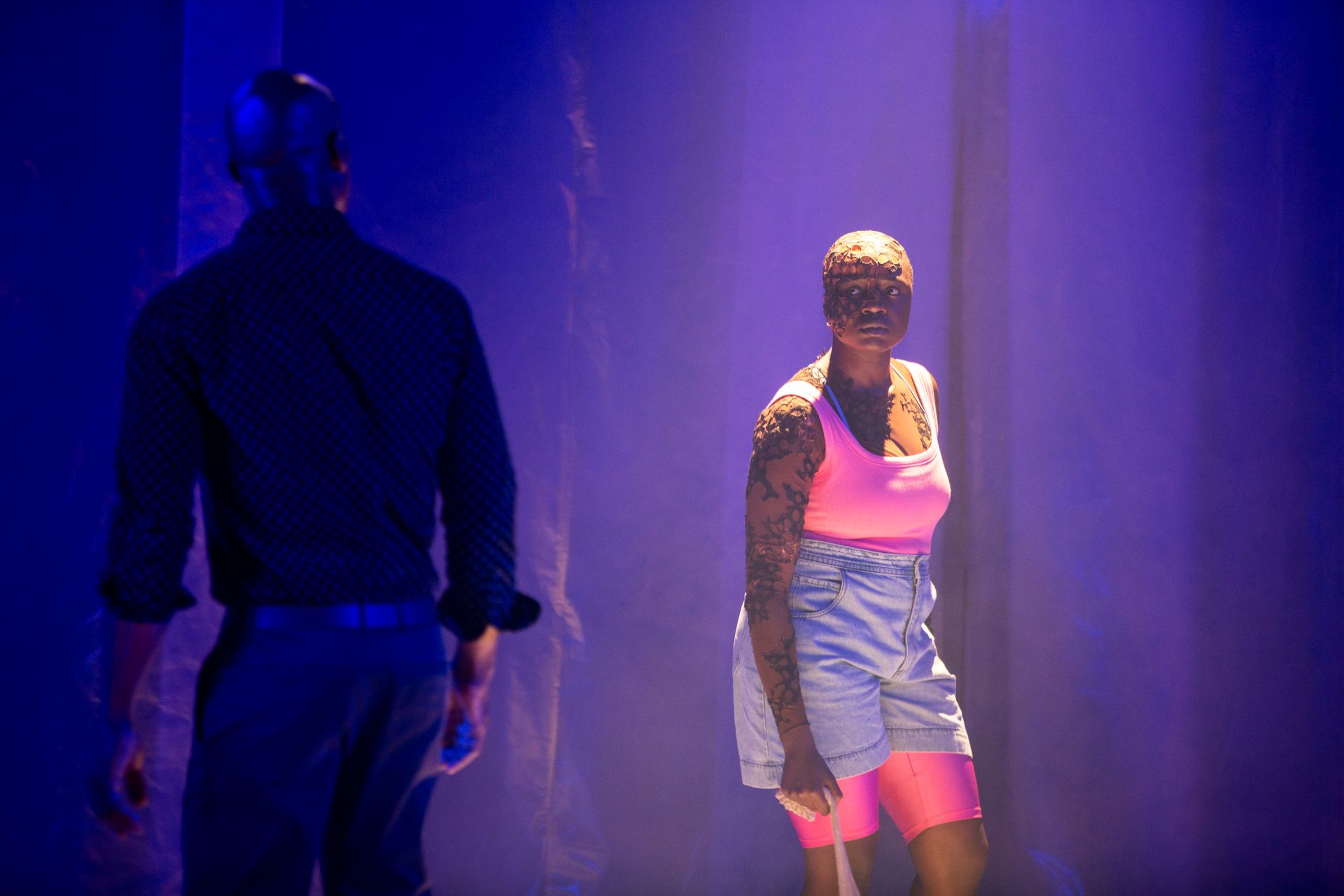
Racine and Anaia are heavily scarred, by cruel and neglectful parents who seem to know nothing about nurturing or caring for their children. Left to their own devices, the twin sisters can only understand the world as violent and savage, as we watch them embark on an odyssey of murder, in Aleshea Harris’ Is God Is. A revenge fantasy filled with wild imagination and scintillating humour, the play is both terrifying and hilarious, in its portrayals of wayward youth, unhinged femininity and recalcitrant Blackness. The United States have never looked so subversive.

Directed by Zindzi Okenyo and Shari Sebbens, Is God Is delivers delicious humour, keeping us on the edges of our seats with unpredictable characters, who prove to be truly and thoroughly intriguing. There is nothing normal about Racine and Anaia’s lives, and seeing things through their eyes, means a completely fascinating, and dangerous, experience.

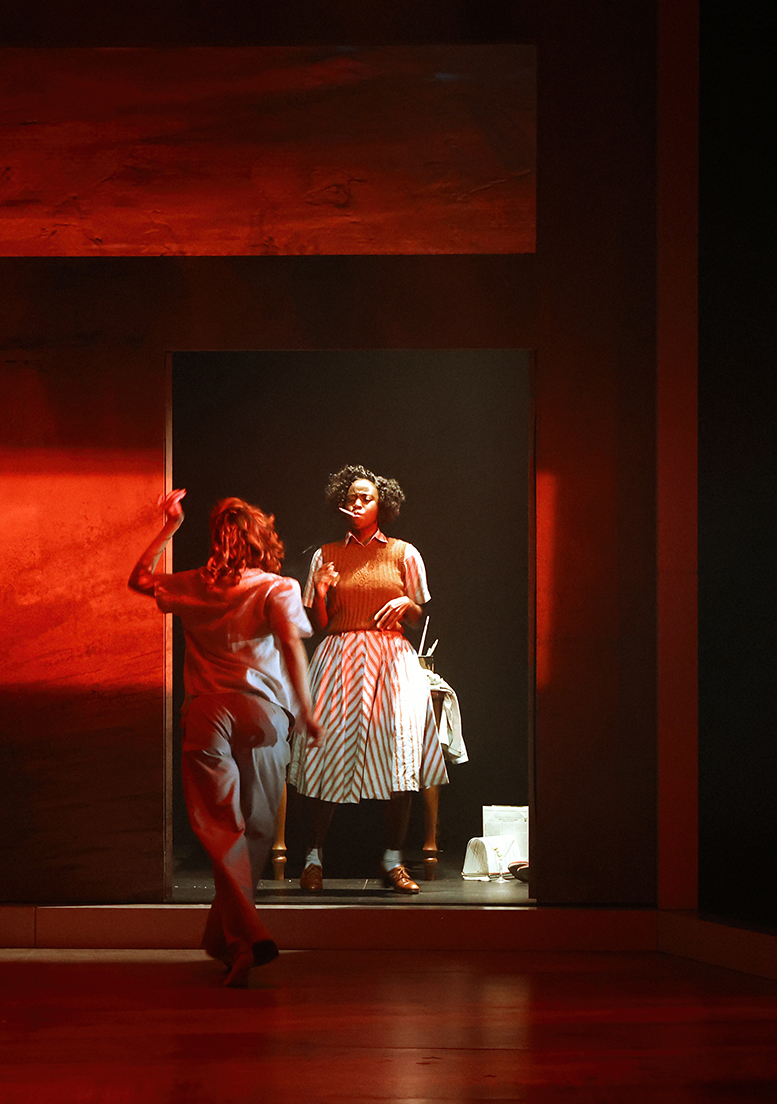
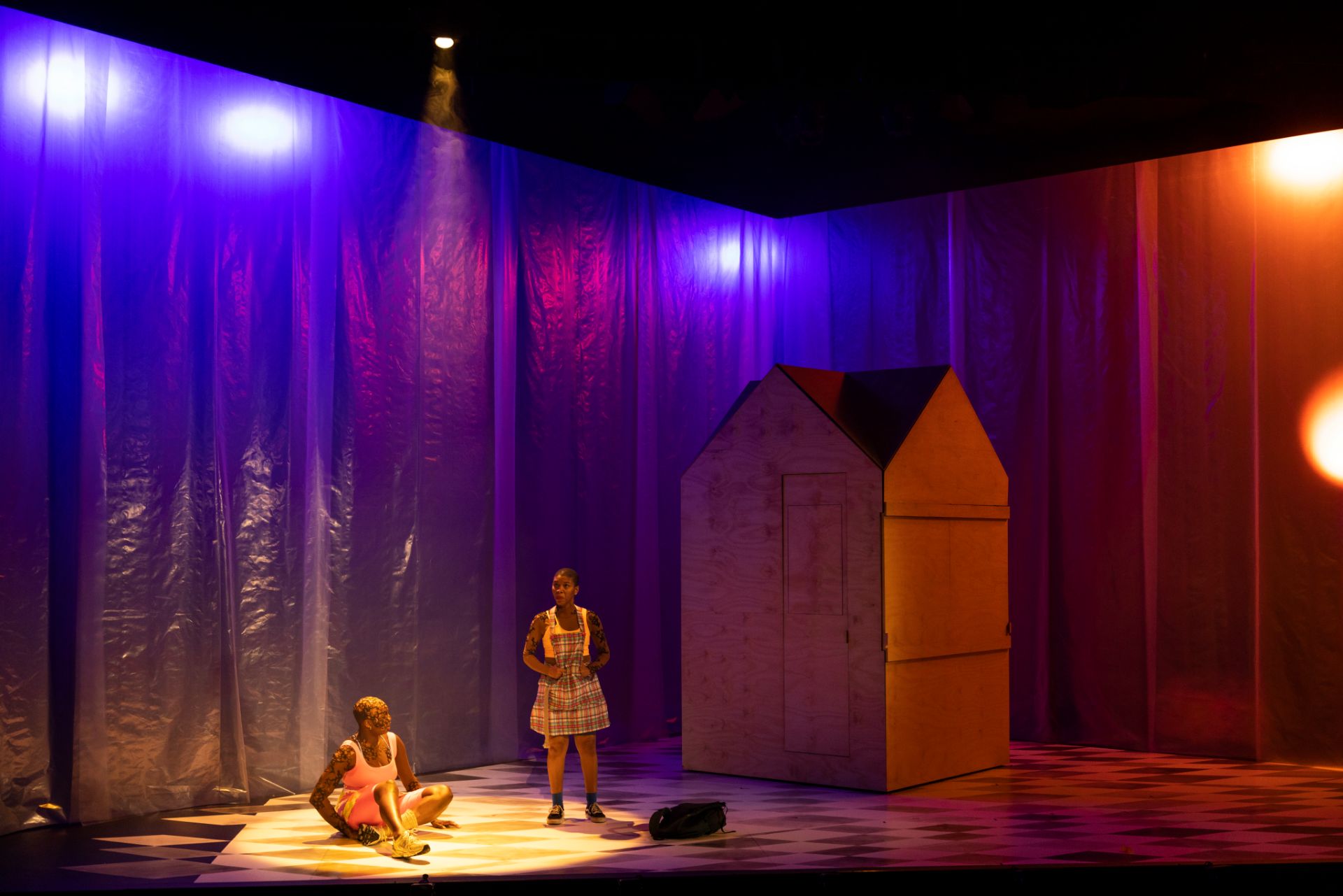
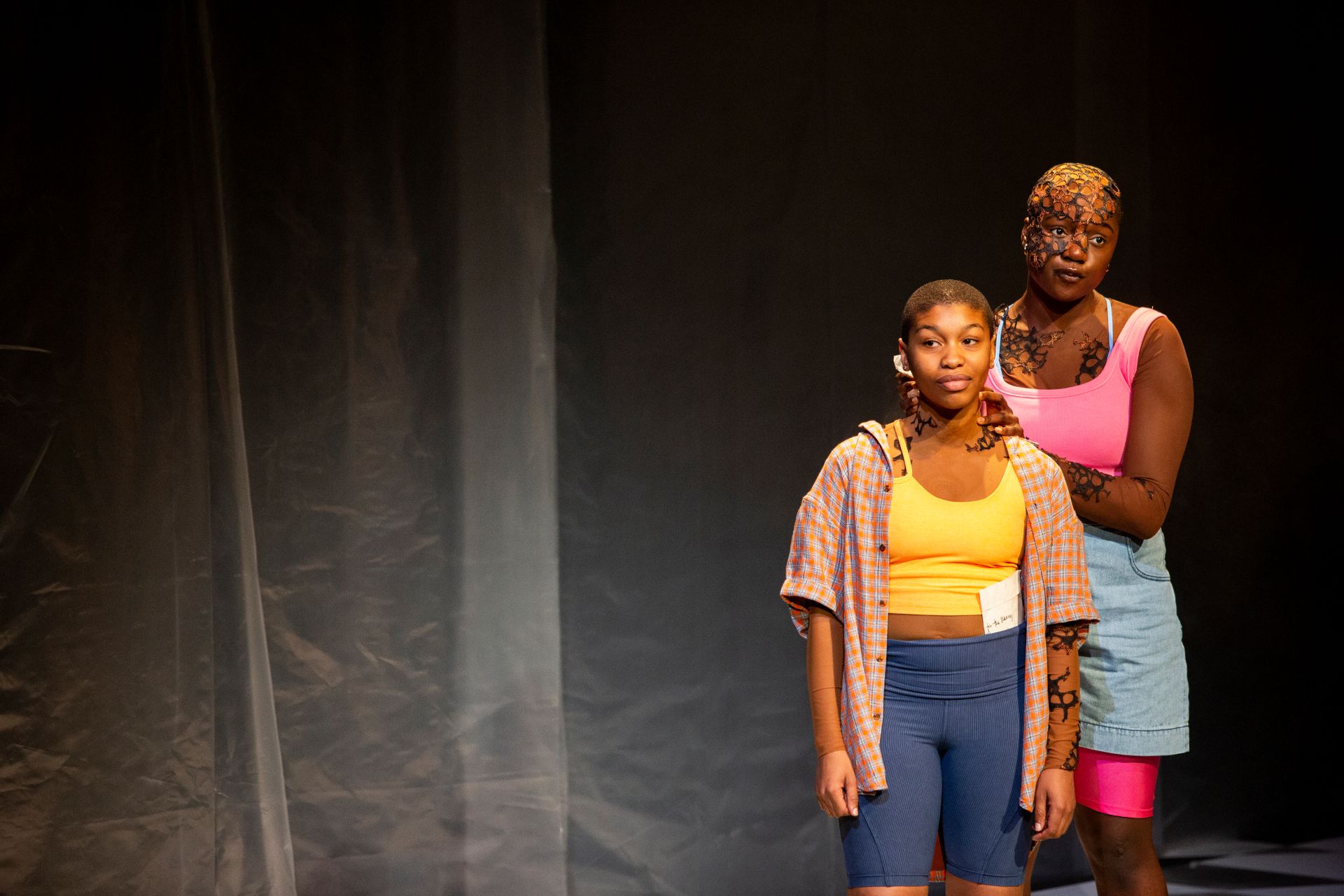
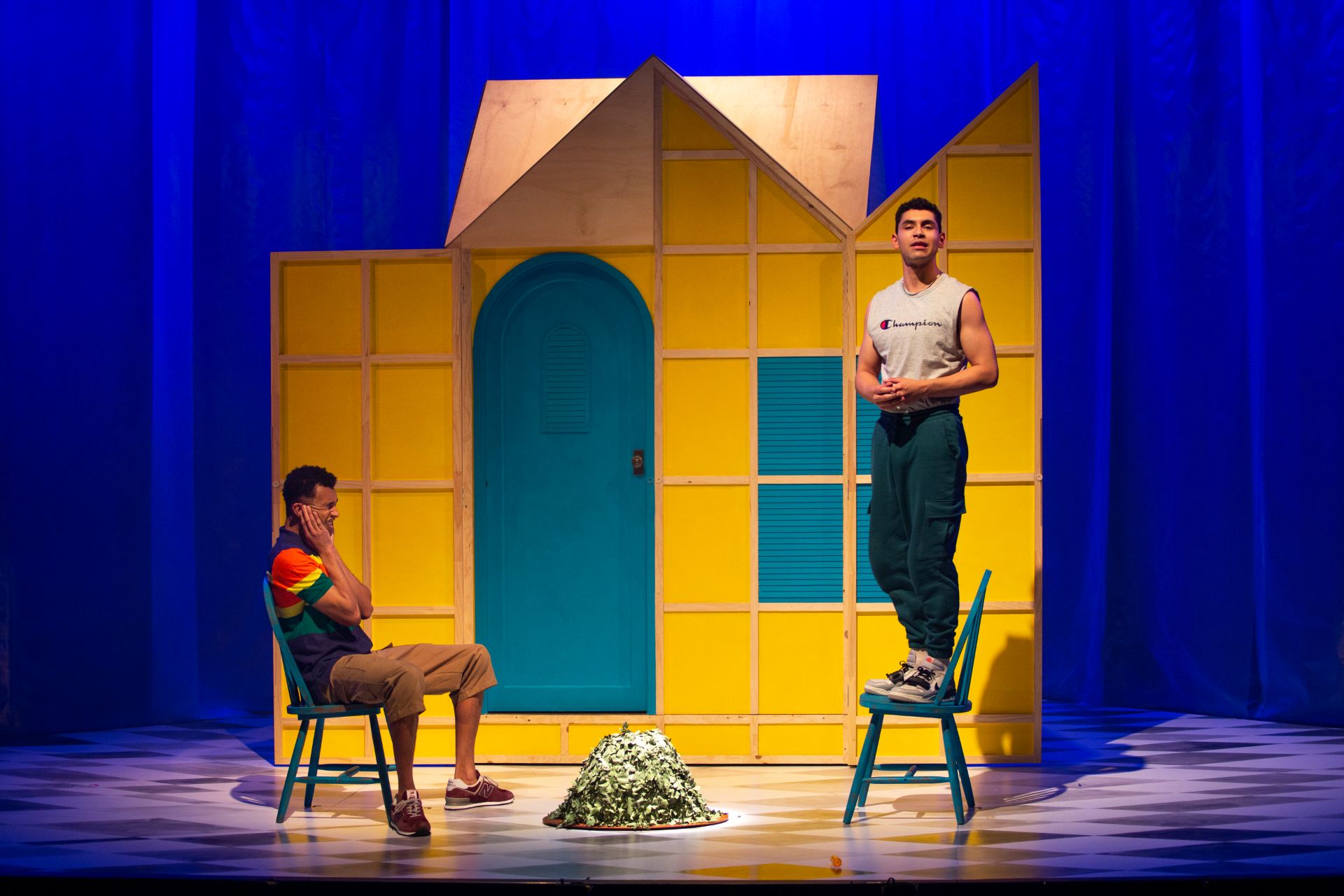
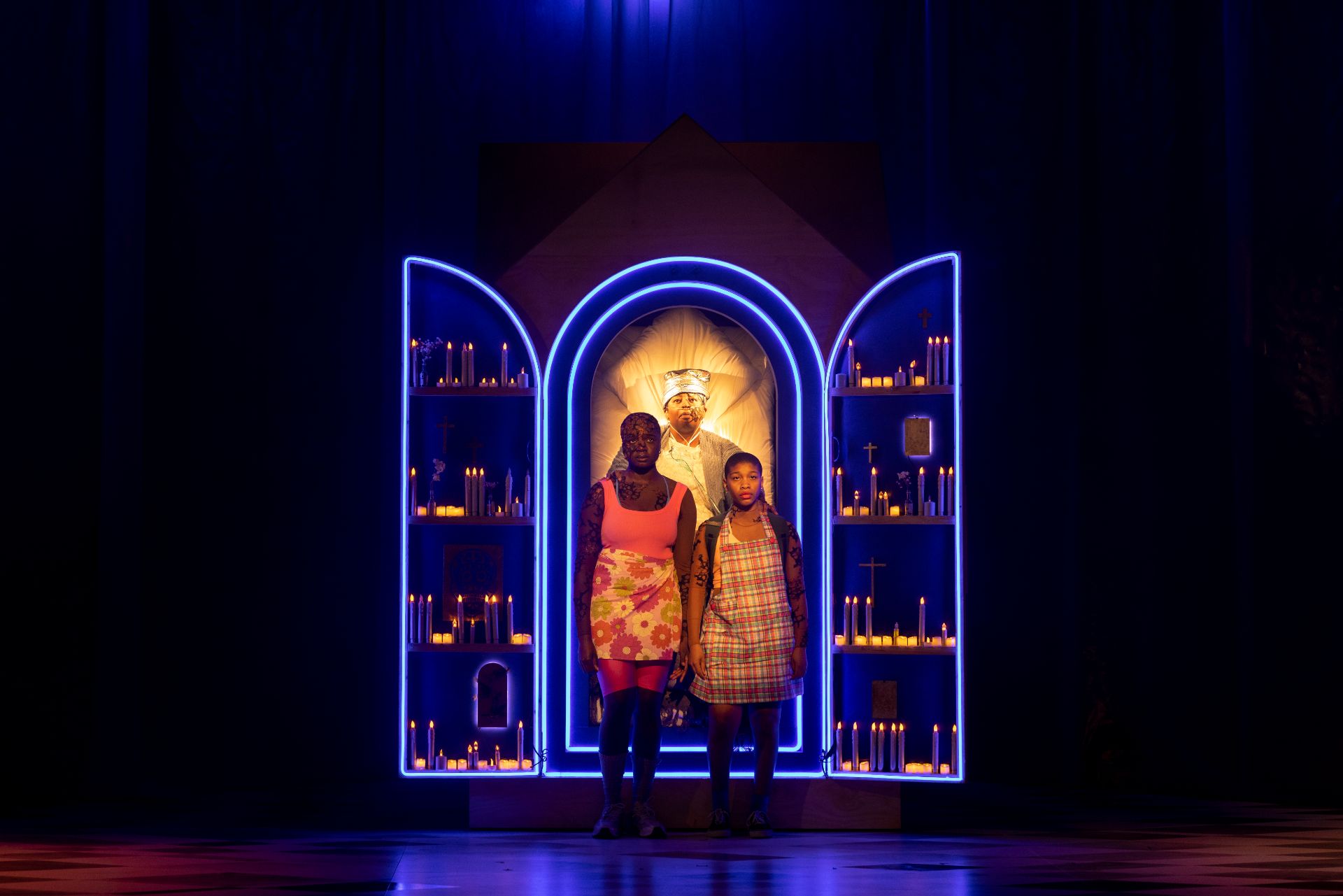
Costumes by Renée Mulder conjure imagery of ruined innocence, offering a childlike perspective, but one in a state of decay, as a constant reminder of the story’s despairing centre. Mulder’s set design involves a protean structure evoking notions of home, establishing for the production a whimsical style that draws parallels with the much more wholesome fare of juvenile television programming. Lights by Jenny Hector help manufacture drama, but is somewhat lacking when required to convey a sense of macabre during key moments of repugnance, for this occasion of genre theatre. Sounds and music are effectively rendered, by Joe Paradise Lui, to ensure that we navigate the varying tones of the production, as it slips and slides ever so subtly between comedy and horror.

Henrietta Enyonam Amevor and Masego Pitso play Anaia and Racine respectively, both actors vivacious and charismatic, able to blend naivety with brutality, for their confronting depictions of civilisation in disarray. The troubling pair’s mother is performed by Cessalee Stovall, who guides us to the truthful core of Is God Is, without sparing us the necessary discomfort of having to acknowledge the pain in that truth. Also remarkable is Darius Williams, who as the grandiose poet Scotch, gives us some of the biggest laughs, in a fabulous acerbic take on youthful and misguided masculinity. It is a marvellous cast, with each individual leaving an excellent impression with the complexities they introduce, along with the sheer entertainment they manufacture, for this very dark tale.

It only makes sense, that the most audacious fantasies should come from the most marginalised. Young, Black women are routinely underestimated, diminished and shunned. Being the very antithesis and embodiment of that which is pale, male, stale and therefore most highly valued, their perspective from a position diametrically opposite to the hegemony, is what will reveal the most of our ills. Is God Is may not choose to engage directly or explicitly with all our social issues, but just to have art of this nature materialise, is an indication of our capacity to shift, and a reminder that culture is always malleable.

www.sydneytheatre.com.au | www.mtc.com.au

Review: Lady Day At Emerson’s Bar & Grill  (Belvoir St Theatre)

Venue: Belvoir St Theatre (Surry Hills NSW), Sep 14 – Oct 15, 2023
Playwright: Lanie Robertson
Director: Mitchell Butel
Cast: Zahra Newman with Kym Purling, Victor Rounds, Calvin Welch
Images by Matt Byrne

Theatre review
Jazz legend Billie Holiday is performing at a bar in Philadelphia, several years after being incarcerated in that same city, and finds herself unable to maintain composure, as the worst times of her life come flooding back. In Lanie Robertson’s Lady Day at Emerson’s Bar & Grill, the diva unravels before our eyes, disclosing the innumerable traumatic events she had suffered, as a Black woman surviving 20th century America. She sings her songs to perfection, but is completely guileless in between numbers,  defenceless to a degree that is almost humiliating in her revelations. Such is the nature of art. It demands such honesty and vulnerability from the creator, that we witness her disintegrating even as she fulfils her destiny, as one of the world’s foremost singers of the modern era.

The tragedy is both heartbreaking and beautiful, under Mitchell Butel’s direction. Amidst the unbridled distress, is a star who retains her independence and agency, maybe not always making the best choices, but owning every one of them. Butel manufactures a theatrical glamour that helps us lionise Holiday, to see that we can celebrate the totality of her, that flaws in her biography cannot be divorced from her immense legacy, and that where she does flounder is indeed largely a consequence of social injustice, rather than of personal deficiencies.

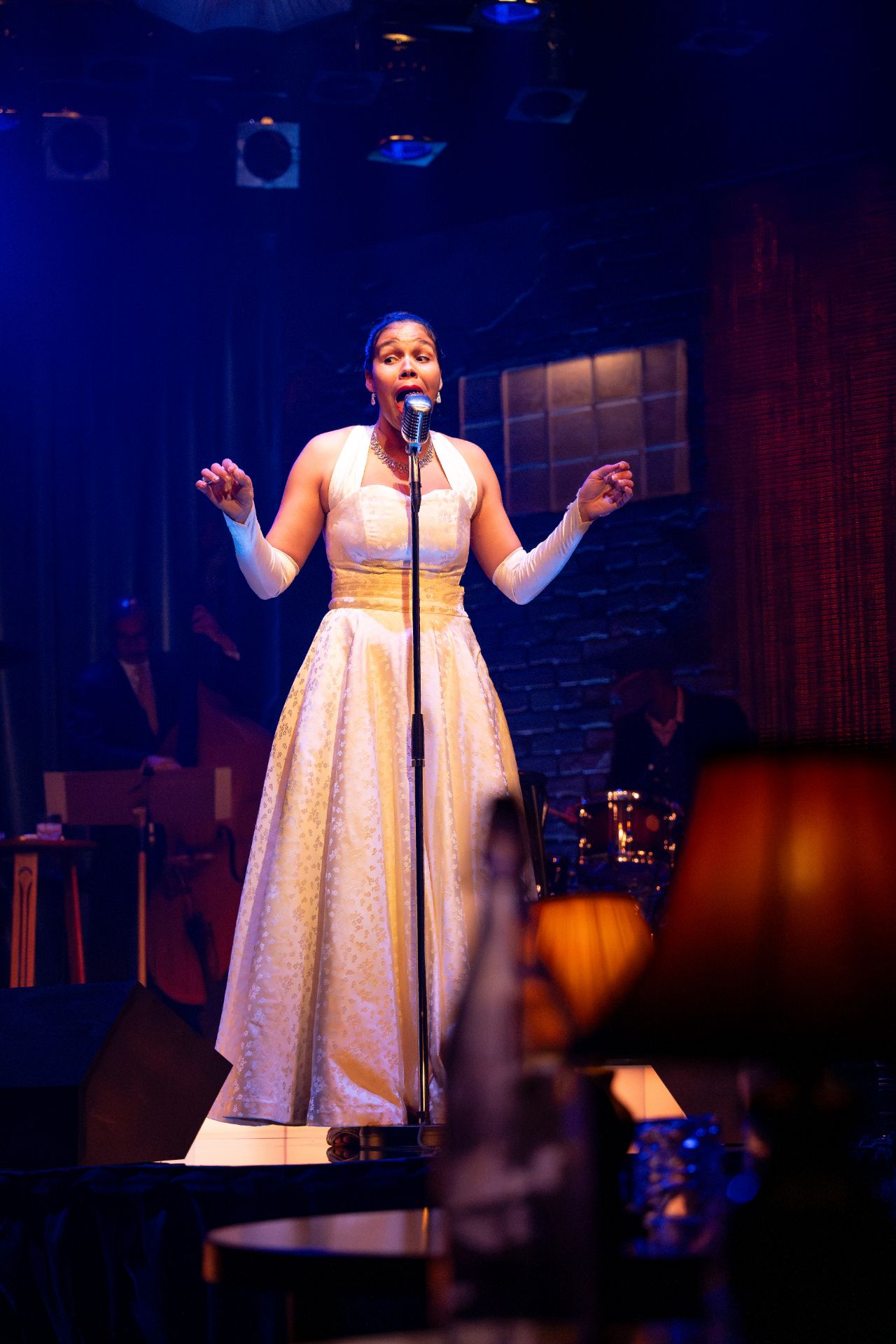
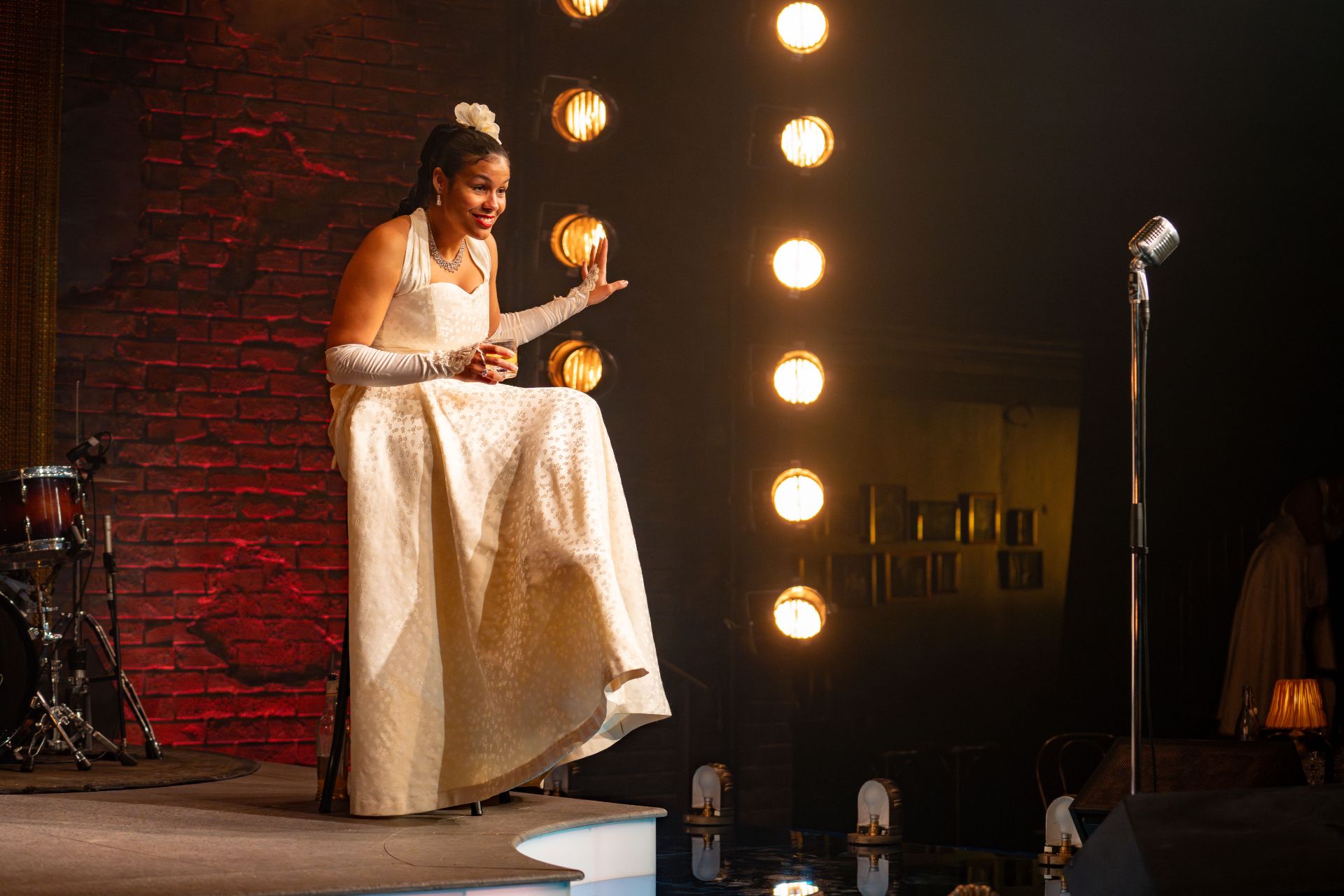
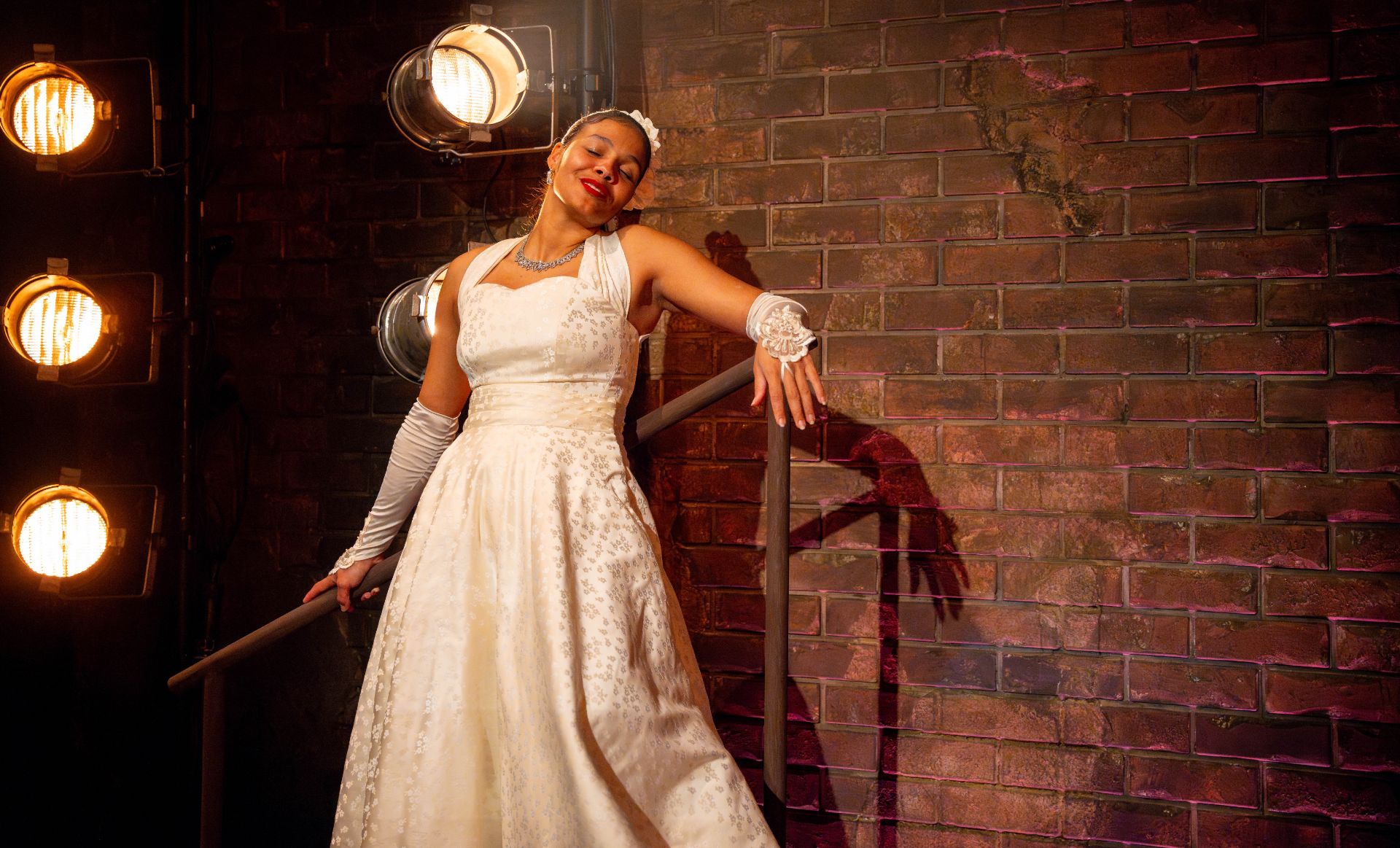
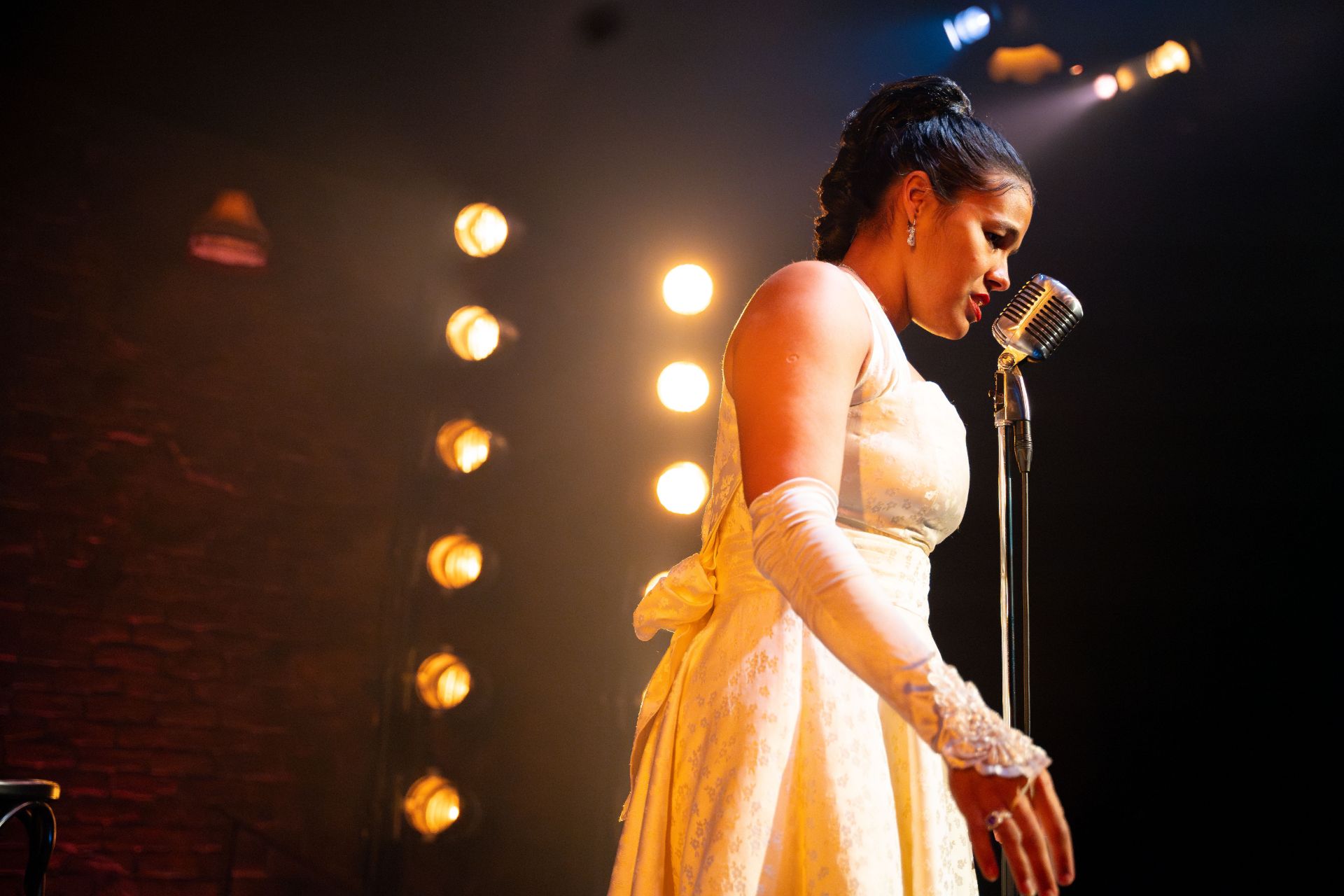
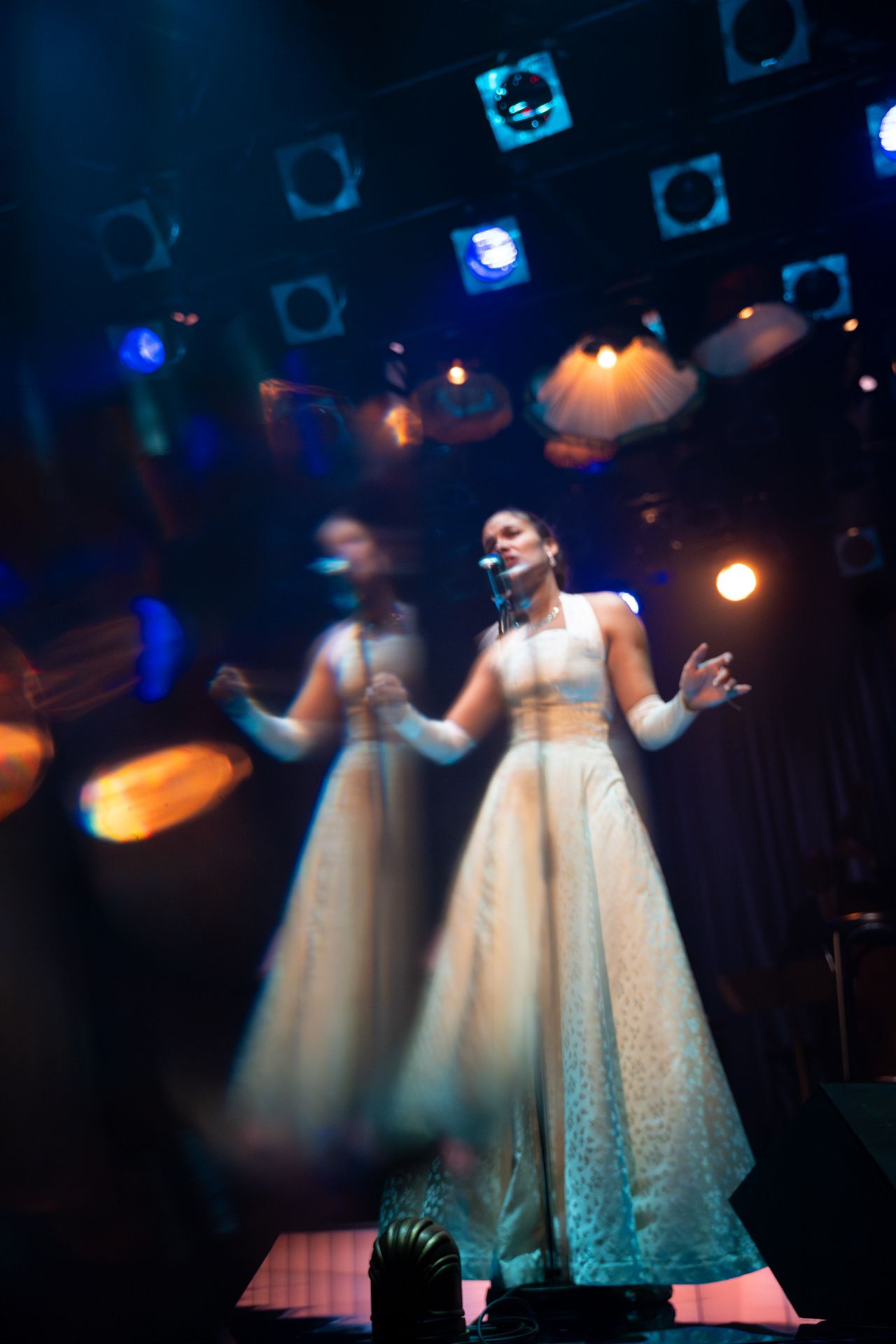
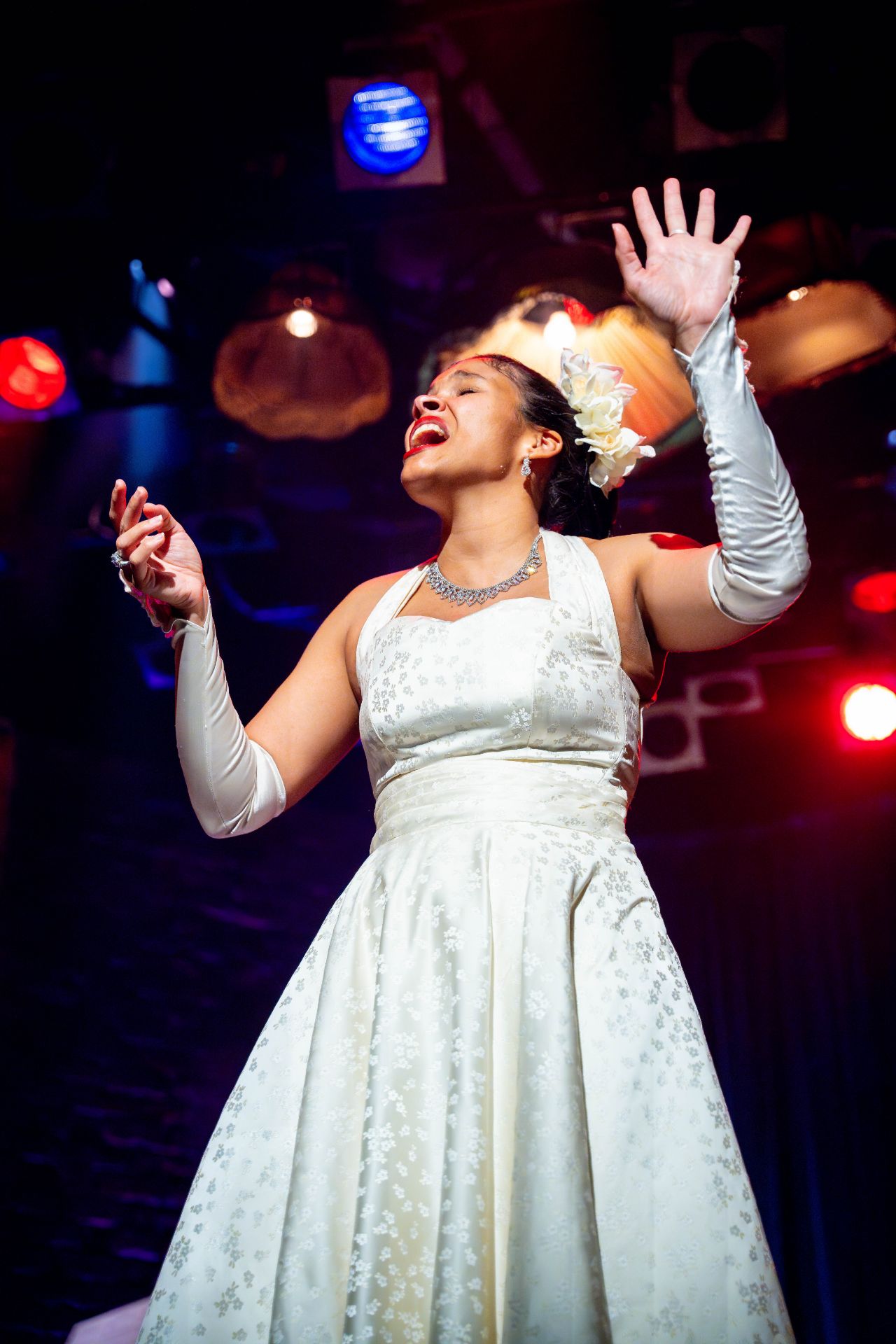
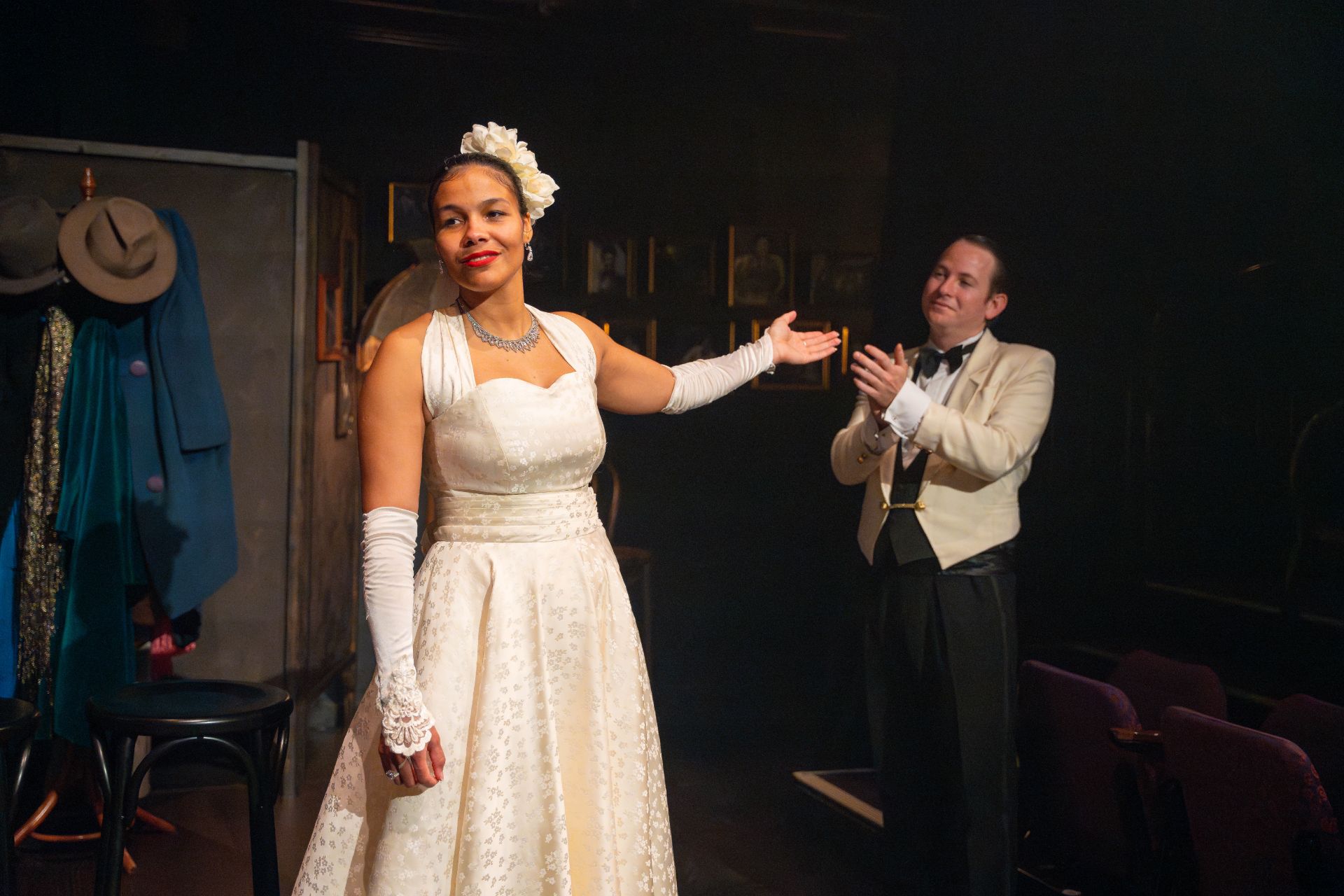
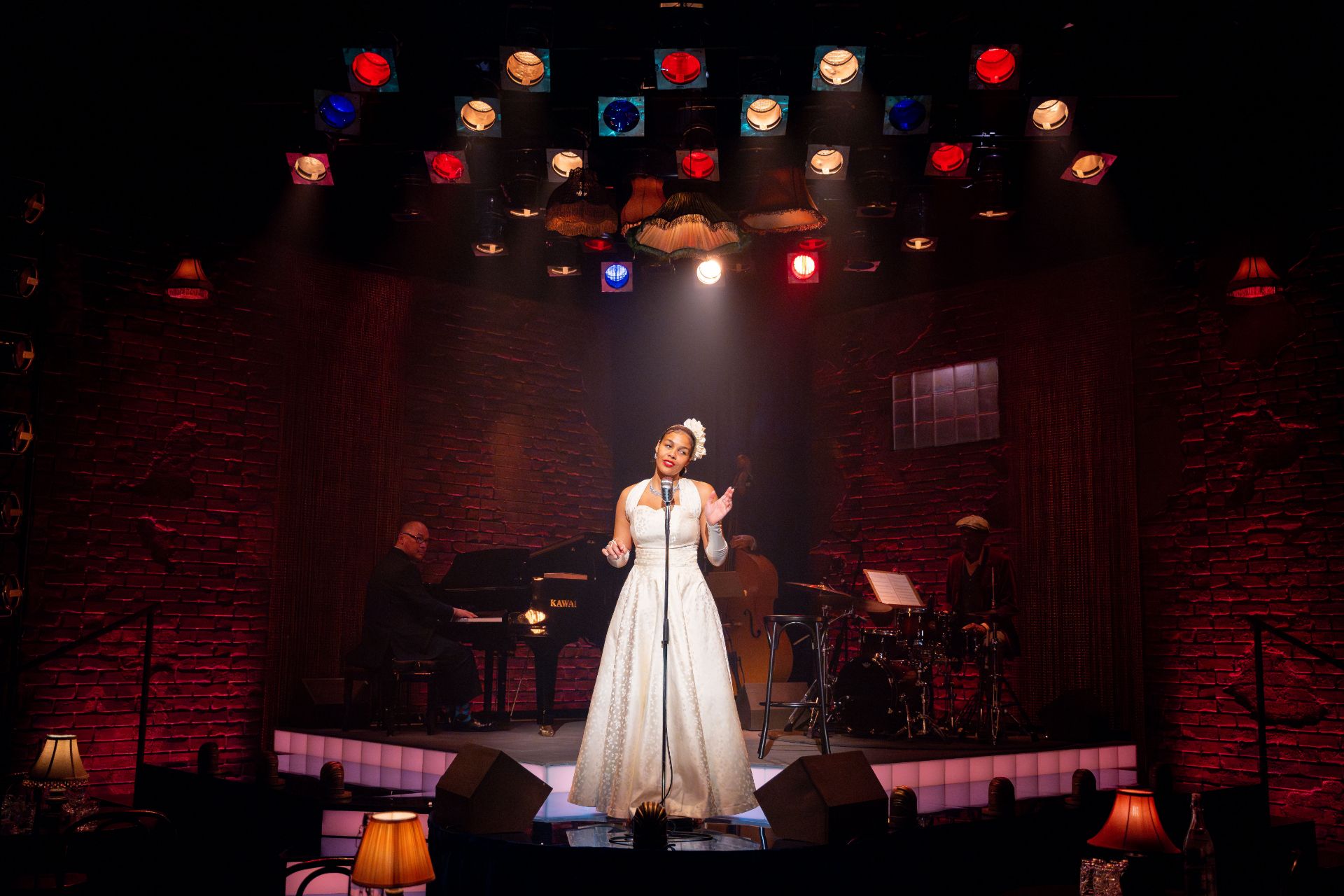
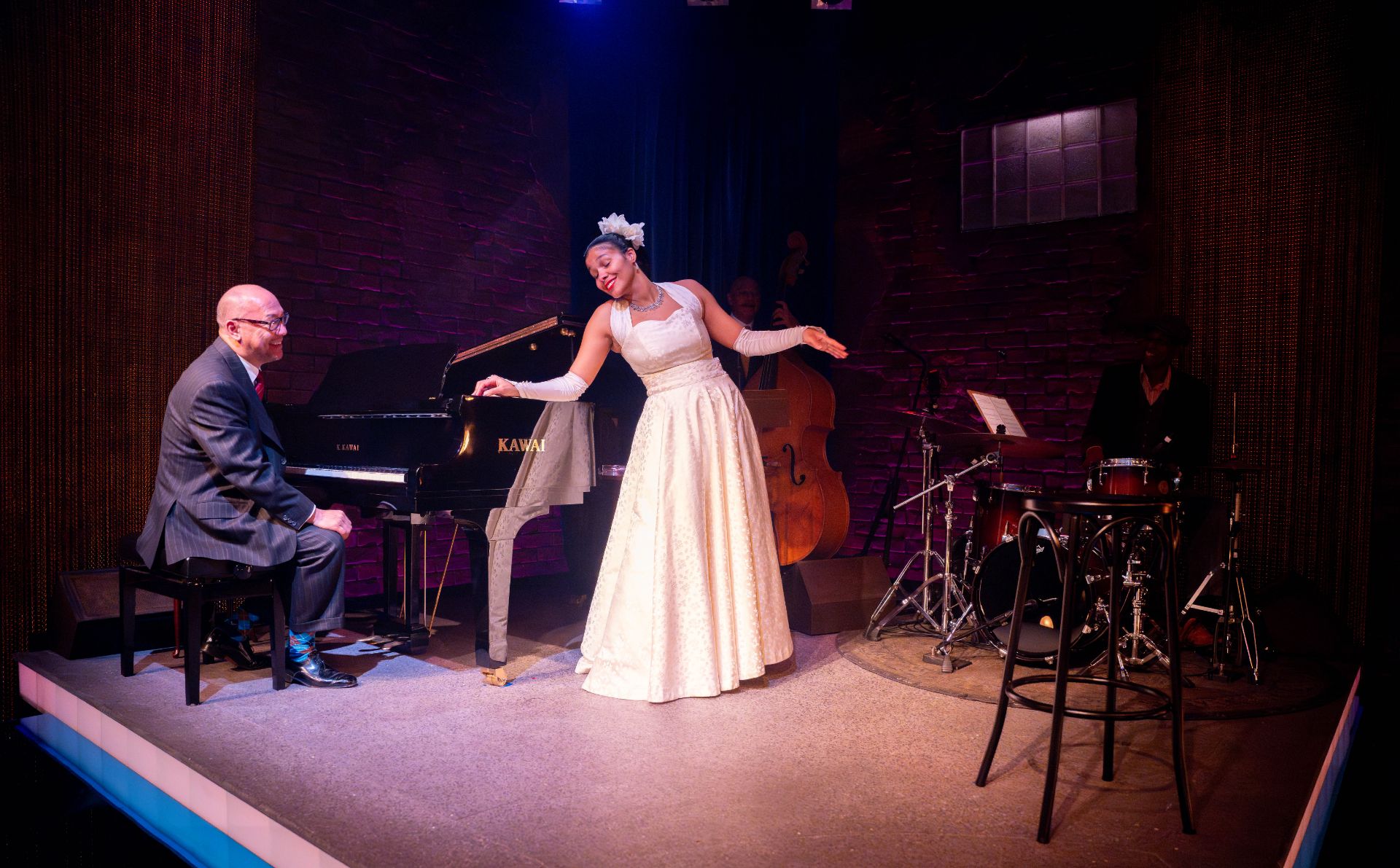
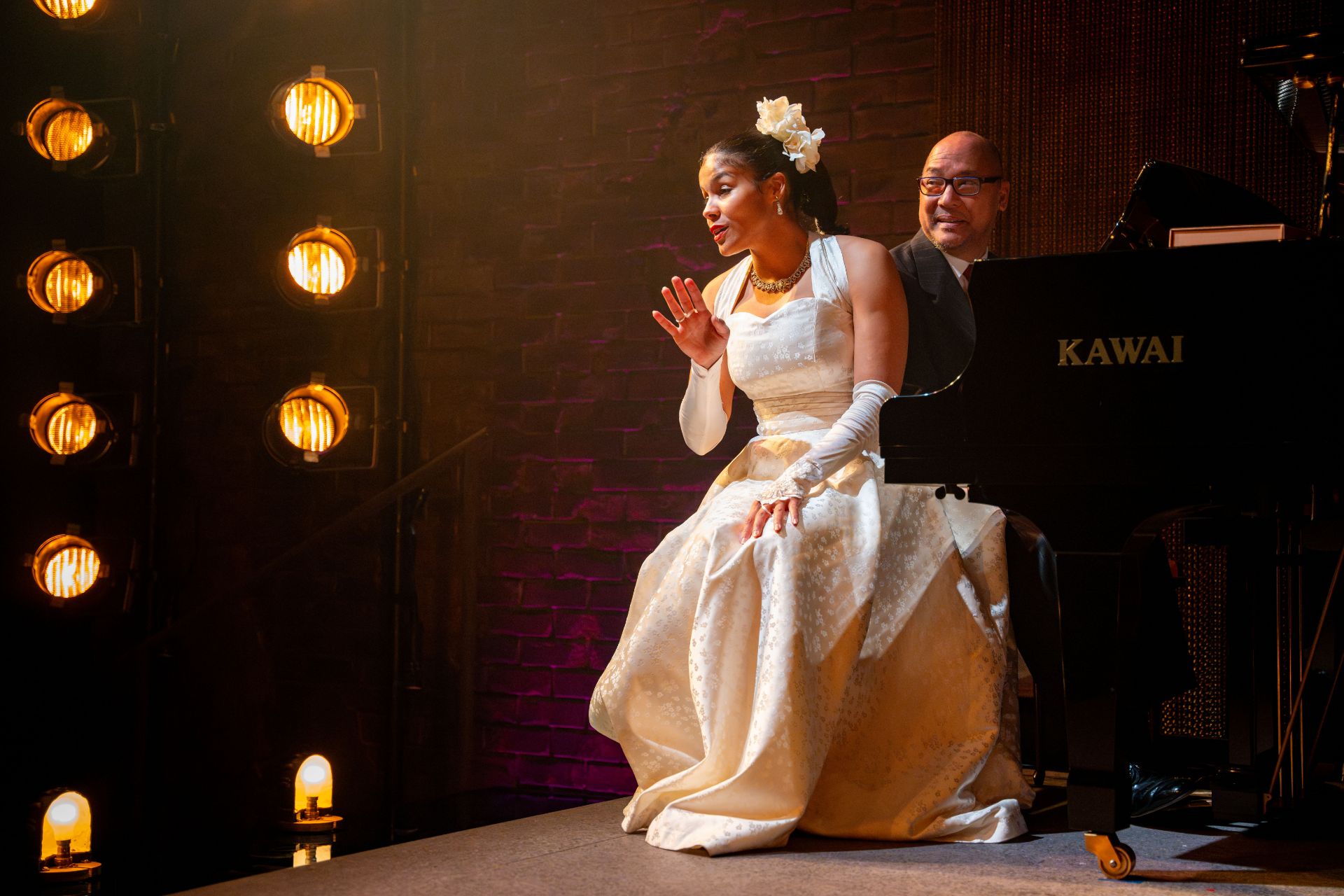
Production design by Ailsa Paterson features an unpretentious slightly rundown setting, appropriately depicting a space that we should consider beneath a talent of Holiday’s magnitude. Her white gown is resplendent, on a woman who knows her worth, at least in commercial terms. Band members too are dressed with dignity, each one suave and sophisticated, in a story that inevitably confronts matters of class and race. Lights by Govin Ruben are transportative in their realism, accurately evoking a club and performance space of the period, although more heightened dramatics could improve our connection to some of the play’s more intense moments.

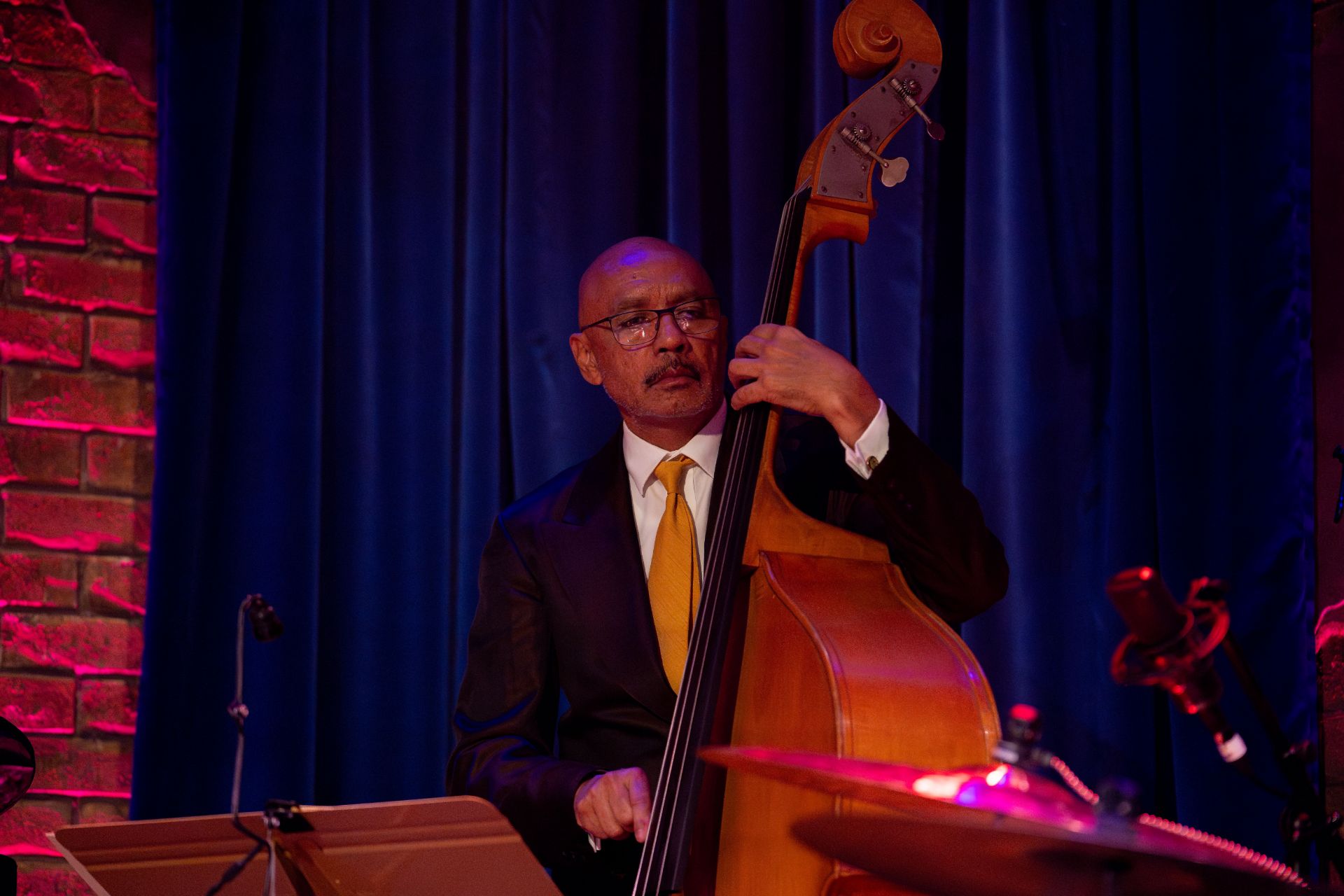
Prominent songs from Holiday’s oeuvre comprise the set list in this somewhat inadvertent jukebox musical. From his grand piano, Kym Purling leads a band of prime quality, for exceptional renditions of these historical pieces. Along with bassist Victor Rounds and drummer Calvin Welch, the trio gifts us a truly sumptuous experience of hearing these almost otherworldly compositions. The human voice is of course integral, and Zahra Newman’s proves astonishing not only in her mimicry of Holiday’s iconic tone, texture and timbre, she brings a power that is perhaps surprising to her interpretations of these numbers. As actor Newman is exacting and vivid with her storytelling, and in her strongest scenes, thoroughly convincing with the verisimilitude she is able to muster, to convey some incredibly lamentable details of Holiday’s life and times.

Billie Holiday was a descendant of slaves, and even though she achieved stardom, there was no escaping circumstances that remained cruel and deplorable for African Americans. Even as a musician of world renown, she was not protected from the abuse that women routinely endured, in both public and private spheres. In Lady Day at Emerson’s Bar & Grill we observe how she was wronged, again and again, so that we may ameliorate our feelings about a celebrity we wish to have done better. We are offered a reminder that the problem was the time and place in which she had existed, and that the artist was herself unreservedly immaculate.

www.belvoir.com.au

Review: Sexual Misconduct Of The Middle Classes (Belvoir St Theatre / Melbourne Theatre Company)

Venue: Belvoir St Theatre (Surry Hills NSW), Jun 2 – Jul 10, 2022
Playwright: Hannah Moscovitch
Directors: Petra Kalive
Cast: Dan Spielman, Izabella Yena
Images by Jaimi Joy

Theatre review
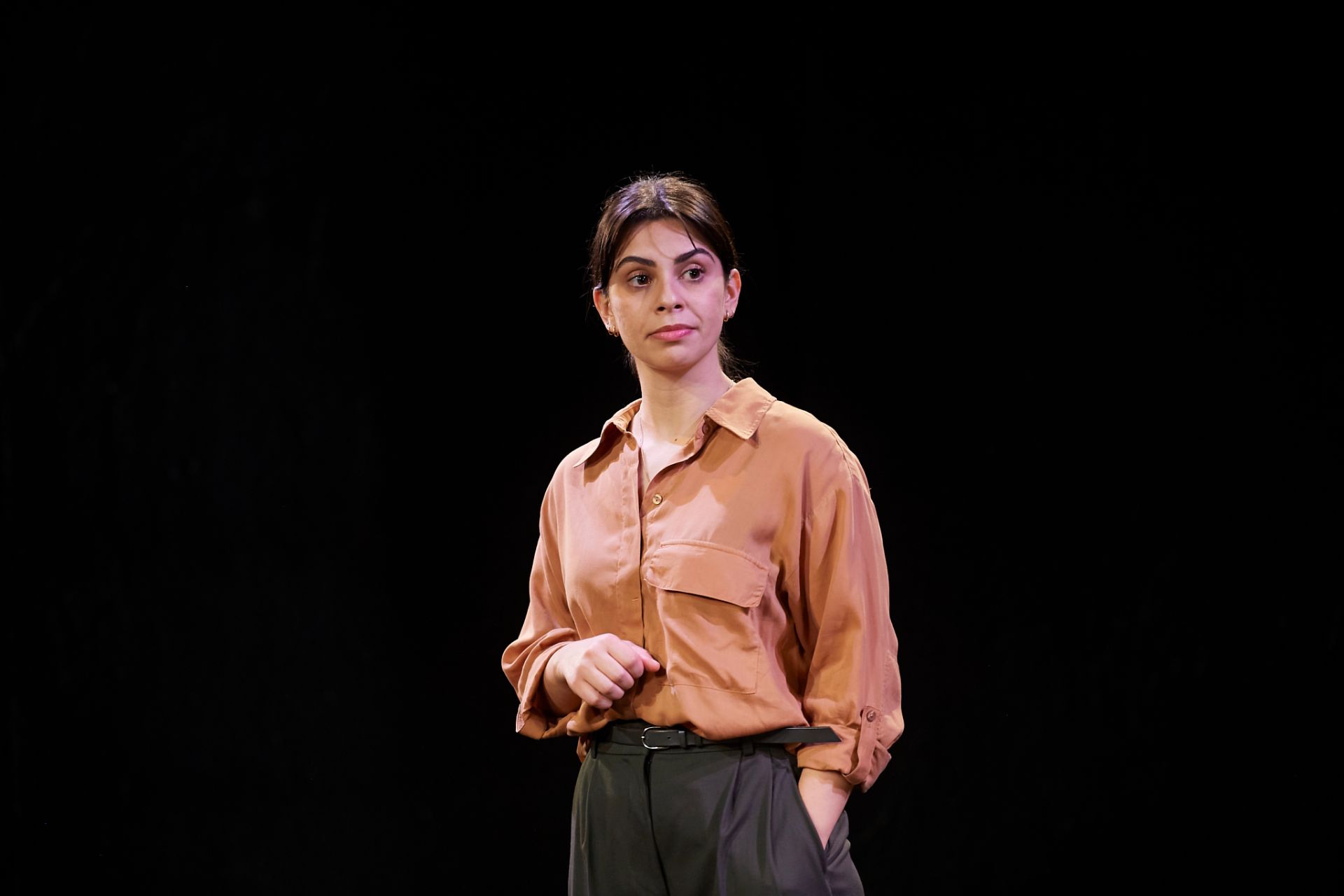
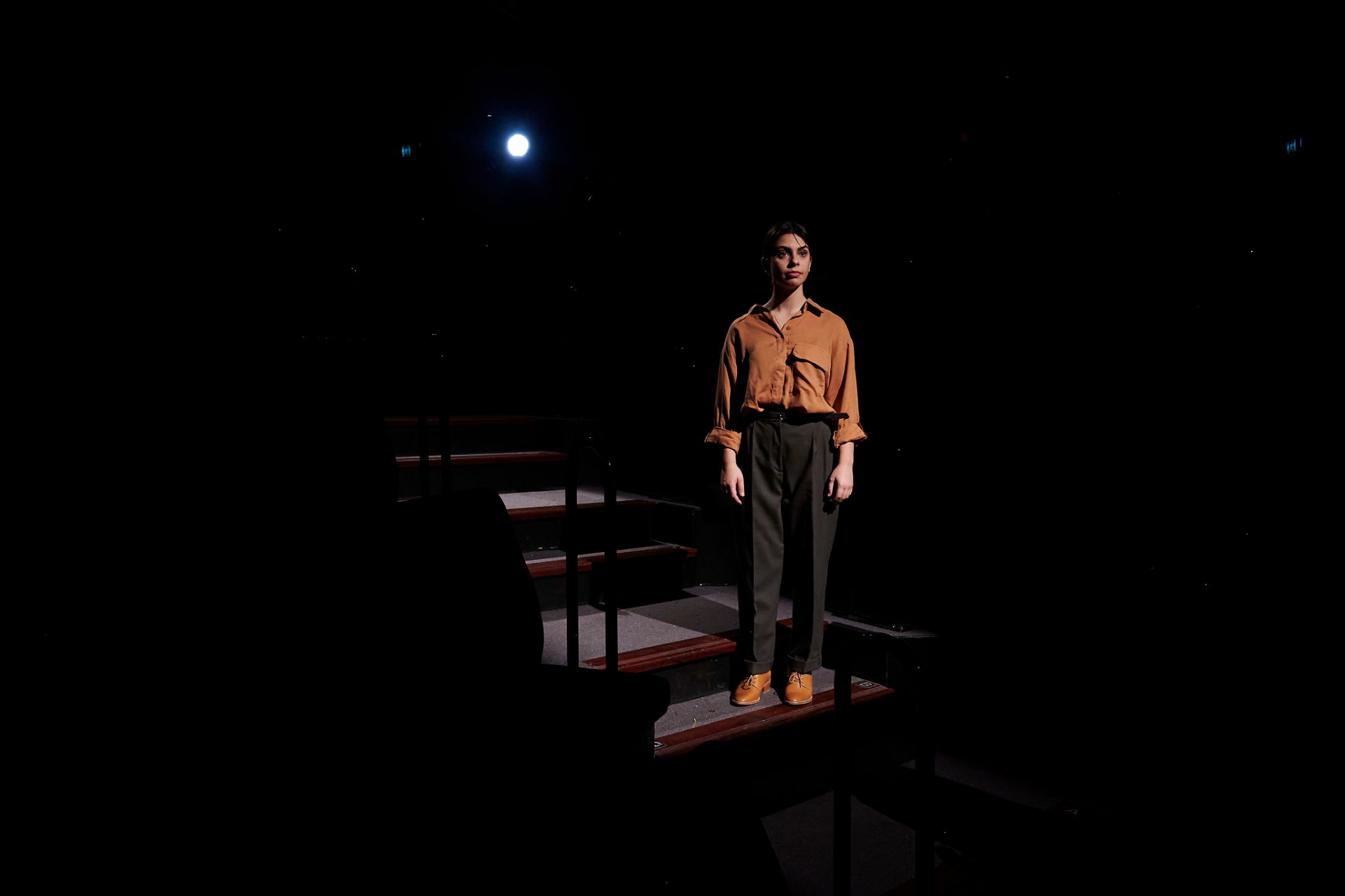
Jon is a successful writer who refers to himself in the third person. He is also a university lecturer, who has an affair with a student half his age, in Hannah Moscovitch’s Sexual Misconduct of the Middle Classes. Written in 2020, there was only ever one way this story about sex and power could go. The play may be painfully predictable, but the truth is that we are fortunate to live at a time, when boundaries concerning such matters are clearly demarcated. No trigger warnings are issued, because on this occasion they are never necessary.

There is little about Moscovitch’s work that is dangerous. We have had these discussions many times, and our decisions are firmly drawn, so we feel the play trudging along completely predictably, toward that very foregone conclusion. One would struggle to identify anything further that Moscovitch is able to add, to our now immovable and non-negotiable attitudes with regard sex at our workplaces and public institutions. The subject matter could have provided fertile ground for subversive or provocative humour, but as its title suggests, it is all terribly middle class in attitude.

Petra Kalive’s direction of the piece is arguably too earnest, perhaps too careful, in fear of being misunderstood. Its efforts to reassure us that there is never any intended affront, results in a work of theatre that is overly polite and safe. The tone of the staging is commendable for taking into account more delicate sensibilities that are likely to be present in the audience, but the consequence is a show that does not advance discourse, and one that poses no challenge to our intellect.

Unsurprisingly perhaps, design aspects are all elegantly rendered. Marg Howell’s set and costumes focus our sense of awareness, on just the right strata of people we are looking at. Rachel Burke’s lights offer accurate calibration for every subtle shift in atmosphere. Sound design by Darius Kedros is sensitive and unobtrusive, generously wishing for us to hear little more than the play’s dialogue.

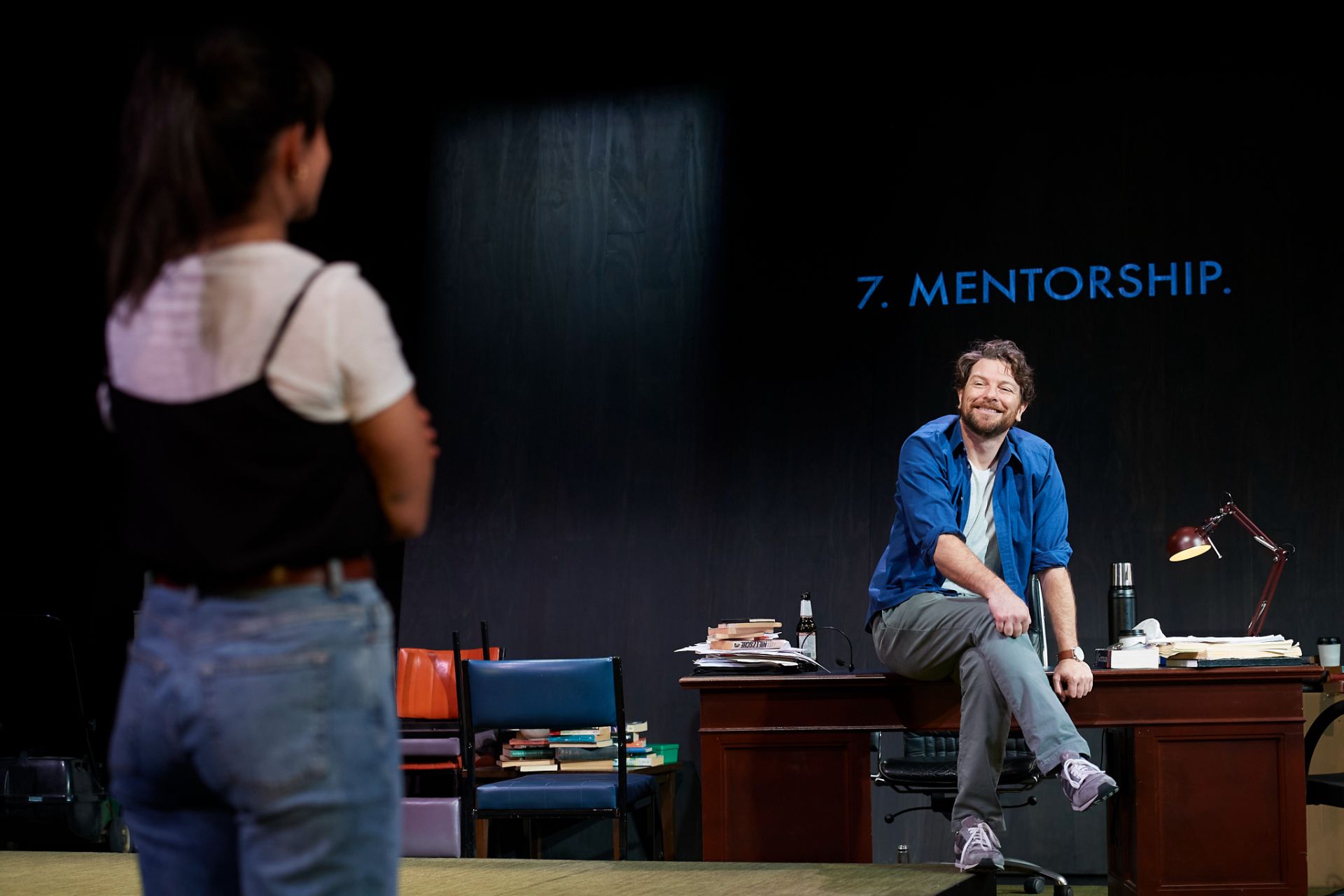
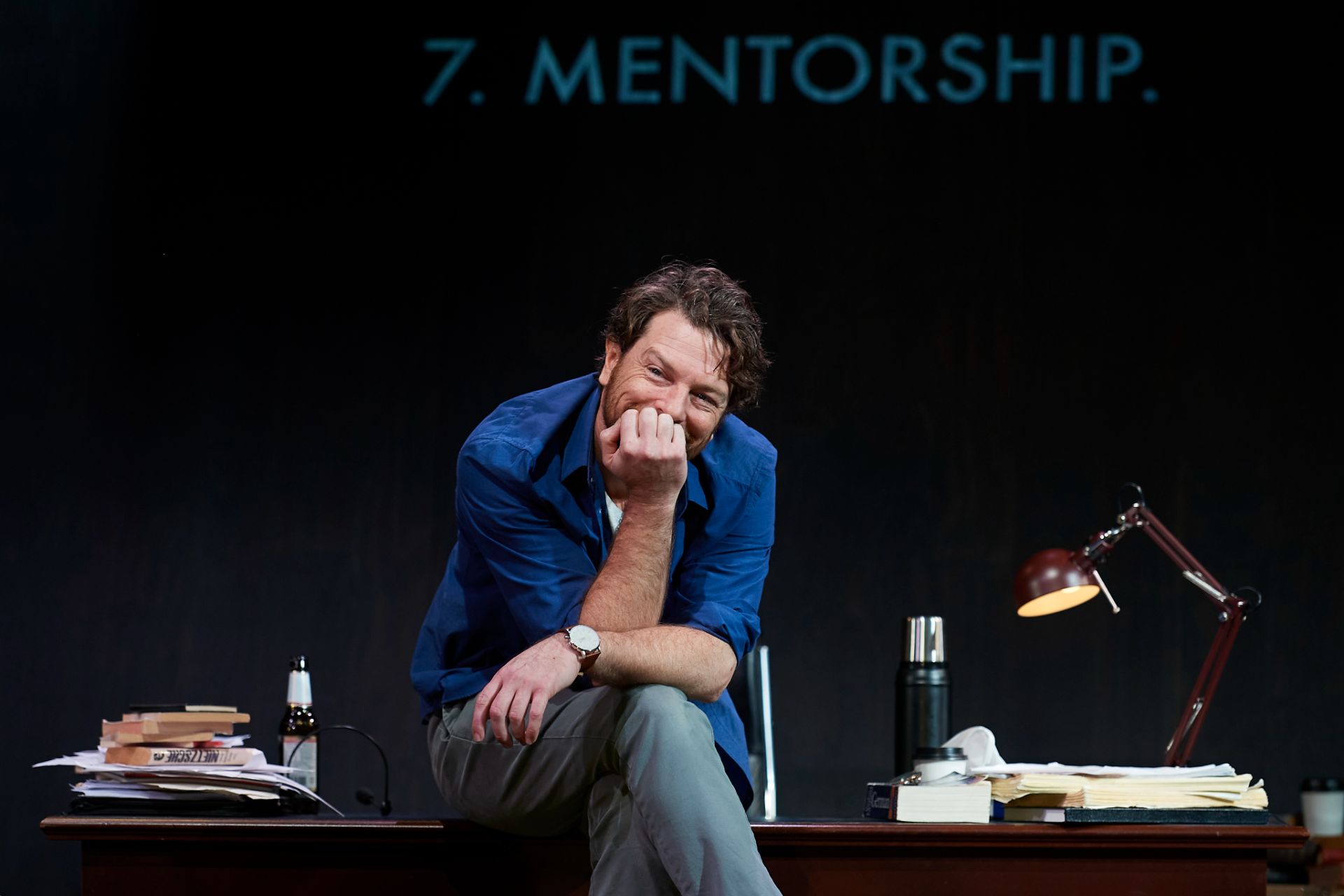
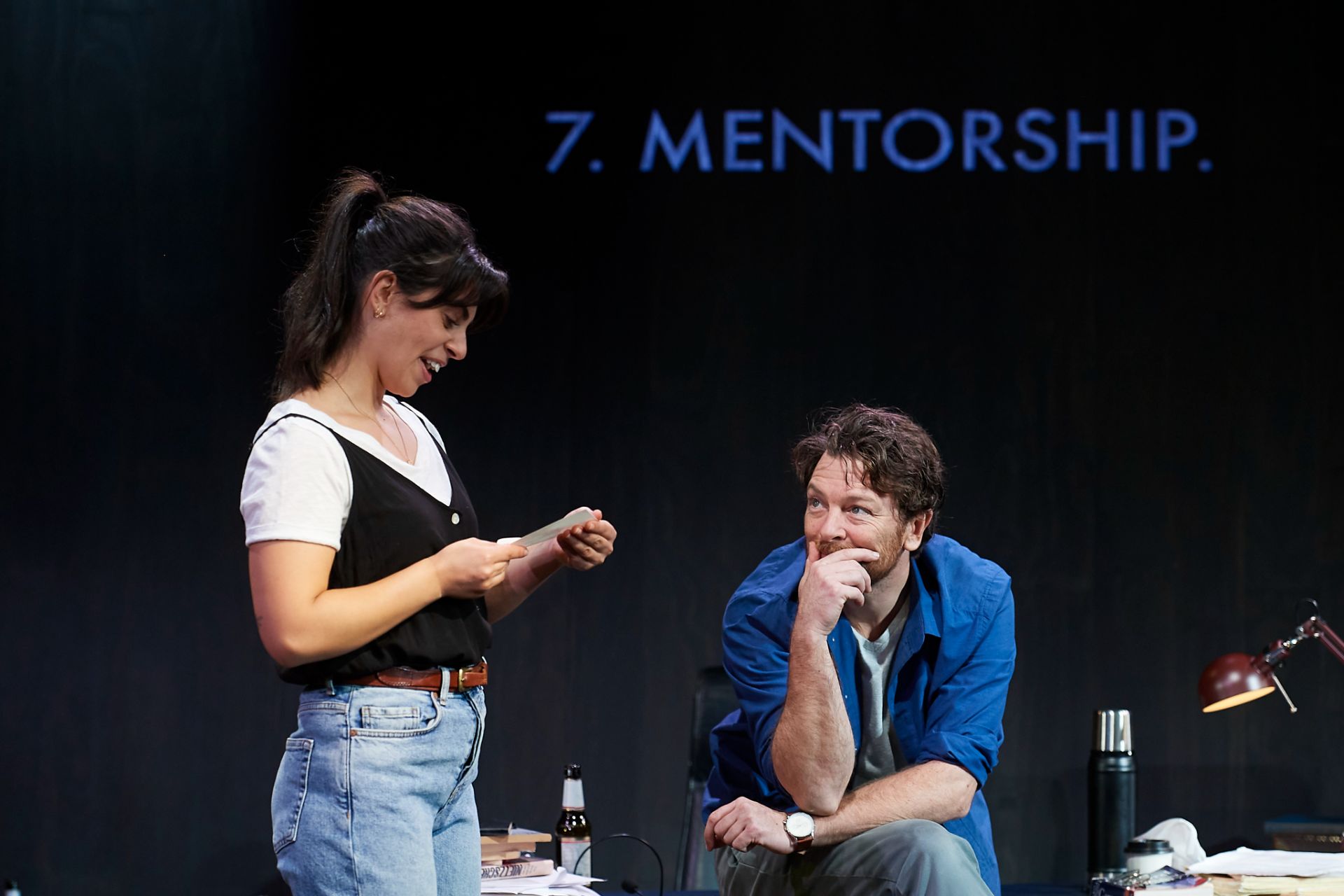
Actor Dan Spielman does marvellously to hold our attention, whilst playing an irredeemably repugnant character. His conviction only makes us more disgusted, which is of course an appropriate response, although there is no denying the tedium of encountering such a one-dimensioned villain. Izabella Yena as Annie, does her best work between the lines, able to convey the complicated amalgamation of emotions, as a young woman who learns over time, that her consent was not consent at all.

One of the main problems with the middle classes, is their unwavering trust of authority. For most of Sexual Misconduct, the audience seems to be positioned so that our concern resides with the choices that Jon makes; it seems to want us to urge him to do better, at every stage of the narrative. The middle classes have such a love of power, as reflected in all their aspirations to attain power, they deny that transparently sinister quality of power that makes it so seductive.

The point of it, is to evade accountability. The point of power, is so you can do whatever you want, especially behind closed doors. To expect people in positions of power to do better is naive, and frankly, in this day and age, stupid. For the audience to wish that Jon discovers his conscience, is to bury our heads in the sand. It is not the individuals in broken systems (or indeed systems designed to fail our democracies), who need to do better. It is the fact that people are granted such power, in that young women like Annie are taught to regard men like Jon with such reverence, that is the problem.

www.mtc.com.auwww.belvoir.com.au

Review: Fun Home (Sydney Theatre Company / Melbourne Theatre Company)

Venue: Roslyn Packer Theatre (Sydney NSW), Apr 27 – May 29, 2021
Book and Lyrics: Lisa Kron (based on the graphic novel by Alison Bechdel)
Music: Jeanine Tesori
Director: Dean Bryant
Cast: Gilbert Bradman, Ryan Gonzalez, Emily Havea, Mia Honeysett, Lucy Maunder, Jensen Mazza, Maggie McKenna, Adam Murphy, Marina Prior
Images by Prudence Upton

Theatre review
In the American musical Fun Home, based on the autobiographical graphic novel by Alison Bechdel, we observe the cartoonist hard at work on her drafting table, looking back at memories of her difficult father. Bruce was a baby boomer, and like many queer people of that generation, never came to terms with being gay. Even as Alison began to come out as lesbian, his personal anguish never diminished, struggling even to offer support to his own daughter at a time when she had needed him most.

Clearly intended to be an emotional theatrical experience, the show’s reliance on an unlikeable character is risky, and even though the music is predictably and relentlessly sentimental, it is doubtful if audiences could ever feel the full impact of the hardship that this family had gone through. Alison goes to considerable lengths to find forgiveness and understanding for her father, but it is arguable if the musical provides sufficiently for us to respond with deep compassion, or even to care enough for these characters, to be able to invest adequately into their story.

The staging is a polished one, with Alicia Clements’ design facilitating efficaciously, the need for frequent oscillations of time and space. Matt Scott’s lights are beautiful, especially when depicting illusory moments during which we see characters suspended in the undefined abyss of Alison’s imagination. Director Dean Bryant introduces an excellent sense of pizzazz to the production, making sure that we are entertained to the fullest of the show’s potential. He ensures that the story is told with clarity, including the unsavoury revelations relating to Bruce’s life.

We see Alison at three periods of maturity, from childhood and her college years, to the grown woman she is today. Child star Mia Honeysett is fantastic as Small Alison, wonderfully nuanced and authentic, in her portrayal of a child navigating complicated family dynamics, as well as her own blossoming homosexuality. Medium Alison is performed by Maggie McKenna whose singing voice proves a divine pleasure, and Lucy Maunder is captivating as Big Alison, bringing a palpable tenderness that underpins the show. The striking Adam Murphy does his best to honestly depict Bruce, warts and all, but it is Marina Prior who leaves a strong impression playing his wife Helen. When she finally breaks her silence and delivers a faultless solo number, Prior’s technical prowess brings momentary elevation to the production, inviting us to luxuriate in the sheer genius of her singing.

It should come as no surprise that humans are sometimes much more troubling, than a 100-minute Broadway musical can accommodate. The formulaic nature of these creations, requires a form of storytelling that follows many rules, and we discover that truth can sometimes become its nemesis. Bruce’s sexual encounters with underaged boys, is not forgivable, especially in this space of commercial theatre. Fun Home requires us to regard Bruce’s past sins with generosity, the way his daughter has to, in order that our emotions may become engaged in accordance with the traditional peaks and valleys of a conventional musical. Bruce’s transgressions however, are much too severe, at least for the old-fashion song-and-dance format.

www.sydneytheatre.com.au

Review: Così (Sydney Theatre Company)

Venue: Sydney Opera House (Sydney NSW), Nov 1 – Dec 14, 2019
Playwright: Louis Nowra
Director: Sarah Goodes
Cast: Gabriel Fancourt, Esther Hannaford, Glenn Hazeldine, Bessie Holland, Sean Keenan, Robert Menzies, Rahel Romahn, Katherine Tonkin, George Zhao
Images by Jeff Busby

Theatre review
Theatre director Lewis finds himself at a mental asylum, not as a patient, but as a facilitator for a one-night-only staging of Mozart’s Così fan tutte, starring clients of the home. This is 1972, many years before deinstitutionalisation had begun, and the personalities Lewis meets are varied in capacities, but uniformly charming. Louis Nowra’s Così is a 1992 comedy with a premise that remains intriguing, but much of its humour has lost its lustre. We have learned to regard mental illness with a diminished sense of alienation, and characters in the play have lost their sense of otherness accordingly, causing many of its jokes to feel archaic.

The production is directed by Sarah Goodes, who does extensive work to reflect a modern sensibility in her iteration of Così. While it does provide an updated sense of cultural appropriateness, with a renewed perspective of people with mental health challenges, we discover that there is little at its heart that truly resonates for today’s audiences. Nevertheless, it is a smartly designed show, with Dale Ferguson’s set and Jonathon Oxlade’s costumes providing a valuable sense of playfulness. Lights by Niklas Pajanti, along with Chris Williams’ music, keep the action jaunty and energised.

Actor Sean Keenan is convincing as the unassuming and somewhat meek Lewis, a sturdy presence who lets his colourful counterparts occupy our attention. Unofficial ringmaster Roy is played by Robert Menzies, who is powerful in the role, and effective in having us invest in his passions for Mozart and classical opera. Bessie Holland is unforgettable as the brassy Cherry, impressive in her ability to deliver big laughs, even with Nowra’s dubious dialogue. Similarly charismatic is Rahel Romahn, consistently and effortlessly funny as Doug the pyromaniac, setting the stage alight at every appearance.

In Così fan tutte, people pretend to be somebody else to discover truths about themselves. Così too, features playacting, with patients of the asylum masquerading as characters in an opera, as though on a recess from their real lives. Individuals can come to new understandings of themselves, when they experience distance from their own existences. Art allows us to step out, and observe the world from a different perspective, which is an immense benefit for all of us who forget the diminutiveness of being, and the inanity of any ego.

www.sydneytheatre.com.au | www.mtc.com.au

Review: The Children (Sydney Theatre Company)

Venue: Sydney Opera House (Sydney NSW), Mar 29 – May 19, 2018
Playwright: Lucy Kirkwood
Director: Sarah Goodes
Cast: Sarah Peirse, Pamela Rabe, William Zappa
Image by Jeff Busby

Theatre review
Lucy Kirkwood’s The Children imagines what it would be like, if an all-consuming ecological disaster were to strike today. Instead of the pandemonium surrounding earthquakes and tsunamis, we see an aftermath involving three scientists who are partly responsible for the catastrophe. It is a story about technology, concerned with the way inhabitants of the developed world are failing to find harmony with our greater environment. Hazel, Robin and Rose are retirees approaching seventy years of age, but their work in nuclear power is an enduring legacy that has wreaked havoc to all of humankind.

The play takes on some of the most important themes of our times, not only in its bold discussions of climate change, but also with its ultramodern perspectives on ageing and death. Explored with remarkable sophistication, Kirkwood’s ideas are edgy but truthful, often confrontational in their dissection of responsibility and attribution of blame, as they pertain to the current state of our planet. Diligently crafted to provoke thought and to elicit benevolent responses, The Children tackles pressing issues with intelligence and splendid inventiveness. It is a gripping work, surprisingly entertaining, but is ultimately most valuable for its political statements.

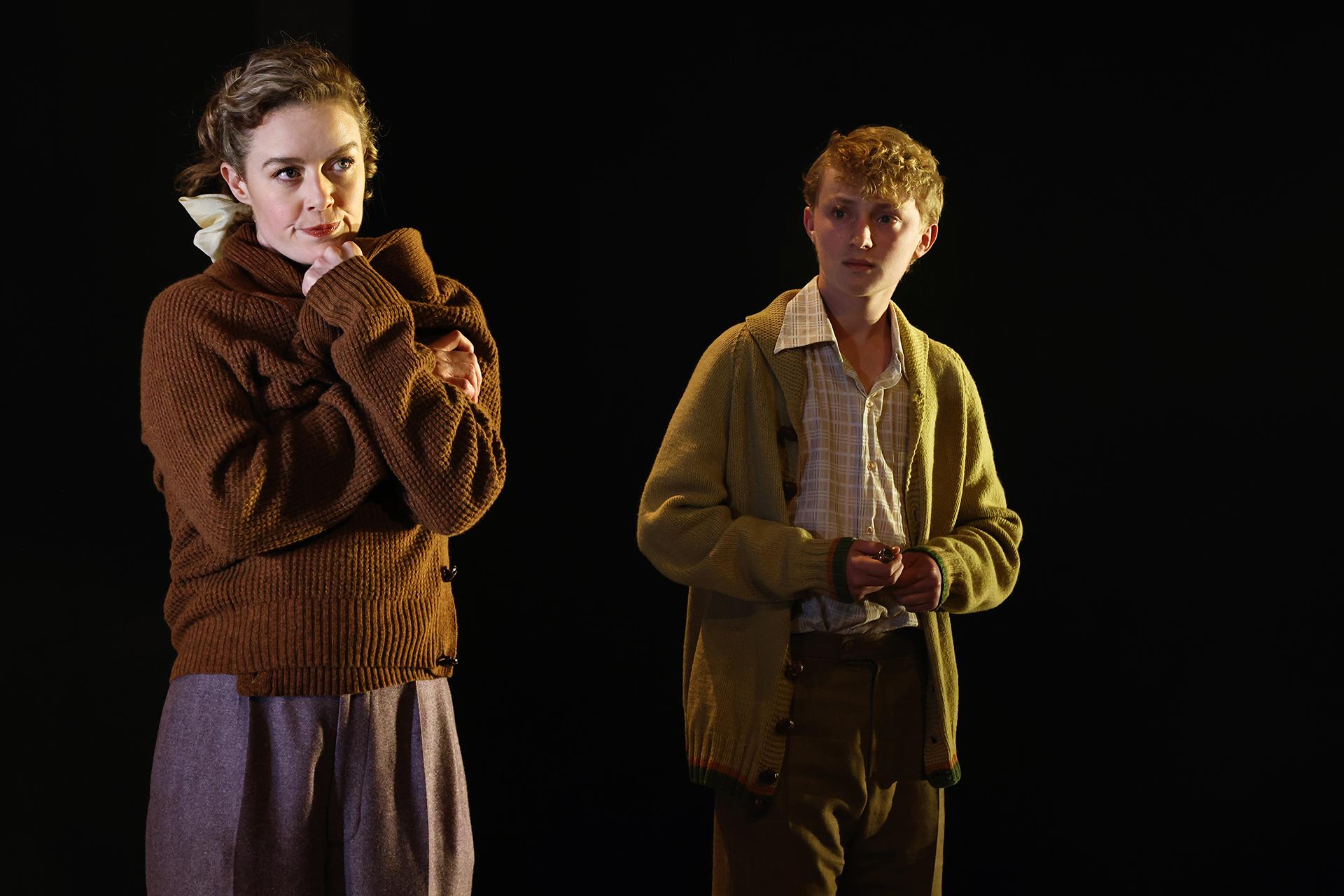
Set inside a humble cottage (designed with minimal fuss by Elizabeth Gadsby), the action begins deceptively mundane as its three characters skirt the issue, trying to be cordial company, before a sense of security arrives that will allow floodgates to open. Everything feels precarious, even before the audience is let in on the severity of their situation. Director Sarah Goodes teases with an exquisite balance of the austere, banal and lighthearted aspects of the story. Tensions ebb and flow, but we are mesmerised, captivated by the extraordinary stakes of the fictional tale, and how they feel so immediately, and terrifyingly, applicable to our real lives.

Actor Pamela Rabe plays Hazel, a woman straining under delusions, surviving on a despairing combination of determination and feeble crutches. It is a wonderfully humorous performance, dark and sensitive, cleverly conveying the fragility of existence under the mercy of indomitable forces. Rose, performed by Sarah Peirse, appears out of the blue, complete with bleeding nose, to shake us into reality. A charismatic and powerful mouthpiece for the play’s central ideology, Peirse is eminently compelling and deeply persuasive. Robin is the thorn among the roses, entrusted with the plot’s more sentimental sections. William Zappa brings authenticity and warmth, and occasional levity, to what is essentially a caustic evaluation of our nature.

Our experts work ceaselessly to extend our lives, to have us live longer and more voraciously than ever before. We keep finding greater ways to devour the world, to satisfy an insatiable and ever-escalating list of wants, in a narcissistic experience that forever thinks of human as supreme. We plunder remorseless, even when faced with irrefutable evidence of our self-destruction, as though carnage can only be accepted as inevitable, and we persist in a race that feels too far gone to accommodate any idea of reversion. In The Children, characters figure out the best way to live by weighing between options of death. We can only bear witness to their calamity and hope to do better.

www.sydneytheatre.com.au | www.mtc.com.au

Review: Death And The Maiden (Sydney Theatre Company / Melbourne Theatre Company)

sydneytheatrecoVenue: Wharf 1 Sydney Theatre Company (Walsh Bay NSW), Aug 28 – Oct 17, 2015
Playwright: Ariel Dorfman
Director: Leticia Cáceres
Cast: Eugene Gilfedder, Steve Mouzakis, Susie Porter
Image by Jeff Busby

Theatre review
Paulina resides in the space of terror. Captured, tortured, and raped; not only have the fractures in her world endured 15 years since the devastating event, her thirst for revenge is becoming an increasingly uncontrollable force that drives her to the extremities of Ariel Dorfman’s Death And The Maiden. Paulina was blindfolded during her ordeal but remembers the voice of her rapist, and during a chance encounter one night, she identifies a kindly, mild-mannered man Roberto to be the perpetrator, and proceeds to keep him captive in her home. Stripped and tied to a chair, Roberto is threatened by Paulina’s revolver and her accusations, but maintains his innocence. Paulina fluctuates between demanding a confession and wanting his life, but we are never sure if Roberto is in fact the right man. Dorfman’s work is dramatic and tense, with an undeniable political emphasis. Inspired by Chile’s progression from totalitarianism to democracy in the 1980’s, difficult questions about finding justice for victims of the state are explored. In an Australian context, the most direct association one could make would involve the continuing mistreatment of our Indigenous communities, but there are no obvious adaptations in the production that attempt to find a more specific point of relevance for its audience.

Scenic and lighting design by Nick Schilieper reduces the space and concentrates the action efficiently onto a small stage, so that nothing distracts us from the show’s intimate sequences. The leanness of its appearance however, conveys only a monotonously cold atmosphere. Correspondingly, Leticia Cáceres’ work as director seems to pay fastidious attention only to performances by its three players. The production feels insufficiently ambitious in scope, eschewing a bolder use of space that could have assisted us in relating to the unfolding plot better, by depicting either the oppressiveness of Paulina’s home and mental state, or a wider and more identifiable political and social environment. Composer and sound designer The Sweats excels in his control over atmosphere and scene transitions. He introduces a sophistication, along with a sense of drama to a staging that is often too minimalist in its overall style.

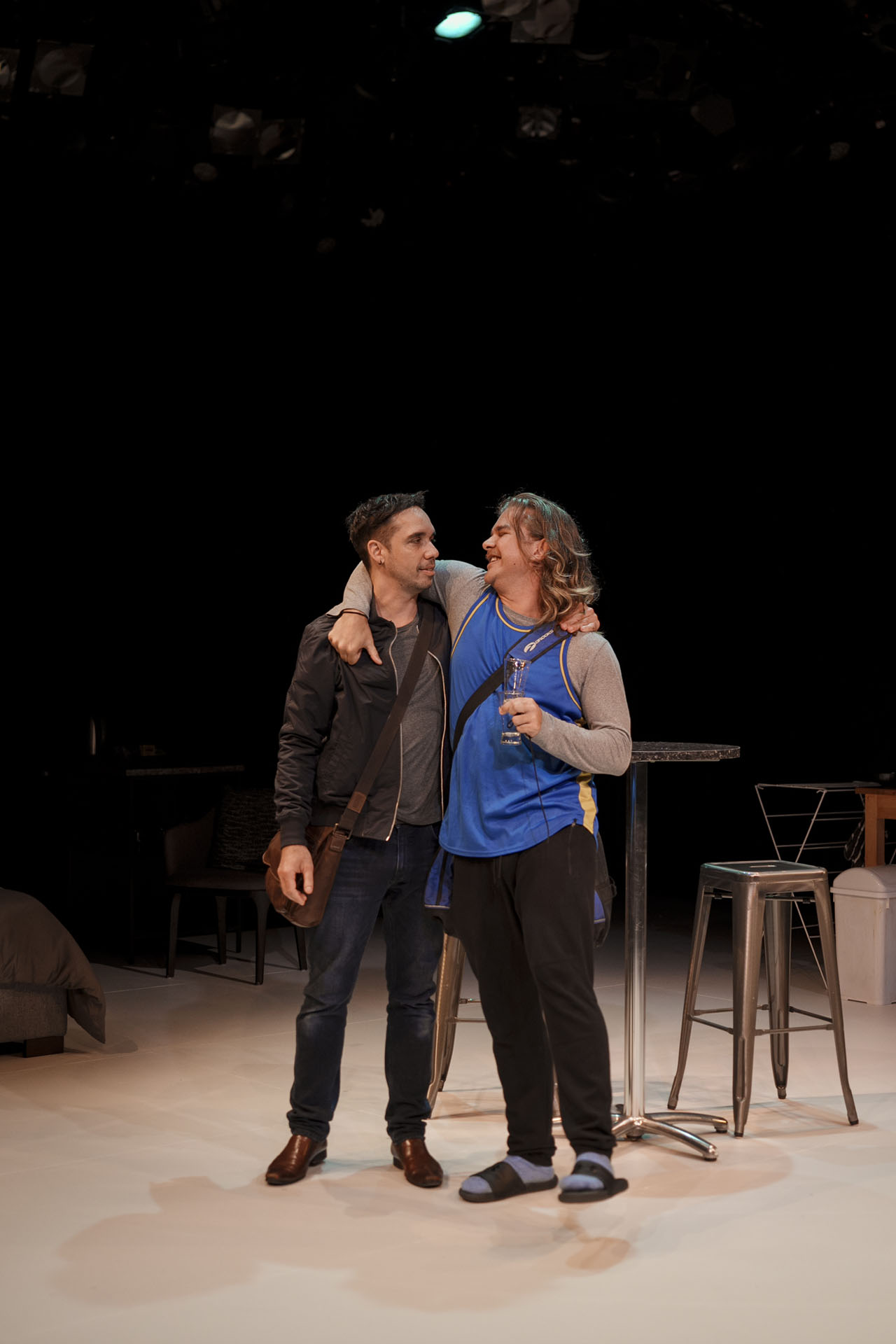
Leading lady Susie Porter presents a likeable and convincing Paulina. Porter’s cerebral portrayal gives integrity to the story being told, and her gracious presence keeps us firmly on her character’s side, but her performance is ultimately a tepid one that lacks a certain operatic quality required for the production to engage more powerfully. Porter’s interpretation is one steeped in depression, where a more dynamic madness would allow the narrative’s controversial aspects greater potency, and therefore elicit a more robust response from its audience. The actor’s work comes across psychologically accurate and very thoughtful, but the Latin American text asks for a fire that may only exist beyond rationality, which itself (being rational or not) is after all, one of its chief concerns. In the role of Paulina’s husband Gerardo, is Steve Mouzakis, who takes every opportunity to raise temperatures in the theatre. It is a smaller part but one that moves through different emotional phases, and the performer brings a spirited passion to each of them, reflecting an impressive conviction that viewers can no doubt appreciate. Eugene Gilfedder makes an interesting villain of Roberto. Probably not quite as charismatic as Porter, and therefore tilting the adversarial balance slightly off between duelling characters, but nonetheless an intriguing personality. He keeps us guessing, which is central to the play’s effectiveness, and provides fine tension at its concluding moments.
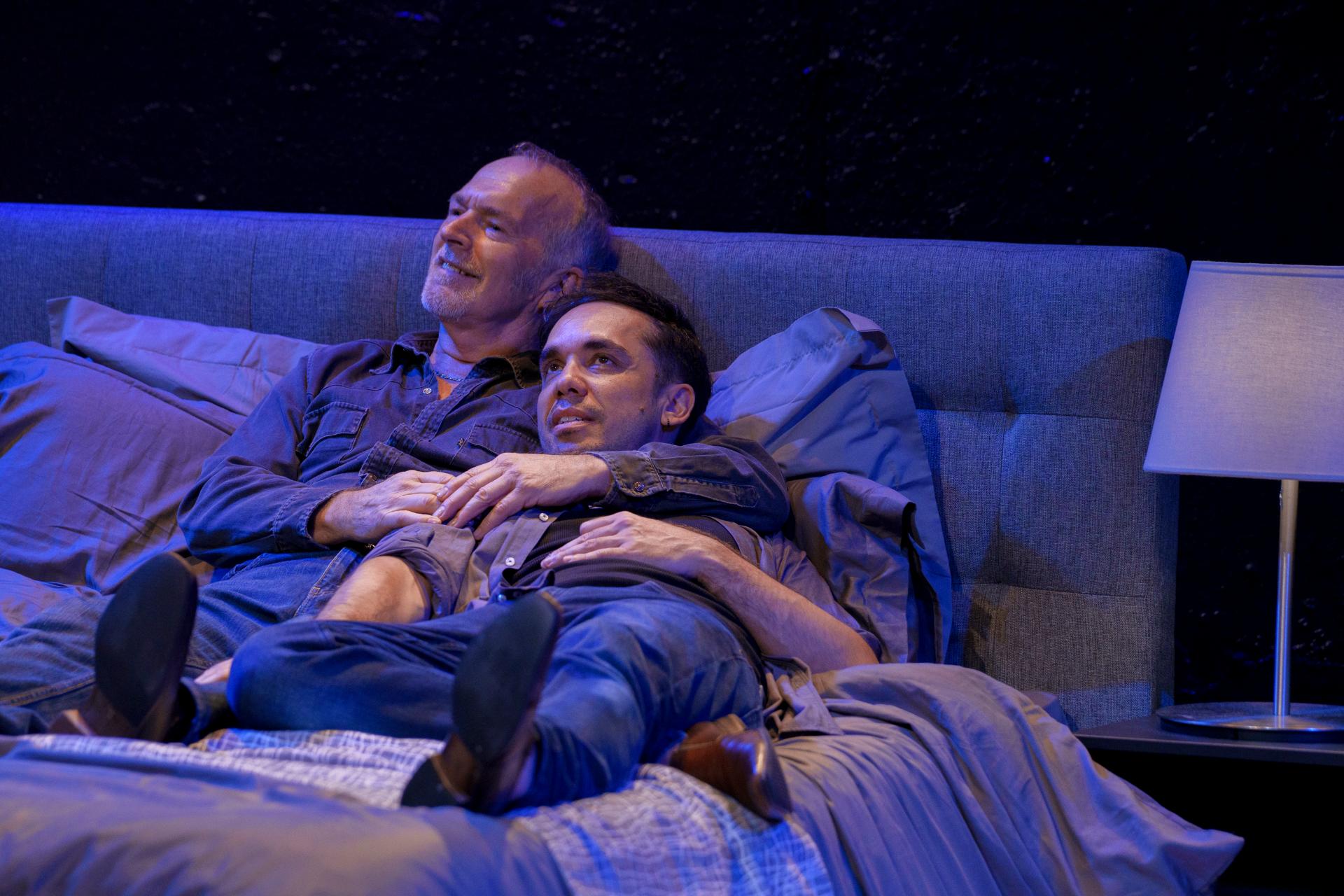
Death And The Maiden contains poignant moments of philosophy and drama, but at 25 years old, its resonances require translation. We are certainly no strangers to concepts of political upheaval, war and terror, but what we view to be tangible threats have changed. In spite of the production’s success at achieving a good level of believability, the play feels distant. We are reminded that our concerns have evolved, and although we often consider our civilisations to have improved, the fact remains that the things that haunt us never go away; they only take the form of something else. The fears in the play are different from ours today, but the vulnerabilities we share are interminable, and it is that darkness that Paulina needs to release with indomitable fury.
www.sydneytheatre.com.au | www.mtc.com.au/