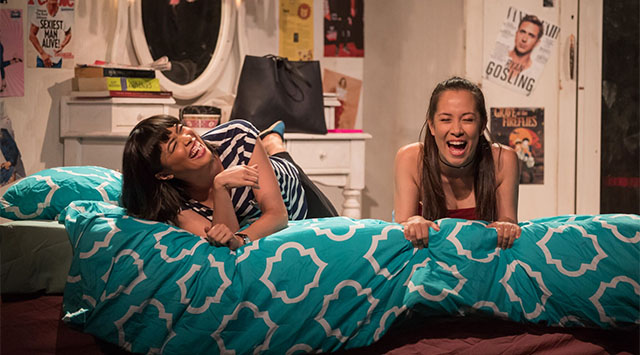
Review: Congratulations, Get Rich! 恭喜发财, 人日快乐 (Sydney Theatre Company)

Venue: Wharf 1 Sydney Theatre Company (Walsh Bay NSW), Nov 21 – Dec 14, 2025
Playwright: Merlynn Tong
Director: Courtney Stewart
Cast: Zac Boulton, Seong Hui Xuan, Merlynn Tong, Kimie Tsukakoshi 
Images by Prudence Upton

Theatre review
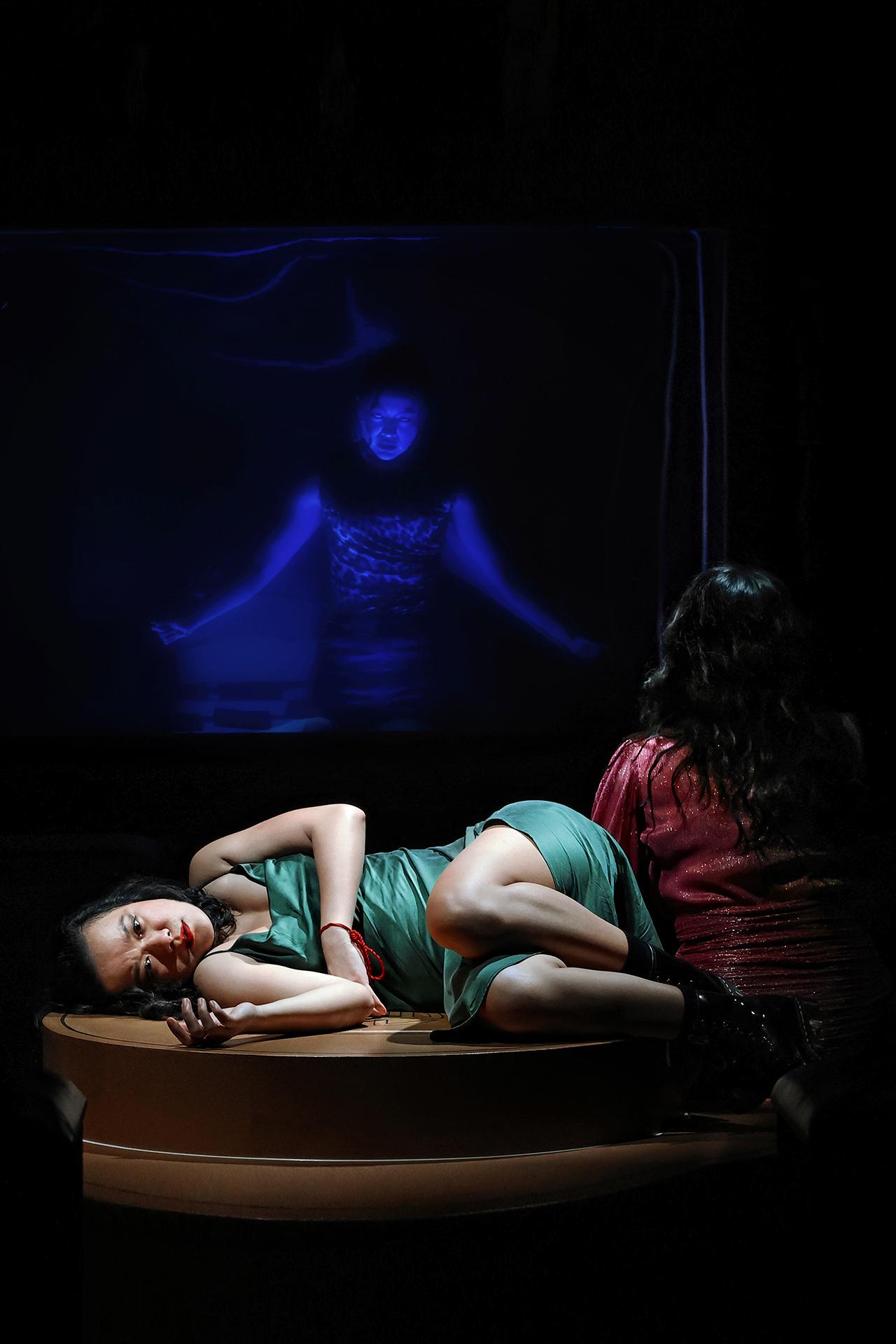
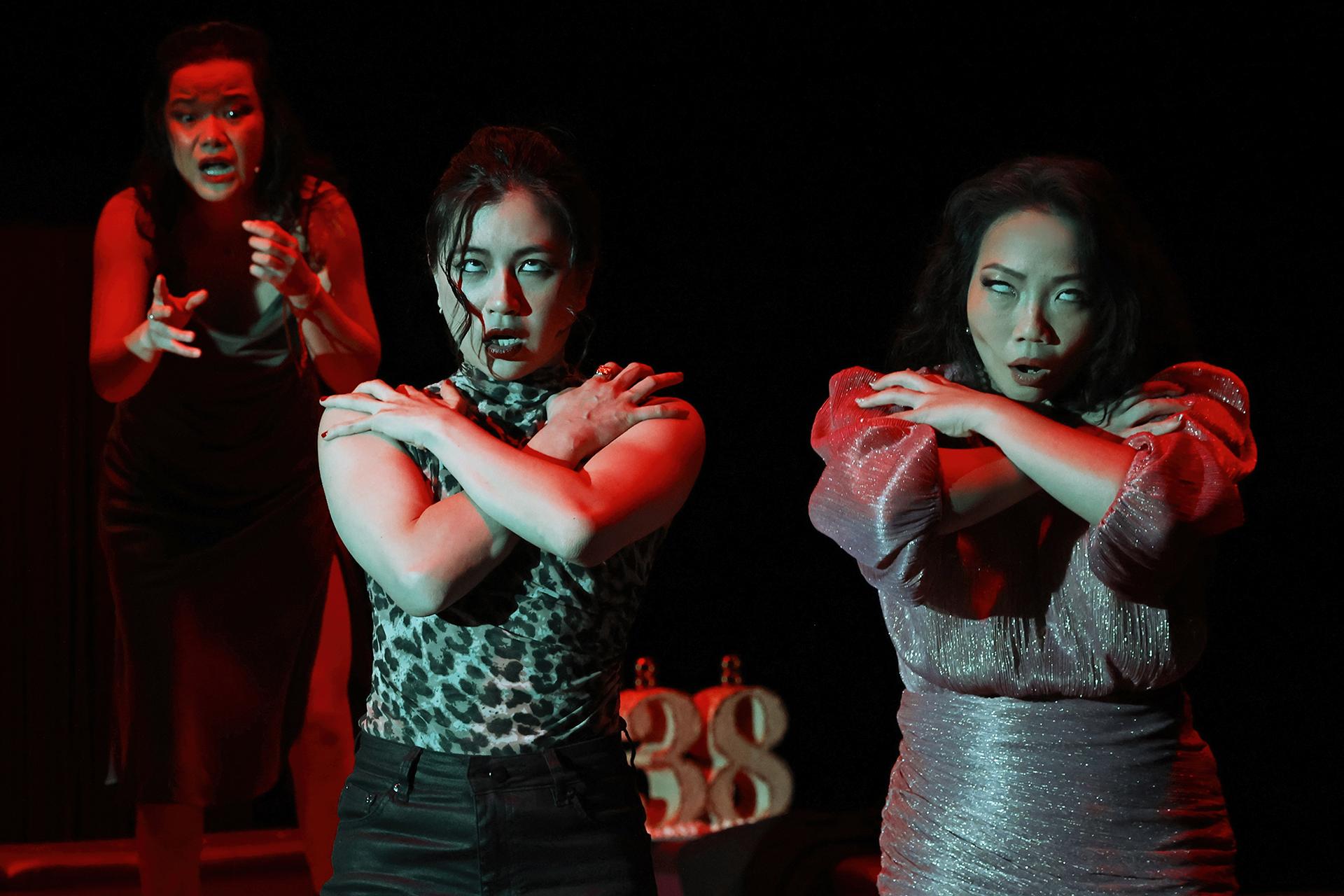
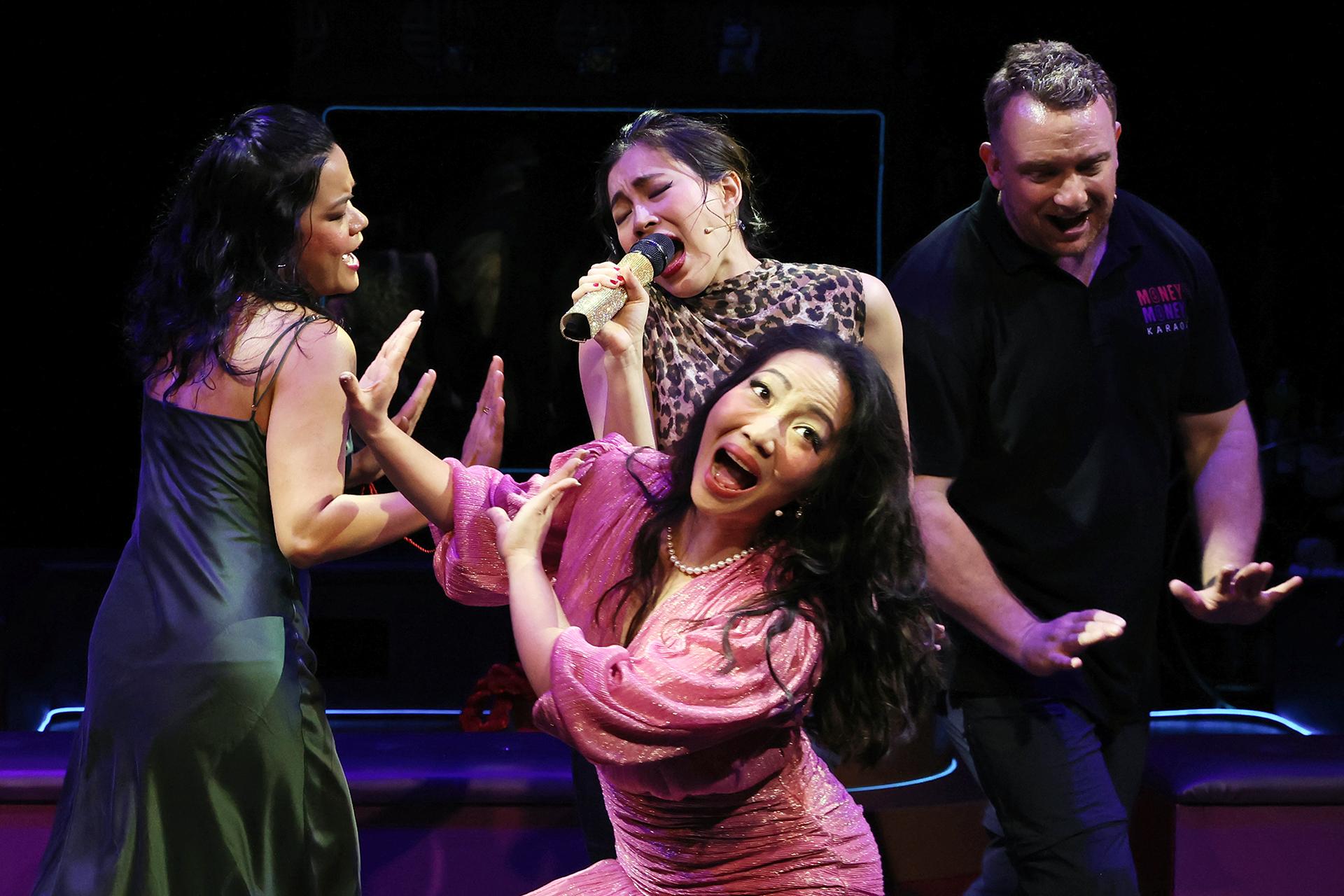
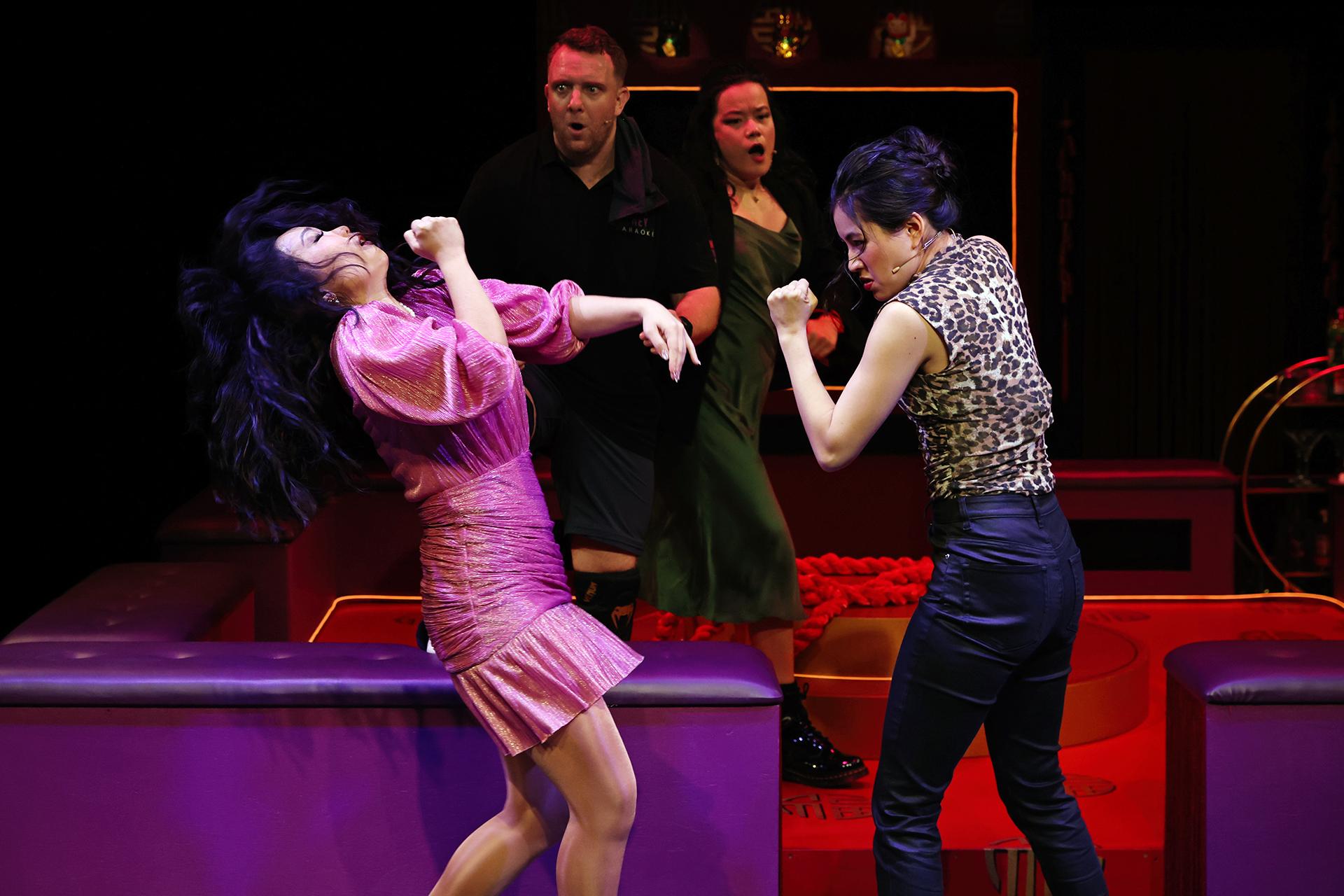
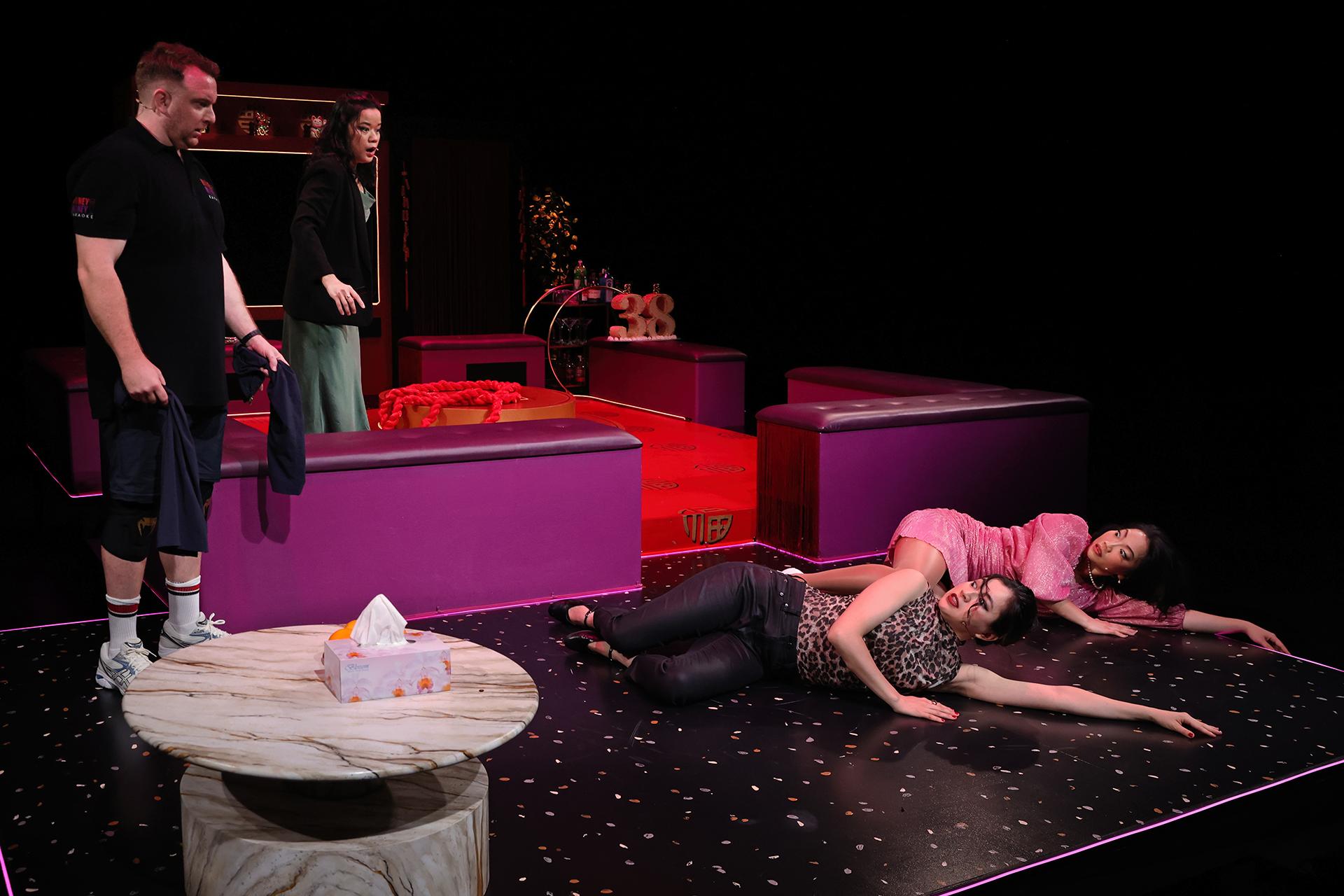
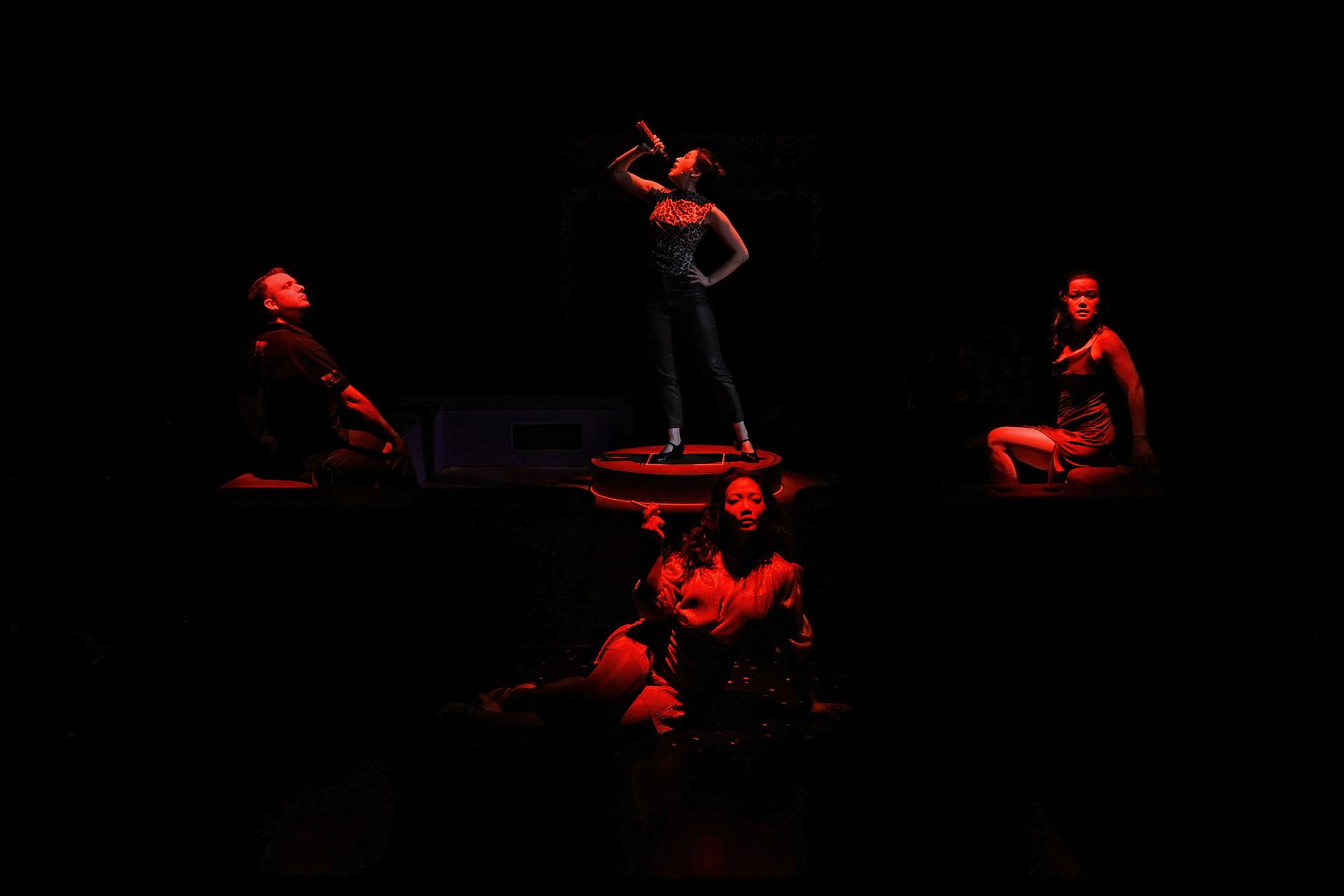
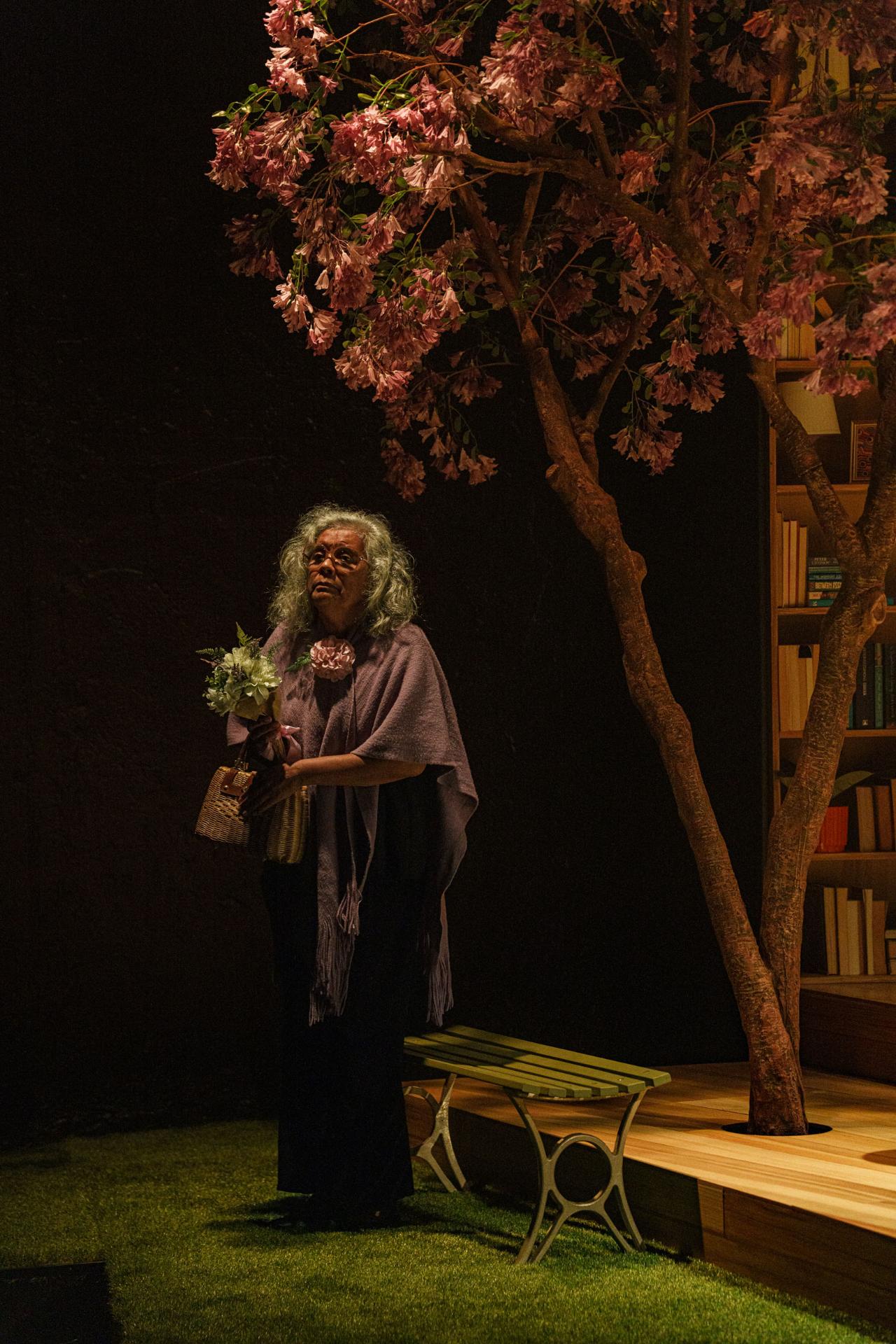
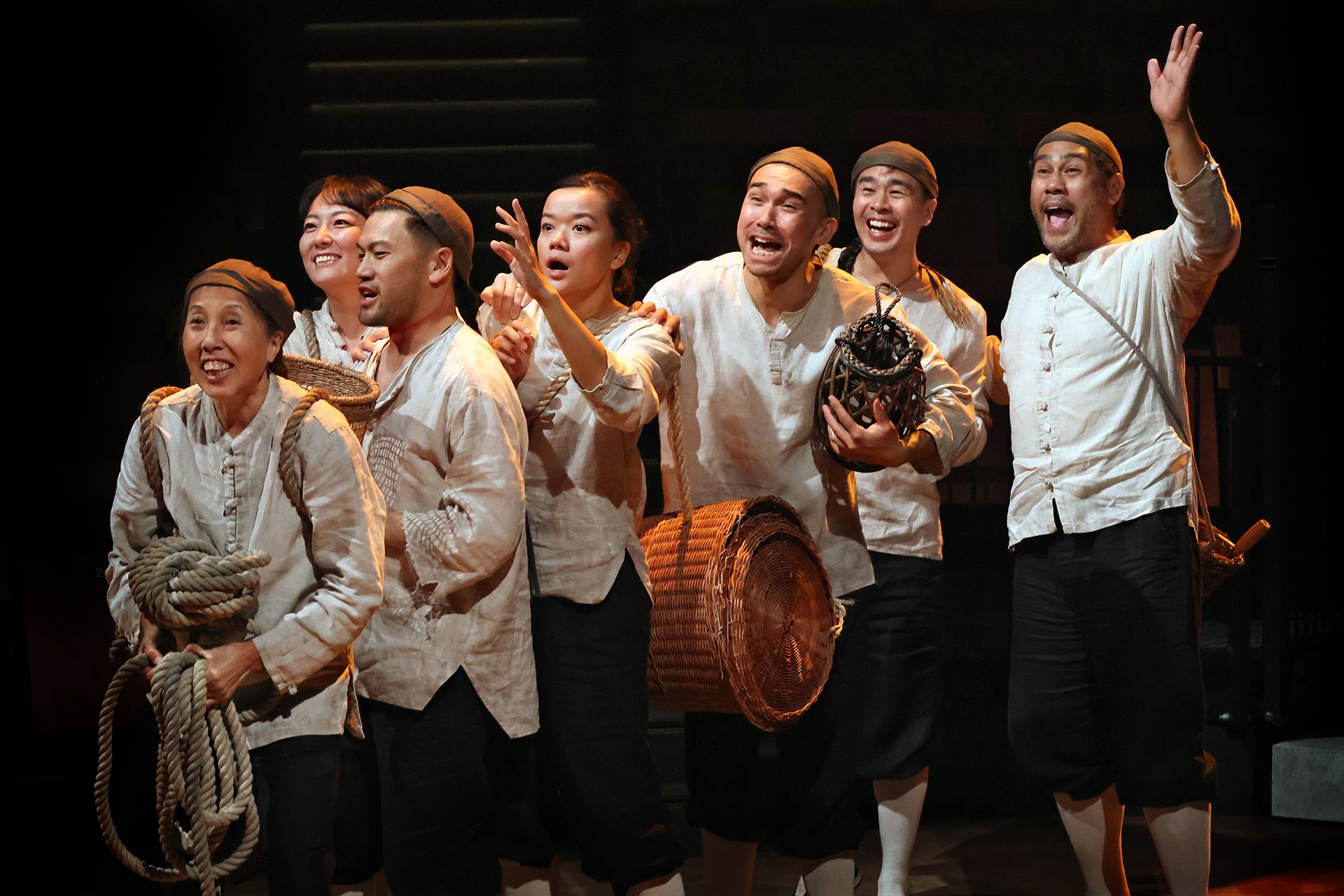
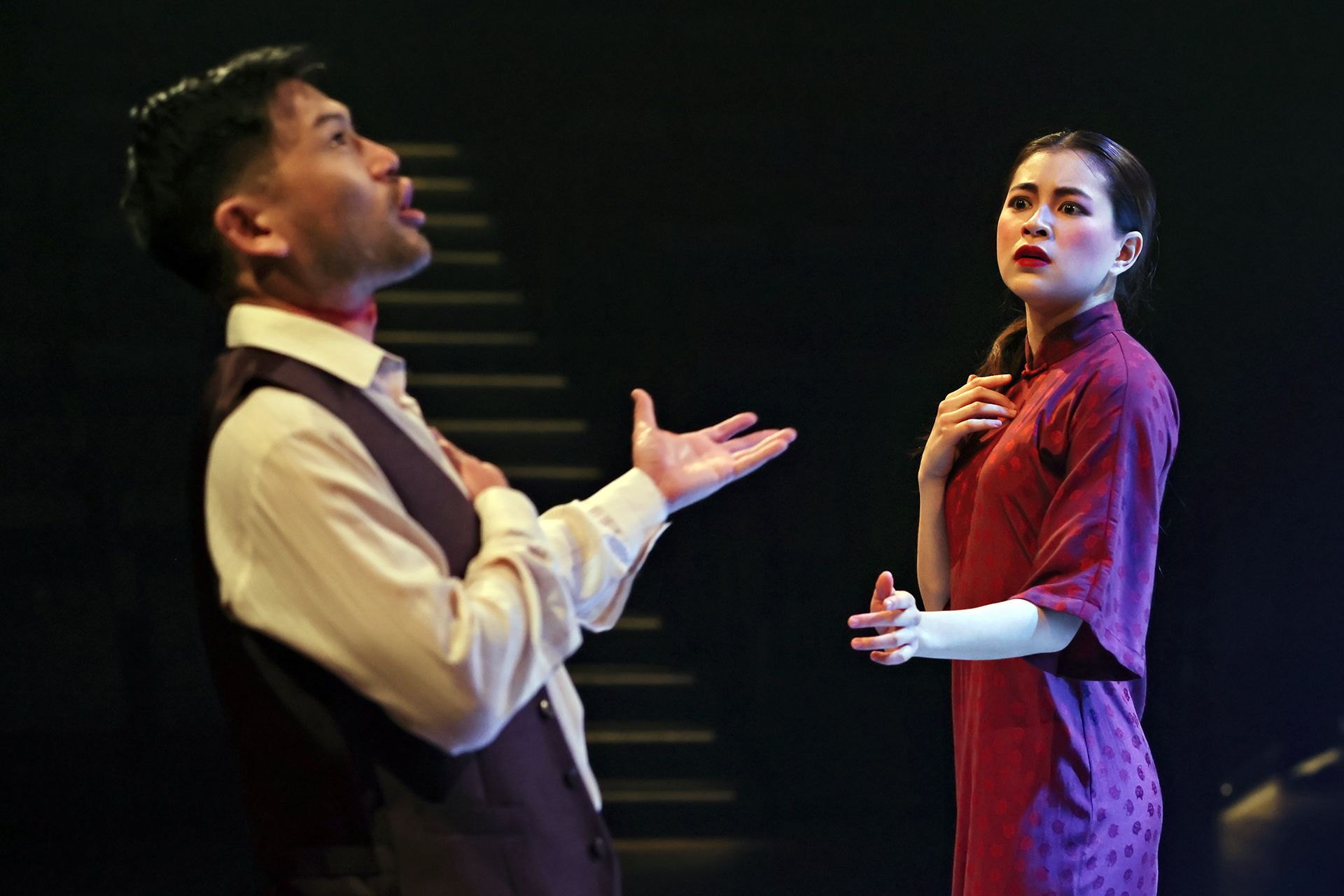
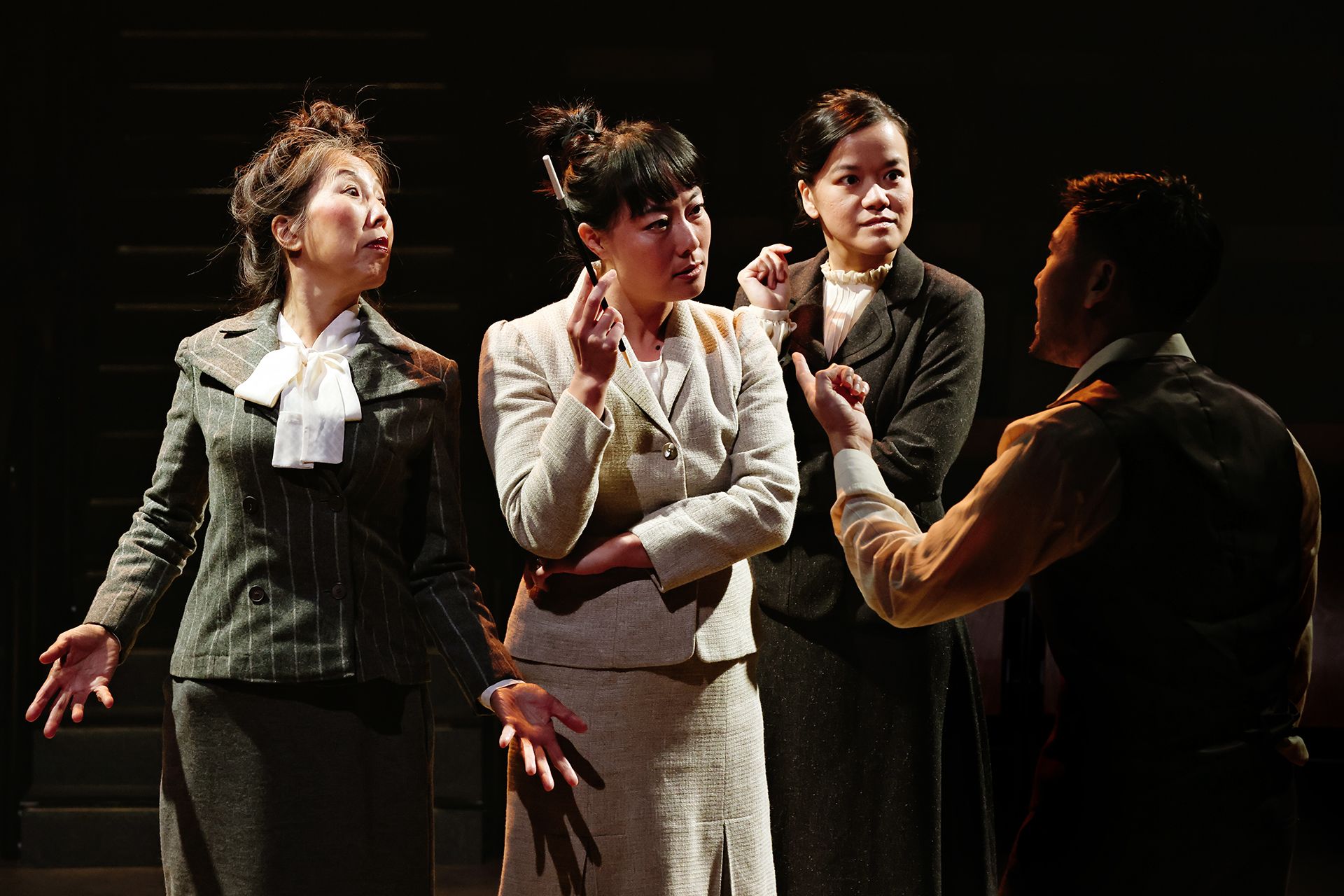
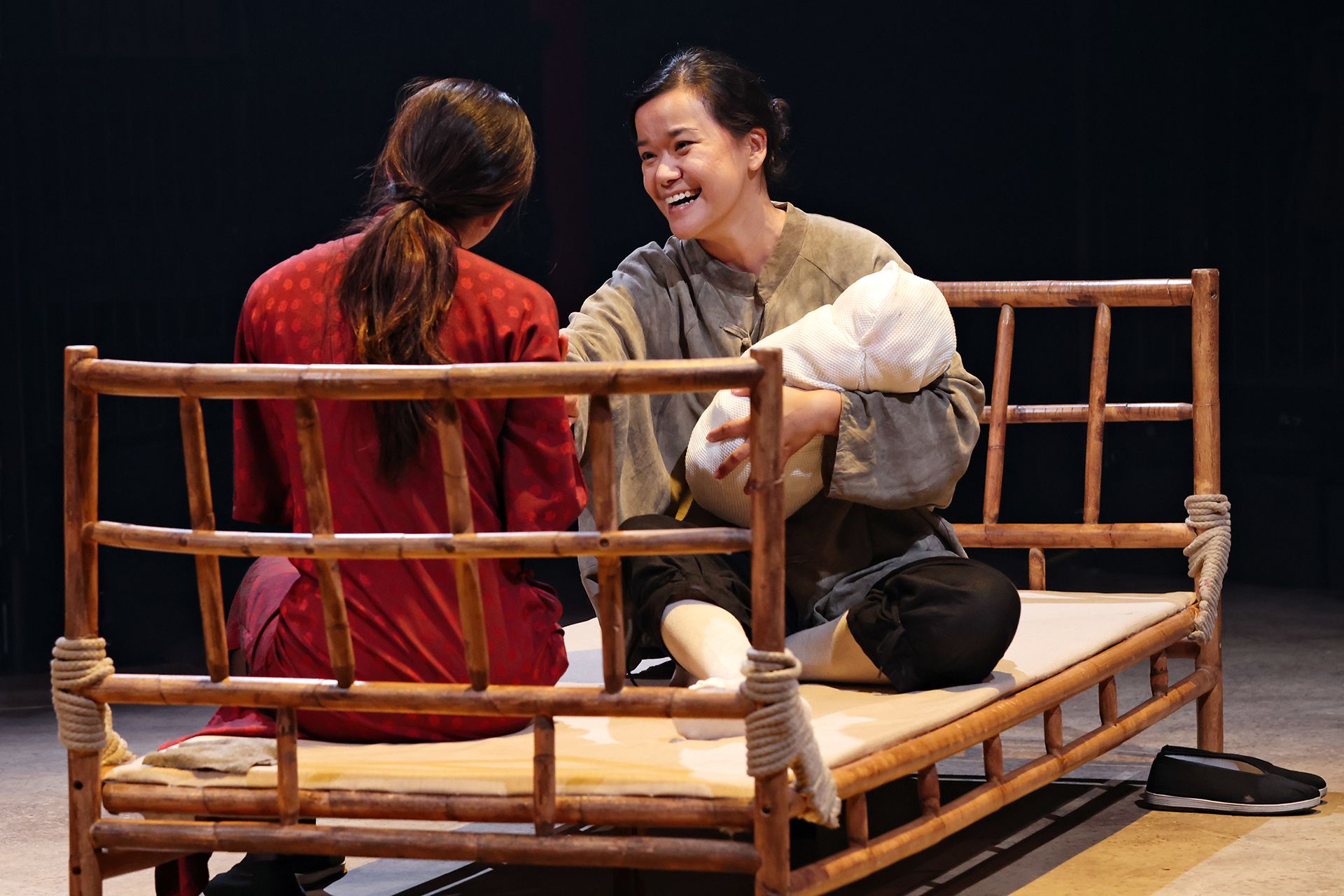
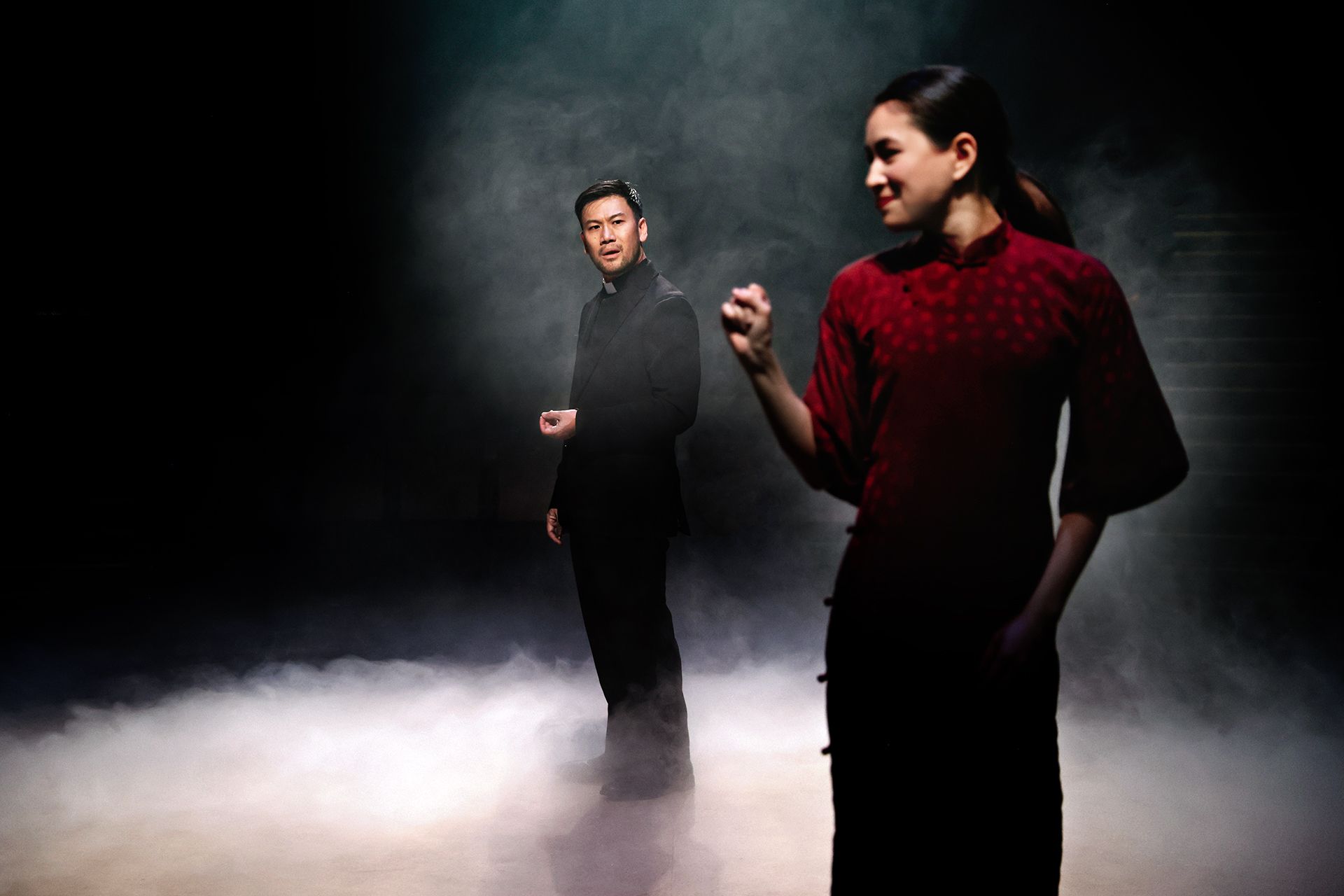
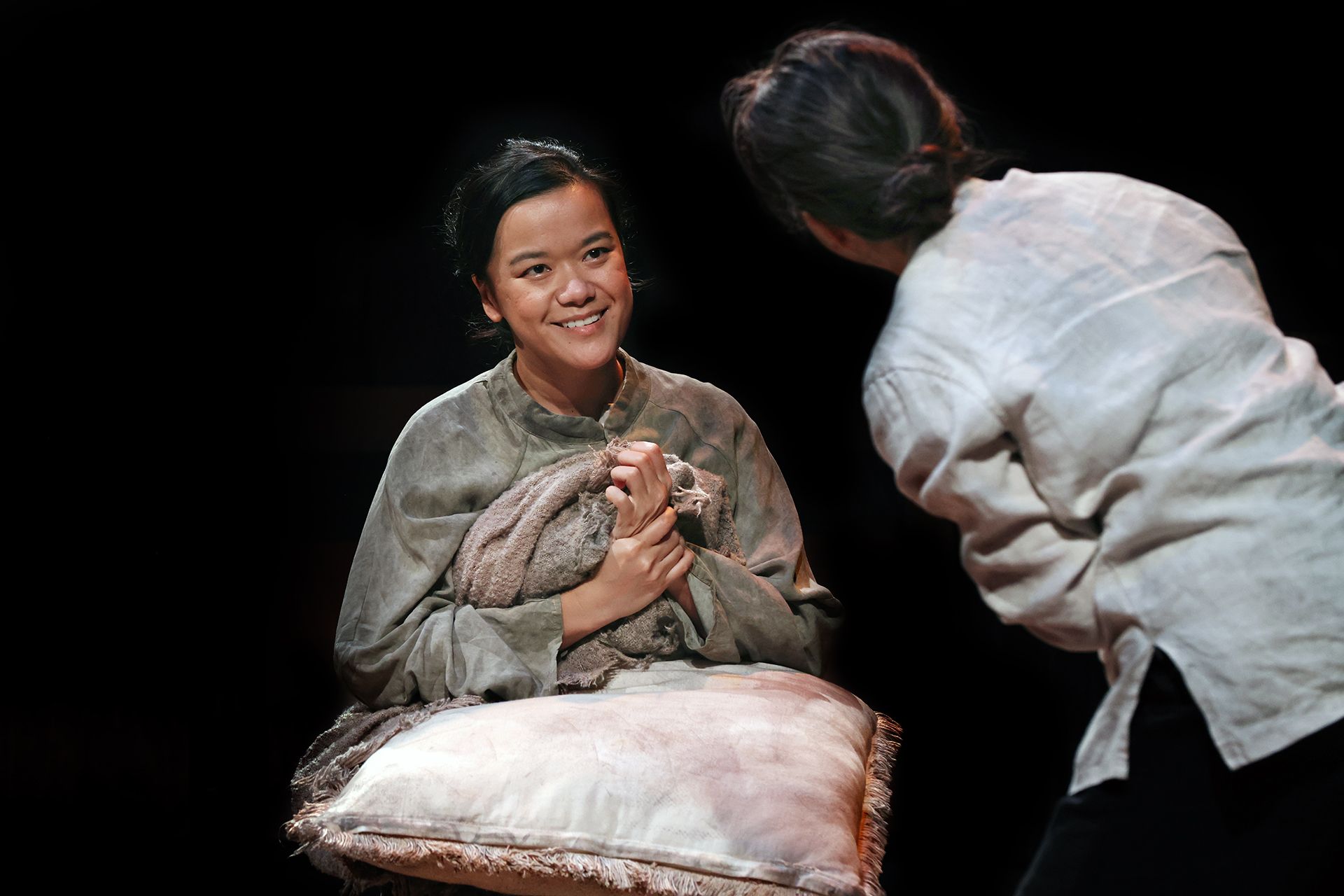
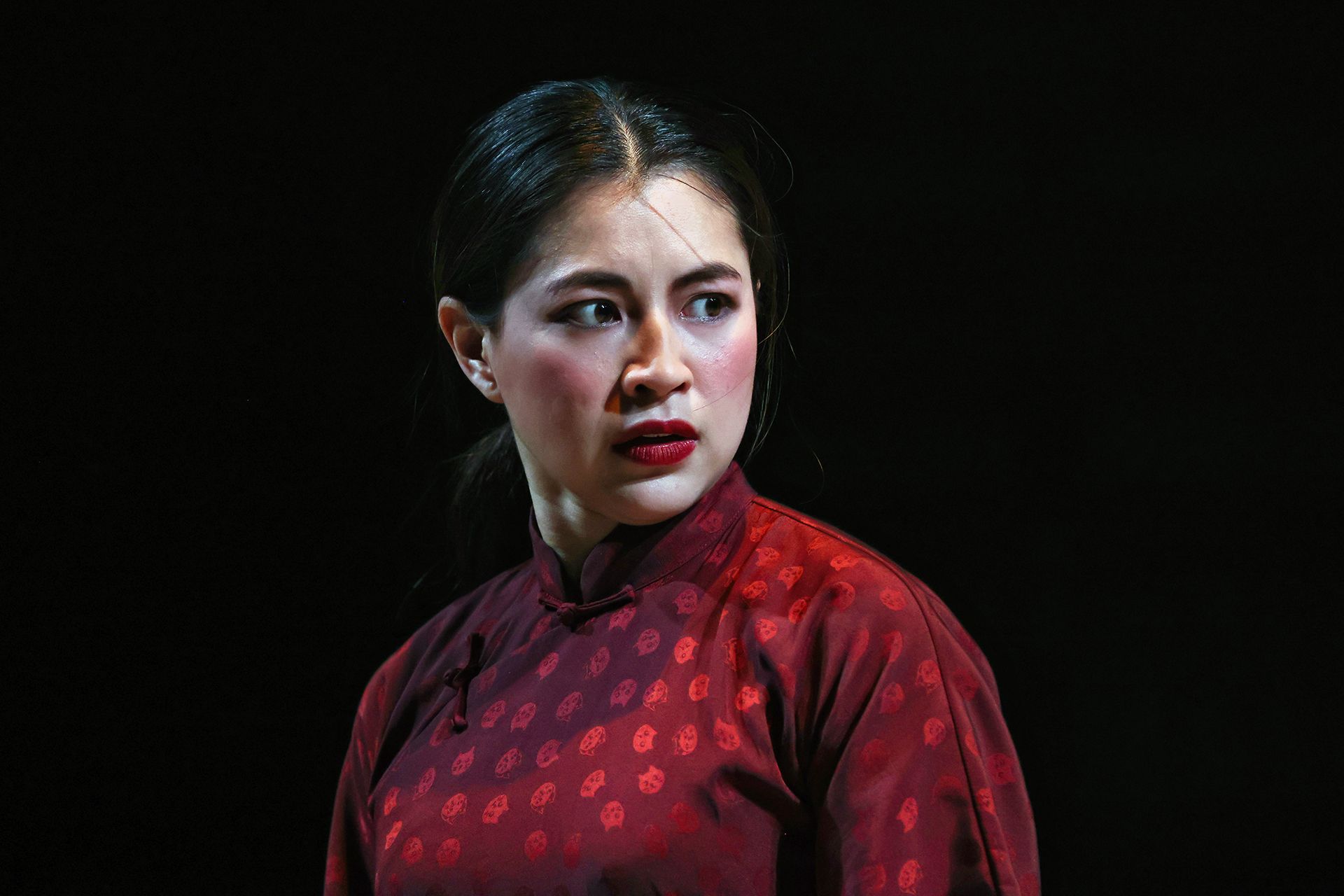
It is opening day at Mandy’s new karaoke bar, and she is plainly on the verge of collapse. It also happens to be her thirty-eighth birthday—a milestone that terrifies her, for both her mother and grandmother died at precisely that age. Amid this psychological unravelling, those very forebears return as ghosts from the afterlife or underworld, appearing as if to mock her dread and deepen her sense of inevitability. Congratulations, Get Rich! by Merlynn Tong, probes the intertwined notions of curses and legacies—ideas often treated as distinct but revealed here to be inseparable. Mandy fears repeating history, even as she begins to recognise, somewhere beneath the panic, that her own hard-won successes might yet rewrite the story her family has carried for generations.

The writing is wildly inventive, holding us rapt from the first moment to the last. Unpredictable and delightfully eccentric, it balances sincerity with a sense of the marvellously outlandish. Courtney Stewart’s direction brings together rich cultural specificity and deep emotional truth, guiding a story that moves between Singapore and Australia while allowing its layered meanings to reverberate across cultural lines. At times the humour edges toward the contrived, yet the production’s unwavering commitment to its distinctive tone renders even its most exaggerated moments disarmingly persuasive.

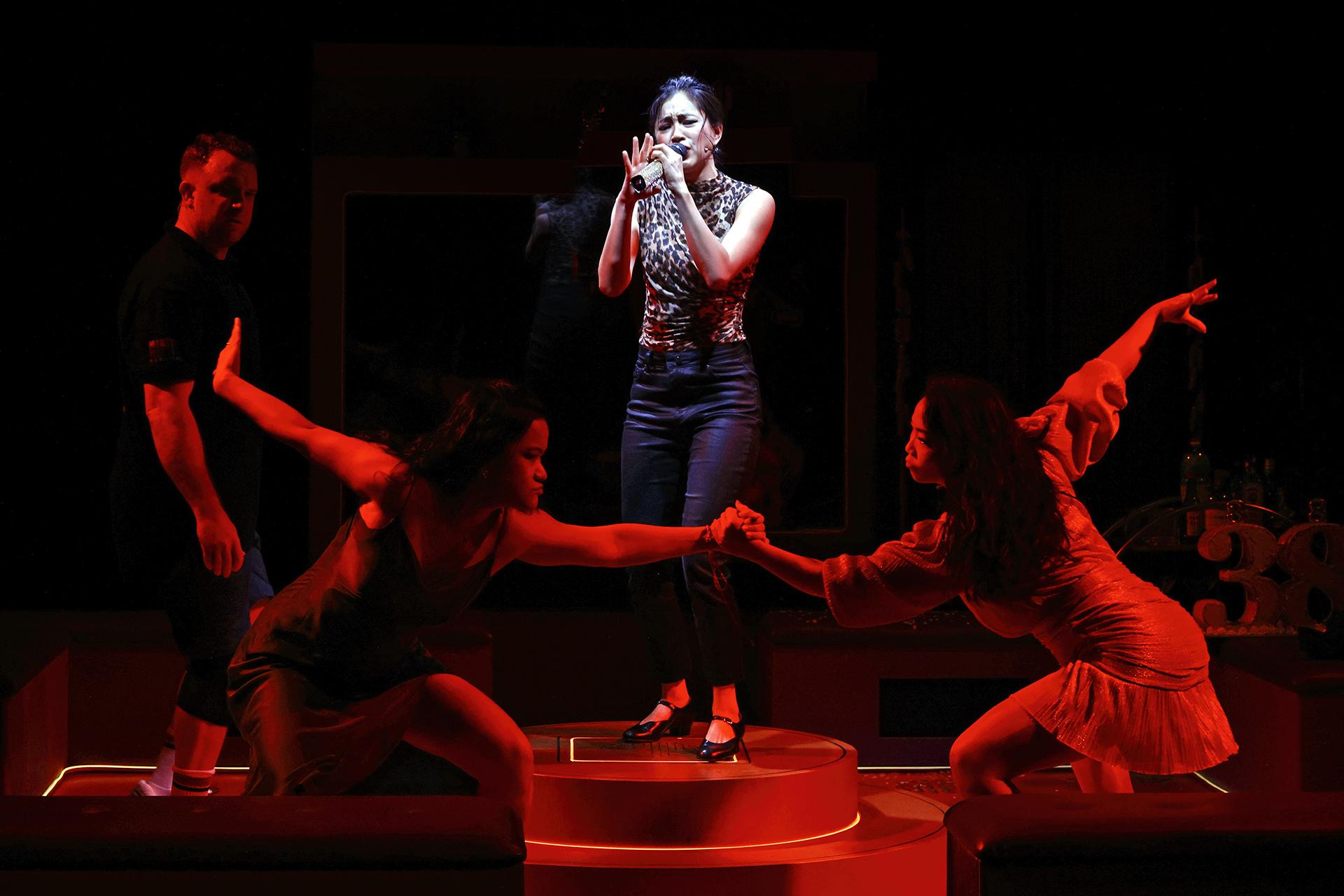
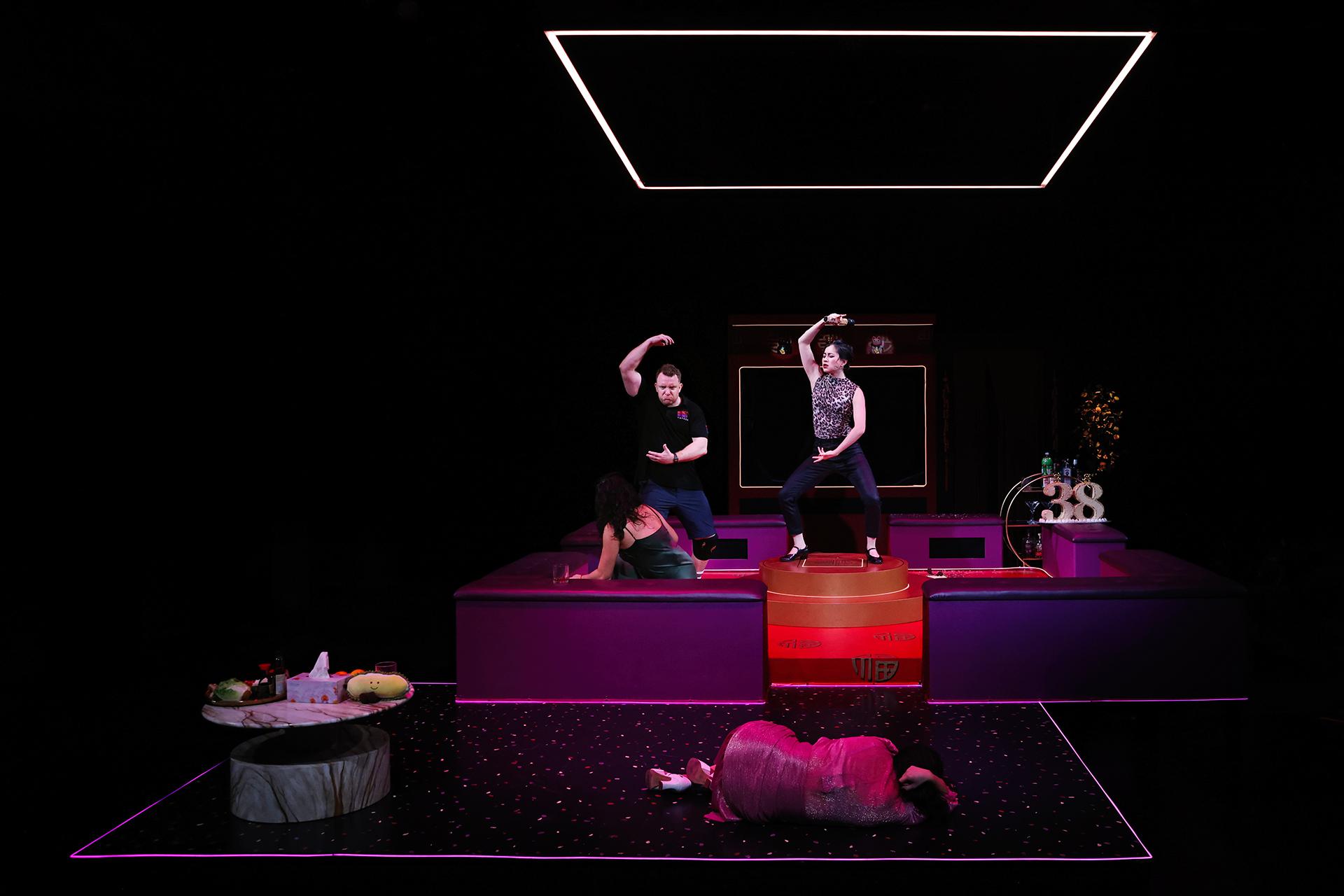
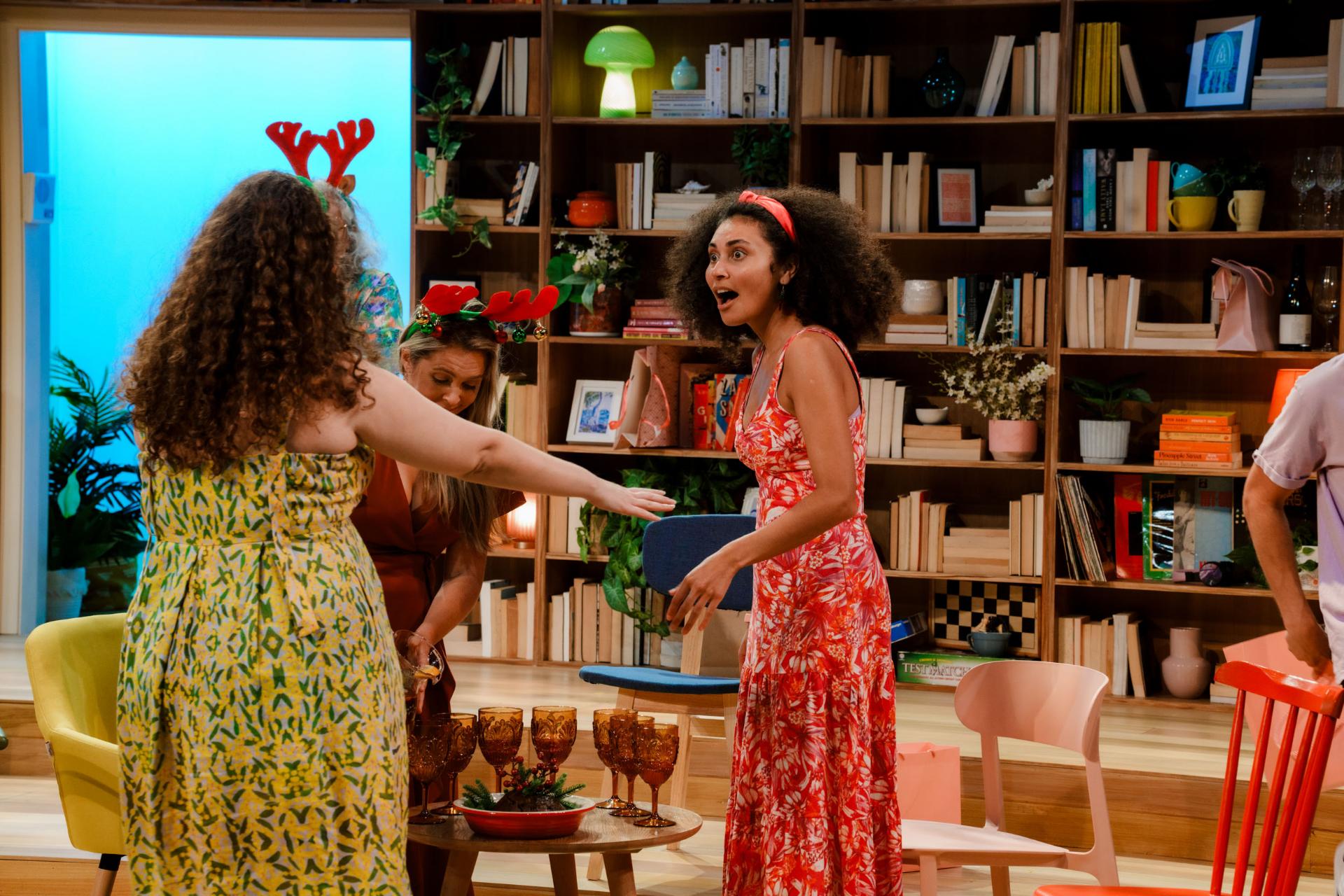
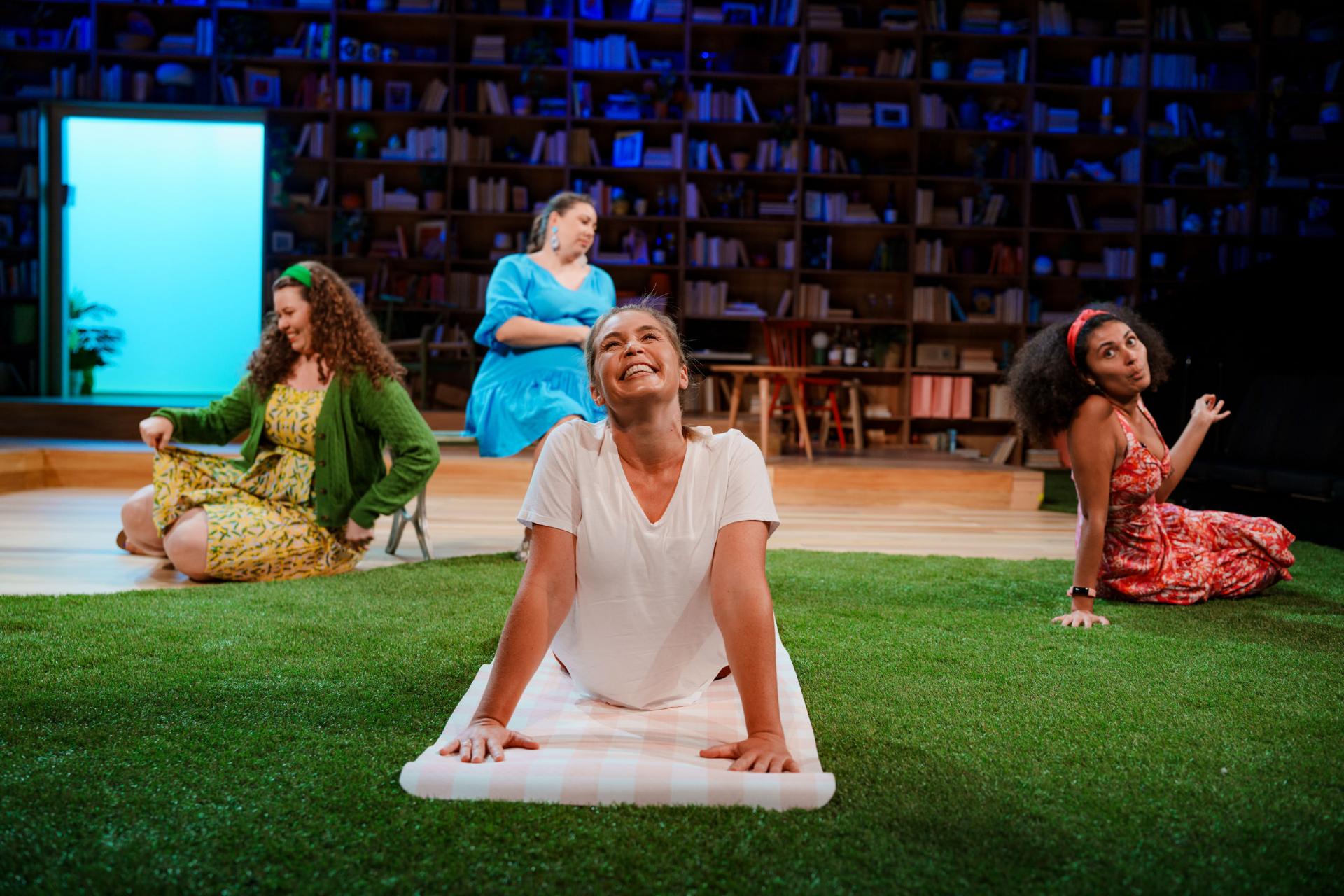
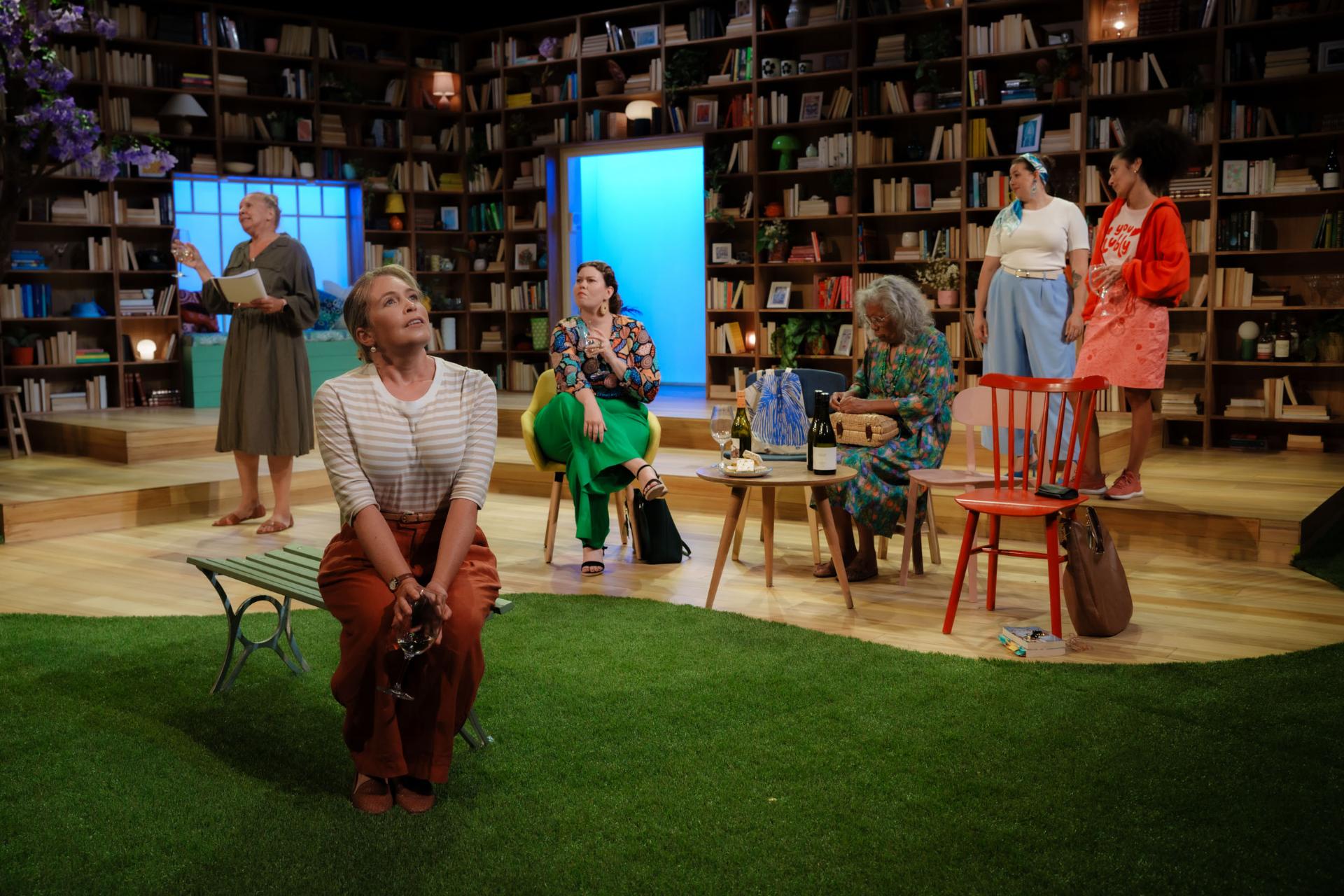
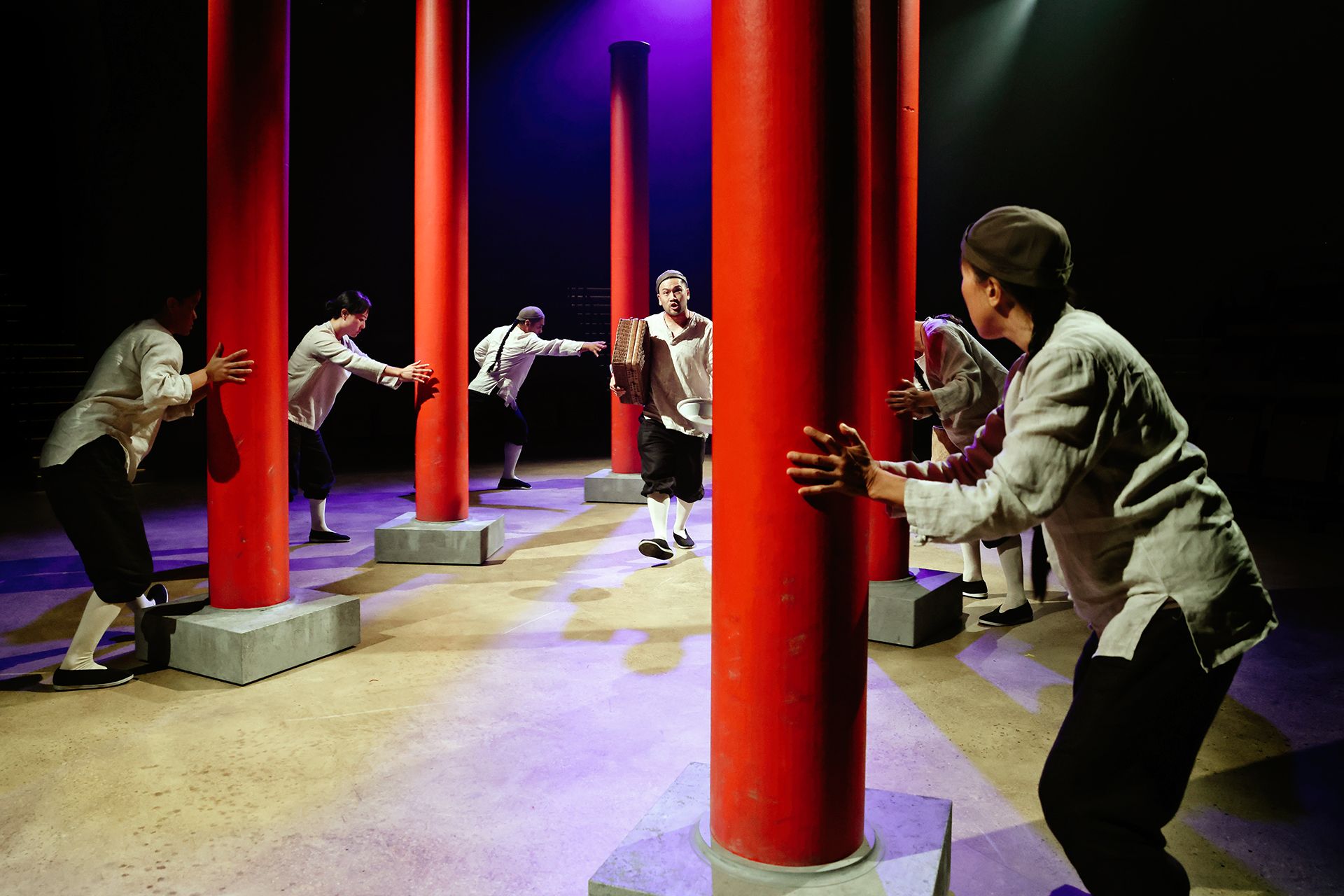
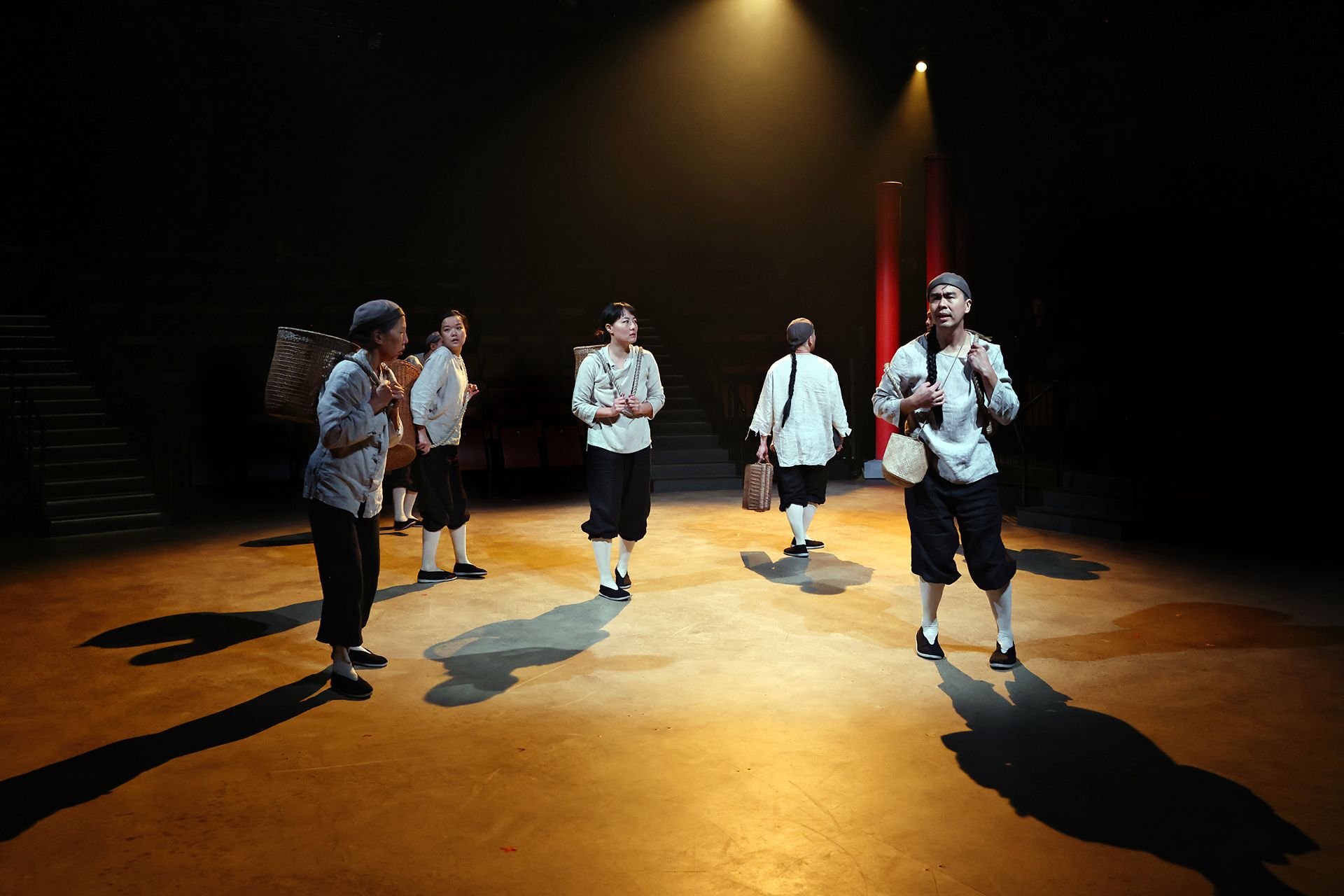
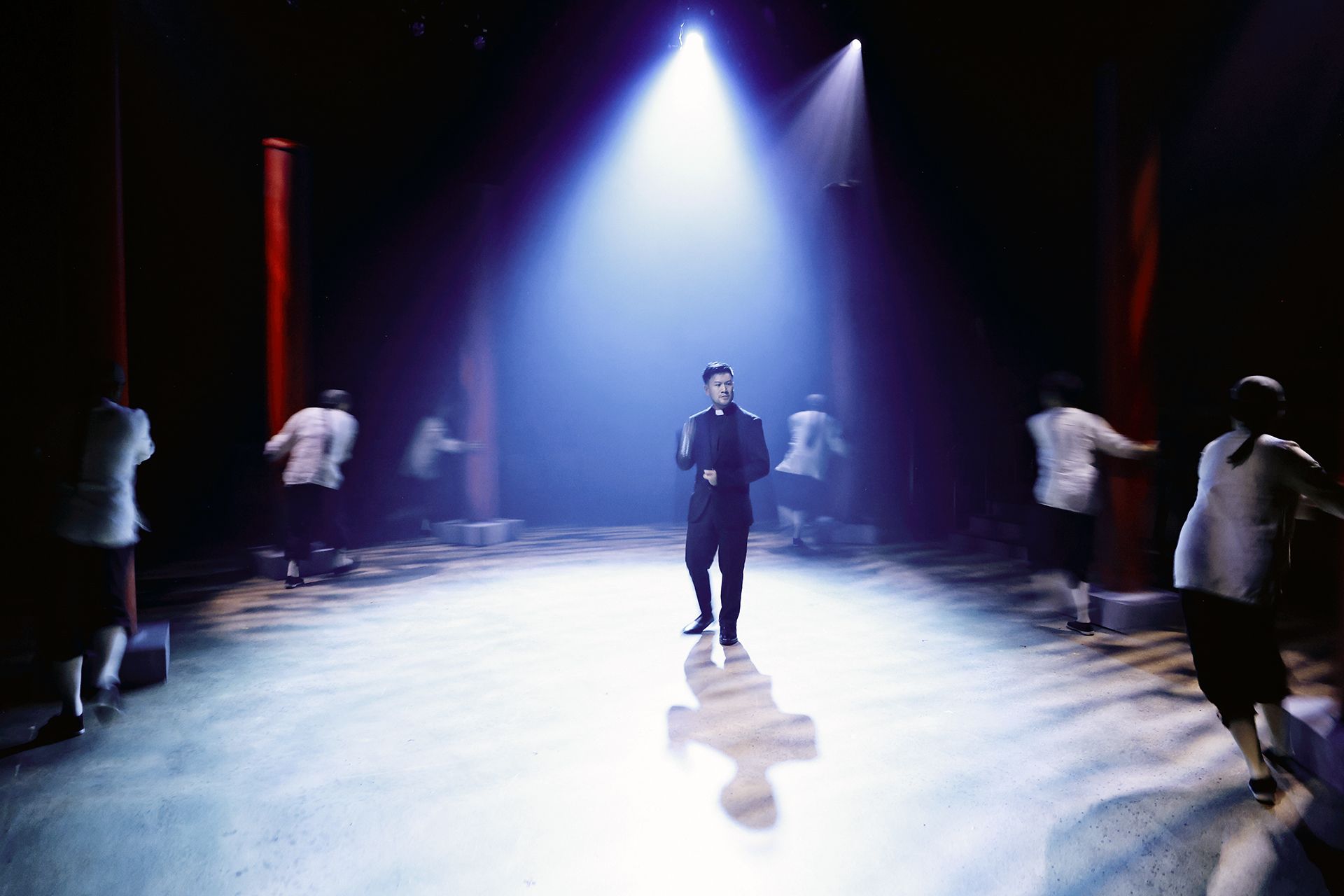
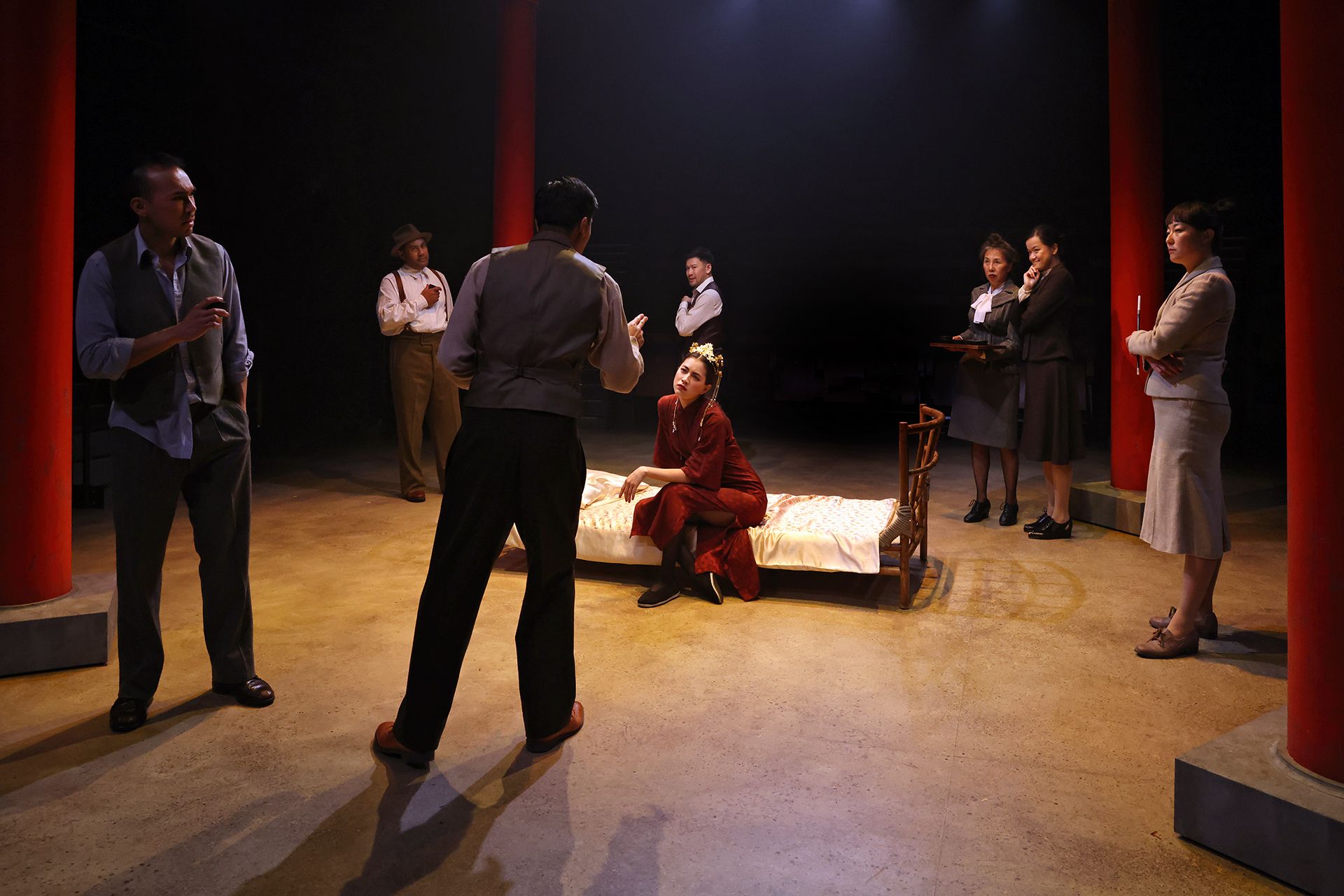
James Lew’s production design is richly considered, weaving symbolism into a visual language that is at once grounded and strikingly theatrical. His work carries a pleasurable sense of extravagance, yet never loses sight of the social resonances that inform each aesthetic choice. Gabriel Chan’s lighting is similarly exuberant, though one occasionally wishes for greater nuance to draw us further into the emotional terrain. Guy Webster’s sound design, gloriously amplified and unabashedly heightened, proves an ideal match for the work’s supernatural comic register. Particularly noteworthy are the original songs that Tong weaves into the piece, rendered delightfully camp through Alex Van den Broek’s playful, uninhibited music direction.

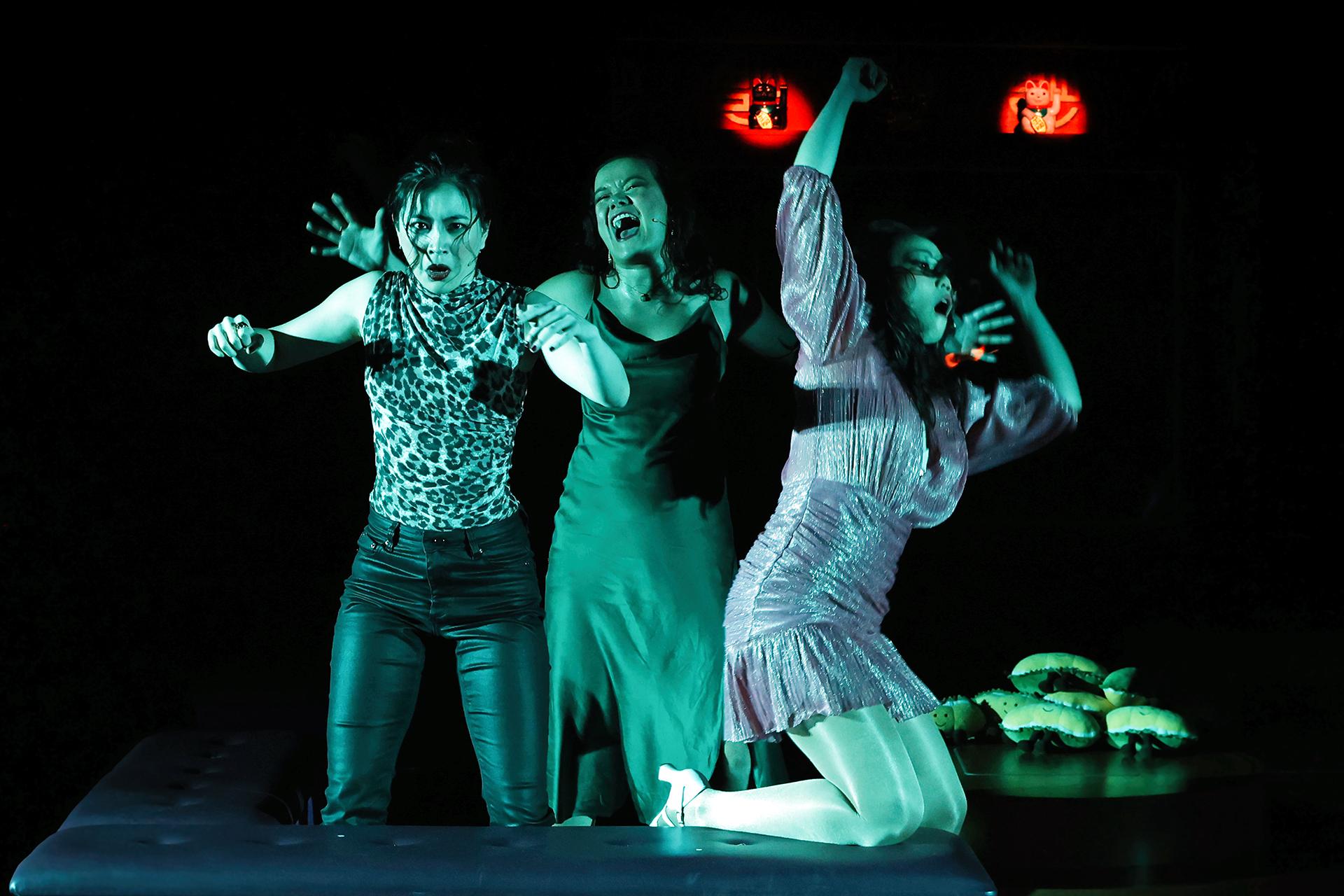
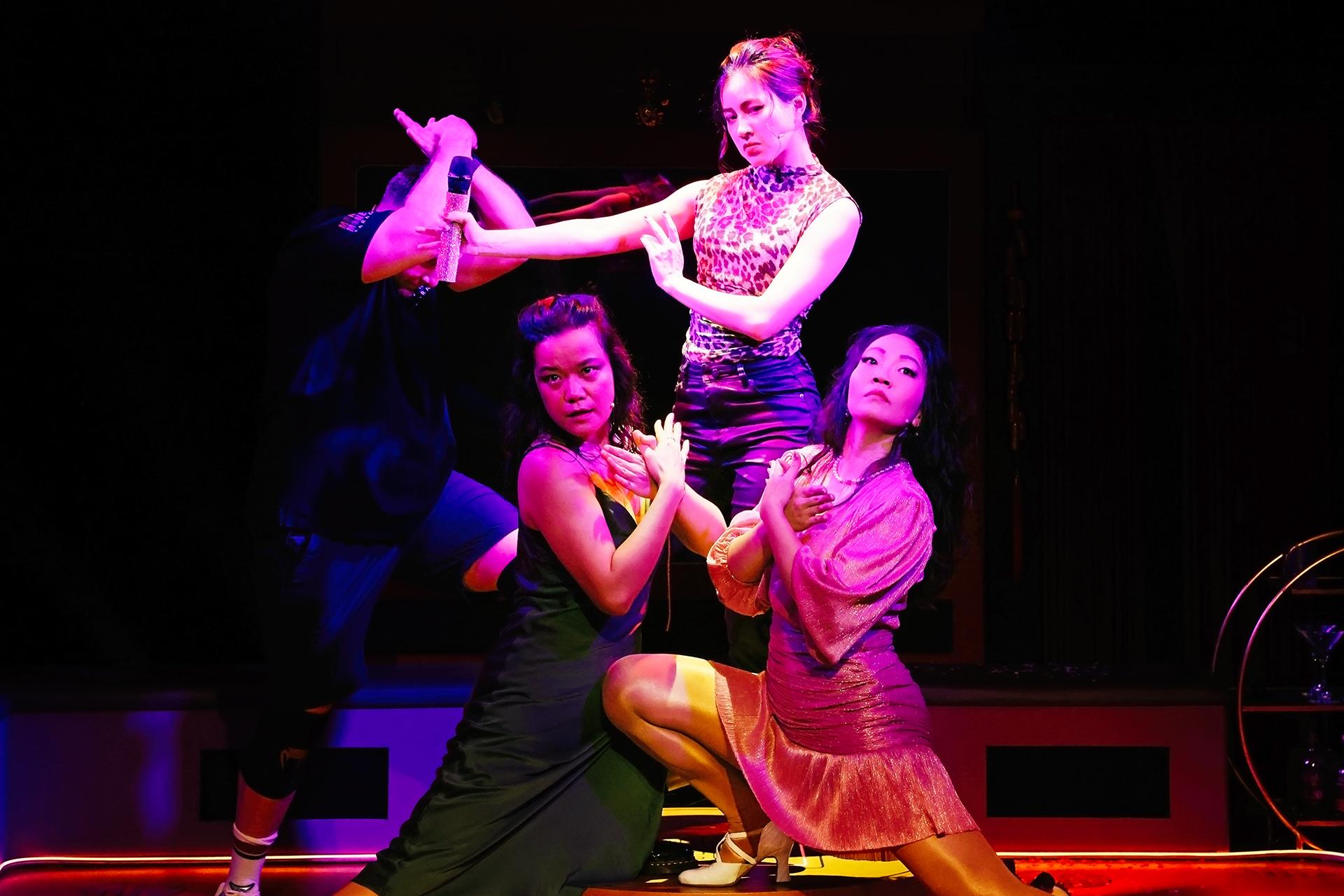
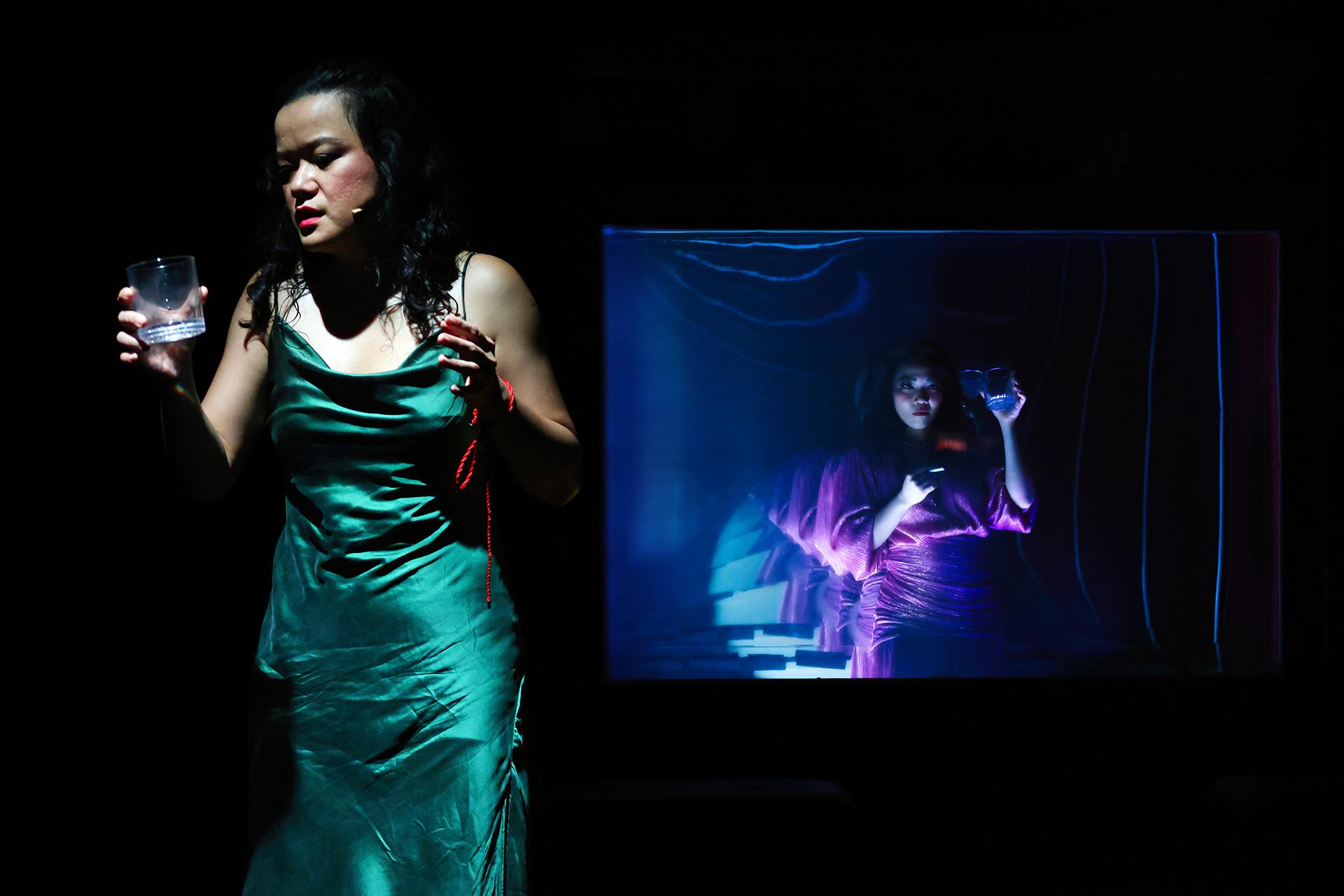
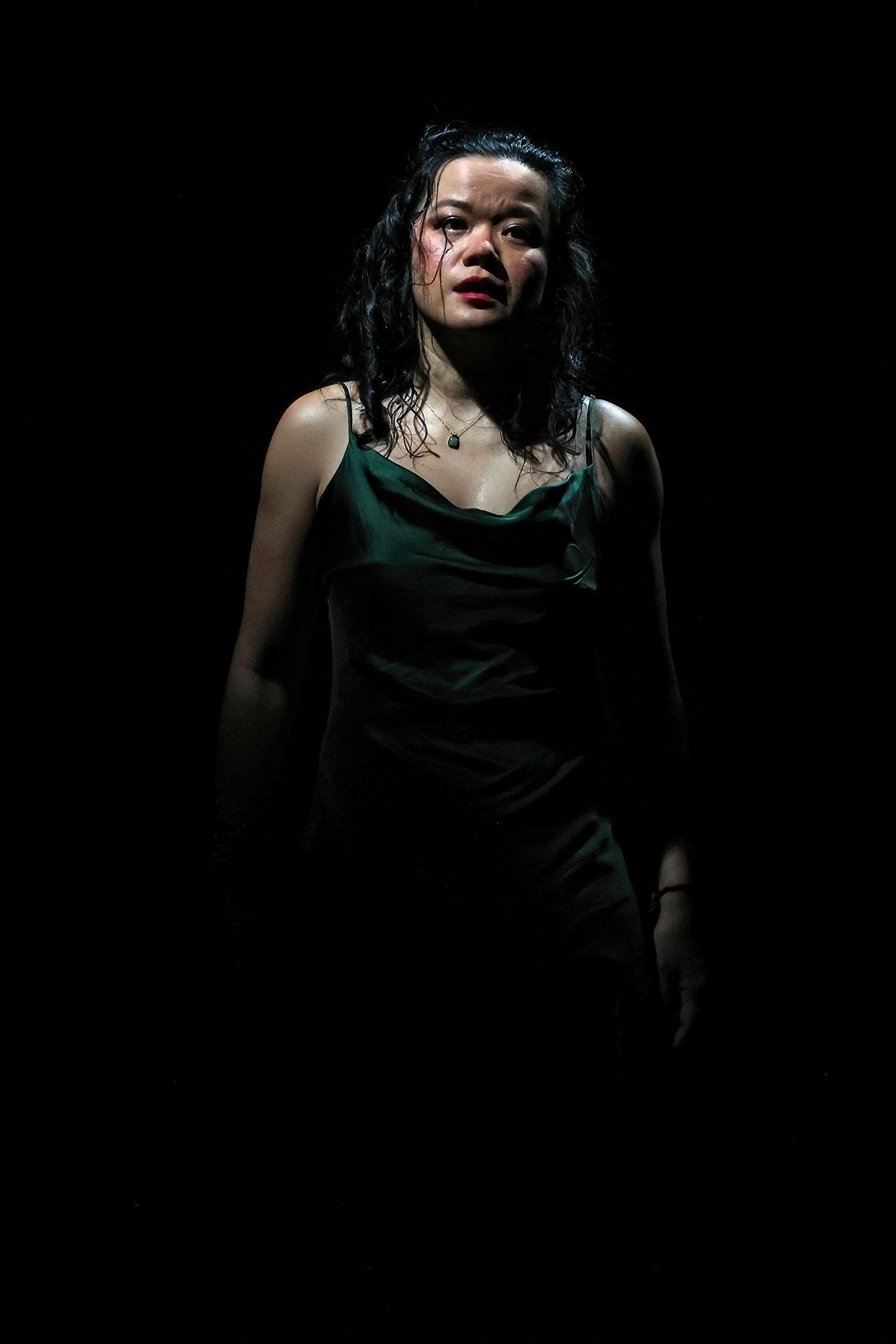
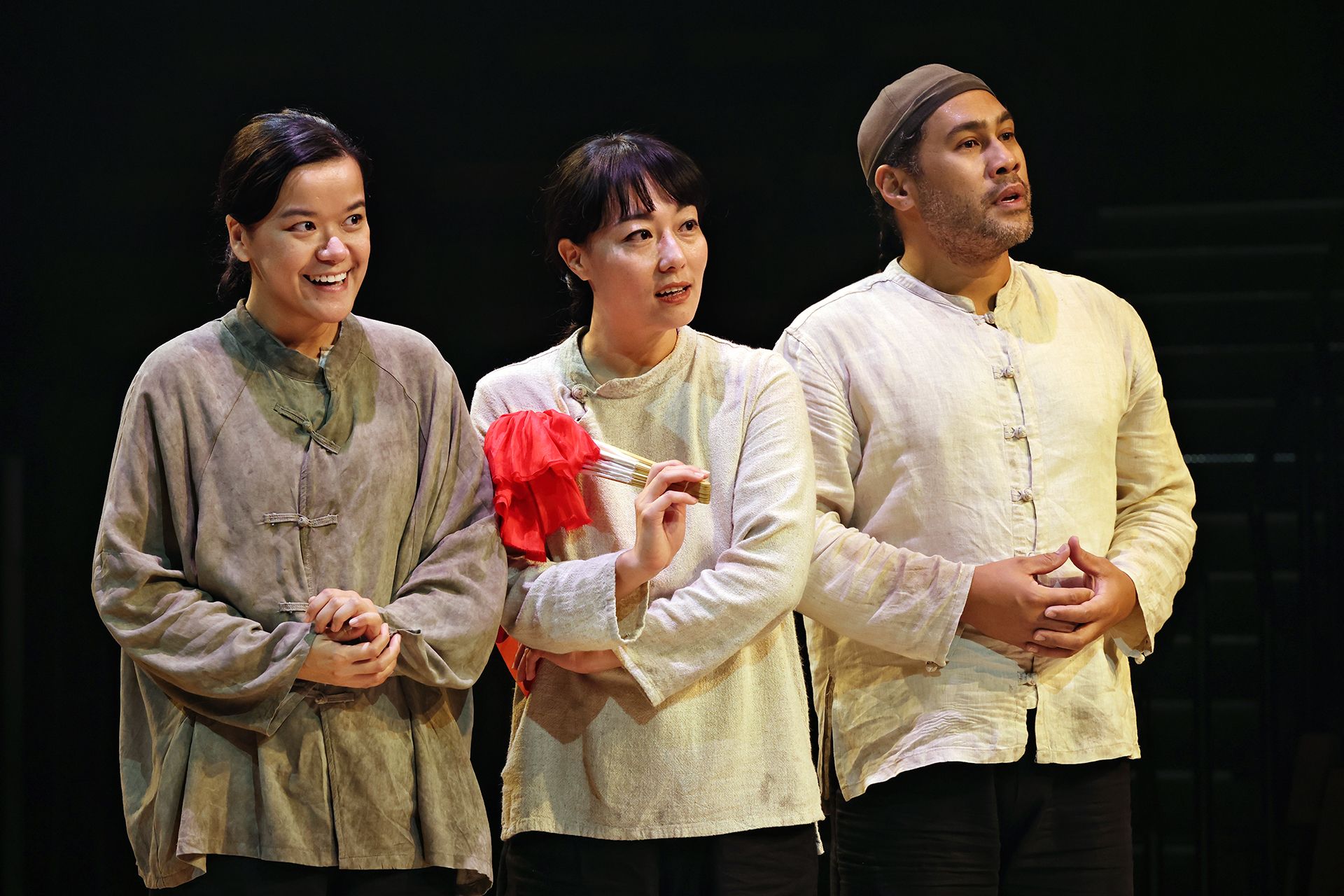
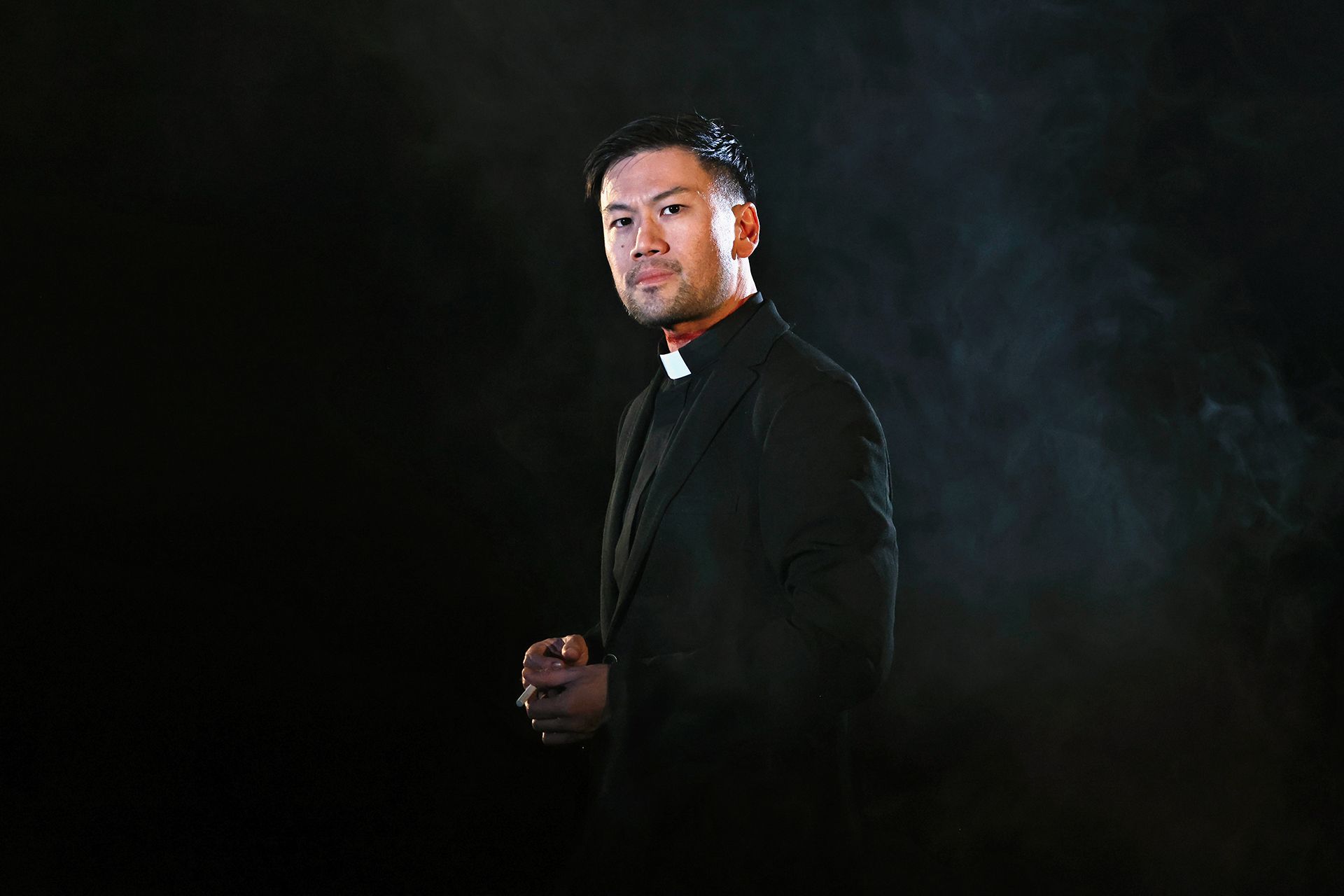
An exceptional ensemble anchors the production, with Tong herself embodying Mandy with indefatigable verve and an arresting emotional intensity. Kimie Tsukakoshi delivers a masterfully layered performance as the grandmother—precise, commanding, and utterly persuasive in her traversal of time and space. As Mandy’s mother, Seong Hui Xuan is unassailably authentic, capturing the poignant duality of a woman who bequeaths her daughter both profound anxieties and an equally steadfast resilience. Zachary Boulton shines as Xavier, Mandy’s partner in life and business, his impeccable comic timing offering welcome buoyancy whenever the domestic tensions threaten to overwhelm. The ensemble as a whole is remarkable for its discipline and cohesion, contributing to a staging distinguished by its tightness, clarity, and shared purpose.

The three women of Congratulations, Get Rich!, spanning three generations, trace a lineage of womanhood that feels both linear and perpetual—distinct lives that nonetheless echo one another with a clarity suggesting something almost divine in the continuity of mothers and daughters. Across cultures, whether East or West, women are routinely diminished, yet time and again reveal themselves to be far more powerful than the structures that seek to contain them. Mandy’s ancestors may have been claimed too early by the worlds that shaped them, but their struggles permeate unmistakably into the present. Mandy, however, stands on different ground, no longer bound by their limitations—and poised, at last, to carry the story further.

www.sydneytheatre.com.au | www.laboite.com.au

Review: Tiddas  (Belvoir St Theatre)

Venue: Belvoir St Theatre (Surry Hills NSW), Jan 12 – 28, 2024
Playwright: Anita Heiss
Directors: Nadine McDonald-Dowd, Roxanne McDonald
Cast: Lara Croydon, Sean Dow, Jade Lomas-Ronan, Nadine McDonald-Dowd, Roxanne McDonald, Anna McMahon, Perry Mooney
Images by Stephen Wilson Barker

Theatre review
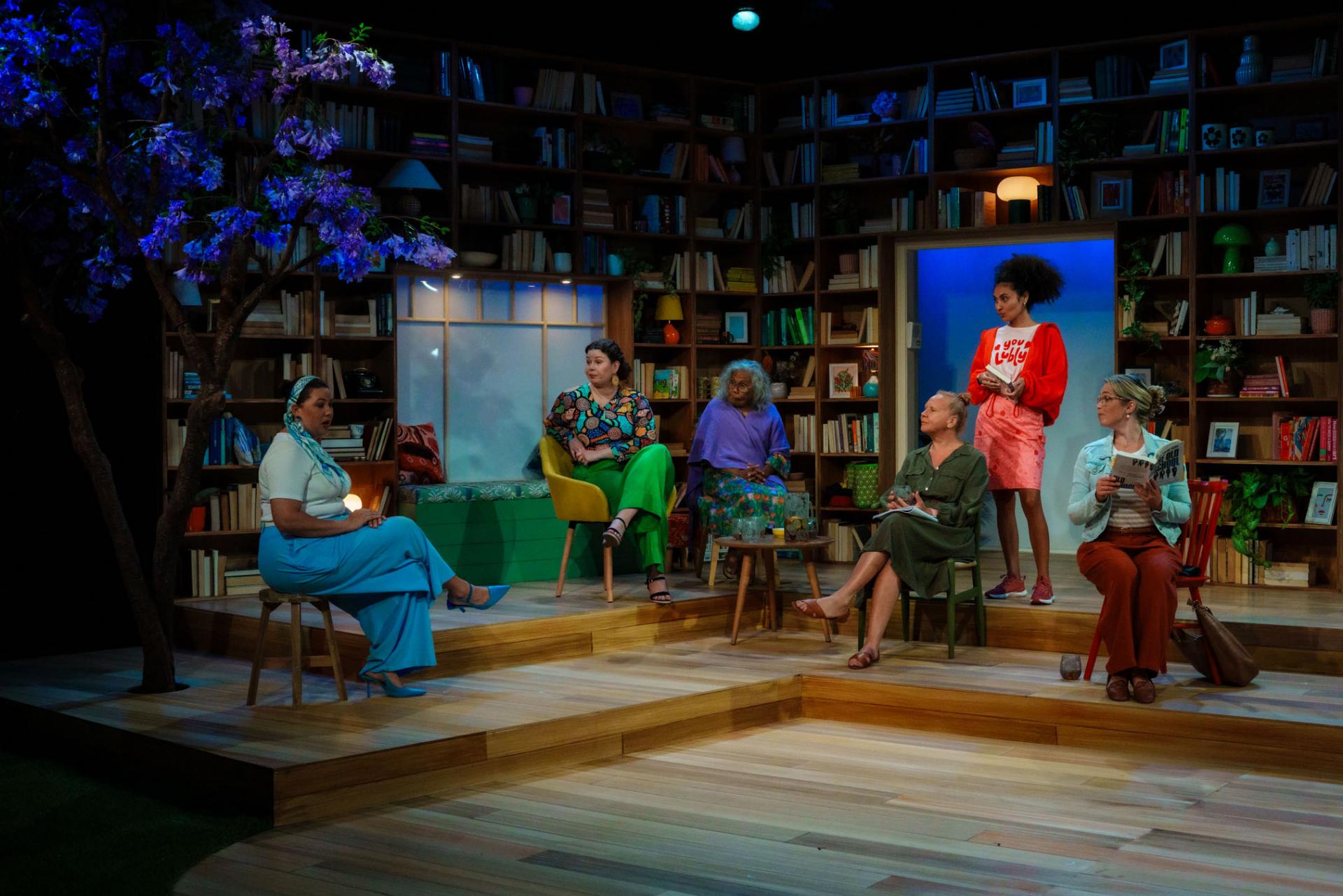
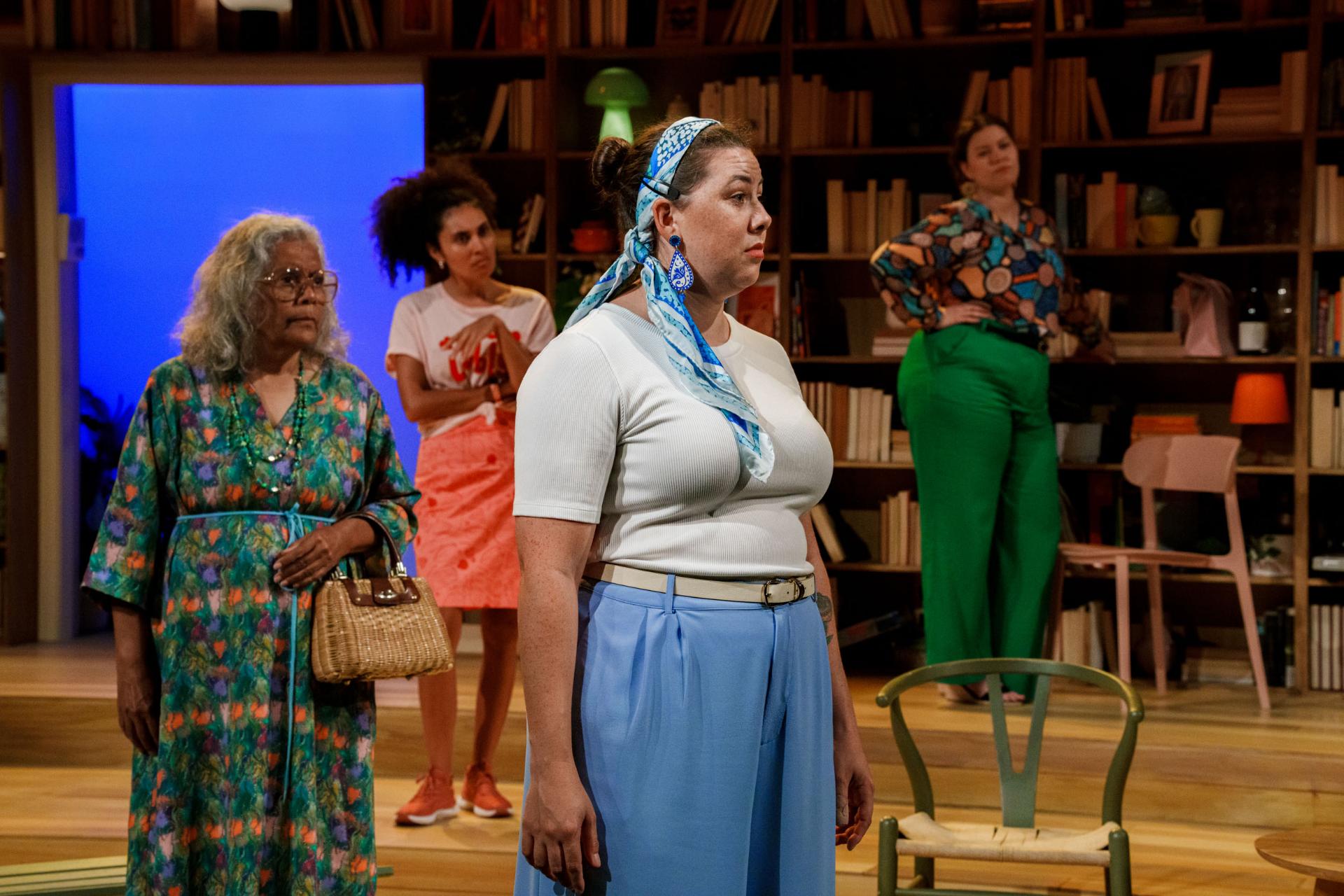
Having been childhood friends for thirty years, this group of five women has nothing to hide from one another. In Anita Heiss’ Tiddas, it is the frankness of these characters, that guide us to a meditation on some of the deeper aspects of life on this land. Most of the people we meet in the play are Aboriginal, and we benefit from their socially resonant discussions about identity and sovereignty. On more intimate levels, there are explorations into topics such as motherhood, romance and friendship; all dealt with in a fiercely authentic way, that enables us to examine some of the central elements of our shared humanity, with admirable clarity and honesty.

Directed by Nadine McDonald-Dowd and Roxanne McDonald, Tiddas is consistently engaging, always an entertaining watch, whilst keeping our minds attentive to the sensitive subjects being explored. There is a gentle beauty being rendered by aesthetical aspects of the show, a softness perhaps that is commensurate with the diversity of feminine qualities we encounter. Set and costumes by Zoe Rouse are vibrant, colourful and with a sense of sumptuousness that puts us at ease, so that we remain open to the ideas being studied. Lights by Jason Glenwright and sounds by Wil Hughes, are both intricately consistent with every ebb and flow of the drama and the comedy, ensuring that the atmosphere is in complete harmony with each stage of the storytelling.

The cast of seven is exceptionally warm,  with a wonderful chemistry that makes every interchange believable. There are however moments in their performance that can be excessively declarative in style, in ways that move our involvement as an audience away from instinct and emotion, to somewhere a little too logical. It is when the personalities are convincingly natural, that we can really sink our teeth into all the richness that Tiddas intends. Roxanne McDonald (aforementioned as co-director) and Perry Mooney are particularly strong with the level of naturalism they introduce, allowing us to relate meaningfully, to the many worthy concerns of the show.

There is so much in modern life that prevents us from being real. It is only in the presence of close friends and family that we can be who we truly are. It is also in art, that we can be encouraged to peel away pretences and mendacities, to understand our truest natures. In Tiddas we can see what are most important to the five women, and decide for ourselves, how much in common we have with their bliss.

www.belvoir.com.au | www.laboite.com.au

Review: The Poison Of Polygamy (Sydney Theatre Company)

Venue: Wharf 1 Sydney Theatre Company (Walsh Bay NSW), Jun 8 – Jul 15, 2023
Playwright: Anchuli Felicia King (based on the novel by Wong Shee Ping, translated by Ely Finch)
Director: Courtney Stewart
Cast: Ray Chong Nee, Hsin-Ju Ely, Silvan Rus, Shan-Ree Tan, Merlynn Tong, Kimie Tsukakoshi, Anna Yen, Gareth Yuen
Images by Prudence Upton

Theatre review

Sleep-Sick appears from the very beginning, as a ghost with his throat brutally slit, indicating that things do not end well. In the 1909 novel The Poison of Polygamy《多妻毒》by Wong Shee Ping 黃樹屏, our narrating protagonist tells his epic story, of journeys between Guangdong in China, and Victoria in Australia, during the goldrush era. We soon discover that it was Sleep-Sick’s opium habit that instigated this riveting chain of events, one that Wong had undoubtedly conceived as a moralistic tale. Involving sins of greed and debauchery, The Poison of Polygamy is typical of traditional Chinese attitudes, in a style that is not unlike many classics charting a man’s downfall, following his failure to abstain from depravity.

In Anchuli Felicia King’s stage adaptation however, the moral centre is shifted from personal foibles, to an emphasis on deficiencies that are cultural and systemic in nature. Sleep-Sick’s narrative now operates as allegory, in a play that demonstrates undeniable interest, in the nature of capitalism and the detrimental effects of colonialism. King’s reshaping of The Poison of Polygamy is thereby turned into something much more pertinent to our times, one that addresses our unmitigating concerns around the idea of a decline in this civilisation. All the amusing salaciousness that feature in the original is however gloriously retained. Money, sex, and murder are key ingredients, in a show that explores our most primal and unchanging desires.

The production satisfies on many levels, under the astute directorship of Courtney Stewart, who utilises fully the text’s numerous dimensions, to deliver a complex and thoroughly engrossing work of theatre. Highly innovative and wonderfully imaginative, Stewart transforms an empty stage into  exciting scenes, offering an experience that pulsates with a continual sense of anticipation as a result of its unpredictability, and disarming with its scintillating sardonic humour.

James Lew’s design is thankfully only elementally evocative of what might be considered a Chinese aesthetic, able to circumvent the cliché of chinoiserie, whilst creating imagery that look commensurate with how we believe this world to have been. Lights by Ben Hughes are rigorously conceived, agile in shifting us between distinct spaces, and powerful at manufacturing atmosphere. Music by Matt Hsu couches the action in an air of authenticity, and along with sound design by Guy Webster, engage our hearing for a consistent feeling of enrichment, subconsciously perhaps, that boosts our enjoyment.

Actor Shan-Ree Tan is an extraordinary leading man, totally captivating with his intricate depictions of and commentary on Sleep-Sick, successfully transforming a character with many flaws into a person we are desperate to know everything about. Kimie Tsukakoshi plays femme fatale Tsiu Hei with delicious aplomb, stunning in her unapologetically grand portrayal of the seductive villain, somehow never descending into caricature, and always able to provide psychological rationale for all the outrageous behaviour.

Sleep-Sick’s long suffering wife Ma is made dignified by Merlynn Tong’s mettle and spirit. Her capacity to represent both the hardest and softest aspects of the old-fashioned Chinese woman, conveys an admirable defiance alongside the inevitable victimisation that defines her narrative. The incredibly versatile Gareth Yuen shines not only as the poet Pan, but also in two smaller roles Ng and Song, unforgettable with his impeccable timing, and a meticulously calibrated physicality that draws us deep into the nuances of everything he wishes to say. It is a fantastic cast of eight, each performer contributing passion and diligence, in what feels like an unprecedented production about Asian-Australian identities.

Through a story about early Chinese settlers, we are invited to contemplate both the contributions of minority communities on this land, as well as our rarely interrogated complicity in colonialism. The dispossession of Indigenous peoples is our greatest sin, one that non-Indigenous people of colour have yet to sufficiently own up to. In The Poison of Polygamy we observe also the disturbing congruence between Asian and white values, especially in terms of how we regard money. We may be able to celebrate what might be thought of as an Asian proclivity for sharing and for society building, but there is no denying our tendencies for exploitation and pillage. Wrongdoers in the play eventually meet their punishment, but the ending is far from happy ever after. There is a lesson to be learned about how we rectify mistakes, not only of our own but also of our forebears, and one suspects a major paradigm shift is in order.

www.sydneytheatre.com.au | www.laboite.com.au
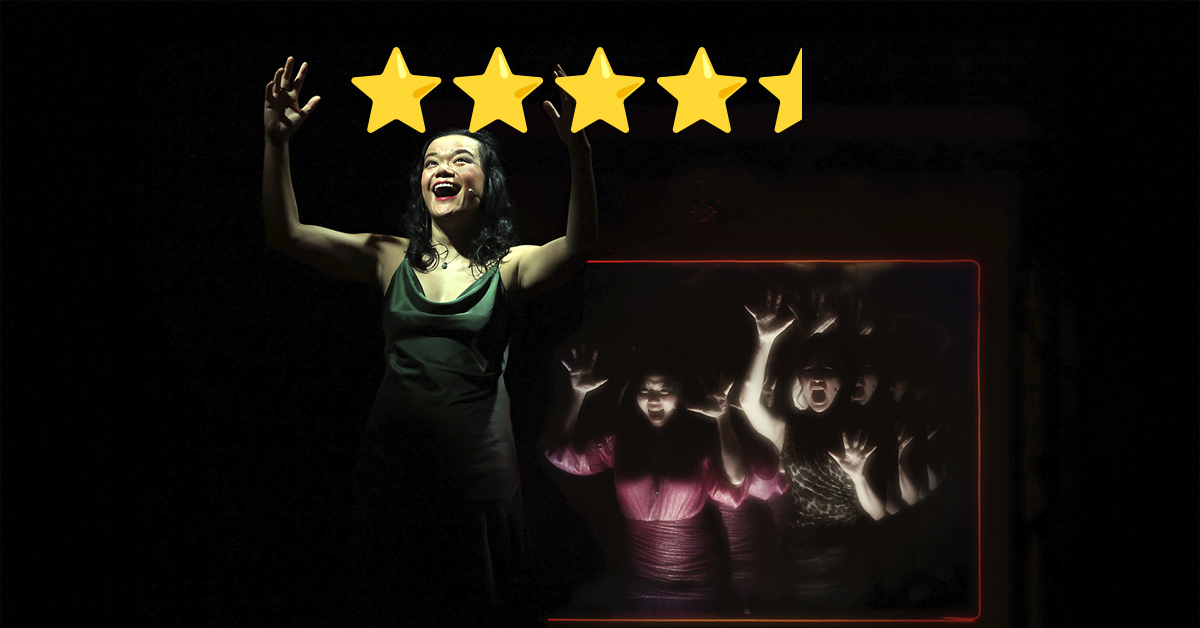
Review: Bigger and Blacker (Sydney Opera House)

Venue: Sydney Opera House (Sydney NSW), May 19 – 22, 2021
Music and Lyrics: Steven Oliver
Director: Isaac Drandic
Cast: Steven Oliver
Images by Daniel Boud

Theatre review
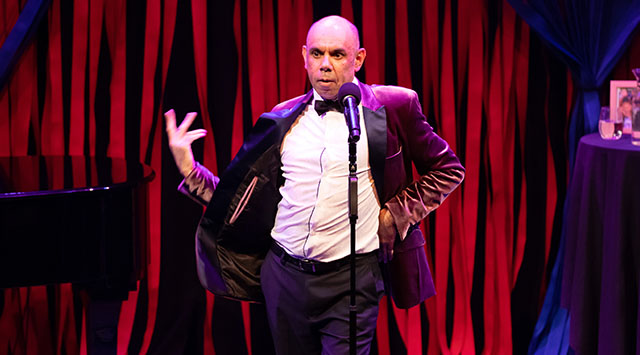
For just over an hour, a gay Black man reigns supreme, in Steven Oliver’s cabaret outing Bigger and Blacker. Entirely live and intimate, Oliver performs self-written songs accumulated over the years, a greatest hits compilation that spans everything from love to politics, that take us from hilarity to devastation.

Much of the presentation is concerned with being on the outside. Marginalised for both his racial and sexual identities, there is no wonder that Oliver is famously funny. Like many whose very existence poses a threat to the hegemony, being comical is a defence, a mode of self-preservation that becomes second nature. In Bigger and Blacker, the artist is characteristically flamboyant, but the underlying gravity of his raison d’etre is always apparent. Through the sensitive eye of director Isaac Drandic, we discover a duality of the persona, whimsical yet dark, and we respond accordingly, sometimes with joy, sometimes with sadness, but most often with a melancholic combination of both.

Oliver’s songs are cleverly written, all of them beautifully melodic and lyrically meaningful, made more poignant by the performer’s sincere introductions for every number. Accompanist Michael Griffiths is his spirited companion, whose inspired musical direction guides us through a multitude of stylistic genres, for a seriously engaging one-person variety extravaganza. From torch song to hip hop, Bigger and Blacker keeps itself fresh and surprising, not a single dull moment permitted.

Brady Watkins’ work on sound design transports us to a sensual world, distinctly lush and enchanting, and coupled with Chloe Ogilvie’s tender lighting, the audience finds itself effortlessly lulled into a temporary theatrical romance. Oliver is dressed by Kevin O’Brien, resplendent in a deep pink tuxedo jacket, determined to steal our hearts.

Identity labels are tiresome, for people who do not have to wrestle with oppression. Those of us who are systematically and habitually excluded, however, learn to embrace that which others have used to define us. What others try to shame us with, we grow to love, and we grow to understand the positively formative power, of everything that is meant to be inferior or contemptible. Oliver talks a lot about being a minority; he is Black, and he is gay, and as we come to realise, is therefore extraordinary.

www.sydneyoperahouse.com

Review: Single Asian Female (Belvoir St Theatre / La Boite Theatre Company)

Venue: Belvoir St Theatre (Surry Hills NSW), Feb 16 – Mar 23, 2018
Playwright: Michelle Law
Director: Claire Christian
Cast: Emily Burton, Lucy Heffernan, Patrick Jhanur, Alex Lee, Courtney Stewart, Hsiao-Ling Tang
Image by Dan Boud

Theatre review
Social status in Australia is ordered, always with the married white man at the top. Michelle Law’s Single Asian Female is therefore quite instinctively, a play about the experience of being deemed inadequate, in at least three different ways. The lead characters have to contend with the notion that their marital status, ethnicity and gender are problems, in a story about perfectly normal, or more accurately, complete people who can never quite be good enough. Pearl and her two daughters try to get on with life, but they face challenges every day for being unmarried, for being women, for being “ethnic”. Fortunately, the Wong ladies are talented, resourceful and resilient, so we see them coping well, or perhaps it is their sense of humour that keeps them afloat.

It may be a narrative that is concerned with adversity, but the show is joyful, and laugh-out-loud funny from start to end. The portrayal of family dynamics in Single Asian Female is lovingly crafted, to elicit warm and fuzzy feelings that we cannot help but luxuriate in. Director Claire Christian introduces passion and playfulness into every scene, with gloriously snappy exchanges that are as entertaining as they are convincing. Effective and lively use of space, on designer Moe Assaad’s colourful set, makes two-and-a-half hours go by in a flash.

Brought to vibrant life by a group of extraordinarily charming and confident actors, Single Asian Female features excellent performances and some blistering chemistry that is unequivocally enthralling. Hsiao-Ling Tang is very animated as Pearl, not particularly naturalistic in approach, but a consummate storyteller, remarkably powerful and authentic with all that she brings to the stage. The sisters are played by Alex Lee and Courtney Stewart, both exquisitely detailed and ingeniously creative, delivering some of the most riveting characters of Australian theatre in recent years. Supporting roles too are beautifully concocted. Emily Burton is effortlessly and persistently hilarious, Lucy Heffernan embodies obnoxious types worryingly well, and Patrick Jhanur invents an alluring new masculinity with beguiling quantities of sweetness. This formidable cast of six is likely the best company one could have on any given night.

Unlike Europe, we are but a stone’s throw away from Asia, yet our cultural and national identities are stubbornly thought of as Western. We conveniently disregard Aboriginal and Torres Strait Islander cultures, and similarly, people of colour with migrant histories are routinely relegated to a lower class. Rightful owners of this land are indisputable, but the way privilege is organised and distributed in this country clearly still favours, in very aggressive fashion, its colonisers. All the people in Single Asian Female are, regardless of colour, as Australian as one another, but the playing field on which we all have to exist, needs to even out.

www.belvoir.com.au | www.laboite.com.au
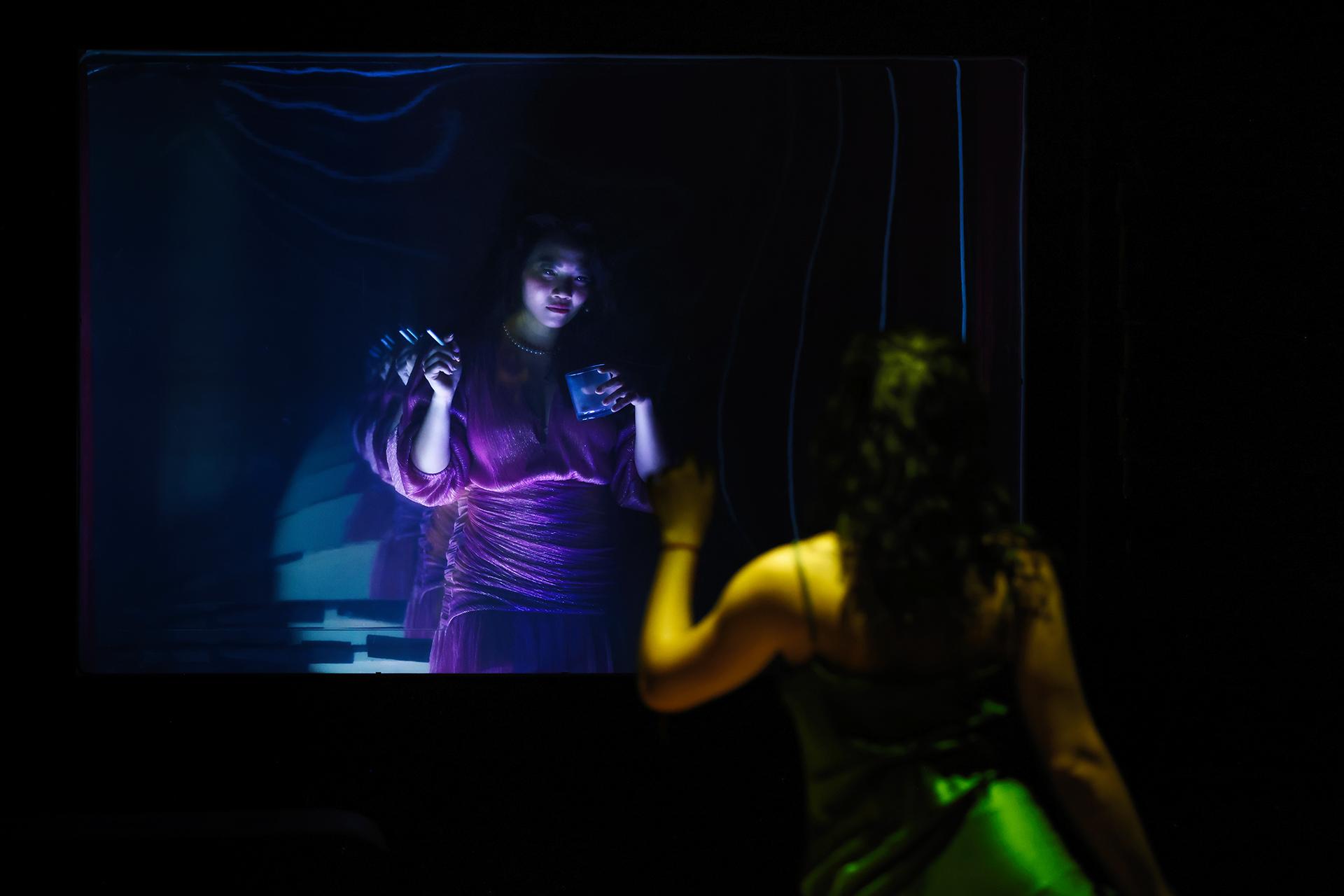
Review: Prize Fighter (La Boite Theatre Company / Belvoir St Theatre)

laboiteVenue: Belvoir St Theatre (Surry Hills NSW), Jan 6 – 22, 2017
Playwright: Future D. Fidel
Director: Todd MacDonald
Cast: Margi Brown-Ash, Thuso Lekwape, Gideon Mzembe, Pacharo Mzembe, Zindzi Okenyo, Kenneth Ransom
Image by Brett Boardman

Theatre review
We meet Isa as he tries to make a new life in Australia. After experiencing years of trauma in Congo, he now focuses aggression onto the fighting ring, and as he boxes his way through flashbacks of unimaginably tough times, we witness his tragic biography unfold onstage.

Prize Fighter involves a young man making sense of the world, in order that healing and a brighter future become possible. It is also about a migrant reaching out to his adopted land, asking for understanding and acceptance. Future D. Fidel’s writing is concise and simple. The play knows what it wishes to say and says it clearly, but its inability to delve deeper into our protagonist’s psychological and emotional complexities, results in a story that has a tendency to feel generic.

Direction by Todd MacDonald gives the show exciting vigour, with an athletic cast providing a beautiful sense of visual animation. Lighting design by David Walters is creative, surprising and very polished, but the production often feels distant, or perhaps elusive. Its dim dreamlike quality seems to prevent us from connecting firmly with the characters, and we struggle to connect with an intensity that would befit Isa’s plight.

We hear about humanitarian crises, on the news every day. Reports are made by people in positions of privilege, for the consumption of people with privilege. These stories affect us all, but the stakes are infinitely higher for those seeking refuge, yet their voices are rarely heard in our cacophonous landscape of upper-class broadcast culture. Prize Fighter is a rare opportunity for a first-person account, an important contribution to unceasing discussions on who are allowed to occupy this land. If the world is one, our boundaries can only be false, but humans have always been at war, and even though utopia is only imagined, life means little if we are unable to conceive of something better.

www.laboite.com.auwww.belvoir.com.au